
NASHVILLE, Tenn. — At Tennessee’s storied Iroquois Steeplechase, while jockeys and horse owners vie for substantial prize money, the crowd’s beloved highlight remains the traditional foxhound parade that has charmed audiences for 85 years.
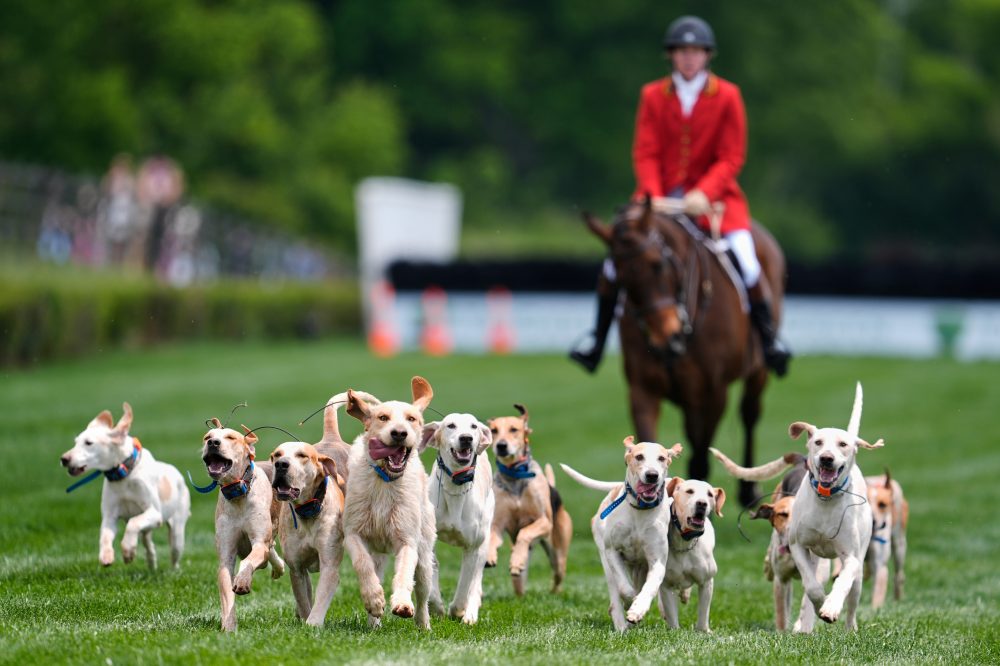
On Saturday, more than 20 foxhounds — specially bred to accompany horses and hunters — paraded across the grass course to launch race day festivities as thousands of fans cheered and captured the moment on camera.
The huntsman and his assistants, known as whippers-in, face the challenging job of guiding the pack along the proper route, particularly when the dogs become distracted by the massive crowd of spectators and their tempting tailgate spreads in the infield area.
Charles Montgomery, who serves as master and huntsman for the Mells Foxhounds — the hunting organization that provides dogs for the steeplechase — recalled one particularly social hound who abandoned her route for fan interaction. “She had the best time. She loved going into the beer tents,” Montgomery explained.
The dog enjoyed the experience so thoroughly that she made a beeline for the beer tent again the following year, resulting in her permanent exclusion from future races, Montgomery noted.
The Iroquois Steeplechase ranks among America’s top steeplechase competitions, offering $730,000 in total prize money on a grass course featuring hurdles. The venue opened in 1941 through a Works Progress Administration initiative, with the Nashville event established by members of the Hillsboro Hounds, a local fox hunting organization.
According to Stephen Heard, an Iroquois Steeplechase trustee and Mells Foxhounds member, steeplechase racing and fox hunting share deep historical connections. This tradition originated in the British Isles, where horses raced between church steeples and learned to clear obstacles like fences during hunting expeditions with dogs.
“Many of the horses that we use fox hunting are ex-steeplechase horses,” Heard noted.
With 25,000 attendees eating and drinking throughout tents and grandstands, the dogs require adjustment time to handle the overwhelming sounds and aromas.
“I took one dog last year and he heard the speakers and he said, ‘This is not for me,’” Charles Montgomery recalled.
“It’s high pressure,” explained Boo Montgomery, one of the whippers-in. She remembered when a child extended a fried chicken leg through the railings, creating irresistible temptation. “You couldn’t fault Brightly for stopping and having a snack,” she said, referring to one of the foxhounds.
Charles Montgomery typically brings experienced hunting dogs to mentor younger hounds along the course. On race morning, the eager dogs leaped from their trailer, ready to explore the grass, chew sticks, and roll in clover.
The hounds sport GPS-enabled collars during both hunting activities and racetrack appearances. This technology proved valuable last year when a frightened dog fled into the surrounding wooded parkland.
Despite the unfamiliar racetrack environment, the hounds appear to relish their role in launching the horse races, Boo Montgomery observed.
“It’s a great exposure for hunting to get to see these hounds and the horses,” Boo Montgomery said. “It’s nice to be able to show off.”