
Public health specialists are questioning the Centers for Disease Control and Prevention’s response to an unusual hantavirus outbreak aboard a cruise vessel that has affected American citizens and drawn international attention.
The federal health agency has faced criticism for not immediately deploying disease investigators, holding public briefings, or issuing prompt medical advisories to healthcare providers during the crisis.
“We seem to have things under very good control,” President Donald Trump told reporters Friday evening.
However, health authorities indicate the situation remains manageable primarily because hantavirus doesn’t transmit easily between people, unlike COVID-19, measles, or influenza. International health officials, rather than U.S. agencies, have taken the lead in managing the outbreak over the past week.
“The CDC is not even a player,” said Lawrence Gostin, an international public health expert at Georgetown University. “I’ve never seen that before.”
Some specialists suggest the CDC’s reduced involvement signals the agency no longer holds its former position as a leader in global health or domestic disease protection.
The hantavirus situation represents “a sentinel event” that reveals “how well the country is prepared for a disease threat. And right now, I’m very sorry to say that we are not prepared,” said Dr. Jeanne Marrazzo, chief executive officer of the Infectious Diseases Society of America.
The outbreak began in early last month when a 70-year-old Dutch passenger developed fever-related symptoms aboard a cruise vessel traveling from Argentina to Antarctica and South Atlantic islands. The man died within a week. Additional passengers fell ill, including his spouse and a German woman, both of whom also died.
Medical officials confirmed hantavirus as the cause of illness in one case on May 2. The World Health Organization responded quickly and declared an outbreak by Monday. Approximately two dozen Americans were aboard the ship, with roughly seven disembarking last month and 17 remaining on the vessel.
Historically, the CDC worked closely with WHO during such emergencies. The agency served as a cornerstone of international disease investigations, supplying personnel and knowledge to solve outbreak puzzles, create control measures, and inform the public about risks and appropriate responses.
These efforts helped establish the CDC’s reputation as the world’s leading public health organization.
However, the WHO has taken center stage this time, conducting the risk evaluation that determined the outbreak doesn’t pose a pandemic threat.
“I don’t think this is a giant threat to the United States,” said Jennifer Nuzzo, director of Brown University’s Pandemic Center. But the way events have unfolded “just shows how empty and vapid the CDC is right now,” she said.
This situation follows 16 months of upheaval during which the Trump administration left the WHO, sometimes prevented CDC scientists from communicating with international colleagues, and began building its own global health network through individual country partnerships.
The administration has eliminated thousands of CDC scientists and public health workers, including staff from the agency’s ship sanitation program.
During these developments, Trump’s health secretary, Robert F. Kennedy Jr., stated he was working to “restore the CDC’s focus on infectious disease, invest in innovation, and rebuild trust through integrity and transparency.”
The CDC hasn’t remained entirely quiet about the hantavirus situation.
On Wednesday, the agency released a brief statement declaring the risk to Americans “extremely low” and describing the U.S. government as “the world’s leader in global health security.”
Nuzzo responded: “Not only was that not helpful, it actually does damage because a core principle of public health communications is humility.”
CDC acting director Dr. Jay Bhattacharya posted on social media that the agency was contributing expertise while coordinating with other federal departments and international authorities. Arizona state officials announced this week they learned from the CDC that one American who left the ship — showing no symptoms and not considered infectious — had returned to the state. WHO representatives confirmed the CDC has been sharing technical data.
The CDC is also “monitoring the health status and preparing medical support for all of the American passengers on the cruise,” Bhattacharya wrote.
Nevertheless, federal health officials have largely remained silent, refusing interview requests. Some information emerged through anonymous sources rather than public announcements, including Friday’s news that the CDC was dispatching a team to Spain’s Canary Islands to assist Americans aboard the vessel.
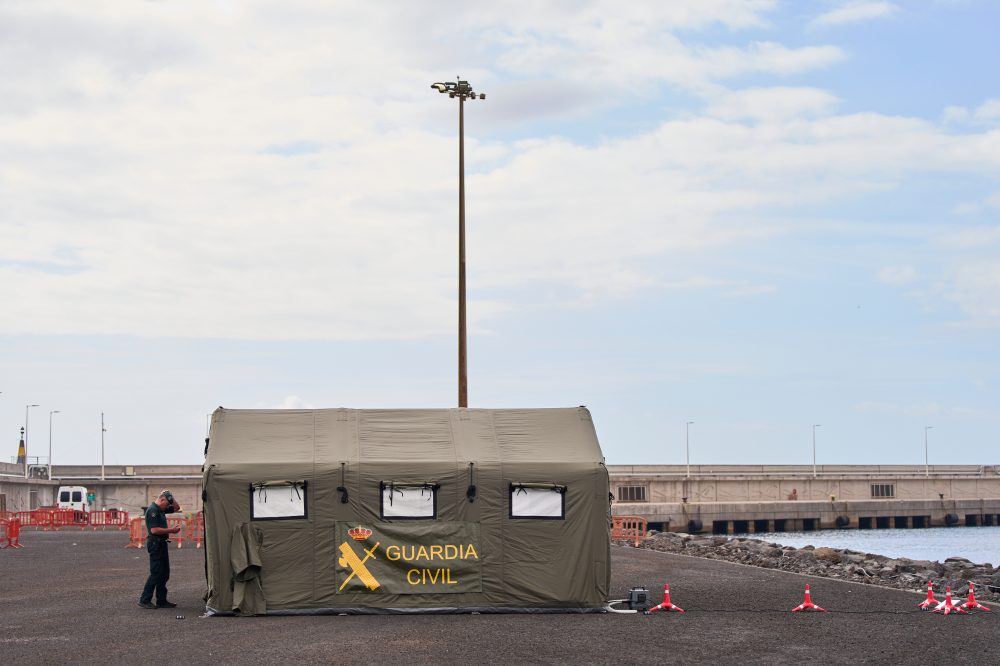
Friday evening, health officials released an updated statement confirming the Canary Islands team deployment. They also announced a second team would travel to Offutt Air Force Base in Nebraska as part of plans to evacuate American passengers to a quarantine facility.
During interviews this week, several experts drew comparisons to a 2020 incident involving the Diamond Princess, a cruise ship docked in Japan that became the site of one of the first major COVID-19 outbreaks outside China.
The CDC deployed staff to the port, assisted with American passenger evacuation, operated quarantine facilities, shared virus genetic information, coordinated with WHO and Japan, conducted public briefings, and quickly published reports “that became the world’s reference data on cruise ship COVID transmission,” said Dr. Tom Frieden, a former CDC director.
While some aspects of the Diamond Princess international response faced criticism and didn’t prevent the outbreak or stop COVID-19’s global spread, experts say the CDC made significant efforts.
“The CDC was right on top of it, very visible, very active in trying to manage and contain it,” Gostin said, contrasting with the agency’s current delayed and muted response.
Rather than collaborating with nearly all world nations through WHO, the Trump administration has pursued bilateral health agreements with individual countries for information sharing, public health assistance, and what it calls “the introduction of innovative American technologies.” About 30 such agreements currently exist.
Gostin considers this approach inadequate. “You can’t possibly cover a global health crisis by doing one-on-one deals with countries here and there,” he said.