WASHINGTON/BEIJING – A high-ranking American official voiced frustration on Sunday following Taiwan’s legislative decision to authorize military funding below what the United States considers necessary for the island nation’s security needs.
Speaking anonymously, the official stated that Washington found the outcome “disappointing in that there was some stuff left on the cutting room floor that we believe still needs to be funded.”
The official added, “We’d like to see the rest of the original proposed package funded.”
Taiwan’s legislature gave final approval on Friday to additional military expenditures totaling $25 billion, representing approximately two-thirds of the full amount Taiwan’s government had requested. The funding is intended to strengthen the island’s defensive capabilities as it faces an increasingly advanced Chinese military threat.
The reduced spending approval came through Taiwan’s parliament, which is currently under opposition party control.
For the third day in a row, the Los Angeles Dodgers have made changes to their pitching roster, bringing up right-handed reliever Wyatt Mills from their Triple-A Oklahoma City team on Sunday. The move comes as the team sent right-hander Paul Gervase back down to the minors.
The 31-year-old Mills is preparing for his first appearance in a Dodgers uniform after joining the organization as a free agent in August following his release from the Boston Red Sox. During his time with Oklahoma City this season, Mills posted a 3-2 record with a 3.26 ERA across 14 relief outings. He struck out 28 batters while walking just seven in 19 1/3 innings of work.
Mills hasn’t appeared in a major league game since the 2022 season and carries a career record of 0-1 with a 6.21 ERA through 38 relief appearances with both the Seattle Mariners and Kansas City Royals. The right-hander was sidelined for two complete seasons after undergoing Tommy John surgery in 2023.
Meanwhile, the 25-year-old Gervase had just made his 2024 season debut with Los Angeles on Saturday, allowing one run across three innings while striking out five batters. Throughout his brief major league career spanning seven appearances over the last two seasons, he maintains a 3.97 ERA.
The U.S. Army announced Sunday that search teams have recovered the remains of an American soldier who disappeared during military training operations in Morocco.
Moroccan search crews located the body of 1st Lieutenant Kendrick Lamont Key Jr. in waters approximately one mile from where he vanished on May 2 near cliffs in the Cap Draa area, according to Army officials. Key served as a platoon leader within an artillery unit.
The discovery was made Saturday, but another service member who went missing during the same incident has not been found. Military officials say search and rescue operations are ongoing for the second soldier.
Both soldiers were taking part in African Lion, described as the largest multinational military exercise organized by U.S. Africa Command. The annual training brings together American forces with NATO allies and African partner nations.
Morocco hosts the primary portion of this extensive military exercise, which involves roughly 5,000 military personnel representing more than 40 different countries, AFRICOM officials stated.
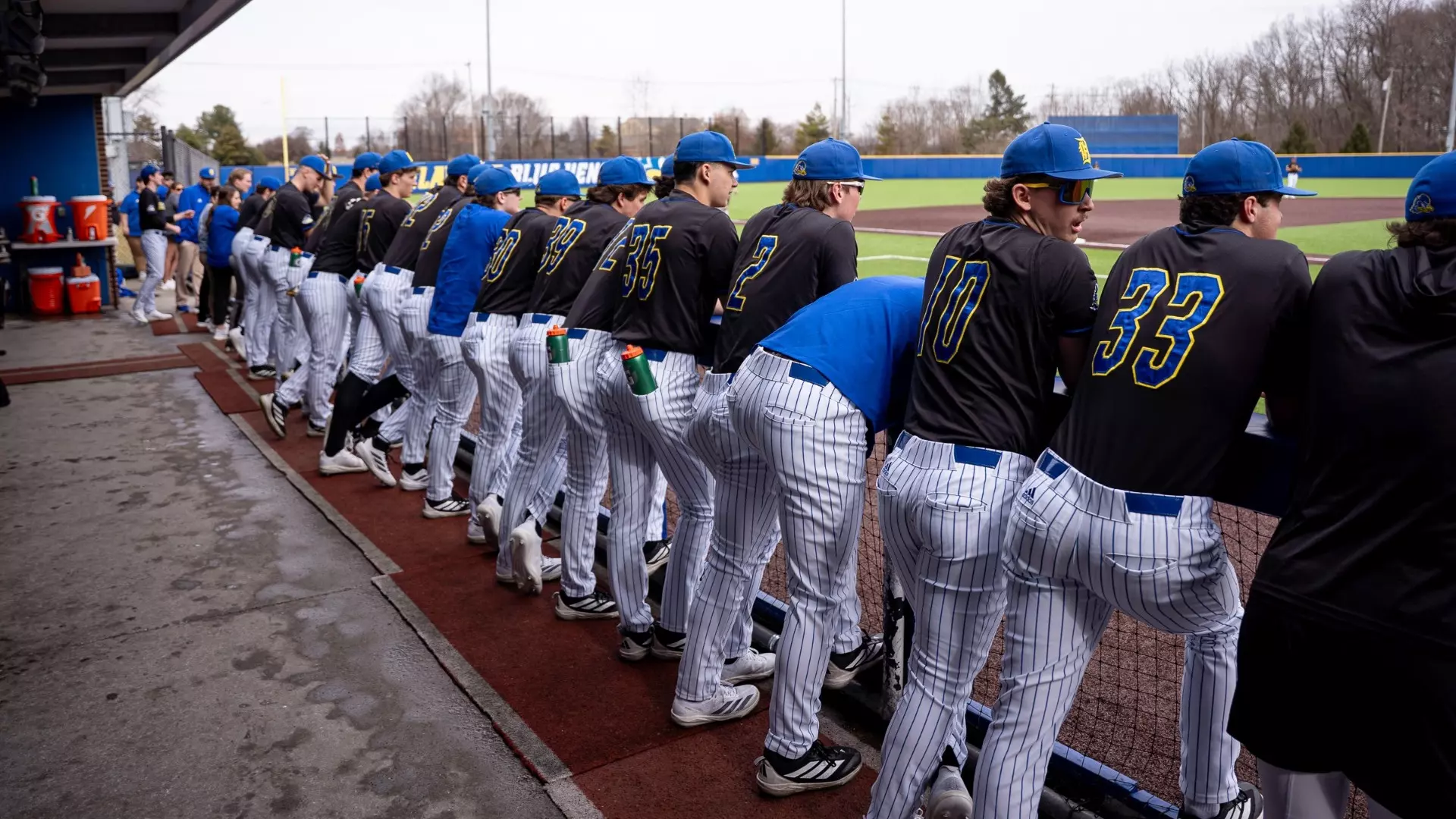
The University of Delaware baseball team wrapped up their Conference USA weekend series against Sam Houston State University. The Blue Hens traveled to Texas to face the Bearkats in a three-game conference matchup.
Delaware’s baseball squad completed their road series as part of their ongoing Conference USA schedule. The weekend series represented another step in the Blue Hens’ conference play as they continue their season against fellow CUSA opponents.
The team will look ahead to their next scheduled games as they work through the remainder of their conference slate. Delaware remains focused on their performance in Conference USA competition throughout the season.
The 2023 Nobel Peace Prize recipient Narges Mohammadi has been transferred to a Tehran medical facility and granted temporary release from prison on bail following a recent heart attack, according to her family’s foundation.
The 54-year-old activist received the prestigious award last year while incarcerated for her efforts promoting women’s rights and opposing capital punishment. She experienced cardiac complications two weeks ago while serving her sentence.
Family members had advocated for her relocation from Zanjan, located northwest of the Iranian capital, where she was initially hospitalized, seeking access to superior medical treatment for her condition.
According to a statement from the Narges Mohammadi Foundation, she has been transported by ambulance to Tehran Pars Hospital, where her personal medical specialists are providing treatment.
Earlier this year in February, Mohammadi received an additional prison sentence totaling seven and a half years, the foundation reported. This occurred weeks prior to escalating tensions between the United States, Israel, and Iran. The Nobel Prize committee urged Iranian authorities to release her without delay.
Her December arrest followed her public criticism regarding the death of attorney Khosrow Alikordi. Officials stated that she made inflammatory statements during Alikordi’s memorial service.
The foundation did not provide specific information about the bail conditions or details surrounding her sentence suspension.
“However, a suspension is not enough,” the organization stated. “Narges Mohammadi requires permanent, specialized care. We must ensure she never returns to prison.”
Iranian authorities severely restricted internet access throughout the country in January while suppressing widespread demonstrations sparked by economic concerns. Human rights organizations have documented continued executions of individuals connected to the civil unrest.
CHICAGO — After enduring their worst season in franchise history, the Washington Wizards have been rewarded with the top selection in this year’s NBA draft.
The Wizards claimed the first overall pick during Sunday’s draft lottery, earning them their initial opportunity to select first since they chose John Wall with the top spot in 2010. Wall served as the team’s representative during the lottery proceedings.
The franchise entered the lottery with 14% odds of securing the number one selection, sharing the highest probability with Brooklyn and Indiana. Washington faced roughly even chances of either landing a top-four selection or dropping to the fifth position.
However, three consecutive seasons of struggles — representing the franchise’s most difficult stretch across its 65-year existence — ultimately delivered results for the Wizards on Sunday. The team compiled a dismal 17-65 record this past season, including a game where they surrendered 83 points to Miami’s Bam Adebayo, the second-highest individual performance in league history.
Washington made significant moves last season by acquiring Trae Young and Anthony Davis through trades, and now possesses an opportunity to add another franchise-changing talent with their top selection.
The remaining top picks will see Utah selecting second, Memphis third, and Chicago fourth.
The Los Angeles Clippers secured the fifth pick through a previous trade with Indiana, followed by Brooklyn at sixth, Sacramento seventh, Atlanta eighth, Dallas ninth, Milwaukee tenth, Golden State eleventh, Oklahoma City twelfth, Miami thirteenth, and Charlotte fourteenth.
Draft proceedings begin June 23 in New York, while the combine in Chicago commences Monday.
Four prospects are widely viewed as leading candidates for the top selection, all departing college after their freshman campaigns:
— BYU’s AJ Dybantsa, who paced the nation with 25.5 points per game during his single collegiate season.
— Duke’s Cameron Boozer, the Associated Press player of the year who posted averages of 22.5 points and 10.1 rebounds.
— Kansas’ Darryn Peterson, who contributed 20.2 points across 24 appearances for the Jayhawks.
— North Carolina’s Caleb Wilson, who recorded 19.8 points and 9.4 rebounds while shooting 58% from the field.
All four prospects, along with several other projected first-round selections, attended Sunday’s lottery announcement at Chicago’s Navy Pier.
“Standing here is kind of crazy,” Dybantsa said. “One of these teams is going to be home.”
This marked the eighth and potentially final year under the current lottery format, which gives the league’s worst teams a 14% chance at the top pick.
New anti-tanking measures received preliminary approval last month and await final ratification from the league’s Board of Governors in coming weeks, with general managers gathering in Chicago on Tuesday for likely final discussions.
Beginning next season under the proposed changes, the three worst teams would have just 5.4% odds of winning the lottery, while the following seven teams would each have 8.1% chances. The lottery field would expand from 14 to 16 teams if the plan receives expected approval.
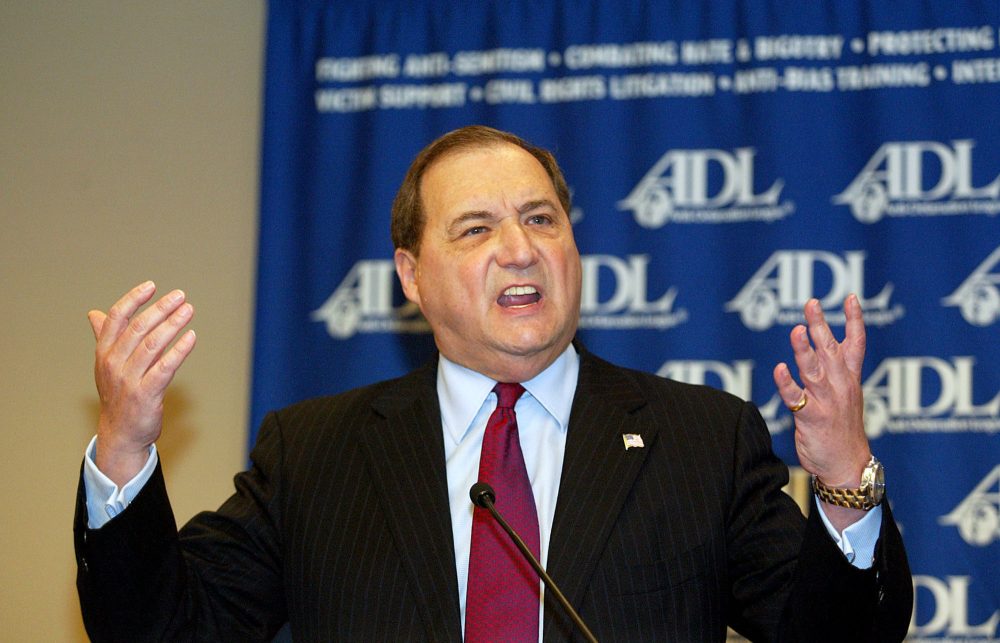
NEW YORK — Abraham H. Foxman, who served as the national director of the Anti-Defamation League for nearly 30 years and became one of America’s most recognized advocates against antisemitism, has passed away at age 86, the organization announced Sunday.
The ADL released a statement expressing that it “deeply mourns the loss of our longtime national director,” though specific details regarding the time and location of Foxman’s death were not disclosed.
During his 28-year tenure leading the ADL until his 2015 retirement, Foxman advised presidents and diplomats while also engaging with business leaders and public figures. He regularly confronted high-profile individuals who made antisemitic statements and would accept their apologies on behalf of the Jewish community.
“Abe’s voice was heard –- and listened to -– by popes, presidents, and prime ministers, a voice he used wherever Jews were at risk,” stated Jonathan Greenblatt, the ADL’s current director. “Abe Foxman spoke on the global stage with moral authority and clarity and was relentlessly dedicated to his pursuit of a world without hate.”
Foxman’s life began in 1940 when he was born to Polish Jewish parents in present-day Belarus. He became a Holocaust survivor after his nanny baptized him as a Catholic to hide his Jewish heritage. Following the war’s end, he was reunited with his family, who then relocated to New York.
Following his legal education, Foxman began working at the ADL as a staff attorney. His entire five-decade career was devoted to the organization, where he emerged as a prominent national figure in the fight against antisemitism and hatred. The organization appointed him as national director in 1987.
When he stepped down from his role, Foxman expressed concerns to The Associated Press about how the internet was enabling bigots to disseminate their ideologies “not only anonymously but at the speed of light.”
The ADL was established in 1913 with the mission to combat antisemitism and all forms of prejudice. However, the organization’s focus has shifted over the years based on leadership and contemporary challenges.
Some critics argued that under Foxman’s leadership, the ADL allocated excessive resources to issues beyond Jewish concerns. During his tenure, the organization developed an extensive research division focused on white supremacists and other extremist groups, championed immigrant and LGBTQ rights, provided diversity training for police departments, and created educational programs covering topics from Holocaust education to civil rights legislation and anti-bullying initiatives.
Throughout his career, Foxman endured criticism from those who believed he was overly sensitive to perceived anti-Jewish sentiments and too hasty in his condemnations. Conversely, others criticized him for being too willing to forgive individuals who expressed regret for their anti-Jewish comments.
Foxman maintained that accepting apologies was crucial, particularly from influential figures who could become valuable allies for the Jewish community.
“If you don’t let them change, then you become the bigot.”
New York Knicks forward OG Anunoby will be sidelined for Sunday’s Game 4 matchup against the Philadelphia 76ers due to a right hamstring strain, despite earlier indications suggesting he might be available to play.
“He’s out for tonight but he’s the same thing, he’s day-to-day (moving forward),” Knicks head coach Mike Brown said Sunday.
With New York holding a commanding 3-0 advantage in the Eastern Conference semifinals series, the team can afford to take a conservative approach with Anunoby’s injury management.
This marks the second consecutive game Anunoby will miss, as he was also absent during Game 3 when New York secured a 108-94 win in Philadelphia. Sunday’s fourth game will also take place in Philadelphia.
Throughout eight playoff contests this season, the 28-year-old forward has posted impressive numbers, contributing 21.4 points per game along with 7.5 rebounds, 1.9 steals and 1.1 blocks while maintaining exceptional shooting efficiency at 53.8% from beyond the three-point line and 61.9% from the field overall.
The Los Angeles Sparks have added guard Kate Martin to their development roster on Sunday, just three days following her release from the Golden State Valkyries.
Martin, who was teammates with Caitlin Clark during their time at Iowa, was chosen 18th overall in the second round of the 2024 WNBA Draft by the Las Vegas Aces.
During her first professional season with the Aces, Martin appeared in 34 contests with two starting assignments, contributing 2.6 points per game while connecting on 35.5% of her three-point attempts across 11.5 minutes of action. The Valkyries selected her during their expansion draft, and she improved to 6.2 points per game in 42 appearances with four starts, playing 16.4 minutes per contest last season.
“Kate is a gifted shooter, whose grittiness and winning history mesh well with Sparks basketball,” said Sparks general manager Raegan Pebley. “She’s confident in her shot, plays tenacious defense and is an unselfish, high-energy teammate. We’re eager to watch Kate develop within our system.”
During her collegiate career, Martin achieved a rare milestone by becoming the first women’s basketball player in Iowa history to record at least 900 points, 500 rebounds, 400 assists, 120 steals and 60 blocks.
Development contracts allow WNBA franchises to maintain two additional roster positions that operate as internal training programs while staying outside salary cap restrictions. These players may be activated for as many as 12 regular season games.
Boston Red Sox first baseman Willson Contreras was forced to exit Sunday’s matchup against the Tampa Bay Rays after taking a pitch to his right hand during the opening inning. The ball was thrown by Rays pitcher Nick Martinez.
While Contreras managed to complete his trip around the bases, he did not take the field when the second inning began. Team officials initially described the injury as a contusion but announced plans to conduct medical imaging tests to fully evaluate the damage.
This marks the eighth time this season that Contreras has been struck by a pitch, placing him in a three-way tie for most in Major League Baseball alongside St. Louis players J.J. Wetherholt and Ivan Herrera.
The veteran player, who will celebrate his 34th birthday on Wednesday, currently paces Boston’s roster with eight home runs and 23 runs batted in while maintaining a .259 batting average across 39 games this season.
This marks Contreras’s debut campaign with the Red Sox after being selected as an All-Star three times during his career. Over 1,116 major league games spanning stints with the Chicago Cubs from 2016-2022, the St. Louis Cardinals from 2023-2025, and now Boston, he has compiled a .258 career batting average alongside 180 home runs and 571 RBIs.
Andruw Monasterio stepped in to take over first base duties and managed to collect hits during his first two plate appearances of the game.
Thousands of demonstrators filled the streets of Mexico City on Sunday, led by mothers whose children vanished during years of cartel-related violence. The Mother’s Day march drew attention to the country’s crisis of missing persons as Mexico gears up to co-host the upcoming FIFA World Cup.
Groups representing families of the disappeared organize this annual demonstration each Mother’s Day. This year, they urged soccer supporters to stand with them, declaring in a public statement that “there is nothing to celebrate, because the mothers of Mexico are playing the most difficult match: the one for justice.”
Marchers filled Paseo de la Reforma, Mexico City’s main thoroughfare, carrying photographs of missing loved ones on banners and posters. “Mexico, champion in disappearances,” the crowd chanted as they walked past a traffic circle permanently decorated with images of those who have vanished, now surrounded by metal barricades.
“We had to start fighting, because no one wanted to take charge of the disappearance (case),” explained Graciela Perez Rodriguez. Her daughter and four other family members went missing in 2012 while driving through the northern state of Tamaulipas after visiting the United States.
The nation faces a staggering crisis with over 130,000 people reported missing. These disappearances dramatically increased following 2006, when Mexico declared war against drug trafficking organizations.
Law enforcement officers and government workers are frequently connected to these crimes. Mothers who conduct their own searches when official investigations stall often become targets themselves, facing threats and violence from criminal organizations.
Mexican officials announced in March that they had possibly identified more than 40,000 individuals from the missing persons database who might still be alive, following an examination of the national registry that revealed activity in other government databases.
However, research from Mexico Evalua, a public policy organization, shows disappearances have tripled during the past ten years as organized crime groups have expanded their influence.
Rodriguez expressed concern that authorities no longer prioritize her family’s case after nearly 14 years have elapsed.
SALISBURY, Md. – The second-ranked Salisbury University Sea Gulls women’s lacrosse team dominated their NCAA Second Round matchup against Union College from New York, winning decisively by a score of 17-9 on Sunday afternoon.
The Sea Gulls controlled the game from start to finish at their home venue, Sea Gull Stadium, putting together an impressive offensive performance while shutting down Union College’s attack.
With this commanding victory, Salisbury’s women’s lacrosse squad moves forward in the NCAA tournament, continuing their pursuit of a national championship.
Delaware State Police have arrested a Georgetown man in connection with a Saturday afternoon shooting incident in Laurel that left a teenager wounded.
Authorities responded to Tidal Health – Nanticoke around 3:20 p.m. on May 9, 2026, after a 19-year-old male victim arrived at the medical facility with gunshot injuries that were not considered life-threatening. The victim had been transported to the hospital in a private vehicle.
According to investigators from the Delaware State Police Troop 4 Criminal Investigations Unit, the shooting took place in front of a home on Portsville Road near Randall Street in Laurel. The gunman remains unidentified and at large.
Police determined that 20-year-old Alexison Amisial of Georgetown had transported the wounded man to the hospital in a blue Mazda 3. Officers located both Amisial and the vehicle at First Stop Gas Station on 114 West Street in Laurel.
During their encounter with Amisial, troopers discovered he was hiding an untraceable firearm in his waistband. He was arrested without resistance.
Following his arrest, Amisial was processed at Troop 4 and faced charges including Carrying a Concealed Deadly Weapon – Firearm (Felony) and Possession of an Untraceable Firearm (Felony). Justice of the Peace Court 3 arraigned him and set his release on a $3,500 unsecured bond.
The investigation remains active under the Delaware State Police Troop 4 Criminal Investigations Unit. Authorities are seeking public assistance and ask anyone with relevant information to contact Detective R. Mitchell at (302) 752-3794. Tips can also be submitted through the Delaware State Police Facebook page or Delaware Crime Stoppers at (800) 847-3333.
Support services are available for crime victims and witnesses through the Delaware State Police Victim Services Unit and Delaware Victim Center, accessible 24/7 at 1-800-VICTIM-1 (1-800-842-8461) or via email at [email protected].
Delaware Department of Transportation officials have implemented a temporary speed reduction on Interstate 495, dropping the limit to 55 miles per hour due to current weather conditions affecting the roadway.
The speed restriction has been put in place as a safety measure to help protect motorists traveling on the interstate during adverse weather. DelDOT monitors road conditions continuously and adjusts speed limits when necessary to maintain safe driving conditions.
Drivers are advised to exercise caution while traveling on I-495 and to observe the posted reduced speed limit. The temporary restriction will remain in effect until weather conditions improve and normal speed limits can be safely restored.
Military officials announced Sunday that the body of a United States Army soldier who disappeared during training exercises in Morocco has been found in Atlantic Ocean waters. Search teams continue looking for a second missing servicemember.
The recovered remains belong to 1st Lt. Kendrick Lamont Key Jr., age 27, who served as an Air Defense Artillery officer. Both soldiers fell from a cliff while hiking recreationally during their off-duty time in Morocco.
Both servicemembers were reported missing on May 2nd following their participation in African Lion, the annual international military training exercises conducted in Morocco.
According to U.S Army Europe and Africa, “A Moroccan military search team found the Soldier in the water along the shoreline at approximately 8:55 a.m. local time May 9, within roughly one mile of where both Soldiers reportedly entered the ocean.”
The incident occurred around 9 p.m. in the vicinity of the Cap Draa Training Area near Tan-Tan, an area featuring mountainous terrain, desert landscapes, and semi-arid plains, Moroccan military sources reported.
The disappearance launched an extensive rescue mission involving more than 600 search personnel from the United States, Morocco, and allied military partners. The operation has utilized naval frigates, various watercraft, helicopters, and unmanned aircraft.
A U.S. defense official, speaking anonymously due to authorization restrictions, confirmed that search operations will persist for the second missing soldier.
The official explained that American personnel stayed in Morocco beyond the conclusion of the multinational exercises on Friday to maintain operational oversight and support ongoing rescue efforts.
Key served with Charlie Battery, 5th Battalion, 4th Air Defense Artillery Regiment, 10th Army Air and Missile Defense Command, according to U.S Army Europe and Africa.
His educational background included a Bachelor of Science degree in marketing from Methodist University in Fayetteville, North Carolina, along with additional studies in international business, entrepreneurship, and business administration. Key began his military career in 2023 as an officer candidate, receiving his commission in 2024 through Officer Candidate School as an Air Defense Artillery officer. He subsequently finished the Basic Officer Leader Course at Fort Sill, Oklahoma.
The rescue mission, now entering its ninth day, has searched over 12,000 square kilometers of ocean and coastal areas, with approximately 3,000 additional square kilometers being covered daily.
The soldiers were participating in African Lion 26, a U.S.-directed exercise that began in April spanning Morocco, Tunisia, Ghana, and Senegal, involving more than 7,000 military personnel from over 30 countries. This exercise represents the largest joint U.S. military training operation on the African continent since its inception in 2004.
A previous tragedy occurred during these exercises in 2012, when two U.S. Marines lost their lives and two others sustained injuries in a helicopter accident in Agadir, Morocco’s southern region.
Vegas Golden Knights team captain Mark Stone has been ruled out for Sunday’s Game 4 matchup against the Anaheim Ducks, head coach John Tortorella confirmed.
The team leader suffered a lower-body injury during the closing moments of the opening period in Friday night’s commanding 6-2 win against Anaheim. The Golden Knights currently hold a 2-1 advantage in the seven-game Western Conference second-round playoff series.
Veteran forward Brandon Saad will step into the lineup to replace Stone, who has contributed seven points through nine playoff contests this season with three goals and four assists.
Stone, who celebrates his 34th birthday this Wednesday, posted career-best numbers during the regular season with 73 points on 28 goals and 45 assists, along with a plus-26 rating across 60 games.
Throughout his NHL career spanning 766 games between Ottawa (2012-19) and Vegas, Stone has accumulated 707 points with 259 goals and 448 assists, maintaining a plus-167 rating.
The San Francisco Giants welcomed back left-handed pitcher Sam Hentges on Sunday after the 29-year-old spent almost two years recovering from multiple injuries.
Hentges hasn’t appeared in a professional game since July 10, 2024, when he was playing for the Cleveland Guardians. A shoulder injury sidelined him initially, and after two months of rehabilitation failed to resolve the issue, doctors performed surgery to fix his labrum and shoulder capsule.
The pitcher’s troubles continued as he missed all of the 2025 season and required additional knee surgery in August. He joined the Giants organization in December, but his rehabilitation process stretched into the current season.
Throughout his major league career with Cleveland starting in 2021, Hentges compiled a 7-8 record with a 4.18 earned run average across 168 games, including 12 as a starting pitcher.
The Giants also brought up right-handed pitcher Dylan Smith from their Triple-A affiliate in Sacramento, while sending Ryan Walker and Gregory Santos down to the minor leagues.
Both Hentges and Smith will be making their first appearances in Giants uniforms. Smith, age 25, has limited big league experience with seven games for Detroit last season. This year at Sacramento, he posted a 2.13 ERA with an 0-1 record in nine relief outings.
Walker, 30, struggled this season with a 6.46 ERA in 16 relief appearances, going 0-1 with three saves in six chances. Santos, 26, appeared in three games out of the bullpen with a 3.60 ERA.
The son of Ohio State head football coach Ryan Day has made his college decision, announcing Sunday via social media that he will play quarterback for Northwestern University beginning in 2027.
R.J. Day, currently a high school senior, selected the Wildcats after considering offers from multiple programs including Purdue, Syracuse, Cincinnati, and South Florida.
The 6-foot-1, 205-pound quarterback has been a three-year starter at St. Francis DeSales High School in Columbus, Ohio, where he has established impressive career statistics with 5,714 passing yards and 54 touchdown passes. During his junior season in fall 2025, Day broke single-season school records by throwing for 2,710 yards and 25 touchdowns.
Northwestern’s current roster under head coach David Braun includes eight quarterbacks for the 2026 season, featuring transfer Aiden Chiles from Michigan State and freshman Johnny O’Brien.
When Day arrives at Northwestern, he will work with offensive coordinator Chip Kelly, who is entering his first year in that role with the Wildcats. Kelly previously served as the offensive coordinator for Ohio State during their 2024 national championship season and also held the same position at New Hampshire when Ryan Day played quarterback there from 1998-2001, setting multiple school records. Kelly has also been a head coach at Oregon, UCLA, and with the NFL’s Philadelphia Eagles.
Philadelphia Phillies star Bryce Harper was back in the starting lineup for Sunday’s series finale against the Colorado Rockies after missing most of Saturday’s game due to a migraine.
The veteran first baseman appeared fully recovered from the health issue that forced his early departure during the first inning of Philadelphia’s 9-3 win over Colorado the previous day.
Harper took his usual spot batting third and playing first base as the teams wrapped up their series in Philadelphia, with each club having won one of the first two contests.
The 33-year-old slugger is currently hitting .282 this season with nine home runs and 23 RBIs across 40 games played.
Harper brings an impressive resume to the field, having captured National League MVP honors twice in 2015 and 2021, along with eight All-Star selections. Throughout his major league career spanning time with both Washington (2012-18) and Philadelphia, he has compiled a .280 batting average with 372 home runs and 1,074 RBIs over 1,825 games. The former Nationals star also earned NL Rookie of the Year recognition in 2012.
A high-ranking United States official confirmed on Sunday that the current rare earth materials agreement between America and China remains valid, with discussions underway regarding a possible extension.
The confirmation comes ahead of a scheduled meeting between U.S. President Donald Trump and Chinese President Xi Jinping, set to take place in Beijing on May 14 and 15.
“It’s still in effect. It doesn’t expire yet,” the official stated during a briefing with reporters. The official added that while discussions continue, it remains unclear whether the agreement will receive an extension. “I’m confident we’ll announce any potential extension at the appropriate time.”
The upcoming two-day summit, beginning Thursday, is expected to cover several contentious topics including the U.S.-Israeli conflict with Iran, trade relations, Taiwan, and other areas of tension between the two nations.
The leaders previously met in October in South Korea, where they reached an agreement to halt an escalating trade dispute. That conflict had resulted in the United States implementing substantial tariffs on Chinese products while Beijing had threatened to limit global access to rare earth materials.
The Carolina Hurricanes have achieved their goal of reaching the Eastern Conference final after years of playoff disappointments, setting themselves up for another chance to overcome a persistent obstacle.
The Hurricanes — who remain the sole unbeaten squad in this year’s NHL postseason — now face an extended waiting period before beginning their third-round matchup.
Carolina defeated Philadelphia 3-2 in overtime Saturday evening, making history as the first franchise to complete back-to-back sweeps in the opening two playoff rounds since the NHL adopted the best-of-seven format across all rounds in 1987. This achievement marks their fourth conference final appearance in eight playoff campaigns under head coach Rod Brind’Amour, and their third such appearance in the past four years.
The Hurricanes await the victor of the Montreal-Buffalo series, which continues through at least Thursday. As the Eastern Conference’s top-seeded team, Carolina enjoyed nearly a complete week of rest following their first-round sweep of Ottawa.
“I think it’s probably going to be an even longer break this time,” veteran forward Taylor Hall commented following Saturday’s victory in Philadelphia.
“The big positive is we’re on to the third round relatively unscathed and healthy. You don’t want to see injuries per se, but we hope these series go far and these teams have battles. That’s the advantage we’re going to have. … Rod, our strength staff, all of our staff, do a good job of making sure that we’re ready athletically to play. And from there, we get our footing pretty quickly.”
Carolina has executed this approach flawlessly since capturing their opening playoff contest on April 18. The team has already demonstrated their ability to emerge strong following extended breaks, dominating Philadelphia in the first period of their series opener en route to a 3-0 victory.
“We had a plan, and clearly it was OK,” Brind’Amour explained, “so we can follow that and run with it.”
The Hurricanes’ strategy centers on relentless effort and high energy: applying aggressive forechecking pressure to force opponent errors, maintaining offensive zone possession, and generating multiple scoring opportunities while limiting counterattacks.
This explains why the advantages of rested bodies and refreshed minds have outweighed concerns about potential rust.
Take veteran netminder Frederik Andersen as an example. The 36-year-old Danish goaltender had appeared in 32 playoff contests for Carolina over the previous three seasons, raising questions about his workload management alongside 31-game winner Brandon Bussi.
However, Andersen has emerged as the playoffs’ standout goaltender, posting a 1.12 goals-against average alongside a .950 save percentage. He’s recorded two shutouts and faced 25 shots or fewer in five of his eight appearances. The upcoming break will provide additional recovery time.
“You don’t really want to add extra games if you can avoid it,” Andersen noted.
Consider also defenseman Sean Walker’s situation.
Following Thursday’s Game 3 road victory, he received word from his wife Taylor in North Carolina that their first child was arriving. Walker caught an early morning flight home for his daughter’s birth, perfectly timed for Mother’s Day. After eating his pregame meal in the hospital cafeteria, he departed for Philadelphia around 2 p.m. Saturday ahead of the 6:15 p.m. start time.
“I didn’t want to get on the boys and tell them we better win tonight, but I’m really appreciative that everybody dug in,” Walker shared. “The sweep’s huge for everybody. But to take this time to just be with my family is going to be really special.”
Carolina has excelled on the penalty kill, a consistent strength, successfully defending 38 of 40 opportunities (95%) while scoring shorthanded in Game 3 at Philadelphia. Offensively, the second line featuring Hall, Logan Stankoven and Jackson Blake has been exceptional, combining for 14 goals and 31 points across eight games.
This production has compensated for a slow start from the top line of Sebastian Aho, Andrei Svechnikov and Seth Jarvis, plus a power play converting just 5 of 37 attempts (13.5%) after ranking fourth during the regular season at 24.9%.
Despite these challenges, Carolina never fell behind in their initial five postseason contests and has won their last five games when positioned to eliminate opponents.
Now they face a familiar challenge.
Boston swept an inexperienced Carolina squad in the 2019 Eastern final after the Hurricanes ended a nine-year playoff absence in Brind’Amour’s inaugural season. Florida swept Carolina in 2023 with four one-goal victories, then eliminated them in five games last season.
The Hurricanes now have another opportunity.
“The season is so long and there’s that 82-game season we talk about that no one really gives much credit to, and yet this team’s played well for eight months,” Brind’Amour said. “They didn’t just get hot at the end. It’s been night in, night out like this. And that’s the biggest takeaway for me. Probably the thing I’m most proud of about this group is that.
“And now, here we are. We’ve got to find a way to get that next step.”
Iranian human rights activist and Nobel Peace Prize recipient Narges Mohammadi has been moved to a medical facility in Tehran after collapsing in prison over a week ago, according to her foundation.
The organization reports that Mohammadi’s hospital transfer occurred following persistent appeals from family members and supporters. Officials have granted her a temporary suspension of her prison term with bail conditions.
Since December, Mohammadi had been held at Zanjan prison facility. On May 1st, she was taken to a nearby medical center after losing consciousness on two separate occasions.
In a statement provided to The Associated Press, her foundation expressed that the temporary release falls short of what’s needed, emphasizing that Mohammadi requires “permanent, specialized care.”
The organization’s statement further declared: “we must ensure she never returns to prison to face the 18 years remaining on her sentence. Now is the time to demand her unconditional freedom and the dismissal of all charges.”
Commuters traveling north on Interstate 95 should prepare for significant delays this morning following a vehicle collision near the Delaware-Pennsylvania border.
The Delaware Department of Transportation reports that the accident is impacting traffic flow on the northbound lanes at the state line, creating backups for drivers heading into Pennsylvania.
Officials are advising motorists to allow extra travel time or consider alternate routes while crews work to clear the scene and restore normal traffic patterns.
DelDOT continues to monitor the situation and will provide updates as conditions improve.
Authorities have arrested 36-year-old Raul Zavala of Wilmington after he held two coworkers hostage and ignited a fire at a Limestone Road Wawa Saturday evening.
Delaware State Police and the State Fire Marshal’s Office responded to the convenience store at 2030 Limestone Road around 8:20 p.m. on May 9, 2026, following reports of terroristic threats. Officers arrived to find Zavala had trapped himself and two employees in the manager’s office.
When Zavala ignored police orders to come out, he lit a fire in the office’s electrical closet that rapidly grew. The flames eventually forced him from the room, where officers deployed a taser and took him into custody.
A 21-year-old male employee from Wilmington suffered minor injuries and was hospitalized. A 50-year-old female coworker, also from Wilmington, was not hurt.
According to investigators from Delaware State Police Troop 2’s Criminal Investigations Unit, the incident began when the male employee went to discuss an earlier workplace situation with Zavala. Zavala initially shut the door on his coworker but then allowed him inside, where he attacked the man and warned him not to leave.
When the female employee came to check on the situation, Zavala pulled out a knife and threatened both workers while preventing them from leaving. As police tried to enter the office, Zavala ran into the electrical closet and locked himself inside, allowing the two employees to escape.
Zavala was hospitalized for burn injuries he sustained in the fire. Upon his release, he will face multiple charges including:
• Possession of a Deadly Weapon During the Commission of a Felony (Felony) • Aggravated Menacing (Felony) – 2 counts • Unlawful Imprisonment (Felony) – 2 counts • Arson 2nd Degree (Felony) • Criminal Mischief – $5,000 or More (Felony) • Assault 3rd Degree
The investigation remains active under Delaware State Police Troop 2’s Criminal Investigations Unit. Anyone who witnessed the incident or has information is urged to contact Detective D. Armstrong at (302) 365-8440. Tips can also be submitted through the Delaware State Police Facebook page or Delaware Crime Stoppers at 1-800-847-3333.
Crime victims or witnesses needing support can reach the Delaware State Police Victim Services Unit and Delaware Victim Center 24/7 at 1-800-VICTIM-1 (1-800-842-8461) or email [email protected].
The Minnesota Twins made a pitching roster adjustment Sunday, bringing left-handed pitcher Kendry Rojas back up from their Triple-A St. Paul affiliate while sending fellow southpaw Kody Funderburk down to the minor league team.
This marks Rojas’ second call-up to the major leagues this year. The young pitcher first appeared in the big leagues on April 22, where he threw two innings without giving up any runs against the New York Mets, though he surrendered two hits and issued three walks in what ended as a no-decision.
The 23-year-old Rojas has compiled a 1-1 record with a 2.20 earned run average across six outings for St. Paul, including two starts.
Meanwhile, the 29-year-old Funderburk heads back to the minors after posting a 1-1 record with one save and a 2.81 ERA through 19 relief outings this season for Minnesota. Since joining the Twins organization in 2023, Funderburk has appeared in 96 games and recorded three saves along with 20 holds.
The New York Yankees have activated left-handed pitcher Carlos Rodon from the 15-day injured list on Sunday, ending his minor league rehabilitation assignment following elbow surgery.
The 33-year-old All-Star is slated to take the mound Sunday against Milwaukee as New York looks to prevent being swept in their three-game series with the Brewers.
To make room on the roster, the Yankees sent right-handed relief pitcher Kervin Castro down to their Triple-A affiliate in Scranton/Wilkes-Barre.
Rodon underwent surgery on October 15 to remove loose particles from his left elbow and reduce a bone spur, just days after the Yankees’ 2024 season concluded.
The southpaw enjoyed a standout 2025 campaign, making a career-best 33 starts while compiling an 18-9 record and 3.09 ERA. His impressive season earned him All-Star recognition, and he ranked 10th in Major League Baseball with 203 strikeouts and maintained a 1.05 WHIP.
Data from Inside Edge showed opposing hitters managed just a .154 batting average against Rodon at home, the lowest mark in the majors.
However, he faced difficulties during the postseason, surrendering nine runs across 8 1/3 innings in two starts.
During his rehabilitation stint in the minors, Rodon completed three starts without earning a win or loss, posting a 3.38 ERA. His final tuning-up appearance for Triple-A Scranton/Wilkes-Barre on Tuesday proved challenging, as he gave up six runs (five earned) on seven hits over 6 1/3 innings while throwing 83 pitches. He issued two walks and recorded four strikeouts.
“This being probably my third time through a lengthy rehab process, I have some experience, although most people don’t want to really say that,” Rodon told the New York Post on Saturday. “Just (leaning) back on those times and working on the craft and trying to get back here and help the team.”
Rodon has found success against Milwaukee throughout his career, holding a 2-1 record with a 2.42 ERA across five starts versus the Brewers. He has defeated Milwaukee in his single start against them in each of the past two seasons, surrendering just two combined runs on six hits over 11 1/3 innings.
The veteran pitcher is beginning his 12th major league season and fourth year with the Yankees organization.
As a three-time All-Star selection, Rodon brings a career record of 93-72 with a 3.73 ERA and 1.22 WHIP to the mound. The Miami, Florida native has accumulated 1,409 strikeouts and 477 walks across 1,282 innings in 231 appearances (226 starts).
Castro made just one appearance for New York, surrendering one earned run over two innings during Friday’s 6-0 defeat to Milwaukee.
A controversial activist organization already prohibited in the United Kingdom is facing new scrutiny in Canada over digital materials that critics say blur the lines between legitimate protest and potential targeting operations.
Palestine Action has created an online mapping system that identifies businesses with connections to Israel’s military sector, including detailed information about companies, their suppliers, operational facilities, and in certain instances, personal addresses of individuals associated with these enterprises. The organization also provides an accompanying instructional guide for supporters looking to organize activities.
Although British authorities imposed a ban on Palestine Action this past February, the group continues its operations without restriction in other nations. The organization’s Canadian affiliate actively distributes the controversial materials, which remain accessible to the general public online.
B’nai Brith Canada has formally requested that Ottawa conduct an investigation into whether Palestine Action warrants inclusion on Canada’s list of designated terrorist entities. The Canadian advocacy group expressed concerns about the nature of the shared materials and their potential implications for public safety.
The debate centers on whether the detailed mapping and organizational guidance crosses the boundary from protected protest activity into more concerning territory that could facilitate vandalism or operational targeting of specific locations and individuals.
President Ahmed al-Sharaa of Syria has announced sweeping changes to his administration through multiple presidential orders, marking the latest phase in ongoing governmental reforms that began following the establishment of a transitional government in March 2025.
Reports from Damascus indicate that Presidential Order No. 98 of 2026 has designated Abdul Rahman Badr al-Din Al-A’ma as the new secretary-general of the presidency. This appointment removes Dr. Maher al-Sharaa, the president’s brother, from his position after a brief period in office, bringing to a close a disputed selection that had generated significant public discussion.
Additional ministerial changes include Presidential Order No. 100 of 2026, which places Khaled Zaarour in charge of the information ministry, taking over from Hamza Al-Mustafa. Order No. 101 simultaneously designates Basel Hafez Al-Suwaidan as the new agriculture minister, succeeding Amjad Badr.
The administrative changes reach into regional leadership as well, with four new provincial governors receiving appointments. The president has selected Ghassan Al-Sayyed Ahmed to lead Quneitra province, while Marhef Khaled Al-Nassan will oversee Homs. Ahmed Ali Mustafa takes charge of Latakia, and Ziad al-Ayesh assumes leadership of Deir ez-Zor province.
These personnel moves follow the March 29, 2025 establishment of Syria’s transitional administration. The 23-member cabinet was characterized as a “government of reconstruction and stability” during the nation’s political transformation period.
The current administration has consistently implemented step-by-step institutional modifications, encompassing regular ministerial adjustments and high-level personnel changes, all aimed at updating government operations and enhancing effectiveness throughout critical departments.
Political observers interpret the recent personnel changes as the president’s strategy to restructure influential positions within the government structure. This comes particularly as various ministries face performance critiques, with the Ministry of Information receiving notable criticism, alongside continued discussions regarding the placement of presidential allies in crucial roles.
The removal of Information Minister Hamza Al-Mustafa has generated divided responses on Syrian social media platforms. Some citizens have commended his efforts to promote more transparent media communication compared to earlier periods, while critics contend that his ministry struggled to adapt to Syria’s quickly changing political and governmental landscape.
These recent modifications demonstrate Syria’s quickening institutional reorganization process, as presidential authority extends its influence across governmental departments, ministerial positions, and regional administrations, indicating comprehensive changes to the nation’s political and administrative framework.
Iran has established a new regulatory body to oversee vessel traffic through the Strait of Hormuz, implementing a mandatory registration system that requires ships to gain approval from the Islamic Revolutionary Guard Corps before entering the vital shipping corridor.
The newly formed Persian Gulf Strait Authority (PGSA) mandates that maritime companies complete comprehensive documentation before their vessels can traverse the waterway. CNN obtained copies of the registration documents, which contain over 40 required data points including vessel identification numbers, current and former ship names, departure and arrival ports, cargo specifications, and nationality information for crew members, vessel owners, and operators.
Communications from the PGSA emphasize that “complete and accurate information is essential” for passage authorization, with additional guidance to be provided through email correspondence.
The authority’s messaging warns that “any incorrect or incomplete information provided will be the sole responsibility of the applicant, and any resulting consequences will be borne accordingly.”
Industry experts have not confirmed whether shipping companies have begun using this new approval process. Security analysts caution that participation in Iran’s system could potentially subject companies to United States sanctions. Iran previously suggested in April that transit fees might be implemented to offset infrastructure damage and conflict-related expenses, though current fee requirements remain uncertain.
This development coincides with the United States advancing Project Freedom, a maritime protection program for vessels departing through Omani territorial waters on the strait’s southern boundary. The American initiative operates as a cost-free, US-supervised transit arrangement. Iran has expressed opposition to this program and has conducted attacks against commercial ships and US Navy vessels in attempts to interfere with the operation.
The Strait of Hormuz serves as a conduit for approximately 20% of global oil and natural gas shipments. The creation of the PGSA represents Iran’s effort to strengthen its influence over this passage amid ongoing tensions with the United States and Israel, signaling Tehran’s intention to treat such control as a strategic advantage gained through conflict.
A social media account attributed to Supreme Leader Mojtaba Khamenei recently advocated for a “new regional and global order under the strategy of a strong Iran,” declaring no tolerance for foreign presence “and their mischief.” The posts also referenced “using the leverage of closing the strait” as part of this strategic vision.
The co-creator of WhatsApp has made history with an unprecedented $200 million contribution to a Jerusalem medical facility, marking the largest healthcare gift ever recorded in Israel.
Jan Koum’s massive donation will support Shaare Zedek hospital’s ambitious expansion plans, which include constructing a new patient care tower and housing complex for medical personnel. In recognition of his generosity, the medical facility will receive a new name: the Koum Shaare Zedek Medical Center.
The ambitious construction project centers around a 24-floor structure covering more than 1.5 million square feet, featuring state-of-the-art surgical suites and emergency treatment areas. Hospital officials expect the expansion to triple their current operations and transform the facility into one of Israel’s premier medical institutions.
Currently housing approximately 1,000 patient beds, Shaare Zedek operates independently without ties to Israel’s major healthcare networks, making external financial support crucial for growth and acquiring cutting-edge medical equipment.
Born in Kyiv, Ukraine, to a Jewish household, Koum relocated to America during his teenage years with his mother and grandmother. His career path led him from security analysis work at Ernst & Young through a stint at Yahoo before launching WhatsApp in 2009. The messaging platform’s success culminated in a $19 billion acquisition by Meta in 2014.
Through the Koum Family Foundation, the tech entrepreneur has become a significant supporter of Israeli and Jewish causes in recent years. His philanthropic efforts have channeled hundreds of millions toward various organizations, including Stanford University’s Israel studies programs, the AIPAC political lobby, Chabad institutions, Ukrainian Jewish communities, and groups focused on acquiring property in eastern Jerusalem.
According to Forbes’ 2023 calculations, Koum’s wealth totals $15.2 billion, ranking him among the globe’s most affluent individuals.
Travelers aboard the cruise vessel MV Hondius have begun leaving the ship at Spain’s Canary Islands following an outbreak of hantavirus, with passengers now being transported back to their home nations.
Health officials are overseeing the evacuation process as passengers disembark from the affected vessel. The outbreak has prompted authorities to implement safety protocols for those who were aboard the ship.
The evacuation efforts continue as passengers make their way home from the Canary Islands location where the ship docked.
LONDON — British Prime Minister Keir Starmer faces mounting pressure to step down as dozens of lawmakers demand his resignation following crushing defeats for his Labour Party in recent local elections.
The embattled leader plans to deliver a critical speech Monday in an attempt to demonstrate he can shift course and restore his government’s standing. However, his position remains precarious as political rivals consider their next moves. Lawmaker Catherine West has threatened to initiate a leadership challenge if Starmer’s Monday address fails to meet her expectations.
Angela Rayner, the former Deputy Prime Minister who many view as a possible successor, stopped short of directly demanding Starmer’s departure but emphasized that the party “needs to change.”
“The prime minister must now meet the moment and set out the change our country needs,” Rayner stated.
The prime minister is attempting to rebuild support following significant defeats for his center-left party in English local elections and legislative races in Scotland and Wales. Political observers widely interpreted last week’s voting as an unofficial judgment on Starmer’s leadership, whose approval ratings have nosedived since his landslide victory less than two years ago.
His administration has failed to deliver on promises of economic expansion, improvements to struggling public services, and relief from rising living costs. The government has also been weakened by a series of blunders and policy reversals on matters including welfare changes. Starmer’s standing took another hit with his controversial choice to name Peter Mandelson, who has connections to Jeffrey Epstein, as Britain’s ambassador to the United States.
The recent elections showed Labour losing support from multiple directions, with voters abandoning the party for both the anti-immigration Reform UK party and the environmentally-focused Green Party. This demonstrates the growing political fragmentation in Britain, historically controlled by Labour and Conservative parties.
Despite the turmoil, Starmer expressed to The Observer newspaper Sunday his intention to remain in power for ten years. He’s counting on Monday’s address and an extensive legislative agenda that King Charles III will outline Wednesday during the State Opening of Parliament.
A central element of his strategy involves strengthening relationships with the European Union, which Britain departed in 2020 following a narrow “leave” victory in a 2016 referendum. Starmer’s administration has already begun reducing some trade barriers that have challenged British companies since Brexit, and he promises to negotiate a youth mobility agreement allowing young people to work throughout Europe for several years.
“Brexit has held back our young people,” Starmer told The Observer, stating that “we have to be closer to Europe.”
While Labour supported remaining in the EU during the 2016 campaign, the party has hesitated to restart a debate that deeply divided Britain. Starmer has rejected pursuing EU membership again or rejoining the EU’s customs union or single market, moves that would significantly benefit UK businesses.
High-profile Labour figures viewed as potential rivals to Starmer — including Rayner, Health Secretary Wes Streeting, and Greater Manchester Mayor Andy Burnham — have not demanded his resignation.
However, increasing numbers of Labour legislators are urging the prime minister to establish a departure timeline. British political system permits parties to replace leaders during their term without requiring new elections.
Josh Simons, a previously loyal Labour representative, wrote in the Times of London that Starmer “has lost the country” and “should take control of the situation by overseeing an orderly transition to a new prime minister.”
West, a former junior minister, is attempting to accelerate the process by threatening to initiate a leadership contest unless Starmer delivers an exceptional speech Monday. West admitted she lacks support from the 81 colleagues required to force such a contest, and her action appears designed to pressure more prominent contenders to act.
“Working people sent us a message,” West declared. “We have to listen to that, and we have to change and we have to do it quickly.”
Federal transportation safety officials announced Sunday they are collecting information regarding an emergency evacuation at Denver International Airport following a fatal incident where a Frontier Airlines aircraft struck an individual on the runway during takeoff procedures.
Flight 4345, which was departing Denver for Los Angeles International Airport, “reported striking a pedestrian during takeoff at DEN at approximately 11:19 p.m. on Friday,” Denver International Airport officials posted on their social media account.
Emergency evacuation procedures were initiated using aircraft slides, with emergency personnel transporting passengers to the terminal via bus. Airport officials confirmed that 12 travelers sustained minor injuries, with five requiring hospital treatment.
Passengers voiced complaints about the evacuation process, describing being trapped inside the aircraft for several minutes while smoke entered the cabin, then being left outside in frigid temperatures after exiting. Video footage captured some travelers bringing carry-on luggage down the emergency slides.
“We are gathering information about the emergency evacuation to determine if it meets criteria for a safety investigation,” stated NTSB spokesperson Sarah Taylor Sulick early Sunday, noting the agency could provide additional details within hours.
Frontier Airlines had not responded to requests for comment about the evacuation by early Sunday.
The individual, whose identity remains unknown to authorities, was struck approximately two minutes after breaching airport perimeter fencing and entering the runway area. Officials do not believe the person worked at the airport.
“We’re stopping on the runway,” the pilot communicated to air traffic control according to ATC.com recordings. “We just hit somebody. We have an engine fire.”
The pilot informed controllers of “231 souls” aboard the aircraft and reported that an “individual was walking across the runway.”
Air traffic control responded they were “rolling the trucks now” before the pilot announced “smoke in the aircraft. We are going to evacuate on the runway.”
In an official statement, Frontier Airlines confirmed flight 4345’s involvement in the collision, noting that “smoke was reported in the cabin and the pilots aborted takeoff.” The connection between the smoke and the collision remains unclear.
The carrier reported 224 passengers and seven crew members were aboard the aircraft.
“We are investigating this incident and gathering more information in coordination with the airport and other safety authorities,” the airline stated.
Travelers described widespread panic after an engine ignited and smoke began filling the passenger compartment.
“Honestly, I thought I was going to die,” passenger Mohamed Hassan told Colorado’s 9NEWS.
“A lot of people next to me were screaming and crying. I just closed my eyes,” he said. “At that time, you’re not really thinking of anything, you know? Because we were just about to take off and I heard that boom, so I wasn’t sure what happened. I just thought something really, really bad happened.”
Passenger Nikil Thalanki described feeling “this jerk” during takeoff, saying it seemed the aircraft had become airborne before touching down again.
“There was fire on the engine. There was lots of sparks that are happening. Immediately came to a stop,” Thalanki said. “As soon as we saw the sparks on the flight, smoke filled the cabin completely. It was super hard to breathe.”
Kimberly Randle described passenger desperation to exit the aircraft.
“In a few minutes, they finally opened the door. People were running to get out of the plane,” he said. “It was chaos everywhere.”
This incident occurred one day following the workplace death of a Delta Air Lines employee at Orlando International Airport. The airline confirmed the employee’s death Thursday evening without releasing incident details or the worker’s identity.
“We are focused on extending our full support to family and taking care of our Orlando team during this difficult time,” Delta stated. “We are working with local authorities as a full investigation gets underway to determine what occurred.”
The Colorado Avalanche’s flawless playoff journey came to an abrupt halt, and now they face a critical goaltending decision heading into Game 4.
Scott Wedgewood and the top-seeded Western Conference team had dominated their postseason run with six straight victories before encountering a determined Minnesota Wild squad that delivered a decisive 5-1 defeat on home ice during Saturday’s Game 3 of their second-round matchup.
The defeat itself was troubling enough, but equally telling was head coach Jared Bednar’s choice to remove Wedgewood from the net after Minnesota’s Ryan Hartman scored a power-play goal just 4:23 into the middle period, extending the Wild’s advantage to 3-0.
The 33-year-old Wedgewood had been between the pipes for every playoff minute until he was replaced by Mackenzie Blackwood.
Throughout his eight-year NHL career, Wedgewood has primarily served as a backup netminder, but he appeared in a career-best 45 regular season contests for Colorado this year. During their opening playoff round, he was exceptional, surrendering only five goals as the Avalanche swept the Los Angeles Kings in four games.
However, the second round has presented different challenges. Wedgewood gave up six goals in the series opener against Minnesota, though Colorado managed a wild 9-6 victory. He bounced back strongly in Game 2 on Tuesday, making 29 saves in a 5-2 Colorado triumph.
But by Saturday’s Game 3, Bednar had seen enough to make a change.
“I thought that Wedgie was playing hard, and I think maybe he looked a little too aggressive on a couple of those,” Bednar said. “Like the penalty kill, it ends up without a stint of getting aggressive coming across, and then they find the back of the net. The next one, gets a piece of Taser. I think it’s a pass, and it ends up an empty net. He’s out too far, and I just felt like from what I’ve seen out of Blackwood here recently, a rested guy and a guy that we trust, I felt like it was a good opportunity to get him in and see if it sparked our group.”
Before his removal, Wedgewood recorded nine saves while surrendering three goals. Blackwood then entered and made 12 stops, allowing just one goal over his 32:27 of ice time. Minnesota capped off their victory with an empty-net goal from Matt Boldy.
The goaltending tandem, known as “The Lumber Yard,” shared duties almost equally during Colorado’s outstanding regular season that produced 121 points with a 55-16-11 record. Wedgewood compiled a 31-6-1 record with a 2.02 goals-against average and .921 save percentage, while Blackwood achieved a 23-10-2 mark with a 2.51 goals-against average and .902 save percentage.
“We’ll have a decision to make, but there’s a decision to make every night,” Bednar said. “You know, some are easier than others. I thought Blackwood was good. … So, yeah, we’ll talk about it and make a decision.”
PARIS – A French national evacuated from a cruise ship affected by a hantavirus outbreak developed concerning symptoms while aboard an emergency repatriation flight, according to French Prime Minister Sebastien Lecornu.
The individual was among five French citizens being transported back to France on Sunday following the disease outbreak aboard the cruise vessel. Lecornu announced the development through a post on the social media platform X.
The Prime Minister did not provide additional details about the passenger’s condition or specify which symptoms had emerged during the flight home.
Cincinnati Reds manager Terry Francona announced Sunday that rookie pitcher Rhett Lowder will be sidelined for at least two weeks with a shoulder injury affecting his throwing arm.
The 24-year-old right-hander underwent an MRI examination on Friday, which showed no significant structural damage. However, medical staff administered an injection to the AC joint in his right shoulder to address the issue.
“We’re going to place him on the IL,” Francona explained. “It’s not been done yet, but I think our thought was we’re trying not to put a Band-Aid on something. We want this kid to be able to pitch and pitch for a long time and not get interrupted. So hopefully a couple weeks down will do him a world of good.”
The injury comes after a difficult outing against the Chicago Cubs on Thursday, where Lowder struggled through three innings in an 8-3 defeat. He surrendered three runs on a single hit – a home run – while issuing four walks, earning the loss in the process.
This season, Lowder holds a 3-3 record with a 5.40 earned run average across eight starting assignments. Over his brief major league career spanning 14 appearances, all as a starter, he maintains a 5-5 record with a 3.52 ERA for Cincinnati.
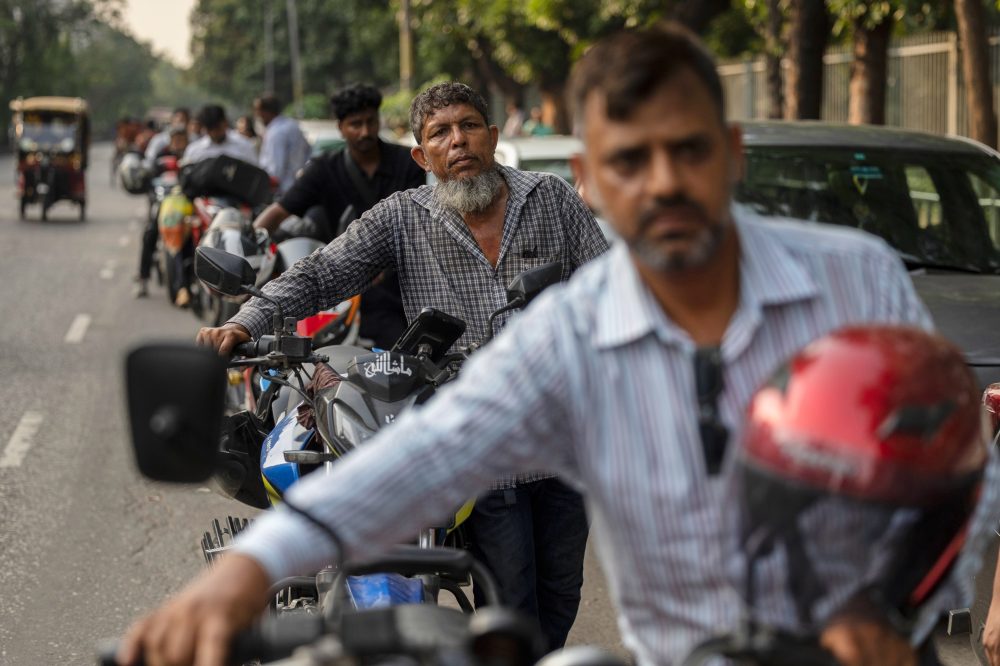
India’s Prime Minister Narendra Modi made a public appeal on Sunday, May 10th, calling on the nation’s residents and companies to reduce their fuel consumption as rising worldwide energy costs put pressure on the country’s foreign currency reserves.
The Prime Minister specifically recommended that both individuals and organizations should embrace remote work arrangements and virtual meetings once again – practices that became widespread during the coronavirus pandemic – stating these measures would provide benefits to the nation as a whole.
According to Modi, the elevated cost of fuel on the international market means India needs to preserve its foreign currency by decreasing the use of gasoline and diesel products throughout the country.
Latvia’s Defense Minister Andris Spruds stepped down from his position on Sunday, following a controversial incident where Ukrainian drones crossed into the country and struck oil storage tanks.
The resignation came after Prime Minister Evika Silina called for Spruds to leave his post, criticizing the government’s slow response in setting up anti-drone defense systems. Silina has named army colonel Raivis Melnis as Spruds’ replacement.
The incident occurred Thursday when two unmanned aircraft crossed over from Russian territory and exploded at a Latvian oil storage facility. The strike prompted both Latvia and neighboring Lithuania to request enhanced NATO air defense capabilities for their region.
Ukraine’s Defense Minister Andrii Sybiha confirmed Sunday on social media platform X that the drones belonged to Ukraine. He explained that the aircraft ended up in Latvia due to “Russian electronic warfare deliberately diverting Ukrainian drones from their targets in Russia.”
Following the cross-border incident, Sybiha announced Friday that Ukraine is exploring the possibility of sending technical specialists to help improve air defense systems across the Baltic region.
New Castle County police have launched a homicide investigation following a late-night emergency call to a Wellington Woods neighborhood residence.
Law enforcement officials were dispatched to the unit block of Three Rivers Court in Newark around 11:45 p.m. on Friday, May 8, 2026, after receiving reports of CPR being performed at the location.
When police arrived at the scene, they made contact with David Lewis, age 29, who told investigators he had departed from the home earlier that evening.
Authorities have not released additional details about the circumstances surrounding the death or the identity of the victim as the investigation remains ongoing.
The incident occurred in the Wellington Woods community, located in the 19702 zip code area of Newark.
Venezuelan officials are raising alarm about what they claim is a significant oil spill originating from neighboring Trinidad and Tobago that has damaged coastal areas across multiple Venezuelan states.
In a statement released Saturday evening to the global community, Venezuela’s Foreign Ministry reported that preliminary evaluations revealed “severe risks” to natural habitats in Sucre and Delta Amacuro states, as well as the Gulf of Paria region. Officials warn the contamination threatens mangrove forests, wetland areas, and the overall ecological stability of the Caribbean region.
Venezuelan authorities have not disclosed when they initially discovered the spill or provided estimates of the volume of oil involved. Trinidad and Tobago’s government has yet to respond to or acknowledge the spill allegations.
The Venezuelan administration has called for detailed information regarding the incident and plans for cleanup and containment efforts, while also seeking compensation measures under international environmental regulations, according to the official declaration.
Both nations share the Gulf of Paria, an enclosed body of water situated at Venezuela’s western boundary and south of Trinidad island, following a border agreement signed in the 1990s that outlined terms for developing oil and gas resources along their shared maritime boundary.
According to Trinidad’s Ministry of Energy, Trinidad and Tobago operates extensive petroleum and natural gas extraction projects both onshore and in coastal waters, ranking among the Caribbean region’s top energy producers.
Chinese Vice Premier He Lifeng is set to travel to South Korea next week to participate in trade discussions with American officials, according to an announcement from China’s Ministry of Commerce on Sunday.
The scheduled meetings on May 12-13 will build upon agreements made during previous conversations and gatherings between leadership from both countries, including a meeting that took place in Busan last October, the ministry stated on its official website. The talks are expected to address economic and trade matters of shared interest.
According to Reuters sources, President Donald Trump is anticipated to travel to China later this week, with the White House extending invitations to a select group of corporate executives to join the presidential delegation to Beijing.
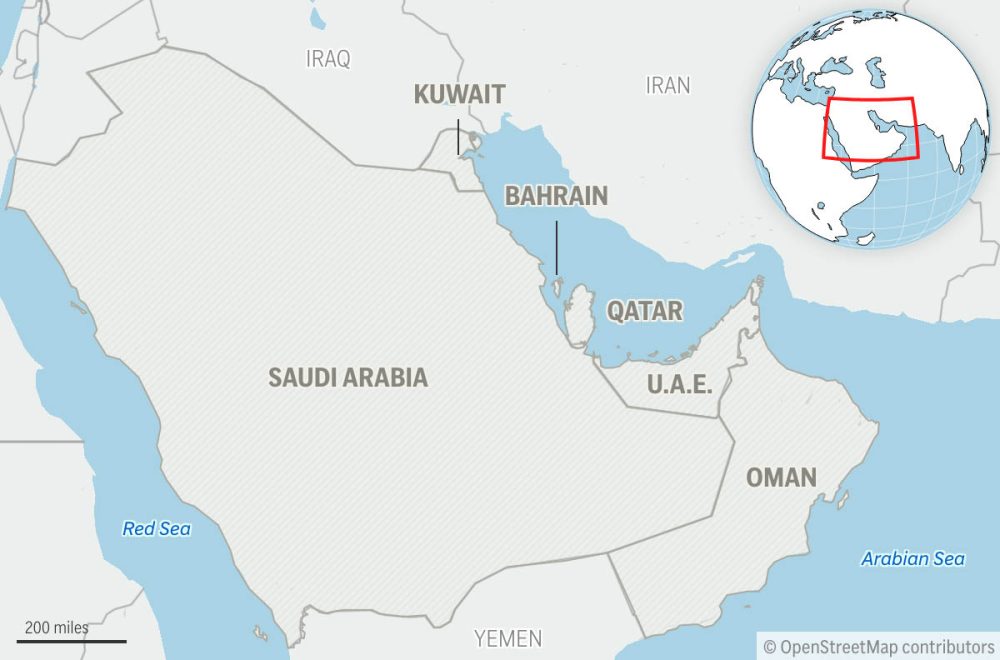
The Saudi Arabian Oil Company announced Sunday that its first-quarter earnings surged 25% compared to the same period last year, reaching $32.5 billion through March 31. The state-controlled energy giant achieved this growth by maximizing use of its cross-country pipeline system to bypass troubled shipping lanes in the Strait of Hormuz amid ongoing conflict with Iran.
The company, commonly called Aramco, had previously seen its annual earnings drop 12% in 2025, making this quarterly rebound particularly significant for the world’s biggest oil producer.
“Aramco’s first-quarter performance reflects strong resilience and operational flexibility in a complex geopolitical environment,” stated company President and CEO Amin H. Nasser. He noted that their East-West Pipeline, which carries crude oil from Saudi Arabia’s eastern production areas to Red Sea ports, is now functioning at its full 7 million barrel-per-day capacity. Nasser described the pipeline as “helping to mitigate the impact of a global energy shock and providing relief to customers.”
Despite this operational success, the pipeline cannot fully compensate for the lost shipping capacity through the Strait of Hormuz. Under normal circumstances, approximately 20% of globally traded oil passes through this strategic waterway daily, along with substantial volumes of natural gas, fertilizers, and other petroleum-based products.
Iran gained effective control over this crucial shipping route following U.S. and Israeli military actions on February 28, while a subsequent U.S. naval blockade has further complicated maritime traffic in the area.
“Recent events have clearly demonstrated the vital contribution of oil and gas to energy security and the global economy, and are a stark reminder that reliable energy supply is critical,” Nasser explained. “Despite these headwinds, Aramco remains focused on its strategic priorities and is leveraging both its domestic infrastructure and its global network to navigate disruption.”
A major technology infrastructure project in Kenya has encountered significant setbacks following failed negotiations between Microsoft and the East African nation’s government, according to a Bloomberg News report published Sunday.
The tech giant had announced plans in 2024 to collaborate with United Arab Emirates-based artificial intelligence company G42 on a $1 billion data center facility in Kenya, designed to enhance cloud computing capabilities throughout the East African region.
However, the project has stalled after Microsoft and its UAE partner requested that Kenya’s government guarantee annual purchases of a specified amount of data center capacity, Bloomberg reported, citing sources with knowledge of the negotiations.
The discussions ultimately collapsed when Kenyan officials were unable to provide the financial commitments at the scale that Microsoft had demanded, according to the report.
Venezuela’s interim leader Delcy Rodriguez has traveled to the Netherlands to represent her nation at the International Court of Justice in a territorial dispute hearing, the presidential office announced.
Rodriguez will head Venezuela’s delegation at Monday’s proceedings before the United Nations’ highest judicial body regarding a longstanding disagreement with neighboring Guyana over the Esequibo region, an area abundant in oil resources that has been contested for more than a century.
The legal challenge was initiated by Guyana in 2018 when they brought the matter before the international court.
While a final decision remains several months away, any ruling issued by the court carries binding authority with no option for appeal. However, the judicial body lacks enforcement mechanisms and must depend on the U.N. Security Council for implementation.
This marks Rodriguez’s inaugural European visit since assuming leadership following the U.S. military capture of Venezuelan President Nicolás Maduro during a January operation.
The European Union had previously imposed travel restrictions on Rodriguez, along with other Venezuelan officials, citing allegations that they had worked to undermine democratic institutions in Venezuela.
Tehran delivered its official response to a United States peace initiative through Pakistani mediators on Sunday, according to Iran’s state-run IRNA news agency.
The Iranian counter-proposal prioritizes ending current military conflicts in the region as the main objective of ongoing diplomatic talks, an informed source told IRNA.
Multiple sources from both nations have informed Reuters that current diplomatic efforts seek to establish a temporary agreement that would stop the fighting and restore normal shipping through the critical Strait of Hormuz waterway. Such an interim deal would provide time for negotiators to work toward a comprehensive agreement addressing more complex issues, including Iran’s controversial nuclear development program.
The conflict, which has now lasted more than two months, continues to threaten one of the world’s most important shipping lanes for oil and commercial goods.
JAKARTA, Indonesia (AP) — Indonesian law enforcement officials conducted a major raid Saturday against an illegal online gambling network in Jakarta, detaining 321 foreign nationals in what authorities describe as one of the nation’s most significant operations targeting digital betting crimes.
The foreign workers, predominantly from Vietnam, were taken into custody at a commercial facility located near Jakarta’s Chinatown district. Investigators say the location served as headquarters for more than 70 gambling websites that marketed services to customers outside Indonesia, according to promotional materials and electronic evidence gathered during the operation.
The detained individuals consist of 228 Vietnamese citizens, 57 Chinese nationals, and others from Laos, Myanmar, Thailand, Malaysia and Cambodia, according to Wira Satya Triputra, who heads general crimes investigations for Indonesia’s National Police. Authorities continue working to identify the organizers and financial supporters of the network.
“We arrested the suspects in the act while they were carrying out activities related to online gambling,” Triputra stated during Saturday’s press briefing. He explained the enterprise functioned with clear organizational structure, assigning workers to specific duties including customer support, sales calls and money management. Law enforcement estimates the operation had been active for approximately two months.
Officials noted that gambling organizations frequently relocate their activities to avoid law enforcement detection, commonly hiring foreign employees to manage websites and customer support services.
According to Triputra, many suspects had entered Indonesia with temporary tourist visas but remained beyond their authorized stay while employed at the gambling facility. He added that “immigration violations were uncovered in addition to suspected gambling and money-laundering offenses.”
During the raid, police confiscated currency from various countries, computing equipment, cellular devices, travel documents and other materials believed connected to the gambling platform management. Officials estimate the organization controlled at least 75 betting websites.
By Saturday, 275 detainees had been officially designated as suspects, while remaining individuals continued under interrogation, Triputra reported. Those facing charges could receive up to nine years imprisonment under Indonesia’s criminal and immigration statutes, plus fines reaching 2 billion rupiah ($116,000).
Comparable international criminal enterprises have emerged recently in Surabaya, Bali and Batam, demonstrating the necessity for enhanced cooperation between law enforcement and government departments to address online gambling and associated fraud schemes, stated Untung Widyatmoko, secretary of Indonesia’s Interpol division.
Widyatmoko indicated authorities have observed evidence that online gambling operators formerly operating in Myanmar and Cambodia are moving their activities to different nations, including Indonesia, following crackdowns in those locations.
“After enforcement measures in Cambodia, we started to see a shift toward Indonesia, and that was something we anticipated,” Widyatmoko explained.
Approximately 210 foreign citizens – including 47 women – from Vietnam, China and Myanmar, suspected of involvement in online investment fraud schemes, were detained Wednesday during an immigration enforcement action at an apartment complex on Indonesia’s Batam island, adjacent to Singapore.
Officials in Surabaya, Indonesia’s second-largest city, announced Friday they had arrested 44 foreign nationals from Japan and China for impersonating law enforcement officers in an international telephone and online fraud operation, following the March arrest of 13 Japanese men in West Java’s Bogor city connected to the same case.
During the previous month, approximately 16 suspects from an international scamming network from China, Malaysia and Taiwan were arrested in West Java’s Sukabumi region, while 26 alleged online fraudsters, including individuals from Philippines and Kenya, were expelled from Bali.
Online gambling remains prohibited in Indonesia, the world’s largest Muslim-majority nation, which has intensified enforcement efforts due to concerns about organized crime and international cyber operations. Police indicated the investigation may result in additional arrests connected to international networks.
Military forces from the United Kingdom executed an unprecedented humanitarian mission over the weekend, parachuting medical personnel and emergency supplies onto one of the world’s most isolated islands to treat a suspected hantavirus patient.
Six paratroopers and two military medical specialists from the 16 Air Assault Brigade made the historic jump onto Tristan da Cunha, delivering crucial oxygen tanks and other medical equipment. The team flew more than 6,700 kilometers from RAF Brize Norton in Oxfordshire to Ascension Island, then traveled an additional 3,000 kilometers south to reach their destination.
The emergency airdrop took place Saturday and marks the first instance of UK military forces deploying medical staff through parachute operations for humanitarian purposes, according to Ministry of Defence officials.
The mission was launched to assist a British citizen who health officials believe contracted hantavirus while aboard a cruise vessel that experienced an outbreak. The ship made port at Tristan da Cunha from April 13 through April 15, and the passenger began showing symptoms consistent with the virus on April 28. World Health Organization representatives report the individual remains in stable condition under isolation protocols.
“With oxygen supplies on the island at a critical level, an airdrop with medical personnel was the only method of getting vital care to the patient in time,” Ministry of Defence officials stated.
The remote British territory houses approximately 200 residents and sits roughly halfway between the African and South American continents. Located more than 2,400 kilometers from its closest inhabited neighbor, St. Helena, Tristan da Cunha typically requires a six-day sea voyage to reach. The island operates with just two medical professionals under normal circumstances and lacks any airport facilities.
Military aircraft had previously delivered PCR testing materials to Ascension Island on May 7 for another British passenger from the same cruise who was later evacuated to South Africa for treatment.
“The arrival of paratroopers, medical personnel and medical supplies from the sky has hopefully reassured the people of Tristan da Cunha,” stated Brigadier Ed Cartwright, who leads the 16 Air Assault Brigade.
Military forces in the United Arab Emirates successfully intercepted two unmanned aircraft originating from Iran on Sunday, according to an announcement from the country’s Defense Ministry. This incident represents the most recent escalation in a series of renewed hostilities targeting the wealthy Gulf nation.
The Emirates has faced multiple attacks from Iran in recent days, breaking a month-long period of relative peace that followed the announcement of a ceasefire in the Iran conflict by the United States.
While Iran has rejected claims that it conducted operations against the UAE recently, Tehran issued a warning of a “crushing response” should any hostile actions be launched from Emirati territory against Iran.
The ongoing security concerns forced the UAE to transition schools to remote instruction last week. However, officials announced Sunday that classroom learning will return starting Monday.
Iranian petroleum officials have firmly rejected claims that an oil spill occurred near the country’s largest crude export facility, following reports this week of satellite images showing what appeared to be contamination in Gulf waters.
The head of Iran’s Oil Terminals Company announced Sunday that thorough examinations revealed no evidence of petroleum leakage from any infrastructure at Kharg Island, including storage facilities, transport pipelines, loading equipment, or vessels operating in the vicinity.
The executive noted that the Marine Emergency Mutual Aid Centre (MEMAC), which monitors regional maritime pollution incidents, had similarly found no indication of any spill in the area surrounding the critical export hub.
Iranian authorities conducted comprehensive on-site evaluations and scientific analysis following the initial reports, with officials stating they discovered no trace of contamination whatsoever in their investigation.
The State Department is experiencing a significant departure of diplomatic personnel during the current Trump administration. Officials cite increasing political interference in foreign policy decisions as a primary factor driving the departures.
Career foreign service officers are leaving their positions at an accelerated rate, with many pointing to what they describe as unprecedented political involvement in diplomatic matters that were traditionally handled by career professionals.
The departures represent a notable shift in the traditionally stable ranks of America’s diplomatic corps, raising questions about the long-term impact on U.S. foreign relations and institutional knowledge within the department.
During a recent interview, NPR host Ayesha Rascoe engaged in conversation with historian Kevin Levin regarding President Trump’s proposal for a victory arch to mark America’s upcoming 250th anniversary celebration.
The discussion centered on how this proposed commemorative structure would compare and contrast with the existing collection of monuments and memorials currently located throughout Washington, D.C.
Levin provided expert perspective on the historical significance and potential impact of adding such a triumphal arch to the nation’s capital, offering insights into how it might complement or differ from other patriotic landmarks in the area.
JAKARTA, Indonesia — Search and rescue teams in Indonesia successfully recovered the remains of two Singaporean hikers on Sunday, following a deadly volcanic eruption that occurred Friday on the remote island of Halmahera.
The two men, ages 30 and 27, were discovered just a short distance from where recovery teams had found the body of an Indonesian woman hiker the previous day, according to Abdul Muhari, a spokesman for the National Disaster Management Agency. The three fatalities had been positioned approximately 165 feet from the main crater’s edge when Mount Dukono erupted.
Dense volcanic debris had completely buried the men’s remains, creating significant challenges for rescue operations and hampering recovery efforts, Muhari explained.
“The bodies were buried under deep, densely packed volcanic material that is difficult to dig through,” Muhari said, “Rescue teams must proceed cautiously to ensure safety.”
The three deceased hikers were part of a 20-person group that had attempted to climb the 4,445-foot mountain in North Maluku province, despite existing safety prohibitions. The group became trapped when the volcano erupted in the early morning hours Friday, launching a massive ash plume approximately 6 miles skyward.
Emergency teams successfully rescued 17 individuals within hours of the initial eruption, including seven people from Singapore. Ten of those rescued sustained minor burn injuries, while two were able to assist in the search efforts by providing crucial information about the missing hikers’ locations.
Nearly 100 rescue personnel participated in the search operation, confronting challenging terrain while the volcano remained active, Muhari reported.
Iwan Ramdani, who leads the regional search and rescue department, explained that Sunday’s recovery mission required constant monitoring by volcanic experts as Mount Dukono continued ejecting ash, heated materials, and glowing debris.
“The search operation was repeatedly disrupted by Mount Dukono’s continued volcanic activity,” Ramdani said, “Teams must be extremely careful during the evacuation process.”
All three victims’ remains were initially brought to an emergency staging area before being transferred to Tobelo Regional Hospital for identification procedures and additional processing, Ramdani confirmed.
Officials from the National Disaster Management Agency announced the formal conclusion of all search and rescue activities.
The agency issued a strong appeal for residents, visitors, and tourism companies to follow established safety protocols and stay away from designated danger zones.
Government officials have implemented a complete prohibition on all activities within a 2.5-mile radius surrounding the crater, following guidance from Indonesia’s volcanic monitoring agency.
Mount Dukono represents one of over 120 active volcanic peaks throughout Indonesia, a nation particularly susceptible to geological instability due to its position along the Pacific “Ring of Fire,” a curved chain of volcanoes and seismic fault lines surrounding the Pacific Ocean.
PORTLAND, Ore. — Democratic leaders across the country are focusing their campaign messages on rising living costs as they prepare for midterm elections. However, in Oregon, a ballot question is creating complications for that political strategy.
Last fall, Oregon’s Democratic-led Legislature approved higher gas taxes and various fees to finance road infrastructure projects and address gaps in the state’s transportation funding. GOP lawmakers responded by gathering petition signatures to challenge these increases, resulting in a referendum scheduled during a period when gas prices are surging nationwide due to the Iran conflict.
“It is a hell of a time to be raising gas taxes on people,” said Jeanine Holly, filling up her tank on a recent morning in Portland.
Oregon’s May 19 primary ballot will include the gas tax repeal question during widespread oil market disruptions caused by the Iran war initiated by Israel and President Donald Trump. American consumers across party lines are expressing frustration, with national gas prices exceeding $4.50 per gallon on Friday and Oregon averaging roughly 80 cents higher per gallon.
This referendum allows voters to address an issue directly affecting their wallets while costs for housing, food, and other necessities remain high. Across the nation, Democrats have emphasized affordability concerns similar to those that contributed to Trump’s 2024 victory. Several Democratic candidates have even suggested tax reduction proposals to advance their platform and challenge typical Republican tactics.
“It’s difficult to imagine a worse situation for … a gas tax increase than right now in American politics,” said Chris Koski, professor of political science and environmental studies at Portland’s Reed College.
GOP leaders quickly mobilized voters after the Legislature and Democratic governor approved the tax hike, which also encompassed increased payroll taxes for transit initiatives and higher vehicle registration and title fees.
The referendum required 78,000 voter signatures for ballot qualification. Republicans collected 250,000 signatures.
“That is a remarkable number,” said Republican strategist Rebecca Tweed.
Oregon Republicans have challenged Democrats’ affordability messaging by characterizing the tax and fee increases as worsening high living costs.
“Do Oregonians want to pay more? The answer is no,” said GOP state Sen. Bruce Starr, who helped lead the referendum campaign. “Everything they’re looking at is expensive.”
The legislation would increase Oregon’s gas tax from 40 cents to 46 cents per gallon. This would tie Oregon with Maryland for the eighth-highest state gas tax when including other state taxes and fees, based on U.S. Energy Information Administration data.
At the Portland gas station, Michael Burch said he previously spent $70 to fill three-quarters of his pickup truck’s tank, but now pays $80 for just over half a tank.
“I’m sick and tired of taxes,” the 76-year-old retiree said. “Gas is certainly dampening the spirits and the coffers of folks that aren’t as well off.”
Hannah Coe, a 30-year-old student, said she was uncertain about her vote on the primary ballot referendum.
“I think I would be in favor of it if it was going to go to the things that it was saying it was going to go to, such as fixing our roads,” she said. “I also kind of feel like that’s just a grab at trying to get more money from the people who live here.”
Oregon Democrats dedicated much of last year to advancing transportation funding legislation to generate revenue for services including road maintenance and snow removal. The discussion occurred amid forecasts of declining gas tax income as more drivers choose electric, hybrid, and fuel-efficient vehicles.
They ultimately approved a reduced version of their proposal during a special legislative session convened by Democratic Gov. Tina Kotek.
She recently recognized the difficult timing of the referendum.
“Certainly, the conversation at the ballot this year … is a tough sell right now, because I think everyone is feeling a pinch on their household budgets,” she told reporters.
However, she and fellow Democrats argued that Trump’s decision to engage in war with Iran is the primary cause of gas price spikes. She proposed that the federal government consider lowering the federal 18 cent-per-gallon gas tax to provide pump relief for Americans.
Some Oregon residents support the Democrats’ rationale for last year’s legislation. Kurt Borneman, 68, said he would back the gas tax increase, despite now paying at least $10 more to fill his tank.
“I realize that money’s tight and roads need to be improved,” he said at the Portland gas station. “I want less government, but I also want nice roads.”
Democratic state Rep. Paul Evans said his party failed to effectively communicate the gas tax increase to the public. No organized Democratic opposition to the ballot referendum has emerged.
“When anything is reduced to, ‘Do you want a tax or not?’ Most people are going to say no,” he said. “The messaging got away from us, and it became focused upon the price instead of the value.”
WASHINGTON (AP) — Just weeks ahead of his scheduled Beijing trip, President Donald Trump took to social media to forecast that Chinese President Xi Jinping would “give me a big, fat hug when I get there.”
However, China’s substantial financial connections to Iran, combined with ongoing trade disputes and tariff concerns dating back to Trump’s previous presidency, may dampen the atmosphere during Trump’s Beijing visit this week. This comes despite the Republican president’s years of lavish praise for Xi, demonstrating his view of China’s leader as a formidable competitor deserving of his respect and admiration.
Given Trump’s dislike of lengthy flights and extended periods away from the White House or his Florida and New Jersey residences, he’s anticipated to remain in China for only portions of three days.
While ceremonial elements will be present, the magnificence isn’t anticipated to match Trump’s initial 2017 China visit, which Beijing characterized as a “state visit-plus.”
“Even before this whole conflagration with Iran, they weren’t going to go state visit-plus like last time, just because things are tense,” said Jonathan Czin, a former director for China at the National Security Council during the Biden administration.
During Trump’s previous presidential term visit, China provided an elaborate welcome featuring a military band and children with flags chanting “Welcome.”
Xi provided a Forbidden City tour, where Trump and first lady Melania Trump enjoyed a private dinner. Trump became the first foreign leader since the People’s Republic of China’s 1949 establishment to receive treatment once exclusively reserved for emperors.
The next day included another welcome ceremony at the Great Hall of the People with a military parade. A state banquet honored Trump, featuring video highlights from Xi’s prior Florida visit and footage of Trump’s granddaughter Arabella performing Chinese songs.
Beijing rarely provides such elaborate treatment for visiting foreign dignitaries. When British Prime Minister Keir Starmer toured the Forbidden City in January, Xi was absent and the location stayed open to tourists, forcing Starmer to navigate around sightseers.
Ali Wyne, senior U.S.-China research and advocacy adviser for the Washington nonprofit the Crisis Group, said the “Chinese delegation will likely do its utmost to ensure that Trump leaves Beijing believing that he has just concluded the most extraordinary state visit of his two presidencies.”
However, he noted that the “pomp and circumstance would serve a different role now than they did when he first visited Beijing” because “Xi has a much better understanding of Trump, and the administration’s own national security strategy and national defense strategy recognize China as a near-peer.”
Achievement expectations may be diminished this time, according to Czin, currently a Brookings Institution fellow. He anticipates the Chinese may withhold significant trade breakthroughs or other major concessions because they are “working backward from our midterm elections” with the belief that approaching Election Day will increase “the more leverage they are going to have.”
The GOP focuses on maintaining Congressional control, while polling indicates most Americans disapprove of Trump’s economic policies and believe the United States overreached in Iran. Nevertheless, the White House contends that Trump’s previous tough stance with Beijing regarding tariffs — later overturned by the Supreme Court — positions the U.S. favorably.
“President Trump cares about results, not symbols,” White House spokesperson Anna Kelly said. “But even still, the president has a great relationship with President Xi, and the upcoming summit in Beijing will be both symbolically and substantively significant.”
Trump may encounter China’s leader four times within eight months.
Following his Beijing visit, Trump plans to welcome Xi at the White House. Trump might also participate in November’s Asia-Pacific Economic Cooperation meeting in Shenzhen, China. Xi could attend the subsequent month’s Group of 20 summit at Trump’s Doral, Florida resort.
Czin observed that Xi also dislikes travel, suggesting not all planned meetings may occur. He noted China’s leader doesn’t engage in “personal connections” that Trump enjoys, pointing to Xi’s January military purge that removed officials with longstanding family ties.
Wyne, however, said Xi “appreciates that he is unlikely to deal with another U.S. president who admires him as greatly and embraces as narrow a view of strategic competition.”
This means Xi may “attempt to pocket as many economic and security concessions from Trump as possible,” Wyne said.
Trump told The Wall Street Journal’s editorial board in 2024 that Xi “was actually a really good … I don’t want to say ‘friend.’ I don’t want to act foolish. ‘He was my friend.’ But I got along with him great.”
Trump even indicated that military intervention might be unnecessary to prevent Chinese forces from threatening Taiwan, simply because China’s leader “respects me,” despite recent discussions about potentially providing arms to Taiwan.
Trump has maintained praise for the bilateral relationship since returning to the White House, even after his Beijing visit was rescheduled from March due to early Iran war developments.
He unsuccessfully encouraged China to help reopen the Strait of Hormuz after Iranian forces blocked it, disrupting global economies. However, China leveraged its position as Iran’s largest oil customer to encourage Iran toward what remains a fragile ceasefire.
Beijing maintains strong economic relationships with Tehran, and the conflict could damage its economy, which was already expected to experience slower growth. If China successfully helps establish lasting peace, this might improve its position in trade negotiations with the Trump administration.
During his 2017 visit, Trump announced $250 billion in non-binding trade agreements, some of which never materialized. A 2020 round of trade deals worth $200 billion largely failed to materialize before Trump’s first term concluded.
More recently, Trump’s announcement of significant global tariffs last year prompted China to halt U.S. soybean purchases and restrict rare earth mineral exports essential for American manufacturing.
Tensions have somewhat decreased since the U.S. achieved a trade truce last fall limiting tariffs on both sides. The administration continues prioritizing reduction of the U.S. trade deficit with China while encouraging bilateral trade.
“I expect great stability in the relationship,” Treasury Secretary Scott Bessent said. “But that doesn’t mean our trade deficit can’t continue dropping.”
Kelly, the White House spokeswoman, said Trump “doesn’t travel anywhere without bringing deliverables home to our country.”
“Americans can expect the president to deliver more good deals for the United States while in China,” she said.
MOSCOW, May 10 – Moscow has condemned Armenia for allowing Ukrainian President Volodymyr Zelenskyy to deliver what Russia calls anti-Russian statements during his recent visit, signaling deepening tensions between the traditionally allied nations.
During his trip to Yerevan last week, Zelenskyy suggested that Russia was concerned about potential drone strikes over Red Square in Moscow during the May 9 Victory Day celebration marking the Soviet defeat of Nazi Germany in World War Two.
The military parade proceeded on Saturday as scheduled but in a reduced format, omitting the typical display of military equipment due to concerns about possible Ukrainian drone strikes.
Russian officials had already called in Armenia’s ambassador on Thursday to object to what they characterized as terrorist threats against Russia delivered by Zelenskyy while in Yerevan.
Kremlin spokesperson Dmitry Peskov expressed displeasure with the situation, stating: “This is not normal, it is not in keeping with the spirit of our relations with Yerevan.”
“The main thing for us is that Armenia does not adopt an anti-Russian stance,” Peskov added, noting that Russia expects clarification from Yerevan regarding the matter.
On Thursday, Russian officials also voiced concerns about Armenia being pulled into what they termed the European Union’s anti-Russian sphere of influence following Armenia’s hosting of a European Political Community gathering on May 4.
Over 40 European leaders, including Zelenskyy, participated in that meeting, which was followed by an EU-Armenia summit.
Relations between Russia and Armenia, which houses several Russian military installations, have become increasingly strained since Azerbaijan forcibly reclaimed its separatist Nagorno-Karabakh region in September 2023, despite Russian peacekeepers being stationed there.
Kuwaiti military forces successfully neutralized multiple hostile unmanned aircraft that entered the nation’s airspace during early morning hours on Sunday, marking another episode in a pattern of cross-border drone incidents connected to regional Middle East tensions.
This latest incident follows a previous attack on April 25, when Kuwaiti defense forces reported that two unmanned aircraft launched from Iraqi territory struck a pair of northern border installations, resulting in property damage.
The country’s air defense systems also successfully countered a wave of Iranian unmanned aircraft on April 8 that were directed at critical infrastructure facilities.
Despite a reduction in active hostilities following an April ceasefire agreement, unmanned aircraft continue to be deployed from Iraqi territory toward Gulf nations, with both Saudi Arabia and Kuwait experiencing such attacks.
BERLIN, May 10 – German leadership on Sunday rejected Russian President Vladimir Putin’s proposal to have former Chancellor Gerhard Schroeder serve as a mediator for potential European Union peace negotiations regarding Ukraine.
The suggestion came after European Council President Antonio Costa recently indicated he saw “potential” for EU discussions with Russia about negotiating peace and addressing Europe’s future security framework. Putin responded by naming Schroeder as his preferred intermediary for such discussions.
However, a German official told Reuters the proposal lacked credibility since Russia hasn’t modified any of its existing demands. The official, speaking anonymously, noted that Moscow’s willingness to extend a three-day ceasefire would serve as an initial measure of their genuine interest in negotiations.
The same official characterized Putin’s suggestion as part of a pattern of false proposals designed to create divisions within the Western alliance.
Schroeder’s relationship with Russia has drawn significant controversy in Germany. Following his departure from the chancellorship in 2005, he immediately accepted a position leading a German-Russian gas pipeline consortium, leading to widespread criticism over his ties to Putin.
A German government representative stated Friday that Berlin has observed no indication that Moscow is genuinely interested in meaningful negotiations. The spokesperson emphasized that any potential EU discussions would require careful coordination with member nations and Ukraine.
Moscow and Kyiv exchanged accusations Sunday over violations of a weekend ceasefire that President Trump helped negotiate, with both sides reporting continued military action despite the temporary truce.
Russian defense officials claimed Ukraine broke the ceasefire more than 1,000 times, according to state media reports from a Sunday briefing. The ministry alleged Ukrainian forces targeted civilian areas in Russian territory and struck military positions along the front lines.
Russia’s military “responded in kind” to the ceasefire violations,” the ministry said.
Meanwhile, Ukrainian regional leaders reported casualties from ongoing Russian attacks. Ivan Fedorov, who heads the southeastern Zaporizhzhia region, confirmed one death and three injuries from artillery and drone strikes over a 24-hour period.
In the Kherson region, Oleksandr Prokudin reported seven wounded civilians during the same timeframe. Additionally, Vladimir Saldo, the Moscow-appointed leader of Russian-controlled Kherson territory, said two people were hurt by Ukrainian bombardment.
A Russian drone strike also damaged a nine-story apartment building in Kharkiv, Ukraine’s second-largest city, injuring five residents, according to regional administrator Oleh Syniehubov.
The temporary halt in fighting was announced Friday by President Trump, who said both nations agreed to his request for a Saturday-through-Monday ceasefire to coincide with Victory Day, Russia’s commemoration of defeating Nazi Germany.
Trump said there would also be an exchange of prisoners, declaring that the break in fighting could be the “beginning of the end” of the war.
Ukrainian President Volodymyr Zelenskyy had previously suggested Russian authorities “fear drones may buzz over Red Square” during the May 9 parade in Moscow. Following Trump’s announcement, Zelenskyy sarcastically declared Red Square temporarily off-limits for Ukrainian strikes to allow the Russian parade to proceed. The Kremlin dismissed his remarks as a “silly joke.”
Ukraine’s air force reported Sunday that it successfully intercepted or destroyed all 27 attack and decoy drones launched by Russia during overnight operations.
South Korean officials confirmed Sunday that an unknown object struck a cargo ship operated by shipping company HMM while the vessel remained stranded in the Strait of Hormuz on May 4, following an inspection conducted Friday.
The rear section of the bulk carrier HMM Namu was damaged in the incident. The same ship had suffered an explosion and fire seven days earlier while anchored near United Arab Emirates waters in the strait. No crew members were injured in either incident.
President Donald Trump previously attributed the initial blast to an Iranian attack on the vessel.
Following the fire on Monday, investigators towed the damaged ship to a Dubai port facility. South Korean authorities had been conducting their own investigation into the original incident.
Ministry officials stated they could not determine the nature of the object that struck the vessel. Authorities plan to gather debris from the area for further examination and analysis.
In response to the incidents, Trump called on South Korea to participate in “Project Freedom,” a currently halted American-led initiative aimed at protecting maritime traffic through the vital shipping corridor.
Iran’s diplomatic mission in South Korea has rejected any involvement in the attack. Embassy officials did not provide immediate responses to inquiries about the unidentified object incident when contacted after business hours.
An HMM company representative refused to provide comments regarding the ministry’s announcement about the investigation findings.
British Prime Minister Keir Starmer is standing firm against mounting pressure to resign, declaring his administration a decade-long initiative following devastating local election results this week.
The Labour Party leader’s political future hangs in the balance after suffering the most significant local election defeats by any ruling party in over thirty years. The poor showing has sparked increasing demands from party members for Starmer’s ouster.
One former government minister has threatened to gather support from fellow lawmakers to initiate a leadership challenge unless Starmer’s cabinet removes him by Monday.
When questioned by the Observer newspaper about his political future and whether he would lead Labour into the next national election while serving a complete second term, Starmer firmly declared: “Yes, I will.”
“I’m not going to walk away from the job I was elected to do in July 2024. I’m not going to plunge the country into chaos,” he stated.
Should Starmer be forced out in the coming weeks, Britain would face its seventh prime minister within a single decade.
Despite Thursday’s electoral setback, Starmer’s cabinet members have remained supportive of his leadership.
Education Minister Bridget Phillipson expressed confidence in the prime minister’s ability to reverse the party’s fortunes, announcing on Sky News Sunday that Starmer would outline a “fresh direction” for the nation during Monday’s address.
“We got a real kicking from the voters, there’s no escaping that,” Phillipson acknowledged regarding Labour’s electoral performance. “We have to reflect seriously on that.”
Catherine West, who previously held a junior foreign ministry position before Starmer dismissed her last year, indicated she would evaluate Monday’s speech before deciding whether to pursue the 81 parliamentary supporters required to launch a leadership challenge.
When asked Sunday about her chances of securing sufficient backing, West responded to the BBC: “We will find out.”
Britain’s next general election must occur no later than 2029. If Starmer completes a second five-year term, he would rank as the third-longest serving consecutive British leader over the past two centuries, following Margaret Thatcher and Tony Blair.
Iran’s highest-ranking military official has received fresh strategic directives from the country’s Supreme Leader, according to reports from the Fars news agency on Sunday.
Ali Abdollahi, who leads the Khatam al-Anbiya Central Headquarters overseeing Iran’s unified military command, met with Supreme Leader Mojtaba Khamenei to receive what Fars described as “new guiding measures to pursue military operations and firmly confront adversaries.” The timing of their meeting was not disclosed by the news outlet.
During the session, Abdollahi provided Khamenei with an assessment of Iran’s military preparedness across all branches of the armed forces.
“The armed forces are ready to confront any action by the American-Zionist (Israeli) enemies. In case of any error by the enemy, Iran’s response will be swift, severe, and decisive,” Abdollahi stated, according to the Fars report.
The renowned Italian fashion empire founded by Giorgio Armani is moving ahead with plans to distribute a 15% ownership portion among three major companies, according to reports from Italian media outlets.
The legendary designer, who passed away at age 91 last September, had previously identified three specific companies as his preferred purchasers: French luxury conglomerate LVMH, cosmetics giant L’Oreal, and EssilorLuxottica, both of which had existing business relationships with the fashion house.
According to the founder’s final wishes, the company must complete the sale of this initial 15% ownership share between 12 and 18 months following Armani’s passing.
Italian publication la Repubblica reported that current Armani CEO Giuseppe Marsocci is developing a comprehensive business strategy while working to select two financial advisers who will manage the sale process.
These chosen advisers will then present Marsocci’s five-year strategic plan to the prospective investors.
Before officially beginning the sale proceedings, the fashion house is reportedly considering dividing the 15% stake into three equal portions, according to the newspaper. This approach would ensure all three potential buyers remain actively involved from the start of the process.
When contacted for comment about these reports, an Armani company spokesperson declined to provide any statement.
MOSCOW, May 10 — Moscow’s Defense Ministry accused Ukrainian forces on Sunday of breaking ceasefire agreements through drone operations and artillery bombardments targeting Russian military positions, according to reports from the Interfax news agency.
The ministry stated that Russian forces intercepted and destroyed 57 Ukrainian unmanned aircraft during the previous 24-hour period, while asserting that Moscow has been adhering to ceasefire conditions.
According to the ministry, Russian forces had “responded in kind” to Ukraine’s military actions, conducting counterattacks using multiple launch rocket systems and mortar fire.
Previously, Ukrainian officials had blamed Russia for carrying out drone operations and approximately 150 combat encounters during the same timeframe, despite an existing U.S.-mediated ceasefire agreement.
Independent verification of these military claims from the battlefield was not immediately available through Reuters.
Good morning, Delmarva! We’re starting this Sunday with some patchy fog across the peninsula, but don’t worry – it’ll clear out by 8 AM, giving way to mostly sunny skies and pleasant spring weather.
Today’s high will reach a comfortable 83 degrees with light southwest winds under 5 mph. There’s just a slight chance – about 20% – of some scattered showers and thunderstorms developing later this afternoon, so you might want to keep an eye on the sky if you’re planning outdoor activities.
Tonight, we’ll see temperatures drop to a cool 52 degrees with a better chance of showers and thunderstorms moving through the area. Monday brings a noticeable change as a weather system moves in, keeping us cooler with highs only reaching 64 degrees and continued chances for rain showers. The good news is that by Monday night, we’ll start to clear out with partly cloudy skies and lows around 46 degrees.
Enjoy this beautiful Sunday morning, and remember to have that umbrella handy for later today and tomorrow! Stay weather-aware, Delmarva!
Israeli authorities expelled two humanitarian activists on Sunday following their detention for more than a week after leading an aid convoy that attempted to breach Israel’s naval blockade around Gaza.
The expelled activists were identified as Saif Abukeshek, a Spanish-Swedish national of Palestinian heritage, and Thiago Ávila, a Brazilian citizen. Both individuals served on the leadership board of the Global Sumud Flotilla, an organization working to challenge Israel’s maritime blockade while delivering humanitarian supplies to Palestinian territories.
In a Sunday statement posted to X, Israel’s Foreign Ministry labeled the pair as “professional provocateurs,” declaring that “Israel will not allow any breach of the lawful naval blockade on Gaza.”
When initially apprehended, Israeli officials stated the duo was being held for interrogation, with Abukeshek “suspected of affiliation with a terrorist organization” and Ávila “suspected of illegal activity,” though no supporting evidence was presented. No official charges have been made public.
The governments of Spain and Brazil jointly denounced what they termed “the kidnapping of two of their citizens in international waters by the Government of Israel” when the detention occurred. The incident prompted solidarity demonstrations across multiple nations.
Israeli naval forces intercepted a total of 22 vessels carrying 175 activists. According to the activists, Israeli military personnel boarded their ships, destroyed engines, and arrested several participants. The confrontation took place several hundred miles from both Gaza and Israel during the overnight hours between Wednesday and Thursday.
Israeli representatives justified their preemptive action against the flotilla, citing the substantial number of vessels involved as requiring intervention before they could enter Israeli territorial waters.
This flotilla mission represents the group’s second attempt to reach Gaza in under a year, following Israeli authorities’ successful prevention of an earlier effort. The previous operation included approximately 50 ships and 500 activists, featuring notable participants such as Swedish environmental activist Greta Thunberg, Mandla Mandela (Nelson Mandela’s grandson), and various elected officials.
Israel had previously arrested, detained, and deported those participants, including Ávila, who alleged mistreatment during custody. Israeli authorities rejected these allegations.
Meanwhile in Gaza, an Israeli airstrike targeted a vehicle, resulting in at least two fatalities including a Hamas police official, according to Nasser hospital records.
The attack occurred late Sunday morning in the Al-Amal district of Khan Younis in southern Gaza, according to civil defense officials operating under the Hamas-controlled Interior Ministry.
Among those killed was Col. Wessam Abdel-Hadi, who directed the police investigation unit in Khan Younis, hospital officials confirmed.
Israeli military officials stated they were examining the incident.
These deaths add to the Palestinian casualties in the coastal territory since a fragile ceasefire agreement in October aimed to end more than two years of conflict between Israel and Hamas in Gaza.
Although major combat operations have decreased, the unstable truce has witnessed nearly daily Israeli military action.
Israeli forces have conducted numerous airstrikes and routinely opened fire on Palestinians approaching military-controlled areas, resulting in at least 850 Palestinian deaths, according to Gaza’s health ministry.
The ministry, operating under Hamas governance, keeps comprehensive casualty documentation that UN agencies and independent analysts generally consider credible. However, it does not distinguish between civilian and combatant deaths.
Armed groups have conducted attacks against Israeli troops, with Israel claiming its strikes respond to these incidents and other ceasefire violations. Four Israeli soldiers have died since the ceasefire began.
Recent primary elections in Ohio demonstrated that economic concerns remain at the forefront of voters’ minds, particularly in contested congressional races around the Toledo area.
When residents cast their ballots in last week’s primaries, candidates and voters alike emphasized that rising costs for essential items like fuel and food have become the dominant political issue in competitive districts.
The electoral outcomes in Toledo’s congressional district reflected a broader trend where economic pressures and household budget concerns are driving political decisions across the state.
Three Palestinians lost their lives in Israeli airstrikes across Gaza on Sunday, medical officials reported, with two victims being members of the Hamas-controlled police force. The deadly incidents raise fresh questions about the durability of the U.S.-mediated truce agreement.
According to medical personnel, one fatality occurred when an airstrike hit the Maghazi refugee camp within the Gaza Strip. In a separate attack, the commander of Khan Younis criminal police, Wessam Abdel-Hadi, was killed alongside his assistant, as confirmed by Gaza’s Hamas-controlled interior ministry.
Previous Reuters reporting has documented Israel’s increased targeting of Gaza’s Hamas-operated police units, which the militant organization has deployed to reestablish administrative control in territories under their authority.
Israeli military officials have not yet provided statements regarding either attack.
Despite the October 2025 ceasefire agreement, hostilities in Gaza have continued, with Israel launching strikes on an almost daily basis.
Local medical sources report that no fewer than 850 Palestinians have died since the truce began, while Israeli officials state that militants have killed four Israeli soldiers during the same timeframe.
Both Israel and Hamas have accused one another of breaking the ceasefire terms.
Gaza health officials report that more than 72,500 Palestinians have died since the conflict began in October 2023, with the majority being civilians.
LA PAZ, Bolivia — Fed up with fuel shortages and rising gas prices, Simón Huanca decided to take action.
The 53-year-old Indigenous craftsman purchased a Chinese electric vehicle to get around El Alto, Bolivia’s highest-elevation city, using it to transport his family and alpaca wool for his textile business.
Huanca even put in his own charging station at home for convenience, since only three public charging points exist for the entire metropolitan region of El Alto and nearby La Paz — an area with over 1.6 million residents.
“Since last year, I’ve been trying to get an electric car to save on costs,” Huanca said while driving his electric SUV through a working-class district.
Huanca represents a small but increasing group of Bolivians switching from gas-powered vehicles to electric ones as the South American nation faces fuel shortages and a presidential order that eliminated longtime fuel subsidies, essentially doubling gasoline costs.
Bolivia’s energy problems intensified in 2023 during former President Luis Arce’s administration, which maintained government subsidies where the nation bought fuel at world prices but sold it domestically at half the cost.
However, Bolivia — which brings in 80% of its diesel and 55% of its gasoline from other countries — slowly exhausted its foreign currency reserves to buy fuel, with the subsidy costing the government over $2 billion annually.
Extended lines of cars at gas stations became routine.
In December — just one month after assuming office — President Rodrigo Paz eliminated the subsidy, causing energy costs to nearly double and severely impacting Bolivians.
Several weeks afterward, transportation workers complained that inferior gasoline was harming their vehicles. The administration blamed sabotage, with Paz stating that fuel distributed by state oil company Yacimientos Petrolíferos Fiscales Bolivianos contained gum and manganese residue left in storage tanks from the previous Arce government.
The contaminated fuel controversy sparked widespread strikes and demonstrations among transport workers and led to two senior officials at the state oil company stepping down.
The final breaking point for many Bolivians was the Iran conflict. Confronted with potential additional fuel price increases, some exchanged their gasoline vehicles for electric alternatives.
“The investment exceeds $36,000, but I no longer waste valuable working hours searching for fuel or managing vehicle repairs,” said Ever Vera, a 54-year-old attorney.
Electric vehicle registrations in Bolivia increased from 500 to 3,352 over the past five years, based on Single Registry for Tax Administration data tracking tax-registered vehicles. The biggest jump occurred in the last two years during the fuel crisis. These still represent only a small portion of approximately 2.6 million vehicles in the nation of nearly 12 million people.
Most of these vehicles came from China, with the United States as the second-largest source.
“The growth is exponential,” said Freddy Koch, an electric mobility specialist with nonprofit organization Swisscontact. While noting these vehicles are currently purchased by wealthier buyers, he anticipates broader market appeal and projects the electric vehicle total could triple within two to three years.
Paz also removed import duties on all automobile types, increasing the number of importers competing to bring these vehicles into Bolivia at reduced prices.
The growing electric vehicle market has opened new business prospects for 38-year-old electrician Marcelo Laura. A month ago, he discovered a profitable specialty installing home and business charging stations.
“There aren’t many public charging stations,” he said. “A year ago, I thought it was practically impossible to think that people would actually be bringing in electric cars.”
A traffic accident has prompted the closure of Red Mill Road, blocking travel between Darwin Drive and Old Red Mill Road.
Delaware Department of Transportation officials report the roadway is currently impassable due to the vehicle collision. Crews are working to clear the scene and restore normal traffic flow.
Motorists are advised to seek alternate routes while the cleanup continues. No timeline has been provided for when the road will reopen to traffic.
Ukrainian authorities say Russian forces launched drone attacks and engaged in close to 150 combat encounters during the last day, even though a US-mediated ceasefire was supposed to be active, officials reported Sunday.
President Donald Trump announced Friday that both Russia and Ukraine had committed to a three-day truce running from May 9 through May 11, part of broader diplomatic efforts to resolve the conflict that has now stretched beyond four years.
Regional governor Ivan Fedorov reported Sunday morning that one person died and three others sustained injuries from Russian attacks in Ukraine’s southeastern Zaporizhzhia area.
In Ukraine’s northeastern Kharkiv area, regional governor Oleh Syniehubov confirmed that eight individuals, including two minors, were injured during drone assaults targeting the main city and surrounding communities.
Regional governor Oleksandr Prokudin announced Sunday that seven people, including one child, suffered wounds from Russian drone and artillery bombardments in the southern Kherson area since early Saturday.
Regional administrator Oleksandr Hanzha reported that a minor was also injured and critical infrastructure sustained damage during Russian attacks in the southeastern Dnipropetrovsk area.
Ukraine’s air force reported separately that Russia deployed 27 long-distance drones against Ukrainian targets during overnight hours — fewer than typical numbers — though Ukrainian air defenses successfully intercepted all incoming threats.
Ukraine’s General Staff documented 147 separate confrontations occurring across the front lines in their morning briefing.
While these incidents occurred, Ukrainian leadership has refrained from making public statements regarding any breaches of the US-facilitated truce, which was also designed to facilitate an exchange of 1,000 prisoners of war from both nations.
Both Russia and Ukraine had previously declared independent ceasefires earlier in the week — beginning Friday and Wednesday respectively — but rapidly blamed each other for violations.
Delaware transportation officials have shut down a portion of Route 9 following a vehicle collision in the area.
The affected roadway spans from Whaleys Corner Road to Experimental Station Road, with authorities blocking all traffic through this section while emergency crews respond to the incident.
DelDOT has not yet provided details about the severity of the crash or an estimated timeline for reopening the route. Motorists are advised to seek alternate routes while the investigation and cleanup continue.
Saudi Arabia’s national oil company Aramco announced a significant 25% increase in first-quarter earnings on Sunday, demonstrating strong performance despite ongoing tensions between the U.S. and Iran that have disrupted shipping through the strategically important Strait of Hormuz.
The world’s largest oil exporter generated $32.5 billion in net income during the first three months of the year, surpassing analyst predictions of $30.95 billion according to LSEG estimates.
Company revenues climbed nearly 7% compared to the same period last year, reaching $115.49 billion thanks to increased oil prices and higher sales volumes of both crude oil and processed petroleum products.
Iran’s interference with shipping traffic through the vital Hormuz strait during the ongoing U.S.-Israeli conflict has disrupted energy deliveries and driven up global oil prices, leading Aramco to maximize crude oil transport from its eastern facilities to the Red Sea terminal at Yanbu.
Company CEO Amin Nasser emphasized the importance of maintaining steady energy flows during the crisis. “Our East-West Pipeline, which reached its maximum capacity of 7.0 million barrels of oil per day, has proven itself to be a critical supply artery, helping to mitigate the impact of a global energy shock,” Nasser stated, adding that “reliable energy supply is critical.”
The cross-country pipeline delivers approximately 2 million barrels daily to domestic refineries on Saudi Arabia’s western coast, while the remaining 5 million barrels are available for international export.
Following Iran’s blockade of the Hormuz waterway, which previously handled one-fifth of global oil shipments, Saudi Arabia reduced production by 2 million barrels per day. The pipeline primarily transports Arab Light crude and some Arab Extra Light varieties, while heavier oil grades have been reduced.
Aramco’s adjusted quarterly earnings reached $33.6 billion, exceeding the company’s median analyst forecast of $31.16 billion. This adjusted figure excludes $1.06 billion in non-operational accounting adjustments.
Investment spending decreased modestly to $12.1 billion during the quarter from $12.5 billion in the previous year, representing a substantial drop from the $13.4 billion spent in the fourth quarter. The company has projected capital expenditures of $50-55 billion for the full year.
Aramco announced a first-quarter base dividend payment of $21.9 billion, representing a 3.5% increase from the previous year and scheduled for distribution in the second quarter, aligning with projected total dividend payments of $87.6 billion for 2026. The company also implemented a performance-based dividend program in 2023 tied to free cash flow generation.
The Saudi government depends significantly on Aramco’s dividend distributions to finance public expenditures and address budget shortfalls. The state maintains direct ownership of nearly 81.5% of the company, while the Public Investment Fund controls 16%.
Free cash flow declined to $18.6 billion from $19.2 billion in the prior year, affected by a $15.8 billion increase in working capital requirements. The company’s debt-to-equity ratio increased to 4.8% as of March 31, up from 3.8% at the end of 2025.
Jackson Blake found the back of the net 5 minutes and 31 seconds into overtime Saturday night, lifting the Carolina Hurricanes to a 3-2 victory over the Philadelphia Flyers in Game 4 of their Eastern Conference semifinal series.
The 22-year-old forward received a pass from Taylor Hall and fired a wrist shot that deflected off Flyers netminder Dan Vladar’s left shoulder before crossing the goal line. With the victory, Carolina achieved their second consecutive playoff series sweep and matched a historic feat not accomplished since the 1985 Edmonton Oilers – winning their first eight postseason contests.
“We’re getting some huge performances, but everybody is doing it,” Carolina coach Rod Brind’Amour said. “That’s how we have to get it done and, go down the list, every guy has had his hands in these two series wins.”
Carolina now moves on to the Eastern Conference finals, where they will have an extended rest period while waiting to learn their opponent. The Buffalo Sabres and Montreal Canadiens remain deadlocked at one game apiece in their series, with Game 3 scheduled for Sunday in Montreal.
“There’s positives and negatives to it,” Hall said of the long layoff between rounds. “The big positive is we’re on to the third round relatively unscathed and healthy.”
Blake contributed two points in the opening frame and set up Logan Stankoven’s third-period tally. Hall recorded assists on all three Carolina goals, while Frederik Andersen turned aside 15 shots for the Hurricanes.
“We are playing well and it’s great to get the sweeps, but I think we do have another level to get to,” Stankoven said. “I’m sure if you asked any of the guys, they would agree with me.”
Philadelphia received goals from Tyson Foerster and Alex Bump, with Vladar stopping 37 shots in the losing effort. The Flyers managed just one power-play goal in 19 opportunities throughout the four-game series.
“We squeezed as much juice from this team. I can’t ask for more,” Philadelphia coach Rick Tocchet said. “We hung in there. That’s a good hockey team over there. They roll four lines, they were flying.”
Foerster opened the scoring with his first playoff goal at the 7:50 mark of the initial period, giving Philadelphia an early 1-0 advantage.
Porter Martone sent a pass up ice to Trevor Zegras, who used his speed advantage as both players entered the Carolina zone. Zegras positioned himself along the boards and delivered a pass through the slot to Foerster, who moved to the right hash marks before beating Andersen with a wrist shot.
Blake evened the score at 12:35 of the second period when his shot from above the right faceoff circle struck Flyers defenseman Jamie Drysdale in the midsection as he battled Stankoven near the crease, deflecting the puck into Philadelphia’s own net.
Carolina thought they had taken the lead when Mark Jankowski scored at 13:03 of the second period, but Philadelphia successfully challenged for goaltender interference on William Carrier, who had made contact with Oliver Bonk in the crease area.
Hall set up Stankoven during a 3-on-2 rush in the third period, with Stankoven redirecting the pass home for his postseason-leading seventh goal at 4:13, putting Carolina ahead 2-1.
Philadelphia responded quickly when Travis Konecny created a turnover behind the Carolina net and found Bump in front, who fired a one-timer from the slot area to tie the game at 5:52.
“Bumper, he makes a mistake on the second goal, he gets the tying goal,” Tocchet said. “He gets right back out there. That’s the stuff you want to see. He’s not on the bench sulking. He knew he made the mistake. He goes out there and, bang, it’s in the net. That’s the growth you like to see.”
ST. PAUL, Minn. — For the first time during their playoff run, the Colorado Avalanche switched goaltenders mid-game Saturday night, benching Scott Wedgewood early in the second period after Minnesota scored three times in their second-round NHL playoff matchup.
Minnesota dominated the contest, winning 5-1 and giving Colorado their first defeat of the current postseason.
“I thought Wedgie was playing hard. I think maybe he looked a little like too aggressive on a couple of those,” coach Jared Bednar said. “It just felt like they had all the momentum and the steam early in that game, and we needed to do something to kind of get our guys fired up and going, and I was hoping that would be part of it.”
Wedgewood recorded nine saves before being replaced by Mackenzie Blackwood, who hadn’t seen game action since April 14. During the regular season, both netminders shared duties with Wedgewood earning 43 starts and Blackwood getting 36, leading to their team receiving the William M. Jennings Trophy for best goals against average.
Despite being a career backup, Wedgewood capitalized on Blackwood’s early-season injury and finished the regular season leading all goalies with a .921 save percentage and 2.02 goals against average. He entered Saturday’s game with a perfect 6-0 playoff record, posting a 2.12 goals against average and .923 save percentage.
However, defensive lapses and undisciplined penalties by his teammates created difficult situations for Wedgewood.
Kirill Kaprizov found the net during four-on-four play after Colorado’s Parker Kelly and Minnesota’s Ryan Hartman received matching roughing penalties for fighting.
A hooking penalty against defenseman Devon Toews then gave Minnesota extended four-on-three power play time, which Quinn Hughes capitalized on with a skillful toe-drag goal from the slot area, maneuvering from the left wing into open space in the middle.
Early in the second period, with Minnesota again on the power play following Kelly’s holding penalty against Hughes, Hartman deflected an airborne puck to make the score 3-0, prompting Bednar to make the goaltending change.
Blackwood, who started every game in last year’s first-round series when Colorado fell to Dallas in seven games, stopped 12 shots in relief.
Bednar remained noncommittal about his starting goaltender for Monday’s Game 4 in Minnesota.
“We’ll have a decision to make, but there’s a decision to make every night. Some of them are easier than others,” Bednar said.
Minnesota has also juggled their goaltending situation this postseason. After rookie Jesper Wallstedt led the Wild past Dallas in the opening round, he naturally started this series. Following a wild 9-6 opening game loss, coach John Hynes turned to Filip Gustavsson for Game 2.
Gustavsson, who served as the team’s main goaltender for three seasons and made 49 regular season starts compared to Wallstedt’s 33, struggled in Tuesday’s 5-2 defeat. This led Hynes to return to Wallstedt for Game 3, a decision that paid off as the rookie made 35 saves.
“I had no doubt he was going to be back — just kind of who he is,” Hynes said. “He’s a competitor. He’s got confidence. He’s been very solid, and I just thought he got right back to his game tonight. He’s proven throughout the playoffs that the moments don’t get too big for him.”
LOS ANGELES — Oklahoma City Thunder’s remarkable roster depth has become legendary throughout the NBA, serving as the foundation for their championship ambitions.
The latest player to emerge from that deep bench and capture national attention is Ajay Mitchell, a Belgian guard who has stepped into the spotlight while filling in for injured teammate Jalen Williams during the current playoff run.
Mitchell turned in a spectacular performance Saturday night, recording career-high playoff numbers of 24 points and 10 assists without a single turnover as the Thunder dominated the Los Angeles Lakers 131-108. The rising star has become another key piece in general manager Sam Presti’s championship puzzle, demonstrating he’s prepared to help Oklahoma City’s title pursuit.
His teammates, however, weren’t caught off guard by his excellence.
“Yeah, he’s a gamer,” said MVP Shai Gilgeous-Alexander. “Works super hard. He’s never shaken by the moment. It might be a shock to the world, but it’s no shock to us. We knew who Ajay Mitchell was the day he stepped foot in our building, and he’s just showing it to the world.”
Oklahoma City remains perfect in postseason play, now holding a commanding 3-0 advantage in their second-round matchup and appearing destined for the Western Conference finals.
Mitchell’s contributions have been crucial to that success, as he quickly adapted to an expanded role following Williams’ hamstring injury five games ago. During this series against Los Angeles, Mitchell has also compensated for the Lakers’ focused defensive pressure on Gilgeous-Alexander, who has struggled to maintain his typical dominant form.
“I know what I can do, and when I go out there, I just want to compete and help this team win and play freely,” Mitchell explained. “Every time I step on the court, I want to be a winning player and help my team. That’s really what’s been on my mind every time I play.”
Mitchell’s impact was most evident in Saturday’s second half, where he tallied 18 points and seven assists while taking control at the beginning of both quarters. He spearheaded a decisive 21-6 Thunder surge coming out of halftime that led to another dominant victory.
Against the Lakers, Mitchell is posting impressive averages of 20.7 points per contest while shooting an efficient 53.3% from the field and committing just three turnovers total. He’s also contributed 20 assists while maintaining solid defensive play.
When Williams was sidelined during Game 2 of the opening round against Phoenix, Mitchell earned a starting spot for Game 3 but struggled initially, shooting just 5 for 20. His teammates continued supporting him, and Mitchell has been exceptional ever since that rough debut.
“He’s just finding his footing,” Gilgeous-Alexander noted. “It’s his first run in the playoffs, and it’s obviously a different ballgame. He’s just getting more and more comfortable as the game goes on, as the series goes on. … I was never worried that he wasn’t going to figure it out, and he’s shown that.”
Mitchell, who grew up in Europe, completed three college seasons at UC Santa Barbara, located about an hour from downtown Los Angeles, before being selected in the second round of the 2024 draft.
During his rookie campaign, Mitchell saw limited action, averaging 6.5 points across 36 regular-season games while earning early rotation minutes before a turf toe injury sidelined him for most of the season’s second half.
He played minimal minutes during last year’s playoff run, averaging just 8 minutes per game, but Presti and coach Mark Daigneault witnessed enough potential to offer Mitchell a three-year, $9 million extension — a contract that appeared valuable even before his current playoff breakout.
While Mitchell has demonstrated his ability as both a playmaker and scorer, he gained Daigneault’s confidence through his defensive contributions. Despite recognizing Mitchell’s postseason inexperience, Daigneault hasn’t hesitated to make him central to their game plan.
“He doesn’t have a ton of basketball (playing time) in the NBA,” Daigneault observed. “The growth curve of players young in their career is steep, and he’s a guy that’s hungry, (but) he’s also humble. So he grows from all of his experiences. He’s been great in the postseason so far, but he hasn’t been wholly efficient yet. I think that’s a little bit the intensity of the games, the physicality, the length. … And yet he stays aggressive and he just keeps playing.”
TENERIFE, Spain — The MV Hondius cruise vessel, carrying over 140 individuals during a hantavirus outbreak, has docked at Tenerife in Spain’s Canary Islands off West Africa’s coast, where passengers and select crew members will leave the ship.
According to the World Health Organization, Spanish officials, and cruise operator Oceanwide Expeditions, no one currently aboard the vessel is displaying virus symptoms. The outbreak has claimed three lives, while five passengers who previously departed the ship have tested positive for hantavirus, a potentially fatal illness.
WHO Director-General Tedros Adhanom Ghebreyesus will oversee the ship’s evacuation alongside Spain’s health and interior ministers. Officials have confirmed that disembarking passengers and crew will remain isolated from local residents and will only leave the vessel when evacuation aircraft are prepared to transport them to their final destinations.
PESHAWAR, Pakistan — Officials confirmed Sunday that fourteen police officers lost their lives in a coordinated assault on a security station in Pakistan’s northwest region. A militant organization identifying itself as a breakaway Taliban faction has taken credit for the deadly incident.
The attack occurred late Saturday evening in Bannu district, located in Khyber Pakhtunkhwa province along the Afghan border, according to senior police official Sajjad Khan. Armed attackers detonated a vehicle packed with explosives at the security facility, sparking a prolonged gun battle. Some officers perished during the firefight, while others were killed when the station building subsequently collapsed.
Emergency teams worked through the night using heavy equipment to recover victims trapped beneath the debris, Khan reported. Three additional officers sustained injuries in the assault.
Law enforcement agencies have initiated a manhunt to capture those responsible for the attack.
The militant organization Ittehad-ul-Mujahideen Pakistan issued a statement to media outlets claiming responsibility. Though this group asserts it consists of former members of the Pakistani Taliban, also known as Tehrik-e-Taliban Pakistan, government officials believe it operates as a cover organization for the TTP.
The country has experienced an uptick in extremist violence recently, with much of the activity attributed to the TTP. This organization maintains ties with Afghanistan’s Taliban movement, which regained control of Afghanistan in 2021.
Pakistani leadership frequently alleges that Afghanistan’s current government harbors TTP militants, accusations that Kabul consistently rejects.
Relations between the neighboring countries remain strained, with both nations engaging in border conflicts that have resulted in hundreds of casualties since late February.
Chinese mediators facilitated discussions between Afghan and Pakistani representatives in early April. Despite these diplomatic efforts, intermittent border skirmishes persist, though with reduced frequency compared to previous months.
DUBAI, United Arab Emirates (AP) — A cargo vessel experienced a fire on Sunday following an attack by an unidentified projectile while traveling in waters near Qatar, according to British maritime officials.
The United Kingdom Maritime Trade Operations Centre reported that the incident resulted in a minor blaze aboard the bulk carrier, which crew members successfully extinguished.
The vessel was struck approximately 23 nautical miles (43 kilometers) to the northeast of Doha, Qatar’s capital city, according to the UKMTO.
No injuries were reported from the incident, officials confirmed.
This marks another in a series of attacks targeting ships in Persian Gulf waters following an unstable ceasefire that ended hostilities between the United States and Iran.
The Texas Rangers delivered a dominant 6-0 shutout victory over the Chicago Cubs on Saturday in Arlington, bringing an end to Chicago’s remarkable 10-game winning streak.
Josh Jung and Justin Foscue provided the power for Texas, each connecting for solo home runs. Jung had an outstanding day at the plate, going 3-for-4 with two runs scored. Alejandro Osuna contributed two hits and drove in two runs, while Joc Pederson added two hits and one RBI for the Rangers.
On the mound, Texas starter Jack Leiter worked through 4 2/3 innings, surrendering three hits while issuing a season-high five walks and recording six strikeouts. Jalen Beeks (2-1) took over and was flawless through the next 1 1/3 innings, allowing no baserunners.
The Cubs entered the game having won 20 of their previous 23 contests before being held scoreless for the fourth time this season. Chicago struggled mightily with runners in scoring position, going 0-for-13 in those situations and stranding 11 runners on base.
Chicago’s starting pitcher Edward Cabrera (3-1) was tagged for five runs on seven hits across five innings, walking one and striking out six batters.
Braves 7, Dodgers 2
Ozzie Albies and Matt Olson each drove in two runs with singles during a big second inning as visiting Atlanta defeated Los Angeles, spoiling Blake Snell’s season debut.
Atlanta right-hander Spencer Strider (1-0) was dominant in his second start of the year, allowing just one hit across six innings while striking out eight and walking two. The victory improved the Braves to 5-3 on their current nine-game road trip. Michael Harris II added an RBI double in the fifth, and Drake Baldwin contributed a run-scoring single in the eighth.
Snell (0-1) struggled in his return from shoulder fatigue, giving up five runs (four earned) on six hits in three innings with five strikeouts and two walks. This marked his first appearance since throwing four outs in Game 7 of the World Series when Los Angeles beat Toronto. Andy Pages connected for a two-run homer in the ninth to prevent Atlanta’s shutout.
Reds 3, Astros 1
Chase Burns delivered six solid innings and Cincinnati capitalized on a crucial fifth-inning fielding mistake to defeat visiting Houston, ending a season-worst eight-game losing streak.
The victory sets up a decisive rubber match on Sunday in this three-game interleague series. Cincinnati broke through with three runs in the fifth against Houston right-hander Spencer Arrighetti (4-1), who suffered his first loss in five starts this season.
Burns (4-1) only retired the side in order once during the third inning and matched his season low with two strikeouts. However, he induced Isaac Paredes to ground into an inning-ending double play in the first and successfully worked around runners in the second, fourth, fifth, and sixth innings.
Blue Jays 14, Angels 1
Brandon Valenzuela capped a seven-run fifth inning with a three-run homer as Toronto crushed visiting Los Angeles.
Valenzuela finished with four hits while Ernie Clement recorded his second career five-hit performance, including a solo homer, as Toronto collected 20 hits to win their second straight in the three-game series.
Jesus Sanchez also went deep with a solo shot as the Blue Jays padded their statistics against infielder Adam Frazier, who was pressed into pitching duty during a four-run eighth inning for the Angels, who have now lost four of five games to Toronto this season.
Royals 5, Tigers 1
Michael Wacha scattered two hits across seven scoreless innings, Bobby Witt Jr. raced around the bases for a two-run inside-the-park homer, and Michael Massey broke the game open with a three-run blast as host Kansas City defeated struggling Detroit.
Wacha (4-2), who will turn 35 in July and carries a 2.63 ERA, allowed only a single to Kerry Carpenter and a double from Spencer Torkelson to help the Royals claim the first two games of this three-game series. Kansas City, which secured its first series victory over Detroit since August 2024, has gone 12-5 since dropping eight consecutive games.
Riley Greene drove in a run with a double in the eighth for the Tigers, who managed just four hits while tying a season high with their fifth straight defeat. Detroit had swept a three-game home series during Kansas City’s extended skid last month but now faces the possibility of that favor being returned this weekend.
Athletics 6, Orioles 2
Brent Rooker launched a three-run homer and the Athletics captured their third consecutive victory by defeating host Baltimore.
Aaron Civale (4-1) continued his strong pitching with his third straight quality start, throwing five scoreless innings despite allowing six hits and three walks while striking out six. Hogan Harris, Scott Barlow, and Joel Kuhnel each contributed one shutout inning, while Mark Leiter Jr. was responsible for Baltimore’s two runs.
Pinch hitter Colton Cowser delivered a two-run single for the Orioles, who dropped their third in a row and eighth in their last 10 games. Baltimore starter Shane Baz (1-4) lasted only 4 2/3 innings, charged with five runs on five hits with three walks and five strikeouts.
Phillies 9, Rockies 3
Alec Bohm smashed two home runs and drove in four runs in his return to the lineup as host Philadelphia evened their weekend series with a victory over Colorado.
Bohm, who had been without a homer since March 26, led off both the third and fourth innings with solo shots before adding a two-run double in the eighth. Kyle Schwarber broke a 1-1 deadlock in the third with a three-run homer, his third in consecutive nights.
Willi Castro homered and Kyle Karros doubled in two runs for the Rockies, whose starter Kyle Freeland (1-4) was hammered for seven runs (six earned) on 10 hits over five innings.
Marlins 8, Nationals 7
Jakob Marsee belted a three-run homer in the eighth inning and host Miami held on to defeat Washington.
With the game knotted at 4-4, Kyle Stowers opened the eighth with a single off Mitchell Parker (2-1) and Connor Norby drew a walk. After both runners moved up on a wild pitch, Marsee delivered his decisive blast. Xavier Edwards also homered, Andrew Nardi (3-2) threw a perfect inning, and John King recorded his first save.
Luis Garcia Jr. collected three hits and two RBIs, James Wood homered and doubled, and CJ Abrams drove in two runs for the Nationals, who had their three-game winning streak snapped.
White Sox 6, Mariners 1
Miguel Vargas homered twice and Colson Montgomery also connected to power Chicago past visiting Seattle.
White Sox starter Anthony Kay (2-1) allowed three hits, all singles, and one run across five innings. Relievers Grant Taylor, Bryan Hudson, and Tyler Schweitzer combined for four shutout innings to complete a four-hitter that ended Chicago’s three-game skid.
Mariners starter Luis Castillo dropped to 0-4 after giving up five hits and four runs in four innings. He surrendered two homers for the second time in three outings. Seattle’s lone run came on a Rob Refsnyder sacrifice fly.
Twins 2, Guardians 1 (11 innings)
Byron Buxton’s RBI double in the 11th inning delivered Minnesota a victory over host Cleveland in a game where each team managed only two hits.
Buxton accounted for both of the Twins’ hits, leading off the game with his 13th homer to snap Minnesota’s three-game losing streak. Cleveland’s only run came on consecutive fourth-inning singles, with Kyle Manzardo providing the RBI.
Cleveland’s Tanner Bibee allowed one run on one hit in six innings. Minnesota’s Joe Ryan surrendered one run and two hits across six innings.
Brewers 4, Yankees 3 (10 innings)
William Contreras delivered a walk-off sacrifice fly with the bases loaded in the 10th inning to give Milwaukee a comeback victory over visiting New York.
The Yankees took a 3-2 lead in the top of the 10th before Fernando Cruz (3-1) entered for the bottom half. Automatic runner Garrett Mitchell reached third on a wild pitch and Luis Rengifo walked. After pinch hitter Gary Sanchez flew out, Jackson Chourio tied the game at 3-3 with an RBI infield single.
Tim Hill came in but threw wildly to third on Brice Turang’s grounder back to the mound, loading the bases. Contreras then lifted a fly ball deep enough to right field to score Rengifo and secure a series victory for the Brewers. Aaron Ashby (7-0) worked the final two innings for his major league-leading seventh win.
Pirates 13, Giants 3
Braxton Ashcraft pitched seven innings of one-run ball, catcher Joey Bart tied his career high with four hits, and Pittsburgh used a 20-hit offensive explosion to rout host San Francisco.
Nick Gonzales also collected four hits and Brandon Lowe drove in four runs for the Pirates, who have won six of their last eight contests. Oneil Cruz scored three times and had three hits, while Lowe and Spencer Horwitz each scored twice. Ashcraft (2-2) held the Giants to six hits, striking out six without issuing a walk.
Bryce Eldridge hit his first career home run to put San Francisco on the scoreboard in the fifth. Heliot Ramos had two singles and scored once for the Giants, who won Friday’s series opener 5-2. San Francisco has dropped nine of its last 11 games.
Padres 4, Cardinals 2
Ty France and Manny Machado went deep, while Fernando Tatis Jr. provided a go-ahead hit during a three-run fifth inning that carried host San Diego over St. Louis.
Starter Randy Vasquez (4-1) gave up six hits across five innings while allowing just one run. The right-hander issued no walks and struck out six before San Diego’s high-leverage relievers finished the job. Mason Miller earned his 12th save in 12 opportunities.
Right-hander Dustin May (3-4) pitched effectively for the Cardinals except for the fifth inning. He allowed three hits and three runs (two earned) over six innings with two walks and seven strikeouts.
Diamondbacks 2, Mets 1
Ildemaro Vargas delivered a two-run single, Merrill Kelly turned in his sharpest start of the season, and Arizona defeated New York to split the three-game series in Phoenix.
Kelly (2-3) surrendered one run on three hits across seven innings in his fifth start since returning from an early-season back injury. Vargas’ bases-loaded single off Clay Holmes (4-3) in the third came after two-out singles by Corbin Carroll and Geraldo Perdomo and a walk to Adrian Del Castillo, providing Kelly with all the run support he needed.
The Mets (15-24) sit just one-half game ahead of the Los Angeles Angels (15-25) for the worst record in the majors. They had won four of five games entering this contest. New York managed three hits, none after Tyrone Taylor’s two-out double in the fifth.
A commercial cargo ship sailing in international waters near Qatar was struck by an unidentified projectile on Sunday, according to the United Kingdom Maritime Trade Operations.
The vessel was traveling approximately 23 nautical miles northeast of Doha when the incident occurred. The projectile impact caused a minor fire aboard the ship, but crew members were able to extinguish the flames quickly.
The ship’s captain confirmed that no crew members were injured in the incident and that there was no damage to the marine environment, UKMTO officials reported.
Maritime authorities have launched an investigation to determine what type of projectile struck the vessel and where it originated from.
In response to the incident, officials have issued safety advisories for ships operating in the region. Vessel operators have been told to exercise extra caution while passing through the area and to immediately report any suspicious activities to UKMTO.
DHAKA, Bangladesh (AP) — After losing his life savings when his clothing venture failed 18 months ago, Tariqul Islam began driving a motorcycle taxi to support his family. Recently, he has spent countless hours waiting in fuel lines as energy shortages connected to the Iranian conflict have reached Bangladesh.
The 53-year-old father of four worries the economic pressure will intensify if the conflict continues, explaining that extensive waits for fuel have dramatically reduced his earnings and made it increasingly challenging to provide for his family in Dhaka, Bangladesh’s capital, including supporting a daughter and son in higher education.
“My family was managing fairly well through ride-sharing,” he said. “But after the fuel shortage began, I would buy fuel one day and run the bike for two days. As a result, I had to sit idle for one day, which reduced my income.”
Islam’s financial struggles mirror a wider economic crisis in Bangladesh, which depends heavily on fuel imports. Energy shortages have disrupted everyday activities, reduced manufacturing production, and raised alarm about economic expansion as international conflicts drive up prices and limit availability.
The situation has improved modestly recently, with shorter lines at gas stations following government efforts to boost supplies, though worries remain throughout various industries.
Throughout Asia, nations are experiencing comparable difficulties as conflict-related energy price increases affect economies that depend on imported petroleum and natural gas.
The region faces vulnerability because it depends on fuel imports, with much of the supply traveling through the Strait of Hormuz — a critical passage for approximately one-fifth of worldwide oil and natural gas commerce.
Increased fuel expenses are causing inflation and pressuring family budgets, while sectors ranging from manufacturing to transportation confront higher operational costs and supply chain interruptions.
The Asian Development Bank reduced growth projections for developing Asia and the Pacific in late April, cautioning that conflict-related energy disruptions would decelerate economies and increase inflation. The bank now anticipates 4.7% growth in 2026, with inflation climbing to 5.2% as petroleum prices rise and financial conditions become more restrictive.
Many hope for a swift resolution to the conflict and a return to stability.
“If this situation continues, we will have to move back to our village and find some other way to earn a living,” Islam, the struggling father said. “It is not possible to survive in Dhaka by doing ride-sharing under these conditions.”
Escalating energy prices are anticipated to burden Bangladesh’s budget, with officials likely spending an extra $1.07 billion on LNG subsidies during the April-June period alone if worldwide prices stay elevated.
Bangladesh has requested supplies from neighboring India, which has responded favorably as it has diversified fuel sources, including purchases from Russia.
Officials have already implemented cost-cutting measures to address the crisis as international lenders predict slower growth in the nation of over 170 million residents. Natural gas and diesel shortages have caused more frequent electricity outages in manufacturing areas.
The administration has also closed fertilizer plants to redirect gas to power facilities, limited evening operating hours for shopping centers, and established fuel rationing programs.
The World Bank stated in April that it anticipates Bangladesh’s growth to decrease to 3.9% in the fiscal year concluding in June 2026, cautioning that an extended Middle Eastern conflict could increase inflation, expand the current account deficit, and strain government finances through higher energy subsidies.
Jean Pesme, the World Bank’s division director for Bangladesh and Bhutan, noted the economy already confronted “pre-existing vulnerabilities and challenges, in particular on the economic and employment front.”
The increasing expenses are “obviously making the fiscal situation more difficult.”
He also cautioned that officials should be careful about raising fuel prices, noting that higher costs could damage farmers and agricultural production.
The energy shortage is also increasing expenses and endangering Bangladesh’s clothing exports, which form the foundation of its economy, according to business executives.
Anwar-Ul Alam Chowdhury, president of the Bangladesh Chamber of Industries, indicated exports to Europe and the United States could experience a major decline. Shipments have decreased between 5% and 13% in recent months, he reported. He expressed concern that buyers could lose trust in Bangladesh’s delivery capabilities and that competing countries such as India, Vietnam, and Cambodia could capture market share if the crisis continues.
Chowdhury reported that factory production has declined by 30% to 40% for multiple reasons and that conditions have deteriorated since the United States and Israel launched their war against Iran, while business expenses have increased by approximately 35% to 40%.
Bangladesh, the globe’s second-largest clothing exporter following China, generates roughly $39 billion yearly from the industry, which employs around 4 million workers, primarily women from rural regions.
Alvi Islam, director of Arrival Fashion Limited, explained that manufacturers face higher expenses for petroleum-derived materials such as sewing threads, poly bags — plastic packaging materials — and shipping boxes, while spending more on diesel generators to manage frequent power outages.
His company, which exports products valued at approximately $40 million annually, now operates generators for at least four hours daily during production.
“For that reason, the cost of doing business for exporting garments has increased quite significantly in past one month,” he said.
Garment worker Mosammet Runa, 35, expressed concern about her family’s prospects if the conflict persists.
“Millions of people like us depend on this industry. It is how we survive,” said Runa, who, together with her husband, makes about $400 monthly to support their six-member family.
She indicated that an extended conflict could eliminate employment opportunities and urged for an end to the violence.
“We are innocent people. The world should not make us victims,” she said.
Germany is making a renewed push to acquire Tomahawk cruise missiles from the United States, according to a Financial Times report published Sunday that cited sources familiar with Berlin’s defense strategy.
German officials are hoping to convince the Trump administration to approve the sale of Tomahawk missiles along with their accompanying Typhon ground-based launching systems, the newspaper reported.
Neither the White House, U.S. Department of Defense, nor Germany’s Ministry of Defence provided immediate responses when contacted by Reuters for comment on the report.
According to the Financial Times, German Defense Minister Boris Pistorius is planning to travel to Washington in an attempt to restart Berlin’s request for the long-range weapon systems. The original proposal was submitted in July of last year but has not yet received a response from U.S. officials.
Sources speaking anonymously to the Financial Times indicated that Pistorius’s planned visit depends on whether he can arrange a meeting with Pete Hegseth, the U.S. Defense Secretary.
Tomahawk Land Attack Missiles are sophisticated, long-range cruise missiles designed for deep-strike operations and are traditionally fired from naval vessels to hit distant targets.
The Pentagon announced in February that it had entered into a seven-year contract with Raytheon to boost Tomahawk missile production, as military stockpiles have been reduced due to the ongoing conflict with Iran.
A deadly car bomb attack targeted a police station in northwestern Pakistan on Sunday, resulting in the deaths of twelve law enforcement officers, according to a senior police official.
The explosive attack occurred at a police facility in Bannu, where militants detonated a vehicle bomb before engaging officers in armed combat. Following the initial blast, a gun battle ensued between the attackers and police personnel.
Emergency responders managed to rescue three officers who survived the assault, and they have been transported to a local medical facility for treatment, the police official confirmed.
A luxury cruise vessel affected by a fatal hantavirus outbreak reached the waters near Tenerife’s Port of Granadilla early Sunday morning, where Spanish authorities began coordinating an emergency passenger evacuation operation.
Health officials plan to transport all passengers to shore using smaller vessels before conducting mandatory health screenings. None of the travelers aboard the MV Hondius have shown symptoms of the deadly virus, Spanish authorities confirmed.
Following medical evaluations, passengers will board sealed transportation vehicles for the brief 10-minute journey to Tenerife’s primary airport, where international flights await to return them to their home countries.
European health officials have classified every passenger as a high-risk contact as a safety precaution, according to a rapid scientific assessment released Saturday evening by the continent’s public health agency.
The complex evacuation operation was scheduled to commence between 7:30 and 8:30 a.m. local time, with Spanish citizens departing first, followed by other nationalities in organized groups. Thirty crew members will stay aboard to sail the vessel to the Netherlands for complete sanitization.
The ship departed from Cape Verde’s coastline Wednesday after the World Health Organization and European Union requested Spain manage the emergency passenger removal following the virus detection.
WHO Director-General Tedros Adhanom Ghebreyesus touched down in the Canary Islands Saturday evening, joining Spain’s interior, health, and territorial policy ministers to oversee the vessel’s arrival coordination.
Health authorities reported Friday that eight individuals became ill during the voyage, with three fatalities including a Dutch couple and a German passenger. Six cases have received laboratory confirmation, while two additional suspected infections remain under investigation.
While rodents typically transmit hantavirus, rare instances of human-to-human spread can occur. Global health officials assess the risk to the general population as minimal, though passengers and crew face moderate exposure levels.
San Francisco Giants ace pitcher Logan Webb has been sidelined with right knee bursitis, ending an impressive streak of not missing a single start in five years.
The Giants placed Webb on the injured list Saturday, with the move backdated to Wednesday. His last outing came Tuesday when he struggled against the San Diego Padres, giving up six earned runs and seven hits over four innings before leaving with knee discomfort in a 10-5 defeat.
To fill the roster spot, San Francisco brought up right-handed pitcher Trevor McDonald from their Triple-A affiliate in Sacramento.
The 29-year-old Webb, who has been selected as an All-Star in each of the past two seasons, had started 157 consecutive games for the Giants dating back to his last injured list stint in July 2021.
“I haven’t missed a start in a long time, so it’s been eating at me a little bit,” Webb told reporters Saturday prior to the Giants’ matchup with the Pittsburgh Pirates. “But I think it’s best for me, best for the team, best for the longevity of my career. That sort of thing. I’ve got a lot of good people in my corner that talked me into it, pretty much. But I’m glad I did.”
According to Webb, the knee problem has been ongoing and worsened during an April 30 contest against the Philadelphia Phillies when he had to cover first base on a play.
Giants skipper Tony Vitello acknowledged that Webb required some persuasion to accept the time off for his knee to recover.
“It’s a little bit more of a, I don’t want to say day-to-day thing, but a little bit more of a, give it a few days and then see where he’s at,” Vitello explained Saturday. “Better to keep the long run in mind.”
Through eight starts this season, Webb holds a 2-4 record with a 5.06 earned run average, having walked 15 batters while striking out 42 across 48 innings of work.
Over his career, Webb has compiled a 72-57 record with a 3.45 ERA, issuing 265 walks and recording 1,036 strikeouts across 1,110 1/3 innings in 188 regular-season appearances (185 as a starter). He earned the Gold Glove award for National League pitchers last year.
The 25-year-old McDonald brings a strong performance from his recent appearance, posting a 1-0 record this season with a 1.29 ERA and eight strikeouts in seven innings during a 3-2 victory over the Padres on Monday. The rookie has appeared in five games (three starts) since 2024 and carries a 2-0 record with three walks and 23 strikeouts over 25 total innings.
Additionally, the Giants promoted catcher Logan Porter from Sacramento after trading Gold Glove-winning backstop Patrick Bailey to the Cleveland Guardians earlier in the day.
Two international activists were sent back to their home countries by Israeli authorities on Sunday following questioning about their involvement in a flotilla attempting to reach Gaza, according to Israel’s foreign ministry.
The men identified as Saif Abu Keshek from Spain and Thiago Ávila from Brazil were released after officials completed their investigation into the May 10 incident.
According to the foreign ministry, Abu Keshek faced suspicions of connections to a terrorist organization, while Ávila was suspected of engaging in illegal activities. Both men rejected these accusations against them.
The deportations concluded the investigation into their roles in the Gaza-bound maritime convoy.
Traffic officials have shut down P.O.W./M.I.A. Parkway at Wyoming Mill Spur following a vehicle fire incident.
The roadway closure is currently in effect as emergency responders work to address the burning vehicle situation. Motorists are advised to seek alternate routes while crews handle the emergency.
No additional details about the cause of the vehicle fire or potential injuries have been released at this time.
ARROYO GRANDE, Calif. — Law enforcement officials concluded their search of a California residence connected to a convicted killer without locating the body of Kristin Smart, a college student who disappeared nearly three decades ago, authorities announced Saturday.
The San Luis Obispo County Sheriff’s Office wrapped up their investigation at the property belonging to Susan Flores in Arroyo Grande, a Central Coast community located over 150 miles northwest of Los Angeles. Her son, Paul Flores, received a murder conviction in 2022 for Smart’s death, though investigators have never recovered the victim’s remains.
Officials refused to share further details about their investigation. Earlier this week, law enforcement indicated that evidence pointed to the possibility of human remains being located at the residence, prompting specialists in human decomposition and soil analysis to collect ground samples.
“The Sheriff’s Office remains fully committed to finding Kristin and bringing her home to her family,” the department stated.
Smart disappeared from California Polytechnic State University in May 1996. Legal officials argued that she died during an attempted sexual assault and that Paul Flores, a classmate, was the final person spotted with her. Courts officially declared her dead in 2002.
Flores received his murder conviction in October 2022 and was sentenced to serve 25 years to life the following year.
This long-standing case has drawn widespread public attention, partly due to a podcast creator who assisted investigators by encouraging additional witnesses to come forward. Chris Lambert, who produces the “Your Own Backyard” podcast, was first to report on the property search.
A right-wing populist political party in Australia that seeks to mirror former President Donald Trump’s deportation policies has secured its first seat in the nation’s lower house of parliament, promising to prioritize ending large-scale immigration.
Farmer David Farley claimed victory for the One Nation party in Saturday’s special election in the rural Farrer district, located approximately 340 miles south of Sydney. While this win doesn’t impact the parliamentary majority held by center-left Prime Minister Anthony Albanese, since the seat was previously occupied by a Liberal party member representing the main conservative bloc, it marks a notable milestone for One Nation.
The victory represents major progress for One Nation, which currently holds four Senate positions. Recent polling shows the party ranking second behind Albanese’s Labor Party, surpassing the traditional conservative coalition. Party leader Senator Pauline Hanson enjoys higher public approval than both Albanese and the Liberal party leader.
Following the electoral success, Hanson took to social media platform X on Saturday evening, declaring: “The people of Australia will not be forgotten. One Nation will fight for you on the floor of Parliament. We will fight to lower cost of living, end net-zero and stop mass migration.”
Immigration has emerged as an increasingly contentious topic across Australia, where approximately half of the nation’s 27 million residents were either born in other countries or have at least one foreign-born parent. Anti-immigration demonstrations drew thousands of participants in Australia’s major metropolitan areas during the previous year.
Liberal shadow treasurer Tim Wilson acknowledged that One Nation’s electoral success “showed there’s a lot of work we’ve got to do.” During Sunday television interviews, Wilson stated: “We need to outline very clearly a bold and confident vision for the country about where we want to take it.”
Albanese’s Labor Party, which has never controlled the Farrer seat and chose not to field a candidate in this special election, has characterized One Nation as harmful to Australia’s social cohesion.
Golden State Warriors head coach Steve Kerr has committed to a two-year extension with the franchise after spending over a decade at the helm, multiple media outlets including ESPN and The Athletic have confirmed.
The 60-year-old coach will continue to hold the distinction of being the NBA’s top-earning coach annually, building on his previous $17.5 million salary from this past season. Kerr’s previous contract had reached its conclusion during the recent offseason.
Over the past two weeks, Kerr engaged in extensive discussions with Warriors owner Joe Lacob and general manager Mike Dunleavy to hash out the terms of his new deal. According to ESPN’s reporting, financial considerations took a backseat to making the optimal basketball decision during these negotiations.
Throughout his tenure that began in the 2014-15 campaign, Kerr has led Golden State to four championship victories in 2015, 2017, 2018, and 2022. His coaching record includes 604 wins against 353 losses during regular season play (.631 winning percentage) and a 104-48 mark in postseason competition (.684 winning percentage).
Despite this success, the Warriors failed to secure a playoff berth this year after falling to the Phoenix Suns in a play-in tournament matchup. This marks the second time in three years that the franchise has been excluded from the playoff picture.
The team also concluded the season with a 37-45 record, representing just the second time under Kerr’s leadership that Golden State finished with a losing record.
Following the team’s 111-96 defeat to Phoenix on April 17, Kerr acknowledged the possibility that it could have been his final game as the Warriors’ coach.
“I still love coaching, but I get it,” Kerr told reporters. “These jobs all have an expiration date. There is a run that happens, and when the run ends, sometimes it’s time for new blood and new ideas.”
Kerr had previously indicated that if he continued coaching for another season, it would exclusively be alongside superstar point guard Stephen Curry and the Warriors organization.
“That’s part of the equation,” he said. “I don’t want to walk away from Steph. I’m definitely not going and coaching somewhere else next year in the NBA. I would never walk away from Steph. But all this stuff has to be aligned and right. Those are all discussions that will be had.”
Prior to leading the Warriors to their first championship in four decades during 2015, Kerr captured five NBA titles as a player with the Chicago Bulls from 1996-98 and the San Antonio Spurs in 1999 and 2003.
JAKARTA – Rescue operations for two missing hikers from Singapore remain severely challenged by ongoing volcanic activity and harsh weather conditions at Mount Dukono in Indonesia, according to local officials who expressed little hope for finding the pair alive.
Local rescue agency chief Iwan Ramdani reported that approximately 150 rescue workers equipped with two thermal drones have been conducting search operations since Sunday morning, concentrating their efforts within 100-150 meters of the volcanic crater’s edge.
“However, Mount Dukono continues to erupt and rain is also falling in the area. We carry out rescue efforts during intervals when there are no eruptions,” Iwan told Reuters.
The volcano, situated in North Maluku province along the Pacific Ocean, initially erupted Friday and launched ash columns reaching 10 kilometers into the sky. Smaller-scale eruptions have persisted since the initial blast.
According to Iwan, volcanic ash still covers the crater area, while search teams are combing approximately 1.25 kilometers around where the missing hikers were last seen.
Search teams have discovered backpacks believed to belong to the two Singapore nationals. Police chief Erlichson Pasaribu previously stated that survivors reported the pair had died.
Indonesian authorities confirmed Saturday that one missing Indonesian hiker was found dead.
The volcanic incident left 17 people alive, including seven from Singapore and 10 Indonesians.
Singapore’s Foreign Ministry announced in a statement that the surviving Singapore citizens would return home Sunday.
Indonesia’s volcano monitoring agency documented at least three eruptions by Sunday morning, with the largest sending ash 1.3 kilometers skyward.
The agency continues enforcing its third-highest danger warning for Mount Dukono and prohibits all human activity within 4 kilometers of the crater.
Delaware transportation officials have shut down all southbound lanes of Route 1 at the Kirkwood Saint Georges overpass following a vehicle collision.
The closure is affecting traffic flow in the area as emergency responders work at the scene. DelDOT has not yet provided details about the severity of the crash or when the roadway might reopen.
Drivers traveling southbound on Route 1 should plan for significant delays and consider using alternative routes until further notice.
Southbound traffic on Route 1 has come to a complete standstill as Delaware Department of Transportation officials have shut down the roadway at the Kirkwood St. Georges overpass.
The highway closure is impacting one of the state’s busiest north-south corridors, with motorists being forced to find alternative routes around the affected area.
DelDOT has not yet provided details about what prompted the closure or when normal traffic flow might resume on this heavily traveled stretch of Route 1.
Delaware Department of Transportation has implemented a temporary closure along River Road, blocking traffic between Woodland Ferry Road and Clark Road intersections.
The roadway shutdown affects drivers using this route in Sussex County. DelDOT has not provided details regarding the duration of the closure or the specific reason for blocking this section of River Road.
Motorists planning to travel through this area should seek alternate routes until the roadway reopens. Delaware transportation officials typically post updates on their traffic incident website as conditions change.
Golden State Warriors head coach Steve Kerr will continue leading the franchise after reaching agreement on a two-year contract extension, according to a source familiar with the negotiations.
A person with knowledge of the talks confirmed to The Associated Press that while Kerr has agreed to the deal in principle, he has not yet put pen to paper on the contract. The source requested anonymity since the agreement still needs to be completed.
The contract extension comes after a disappointing season that saw Golden State fail to reach the playoffs for the second time in three years. The Warriors finished with the 10th seed in the Western Conference and were eliminated by Phoenix in the play-in tournament.
During his dozen years at the helm, Kerr has guided the Warriors to four NBA titles and six consecutive Finals appearances alongside stars Stephen Curry and Draymond Green. Following the playoff loss in Phoenix, Kerr embraced both players, acknowledging afterward that he wasn’t certain if they would continue working together.
This past season proved challenging as the Warriors posted a 37-45 record while battling multiple injuries. The team lost Jimmy Butler for the remainder of the season in January due to a right knee injury, while Curry missed 27 games with his own knee problems.
ESPN was first to report news of Kerr’s contract extension.
The 60-year-old coach took over the Warriors in 2014-15 and immediately delivered the franchise’s first championship in four decades. The following season began with Kerr sidelined as assistant coach Luke Walton guided the team to a historic 24-0 start. Kerr missed the first 43 games while recovering from severe complications related to two back surgeries, and the Warriors went on to win a record 73 games. He later took additional time away in 2017, with Mike Brown stepping in while Kerr had a procedure to address a spinal fluid leak.
Green had speculated on his podcast after the season concluded that Kerr might not return to the team.
Beyond basketball, Kerr has consistently used his position to advocate on issues including gun violence and social justice. His father, Malcolm, who served as president of the American University of Beirut, was killed in Beirut when Kerr was an 18-year-old college freshman at the University of Arizona.
In March 2018, Kerr participated in the Oakland March for Our Lives event. That same month, he joined Democratic Representatives Ro Khanna and Mike Thompson — who chaired the House Gun Violence Prevention Task Force at the time — along with local students at a Newark Memorial High School town hall focused on school gun violence, praising young activists across the nation.
Kerr has expressed that balancing his roles as both a basketball coach and public advocate comes naturally given current events.
“I think in some ways the balance is presented to us, given what’s happening around the country,” Kerr said. “I know that when I played, players and coaches were never — maybe not never — rarely asked about politics and voting.”
A man from Diamond Bar has withdrawn his guilty plea in connection with a devastating wrong-way collision that claimed the life of a Los Angeles County sheriff’s recruit and left numerous others injured during a training exercise, according to his attorney.
Nicholas Gutierrez pulled back his plea following testimony from more than a dozen crash survivors in court on Friday, when the judge opted to impose a one-year jail sentence, defense attorney Alexandra Kazarian announced Saturday.
“Based on the fact that he has been diagnosed with a seizure disorder, we have withdrawn the plea and will go to trial,” Kazarian stated.
Under his previous agreement with prosecutors, Gutierrez was set to receive an eight-year suspended prison term along with five years of probation after entering guilty pleas to vehicular manslaughter with gross negligence and nine charges of reckless driving resulting in injury.
The Los Angeles County District Attorney’s office has not yet responded to requests for comment.
According to law enforcement officials, Gutierrez was operating an SUV that crossed into oncoming traffic in suburban Whittier during 2022, colliding with 25 recruits during their morning training run. The group had been running together in formation at the time of the incident.
The investigation revealed that Gutierrez had apparently dozed off behind the wheel. The crash left ten recruits with severe injuries, including Alejandro Martinez, who succumbed to his injuries eight months following the accident.
Chinese e-commerce giant Alibaba is getting ready to announce a groundbreaking merger between its Qwen artificial intelligence system and its popular Taobao shopping platform, according to an insider with knowledge of the plans. The ambitious project aims to revolutionize how people shop online by replacing traditional keyword searches with natural conversation.
This technological advancement will allow shoppers to discover, evaluate, and buy products through the Qwen application simply by talking with an AI assistant, eliminating the need to manually scroll through countless product pages.
The Qwen application will gain access to Taobao and Tmall’s massive inventory of more than 4 billion items, supported by a comprehensive “skills library” that can handle shipping arrangements and customer service tasks. Additionally, the system will provide personalized product suggestions using customers’ previous purchases and shopping habits.
Within the Taobao platform itself, Alibaba plans to introduce an AI shopping helper powered by Qwen technology, featuring capabilities like digital fitting rooms and month-long price monitoring tools.
This AI-focused shopping initiative demonstrates the differences between Chinese and Western online retail approaches. China’s system enables artificial intelligence to be woven directly into real-time purchases. Meanwhile, American platforms operate differently: Amazon has implemented AI to enhance shopping experiences within its platform but maintains careful limits on complete automation. Canada’s Shopify permits the integration of outside AI tools instead of operating its own unified consumer AI system.
European health officials have designated every traveler aboard a cruise ship affected by a fatal hantavirus outbreak as high-risk contacts as a safety precaution, according to statements released Saturday by the continent’s public health agency. The announcement comes as the vessel prepares to dock Sunday near Spain’s Tenerife island.
The European Centre for Disease Prevention and Control announced that travelers showing no symptoms would be returned to their home nations for self-isolation using special transportation arrangements rather than standard commercial airline services.
Nations were making preparations to retrieve their citizens from the MV Hondius between 6:30 and 7:00 GMT. The World Health Organization reported Friday that eight individuals have become sick, with three fatalities including a Dutch couple and one German citizen. Health officials have confirmed six cases of the virus, with two additional suspected infections under investigation.
The ECDC noted that while passengers will be classified as high-risk during departure, this designation may not necessarily continue once they return to their respective countries.
The health agency recommended that passengers displaying symptoms receive immediate priority for medical evaluation and testing upon arrival. These individuals may remain in isolation on Tenerife or be transported home for medical care based on their health status.
While rodents typically transmit the virus, human-to-human transmission can occur in uncommon circumstances. Health officials have stated that the likelihood of widespread transmission remains minimal.
Motorists should avoid the area around River Road and Woodland Ferry Road as authorities have blocked traffic following a vehicle accident.
The roadway closure is currently in effect at the intersection while emergency personnel work at the crash site. No timeline has been provided for when the road will reopen to normal traffic flow.
Drivers traveling through the area are encouraged to find alternative routes until the situation is resolved and the roadway is cleared.
A section of Delaware Route 7, also known as Limestone Road, has been shut down due to police activity currently underway in the area.
The Delaware Department of Transportation reports that the roadway is blocked between Kirkwood Highway (Route 2) and Hendry Avenue while law enforcement handles the situation.
Motorists are advised to seek alternate routes and expect delays in the area until the road reopens. No timeline has been provided for when normal traffic flow will resume.
This is a developing situation and additional details have not yet been released by authorities.