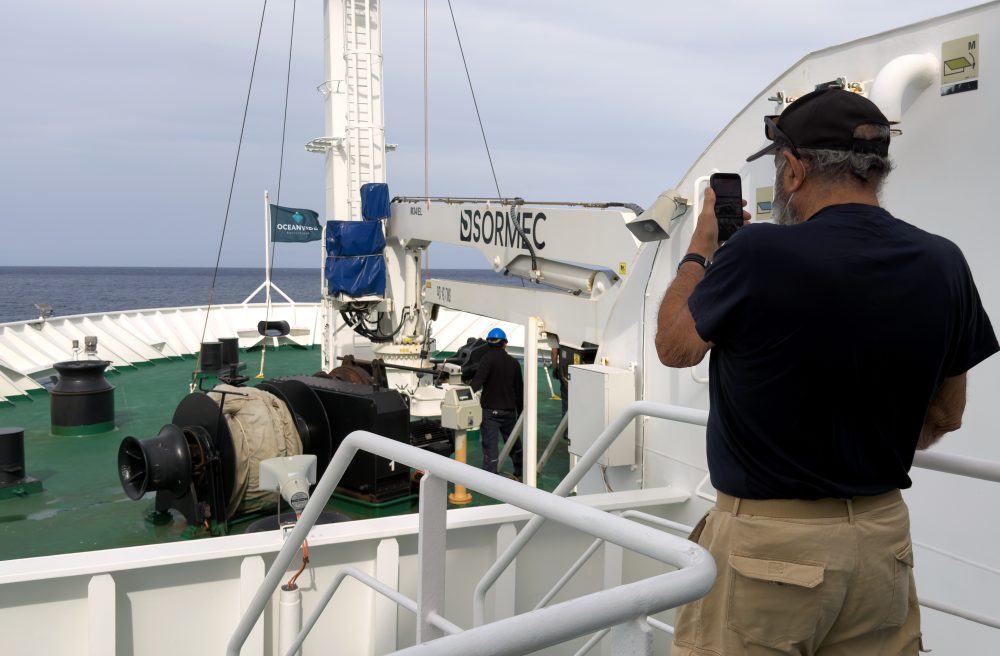

The World Health Organization’s top official touched down in Spain Saturday to coordinate the safe removal of more than 140 people aboard a cruise ship struck by a deadly hantavirus outbreak as it approaches the Canary Islands.
WHO Director-General Tedros Adhanom Ghebreyesus announced his arrival at the Spanish island of Tenerife, located off West Africa’s coast, accompanied by high-ranking Spanish officials. “to oversee safe disembarkation of the passengers, crew members and health experts,” he stated.
The MV Hondius, sailing under a Dutch flag, is scheduled to dock at Tenerife during the early morning hours Sunday. Tedros reported that currently, no individuals aboard the vessel are displaying viral symptoms.
“WHO continues to actively monitor the situation, coordinate support and next steps and will keep Member States and the public updated accordingly. So far, the risk for the population of Canary Islands and globally remains low,” he wrote on the social media platform X.
Spanish Health Minister Monica Garcia announced Friday her plans to travel to Tenerife alongside Tedros and Interior Minister Fernando Grande-Marlaska to manage the passenger removal process.
The outbreak has claimed three lives, with five passengers who previously departed the vessel now confirmed to carry the hantavirus infection. Both American and British governments have committed to dispatching aircraft to retrieve their nationals from the affected cruise liner.
Virginia Barcones, who leads Spain’s emergency response services, explained that passengers will be transported to a “completely isolated, cordoned-off area” upon leaving the ship.
Typically transmitted through breathing in contaminated rodent waste particles, hantavirus rarely passes from person to person. However, the specific Andes strain identified in this cruise outbreak may occasionally spread between individuals. Illness signs typically emerge one to eight weeks following exposure.
A correspondence from Dutch foreign and health officials to their parliament Friday evening revealed that Spain has triggered the European Union’s civil protection system, placing a specialized medical evacuation aircraft on alert for high-risk infectious disease transport.
Should anyone become sick, ship medical personnel will notify Spanish officials, and the evacuation aircraft “will be sent to Tenerife so that the sick person can be quickly transported by air to the European mainland.”
Dutch authorities plan to collaborate with Spanish officials and the shipping company to arrange the return of Dutch passengers and crew immediately after reaching Tenerife, pending medical assessments and guidance from the European Centre for Disease Prevention and Control. Symptom-free individuals will enter six-week home isolation with local health service monitoring.
Given the vessel’s Dutch registration, the Netherlands may temporarily house people from other countries while overseeing their quarantine period.
Medical officials across four continents are tracking and observing more than two dozen passengers who left the ship before the fatal outbreak’s discovery. They are also working urgently to locate others who may have encountered these individuals.
Friday brought news from the WHO that a flight attendant on an aircraft briefly boarded by an infected cruise passenger had received a negative hantavirus test. Concerns about her potential infection had sparked worries regarding the virus’s transmission capabilities.
The flight attendant’s negative outcome should calm public anxiety, noted Christian Lindmeier, a WHO representative. “The risk remains absolutely low,” he emphasized. “This is not a new COVID.”
On April 24, nearly fourteen days after the initial passenger death aboard the vessel, more than two dozen individuals from at least twelve nations departed the ship without contact monitoring, according to Dutch authorities and the ship’s management company.
Health officials didn’t confirm the first hantavirus case in a ship passenger until May 2, the WHO reported.
The KLM flight attendant who received the negative test result was working aboard an aircraft traveling from Johannesburg to Amsterdam on April 25 and subsequently became ill.
The cruise passenger who briefly traveled on that flight — a Dutch woman whose spouse died aboard the ship — was too sick to continue the international journey to Europe and was removed in Johannesburg, where she passed away.
Dutch public health officials are conducting contact tracking for passengers who interacted with the sick woman before her plane departure.
Friday brought word from U.K. health officials that a third British citizen who had sailed on the ship is suspected of hantavirus infection. The U.K. Health Security Agency reported the individual is located on Tristan da Cunha, an isolated British territory in the South Atlantic where the vessel made an April stop. No update was provided regarding the person’s medical status.
Spanish health authorities announced Friday that a woman in the southeastern Spanish region of Alicante shows signs matching a hantavirus infection and is undergoing testing.
She traveled on the same aircraft as the Dutch woman who died in Johannesburg after her cruise ship journey, Secretary of State for Health Javier Padilla informed media representatives.
Two additional Britons from the ship have confirmed viral infections. One remains hospitalized in the Netherlands while the other receives treatment in South Africa.
South African officials are working to identify contacts of any passengers who previously left the vessel. Their efforts have concentrated primarily on an April 25 flight from the remote South Atlantic island of St. Helena to Johannesburg, occurring one day after some passengers left the ship on the island.
Several U.S. state officials reported monitoring a small group of residents who sailed on the ship and have returned home, along with people who may have contacted ship passengers. None are showing symptoms.