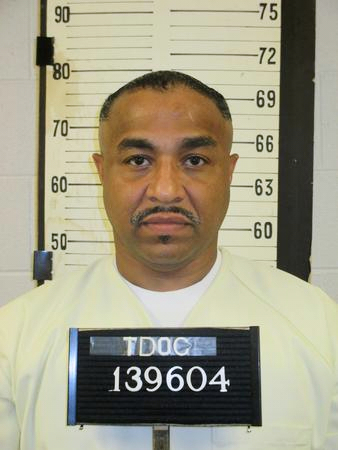

Tennessee officials plan to carry out the execution of Tony Carruthers on Thursday, despite ongoing legal battles over the state’s lethal injection protocols and his defense team’s concerns about his mental fitness for execution.
Carruthers, age 57, received a death sentence following his conviction for the 1994 abductions and killings of Marcellos Anderson, his mother Delois Anderson, and Frederick Tucker. During his trial, he was compelled to act as his own lawyer after repeatedly objecting to his court-appointed legal representation and making threats against multiple attorneys.
The conviction relied heavily on witness statements from individuals who claimed they heard Carruthers admit to or discuss the murders, as prosecutors presented no physical evidence connecting him to the deaths. Among those witnesses was someone later identified as a police informant who publicly stated he received payment for his testimony. James Montgomery, who was initially co-defendant and also received a death sentence alongside Carruthers, later had his sentence reduced and was freed from prison in 2015, court documents show.
Law enforcement officials indicated that Marcellos Anderson dealt drugs, and prosecutors alleged Carruthers sought control over the illicit drug business in their Memphis community. Defense lawyers contended that their client’s mental state, characterized by suspicion and false beliefs, made it impossible for him to work effectively with assigned counsel, though the presiding judge determined his behavior was deliberate.
On appeal, the Tennessee Supreme Court acknowledged that Carruthers’ conduct during trial proceedings was inappropriate and harmful to his own case, but ruled that he had created the circumstances himself. Should the execution proceed as planned, Carruthers would become the first individual put to death after being required to represent himself in over 100 years, according to a clemency appeal submitted to the governor.
In their clemency request, Carruthers’ legal team contends that his death sentence resulted from a medical examiner’s testimony describing how the victims were interred while still alive, providing graphic details to jurors. The examiner subsequently retracted this assertion, and other experts have determined it was inaccurate.
Defense attorneys have attempted to demonstrate that Carruthers lacks the mental capacity for execution. Legal documents state that Carruthers maintains the government is pretending to execute him to force him into accepting an imaginary plea agreement, believing this allows officials to avoid paying him millions of dollars he thinks they owe him. He remains convinced his own lawyers are conspiring against him and will not communicate with them, court papers indicate.
Nationwide executions increased dramatically from 25 in 2024 to 47 in 2025, primarily due to Florida’s significant uptick. Florida conducted 19 executions in 2025 compared to just one the year before, data from the Death Penalty Information Center shows. This year, four states have already executed 13 individuals, with 11 additional executions on the calendar.
Multiple executions within brief timeframes occur regularly. In 2025, four individuals were put to death across three days in March across Oklahoma, Florida, Louisiana and Arizona. Another five executions took place within one week in October across Arizona, Mississippi, Missouri, Florida and Indiana, according to the Death Penalty Information Center.
Tennessee resumed executions in 2025 following a three-year halt after officials discovered the state failed to properly examine lethal injection chemicals for quality and strength. A subsequent independent investigation revealed that none of the drugs used for the seven inmates executed in Tennessee since 2018 underwent complete testing. The state attorney general’s office also admitted in court that two officials primarily responsible for overseeing Tennessee’s execution drugs provided false testimony under oath regarding chemical testing requirements.