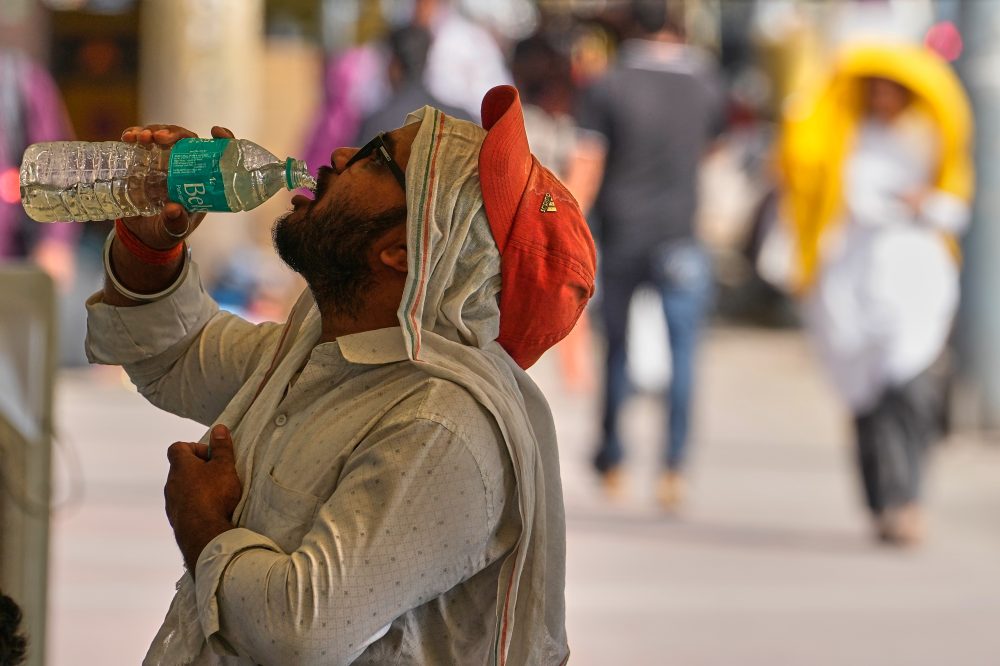

Dangerous temperatures have transformed daily routines across northern India, forcing streets and marketplaces to shut down during afternoon hours while agricultural workers have shifted to overnight schedules to escape the brutal heat.
Weather forecasters with the India Meteorological Department predicted Thursday’s peak temperatures would climb to approximately 45 degrees Celsius (113 Fahrenheit) in the nation’s capital, New Delhi, prompting officials to establish temporary “cooling zones” for public relief.
The meteorological agency cautioned that these dangerous conditions would continue affecting multiple northern territories over the next several days, with temperatures remaining significantly higher than typical seasonal norms. Officials advised residents to remain inside during peak heat periods and take protective measures against heat-related health problems.
The country officially declares dangerous heat conditions when temperatures exceed 40 C (104 F) in lowland areas and reach 30 C (86 F) or higher in mountainous territories.
These sweltering conditions have severely altered everyday activities throughout multiple northern states.
Within portions of Uttar Pradesh state, the nation’s most densely populated region, commercial areas and transportation routes have ceased operations during midday as residents shelter indoors, while business owners have moved their activities to dawn hours. Agricultural workers have begun laboring during nighttime because daytime heat became intolerable.
Educational institutions also faced significant disruption, with regional administrators declaring premature summer breaks and canceling classes after maximum temperatures soared to 48.2 C (118.8 F) on Tuesday in Banda city.
Medical officials recommended avoiding outdoor activities during intense afternoon periods, maintaining proper hydration, and obtaining professional care for symptoms including lightheadedness or elevated body temperature.
Throughout New Delhi, both locals and visitors found refuge within cooling facilities established across the metropolitan area. These covered locations offer air cooling systems, ventilation devices, drinking water, and rehydration treatments to assist people managing the severe heat.
Within one facility on Wednesday, individuals rested near cooling units while staff provided cups of water containing rehydration minerals.
“We had come here for outing. But it is too hot here. The cooling system here is good for us,” said Basharat Ahmad Malla, a 25-year-old tourist.
Environmental researchers indicate that the nation’s increasing temperatures represent part of a wider worldwide trend connected to climate change.
The country has experienced more regular and severe heat episodes in recent years, with all its record-breaking warm years happening within the past ten years.
“India has warmed considerably as a result of anthropogenic (human-made) climate change in the last decade compared to previous years. Northwestern India has warmed much faster than many other parts of the country,” said Anjal Prakash, author of several United Nations climate reports and professor of public policy at Pune-based Flame University.
Prakash explained that while the nation typically experiences summer heat, “climate change is loading the dice towards extreme and pervasive episodes like those we see now.”
Research conducted by public health specialists determined that as many as 1,116 individuals have perished annually between 2008 and 2019 from heat exposure. Medical experts believe the actual number of heat-related fatalities likely reaches into the thousands, but since heat exposure frequently goes unlisted on death records, numerous deaths remain uncounted in government statistics.