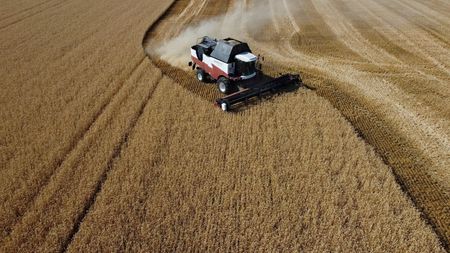

Vladimir and Lyubov Fedorchenko are expecting one of their better harvests in years at their farm in southern Russia’s Rostov region — but that good news comes with serious problems attached.
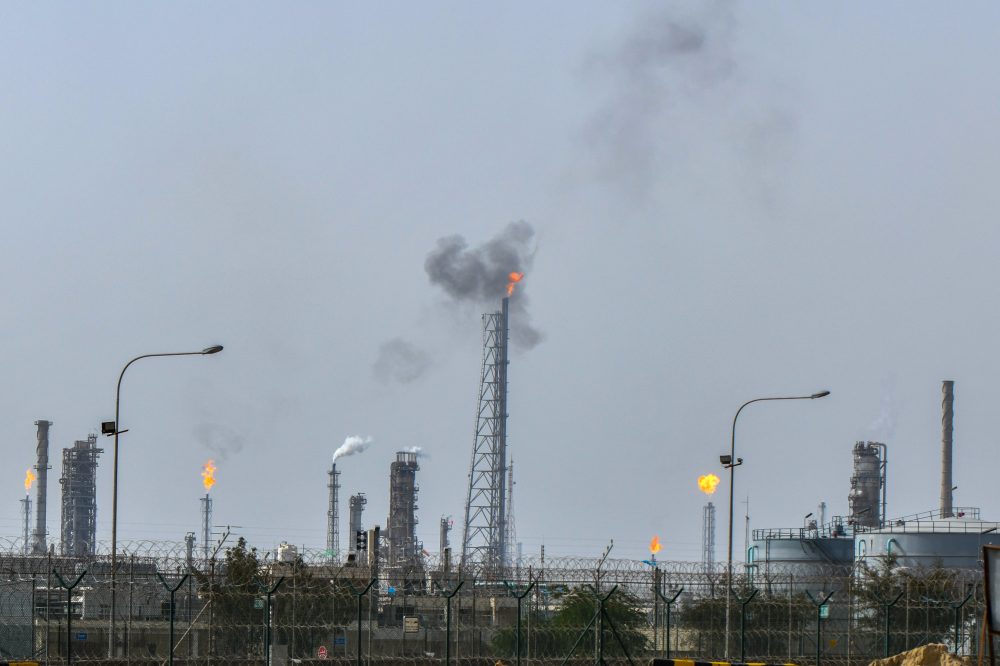
A fuel shortage sweeping across Russia, triggered by months of Ukrainian drone attacks on Russian oil refineries, has sent diesel prices sharply higher. That’s a major concern for the couple, who depend on diesel to run their tractors and harvesting equipment. Vladimir says his workers are spending half a day standing in line just to fill their cars with enough fuel to make it to the farm.
On top of that, the couple is caught in the fallout from a new wave of military activity in the Sea of Azov — the primary route through which grain from the Rostov region reaches international buyers. With shipping now severely restricted, Lyubov says purchase offers for their grain have nearly vanished entirely.
“Everything is at a standstill. Barley — on halt. Wheat — on halt,” she told Reuters during a visit to the farm this week. “And we desperately need money now. We need to sell (the harvest) and buy diesel fuel, fertiliser.”
The day before speaking with reporters, Lyubov said they received an offer of 14,500 roubles — roughly $185 — per ton of wheat, but with a 2,500-rouble delivery cost deducted. After factoring in wages, fuel, fertilizer, and the need to replace aging equipment, she said almost nothing is left over.
The Fedorchenkos’ situation reflects a broader crisis hitting farmers across Russia, which ranks as the world’s largest wheat exporter. Ukraine has ramped up long-range strikes inside Russia this year, with refineries a particular focus, aiming to weaken Moscow’s ability to sustain its war effort. Meanwhile, Russia and Ukraine have each struck dozens of the other’s ships over the past week — including tankers and cargo vessels — marking a significant new chapter in a conflict now in its fifth year.
Russia’s Agriculture Minister Oksana Lut acknowledged on Friday that fuel supply concerns exist across all of the country’s regions, even as she expressed optimism about the overall harvest outlook. She pledged that the government would work to make sure farmers get the fuel they need.
Andrey Sizov, an analyst with the SovEcon Black Sea research consultancy, told Reuters the stakes are high for global food supplies. “If there is no military solution to open up the Sea of Azov, and the situation drags on for most of the second half of the year, Russia could fall short of supplying the global market by 5 to 10 million tons of wheat,” he said.
For context, Russia shipped more than 61 million tons of grain last year, according to its Union of Grain Exporters and Producers — including 46 million tons of wheat alone.
Sizov estimated that rising diesel costs are already costing farmers around 1,000 roubles per metric ton of grain, and that the Sea of Azov shipping restrictions have effectively doubled that loss. He also warned that the financial strain could push more farmers to plant less grain in coming seasons, continuing a trend that began in 2022.
Back on the Rostov farm, Lyubov summed up the situation bluntly: “It’s getting worse and worse every year. Last year, the crop failure and the drought stifled everything, and this year, it’s the financial situation. There is a harvest, but there’s no way to sell it.”
“We’re constantly watching our cashflow. So, when it comes to acquiring machinery or upgrading our fleet, we just don’t have the money. Nothing is left over,” she added.
(Exchange rate used: $1 = 78.50 roubles)