Massive crowds filled the streets of Madrid on Sunday as Pope Leo traveled through the Spanish capital for what organizers expected to be the biggest gathering of his week-long Spanish tour.
Enthusiastic spectators waved flags and called out “Long live the pope” while Leo rode in his popemobile along Paseo de la Castellana, Madrid’s primary boulevard, heading to Cibeles Square for an outdoor Mass celebration. Flower petals were thrown by some attendees as the pontiff reached the square.
The papal visit kicked off Saturday with Leo meeting migrants and homeless individuals, followed by an evening vigil attended by approximately 600,000 young people in Madrid. The June 6-12 tour will also take him to Barcelona and the Canary Islands, where he plans to meet with migrants who made dangerous journeys from West Africa.
During his first visit to a European Union nation beyond Italy, Leo expressed hope that his trip would demonstrate global respect for “every human being” and called on political leaders to avoid creating divisions among voters.
“I am delighted that he is praying for us migrants and for our safety,” said Andrea Margarita, a 72-year-old Peruvian who arrived in Spain six months ago, as she waited in the crowd in a wheelchair with her daughter.
Following the Mass, Leo’s schedule included a private afternoon gathering with fellow Augustinian religious order members, then an evening event with entertainment, sports and cultural personalities at a concert venue in central Madrid.
Ukrainian authorities announced Sunday that a Russian drone attack targeted a nuclear fuel storage building located near the abandoned Chornobyl nuclear power plant, though radiation measurements at the location have remained normal.
According to statements from Ukraine’s General Staff and the country’s atomic energy agency, the strike partially demolished a building designed for receiving containers, though no nuclear fuel was being housed in the structure when the attack occurred.
Officials reported that a fire broke out following the strike but was successfully put out, with no casualties recorded from the incident.
Moscow has not issued any public response regarding the alleged strike on the facility, which sits approximately 15 kilometers (9 miles) away from the Chornobyl plant, known as the location of history’s most catastrophic nuclear accident.
“This is not the first time Russian forces are putting Ukrainian nuclear facilities at risk,” Ukrainian Foreign Minister Andrii Sybiha wrote on X.
“Russia’s nuclear blackmail and threats to nuclear safety are systemic, deliberate, and unacceptable.”
Earlier this year in February 2025, a Russian attack drone caused damage to a protective structure covering the Chornobyl reactor that was destroyed during the April 1986 disaster and subsequent meltdown. Russia has rejected claims of responsibility for that incident.
Both Ukraine and Russia have accused each other of launching attacks against the Russian-controlled Zaporizhzhia Nuclear Power Plant located in southeastern Ukraine, which stands as Europe’s largest nuclear facility.
MADRID — Over one million faithful gathered in a central Madrid plaza Sunday for Pope Leo XIV’s primary Mass and ceremonial procession showcasing traditional Spanish flower carpets, one of the country’s most beloved religious customs.
Crowds cheered and called out “This is the youth of the pope!” when Leo arrived for the service, circling the plaza and nearby streets in his popemobile while enthusiastic attendees stood packed multiple rows behind security barriers.
The Sunday Mass coincided with the Catholic feast of Corpus Domini, traditionally marked by processions led by priests carrying the Eucharist through communities. Spain and other Catholic nations commonly create elaborate floral displays along these ceremonial routes.
Leo, who began his week-long Spanish visit Saturday, has emphasized the nation’s deep-rooted Catholic heritage in hopes of inspiring younger people to embrace their faith.
During Saturday evening’s vigil, approximately 600,000 young Spanish Catholics knelt in silent prayer with Leo, indicating sustained religious interest despite Spain’s increasingly secular culture.
“Let me take the opportunity to tell all of you: Don’t ever be afraid of thinking about a vocation to the priesthood or religious life, or other services in the church!” Leo addressed the assembled crowd.
Young couple Irati Valda and Javier Hormazal displayed a sign announcing their upcoming June 13 wedding and were brought forward to receive Leo’s blessing during the vigil ceremony.
“To see so many young people together, it’s incredible. Half a million people in silence, this is something you will only live once,” Valda commented.
Local coordinators reported 1.2 million attendees at Sunday’s Mass and procession in the central Plaza Cibeles area on a beautiful spring morning, with additional crowds attempting to enter.
The centuries-old practice of creating flower carpets that are ceremonially trampled during processions spans two hundred years and remains popular throughout Latin America, where intricate sand patterns are also crafted. These detailed displays serve as offerings to the Eucharist.
Poland has achieved UNESCO recognition for its Corpus Domini flower carpet tradition, while Spain’s Galicia region seeks similar designation alongside other nations for this intangible cultural heritage.
Spanish organizers reported that 16 flower carpets adorned the half-kilometer procession path, created by a Galician florists association. The artisans utilized over 30,000 flowers, primarily in the Holy See’s yellow and white colors, incorporating designs like papal keys.
Popular religious processions, pilgrimages and celebrations persist across Spanish regions. Holy Week processions during Lent’s final week remain most recognizable, featuring brotherhoods and robed participants parading ornate Christ and Virgin Mary statues through communities alongside musical ensembles. These events attract believers, non-religious observers and tourists alike.
Spanish communities regularly celebrate patron saints through festivals. Religious pilgrimages to local shrines blend devotion with community celebrations and music. Andalusia’s El Rocío pilgrimage draws one million participants making lengthy journeys on horseback and decorated wagons during Pentecost weekend to honor a Virgin Mary icon.
Leo arrived Saturday and encouraged Spaniards to end polarization and pursue unity. Sunday evening includes private meetings with Augustinian order members and addresses to cultural leaders.
LIMA, Peru (AP) — Citizens of Peru head to the polls Sunday to select between two candidates offering contrasting political visions, as the nation prepares to install its ninth president within a decade while grappling with escalating criminal activity.
The runoff features Keiko Fujimori, a conservative politician whose father previously held the presidency, facing off against Roberto Sánchez, a nationalist lawmaker. Both candidates advanced from an initial voting round in April where they defeated 33 other contenders, though each received less than 20% of voter support. Polling data suggests approximately 30% of the electorate has yet to make a decision.
Election officials anticipate a close contest on Sunday, and based on the previous round’s timeline, final results may take several days to determine. It required more than a month for electoral authorities to formally announce Fujimori and Sánchez as the April winners.
Peru mandates voting participation for citizens between 18 and 70 years old. Registration records show over 27 million eligible voters, with roughly 1.2 million expected to participate from overseas locations, primarily from the United States and Argentina.
April’s official tallies showed Fujimori securing 17% support compared to Sánchez’s 12%. Following more than six weeks of campaigning, a national survey by Ipsos revealed comparable backing for both candidates, with approximately 3 out of 10 respondents remaining uncommitted.
Fujimori carries associations with the authoritarian and corrupt administration of her late father, Alberto Fujimori, during the 1990s. She assumed the role of Peru’s first lady in 1994 following her parents’ marital split.
Sánchez maintains close ties to imprisoned former President Pedro Castillo, widely viewed as corrupt and ineffective. Castillo’s 16-month presidency witnessed over 70 Cabinet personnel changes.
Rising criminal activity, especially extortion schemes, represents the primary voter concern. A 2025 national survey conducted by the state’s National Institute of Statistics and Informatics revealed that 84% of urban respondents expressed fear of becoming crime victims within the next year.
Analysts link the growing influence of organized crime in Peru to revenue generated by established criminal organizations through illegal gold mining operations in the Andes and Amazon regions.
Throughout her fourth presidential bid, Fujimori has emphasized tough crime-fighting measures. Her platform includes deploying technology to monitor extortion activities, militarizing border regions, and expanding police and military presence in dangerous areas. The 51-year-old candidate has also proposed requiring prisoners to work and “repay society.”
During the sole pre-runoff debate, Fujimori defended her father’s administration and vowed to eliminate crime similar to his defeat of the Shining Path, a violent extremist organization. She assured voters that under her leadership, they could leave their homes and return without falling victim to criminal acts.
Sánchez, a former minister who has gained popularity among rural constituents, has committed to fighting police corruption and advancing reforms allowing military assistance in security operations.
The 57-year-old candidate, who wears a wide-brimmed peasant hat given by Castillo, told debate audiences he would remain open to “all options to generate jobs and progress” while highlighting his backing of Chinese investments.
He has also attempted to calm investor anxieties about his candidacy, stating he will not nationalize assets belonging to transnational companies engaged in mineral or gas extraction from Peru.
A Milwaukee Brewers rookie made baseball history Saturday night in Denver, delivering the hardest fastball ever recorded by a starting pitcher in the modern tracking era during his team’s commanding 7-1 win over the Colorado Rockies.
The record-breaking moment came when 24-year-old right-hander Jacob Misiorowski fired a 103.7 mph fastball low and away to Kyle Karros during the third inning. This surpassed any velocity recorded by a starter since pitch monitoring technology was implemented in 2008. The overall speed record remains with former reliever Aroldis Chapman, who reached 105.8 mph while playing for the Cincinnati Reds in 2010.
Misiorowski’s blazing performance included an incredible 52 pitches at 100 mph or higher, marking his second-best total after throwing 57 such pitches against the St. Louis Cardinals on May 25, when he previously peaked at 103.5 mph. The young hurler also established a new benchmark with 45 pitches clocked at 101 mph or faster during the pitch-tracking period.
On the mound, Misiorowski delivered seven strong innings, allowing one unearned run on four hits while walking three and striking out eight batters. The performance boosted his record to 7-2 and dropped his ERA to 1.50, trailing only the Phillies’ Cristopher Sanchez at 1.46.
The All-Star rookie currently leads major league baseball in multiple categories, including strikeouts with 116, WHIP at 0.789, fewest hits allowed per nine innings at 4.7, and strikeouts per nine innings at 13.7.
“Thanks to God he’s on our side,” Brewers catcher William Contreras told the Milwaukee Journal Sentinel. “I think we know what kind of pitcher Miz is. I don’t think there’s anybody in the league that wants to face him.”
The evening included some concerning moments for Milwaukee. Misiorowski took a line drive off his calf from Troy Johnston’s comebacker in the second inning, which resulted in Colorado’s first hit. Medical staff examined the pitcher, but he remained in the contest after taking some practice throws.
Another scary incident occurred in the sixth inning when Misiorowski’s 98.2 mph cutter struck Tyler Freeman in the helmet. Freeman was replaced by pinch runner Sterlin Thompson. Despite these challenges and working through some difficult situations, Misiorowski guided Milwaukee to victory.
“That’s been No. 1 this year: The maturity has been tremendous,” Brewers manager Pat Murphy commented to the Journal Sentinel. “We got to take note of what this guy has done. Pitching isn’t this easy in the big leagues. To be as consistent as this guy has been over the last how many outings is remarkable. I don’t know how many guys are doing that.”
MONGBWALU, Congo (AP) — The medical director of Mongbwalu General Referral Hospital, Dr. Richard Lokudu, has barely received any payment for treating patients during one of Congo’s most devastating Ebola virus outbreaks.
Lokudu works alongside his fellow medical staff throughout the day caring for a surge of patients. Alerts about potential cases arrive even during late evening hours.
“I have not received my allowance (and) what happened to others could happen to me as well,” Lokudu said to The Associated Press. “Despite all the infection prevention and control measures we are implementing, we do not know what may happen.”
Medical officials believe this outbreak caught eastern Congo off guard after it spread undetected for several weeks, beginning in the busy mining community of Mongbwalu in Ituri province.
Mongbwalu has become the center of the unusual Bundibugyo strain. The community draws numerous workers to its extensive gold mining operations featuring muddy gold deposit pools, tight shafts and underground chambers. These workers reside in poor neighborhoods including overcrowded camps with limited access to adequate health measures.
These circumstances heighten the risk of disease transmission, as the virus spreads through direct contact with infected bodily fluids including perspiration, blood, waste and vomit.
Additionally, there has been significant doubt about the disease among residents, complicating medical treatment efforts for Lokudu and his team, while some healthcare personnel and emergency responders have lost their lives to the virus.
“It is one thing to be far away and hear statistics being reported, but what is happening on the ground is enormous,” Lokudu stated. “People are sacrificing their rest and comfort for this cause. There should be recognition that they deserve compensation. These workers should receive their salaries regularly.”
The Congolese government did not respond to a request for comment from the AP.
Congo’s health officials have verified 452 cases with 82 fatalities. On Thursday, the Central African country documented 71 new infections in one day, which officials describe as evidence of “active community transmission.”
The uncommon Bundibugyo strain lacks approved immunizations or treatments, leaving healthcare workers to address symptoms. Government officials report that at least five individuals have recovered from Ebola since Congo’s Ministry of Health officially acknowledged the outbreak on May 15.
The illness “had a big head start,” stated World Health Organization Director-General Tedros Adhanom Ghebreyesus. Regional hospitals lacked the ability to test for the specific Ebola variant that had been circulating weeks before official confirmation.
Medical personnel are managing the disease with limited supplies as organizations work urgently to deliver assistance to the area. Protective masks, gloves, boots and medicines were all scarce initially.
“There has been an erosion of the health system,” explained Heather Kerr, country director for the International Rescue Committee in Congo. “There has not been investment in the health system, and this has been going on for years.”
“During the first week, we did not even have time to go home and eat. The second week was the same. We only eat once a day, what amounts to breakfast in the evening,” stated Alice Bamuhinga, a nurse at the Mongbwalu hospital.
Despite continued skepticism and neglect of health guidelines, many residents are beginning to understand the outbreak’s serious nature.
Asero Jeanne was a mother of five children. Two passed away from the illness within a two-week period. When her daughter fell ill, the family believed it was malaria and community members urged them to stay away from the hospital, claiming “anyone who went there would die immediately,” Jeanne, 52, recalled.
The daughter passed away after three weeks of shuttling between medical facilities and home, followed by a son who died days later. Then Jeanne fell sick.
“I saw about 20 people die,” Jeanne recalled. “I watched them being taken to the morgue, yet God is allowing me to leave here alive. I thank the doctors.”
Tedros, the WHO director-general, announced a $518 million response plan on Friday to fight the outbreak, stating “containing Ebola depends on political commitment, sustained financing, and the trust and engagement of communities.”
Disease containment efforts have also been complicated by fighting between the government and Rwanda-backed M23 rebel group, along with attacks by Islamist militants.
For medical workers battling Congo’s Ebola outbreak on the front lines, their work has grown more challenging as the disease spreads beyond their current treatment capabilities.
“Despite the alerts we receive and the teams we have on site, we lack the means to travel into the field,” Lokudu explained. “As a result, there are alerts we are unable to investigate.”
Israeli defense forces reported successfully intercepting two projectiles that entered their airspace from Lebanon on Sunday, according to military officials. Warning sirens were activated in the northern border communities of Yiftah and Ramot Naftali during the incident.
The exchange comes as fighting between Israeli forces and Hezbollah continues without resolution. The Lebanese militant organization has turned down ceasefire proposals that would tie any truce to their disarmament, demanding instead that Israel end its attacks and pull back troops from southern Lebanon before any agreement.
Iran has established a ceasefire between Israel and Hezbollah, its regional ally, as a prerequisite for any potential peace agreement with the United States.
Hezbollah joined the conflict on March 2, stating it was responding to the assassination of Iran’s Supreme Leader at the beginning of hostilities that have resulted in thousands of deaths in Lebanon and forced over one million people from their homes.
Israeli military operations in Lebanon have persisted even before the March 2 escalation, continuing despite a U.S.-mediated ceasefire agreement that began in November 2024. Israeli officials maintain their strikes target Hezbollah operatives and facilities.
Citizens of Armenia will cast ballots Sunday in parliamentary elections while the current administration faces increasing pressure from Russia as it attempts to strengthen relationships with Western nations and reduce dependence on Moscow.
The prime minister and his Civil Contract party are seeking a robust endorsement for shifting the country’s geopolitical direction. Opposition groups competing against them include several organizations that openly support closer Russian ties.
Moscow has imposed numerous trade barriers on Armenian goods in recent weeks, and senior Russian leadership, including the president, have made subtle warnings drawing parallels between Armenia’s trajectory and the path Ukraine has followed.
Armenian law enforcement announced they had issued six arrest warrants for Strong Armenia party members on Saturday, claiming they engaged in vote purchasing. The country’s Central Election Committee verified that the party would be permitted to participate after a Republic party member challenged efforts to exclude Strong Armenia based on corruption claims.
The National Assembly requires a minimum of 101 members serving five-year terms. Individual parties need at least 4% of votes to gain representation, while coalitions of three or more parties must reach 8%.
Sunday’s contest features two political coalitions and 17 individual parties. Political analysts and polling organizations widely expect the prime minister, who assumed office in 2018 after massive public demonstrations, to emerge victorious.
“I think Armenians expect, first of all, a peaceful, independent and prosperous Armenia from this election, as we have today,” said Hripsime Grigoryan, a Civil Contract member of the outgoing Parliament.
The prime minister has repeatedly emphasized the importance of maintaining balanced international relationships that preserve positive connections with the United States, Europe, Russia, and regional powers including Turkey and Iran.
Nevertheless, Western leaders have shown significantly more support for the prime minister than Moscow has. Multiple European officials and the U.S. president have publicly backed his leadership.
“Prime Minister Nikol Pashinyan, of Armenia, a great friend and Leader, is making his Country strong, wealthy, and very secure,” the U.S. president posted on social media, encouraging Armenians to “Make (Armenia) Great Again.”
This Western support has frustrated the Kremlin. During a media appearance following Russia’s Victory Day parade on May 9, the Russian president stated that if Armenians believed European Union membership would benefit them, “we will certainly have nothing to say against it.”
However, he also cautioned reporters, “We are currently living through everything that is happening in respect of Ukraine. And how did it start? It started with Ukraine’s joining or attempting to join the EU.”
In contrast to the Civil Contract party, most Armenian opposition groups favor strengthening connections with Moscow.
Strong Armenia advocates for expanding commercial relationships with Russia and has criticized the prime minister for allegedly attempting to provoke conflict with Moscow. The party’s leader is currently facing trial for supposedly promoting government overthrow, charges the Armenian-Russian billionaire dismisses as politically driven. He has directed the party’s campaign from house arrest with assistance from his nephew.
Additional opposition candidates include a former president leading the Hayastan bloc who has criticized the prime minister for “seriously undermining” Russian relations, and the Prosperous Armenia Party headed by a pro-Russian business leader.
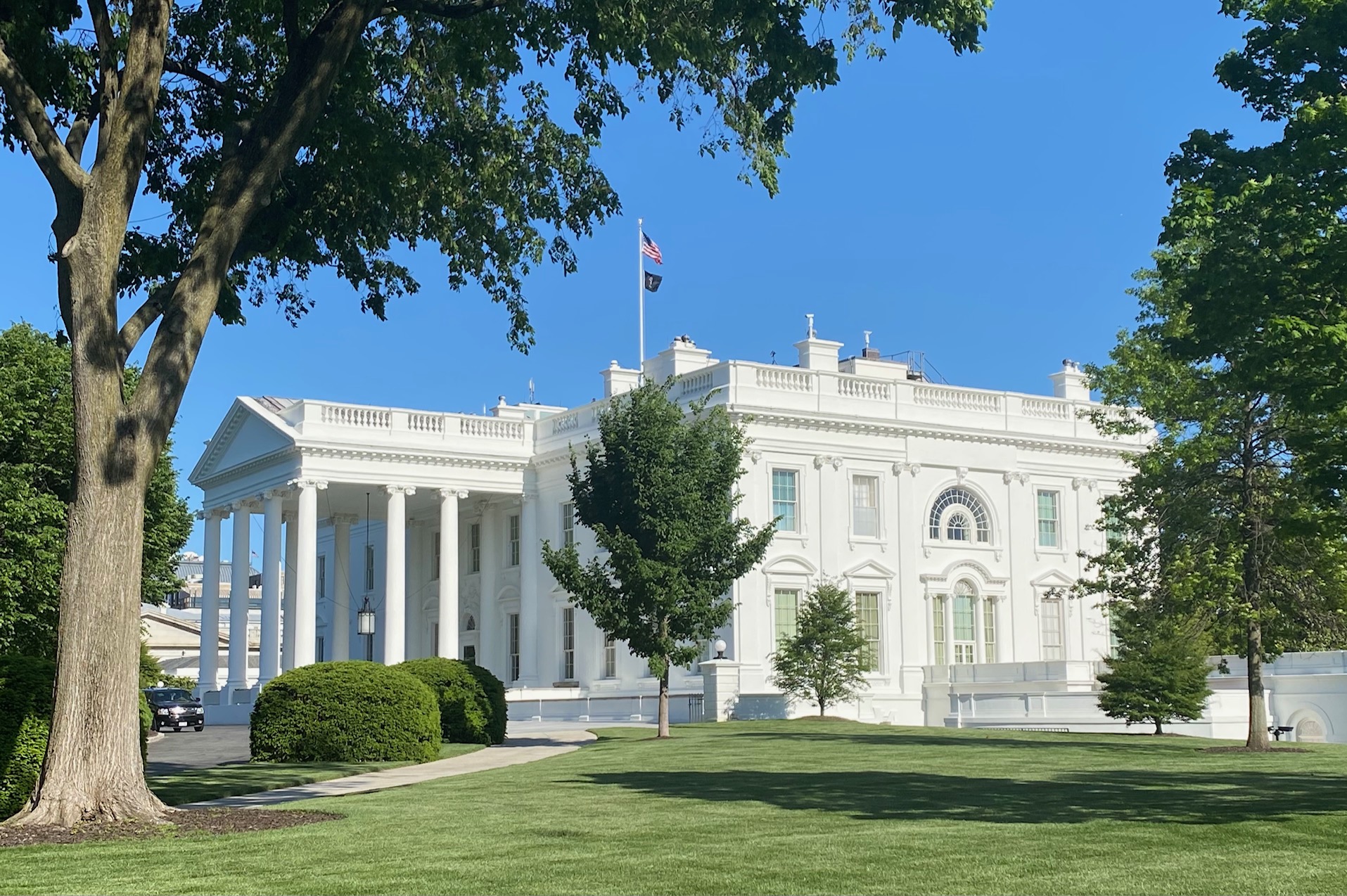
These opposition groups have also sharply criticized the prime minister’s efforts to establish normal relations with neighboring Azerbaijan. The Armenian leader and the Azerbaijani president signed an initial agreement toward a peace settlement at the White House with the U.S. president in August.
The two nations have been engaged in a prolonged dispute over Karabakh, a separatist territory that ethnic Armenian forces supported by Armenia had controlled for decades. Azerbaijan gained complete control of the Karabakh region through a swift military campaign in 2023.
“I want this government to change because the condition of our country is getting worse,” Sahakyan Elina, a supporter of the Prosperous Armenia Party, told The Associated Press at a rally Thursday. “I don’t want to live with my enemies in unity.”
Russian authorities have implemented fresh restrictions on Armenian agricultural products leading up to the parliamentary election, prohibiting imports of Armenian flowers, specific cognac and wine varieties, eggplants, potatoes, dried fruits, fish, and additional items.
Russia claims these prohibitions stem from violations of agricultural import regulations.
The European Commission on Thursday described the move as “nothing short of economic coercion.”
“By extending export restrictions on Armenian products, Moscow is weaponizing economic relations for political pressure. We know this playbook all too well,” the commission said in a statement.
Moscow also maintains substantial control over Armenia’s energy sector and infrastructure while providing discounted natural gas, a leverage point the Russian president has emphasized during meetings with the Armenian prime minister.
The Russian president has also stressed that Armenia cannot simultaneously join the EU while remaining in the Eurasian Economic Union, a Russian-led trade organization.
“Being in a customs union with the European Union and the Eurasian Economic Union is impossible,” the Russian president said. “It’s simply impossible by definition.”
Citizens of Kosovo participated in another early parliamentary election Sunday, marking the third such vote in a year and a half as the small Balkan country struggles to break free from political gridlock while pursuing membership in the European Union and NATO.
The election became necessary when major political parties missed a March deadline to choose a successor for former President Vjosa Osmani. An initial election in February 2025 produced no clear results, leaving Kosovo without an operational government for most of the previous year and necessitating a December election.
This extended political turmoil has damaged Kosovo’s economic prospects, which were already struggling due to worldwide energy shortages and increased fuel costs. The nation, among Europe’s youngest and most economically disadvantaged, broke away from Serbia in 2008 following a 1998-99 conflict that concluded with NATO airstrikes forcing Serbian withdrawal.
The center-left Vetevendosje party, led by Prime Minister Albin Kurti, has maintained a solid parliamentary majority following December’s early election. However, selecting Kosovo’s president requires support from at least 80 members of the 120-seat assembly, demanding wider political cooperation.
Two primary opposition groups, the Democratic Party of Kosovo and the Democratic League of Kosovo, are contesting Kurti’s leadership, claiming he aims to dominate all government institutions throughout the nation.
Osmani, the former president, is campaigning with the opposition LDK faction in this election after breaking ties with Kurti when he declined to support her bid for another presidential term.
As political leaders point fingers over responsibility for the crisis, their failure to find common ground has disappointed Kosovo’s approximately 2 million eligible voters, who prefer government attention on economic issues and quality of life improvements.
Political experts predict minimal shifts in election results compared to December’s voting.
The absence of stable governance has prevented Kosovo from accessing EU and other international funding opportunities. European Council President Antonio Costa visited recently and called on Kosovo to resolve its political paralysis and focus on EU membership goals.
While the United States and most EU nations have recognized Kosovo’s independence, Serbia and its supporters, Russia and China, have not. Both Pristina and Belgrade face pressure to improve their relationship as a condition for advancing their respective EU membership applications.
The Los Angeles Dodgers delivered a devastating opening frame Saturday, plating nine runs in the first inning to cruise past the visiting Angels 9-2 and maintain their perfect record against their crosstown rivals this season.
Andy Pages and Shohei Ohtani both launched two-run homers during the explosive first inning, while Ryan Ward contributed a two-run double. Alex Freeland added a base-clearing single, and a fielding mistake by Angels shortstop Zach Neto helped clear the bases. The nine-run outburst marked the Dodgers’ biggest scoring inning since they put up nine runs against Washington in July 2021.
Starting pitcher Yoshinobu Yamamoto (6-4) dominated after the early offensive explosion, retiring 22 consecutive batters to close his outing. The right-hander surrendered just one run on two hits across eight innings of work. The victory improved the Dodgers to 5-0 against the Angels this season and 18-5 overall since May 13.
For the Angels, Oswald Peraza delivered an RBI triple and Neto connected for a home run. Starting pitcher Jack Kochanowicz (2-5) endured a nightmare outing, lasting just one out while allowing seven runs, six of them earned. The Angels must win Sunday’s finale to prevent a season series sweep after they went 6-0 against the Dodgers last year.
Cubs 3, Giants 2 (10 innings)
Pete Crow-Armstrong delivered the heroics for Chicago, tying the game with a ninth-inning homer before Michael Busch won it in the 10th with a walk-off single that was mishandled in right field, helping the Cubs bounce back from an 18-3 drubbing the previous day against visiting San Francisco.
Crow-Armstrong finished 4-for-5 with two home runs, including a solo shot in the sixth. Busch collected two hits. Ryan Rolison (5-1) stranded the automatic runner in the top of the 10th after Ben Brown held the Giants to one run on one hit over 5 1/3 innings.
Rafael Devers homered and Matt Chapman added a sacrifice fly in the ninth to give San Francisco a 2-1 advantage. Sam Hentges (1-1) suffered the loss after facing one batter and allowing an unearned run. Landen Roupp gave up one run on three hits in 5 2/3 innings.
Braves 6, Pirates 3
Dominic Smith’s opposite-field home run that barely stayed fair down the left-field line capped a three-run rally that powered Atlanta past visiting Pittsburgh.
Trailing 3-3, the Braves scored three times in the fifth inning. Ronald Acuna Jr. and Matt Olson executed a double steal, setting up Ozzie Albies’ go-ahead sacrifice fly. Smith, who went 2-for-3, followed with his two-run blast.
Spencer Strider (4-1) earned the victory despite posting a season-low three strikeouts, working five innings while allowing three runs on five hits and two walks. Pittsburgh starter Braxton Ashcraft (5-3) matched his season high by surrendering six runs, giving up nine hits while striking out five over five innings.
Padres 3, Mets 2
Freddy Fermin’s two-run homer in the seventh inning lifted San Diego over visiting New York, snapping the Padres’ six-game skid.
After Sung-Mun Song reached on a two-out infield hit, Fermin attacked a first-pitch sinker from Austin Warren (1-2) for his first homer of 2026. Bradgley Rodriguez (1-2) picked up the win despite surrendering the lead in the seventh on Marcus Semien’s home run. New York’s Nolan McLean allowed three hits and one run over six innings.
Jason Adam worked around two hits in the eighth for San Diego, and Mason Miller navigated a two-out walk to A.J. Ewing in the ninth for his 18th save in 18 opportunities. Fernando Tatis Jr. drove in San Diego’s first run with a third-inning single.
Mariners 4, Tigers 0
Dominic Canzone homered and knocked in two runs while Bryce Miller threw six dominant innings as Seattle shut out host Detroit.
Randy Arozarena contributed two hits, scoring once and driving in two as the Mariners recovered from back-to-back defeats. Miller allowed just one hit while walking two and fanning nine. Jose Ferrer, Matt Brash and Gabe Speier each tossed scoreless innings to complete the two-hit shutout.
Colt Keith’s triple and Kevin McGonigle’s double represented Detroit’s only offensive highlights. The Tigers had scored 32 runs during a four-game winning streak before being blanked.
Royals 3, Twins 2
Bobby Witt Jr. delivered a go-ahead single with two outs in the ninth inning, rallying Kansas City past Minnesota in Minneapolis.
Carter Jensen homered and drove in two runs for Kansas City, which captured its second victory in the four-game series. The Royals can clinch the series with a win Sunday.
Orlando Arcia went deep for the Twins, while Tristan Gray also recorded an RBI.
Cardinals 6, Reds 5
Lars Nootbaar’s two-run homer in the eighth inning erased a one-run deficit and lifted St. Louis over visiting Cincinnati.
Nootbaar, who missed the season’s first two months following double heel surgery before returning Friday, connected off Sam Moll (1-4) after Jose Fermin singled. George Soriano (3-0) threw a scoreless eighth, then Riley O’Brien loaded the bases in the ninth but retired Sal Stewart for his 16th save in 20 chances. Jordan Walker also homered.
For Cincinnati, Matt McLain hit a two-run shot, Blake Dunn collected three hits and scored once, and Spencer Steer walked in the fifth to extend his on-base streak to a career-best 24 games, currently the longest in the majors.
Blue Jays 6, Orioles 4
Ernie Clement’s three-run homer and triple led Toronto past visiting Baltimore.
Clement also provided solid defense at second base while Brandon Valenzuela added three hits and a sacrifice fly as the Blue Jays split the first two games of the three-game set. Spencer Miles (3-1) followed the opener and limited the Orioles to two runs over 4 1/3 innings.
Pete Alonso hit a two-run homer, Colton Cowser and Blaze Alexander connected for solo shots, and Gunnar Henderson had three hits and scored once for Baltimore. Starter Kyle Bradish (3-7) struggled, allowing five runs in four innings.
Nationals 6, Diamondbacks 1
Curtis Mead and Dylan Crews homered, Zack Littell won his fifth consecutive start, and Washington defeated Arizona in Phoenix.
Mead launched a two-run homer, his ninth, on the eighth pitch of the game for the Nationals. Crews had two hits and scored twice, while Nasim Nunez singled and drove in two. Littell (6-4) surrendered one run and two hits in five innings before three Washington relievers combined for four hitless innings.
LuJames Groover drove in Arizona’s lone run with his first career hit, a single that scored Pavin Smith. Eduardo Rodriguez (5-2) was denied his 100th career victory, allowing four runs and six hits over 6 1/3 innings.
White Sox 6, Phillies 3
Colson Montgomery and Jacob Gonzalez homered, and Tristan Peters collected three hits to guide Chicago past host Philadelphia.
Right-hander Sean Burke (3-3) entered in the second inning and carried the White Sox into the sixth, surrendering three runs, three hits and five walks while striking out seven in 4 1/3 innings. Reliever Sean Newcomb recorded the final out in the sixth, then worked a clean seventh. Grant Taylor entered for the ninth and earned his second save.
Alec Bohm and Brandon Marsh homered for the Phillies, who had won eight of their previous 10 games. Adolis Garcia knocked in the other run for Philadelphia, but it wasn’t enough to overcome starter Andrew Painter’s (1-7) rough outing, as he allowed six runs and eight hits in 4 2/3 innings.
Astros 13, Athletics 2
Yordan Alvarez clubbed his fifth career grand slam as Houston demolished the visiting Athletics to secure the three-game series between American League West division rivals.
The Astros launched three home runs off right-hander Kade Morris (0-1), who endured a forgettable major league debut. LaMonte Wade Jr. and Jose Altuve also took Morris deep, as he surrendered nine runs on nine hits over four-plus innings.
Astros right-hander Tatsuya Imai (3-3) allowed two runs on five hits over five innings. He gave up an RBI single to Tyler Soderstrom that plated Nick Kurtz and walked Zack Gelof with the bases loaded during the A’s two-run third.
Marlins 4, Rays 3
Javier Sanoja went 3-for-4 with a homer and two RBIs as host Miami evened its three-game series with AL East-leading Tampa Bay.
Otto Lopez notched two hits, and Esteury Ruiz scored a run, walked three times, stole a base and was hit by a pitch. The Marlins managed a bullpen game with seven pitchers combining to allow just five hits. Tyler Zuber struck out Junior Caminero with the bases loaded in the ninth to record his first career save.
Yandy Diaz went 3-for-5 with two RBIs and a double for the Rays. Over five-plus innings, starter Shane McClanahan (6-3) gave up four runs on eight hits, suffering his first loss since April 19.
Guardians 6, Rangers 0
Tanner Bibee threw eight innings to earn his first victory of the season, and Jose Ramirez and Brayan Rocchio hit solo homers to power Cleveland to a shutout of Texas in Arlington, Texas.
Bibee (1-7) allowed three hits as the Guardians tied the three-game series at one win each. Chase DeLauter, Daniel Schneemann and Rocchio each had two hits for Cleveland, which broke the game open with a four-run fifth inning.
Corey Seager, Josh Jung and Kyle Higashioka each singled for the Rangers’ only hits. Jack Leiter (3-5) surrendered five runs on six hits in 4 2/3 innings.
Brewers 7, Rockies 1
Brice Turang hit two of Milwaukee’s five solo homers, Jacob Misiorowski struck out eight in seven solid innings and the Brewers defeated Colorado in Denver.
David Hamilton homered and tied a career high with four hits, while William Contreras and Jake Bauers (four walks) also went deep. Misiorowski allowed one unearned run on four hits over seven innings, lowering his ERA to 1.50, second-best in the majors.
Kyle Karros had two doubles and an RBI for the Rockies, who have lost three straight. Zach Agnos (0-1) got the start and allowed two runs on three hits over three innings.
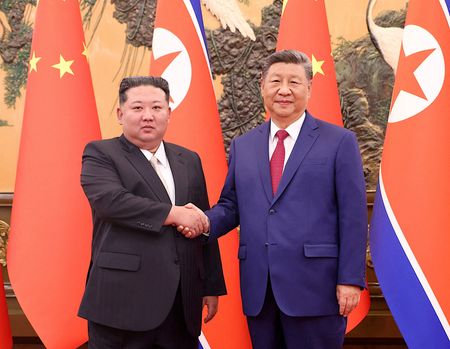
North Korean leader Kim Jong Un is set to host Chinese President Xi Jinping in Pyongyang on Monday, operating from what appears to be a position of enhanced strength backed by solid Russian support, an expanding nuclear weapons program, and minimal interest in diplomatic engagement with Washington.
The Chinese leader, who heads the globe’s second-largest economy, is making his first journey to the neighboring nation in seven years as part of Beijing’s strategy to pull Pyongyang back under Chinese influence during this two-day diplomatic mission.
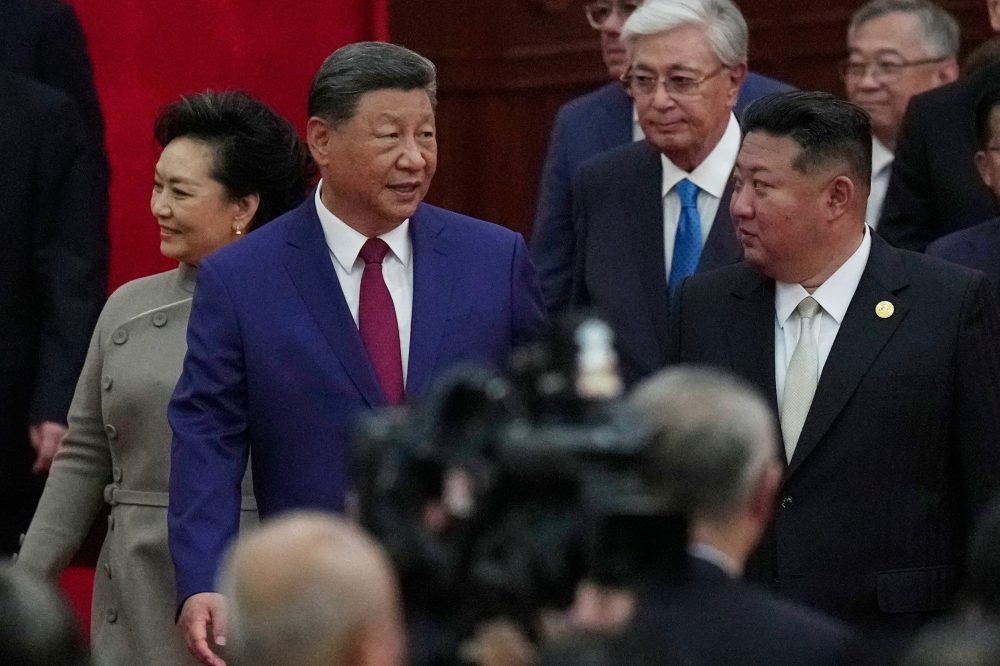
Last year, Xi welcomed Kim along with other world leaders to an elaborate military display in Beijing, and the two nations have subsequently restored certain passenger railway and aviation connections.
The current diplomatic gathering will likely stand in stark contrast to Xi’s previous state visit in 2019, which occurred just months following the collapse of negotiations between Kim and U.S. President Donald Trump regarding North Korean nuclear disarmament and sanctions removal.
In the years following that failed diplomacy, Kim has strengthened military and economic partnerships with Moscow, enhanced by sending North Korean forces to support Russia’s conflict in Ukraine, expanded his nation’s nuclear weapons program despite U.N. restrictions, and tightened border security to prevent citizen defections.
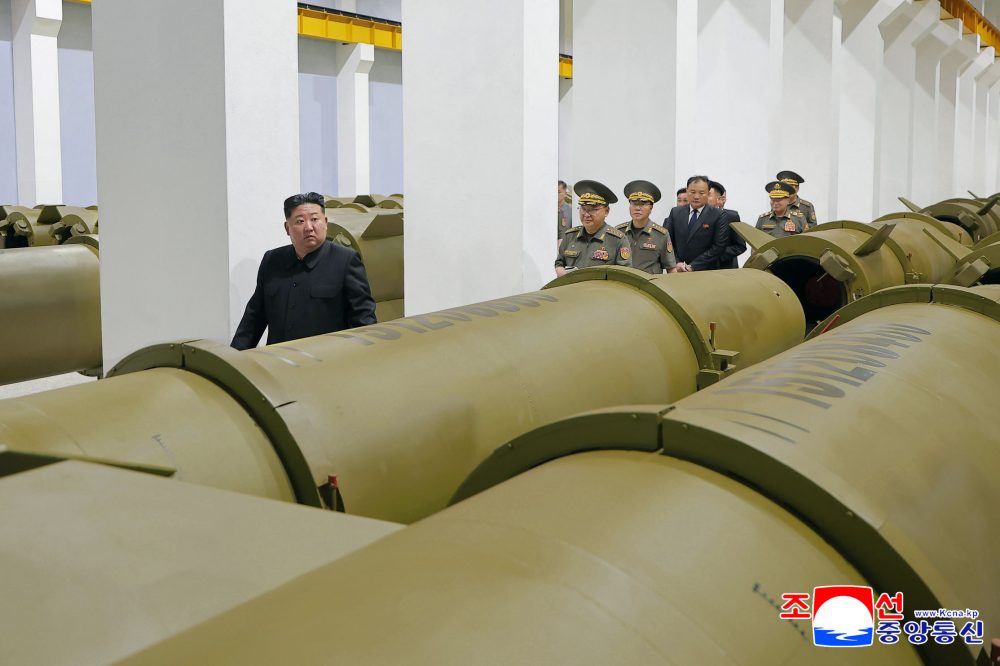
Ahead of Xi’s diplomatic arrival, North Korea has made several displays of military strength, revealing plans Saturday for a 10,000-ton naval destroyer and reasserting its nuclear weapons status on Sunday.
“Having Xi visit Pyongyang is a big deal and the culmination of a good couple of ‘comeback’ years for Kim,” said Andrew Gilholm, an analyst at consultancy Control Risks.
During Xi’s 2019 visit, Kim organized an extravagant welcome featuring thousands of citizens displaying cards that created Xi’s portrait and the Chinese flag, along with a musical performance of “I Love Thee, China.”
However, the relationship between both leaders has experienced tensions, especially regarding North Korea’s nuclear ambitions. Beijing has openly criticized Pyongyang’s atomic testing and urged the abandonment of its nuclear arsenal.
North Korea has remained wary of excessive dependence on China, with whom it maintains an 1,400-kilometer border. Russian backing appears to offer some strategic balance.
“North Korea is certainly gaining economically from what they’re able to provide militarily to Russia,” said John Delury, a senior fellow of the Asia Society. “That actually puts North Korea in a position where they may feel more confident to increase the volume of trade and investment with China.”
According to a regional diplomat, any meaningful results from the meeting will likely focus on economic collaboration, as North Korea launches a five-year development strategy that includes transforming tourism into a major industry and constructing additional housing.
North Korea closed its borders to international visitors in early 2020 while implementing some of the planet’s most severe COVID-19 restrictions, eliminating a small but crucial source of foreign currency.
Prior to the health crisis, Chinese visitors formed the foundation of North Korea’s tourism sector, representing approximately 90% of international tourists according to some assessments. The initial leisure travelers permitted to return following COVID were roughly 100 visitors from Russia’s Far East in February 2024, as reported by Russian regional officials and a Western tour operator.
Singapore’s foreign minister, following a recent visit, noted that North Korea has achieved economic advancement and indicated Pyongyang shows minimal interest in diplomatic engagement with either the United States or South Korea.
North Korea has abandoned reunification goals with South Korea, despite this being a longtime objective for both countries separated since the 1950-1953 Korean War. South Korean President Lee Jae Myung continues to support dialogue and has requested Xi’s assistance in these diplomatic efforts.
“Improving inter-Korean relations through the mediation of President Xi Jinping, we are hoping that President Xi would play that kind of role,” said Moon Chung-in, a professor at Yonsei University in Seoul who was national security adviser to a previous South Korean president.
Kim has established certain non-negotiable positions, particularly concerning his nuclear weapons program. Beyond Sunday’s declaration, he demanded Thursday an “exponential” growth of the nation’s atomic weapons stockpile.
Yang Moo-jin, president of the University of North Korean Studies in Seoul, predicted Kim would likely continue expanding nuclear material production, increase and position nuclear weapons, and stress the importance of strengthening Pyongyang’s nuclear defense capabilities.
“Kim is emboldened,” said Christopher Green, a Korea specialist at Leiden University in the Netherlands.
“He feels able to publicly pursue a marked expansion of North Korea’s nuclear arsenal with a confidence that comes from knowing that as long as he doesn’t foment outright instability in the region, Beijing will not try to stop him.”
South Korean President Lee Jae Myung announced Sunday his selection of Han Seongsook as the country’s next prime minister nominee, according to the presidential office.
Han currently serves as the minister for small and midsize businesses and startups. Should parliament give its approval, she would mark a historic milestone as South Korea’s first woman prime minister in two decades.
The nominee brings significant private sector experience, having previously led South Korean internet giant Naver as its chief executive. Presidential chief of staff Kang Hoon-sik indicated during a press briefing that Han is anticipated to spearhead the nation’s artificial intelligence transformation efforts.
“Han will be able to transform South Korea’s economic growth — driven by the semiconductor boom and rising exports — into inclusive growth that reaches everyone, including small and medium-sized enterprises,” Kang said.
Under South Korea’s governmental structure, the prime minister position functions primarily in ceremonial and administrative capacities within the presidential system.
The championship series between the Vegas Golden Knights and Carolina Hurricanes has already established multiple NHL records during the opening three contests.
The Golden Knights currently hold a 2-1 advantage following a dramatic Game 3 victory Saturday evening that required double overtime, despite surrendering a four-goal advantage earlier in the match.
A statistical breakdown of the Vegas-Carolina championship series:
This marks just one Stanley Cup Final series within the last 45 years where the opening three contests were each determined by a single goal.
Mitch Marner found the net three times within a 6:10 timeframe during Game 3, establishing the quickest hat trick in championship series history. The previous mark belonged to Montreal’s Maurice Richard, who accomplished the feat in 6:21 during 1957.
Carolina managed to score three times in just 39 seconds, setting the record for fastest three-goal sequence by any team in a final. The Canadiens previously held this distinction with three goals in 56 seconds back in 1954.
Marner has now tallied 19 goals across 19 games during this Vegas playoff campaign, a stark contrast to his 13 goals in 70 previous postseason appearances with Toronto.
Vegas defenseman Brayden McNabb completed 35 shifts totaling 35:47 of ice time in Game 3, just two days following a facial injury from an 87.3 mph shot delivered by Carolina’s Nikolaj Ehlers.
It has been 42 years since more total goals were recorded through the first three championship games. The combined 28 goals between Vegas and Carolina represent the highest total since the New York Islanders and Minnesota North Stars produced 30 goals in their opening three games during 1981.
Marner accumulated five points during the second period of Game 3, matching the highest single-game total in a final since Frank Foyston of the Seattle Metropolitans achieved this mark in 1919. That particular series remained incomplete with no Stanley Cup awarded due to the Spanish flu pandemic.
The year 2025 marked the most recent occurrence of a championship game extending to double overtime, when Florida defeated Edmonton in Game 2 on Brad Marchand’s decisive goal during their successful title defense.
This represents Carolina’s first overtime defeat of the current playoffs after winning their previous six such contests. The Hurricanes’ road record now stands at 6-1.
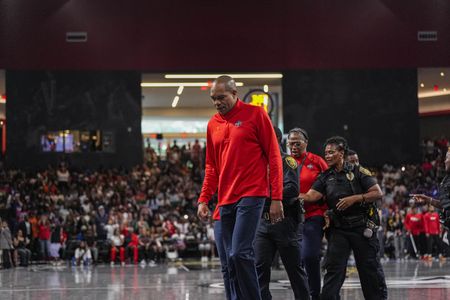
Washington Mystics head coach Sydney Johnson found himself removed from Saturday night’s game by police officers following a confrontational exchange with game officials during a lopsided 109-77 defeat against the Atlanta Dream.
The dramatic scene unfolded in the third quarter when officials called a foul on Washington’s Alicia Florez Getino for contact with Angel Reese during the Dream star’s drive toward the basket. At the time of the call, Atlanta held a commanding 64-43 advantage with 3:52 remaining in the period.
Johnson engaged in disputes with multiple officials while his assistant coaching staff and forward Kiki Iriafen attempted to calm him down. The situation escalated quickly, resulting in two consecutive technical fouls against Johnson and his subsequent removal from the game. Three police officers then accompanied him from the court area without any further complications.
“I lost my cool,” the 52-year-old Johnson acknowledged to media members following the contest.
“There’s nothing more than that,” he continued. “That’s it. Officials did what was appropriate, and that’s all I can say.”
When pressed about what sparked his outburst, Johnson declined to elaborate, stating, “I’d rather not get into that.”
The defeat marked Washington’s most lopsided loss this season, dropping their record to 4-5. Meanwhile, Atlanta strengthened their position atop the Eastern Conference standings, improving to 7-3.
“I don’t want to take away from Atlanta playing really hard and from us having a learning moment for our team,” Johnson reflected. “Not a great moment for our team or me … but that certainly doesn’t define the togetherness, the toughness, the joy we have. My ejection is not a great thing. That’s certainly not going to be a consistent thing.”
Assistant coach Emre Vatansever, who is in his second year with the Mystics coaching staff, assumed head coaching duties for the remainder of the game.
Johnson completed his inaugural season leading the Mystics in 2025 with a 16-28 record after previously working as an assistant with the Chicago Sky during the 2024 campaign.
The artificial intelligence company OpenAI is developing its most significant update to ChatGPT yet, working to transform the platform into a comprehensive “superapp” that includes coding capabilities and AI agents, according to a Financial Times report published Sunday.
The major upgrade is designed to increase revenue as the company prepares for a potential public stock offering, the report stated.
According to the Financial Times, these modifications are occurring alongside a wider company restructuring at OpenAI. The organization is redirecting resources to focus on profitable business customers and strengthen its competitive position against rival company Anthropic, the report indicated, based on information from more than twelve current and former staff members.
Reuters noted it was unable to immediately confirm the details of the report.
In a basic tent within southern Gaza, Mostafa Shaaban constructed a crude bathroom facility for his family using whatever materials he could find. Behind a makeshift curtain, he excavated a shallow hole in the sand, surrounded it with concrete, placed a bucket without a bottom over the opening, and added an old plastic toilet seat on top.
The improvised latrine produces terrible smells and attracts swarms of insects just steps away from where his family sleeps and cooks. Weekly, Shaaban must manually remove waste from the pit. Despite these conditions, he considers it preferable to the overcrowded shared facilities used by hundreds of others in the expansive encampment.
“I did not want the kids and my wife to use any public toilet. It is humiliating,” said the 38-year-old Shaaban, who was driven from his home city of Rafah by Israeli forces two years ago and eventually settled in a tent camp in Khan Younis.
“The situation is revolting,” he said of having the toilet inside the tent, “but at least it has more dignity.”
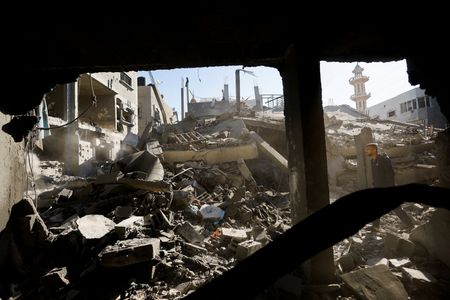
Across the enormous temporary settlements that shelter most of Gaza’s 1.7 million displaced Palestinians, not one adequate restroom facility exists. Families without homes have been forced to create their own waste disposal systems, with some facilities serving multiple related households.
At shared camp restrooms, people of all ages form lengthy queues before using facilities separated from waiting crowds by only thin fabric or metal barriers. Women are afraid to walk to these communal areas after dark.
This creates a catastrophic health situation as terrible odors spread throughout the densely populated tent areas and sewage pools form from overflowing waste pits or people emptying their personal latrines. Rights organizations report that more than 80% of Gaza’s sewage treatment facilities have been destroyed during Israel’s military operations over the past 2 ½ years.
While some humanitarian organizations have undertaken small projects to enhance family sanitation facilities, these efforts remain limited in scope due to supply shortages. When Gaza’s reconstruction might commence remains highly uncertain.
The U.S.-backed official overseeing the ceasefire in place since October has blamed Hamas for holding up the process by failing to reach an agreement on disarmament. The ceasefire deal calls for the entry of major construction and repair equipment into Gaza even before disarmament, and so far little has entered.
“It’s the most basic right. Making a toilet is more important than food and water, because you see the insects everywhere, the smell covers everyone,” said Shaaban’s wife, Iman Mansour, who is pregnant with their third child. “We want something clean.”
Creating a latrine requires significant expense. Shaaban explained that establishing his toilet took considerable time because he needed to purchase piping for the waste hole and concrete for sealing. The concrete frequently deteriorates, requiring replacement when finances allow.
A ceramic toilet seat costs between 1,700 to 2,000 shekels ($500 to $680), making it unaffordable for most families. Even if purchased, such a seat would simply rest over the hole without flushing capability. People instead use modified chairs or bottomless containers, or squat directly over the opening.
One merchant operating from a tent in Khan Younis creates metal coverings that fit around latrine openings, offering easier cleaning and selling them for 100 shekels ($34).
At one encampment near Khan Younis, Khaled Kollab worked to clear sewage drainage and pools of contaminated water beside his shelter. His tent’s waste facility consists of a basic squat toilet without seating, constructed from salvaged materials due to financial constraints. His 3-year-old daughter, Sila, stood close by, her skin showing multiple sores.
“You go into this toilet and feel humiliation and shame,” Kollab said.
SEOUL, South Korea (AP) — For the first time in almost seven years, China’s Xi Jinping is making a journey to North Korea, providing Kim Jong Un with an opportunity to demonstrate his increasingly bold diplomatic strategy built on strengthening relationships with his nation’s historical Cold War partners.
Beijing, which serves as North Korea’s vital economic lifeline, is looking to reestablish its sway over an allied nation that has recently developed stronger connections with Russia.
This marks the initial face-to-face encounter between the two leaders since Kim made a trip to Beijing for a World War II commemoration in September 2025.
Here’s an examination of what both sides might hope to achieve from their scheduled discussions:
Following years of emphasizing Russia — sending thousands of soldiers and weapons to assist Moscow’s military campaign in Ukraine — North Korea’s leader now wants enhanced relationships with China to further escape international isolation, adopting the concept of a “new Cold War” and positioning Pyongyang as part of a coalition opposing Washington.
Throughout previous leadership periods, North Korea has consistently pursued an “equidistance” strategy with Beijing and Moscow, leveraging its two primary supporters against one another to optimize benefits.
Although Kim is gaining essential support from Russia in return for supporting its military efforts, possibly including defense technologies and assistance, he cannot deliver on his commitment to enhance his people’s quality of life without increased economic help from China, according to Koh Yu-hwan, a former president of Seoul’s Institute of National Unification.
“North Korea vows to maintain a self-reliant economic system and focus on advancing its nuclear capabilities, but in reality it’s nearly impossible to raise living standards by mobilizing internal resources alone,” Koh said.
The discussions between Kim and Xi might cover restarting Chinese tourist visits to North Korea and activating a bridge spanning the Yalu River that has sat dormant for years following its construction, Koh explained. The leaders may also explore collaborative economic development initiatives in border areas shared by North Korea, China and Russia.
Questions remain about whether Kim will eventually leverage his strengthened diplomatic position to restart dialogue with Washington after his negotiations with U.S. President Donald Trump broke down in 2019 due to disputes over sanctions against North Korea.
So far, Pyongyang has rejected Trump’s proposals to restart discussions following the American president’s return to office, demanding that Washington first abandon its requirement for North Korea’s denuclearization as a prerequisite for talks. Kim previously met Xi before his trips to Singapore and Vietnam for his meetings with Trump in 2018 and 2019, actions commonly viewed as attempts to strengthen his negotiating stance. “From North Korea’s perspective, there’s belief that having China’s backing provides a sense of security and confidence when seeking to improve relations with the United States,” said Park Won Gon, a professor at Seoul’s Ewha University.
For China, this visit represents an opportunity to draw a traditional partner back into its sphere of influence by providing potential economic incentives and food assistance, traditional resources it has historically supplied to North Korea.
“I think the Chinese are privately a little uneasy at the embrace of Kim Jong Un and Vladimir Putin, that the North Koreans have really gravitated towards very heavily towards the Russians. Part of Xi Jinping’s goal is to correct the balance,” said Mike Chinoy, a former CNN journalist and author of an upcoming book about the insular country.
Xi is conducting his first international journey in 2026 after becoming more selective about state visits following the pandemic. Following separate meetings with both Trump and Putin, this decision carries strategic significance.
“The trip ensures no one can reshape the peninsula’s security architecture without his concurrence,” Seong-Hyon Lee, a senior fellow at the George H.W. Bush Foundation for U.S.-China Relations, said.
Beijing is also taking a pragmatic approach regarding Kim’s obvious nuclear aspirations.
In April, China’s Foreign Minister Wang Yi traveled to Pyongyang and met with Kim. Analysts highlighted the missing reference to “denuclearization” from the visit’s official statement, a shift from China’s typical position calling for denuclearization of the Korean Peninsula.
“The most telling sign of the visit may be a silence: if China’s official readout omits the word ‘denuclearization,’ Beijing has effectively accepted North Korea as a nuclear state, folding the issue into its broader buffer strategy against the U.S.,” said Lee.
In return, China might pursue expanded access to the Tumen River estuary, which creates part of the boundary between the nations, and navigation privileges in waters near the Korean Peninsula’s eastern coastline.
Ultimately, Kim will likely provide Xi with an elaborate and ceremonial reception on a symbolic level, but China may struggle to gain substantial concessions from an increasingly self-assured Kim, analysts suggest.
“He’s going to give Xi Jinping a welcome befitting of the head of state of their giant neighbor, but he’s not going to play the pliant ‘little brother,’” said Chinoy.
Following a wave of congressional redistricting before the midterm elections, a nationwide fight for partisan advantage is shifting into a new phase that may impact representation on issues ranging from taxation and social programs to education funding, housing policies, and infrastructure maintenance.
The Republican-controlled Legislature in a southern state will meet June 17 for a special session dedicated to redistricting for the 2028 elections. The session’s agenda covers new voting districts for Congress as well as state House and Senate seats — and possibly even the state’s utility regulatory commission.
This will be the first instance since a recent U.S. Supreme Court decision reduced minority voting protections that a state legislature will try to redraw its own districts. Republican lawmakers in one state and Democratic legislators in another may also pursue legislative redistricting before their 2027 and 2028 elections, respectively.
However, it’s unclear how many legislatures will take similar action, and whether this mid-decade redistricting trend will reach down to county commissions, city councils, and school boards that make numerous decisions affecting residents’ daily lives. The potential impact could be far-reaching.
“The stakes here are not political, they are deeply human,” said Joe Kennedy III, founder of Groundwork Project, a nonprofit that supports local civil rights and democracy organizations.
Voting district lines are usually redrawn once every ten years following each U.S. census to reflect population shifts. However, last summer, President Donald Trump encouraged Republican lawmakers in one state to redraw congressional districts to attempt gaining additional seats in the midterm elections. Other states subsequently conducted their own partisan gerrymandering efforts.
A 6-3 Supreme Court decision in late April then sparked additional redistricting activity. The court overturned a majority-Black congressional district in one state as an illegal racial gerrymander, giving Republicans in other states justification to reshape districts with significant minority populations that have elected Democrats.
A federal judge determined in 2023 that some congressional, state Senate, and state House districts in one state were drawn in a racially discriminatory way. The Legislature promptly passed revised maps with new majority-Black districts, though they produced minimal changes to Republican majorities in the 2024 elections.
The Republican governor has summoned lawmakers into special session to redraw districts again following the Supreme Court’s decision in the case from another state. This could enable Republicans to reverse the court-mandated changes they implemented in 2023 and potentially redraw other Democratic-held minority districts to benefit the GOP.
Republicans have not yet revealed specifics of their strategy. However, a Democratic state representative who is seeking the attorney general position criticized the planned redistricting as a way of “rigging maps to maintain power.”
Several months prior to the Supreme Court ruling, a study by Fair Fight Action and Black Voters Matter predicted that Republicans in 10 Southern states could eliminate 191 Democratic-held legislative seats — including 140 districts with Black or Hispanic majorities — if the Supreme Court weakened federal Voting Rights Act protections for minorities.
“If anything, our report was an understatement,” Cliff Albright, co-founder and executive director of Black Voters Matter, recently told The Associated Press. “What’s at stake is the future of this democracy.”
Other experts don’t anticipate that many seats being redistricted. But they do expect the Supreme Court’s ruling to have effects across states.
“We’re going to potentially see a lot of frenzied efforts at every level, including at the local level, to try out undoing district maps and configurations that have performed quite well in providing improved representation for communities of color,” said Kareem Crayton, vice president of the Washington office of the Brennan Center for Justice.
The precedent from the recent Supreme Court ruling is already being used in multiple states. Following the decision, a federal appeals court is permitting one state to use a state Senate map approved by Republican lawmakers in this year’s election rather than one imposed by a federal judge who determined the state had weakened the voting power of Black residents. The modification affects two state Senate districts in one metropolitan area.
The Supreme Court has returned legislative redistricting cases filed on behalf of Black voters in one state and Native Americans in another state to lower courts for additional review in light of its decision. An attorney general in another state has requested the Supreme Court do the same for legislative redistricting cases involving Hispanic voters in that state.
Approximately half the states have constitutional provisions that ban mid-decade redistricting of state legislative seats, said Justin Levitt, a law professor at Loyola Marymount University in Los Angeles who operates the “All About Redistricting” website.
But even in states where it’s permitted, lawmakers may have less motivation to redraw their own districts than those for Congress, Levitt explained. Politicians who advocated congressional redistricting for the 2026 midterms often defended it as a method to counter gerrymandering in other states and secure as many seats as possible for their party. They had additional motivation because a shift of just a few seats nationally in the November elections could determine control of the closely divided U.S. House.
In contrast, most state legislative chambers are already controlled by one party.
“There’s a lot less incentive, if you already control the state legislature by 10 or 12 seats, to eke out an incremental one or two at the expense of really ticking off your own party membership, or at the expense of maybe risking losing seats in a broader way,” Levitt said.
The Supreme Court ruling making it harder to prove Voting Rights Act violations has already impacted some local governments.
Plaintiffs have voluntarily dropped a challenge to commission districts in one county. A federal court has accepted new legal briefs in a challenge to Board of Supervisors districts in another county. And one state’s attorney general has asked a federal appeals court to consider the case when deciding a challenge to how judges are selected in one county.
Over approximately the past four decades, data from the University of Michigan indicates that cities, counties, and school boards have been involved in more than three-fifths of the 466 lawsuits alleging violations of Section 2 of the Voting Rights Act, which prohibits providing minorities less opportunity than other voters to elect the representatives of their choice.
But that doesn’t necessarily mean local governments will rush to redistrict due to a weakened Voting Rights Act. The Supreme Court decision opened the door for officials to justify redistricting based on partisan goals. However, many local offices are officially nonpartisan.
DES MOINES, Iowa — Rob Sand officially launched his gubernatorial campaign Sunday, marking his first rally as the Democratic nominee for Iowa governor with support from Kentucky Gov. Andy Beshear.
The gubernatorial contest between Sand and Republican Zach Lahn is expected to be among the nation’s most competitive races as Iowa grapples with a state budget deficit, struggling agricultural economy and cancer crisis.
While Sand minimizes partisan politics, Democrats are counting on him to reverse their recent electoral setbacks in the state.
“We are all in on flipping Iowa,” said Beshear, chair of the Democratic Governors Association and a potential presidential candidate in 2028. “It’s certainly time for a change, and I think the people of Iowa know that Rob Sand will always put them first and lead in a way that lifts families up and doesn’t leave them out.”
Sand faced no primary opposition, while his general election opponent emerged after Tuesday’s unpredictable five-way Republican primary.
Previously unknown in statewide politics, Lahn gained attention as a business owner condemning farm consolidation and corporate tax breaks, a regenerative farmer aligned with Robert F. Kennedy’s “Make America Healthy Again” movement and a former political operative who energized Iowa’s conservative base.
For the first time since 1968, Iowa has open contests for both governor and U.S. senator, along with three competitive congressional races. National political figures including President Donald Trump and Vice President JD Vance have recently visited the state.
Democrats face significant challenges with a 200,000-person voter registration disadvantage statewide and minority status in every House district. Sand and Senate candidate Josh Turek believe they can attract independents and Republicans frustrated with partisan politics and Republican control in both Washington and Des Moines, which they blame for state problems.
Turek will challenge U.S. Rep. Ashley Hinson, who has already characterized Turek as a liberal ally of party leader Sen. Chuck Schumer.
Lahn has dismissed Sand’s nonpartisan messaging.
“Rob Sand is not a moderate,” Lahn said in his victory speech Tuesday. “He’s a liberal career politician pretending to be someone he’s not.”
Sand frequently criticizes partisanship, expresses skepticism of both major parties and advocates for divided government in Iowa. He believes most Iowans share these views.
If elected in November, Sand would likely work with Republican majorities in both legislative chambers, which recently approved measures limiting executive authority that outgoing Republican Gov. Kim Reynolds signed.
“I’m not here to tell you that the answer to 10 years of one-party control is to give the other party 10 years of one-party control. I don’t think that’s right,” Sand said Tuesday after voting in the primary. “But I do think that it’s time to say enough to the people who have had 10 years of one-party control. It’s time for balanced government in Iowa.”
Both Sand and Lahn avoid traditional party colors of blue and red in their campaign materials, choosing green instead. Both claim independence from party establishments and argue Iowans want new leadership, though Lahn’s Republican Party has controlled the statehouse for nearly a decade.
Sand’s campaign has contributed approximately $750,000 to the Iowa Democratic Party this cycle, funding Republicans criticize as inconsistent for a candidate claiming nonpartisan status. The Sand campaign explains this investment supports a state party-coordinated effort essential for his gubernatorial victory, while also helping other candidates.
As Democrats analyze their 2024 losses and debate party direction, Beshear offers his red-state leadership as a model for moving forward.
Beshear said he aims to be a “voice of reason in the chaos” of Trump’s administration and accepts being mentioned among potential 2028 Democratic presidential candidates, while maintaining focus on the upcoming midterms.
Beyond rallying with Sand, Beshear will attend a “Beers with Beshear” fundraiser for congressional candidate Sarah Trone Garriott, who seeks to defeat Republican Rep. Zach Nunn in the competitive House district covering Des Moines. Beshear said he will also meet with Turek.
The Democratic Governors Association, led by Beshear, has provided the Iowa Democratic Party about $140,000 this cycle, according to filing reports.
American shoppers continue to spend money despite rising fuel costs from the Iran conflict, but many are changing their purchasing patterns and shopping locations, retail executives and industry analysts report.
The shifts in consumer behavior remain modest so far, including different gas purchasing habits and reduced trips to apparel and home goods retailers. These changes vary across different income levels. During recent analyst earnings discussions, leaders from major companies like Walmart, McDonald’s and Dollar General noted that shoppers overall remain resilient while lower-income customers are making noticeable spending cuts.
However, the emerging signs of financial pressure that retailers are reporting, even as generous income tax refunds helped boost their sales, lead some economists and analysts to predict broader spending reductions once refunds end and consumers feel the full effect of costlier fuel and higher prices across food, clothing, insurance and other categories.
Trevor Chapman, a communications executive in West Hills, California, explained that he and his spouse now coordinate their gas purchases around Costco locations with fuel stations instead of visiting their local independent gas station. The pair has also increased their online grocery shopping to prevent unplanned purchases.
“Gas is a kind of catalyst,” Chapman said. “It trickles down into the entire budget. We’re trying to keep everything as normal as possible. But it’s starting to feel like it’s adding up more and more.”
Even before the U.S. and Israel began the war, numerous consumers had already become more selective with their non-essential spending, worn down by multiple years of persistent inflation and import tariffs implemented the previous year.
The U.S. Commerce Department announced last week that increased prices, rather than additional purchases, drove most of the expansion in Americans’ spending during April, when a crucial inflation measure hit its peak since October 2023.
Membership-based warehouse retailers including Costco, Walmart’s Sam’s Club and BJ’s Wholesale Club have experienced increased activity at their gas pumps since the conflict started in late February, the companies report. Fuel generally costs less at these wholesale clubs.
However, numerous drivers are not completely filling their tanks, Walmart Chief Financial Officer John David Rainey informed analysts late last month. For the first time since 2022, Walmart shoppers and Sam’s Club members are purchasing an average of fewer than 10 gallons per visit, he noted.
“That’s an indication of stress,” Rainey said.
Costco members are also adjusting their habits. They are visiting store fuel stations more often to “top up in between what would have normally been a gap between getting the tank to empty because of the concern about what might the gas price be tomorrow,” Chief Financial Officer Gary Millerchip explained in late May.
Meanwhile, the fuel price increase has damaged convenience stores, where 80% of all gas is sold in the U.S., according to Jeff Lenard, a vice president at the National Association of Convenience Stores.
A sales review by the trade organization discovered that pump transactions at locations owned by 130 convenience store companies decreased by nearly 10% during March and April compared to those same months the previous year. Interior store sales at these companies declined by 10.4%, the analysis showed.
“When you lose gallons to the big box, you also lose in-store sales,” Lenard said.
Elevated gas prices did not prevent many Americans from eating out during the first two months of the Iran war. Tax refunds provided assistance, the National Restaurant Association stated. Customer visits to U.S. restaurants in April remained the same as the corresponding month last year, though a 2.6% rise in restaurant spending came mainly from increased menu prices, market research firm Circana reported.
But weaknesses are beginning to appear as budget-minded U.S. residents handle the combined burden of paying more for gas and other consumer items along with rising costs in additional areas from past and current inflation.
Gas prices will not help attract customers with household incomes of $45,000 or below back to U.S. fast-food restaurants, McDonald’s Chairman and CEO Chris Kempczinski stated last month. Individuals in that income bracket started reducing their fast-food purchases after the inflation period that followed the COVID-19 pandemic’s end, and this trend accelerated last year.
U.S.-based restaurant consulting firm Revenue Management Solutions examined 14.6 billion restaurant transactions from the past four years and discovered that as gasoline becomes more costly, restaurant visits slowly decrease, according to Chief Research Officer Sebastián Fernandez. The study showed the effect doubles when gas reaches the $4 level, which occurred as a national average on March 31.
Consumers are also making compromises when grocery shopping, according to Stew Leonard, president of an eight-store supermarket chain his father established, Stew Leonard’s. He has observed customers purchasing meat in large quantities for freezing and showing less interest in products featured during live food demonstrations or available for tasting.
“It’s telling me that people are sticking more to their shopping list,” Leonard said.
Dollar General CEO Todd Vasos also mentioned $4 per gallon gas as a threshold that brought more consumers with household incomes above $100,000 to the discount chain. Vasos informed analysts Tuesday that many of Dollar General’s primary shoppers, who have mid-to-low incomes and live in rural areas, were reducing their food spending.
Sophie Tolsdorf, 29, of La Grange, Kentucky, said she represents one of the consumers purchasing meat in bulk when prices are favorable. She also changed to buying whole fruit rather than pre-cut fruit in packages and reduced purchases of rawhide bones for her dog that cost $40 per pack.
“He might have noticed,” Tolsdorf said. “He’s definitely a little bit bored during the workday now.”
Prior to the war, retailers had used several earnings periods to emphasize consumer caution and selectivity as elements that could impact sales of non-essential items. Shoppers seem to have reduced their discretionary spending further as gas purchasing costs increased, said Marshal Cohen, chief retail advisor at Circana.
From April 25 to May 23, U.S. retailers sold 6% fewer non-grocery items than during the equivalent four-week period of 2025, Cohen reported. Housewares, clothing, footwear and sports equipment experienced the largest decreases, ranging from 5% to 7%. Circana noted that toys and beauty products remained positive areas, showing at least an 8% increase in units sold.
Location intelligence company Placer.ai, which monitors people’s movements through cellphone data, observed visits to BJ’s, Costco and Sam’s Club gas stations begin to increase in early March, coinciding with a steep fuel price rise, according to R.J. Hottovy, the company’s head of analytical research.
By early May, Placer.ai’s information revealed four straight weeks of decreased foot traffic at clothing, electronics and home furnishing stores, and increased trips to grocery stores and dollar stores.
“Consumers are prioritizing value-oriented retailers like warehouse clubs, superstores, and off-price chains,” Hottovy said.
Armenian citizens are casting their votes in a crucial parliamentary election that will determine whether the current government’s peace initiatives and pivot toward Western nations will continue following a devastating military defeat by Azerbaijan three years earlier.
Polling data indicates Prime Minister Nikol Pashinyan’s Civil Contract party maintains a commanding lead with support from as many as 32% of voters, while the pro-Russian Strong Armenia party holds second position at approximately 11%.
Since assuming office in 2018, Pashinyan has shifted Armenia’s foreign policy orientation toward Western nations and reduced dependence on Russia, the country’s historical ally, creating tension with Moscow ahead of Sunday’s voting.
Under Pashinyan’s leadership, the nation has seen its GDP per capita increase twofold, with the former journalist and opposition figure transitioning into political leadership.
“I really like how Armenia has been growing right before my eyes,” said 39-year-old voter Karine Darbinyan during a Pashinyan campaign event in Yerevan’s main square on Friday.
NAGORNO-KARABAKH DISPLACEMENT CREATES POLITICAL TENSIONS
Opposition groups and segments of the population have sharply criticized Pashinyan, claiming he surrendered to Azerbaijani demands, especially following the 2023 conflict.
In response, Pashinyan has made his peace negotiations the focal point of his campaign, highlighting the accord he reached at the White House last August with Azerbaijan, ending decades of intermittent warfare that began in the late 1980s.
The opposition landscape is largely controlled by Russia-aligned factions, including Strong Armenia, established last year by Russian-Armenian businessman Samvel Karapetyan. His platform emphasizes maintaining close ties with Russia, which serves as a major energy provider and export market for Armenia.
During a Strong Armenia campaign gathering in Yerevan last week, a supporter identifying herself only as Gayane expressed backing for Karapetyan because he would guarantee “that our Armenia remains Armenian.”
Gayane explained her family origins trace to Nagorno-Karabakh, the disputed region populated by ethnic Armenians that Azerbaijan reclaimed during the 2023 conflict. Following the swift one-day military operation, the territory’s complete Armenian population evacuated in disorder.
“We lost Artsakh, hoping it would remain with us,” Gayane stated, referencing the traditional Armenian designation for the region.
“The current authorities have taken away that hope from us. And Samvel Karapetyan has now given us new hope that we can at least preserve our Armenia and our traditions.”
Opposition figures and human rights organizations have charged Pashinyan with authoritarian behavior following the imprisonment of numerous political rivals in recent years.
Government officials have generally supported law enforcement actions against people they claim are attempting to orchestrate government overthrows.
A series of detentions leading up to the election has focused on opposition members, including parliamentary nominees from the Strong Armenia party.
Voting locations opened at 8 a.m. local time and will remain accessible until 8 p.m. Approximately 2.48 million citizens are eligible to participate in the election within the landlocked nation of 3 million residents.
The Abu Dhabi-based carrier Etihad Airways is expanding its fleet with a substantial purchase of widebody aircraft as operations recover from recent regional conflicts, the company’s CEO announced during an international airline industry conference.
Speaking at a gathering of airline executives in Rio de Janeiro on Saturday, CEO Antonoaldo Neves revealed that the Middle East carrier is acquiring widebody jets in double-digit numbers, though he declined to provide specific figures about the purchase.
According to Neves, the airline anticipates operating at approximately 8% above last year’s capacity levels by June 15, marking a significant recovery from service reductions implemented in March.
The carrier had scaled back operations earlier this year when the U.S.-Israeli conflict with Iran expanded regionally, leading to increased fuel costs and operational challenges, Neves explained.
Despite the recent turbulence in the region, the airline executive indicated that Etihad has no current plans to reduce expenses through additional flight cancellations.
“The biggest cost we have is an empty plane,” Neves stated. “So the way I cut cost is I don’t have empty planes.”
The United States men’s soccer team suffered a 2-1 setback against Germany in their last preparation match before World Cup competition, though head coach Mauricio Pochettino praised his squad’s fighting spirit in the loss.
Germany, winners of four World Cup titles, took an early advantage when Kai Havertz converted Joshua Kimmich’s free kick with a header just two minutes into the match. The United States, serving as World Cup co-hosts, responded with a spectacular tying goal from Antonee Robinson.
Leroy Sane found the net in the 57th minute to secure Germany’s win at Chicago’s Soldier Field.
“Overall, I think it was a good performance. I am happy with the performance of everyone. We play one of the most important teams in the world,” Pochettino shared with media members.
“I think we need to be happy with that. We compete, (we were) unlucky, I think it was as an even game… It was an amazing challenge for us to see how we react, how we show character, how we show togetherness, how we start to play under pressure.”
The United States will begin their Group D matches against Paraguay on June 12 at SoFi Stadium near Los Angeles.
“We were demanding a lot to the player(s) in the last two weeks. I’ve seen (us) overload the player(s) and the team,” the Argentine manager explained.
“Now (we have) to assess the load and be intelligent in the way that we are going to arrive to the Paraguay (game), in the best condition, fresh with energy.”
Vegas defenseman Brayden McNabb took the ice Saturday night for Game 3 of the Stanley Cup Final against the Carolina Hurricanes, despite uncertainty about his availability following a hospital visit.
During the previous game, McNabb suffered a facial injury when struck by an 87-mph puck fired by Hurricanes forward Nik Ehlers, requiring him to be taken to a medical facility for treatment.
Playing with protective facial equipment attached to his helmet, McNabb contributed an assist on Mitch Marner’s second goal during a hat trick performance in the second period. The Golden Knights built a commanding 4-0 advantage after a goalless opening frame in Las Vegas. Carolina mounted a comeback with three goals in just 39 seconds during the third period as the contest continued with the series deadlocked at one game apiece.
The Golden Knights provided no official medical report regarding the 35-year-old defender prior to game time, though teammate Shea Theodore confirmed McNabb’s presence at Saturday’s team practice session.
Throughout the regular season, McNabb participated in 63 contests for Vegas, tallying five goals and seven assists while maintaining a plus/minus rating of +2.
The Texas Rangers have sidelined veteran backstop Danny Jansen for a minimum of 10 days due to a right forearm strain, the team announced Saturday.
The injury designation was made effective Wednesday. To fill the roster spot, the Rangers have brought in experienced catcher Elias Diaz on a major league deal.
The 31-year-old Jansen reported feeling the injury during Monday’s contest when Texas narrowly defeated St. Louis 2-1 on the road. His final appearance came Tuesday when he entered as a defensive substitute in the ninth inning of the Rangers’ 7-4 victory against the Cardinals.
“Anytime you’re dealing with an arm, it’s always tricky,” Texas manager Skip Schumaker said Saturday. “Hopefully, we got it caught in time and can manage it where it’s not that long of an IL stint.”
This season, Jansen has struggled offensively, posting a .171 average (21-for-123) with three homers and 12 RBIs across 41 contests. Throughout his major league tenure, Jansen carries a .216 batting average with 91 home runs and 268 RBIs over 640 regular-season appearances with the Toronto Blue Jays (2018-24), Boston Red Sox (2024), Tampa Bay Rays (2025), Milwaukee Brewers (2025) and Rangers.
Kyle Higashioka got the starting nod behind the plate Saturday evening as the Rangers fell 6-0 to the visiting Cleveland Guardians.
The 35-year-old Diaz was most recently with the Kansas City Royals, making his final appearance on May 20 before being designated for assignment two days later. He subsequently chose free agency.
During his brief stint with Kansas City, Diaz managed a .227 batting average (5-for-22) with two home runs and five RBIs in 10 appearances. The 2023 National League All-Star selection with Colorado owns a career .246 average with 73 homers and 331 RBIs across 840 regular-season games with the Pittsburgh Pirates (2015-19), the Rockies (2020-24), San Diego Padres (2024-25) and Royals.
“Again, (Jansen) is gonna be down for a few days, not playing,” Schumaker said. “Diaz is here for a reason. He’s a veteran catcher, just in case Danny can’t play today, so we’ll go with that. Again, Diaz is a veteran catcher that has been around a long time, has kept in shape, ready to go. I anticipate him, if active, playing at some point in this series.”
Olympic champion Gabby Thomas delivered a blazing performance in the women’s 200 meters Saturday at the Lone Star Grand Prix in College Station, Texas, posting the fastest time globally this year.
Thomas, who captured three gold medals at the 2024 Paris Olympics including the 200m, 4x100m relay, and 4x400m relay, crossed the finish line in 21.70 seconds. Fellow American Kayla White took second place with a time of 22.07, while Nigeria’s Favour Ofili rounded out the top three at 22.15.
The impressive performance surpassed Thomas’s Olympic-winning time of 21.83 and came within just one-tenth of a second of her personal record of 21.60 established in 2023.
“I’m a little surprised by the time, but I’ve been training hard,” the 29-year-old said.
“I had a great little tour in Africa and now the hard work is paying off. I’m enjoying having an ‘off’ year where there’s not the pressure of an Olympics or World Championships, so I’m just having fun this season.”
Thomas was sidelined from last year’s world championships in Tokyo after suffering an Achilles injury and made her competitive comeback in April.
A dozen individuals suffered gunshot wounds Saturday evening when two people engaged in a firefight near a community festival in Toledo, Ohio, according to law enforcement officials.
Two victims remain in critical condition following the incident, authorities revealed during a media briefing. The injured ranged from 14 to 61 years of age, police reported.
The shooting stemmed from two people firing weapons at one another, according to investigators. Police Lieutenant Dan Gerken described the scene to media members, stating: “I’ve been to a lot of scenes, but this is way over the top.”
Law enforcement continues searching for those responsible in what Deputy Chief Joseph Heffernan described as a “pretty active” investigation. “We do have some evidence and we’re following up on some leads,” Heffernan told reporters.
Authorities are interviewing numerous individuals and examining surveillance video, Gerken explained. George Kral, director of public safety for Toledo, appealed to community members for any mobile phone recordings that might assist officers in locating the suspects.
“I know there is information out there,” Kral stated. “Please help us help you.”
Emergency responders were called to the scene at approximately 5:37 p.m. after receiving reports of a shooting victim near the Old West End Festival, the Toledo Police Department announced on Facebook, noting that “many victims have been transported to nearby medical facilities for treatment.”
The festival drew several hundred attendees, Kral noted. “This is one of the most iconic festivals in Toledo, and it’s a shame that something like this had to ruin it,” he commented.
Excluding Saturday’s Toledo incident, the Gun Violence Archive website has documented 171 mass shootings across the United States this year. The organization classifies a mass shooting as an event where gunfire injures at least four people, not counting the perpetrator.
The sister of North Korean leader Kim Jong Un has rejected American efforts to eliminate her country’s nuclear weapons program, describing such goals as an outdated fantasy during remarks made Sunday.
Her comments preceded the Chinese President Xi Jinping’s planned visit to North Korea for discussions with Kim Jong Un, marking his first trip to the nation in seven years.
“The U.S. assertion to backbite the status of the DPRK as a nuclear weapons state has no legally binding force and no one will be bound by the U.S. unilateral rhetoric,” stated Kim’s sister and senior official, Kim Yo Jong, referring to North Korea by its official designation.
Kim Yo Jong characterized as misleading information an American claim that President Donald Trump and Xi had agreed on shared objectives to eliminate North Korea’s nuclear capabilities during their recent summit in Beijing.
“Some officials in the United States have failed to wake from their escapist and anachronistic dream,” Kim Yo Jong declared.
Since Kim Jong Un’s diplomatic efforts with Trump ended unsuccessfully in 2019, North Korea has concentrated on expanding its nuclear capabilities. Experts believe the North Korean leader seeks international acknowledgment as a nuclear power to pressure for the removal of international economic restrictions against North Korea.
While touring a newly constructed nuclear materials facility last week, Kim Jong Un announced North Korea would strengthen the nation’s nuclear capabilities “at an exponential rate.” Sunday’s state media coverage showed Kim Jong Un had inspected a weapons manufacturing facility the day before, where he advocated for expanding the country’s missile manufacturing capabilities by 2.5 times within a five-year timeline.
In her remarks, Kim Yo Jong criticized the U.S. and South Korea for pursuing “ceaseless arms build-ups,” describing her brother’s efforts for “steadily beefing up the nuclear war deterrent for self-defense” as “an irreversible final conclusion to be carried out unconditionally.”
Experts suggest Xi’s upcoming North Korea visit primarily aims to reestablish China’s influence over North Korea, which has increasingly prioritized its relationship with Russia in recent years. They anticipate Xi will likely avoid directly addressing nuclear disarmament and instead propose economic cooperation programs during his discussions with Kim Jong Un.
North Korea has deployed military personnel and conventional armaments to Russia supporting its military campaign against Ukraine. American and South Korean officials report that North Korea has received economic and additional support from Russia in exchange.
Golden Tempo demonstrated that his Kentucky Derby victory was legitimate by capturing Saturday’s Belmont Stakes at Saratoga Race Course in Saratoga Springs, N.Y.
The victory established Cherie DeVaux as only the second female trainer to guide a horse to success in horse racing’s Triple Crown third leg. DeVaux, a Saratoga Springs native, followed in the footsteps of Jena Antonucci, who achieved the feat in 2023 with Arcangelo.
Commandment claimed second place, while Renegade, who had finished runner-up to Golden Tempo by a neck at Churchill Downs last month, came in third.
All three top finishers had competed in the Derby but chose to bypass the May 16 Preakness, the Triple Crown’s middle race, due to the two-week gap between competitions.
Mirroring his Derby performance, jockey Jose Ortiz guided Golden Tempo from the back of the pack to victory with another powerful finishing kick. However, Ortiz accomplished this without the fast early pace that Derby frontrunners had established.
Even after his Derby success, Golden Tempo wasn’t favored to win. Renegade held that distinction at 8-5 odds.
Starting from the outside post at 6-1 odds in the nine-horse race, Golden Tempo returned $14 for a win bet, $7.32 to place, and $3.88 to show. Commandment, who started at 5-1, delivered $7.02 and $4.08 payouts. Renegade paid $2.52.
Thousands of people packed a major Mexico City boulevard Saturday in an ambitious attempt to establish a world record for the Mexican wave — fittingly taking place in the nation that gave this popular stadium tradition its name.
The gathering marked the 40th anniversary of when the wave first appeared during Mexico’s 1986 World Cup, though debate continues over its true beginnings, with American audiences also staking claims to early versions of the phenomenon.
Mexico is gearing up to welcome the tournament once again, with games starting June 11, marking its third time as host nation. The country will make history as the first to host or co-host the men’s World Cup three times, adding to its previous tournaments in 1970 and 1986.
Saturday morning saw Mexicans and visitors gathering along the Paseo de la Reforma, the major thoroughfare cutting through the capital city’s center.
Many participants donned the vibrant green uniforms of Mexico’s national squad, displaying flags and shouting “Mexico, Mexico!” while raising their arms in coordinated succession, creating a flowing wave of movement across the assembled crowd.
Guinness World Records maintains multiple Mexican wave categories in its official records.
The participation record stands at 157,574 people achieved in the United States during August 2008; Portugal holds the longest wave line record with 8,453 participants in 2007; while Japan recorded the duration record of 17 minutes and 14 seconds in 2015.
A spokeswoman for the Mexico City government explained their goal was establishing a world record specifically for the largest Mexican wave conducted outside stadium walls.
“It’s not about breaking a record, it’s about setting one — this is something unprecedented,” she said. “That’s why Guinness took the evidence away to assess all the elements. There are many things they analyse.”
Teresa Lopez, who made the trip to participate, explained her dual motivation for attending. “We came to participate in the biggest wave in the world and to support our national team,” she said. “We are Mexican and we are very proud of our country.”
International visitors also embraced the festive atmosphere. Tourist Vivia Shivers, who arrived in the capital before the tournament begins, found special significance in the event. “It’s a special location, it’s a contribution to a World Cup, and participating feels wonderful,” she said.
Entertainment industry workers gathered in Los Angeles on Saturday to voice opposition to a massive studio merger they believe could devastate their livelihoods.
Stand-up comedian Adam Conover addressed approximately 100 people at Lumiere Music Hall, warning that ongoing media consolidation poses a serious threat to an industry that established the United States as a global cultural leader.
“It’s about to die, and that’s why I feel so passionately about this issue,” Conover told the crowd.
The Saturday event marked the opening of a three-city “Main Street vs. The Merger” tour, bringing together entertainment professionals, small business operators and political figures opposing the proposed $110 billion acquisition of Warner Bros. Discovery by Paramount Skydance. Advocacy organizations, the Writers Guild of America and concerned industry workers organized the gathering.
Federal antitrust officials appear ready to greenlight the combination after receiving assurances from Paramount Skydance that the transaction won’t harm competing studios or creative professionals. CEO David Ellison has promised the merged Paramount and Warner studios would maintain production levels by distributing a minimum of 30 movies annually.
However, multiple U.S. states including California and New York are preparing legal action to prevent the deal, according to sources who spoke with Reuters on Friday.
Conover has experienced the impact of cost-cutting following media mergers firsthand. When AT&T purchased Time Warner in 2018, his TruTV program “Adam Ruins Everything” was terminated, eliminating jobs for employees, “countless” contractors and over 100 additional workers.
These job cuts mirror broader employment declines across the entertainment sector since reaching its highest point in late 2022.
California has faced particularly severe losses, eliminating 17,234 positions between 2019 and 2023, data from the Milken Institute shows. The organization determined that multiple factors — including declining television advertising revenue and slowing streaming service expansion — prompted studios to seek more affordable production locations for films and television series.
Hollywood sound stage utilization dropped to 62% during the first half of 2025, compared to near-complete occupancy in 2016, according to Film LA, the nonprofit group that coordinates filming activities throughout greater Los Angeles. The International Alliance of Theatrical Stage Employees, representing 170,000 behind-the-scenes workers, reported its members logged approximately 36% fewer working hours compared to 2022.
Matt Radecki, who co-founded the Different by Design post-production company in Los Angeles, worries a Paramount Skydance-Warner Bros. Discovery combination will reduce purchasing options for documentary productions like the Academy Award-winning “Navalny,” created by two Warner divisions, HBO Max and CNN Films.
“This is the biggest thing that we’ve faced,” Radecki addressed attendees Saturday. “The places we work with are closed … They’re gone, and they’re never coming back, and we don’t want to see that happen to HBO or CNN or CNN Films.”
Former Federal Trade Commissioner Alvaro Bedoya expressed confidence that California Attorney General Rob Bonta could successfully challenge the merger. Bonta might contend that the Paramount Skydance-Warner transaction reduces competition among film studios, consequently impacting workers.
U.S. law also permits blocking mergers based on arguments they would reduce competition for particular categories of employment. Antitrust officials previously used this approach when stopping publisher Penguin Random House’s attempted acquisition of competitor Simon & Schuster in 2022.
California could reference that case as precedent for any labor-focused legal challenge, according to Ioana Marinescu, a University of Pennsylvania economist who authored the Biden administration Justice Department’s labor market guidelines.
“For some workers it could be that jobs at these two companies are really special, and this is really what they want,” she explained. “And there isn’t necessarily a very close substitute. And those are the people for whom it’s going to make an adverse impact.”
The Los Angeles Angels executed several roster transactions on Saturday, with the team bringing back infielder Nolan Schanuel from the injured list while moving outfielder Jorge Soler to the IL due to an oblique injury, effective retroactively to June 4. Additionally, the organization brought up outfielder Gustavo Campero on a contract selection before immediately placing him on the 10-day injured list, and removed catcher Omar Martinez from the roster through designation for assignment.
Schanuel, who was chosen in the first round of the 2023 draft, has served as the team’s regular first baseman throughout the last three seasons. Throughout his professional career, he maintains a .259/.348/.373 statistical line at the plate. The 24-year-old player has contributed four home runs and 24 RBIs this season while posting a .313 on-base percentage through 49 appearances.
Soler is sidelined with a strain in his left oblique muscle. The former All-Star performer has contributed nine home runs and 33 RBIs while posting a .220/.300/.402 statistical line through 58 games this season. In his absence, manager Kurt Suzukki is using different players in the designated hitter role, with infielder Nick Madrigal receiving Saturday’s assignment at DH.
Campero will not participate in major league games immediately due to his placement on the injured list.
Martinez had been providing organizational depth behind the plate while Travis d’Arnaud remains on the 60-day injured list. Martinez recorded one hit in three at-bats during his brief tenure with the club.
Rain forecasts led to the cancellation of Saturday evening’s baseball matchup between the Boston Red Sox and New York Yankees at Yankee Stadium.
Officials called off the contest approximately 30 minutes following the original 7:35 p.m. EST scheduled start time. The teams will play a makeup doubleheader on August 29.
Stadium crews covered the playing field with a tarp about an hour before game time. Precipitation held off for another hour before the official rainout was declared shortly after 8 p.m.
New York had planned to start right-handed pitcher Will Warren (7-1, 3.22 ERA) against Boston’s left-handed starter Ranger Suarez.
For Sunday’s contest, Suarez (2-3, 3.38) is scheduled to pitch for Boston, while New York will counter with right-hander Cam Schlittler (7-3, 1.89).
The Red Sox have performed well at Yankee Stadium recently, posting an 8-5 record over their last 13 road games against New York, including Friday’s 5-3 series-opening win.
Willson Contreras delivered his second consecutive home run with a two-run blast against Ryan Weathers. Contreras knocked in three runs total and has safely reached base in 17 straight contests.
New York has won seven of their past 11 contests but dropped three of four games since losing power hitter Aaron Judge to a stress fracture in his right rib. Prior to Saturday’s weather delay, the Yankees placed catcher Austin Wells on the injured list due to cervical headaches. The team brought up catcher J.C. Escarra from Triple-A Scranton/Wilkes-Barre as his replacement.
Employees at the Los Angeles venue have given approval for a potential work stoppage in advance of the upcoming World Cup tournament.
Talks involving the labor union that represents the employees, the stadium’s hospitality management company, and FIFA officials are scheduled to resume on Monday.
Nineteen-year-old Russian tennis sensation Mirra Andreeva claimed her first Grand Slam championship at the French Open, defeating Polish qualifier Maja Chwalinska 6-3, 6-2 in the final. The eighth-ranked Andreeva becomes the youngest women’s singles champion at Roland Garros since Monica Seles captured her third consecutive title in 1992 at age 18. Chwalinska, ranked 114th, fell short in her bid to become the first qualifier ever to win the French Open. The men’s championship match features Alexander Zverev against Flavio Cobolli on Sunday, wrapping up what many consider the most unpredictable Grand Slam tournament in recent years.
The New York Knicks continue their remarkable turnaround under coach Mike Brown, extending their winning streak to 13 games since a devastating loss to Atlanta on April 23. That defeat left them down 2-1 in their first-round playoff series, with Brown’s job security becoming a major talking point. Now the team finds itself leading the NBA Finals 2-0 against San Antonio, with Brown having guided two of the longest single-season playoff winning runs in league history.
Despite their commanding position, the Knicks maintain they haven’t accomplished anything yet, while the trailing Spurs refuse to show concern about their deficit. Both teams took Saturday off for travel, with practices resuming Sunday ahead of Monday’s Game 3 at Madison Square Garden. Among the spectators will be President Donald Trump, joining fans paying nearly $10,000 for seats so distant that even 7-foot-4 Spurs center Victor Wembanyama will appear small.
At Saratoga Race Course, Golden Tempo completed a impressive double by winning the Belmont Stakes five weeks after capturing the Kentucky Derby. Jockey Jose Ortiz guided the horse to victory in the final Triple Crown race under trainer Cherie DeVaux’s guidance. Commandment finished second while favored Renegade took third place. DeVaux made history as the first woman to train a Kentucky Derby winner and joins Jena Antonucci, who accomplished the same feat at the Belmont with Archangelo in 2023, as the second female trainer to win in four years.
Basketball star Caitlin Clark expressed her desire to see the NBA Finals extend to seven games, not out of team loyalty but simply for her love of exceptional basketball. Clark watched Game 2 on her phone while dining in New York with teammate Lexie Hull on Friday evening. After the Knicks’ victory, she briefly considered heading to Madison Square Garden to experience the massive watch party atmosphere firsthand.
The Stanley Cup Final between the Carolina Hurricanes and Vegas Golden Knights has featured dramatic momentum shifts, with both teams ruing missed opportunities for 2-0 series leads. The teams appropriately split their first two contests in Carolina given the wild nature of the series. Saturday’s Game 3 carries enormous significance, as historical data shows teams taking 2-1 final leads have claimed the Cup in 46 of 57 instances, though this unpredictable series defies conventional wisdom.
Severe weather forced suspension of the third round at the Memorial Tournament in Dublin, Ohio, with J.T. Poston and Ryan Gerard sharing the lead at 9-under par through five holes. Sam Burns trails closely behind the co-leaders. Scottie Scheffler, seeking his third straight Memorial victory, mounted an early charge from 10 shots back but stumbled with two bogeys in three holes. Play will resume Sunday morning due to thunderstorms, with Rory McIlroy sitting eight shots off the pace.
Germany secured a 2-1 friendly victory over the United States in Chicago, extending their winning streak to nine games before the World Cup. Leroy Sané netted the decisive goal in the 57th minute after Kai Havertz’s early header and Antonee Robinson’s equalizing volley. The 16th-ranked Americans have now lost nine consecutive matches against European competition. The U.S. will open World Cup play against Paraguay on Friday, hosting the tournament for the first time since 1994.
Denny Hamlin earned his 50th career NASCAR Cup Series pole position at Michigan International Speedway despite earlier practice damage from a flat tire. His No. 11 Toyota’s 195.117-mph lap edged Carson Hocevar’s No. 77 Chevrolet by less than a tenth of a mile per hour. The pole continues Toyota’s dominance at Michigan since the Next Gen car’s 2022 debut, though Hamlin expects to start from the rear due to necessary repairs that would violate NASCAR regulations.
Iran’s World Cup soccer squad departed Turkey for their Mexican training facility while several Iranian Football Federation officials remain stuck awaiting U.S. visa approval. State television reports key federation members are among those still waiting for documentation before matches in Los Angeles and Seattle. Visa complications related to the Iran conflict forced the team to relocate their training base from Arizona to Tijuana, Mexico. While all players received visa clearance, some staff members faced rejection and the team had been preparing in Antalya, Turkey.
A shooting incident Saturday evening left several people wounded near a community celebration in Toledo, Ohio, with law enforcement actively searching for those responsible while injured victims received hospital care, according to authorities.
Officers with the Toledo police department arrived at the scene around 5:30 p.m. after receiving reports of gunfire near the Old West End Festival, where they discovered several people had been shot, according to an official department statement.
While authorities confirmed that “many victims” were rushed to area medical centers, they declined to release specific information about the number of people wounded or the severity of their injuries. Officials also have not disclosed any potential motive behind the violence.
Kevin Berry, who was enjoying live music with companions in the neighborhood arboretum when the incident occurred, described hearing several gunshots.
“Everybody hit the deck,” he said.
After the initial shots, Berry witnessed someone throwing a firearm to the ground approximately 50 feet away from his location. Festival security officers who were already present quickly moved to respond to the emergency.
Drawing on his medical background and experience as a U.S. Navy veteran, Berry moved through the area to assist anyone who might need immediate help.
He reported seeing no fewer than five individuals suffering from bullet wounds.
“The folks who were hit were spread out around the arboretum area,” he said.
Mercy Health, which runs multiple medical facilities in the Toledo region, directed all press questions to law enforcement officials.
The Old West End Festival represents a weekend-long community event in Toledo’s historic neighborhood featuring live entertainment, food stands, house tours and retail opportunities. Berry characterized the celebration as the “kick-off to Toledo’s summer festival season.”
Voters in Kosovo are participating in parliamentary elections on Sunday, marking the third such vote in just a year and a half as the nation continues to grapple with a prolonged governmental crisis where no single political party has managed to secure sufficient control.
The Balkan nation, which holds the distinction of being Europe’s newest country, maintains goals of European Union membership but has operated without an effective government for the majority of the past year. This dysfunction stems from a divided parliament that has been unable to select both a parliamentary speaker and a president.
While recent polling data is unavailable, political experts anticipate another win for Prime Minister Albin Kurti’s Vetevendosje party. Nevertheless, analysts believe he will need to negotiate agreements with rival parties to obtain the two-thirds parliamentary support necessary for choosing a new president.
In December’s previous election, Kurti’s party secured 51.1% of votes, an increase from the 42% they received in February 2025. Despite this success, disagreements with other parties over presidential candidates led to parliament’s dissolution in April and triggered this latest emergency election.
European Union officials have called on Kosovo’s political leaders to establish robust governmental institutions capable of implementing the changes required for EU membership. Kosovo proclaimed its independence from Serbia in 2008.
Kurti’s political movement initially gained power in 2021 running on a platform emphasizing nationalism and social welfare programs. The party maintains a pro-Western stance like other Kosovo political groups while rejecting additional compromises with Serbia, a relationship that continues to face difficulties.
Election officials report that over 900 candidates representing 17 political parties and three coalition groups are vying for positions in the 120-member parliament.
Registration records show approximately 2.1 million eligible voters, a number exceeding Kosovo’s domestic population of 1.6 million residents due to a substantial expatriate community living primarily throughout western Europe. This overseas population typically supports Kurti’s party.
The match kicked off with Jim Cornelison, the renowned Chicago Blackhawks vocalist, delivering his signature powerful rendition of “The Star Spangled Banner,” setting the stage for what fans in Chicago expected to be a soccer contest but turned into something resembling a hockey battle.
Although the U.S. men’s national soccer team suffered a 2-1 defeat to Germany on Saturday in their final game before the World Cup, they may have captured the loyalty and enthusiasm of supporters who were desperately seeking more than another early tournament elimination.
What fans will remember from the contest against the No. 10 ranked squad won’t be the poor defensive play that led to a goal just 1:45 into the game, but rather a spectacular goal by Antonee Robinson that evened the score and, more significantly, a bench-emptying confrontation in the closing minutes that sparked the crowd to chant “USA, USA.”
This kind of determination shouldn’t be overlooked, particularly considering that just months ago the squad appeared to have lost its way completely.
As the German and American players traded fierce challenges and hostile glares, the home squad stood their ground.
“We want to show our skill and our quality, but it doesn’t come without being combative, fighting, winning duels, those kinds of things,” midfielder Tyler Adams said. “If I see one of my guys get kicked, I’m going right after them.”
This represents the American fighting spirit that even non-soccer enthusiasts can support.
In the immediate aftermath, there’s frustration about not securing a victory in the farewell game. However, the last occasion the U.S. didn’t win its final pre-World Cup contest was in 2002, and that team advanced to the quarterfinals, an achievement they haven’t repeated since.
Reaching the quarterfinals must be the minimum expectation this time around, but no matter how spectacular the goals or aggressive the approach, it won’t matter if the primary concern remains unaddressed.
For years, the U.S. was recognized for developing world-class goalkeepers comparable to European standards, including former World Cup netminders Tony Meola, Kasey Keller, Brad Friedel and Tim Howard.
Matt Freese and Matt Turner, who started in 2022, don’t belong in that elite group. Freese earned the starting position during this preparation period and with his appearance against Germany would likely remain the top choice moving forward.
However, the opening goal from a free kick created additional doubts about how he’ll perform in his debut World Cup.
TNT commentator Brad Guzan, another accomplished European-based goalkeeper, observed that Freese positioned a four-player wall expecting Joshua Kimmich to attempt a direct shot from just beyond the penalty area. Instead, Kimmich delivered a bending cross to Kai Havertz’s head for the score.
Freese couldn’t see the ball leaving Kimmich’s foot, so by the time it was airborne he reacted too slowly to contest it while Havertz arrived perfectly positioned. The World Cup stage is too important for such momentary lapses.
Another worry involves the fitness of key central defender Chris Richards. The Crystal Palace defender is rehabilitating from an ankle problem and missed both the Germany match and the previous game against Senegal. He’s essential if coach Mauricio Pochettino employs a three-defender formation.
Pochettino indicated uncertainty about Richards’ availability for Friday’s opening match against Paraguay, though this could be strategic misdirection. If it’s genuine, however, this obvious vulnerability could become even more problematic.
Regardless of these concerns, the team’s overall performance in victories over Senegal and against Germany has revived confidence in the program that had been lost, along with many supporters, following disappointing defeats to Belgium (5-2) and Portugal (2-0) in March.
What the players accomplished on Saturday in Chicago was sending fans home eager for the World Cup to commence.
Weather officials have issued a severe thunderstorm watch for the region, alerting residents to potentially dangerous weather conditions developing this evening.
The National Weather Service office in Mount Holly, New Jersey, activated the watch at 7:44 PM on June 6th, with the alert remaining in effect until 10:00 PM the same day.
A severe thunderstorm watch indicates that atmospheric conditions are favorable for the development of severe weather, including the possibility of damaging winds, large hail, and heavy rainfall.
Residents are advised to stay informed about changing weather conditions and be prepared to take shelter if warnings are upgraded or severe weather develops in their area.
Following the departure of star defensive end Myles Garrett from Cleveland, cornerback Denzel Ward has emerged as the team’s longest-tenured player, and he’s committed to maintaining that status.
Speaking at his first celebrity softball game in Eastlake, Ohio on Saturday, Ward expressed his commitment to the team. “I definitely still want to be here,” Ward told ESPN. “Myles is a good friend of mine, a great teammate, but things aren’t lost. It’s Ohio against the world. So people could doubt us, but we’re going out there still trying to play our best ball and bring wins to the city.”
The blockbuster deal that sent Garrett to Los Angeles was completed on Monday, with the Rams acquiring the five-time All-Pro in return for two-time Pro Bowl pass rusher Jared Verse, along with a first-round pick in 2027, a second-round selection in 2028, and a third-round choice in 2029.
Selected first overall by Cleveland in the 2017 NFL Draft, Garrett established a new NFL single-season sacks record last year with 23. The defensive standout, who has earned NFL Defensive Player of the Year honors twice and made seven Pro Bowl appearances, compiled 412 tackles, 149 tackles for loss, and 125.5 sacks during his nine-year career. His sack total ranks tied for 20th in official NFL records since 1982 and third among current players, trailing only Von Miller at 138.5 and Cameron Jordan with 132.
Ward didn’t hide his surprise about the transaction. “Crazy trade, definitely a crazy trade,” he said Saturday. “I believe that either you’re with us or against us, and as you see, he’s not with us. Crazy trade, but hey, that’s the nature of this game.”
The cornerback still has two seasons remaining on his five-year, $100.5 million extension that he signed in 2022, although no additional guaranteed money is included in the deal.
When questioned Tuesday about Ward’s response to the Garrett transaction, Cleveland general manager Andrew Berry told ESPN it was “most appropriate for Denzel to speak for himself” while confirming the Browns have no intention of trading Ward.
“(Ward is) a big part of the team, and we like him a lot,” Berry stated Tuesday. “He’s still playing at a really high level. That doesn’t change with this transaction.”
Ward acknowledged that the possibility of being traded is always present in professional football.
“I could get traded, but I don’t look too much into that stuff,” Ward explained to ESPN. “It’s the nature of the game. Say I do get traded, for me, wherever I’m at that’s where I’m supposed to be. So if I’m here, I’m supposed to be here. If I go to a different team, that’s where I’m supposed to be.
“But I love playing for the Cleveland Browns. I want to be here. I’m grateful wherever I’m at, whatever opportunity I get to go play football, that’s what I do.”
The 29-year-old Ward was selected fourth overall in the 2018 NFL Draft. The Ohio State alumnus has recorded 361 career tackles, 18 interceptions — two returned for touchdowns — 104 passes defensed, four forced fumbles, and six fumble recoveries across 110 games with 107 starts. Two of his fumble recoveries also resulted in touchdowns.
NEW YORK (AP) — Basketball standout Caitlin Clark is hoping the NBA Finals will extend to its maximum length, driven not by team loyalty but by her appreciation for exceptional play on the court.
“I’m kind of indifferent on who wins, but I’m just such a basketball fan that I would love to see it go to seven games just because I love it,” Clark commented prior to the Fever’s matchup against the Liberty on Saturday evening. “I think it’s been such a great series, and even the Spurs beating the Thunder I think was incredible, too. I’m a fan and I think even watching like you can learn so much so I try to absorb as much as I can.”
While dining in New York on Friday evening, Clark watched Game 2 of the Knicks-Spurs matchup on her mobile device alongside teammate Lexie Hull. Following the Knicks’ victory, Clark briefly considered attending the massive viewing celebration at Madison Square Garden to witness the electric environment firsthand.
“They’re like jumping around on each other and climbing light poles. I feel like that would be an experience,” she explained. “I don’t know if my security guy would let me do that, but I want to. I want to experience that because those Knicks fans are so passionate and crazy, I admired. It’s pretty awesome.”
Clark’s presence has been prominent throughout the Finals through advertisements that air during each contest. While she acknowledges muting her own voice during these spots, she appreciates how they highlight the WNBA’s visibility.
“I think it speaks a lot to where the WNBA is,” she noted. “Most commercials are airing during primetime sports, NBA Finals. It’s not just me. There are quite a few other women in this league that are across national brands and different advertisements. So I think it speaks to how much this this league has grown, how much attention is on this league and the way people think of us as athletes.”
Three major French telecommunications companies reached a formal agreement Saturday to purchase SFR from Altice France in a deal valued at €20.35 billion ($23.44 billion), debt included, according to company announcements.
The purchasing group, spearheaded by Bouygues Telecom and including Orange and Free-iliad Group, had announced Friday they were extending negotiations by 48 hours to complete the transaction terms.
Altice France had previously pushed back the exclusive negotiation window until June 5 from an earlier May 16 cutoff, following the three companies’ decision in April to increase their bid from approximately €17 billion.
Should regulatory bodies give their approval, this transaction would represent one of the largest European telecommunications acquisitions in recent memory.
The breakup of SFR would consolidate France’s mobile carrier market from four competitors to three, creating a significant challenge for antitrust regulators regarding market concentration in Europe’s telecommunications sector.
Orange’s chief executive Christel Heydemann stated in April that regulatory conversations had already begun in preparation for the deal, mentioning behavioral remedies as a potential path toward approval.
The agreed-upon financial structure allocates approximately 42% of the purchase price to Bouygues Telecom, 31% to the Free-iliad Group, and 27% to Orange. The memorandum of understanding includes penalty clauses ranging from €0.1 billion to €2 billion.
Extensive security protocols and street restrictions will be implemented around Madison Square Garden on Monday when U.S. President Donald Trump attends Game 3 of the NBA Finals between the New York Knicks and San Antonio Spurs.
The Knicks have surprised many by taking a commanding 2-0 advantage in the best-of-seven championship series, capturing both road victories while French star Victor Wembanyama has struggled to live up to expectations for San Antonio.
Despite nearby MetLife Stadium preparing to host its initial World Cup match in one week, the NBA Finals have captured New York’s attention, with resale tickets on StubHub starting at over $9,000 as of Saturday evening.
The Secret Service has advised fans to plan for early arrival at what calls itself the “World’s Most Famous Arena,” located above Penn Station, the nation’s busiest transportation center. This marks the venue’s first NBA Finals hosting in over 25 years with a sitting president attending.
“Attendees should anticipate hard street closures in the immediate area surrounding Madison Square Garden,” Secret Service Chief of Communications Anthony Guglielmi told Reuters in a statement.
“A strict no-bag policy will be enforced, and we want to communicate that early and broadly so fans can plan accordingly. Attendees should also expect Secret Service-level security screening, similar to airport screening procedures.”
Local subway and Long Island Rail Road services through Penn Station are anticipated to operate normally despite the heightened security measures.
During his second presidency, Trump has frequently appeared at major sporting events, becoming the first sitting president to attend the Super Bowl last year and subsequently appearing at the Ryder Cup and Club World Cup final.
Security delays related to Trump’s presence at the U.S. Open men’s final in September caused thousands of ticket holders to miss the match’s opening.
“To ensure timely entry and avoid delays, we strongly encourage fans to arrive at least two hours before tip-off. While final operational details are still being coordinated, this is the planning framework we currently expect and can be reported as such,” said Guglielmi.
The Knicks haven’t captured a championship since 1973, and their first Finals appearance since 1999 has energized all five New York boroughs.
Approximately 6,500 supporters gathered outside Madison Square Garden to watch the Knicks’ thrilling 105-104 victory over the Spurs on Friday night, securing their 2-0 series advantage.
During the outdoor viewing event, New York City police detained 17 people, including one individual who struck an officer in the face, according to the NYPD. New York City Mayor Zohran Mamdani called on fans to “celebrate responsibly.”
“New Yorkers are rightfully excited about the Knicks’ historic Finals run, and we want fans to celebrate this moment together. There is, however, no place for violence, and no tolerance for attacks on police officers,” Mamdani said in a statement on Saturday.
A devoted Knicks supporter, Mamdani has attended numerous local sporting events since winning the mayoral race last year and informed New York radio station 1010 WINS that he intends to be present at Monday’s game.
The United States Treasury Department has extended negotiations for Hungary’s top oil and gas company, MOL, to acquire majority control of a Serbian oil firm currently owned by Russia, the Hungarian corporation announced over the weekend.
The transaction centers on acquiring a 56.16% ownership stake from Russia’s Gazprom Neft in the Serbian oil company NIS.
American sanctions were placed on NIS in October due to its Russian ownership connections, as part of wider economic measures against Moscow’s energy industry following Russia’s military action in Ukraine. The U.S. has been advocating for the removal of Russian control, with NIS obtaining multiple temporary exemptions from the American government during this period.
According to a stock exchange announcement, MOL has obtained authorization from the U.S. Treasury’s Office of Foreign Assets Control (OFAC) to extend discussions through June 16.
The company stated that talks have advanced significantly and the latest license extension will enable completion of the transaction paperwork.
MOL had previously obtained a two-week deadline extension through June 6 last month to wrap up negotiations, before seeking another extension this past Wednesday to finish the discussions.
Multiple nations claimed victories in World Cup preparation matches on Saturday, with England narrowly defeating New Zealand 1-0 in Tampa while Germany extended their winning streak against the United States in Chicago.
England’s captain Harry Kane provided the match-winning moment with a precise header that found the bottom corner following a cross from Djed Spence. Manager Thomas Tuchel made wholesale changes at the break, giving 22 players match experience in sweltering 32-degree Celsius (89.6 degrees Fahrenheit) conditions.
Kane’s sharp finish served as a crucial reminder of his value to England’s tournament ambitions. The friendly was structured to evaluate the team’s preparedness for World Cup conditions, with England displaying moments of coordination while struggling to find consistent flow.
Seventeen-year-old Rio Ngumoha made his debut appearance, though he remains outside the official World Cup roster. Four Arsenal players – Declan Rice, Bukayo Saka, Eberechi Eze and Noni Madueke – were expected to rejoin the squad later Saturday after receiving rest following last weekend’s Champions League final.
Four-time world champions Germany maintained their perfect run with nine consecutive victories, edging the World Cup co-hosting United States 2-1 in Chicago.
Kai Havertz connected with Joshua Kimmich’s free kick delivery for a second-minute opener, but the Americans responded with a spectacular equalizer when Antonee Robinson unleashed a powerful volley after defender Jonathan Tah cleared a corner kick.
Leroy Sane restored Germany’s advantage in the 57th minute with a strike from 12 meters out.
Portugal overcame Chile 2-1 in a heated encounter in Oeiras that saw both sides reduced to 10 players after Rafael Leao and Ivan Roman were dismissed.
Goncalo Guedes opened the scoring for the hosts before Bruno Fernandes doubled the lead with a long-range effort. Lucas Cepeda managed a late reply for Chile.
“We were superior in the 90 minutes, we managed to control the game very well, especially having a lot of the ball in the last third,” Fernandes told RTP.
Belgium striker Romelu Lukaku marked his return from injury with a 25-minute substitute appearance as his team demolished 10-man Tunisia 5-0 in Brussels.
Leandro Trossard, Charles De Ketelaere, Kevin De Bruyne, Dodi Lukebakio and Nicolas Raskin found the net, with Lukaku contributing an assist.
“We wanted a good performance in front of our fans,” Belgium coach Rudi Garcia said. “It is a good preparation for the World Cup, we know this team can do great things.”
Scotland’s heavily rotated lineup scored four first-half goals in a commanding 4-0 triumph over Bolivia in New Jersey.
Che Adams netted twice alongside goals from Lawrence Shankland and Scott McTominay in an encouraging display.
Switzerland and Australia settled for a 1-1 draw, while Bosnia and Herzegovina were held to an identical result by Panama.
The United States plans to redirect Iranian assets to assist Gulf nations in reconstruction efforts following damage from Iranian attacks, according to a source with knowledge of the situation revealed Saturday. This development follows Friday’s Iranian strikes against Kuwait and Bahrain.
Treasury Secretary Scott Bessent has instructed a team to evaluate costs for damage Gulf allies have already sustained from Iranian actions, the source indicated, noting that the US may utilize Iranian assets for those repairs as well.
This announcement came one day after Mohsen Rezaei, an adviser to Iran’s supreme leader, stated to CNN that any peace agreement would depend on releasing $24 billion in Iranian assets currently frozen by the United States.
The source did not detail which specific assets the Treasury Department was reviewing Saturday. The terminology describing these new measures appeared to extend beyond just frozen assets.
Peace talks seem to have reached an impasse, though a minister from mediating nation Pakistan flew to Tehran Saturday carrying correspondence for Iran’s Supreme Leader Mojtaba Khamenei, according to Iran’s semi-official ISNA news agency.
This potential redirection of Iranian assets may introduce fresh tensions to an already fragile ceasefire between the United States and Iran, which faced new challenges this weekend through military actions by both nations.
American forces targeted Iranian coastal radar installations at Goruk and Qeshm Island, both located in the Strait of Hormuz, early Saturday following the downing of Iranian-launched drones that US Central Command described as threatening maritime traffic.
Iran’s Revolutionary Guard reported retaliating against US installations in Kuwait and Bahrain, while Kuwait’s army announced Saturday it intercepted seven ballistic missiles that flew over civilian neighborhoods, causing property damage but no injuries.
Bahrain experienced warning sirens as residents received shelter advisories. Both Kuwait and Bahrain denounced the attacks.
Iran subsequently claimed successful ballistic missile strikes on US bases in both nations, though the US military stated six missiles were intercepted while a seventh failed to reach its intended target.
The US and Iran have maintained primarily indirect negotiations seeking an interim agreement to end the three-month conflict, leaving matters such as Iran’s nuclear program for future discussions.
However, reaching an agreement has proven challenging while both sides continue periodic confrontations.
Tehran seeks access to billions in oil revenues, sanctions relief on crude exports, removal of US port blockades, and control over the Strait of Hormuz. Iran has effectively closed this waterway, which previously handled approximately one-fifth of global oil transit before hostilities began.
Iranian state media confirmed Pakistani Interior Minister Mohsin Naqvi’s Saturday arrival in Tehran for discussions with Iranian officials, including Foreign Minister Abbas Araqchi. Naqvi indicated he was delivering a “special letter” from his nation’s army chief and prime minister to Iran’s Khamenei, ISNA reported.
Trump faces increasing domestic political pressure over rising fuel costs to conclude the unpopular conflict. He informed NBC that while most Iranian drone and missile production facilities had been eliminated, Iranians retained access to roughly one-fifth of their missiles.
“They have some missiles, they have some drones. I would say percentage wise, maybe 21% to 22% of their missiles. It’s a lot of missiles, but it’s not what it was when we first attacked,” Trump stated to NBC News’ “Meet the Press” program, according to network excerpts released Friday.
Following the February 28 launch of the US-Israeli military campaign against Iran, Tehran struck Gulf states housing US bases and essentially halted Strait of Hormuz shipping.
The conflict has elevated oil prices and disrupted supply chains for various goods, including humanitarian assistance.
In related Lebanese fighting, two Lebanese army officers and one soldier died in an Israeli attack on a military vehicle in southern Lebanon, the Lebanese army reported. Israeli military officials said they were investigating the incident.
Iran has established a Lebanon ceasefire between Israel and Iran-aligned Hezbollah as a prerequisite for any peace agreement with Washington.
Lebanon’s army announced Saturday that its commander, General Rudolf Haykal, departed for Pakistan following an invitation from his Pakistani counterpart, providing no additional details.
The unexpected visit drew attention given Washington’s insistence — along with Lebanese leadership including the president — that Lebanese ceasefire discussions remain distinct from US-Iran negotiations mediated by Pakistan.
Hezbollah leader Naim Qassem rejected this week a US-mediated agreement between Israel and the Lebanese government to cease Lebanese fighting. The arrangement did not include Israeli withdrawal provisions and Hezbollah had not participated in negotiations.
Israel has declared its forces would not withdraw or suspend operations in the country amid growing tensions with the US.
Delaware State Police have taken into custody 42-year-old Roberto Campusano-Campusano from Newark following a months-long multi-agency investigation into narcotics trafficking.
The investigation began in March 2026 when the Delaware State Police Special Investigations Unit, working alongside the Cecil County Drug Taskforce, received information that Campusano-Campusano was distributing illegal drugs across state lines in both Delaware and Maryland. Investigators discovered that the suspect regularly traveled between the two states to carry out drug sales. While Campusano-Campusano resided in Newark, authorities found he was operating from a property on the 100 block of Delamore Place in Wilmington for his drug distribution activities.
Police executed a search warrant at the Wilmington location on June 4, 2026, with support from the Delaware State Police Special Operations Response Team. Campusano-Campusano was apprehended without any complications during the operation. The search yielded significant evidence including:
-About 3.45 grams of suspected heroin
-About 2.74 grams of suspected crack cocaine
-About 1.21 grams of suspected cocaine
-A digital scale
-Various drug paraphernalia and packaging supplies
-Over $6,000 in cash believed to be proceeds from drug sales
Following his arrest, Campusano-Campusano was transported to Troop 2 for processing. He faces multiple charges including Possession with Intent to Deliver a Controlled Substance Tier 2 Quantity (Felony), two counts of Possession with Intent to Deliver a Controlled Substance (Felony), Possession of a Controlled Substance Tier 2 Quantity (Felony), and Possession of Drug Paraphernalia. After appearing before Justice of the Peace Court 11, he was ordered held at the Howard R. Young Correctional Institution on $46,100 cash bond.
Weather officials issued an alert for dangerous thunderstorm conditions Thursday evening, warning residents to take precautions during the storm system.
The National Weather Service office in Mount Holly, New Jersey, released the severe thunderstorm warning at 6:55 PM EDT on June 6th. The warning remained in effect until 7:15 PM EDT the same day.
The brief but intense weather alert covered a 20-minute window when conditions were expected to be most severe for the affected area.
Weather officials have put a severe thunderstorm watch into effect for this evening, running from 6:15 PM through 10:00 PM tonight.
The National Weather Service office in Mount Holly, New Jersey issued the weather alert earlier this evening as conditions favor the development of dangerous storms across the area.
Residents should monitor weather conditions closely and be prepared to take shelter if severe weather develops in their vicinity during the watch period.
Alaska Air Group remains optimistic about reinstating its financial projections when it reports second-quarter earnings, provided jet fuel prices become more predictable, according to Chief Financial Officer Shane Tackett.
Speaking at the International Air Transport Association’s annual conference in Rio de Janeiro on Saturday, Tackett explained that fuel market fluctuations prompted the airline to withdraw its full-year financial outlook. While volatility has decreased in recent weeks, prices continue to swing approximately 5% within just a few days.
“We want to see a little bit more stability in the backdrop,” Tackett stated during the industry gathering.
The airline anticipates a more challenging second quarter than originally projected due to recent fuel price increases. However, Tackett expressed confidence that increased ticket prices and strong passenger demand will help counterbalance most negative impacts during the year’s second half. He projected that operating cash burn could reach zero or become slightly positive in the latter six months.
Alaska recently secured $1 billion in financing through a combination of secured and unsecured debt. Tackett indicated the company has no immediate plans for additional liquidity measures or reductions in capital expenditures.
Business travel bookings for the upcoming 90 days show increases of 20% to 30% compared to the same period last year across most regions and industry sectors, according to Tackett.
The airline is collaborating with energy firms to obtain additional jet fuel for West Coast operations from international markets like Singapore, as refining profit margins remain high in Alaska’s primary operating areas.
Regarding fleet operations, Tackett confirmed no current intentions to retire Hawaiian’s Airbus A330s or A321s, stating the carrier expects to remain an Airbus operator “for a long time.”
Weather officials issued a severe thunderstorm warning on Thursday evening, alerting residents to potentially dangerous conditions.
The National Weather Service office in Mount Holly, New Jersey, issued the warning on June 6th at 6:17 PM EDT. The alert remained in effect until 7:15 PM EDT the same day.
The warning was part of the weather service’s ongoing monitoring of severe weather conditions in the region.
Confrontations between protesters and police at a New Jersey immigration facility have emerged as a major focal point in demonstrations opposing President Donald Trump’s immigration policies since late May.
Over 80 individuals have been taken into custody during multiple demonstrations outside Delaney Hall in Newark, where protesters say they are standing with detainees who report substandard living conditions inside the facility.
The Trump administration has stood by the care provided to individuals held at the 1,000-bed center.
Here are the key details:
Geo Group, a private correctional company operating detention facilities nationwide, owns the center.
According to Cosecha, an immigrant advocacy organization, detainees began a hunger strike last month. They sent out handwritten letters outlining their requests, which include better living standards and improved healthcare access, claiming some individuals are being refused necessary medications.
Similar allegations of medical neglect for serious and ongoing health issues have been made by detainees at other locations across the nation, with hunger strikes announced at additional facilities.
Those held at Delaney Hall report receiving spoiled and moldy food, including items containing maggots, while being kept in overcrowded quarters without air conditioning. Democratic congressional representatives from New York City toured the facility during early protests and stated the detainees’ claims appear legitimate.
President Donald Trump and his administration have defended the facility’s management and rejected claims of any hunger strike, mistreatment, or substandard conditions.
“The fact is, we’re giving them the calories they want,” Homeland Security Secretary Markwayne Mullin said recently. “This isn’t Holiday Inn.”
Tom Homan, Trump’s border czar, complimented the meals following a recent inspection. “The spaghetti was good,” he told CBS News.
GEO Group has rejected the complaints as “a politically motivated campaign by outside groups to dismantle ICE and federal immigration detention by targeting the government’s facility contractors.”
Demonstrators, some equipped with gas masks and protective helmets, have utilized traffic cones, garbage bins and other materials as improvised barriers, attempting to prevent vehicles from accessing the facility.
Acting U.S. Attorney General Todd Blanche posted photographs online showing bloody injuries and bruises suffered by officers with U.S. Immigration and Customs Enforcement.
Social media footage shows officers in riot equipment using tear gas and striking demonstrators with batons. Some recordings captured mounted police advancing into the crowds.
On Friday evening, ICE officers detained four individuals on charges including assault on law enforcement, obstruction and making threats, Homeland Security Secretary Markwayne Mullin announced on X. Newark police separately reported charging a Seattle resident with criminal mischief for breaking car windows.
“No one has the right to come into our city, destroy personal property, or incite violence,” Newark Public Safety Director Emanuel Miranda posted on social media. “Think twice before coming to Newark with any other agenda than to protest peacefully.”
A law enforcement officer faced charges for taking $10,000 in camera equipment from an Associated Press photographer who was hurt while reporting on the confrontation. The journalist, Angelina Katsanis, was hit in the knee by a wooden beam during fighting between police and demonstrators. After receiving medical care, she used a tracking device to locate her stolen equipment at his residence, the state’s attorney general announced Thursday.
Democratic Gov. Mikie Sherrill initially hesitated to get involved in the escalating demonstrations. However, as violence worsened, she announced the situation had become “grown unsafe” and “unacceptable” and deployed state police to maintain order.
State troopers established designated areas for protests and vehicle inspection points while ICE officers previously positioned outside the detention facility agreed to withdraw.
Newark Mayor Ras Baraka implemented a 9 p.m. curfew and deployed city police to enforce it.
However, just one week afterward, the Democrat announced the city would reduce its police deployment, citing decreased arrests and reluctance to continue using taxpayer funds to protect a privately operated facility.
The state’s attorney general filed a lawsuit against Geo Group this week, claiming the facility prevented state health inspectors from having “full access” to investigate the allegations.
A top Boeing services official confirmed Saturday that the aircraft manufacturer has the capability to supply aftermarket parts support for China’s announced purchase of 200 aircraft, a deal that emerged after U.S. President Donald Trump’s visit to Beijing this year.
Chris Raymond, Chief Executive of Boeing Global Services, explained to Reuters that China would face no obstacles in obtaining parts for the agreement “if it’s a part that we’re allowed to sell globally.” He noted that the company maintains a parts warehouse within China.
According to Boeing CEO Kelly Ortberg, China’s agreement to purchase 200 aircraft will be finalized later this year and represents just an “initial tranche” of what could become a significantly larger transaction.
The Chinese commerce ministry has indicated that the United States must offer supply guarantees for aircraft engine parts and components as part of the Boeing agreement.
Raymond reported that flight hours across most regions continue to demonstrate modest to solid growth, with ongoing demand for aircraft modifications despite the conflict in Iran.
The executive noted that engine components distributed by Boeing, along with parts such as flight deck windows, continue to present challenges due to supply chain limitations.
His department plans to reduce expenses through efficiency improvements using analytics rather than workforce reductions, Raymond stated.
The sister of North Korea’s leader has declared that the nation will maintain its nuclear weapons capabilities and refuses to accept any threatening actions, according to reports from Yonhap News Agency on Sunday.
Kim Yo Jong’s statement comes as China’s President Xi Jinping prepares to travel to North Korea on Monday, marking his first visit to the country in almost seven years. The trip represents Beijing’s effort to strengthen relationships with Pyongyang, which remains China’s sole formal treaty partner.
During the visit, Xi is expected to hold discussions with North Korean leader Kim Jong Un, focusing on their nations’ relationship and shared interests, according to statements from China’s foreign ministry.
Iraq’s national soccer team has made a roster adjustment for the 2026 World Cup after losing a player to injury, officials announced Saturday.
Ahmed Hassan Makenzie has been added to the squad following Ahmed Yahya’s withdrawal due to a hamstring injury that will prevent him from participating in the tournament.
The team’s statement on X explained that head coach Graham Arnold made the substitution after reviewing medical reports. “Based on the medical report, head coach Graham Arnold has decided to call up Ahmed Makenzie and register him in the final squad for the 2026 World Cup finals in place of Ahmed Yahya,” the national team said.
The roster change was announced as Iraq’s delegation touched down in Chicago during the early morning hours to begin tournament preparations.
This World Cup represents a historic moment for Iraq, marking their return to soccer’s biggest stage after a 40-year absence. Their previous and only World Cup participation occurred four decades ago. Iraq will face tough competition in Group I, where they’re matched against France, Senegal and Norway.
Southwest Airlines announced Saturday that Boeing’s troubled 737 MAX 7 aircraft won’t begin commercial flights until 2027, as the airline continues backing Boeing despite ongoing delays.
Chief Operating Officer Andrew Watterson shared the timeline during an interview at the International Air Transport Association’s annual conference in Rio de Janeiro. He emphasized that Southwest remains committed to Boeing’s MAX aircraft series instead of exploring alternatives like Airbus’s A220.
“Diversification doesn’t come through a second fleet type,” Watterson explained to Reuters. “A second fleet type can increase your risk.”
“It doesn’t make sense to lose focus on that,” he continued.
The MAX 7 continues waiting for approval from the U.S. Federal Aviation Administration. Once certified, Southwest plans approximately six months of internal preparation, including updating operating procedures and training materials.
“The clock starts when they certify it,” Watterson noted.
According to Watterson, the prolonged MAX 7 delays haven’t prevented Southwest from launching specific routes, but have hampered the airline’s ability to properly match aircraft capacity with passenger demand. The consequence involves operating larger planes when smaller jets would better serve certain markets or time periods with reduced demand.
Meanwhile, Southwest continues implementing Starlink-powered internet service, though Chief Customer and Brand Officer Tony Roach said the airline hasn’t eliminated Amazon’s Leo satellite network as an option.
Roach indicated Southwest anticipates having a Starlink-equipped aircraft operational this month. The airline aims to install Starlink on 300 planes by December, though the timeline depends on equipment delivery from Starlink.
“Our tech ops can retrofit as fast as Starlink can deliver,” Watterson stated.
Addressing criticism from activist investor Elliott Investment Management, Watterson acknowledged the company had been slow to implement changes, despite ongoing improvement efforts.
“What Elliott was unequivocally correct about is we were too slow,” he admitted.
Watterson believes investors have undervalued Southwest customers’ appetite for new services, suggesting revenue per available seat mile will serve as the “litmus test” for measuring the success of company changes.
The Tampa Bay Rays announced Saturday they are relocating left-handed hurler Steven Matz from their starting rotation to relief duties after recent poor performances.
Matz’s earned run average has ballooned to 5.48 following a pair of difficult appearances, most recently in Tuesday’s 8-0 defeat against the Detroit Tigers where he surrendered five runs and six hits, including a pair of home runs, across just 1 2/3 innings of work.
In his prior start on May 27, he yielded six runs on seven hits during three innings of work in an 11-2 defeat to the Baltimore Orioles on their home field.
“Got to try to work myself out of this rut and move forward,” Matz stated following the Detroit game, where he was removed after throwing 53 pitches by Rays skipper Kevin Cash, who explained the decision was made because Matz’s fastball velocity had dropped from his season average of 93.3 mph down to 92 mph.
Matz, who celebrated his 35th birthday on May 29, came back to action May 20 following time on the 15-day injured list due to elbow inflammation.
Before his placement on the IL, Matz had delivered one of his finest performances of the year, surrendering just one run on four hits across six innings against the San Francisco Giants.
He currently holds a 4-3 record with 37 strikeouts through 10 starts in his inaugural campaign with Tampa Bay.
Across 12 seasons in the majors, Matz carries a 64-65 record with a 4.25 ERA through 256 appearances (182 as a starter) with the New York Mets (2015-20), Toronto Blue Jays (2021), St. Louis Cardinals (2022-25), Boston Red Sox (2025) and Rays.
Cash has yet to announce who will take Matz’s spot in the starting rotation for the Rays, who began Saturday’s games with a 37-23 record and hold first place in the American League East, maintaining a 1 1/2 game lead over the New York Yankees.
Listen to the Evening Delmarva Farm Report Update — June 6, 2026
DELMARVA — Wheat farmers across the Delmarva Peninsula are wrapping up a difficult week as harvest projections show significantly reduced yields following spring frost and drought damage.
A tour conducted Monday found yields ranging from the upper 60s to over 100 bushels per acre, depending on location and irrigation availability. Delaware Extension plant pathologist Alyssa Betts reported that the full extent of frost damage was not visible until recently.
Conditions are worse in Eastern Virginia, where wheat has already matured enough to combine. Virginia Farm Bureau grain manager Robert Harper said May 28 samples averaged just 47 bushels per acre in the Middle Peninsula and 69 in the Northern Neck. Harper attributed the losses to an April freeze that eliminated a significant portion of Virginia’s wheat acreage.
Policy
In Maryland, Governor Wes Moore on Friday ordered state agencies to assist fruit and grape growers devastated by the April 21 freeze. Moore’s directive eliminates certain winery requirements, expedites irrigation permits, and establishes task forces to help producers access federal disaster programs.
Markets
Friday’s commodity market close showed July corn down 7 cents at $4.17½ per bushel. July soybeans fell 8 cents to $11.21½. July Chicago wheat lost 1¾ cents, settling at $5.80.
Locally, Laurel Grain Company in Laurel, Delaware is offering $4.63 for July delivery corn and $10.62 for soybeans.
Forecast
Saturday afternoon temperatures reached 86°F with mostly sunny skies. A severe thunderstorm watch remained in effect until 10:00 p.m. Showers and storms are likely overnight with a low near 69°F. Sunday is expected to be sunny with a high near 81°F.
This article is based on the Delmarva Farm Report Update Evening Edition, June 6, 2026. Hosted by Tom Bradley.
A historian working at the National World War II Memorial has developed a creative method to commemorate the historic D-Day invasion through social media. Alex Kershaw posts real-time updates on social platforms that align with the precise moments when events unfolded on June 6, 1944.
This innovative approach allows people to experience the timeline of the historic invasion as it happened 80 years ago, bringing new relevance to one of the most significant days in World War II history.
Broadway’s biggest night is approaching, and theater experts are weighing in on what audiences can expect from this year’s Tony Awards ceremony.
According to NPR’s Jeff Lunden, the current Broadway season has been marked by contrasting fortunes between different categories. While theatrical plays have enjoyed an outstanding year with strong productions, the musical theater landscape has been more lackluster.
Lunden has highlighted key areas for viewers to watch during the upcoming awards show, as the theater industry prepares to celebrate its annual achievements.
Law enforcement officials are actively investigating a shooting incident that took place in the 900 block of Peachtree Road at the Woodstream Garden Apartments in Claymont.
The New Castle County Division of Police is handling the investigation and has warned area residents to expect significant disruptions in the neighborhood. Officials say the community will see blocked roadways, a heavy law enforcement presence, and possibly additional emergency response vehicles throughout the area.
Authorities are urging people to stay clear of the location while the investigation continues.
Professional golfer Madelene Sagstrom didn’t make the cut at the U.S. Women’s Open, falling short by five strokes, but her performance drew widespread attention for remarkable circumstances — she competed while 26 weeks pregnant.
The 33-year-old Swedish golfer recorded rounds of 77-76 at Riviera Country Club in the Pacific Palisades section of Los Angeles. She’s expecting a baby boy in September.
This major championship marked the sixth tournament Sagstrom has entered during her pregnancy. While competing, she experiences occasional contractions and feels her baby moving during play.
“I keep saying I will keep going until my body’s telling me something different, and I think that it’s telling me to,” Sagstrom told The Athletic on Friday. “I lose my stamina out there. And then when I get tired, I’m not hitting the right shots. If I’m going to play, I want to be able to compete. I’m going to play one more (tournament).”
The world’s 73rd-ranked player found herself receiving unusual amounts of support during the tournament. Spectators and television audiences took notice of her condition, giving her applause typically reserved for higher-profile competitors.
“I didn’t realize it was going to turn into such a spectacle, the whole thing,” Sagstrom explained. “For me, golf is all I’ve ever done, and it’s my job. So it was natural. If I feel good, just keep trying to play.
“But it’s so lovely. It’s nice that people are understanding that it’s not easy, and everyone’s been super supportive.”
Throughout her professional career, Sagstrom has captured two LPGA victories and accumulated over $5 million in prize money. Her best major championship results include a second-place finish at the 2021 Women’s British Open and a fourth-place showing the year after.
Her performance at Riviera showed the physical challenges she faced. Thursday’s opening round featured four bogeys and one double bogey. Friday’s second round included two birdies but also five bogeys and another double bogey.
Despite the struggles, completing 36 holes of championship golf while 26 weeks pregnant represents a remarkable accomplishment.
“It’s good to show that there’s more to our lives than just to play golf,” Sagstrom reflected. “We live day in and day out with our results, and sometimes we make decisions about other things that are important to us. But it doesn’t mean that you can’t do this and you can’t come back if you want to.”
The atmosphere at Michigan International Speedway this weekend carries a somber tone that Richard Childress never anticipated.
Rather than making public a contract extension agreement with Kyle Busch, the veteran NASCAR team owner found himself addressing media members about the unexpected and tragic passing of the two-time NASCAR Cup Series champion, who died on May 21 due to sepsis that stemmed from bacterial pneumonia.
The 80-year-old Childress revealed that he had a conversation with Busch just two evenings prior to his passing, merely one day before the 41-year-old driver was rushed to the hospital after becoming unresponsive during testing sessions in Chevrolet’s racing simulator located in Concord, N.C.
When Busch died, he had not secured a Cup victory since his triumph at the Enjoy Illinois 300 in June 2023, however, a new crew chief assignment and his strongest performance of the season with an eighth-place result at Watkins Glen had sparked encouraging conversations between the two about Busch — who was racing under a contract year — continuing with the No. 8 Chevrolet for another season.
“He said, ‘You give me cars like you gave me the last three weeks, I will make The Chase this year,’” Childress shared with media representatives on Saturday in Brooklyn, Mich. “We were that confident.”
Moving forward, the racing organization announced they plan to reserve the No. 8 car number for Busch’s 11-year-old son Brexton, regardless of which team he eventually drives for.
“Talking to Kyle at different times, knowing his plans and what he had in the future for Brexton and his family,” explained Childress, who had recently enjoyed hunting excursions with both father and son and observed them compete together on a dirt track near the Charlotte region. “The many things that we all could have done together — that was probably the toughest part of this whole thing.”
Busch leaves behind his wife Samantha and 4-year-old daughter Lennix. He was the younger sibling of NASCAR Hall of Famer Kurt Busch, 47.
“I just feel so bad for the family and the employees and everybody,” Childress expressed. “But yeah, I mean, I haven’t slept very good lately.”
Throughout his career, Busch accumulated an unprecedented 234 victories spanning NASCAR’s premier three divisions: 63 in the Cup Series, 102 in the O’Reilly Auto Parts Series and 69 in the Craftsman Truck Series. His final trucks victory came at Dover, Del., just six days before his death.
The driver from Las Vegas captured NASCAR Cup Series championships in 2015 and 2019. While the Daytona 500 victory eluded him, he earned his first pole position for the race this year before placing 15th. Among his most notable victories were the 2008 Southern 500, the 2015 and 2016 Brickyard 400 and 2019 Coca-Cola 600.
Childress expressed his belief that Busch deserves immediate induction into the NASCAR Hall of Fame, which recently announced its 2027 class including Kevin Harvick, Jeff Burton and Larry Phillips, scheduled for official induction ceremonies in January.
“Kyle will go down in history as one of the greatest race drivers that’s ever been,” Childress stated. “His legacy is that he was a man that a lot of people thought he was tough to deal with, and that he wouldn’t last long. He is a man that loves his sport. He loved it so much he wanted to see his family carry on in it. To see the enjoyment in Kyle’s eyes watching his son race was just unbelievable.”
Russian military officials announced Saturday that their air defense systems destroyed 339 Ukrainian drones during a 13-hour span across multiple regions of the country, including the capital area.
According to a statement posted on Telegram by the defense ministry, the drone interceptions occurred across 13 different regions plus areas above the Black Sea, taking place from 7 a.m. to 8 p.m. local time (0400-1700 GMT).
The affected areas spanned from central Russian territories to the Leningrad and Pskov regions in the country’s northwest, according to the ministry’s list of locations where interceptions occurred.
Throughout the day, Moscow Mayor Sergei Sobyanin posted multiple updates on Telegram describing air defense operations against drones in the capital region. Unofficial tallies indicated that 14 drones were brought down in the Moscow area during the day.
The country’s aviation authority issued multiple flight suspension orders at various airports throughout the day. News agencies reported that the Black Sea resort city of Sochi received four separate flight suspension orders at different times.
Airlines are putting off decisions about exercising aircraft purchase options as the ongoing conflict in Iran creates uncertainty and drives up jet fuel costs, according to the head of Brazilian aircraft manufacturer Embraer.
CEO Francisco Gomes Neto spoke with Reuters during the International Air Transport Association’s annual conference in Rio de Janeiro on Saturday, explaining that while his company hasn’t experienced delivery postponements or slowdowns in active sales efforts, carriers are showing hesitation when it comes to additional commitments.
“Some companies that could be exercising previously signed options are leaving that a bit further ahead to better understand how the situation will evolve,” Gomes Neto explained during the aviation summit.
The aircraft maker maintains a commercial order book that extends nearly five years into the future and is actively pursuing various sales opportunities for its E2 aircraft series, with hopes of securing new contracts at next month’s Farnborough Airshow in the United Kingdom.
Following a successful 2025 that included contracts with Finnair for 18 planes and lessor Azorra for 15 aircraft, Embraer is working to capitalize on recent momentum. The company believes its E2 series’ fuel-efficient design will drive increased interest in the aircraft family.
“There are several campaigns under way,” the CEO stated, noting that the timing for potential agreements largely depends on customer decisions. “I don’t know if it will be as strong as last year, but it should still be a good year for commercial aviation.”
Embraer is working toward increasing production levels, with internal goals to manufacture between 95 and 100 commercial planes by 2027. This year’s delivery target ranges from 80 to 85 aircraft.
The CEO emphasized that achieving this production increase relies more heavily on supply chain improvements than on resolving geopolitical issues like the Iran conflict.
However, the supply chain challenges that have plagued the aviation industry since the pandemic are showing signs of gradual improvement, Gomes Neto noted.
“It’s about getting the cadence right,” he explained.
The company is also working to enhance profit margins within its commercial aviation division. Gomes Neto indicated that Embraer has renegotiated certain older agreements that had lower profitability and anticipates that increased demand for new contracts will enable better pricing strategies.
Weather officials have issued a severe thunderstorm watch that remains in effect until 10:00 PM this evening.
The National Weather Service office in Mount Holly, New Jersey issued the watch at 4:45 PM today, alerting residents to monitor conditions and prepare for potentially severe weather.
The watch indicates that atmospheric conditions are favorable for the development of severe thunderstorms in the area during the specified time period.
A 20-year-old American college student who vanished during a family vacation in Japan has been discovered deceased in the mountains outside Kyoto, according to his mother’s social media announcement on Saturday.
James Higginbotham’s body was located in a mountainous region by volunteer search-and-rescue teams, his mother Nancy Higginbotham revealed in her Facebook post.
Authorities have not yet released information about what caused his death or additional circumstances surrounding the discovery.
“Our family is heartbroken,” she wrote. “The grief we feel is impossible to put into words.”
Higginbotham, who lived in Alabama and studied engineering at Auburn University, was last spotted departing from a Kyoto train station on May 29. His cell phone stopped working and location tracking was disabled later that evening, his mother had previously shared with Reuters.
Nancy Higginbotham had been monitoring his whereabouts through the Life360 application until that point, she explained.
His family suspected he was traveling to a hiking trail in the area. Nancy Higginbotham had earlier told Reuters that she thought her son might have “needed space.”
The family had traveled to Japan to mark James Higginbotham’s younger brother’s high school graduation celebration.
Japanese law enforcement conducted an extensive three-day search operation involving approximately 100 officers, search dogs, and aircraft, but failed to locate any evidence of his whereabouts, according to CNN’s reporting.
Five crew members aboard the International Space Station were temporarily moved to safety Friday while cosmonauts addressed a new leak in the Russian section of the orbiting laboratory, NASA announced.
The astronauts relocated to a docked SpaceX capsule as a precautionary measure while repair work was conducted on the Russian side of the station.
“The decision was made out of an abundance of caution,” NASA spokesperson Bethany Stevens said via X.
After repair efforts were temporarily halted, the crew exited the capsule and resumed normal station activities.
This section of the space station has experienced ongoing issues with cracks and leaks in recent years. Following the discovery of new problems, NASA reported that Roscosmos opted to conduct more comprehensive repairs.
Both space agencies continue working together to identify what’s causing the cracks to develop.
Officials from both the White House and Israeli Embassy in Washington are firmly denying claims published in a New York Times article that suggests the Pentagon has raised counterintelligence warnings regarding Israel.
A representative from the Israeli Embassy called the accusations that Israel conducts surveillance on the United States “completely false.”
“Israel does not gather intelligence on American entities, let alone US government officials,” the spokesperson said. “Israel intelligence collection efforts are aimed at its enemies, not its allies. Any claims to the contrary are either misinformed or politically motivated.”
A White House representative also challenged the newspaper’s account, declaring: “This entire story is false and sourced to someone who doesn’t have any knowledge of what’s going on.”
These denials came after the New York Times published an article referencing an earlier NBC news story claiming the Pentagon’s Defense Intelligence Agency had recently upgraded its counterintelligence evaluation of Israel to the most serious level, designated as “critical.”
The news report indicated this evaluation was shared within government circles in recent weeks and showed worries that Israeli intelligence operations might be attempting to gain access to private US discussions concerning Middle Eastern conflicts.
The individuals who were reportedly under surveillance included Steve Witkoff, President Trump’s top negotiator, Elbridge A. Colby, the Pentagon’s top policy official, and one of his main deputies, Michael P. DiMino IV, and others.
The article stated that Pentagon leadership was worried that classified information not meant for distribution could be accessed by Israeli intelligence, even given the strong partnership between both nations.
One government source quoted by The New York Times indicated the internal evaluation classified Israel’s abilities in both traditional espionage and technical intelligence gathering at a “critical level.”
The article also mentioned that the document referenced multiple incidents that led to the increased threat assessment, although specific details about these events were not revealed.
The Pentagon chose not to provide comment regarding the report.
Escalating jet fuel expenses stemming from Middle East conflicts are expected to force additional airlines into financial collapse and accelerate industry mergers throughout this year and the next, according to the leader of the global airline trade organization who spoke on Saturday.
Airlines worldwide are confronting elevated fuel expenses caused by the U.S. and Israel’s conflict with Iran, which has restricted jet fuel availability and disrupted major air routes, requiring expensive route changes.
Low-cost carriers have faced particularly severe challenges, as they lack diversified revenue sources like premium seating, high-value passengers and credit card rewards programs.
The financial pressure is already evident: U.S. budget carrier Spirit Airlines went bankrupt last month, and additional failures are anticipated, according to Willie Walsh, director general of the International Air Transport Association, the industry’s primary trade organization.
“Unfortunately I think there will be some carriers that will find this high fuel price very difficult to cope with,” Walsh told Reuters at IATA’s annual summit in Rio de Janeiro, adding he expects some airlines to go out of business and others to be acquired by larger carriers.
Despite these pressures, the challenges don’t signal the demise of the budget airline business model, which remains successful beyond the United States, where the three major carriers, United Airlines, Delta Air Lines and American Airlines, are eliminating low-cost competitors, Walsh noted.
“I don’t see that the low-cost model is broken, in fact, quite the opposite,” he said, highlighting Ryanair’s strong performance in Europe as an example.
One major merger Walsh doesn’t anticipate: United Airlines CEO Scott Kirby’s bold suggestion to purchase rival American Airlines and form a massive U.S. aviation company. The concept, which emerged earlier this year, didn’t materialize despite Kirby discussing it with President Donald Trump.
“I don’t think that’s going to happen. I think the regulatory hurdles would be very significant. I don’t know whether that was a genuine effort to pursue consolidation or Scott just trying to stir up some media,” Walsh said.
The Iran conflict has disrupted passenger flows through Middle Eastern aviation centers including Dubai, Doha and Abu Dhabi, presenting serious obstacles for Gulf airlines such as Emirates, Qatar Airways and Etihad.
Walsh indicated he didn’t believe the conflict would cause lasting harm to the Gulf region as an aviation center, given its strategic location and the importance of the prominent Gulf carriers, which represent 14% of worldwide capacity.
“That capacity cannot be replaced by airlines from other regions around the world,” Walsh said.
“Once things settle down, I would expect the Gulf carriers to regain their important position in the market.”
Compounding the difficulties is the delayed delivery schedule from Boeing and Airbus, combined with engine production delays from GE Aerospace and Pratt & Whitney, a unit of RTX, restricting airlines’ capacity to expand their fleets and enhance operational efficiency.
Walsh noted the industry’s growing frustration with these delays, especially as engine manufacturers report substantial profits while airlines face financial difficulties. He calculates that supply chain disruptions cost airlines approximately $11 billion last year.
“We’re disappointed that they’re not moving faster. We’re disappointed that they’re not sharing the pain that the airline industry is sharing,” he said.
Aircraft and engine manufacturers have stated that many delays are beyond their control, resulting from post-pandemic supply chain problems and political trade conflicts.
As airlines experience financial pressure and environmental policies lose support in the U.S. under Donald Trump, industry executives have become more cautious about achieving a 2050 net zero emissions objective.
Walsh stated IATA isn’t prepared to abandon this target.
“I certainly believe it’s more challenging to achieve net zero in 2050 because we’ve not made the progress that we had expected to see on the development of sustainable fuels,” he said.
A vacation phone call turned into a life-changing moment for 20-year-old midfielder Assan Ouedraogo, who received an unexpected invitation to join Germany’s World Cup team while relaxing in Marbella.
The RB Leipzig player got the surprise call-up after Lennart Karl suffered a muscle injury during practice before Saturday’s exhibition match against the United States in Chicago. Manager Julian Nagelsmann selected Ouedraogo as Karl’s replacement.
“I got the call from the national coach on Friday evening while on holiday,” Ouedraogo shared during an interview posted on his club’s website.
“When Julian Nagelsmann told me I was now part of the squad, I needed a moment to take it in and realise what had happened before going and packing my things straight away.”
This marks Ouedraogo’s second opportunity with the national team, having previously been called up to replace injured player Nadiem Amiri. During that November appearance, he entered the game as a substitute and netted the final goal in Germany’s commanding 6-0 victory over Slovakia in their last qualifying match.
“It’s a huge honour and makes me very proud to represent Germany at the World Cup,” Ouedraogo expressed.
“A childhood dream of mine has come true, one I have worked hard for, especially over the past few months and years.
“At the same time, I would like to wish Lenny a speedy and full recovery. I feel very sorry for him that he got injured so close to the tournament and can’t be involved.”
The German squad, seeking their first World Cup championship since 2014, will open Group E play against Curacao on June 14 in Houston. They’ll then face matches against the Ivory Coast and Ecuador.
New York Liberty star guard Sabrina Ionescu will sit out Saturday night’s matchup with the Indiana Fever due to continuing back discomfort.
The guard, who was listed as questionable heading into Saturday’s contest, has only appeared in one of New York’s 10 games this season, with the team holding a 6-4 record. She was absent for the opening five contests due to an ankle injury sustained during preseason, then returned to action against the Dallas Wings on May 24. During that appearance, she contributed 11 points along with seven assists and five rebounds.
Following that contest, back problems began affecting her and she has remained out of the lineup since then.
“She wants to be out there, and she’s trying her best, and she’s getting better,” Liberty Coach Chris DeMarco told ESPN during Saturday morning’s shootaround. “Hopefully we’ll have her on a road trip.”
DeMarco mentioned that Ionescu participated in Friday’s practice but experienced soreness in her back following the session. The Friday practice marked the first time this season that all New York players took part together.
Ionescu described her back condition as “getting better, day-by-day,” and expressed her desire to participate in Saturday’s game.
“See how I feel, taking every day in stride and see how it responds to what I do,” Ionescu said. “It is what it is. I haven’t really tried to think too much into it. It’s still early. Want to be out there competing. It’s part of sports. Deal with it as it comes.”
In Ionescu’s absence, rookie guard Pauline Astier has stepped up, posting averages of 11.8 points, 3.7 assists and 3.3 rebounds per contest.
The Baltimore Orioles have called up catcher Sam Huff from their Triple-A Norfolk affiliate after Samuel Basallo sustained an abdominal injury during Friday’s matchup against the Toronto Blue Jays.
Basallo, who was serving as the designated hitter, dropped to one knee following a swing during the contest. Team officials diagnosed him with abdominal discomfort, though an MRI conducted Saturday morning showed no serious damage.
Despite the injury, Basallo remained available for pinch-hitting duties in Saturday’s contest. The catcher has posted a .273 batting average this season along with nine home runs and 26 RBIs across 52 games.
Huff, age 28, previously appeared in three games for Baltimore during April, recording two hits in nine at-bats with one RBI. Over his six-year major league career, he maintains a .246 batting average with 12 home runs and 25 RBIs in 101 games, having played for the Texas Rangers (2020, 2022-24), San Francisco Giants (2025) and Orioles.
The team designated utility player Weston Wilson for assignment to create roster space for Huff on both the active and 40-man rosters. Wilson, 31, carries a career .240 batting average with 10 home runs and 32 RBIs over 119 games split between the Philadelphia Phillies (2023-25) and Orioles.
Airlines are becoming more hesitant to commit to new aircraft purchases as ongoing conflict in Iran drives up fuel costs and creates uncertainty in the aviation industry, according to the head of Brazilian aircraft manufacturer Embraer.
Francisco Gomes Neto, who serves as CEO of the company, shared these observations during an interview on Saturday. He explained that while the aircraft builder hasn’t experienced requests to postpone deliveries or seen its active sales efforts slow down, there’s growing hesitation when it comes to additional aircraft commitments.
“Some companies that could be exercising previously signed options are leaving that a bit further ahead to better understand how the situation will evolve,” Gomes Neto explained during the International Air Transport Association’s annual summit taking place in Rio de Janeiro.
The executive pointed to rising jet fuel costs as a key factor behind the cautious approach airlines are taking toward expanding their fleets. These increased fuel expenses stem from the ongoing war in Iran, which has created ripple effects throughout the global aviation sector.
American military forces destroyed Iranian missiles and unmanned aircraft aimed at Gulf region targets and the Strait of Hormuz, U.S. Central Command (CENTCOM) announced Saturday, while diplomatic efforts between Washington and Tehran persist despite escalating regional tensions.
CENTCOM reported that Iran launched seven ballistic missiles targeting Kuwait and Bahrain hours after American forces destroyed four Iranian one-way attack drones heading toward the Strait of Hormuz.
“Iran fired seven ballistic missiles toward Kuwait and Bahrain hours after US Central Command shot down four Iranian one–way attack drones that were launched toward the Strait of Hormuz,” CENTCOM said Saturday local time in a statement.
Preliminary assessments showed that six of the missiles were intercepted, and the seventh failed to reach its intended target. CENTCOM said no US personnel were injured in the incident.
The command also rejected Iranian claims regarding hitting American military facilities in the Gulf. “Iranian claims of damaging US 5th fleet headquarters in Bahrain are false,” CENTCOM added. Iran’s Islamic Revolutionary Guard Corps had previously announced that it struck what it described as “enemy bases in the region.”
CENTCOM said the drones intercepted over the Strait of Hormuz represented an immediate danger to maritime activity in the area.
The command further reported that US forces targeted Iranian surveillance radar installations in Goruk and on Qeshm Island. According to CENTCOM, the strikes were carried out “to defend against further maritime attacks.”
Separately, Iran’s semi-official Mehr news agency reported Saturday that Iranian forces fired several warning shots near the Strait of Hormuz. The agency said the activity “may have been related” to the repositioning of US naval vessels operating in the region.
The developments came as discussions continued regarding a possible settlement between Washington and Tehran. CNN reported that a senior Iranian official said any prospective agreement would depend on the Trump administration releasing $24 billion in frozen Iranian assets and warned of the possibility of a broader conflict.
President Trump expressed optimism about the diplomatic track on Friday: “The situation with Iran seems to be going quite well,” President Trump told reporters during an event with farmers in Wisconsin.
“We’re going to come out of Iran very quickly, and it’s going to be very strong one way or the other, whether it’s a piece of paper or the very tough way,” he said. “The very tough way is maybe the easier way, but we’re going to come out.”
US and Iranian negotiators reached a tentative agreement one week ago to extend the ceasefire by 60 days and begin a new round of discussions regarding Iran’s nuclear program.
Legal representatives for jazz artist Chuck Redd announced that a Washington D.C. Superior Court judge has thrown out a contract violation lawsuit brought by the Kennedy Center after Redd pulled out of a Christmas Eve show to protest President Donald Trump’s control over the cultural institution.
The case was dismissed on Friday under the District’s Anti-SLAPP statutes, which protect against frivolous legal actions aimed at suppressing public criticism on issues of community concern.
Redd, who plays drums and vibraphone and has performed alongside notable musicians including Dizzy Gillespie and Ray Brown, had been hosting annual holiday “Jazz Jams” at the Kennedy Center beginning in 2006. He withdrew from last year’s show after Trump’s appointed board members at the Kennedy Center decided to incorporate the president’s name into the facility.
“The Center sued Mr. Redd because he publicly and rightly objected to adding Donald Trump’s name to the Kennedy Center, a living memorial to former President John F. Kennedy,” Lisa J. Banks, one of Redd’s lawyers, said in a statement. “The lawsuit against Mr. Redd was political retribution, pure and simple, by the Trump Kennedy Center, and the Court correctly saw it as such in dismissing the case with prejudice.”
In an email to The Associated Press on Saturday morning, Redd expressed that he is “very pleased with the judge’s ruling.”
The dismissal request, submitted in March, contended that Redd had no contractual duty to perform. The filing referenced an agreement from the Kennedy Center that the performer had never actually executed with his signature.
Kennedy Center officials have not yet provided a response to inquiries about the lawsuit’s dismissal.
A recent clinical study has demonstrated that a wearable blood sugar monitoring device can significantly help type 2 diabetes patients who don’t require insulin injections better manage their condition.
The medical device company presented findings at the American Diabetes Association on Saturday showing their continuous glucose monitor G7 provided superior blood sugar management compared to traditional monitoring methods.
The 26-week clinical trial involved 283 diabetic patients not using insulin treatment. Researchers divided participants into two groups – half received the G7 monitoring system while the other half continued with standard blood glucose self-testing. The majority of study participants were taking typical diabetes medications including metformin, GLP-1s and SGLT2s.
Results showed those wearing the G7 device achieved an average 1.6% decrease in blood sugar levels over the study period, representing a 0.9% greater improvement than participants using conventional monitoring methods.
“Our hope is that this will substantially influence (the standard of care) and it’ll improve access for all people with type 2, including those not on insulin to CGMs,” said Tamara Oser, professor at the University of Colorado Anschutz and the study’s principal investigator, in comments to Reuters.
Continuous glucose monitoring devices are worn on the body and track blood sugar levels without requiring finger stick blood tests. These devices are gaining popularity due to increased awareness, expanded insurance coverage and user-friendly design.
The research found that combining the G7 monitor with standard diabetes medications produced even better blood sugar control results.
Participants taking GLP-1 medications who also used the monitoring device experienced a 1.4% drop in blood sugar levels, while the comparison group saw only a 0.2% reduction.
“…it proves without a doubt that there’s significant benefit here for these users. I think both the clinical community as well as the health care system and payers, they will, with this type of result, recognize both the health benefits, as well as the economic benefit,” the company’s CEO Jake Leach told Reuters.
Leach stated in a company announcement that these findings “will help establish a new standard of care in the U.S. and around the world.”
Researchers are currently conducting an additional six-month extension of the study, which will provide effectiveness data covering up to one full year of device use.
A medical facility in Berlin announced Saturday that an American doctor who received treatment for Ebola has been released from the hospital.
The Charité hospital reported that no traces of the virus have been found in the patient since May 30. The doctor, who was previously identified by Serge Christian organization as medical missionary Peter Stafford, was brought to the facility on May 20 after becoming infected with Ebola while caring for patients in the Democratic Republic of Congo.
Hospital officials said the patient’s Ebola symptoms “subsided significantly” following treatment that involved “combined antiviral therapy and additional supportive medical measures.”
“We are very pleased with the successful course of treatment and consider this a significant therapeutic success,” stated Leif Erik Sander, a Charité official.
The hospital also reported that five family members of the patient were placed in quarantine as high-risk contacts at Charité, but none developed any signs of infection.
According to the latest figures as of Friday, the ongoing outbreak in the DRC and Uganda has resulted in 82 confirmed Ebola fatalities.
France is collaborating with multiple nations to implement coordinated sanctions targeting individuals connected to violence in the West Bank, according to three European diplomats who spoke Saturday.
The proposed measures would encompass asset freezes and travel bans, though the diplomats noted that final details remain under discussion and participating countries may target different lists of individuals.
This initiative emerges as violence by Israeli settlers in the occupied West Bank intensifies, reflecting growing frustration among Western nations with Prime Minister Benjamin Netanyahu’s government and its settlement expansion policies. Diplomats indicate these expansions aim to undermine the possibility of establishing a Palestinian state.
With European Union efforts to advance stronger measures against Israel facing obstacles, several countries have determined that coordinated national sanctions represent their best available approach.
“There is no unanimity at the EU level, so we have moved to discussions at the national level,” one diplomat explained.
Two diplomats indicated an announcement could come within days.
According to another diplomatic source, Britain and Norway are among the nations France is coordinating with, though the complete list of participating countries remains uncertain.
Most nations prefer not to discuss national sanctions publicly to prevent potential targets from moving assets beforehand.
Following EU sanctions implemented May 11, Israeli Foreign Minister Gideon Saar criticized the bloc for choosing “in an arbitrary and political manner, to impose sanctions on Israeli citizens and entities because of their political views and without any basis.”
On May 22, seven Western nations including France, Britain, Australia and Canada criticized the Israeli government for worsening tensions in the West Bank.
A particular concern involves Israel’s planned settlement construction east of Jerusalem, called the E1 project, which would divide the West Bank and separate it from East Jerusalem, breaking up territory Palestinians want for their independent state.
“In the face of settlement expansion and violence in the West Bank, we have already taken measures. More could follow,” a French diplomatic source stated, refusing to provide additional details.
Britain’s Foreign Office declined comment, while the Norwegian foreign ministry did not respond immediately to requests for comment.
This push for increased national-level pressure on Israel comes just before France hosts a June 12 meeting in Paris, bringing together Israeli and Palestinian civil society organizations along with approximately twelve foreign ministers.
The gathering will commemorate one year since adopting the New York Declaration, a non-binding United Nations resolution endorsed by the General Assembly that outlined a pathway toward Palestinian statehood and prompted about twelve countries, including France, to recognize a Palestinian state in September.
French officials stated they want to maintain international focus on the issue as conflicts in Iran and Lebanon shift attention from the Israeli-Palestinian dispute, while Gaza’s future remains stalled despite a fragile ceasefire.
Pharmaceutical giant Eli Lilly shared encouraging clinical trial data with healthcare professionals on Saturday, revealing that its experimental obesity medication retatrutide delivered multiple health benefits beyond weight reduction, including improvements in sleep breathing disorders and joint pain relief.
During a Phase 3 clinical study, researchers discovered that weekly doses of retatrutide decreased the severity of moderate-to-severe obstructive sleep apnea by 60.6% among obese participants. The company’s existing medication Zepbound has already received regulatory approval for treating this sleep disorder.
The same clinical trial demonstrated that the experimental drug lessened knee osteoarthritis discomfort by as much as 73.1%, according to Lilly’s findings. These research outcomes were shared during an American Diabetes Association medical conference taking place in New Orleans.
The pharmaceutical company had earlier revealed results from the two research studies featured on Saturday, which showed obese participants achieved 28% body weight reduction while adults managing type 2 diabetes saw substantial decreases in their blood glucose measurements.
During one research study, 2% of diabetic participants receiving the medication’s smallest dosage experienced serious cardiovascular complications. However, according to comprehensive findings published in the Lancet on Saturday, these medical events weren’t definitively linked to the drug treatment.
Retatrutide represents Lilly’s investigational “triple G” medication, designed to activate GLP-1 pathways, a secondary obesity-controlling hormone known as GIP, and the body’s receptor sites for a third hormone called glucagon.
The Indiana-headquartered pharmaceutical firm is competing alongside competitors such as Denmark’s Novo Nordisk to capture the rapidly expanding marketplace for obesity and diabetes treatments.
The Chicago Cubs made roster adjustments Saturday, bringing back pitcher Javier Assad to their major league squad while sending Ethan Roberts down to Triple-A Iowa.
Assad, 28, has appeared in eight games for the Cubs this season, including three as a starter, posting a 3-1 record with a 5.88 ERA. The team sent him to Iowa on May 17 with plans to develop him as a full-time starter.
The pitcher began the season with two starts at Iowa before getting called up to Chicago. During his latest Triple-A assignment, Assad made three starts and posted a 6.00 ERA across nine innings. His most recent outing came Wednesday against Toledo, where he threw just one inning.
Throughout his five seasons in the majors, all spent with Chicago, Assad has compiled a 21-13 record with a 3.61 ERA across 86 games, including 57 starts. Last year, he made 29 starts and finished 7-6 with a 3.73 ERA.
Roberts, also 28, had been 0-1 with a 1.96 ERA in 14 relief outings for Chicago this season. His last appearance came Friday against San Francisco, where he allowed one run over 1 2/3 innings.
During his four partial seasons with the Cubs, Roberts has recorded a 2-3 record with a 4.09 ERA in 54 relief appearances.
America is ready to send $100 million in aid to Cuba, but Secretary of State Marco Rubio announced that religious organizations and humanitarian groups will handle the distribution instead of Cuban government or military officials. Rubio explained that while the U.S. wants to help Cuban citizens, it doesn’t have confidence in the Cuban government to properly distribute the assistance. Analysts believe this approach could be effective since Protestant and evangelical congregations, particularly Baptist and Assemblies of God churches, have established strong networks throughout Cuba.
In Durham, North Carolina, faith communities are assisting refugees in their transition to American life. A church and synagogue have partnered to offer Afghan women a seven-week sewing program. The Trump administration has announced plans to increase refugee admission limits from 7,500 to 17,500 and is considering relocating more than 1,100 Afghan allies who supported U.S. military operations. Afghan women face particular challenges adapting to life in America, as many lack formal education and English language skills, which they’re now learning to help them pass written driving examinations.
President Trump is implementing new measures to give administration officials greater oversight of billions in federal agency grant funding to eliminate waste, fraud and abuse. The Human Rights Campaign, America’s largest gay pressure group, is objecting to the action because it will remove funding from programs supporting abortion, transgenderism or the LGBT lifestyle. Mr. Trump maintains that taxpayers shouldn’t be required to fund such initiatives. The new regulations would mandate that senior appointees review all funding to ensure compliance with federal law and White House priorities.
Ghana’s lawmakers have approved legislation imposing prison sentences of up to 10 years for individuals who promote LGBT activities, reviving a measure long championed by religious organizations in the West African nation. The bill, anticipated to be signed by President John Mahama, would also establish three-year prison terms for those who participate in LGBT acts. Ghana passed similar legislation two years ago, but the president never signed it into law. Since that time, activists and church groups have continued advocating for updated legislation, and Mahama has signaled his support for the new version.
Officials in St. Petersburg warned citizens to remain indoors Saturday morning following a massive Ukrainian drone assault on Russia’s second-largest city, demonstrating Kyiv’s expanding capability to strike targets far within Russian territory.
The drone operation occurred one day after Russian President Vladimir Putin declined a meeting proposal from his Ukrainian counterpart.
St. Petersburg Gov. Alexander Beglov reported that three individuals suffered minor injuries during the assault. He recommended residents stay inside and cautioned about potential mobile internet service interruptions, while regional Gov. Alexander Drozdenko reported that 141 drones were intercepted over the surrounding Leningrad region in what he described as an “unprecedented attack.”
Russia’s Defense Ministry reported that its air defense systems destroyed 376 Ukrainian drones.
“Last night, our drones covered a distance of about 1,000 kilometers to the St. Petersburg region — to the enemy navy’s arsenals and a base in Kronstadt,” Ukrainian President Volodymyr Zelenskyy wrote on X, adding that drones also hit an oil depot in Russia’s southern Krasnodar region.
This latest assault on St. Petersburg represents another damaging setback to Putin’s attempts to portray the conflict as a remote situation that doesn’t impact ordinary Russian life.
A Ukrainian drone strike ignited an oil terminal in the city and struck a nearby naval facility Wednesday, just hours before the start of the St. Petersburg International Economic Forum, Putin’s annual investment showcase.
During the forum, Putin announced Thursday that Russia would bolster its air defense capabilities to address recent Ukrainian drone strikes, which have penetrated deep into his country and overshadowed the event in his home city of St. Petersburg.
Putin on Friday rejected a proposal by Zelenskyy for a face-to-face meeting regarding the 4-year-old conflict, stating he sees “no point” in it. Thursday’s letter, the first public message Zelenskyy has written directly to Putin since Russia sent troops into Ukraine in 2022, was a sweeping critique of the Russian leader’s 26 years in power, as well as some taunts about his age.
In response to Putin’s dismissal of the proposed meeting, Ukrainian Foreign Minister Andrii Sybiha said Saturday that things would “only get worse for Russia.”
“Failures will get more humiliating,” he wrote on X, warning that there are “no safe places in Russia that can be exempt” from Ukrainian long-range attacks, and that the intensity of attacks “will continue to grow.”
With the front line barely moving as swarms of drones hinder advances, both sides have sought an edge by launching long-range strikes.
In Ukraine, one person was killed and three wounded overnight into Saturday in the Dnipropetrovsk region, as Russian forces struck three districts nearly 30 times with drones and artillery, regional head Oleksandr Hanzha said.
In Zaporizhzhia, seven people sought medical care after a Russian drone strike started a fire at a parking lot, according to regional head Ivan Fedorov.
Russia targeted Ukraine overnight with 272 strike drones, and air defenses shot down 249 of them, the Ukrainian air force said Saturday.
English golfer Tyrrell Hatton preserved his two-stroke advantage entering the final round of LIV Golf Andalucia following a 4-under-par 67 performance on Saturday at Spain’s Valderrama course.
Hatton began strong on the demanding Real Club Valderrama layout, completing the opening nine holes at 3-under-par. After stumbling with a bogey on the par-4 10th, he quickly recovered with birdies on holes 11 and 17.
The Englishman has excelled on holes 11 and 17 this week, playing them at 3-under-par combined, and now stands at 10-under-par through three rounds.
“Got off to a great start making birdie on (the first hole),” Hatton said. “I feel like the front nine generally played pretty solid, so I was happy with that. Then yeah, making bogey on 10 wasn’t ideal. But a good bounce-back making birdie on 11.”
Belgium’s Thomas Detry held onto second position after also carding a 4-under round during Saturday’s play.
Two Spanish golfers are positioned to challenge the leaders. Sergio Garcia fired a 3-under round and sits alone in third at 6-under for the tournament. Fellow countryman Jon Rahm trails by one more stroke in a tie for fourth after also posting 3-under on Saturday.
Garcia, who confirmed Saturday that Real Club Valderrama remains his preferred course worldwide, posted par on each front-nine hole before collecting birdies on the 10th, 11th, and 17th holes.
“Well, it’s going to take something good. Obviously Tyrrell is playing amazing, and he’s 10-under,” Garcia said when asked his chances of winning Sunday. “There’s a lot of great players there that they know what they’re doing. It’s just going to take a really good round.”
Garcia boasts four tournament wins at this weekend’s venue across various professional tours and has secured top-10 finishes in 17 of his 18 appearances at Real Club Valderrama.
“This course, obviously being my favorite and just being in front of the Spanish crowds and everything, makes it a little extra nice,” Garcia said of being in contention for the title.
Rahm navigated a challenging day featuring two bogeys and five birdies. He struggled on the course’s three par-5 holes, finishing them at 1-over for the round.
Dustin Johnson recorded the day’s best score with a 7-under performance, jumping into a fourth-place tie alongside Rahm, Mexico’s Abraham Ancer (67), and Australia’s Cam Smith (69). Spain’s third representative, David Puig (69), shared eighth place at 4-under with Bubba Watson (67).
Johnson, who began his round at the eighth hole, caught fire over his closing seven holes with a 5-under stretch that included an ace on the third hole.
“The previous two days I had hit really good shots (on No. 3), just did not turn out good,” Johnson said. “Today when this one was in the air, I was like, ‘This is as good a shot as I can hit; if it’s not good, I don’t know what to do.’ And it went in the hole. Obviously it was a bit lucky to go in, but I hit a really nice shot.”
Britain’s King Charles III and Queen Camilla joined other prominent royal family members at a wedding ceremony on Saturday, wearing formal attire including elegant headwear and traditional dress clothes for the nuptials of the King’s nephew Peter Phillips.
The groom, who is the child of the King’s sister Princess Anne, exchanged vows with Harriet Sperling, who works as a nurse for the National Health Service. The ceremony took place at a church located in Kemble, a village in southwestern England.
The guest list exceeded 100 people and featured Prince William, Princess Catherine, Princesses Eugenie and Beatrice, along with additional members of the royal family.
Sperling selected a high-neck lace wedding dress created by designer Emilia Wickstead for the occasion.
The 48-year-old groom is the child of Anne and her former spouse Mark Phillips. He holds the distinction of being the late Queen Elizabeth II’s oldest male grandchild and shares a cousin relationship with William and Prince Harry.
The groom had previously divorced his first spouse Autumn Kelly, who is the mother of his two children. The couple’s plans to marry were made public the previous year.
Local residents gathered to celebrate and cheer as the bride and royal guests made their arrival. Following the service, attendees used umbrellas to shield themselves from intense rainfall while tossing rose petals at the newlyweds as they departed the church.
Cuba’s former president Raúl Castro emerged from relative seclusion to mark his 95th birthday, making his first public showing since facing criminal charges from the United States related to a deadly 1996 aircraft incident, according to official footage released Saturday.
The birthday gathering with senior government figures and military commanders at Havana’s Ministry of Interior on Friday evening provided Cuba’s leadership with a chance to demonstrate solidarity and show resistance against mounting pressure from the Trump administration targeting the economically struggling nation.
Official television coverage showed Castro wearing his signature olive-green military attire as he walked into a crowded auditorium to enthusiastic applause, accompanied by his grandson and security detail member Raúl Guillermo Rodríguez, along with current Cuban President Miguel Diáz-Canel.
Diáz-Canel offered glowing remarks about the “heroism and dignity” shown by Castro and his deceased brother, the key leader of Cuba’s revolution, Fidel Castro. He commended Raúl Castro, who held Cuba’s defense minister position for almost five decades, for his “courage and loyalty (that) made him a target from a very early age for the intelligence services of our enemies.”
Addressing recent provocations from the Trump administration more directly, Diaz-Canel cautioned that “there will be a decisive and resolute battle” should the United States follow through on invasion threats against the island nation.
“Raúl is Raúl,” he declared, repeating the phrase that has been displayed on signs throughout Havana and spread widely on social media platforms following the May 20 US criminal charges against Raúl Castro for murder — seemingly designed to rally national solidarity against the government’s perceived isolation. “Raúl is Cuba, and Cuba is untouchable.”
The Friday evening festivities, held two days following Castro’s 95th birthday, represented an uncommon public showing for the reserved yet powerful Cuban military leader. Despite officially stepping away from political roles in April 2021, Castro reportedly maintains significant political influence.
Last month’s unsealed Justice Department charges allege Castro directed the 1996 destruction of civilian aircraft operated by Miami-based Cuban exiles. This represents the most serious escalation in a series of confrontations since the Trump administration effectively eliminated Cuba’s oil access in January, worsening the island’s ongoing difficulties including power outages and healthcare system strain.
The Trump administration is calling for Cuba’s socialist leadership to free political detainees, enact substantial economic changes and alter its governing approach to prevent becoming a national security concern. Cuban officials maintain they present no danger to the United States.
Tampa Bay Lightning netminder Andrei Vasilevskiy has captured his second Vezina Trophy as the NHL’s premier goaltender.
The league announced Saturday that Vasilevskiy earned the 2025-26 award, which recognizes “the goaltender adjudged to be the best at his position,” through voting by NHL general managers.
The 31-year-old dominated the voting process, collecting 17 first-place votes and accumulating 114 total points. This put him well ahead of New York Islanders goalie Ilya Sorokin, who garnered eight first-place votes and 51 points, and Boston Bruins netminder Jeremy Swayman, who received two first-place votes and 46 points.
Vasilevskiy topped all NHL goaltenders with 39 victories this season, while his 2.31 goals-against average ranked second-best across the league. The six-time award finalist earned his first Vezina Trophy during the 2018-19 campaign, when he compiled a 39-10-4 record alongside a 2.40 GAA and .925 save percentage.
Sorokin, age 30, finished the season with a 29-24-2 record while leading the NHL with seven shutouts. He also posted a 2.68 GAA and .906 save percentage. His victory would have marked the first Islanders goalie to claim the honor since Hall of Famer Billy Smith accomplished the feat in 1981-82.
The 27-year-old Swayman recorded a 31-18-4 mark with a 2.71 GAA and .908 save percentage during his first season as a Vezina finalist. He paced the league with 38 starts while maintaining at least a .900 save percentage throughout the campaign.
Last season, Winnipeg Jets goaltender Connor Hellebuyck captured both the Vezina Trophy and Hart Trophy as the league’s most valuable player.
A senior artificial intelligence policy advisor at the White House is preparing to step down from his role by the end of this month, according to a published report.
Sriram Krishnan, who serves as an AI policy advisor, intends to depart his White House position by June’s conclusion, The Information reported Saturday. The publication cited sources with knowledge of the situation.
Following his departure from the administration, Krishnan has been in talks about launching a policy organization, according to the same report. This new institution would employ engineers and focus on advancing the Trump administration’s artificial intelligence initiatives.
Reuters was unable to immediately confirm the details of this report.
Middle Eastern airlines should avoid postponing aircraft purchases despite rising costs from the Iran war, as such delays would prove financially damaging over time, according to a senior airline industry executive.
Kamil Al-Awadhi, who serves as regional vice president for Africa and the Middle East at the airline trade organization IATA, stated Saturday that he anticipates the conflict and increased expenses will not impact aircraft purchasing decisions by carriers in the region. Airlines throughout the Middle East represent significant customers for aircraft manufacturers Boeing and Airbus.
Postponing orders would be “not wise because that deferral will cost you,” Al-Awadhi explained, pointing to extended aircraft delivery schedules. His comments came during the International Air Transport Association’s yearly conference taking place this weekend in Rio de Janeiro.
Considering the extended delivery periods for Airbus’s newest single-aisle aircraft models, airlines would face years-long waits to receive their planes, Al-Awadhi noted.
“The plan is to continue where we’re going … even though this is a hiccup,” he stated.
Airlines worldwide are reducing flight schedules and increasing ticket prices and additional charges to compensate for higher operating costs, while airports across the Middle East have faced air strike attacks connected to the Iran war.
Al-Awadhi expressed concern about an Iranian assault that claimed one life at a Kuwait airport this week, causing damage to a terminal utilized by international airlines operating in the country. He estimated repairs to the terminal would require a minimum of one year.
“My personal guess, looking at the damage from the videos and pictures that were sent to me, it’s going to take ages,” he explained. “So my concern is, will the other carriers be able to go into Kuwait?”
He indicated Kuwait would need to either accelerate construction of portions of a new airport terminal or permit international airlines to use terminals currently designated for domestic carriers like Kuwait Airways.
“It will take some tough decisions and logistics to get that sorted,” he concluded.
An Iraqi national team striker faced an extended detention at Chicago’s O’Hare airport over the weekend, according to a sporting official from Iraq.
Aymen Hussein, who plays a key role in Iraq’s World Cup squad, was detained and questioned for almost seven hours after the team landed early Saturday morning, said an official with the Iraqi Olympic Committee who maintains close ties with the team.
While Hussein was eventually permitted to enter the country, the team’s photographer was refused admission to the United States, the official reported.
Neither the Iraqi Football Association nor Hussein himself provided immediate statements regarding the incident. Hussein is considered a crucial player who netted the decisive goal that earned Iraq’s spot in the tournament finals.
Federal immigration and homeland security agencies did not respond right away to requests for comment about the reported questioning, which Iraqi media outlets also reported.
Social media footage captured enthusiastic supporters gathering in the early morning hours to welcome the Iraqi team at the airport, waving flags and requesting photos with players just days before tournament play begins.
Officials examined Hussein’s mobile device following his arrival, the Iraqi official noted.
“National team photographer Talal Salah was held for more than 10 hours, underwent similar phone checks, and was ultimately denied entry into the United States,” the official added.
This marks Iraq’s return to World Cup competition for the first time since their initial appearance four decades ago.
The 30-year-old Hussein anchors an attacking unit that includes Ipswich Town’s Ali Al-Hamadi along with promising young players Ali Jassim and Youssef Amyn.
Iraq will compete against France, Senegal and Norway in Group I.
The tournament, jointly hosted by the U.S., Canada and Mexico, begins Thursday.
Weather conditions forced officials to halt Saturday’s third round of the Memorial Tournament at 11:16 a.m. ET.
Tournament organizers stopped play at Muirfield Village Golf Club in Dublin, Ohio, before the leading golfers had begun their Saturday rounds.
J.T. Poston holds the lead heading into the suspended round with a score of 9-under-par 135. Ryan Gerard trails by one stroke, while Sam Burns sits three shots behind the leader.
Election administrators nationwide are forging stronger partnerships with local police departments as concerns about election security continue to grow.
The collaboration between election officials and law enforcement agencies has expanded significantly following the 2020 presidential election, with police taking on a more prominent role in protecting the electoral process.
This trend reflects the heightened tensions surrounding American elections and the need for additional security measures to ensure safe and secure voting environments for both voters and election workers.
Motorists are facing significant delays along Elkton Road due to malfunctioning traffic signals at two busy intersections.
Signal equipment has failed at both the Elkton Road and Christina Parkway intersection as well as the Elkton Road and Otts Chapel Road intersection, prompting police response to manage traffic flow.
Law enforcement officers have been deployed to both locations to direct vehicles through the intersections while repair crews work on the technical issues.
Officials have not provided a timeline for when the signal systems will be fully operational again. Drivers are being advised to find alternate routes to avoid the affected areas until the equipment is restored.
Drivers navigating Delaware highways will need to find alternate routes as a major ramp closure affects traffic flow between two busy roadways.
The connecting ramp that allows southbound DE-896 traffic to merge onto southbound I-95 has been shut down for construction activities. The closure is expected to remain in effect until July 31, 2026.
Motorists who regularly use this route should plan for additional travel time and consider alternative pathways to reach their destinations. The extended timeline suggests this is part of a significant infrastructure improvement project.
New York holds a 2-0 advantage in the NBA Finals, yet the Knicks maintain they aren’t getting ahead of themselves.
San Antonio trails by two games, but the Spurs refuse to consider themselves finished.
This describes the current atmosphere surrounding the NBA Finals, with both squads taking Saturday as a rest day. Team workouts return Sunday before Game 3 takes place Monday evening at Madison Square Garden, where President Donald Trump will be among spectators paying close to $10,000 for seats positioned so far from the action that 7-foot-4 Spurs center Victor Wembanyama will appear small.
New York emphasizes they haven’t started celebrating. San Antonio stresses they haven’t given up hope.
“Every single day, we chip away and try to be the best that we can be. … Even with the series it is now, next game, mindset has to be 0-0 again,” said Knicks guard Jalen Brunson, who delivered clutch performances in both Game 1 and Game 2 victories that New York captured in San Antonio to gain commanding control of the championship series. “It’s just how it has to be. You can’t be comfortable. You can’t be satisfied with anything. Just got to continue to push forward.”
That approach has defined their recent play for six weeks.
New York has captured 13 straight contests, marking the second-longest single-season playoff streak in league history, trailing only Golden State’s 15-game run during the 2017 postseason. They could become the first franchise ever to sweep through the final three playoff rounds — conference semifinals, conference championship and NBA Finals — without a loss.
“One of the things that we preach is being present,” Knicks coach Mike Brown said. “In order to be present, you can’t think about the past, you can’t think about the future. For all of us as humans, that’s hard as heck to do. I constantly, boom, flick myself in the head, tell myself, ‘Be present, be present, be present.’ I obviously mention it to the group, too. With those guys being who they are, they’ve really embraced it, and they’re really trying to live it every single moment during this run.”
The team maintains composure even under championship pressure. Including the NBA Cup championship game, which doesn’t count toward official statistics, New York is 4-1 versus San Antonio this year. All four Knicks victories share one notable pattern: New York overcame double-digit deficits in every win.
— Cup championship in Las Vegas, San Antonio led by 11 points (and lost by 11).
— Regular-season matchup at Madison Square Garden, San Antonio led by 12 points (and lost by 25).
— Finals Game 1, San Antonio led by 14 points (and lost by 10).
— Finals Game 2, San Antonio led by 12 points (and lost by one).
“We just need to figure it out,” Wembanyama said. “We need to keep working on it.”
San Antonio’s lone victory against New York came during the regular season at home, where they won by two points after falling behind by 19 and never holding more than a six-point advantage.
Quite puzzling.
“It was going to take everything to win the series anyway,” Spurs guard Stephon Castle said. “Putting ourselves in this type of predicament is going to be tough, but I don’t think it’s anything we can’t handle.”
New York anticipates what awaits them Monday night.
Madison Square Garden will vibrate with intensity, as fans who invested significant money to witness basketball likely won’t remain silent in their seats. The city’s excitement will reach extraordinary levels, with a 53-year championship drought now just two victories from ending and betting odds — showing New York at -550 to capture the title — essentially declaring victory inevitable. San Antonio will emerge ready to deliver whatever fight remains in them.
“Knowing them, there’s going to be another level,” Brunson said. “We have to be prepared and be ready to match it and play for 48 minutes. No matter what goes on in the game, we have to have each other’s back, what’s going on, who is on a run, what’s not, who is up, who is down, making sure we are playing together for 48 minutes is really important.”
Should New York need a warning from history, they can examine Mikal Bridges’ experience. He played for Phoenix when the Suns grabbed a 2-0 advantage in the 2021 championship series against Milwaukee. The Bucks and Giannis Antetokounmpo claimed that series in six games. While circumstances differ now — those Phoenix victories came at home, not away — it demonstrates that two wins don’t guarantee success.
“It’s still 0-0 as far as we’re concerned,” Knicks forward Josh Hart said. “Being up 2-0 means really nothing. This (San Antonio) team is going to come out on Monday with an unbelievable amount of energy and desperation, and we’ve got to be better.”
Just six and a half weeks ago on April 23rd, the New York Knicks appeared to be in serious trouble. Following back-to-back single-point defeats to the Atlanta Hawks, they found themselves down 2-1 in their Eastern Conference opening round matchup.
Warning signs were evident throughout the organization.
Fan sentiment in New York had reached rock bottom.
Questions about Mike Brown’s job security as head coach dominated conversations.
“Stuff’s going to happen,” Brown, the Knicks coach in his first year, said that night in Atlanta. “Plenty of teams have been down 1-2. I even think Oklahoma City was down 1-2 last year and they ended up winning it. I’m not saying we’re going to win it or anything like that, but the reality of it is it’s seven games and you take one game at a time.”
Since that moment, the Knicks have competed in 13 contests. Their record: victory, victory, victory, victory, victory, victory, victory, victory, victory, victory, victory, victory and victory. Taking it one contest at a time, securing one triumph at a time, and potentially, capturing one title at a time. The Knicks have returned to New York holding a 2-0 advantage over San Antonio in the NBA Finals, continuing to benefit from their remarkable 13-game championship run.
Such a streak has occurred just once previously in NBA playoff history when considering only single-season winning runs. Golden State captured 15 consecutive games during their march to the 2017 championship.
The connection between those Warriors and the current Knicks? That connection is Brown. He served as an assistant coach on that Golden State team and compiled a perfect 12-0 record as interim head coach during the playoffs while Steve Kerr was absent due to back problems.
“You’ve got to have good players,” Brown said. “I’m not that smart. You’ve got to have good players that carry you.”
Brown’s official playoff record stands at an impressive 64-42 as a head coach.
Including those 12 contests with the Warriors in his record — which, according to NBA regulations and precedent, doesn’t occur because Kerr remained head coach despite not being present on the sideline for those games — would boost Brown’s playoff success rate to .644. That figure would rank third-best in NBA history among coaches with a minimum of 100 playoff contests, trailing only Phil Jackson and Kerr.
Regardless, Brown must now be regarded as the master of playoff winning streaks.
An examination of this remarkable run by New York:
— The Knicks have outscored Atlanta, Philadelphia, Cleveland and San Antonio during these 13 contests by 273 points, representing the largest 13-game margin in NBA playoff history. Prior to this run, the greatest 13-game playoff point-differential margin was 225, achieved by those Warriors — the squad that Brown guided on an interim basis — in 2017.
— Eleven of the Knicks’ victories in this streak came by double-digit margins. The two exceptions: Game 2 of the Eastern Conference semifinals against Philadelphia (a six-point victory) and Game 2 of the NBA Finals against San Antonio (a one-point victory). Six other wins featured final margins between 10 and 16 points, while the remaining five were complete routs — the Knicks capturing those by 29, 30, 37, 39 and 51 points.
— The Knicks have held leads of 40 or more points in four separate contests during the streak, including a 61-point advantage at Atlanta in the series-clinching game of that East first-round matchup.
— The Knicks have encountered double-digit deficits in only four of the contests, with two of those occurring in the first two games of these NBA Finals against the Spurs. They fell behind by 14 in Game 1 and by as much as 12 in Game 2.
— They also trailed Philadelphia by 12 in Game 3 of the East semifinals and Cleveland by 22 in Game 1 of the East final.
— New York stands at 8-0 away from home during this winning streak, with the final margin in those contests — even including a one-point game from Friday — averaging an impressive 21.5 points.
— The only squad in Knicks history with a longer road winning streak, whether in regular season or playoffs, was the 1969-70 team that once captured 12 consecutive games away from home. That squad proceeded to win New York’s first NBA championship.
ISLAMABAD (AP) — Authorities in Pakistan-controlled Kashmir detained dozens of activists on Saturday from a prohibited organization that has organized violent demonstrations in recent years demanding better services and expanded rights, according to officials and eyewitnesses.
The detentions occurred one day following the regional administration’s decision in Muzaffarabad, the capital of Pakistan-controlled Kashmir, to prohibit the Joint Awami Action Committee due to public safety and security worries.
The prohibition followed several weeks of disputes between authorities and the organization regarding a 38-point list of demands, which included requests for subsidized wheat and electricity. Officials stated that 36 of these demands were approved last year following discussions between JAAC representatives, regional authorities and Pakistan’s federal administration.
Faisal Mumtaz Rathore, the prime minister of Pakistan-controlled Kashmir, has stated both prior to and following the prohibition that he continues to be open to meeting with JAAC representatives to address the two outstanding demands.
JAAC has declined to cancel a demonstration march scheduled for Tuesday, continuing to demand all of its requests be met, the regional administration reported.
According to Rathore, one of the two unresolved matters involves 12 seats designated for Kashmiri refugees in the legislative assembly.
Officials have enhanced security measures before the scheduled demonstration throughout the Himalayan territory, which is split between Pakistan and India with both nations claiming complete control. The nuclear-capable countries have engaged in two of their three conflicts over Kashmir since achieving independence from British control in 1947.
Last year, confrontations between the Kashmiri organization’s supporters and security personnel resulted in multiple deaths, including police officers.
On Saturday, the organization alleged that two of its members were injured when police fired upon them. Kashmir police rejected the claim, stating that armed individuals fired on officers overnight after being instructed to halt their vehicle.
A 19-year-old Russian tennis sensation claimed her maiden Grand Slam championship at the French Open on Saturday, defeating Polish qualifier Maja Chwalinska in commanding fashion with a 6-3, 6-2 victory in Paris.
Mirra Andreeva, seeded eighth in the tournament, achieved the distinction of becoming the youngest French Open winner in more than 30 years. Following her triumph, she delivered heartfelt remarks during the trophy presentation, playfully addressing her defeated opponent.
“You’re a very tricky opponent. Wouldn’t want to play you one more time. No, it’s ok. I hope we play many more finals in the future,” Andreeva said during the presentation ceremony.
The young champion expressed amazement at achieving her longtime goal, stating: “It was a big dream of mine to win this tournament. I can’t believe that I’m holding this trophy.”
Andreeva acknowledged her support team, which includes coach and 2000 French Open runner-up Conchita Martinez, admitting her demanding nature while expressing appreciation for their dedication.
“I can be a tough cookie sometimes and it’s hard to put up with me. Thanks for always pushing me to my limits, thanks for making me work when I don’t want to,” she added.
“Thanks also to Conchita for sharing her experience giving me advice. Thanks to everyone on my team, special thanks to my parents for believing in me. My dad’s watching on TV.
“Last but not least, I want to thank myself for believing and always giving my 100%, even when it was tough, for trying to be better as a person and player, fighting so many demons.
“Only I know how tough it was, how nervous I was. Thanks to myself for working so hard and giving my best.”
The 24-year-old Chwalinska graciously congratulated her opponent while expressing disappointment about the one-sided nature of the championship match.
“Congratulations to Mirra, such an incredible player, so young and so talented, it’s so annoying. Congratulations to your team as well, for an amazing job, and all the best for the future,” Chwalinska said.
“I wish we could see a better match today, but Mirra is too good, so I guess it’s her fault. I tried my best and I’m sorry. I will never forget these three weeks.
Health officials in Gaza reported that seven Palestinians died in an Israeli airstrike Saturday, including two women, as diplomatic efforts to strengthen a fragile ceasefire resumed in Cairo.
Medical personnel said the strike hit a large tent camp in central Gaza City, killing seven and injuring 15 others, including children.
A military spokesperson for Israel confirmed to Reuters that forces conducted an operation against “terrorists” but declined to provide additional information.
The attack happened while negotiators launched fresh discussions in Cairo with Hamas and other Palestinian groups about reinforcing a troubled ceasefire deal brokered by U.S. President Donald Trump. The agreement has not prevented continued Israeli military operations and has left Israel controlling more than half of the territory following the conflict that started when Hamas launched attacks on southern Israel in October 2023.
Negotiations over the second stage of the agreement, which would include disarming Hamas and withdrawing Israeli forces, have reached an impasse.
Egypt started hosting renewed ceasefire discussions Saturday with Hamas leadership and other Palestinian faction representatives, with talks expected to continue for several days, according to Hamas and sources familiar with the negotiations.
Hazem Qassem, a Hamas spokesperson in Gaza, said the discussions would concentrate on how Israel implements the first stage and finding agreement on moving forward to the second stage.
Hamas communicated to mediators from Egypt, Qatar, Turkey and representatives from Trump’s Board of Peace that stopping Israeli military actions in Gaza remains crucial for any advancement, according to group sources and officials involved in the talks.
Hamas is demanding Israel cease its attacks, permit increased humanitarian aid into Gaza and pull back to ceasefire boundaries.
Gaza health officials report approximately 950 Palestinians have died in Israeli strikes since the truce took effect. Hamas typically does not release detailed information about casualties among its fighters.
Israeli military officials state that four Israeli soldiers have died from militant attacks during the same timeframe.
Israel maintains its strikes target imminent threats and that it permits aid and supplies to enter Gaza.
Gaza health authorities report nearly 73,000 people in Gaza have died since fighting began, with most being civilians.
Israel reports that militants led by Hamas killed 1,200 people and captured 251 Israeli and foreign hostages during the October 7, 2023, attacks.
MONACO, June 6 – In a dramatic qualifying session Saturday, Mercedes driver Kimi Antonelli claimed pole position for the Monaco Grand Prix, narrowly defeating Max Verstappen in the final moments.
The 19-year-old Italian driver, who currently leads the world championship following four consecutive race wins, posted a time just 0.043 seconds faster than Red Bull’s Verstappen, who will join him on the front row for Sunday’s race.
Ferrari drivers, who had been widely expected to perform well at the Monaco circuit, will occupy the second row of the starting grid. Lewis Hamilton qualified third, finishing 0.228 seconds behind Antonelli’s pole time, while local driver Charles Leclerc, who claimed victory in the 2024 Monaco race, will start fourth.
Isack Hadjar secured fifth place in the second Red Bull entry, while Antonelli’s Mercedes teammate George Russell managed only sixth place in what was considered a disappointing result.
The reigning world champion and defending Monaco race winner Lando Norris will begin Sunday’s race from the fourth row, starting alongside his McLaren teammate Oscar Piastri.