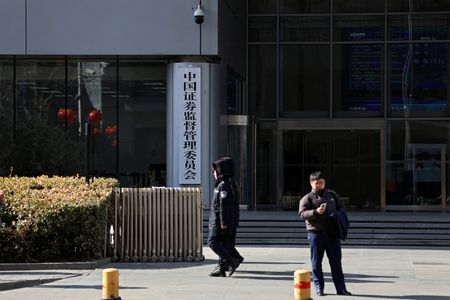

Chinese financial authorities provided reassurance on June 8 that their recent enforcement action against unauthorized international investment activities will not result in mandatory closure of mainland investors’ foreign accounts or forced selling of assets worth approximately $54 billion.
Following Beijing’s surprise enforcement initiative last month targeting what it called unauthorized international securities trading, mainland Chinese savers have been traveling to Hong Kong seeking ways to preserve their investments in the financial center.
The regulatory enforcement and penalties imposed on international brokerage firms for improperly facilitating Chinese investors’ purchases of foreign securities will not impact their legitimate offshore business operations, the financial watchdog explained in response to Reuters inquiries.
The China Securities Regulatory Commission’s statement represents the most definitive signal to date that international brokerages may continue providing authorized offshore services to mainland customers.
This clarification comes as Chinese investors face mounting uncertainty about managing their funds and holdings in international brokerage accounts, which Kaiyuan Securities estimates at roughly $54 billion in value.
Concerns about mandatory asset liquidation sparked immediate selling of Chinese companies listed in U.S. markets when the enforcement action was announced on May 22.
“Safety of investors’ assets will not be affected by the rectification campaign,” the CSRC said in the statement. “Existing accounts will not be forcibly closed, and assets held in those accounts will not be subject to mandatory cleanup.”
Mainland Chinese investors retain the ability to sell holdings and withdraw funds from the impacted accounts, while brokers must cease providing unauthorized services within China, including through websites and trading platforms, within two years, according to the CSRC.
Tiger, Futu, and Longbridge have informed their mainland Chinese customers that beginning in mid-June, they will no longer be able to establish new accounts, increase positions, or deposit additional funds, though offshore services will continue operating normally.
The CSRC emphasized that its regulatory goals are transparent – the enforcement effort seeks to “purify” China’s financial markets, safeguard investors, and combat unauthorized capital outflows from the nation.
“No country, or region would tolerate overseas institutions conducting illegal activities within its border,” the commission stated, adding that such activities must be addressed decisively as they “seriously disrupt market order, increase financial risks, and harm investors.”
When Reuters asked whether the stricter capital controls also aim to direct investment toward domestic financial markets, the securities regulator described Chinese assets as “appealing” without providing additional details.
“We welcome both domestic and international investors to participate in China’s capital markets and share the dividends of the country’s high-quality economic growth.”