
A distinguished psychiatrist and author who dedicated his career to understanding children facing hardship has passed away at age 97, according to family members.
Robert Coles, a Harvard University professor who earned a Pulitzer Prize for his work documenting young people’s struggles with poverty and racial segregation, died Thursday at a hospice facility in Lincoln, Massachusetts, his son confirmed to The Associated Press on Sunday.
Coles gained widespread recognition for his research into children’s experiences, especially those navigating difficult social circumstances. His acclaimed five-part “Children of Crisis” series brought him the Pulitzer Prize for general nonfiction in 1973, specifically for the second and third installments.
Writing in a 1965 Washington Post piece, he noted his surprise at what he discovered while studying impoverished children: “I was constantly surprised at the endurance shown by children we would all call poor or, in the current fashion, ‘culturally disadvantaged.’”
“What enabled such children from such families to survive emotionally and educationally ordeals I feel sure many white middle-class boys and girls would find impossible?” he questioned.
His research approach involved building relationships through repeated visits to the same households, often bringing art supplies so young subjects could express their thoughts and feelings through drawings.
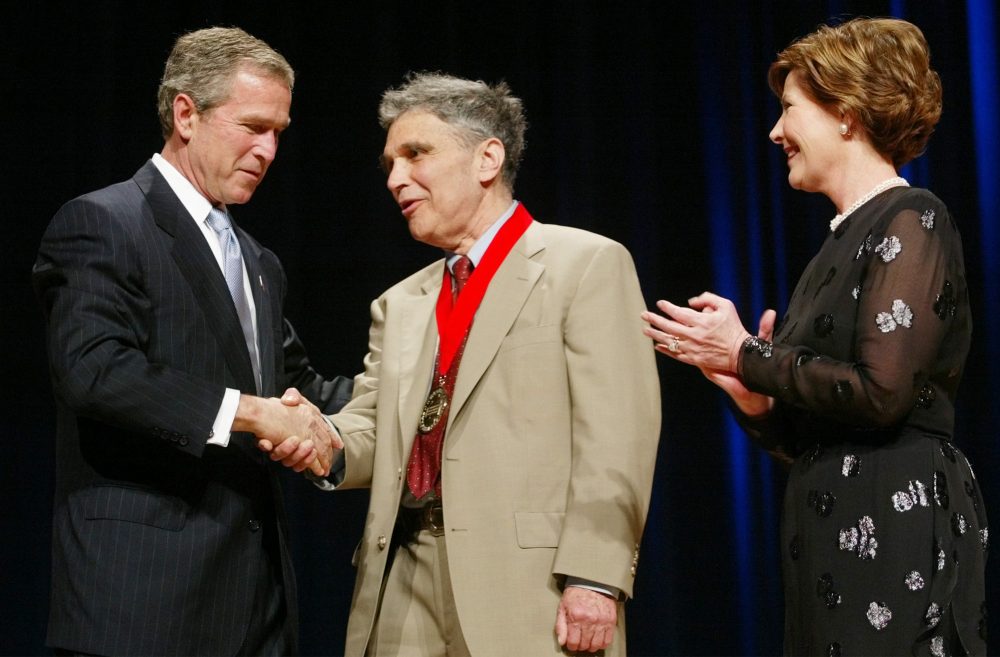
The psychiatrist’s contributions earned him the Presidential Medal of Freedom in 1998 and made him among the initial recipients of a MacArthur Foundation fellowship. A panel of experts later placed “Children of Crisis” at number 44 on their ranking of the 20th century’s top 100 English-language nonfiction works.
Published between 1967 and 1978, the “Children of Crisis” collection began with an examination of how school integration affected young people. The second installment explored the lives of migrant laborers, tenant farmers, and mountain community residents.
Volume three, which he called “The South Goes North,” tracked both Black and white Southern families relocating to Northern cities. The fourth book studied Native American, Alaska Native, and Hispanic children, while the final volume turned attention to wealthy and privileged youth.
Beyond this signature series, Coles authored “Their Eyes Meeting the World,” which interpreted children’s artwork, along with “The Moral Life of Children,” “The Political Life of Children,” and “The Spiritual Life of Children.” He also penned biographical works about psychoanalyst Anna Freud and social activist Dorothy Day.
Though much of his research focused on American children, Coles studied young people internationally throughout his career. His complete bibliography includes over 50 books plus hundreds of scholarly articles and essays.
Not all colleagues viewed his methodology favorably, with some questioning whether his approach qualified as rigorous psychiatric research.
“He’s a very good journalist who talks to kids sensitively and tells stories well,” Harvard professor Lawrence Kohlberg, an expert in moral development, told AP in 1986. “But no psychiatrist would take what he says seriously.”
Coles’ interest in children’s crisis responses began during the early 1960s while working as an Air Force physician in the South. He became particularly fascinated by Ruby Bridges, a 6-year-old who endured intense hostility as the first Black student at a previously segregated New Orleans elementary school.
“She demonstrated moral stamina; she possessed honor, courage,” he reflected in 1986. This admiration led him to write a children’s book titled “The Story of Ruby Bridges” in 1995. Artist Norman Rockwell similarly honored her courage in his 1964 painting “The Problem We All Live With.”
His wife Jane assisted with child interviews throughout his research career.
“At first the children were frightened to death of us — they’d never had white people in their homes before,” Coles explained to People magazine. “But I began to throw away my questions. I threw away my necktie. I began to sit on the floor.”
A 1995 PBS documentary called “Listening to Children: A Moral Journey with Robert Coles” captured his interview techniques and analysis methods, showing him working with diverse American children and studying their artwork.
“A child is an opportunity and a moral challenge. How are we going to do justice to this new life with all its possibilities?” he observed. “If we fail as parents, we are failing also as citizens.”
At Harvard, Coles maintained a long-term position as a research psychiatrist with University Health Services. He became a professor of psychiatry and medical humanities in 1977, then joined the School of Education as a social ethics professor in 1995.
Students flocked to his popular course called the Literature of Social Reflection, nicknamed “Guilt 105,” where he emphasized that “we should look inward and think about the meaning of our life and its purposes,” as he told People magazine in 1990.
A Boston native, Coles completed his undergraduate studies at Harvard in 1950 before earning his medical degree from Columbia University’s College of Physicians and Surgeons in 1954. According to a 1972 Time magazine cover story, he chose psychiatry as “the most philosophical of the disciplines” — and because he felt distressed watching children cry during vaccinations.
Despite documenting poverty and hardship, Coles acknowledged his own comfortable lifestyle, telling The New York Times in 1997: “It makes me uncomfortable, seeing the disparities between the world I document and the world I inhabit.”
He was preceded in death by his wife in 1993. The couple had three sons.