A Heat Advisory remains in effect for New Castle County and surrounding areas until 8 PM tonight, with dangerous heat index values expected to reach 103 degrees.
The National Weather Service issued the advisory for northern Delaware, along with parts of New Jersey and southeastern Pennsylvania, warning that the combination of hot temperatures and high humidity could lead to heat-related illnesses.
Residents are urged to take precautions by drinking plenty of fluids, staying in air-conditioned spaces, and avoiding prolonged sun exposure. Health officials recommend wearing lightweight, loose-fitting clothing and limiting outdoor activities to early morning or evening hours.
Special attention should be paid to elderly relatives and neighbors who may be more vulnerable to heat stress. Warning signs of heat exhaustion include heavy sweating, weakness, and nausea, while heat stroke symptoms include high body temperature and confusion.
For those without air conditioning, help is available by calling 211 or visiting county health department websites to locate cooling centers.
Relief is on the way as a cold front moves through tonight, bringing much less humid conditions this weekend. However, temperatures will still remain near 90 degrees through the weekend.
Motorists traveling on N Star Road should expect delays today as construction crews continue work in the area.
The roadway between Altonwood Drive and Planet Road is experiencing intermittent lane closures that will remain in effect until 5 PM today, according to traffic officials.
Drivers are advised to allow extra travel time when using this route or consider alternate paths to avoid potential delays caused by the ongoing construction activity.
Motorists using S Claymont St should plan for potential delays this afternoon as construction work continues to impact traffic flow in the area.
Northbound lanes on S Claymont St are experiencing periodic closures between C St and B St as crews work on the roadway. The lane restrictions are expected to remain in place through 3 PM today.
Drivers are advised to allow extra travel time or consider alternate routes to avoid potential delays in the construction zone.
A three-day road closure is scheduled for North College Avenue next week as crews perform maintenance work on railroad infrastructure.
The roadway will be shut down at the CSX railroad crossing starting Tuesday, June 16, and continuing through Thursday, June 18. The affected stretch runs from Cleveland Avenue to Main Street.
Officials say alternative routes will be marked with signage to help drivers navigate around the work zone. Drivers are being advised to find alternate paths during the construction period.
CLEVELAND – Salisbury University has achieved its most impressive national athletic ranking in more than ten years, demonstrating excellence across multiple sports programs during the 2025-26 academic year.
The university secured 22nd place in the NCAA Division III LEARFIELD Directors’ Cup rankings, marking the institution’s best performance in this comprehensive athletic evaluation since 2014-15. The National Association of Collegiate Directors of Athletics (NACDA) announced the final standings on Tuesday.
The LEARFIELD Directors’ Cup measures athletic department success by evaluating performance across all sponsored sports programs throughout the academic year. This ranking represents a significant achievement for Salisbury University’s athletic program, showcasing consistent excellence across multiple teams and competitions.
SAN CRISTOBAL DE LA LAGUNA, Spain — During the concluding day of his Spanish visit, Pope Leo XIV issued a forceful condemnation of human smugglers on Friday, warning they would encounter divine judgment for taking advantage of desperate migrants at this crucial hub of the African migration pathway to Europe.
“Break those chains and free those you hold in bondage,” Leo declared while addressing human traffickers during his meeting with humanitarian organizations in the Canary Islands that assist migrants.
The pontiff concluded his week-long Spanish journey in the Canary Islands, a Spanish island chain positioned nearer to Africa than mainland Spain and serving as a critical entry location for migrants undertaking the dangerous Atlantic voyage from West Africa.
Leo’s visit honored Pope Francis’ desire to travel to these islands to remember the thousands who perished at sea. The trip also highlighted the Catholic Church’s scriptural obligation to “welcome the stranger” during a time of growing anti-immigrant feelings across Europe and mass deportation efforts by the Trump administration in his home country of the United States.
While meeting with relief organizations in Tenerife, Leo urged host communities to welcome people escaping conflict, poverty and environmental disasters, protecting them from the “silent shipwreck” of abandonment that leaves them homeless after surviving treacherous sea journeys.
“A human conscience, and even more so a Christian conscience, cannot remain indifferent in the face of these graveyards of the sea, to the victims of shipwrecks and the lack of aid,” Leo stated. “Every life lost on these routes is a failure for the human family.”
The Canary Islands have served as a traditional gateway for migrants attempting to reach Europe from West Africa and Morocco.
Although human smugglers and traffickers control the Atlantic pathway, many boats contain self-organized groups of migrants, including numerous former fishermen from Senegal who lost their livelihoods due to recent overfishing.
Migration arrivals to the Canary Islands reached their highest point in 2024 with nearly 47,000 people. Numbers have dropped significantly, with more than 3,000 individuals arriving during the first five months of 2026.
Due to the ocean’s enormous size and limited rescue vessels or surveillance, some authorities believe the Atlantic passage poses greater dangers than the more publicized central Mediterranean smuggling corridor from Libya and Tunisia to Italy. Starting in 2020, multiple West African vessels have been discovered in the Caribbean and Latin America carrying only deceased passengers after drifting across the Atlantic, carried by trade winds and ocean currents.
Leo focused his Friday comments on criminal networks and individual smugglers who organize these “death routes” to Europe. These traffickers demand thousands of euros per person and frequently force passengers into prostitution or illegal labor by keeping their identification documents to collect debt payments.
“Stop. Repent,” Leo told traffickers in his message. “For every life lost, every family deceived, every body subjugated, every woman threatened, every worker exploited, you will have to appear before divine justice.”
“Repent while there is still time, for God’s mercy can reach even the most hardened sinner, but it enters only through the narrow gate of truth, justice and conversion,” he continued.
Through his two-day Canary Islands visit, Leo has established himself as Francis’ successor in migration advocacy, which remained a central focus throughout Francis’ 12-year leadership and frequently created tensions with American and European authorities.
The first American-born pope has not merely repeated Francis’ messages and actions, but has expanded them during this highly symbolic journey. Upon arriving Thursday, Leo tossed flower petals into the ocean from a harbor called the “Dock of Shame” in 2020, when migrants were forced to endure terrible conditions during an increase in arrivals.
Leo’s action echoed Francis’ 2013 visit to Lampedusa, Sicily, another European migration crisis location, where he criticized the “globalization of indifference” shown toward asylum seekers worldwide.
Demonstrating his personal approach to the papacy, the 70-year-old pope added his own touch: Following a former migrant’s personal story, Leo performed the popular “6-7” hand signal favored by young people while joking with him. This gesture generated cheers and applause from attendees.
During his time in the Canary Islands and earlier remarks on the Spanish mainland, Leo has reinforced migrants’ rights both to flee and to remain in their homelands, calling on their origin countries to provide adequate economic and security conditions. He criticized European nations that ignore migrants’ suffering and emphasized that no Christian can stay indifferent.
On Friday, he observed that for the Catholic Church, helping migrants integrate into communities can create opportunities for sharing faith, “without imposing” it while respecting migrants’ personal beliefs.
Leo began his final day by touring the Las Raíces migrant facility and meeting with migrants. Leo received enthusiastic applause when he departed from his prepared remarks to announce he would speak in French and English.
One woman shared her desperation that led her to abandon her homeland and family, the trauma of dangerous crossings, and her appreciation for finding safety and a fresh start. The woman, named as Bousso Diouf, requested respect and dignity for all migrants.
In the coming month, on July 4, the American pope will observe U.S. Independence Day on Lampedusa island, where Francis first condemned the “globalization of indifference” toward migrants in 2013.
LOS ANGELES (AP) — Steven Spielberg’s latest film “Disclosure Day,” released Friday, once again asks viewers to consider whether extraterrestrial beings exist — and what their presence might mean for religious faith on Earth.
However, Spielberg isn’t alone in generating recent news coverage about UFOs and potential life beyond our planet.
Topics once dismissed as fringe conspiracy theories have recently appeared in discussions from the White House to the Catholic Church, as public interest in unidentified anomalous phenomena — known as UAPs in government terminology — enters mainstream conversation.
In May, the Pentagon released extensive UFO documentation with minimal explanation, allowing interested researchers to draw their own conclusions. This disclosure occurred weeks after former President Barack Obama sparked media attention by stating definitively in an interview that aliens exist, though he subsequently clarified his position.
“Statistically, the universe is so vast that the odds are good there’s life out there,” the former president wrote on social media after making an unexpected appearance on the “Disclosure Day” film set. “I saw no evidence during my presidency that extraterrestrials have made contact with us. Really!”
While some religious followers and non-believers argue that extraterrestrial life might challenge many faiths by questioning human uniqueness, others present opposing viewpoints.
“Belief in UFOs is really one of the best things that’s happened to religion in a long time,” stated Diana Walsh Pasulka, a religion scholar at the University of North Carolina Wilmington. “It’s a blow to the secular, materialist worldview.”
Although widespread UAP interest may support belief in a mystical universe, some Christians view these phenomena with suspicion.
“I don’t think they’re aliens. I think they’re demons,” Vice President JD Vance, a Catholic convert, stated during a recent podcast appearance.
Monsignor Stephen Rossetti, previously an exorcist with the Archdiocese of Washington, shared similar views. The archbishop dismissed him last week, stating that Rossetti’s comments “gravely undermine” Catholic doctrine regarding demons and the devil.
“It’s my personal belief that probably many, if not most, of these UFO sightings are in fact demons,” Rossetti stated in a May 29 video on his Facebook page. “Aliens, if there are aliens, don’t possess people.”
Christopher Baglow, who directs a science and religion program at the University of Notre Dame, expressed surprise at the dismissal since Rossetti clearly indicated he was sharing personal views. Baglow suggested additional factors may have influenced the decision.
“I ask forgiveness for any ways that I have not been faithful to the teachings of the Church’s Magisterium,” Rossetti wrote in an online statement.
Despite claims by Vance and Rossetti regarding demons, Baglow asserts the Catholic Church has historically remained open to extraterrestrial possibilities. “Theologians have been speculating about this for centuries and the church has never ever taught one way or the other,” he explained.
During a meeting with astronomy students at the Vatican last year, Pope Leo XIV discussed the “ancient light of distant galaxies” and the “mysterious joy” inspired by space exploration. Some interpreted his comments as indirect consideration of life on other worlds.
Concepts of otherworldly visitors to Earth have ancient origins.
“People would call it the plurality of worlds. So even back in the time of Socrates and Aristotle, there were Greek philosophers who talked about beings on other planets and other stars,” Walsh Pasulka explained.
Modern UFO concepts emerged after 1945, according to Jeffrey Kripal, a religious historian at Rice University. “The flying saucer and the alien and the UFO — it’s definitely a Cold War invasion narrative,” he noted.
This narrative explains why UAPs often appear threatening to humans. However, it has transformed over time, leading to religious movements — including Scientology, which attracts numerous Hollywood celebrities — that view extraterrestrials positively or as part of divine purpose. Some Nation of Islam followers believe their founder will return to Earth apocalyptically via spaceship.
The International Raëlian Movement, or Raëlism, represents a UFO-based religion established in France during the 1970s. It continues today with significant followings in parts of Asia, Africa and Canada, according to Susan Palmer, a sociologist studying new religious movements at Concordia University in Montreal.
Raël, the movement’s founder, claims direct descent from Yahweh, whom Raël allegedly visited on the planet Elohim in 1975. Raëlism teaches that Buddha, Jesus and Muhammad are human-extraterrestrial hybrids and Raël’s half brothers.
Among groups Palmer has researched, she considers Raëlism most favorable toward UFOs. “They’re not interested in extraterrestrial wars,” she observed.
Some believe this positive attitude may be expanding.
Kripal, who oversees Rice’s archival collection of reported paranormal experiences called the Center for the Impossible, notices growing acceptance of UFO discussions — and possibilities that they aren’t threatening.
“People are reporting these experiences or these encounters with entities and they’re religious through and through,” he said. “My colleagues in the academy, they’re really starting to listen in a different way.”
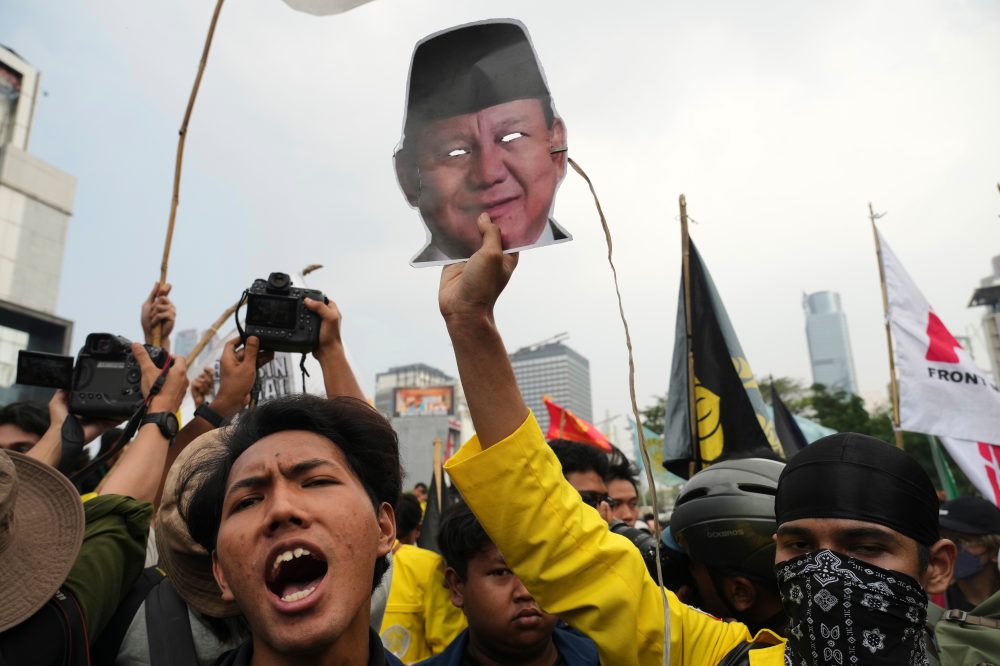
JAKARTA, Indonesia — Around 1,500 Indonesian students took to the streets of the nation’s capital on Friday, calling on President Prabowo Subianto to reduce expensive government programs while demanding relief from rising fuel and food costs amid growing economic challenges.
Following Friday prayers, demonstrators attempted to reach the Hotel Indonesia traffic circle, a prominent city landmark, but authorities intercepted many participants and barricaded routes to the presidential palace, a common destination for protests. Over 6,000 police officers and military personnel were stationed in the area.
Many demonstrators donned yellow university jackets as they expressed anger over increasing living expenses, which have climbed due to elevated fuel costs following the U.S. war against Iran. Indonesia’s rupiah has faced significant pressure, reaching a record low of 18,000 rupiah per U.S. dollar earlier this month.
The demonstrators presented five primary demands, including reductions in what they termed unnecessary government expenditures, decreased prices for fuel and essential goods, and suspension of major government initiatives like a free nutritious meal program and rural revitalization efforts.
The complimentary meals initiative, with a price tag of approximately 268 trillion rupiah ($15 billion) for this year, aims to combat poverty and malnutrition, though Prabowo recently dismissed the program’s leader during a major corruption investigation.
Students also demanded an end to what they characterized as the military’s expanding influence in civilian governance, which they consider a danger to the nation’s developing democracy.
“The government is in denial about the current situation,” said Yatalathof Ma’shum Imawan, who chairs the student organization that organized the rally. “We urge Prabowo to have the courage to acknowledge his mistake and stop denying it.”
Friday’s protest represents one of the most significant student mobilizations since widespread demonstrations broke out last August, when thousands gathered in the streets and confrontations with security personnel resulted in at least 13 fatalities.
Comparable demonstrations also occurred in Bandung city in West Java and in Pontianak, located on Borneo island.
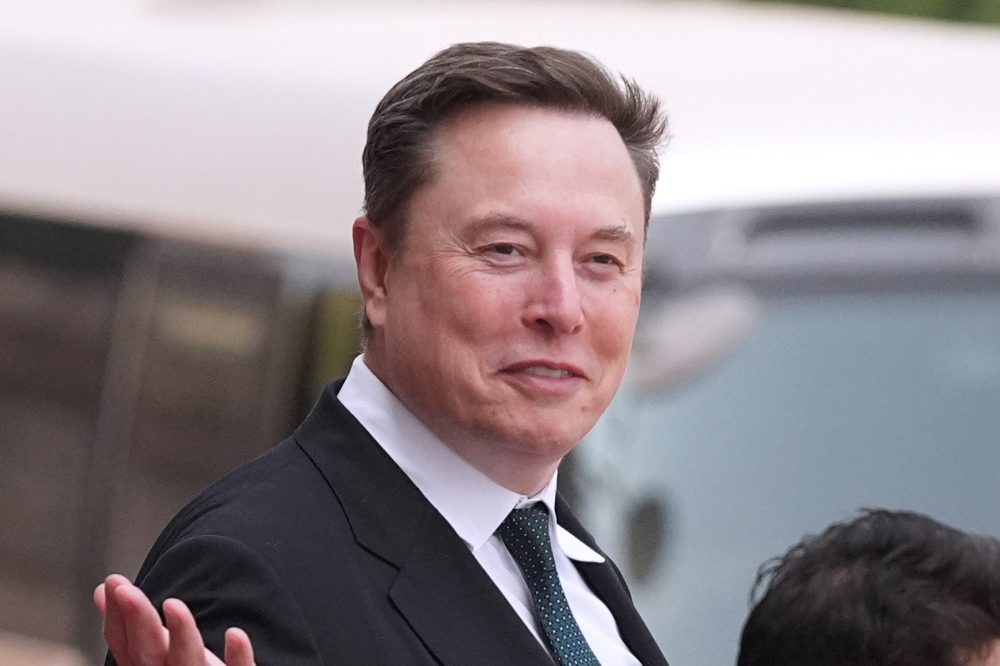
NEW YORK (AP) — While the SpaceX founder may never fulfill his promise to establish settlements on Mars, sufficient numbers of investors view him as something of a visionary, positioning him to achieve another extraordinary milestone Friday as the rocket enterprise goes public.
The planet’s wealthiest individual is poised to achieve trillionaire status.
Recognized for his innovative technological achievements alongside bold proclamations and delayed timelines, the entrepreneur is anticipated to surpass the trillion-dollar threshold in history’s largest initial public offering as investors wager on an enterprise whose financial shortfalls match its lofty aspirations. Prior to SpaceX’s debut trading, Forbes estimates his wealth at $982.6 billion.
Beyond creating a million-person settlement on Mars, the enterprise has pledged to preserve humanity through additional space installations, deploy orbital data facilities comparable to football field dimensions, and surpass competitors Anthropic and OpenAI in monetizing artificial intelligence technology.
To accomplish these objectives, SpaceX requires billions beyond its current rocket and satellite revenue streams. From early 2025 through March 31, 2026, the enterprise recorded $8.7 billion in losses.
Major institutional purchasers and individual investors have signaled their readiness to invest, offering sufficient pricing for the 555.6 million shares available to generate $75 billion. This amount will substantially exceed the existing record holder, Saudi Aramco, which collected $26 billion during its 2019 public debut.
Should the public offering proceed smoothly, its valuation will depend primarily on one factor: the company’s founder.
The impending trillionaire — at least on paper — built his wealth through two ventures, Zip2 and PayPal, which generated approximately $200 million upon their sales. He invested these proceeds to launch SpaceX and fund Tesla, successfully beating expectations by developing a space enterprise that mastered rocket reusability and an automotive company that popularized electric vehicles.
The entrepreneur has accumulated enormous personal wealth, primarily through stock holdings he hasn’t liquidated or share grants contingent upon Tesla or SpaceX achieving demanding performance benchmarks. His latest Tesla compensation arrangement faced Vatican criticism. At Tesla, he has concerned investors through regulatory disputes or splitting focus among various enterprises, and recently by accepting a position in the Trump administration.
However, climbing share values have resolved these concerns: Following its 2010 public launch, Tesla has delivered 20,000% returns to investors, creating over $1.2 trillion in shareholder value. This success has elevated his pre-SpaceX IPO wealth to $795 billion, per Forbes magazine.
SpaceX leads three “megacap” enterprises anticipated to debut publicly this year, followed by Anthropic and OpenAI. Nasdaq modified its regulations to permit SpaceX inclusion in index-linked funds within 15 days, enabling investors to purchase the rocket manufacturer’s shares much sooner.
Some investors oppose SpaceX’s potential inclusion in their index fund portfolios. Representatives from California and New York pension funds serving firefighters, teachers, and other employees wrote to SpaceX last month criticizing several IPO provisions, including “super voting shares,” required arbitration for shareholder disputes rather than lawsuit options, and the founder’s extensive company control.
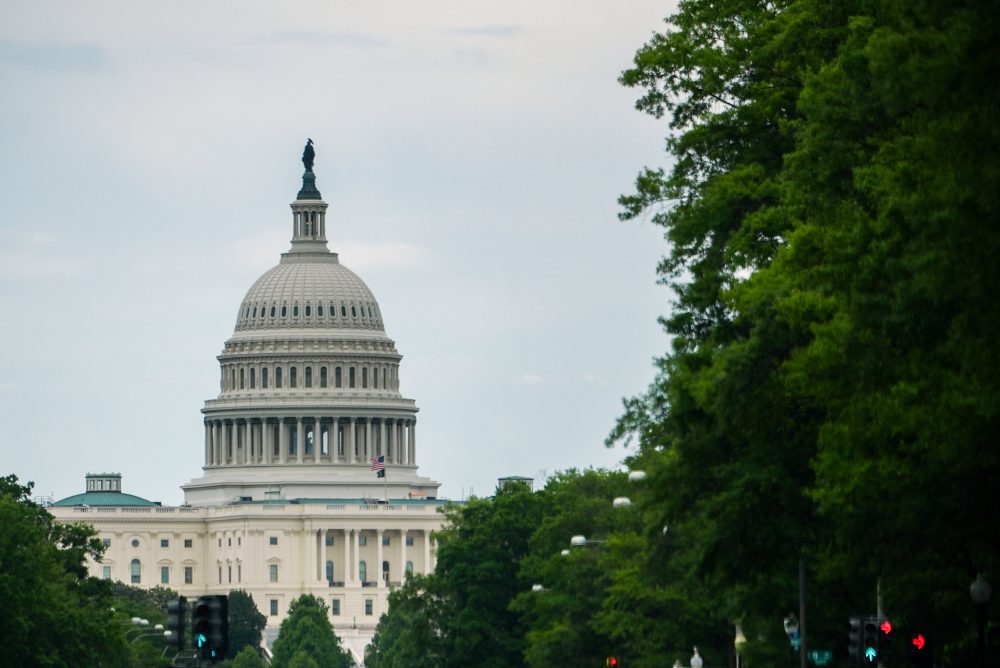
WASHINGTON — A critical intelligence-gathering program that officials say helps prevent terrorist attacks and catch foreign spies has expired after lawmakers in Congress were unable to agree on extending it.
The program, called Section 702, faced a Friday deadline that came and went as both political parties failed to find common ground on a temporary extension. President Donald Trump has now selected a new national intelligence director that both Republicans and Democrats find more acceptable than his first choice, but it remains uncertain when Congress — preparing for recess — might be able to restart the intelligence program.
However, there may not be an immediate impact since a court ruling from March allowed these government surveillance authorities to continue operating for an additional year.
This provision falls under the Foreign Intelligence Surveillance Act, or FISA, and gives U.S. intelligence agencies broad authority to gather and review communications from foreign nationals outside American borders without obtaining a warrant first.
Government officials view this legislation as an essential national security resource that has helped prevent terrorist plots, provided important information about ransomware attacks on vital infrastructure, and played a role in the 2022 drone strike that killed al-Qaida leader Ayman al-Zawahri.
The legislation became law in 2008 to formalize important elements of an earlier intelligence program established under President George W. Bush’s Republican administration.
Ever since, government leaders from both major political parties have cautioned that losing this law would prevent the government from gathering essential intelligence from overseas.
The regular requirement to renew this law has created lengthy congressional debates long before this year, including discussions about whether more safeguards are necessary to protect Americans’ privacy and personal information.
This concern exists because when the government monitors foreigners overseas, it also captures communications from American citizens and others in the U.S. who communicate with those under surveillance.
Privacy rights groups have expressed alarm over reports that FBI analysts have repeatedly misused the extensive intelligence database collected through this program to search for information about Americans, including matters related to the Jan. 6, 2021, Capitol riot by Trump supporters and the 2020 racial justice protests, as well as state and federal political leaders.
Some advocates argue the government should need a warrant before reviewing communications involving Americans. Government officials counter that warrants would be legally unneeded and too burdensome, and that reforms have been put in place to reduce improper searches.
The debate has created unusual political partnerships, bringing together lawmakers skeptical of government surveillance from both privacy-focused liberal Democrats and Republicans who remain suspicious of intelligence agencies following the investigation into connections between Russia and Trump’s 2016 presidential campaign.
Democrats objected when Trump chose Bill Pulte as acting national intelligence director and refused to back a FISA extension until that nomination was withdrawn. Pulte, a Trump supporter without apparent national security background, raised concerns by using his position as director of the Federal Housing Finance Agency to pursue questionable mortgage fraud investigations targeting perceived Trump opponents.
A House vote this week that would have temporarily continued the program failed, with 19 Republicans and almost all Democrats voting against the temporary measure, 198-218. A Senate attempt to pass its own version also collapsed.
Following those votes, Trump announced he was selecting Jay Clayton, a U.S. attorney in Manhattan who formerly led the Securities and Exchange Commission, as his permanent choice for director of national intelligence, or DNI. The selection received positive reactions on Capitol Hill, but it wasn’t sufficient to resolve the standoff before Friday’s expiration.
Connecticut Rep. Jim Himes, the leading Democrat on the House Intelligence Committee, said that he has “known and respected” Clayton for decades and that if he had been chosen a week earlier, “lots of pain might have been avoided.”
“His intelligence, temperament and deep commitment to public service will make him a terrific DNI,” Himes said.
Republican Arkansas Sen. Tom Cotton, chairman of the Senate Intelligence Committee, and Iowa Sen. Chuck Grassley, chairman of the Senate Judiciary Committee, have cautioned the Trump administration to prepare “for a potential significant gap in foreign intelligence collection.”
This expiration is likely the first substantial lapse of Section 702 since its creation over 15 years ago. In 2024, the Senate narrowly missed its midnight deadline before voting to pass a bill that President Joe Biden, a Democrat, then signed, creating a short interruption.
Despite the lapse, there’s no expectation of any immediate reduction in intelligence gathering as the U.S. prepares to host several events this summer with potential national security implications, including the World Cup and celebrations for the 250th anniversary of the United States.
A March ruling from the secretive Foreign Intelligence Surveillance Court approved the program’s continuation for another year, meaning Section 702’s authority should remain active for months.
Still, it’s possible that without congressional reauthorization, a telecommunications company or internet service provider could contest the government’s authority to force cooperation with surveillance requests.
A weekly news quiz is challenging readers to test their knowledge of recent headlines, including which wealthy business mogul claimed to have gained an important learning experience during the past seven days.
According to the quiz description, basketball supporters celebrated a major victory following a disappointing defeat this week, while those tracking economic indicators found reason for optimism. Meanwhile, soccer enthusiasts faced financial strain during recent international competition.
The quiz poses the question of how well news quiz enthusiasts will perform when testing their awareness of these and other current events from the week.
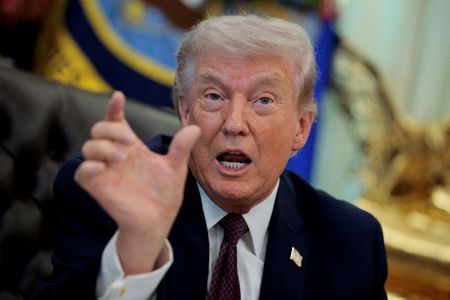
WASHINGTON – President Donald Trump is launching a series of major sporting spectacles this week in the nation’s capital, as the commander-in-chief seeks to display American power both domestically and internationally.
At Trump’s request, the Ultimate Fighting Championship will present a series of mixed martial arts competitions on the White House lawn this Sunday. The timing aligns with Flag Day, a rarely celebrated national holiday honoring America’s flag adoption, as well as Trump’s 80th birthday.
Trump has also convinced IndyCar to conduct a Grand Prix race through the National Mall in Washington, D.C. during the upcoming summer months. Additionally, the FIFA World Cup, which was granted to the United States, Canada and Mexico in 2018 while Trump served his first term, commenced this week.
“We’re going to showcase our country that whole weekend because of the surroundings that we have,” stated Bud Denker, chair of the Freedom 250 Grand Prix and president of Penske Corp. “I really think it excites him (Trump) that it provides this positivity to our country when we need it.”
American officials aim to leverage these events’ energy to promote the 2028 Summer Olympics in Los Angeles while boosting the president’s international standing.
While Congress formed a bipartisan commission to organize the nation’s 250th anniversary celebrations, the Trump administration established its own organization, Freedom 250, which has arranged events including the UFC competitions and automobile race.
International leaders have noticed Trump’s sports enthusiasm. In December 2025, FIFA President Gianni Infantino presented Trump with its first FIFA Peace Prize. The next month, Trump authorized a military operation in Venezuela to remove its leader, Nicolás Maduro, followed weeks later by strikes against Iran.
Shortly after the UFC mixed martial arts competitions conclude, Trump is set to travel to France for a G7 leaders’ summit. French officials postponed the gathering’s start to prevent scheduling conflicts with the UFC event, according to local media reports.
Trump has described the UFC fights as “the greatest show on Earth” and compared the UFC’s “Claw” arena towering over the White House’s South Lawn to Paris’ Eiffel Tower.
Several critics charge the president with “sportswashing,” or utilizing athletic competitions to enhance his reputation while facing criticism over human rights issues, immigration policies and international conflicts.
“We tend to talk about sportswashing when we talk about dictators or oil-rich countries,” said Nick Watanabe, who studies sport and entertainment management at the University of South Carolina. “It definitely applies to the United States.”
U.S. Secretary of State Marco Rubio characterized the UFC’s expansion and the White House fights as “the definition of American soft diplomatic power.” He announced a public-private partnership with UFC to integrate combat sports into the State Department’s diplomatic initiatives. Rubio did not detail the financial arrangements.
Critics have made comparisons to Gulf nations that fund combat sports organizations, including UFC, to extend influence and divert attention from their human rights records.
“It’s him using this opportune moment and it’s him trying to place himself at the forefront of 250 years of the American republic,” Watanabe said. “There’s nothing subtle about it, I think. He wants to show everybody that America is great, and he is the one leader.”
Trump’s supporters said the events demonstrate Trump’s longtime passion for athletics, his business skills and his efforts to establish his legacy as a transformational president. White House representatives did not respond to multiple Reuters requests for comment.
Julia Friedland, a spokesperson for Freedom 250, said: “Sports have long served as a common language that brings Americans together, and that spirit is reflected throughout the nation’s 250th anniversary celebrations.”
The UFC event has attracted critics simply due to its Trump connection, said Mark Teixeira, a Texas Republican and former Major League Baseball star. “If you’re getting bent out of shape about a sporting event in Washington, D.C. — we have a lot bigger problems in our country,” he said.
Trump’s involvement with mixed martial arts began before his political career. UFC conducted its first officially sanctioned event at Trump’s Taj Mahal casino in Atlantic City, New Jersey, in 2000. Trump also tried MMA promotion personally in 2008 and 2009, and UFC’s early events occurred at his casino.
Outside of MMA, Trump has repeatedly tried to buy National Football League teams. He once owned a franchise in a failed football league that competed with the NFL for players and audiences.
Some political rivals with athletic backgrounds voiced concerns about the White House event.
Representative Sharice Davids, a Kansas Democrat who competed in two professional MMA matches, said the image of a massive, temporary arena constructed at the White House troubles her during a period of rising consumer prices and ongoing U.S. military involvement. She told Reuters she also fears that Trump’s UFC association could damage the sport.
“My main concern is seeing the politicization of a sport that I hope continues to grow and that people continue to find and fall in love with,” she said.
UFC competitors told Reuters they had varying approaches for managing the ceremony and politics.
Lightweight fighter Michael Chandler, who has publicly supported Trump previously, said he would attempt to ignore the atmosphere and approach the fight like any other. Canadian bantamweight fighter Aiemann Zahabi anticipates facing boos and criticism while fighting American Sean O’Malley, a declared Trump supporter.
However, Zahabi said he would seek opportunities to recognize the event and the president.
“It’s something that’s probably never going to be repeated again,” Zahabi said. “It’s a one-off, and you know, Trump’s an eccentric guy, and you know, he loves MMA. He loves UFC… I think of it (as) just one big celebration.”
Advocacy organizations express concern that the venue atmosphere introduces politics and Trump deference into the sporting competition.
“Rising authoritarianism, large-scale conflicts, and global retreat from multilateralism all have direct consequences to sport,” said Andrea Florence, executive director of the Sport & Rights Alliance, a nonprofit human rights group.
“Global actors vie for power, but they use sports as a weapon, and we have seen Donald Trump and the U.S. under his administration using sports in different ways.”
As Iran’s national soccer team prepares to take the field in Los Angeles next week for World Cup competition, Iranian-American supporters are grappling with conflicted emotions about cheering for Team Melli on American soil.
The ongoing U.S.-Israeli conflict with Iran has created a complex situation for fans like Ehsan Shafi, a 46-year-old Iranian-American business owner who plans to attend the matches despite the political turmoil. While excited to see his national team compete on soccer’s biggest stage, Shafi acknowledges the difficult circumstances surrounding the games.
“All players wish to have a chance to play in the World Cup,” Shafi explained after participating in a Sunday morning match with Arya FC, an amateur Iranian-American soccer club located in Woodland Hills. “It doesn’t matter what’s happening in the world. We are so excited to see our national team.”
However, Shafi recognizes the challenging position many fans find themselves in. “It’s a very complicated situation,” he admitted. “Nobody likes to see their country under bombing. It’s very complicated for our people.”
Los Angeles houses tens of thousands of Iranian-Americans in what’s commonly called “Tehrangeles,” representing the world’s largest Iranian diaspora community. For many who left Iran following the 1979 revolution due to political turmoil and oppression, Team Melli – the Persian term for the national team – has served as an important cultural connection to their homeland.
Iran is scheduled to face New Zealand and Belgium in Los Angeles on June 15 and 21, followed by a match against Egypt in Seattle on June 26. While Shafi has purchased tickets and maintains his enthusiasm for the rare opportunity to watch the team locally, not all community members share his perspective.
Shawn Rezaei, Shafi’s 59-year-old teammate at Arya FC and a restaurant executive who also departed Iran during the revolution, has made the opposite decision. Despite attending previous World Cups in Germany, Brazil, Russia, and Qatar, Rezaei plans to boycott this tournament.
“I’m a die-hard football fan,” Rezaei stated. “But this time, because of the political situation, I’m boycotting.”
Although Rezaei initially sought tickets for the U.S. matches, he ultimately concluded he couldn’t support the team while opposing Tehran’s leadership. “This team is not representing the nation,” he argued. “They are basically a propaganda proxy for the regime.”
This division between Shafi and Rezaei reflects broader tensions within the Iranian-American community. Several other fans interviewed requested anonymity, expressing concerns that criticizing Iran’s government might endanger family members still living there, or that commenting on U.S. policies could create problems within their local communities.
Additional worries center on potential safety issues, particularly for younger supporters, regarding whether Iran’s matches might become focal points for anti-war demonstrations, anti-government protests, or immigration enforcement actions.
These concerns help explain the careful approach often adopted by the players themselves. During the 2022 World Cup in Qatar, Iran’s team gained worldwide attention when players chose not to sing their national anthem before the opening game, a move widely interpreted as solidarity with anti-government demonstrators back home.
Throughout subsequent matches, the team’s celebrations remained restrained and patriotic displays were notably minimal – actions some viewed as quiet resistance while others criticized as inadequate. The situation highlighted the intense pressure facing the players, with reports suggesting potential consequences for both athletes and their families in Iran.
“Who am I to judge the actions of the team when I myself don’t want to speak out publicly in case it endangers my family,” commented one Iranian-American supporter with relatives in Tehran, who still intends to attend a World Cup game in Los Angeles.
WASHINGTON, June 12 – A recent Reuters/Ipsos survey reveals that roughly half of evangelical Christians – a key segment of President Donald Trump’s political coalition – question whether his administration’s Iran military campaign and immigration policies align with their Christian beliefs.
The evangelical community played a crucial role in the Republican’s 2024 electoral success, and Trump along with senior officials like Defense Secretary Pete Hegseth frequently incorporate religious rhetoric when discussing their policy objectives. The party will rely heavily on this demographic during November’s midterm contests, where they face the challenge of maintaining narrow control in both chambers of Congress.
The survey, conducted June 3-8, found that 54% of evangelicals viewed Trump’s military operations in Iran as inconsistent with their Christian understanding, while 41% considered it aligned. Similarly, 51% of evangelical respondents felt the administration’s immigration approach conflicted with Christian principles, compared to 44% who saw it as compatible.
Trump’s support among evangelicals registered at 52% in the most recent polling, representing a decline from 61% recorded in August, though still significantly higher than his 35% approval among the broader American population.
His overall approval numbers have declined in recent months as the controversial Iran conflict has driven fuel costs substantially higher.
During his initial presidency, Trump fulfilled a long-sought evangelical objective by establishing a 6-3 conservative Supreme Court majority, which subsequently reversed the decision that had guaranteed nationwide abortion access.
In his current term, he has frequently welcomed religious leaders to the Oval Office and modified policies to permit federal workers to express their faith-based views in the workplace.
Evangelical voters lean Republican by more than a 2-to-1 margin, and Trump captured the white evangelical vote 81%-16% in 2024, based on exit polling analysis from the Pew Research Center.
White House spokeswoman Taylor Rogers stated that Trump has fulfilled promises to faith communities by protecting religious freedoms and pardoning anti-abortion activists with criminal convictions. “There has never been a greater president for Christian Americans than President Trump,” Taylor said.
Potential fractures within this critical voter group could create additional challenges for the Republican Party heading into the midterm elections.
Evangelical Christian Sandy Miller, 63, indicated she would not support him again given the chance. The Worthington, Indiana resident, from a community of approximately 1,400 people, cares for a 24-year-old daughter whose home-healthcare Medicaid benefits were eliminated under Trump.
Beyond her economic circumstances, Miller emphasized that her faith guides her voting decisions. She believes Trump may be a Christian but doesn’t demonstrate it publicly.
“I just don’t think waging war is the answer to everything all the time,” Miller said. “I understand sometimes you have to, but I don’t know in this instance that it needed to be done.”
Miller shared that she prays nightly for the nation’s leaders to follow God’s guidance. “I wish our politicians would pray more than they talk,” she said.
The Reuters/Ipsos survey included 4,531 American adults nationwide with a margin of error of 2 percentage points in either direction.
Evangelicals also rate Trump poorly on cost-of-living management.
The United States and Israel launched the Iran war on February 28 to prevent the Iranian government from completing nuclear weapon development. Despite the conflict’s effect on family budgets, Trump has pledged to prevent Iran from acquiring nuclear capabilities regardless of cost.
The Iran war has resulted in thousands of casualties, including over 3,000 in Iran according to official counts, though rights organizations estimate closer to 3,600, plus more than 1,800 deaths in Lebanon and over 100 in Iraq, based on official and NGO data.
Many evangelicals view the United States as morally bound to defend Israel, a crucial American ally in the Middle East region.
Connie Reese, 77, an evangelical voter from Iowa, explained in a subsequent Reuters interview that his backing for Trump’s Iran war has biblical foundation, and that nations possess the right to defend themselves preemptively. While acknowledging disagreements with Israel’s government at times, he believes the Jewish people have “historical grounds for their homeland.”
“The re-establishment of Israel, the country, is a prophetic answer or an answer to a prophecy that is clearly spelled out in the word of God,” he said. “So in that regard, I support Israel as a free and sovereign nation.”
SRN News produces a daily audio program that focuses on religious news from around the globe. The program, called “Global Landscape,” runs for two minutes and covers the most important faith-related stories each day.
The audio segment offers listeners quick updates on religious developments, cultural changes, and major events that highlight where faith intersects with world events. The program aims to keep audiences informed about significant happenings in the religious community worldwide.
Members of the Southern Baptist Convention have decisively supported moving forward with a constitutional amendment that would formally prohibit churches led by female pastors from remaining in the nation’s largest Protestant denomination.
The decision came during the SBC’s annual gathering in Orlando this week, where the proposal received far more than the required two-thirds majority needed to advance constitutional changes. The amendment reinforces the position that only men should serve as pastors leading congregations.
To become official policy, the proposed ban must receive similar approval when Southern Baptists meet again next year. If passed, the amendment would strengthen current restrictions already in place within the SBC, which maintains a faith statement that opposes women serving as pastors.
In other religious news, an Italian court has made a groundbreaking ruling that recognizes a family structure involving one mother and two fathers caring for a four-year-old child. The case involves two married men from Germany and a woman who acted as their surrogate. While such arrangements are permitted under German law, this Italian decision marks the first time the country has legally acknowledged this type of family configuration, potentially setting a precedent that could influence policy across Europe. Many European Union nations have yet to legalize same-sex marriage, making polyamorous recognition even more complex.
Meanwhile, the Pentagon’s recent updates to its religious classification system have sparked renewed discussion about whether The Church of Jesus Christ of Latter-day Saints qualifies as a Christian denomination. Members of the Mormon faith consider themselves Christian, though some of their fundamental beliefs, especially regarding the Trinity, differ from traditional Christian doctrine. Utah Senators Mike Lee and John Curtis, both Republicans and members of the Mormon faith, are questioning the Pentagon’s decision to exclude their religion from its Christian categories. Military officials say they have removed nearly 200 faith systems from their recognized religions list but emphasize the new criteria are not intended to challenge the validity of any religious belief system.
New York City’s mayor hosted a Pride Month celebration at a city courthouse this week, flanked by drag performers and prominent LGBTQ+ rights advocates. Zorhan Mamdani addressed attendees, declaring his commitment to “protecting trans and queer New Yorkers from these relentless attacks that we’re facing with the federal administration.”
During the event, Mamdani announced that the city has allocated $15 million in taxpayer funds for what he described as “gender-affirming care” services.
A fallen tree has forced authorities to shut down a portion of Creek Road, making the roadway impassable for drivers.
The closure affects Creek Road between its intersections with Snuff Mill Road and Lower Snuff Mill Road, where the downed tree is blocking the travel lanes.
Motorists are advised to seek alternate routes while crews work to clear the obstruction from the roadway.
Federal legislators are responding to a Pennsylvania incident where a convicted sex offender successfully obtained a child through a surrogate mother arrangement. Congressman Scott Perry, a Pennsylvania Republican, has put forward federal legislation that would impose penalties on surrogacy agencies that place children with individuals who are known sex offenders.
According to the Center for Bioethics and Culture Network, the proposed legislation tackles “the current patchwork of surrogacy laws that leaves too much ambiguity.”
CHICAGO — Elite professional athletes and their medical teams report that an updated version of established surgical equipment is cutting recovery periods by weeks for specific injuries. Leading physicians believe this represents just the start of broader applications.
Cy Young recipients Tarik Skubal and Blake Snell allowed physicians to utilize the device on their valuable elbows. Connor Hellebuyck, who earned the 2025 Hart Trophy as NHL MVP, relied on it for knee problems. Multiple NFL athletes have also adopted its use.
The device is known as the NanoNeedle scope 2.0, a smaller, bendable adaptation of the standard arthroscope. While still in early stages with limited published studies on this model, it has gained a notable group of supporters.
“Each time I’ve utilized it, including during my initial laboratory work, new procedure possibilities come to mind,” stated Dr. Neal ElAttrache, who serves as head team physician for the Los Angeles Dodgers and Los Angeles Rams.
An arthroscope functions as a pencil-sized tube containing a camera that enters joints, fills the space with salt water or saline, and displays images on a monitor. Surgeons then insert additional instruments in the same location to complete the surgical work.
The reduced dimensions — measuring 1.9 millimeters across versus 4 millimeters for standard scopes — allow the NanoNeedle to minimize pain, swelling and tissue harm, resulting in quicker healing. It requires significantly less fluid than conventional scopes and has proven valuable for determining injury severity.
“We can achieve anatomical work and repairs while causing much less surgical trauma,” ElAttrache explained.
ElAttrache employed the NanoNeedle when removing a loose body from Skubal’s left elbow on May 6, and again during Snell’s comparable elbow procedure on May 19.
After Skubal — a two-time AL Cy Young Award recipient who becomes eligible for free agency following this season — joined the injured list, the Detroit Tigers announced their star pitcher would miss two to three months. However, he’s scheduled to return Saturday after throwing five scoreless innings during a rehabilitation appearance Sunday — approximately 5 1/2 weeks total.
ElAttrache has utilized the NanoNeedle scope with four patients but chose not to name the other two cases. Snell underwent a more extensive procedure that included spur removal, though ElAttrache remains hopeful about the left-hander’s timeline for rejoining the Dodgers.
“I believe his time away will be roughly half the typical duration,” ElAttrache said.
Hellebuyck, a three-time Vezina Trophy recipient as the NHL’s premier goaltender, underwent arthroscopic surgery on his right knee November 22. Doctors projected a four to six-week absence, but he returned to the net for the Winnipeg Jets after just three weeks.
Dr. James Voos, head team physician for the Cleveland Browns, has incorporated the NanoNeedle into procedures on five Browns athletes, including center Luke Wypler’s ankle fracture operation.
“Ankles and elbows represent areas where it has shown excellent utility and quick acceptance,” said Voos, who also leads the NFL Physicians Society. “We continue discovering additional applications for knees and shoulders.”
Beyond his Browns responsibilities, Voos chairs the orthopedics departments at University Hospitals and Case Western Reserve University in Cleveland. He has already observed advantages in treating younger athletes.
“Some very difficult elbow injuries in gymnasts and baseball players couldn’t accommodate the previous cameras, which were too big for the joint,” Voos explained. “They’re built for adult joints. The smaller camera lets us see and operate in these tighter spaces. In pediatrics and adolescence, that was more difficult and potentially caused additional damage previously, including more soft tissue harm.”
Arthrex, a Florida-based medical supply manufacturer, developed the NanoNeedle. Voos serves as an educational consultant for Arthrex, while ElAttrache has collaborated with the company for over three decades.
The original version debuted in 2019, according to Ryan Kellar, a senior product manager at Arthrex. Another version launched in 2023 before the current model — featuring improved visualization, processing and imaging — arrived in August.
“This represents our third version,” Kellar noted. “Our fourth version arrives this fall. That fourth version will offer everything conventional scopes provide with all the less invasive advantages of nano arthroscopy. We truly believe nano represents the next foundation of minimally invasive orthopedic treatment for the general population and a gold standard for athletes.”
Dr. Kyle Hammond, head team physician for the Atlanta Falcons and chief orthopedic surgeon for the Atlanta Hawks, has used the NanoNeedle in educational settings as an orthopedic surgeon at Emory Healthcare and assistant professor at Emory University School of Medicine. He hasn’t yet used it on patients.
Hammond noted that other companies have created similar needle arthroscopy devices, but he commended the NanoNeedle’s camera quality, video feed clarity, and user-friendliness.
“It has essentially become very comparable to our standard arthroscopy equipment,” he said. “Just in a smaller format.”
The current NanoNeedle version is disposable, creating questions about expenses compared to sterilization costs for reusable traditional arthroscopes. Like any scientific advancement, Hammond said, extended use and research are necessary to evaluate the new design’s benefits against standard scope versions.
“To establish if they offer genuine advantages over standard care, they must be used extensively over time with data collection and statistical proof,” Hammond said.
Dr. Brian Cole, head team physician for the Chicago Bulls, said adoption rates will largely depend on clinicians’ willingness to integrate the scope into their practices.
“There’s an economic analysis combined with a healthcare analysis happening simultaneously,” said Cole, who also consults for Arthrex. “But I’d say directionally, this is our destination. Less invasive, cost-effective, predictable, eliminating potential problems with existing technology. In that respect, this is very innovative in my view, and aligns with our current direction.”
Motorists traveling on Ponderosa Drive are experiencing intermittent lane restrictions today as construction crews work along the roadway.
The lane closures are affecting traffic on Ponderosa Drive in the area from Plain Dealing Road to Barkers Landing Road. The construction work and associated lane restrictions are scheduled to continue through 6 PM this evening.
Drivers are advised to allow extra travel time and exercise caution when passing through the construction zone.
Drivers using Ponderosa Drive are encountering intermittent lane restrictions today due to ongoing construction work in the area.
The lane closures affect the stretch of roadway running from Plain Dealing Road to Barkers Landing Road, with work expected to wrap up by 6 PM this evening.
Motorists are advised to plan for potential delays and consider alternate routes if possible while crews complete their work in the area.
Senator Jim Banks is pushing for changes to television content ratings to help parents monitor what their children watch. The Illinois Republican has asked the Federal Communications Commission to incorporate LGBT content warnings into existing rating systems for television programming.
Banks expressed worry about the increasing presence of characters and storylines that promote what he calls the gay agenda in children’s programming. According to research from Concerned Women For America, approximately 40% of Netflix programming targeted at young children includes LGBT content.
The senator’s proposal would expand the current content rating framework to specifically identify shows containing such material, giving parents advance notice before their kids view the programs.
NAIROBI, Kenya (AP) — A solemn memorial service took place Friday in the central Kenyan town of Gilgil, where hundreds of people came together to remember 16 female students who lost their lives in a dormitory fire last month that law enforcement officials determined was deliberately set. Nine suspects are currently in custody.
The deceased girls from Utumishi Girls Academy were laid to rest in white caskets decorated with floral arrangements and topped with photographs of each victim. The caskets were arranged before their grieving families, fellow students, community members and area officials, all demanding accountability.
The nine students accused in the case, all from the same school, are being held by police. Investigators have determined that the May 28 fire was ignited by setting a mattress ablaze near the dormitory exit using matches and paraffin. Officials have not disclosed what motivated the attack.
At the memorial ceremony, hundreds of students from Utumishi Girls Academy performed a mournful hymn expressing hope that everything would be okay. One official conducting the service shared his experience as a survivor of Kenya’s most devastating school fire in 2001, which claimed 67 male students in a dormitory blaze in Machakos County in eastern Kenya.
Attendees demanded justice and accountability while dozens of educational institutions have shuttered recently due to student disturbances. The Kenya Red Cross reported responding to 37 school fires since January began.
Educational facility fires occur frequently throughout Kenya, with some resulting from deliberate acts by students opposing disciplinary actions or upcoming tests, while others stem from electrical problems.
Overcrowded sleeping quarters, inadequate emergency escape routes and limited firefighting resources have frequently led to fatalities and significant property destruction.
Last month, Kenya’s Education Ministry removed the principal of Utumishi Girls Academy for violating fire safety requirements. The ministry also announced it had shuttered more than 300 educational facilities after a 2024 fire incident that killed 21 male students in central Kenya.
At Friday’s memorial ceremony, which Kenyan first lady Rachel Ruto attended, the officiating bishop asked how much longer Kenyan children and families would endure such school fire tragedies.
The school captain, Abigael Wanjiku, remembered the deceased girls as “friends, study partners, teammates and companions.”
“The pain of losing them is one that we will carry for a long time,” she said.
A mother speaking for the parents became emotional and broke down during her remarks as she demanded accountability and justice, while assuring the surviving students that their safety remained the top concern.
BERLIN (AP) — A humpback whale that captured Germany’s attention for months survived approximately five days following a final disputed rescue operation that failed to return the animal to the Atlantic Ocean, authorities announced Friday.
The marine mammal, given the nicknames “Timmy” and “Hope” by German news outlets, was discovered deceased on May 14, washed ashore near the tiny island of Anholt in the Kattegat, a wide waterway separating Denmark and Sweden that links the Baltic and North seas.
Finding the whale’s body brought closure to months of dramatic and divisive rescue operations that reached their peak on May 2, when the creature was moved by barge toward the North Sea in a last-ditch effort to save it. Researchers, government leaders, citizens and private groups debated whether allowing the weakened and ill animal to die naturally was more compassionate than pursuing additional rescue measures.
Information from a tracking device placed on the whale’s dorsal fin indicates the animal’s death most likely happened on May 6 or 7, stated Till Backhaus, who serves as environment minister for Mecklenburg-Western Pomerania.
During those five days, the whale traveled approximately 215 kilometers (134 miles) but was swimming back toward the Baltic Sea, moving away from its intended destination of the Atlantic Ocean.
Following that period, the information suggests the whale probably floated without direction — or the tracking device stopped functioning, Backhaus explained Friday at a press briefing.
The whale was initially observed near Germany’s coastline on March 3, creating a media sensation that featured breaking news alerts and continuous online updates about the animal’s condition.
Experts remain uncertain why the whale entered the Baltic Sea, an environment unsuitable for its survival, though some specialists suggested it might have become disoriented while following a school of herring or during seasonal migration.
A post-mortem examination of the remains has not yet identified what caused the whale’s death, Backhaus reported, but officials did learn that “Timmy” was actually female, contradicting months of assumptions about the whale being male.
The minister noted that the autopsy revealed no significant injuries, and found no evidence of violence or foreign objects that could have led to death.
“Did it have any nets or other foreign objects on its body, in its mouth or on its body?” Backhaus stated. “Nothing was found.”
According to German news agency dpa, portions of the whale’s remains will be converted to biodiesel in Denmark, while some bones will be donated to a Danish museum.
LONDON (AP) — Renowned British painter David Hockney, whose vibrant depictions of swimming pools bathed in California sunlight became defining images of modern art, passed away on Thursday, according to his representative. He was 88 years old.
Born in northern England, Hockney spent a significant portion of his career living in Southern California, where the bright, sun-soaked suburban landscapes became a central theme in his artwork.
In his later years, he relocated back to Europe, drawing fresh creative energy from the forested hills of Yorkshire where he grew up and the countryside of France’s Normandy region. He rose to become one of Britain’s most celebrated artists, with his pieces commanding record-breaking prices at art auctions.
Art historian Simon Schama observed that “the popularity and durability of David Hockney’s art, through all his shape-shifts and restlessly inventive experiments, are really no mystery.”
“His work is admired — loved is not too strong a word — by the millions who, worldwide, flock to see it because it presupposes an expectation of pleasure,” Schama wrote in an essay accompanying a 2025 Hockney exhibition in Paris.
His representative, Erica Bolton, confirmed he passed away just weeks before what would have been his 89th birthday.
Recognizable by his signature circular eyeglasses and platinum blonde hair, Hockney became a prominent figure in the dynamic British and American art communities of the 1960s before turning 30. His artwork was equally recognizable, often creating surreal environments of geometric light reflecting off water surfaces and windows, featuring human subjects portrayed in flattened, streamlined forms using matte acrylic paints.
“I’m excited every day,” he shared with the Los Angeles Times in 1979. “London has lots of dreary parts but I never find anything dreary in Los Angeles.”
Born on July 9, 1937, in Bradford, a major industrial center known for wool textile production, Hockney lived there for his first twenty years before attending London’s Royal College of Art. He gained recognition even before completing his studies, and art dealer John Kasmin signed him to his roster in 1961.
His creative inspirations spanned from Renaissance portrait painters to 19th-century English landscape artist J.M.W. Turner, Pablo Picasso’s Cubist innovations, and 20th-century American pop art movements.
During a visit to America in 1963-64, Hockney attracted attention with his contemporary interpretation of “A Rake’s Progress,” updating 18th-century artist William Hogarth’s painting series about a wealthy playboy’s adventures and ultimate ruin. The New York Times noted in 1964 that Hockney “brings Hogarth up-to-date with a vengeance and furnishes a good example of how younger artists like to marry text and picture with benefit to each.”
He shared with fellow pop artists a fascination with the sleek appearance of contemporary life. Similar to Andy Warhol’s use of Brillo boxes and Campbell’s soup cans, Hockney sometimes included commercial imagery, such as a British Typhoo Tea package featured in his 1961 “Tea Painting in an Illusionistic Style.”
Speaking to The New York Times in 1964, he expressed appreciation for New York’s emerging pop art movement while questioning his place within it.
“I’m just an ordinary artist,” he said. “I do admire American pop — in fact it seems that everything fresh-looking and vital in England these days has been coming from the U.S.” However, he maintained that he was still “very much an artist in the English tradition,” as he stated in 1995.
He compared his California relocation to historical precedent, noting that previous generations of English artists had traveled to Italy seeking brilliant light.
As an openly homosexual artist, Hockney examined sensual subjects, applying the same careful attention to young male figures that artists had traditionally given to female nudes for generations. Close friends and romantic partners often served as subjects, and some pieces drew inspiration from photographs in male fitness publications.
Early pieces like “We Two Boys Together Clinging” and “Two Men in a Shower” honored same-sex relationships during a time when homosexuality remained criminalized in Britain.
During his early career, the Museum of Modern Art in New York acquired two of his drawings.
“The moment I first sold pictures to earn a living, I felt rich. I’ve been rich ever since,” he shared with The Associated Press in 1995. “I didn’t have much money but I did what I wanted. … You are a rich man if you do the things you want to do.”
This artistic independence brought Hockney both critical praise and financial success, with his pieces selling for unprecedented amounts. In 2018, his 1972 work “Portrait of an Artist (Pool with Two Figures)” sold at Christie’s for $90.3 million, setting a record for a living artist at that time. In February 2020, another pool-themed painting, “The Splash” from 1966, brought 23.1 million pounds ($30 million) at Sotheby’s.
Beyond creating paintings of pools, Hockney also physically painted a pool when he designed the bottom of the swimming pool at the historic Hollywood Roosevelt Hotel in Los Angeles.
Though his most famous works featured American settings, he also captured British themes. He created multiple portraits of his parents. “Mr. and Mrs. Clark and Percy,” a 1971 double portrait featuring two English friends and their cat, ranked fifth in a 2005 BBC Radio-National Gallery online survey of Britain’s greatest paintings. It was the sole work by a living painter in the top ten.
Like many classical artists, he viewed drawing as an essential skill and regretted that it wasn’t taught as thoroughly as in the past.
“Human beings are the most interesting things we see, so they’re the hardest to draw,” he explained in a 1996 AP interview, noting that the finest drawings emerge when empathy exists between artist and subject.
His creative work extended beyond drawing and painting. He designed costumes and sets for theatrical and operatic productions, including a renowned “Tristan und Isolde” that premiered in 1987 at the Los Angeles Opera.
As a constant innovator, Hockney worked across drawing, painting, printmaking, photo collage, and video throughout his seven-decade career.
When he explored photography, he blended artistic forms, creating intricate collages like “Pearblossom Highway, 11-18th April, 1986,” composed of separate photographs of a desert road intersection.
“My photographer friends said it was a painting,” Hockney shared with the AP in 2001. “I said it’s a photograph; I used a camera.”
His photographic experiments inspired him to research and publish a 2001 book, “Secret Knowledge: Rediscovering the Lost Techniques of the Old Masters.” He proposed that throughout history, artists employed lenses and optical instruments to assist their drawing far more frequently than most art historians acknowledge.
Eventually, he began creating art on iPads, which became his preferred medium.
In the early 2000s, he revisited the countryside and forests of Yorkshire through a collection of vibrant landscape paintings that merged vivid colors with detailed attention to elements like snow on hillsides or flowers on hawthorn bushes. These works were featured in a 2017 exhibition at Tate Britain in London that drew half a million visitors and later traveled to the Pompidou Center in Paris and the Metropolitan Museum in New York.
Hockney drew upon English countryside imagery for his stained-glass window design at Westminster Abbey honoring the extended reign of Queen Elizabeth II. Finished in 2018, the Queen’s Window shows a landscape of flowering hawthorn trees in shades of blue, green, yellow, orange, pink, and red.
By this period, Hockney was widely regarded as Britain’s foremost living artist and a national icon. In 1997, the queen appointed him a Companion of Honour, a distinction reserved for 65 individuals “of distinction.”
In 2019, he relocated to Normandy, France, where during the 2020 coronavirus restrictions he created cheerful iPad illustrations of springtime for his friends. His message — “Do remember they can’t cancel the spring” — was displayed in neon lights across the Fondation Louis Vuitton in Paris when it presented a major Hockney exhibition that opened in April 2025.
The exhibition spanned from his first sold painting — a 1955 portrait of his father — through Los Angeles swimming pools to Yorkshire forests, friend portraits, opera stage designs, and numerous images celebrating spring’s arrival in Normandy.
Art curator Norman Rosenthal, who helped organize the Paris exhibition, described Hockney as “the Picasso of our times.”
“When I say that, people laugh at me, as Picasso was the archetypal artist of the 20th century,” Rosenthal explained to the Independent newspaper. “But David Hockney is also an incredibly popular artist whose work changes how we see things.”
A committed cigarette smoker who criticized government anti-smoking policies, Hockney protested when a poster for the 2025 exhibition was prohibited from the Paris Metro because it showed him with a cigarette.
Hockney experienced a minor stroke in 2012 and faced increasing hearing loss in his final years — something he claimed enhanced his visual abilities.
“If you lose one sense, you gain other senses, and I feel I could see space clearer,” he shared with the AP in 2017.
He maintained his artistic practice throughout his life.
“It’s my work that keeps me young,” Hockney told the Sun newspaper in 2017. “I’ve been a professional painter for 60 years. Sixty years of getting up every day and doing exactly what I want to do.”
BUDAPEST, Hungary — A deadly sequence of highway accidents in western Hungary claimed eight lives during the early morning hours on Friday, according to law enforcement officials.
The first incident occurred around 4:30 a.m. when a truck crashed into construction equipment near Győr, resulting in one fatality and causing the truck to burst into flames. The accident created significant traffic delays on the roadway.
Approximately 30 minutes following the initial crash, a minibus bearing Moldovan license plates crashed into a truck that had come to a stop on the highway due to the earlier incident. This second collision resulted in seven deaths and left two people with severe injuries, authorities reported.
Officials shut down one lane of the M1 highway heading toward Austria following the accidents.
Hungarian Prime Minister Péter Magyar offered his sympathies to the families affected by the tragic incidents.
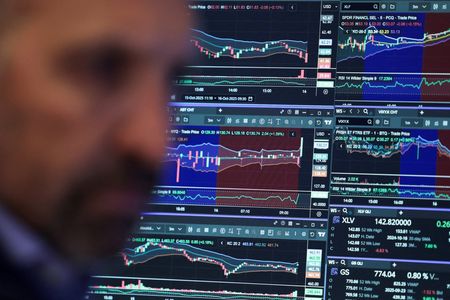
NEW YORK – Wall Street faces uncertainty next week as a newly turbulent stock market encounters an unknown factor: Fed Chair Kevin Warsh leading his inaugural meeting as the central bank’s head during a period when investors fear interest rate increases to combat inflation might reduce appetite for stocks.
Market participants are anxious to observe how Warsh manages his debut meeting leading the nation’s central bank, representing one of the financial sector’s most scrutinized gatherings that often triggers significant price movements across various assets.
“As we’ve seen at times in the past, it can be a bit of a challenge for a newer Fed chief to get the message right, to stick the landing,” said Jim Baird, chief investment officer with Plante Moran Financial Advisors. “The market is watching and parsing every word that’s said.”
Following impressive gains, primary stock benchmarks have retreated during this month’s trading. The S&P 500 benchmark recently traded almost 3% below its record closing peak from June 2nd. The Nasdaq Composite has dropped nearly 5% from that same date’s high point.
The Cboe Volatility Index, known as Wall Street’s “fear gauge,” reached two-month peaks this week, while major market averages experienced substantial daily fluctuations, including Thursday’s sharp upward movement.
Tech stocks have spearheaded the selloff, similar to how they propelled indices upward during intense rallies from the year’s market bottom in late March. Market participants remain cautious about an overheated surge driven by excessive AI profit expectations, despite various risks including Middle East conflict developments and their effects on energy costs and inflation.
Market watchers will also pay close attention to Elon Musk’s SpaceX trading activity, scheduled for its market launch Friday following its substantial initial public offering.
The S&P 500 maintains an 8% gain for the year, while the Nasdaq shows an 11% increase.
FED LIKELY ON HOLD, FOR NOW
Any possible Fed rate increase could create obstacles for stocks by elevating borrowing expenses for individuals and companies, while simultaneously making bonds more attractive investment alternatives.
Although the Fed is broadly anticipated to maintain current rates when releasing its monetary policy announcement Wednesday, investors will seek indicators of officials’ future perspectives.
President Donald Trump selected Warsh, having previously criticized the central bank and former chair Jerome Powell for insufficient rate reductions to meet his preferences.
However, Fed fund futures indicate market expectations for central bank rate increases before year’s end, based on LSEG information.
This week’s economic figures revealed U.S. consumer inflation during May rose at its quickest rate in three years. This development, combined with recent strong employment statistics, has prompted investors to believe the Fed will prioritize inflation control, potentially favoring rate hikes.
“Trying to understand the reaction function of this new administration at the Fed is going to be key,” said Marvin Loh, senior global macro strategist at State Street. “If we get that type of a hawkish hold, if you will, I think that that would kind of surprise the market.”
FED PROJECTIONS, WARSH COMMUNICATION IN FOCUS
During the meeting, Fed officials are anticipated to provide forecasts regarding interest rate direction and economic outlook, including inflation expectations. Investors will also carefully examine Warsh’s press conference following Wednesday’s policy announcement.
“The biggest thing is will the Fed hold, and what’s the language around it?” said Marta Norton, chief investment strategist at retirement and wealth services provider Empower. “How does it describe inflation?”
Investors seek to understand Warsh’s policy objectives and potential Fed restructuring plans.
For instance, Warsh has indicated interest in reducing the Fed’s $6.7 trillion balance sheet, which might generate market disruptions.
Warsh may also pursue changes to Fed communication methods or policy guidance approaches, investors noted.
“If we are more data dependent and we’re not getting visibility from the Fed of what they want to do, then I would think every economic release gets a little bit more attention and can create a little bit more volatility than we’ve seen over the last few years,” said Jeff Given, head of developed-market fixed income at Manulife Investment Management.
New Canadian legislation aimed at controlling AI chatbots has sparked concern among technology experts who question whether the proposed rules can actually work.
The bill was introduced this week following widespread public anger over a February school shooting in British Columbia that claimed nine lives. Controversy erupted when OpenAI admitted it had failed to notify police about disturbing ChatGPT conversations involving the shooting suspect.
Under the proposed legislation, Canada would establish a new digital oversight agency and implement a social media prohibition for users under 16, similar to Australia’s recent approach. The regulatory body would mandate that chatbots minimize risks when users search for dangerous material and implement emergency response protocols for discussions involving suicide and self-harm.
However, the proposal has faced sharp criticism from academics and legal professionals who point to vague language, potential enforcement gaps, and an extended implementation timeline.
“If this is the preview of a law, I do not have high hopes for something that will be useful in a practical sense,” said Evan Light, an associate professor at the University of Toronto who focuses on technology and privacy.
Light expressed surprise at the bill’s lack of development, noting that internet restrictions could be easily bypassed using VPNs – virtual private networks that mask users’ internet addresses – or other methods.
The office of Canada’s Identity and Culture Minister Marc Miller did not immediately respond to a request for comment on the issue.
During Wednesday’s announcement, Miller acknowledged the challenge of balancing privacy rights with social media and AI chatbot oversight. He clarified that the proposed legislation would not cover private messaging platforms like WhatsApp or Signal, and noted that companies meeting specific regulatory standards could receive exemptions from the social media restrictions.
Miller referenced the Tumbler Ridge shooting in British Columbia, explaining that the 18-year-old suspect’s ChatGPT account had been internally flagged for violent content but authorities were never contacted.
Miller said the company “made an egregious human error” and the government was now taking steps to make social media and AI chatbots “safer by design.”
OpenAI did not respond to a request for comment. The company previously apologized for not alerting Canadian authorities.
Multiple governments worldwide, including those in Europe, Brazil, and several U.S. states, are advancing new age verification requirements for social networks, AI chatbots, and adult content providers.
A Meta spokesperson said in an email that social media bans are “counterproductive” and that the company is assessing the implications of the proposed bill.
A spokesperson for Google, which owns YouTube, said the company is committed to working with the government to establish higher safety standards, so parents can choose safer online experiences for their children. A TikTok spokesperson said the platform already has more than 50 safety and privacy settings and parents can use “Family Pairing” to manage their teens’ experience.
Government officials have said it could take a year for the bill to pass and 18 months to set up the digital regulator once it does.
Florian Martin-Bariteau, director of the Centre for Law, Technology and Society at the University of Ottawa, warned that children would likely be able to circumvent the social media ban and AI chatbot restrictions.
Since Australia’s social media ban took effect, the regulatory agency enforcing it reported that a substantial number of children under 16 still retain accounts.
“The proposed framework will move them to riskier, smaller platforms,” he said, adding that while rules for major platforms could likely be enforced, it would be virtually impossible for Canada to block smaller websites that don’t comply. “By trying to protect kids, we may actually put them at greater risk.”
WASHINGTON – After federal officials abandoned President Donald Trump’s proposed $1.8 billion fund designed to compensate ‘weaponization’ victims, supporters are now turning to an alternative legal pathway to secure payments for Trump loyalists, including individuals who participated in the January 6, 2021, Capitol uprising.
According to Trump associates and legal specialists, the most promising option involves utilizing the Federal Tort Claims Act, legislation from 1946 that permits individuals to submit administrative claims and file lawsuits against the federal government for purported misconduct, with potential out-of-court settlements.
Stanley Woodward, holding the third-highest position at the Justice Department, stated in an interview: “At my level, the fund is dead. If somebody wants to submit a claim against the government and sue us, they can still do that.”
The Republican president has consistently advocated for federal compensation to supporters he characterizes as targets of a ‘weaponized’ federal government under his Democratic predecessor Joe Biden.
However, the ‘anti-weaponization’ fund, developed as part of a legal agreement between Trump and the Justice Department to settle his $10 billion lawsuit against the IRS regarding alleged mishandling of his tax documents, was suspended following strong Republican congressional opposition. Trump’s opponents criticized it as a slush fund rewarding supporters with public funds.
Hundreds of individuals prosecuted following their involvement in the Capitol assault, which represented an unsuccessful attempt by Trump supporters to block Congress from confirming his 2020 electoral defeat to Biden, have already submitted claims, with at least 10 filing government lawsuits for damages – receiving minimal response thus far.
This approach has been under development for some time. Conservative attorneys discussed the strategy during a previously undisclosed planning meeting at the 2024 Republican National Convention, according to longtime Trump associate Michael Caputo, who participated in the gathering.
Additional compensation methods remain under consideration, according to Caputo, who spearheaded ‘anti-weaponization’ initiatives in Trump’s 2024 campaign and submitted the first known claim under the now-cancelled ‘weaponization’ fund.
“I’ve heard no indication that they’ve slowed down on trying to get victims paid,” Caputo stated, noting that administration officials instructed him to “watch this space.”
Caputo, who worked as a Department of Health and Human Services spokesperson during Trump’s initial presidency, requested $2.7 million in ‘restitution’ from Blanche regarding investigations by the Biden administration and former special counsel Robert Mueller.
“It’s the most logistically feasible method,” explained Patrick Jaicomo, a senior lawyer at the libertarian legal organization Institute for Justice who focuses on Federal Tort Claims Act cases. “The government would have a lot of flexibility.”
Trump’s continued advocacy for compensating supporters he describes as ‘weaponization’ victims has sparked questions about which approach he might pursue for such payments.
When questioned about alternative compensation plans, the White House referenced earlier statements by Trump and acting Attorney General Todd Blanche indicating the weaponization fund would not proceed.
“We have no additional announcements at this time and any speculation about potential future actions is just that – speculation,” a White House official told Reuters anonymously. “President Trump remains committed to addressing Biden-era weaponization.”
A Justice Department official, speaking anonymously, indicated there is no initiative to encourage claim submissions.
Trump has alleged that the Biden administration and other political adversaries improperly utilized law enforcement, intelligence and regulatory agencies to target him and his associates. Critics argue these actions were legally warranted due to actual or suspected misconduct by Trump and others.
Trump, for example, granted executive pardons to his supporters prosecuted for their January 6 riot participation.
“The people were destroyed by dirty cops and by weaponization,” Trump said on NBC’s “Meet the Press” program broadcast Sunday. “Many of those people should be compensated.”
Republican Senator Lindsey Graham endorsed pursuing payouts through the Federal Tort Claims Act in a social media statement, prompting Justice Department’s Woodward to respond with what appeared to be support in a subsequently deleted post.
“We’re working on it,” Woodward wrote.
Woodward later explained to Reuters he intended to communicate that individuals believing they were government abuse victims retain a compensation pathway despite the absence of the $1.8 billion fund.
Financially compensating Trump associates has evolved from political fringe territory toward mainstream Republican strategy.
Caputo said he participated in discussions about finding methods to pay ‘weaponization’ victims dating to October 2023.
In 1956, Congress established a permanent Judgment Fund for settling federal government lawsuits.
Caputo reported that presidential allies and conservative attorneys discussed utilizing this fund for Federal Tort Claims Act payouts “ad nauseam” during the 2024 Republican National Convention. Discussion participants opposed compensating violent felons, including those who attacked police officers, according to Caputo.
The participants viewed the Judgment Fund as a “limitless” money source that would circumvent political obstacles of establishing a new administrative fund, Caputo said, though they recognized these payouts could generate controversy.
Several prominent Trump allies have already received Federal Tort Claims Act payouts. Michael Flynn, who briefly served as Trump’s national security adviser during his first term, obtained a $1.25 million settlement under the statute.
Attorney Peter Ticktin said his firm represents over 400 Capitol riot participants who have filed Federal Tort Claims Act claims. Ticktin expressed hope the government will settle cases before court proceedings, but has received no settlement plans notification.
“We’re asking for restitution in the millions of dollars,” Ticktin said, adding he trusts Trump and the Justice Department will ensure his clients receive payment.
The administrative procedure for Federal Tort Claims Act claims begins when someone files a form, designated SF-95, alleging government wrongdoing and seeking damages.
Claims generally must be submitted within two years of the incident, but January 6 defendants argue the alleged wrongdoing against them represents continuing harm. It remains uncertain how courts or the Justice Department will interpret that position.
If the government accepts the requested amount, officials can authorize payment before judicial assignment, Jaicomo explained, meaning no judge would examine the payment.
If the government refuses settlement, claimants may file lawsuits, at which point a judge would oversee the case. Ticktin has filed 10 lawsuits and plans hundreds more.
Rupa Bhattacharyya, a former Justice Department official who supervised the September 11, 2001, attack victims’ compensation fund, said department lawyers typically settle only when facing high trial loss risk, though they maintain broad settlement discretion including in January 6 cases.
“That would be a travesty because these are very defensible lawsuits,” said Bhattacharyya, who served under presidents from both parties. “It would violate the purpose and spirit of the judgment fund – but it is unlikely it would violate the text of the law.”
Elon Musk has maintained strict control over who gets to invest in SpaceX, his rocket company that’s making its highly anticipated public stock debut this week.
The billionaire’s selective approach meant early investors needed personal connections and had to pass interviews before being allowed to buy shares. One investor used ties to the entrepreneur’s cousin to purchase $10 million in stock back in 2018. Another portfolio manager at a major U.S. fund leveraged his relationship with a board member from the Musk-led Tesla to secure SpaceX shares in 2023.
Both early investors told Reuters they had to visit SpaceX facilities where Musk’s team, including CFO Bret Johnsen, conducted interviews before approving their investments. The world’s richest person personally signed off on each deal, though investors received minimal financial details about the company despite investing millions.
The strategy has paid off handsomely for early backers. SpaceX’s value has surged from approximately $30 billion in 2018 when Lyndon Rive — Musk’s cousin and former CEO of SolarCity — sold his stake. The company now expects to go public with a market value of $1.75 trillion.
“When we invested, it was straight up: Elon controls everything, and you’re not going to know anything unless you put in $250 (million),” said Ross Gerber, CEO of Gerber Kawasaki, an investment firm holding SpaceX and Tesla shares. Gerber said he proceeded because his Tesla investment had been extremely profitable.
Musk continues dictating terms as SpaceX enters public markets. Major banks including Goldman Sachs and Morgan Stanley have received specific instructions on marketing the stock and targeting particular investors. Some banks were told exact order sizes to fulfill — sometimes reaching billions of dollars — and given directions on investor types to pursue, according to five sources familiar with the process. Banks agreed to underwrite the offering without knowing their compensation.
The Nasdaq stock market’s CEO, Adena Friedman, spent months lobbying Musk and SpaceX President Gwynne Shotwell to secure the listing. In March, Nasdaq modified its index rules to accelerate large-cap companies like SpaceX joining the Nasdaq-100 after listing.
Unlike early investors with connections who are seeing massive gains, the company’s high valuation leaves little margin for error. Individual investors, including everyday buyers, will have access to 30% of the $75 billion offering.
SpaceX carries multiple risks for public investors: weak corporate governance with Musk holding absolute control, unprofitable operations, transactions between Musk’s various companies, and ambitious goals like Mars colonization and space-based data centers. However, few investors appear focused on these concerns amid the excitement.
“No fiduciary should accept this adverse combination of financial and governance risk,” wrote Tejal Patel, executive director of the union-affiliated SOC Investment Group, in a June 4 letter to other prospective SpaceX investors.
SpaceX and Musk did not respond to requests for comment. Rive and CFO Johnsen also did not respond. Major banks including Citi, Bank of America, Goldman Sachs, JPMorgan, Morgan Stanley and Nasdaq either declined comment or did not respond.
The upcoming public offering promises substantial returns for SpaceX’s early investors and employees. The fund manager who purchased Rive’s stock for $10 million now sits on more than $200 million in gains. After the public debut, SpaceX will represent 20% of his $1.5 billion fund’s holdings.
The anonymous fund manager described visiting SpaceX headquarters for an interview with CFO Johnsen. During the meeting, he faced questions about his fund’s finances, plans for future investments, and funding sources.
He received limited company information from Rive, who needed SpaceX approval before selling shares. To learn more, the investor sought details from outside sources, including a vendor manufacturing parts for the satellite company.
Such rigorous investor screening has become more common as private companies grow and gain market influence, though it was unusual at the time, the investor noted. “We felt like we were getting interviewed more than we were interviewing them.”
He eventually obtained basic financial data — revenue and growth figures — but no detailed information like balance sheet copies. This differed from most companies in his portfolio, which provide comprehensive information and regular updates.
Six investors said SpaceX maintains relatively concentrated ownership for a company its size. Reuters could not determine the exact number of shareholders, but private companies face additional regulations after reaching 2,000 shareholders.
SpaceX has disrupted the traditional public offering process. Banks typically drive investor outreach using their relationships and discretion — contacting investors, measuring interest, and advising issuers on allocations. During company roadshows, investors indicate interest within price ranges, and final pricing reflects that demand.
SpaceX reversed this approach, assigning banks to specific investor groups and regions in what participants call a “lane” structure. This directs firms to focus on defined offering segments rather than competing broadly. The company set a fixed price before launching the roadshow.
A source familiar with the deal defended this arrangement, saying it emerged from the company’s desire to make its 23 underwriting banks handle fair workloads and assign “accountability and ownership.” Some bankers spent over six months at SpaceX headquarters designing what the person called a “great collaboration.”
Another unusual aspect is the large retail investor allocation. During an April 6 virtual meeting with all IPO banks, Johnsen told attendees SpaceX was doing this “intentionally.”
“Those are folks that have been incredibly supportive of us and of Elon for a long time, and we want to make sure that we recognize that,” he said, according to a transcript seen by Reuters.
One banker said SpaceX planned marketing to retail investors internationally, including the European Union, Australia, Canada, Japan and Korea, without a listing.
Demand for the stock appears strong. Analysts handling the deal received up to 20 daily investor calls, above the typical 10 to 15 for popular offerings, one source said.
“I can see both sides of this. But betting against Elon Musk has been a mistake, in hindsight,” said Bradford Briner, North Carolina state treasurer. Briner expects his $149 billion state retirement system will own approximately $30 million in SpaceX shares as the company joins the Russell 1000 index tracked by part of the system.
International stock funds attracted fresh investment for the third consecutive week, as market participants capitalized on recent declines to boost their technology holdings, anticipating the artificial intelligence boom will persist.
According to LSEG Lipper data, investors added a net $3.32 billion to international equity funds during the week ending June 10, down from $21.12 billion in net purchases the previous week.
“For investors who may have under-allocated to the AI supply chain, we think select additions on weakness may make sense,” Mark Haefele, chief investment officer at UBS Global Wealth Management, said in a note earlier this week. “Underlying measures of AI demand remain firmer.”
The MSCI World Index dropped as much as 4.8% from the previous week’s record peak of 1,138.3, though it has since bounced back approximately 2.3% amid fresh optimism about potential diplomatic progress between Iran and the U.S.
Funds focused on European and Asian markets experienced weekly net additions of $6.74 billion and $6.37 billion respectively. Meanwhile, U.S.-focused funds posted $12.57 billion in withdrawals, representing their first weekly net outflows in three weeks.
Technology-focused funds captured $7.05 billion in their tenth consecutive week of positive flows. Financial and industrial sector funds received $624 million and $545 million respectively.
International bond funds registered net weekly additions of $18.27 billion, extending their purchasing momentum to 10 consecutive weeks.
Market participants allocated $6.7 billion to short-duration bond funds, representing the largest weekly addition in three weeks, while directing $3.21 billion to dollar-denominated medium-term bond funds and $2.26 billion to euro-based bond funds.
Money market funds experienced $18.21 billion in net withdrawals, shifting direction after attracting substantial inflows of $154.64 billion the week before.
Participants also pulled a net $1.86 billion from gold and other precious metal funds, continuing a pattern of withdrawals for the fourth straight week.
Emerging market investments faced selling pressure as participants withdrew a net $944 million from bond funds and $3.4 billion from equity funds, extending outflows to seven consecutive weeks, according to data encompassing 28,937 funds.
Soccer’s international governing body has rolled out updated regulations that officials will enforce during the upcoming World Cup tournament.
The new guidelines target two main areas: cutting down on players deliberately wasting time during matches and making sure significant refereeing errors that could change game outcomes get properly addressed.
These rule modifications represent FIFA’s ongoing effort to improve the flow and fairness of the world’s most watched sporting event.
The United States men’s soccer squad will kick off their World Cup campaign Friday when they face Paraguay at Los Angeles Stadium in Inglewood, California, with the venue temporarily rebranded from its usual SoFi Stadium name.
This opening match represents the beginning of the group stage phase for the American team, marking the culmination of nearly a decade of preparation as this generation of soccer talent has matured perfectly in time for a World Cup being held on American territory.
This Friday night, the United States men’s soccer squad will begin their 2026 World Cup journey when they face off against Paraguay. The 26 American athletes selected for the roster have reached the pinnacle of their sport after countless hours of preparation and dedication.
For these players, Friday’s opening match represents the realization of a dream that has required years of commitment to their craft and rigorous preparation.
A Heat Advisory remains in effect until 8 PM tonight for New Castle County in Delaware and surrounding areas, as dangerous heat index values could reach 103 degrees.
The National Weather Service warns that the combination of hot temperatures and high humidity poses a significant risk for heat-related illnesses across northern Delaware, southern New Jersey, and southeastern Pennsylvania. Areas under the advisory include New Castle County, along with parts of Camden, Gloucester, Mercer, and northwestern Burlington counties in New Jersey, plus Philadelphia and surrounding Pennsylvania counties.
Health officials urge residents to take immediate precautions: drink plenty of fluids, stay indoors in air conditioning when possible, and avoid prolonged sun exposure. If you must be outside, wear lightweight, loose-fitting clothing and limit strenuous activities to early morning or evening hours.
Pay close attention to signs of heat exhaustion and heat stroke, and check on elderly relatives and neighbors who may be more vulnerable to extreme heat.
For those without air conditioning, call 211 or contact your local health department for information about cooling centers.
Relief is coming this weekend as a cold front moves through tonight, bringing much less humid conditions, though temperatures will still reach near 90 degrees.
Good morning, Delmarva! We’re looking at a hot and potentially stormy Friday across the peninsula. Temperatures will climb to a sizzling 96 degrees under mostly sunny skies this morning, but don’t let that blue sky fool you – changes are coming this afternoon.
After 2 PM, we’ll see chances for showers and thunderstorms developing, with a 50% chance of precipitation. Some of these storms could pack a punch and turn severe, so keep an eye on the sky and stay weather-aware. With heat index values reaching up to 103 degrees, it’s going to feel dangerously hot out there, so please stay hydrated and take breaks in the shade or air conditioning.
Tonight, any lingering storms will taper off as we cool down to a much more comfortable 69 degrees under mostly cloudy skies. The good news? Saturday looks absolutely beautiful! We’ll see sunny skies return with highs around 89 degrees – perfect weather for any weekend plans. Saturday night stays pleasant with mostly clear skies and lows near 68.
Stay cool today, Delmarva, and have a wonderful weekend!
WASHINGTON — Independent voters have become more dissatisfied with President Trump throughout his second term, according to fresh polling data from The Associated Press-NORC Center for Public Affairs Research, with the steepest decline among those lacking college education.
Research findings indicate that approximately half of independents without college degrees viewed Trump favorably around the 2024 election, but that number plummeted to roughly 25% by this spring. This dramatic shift has eliminated the significant education divide that previously existed among independent voters regarding their views of the president.
The research compiled data from nearly two dozen AP-NORC surveys spanning July 2024 through April 2026, providing insight into how Trump’s support evolved across multiple timeframes, including the final six months of 2024, his first 100 days back in office, summer 2025 when the Big Beautiful Bill became law, last fall’s government shutdown, and the start of the Iran conflict.
The data reveals consistent erosion of support among independents during Trump’s current presidency. His standing has also weakened among smaller but significant voter groups that had moved in his direction during the 2024 race, including Black and Hispanic independents.
With more Americans identifying as independents than ever before, and this group having shifted toward Trump in 2024, any loss of their support could create challenges for Trump and Republicans as midterm elections approach, which typically serve as a referendum on the party in power.
Tafari Torres, a senior research associate at NORC who helped write the analysis, observed that while Democratic and Republican opinions of Trump have remained relatively unchanged during his second presidency, independent viewpoints continue to shift. “Independents are, broadly, the people who are reacting to the events and dropping in their support,” he said.
Trump’s White House comeback was driven partly by independent voters who viewed him as superior on crucial matters like economic policy. However, the new research examining Trump’s favorability and job approval numbers shows their attitudes deteriorated rapidly once he assumed office.
Non-college-educated independents held significantly more favorable opinions of Trump than their college-educated counterparts during and immediately following the 2024 election, but this pattern reversed during his first months in office. Positive assessments among independents without degrees dropped from 48% before his return to power to 31% during his initial 100 days, then fell further to approximately 25% during the government shutdown and early 2026.
College-educated independents showed less dramatic change, with only about 30% viewing Trump positively before his return to office, making their decline to roughly 25% less striking.
“The decline among no-college independents was steeper and it was greater than the slight decline in college independents,” said Sean Collins, a research associate at NORC who co-authored the analysis. “That was surprising, especially given, when you think of Trump’s coalitions, those without college degrees is usually one of the ones that that stands out.”
Americans lacking college degrees have traditionally formed a core component of Trump’s political base. However, Trump’s 2024 victory also came from expanding support among typically Democratic-leaning demographics, including Hispanic voters.
Roughly 42% of independent voters backed Trump in 2024, an increase from 37% in the 2020 race. According to AP VoteCast, independents without college degrees showed slightly higher preference for Trump over former Vice President Kamala Harris, while Hispanic independents were roughly evenly divided.
Current circumstances appear far less favorable for the president.
Nearly 46% of Hispanic independents viewed Trump positively in polling conducted around the presidential election. However, his approval among this demographic fell sharply during his second term, dropping to just 15% during last fall’s government shutdown before recovering to about 25% this spring.
Younger independents have also grown less supportive of the president, while those aged 60 and above have remained relatively steady. Additional AP-NORC polling has shown Trump losing support among younger Republicans due to inflation worries and increasing discontent among Hispanic Americans.
“The gains Trump appeared to make during the election, I don’t know if they’re sticking around. He’s experienced some significant shifts among those people,” Torres said. “From our research, they don’t appear to be permanent gains.”
Survey data suggests economic concerns drive much of Americans’ dissatisfaction with Trump, including among independents.
About half of independents who voted for Trump in 2024 identified inflation as their primary voting consideration, according to AP VoteCast, with most expressing serious concerns about food and gas costs.
More than a year into Trump’s second presidency, inflation continues at elevated levels, driven by gas prices that remain high due to the ongoing Iran conflict. An April AP-NORC survey found roughly 30% of independents were “extremely” or “very” worried about affording groceries recently, with similar numbers concerned about gas expenses.
The analysis determined that Americans’ economic perceptions typically mirror their presidential assessments. Those with negative views of the nation’s economy generally held unfavorable opinions of Trump, with approximately 80% of independents describing the U.S. economy as poor this spring.
May’s most recent AP-NORC polling showed only about 30% of independents approve of Trump’s economic performance, consistent with similar numbers from early in his second term. The April survey found just 12% of independents approved of his handling of living costs.
The AP-NORC analysis examined responses from 4,836 independents across 21 surveys, organized into five time periods before and during President Trump’s second term. Independents were defined as respondents who did not identify with or lean toward either major political party.
Federal banking supervisors are intensifying their oversight of artificial intelligence implementation at financial institutions as the technology becomes increasingly prevalent throughout the industry, according to individuals with knowledge of the regulatory activities.
Financial institutions have quickly embraced artificial intelligence technology in recent years, extending its application beyond simple virtual assistants to sophisticated operations including regulatory compliance monitoring and loan underwriting processes, which has attracted increased regulatory attention.
Supervisors are enhancing their oversight as AI adoption accelerates throughout financial services, creating new vulnerabilities to cybersecurity threats and fraudulent activities. Currently, their strategy involves maintaining close observation to gain deeper insight into how financial institutions are implementing this technology.
The Office of the Comptroller of the Currency and the Federal Reserve have begun incorporating AI technology mapping requirements into their standard bank examinations, particularly for high-risk applications such as lending operations, customer identification procedures, and sanctions screening processes, according to three individuals familiar with these developments.
Banking supervisors are requesting comprehensive information about vendor relationships, customer data protection measures, and the presence of safety mechanisms such as emergency shutdown capabilities, these individuals reported. They are also investigating governance structures, including protective measures and human supervision, third-party risk management and vendor oversight, subcontractor exposure levels, and backup plans for system failures.
AI technology discussions have become a standard component of every banking examination, one individual noted.
These conversations occur through both written documentation and verbal communications. Supervisors are not yet providing specific directives but are working to gain better comprehension of how banks implement the technology, the individuals explained.
The individuals requested anonymity due to the confidential nature of these discussions. The OCC, which oversees U.S. banks, did not provide a response to comment requests, while the Fed declined to comment.
U.S. banking supervisors have publicly indicated increased scrutiny of financial institutions’ artificial intelligence usage. Last year, the Government Accountability Office reported that supervisors had informed them of their ongoing assessment of AI risks within financial services.
In April, the OCC announced that it, along with the Fed and the Federal Deposit Insurance Corporation, intended to issue a formal information request regarding banks’ AI usage, including generative and agentic systems. Such requests do not create new regulations but assist agencies in collecting information before determining potential actions.
Supervisors are attempting to evaluate how banks are managing rapidly evolving systems such as Anthropic’s frontier AI model Mythos. Cybersecurity specialists indicate that this system presents substantial challenges to the banking sector and its existing technology infrastructure due to its capacity for exploiting cyber weaknesses.
The U.S. Treasury and supervisors are also reviewing the cybersecurity threats the new artificial intelligence model creates and evaluating how well financial firms are prepared to address them.
Currently, supervisors are concentrating on information collection and industry practice evaluation rather than limiting specific applications, individuals reported.
Rather than creating new regulations specifically designed for AI, the agencies are utilizing existing frameworks including model risk management, third-party risk supervision, and consumer protection regulations to evaluate how banks are managing the emerging technology, the individuals stated.
A primary concern for supervisors is ensuring that AI systems do not exceed their intended functions or access levels, the individuals noted. Supervisors are investigating whether tools can access or deduce information beyond authorized parameters, particularly since AI models are designed to extract and connect information across multiple systems. This creates risks regarding privacy, confidentiality, and regulatory compliance, according to these individuals.
Financial institutions are being required to demonstrate their control measures, including protective barriers that restrict model behavior and data access capabilities, they continued. Supervisors are also emphasizing human supervision and emergency shutdown mechanisms that enable firms to halt systems when necessary, along with clear authority structures for intervention, all three individuals confirmed.
Another significant oversight area involves vendor risk. As banks increasingly depend on third-party providers for AI tools, supervisors are questioning how firms ensure these vendors and their subcontractors maintain the same governance and security standards as the banks themselves, the three individuals reported.
Supervisors are also inquiring whether banks have contingency plans if security breaches occur with vendor systems, one individual noted, a growing concern as AI usage becomes more integrated into various banking operations.
Simultaneously, the rapid pace of AI advancement is creating challenges for supervisors themselves. The three individuals indicated that the technology is progressing at a rate that significantly exceeds traditional regulatory learning and rulemaking cycles, creating concerns that formal guidance, when released, could quickly become obsolete.
Consequently, authorities are expected to continue relying on broad, principles-based supervision rather than detailed regulations, though this approach could potentially change.
“Today, banks are relying on existing risk-management frameworks to guide their use of AI,” Federal Reserve Vice Chair for Supervision Michelle Bowman said in a speech in May. “While these supervisory tools are intended to support banks in applying sound governance and risk management, we should assess whether our supervisory guidance is fit for the future.”
Water service has been disrupted across multiple cities in the Russian-occupied Donetsk region of Ukraine following a Ukrainian military strike on Friday, according to reports from the Interfax news agency citing local utility officials.
The attack targeted energy infrastructure, causing power outages at a water treatment facility and leaving residents in Donetsk, Yasynuvata, and portions of Makiivka without running water.
The affected Donetsk region represents one of four Ukrainian territories that Russia annexed in 2022 during its ongoing military campaign in Ukraine. Russian President Vladimir Putin has stated that Russian military forces now occupy more than 85% of the region.
Water access issues in Russian-occupied Ukrainian territories have emerged as an ongoing logistical problem for Moscow’s administration.
Emergency crews responded to a fire at New Zealand’s Wellington Airport on Friday, prompting evacuations and forcing incoming aircraft to be rerouted to other locations.
According to a spokesperson from Fire and Emergency New Zealand, firefighting teams worked alongside the airport’s internal fire department to combat the flames.
The spokesperson reported that five fire trucks, two ladder vehicles, and a command unit were deployed to handle the emergency, though officials declined to specify what materials were burning.
Airport officials confirmed in a public statement that both the main terminal facility and the southwest pier were cleared of people as a safety precaution, with no injuries documented from the incident.
“Flights into Wellington have been temporarily diverted and passengers are advised to check with their airlines for information on specific flights,” the airport stated.
A woman from Iran was aboard a deportation flight that arrived Friday in the Central African Republic, carrying approximately two dozen migrants removed from the United States, according to legal advocates familiar with the case.
The flight represents another instance of controversial arrangements between the U.S. and various African and Latin American countries to accept deportees who are not citizens of those nations, lawyers say.
The Central African Republic joins at least nine other African countries that have entered into agreements to receive third-country nationals being removed by American immigration authorities.
These arrangements, many of which remain confidential, are components of broader immigration enforcement efforts that have resulted in thousands of deportations to nearly two dozen nations where the deportees are not from, according to advocacy groups.
Immigration attorneys describe these third-country deportations as a strategy to circumvent legal protections and pressure asylum seekers to return to their countries of origin.
The exact number of migrants on the flight that departed Louisiana late Thursday bound for Bangui, the Central African Republic’s capital, remained uncertain.
Ali Rahnama, who leads the Iranian American Legal Defense Fund and has maintained contact with some of the migrants, reported that Thursday’s deportees included individuals from Iran, Jordan, Armenia, Turkey, Georgia and Afghanistan.
Immigration attorney Sahar Jalili Pawelski revealed that three Iranian women were initially scheduled for deportation to the Central African Republic. However, two received emergency judicial orders temporarily halting their removal while courts examine the legality of the government’s actions.
According to both Jalili Pawelski and Rahnama, all three women had previously received court protection against deportation to Iran after judges determined they faced legitimate threats of persecution based on political or religious grounds.
An elderly man from Syria was also slated for deportation to the Central African Republic but obtained an emergency temporary order preventing his removal, according to his attorney Margaret Stock.
The U.S. Department of Homeland Security declined to discuss the specific case Thursday, stating it does not confirm upcoming removal operations for security purposes. U.S. Immigration and Customs Enforcement did not provide immediate responses to comment requests.
The Central African Republic has endured years of violence between government-aligned forces and rebel groups and ranks among the world’s most impoverished nations. Despite significant gold deposits, one-third of the population survives on less than $2 daily.
The country also served as an early location for Wagner, a Russian mercenary organization active across Africa. This group has provided security for President Faustin-Archange Touadéra and engaged rebel forces in combat.
The nation maintains one of Russia’s strongest alliances in Africa, though recent friction has emerged between Touadéra and Russia following Moscow’s demands to replace Wagner with the government-operated Africa Corps.
Rahnama from the Iranian American Legal Defense Fund voiced alarm about sending an Iranian asylum seeker to the Central African Republic, citing Russia’s significant influence there and Moscow’s close security relationship with Iran.
Ford Motor Company announced a nationwide recall of 255,404 vehicles on Friday due to a defective component that could lead to unexpected engine failure while driving, according to the U.S. National Highway Traffic Safety Administration.
The safety recall targets specific 2012-2018 Focus models that had previously undergone faulty repairs, federal safety officials reported.
According to the U.S. National Highway Traffic Safety Administration, the problem stems from a malfunctioning canister purge valve that may cause vehicles to stall without warning during operation.
Vehicle owners can identify potentially affected cars by looking for an activated dashboard warning light or noticing their fuel gauge displaying incorrect readings, safety regulators explained.
Ford dealerships will provide free software updates to the powertrain control module to resolve the safety issue, the U.S. National Highway Traffic Safety Administration confirmed.
DAKAR, June 12 – A terrorist organization linked to al Qaeda operating in Mali has announced substantial financial rewards for details about the location of the nation’s president and senior military leadership, calling the current government illegitimate.
The militant group Jama’at Nusrat al-Islam wal-Muslimin (JNIM) made the announcement Thursday, responding to similar bounty offers previously made by Mali’s government targeting JNIM’s leadership, including leader Iyad Ag Ghaly and other extremist commanders.
The SITE Intelligence Group, an organization that monitors jihadist communications globally, distributed the insurgents’ statement.
Recent al Qaeda-affiliated attacks in April resulted in the death of Mali’s defense minister, sparking widespread violence throughout the nation’s expansive northern desert regions and potentially allowing militant organizations to expand their territorial control.
The terrorist organization is offering €2 million for intelligence that leads to Assimi Goita, who heads the government from the capital city Bamako and assumed control through military takeovers in 2020 and 2021.
Additionally, the bounty announcement includes €1 million rewards each for details about Colonel Lassina Diallo and General Malik Dicko.
According to the statement, payments would be made to individuals providing location information or anyone taking direct steps to “neutralise” these officials.
Global HIV prevention efforts experienced a devastating setback in 2025, with preliminary data from UNAIDS revealing that significantly fewer people accessed crucial prevention services compared to the previous year.
According to the agency’s Friday report, the number of individuals who received pre-exposure prophylaxis, known as PrEP, dropped by 38% across 62 nations when comparing 2025 to 2024 figures. This translates to 1.2 million fewer people accessing the preventive medication, with totals falling from 3.3 million to 2.1 million across various countries including Nigeria, Cameroon and Uganda.
The situation became even more dire for other prevention methods, as funding for condoms plummeted by over 90% in certain nations, according to the findings.
Winnie Byanyima, who leads UNAIDS, described the current crisis in stark terms. “We are undergoing perhaps the most serious disruption of HIV services since the HIV response started,” Byanyima stated. “We can’t sit here thinking that the impact isn’t so dramatic.”
According to Byanyima, the reduction in available services stems from a combination of decreased funding and growing opposition to supporting key at-risk groups, particularly LGBTQ people. She warned that without intervention, these access barriers will result in increased infection rates and fatalities in coming years.
The 2025 data showed a modest decrease in new infections compared to 2024, dropping by approximately 100,000 cases to reach 1.2 million total new infections. Yet Byanyima cautioned that HIV testing decreased by 22% in countries with high infection rates, making it difficult to assess the complete scope of the situation.
Treatment access showed more positive trends, with the number of people receiving antiretroviral medications increasing by 2.7% year-over-year, reaching 32.1 million individuals by December 2025.
While this growth rate fell short of the typical 4% annual increases seen previously, UNAIDS noted it demonstrated that nations and local communities had mobilized to address treatment gaps and prevent worst-case outcomes that some experts had anticipated when funding decreased. However, the data indicated that prevention services faced greater challenges in adapting to reduced financial support.
The report highlighted that several countries increased their domestic HIV funding for the first time since the COVID-19 pandemic began. Despite this progress, the agency expressed concern about widespread closures of community-based organizations that form the foundation of HIV response efforts and depend heavily on international financial support.
UNAIDS made this information public in advance of an upcoming high-level HIV/AIDS meeting scheduled at the UN in New York this month, emphasizing the need for international cooperation. The agency faces its own uncertain future, as UN leadership has suggested shuttering UNAIDS in 2026 due to budget constraints.
Byanyima indicated that the agency is currently undergoing a “transformation” process, with a comprehensive report expected in October.
“What I’m certain about is that the United Nations will not drop its leadership role in the global response,” she emphasized.
The massive $75 billion public stock offering from SpaceX is driving Chinese space companies into overdrive as they rush to capitalize on investor enthusiasm for rocket technology and satellite networks that have propelled Elon Musk toward becoming the world’s first trillionaire.
Chinese space firms are viewing the initial public offering as a roadmap for their own market debuts, though industry observers warn of a critical technology divide. These companies are preparing to go public without the substantial revenue streams or battle-tested innovations that form the foundation of SpaceX’s financial success, creating a mismatch that experts believe will limit their market valuations.
The investor enthusiasm remains strong despite these concerns. Huang Yan, who co-founded Shanghai-based Lantern Capital, revealed his 2016 investment in LandSpace is now delivering approximately 100-fold returns as the company prepares for its public debut.
Huang explained he dismissed early doubts about the sector, choosing instead to focus on the industry’s “technological moat and strategic value” for long-term growth potential.
Seven Chinese rocket and satellite enterprises, including LandSpace and CAS Space, are currently pursuing public offerings or pre-IPO funding rounds, though specific financial terms remain undisclosed. Market analysts at Soochow Securities project China’s commercial space sector could exceed $1 trillion in value by 2030.
The comparison to SpaceX reveals significant gaps in capability. While SpaceX approaches the public market with operational reusable rockets, its Starlink internet service, and ambitious plans for direct device connectivity and space-based artificial intelligence systems, Chinese competitors have not yet achieved successful reusable rocket launches.
“Everything SpaceX does is a bellwether for China’s space industry… I wouldn’t be at all surprised to see a strong uptick in Chinese commercial-space listings and funding,” said Ellis Scherer of the Information Technology and Innovation Foundation.
Scherer identified China’s absence of operational reusable rocket capability as “the biggest barrier” preventing the country from matching U.S. space achievements.
LandSpace, considered China’s leading private sector competitor to SpaceX, conducted its first Zhuque-3 rocket test in December, but the booster was unable to execute a controlled landing and could not be retrieved.
The capacity to recover, refurbish, and relaunch rocket boosters—essential for reducing satellite deployment costs—remains unachieved among Chinese companies.
Revenue figures underscore the substantial development gap facing China’s commercial space industry. LandSpace generated 36.4 million yuan ($5.2 million) in revenue during the first half of 2025, while SpaceX saw its income climb by one-third to nearly $19 billion in 2025, with roughly three-fifths coming from Starlink operations.
Gabriel Deville, a manager at consultancy Novaspace, suggested that a Chinese breakthrough in booster recovery technology could ease pressure on the country’s two primary Starlink-competing projects.
These initiatives—Guowang and Qianfan, internationally known as Spacesail—currently operate several hundred satellites combined, compared to Starlink’s approximately 10,400 operational satellites.
An unnamed Chinese space company executive, speaking confidentially due to media restrictions, estimated the most optimistic timeline would see China matching Starlink’s current satellite deployment around 2033, though acknowledged this target continues shifting.
However, successful deployment of Starship, SpaceX’s advanced heavy-lift rocket capable of launching three times more satellites per mission than Falcon 9, could expand the advantage gap between Starlink and Chinese competitors “exponentially,” the executive warned.
SpaceX’s integrated business model, where Starlink creates demand for the company’s own launch services, lacks a clear parallel in China. The Chinese sector remains divided across multiple companies, forcing startups to rely on contracts from government-backed satellite operators whose purchasing and deployment timelines remain beyond their influence.
“The big move of SpaceX was to move revenue generation away from launch and to broadband constellations,” Deville explained.
Despite these challenges, Deville noted Chinese startups possess stronger demand prospects than many Western competitors, since they can position themselves as crucial for deploying China’s independent satellite networks.
The domestic market opportunity would likely emphasize government and business customers rather than Starlink’s consumer-focused approach, with demand coming from transportation, shipping, remote industrial facilities, emergency services, and Belt and Road Initiative markets, he added.
However, state-owned enterprise dominance may prevent the emergence of a Chinese private sector equivalent to Starlink, according to industry experts.
“If you want to be a telco in China, there are no private telcos in China,” said Blaine Curcio, founder of Orbital Gateway Consulting.
Ukrainian officials are preparing to request $20 billion in additional military assistance from allied nations during a scheduled meeting next week, according to a Ukrainian defense source speaking from Kyiv on June 12.
The funding appeal will take place next Thursday during a gathering of the Ukraine Defense Contact Group, a coalition of more than 50 nations also referred to as the Ramstein group, which coordinates financial and military support for Kyiv.
“We have a six- to nine-month window of opportunity on the battlefield that requires an urgent acceleration of funding,” the source said.
Russian military progress on the battlefield has decelerated significantly this year, coming to an effective standstill last month, as Ukrainian mid-range drone attacks have disrupted Russian supply lines and logistics operations supporting front-line forces. Additionally, Ukraine’s long-range drone operations are causing significant damage to Russia’s energy infrastructure.
Putin stated last week that Russian military units continue making daily advances on the battlefield and that Russia’s economy faces no threat, although he admitted that Ukrainian attacks are causing damage.
Individual allied nations will be requested to provide contributions ranging from $2 billion to $6 billion toward achieving the $20 billion goal, which could be structured as either direct aid or loans, according to the source. Politico initially reported this funding request.
A Heat Advisory remains in effect until 8 PM tonight for New Castle County in Delaware, as dangerous heat index values could reach 103 degrees.
The National Weather Service issued the advisory early this morning, warning that hot temperatures combined with high humidity create conditions ripe for heat-related illnesses. The advisory also covers parts of New Jersey and Pennsylvania, including Philadelphia and surrounding counties.
Health officials urge residents to take precautions during the peak heat hours. Stay indoors in air-conditioned spaces when possible, drink plenty of fluids, and avoid prolonged sun exposure. If you must be outside, wear lightweight, loose-fitting clothing and limit strenuous activities to early morning or evening hours.
Pay special attention to elderly relatives and neighbors who may be more vulnerable to heat stress. Watch for symptoms of heat exhaustion, including heavy sweating, weakness, and nausea.
If you don’t have air conditioning at home, call 211 or visit your county health department website to find cooling centers in your area.
Relief is on the way this weekend. A cold front moving through tonight will bring much less humid conditions, though temperatures will still remain near 90 degrees through the weekend.
Morning commuters should plan for delays on southbound Route 72 where construction activity has forced the closure of the right travel lane.
The lane restriction affects the stretch of roadway running from Bellvue Road to Brookhil Drive, with the closure scheduled to remain in place through 7 AM.
Drivers traveling through the area should expect reduced capacity and potential backups during the construction period.
A conversation took place between Michel Martin and Texas Pastor Billy Echols-Richter regarding the recent conviction of Karmelo Anthony.
The discussion centered on the pastor’s thoughts about Anthony’s conviction and the community tensions that have emerged in the wake of the trial proceedings.
Listen to the Morning Delmarva Farm Report Update — June 12, 2026
DELMARVA — Federal agriculture authorities confirmed that New World screwworm has arrived in the United States, with USDA’s Animal and Plant Health Inspection Service documenting the first case on June 3 in a 3-week-old calf in southern Texas. By Tuesday, officials had verified 6 total cases — 5 in Texas livestock and 1 involving a dog in New Mexico. The parasitic pest poses a serious threat to livestock operations nationwide.
Markets
Cattle futures posted strong gains at the Chicago Mercantile Exchange. August live cattle closed up $1.17 at $242.67 per hundredweight. October contracts climbed even higher, up $1.70, closing at $235.40. Feeder cattle saw the biggest jump — August contracts surged $5.27 to close at $359.65. Corn futures declined, giving feeders extra momentum.
For local cash grain, corn at Laurel Grain Company in Laurel, Delaware is bringing $4.54 a bushel for July delivery. Soybeans there are $10.82 for November delivery.
Forecast
The region is under a heat advisory today with highs near 89° and a chance of afternoon showers and thunderstorms. Patchy fog early then mostly cloudy conditions are expected. Saturday looks better — sunny skies with highs in the mid 80s and lower humidity moving in.
This article is based on the Delmarva Farm Report Update Morning Edition, June 12, 2026. Hosted by Tom Bradley.
Elon Musk’s SpaceX commenced trading on the Nasdaq exchange Friday following an unprecedented initial public offering that raised $75 billion from investors worldwide. The massive fundraising effort represents the largest IPO in global history, giving the space exploration company a staggering $1.77 trillion market valuation.
This historic public offering has elevated Musk to become the world’s first trillionaire and positioned SpaceX among the planet’s most valuable corporations. The achievement comes despite the company recording losses of nearly $5 billion in the previous year while generating significantly less revenue than other technology companies with comparable valuations.
Market observers will closely monitor the stock’s trading performance as a measure of what analysts call the “Musk premium” – the same phenomenon that has driven Tesla’s valuation above $1 trillion. The debut will also serve as an indicator of investor interest ahead of planned public offerings from artificial intelligence companies Anthropic and OpenAI.
Industry experts view SpaceX’s market entry as a preview for a new wave of massive public listings. Financial exchanges and investment banks face pressure to demonstrate their ability to manage the enormous trading volumes while avoiding the technical problems that plagued Meta’s 2012 market debut.
Trading is expected to begin during the middle of the trading session as the exchange gathers buy and sell orders and underwriters work to balance supply with demand. The company set its IPO price at $135 per share and offered 555.56 million shares to investors.
The record-breaking offering represents the realization of Musk’s longstanding goals in space exploration and technology development. The IPO has distinguished itself by transforming traditional Wall Street practices and attracting large numbers of individual retail investors.
The $75 billion raised through the offering more than doubles the previous record held by Saudi Aramco’s 2019 public debut. SpaceX’s listing marks the first U.S. company to go public with a trillion-dollar valuation and makes it the seventh-largest American company by market value.
The valuation could increase further if underwriters decide to sell additional shares, a choice typically made within 30 days following the initial offering.
While SpaceX may need to wait for inclusion in the S&P 500 index, the company expects rapid entry into the Nasdaq 100 under new fast-track rules. This inclusion will make SpaceX a significant holding for index funds and exchange-traded funds, potentially creating additional demand for its shares. The process should take approximately one month rather than the typical year-long waiting period.
Some market analysts anticipate that SpaceX’s debut could prompt investors to restructure their portfolios, potentially creating selling pressure on other technology stocks as funds shift investments into the new offering.
Jay Woods, chief market strategist at Freedom Capital Markets, noted both opportunities and risks from the intense investor interest. SpaceX allocated 30% of its offering to retail investors, capitalizing on Musk’s popularity with individual investors who have driven significant gains in Tesla stock.
“Historically, those investors tend to be the most vulnerable if momentum reverses,” Woods said. “I think there will be better opportunities to enter this name down the road.”
Determining SpaceX’s true value presents challenges for investors and analysts despite the excitement surrounding the public offering.
The company claims its market opportunity encompasses $28.5 trillion, describing this as the largest potential market in human history. SpaceX points to its dominant position in space operations, stating that its activities account for more than four-fifths of all mass launched into orbit over the past three years, along with revenue from its Starlink satellite internet service.
John Belton, portfolio manager at Gabelli Funds, drew comparisons between SpaceX and Tesla, noting that both companies have established businesses alongside ambitious future opportunities.
“For Tesla, that’s things like humanoid robotics and other future applications. For SpaceX, it’s the AI business,” he said.
The company faces significant challenges at its current valuation, including competition from rivals like Jeff Bezos’ Blue Origin, which is working to accelerate space commercialization and secure government contracts for new markets beyond Earth. Morningstar analysts recently suggested a more appropriate valuation around $780 billion, less than half of the opening market capitalization.
Nancy Tengler, CEO and CIO of Laffer Tengler Investments, emphasized the company’s transformative potential over traditional financial metrics.
“This is not a name you’re buying based on fundamentals. For me, the analogy is Amazon. This was a company that changed the way we live,” she said. “If the IPO comes out at $135 and the stock drops to $100, that’s not ideal, but it wouldn’t change our long-term view. We want to participate.”
Digital currency trading platforms are capitalizing on investor excitement around SpaceX by offering speculative betting opportunities on the company’s stock price ahead of its public offering.
Trading volumes reaching billions of dollars have poured into financial products called “pre-IPO perpetual futures,” which operate independently from actual company shares but base their pricing on SpaceX’s most recent private valuation figures.
These trading instruments, commonly called “perps,” already exist for digital currency speculation. They continue rolling over without expiration dates and permit traders to use borrowed money for larger position sizes.
The growing appeal of these new pre-IPO products — available on platforms such as Binance, Coinbase and Hyperliquid — has heightened tensions between cryptocurrency markets and traditional Wall Street as major public offerings approach, potentially including artificial intelligence companies Anthropic and OpenAI.
When news emerged that federal regulators would authorize these betting contracts for digital currencies, shares of Intercontinental Exchange, which owns the New York Stock Exchange, dropped earlier this week as market participants considered the long-term competitive challenge to established trading venues.
The stock decline extended into the following trading day, partly driven by investor concerns that these contracts might expand into traditional equity markets.
Financial markets worldwide are preparing for the public offering of the company owned by the world’s wealthiest individual, which seeks to raise a record-breaking $75 billion to support growth plans tied to ambitious long-term goals including Mars settlement and orbital data facilities.
Data from analytics firm Talos shows approximately $3.2 billion in trading activity and $390 million in outstanding positions for SpaceX pre-IPO contracts from May 17 through Wednesday, covering eight different trading platforms.
Binance reported $2.1 billion in trading volume for its SpaceX pre-IPO products over 18 days, though the company refused to provide regional breakdowns.
“This is obviously aimed at a crypto-native, crypto-friendly audience that are looking to obtain high-leverage bets on specific market movements,” said Philippe Noeltner, a lawyer at A&O Shearman, calling the volumes “mind-boggling.”
While cryptocurrency perpetual contracts frequently provide extreme leverage ratios up to 100-to-1, the newly introduced pre-IPO versions typically limit leverage between 3x and 5x, according to market analysts.
Digital currency exchanges generally profit from these offerings through market-making activities and transaction fees charged to purchasers.
Supporters argue that pre-IPO perpetual contracts — which are typically unavailable to American investors — serve as price discovery tools and broaden access to U.S. equity market opportunities.
However, detractors warn these instruments carry substantial risks due to limited liquidity, extreme price swings, and unlike tokenized stocks, lack connection to any underlying assets. When companies eventually go public, the contract prices adjust to match share prices, though specific mechanisms differ across platforms.
SpaceX pre-IPO contract prices have dropped from over $200 to approximately $160 within a month, based on Kaiko pricing information. SpaceX shares are expected to be priced at $135 each.
“This pre-IPO perpetual isn’t really anchored towards anything other than speculation,” said Kaiko analyst Laurens Fraussen.
“The pre-IPO thing is, alongside prediction markets, a good example of where the world is heading… it’s like the hyper-gambler-isation of everything.”
The World Federation of Exchanges, representing global stock markets, expressed concern that purchasers might believe they’re acquiring assets with the same protections as listed securities, questioning the reliability of price formation mechanisms.
“These are fundamental principles and we will work this issue into our dialogue with regulators,” a WFE spokesperson told Reuters via email.
Both the SpaceX public offering and digital currencies represent “exciting stories,” according to Alex Edman, a London Business School professor studying investor behavior, though he cautioned people should fully understand their purchases.
“With SpaceX, investors may have done a little bit of research and conclude that space exploration is the future. With crypto, they may learn about potential use cases. But neither tells you what the asset is actually worth.”
Limited information exists about the driving forces behind pre-IPO contract volumes. Coinbase and Binance refused to disclose user numbers for SpaceX pre-IPO products, while Talos indicated public data couldn’t determine this information.
“It’s also very difficult to know who’s active in these markets, whether it’s your retail trader punting £10 or a proprietary trading desk of a hedge fund taking a position,” said A&O Shearman’s Noeltner.
“It’s better not to assume that these are only retail traders.”
Chinese officials have officially acknowledged the detention of an American citizen on Friday, confirming that U Min Zin faces allegations of espionage and posing threats to the nation’s security.
A ministry spokesperson, Lin Jian, revealed during a routine press briefing that Chinese authorities have informed the U.S. consulate general located in Guangzhou about the detention. This confirmation came in response to inquiries regarding a New York Times report indicating that Min Zin had vanished in Kunming, located in southwestern China, during the previous week.
British health officials announced Friday they will provide meningococcal B disease protection to thousands of students through a special vaccination initiative, responding to what authorities called the nation’s most severe outbreak of the illness recorded this year.
The March outbreak in Kent, located in southeastern England, resulted in two fatalities and represented the most extensive and rapidly spreading MenB incident British health officials have documented.
Health authorities reported Friday that this year has seen an unusually high number of disease clusters, with each outbreak proving larger than anticipated.
The emergency vaccination effort beginning this summer aims to shield individuals facing the greatest immediate danger from the illness while officials evaluate new data to decide if additional vaccine distribution measures are necessary.
The two-shot program will focus on all Year 13 students (ages 17-18) throughout England, plus individuals under 25 who will be entering university or residential continuing education programs for the first time this fall.
Officials designed the initiative specifically to safeguard students beginning their university experience this autumn.
Students face disproportionate MenB risk because the disease spreads more easily through the close and extended contact typical in dormitory living situations and social gatherings.
While British teenagers currently do not receive routine meningitis B vaccinations like their counterparts in numerous other nations, the country has provided infant vaccination against the disease since 2015.
Weather authorities have put a heat advisory into effect for the region, warning residents of dangerous temperature conditions expected throughout the day.
The advisory went into effect at 3:59 AM this morning and will remain active until 8:00 PM tonight, according to the National Weather Service Mount Holly office.
Officials are urging residents to take precautions during the hottest parts of the day and stay hydrated.
NEW YORK — Making history at age 36, Taylor Swift has earned the distinction of being the youngest woman ever welcomed into the Songwriters Hall of Fame during Thursday evening’s ceremony.
Speaking with a hoarse voice that she blamed on cheering during the night’s musical performances and Wednesday evening’s memorable NBA matchup between the New York Knicks and San Antonio Spurs, Swift reflected on her songwriting process. “It was instinctual. No one taught me how to do it,” she explained.
During her emotional acceptance speech, Swift shared how her family relocated from Pennsylvania to Nashville, Tennessee, when she was in her pre-teen years to support her musical ambitions.
“I will never be able to express my gratitude,” the artist said while fighting back tears, acknowledging how their sacrifice made her career possible.
Swift encouraged aspiring songwriters with these words: “You really have to prioritize what you love, down to your very core. Because you’ll need that.”
Director Steven Spielberg delivered an unexpected introduction for Swift, speaking about songwriting’s impact. “There is something undeniable about how songs imprint on our souls,” he remarked, then turned his attention to Swift specifically: “Somehow Taylor knows us all too well.”
Swift opened her remarks by recognizing Spielberg’s influence. “Because of examples like Steven’s, I trusted my imagination,” she stated.
Gen Z performer Sombr kicked off Swift’s portion of the evening with renditions of “Cardigan” and “Dear John” performed in her honor.
Swift’s presence has drawn significant attention to this year’s ceremony, and her songwriting has undoubtedly influenced modern pop music directions. While Swift holds the record as the youngest woman inducted, organizers announced from the stage that Stevie Wonder, who began recording at age 13, remains the youngest person overall to receive this honor.
The evening featured multiple memorable moments, with Swift joining other honorees including Kiss members Gene Simmons and Paul Stanley, Christopher “Tricky” Stewart, Alanis Morissette, Kenny Loggins, and additional artists.
The ceremony at New York City’s Marriott Marquis Hotel opened with Tamar Braxton delivering an energetic tribute to newly inducted R&B songwriter, producer and rapper Christopher “Tricky” Stewart, performing one of his most recognized works: Beyoncé’s “Single Ladies.”
Stewart’s impressive portfolio also includes Rihanna’s “Umbrella,” Mariah Carey’s “Touch My Body,” and Justin Bieber’s “Baby.”
Dallas Austin, a songwriter and producer recognized for collaborations with Boyz II Men and Madonna, presented Stewart’s introduction. “Think about that catalog,” Austin said, highlighting those influential recordings. “Those are cultural moments.”
In his acceptance remarks, Stewart expressed appreciation to God, his family, collaborating artists, and mentors, particularly recognizing Grammy-winning music producer Antonio “L.A.” Reid and legendary singer-songwriter Babyface. “I wanted to be like L.A. and Baby,” he shared.
Kiss co-founders Simmons and Stanley received recognition two and a half years following the band’s final tour for their glam rock anthems “Rock and Roll All Nite” and “I Love It Loud.” The Smashing Pumpkins’ Billy Corgan delivered a powerful performance of the first song, creating an appropriate fiery introduction for the duo. Goo Goo Dolls frontman John Rzeznik joined him for the second track.
Stanley attended alone, explaining that Simmons faced a family emergency and couldn’t be present.
“Songs are the messenger,” Stanley observed, describing them as the foundation of “every show.”
Soft rock icon Kenny Loggins (known for “Footloose” and “Danny’s Song”) and alternative rock legend Morissette also received inductions.
For Morissette’s tribute, Brandi Carlile performed “Uninvited” with SistaStrings before introducing the honoree.
“Writing to me is not a hobby,” Morissette declared, calling it essential. “It’s write or die.” She then delivered performances of “Mary Jane” and “You Oughta Know” from her 1995 release “Jagged Little Pill.”
Gavin DeGraw performed “Danny’s Song” to honor Loggins, after which Loggins shared the backstory of that composition during his acceptance speech.
Taylor Dayne and Madison Cunningham presented Tina Turner classics penned by Terry Britten and Graham Lyle to celebrate their induction, while John Fogerty received the Johnny Mercer Award.
“I got my songs back!” Fogerty exclaimed at the conclusion of his nearly 30-minute address, referring to regaining control of his catalog at age 80. He then performed a medley featuring his classics including “Proud Mary,” “Fortunate Son,” and “Have You Ever Seen the Rain.”
Songwriter Walter Afanasieff, known for Mariah Carey’s “All I Want for Christmas Is You,” also received recognition in a segment introduced by actor Jeremy Renner, featuring R&B vocalist Sheléa performing a comprehensive medley of his major compositions, beginning with his holiday hit six months ahead of season.
“I wanted to be The Beatles,” he said about discovering his passion for songwriting. “Sixty years later, I got to produce Paul McCartney.”
British singer-songwriter RAYE was presented with the esteemed Hal David Starlight Award, concluding her speech by advocating that songwriters should receive portions of master royalties.
Previous year’s inductees featured George Clinton, The Doobie Brothers, Ashley Gorley, Rodney “Darkchild” Jerkins, The Beach Boys’ Mike Love, and Tony Macaulay.
Established in 1969, the Songwriters Hall of Fame recognizes creators of popular music. Songwriters become eligible for induction 20 years following their first commercial song release.
Current hall members include Gloria Estefan, Carole King, Paul Simon, Billy Joel, Jon Bon Jovi and Richie Sambora, Elton John and Bernie Taupin, Brian Wilson, James Taylor, Bruce Springsteen, Tom Petty, Lionel Richie, Bill Withers, Neil Diamond, and Phil Collins.
SAN JUAN, Puerto Rico (AP) — Tens of thousands of Puerto Rico residents are facing critical water shortages so dire that the territory’s governor has deployed National Guard units while emergency officials handle daily distress calls.
Authorities haven’t publicly identified what’s causing the crisis, though shortages are primarily impacting areas within the island’s most densely populated urban centers, including San Juan, the capital. The territory’s water utility draws from rivers, reservoirs and underground water sources that historically have supplied adequate water for the island’s 3.2 million residents.
Citizens are being compelled to purchase drinking water, pay for commercial laundry services and carry heavy water containers up multiple stories to clean dishes, operate toilets and bathe. Elderly and disabled residents face the greatest hardships, with community advocates reporting some have required hospital care due to ongoing water access problems.
Jorge Figueroa, a community advocate for multiple low-income San Juan neighborhoods, stood beside his vehicle recently answering residents’ questions about when the next water delivery truck might arrive.
“They are playing with people’s health and lives,” Figueroa said.
Certain San Juan customers started experiencing sporadic service over a year ago, with the governor recognizing that the infrastructure has suffered from insufficient funding and upkeep for multiple decades.
The water service disruptions became so critical that Mayor Miguel Romero filed a lawsuit against Puerto Rico’s Water and Sewer Authority in late May.
Residents like Jeannette Mercado Rodríguez have endured up to two weeks without water service as Puerto Rico’s intense summer begins and weather experts are issuing heat warnings.
“This is really exhausting; it’s maddening,” she said.
The 52-year-old considers herself fortunate: a water truck remains positioned near her public housing development, Las Margaritas. However, she must still transport five containers and 10 2-liter bottles to her third-floor unit daily. She recently hurt her shoulder during this routine.
“We can’t take it sometimes,” Mercado said, revealing that she has broken down and cried. “There are older people here, bedridden people.”
Close to 40,000 customers experienced water service interruptions during the first weekend of June. This prompted Gov. Jenniffer González to deploy the National Guard, which started distributing water using four trucks holding 2,000 gallons each.
Puerto Rico’s Tourism Company provided additional water trucks with 12,800-gallon capacity to supply hotels and vacation rentals.
The water demand became so urgent that Puerto Rico’s Department of Agriculture cleaned two large milk transport trucks and repurposed them for delivering drinking water.
Even with these efforts, water remains scarce for many throughout San Juan and other areas. At least one fixed tank in a low-income neighborhood remained empty for several days, with residents applauding when the water truck finally appeared, calling city workers “heroes.” Other citizens complain that officials don’t notify them of water truck schedules, causing working residents to miss deliveries.
“This has been a disaster,” said Luz Laborde, president of a neighborhood association in Santurce, a working-class community in San Juan. “This is inhuman … It’s destroying the emotional state of a people.”
Numerous Puerto Ricans of all ages packed a courtroom recently, anxious to hear a decision on the lawsuit San Juan’s mayor brought against the island’s water and sewer authority while wondering when their water service would resume.
“We are exhausted,” said Marcia Soler París, a 61-year-old community leader. “We shouldn’t be living this way. We don’t deserve this.”
Each morning at sunrise, phones buzz as residents in San Juan and elsewhere report whether they have water, just a small flow or no service at all.
Soler contacts the emergency management office every few days requesting a water truck for herself and neighbors. She shares her home with her daughter, who has three sons ages 13, 10 and 4, and they play soccer daily. Like many others, they lack a water storage tank.
“I don’t know what it is to see a stream of water,” said Soler, who recently paid $40 at a laundromat and had to purchase disposable cups and plates for her household.
The additional expenses are stretching budgets across the island of 3.2 million people where over 40% live in poverty.
Soler explained that some neighbors are bedridden and their caregivers must use towels and wet wipes for cleaning. Another neighbor has vision loss, so people carry water to her apartment.
For years, persistent electrical outages have frustrated many Puerto Ricans. Water problems now rank equally high on their concerns.
At Villa Kennedy, a nearby public housing development, Elizabeth Sánchez, 79, described how she hurt her back carrying water buckets. Her husband can no longer assist because he injured his back the same way.
“What we are going through is horrible,” she said as tears began flowing.
In February 2025, Puerto Rico’s governor named Luis González Delgado as executive president of the island’s Water and Sewer Authority.
Months afterward, former regional director Roberto Martínez Toledo was replaced. However, Martínez recently joined a new committee established by a judge to collaborate with the agency on investigating and resolving the persistent water shortages.
The mayor of San Juan, who belongs to the governor’s party, stated that if Martínez hadn’t been removed from his role, “we wouldn’t be here talking about this issue.”
The new water and sewer agency head blamed Martínez for some difficulties.
“(The crisis) could have been avoided if Roberto Martínez had answered the phone the first day I called him,” González told reporters this week, adding that he is willing to work with him.
Some Puerto Ricans are demanding González’s resignation while calling for Martínez’s return to his former position, while increasing numbers blame the governor for the crisis. On Wednesday night, the governor announced that all infrastructure repair projects have begun with a $217 million investment.
Residents without water report they continue receiving bills for service.
“That’s another outrage,” said Laborde, the community leader. “You lose no matter what.”
Officials in the Philippines announced Friday that extensive emergency preparedness training helped minimize casualties when a massive earthquake – among the most powerful in five decades – devastated the southern region, resulting in 55 fatalities and 31 people still unaccounted for.
The offshore earthquake measuring 7.8 on the Richter scale occurred Monday near Sarangani province, causing injuries to approximately 1,120 individuals and forcing more than 45,000 residents from their homes. About half of those displaced remain in temporary emergency housing after the tremor destroyed over 12,600 residential structures throughout agricultural communities and urban areas.
Authorities reported that numerous residents remain reluctant to return to their homes due to ongoing aftershocks and psychological trauma from the event.
In the aftermath of the seismic event, additional footage has emerged on social media platforms capturing the terrifying moments as people watched smaller structures crumble and witnessed morning flag ceremonies at schools descend into chaos when the earth began trembling on students’ first day back from summer vacation.
The recordings show pupils crying out in fear while remaining in their positions outside educational facilities, with some shielding their heads as educators urged them to stay calm.
A particularly striking video that has gained widespread attention on Facebook, accumulating millions of views, captured dozens of elementary students wailing and weeping as they remained seated on school grounds surrounded by trees, with the earth visibly moving them back and forth. When a nearby metal-roofed structure crashed down with a thunderous sound, many children attempted to flee but were instructed by their teachers to return to their designated spots.
The elementary school located in the coastal community of Malita in Davao Occidental province sustained no injuries during the earthquake.
“This incident serves as a reminder of the importance of earthquake preparedness and the value of regular disaster response drills,” the Mahayahay elementary school said in a statement.
According to Teresito Bacolcol, director of the Philippine Institute of Volcanology and Seismology, extensive disaster readiness training enabled residents to prepare for and respond to catastrophic events like Monday’s earthquake, ranking among the most severe to impact the island nation in fifty years.
Bacolcol noted the fortunate timing of the earthquake, which occurred at 7:37 a.m., just moments before employees and students would have been inside buildings for work and classes.
“It’s good that our efforts to educate people on what to do when earthquakes hit somehow paid off,” Bacolcol told The Associated Press.
However, he voiced concerns about certain building collapses, stating these structures should have survived the intense shaking if proper construction standards outlined in national building regulations had been implemented.
Ednar Dayanghirang, director of the Office of Civil Defense in the affected region housing approximately 5 million residents, explained that consistent emergency preparedness exercises helped minimize casualties through various means, including preventing fatal crowd rushes.
“We required all school principals to take one-day courses on incident management, then they appointed disaster-response teams among teachers to deal with earthquakes, tsunamis,” Dayanghirang said. “They listened and they learned.”
The Philippines ranks among the globe’s most disaster-vulnerable nations, frequently experiencing seismic activity and volcanic activity due to its position along the Pacific “Ring of Fire,” a curved zone of geological fault lines surrounding the ocean.
Authorities in Hungary report that eight people died in a series of connected highway accidents that occurred Friday morning on a major roadway west of the capital.
The deadly sequence began when a truck collided with a construction vehicle on the M1 highway near Gyor, located approximately 122 kilometers west of Budapest. This initial crash resulted in one fatality and created a traffic backup.
Shortly afterward, a minibus with nine occupants slammed into a truck that had stopped due to the traffic congestion from the first accident. Seven people in the minibus were killed and two others sustained injuries, according to police reports.
Hungarian Prime Minister Peter Magyar confirmed through a Facebook statement that those who died were foreign nationals. “I express my sincere condolences to the families,” he said.
The prime minister did not identify the specific countries the victims were from, and law enforcement officials have not yet responded to media inquiries seeking additional details.
Police informed the news outlet 24.hu that all fatalities were male and that both the minibus and the truck from the initial crash displayed Moldovan license plates.
Visible gaps in stadium seating during Thursday’s World Cup game in Guadalajara have brought fresh scrutiny to the tournament’s ticket pricing strategy, despite official attendance figures showing 44,985 spectators for the South Korea versus Czech Republic match.
The contrast was stark compared to the tournament opener, where more than 80,000 fans packed the Azteca stadium to watch co-hosts Mexico face South Africa. The sight of unoccupied sections at the 46,000-capacity venue in Guadalajara—a city known for its passionate soccer following—has amplified criticism of the governing body’s commercial approach to the first 48-team World Cup.
Spectators present at the match pointed to expensive ticket costs as the reason behind the empty sections, expressing frustration with the current pricing structure.
The governing body’s president defended the ticket pricing strategy on Wednesday amid mounting criticism from supporters who say attendance costs have become unaffordable. He argued that ticket prices matched those of other major sporting competitions.
Tournament organizers report selling more than 6 million tickets and have previously emphasized strong interest throughout the Americas, with the president stating demand had surpassed expectations “a factor of 10 or more.”
Despite these claims, advocacy groups like Football Supporters Europe have cautioned that “extortionate” pricing would shut out regular fans. The organization notes that ticket costs for this tournament have increased fivefold compared to the 2022 World Cup in Qatar.
South Korea defeated the Czech Republic 2-1 in the Group A contest.
Flutter Entertainment, the parent company of FanDuel, announced Friday it plans to remove its shares from the London Stock Exchange this August while maintaining its presence on the New York Stock Exchange, adding to concerns about London’s declining appeal to major corporations.
The gambling company stated that removing its London listing serves the best interests of its shareholders.
This move places Flutter among an increasing number of businesses that have either abandoned plans to go public in London, left the market entirely, or sought to take advantage of more robust international markets by reducing or eliminating their London stock presence.
Tech giant Nvidia has approached Chinese customers about purchasing its latest “Vera” central processing units designed for artificial intelligence data centers, with potential delivery beginning in August, according to three sources with knowledge of the discussions.
This marketing effort highlights how the technology company is rapidly shifting focus to this new product line as it attempts to recover its severely damaged business in China, where deliveries of its H200 AI chip have been stalled for several months.
The company’s CEO Jensen Huang revealed in October that Nvidia’s market presence in China has essentially dropped to nothing, damaged by American export restrictions on advanced semiconductors and China’s drive toward technological independence.
This development also intensifies the competitive battle with major processor manufacturers Intel and AMD, as all companies work to boost their server CPU production for AI data center applications.
According to the sources, several Chinese companies have expressed interest in the Vera processor, which marks Nvidia’s inaugural standalone central processing unit designed specifically for autonomous AI systems. The sources requested anonymity due to the confidential nature of these business discussions.
Currently in full manufacturing mode, the Vera processor handles the background computational work that AI systems require, with Nvidia claiming performance speeds up to 1.8 times faster than competing processors.
During the March introduction of Vera, Huang projected the product would generate billions in revenue for the company. Nvidia announced at that time that major cloud service providers including Alibaba and ByteDance were working with the company on Vera deployment, though it remained unclear when actual ordering would commence.
Nvidia chose not to provide comment for this report. Both Alibaba and ByteDance failed to respond to requests for statements.
One significant Chinese cloud computing firm is considering purchasing more than 300 servers, with each containing two Vera processors, according to one source. The company intends to use these systems for initial testing before making final purchasing decisions based on performance results, the source explained.
However, whether this early interest will lead to widespread adoption remains uncertain, partly due to software compatibility challenges and the complexity of switching from existing domestic AI chip infrastructure, another source noted.
Research firm SemiAnalysis estimates that individual Vera processors will cost “well north” of $20,000 before volume discounts, while a complete rack containing 256 chips could reach approximately $10 million, depending on memory specifications.
Initially, most chips will be installed in large, ready-to-deploy racks preferred by major cloud providers, with simpler two-processor server configurations expected to increase production later, the research company stated.
Nvidia anticipates generating $20 billion in Vera chip revenue by the conclusion of its fiscal year ending in January.
Chinese interest in Vera emerges as the worldwide AI industry transitions from model development to inference computing – the process of responding to user queries – where graphics processors encounter increased competition from CPUs and specialized chips.
This industry shift has contributed to a CPU supply shortage. Intel informed Chinese customers in February about server CPU delivery delays extending up to six months, according to previous reporting. Competitor AMD indicated last month that global CPU markets remain “tight,” with demand exceeding projections and supply limitations expected to continue.
Built on Arm technology, Vera positions Nvidia as a direct competitor to Intel and AMD, companies that have historically controlled the processor market through x86 architecture.
Marketing CPUs in China may face fewer regulatory obstacles compared to graphics processing units, which encounter stricter American export restrictions. While Washington has authorized approximately 10 Chinese companies to purchase the H200 GPU, no actual deliveries have occurred as Chinese authorities, focused on supporting domestic suppliers, have not granted approval.
Chinese customers plan to initially test Vera chips exclusively in their international data centers, one source revealed.
BRUSSELS, June 12 – The North Atlantic Treaty Organization announced Friday it plans to scale back its peacekeeping force in Kosovo during the coming year, citing improved security conditions in the region where troops have been stationed since 1999.
“NATO and KFOR are fully committed to safety and security in Kosovo,” said U.S. Air Force General Alexus G. Grynkewich, Supreme Allied Commander Europe (SACEUR) in a statement.
“It is this commitment that has led to increased stability as the security organisations in Kosovo have become more capable. The current conditions provide an opportunity to optimise KFOR’s size and posture further,” he added.
The alliance indicated that measured force reductions will align with regular troop rotation schedules between now and next year.
Officials emphasized the modifications will happen incrementally based on local circumstances and can be undone if security conditions deteriorate.
OTTAWA, Ontario (AP) — Canada’s Prime Minister Mark Carney, who gained international recognition as a voice against powerful nations bullying smaller ones, is anticipated to dial back his criticism of President Donald Trump during the forthcoming European summit.
Following his January address at the World Economic Forum in Davos, Switzerland, Carney gained global political prominence when he proclaimed the end of the international rules-based system and criticized major powers for intimidating smaller nations. His comments earned him widespread acclaim and overshadowed Trump at the event.
However, the Group of Seven meeting of developed democratic nations starting Monday in France precedes the July 1 evaluation of the U.S.-Mexico-Canada Agreement, or USMCA, the current version of the North American trade deal that has linked the economies of the United States, Mexico and Canada since the early 1990s. This represents a pivotal point in trade negotiations, with Trump indicating this week he might choose not to extend the agreement.
Given that over 70% of Canada’s exports are destined for the U.S., maintaining this agreement is vital for Canada’s economic interests.
Canadian historian Robert Bothwell noted that Trump poses a greater challenge for Carney “than anybody else because we are more exposed to the United States than anybody else.”
Trump departs for the G7 immediately following his hosting of UFC matches at the White House on Sunday for his 80th birthday celebration.
The gathering occurs amid escalating friction between Trump and Canada. One of the globe’s most enduring and friendly partnerships — forged through geography, shared history and centuries of mutual interests — has deteriorated, evidenced by multiple recent instances of leadership discord.
Ontario Premier Doug Ford, who leads Canada’s largest province, saw his scheduled reception with the U.S. Chamber of Commerce in Washington abruptly cancelled Monday. Vic Fedeli, one of Ford’s ministers, commented that if Trump compelled the chamber to cancel, “Ford should be wearing that as a badge of honor.”
Trump reiterated this week that the U.S. has no need for Canadian products. Carney has established an objective for Canada to increase its non-U.S. exports by 100% over the coming decade, stating that Trump’s trade conflict is creating investment uncertainty.
Additionally, the launch of a significant Canadian bridge spanning the Detroit River that Trump had previously threatened to obstruct was postponed Thursday due to outstanding concerns.
Trump’s behavior, including initiating a trade conflict and proposing Canada join as the 51st U.S. state, has angered Canadians and established the political conditions for Carney to secure the prime minister position after pledging to challenge Trump.
Trump administration representatives continue emphasizing that only two nations, China and Canada, struck back against America during the trade dispute. U.S. Trade Representative Jamieson Greer identifies Canada’s counter-measures as a significant concern in negotiations.
Daniel Béland, a political science professor at McGill University in Montreal, observed that Carney appears to have tempered his approach toward the Trump administration to prevent further deterioration in relations.
“There is a clear tension between what Prime Minister Carney said in his Davos speech about middle powers standing up to hegemons and his attempt to nudge the U.S. administration ‘in the right direction’ with regard to the USMCA review and trade policy more generally,” Béland said.
Carney has minimized the significance of Trump’s latest statements regarding Canada becoming the 51st state.
Both Canada and Mexico seek USMCA renewal for an additional 16 years. Trump has considered withdrawing from the pact. More probably, it will face yearly evaluations over the next decade.
Carney is scheduled to meet with French President Emmanuel Macron on Friday in Paris before the summit in Évian-les-Bains, France.
The prime minister will also visit Ireland this weekend for discussions with the Irish prime minister as part of efforts to expand trade beyond the U.S.
This marks Carney’s ninth European visit in the 15 months since assuming the prime minister role in March 2025.
The U.S. “will clearly remain Canada’s largest trading partner for the predictable future,” Béland stated, describing it as an unavoidable reality that Carney “must keep front of mind even as he seeks to make Canada somewhat less dependent on trade with the U.S.”
Following a four-day conference in New Delhi, Bangladesh and India announced plans to strengthen border security cooperation through enhanced intelligence sharing and joint patrol operations, according to a joint statement issued Friday. The agreement addresses mounting tensions over disputed migration activities along their shared frontier.
Bangladeshi officials have alleged that Indian authorities are attempting to push migrants across the border without proper procedures, creating complications in diplomatic relations following Sheikh Hasina’s removal from power in 2024 and India’s broader campaign to identify and remove undocumented migrants.
The Border Guard Bangladesh (BGB) and India’s Border Security Force (BSF) characterized their discussions as “cordial, positive and forward-looking” in the statement issued after their New Delhi meetings.
The routine discussions also addressed “illegal, inadvertent and forcible crossing at border areas,” which has become an increasingly disputed matter in recent months.
The two nations maintain a frontier stretching more than 4,000 kilometers (2,500 miles), ranking among the world’s most extensive borders. India’s ruling Bharatiya Janata Party, which controls important border states such as Tripura, West Bengal and Assam, has prioritized addressing alleged undocumented migration and has worked to relocate Bengali-speaking Muslims labeled “illegal infiltrators” to Bangladesh since last year.
Bangladeshi officials report sending more than a dozen correspondence to New Delhi requesting cessation of these practices.
The BGB has documented preventing multiple alleged attempts in recent weeks and has increased personnel deployments, intelligence activities and drone monitoring in frontier regions.
This week, Bangladesh’s State Minister for Foreign Affairs Shama Obaed Islam declared that any forced relocations without proper procedures were “absolutely unacceptable,” cautioning they could damage efforts to strengthen bilateral relationships.
Bangladesh reported increasing patrol activities and initiating public awareness programs along sections of the border to address the alleged forced crossings, while India announced in May it had requested Dhaka to confirm the citizenship of over 2,860 suspected Bangladeshi individuals residing in India without proper documentation.
The joint declaration stated both nations also examined human trafficking, border fatalities, smuggling activities, infrastructure development and execution of the Coordinated Border Management Plan.
“Both sides reaffirmed their commitment to maintaining peace, tranquility and stability along the India-Bangladesh border,” the statement declared, noting they would enhance coordinated patrol operations, increase surveillance, improve immediate information exchange and strengthen collaborative efforts against cross-border criminal organizations.
The senior border officials plan to reconvene in Dhaka in November, according to the statement.
Global financial markets experienced a dramatic surge following President Donald Trump’s announcement of potential peace negotiations, with the promise of a weekend signing ceremony in Europe alongside his vice president sparking investor enthusiasm.
Despite Iran’s subsequent attacks on vessels in the Strait of Hormuz and their denial of reaching any final agreement while maintaining firm positions on key demands, markets responded with overwhelming optimism across Asia.
South Korean markets saw an extraordinary 8% surge leading the regional rally, while Japan’s Nikkei index climbed 3.5%. European markets were positioned to open nearly 2% higher, with Wall Street futures building on strong overnight gains.
Bond markets also strengthened as crude oil dropped to two-month lows, reducing concerns about inflation pressures. The European Central Bank recently implemented its first interest rate increase in almost three years to combat war-related inflation, but potential reopening of the Strait of Hormuz could reduce chances of another rate hike next month.
Kevin Warsh, preparing to lead his inaugural U.S. Federal Reserve meeting next week, would likely welcome a peace agreement, potentially bringing interest rate reductions back into consideration.
Meanwhile, several central bank leaders face health challenges. Bank of Japan Governor Kazuo Ueda will be absent from next week’s meeting where a rate increase to 1% is anticipated, as he recovers from a liver cyst condition.
Russia’s central bank is scheduled to meet next Friday, though its leader, Elvira Nabiullina, has been absent since May 28 due to illness. President Vladimir Putin has already indicated expectations for a rate reduction, similar to preferences expressed by a certain U.S. president.
Adding to market excitement, Elon Musk’s SpaceX launched its public trading debut today following a record-breaking $75 billion fundraising round, establishing a company valuation of $1.77 trillion and making its founder the world’s first trillionaire.
Friday’s key market influences include potential Gulf peace agreement developments, SpaceX’s NASDAQ trading launch, the University of Michigan’s June consumer sentiment report, and monthly UK economic data along with final inflation figures from France and Germany for May.
Juan Soto delivered when it mattered most, connecting for a decisive seventh-inning home run that lifted the New York Mets to a 5-4 victory over the St. Louis Cardinals on Thursday, preventing a series sweep at home.
Soto finished the day with two hits in four at-bats, while Bo Bichette and Jared Young both launched home runs in the opening frame to give the Mets an early advantage.
New York starter Christian Scott struggled through 4 2/3 innings, surrendering four runs on seven hits before giving way to the bullpen. Brooks Raley (2-1) earned the victory with a clean seventh inning, and Devin Williams closed out the game with a perfect ninth for his ninth save of the season.
The Cardinals got home runs from Alec Burleson, Lars Nootbaar and Jimmy Crooks, but their six-game winning streak came to an end. Burleson’s homer extended his hitting streak to 11 consecutive games. JoJo Romero (0-2) took the loss after allowing Soto’s go-ahead blast.
In Los Angeles, Shohei Ohtani continued his hot streak with another home run, his second in consecutive games, as the Dodgers defeated Pittsburgh 8-6. Ohtani reached base four times before leaving the game with left knee inflammation.
Dodgers starter Justin Wrobleski departed in the fifth after taking a line drive off his leg and colliding with a runner at first base, resulting in a right hamstring contusion. Manager Dave Roberts minimized concerns about both injuries after the game. Kyle Tucker and Miguel Rojas each contributed two RBIs for Los Angeles, which captured the series finale.
Pittsburgh’s Rafael Flores Jr. recorded his first major league home run, while he and Jake Mangum each added RBI doubles in the eighth inning. Pirates starter Mitch Keller (5-4) allowed five runs on seven hits over four innings.
Detroit dominated Minnesota 11-0, with Colt Keith launching his first homer of the season and driving in three runs as the Tigers secured their third consecutive series win at home.
The Tigers’ offensive explosion included home runs from Spencer Torkelson, Wenceel Perez, Riley Greene, Gleyber Torres and Zach McKinstry. Dillon Dingler contributed three hits and scored once. Keider Montero (3-4) limited the Twins to four hits across 6 1/3 innings, with Tyler Holton and Beau Brieske completing the shutout.
Minnesota starter Zebby Matthews (2-4) was tagged for seven runs and nine hits, including three homers, over six innings. Royce Lewis collected two of the Twins’ five hits.
Miami extended its winning streak to five games with a 2-0 shutout victory over Arizona at home. Tyler Phillips threw five-plus scoreless innings to improve to 1-1, allowing just two hits and two walks while striking out five batters. His ERA dropped to 1.86.
Xavier Edwards drove in the game’s first run with a sacrifice fly in the opening inning, and Jakob Marsee added an RBI single in the fourth. The Marlins have now won eight of their last nine contests. Merrill Kelly (5-5) gave up two runs on four hits in six innings for Arizona, which has been shut out in consecutive games and holds a 3-10 record over its past 13 outings.
Chicago salvaged the final game of its series in Denver, defeating Colorado 9-3 behind Seiya Suzuki’s grand slam. Alex Bregman and Carson Kelly also went deep for the Cubs.
Pete Crow-Armstrong and Michael Busch each recorded two hits to support Edward Cabrera (4-3), who allowed two runs on five hits in 5 1/3 innings. Brett Sullivan had a career day for the Rockies with two home runs and a single, marking his first multi-homer performance. Cole Carrigg hit his first career home run and added a single, while Troy Johnston collected three hits and Willi Castro singled twice.
Texas returned to .500 for the first time since May 1 with a 4-2 victory over Kansas City, despite a rain delay that lasted 2 hours and 20 minutes. Corey Seager homered for the Rangers, who won the series rubber match and have taken three of their last four games.
Ezequiel Duran went 2-for-4 with two runs scored, and Brandon Nimmo finished 2-for-4 with an RBI for Texas. Reliever Jacob Latz (2-1) struck out three batters over two hitless innings to earn the win. Kansas City starter Michael Wacha (4-5) surrendered four runs and nine hits in seven innings.
Baltimore split its four-game series with Seattle, winning 7-5 as Adley Rutschman drove in three runs. Colton Cowser and Pete Alonso homered for the Orioles, who have won two straight after a four-game losing streak.
Tyler Wells (1-1) picked up the victory with three innings of hitless relief work, while Andrew Kittredge earned his first save of the season with a scoreless ninth. Cole Young led off the game with a home run and finished with three hits for Seattle, while Julio Rodriguez added two hits. The Mariners also got back-to-back homers from Luke Raley and Dominic Canzone. Bryan Woo (5-5) lasted five innings, allowing seven runs and seven hits.
Vietnamese law enforcement officials successfully disrupted a criminal organization that was working to create a major online fraud operation within the country’s borders, according to authorities who announced the bust on Friday.
The Ministry of Public Security reported that officers in Phu Tho province identified and stopped an international group with ties to online scam networks based in Cambodia before they could establish what officials called a significant fraud center in Vietnam.
Authorities took four individuals into custody, including one Chinese citizen and three Vietnamese nationals, the ministry’s statement revealed.
According to investigators, the organization had secured rental agreements for numerous resorts, farmstays and villas across Hanoi, Lao Cai and Phu Tho provinces to accommodate dozens of workers as they prepared their operation. Officials noted that many of these individuals had prior experience working at scam facilities in Cambodia.
Law enforcement officers confiscated dozens of computers, hundreds of mobile phones and internet equipment that authorities believe was intended for online fraud activities. Officials indicated the operation was nearly ready to begin functioning.
The successful operation “prevented the formation of a large-scale transnational high-tech fraud centre within Vietnam,” while also helping protect national security and citizens’ financial assets, according to the ministry’s announcement.
During a virtual press conference on Wednesday, FBI Co-Deputy Director Andrew Bailey characterized scam compounds as being among “the most significant threats facing the world today,” cautioning that their influence throughout Southeast Asia was “growing at an exponential rate.”
Bailey explained that these operations are managed by complex international networks that transport people, funds and technology across national boundaries, taking advantage of governance weaknesses and new technologies to expand their reach worldwide.
A report released Monday by Amnesty International indicated that dozens of suspected international scam facilities in Cambodia continue operating despite ongoing enforcement efforts by local authorities lasting several months.
India’s pharmaceutical pricing authority has implemented a significant 50% increase in price limits for two essential cancer medications following severe shortages triggered by escalating raw material expenses, according to government documentation reviewed by Reuters.
The National Pharmaceutical Pricing Authority utilized emergency provisions to implement the rate adjustments after securing federal government authorization based on public interest considerations, as outlined in documentation dated June 11.
Healthcare facilities across the world’s most populous nation have been struggling with insufficient supplies of platinum-containing cancer medications cisplatin and carboplatin, with government-operated medical centers particularly affected by the shortages.
These medications, which are essential for treating ovarian, lung and bladder cancers, operate under government-imposed pricing restrictions and oversight.
The maximum allowable price for cisplatin increased from 7.26 rupees to 10.89 rupees ($0.1144) per milliliter, while carboplatin pricing rose from 60.49 rupees to 90.74 rupees ($0.9530) per milliliter, excluding applicable taxes, the documentation revealed.
“The authority noted concerns regarding shortage and supply disruptions of carboplatin and cisplatin formulations, which are essential oncology medicines used in the treatment of various cancers,” the NPPA stated, emphasizing that consistent availability of these medications is vital for public health.
Multiple pharmaceutical companies produce these medications, including Cipla, Intas Pharmaceuticals and specialized oncology manufacturers such as Naprod Life Sciences and Venus Remedies.
The pricing adjustment represents a temporary measure that will undergo evaluation after six months, according to the NPPA. India relies significantly on platinum imports for use across multiple industries including automotive, jewelry, chemical and pharmaceutical sectors.
Deliveries of the precious metal from major producing nations like South Africa have decreased due to increasing costs, while Middle East conflicts have created additional supply chain complications and elevated production expenses, according to medical professionals and industry leaders who spoke with Reuters.
The enhanced price limits provide assistance to pharmaceutical manufacturers who had temporarily suspended production as platinum costs more than doubled due to limited availability, high demand and reduced stockpiles.
The Kennedy Center’s board is making a final attempt to halt a judicial mandate requiring the elimination of President Trump’s name from the Washington performing arts venue’s exterior before this Friday’s court-imposed deadline.
The leadership of the cultural institution is working against the clock to challenge the legal decision that would strip the presidential designation from the facility’s facade.
The board’s emergency action comes as the Friday cutoff approaches for complying with the court’s directive to remove the name from the building.
GENEVA (AP) — The world governing body for ice skating is moving toward a presidential election Friday, avoiding the chaos that recently affected its Olympic partner sport of skiing.
Jae Youl Kim is expected to win reelection without opposition from International Skating Union members for another four-year term. This comes just months after his promotion to the International Olympic Committee’s executive board as the representative for winter sports.
The Samsung executive, who studied in the United States, first won election in 2026 right before the Milan Cortina Olympics, which delivered outstanding results on the ice.
Milan provided the backdrop for captivating personal journeys of American figure skating champions Alysa Liu and Ilia Malinin — though with vastly different outcomes — along with Dutch speed skating star Jutta Leerdam.
“Milan was a huge success, we couldn’t ask for anything better,” Kim told The Associated Press in an interview. “Venues were good and our skaters were incredible.”
He now serves as skating’s first IOC board member in 18 years, and may continue through the 2034 Utah Olympics during what promises to be a comprehensive evaluation of Winter Games sports and competitions.
Kim secured support from the eight-sport Winter Olympic Federations group while competing against Johan Eliasch, who was removed Thursday as head of the International Ski and Snowboard Federation (FIS).
A contentious FIS election was decided by just one vote following a campaign that revealed concerns within the skiing community about financial matters and future direction.
The ISU member federation has conducted peaceful congress sessions in Tenerife, concluding with a presidential election.
Kim’s family was instrumental in founding and operating a renowned daily newspaper, and he entered sports as an enthusiast who learned to skate on frozen waterways in Seoul.
“I want to make sure that skating remains as inspiring to as many people as it was to me,” he said during an interview at ISU headquarters in Lausanne, Switzerland, the Olympic movement’s home base.
He pursued political science and business studies at American institutions — Wesleyan, Johns Hopkins and Stanford — before joining Samsung. He subsequently headed the Korea Skating Union and served on the 2018 Pyeongchang Winter Games organizing committee.
Kim indicates that athlete welfare drives his leadership approach, noting he was among Leerdam’s 2.5 million Instagram followers even before her relationship and engagement with Jake Paul, the boxer and YouTube personality.
“Jake Paul is a very interesting man, very clever,” said Kim, referring to speed skating’s most recognizable supporter in Milan.
In figure skating competition, Kim celebrated Alysia Liu’s remarkable Olympic championship — “she is one of a kind” — and praised how Ilia Malinin responded to a devastating fall that cost him a medal, positioning him for possible redemption at the 2030 French Alps Olympics, expected in Lyon.
“I’m amazed how he carried himself after the free program,” Kim said. “He told me he’s going to be in Salt Lake City (in 2034), he’s determined.”
“They (the athletes) are the only assets that we have and we ought to make sure that we provide everything we can to make them the star.”
ISU plans to enhance arena lighting for dramatic effect and permit athletes to use official videos and photos for their social media accounts. This also translates to increased revenue.
This week ISU announced plans to more than double prize money for the upcoming season, increasing from $5.4 million to $11.1 million. Member federations will also receive an additional $2.1 million boost in travel expense assistance.
ISU allowed Russian competitors to attempt qualification and participation in the Milan Olympics, though their ban from other championships continues into its fifth year amid the ongoing military invasion of Ukraine.
“That discussion took a long time because there’s a lot of European perspective, which I understand,” said Kim, who became the ISU’s first non-European leader in 130 years when elected in 2022.
The complete return of Russian skaters was not addressed in Tenerife, though Kim said a newly formed ISU Council will be “looking at the right time to make the decision.”
This reflects a core philosophy. “I want to be able to look back at ISU 20 years from now and then I want to be able to say, ‘Hey, we did the right thing.’”
VINNYTSIA, Ukraine — Two strong men sit facing forward, their hands joined together on a potter’s wheel, fingers pressed deep into the wet clay. They communicate only through touch, sensing each other’s movements.
One man is a combat veteran who became blind during battle and now instructs other veterans who have lost their sight. Gradually, a shape that looks like a cup begins to emerge.
The teacher, Ivan Shostak, 37, explained he has created over 1,000 pottery pieces yet has never laid eyes on any of them. This artistic skill entered his world only after losing his vision during one of Ukraine’s most devastating and prolonged military engagements.
Creating dishes, cups, mugs, candlesticks and various items helped him discover fresh purpose in a life turned upside down by injury. What started as therapy has transformed into both a commercial venture and a way to guide other veterans and people in similar situations.
“I have two kids I have to help through life and show by my own example that you have to fight for your life,” Shostak said.
Shostak returned to military service during the initial phase of Russia’s comprehensive invasion, though he delayed joining immediately because he wanted to be present for his second child’s birth. He had previously served in eastern Ukraine when fighting erupted in 2014.
His second deployment lasted several months. During combat in the battle of Bakhmut in March 2023, an explosive grenade detonated directly overhead. The explosion destroyed his vision.
Along with losing his sight, he suffered a head injury, brain trauma and neck vertebrae damage.
He explained the true struggle started once he returned home. His spouse at that time couldn’t cope with the situation. She abandoned him to face his new difficulties alone.
“There was a family, and after the injury there was no family,” Shostak said. However, his parents remained by his side, providing support.
He remained confined to bed for six months, using medication to manage his physical pain. The emotional anguish proved more difficult to handle. No medicine could address that suffering.
A military comrade visiting during leave offered assistance, bringing him to a local rehabilitation facility for people who had become blind. Within four weeks, the staff taught him to operate a phone and walking stick and manage everyday tasks.
“It turned out you could live even in total darkness,” Shostak said.
During one visit, he and other center participants were invited to tour a ceramics studio, where he crafted his initial plate. “And after that came the thrill that I could still do something,” he recalled.
He started participating in sessions consistently and eventually began selling his creations. He became a teacher following the initial “Pottery in the Dark” initiative, funded by Sweden and the U.N. Development Program, in Vinnytsia in central Ukraine. The program assists veterans who became blind, including during the current conflict.
Subsequently, he established his own enterprise.
Shostak works with three team members who assist in marketing his ceramics, primarily through his Instagram account. He maintains a flexible schedule, creating pieces based on his emotional state in a studio that his elder brother, also a military member, established in his home.
“Clay is that kind of material, and pottery is that kind of work, where if you feel bad, there’s nothing to do here. It won’t come out at all. Everything breaks, comes out crooked,” he said. “Only when you feel good, you sit down, you work, and it all turns out great.”
The finishing processes occur at a different studio, where he receives assistance with heating and glazing. However, he selects each color personally, relying on his creative vision.
Every item displays the symbol of the air assault unit he served with — a dome, wings and a sword — along with the phrase “Nobody but us” and his signature on the side.
Roman Shtohryn, director of the Podillia rehabilitation center in Vinnytsia, reported that six of the 11 program participants who finished the ceramics training now generate income from their work. All except one are military veterans.
“We planned all this so it would turn into a business,” Shtohryn said.
Ceramics work serves several purposes, he explained. Initially, it provides psychological benefits: A person focuses on the task, stops dwelling on difficulties and enters a state of concentration, staying present. Additionally, working with clay produces tangible results quickly.
At the rehabilitation facility, Shostak instructs fellow veteran Viacheslav Sadovskyi, 47.
“All good? Hands working?” Shostak asked, laughing, before reaching for Sadovskyi’s hands. He positioned them toward the spinning wheel.
“There, I can feel it,” said Sadovskyi, who had been in military service since Russia’s invasion began. In 2024, an explosive drone detonated nearby, injuring the left portion of his face and requiring five surgical procedures.
Shostak provided guidance, instructing him on clay pressure techniques and positioning, keeping his hands in contact with Sadovskyi’s throughout.
“It matters that a veteran teaches a veteran,” the director Shtohryn said. “We’re equals. We understand and support each other.”
BRUSSELS (AP) — Starting Friday, the European Union begins rolling out comprehensive new regulations that will reshape how its 27 member nations handle irregular migration and people seeking asylum.
The European Migration and Asylum Pact represents the end result of lengthy and difficult negotiations that completely restructured the previous framework, which had been widely viewed as ineffective and provided far-right political movements with a powerful campaign tool.
Every EU member nation was expected to be ready for Friday’s launch by updating their laws, preparing personnel and strengthening border infrastructure. However, even the European Commission acknowledges that no member country is fully prepared.
Human rights organizations caution that the pact may increase challenges for asylum seekers attempting to secure safety within the EU.
The updated regulations require foreigners to undergo screening at EU borders for as long as seven days before gaining entry.
People seeking asylum from nations classified as “safe” by the EU or who present a “security threat” will undergo expedited asylum procedures lasting three months rather than six. Certain applicants may remain at the border during case processing. They will receive only one opportunity to challenge a denied application.
The European Commission notes that some member states must still establish a new biometric database called Eurodac that will record and maintain information on adults and children starting at age 6.
Numerous additional countries must establish border facilities for handling screening, asylum processing and detentions. Additional work is required to guarantee independent rights monitoring at borders, the commission stated.
A key component of the new pact involves accelerating voluntary and forced deportations of rejected asylum seekers through automatic return orders when applications are denied. This represents a clear political goal of center and far-right politicians who gained power across the EU in 2024, with deportees scheduled for countries considered safe like Syria and Bangladesh.
The European Agency for Asylum reported approximately 802,000 pending first-time asylum applications in March.
Member states are also collaborating with EU lawmakers to enable the establishment of “return hubs” in third countries where they can send migrants who cannot be repatriated. Questions regarding deportation centers are being discretely negotiated between a group of five nations and potential international partners.
One of the most divisive issues separating EU countries involved sharing responsibility for asylum seekers, particularly during crisis periods. Since migrants must seek asylum in their first EU entry country, frontline Mediterranean nations like Greece and Italy have consistently argued they shoulder the burden of irregular arrivals.
Claiming their systems cannot handle the pressure, these countries permitted many migrants to travel to northern and western Europe without authorization. This transferred some burden to northern countries like Germany and Sweden that experienced record asylum applications, pushing their migration systems near collapse.
The new pact establishes a solidarity mechanism ensuring border countries receive support. Other EU members will either accept a portion of asylum seekers or provide financial compensation. Countries can also reduce their share if they receive migrants through secondary movements, meaning when a migrant arrives in one country and relocates to another.
However, not every member state supported this approach. Poland, for instance, suspended asylum rights since early 2025 citing the weaponization of migration on its border with Belarus. Initially a temporary measure, it has continued extending the suspension.
Hungary’s new prime minister Péter Magyar continues many hardline immigration policies of his predecessor, Viktor Orbán, including refusing to accept migrants. But Magyar has indicated he would realign Hungary’s asylum procedures to avoid being fined 1 million euros daily for Orban’s policy that violated the bloc’s asylum rules.
The commission has acknowledged that implementation work will continue beyond June 12 since no country is completely ready.
“It won’t be a like a light switch turning on on June 12,” said Susan Fratzke, a senior policy analyst with the Migration Policy Institute. “Some of these things will take time.”
The absence of clarity and consistency is concerning, said Susanna Zanfrini, director of the International Rescue Committee’s Italy office.
That ambiguity “creates uncertainty for both people seeking protection and the organizations supporting them at the very moment they most need clear information about their rights, options, and access to support to survive, recover and rebuild their lives,” she said.
Human rights advocates have condemned the new regulations, claiming they compromise the right to seek asylum by hastening assessments.
They argue accelerated procedures introduce racial profiling while refusing international protection to applicants with valid claims, while also predicting an anticipated increase in extended detentions at EU borders.
Judith Sunderland, senior refugee and migrant rights adviser at Human Rights Watch, said the new pact “slams the door in the face of people who deserve to be treated with dignity and to have a fair hearing of their claims for protection.”
Lukas Gehrke, the Brussels chief for the International Organization For Migration, said regardless of how many people are removed from the EU, many migrants will remain while losing integration funding under the new budget for the pact.
“If we under focus on this, the failure of integration becomes a self-fulfilling prophecy,” he said.
Japan’s H3 rocket achieved a crucial successful launch Friday, introducing a new budget-friendly model that the country desperately needed after facing multiple setbacks in an increasingly competitive space industry.
The rocket launched from Tanegashima Space Center on a southwestern Japanese island Friday morning, with its second stage reaching the intended orbit, according to the Japan Aerospace Exploration Agency’s live broadcast coverage.
JAXA reported that six small satellites created by universities and other institutions aboard the rocket were also successfully deployed into space.
Friday’s launch introduced the H3’s new “30 configuration” featuring three liquid-fuel LE-9 engines without rocket boosters, creating a budget-conscious option to enhance the rocket series’ market competitiveness. This model represents one of three variants created to serve diverse customer requirements.
This sixth successful mission follows two previous failures of the new rocket design that succeeded the reliable H-2A, which maintained an almost flawless track record.
The H3 rocket aims to offer better cost efficiency in the worldwide space market currently led by Elon Musk’s SpaceX. Japan views dependable, commercially viable launch capabilities as essential for its space initiatives and national defense.
During its initial launch in March 2023, the H3 experienced second-stage engine ignition failure. Later in December, while carrying a navigation satellite, the rocket failed to place its cargo in the correct orbit due to second-stage engine problems.
The H3 had remained inactive since December, and another failure Friday would have severely damaged Japan’s upcoming space endeavors, including a Mars mission scheduled for 2028. A smaller Epsilon S series has also faced delays after catching fire during 2024 testing.
JAXA and Mitsubishi Heavy Industries, who are jointly developing the rocket, aim to eventually conduct H3 launches six to eight times per year.
HONG KONG (AP) — Stock markets across Asia posted strong gains Friday, following substantial increases on Wall Street, while oil prices declined after President Donald Trump announced progress in negotiations to end the Iran conflict.
U.S. futures showed modest increases.
The Kospi in South Korea soared 7.8% to reach 8,370.82, reducing losses from this month’s earlier selloffs involving artificial intelligence-related stocks. Over the last six months, the Kospi has approximately doubled in value, with its record closing peak of 8.801.49 reached on June 2.
Samsung Electronics, the nation’s highest-valued corporation, increased 11.2%. Memory chip manufacturer SK Hynix climbed 7.2%.
Japan’s Nikkei 225 rose 3.5% to 66,442.95, also driven by technology sector gains. SoftBank Group, an international investment firm with significant AI investments, increased 2%. Semiconductor equipment manufacturer Tokyo Electron surged 10.3%.
The Hang Seng in Hong Kong advanced 1.8% to 24,689.32, while Shanghai’s Composite index increased 1.6% to 4,050.51.
Australia’s S&P/ASX 200 traded 1.9% higher at 8,798.10.
The Taiex in Taiwan rose 2.6%, and India’s Sensex climbed 1.2%.
This surge in investor confidence followed Trump’s Thursday announcement that he had halted military operations against Iran. The president declared that America had achieved “a great settlement of the war with Iran,” stating that an extension of the unstable ceasefire between both nations could be completed “in the next few days.” Limited details were provided.
International markets had declined earlier this week as U.S.-Iran tensions intensified. Rising oil costs have contributed to worldwide inflationary pressures as the Strait of Hormuz, a crucial passage for global oil and gas transportation, has remained mostly blocked.
“Trump has said many times before that a deal is very close, only for hostilities to resume,” ING commodities analysts Warren Patterson and Ewa Manthey wrote in a note on Friday. “However, there does appear to be more positive noise around the deal this time.”
“(But) we would be cautious about assuming that the extension of the ceasefire is a done deal,” they added. “Even if it is, it could be fragile.”
Brent crude oil, the global benchmark, dropped 1.7% to $88.87 per barrel in early Friday trading. This remains significantly above the approximately $70 per barrel price before the conflict started in late February.
U.S. benchmark crude decreased 1.6% to $86.33 per barrel.
Thursday saw Wall Street’s S&P 500 benchmark jump 1.8% to 7,394.30, returning to early May levels. The Dow Jones Industrial Average gained 1.9% to 50,848.75, while the tech-focused Nasdaq composite advanced 2.5% to 25,809.66.
AI and technology stock prices have experienced volatility over the past week, partly due to renewed concerns that massive investments and rising share values are forming a bubble that could collapse. Thursday saw U.S. chipmaker Marvell Technology rise 11.1%, while technology firm Oracle dropped 8.5% amid concerns about high spending, despite better-than-anticipated quarterly earnings.
Investors domestically and internationally are also anticipating Friday’s major Wall Street debut of SpaceX, Elon Musk’s aerospace company, which is expected to become the largest IPO in history, raising approximately $75 billion.
In early Friday currency trading, the U.S. dollar strengthened to 160.22 Japanese yen from 159.93 yen. The euro traded at $1.1574, declining from $1.1578.
When Yoomi Lee arrived at her polling location to vote in South Korea’s local elections, she expected a quick visit. Instead, she found herself waiting for hours after the station ran out of ballot papers, leading to heated disputes with election workers.
“They should have prepared the right amount,” Lee said. “They know the number of the voters (expected).”
The ballot paper crisis at over 90 voting locations last week has sparked South Korea’s largest political demonstrations since the country’s martial law emergency in 2024.
The situation escalated with voters clashing with law enforcement, widespread conspiracy theories about election manipulation, and the eventual resignation of the election authority’s leader. President Lee Jae Myung Lee has launched an investigation and promised to reform voting procedures.
Interviews conducted by Reuters with six affected voters and more than a dozen demonstrators reveal how what should have been a clear victory for Lee’s ruling party instead turned into a damaging controversy.
The crisis also highlights how decisions made by the independent National Election Commission resulted in printing fewer ballots compared to previous election cycles.
THREAT TO DEMOCRATIC TRUST
Just two days after the voting problems, massive crowds sometimes reaching 40,000 people started assembling daily near a Seoul stadium, calling for new elections.
A rerun could jeopardize important victories for both Lee’s left-leaning Democratic Party (DP) and the conservative People Power Party (PPP), despite calls for investigation.
“If the response is perceived as inadequate or defensive, it could become a source of criticism and weaken public confidence,” said Joan Cho, a professor at Wesleyan University who studies the Korean democracy movement.
However, if the Lee administration responds transparently and provides a clear account of what happened, it could reinforce public confidence, she added.
The controversy appears to have helped the opposition, with the first Realmeter poll following the election showing the gap in support narrowed to under 1% compared to the DP’s nearly 25% advantage in late March.
Realmeter attributed this shift partly to perceptions of “administrative responsibility for the ballot shortage.”
Opposition leader Jang Dong-hyeok of the PPP noted that ballot shortages were particularly acute in conservative-leaning areas.
FIRST-TIME PROTESTERS EMERGE
Many demonstrators said this marked their initial involvement in political protests, as the election commission’s explanations failed to satisfy them and they viewed the situation as an attack on their basic voting rights.
“At first it was concern about the ballot shortage,” said one newcomer to protesting, 41-year-old office worker Cha Ye-rin.
“But after coming here and talking to people, I am more certain about how democracy is under threat by the people in power.”
The demonstrations have continued throughout the week, with participation typically increasing during evening hours and attracting far-right YouTube personalities along with PPP officials.
South Koreans have fought hard for their democratic freedoms, making them particularly sensitive to any perceived threats, including the 2024 martial law attempt.
Democracy Day on June 10 commemorates the citizen-led nationwide demonstrations of 1987 that successfully ended decades of military control and forced the government to conduct direct presidential elections.
RESIGNATION DOESN’T CALM PROTESTERS
Even the Thursday resignation of Rho Tae-ak, a former Supreme Court justice who had led the NEC since April 2022 before Lee assumed power last year, did not satisfy the protesters.
Tensions escalated on election day in Seoul’s southeastern Songpa district, where ballot shortages extended voting by four hours until 10 p.m., according to voters at a polling station located in a senior citizens’ center. Even with the extension, few people could cast their votes.
Cho Eun-kyung, 67, said she joined the protests before a confrontation with polling station workers as more people arrived to prevent officials from removing ballot boxes for counting.
Police dispersed human chains around the polling station on Friday, she said, while videos from other residents showed officers removing several dozen protesters who were blocking entrances.
Seoul police declined to provide additional comment regarding the confrontations with protesters at the voting location.
People traveled from across the capital to join crowds outside the stadium where ballot boxes were collected for counting, as social media and students from prestigious universities warned of democratic threats.
Young families with infants in strollers, gig economy workers, and university students were among those carrying handwritten signs demanding “Election Rerun,” a phrase they chanted while raising their fists.
Some expressed growing frustration as vote counting began at 6 p.m. on election day while others remained unable to cast ballots.
The possibility of election manipulation features in conspiracy theories circulating on social media, with even the conservative mayor of the port city of Incheon questioning some results.
REDUCED BALLOT PRINTING
When asked about the number of people unable to vote, an NEC official said the commission lacked that information, as it was uncertain whether complete records were maintained of those who departed without voting due to shortages.
The official requested anonymity, citing that allegations of election fraud and related issues represented sensitive topics.
For Wednesday’s election, the NEC established a minimum ballot printing guideline of 50% of eligible voters, the official explained.
This differs from the traditional minimum of 70% printed for presidential elections and 60% for local elections, which typically see lower participation, the official noted.
The 50% guideline received support from a task force created last year to enhance procedures, following a similar 2022 study that examined ballot quantities.
Increased early voting and accusations of “concealing evidence of election fraud” stemming from large numbers of unused ballots in previous years also played a role, the official added.
“These various factors combined and led to the result we have today.”
GROWING RERUN DEMANDS
Lee’s Democratic Party won most positions in the elections for mayors, provincial governors, county officials, and local assembly members, but lost the important Seoul mayoral position to the opposition incumbent.
The only solution would be “to hold a nationwide re-election,” the PPP’s Jang stated, though some party members oppose this approach, including Seoul’s re-elected mayor, Oh Se-hoon.
The NEC official said the relevant legislation, the Public Official Election Act, did not list ballot shortages among conditions warranting an election rerun, making it challenging for the commission to initiate one independently.
“At the very least, our basic rights must be protected,” said Gu Young-gwang, 33, a protester outside the stadium who said he was participating in a political demonstration for the first time.
“The goal is not revenge,” said another protester, Lee Hee-won, 25, calling for a fair and transparent rerun. “The goal is to restore trust in democracy.”
The chief executive of the world’s largest contract semiconductor manufacturer voiced concerns Friday about his company’s most pressing challenges: finding skilled workers and securing adequate water supplies.
C.C. Wei, who leads TSMC, made these remarks during a ceremony for a new technology park in Pingtung, located in southern Taiwan. The region produces the majority of advanced semiconductors that fuel artificial intelligence technology.
Industry leaders in Taiwan have long discussed what they term the “five shortages” affecting their operations: water, electricity, workers, land, and skilled talent.
Wei welcomed the rainy weather at the outdoor event, noting his recent water supply concerns. “Just last month, I was still wondering: What should we do about water? Should we start using water trucks?” he stated during remarks broadcast on Taiwan’s television networks.
The executive mentioned that Taiwan President Lai Ching-te, who attended the ceremony, had discussed government initiatives to link the island’s water reservoirs. “In that case, in the future I will no longer need to say that land, water or electricity may be in short supply,” Wei commented.
Southern Taiwan typically experiences lower reservoir levels during winter months, though recent heavy rainfall has helped restore water supplies. The island implemented extensive water restrictions in 2021 following its most severe drought on record.
“We may face shortages, but what we still lack most is talent,” Wei emphasized, advocating for expanded worker training programs and efforts to retain people in the predominantly rural Pingtung area.
President Lai, who spoke following Wei, indicated the government was nearing completion of its reservoir connection project. “Our problem is how to retain water, how to distribute water, and how to use water efficiently,” Lai stated.
The president also described government efforts to attract and keep international talent for the technology sector, including streamlined work permit processes.
TSMC, which serves as a key supplier to Nvidia, is committing $165 billion to construct manufacturing facilities in Arizona. However, company officials have consistently stated that Taiwan will continue housing the majority of production operations and research activities.
Wei described semiconductors as having become “inseparable” from all aspects of modern life, predicting continued demand growth. “Regarding semiconductors, Taiwan will definitely be the most important place,” he declared.
America is preparing to substantially decrease the military aircraft and naval vessels it provides for NATO missions across Europe, according to a Friday report from the New York Times that cited two high-ranking European officials.
These reductions would hamper NATO’s capacity to execute long-distance strikes and carry out surveillance operations, according to the reporting.
The American proposal involves decreasing F-16 and F-15E fighter aircraft numbers from approximately 150 down to 100, while also cutting maritime reconnaissance planes from 26 to 15 and eliminating all eight aerial refueling tanker aircraft previously allocated to Europe, the report indicated.
The plan also seeks to reassign a submarine capable of launching missiles and an aircraft carrier, together with multiple warships and numerous jets that participate in the carrier’s operations, the New York Times reported, noting that one of two bomber groups formerly designated for European defense might also be relocated.
Reuters was unable to immediately confirm the reporting. Both NATO and the U.S. Department of Defense did not provide immediate responses to comment requests.
The U.S. Eastern Command released a statement last week indicating it would “rightsize” its NATO Force Model contributions, though no additional specifics were provided.
Reuters had previously reported in May that America intended to reduce the military resources it would offer to alliance partners during significant crises.
U.S. President Donald Trump’s administration has consistently criticized European nations for insufficient military investment and excessive dependence on American defense, while pushing both European and Asian partners to increase defense expenditures to 3.5% of GDP.
The period from June 5-11, 2026 marked significant events across Latin America and the Caribbean.
Tournament co-host Mexico launched the biggest World Cup tournament ever held with an enthusiastic 2-0 victory against South Africa in the competition’s first game. The match drew 80,824 spectators to the legendary Azteca Stadium.
In Peru, the margin between the two remaining presidential hopefuls became smaller as 96% of votes were tallied following the runoff election. Whoever emerges victorious will become the ninth president for the South American nation within a decade.
São Paulo’s famous Paulista Avenue was packed with hundreds of thousands of participants celebrating the city’s annual LGBTQ+ Pride Parade.
Buenos Aires-based photojournalist Natacha Pisarenko assembled this photo collection.
The bond between President Donald Trump and French President Emmanuel Macron began with an extended handshake almost ten years ago, but their connection has evolved into a series of public disputes that may take center stage at next week’s G7 gathering in France.
Their initial meeting in 2017 revealed early tension signs that could become prominent during the upcoming summit. Trump, then a bold businessman newly elected to the nation’s highest office, met Macron, an emerging politician who had secured a decisive electoral victory. During a NATO meeting in Brussels, their handshake lasted unusually long, with neither leader willing to release their grip first, creating such pressure that their knuckles turned white.
Despite this, a partnership developed. Initially, Macron appeared uniquely skilled at handling his unpredictable counterpart, who was three decades his senior.
The French leader extended an invitation to the Republican president for Bastille Day festivities in July 2017, featuring an Eiffel Tower dinner with their spouses. Trump returned the gesture by hosting Macron as the honored guest at his inaugural White House state dinner the next year, representing America’s most prestigious diplomatic recognition for an ally.
However, by Trump’s first term’s conclusion, their close relationship had deteriorated. During his second term, the leaders now exchange public criticisms, clashing over tariffs, Ukraine policy, and the Iran conflict. This tension will face examination next week when Trump joins leaders from Britain, Canada, Germany, Italy, and Japan alongside Macron at the French lakeside location of Evian-les-Bains for the G7 summit.
Uncomfortable exchanges between Trump and Macron may occur, along with friction between Trump and other G7 leaders he has criticized for refusing to support him regarding Iran.
“But I also think European leaders are quite professionals when it comes to politics, and in some ways diplomacy at this point, and will maybe see it as an opportunity as well,” Max Bergmann, director of the Europe, Russia, and Eurasia Program at the Center for Strategic and International Studies, said in an interview.
Kurt Volker, a former U.S. ambassador to NATO, explained that the Trump-Macron dynamic has become more complex due to the Iran conflict and Trump’s grievances “that Europeans weren’t helping, when they hadn’t been consulted, and their interests are very much affected by this.”
“I think that was a negative for Macron,” Volker said.
Trump entered a conflict alongside Israel against Iran concerning its nuclear activities in February without seeking input from other U.S. partners. He subsequently criticized European nations publicly when they rejected his appeals for assistance.
Declining American support for Ukraine’s conflict with Russia under the Trump administration “has really irritated the French,” Volker noted. “They feel this is important and we’re not paying attention to it.” Macron has invited Ukrainian President Volodymyr Zelenskyy to participate in Tuesday’s leadership discussions.
During Trump’s initial presidency, Macron seemed assured he could sway and guide the American leader, but their association has increasingly become characterized by their conflicts.
Macron now describes himself as “careful” regarding Trump’s declarations, indicating he no longer accepts them without question. Their connection remains polite as both refer to each other as “my friend.” However, their relationship has experienced various fluctuations.
As president-elect, Trump accepted Macron’s invitation to attend Notre Dame Cathedral’s reopening ceremony in Paris during late 2024. Following Trump’s second-term inauguration in 2025, Macron became an early White House visitor. The president posted on social media expressing his pleasure at welcoming Macron back and described the French relationship as “very special.”
During their meeting, however, the French president publicly corrected Trump after he incorrectly implied that Europe would recover funds it had contributed for Ukraine support. Smiling while touching Trump’s arm, Macron responded, “We provided real money.”
Macron also criticized as “brutal and unfounded” additional tariffs Trump imposed on steel, aluminum, and various European products in early 2025.
Yet some lighthearted instances have occurred amid the strain.
French television broadcast a documentary last year showing Macron informing Trump during a phone conversation that Zelenskyy had accepted a U.S.-supported ceasefire agreement. Trump responded, “You’re the greatest.”
Macron frequently claims he can contact Trump directly when necessary — demonstrating this during last year’s U.N. General Assembly in New York. When police prevented the French leader from crossing a street due to traffic being stopped for Trump’s motorcade, Macron retrieved his phone and called the American president.
“How are you?” Macron said. “Guess what? I’m waiting in the street because everything is frozen for you!”
Macron has contended that Trump’s “America first” approach strengthened his argument for enhanced European defense capabilities that would reduce dependence on the United States.
This April, as Trump sent conflicting messages about Washington’s NATO dedication following the Iran war’s beginning, Macron delivered some of his harshest criticism of the American president.
“There is too much talk, and it’s going in all directions,” Macron said. “We all need stability, calm and a return to peace. This is not a show.”
“You have to be serious, and when you want to be serious, you don’t say the opposite every day of what you said the day before,” he said.
Trump has recently begun imitating a French accent while recreating a discussion he claims occurred with Macron about drug prices and tariffs. Trump also targeted Macron by telling a private April luncheon that his wife, Brigitte Macron, treats her husband poorly. These remarks appeared in a White House YouTube video before access was restricted.
Macron found no amusement in Trump’s statements. “The remarks I heard were neither elegant nor appropriate,” he said. “They do not deserve a response.”
Still, Macron has attempted to work around Trump’s schedule to guarantee his summit attendance in Evian-les-Bains, understanding his tendency to depart such events prematurely.
Macron initially scheduled Sunday, Trump’s 80th birthday, as the summit’s opening day, but delayed the start by one day because Trump is marking the milestone with a UFC event held on White House grounds.
Defense lawyers representing the suspect charged with murdering Charlie Kirk will return to court Friday seeking contempt sanctions against prosecutors for public statements regarding bullet evidence recovered from Kirk’s remains.
Tyler Robinson’s legal team has alleged that prosecutors embarked on a “media tour” discussing expert analysis of the bullet. The defense maintains these public remarks breached restrictions established by Judge Tony Graf prohibiting case discussions outside the courtroom.
However, prosecutors defended their actions, stating they were entitled to address false information spread by Robinson’s defense team concerning preliminary ballistics findings that were inconclusive. The initial expert analysis failed to definitively link bullet fragments to a firearm allegedly connected to Robinson. News of these preliminary results led to media speculation about potential exoneration for Robinson.
“The rules expressly allow lawyers to set the record straight,” Deputy Utah County Attorney Christopher Ballard wrote.
Robinson’s defense team has worked to limit media coverage they claim often mischaracterizes their client, as the case has generated significant public interest. The 23-year-old southwestern Utah resident faces aggravated murder charges in Kirk’s Sept. 10 killing, described as an assassination of the Turning Point USA conservative organization co-founder at Utah Valley University.
If convicted, prosecutors plan to pursue capital punishment. Robinson has yet to enter a formal plea.
Robinson’s legal representatives have not detailed specific penalties they want imposed on prosecutors should Graf find them in violation of his directives and hold them in contempt. However, defense filings referenced another criminal matter involving prosecutorial contempt allegations, noting that preventing the state from pursuing the death penalty was mentioned as a possible remedy.
Though the judge in that previous case determined a death penalty prohibition wasn’t warranted, Robinson’s attorneys observed that “the court did not conclude that such a remedy was beyond its authority where the facts support it.”
Graf indicated he will announce his ruling on the contempt matter at a future date.
A crucial hearing is set for next month, when prosecutors must demonstrate sufficient evidence exists to justify proceeding to trial. This would represent the most substantial evidence presentation thus far in proceedings that have primarily centered on media access issues.
Robinson’s counsel has requested Graf suspend the case while they challenge his June 1 ruling that refused to exclude cameras from courtroom proceedings.
WASHINGTON — President Donald Trump is anticipating what could be a pivotal weekend for his administration.
The World Cup begins in the United States on Friday, marking the tournament’s return after 32 years, following Trump’s successful effort to secure co-hosting rights during his initial presidency. His 80th birthday celebration is planned for Sunday during a UFC event expected to bring thousands to the White House lawn. Following the fights, he’s set to travel to the G7 gathering in the French Alps for discussions with multiple world leaders amid ongoing disputes over conflicts and trade policies.
However, Trump elevated expectations further when he declared Thursday that America and Iran might reach an accord this weekend establishing a framework to conclude the three-month conflict that has proven widely unpopular domestically and disrupted international oil markets. He indicated plans to send Vice President JD Vance to witness the agreement’s signing.
In recent weeks, Trump has repeatedly suggested an imminent breakthrough without results materializing. Following Trump’s statements, an Iranian Foreign Ministry representative told state media that while mediators remain engaged, no final resolution has been reached to stop the fighting.
Nevertheless, Trump maintains this occasion could prove different.
This development follows his warnings to intensify the conflict through heavier bombing campaigns against Iran and seizing Iran’s petroleum infrastructure, including taking control of Iran’s crucial Kharg Island oil terminal. These presidential threats came after reciprocal attacks this week that essentially nullified a temporary ceasefire established in early April.
“They’ve taken a pounding like very few people could take,” Trump stated during an Oval Office media session while explaining his confidence that an agreement would materialize this time. “And they want to make the deal a lot more than I do.”
Trump provided limited information about the emerging settlement but informed reporters he believes Iran’s supreme leader, Ayatollah Mojtaba Khamenei, who reportedly sustained injuries on the conflict’s opening day and hasn’t appeared publicly since, is prepared to approve the agreement.
Trump describes the deal as “very strong,” although he acknowledges it remains “a little conceptual,” and claims it would prevent Iran from ever acquiring nuclear weapons.
As the conflict has escalated recently, Trump’s warnings about increased U.S. military involvement appeared partially designed to show his political base’s hawkish elements that he would take a tough stance with Iran if they didn’t agree soon, according to Ali Vaez, Iran director at the International Crisis Group.
In March, Trump had threatened to strike Iranian infrastructure and deploy American forces to Kharg Island before eventually retreating, leading both nations to accept the temporary ceasefire.
Shortly after raising the concept again on social media Thursday, Trump seemed to step back. During a Fox News Channel morning program call-in, he questioned whether Americans possessed the “stomach” for an approach requiring U.S. military personnel in dangerous situations.
Later that day, Trump announced he had canceled orders for “very hard” attacks on Iran and stated a deal was imminent.
Vaez noted that even while Trump posted about escalating strikes Thursday, negotiators from Pakistan, Turkey and Qatar had been advancing in their Iranian discussions.
Simultaneously, Iran may have altered Trump’s calculations through its weekend decision to directly strike Israel for the first time since the ceasefire, following Israeli military operations against Iranian-supported Hezbollah forces in Lebanon.
Through this action, Iran demonstrated that Israel could no longer attack Lebanon without facing significant retaliation, while also increasing costs for U.S. commitments to protect Israel.
“It really does appear to me that Trump wants to bring this to an end, but his real challenge is that he’s looking for a victory lap and an exit ramp and those two things are not necessarily compatible,” Vaez said.
Since the conflict’s early stages, Trump has claimed victory — noting that much of the Islamic Republic’s leadership has died in bombings and Iran’s naval and air capabilities have suffered severe damage.
Yet Iran continues successfully blocking the Strait of Hormuz, restricting a passage that previously carried approximately 20% of global oil supplies before the war, and hasn’t agreed to resume nuclear program discussions with the U.S., the primary justification Trump and Israeli Prime Minister Benjamin Netanyahu provided for initiating the conflict.
However, Trump complained Thursday that the main issue was essentially about public perception.
“They could wave the white flag of surrender. They could say: ‘We surrender, we surrender, we’re finished, we’ve had it. The United States is the greatest power, praise be to Allah,’” Trump said on Fox News. “They could say it loud and clear. And the fake news would say it was a great victory for Iran.”
Rep. Michael McCaul, R-Texas, a former chairman of the House Foreign Affairs Committee, said Trump has grown impatient with Iran and the renewed strikes and threats on Kharg Island and Iran’s energy sector were intended to get the negotiations back to the “right place.”
Polling indicates the conflict remains largely unpopular among Americans. McCaul suggested Iranians want to “try to drag this out as long as they can,” approaching November’s midterm elections, viewing prolonged conflict as advantageous.
Regardless of agreement outcomes, the war will feature prominently during next week’s Group of Seven summit discussions in scenic Évian-les-Bains, France.
Trump has repeatedly criticized several group leaders — British Prime Minister Keir Starmer, French President Emmanuel Macron, Italian Prime Minister Giorgia Meloni and German Chancellor Friedrich Merz — for refusing his requests to support the U.S. and Israeli military campaign.
These four leaders have also frustrated Trump by condemning his war execution methods and his failure to consult allies before entering a conflict that has damaged the global economy through rising oil costs.
Despite these tensions, Trump expressed optimism about reaching an agreement before his French leadership meetings.
“The strait will officially open as soon as we sign, which could be soon, very soon — maybe over the weekend in Europe,” Trump said.
GLOVERSVILLE, N.Y. — In upstate New York, a Republican congressional candidate is taking his support for President Donald Trump to extraordinary lengths that go far beyond typical political endorsements.
Anthony Constantino, a first-time political candidate competing in the June 23 Republican primary to replace Rep. Elise Stefanik, has displayed a massive “Vote for Trump” sign on top of his successful sticker company in Amsterdam. He produced a hip-hop record called “Thank you President Trump” and personally presented Trump with a large bronze sculpture of the former president at his West Palm Beach golf course last year.
While Constantino’s dramatic gestures haven’t impressed local party leaders, who are overwhelmingly backing his rival, state Assembly Member Robert Smullen, in the 21st Congressional District contest, he has secured support from one influential Republican who can still influence primary outcomes: Trump himself.
“Anthony is strongly supported by many of the most Highly Respected MAGA Warriors in our Movement, including Mayor Rudy Giuliani and Roger Stone!” Trump wrote in an endorsement of Constantino.
The president added: “The sign is still there!”
The contest between Constantino and Smullen, a former U.S. Marine Corps colonel, represents another examination of Trump’s influence in primary elections, matching an aggressive MAGA supporter against a more conventional conservative in this solidly Republican district.
Constantino has continuously criticized Smullen, labeling him a “Trump hater” and using a Trump-style disparaging nickname — “Slimebob.” He also frequently clashes with the state’s Republican leadership.
“The New York GOP is a failing establishment, it’s a losing establishment,” Constantino said in an interview. “They reject outsiders. This happened with Donald Trump. The Republican Party tried to keep Donald Trump out, as well, because they knew he was going to reform things.”
Smullen has positioned himself as the mature candidate, emphasizing his state Legislature experience, military background, and his own connections to Trump.
“I think I directly represent the vast majority of the people in this district, their values, what they think about issues,” he said.
The predominantly rural district covers most of New York’s northern region and encompasses the Adirondack Mountains, the U.S. Army’s Fort Drum, dairy operations and numerous small communities.
It’s firmly Republican territory — Stefanik won her most recent election by 24 points — with registered Republicans outnumbering Democrats 215,000 to 134,000. The voter base tends to be older and white, including many correctional officers, law enforcement personnel, agricultural workers and deeply religious residents, according to Jack McGuire, an associate professor of politics at the State University of New York at Potsdam.
“It’s not your country club Republican party,” he said.
Stefanik surprised New York’s political establishment when she announced late last year that she was pausing her gubernatorial campaign and wouldn’t seek House reelection.
Her announcement followed lukewarm support from Trump in the governor’s race and came after an incident where Trump retracted her nomination as his United Nations ambassador due to concerns about Republicans’ narrow House majority.
Local Republicans initially began positioning themselves for the seat after she was selected for the UN role, then regrouped when she entered the gubernatorial race.
Smullen, who serves portions of the district in the state Assembly, is conducting a conventional campaign, engaging with constituents at volunteer fire departments and community gatherings.
He emphasizes his 24-year military service that included three Afghanistan deployments and combat duty, plus over seven years in the state Legislature. His 2018 selection by Trump for the White House Fellows program and attendance at both Trump inaugurations became his standard response when Constantino attempted to position himself as the Trump candidate during a recent debate.
“The idea that I have never been a supporter of President Donald Trump is a lie, it really is,” Smullen said during the debate. “And what’s happening here is that if you say it long enough and if you say it hard enough then it’s going to be true. But it’s not true.”
Local GOP officials and committees are supporting Smullen, along with the state Republican chair. He also has backing from the state Conservative Party, which ensures him a general election ballot line even if he loses the GOP primary.
Matt Capano, who operates a hardware business in Gloversville, a small community in the district, said he knows Smullen as his local state representative and had to “give him a lot of credit” due to his experience.
Constantino — who achieved success with his business Sticker Mule — displays more theatrical tendencies. His approach has compelled his more reserved opponent to become more aggressive. Smullen’s campaign created an anti-Constantino website that criticizes him for various issues, including his previous Democratic party registration.
“I am the conservative Republican in this race,” Smullen stated at the debate.
Constantino explained that he registered as a Democrat to support a childhood friend’s political campaign while describing himself as a “lifelong conservative.”
He quickly redirected the discussion back to the president.
“I’ve always had his back through the whole thing,” he said of Trump. “In fact, in 2020, when he nicely exited the White House and a terrible person named Joe Biden entered, I went and I supported the president quietly by buying a Mar-a-Lago membership.”
The Trump administration is working to reduce the U.S. Forest Service and cut wildfire and smoke research programs at a time when western states are preparing for what could be an intense summer fire season.
The proposed changes would eliminate research that helps develop tools like wildfire and smoke tracking maps available on the federal government’s fire.airnow.gov website, which rely on data from U.S. Forest Service-funded studies.
The timing of these potential cuts coincides with forecasts suggesting the American West could face significant wildfire activity in the coming months.
Civil society organizations from Israel and Palestine convened in France on Friday to encourage the international community to maintain support for a two-state solution, as Paris works to keep the diplomatic option viable during the ongoing Middle East conflict.
The conference brought together foreign ministers and top officials from numerous nations, commemorating the first anniversary of the U.N.-supported New York Declaration. That declaration outlined a pathway to Palestinian statehood and led approximately twelve nations, including France, Britain and Canada, to formally recognize a Palestinian state.
A spokesperson for France’s Foreign Ministry addressed reporters on Thursday, stating: “Given the current situation in the region, marked by seemingly endless conflicts, too many civilian casualties and a cycle of violence, and in light of the stalled implementation of the Gaza ceasefire … we believe this conference is now more essential and urgent than ever.”
Participants will conclude the conference by presenting an eight-point “Call for Action” that advocates for a lasting ceasefire, ending settlement construction, rebuilding Gaza, implementing governance changes, and increasing international support for civil society organizations.
The action plan will be presented to G7 leaders during their upcoming meeting in the French Alps starting Monday.
According to the action plan obtained by Reuters: “The region continues to fracture. Gaza is devastated, Israel remains under threat. Settler terrorism, settlement expansion, and de facto annexation and threats to the Palestinian Authority continue to undermine the viability of a future Palestinian state.”
The document continues: “Israelis and Palestinians alike remain trapped in fear, insecurity, and trauma. We return because, as the G7 convenes in Évian, this conflict risks once again being set aside. The window for a solution remains open; but it is narrowing.”
The conference takes place as Israeli settler violence in the occupied West Bank intensifies, highlighting growing frustration among Western nations with Prime Minister Benjamin Netanyahu’s administration, which has increased settlement activity.
According to diplomatic sources, this expansion strategy aims to weaken the possibility of establishing a Palestinian state.
Officials are particularly worried about Israel’s proposed settlement construction east of Jerusalem, called the E1 project, which would divide the West Bank and separate it from East Jerusalem, breaking up territory that Palestinians want for their future nation.
On Tuesday, Britain, Canada, France and Norway implemented new coordinated sanctions targeting Israeli networks that finance, support and execute violence in the Israeli-occupied West Bank.
Both Israel and the United States chose not to participate in the conference.
The Israeli embassy released a statement saying: “The ambassador was invited but will not attend the conference, as it has nothing to do with promoting peace. France cannot act as a mediator between Israel and the Palestinians. Regarding the two-state solution, the ambassador recalls that the Palestinians have rejected proposals to establish a Palestinian state on five occasions.”
Chinese officials issued urgent warnings Friday for communities across northwestern regions to brace for severe flooding this summer, as record-breaking temperatures and accelerated glacier melting create dangerous conditions in typically arid areas.
The nation’s largest desert region in Xinjiang experienced unprecedented flooding in early June, marking the earliest such event on record, according to state media reports that showed water cascading through normally dry sand dunes.
These desert flooding events have been documented since 2021, but they traditionally don’t occur until August during peak summer heat. This year’s dramatically different timeline reflects how temperatures have soared far earlier than normal.
Temperature readings on June 12 showed the region running 7.3 degrees above typical levels for this period, climbing to 38 degrees Celsius (100 degrees Fahrenheit), based on climate monitoring data.
Rainfall patterns have also shifted dramatically across western and southern portions of Xinjiang. Some locations recorded precipitation levels reaching two to three times the historical averages for early June, state television reported.
The dangerous combination of extreme heat and increased rainfall has accelerated melting across vast glacier fields and snow accumulations in the Tianshan and Kunlun mountain ranges. This runoff has overwhelmed the Tarim River, the nation’s longest inland waterway, causing it to overflow into low-elevation desert areas.
While these seasonal floods can briefly transform desert landscapes into temporary green spaces, climate experts note these changes won’t persist due to the region’s inland location, surrounding mountain barriers, minimal humidity levels, and rapid evaporation rates.
Although the water provides essential irrigation for regional forests, authorities emphasized serious threats to critical infrastructure systems.
“Extreme floods can destroy roads, railways, and oil and gas facilities, posing a significant disaster risk,” Sun Qianqian, an analyst at the China Meteorological Administration, told state media.
“During the flood season, residents and travellers in these regions should monitor official warnings closely, adjust their travel plans, and prioritise safety,” Sun added.
The Texas Attorney General’s office has issued a warning to the Big 12 Conference, threatening potential legal action if the league sanctions Texas Tech over quarterback Brendan Sorsby’s eligibility situation.
Conference athletic directors, excluding Texas Tech’s representative, gathered on Tuesday and reached a unanimous decision opposing Sorsby’s participation with the Red Raiders. Conference presidents convened Thursday, and a complete board session is set for Monday as the Big 12 considers its next steps.
A Texas district court judge issued a temporary injunction this week, preventing the NCAA from declaring Sorsby ineligible. The NCAA’s initial ruling came after legal documents revealed the quarterback made approximately 40 wagers on Indiana football games during his time with that program in 2022 and 2023. Court filings showed he bet roughly $90,000 across four years and began addiction treatment on April 27.
Big 12 commissioner Brett Yormark released a statement Thursday saying, “Shortly before the start of today’s Big 12 Executive Board meeting, the Conference received a letter from the Texas Attorney General’s office notifying the Conference of potential legal action from Texas Tech if the Conference pursues certain actions under its Bylaws. We are taking time with our legal counsel to understand the concerns of the state and will meet again with the full Board next week.”
“We moved forward with our Executive Board today in preparation for our full Board meeting on Monday. We had a good and informative discussion. Sentiment among the Executive Board was no different from what we heard from the ADs earlier this week,” Yormark added.
The NCAA has petitioned the Court of Appeals for the Seventh District of Texas in Amarillo this week, requesting an “accelerated appeal” to overturn the temporary injunction that reinstated Sorsby’s playing eligibility.
Construction work at major semiconductor facilities in South Korea has been disrupted after concrete truck drivers launched a work stoppage earlier this week, according to South Korean media outlets reporting on Friday.
The National Ready-Mixed Concrete Transport Workers’ Union began halting deliveries across the Seoul metropolitan region on Monday, with approximately 8,000 union members participating in the action while seeking improved compensation and working conditions.
Construction activities at Samsung Electronics’ semiconductor facility came to a standstill on Thursday when union members prevented concrete deliveries from two plants located in Pyeongtaek, according to the Chosun Ilbo newspaper.
Similar disruptions affected SK Hynix’s chip manufacturing facility in Yongin, where concrete operations ceased after scheduled deliveries were canceled, industry sources told South Korea’s Newsis news agency.
In a company statement, SK Hynix indicated that immediate effects should remain minimal since the firm has modified its construction timeline to accommodate the situation.
Samsung Electronics chose not to provide a statement regarding the disruption, and the transport union has not yet responded to requests for comment.
Earlier negotiations between the union and concrete producers had yielded a preliminary agreement, but union membership voted down the proposed deal on Wednesday, extending the work stoppage.
While immediate consequences may be contained since construction companies accelerated certain projects ahead of the anticipated disruption, Newsis reported that extended delays could impact future construction timelines.
RALEIGH, N.C. — The departure of William Karlsson from the ice marked the beginning of a disastrous evening for the Vegas Golden Knights.
After Karlsson was forced out of the fifth game of the Stanley Cup Final due to injury, Vegas committed four penalties that resulted in a pair of power-play scores by their opponents. Goaltender Carter Hart surrendered four goals for the fifth straight game in the series, leaving his squad facing elimination following Thursday night’s 4-2 defeat to Carolina.
The addition of Karlsson to the lineup for his first playoff appearance at the beginning of the second round transformed Vegas’s prospects, moving Mitch Marner to a wing position and delivering the solid, dependable center depth essential for success during this crucial time of year. Karlsson contributed nine points across 14 games following a six-month absence due to an undisclosed injury.
On this occasion, the injury appeared to involve his left arm or shoulder area following a collision with the boards caused by Hurricanes defenseman Sean Walker just over eight minutes into the second period. After receiving brief medical treatment on the bench, Karlsson departed the ice and did not make a return.
Coach John Tortorella has remained tight-lipped regarding injury updates.
However, the impact of Karlsson’s absence became immediately apparent, particularly during penalty-killing situations. Carolina’s Andrei Svechnikov netted the first of his two power-play tallies less than four minutes following Karlsson’s exit, then scored another during the third period.
While Hart faced a screen from Jeremy Lauzon on Svechnikov’s opening goal and bore little responsibility for the defeat, Vegas still suffered their 32nd loss in 39 occasions this season and playoffs when surrendering four goals or more.
SEOUL, South Korea — A court in South Korea handed down 30-year prison sentences Friday to the nation’s former president Yoon Suk Yeol and his ex-defense minister for allegedly directing unmanned aircraft missions over North Korea’s capital during 2024 to escalate regional conflicts and create grounds for implementing emergency military rule domestically.
The complete text of the Seoul Central District Court’s decision was not readily accessible. This same judicial body had previously issued a life imprisonment sentence to Yoon for insurrection charges related to his brief implementation of emergency military control in December 2024.
Pyongyang claimed that Seoul conducted three separate drone operations over its territory in October 2024, dropping political materials. Kim Yong Hyun, who served as South Korea’s defense minister during that period, provided an ambiguous response to the accusations before the Defense Ministry stated it was unable to either verify or refute the claims. Regional hostilities escalated significantly but resulted in no armed confrontations.
Legal representatives for Yoon condemned the recent court decision, contending that the aerial missions were conducted in retaliation for North Korea’s earlier deployment of thousands of debris-laden balloons into South Korean territory in 2024. The defense team maintained that convicting their client would compromise South Korea’s national security objectives, though they have not yet announced plans for an appeal.
Prosecutors under the leadership of special prosecutor Cho Eun-suk had requested the 30-year sentence for Yoon, claiming he attempted to establish a conflict scenario between the two Korean nations while orchestrating an authoritarian campaign to eliminate political rivals and consolidate control. They had requested a 25-year term for Kim Yong Hyun, described as a close ally of Yoon who assisted in organizing and deploying forces during the martial law implementation.
Yoon moved forward with his emergency declaration during the late evening hours of December 3, 2024, broadcasting a televised statement where he characterized opposition legislators as North Korea-supporting forces working against the state. He referenced multiple complaints, focusing particularly on the opposition party’s impeachment efforts against senior government figures and reductions to his administration’s proposed budget.
The emergency military rule remained in effect for approximately six hours before legislators managed to bypass military and police barriers at the National Assembly building and voted to reverse the declaration, compelling Yoon’s administration to withdraw the measure.
Yoon faced immediate suspension from his position, underwent impeachment proceedings, and was officially dismissed by the Constitutional Court. His arrest occurred in July 2025, with multiple criminal proceedings currently underway.
The decision in the most severe case involving rebellion charges has been challenged by both Yoon’s team and prosecutors, who had originally requested capital punishment.
WASHINGTON — The board of trustees at the Kennedy Center is making an emergency attempt to halt a federal court mandate requiring the removal of President Donald Trump’s name from the renowned performing arts venue before Friday’s deadline.
During a Thursday meeting, board members voted to request a stay of U.S. District Judge Christopher Cooper’s May 29 decision declaring that Trump’s name was unlawfully placed on the Kennedy Center, according to an individual with knowledge of the private deliberations who spoke anonymously. The official stay request is scheduled to be submitted Friday, the source indicated.
Cooper determined that only Congress possesses the authority to modify the Kennedy Center’s designation and mandated that all Trump references be eliminated by Friday. The judge additionally prevented the administration from shuttering the cultural institution for extensive renovations that were set to begin in July and continue for two years.
This board action represents a departure from a June 4 internal memo from the Kennedy Center’s Office of General Counsel instructing employees that email signatures, official letterhead and other materials should display the name as “The John F. Kennedy Center for the Performing Arts” or “Kennedy Center.”
The Kennedy Center’s online presence has already eliminated the president’s name. Additionally, an email distributed this week to patrons promoting ticket packages for the June 28 Mark Twain Award for American Humor ceremony originated from the Kennedy Center without incorporating Trump’s name.
“The Trump administration’s 11th hour gambit after waiting nearly two weeks evinces desperation,” stated Norm Eisen, a board member at Democracy Defenders Action, and Nathaniel Zelinsky, senior counsel at the Washington Litigation Group. “That is what they should be feeling because they don’t have a legal leg to stand on. We will be vigorously contesting this latest ploy as we have throughout the case on behalf of Congresswoman Beatty and the American people.”
The attorneys represent Rep. Joyce Beatty, D-Ohio, an ex-officio Kennedy Center board member who initiated the legal challenge to strip Trump’s name from the institution.
Following minimal attention to the Kennedy Center throughout most of his initial presidency, Trump has exercised significant control over the facility since returning to office. Within one month of beginning his second term, he removed the center’s existing leadership and installed a personally selected board of trustees that designated him as chairman. He appointed Richard Grenell as president, a role he maintained until March when Matt Floca took over the position.
The venue’s programming has shifted toward more Trump-aligned content, hosting events including the debut of first lady Melania Trump’s documentary, “Melania.”
The board additionally announced the facility’s rebranding as the Trump Kennedy Center, a modification that legal experts and legislators argue requires congressional approval, and physically installed the president’s name on the building’s exterior.
The arts community’s reaction was immediate and severe. Performer Issa Rae, musician Bela Fleck and writer Louise Penny were among many artists who canceled scheduled appearances, while advisors including musician Ben Folds and vocalist Renée Fleming stepped down. This month, National Symphony Orchestra executive director Jean Davidson departed to lead the Los Angeles-based Wallis Annenberg Center for the Performing Arts.
Along with approving the stay request Thursday, the board endorsed a resolution acknowledging Trump’s “commitment to uphold this cherished American institution.”
A Tennessee grand jury has handed down a first-degree murder indictment against former NFL linebacker Darron Lee in connection with his girlfriend’s death earlier this year.
The indictment was issued Tuesday, according to multiple media reports. Hamilton County (Tenn.) District Attorney Coty Wamp informed local station WTVC that prosecutors have dropped an evidence tampering charge and “will focus solely on the murder.”
Wamp indicated that capital punishment remains a possibility for Lee, with a determination expected in the upcoming weeks.
During a March preliminary hearing, prosecutors revealed evidence that included Lee’s ChatGPT search history. The records showed he had questioned the AI program about handling an unconscious person and what types of wounds would match injuries from a bathroom fall.
The 29-year-old victim, Gabriella Perpetuo, was discovered by emergency personnel on Feb. 5 at the pair’s rented residence in Ooltewah, Tenn., a small community roughly 20 minutes from Lee’s hometown of Chattanooga.
Emergency medical workers responded to the scene and performed life-saving procedures, but the victim died from her wounds and was declared deceased at the location. Lee was named as a suspect and arrested.
Detective Brian Lockhart provided testimony describing the victim’s “severe injuries, including severe brain trauma, a broken neck, bruising across her body, a large bite mark on her shoulder and thigh, stab wounds to her legs and significant facial trauma.”
Lee claimed to investigators that Perpetuo suffered from narcolepsy and probably fell in the bathroom. Lockhart painted a very different picture.
“There was blood going up the staircase, on the hand railing there was blood, on the walls there was blood, on the floor in the living room there was blood, in the floor on the hallway and the stairs … there was blood in just about every room except one,” Lockhart testified.
Lee had previous run-ins with the law in 2023, facing charges for three separate assault incidents involving his mother, the mother of his child and another individual. He also received a felony drug possession charge after missing his court appearance for that matter later that year. He entered guilty pleas to two reduced charges in 2025.
The 31-year-old Lee was a member of the Ohio State squad that captured the 2014 national title before being drafted 20th overall by the New York Jets in the 2016 NFL Draft.
Lee spent portions of five NFL seasons playing for the Jets (2016-18), Kansas City Chiefs (2019) and Buffalo Bills (2020).
Three soccer players born in African refugee camps are poised to represent Australia’s evolving national identity on the world’s biggest stage, as they prepare to help the Socceroos pursue their World Cup ambitions.
Head coach Tony Popovic is placing his trust in forwards Mohamed Toure and Nestory Irankunda, both young prospects hoping to earn their first World Cup playing time when Australia faces Turkey on Saturday in their tournament opener.
Awer Mabil, 30, serves as the veteran presence among the trio and will provide guidance as their “older brother” during his second World Cup appearance.
All three share common backgrounds as children of refugee families who developed their soccer skills in Adelaide, Australia’s quiet state capital.
These players have already gained recognition within Australia’s 500,000-member African community, and their connection on the field could prove crucial to Australia’s goal of progressing past the group stage and claiming their first-ever World Cup knockout victory.
“It’s the country that gave us the opportunity to live,” said 22-year-old Toure.
“So I think (the World Cup) would be the best way to pay back and just do what I love at a top level.”
Toure, currently competing in England’s second division, entered the world at a refugee facility in Guinea after his family escaped Liberia.
Though he has earned just 10 international appearances, he has established himself as Popovic’s preferred striker following an impressive stint with Norwich City, where he netted nine times in 11 matches.
The 20-year-old Irankunda, born in a Tanzanian refugee camp, has formed a close friendship with Toure and also competes in England’s second tier with Watford.
While Irankunda’s high-profile transfer to Bayern Munich in 2024 didn’t pan out as expected, the player of Burundian descent has won over supporters during his 15 national team appearances through his dynamic play and distinctive goal celebrations.
Mabil’s soccer journey began with informal games among children at a Kenyan refugee camp, where he remained until age 10 after his family fled Sudan’s civil conflict.
Initially overlooked by Popovic, the forward with 38 caps earned his recall to the national squad in March for the first time in nearly two years, following strong performances with Castellon in Spain’s second tier.
“Obviously, I had a little taste in the last one (World Cup), but this one will mean extra because I think it’s not been an easy couple of years for me,” he said.
The Socceroos roster, once primarily composed of players with European ancestry, has grown significantly more diverse in recent years.
Six players of African heritage — representing nearly 25% of the World Cup squad — are expected to see action in North America, twice the number selected for the 2022 Qatar tournament.
Four of these players developed their talents in Adelaide, which has emerged as an unexpected center for African soccer development.
Striker Tete Yengi, who plays professionally in Japan and scored during his debut in Australia’s 1-1 World Cup preparation match against Switzerland, completes the Adelaide group.
Yengi, whose brother Kusini also represents Australia internationally, traces his roots to South Sudan and maintains a strong relationship with former Adelaide United teammate Irankunda.
The Adelaide A-League organization has cultivated deep connections within the city’s African communities and has a track record of developing young talent, having given Irankunda his professional debut at just 15 years old.
“That’s why we keep producing these hidden gems,” Deng Akoy, a South Sudanese-Australian coach for Adelaide’s youth team, told Reuters.
Though Australia welcomes thousands of asylum seekers annually, immigration has become a contentious political issue, with some politicians attributing housing costs and social problems to immigration policies.
According to Akoy, players like Toure and Irankunda have an opportunity to change public perception at the World Cup by demonstrating the positive outcomes of multicultural integration.
“Australian football is reflecting modern Australia. So that’s something we should all celebrate.”
SEOUL – Former South Korean President Yoon Suk Yeol received a 30-year prison sentence Friday after a court convicted him on charges related to military drone flights over North Korea that allegedly helped lay the groundwork for his unsuccessful martial law declaration in December 2024, according to Yonhap news agency.
The Seoul Central District Court convicted Yoon on charges of abuse of power and aiding the enemy, determining he was involved in planning the October 2024 drone operation from the beginning, the news agency reported.
Yoon maintained his innocence throughout the proceedings. His legal team argued he neither commanded nor gave subsequent approval for the drone mission, claiming it was unconnected to martial law efforts and was actually a reaction to ongoing North Korean balloon launches carrying debris across the border.
Back in April, prosecutors had requested the 30-year sentence that the court ultimately imposed.
This latest conviction represents another legal blow for the disgraced former conservative leader, who previously served as South Korea’s chief prosecutor before his presidency led one of Asia’s major economies into severe political chaos.
Earlier this year in February, another South Korean court handed Yoon a life sentence after convicting him of orchestrating an insurrection connected to his martial law effort.
The Constitutional Court removed him from the presidency last year by confirming his impeachment, which led to an emergency election won by liberal President Lee Jae Myung.
Currently behind bars, Yoon has the option to challenge Friday’s lower court decision through an appeal.
A university athletics department has kicked off documentation of their 2026 302 Tour, sharing updates from the first day of activities.
The athletics program is maintaining a blog to chronicle the tour’s progress, with initial coverage focusing on Day 1 events. The tour appears to be part of the university’s broader athletics programming for 2026.
Officials are using the blog format to provide ongoing updates and documentation of tour activities as they unfold throughout the initiative.
Drivers using westbound Kirkwood Highway should expect delays overnight as construction crews have shut down the left lane between E Green Valley Circle and Harmony Road.
The lane restriction will remain in effect until 6 a.m., according to traffic officials. Motorists are advised to allow extra travel time and use caution when passing through the construction zone.