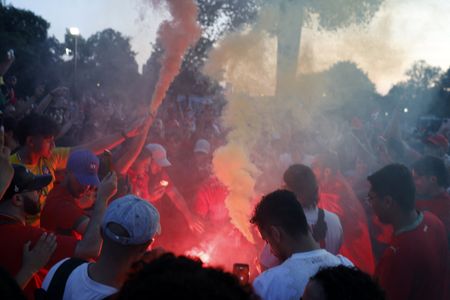

As Iran’s national soccer team prepares to take the field in Los Angeles next week for World Cup competition, Iranian-American supporters are grappling with conflicted emotions about cheering for Team Melli on American soil.
The ongoing U.S.-Israeli conflict with Iran has created a complex situation for fans like Ehsan Shafi, a 46-year-old Iranian-American business owner who plans to attend the matches despite the political turmoil. While excited to see his national team compete on soccer’s biggest stage, Shafi acknowledges the difficult circumstances surrounding the games.
“All players wish to have a chance to play in the World Cup,” Shafi explained after participating in a Sunday morning match with Arya FC, an amateur Iranian-American soccer club located in Woodland Hills. “It doesn’t matter what’s happening in the world. We are so excited to see our national team.”
However, Shafi recognizes the challenging position many fans find themselves in. “It’s a very complicated situation,” he admitted. “Nobody likes to see their country under bombing. It’s very complicated for our people.”
Los Angeles houses tens of thousands of Iranian-Americans in what’s commonly called “Tehrangeles,” representing the world’s largest Iranian diaspora community. For many who left Iran following the 1979 revolution due to political turmoil and oppression, Team Melli – the Persian term for the national team – has served as an important cultural connection to their homeland.
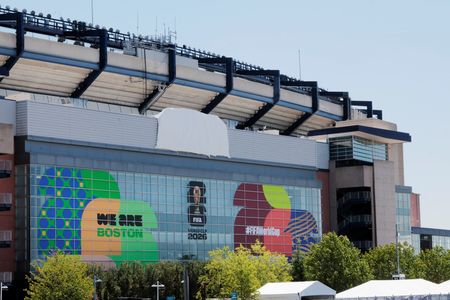
Iran is scheduled to face New Zealand and Belgium in Los Angeles on June 15 and 21, followed by a match against Egypt in Seattle on June 26. While Shafi has purchased tickets and maintains his enthusiasm for the rare opportunity to watch the team locally, not all community members share his perspective.
Shawn Rezaei, Shafi’s 59-year-old teammate at Arya FC and a restaurant executive who also departed Iran during the revolution, has made the opposite decision. Despite attending previous World Cups in Germany, Brazil, Russia, and Qatar, Rezaei plans to boycott this tournament.
“I’m a die-hard football fan,” Rezaei stated. “But this time, because of the political situation, I’m boycotting.”
Although Rezaei initially sought tickets for the U.S. matches, he ultimately concluded he couldn’t support the team while opposing Tehran’s leadership. “This team is not representing the nation,” he argued. “They are basically a propaganda proxy for the regime.”
This division between Shafi and Rezaei reflects broader tensions within the Iranian-American community. Several other fans interviewed requested anonymity, expressing concerns that criticizing Iran’s government might endanger family members still living there, or that commenting on U.S. policies could create problems within their local communities.
Additional worries center on potential safety issues, particularly for younger supporters, regarding whether Iran’s matches might become focal points for anti-war demonstrations, anti-government protests, or immigration enforcement actions.
These concerns help explain the careful approach often adopted by the players themselves. During the 2022 World Cup in Qatar, Iran’s team gained worldwide attention when players chose not to sing their national anthem before the opening game, a move widely interpreted as solidarity with anti-government demonstrators back home.
Throughout subsequent matches, the team’s celebrations remained restrained and patriotic displays were notably minimal – actions some viewed as quiet resistance while others criticized as inadequate. The situation highlighted the intense pressure facing the players, with reports suggesting potential consequences for both athletes and their families in Iran.
“Who am I to judge the actions of the team when I myself don’t want to speak out publicly in case it endangers my family,” commented one Iranian-American supporter with relatives in Tehran, who still intends to attend a World Cup game in Los Angeles.