
CHICAGO — Elite professional athletes and their medical teams report that an updated version of established surgical equipment is cutting recovery periods by weeks for specific injuries. Leading physicians believe this represents just the start of broader applications.
Cy Young recipients Tarik Skubal and Blake Snell allowed physicians to utilize the device on their valuable elbows. Connor Hellebuyck, who earned the 2025 Hart Trophy as NHL MVP, relied on it for knee problems. Multiple NFL athletes have also adopted its use.
The device is known as the NanoNeedle scope 2.0, a smaller, bendable adaptation of the standard arthroscope. While still in early stages with limited published studies on this model, it has gained a notable group of supporters.
“Each time I’ve utilized it, including during my initial laboratory work, new procedure possibilities come to mind,” stated Dr. Neal ElAttrache, who serves as head team physician for the Los Angeles Dodgers and Los Angeles Rams.
An arthroscope functions as a pencil-sized tube containing a camera that enters joints, fills the space with salt water or saline, and displays images on a monitor. Surgeons then insert additional instruments in the same location to complete the surgical work.
The reduced dimensions — measuring 1.9 millimeters across versus 4 millimeters for standard scopes — allow the NanoNeedle to minimize pain, swelling and tissue harm, resulting in quicker healing. It requires significantly less fluid than conventional scopes and has proven valuable for determining injury severity.
“We can achieve anatomical work and repairs while causing much less surgical trauma,” ElAttrache explained.
ElAttrache employed the NanoNeedle when removing a loose body from Skubal’s left elbow on May 6, and again during Snell’s comparable elbow procedure on May 19.
After Skubal — a two-time AL Cy Young Award recipient who becomes eligible for free agency following this season — joined the injured list, the Detroit Tigers announced their star pitcher would miss two to three months. However, he’s scheduled to return Saturday after throwing five scoreless innings during a rehabilitation appearance Sunday — approximately 5 1/2 weeks total.
ElAttrache has utilized the NanoNeedle scope with four patients but chose not to name the other two cases. Snell underwent a more extensive procedure that included spur removal, though ElAttrache remains hopeful about the left-hander’s timeline for rejoining the Dodgers.
“I believe his time away will be roughly half the typical duration,” ElAttrache said.
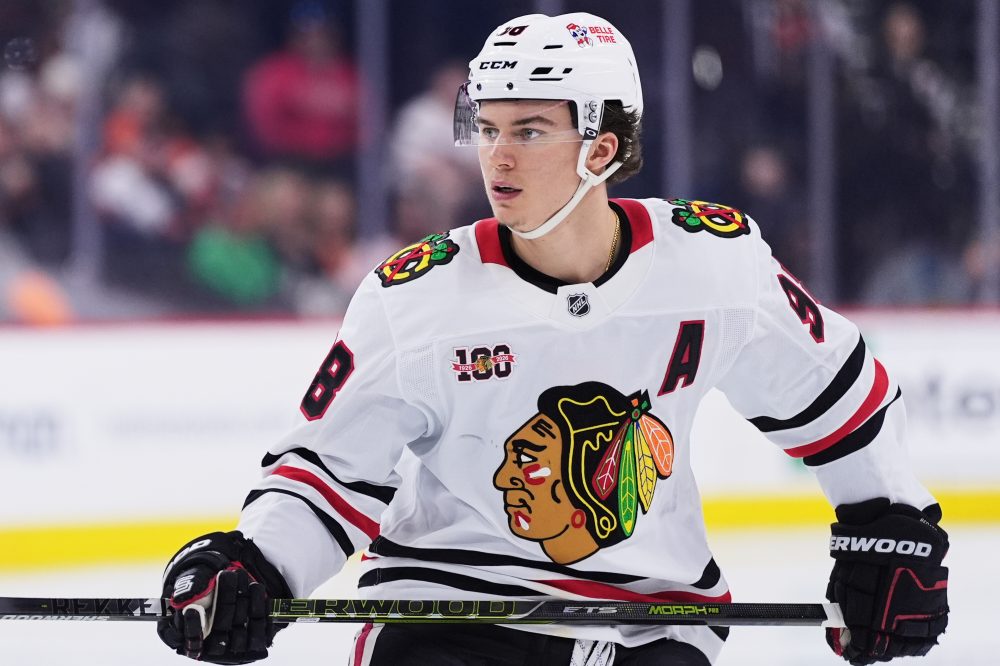
Hellebuyck, a three-time Vezina Trophy recipient as the NHL’s premier goaltender, underwent arthroscopic surgery on his right knee November 22. Doctors projected a four to six-week absence, but he returned to the net for the Winnipeg Jets after just three weeks.
Dr. James Voos, head team physician for the Cleveland Browns, has incorporated the NanoNeedle into procedures on five Browns athletes, including center Luke Wypler’s ankle fracture operation.
“Ankles and elbows represent areas where it has shown excellent utility and quick acceptance,” said Voos, who also leads the NFL Physicians Society. “We continue discovering additional applications for knees and shoulders.”
Beyond his Browns responsibilities, Voos chairs the orthopedics departments at University Hospitals and Case Western Reserve University in Cleveland. He has already observed advantages in treating younger athletes.
“Some very difficult elbow injuries in gymnasts and baseball players couldn’t accommodate the previous cameras, which were too big for the joint,” Voos explained. “They’re built for adult joints. The smaller camera lets us see and operate in these tighter spaces. In pediatrics and adolescence, that was more difficult and potentially caused additional damage previously, including more soft tissue harm.”
Arthrex, a Florida-based medical supply manufacturer, developed the NanoNeedle. Voos serves as an educational consultant for Arthrex, while ElAttrache has collaborated with the company for over three decades.
The original version debuted in 2019, according to Ryan Kellar, a senior product manager at Arthrex. Another version launched in 2023 before the current model — featuring improved visualization, processing and imaging — arrived in August.
“This represents our third version,” Kellar noted. “Our fourth version arrives this fall. That fourth version will offer everything conventional scopes provide with all the less invasive advantages of nano arthroscopy. We truly believe nano represents the next foundation of minimally invasive orthopedic treatment for the general population and a gold standard for athletes.”
Dr. Kyle Hammond, head team physician for the Atlanta Falcons and chief orthopedic surgeon for the Atlanta Hawks, has used the NanoNeedle in educational settings as an orthopedic surgeon at Emory Healthcare and assistant professor at Emory University School of Medicine. He hasn’t yet used it on patients.
Hammond noted that other companies have created similar needle arthroscopy devices, but he commended the NanoNeedle’s camera quality, video feed clarity, and user-friendliness.
“It has essentially become very comparable to our standard arthroscopy equipment,” he said. “Just in a smaller format.”
The current NanoNeedle version is disposable, creating questions about expenses compared to sterilization costs for reusable traditional arthroscopes. Like any scientific advancement, Hammond said, extended use and research are necessary to evaluate the new design’s benefits against standard scope versions.
“To establish if they offer genuine advantages over standard care, they must be used extensively over time with data collection and statistical proof,” Hammond said.
Dr. Brian Cole, head team physician for the Chicago Bulls, said adoption rates will largely depend on clinicians’ willingness to integrate the scope into their practices.
“There’s an economic analysis combined with a healthcare analysis happening simultaneously,” said Cole, who also consults for Arthrex. “But I’d say directionally, this is our destination. Less invasive, cost-effective, predictable, eliminating potential problems with existing technology. In that respect, this is very innovative in my view, and aligns with our current direction.”