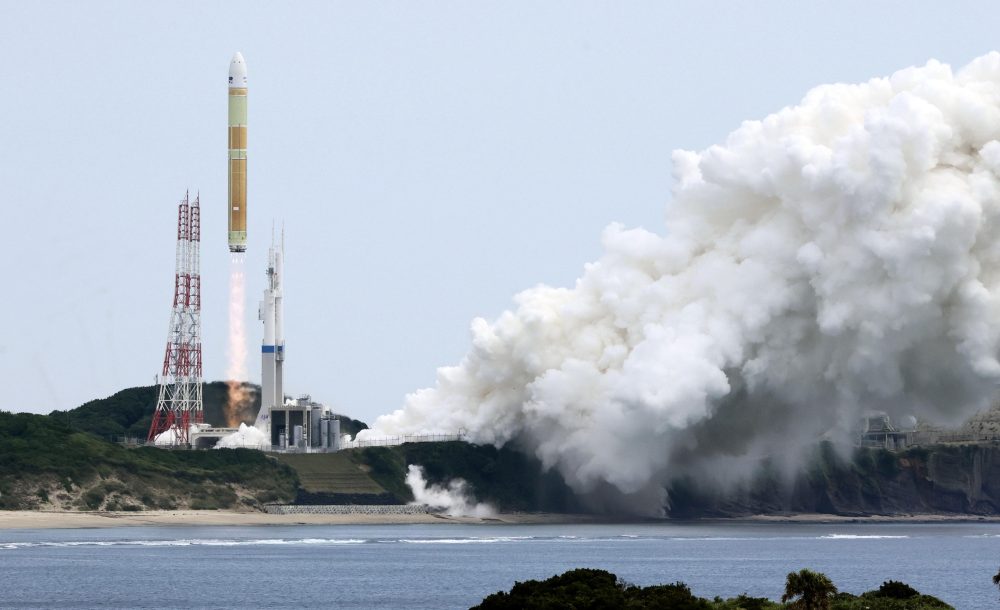

Japan’s H3 rocket achieved a crucial successful launch Friday, introducing a new budget-friendly model that the country desperately needed after facing multiple setbacks in an increasingly competitive space industry.
The rocket launched from Tanegashima Space Center on a southwestern Japanese island Friday morning, with its second stage reaching the intended orbit, according to the Japan Aerospace Exploration Agency’s live broadcast coverage.
JAXA reported that six small satellites created by universities and other institutions aboard the rocket were also successfully deployed into space.
Friday’s launch introduced the H3’s new “30 configuration” featuring three liquid-fuel LE-9 engines without rocket boosters, creating a budget-conscious option to enhance the rocket series’ market competitiveness. This model represents one of three variants created to serve diverse customer requirements.
This sixth successful mission follows two previous failures of the new rocket design that succeeded the reliable H-2A, which maintained an almost flawless track record.
The H3 rocket aims to offer better cost efficiency in the worldwide space market currently led by Elon Musk’s SpaceX. Japan views dependable, commercially viable launch capabilities as essential for its space initiatives and national defense.
During its initial launch in March 2023, the H3 experienced second-stage engine ignition failure. Later in December, while carrying a navigation satellite, the rocket failed to place its cargo in the correct orbit due to second-stage engine problems.
The H3 had remained inactive since December, and another failure Friday would have severely damaged Japan’s upcoming space endeavors, including a Mars mission scheduled for 2028. A smaller Epsilon S series has also faced delays after catching fire during 2024 testing.
JAXA and Mitsubishi Heavy Industries, who are jointly developing the rocket, aim to eventually conduct H3 launches six to eight times per year.