
SAN JUAN, Puerto Rico (AP) — Tens of thousands of Puerto Rico residents are facing critical water shortages so dire that the territory’s governor has deployed National Guard units while emergency officials handle daily distress calls.
Authorities haven’t publicly identified what’s causing the crisis, though shortages are primarily impacting areas within the island’s most densely populated urban centers, including San Juan, the capital. The territory’s water utility draws from rivers, reservoirs and underground water sources that historically have supplied adequate water for the island’s 3.2 million residents.
Citizens are being compelled to purchase drinking water, pay for commercial laundry services and carry heavy water containers up multiple stories to clean dishes, operate toilets and bathe. Elderly and disabled residents face the greatest hardships, with community advocates reporting some have required hospital care due to ongoing water access problems.
Jorge Figueroa, a community advocate for multiple low-income San Juan neighborhoods, stood beside his vehicle recently answering residents’ questions about when the next water delivery truck might arrive.
“They are playing with people’s health and lives,” Figueroa said.
Certain San Juan customers started experiencing sporadic service over a year ago, with the governor recognizing that the infrastructure has suffered from insufficient funding and upkeep for multiple decades.
The water service disruptions became so critical that Mayor Miguel Romero filed a lawsuit against Puerto Rico’s Water and Sewer Authority in late May.
Residents like Jeannette Mercado Rodríguez have endured up to two weeks without water service as Puerto Rico’s intense summer begins and weather experts are issuing heat warnings.
“This is really exhausting; it’s maddening,” she said.
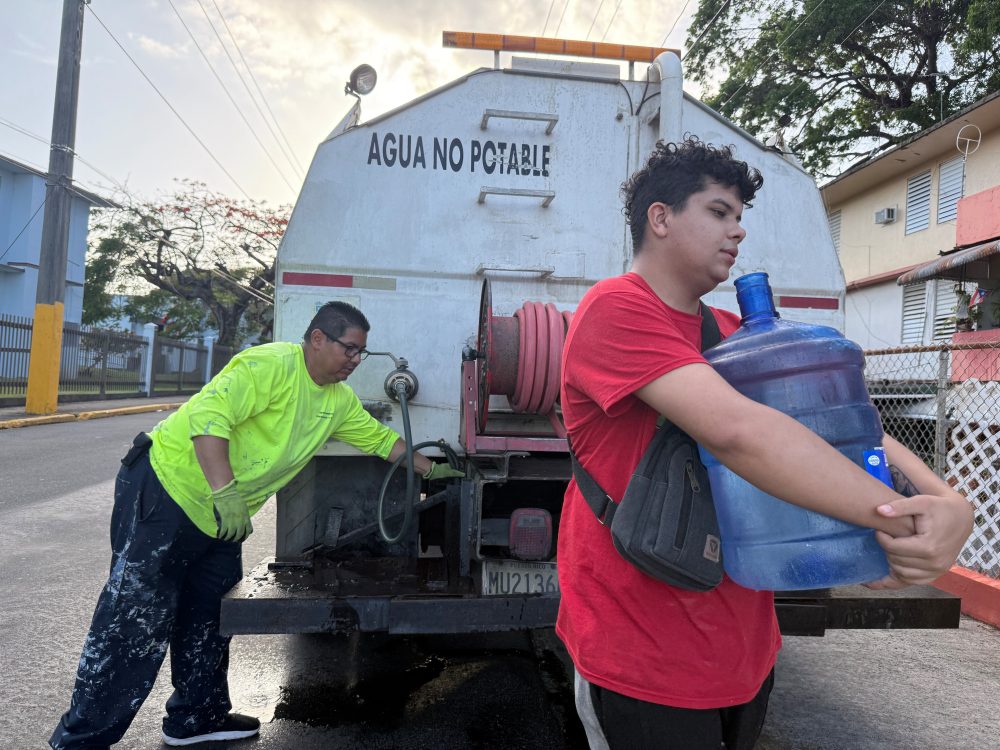
The 52-year-old considers herself fortunate: a water truck remains positioned near her public housing development, Las Margaritas. However, she must still transport five containers and 10 2-liter bottles to her third-floor unit daily. She recently hurt her shoulder during this routine.
“We can’t take it sometimes,” Mercado said, revealing that she has broken down and cried. “There are older people here, bedridden people.”
Close to 40,000 customers experienced water service interruptions during the first weekend of June. This prompted Gov. Jenniffer González to deploy the National Guard, which started distributing water using four trucks holding 2,000 gallons each.
Puerto Rico’s Tourism Company provided additional water trucks with 12,800-gallon capacity to supply hotels and vacation rentals.
The water demand became so urgent that Puerto Rico’s Department of Agriculture cleaned two large milk transport trucks and repurposed them for delivering drinking water.
Even with these efforts, water remains scarce for many throughout San Juan and other areas. At least one fixed tank in a low-income neighborhood remained empty for several days, with residents applauding when the water truck finally appeared, calling city workers “heroes.” Other citizens complain that officials don’t notify them of water truck schedules, causing working residents to miss deliveries.
“This has been a disaster,” said Luz Laborde, president of a neighborhood association in Santurce, a working-class community in San Juan. “This is inhuman … It’s destroying the emotional state of a people.”
Numerous Puerto Ricans of all ages packed a courtroom recently, anxious to hear a decision on the lawsuit San Juan’s mayor brought against the island’s water and sewer authority while wondering when their water service would resume.
“We are exhausted,” said Marcia Soler París, a 61-year-old community leader. “We shouldn’t be living this way. We don’t deserve this.”
Each morning at sunrise, phones buzz as residents in San Juan and elsewhere report whether they have water, just a small flow or no service at all.
Soler contacts the emergency management office every few days requesting a water truck for herself and neighbors. She shares her home with her daughter, who has three sons ages 13, 10 and 4, and they play soccer daily. Like many others, they lack a water storage tank.
“I don’t know what it is to see a stream of water,” said Soler, who recently paid $40 at a laundromat and had to purchase disposable cups and plates for her household.
The additional expenses are stretching budgets across the island of 3.2 million people where over 40% live in poverty.
Soler explained that some neighbors are bedridden and their caregivers must use towels and wet wipes for cleaning. Another neighbor has vision loss, so people carry water to her apartment.
For years, persistent electrical outages have frustrated many Puerto Ricans. Water problems now rank equally high on their concerns.
At Villa Kennedy, a nearby public housing development, Elizabeth Sánchez, 79, described how she hurt her back carrying water buckets. Her husband can no longer assist because he injured his back the same way.
“What we are going through is horrible,” she said as tears began flowing.
In February 2025, Puerto Rico’s governor named Luis González Delgado as executive president of the island’s Water and Sewer Authority.
Months afterward, former regional director Roberto Martínez Toledo was replaced. However, Martínez recently joined a new committee established by a judge to collaborate with the agency on investigating and resolving the persistent water shortages.
The mayor of San Juan, who belongs to the governor’s party, stated that if Martínez hadn’t been removed from his role, “we wouldn’t be here talking about this issue.”
The new water and sewer agency head blamed Martínez for some difficulties.
“(The crisis) could have been avoided if Roberto Martínez had answered the phone the first day I called him,” González told reporters this week, adding that he is willing to work with him.
Some Puerto Ricans are demanding González’s resignation while calling for Martínez’s return to his former position, while increasing numbers blame the governor for the crisis. On Wednesday night, the governor announced that all infrastructure repair projects have begun with a $217 million investment.
Residents without water report they continue receiving bills for service.
“That’s another outrage,” said Laborde, the community leader. “You lose no matter what.”