Blog

  • NFL Draft May See Just One QB in First Round After Mendoza Goes #1

    NFL Draft May See Just One QB in First Round After Mendoza Goes #1

    This year’s NFL draft may buck the recent trend of multiple quarterbacks being selected early, with experts predicting a significant dropoff after Fernando Mendoza is chosen first overall by Las Vegas.

    Unlike the quarterback-heavy drafts of 2021 and 2024, this year’s class appears top-heavy, with a substantial talent gap between Mendoza and the next signal-caller on most draft boards, Ty Simpson.

    Betting markets show Simpson as a borderline first-round selection, with odds placing his draft position at around pick 24.5. Should he slip even slightly, the opening round could feature just a single quarterback for only the third time in nearly two and a half decades.

    Historical data shows only two instances since 2000 where one quarterback was drafted in round one: Kenny Pickett going 20th overall in 2022 and EJ Manuel selected 16th in 2013.

    Recent drafts have averaged 3.3 quarterbacks in the first round over the past dozen years, including a record-tying six selections in 2024 and five each in 2021 and 2018. Oregon’s Dante Moore, who likely would have been drafted highly, chose to remain in college for another season, aided by Name, Image and Likeness opportunities.

    Interestingly, drafts with limited first-round quarterback selections have historically produced successful late-round finds. Brock Purdy became Mr. Irrelevant in 2022 after Pickett’s selection, while Geno Smith went in round two following Manuel in 2013. Hall of Fame quarterbacks Drew Brees was a second-rounder in 2001 after Michael Vick went first overall, and Tom Brady famously lasted until the sixth round in 2000.

    Should Las Vegas select Mendoza, it would mark their first opening-round quarterback since taking JaMarcus Russell first overall in 2007, a pick that became one of history’s biggest draft disappointments.

    Only three franchises have longer droughts selecting first-round quarterbacks: Seattle last chose one in 1993 with Rick Mirer, Dallas in 1989 with Troy Aikman, and New Orleans in 1971 with Archie Manning.

    Draft positioning has seen significant movement this year, with the latest trade sending Cincinnati’s 10th overall pick to the New York Giants in exchange for defensive tackle Dexter Lawrence.

    This marks just the sixth time in the common draft era that at least six teams possess multiple first-round selections, with nine teams accomplishing this feat in 2022 setting the record.

    Teams holding multiple first-rounders include the New York Jets, Cleveland, Kansas City, Miami, Dallas, and now the Giants. Meanwhile, Cincinnati, Atlanta, Indianapolis, Green Bay, Jacksonville, and Denver currently lack first-round picks.

    Jacksonville faces their first opening round absence since joining the NFL in 1995, following last year’s trade to acquire Travis Hunter with the second overall selection. Their 31-year streak ranks fourth-longest in common draft era history.

    Cincinnati’s drought would end their longest first-round absence since 1989, while Pittsburgh holds the record with 52 consecutive years of first-round picks from 1968-2019. Detroit could claim the longest active streak at 33 years if they select in round one.

    The Giants now possess a rare opportunity with two top-10 selections at fifth and 10th overall, similar to their 2022 draft when they selected Kayvon Thibodeaux fifth and Evan Neal seventh.

    Only four other teams in the past 25 drafts have made two top-10 picks, all occurring since 2018: Cleveland with Baker Mayfield and Denzel Ward, the Jets with Garrett Wilson and Sauce Gardner, Houston with C.J. Stroud and Will Anderson, and Chicago with Caleb Williams and Rome Odunze.

    Ohio State could dominate early proceedings with Arvell Reese, Sonny Styles, Caleb Downs, and Carnell Tate all projected as potential top-10 selections. The last school to place four players in the top 10 was Michigan State in 1967 with Bubba Smith, Clint Jones, George Webster, and Gene Washington.

    Seven schools have managed three top-10 picks in the common draft era, with Ohio State accomplishing this in 2016 through Joey Bosa, Ezekiel Elliott, and Eli Apple. Alabama last achieved this feat in 2021 with Jaylen Waddle, Patrick Surtain II, and DeVonta Smith.

    Notre Dame’s Jeremiyah Love could end a seven-year drought of running backs selected in the top five, with oddsmakers setting his draft position at 4.5. No running back has gone in the top five since Saquon Barkley went fifth to the Giants in 2018.

    This seven-year span represents the longest stretch without a top-five running back in common draft history, surpassing the four-year period from 1970-73. The position’s declining value reflects the league’s evolution toward pass-heavy offenses.

    Love’s teammate Jadarian Price could become the second running back selected, which would mark the first time the initial two running backs drafted came from the same college program.

  • Russian Forces Rescue Two Hostages Captured by Terrorists in Niger

    Russian Forces Rescue Two Hostages Captured by Terrorists in Niger

    Moscow announced Tuesday that its military forces in Africa successfully rescued two hostages who had been held captive by terrorists in West Africa since July 2024.

    According to Russia’s Defense Ministry, the Africa Corps liberated Russian national Oleg Gret and Ukrainian national Yuri Yurov during a military operation conducted in Mali. Both men had been working for a Russian geological exploration firm when they were kidnapped in Niger by Jamaat Nusrat al-Islam wal-Muslimin (JNIM), a terrorist organization linked to al-Qaeda.

    “As a result of a special operation conducted by the Africa Corps in the Republic of Mali, employees of a Russian geological exploration company captured in July 2024 in Niger by the terrorist group Jamaat Nusrat al-Islam wal-Muslimin were freed,” the ministry announced in an official statement.

    The two captives had previously been featured in propaganda videos distributed through media channels associated with JNIM, an armed militant organization that maintains control over extensive territories throughout the Sahel region of Africa.

    This kidnapping incident represented a significant challenge for Russia’s expanding influence in West Africa, where Moscow has successfully replaced Western allies in recent years. Russia has taken advantage of increasing anti-French sentiment in the region, as France was the former colonial authority, while also capitalizing on rising security concerns from militant attacks.

    The Africa Corps, which now handles Russia’s military activities across the African continent, has taken over operations previously managed by the Wagner Group mercenary organization, which was under state control.

    Defense officials stated that both rescued individuals will be flown to Moscow aboard Russian military aircraft to receive medical care and undergo rehabilitation following their ordeal.

  • Swedish Clothing Swaps Help Combat Fashion’s Environmental Impact

    Swedish Clothing Swaps Help Combat Fashion’s Environmental Impact

    STOCKHOLM (AP) — Art student Alva Palosaari Sundman spent hours browsing through racks of pre-owned clothing in Stockholm, searching for the perfect pair of used jeans.

    The 24-year-old joined hundreds of others at Sunday’s yearly clothing exchange event held at a community center in Sweden’s capital city. Participants brought their own garments to trade for different items from other attendees. These types of gatherings attracted thousands of people nationwide, all working to minimize the environmental impact of clothing manufacturing.

    Palosaari Sundman expressed satisfaction watching other participants select items she had contributed to the exchange.

    “It’s like, ‘Oh, OK, it gets a new life with this person,’” she said. “It just feels a bit more humane.”

    According to the UN Environment Programme, the fast fashion industry stands as a significant contributor to environmental harm, generating as much as 10% of global carbon emissions. Thrown-away garments fill landfills that damage landscapes in developing nations, while synthetic fibers from inexpensive clothing materials contaminate marine environments.

    UNEP reports that manufacturing just one pair of jeans requires approximately 2,000 gallons (7,571 liters) of water.

    The clothing exchange program in Sweden launched in 2010 and has continued expanding. During the previous year, approximately 140,000 individuals took part in 140 exchange gatherings and brought home more than 44,000 previously owned pieces.

    While Sweden maintains a reputation for environmental leadership, the situation proves more complex. Research from Mistra Future Fashion shows that clothing purchases account for roughly 3% of an individual Swede’s total carbon footprint.

    Swedish residents faced a ban last year on disposing of clothing in regular garbage as part of a European Union effort to increase recycling rates. However, the policy created problems when municipal collection points became overloaded with textile stockpiles, prompting the government to partially reverse the regulation in October.

    The Swedish Society for Nature Conservation coordinates these exchange events. Chair Beatrice Rindevall noted that each Swedish citizen discards approximately 9-10 kilograms (20-22 pounds) of clothing annually.

    The organization reports that Swedish consumers purchase around 25 new clothing pieces yearly on average, with 90% of wardrobe items going unused.

    “We have to be more careful and we have to think about our consumption,” said Cecilia de Lacerda, one of the society’s volunteers in Stockholm.

    Professional tailors attended the exchange events to assist participants with clothing repairs that extend garment lifespan.

    “A lot of people don’t have sewing machines anymore, or they don’t quite know how they should fix that buttonhole that broke,” said Meg Goldmann, another volunteer.

    High school student Alice Dundeberg, 19, finds that pre-owned clothing helps her develop a distinctive personal style.

    “You don’t find multiple types of the same shoes, pants or sweater,” she said. “No one has the same clothes as the others.”

  • 11 Hurt After Work Vehicle Crashes Into Metro Train in Washington DC

    11 Hurt After Work Vehicle Crashes Into Metro Train in Washington DC

    Eleven passengers were hurt when a work vehicle crashed into a parked Metro train in Washington DC during the early morning hours Wednesday, according to transit officials.

    The collision happened around 12:15 a.m. at Metro Center station, where a Silver Line train was sitting motionless when the work vehicle struck it, the Washington Metropolitan Area Transit Authority announced on social media.

    Metro Center serves as one of the busiest connection hubs in the transit network. Transit officials confirmed that while 11 people sustained injuries in the crash, none were considered life-threatening. Authorities have not released additional information about how severe the injuries were or what types of injuries occurred.

    Commuters faced widespread delays across the Metro system Wednesday morning as investigators examined the crash scene. Rail operations were limited to single-track service in the affected area while the investigation continued.

  • Virginia Farm Bureau Marks Century Milestone with Celebration

    Virginia Farm Bureau Marks Century Milestone with Celebration

    The Virginia Farm Bureau has achieved a remarkable milestone, commemorating 100 years of dedicated service to the state’s agricultural community.

    This centennial celebration highlights a full century of the organization’s unwavering support for farmers and rural communities throughout Virginia. The Farm Bureau has played a pivotal role in advocating for agricultural interests and providing essential services to its members over the past ten decades.

    The milestone represents not just the longevity of the organization, but also its continued relevance and importance to Virginia’s farming sector. Throughout its century-long history, the Virginia Farm Bureau has adapted to changing agricultural landscapes while maintaining its core mission of supporting those who work the land.

    The celebration acknowledges the countless farmers, staff members, and supporters who have contributed to the organization’s success and impact over the years. As the Virginia Farm Bureau enters its second century, it continues to stand as a testament to the enduring strength of agricultural advocacy and community support.

  • Google Focuses on AI Digital Assistants to Boost Business Revenue

    Google Focuses on AI Digital Assistants to Boost Business Revenue

    Alphabet’s CEO Sundar Pichai is intensifying Google’s focus on business software solutions, announcing at the company’s yearly cloud conference that sophisticated digital assistants powered by artificial intelligence will serve as the foundation for generating profits from AI technology.

    During the three-day Las Vegas event that began Wednesday, Pichai and other top Google leaders are working to demonstrate that their AI technologies are ready for businesses to implement, targeting corporate clients who have become the tech industry’s most dependable source of income.

    Leading AI competitors like OpenAI and Anthropic have also dramatically redirected their efforts toward commercial clients in recent months.

    The California-based tech giant revealed Wednesday that it is consolidating several AI products under a single brand called “Gemini Enterprise.” The most significant change involves expanding and rebranding Vertex AI, a platform that enables cloud users to choose from multiple AI models for their business operations.

    The company also introduced new oversight and security capabilities for AI agents. These sophisticated digital helpers can make plans, decisions, and take independent action, representing a rapidly expanding technology area that has raised concerns about safety, dependability and control.

    “There’s definitely a strategic shift as the models become much more sophisticated,” Google Cloud CEO Thomas Kurian explained during a Reuters interview. He noted that Vertex AI’s main application has recently changed from traditional machine learning to a rapid increase in users creating their own specialized AI agents.

    Google aims to surpass both established cloud competitors and emerging AI companies as mounting pressure demands proof of returns on enormous generative AI investments.

    Google Cloud, previously considered behind competitors like Amazon and Microsoft, has built momentum with business customers through substantial AI investments and years of significant spending on data centers, specialized processors, and network equipment.

    This transformation is already visible at GE Appliances. Senior executive and Google client Marcia Brey told Reuters that Google’s collection of tools and the business data already housed in Google Cloud enabled her logistics and distribution team to implement AI more quickly than other products her company had evaluated.

    Rather than traditional enterprise providers and other major cloud services, a new category of competitors is rapidly appearing in business AI: companies that provide AI models.

    Programming assistants and add-ons that link AI models to existing business software have become profitable sources of AI income and returns on substantial investments.

    Following initial success driven by their models’ capabilities, OpenAI and Anthropic are now expanding into applications that use those models for specific tasks, including tools for building agents.

    While competitors emphasize their programming products, Google took a different approach at its cloud conference, giving coding minimal attention. Kurian instead described the AI competition as centered on agents, oversight and business implementation, explaining that some coding announcements were reserved for the company’s I/O developer conference in May.

    “Some people are using the models to write code. They can use Gemini and also other tools like Claude,” he stated. “But in other cases, we have unique things. There’s capability in the platform that nobody else offers.”

    Google’s long-term strategy of developing an extensive range of internal offerings, from models to processors, instead of depending on outside suppliers has provided an advantage over other major cloud providers.

    This approach has helped Google increase its total cloud market presence to 14% by the end of 2025, although it remains behind competitors Amazon and Microsoft, based on Synergy Research data.

  • Philip Morris Lowers Profit Outlook as Nicotine Pouch Business Faces Hurdles

    Philip Morris Lowers Profit Outlook as Nicotine Pouch Business Faces Hurdles

    Philip Morris International lowered its yearly earnings outlook Wednesday as the tobacco giant grapples with regulatory hurdles affecting its Zyn nicotine pouches and intensifying competition across tobacco markets.

    Despite the reduced forecast, the company’s stock jumped almost 3% in early trading after surpassing Wall Street expectations for first-quarter revenue and earnings.

    The maker of Marlboro cigarettes sold outside the United States has been working to expand beyond traditional tobacco products but faces challenges from competing brands like British American Tobacco’s Velo and delays in getting regulatory approval for new Zyn varieties.

    Nicotine pouch products remain unapproved for U.S. sales despite an expedited Food and Drug Administration review process, as agency researchers remain cautious about authorizing them due to concerns about potential risks to new users, particularly young people, according to earlier Reuters reporting this month.

    The company now projects full-year adjusted earnings between $8.36 and $8.51 per share, down from its earlier estimate of $8.38 to $8.53.

    The middle of this profit projection sits 4 cents higher than what Wall Street analysts anticipated, based on LSEG data.

    Philip Morris indicated it has included a minor impact from Middle East conflicts in its projections but doesn’t anticipate lasting effects.

    The tobacco company posted first-quarter sales of $10.15 billion, exceeding analysts’ average projection of $9.91 billion. Quarterly adjusted earnings of $1.96 per share also topped the $1.83 estimate.

    Sales from smoke-free products increased 12.4% during the quarter, a slower pace compared to 15% growth in the same period last year, while U.S. Zyn shipment volumes dropped 23.5%.

  • Chicago Exchange Giant CME Posts Higher Earnings on Market Uncertainty

    Chicago Exchange Giant CME Posts Higher Earnings on Market Uncertainty

    CME Group announced stronger first-quarter earnings Wednesday, benefiting as economic uncertainty and market turbulence pushed more investors toward the Chicago exchange to protect their investments through hedging strategies.

    The derivatives exchange operator saw increased activity in interest rate and equity index trading as investors dealt with changing expectations about global interest rates and ongoing geopolitical tensions.

    When markets experience rapid price swings, businesses typically increase their use of CME’s futures contracts to secure pricing and reduce risk exposure.

    Market uncertainty boosted CME’s business performance by driving average daily volumes to unprecedented levels. The company processed 36.2 million contracts daily during the quarter, representing a 22% jump compared to the same period last year.

    Trading activity increased across all major categories, including foreign exchange, energy, agricultural commodities, and metals during the first three months of the year.

    “In a world in which risk has become the new normal, 2026 is off to a record-breaking start as clients around the world turn to CME Group’s trusted, regulated markets to hedge across asset classes and in all trading environments,” CEO Terry Duffy said in a statement.

    The surge in trading activity boosted clearing and transaction fee revenue to $1.54 billion, up from $1.34 billion in the previous year. These fees represent the majority of CME’s total revenue.

    CME operates an integrated business model, maintaining its own clearing house to collect fees throughout the entire trading process.

    The company’s market data and information services division generated $224.1 million in revenue, compared to $194.5 million during the same quarter last year.

    For the quarter ending March 31, adjusted earnings reached $1.22 billion, or $3.36 per share, versus $1 billion, or $2.80 per share, in the prior year period.

    The earnings figure fell just short of Wall Street expectations of $3.37 per share, based on analyst estimates compiled by LSEG.

    CME shares, which have climbed approximately 4.2% this year and outperformed broader market indices, dropped about 1% in pre-market trading. Meanwhile, Intercontinental Exchange has declined roughly 2% in 2026, while Nasdaq has fallen nearly 10%.

    Nasdaq is scheduled to release its first-quarter results Thursday.

  • Middle East Conflict Drives Up Business Costs Across Multiple Industries

    Middle East Conflict Drives Up Business Costs Across Multiple Industries

    The escalating Middle East conflict between the U.S., Israel and Iran is creating significant financial headaches for businesses across multiple sectors, with companies reporting increased expenses, supply chain problems and declining consumer confidence during quarterly earnings reports this week.

    Corporate executives are expressing heightened concern as they face a perfect storm of challenges, including existing U.S. trade tariffs, elevated material costs and sluggish consumer demand – all made worse by the military conflict that began in late February.

    Many businesses are maintaining their annual projections for now, but company leaders are highlighting mounting transportation and raw material expenses, especially those tied to shipping disruptions through the Strait of Hormuz waterway.

    Paint manufacturer AkzoNobel, known for its Dulux brand, reported that the conflict is inflating their supply expenses, though increased pricing and cost-cutting measures helped the company exceed market predictions.

    “Our raw material basket is going to go up by something like the high teens (percentage), given the disruption of the Strait of Hormuz,” CEO Greg Poux-Guillaume told Reuters, saying the full impact would be felt over the next two quarters.

    The Dutch company produces everything from household paints to specialized coatings for cargo vessels and Formula 1 racing cars, providing more flexibility to increase prices compared to competitors dealing with commodity chemicals. AkzoNobel’s stock price jumped approximately 4% during morning trading.

    Shipping route interruptions and elevated transportation expenses have become a consistent theme during this earnings period, particularly affecting consumer product companies that rely on international supply networks.

    Financial analysts and economists are monitoring whether businesses can continue weathering these challenges, or if extended uncertainty around energy supplies, transportation and global politics will force more companies to implement price increases or reduce their financial forecasts.

    The situation’s outcome largely depends on the conflict’s duration and whether the Strait of Hormuz – which handles roughly 20% of worldwide oil and natural gas shipments – can fully reopen to ease supply bottlenecks that have inflated prices.

    U.S. stock futures climbed and oil prices dropped below $100 per barrel Wednesday following President Donald Trump’s announcement of an indefinite extension to the Iran ceasefire. However, optimism remains fragile with the strait mostly closed and no indication of renewed diplomatic discussions between the U.S. and Iran.

    A Reuters analysis of company announcements since the conflict began shows 21 firms have withdrawn or reduced financial guidance, 32 have indicated price increases, and 31 have cautioned about financial losses from the crisis – a trend spanning from consumer goods to aerospace industries.

    French food conglomerate Danone demonstrated Wednesday how these pressures are affecting supply networks, reporting first-quarter sales growth that surpassed expectations but slowed considerably from late last year due to war-related disruptions and a European baby formula recall. Baby formula shipments from Europe passing through the Middle East experienced delays.

    Despite these challenges, Danone maintained its annual guidance, stating that its health-focused product line provided stability in a “volatile and uncertain” environment.

    Reckitt, manufacturer of Dettol soap products, fell short of quarterly revenue expectations for its primary business Wednesday and warned of reduced first-half profit margins, citing elevated oil prices and decreased demand for cold and flu remedies. The company’s shares dropped 5% to their lowest levels since October 2024.

    Travel industry companies have suffered particularly severe impacts as rising jet fuel costs force airlines and tour operators to increase fares, add fuel surcharges or cancel flights, while geopolitical tensions undermine consumer confidence.

    German travel company TUI reduced its annual operating profit forecast and halted revenue guidance, citing limited visibility due to the ongoing conflict.

    “The ongoing conflict in the Middle East and the uncertainty surrounding its duration continue to limit near-term visibility and drive consumer caution,” the group said in a statement.

    United Airlines also reported demand pressures, projecting second-quarter and full-year profits below Wall Street estimates on Tuesday.

    Mining companies are experiencing strain as well. Diversified miner South32 lowered its annual forecast for its Australian Manganese division following heavy rainfall and Tropical Cyclone Narelle that disrupted operations, while warning that Middle East tensions were increasing cost pressures through higher shipping rates and raw material prices.

    “We have implemented measures across our operations to mitigate potential supply chain impacts arising from the conflict in the Middle East,” South32 stated, noting that while diesel fuel shortages weren’t currently occurring, they were carefully monitoring conditions.

    Earlier this week’s results demonstrate how the Iran conflict is creating additional uncertainty even for companies that began the year with strong order volumes and pricing flexibility.

    On Tuesday, GE Aerospace CEO Larry Culp indicated the company would have increased its forecast if not for current uncertainties, while 3M cautioned that higher oil prices could lead to a 50-basis-point rise in product pricing.

    GE Aerospace explained its outlook assumes Brent crude prices will remain elevated through the third quarter before declining by year’s end, while accounting for short-term fuel availability constraints.

  • UK Christians Feel Cultural Shift Away From Faith, New Study Shows

    UK Christians Feel Cultural Shift Away From Faith, New Study Shows

    British Christians are experiencing mixed feelings about their place in society, according to fresh research from the Evangelical Alliance. While the majority of faithful individuals express confidence that current laws protect their religious liberties, many are witnessing what they perceive as a cultural drift away from Christian values.

    The study reveals that numerous believers now hesitate to voice their faith-based perspectives on social matters, feeling increasingly uncomfortable doing so in today’s environment. This growing unease has many questioning what the future holds for religious expression in British society.

    The Evangelical Alliance highlighted a key finding in their research, stating: “This tension — between objective freedoms and subjective experience — sits at the heart of this report.”

    The findings point to a complex situation where legal protections for religious freedom remain intact, yet the practical experience of many Christians suggests a changing social landscape that may be less welcoming to traditional faith perspectives.

  • Parent Rights Group Claims 200 Schools Hide Student Gender Changes From Families

    Parent Rights Group Claims 200 Schools Hide Student Gender Changes From Families

    A nationwide investigation by parent advocacy organization Defending Education has identified roughly 200 public school districts that maintain policies preventing families from learning when their children present as a different gender while at school. The organization contends these policies represent a breach of federal regulations.

    According to the group’s findings, many of these same educational institutions permit male students to access female restroom facilities and changing areas, while also allowing participation on girls’ athletic teams. The policies impact approximately 52,000 students across the identified school systems.

    Defending Education maintains that withholding this information from parents constitutes a violation of existing federal statutes governing parental rights in education.

  • Nearly 1,000 Gather for Pittsburgh’s Inaugural March For Life Event

    Nearly 1,000 Gather for Pittsburgh’s Inaugural March For Life Event

    Last Saturday marked a milestone for pro-life activists in Pittsburgh as the city hosted its inaugural March For Life demonstration. The event attracted approximately 1,000 participants who gathered near the University of Pittsburgh’s primary campus.

    According to Lydia Davis from Students for Life of America, organizers deliberately selected the university setting for their demonstration. Davis explained to LifeSiteNews that the campus location was strategically chosen because “This is where the message needs to be heard. We’re hoping to reach especially Gen Z on this campus with the message that women don’t need abortion, that 28 percent of Gen Z were aborted.”

    The rally represents the first time Pittsburgh has organized such an event, bringing together pro-life advocates from across the region to demonstrate their opposition to abortion rights.

  • EU’s $105 Billion Ukraine Aid Package May Move Forward After Political Shifts

    EU’s $105 Billion Ukraine Aid Package May Move Forward After Political Shifts

    BRUSSELS, April 22 – A massive European Union financial assistance package worth $105 billion for Ukraine may finally move forward after months of delays caused by Hungarian opposition under former Prime Minister Viktor Orban. The loan program gained new momentum following Orban’s electoral defeat earlier this month and the restoration of Russian oil shipments to Hungary through Ukrainian territory.

    EU leadership approved the joint borrowing initiative last December to provide financial support for Ukraine’s defense efforts against Russia through 2027, with a unique structure that would ultimately make Moscow responsible for repayment through frozen Russian assets.

    The lending mechanism will operate through interest-free loans distributed during 2026 and 2027, funded by EU borrowing in capital markets and supported by available budget capacity – the gap between maximum possible member contributions and current spending obligations.

    Three nations with governments considered more aligned with Moscow – Hungary, Slovakia, and the Czech Republic – negotiated exemptions from participating in the collective borrowing arrangement.

    Ukraine will not be required to repay the funds from its own treasury. Instead, repayment is structured to occur only when Russia provides war reparations following the conflict’s conclusion.

    Approximately 210 billion euros in frozen Russian central bank assets held within EU jurisdiction could serve as the repayment source. This approach was specifically designed to utilize Russian funds for Ukrainian assistance without directly seizing the money, avoiding what officials considered legally problematic confiscation.

    The 90 billion euro package is intended to address two-thirds of Ukraine’s projected 135 billion euro requirements over the next two years. The funding will be distributed as 45 billion euros in both 2026 and 2027.

    Annual allocations will designate 28 billion euros for military expenditures and 17 billion for general governmental budget requirements.

    Brussels anticipates that other supportive developed nations will contribute the remaining funding gap, with commitments already secured for 2026.

    The joint EU borrowing concept initially appeared unachievable due to unanimity requirements and Orban’s resistance. Hungary, Slovakia, and the Czech Republic eventually agreed to allow the program after EU leaders guaranteed no financial impact on their countries.

    Hungary subsequently blocked the loans when Russian oil deliveries through the Druzhba pipeline crossing Ukrainian territory ceased. Kyiv attributed the pipeline shutdown to damage from Russian military strikes.

    Approval prospects improved significantly after Orban’s April 12 electoral loss, with incoming Prime Minister Peter Magyar indicating he would not oppose the disbursements. Additionally, Ukrainian crews have repaired the Druzhba pipeline, with oil flows expected to resume shortly.

  • Pharmaceutical Giant Merck Announces $1 Billion AI Partnership with Google Cloud

    Pharmaceutical Giant Merck Announces $1 Billion AI Partnership with Google Cloud

    Pharmaceutical company Merck & Co revealed Wednesday a significant collaboration with Google Cloud, committing up to $1 billion over multiple years to enhance artificial intelligence technology for drug development and medical research.

    The announcement came during Google’s Cloud Next conference in Las Vegas, where executives outlined plans to integrate AI across Merck’s operations, from initial drug research through manufacturing and commercial activities.

    “I easily see us investing a billion over the next several years in this, in those capabilities,” stated Dave Williams, Merck’s chief information and digital officer. “We’re not just buying tokens. It is really the tool set” that Google Cloud provides, including access to their Gemini Enterprise platform and engineering expertise.

    Williams indicated the collaboration could extend for at least ten years, though no specific timeline has been established. Google Cloud engineers will work directly with Merck teams to implement AI solutions across various pharmaceutical processes.

    The partnership focuses on using artificial intelligence to speed up medicine development, with both companies emphasizing potential benefits for patients worldwide.

    “We’ve always said we wanted AI to play a positive role in society. One of the ways is to help people find cures to illnesses,” explained Thomas Kurian, CEO of Google Cloud. “They have the domain knowledge. We’re bringing the AI tools and platform and cyber capability to help them build using these tools.”

    Merck plans to implement AI technology for computer-based laboratory simulations and faster regulatory approval processes. The company has already been using artificial intelligence for clinical study reports over the past two years with positive results.

    “We feel there’s a tremendous opportunity there, and it’s a huge information challenge,” Williams noted about expanding AI applications in drug development.

    The pharmaceutical company has already achieved significant efficiency gains using Google’s technology, reducing both time and costs by fifty percent when preparing regulatory dossiers needed for medicine reimbursement approvals in various countries.

    “This isn’t a pilot,” Williams emphasized. “We’re submitting dossiers in markets using this new capability, and we’re now scaling it globally.”

    Google Cloud operates as a division of Alphabet Inc., the parent company of Google.

  • Environmental Activists Turn to Joy and Laughter to Combat Climate Despair

    Environmental Activists Turn to Joy and Laughter to Combat Climate Despair

    At a retreat center in New York’s Hudson Valley, one group’s infectious laughter caught the attention of other attendees, prompting someone to ask who they were. The answer might surprise you: climate change activists brainstorming ways to combat environmental destruction.

    Environmental advocates worldwide are revolutionizing their approach to one of humanity’s greatest challenges by incorporating joy, humor, and celebration into their work. This psychological shift moves away from traditional messaging focused on sacrifice and catastrophe toward community-building and positive emotions.

    Activist Katharine Wilkinson, who facilitated the Hudson Valley workshop that drew attention with its upbeat atmosphere, believes positivity becomes even more crucial during challenging times. “I believe that joy is all the more necessary and maybe all the more holy in difficult times,” Wilkinson explained. “Joy is like, how do we take part in the shimmy and the shimmer even as the world lurches?”

    These advocates aim to channel happiness as fuel for efforts to reduce fossil fuel consumption and greenhouse gas emissions that contribute to global warming. During a recent American University address, Wilkinson described power combined with joy as “a really potent portal to the gifts that we want to offer in this time of immense trouble and yet also immense possibility.”

    Mental health experts endorse this approach as both beneficial and psychologically sound.

    “Joy is what made our species survive in the first place,” explained Jiaying Zhao, who teaches psychology and sustainability at the University of British Columbia. “If we’re rewarded, reinforced by it, then we continue doing it. We spill over. We become contagious. We get others on board.”

    Humor plays a particularly important role in this strategy.

    University of Illinois-Chicago clinical psychology professor Julia Kim-Cohen emphasized laughter’s therapeutic benefits. “Laughter is really one of the best strategies for coping with stress,” she noted. “So there are physiological benefits to laughter. The science shows that it reduces blood pressure and relaxes people’s nervous systems. And so when we’re relaxed through laughter, I think that helps us feel our hearts open to one another. Sharing laughter I think is this ancient, evolutionarily wired thing that humans do to connect.”

    However, maintaining connection to reality remains essential, according to Christiana Figueres.

    As UN climate chief in 2015, Figueres helped negotiate the historic Paris climate agreement aimed at limiting global temperature increases. She credits her success to listening carefully to all parties with “an open heart and an open mind to what people are saying and especially what they’re not saying” while seeking common ground. Her team would dance in the evenings to maintain their sense of joy.

    Figueres subsequently established Global Optimism, an advocacy organization whose name reflects its philosophy, and conducts worldwide seminars incorporating joy, dance, and realistic assessment of challenges.

    “We cannot turn our back to the suffering and the grief and the eco-anxiety and all that family of emotions because they are very there,” Figueres stated. “Not to deny reality, not to deny the challenges that we have — that’s step No. 1.”

    The key, Figueres explained, involves “anchoring ourselves precisely in the pain and the suffering, embracing the pain, and the suffering” before transforming those feelings into positive action. She compared this process to composting kitchen scraps to create fertilizer for a thriving garden.

    This transformation involves accepting difficult emotions and converting them into “a sense of agency” that empowers people to work toward changing the world, she said.

    Wilkinson, who leads Climate Wayfinding seminars and has authored a book with the same title, deliberately includes space for negative emotions in her workshops because “when those come in then we also open space for the pendulum to go to the other side.”

    That’s when participants engage in laughter, storytelling, embracing, and dancing.

    Traditional environmental messaging has long emphasized reducing consumption of energy, meat, and other resources to protect the planet.

    “If we have to win the fight against climate change by getting people to give up the things they enjoy, I don’t think we’re going to win the fight,” said University of British Columbia psychology professor Elizabeth Dunn.

    Focusing on sacrifice “is counterproductive,” added Zhao, who collaborated with Dunn on the book “Leave the Lights On.”

    “Instead of asking people to sacrifice the things that bring them joy, our book is making the exact opposite claim: Do more of the stuff that brings you pleasure but also have a low carbon footprint,” she explained.

    “We’re actually trying to get people to change their behaviors. And joy is the missing ingredient here,” Zhao continued. “All we’re saying is give this a shot.”

    Using bicycle commuting as an illustration, Dunn observed, “If we enjoy doing something, it is a lot easier to stick with it.”

    Despite her expertise in psychology, including teaching courses on climate psychology, Kim-Cohen admits she previously took the wrong approach to environmental advocacy.

    “I was that person at the cocktail party bringing up, you know, have you have you heard about the latest wildfire? Have you seen the flood in Spain?” Kim-Cohen recalled. “It was such a downer. I was such a pooper. There’s actually a term called ‘eco pooper.’ I was that person. And it didn’t work. People would just shut down.”

    After several years, she experienced burnout and anger, Kim-Cohen said. However, participating in Wilkinson’s seminar transformed her perspective: “I came out with my heart filled with love.”

    Senior student Leah Glaser enrolled in Kim-Cohen’s course this semester expecting it to be depressing. Instead, she discovered the opposite.

    “I leave every class feeling empowered to do something,” Glaser shared. “I definitely leave with a smile on my face. It just really uplifts me in ways that other classes really don’t.”

  • Five Top Midsize Pickup Trucks Dominate 2026 Off-Road Rankings

    Five Top Midsize Pickup Trucks Dominate 2026 Off-Road Rankings

    Vehicle manufacturers continue expanding their lineup of off-road-ready pickup truck variants, equipping these models with enhanced components designed to tackle steep inclines and rocky terrain without damage. Although aftermarket upgrades are available, factory-engineered trucks offer comprehensive development and complete warranty coverage that provides added value.

    While extreme versions of full-size pickups exist, midsize trucks deliver the optimal combination of value and performance. Automotive specialists at Edmunds have selected five top-performing midsize off-road trucks for 2026. Each model approaches trail driving differently while combining rugged capability with practical everyday use. Listed prices include destination charges.

    The Chevrolet Colorado ZR2 stands out as the reliable performer in this category. When facing challenging conditions like rocky surfaces, deep ruts, and narrow pathways, this truck excels. Its specialized suspension delivers precise dampening control with straightforward, robust engineering. The ZR2 features a 3-inch lift compared to base Colorado models, front and rear differential locks, and large all-terrain tires for superior obstacle navigation.

    This model achieves an effective compromise between trail performance and daily comfort. The ride quality remains smoother than competing models, making it suitable for weekday commuting and weekend adventures. Producing 310 horsepower and 430 lb-ft of torque, it provides strong towing capacity. This truck suits buyers seeking genuine off-road performance without compromising everyday driving comfort.

    2026 Colorado ZR2 starting price: $52,795

    The GMC Canyon shares mechanical foundations with the Chevrolet Colorado, including powertrains and core off-road components. However, the Canyon emphasizes luxury and comfort more than its Chevrolet counterpart, with correspondingly higher pricing.

    The interior design and materials distinguish the Canyon significantly. Standard features include multi-colored leather front seats with heating and cooling capabilities. Leather treatment extends throughout the dashboard and door panels with red accent stitching and premium details. Additional standard equipment includes a high-end Bose audio system and 360-degree camera technology. Consider the Canyon the premium off-road option in this comparison.

    2026 Canyon AT4X starting price: $59,395

    While the Colorado ZR2 emphasizes precision, the Ford Ranger Raptor prioritizes speed. Featuring electronically managed suspension dampers, the Raptor targets high-velocity off-road driving across sandy terrain and open landscapes. The Raptor receives an engine upgrade over standard Rangers through a turbocharged V6 delivering 405 horsepower and 430 lb-ft of torque. Despite its desert-racing capabilities, it maintains comfort and refinement for regular driving.

    This versatility – combining rapid off-road performance with composed on-road behavior – creates an exceptionally capable pickup. For drivers whose off-road activities emphasize speed and distance coverage, the Raptor represents the ideal choice.

    2026 Ranger Raptor starting price: $58,965

    The Jeep Gladiator Rubicon takes a unique approach. While other models prioritize truck functionality, the Gladiator derives from the legendary Jeep Wrangler, influencing its off-road character. Equipment like front and rear locking differentials and a disconnecting front anti-roll bar enables the truck to navigate obstacles that challenge most pickups. Currently available only with a 285-horsepower V6, industry speculation suggests Jeep may introduce a V8-powered Gladiator variant.

    The Gladiator exclusively offers an open-air driving experience through removable doors and roof panels, creating unmatched immersion. The compromise involves reduced on-road refinement, with less smoothness and quietness than competitors, though this contributes to its distinctive character. For buyers prioritizing maximum trail capability, the Gladiator Rubicon remains unmatched.

    2026 Gladiator Rubicon starting price: $54,515

    The Toyota Tacoma TRD Pro has established itself as a preferred choice among off-road enthusiasts, with the current generation advancing this reputation further. Its standard hybrid drivetrain generates 326 horsepower and 465 lb-ft of torque. Additional features include specialized suspension components and shock-absorbing front seats designed to minimize rough trail impacts. The Tacoma may represent the most versatile off-road performer available, avoiding specialization in any single terrain category.

    Beyond capability, the Tacoma excels in user-friendliness through intuitive controls, comprehensive technology features, and a reliability reputation that continues attracting customers. However, it carries the highest price tag among these five models.

    2026 Tacoma TRD Pro starting price: $66,045

    These five trucks demonstrate exceptional capability while serving different customer preferences. No single best choice exists – only the model that best aligns with individual usage plans.

  • Trump’s White House Ballroom Fight Reveals Underground Bunker Secrets

    Trump’s White House Ballroom Fight Reveals Underground Bunker Secrets

    WASHINGTON — A contentious legal dispute over President Donald Trump’s massive $400 million ballroom construction project has unexpectedly revealed information about the White House’s secretive underground security facilities.

    The legal battle involves the National Trust for Historic Preservation, which is fighting the enormous 90,000-square-foot ballroom planned for the location where the former East Wing once stood before its demolition last fall. Last week, a federal appeals court allowed Trump to proceed with construction while the case continues.

    The appeals court decision suspended a lower court judge’s ban on above-ground building but allowed security-related work to move forward. Court documents from the Republican administration’s appeal detailed plans for what officials describe as a “heavily fortified” complex, featuring enhanced bomb shelters, military facilities, and medical installations below the ballroom.

    The White House’s underground bunker system traces back to Franklin D. Roosevelt’s era, when the first bomb shelter was constructed in 1942 following America’s entry into World War II. Security concerns have kept most details about these facilities classified.

    Historian and national security expert Garrett Graff explained that the Presidential Emergency Operations Center located under the East Wing was designed for temporary protection only.

    “The whole point of the sort of presidential evacuation and continuity of the presidency is you want to get the president out of the place where everyone knows that he is and get him into a place where people don’t know where he is,” Graff said.

    The bunker gained public attention during the September 11, 2001 attacks when Vice President Dick Cheney was forcibly taken there by Secret Service agents.

    A Secret Service officer rushed into Cheney’s West Wing office, physically grabbed him by his belt and shoulder, and escorted him to the underground facility. “He didn’t say, ‘Shall we go?’” Cheney recalled to NBC News years afterward. “He wasn’t polite about it.”

    Trump himself was moved to the White House bunker during 2020 when protesters gathered following George Floyd’s death. Demonstrators at Lafayette Park could be heard from inside the building as Secret Service and police worked to manage the crowds.

    Secret Service Deputy Director Matthew Quinn emphasized in court papers that completing the ballroom project is essential for White House security operations.

    “An above-ground slab and topping structure is needed to ensure that key underground structures with a security purpose are properly protected and strengthened,” Quinn stated in his filing.

    Quinn further noted: “Leaving the project site unfinished imperils the ability of the Secret Service to meet its statutory mission to protect the President.”

    Last month, Trump detailed various security improvements being implemented during the ballroom’s construction.

    “The roof is droneproof. We have secure air-handling systems. You know, bad things happen in the air if you have bad people,” the president said. “We have biodefense all over. We have secure telecommunications and communications all over. We have bomb shelters that we’re building. We have a hospital and very major medical facilities that we’re building.”

    Trump used social media to condemn the initial court ruling against his project, arguing that the underground components cannot function properly without the surface structure.

    The National Trust for Historic Preservation contends that Trump exceeded his executive powers by advancing the project without obtaining required approvals from federal agencies and Congress.

    U.S. District Judge Richard Leon sided with the preservation organization in late March but temporarily stayed his ruling while permitting underground construction to continue. The administration subsequently filed an appeal.

    The U.S. Court of Appeals for the District of Columbia Circuit has scheduled a hearing for June 5 to examine the case.

    While taxpayers will fund the security components of the project, Trump has stated that private donations from wealthy individuals and corporations will cover the ballroom expenses. He has characterized it as a necessary enhancement to the White House grounds that has been delayed too long.

    “The underground portion is wedded to, and serves, the upper portion,” the president wrote on social media.

    The practical implications of this connection remain uncertain and will likely depend on how the ongoing legal proceedings conclude.

  • Major Pharma Companies Compete for $8 Billion Cancer Drug Deal

    Major Pharma Companies Compete for $8 Billion Cancer Drug Deal

    Several major pharmaceutical companies are competing to acquire an experimental cancer treatment from California-based Inhibrx Biosciences in what could become an $8 billion deal, according to industry sources.

    The San Diego biotech firm has attracted attention from pharmaceutical heavyweights including Merck & Co, Germany’s Merck KGaA, and Japan’s Ono Pharmaceutical for its promising cancer drug INBRX-106.

    Inhibrx is considering spinning off INBRX-106 along with a second experimental cancer therapy in a combined transaction that could exceed $9 billion in value if clinical testing proves successful, sources close to the negotiations revealed.

    The primary focus centers on INBRX-106, which researchers are evaluating both as a standalone treatment and in combination with Merck’s blockbuster cancer drug Keytruda. Company officials believe their experimental therapy could enhance the effectiveness of Keytruda, which generates more than $30 billion annually and ranks as the world’s best-selling prescription medication.

    Keytruda currently treats numerous cancer types and represented nearly half of Merck’s worldwide revenue in 2025.

    Industry insiders indicate that negotiations remain in preliminary phases, with any final agreement likely months away. The ultimate purchase price will depend heavily on forthcoming clinical trial outcomes, according to sources who requested anonymity due to the confidential nature of discussions.

    Representatives from Inhibrx declined to provide comment, while Merck, German Merck, and Ono have not yet responded to inquiries.

    The biotech company plans to announce updates on both experimental treatments soon. On Wednesday, ozekibart received fast track and orphan drug status from the U.S. Food and Drug Administration, and the company is expected to reveal it has submitted an FDA approval application for the therapy.

    Ozekibart has demonstrated encouraging results in Phase 1/2 clinical studies for Ewing sarcoma and colorectal cancer, with an estimated value of approximately $1 billion. The treatment works by triggering cancer cell destruction, and in one Ewing sarcoma trial, patient tumors decreased by roughly 52%.

    INBRX-106’s potential $8 billion valuation hinges on trial data confirming its ability to amplify Keytruda’s already strong performance. The final worth will be determined by patient response rates in ongoing studies.

    The experimental drug functions as an antibody that strengthens immune system response by stimulating receptors on T cells, which play a crucial role in immune defense.

    Early data from over half of the 60 patients enrolled in Phase 2/3 combination trials with Keytruda suggest the potential to increase overall patient response rates to 45%, compared to 30% with Keytruda alone, one source disclosed.

    The company intends to release interim trial results next month, according to an insider.

    “We think INBRX-106 is highly investable through targeting the narrow Keytruda-responder base to enhance this $32 billion drug’s cure-like efficacy,” stated Stifel biotech analyst Dara Azar in a recent research note.

    This month, Stifel began covering the relatively unknown biotech company with a “buy” recommendation and $150 price target. Inhibrx stock finished Tuesday trading at $84.08.

    Current clinical testing involves patients with advanced head and neck cancers, conditions with few available treatment alternatives.

    INBRX-106 holds particular strategic value for Merck, which seeks new revenue streams as Keytruda faces patent expiration in 2028. However, this strategic alignment doesn’t provide Merck with a competitive advantage as a potential acquirer, sources noted.

    The experimental therapy could equally appeal to other major pharmaceutical companies seeking to strengthen their cancer immunotherapy portfolios, including Eli Lilly, AstraZeneca, Pfizer, and Johnson & Johnson.

    The drug is unlikely to reach market before Merck begins facing competition from lower-cost biosimilar versions of Keytruda.

    Inhibrx is evaluating a spinoff structure similar to its 2024 agreement with Sanofi, where Sanofi purchased INBRX-101 for $30 per share in cash plus a $5 contingent payment tied to regulatory achievements.

  • TE Connectivity Warns of Customer Price Increases Due to Middle East Conflict

    TE Connectivity Warns of Customer Price Increases Due to Middle East Conflict

    TE Connectivity exceeded Wall Street’s quarterly earnings projections on Wednesday, though the Ireland-based technology company cautioned that ongoing Middle East conflicts could force them to increase customer prices due to rising material costs.

    The company’s stock price dropped more than 5.4% during premarket trading following the announcement.

    CEO Terrence Curtin explained in a Reuters interview that the conflict in Iran has created additional expenses for shipping, freight transportation, and oil-derived materials like resins.

    “We will have to see how long these impacts last, hopefully not long, and in that regard, (we will) have to pass on pricing to protect our margin,” Curtin stated.

    The Middle East war has disrupted oil and petrochemical supply chains, leading to increased costs for plastics and polymers. This has forced various companies to implement pricing adjustments and operational changes to maintain profitability.

    TE Connectivity’s industrial solutions division, which produces electrical connectors and components for factory automation and data center equipment, experienced remarkable growth with sales jumping 27% compared to the same period last year.

    According to Curtin, this industrial segment expansion resulted from increased demand for artificial intelligence technologies and energy infrastructure, particularly electrical grids supporting power-intensive data centers.

    The company’s transportation solutions division, manufacturing vehicle terminals, connectors, and sensors, recorded a 4.7% year-over-year sales increase during the second quarter.

    For the upcoming quarter, TE Connectivity projects adjusted earnings of $2.83 per share, surpassing analyst predictions of $2.80 per share based on LSEG data.

    The quarter ending March 27 generated $4.74 billion in revenue, slightly below the anticipated $4.76 billion.

    The company reported second-quarter adjusted earnings of $2.73 per share, exceeding analyst estimates of $2.70.

  • AI Investment Boom Drives European Tech Stocks to Record Highs

    AI Investment Boom Drives European Tech Stocks to Record Highs

    European technology stocks experienced dramatic gains Wednesday as investors rushed to buy shares in companies positioned to profit from the growing artificial intelligence investment wave, following strong earnings reports and record-breaking performance by their American counterparts.

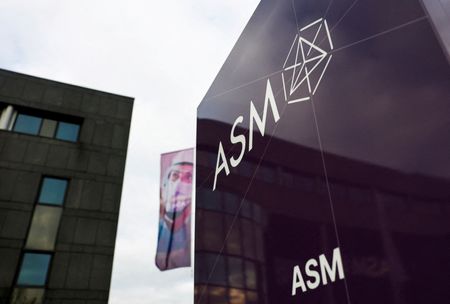
    ASM International, which manufactures computer chip equipment, saw its stock price jump 9% to reach an all-time high after the company projected second-quarter sales far exceeding what market analysts had anticipated, with experts pointing to strong AI-related demand driving the optimistic forecast.

    Swiss engineering firm ABB also reached a new stock price record after increasing its annual outlook, stating that surging demand from data centers and other electrification business segments helped counterbalance growing concerns related to the Iran conflict.

    The impressive performance of European semiconductor companies and other firms expected to benefit from AI infrastructure development follows similar success seen in the Philadelphia SOX index, which serves as the primary U.S. benchmark for the technology sector.

    That American index has posted gains for 15 straight trading sessions—marking the longest winning streak since at least 2014—climbing 35% during that timeframe, representing its best performance in approximately 24 years.

    Investment bank Barclays noted that an extended period of weak investment activity in developed markets is now shifting toward an AI-driven recovery, boosting demand for semiconductors and supporting infrastructure.

    The British bank anticipates investment growth will accelerate starting in 2026 as artificial intelligence projects expand, combined with increased spending on defense, energy security and supply-chain protection.

    “While AI spending has lifted U.S. corporate capex cycle higher, investments are yet to pick up meaningfully in Europe. We think the U.S.-Iran war should add further impetus to the theme,” wrote Barclays strategist Emmanuel Cau.

    “AI/Hyperscaler spending continues to drive strong earnings uplift in Semis, Electricals and boosting infrastructure names despite elevated valuations/positioning,” he continued.

    German semiconductor manufacturers and suppliers including Aixtron, Infineon and Siltronic posted gains ranging from 2.2% to 3.1%, while ASML, STMicroelectronics and BESI increased between 1.5% and 2.3%.

    ASML, recognized as the world’s leading supplier of chip manufacturing equipment, reported better-than-expected earnings last week and increased its 2026 revenue projections as artificial intelligence drives up demand for its products.

    Other companies in the engineering and electrical equipment sectors also performed well, with Schneider Electric and Legrand posting gains of 1.5% and 2% respectively.

    The overall European technology index climbed 1.2%, ranking among the top performers within the broader STOXX 600.

  • Asian Ships May Resume Hormuz Transit Before Western Vessels, Industry Leaders Say

    Asian Ships May Resume Hormuz Transit Before Western Vessels, Industry Leaders Say

    Shipping industry leaders predict that Asian maritime companies will likely resume passage through the strategically vital Strait of Hormuz ahead of their Western counterparts, citing differences in risk tolerance and sanctions compliance approaches.

    Speaking at the FT Commodities Global Summit on Wednesday in Lausanne, executives explained that Asian operators appear more willing to navigate the dangerous waters and accept Iranian toll requirements, unlike Western firms bound by strict sanctions protocols.

    The situation has created an unprecedented maritime crisis, with hundreds of tankers and cargo vessels trapped within the Middle East Gulf since February’s end, unable to transit the crucial waterway. This blockade has generated what experts describe as the most significant energy supply disruption in global history.

    Recent escape attempts have met with violent responses from Iranian forces. While some vessels managed to exit the Gulf last Saturday, Iran swiftly halted further departures by opening fire and ordering ships to return. Wednesday saw at least three container ships struck by gunfire while attempting passage.

    Larry Johnson, Mercuria’s global head of freight, outlined the complex dynamics at play. “For companies that are happy not to comply with OFAC sanctions, the safety part is still there. But, if that has been resolved by government to government communication, can the Indian navy send a convoy through, can a Chinese convoy go through? Yeah, probably so,” Johnson explained, referring to the U.S. Treasury’s Office of Foreign Assets Control.

    Johnson noted that successful transits have primarily involved government-operated vessels benefiting from diplomatic channels with Iran or military escort protection – advantages unavailable to commercial trading companies.

    Peter Weernink, CEO of SwissMarine, echoed these observations while identifying specific nations likely to resume transit operations. “Certain parts of the world will be able to pass through and the odds are that in the next few weeks you’re going to see more of that, and we won’t be able to,” Weernink stated, specifically mentioning Indian, Iraqi and Chinese vessels.

    Iran has intensified its control over the waterway by implementing a toll system administered alongside the Islamic Revolutionary Guard Corps, an organization currently under international sanctions.

    Andrew Jamieson, co-head of Gunvor’s shipping division Clearlake, warned that elevated costs and persistent safety threats will continue affecting Hormuz traffic patterns. He anticipates rising Advanced War Risk Premiums and potential crew shortages as maritime workers demand higher compensation or refuse dangerous assignments altogether.

    “If your crew doesn’t want to go, they don’t need to go if they feel unsafe,” Jamieson emphasized.

    Despite the current crisis, Roger Horton, Chief Commercial Officer at Clarkson, expressed confidence in the shipping industry’s ability to respond rapidly once Hormuz reopens. However, he acknowledged that many vessels have already departed the Middle East region to pursue more profitable Atlantic Basin opportunities amid elevated freight rates.

  • AT&T Surpasses Wireless Growth Projections Through Service Bundle Strategy

    AT&T Surpasses Wireless Growth Projections Through Service Bundle Strategy

    Telecommunications giant AT&T exceeded wireless subscriber growth projections for the first quarter, driven by successful customer adoption of combined wireless and high-speed fiber internet packages.

    The company’s stock price climbed 1% during Wednesday’s premarket trading session following the announcement.

    Wireless carriers continue battling intensely for market share, offering enhanced device subsidies, plan discounts, and expanding network infrastructure investments to secure and maintain their customer base.

    A significant convergence trend emerged as approximately 42% of AT&T customers who subscribe to home internet services also chose wireless plans from the company, creating what industry analysts consider a crucial competitive advantage.

    Similar to competitor T-Mobile, AT&T continued offering device subsidies during the first quarter for Apple’s newest iPhone models as wireless providers intensified their competition through attractive promotional deals.

    The telecommunications provider reported gaining 294,000 net monthly postpaid wireless subscribers during the quarter, surpassing the 272,000 additions that FactSet-surveyed analysts had anticipated.

    AT&T implemented strategic pricing adjustments, increasing costs for its entry-level and premium wireless plans while reducing prices for mid-tier options, which analysts interpret as an effort to guide customers toward middle-range services without triggering industry-wide price competition.

    Quarterly revenue increased approximately 3% to reach $31.5 billion, exceeding LSEG estimates of $31.25 billion.

    Beginning this quarter, AT&T restructured its business divisions to emphasize core growth sectors.

    The newly formed advanced connectivity division, which encompasses domestic 5G and fiber operations, achieved roughly 5% revenue growth due to increased wireless device sales and contributions from the fiber business acquisition from Lumen.

    AT&T’s adjusted earnings reached 57 cents per share for the quarter, surpassing analyst expectations of 55 cents.

  • Italian Tennis Star Sinner Emerges as Clay Court Favorite Heading to French Open

    Italian Tennis Star Sinner Emerges as Clay Court Favorite Heading to French Open

    Italian tennis sensation Jannik Sinner has evolved from being primarily known as a hard court specialist into the leading contender for clay court tournaments, with experts pointing to his mental fortitude and process-focused approach as key factors in his transformation.

    The 24-year-old, who has captured four Grand Slam titles, was traditionally expected to dominate on faster surfaces while leaving clay court supremacy to his chief rival Carlos Alcaraz. However, Sinner’s dedicated work on developing patience and tactical control has shifted that narrative entirely.

    While Alcaraz boasts seven major championships and defended his French Open crown last year, he recently fell to Sinner in the Monte Carlo championship match. The Spanish star then sustained a wrist injury during competition in Barcelona, hampering his preparation for the upcoming clay court season.

    Sinner will test his continued development this week at the Madrid Open, where the elevated altitude creates unique playing conditions that accelerate the typically slower clay surface.

    “Here it’s a very unique playing style,” Sinner explained. “It’s a very high altitude and it can be windy at times, so it’s very difficult to play. But I think every different kind of claycourt can help me as I’m trying to improve as a player.”

    Sports psychologist and former professional player Jeff Greenwald has observed distinct mental differences between the two young stars that may give Sinner an edge.

    “Sinner, even more than Alcaraz, has this unflappable demeanour that is built from this deep love and appreciation of the process,” Greenwald explained to Reuters. “He’s the poster child for mastery, a desire to be as good as he can be, which overrides the ever fluctuating, short-term obsession with this point, this win, that is almost always trading the short-term result for longer-term success.”

    This emphasis on long-term improvement rather than individual moments has fundamentally altered how Sinner approaches clay court tennis, where his strategic discipline and comfort with unpredictable situations are becoming significant assets as the French Open approaches on May 24.

    The Italian now faces a different type of mental challenge as he enters tournaments carrying the burden of being considered the frontrunner rather than the underdog.

    According to Greenwald, managing expectations represents one of the most common yet potentially harmful distractions for elite athletes.

    “They try to not get preoccupied by them with the ‘process mindset’ as best they can but most of the players are vulnerable to this reality, given that their livelihoods are on the line,” he noted. “This is where Sinner has an advantage … he didn’t develop this (mindset) after becoming successful. It was baked into his training and development. So whether he’s labelled a favourite by the media and other players, this will not affect him.”

    “More than anything, it’ll only solidify the confidence, remarkable resilience and joy he brings to every match.”

    Should Alcaraz recover from his injury in time for Roland Garros, the tournament could present a significant psychological examination for Sinner, who suffered defeat against his rival in last year’s thrilling final.

    Despite that setback, the Italian welcomes the prospect of facing his greatest competitor as he pursues a career Grand Slam.

    “When you want to win, you want to do it by beating the best and he’s among them,” Sinner stated.

  • Vessels Fired Upon in Strait of Hormuz Following Failed Peace Talks

    Maritime vessels encountered hostile fire in the strategically vital Strait of Hormuz waterway, occurring within hours of collapsed diplomatic efforts between Washington and Tehran in Pakistan aimed at resolving ongoing military tensions.

    The maritime incidents unfolded as President Trump announced the indefinite postponement of a previously established two-week truce between the United States and Iran, with Iranian officials remaining silent on the extended ceasefire decision as of early Tuesday morning.

    Pakistani Prime Minister Shehbaz Sharif expressed gratitude to President Trump for prolonging the cessation of hostilities and delaying the conclusion of the temporary peace agreement, though the failed diplomatic meeting has raised questions about prospects for a lasting resolution to the conflict.

  • Michigan GOP Congressman Faces Heat Over Gas Prices After Campaign Promises

    Michigan GOP Congressman Faces Heat Over Gas Prices After Campaign Promises

    A Michigan Republican congressman who successfully campaigned against rising fuel costs is now finding himself in the hot seat as gas prices climb once again, creating new political challenges ahead of the midterm elections.

    Tom Barrett leveraged voter anger over expensive gasoline during his winning 2024 congressional campaign in Michigan. However, the GOP lawmaker now faces criticism from Democrats who see an opportunity to reclaim his seat using the very same issue Barrett once wielded against them.

    “Gas in Michigan is four bucks a gallon,” Barrett declared while recording himself at a gas pump in August 2023. “When I’m elected to Congress, we’ll produce our own energy. We’ll get gas under control so that this will be a lot more affordable for families like yours and families like mine.”

    Almost three years later, Michigan’s average gas prices have returned to similar levels, briefly exceeding $4 in early April before settling around $3.80 this week – a 27% increase since the Iran conflict started on February 28.

    This price surge has placed GOP members who criticized high fuel costs during Joe Biden’s presidency in a difficult position as they approach November’s midterm contests, with House control hanging in the balance and potential Senate implications.

    Barrett faces particular vulnerability since he represents one of America’s most competitive congressional districts and is already encountering Democratic criticism on fuel prices.

    During a Reuters interview, Barrett admitted that gasoline costs were straining his constituents financially but defended the war on national security grounds while expressing optimism that prices might decrease.

    “Gas is an issue that affects people’s livelihoods, the affordability of things … I’m not dismissing any of that,” he stated following a new campaign office launch in Brighton, located 45 miles west of Detroit. “But that doesn’t mean gas is going to be the same price on Election Day as it is today.”

    This hopeful outlook has been challenged by both President Donald Trump and Energy Secretary Chris Wright, who have admitted that gasoline prices might stay elevated through Election Day.

    Republicans nationwide are struggling with campaign strategies amid high gas prices after using the issue as a political weapon during Biden’s term, when costs peaked above $5 per gallon in June 2022 due to Russia’s Ukraine invasion affecting global energy markets. The recent price increases have worsened GOP electoral prospects, with Americans already frustrated by expensive food, housing, and healthcare.

    For numerous Republican candidates, rising gasoline costs have disrupted core campaign plans. While they intend to emphasize Trump’s comprehensive 2025 tax legislation during November elections, higher fuel expenses have complicated efforts to promote promised economic relief for cost-burdened Americans.

    A strategist working with a GOP candidate in a competitive House race explained that nominees must support Trump and the war during primaries attracting conservative voters but might need to distance themselves during general elections.

    “When the campaign focus becomes independent voters, soft Republicans, folks like that, then Republican candidates may be forced to be critical of the president,” said the strategist, speaking anonymously.

    While gasoline wasn’t Barrett’s only 2024 campaign focus, he frequently addressed the topic as part of his anti-inflation platform under Biden. The 22-year Army veteran captured his district by nearly four points, exceeding Trump’s one-point presidential victory margin.

    In late July 2024, Barrett shared X platform photos showing gas price displays from four stations, all around $4 per gallon.

    Democrats now view fuel prices as a powerful tool for flipping Barrett’s predominantly white district, which centers on Lansing and extends through farmland and small communities toward Detroit’s outer metropolitan area.

    On April 13, local Democrats, farmers, and activists assembled at a Lansing-area gas station to protest high fuel and fertilizer costs while demanding war’s end. Protesters carried signs reading “Tom Barrett + Iran War and We Pay” and “Got Gas Pains? Vote Democrat for Relief.”

    Bridget Brink, the Democrat who has raised the most funds before her party’s August primary, said she would target Barrett’s war support and resulting gas price spikes if nominated.

    Brink, who served as Biden’s Ukraine ambassador, argued that tax relief from Trump’s 2025 legislation covering tips, Social Security benefits, and overtime pay was being negated by rising gas costs.

    “When Republicans say they’re cutting your taxes, all of that gets lost in bigger prices on gas, healthcare, groceries, and housing,” she explained. “We’ll be talking about gas prices every week, because we all see it and feel it.”

    Earlier this month, Barrett criticized Trump’s threat to destroy Iran’s “whole civilization” as violating human dignity.

    Nevertheless, Barrett opposed a congressional resolution limiting Trump’s war powers and supports preventing Iran from acquiring nuclear weapons, arguing current high gas prices result from justified foreign policy decisions, unlike Biden-era increases he attributes to domestic oil production restrictions.

    When a Reuters reporter mentioned interviewing a constituent who could only afford $14 worth of gas, Barrett shifted discussion to national security, repeatedly questioning whether she had been asked about Iran’s nuclear program.

    “Did you ask her if she thought Iran should develop a nuclear weapon?” Barrett inquired.

    Reuters didn’t question the constituent, Danielle Lewis, about Iran’s nuclear capabilities but discussed the war’s gas price impact. Lewis, 39, said she supported Barrett and would probably vote for him in November.

    Recent Reuters/Ipsos polling indicates only 36% of Americans support the Iran war.

    Beyond war issues, Barrett’s campaign office opening revealed Republicans’ midterm messaging. The congressman promoted the 2025 tax bill, highlighting expanded child tax credit benefits, while fellow House member Lisa McLain outlined attack strategies for attendees.

    “I think we make this election a contrast election between normal and crazy, because they are crazy,” McLain said, characterizing Democratic positions on transgender rights and other cultural matters as political weaknesses.

    Neither Barrett nor McLain addressed gas prices in their speeches.

    Democrat Christine Waugh-Fleischmann, who spends up to $200 weekly on gas for grandchildren visits, believes the district could flip after discussing inflation with Republican friends.

    “I do see a lot of people in my conservative neighborhood here who are very upset,” said the 70-year-old art teacher while fueling her SUV at the same Charlotte, Michigan Quality Dairy station where Barrett made his 2023 social media video.

    “It’s gas. It’s grocery prices, it’s healthcare costs.”

    Alexander Melton, 38, an HVAC technician, said he still planned supporting Barrett despite higher gas prices increasing his expenses, citing alignment with his conservative principles.

    However, he recognizes a warning from the 2024 election for all politicians campaigning on high gas prices.

    “We don’t dictate the price of gas. We’re getting it from overseas, and at this point now we’re at the mercy of everybody else,” Melton observed.

  • Canadian PM Carney Seeks U.S. Trade Deal After Election Victory

    Canadian PM Carney Seeks U.S. Trade Deal After Election Victory

    OTTAWA – Canadian Prime Minister Mark Carney is positioning himself for crucial trade negotiations with the United States following his party’s decisive victory in last week’s special elections, which secured him a parliamentary majority.

    The Canadian leader now confronts a critical July 1 deadline where Canada, the U.S., and Mexico must decide whether to maintain their current trade arrangement, renegotiate terms, or implement yearly reviews leading up to the agreement’s 2036 expiration date. Under mounting pressure from Washington for trade concessions, Carney plans to pursue a restructured agreement this year targeting tariffs on Canadian steel, aluminum, and automotive products.

    Prior to the Liberal Party’s electoral sweep, Carney argued that securing a parliamentary majority was essential for effectively managing Trump’s trade policies. Political experts and former government officials now say the Prime Minister must fulfill his campaign promises to revitalize Canada’s economy and successfully navigate negotiations with the Trump administration.

    “Dealing with Trump and negotiating a trade deal with the U.S. is what Canadians hired Mark Carney to do,” stated Dan Arnold, who previously served as a senior aide in former Prime Minister Justin Trudeau’s administration. “He now has to rise to the moment and show us the fruits of these deals he’s been signing.”

    Recent polling conducted by Nanos Research revealed that Canadians prioritize economic issues and inflation concerns, with the nation’s relationship with the United States ranking as their second-highest worry.

    While Trump has repeatedly made provocative statements about making Canada the 51st U.S. state, Carney has committed to expanding Canadian exports to alternative markets by 100% over the next ten years. His government has finalized over 20 economic and security partnerships in the past year, including agreements with China, and is currently working toward a deal with India. Despite these efforts, nearly 70% of Canada’s exports still flow to the United States.

    During a Sunday video address, Carney characterized Canada’s heavy dependence on U.S. trade as “weaknesses that we must correct.” He encouraged Canadians to draw inspiration from historical leaders like Chief Tecumseh, who organized Indigenous communities around the Great Lakes to oppose American territorial expansion during the War of 1812.

    “I will never sugarcoat our challenges,” Carney declared, noting that the United States has dramatically shifted its trade policies and imposed tariff levels not witnessed since the Great Depression era.

    While U.S. trade officials conducted meetings in Mexico City this week, formal discussions between Washington and Ottawa regarding the North American trade pact renewal have yet to commence.

    Fen Hampson, an international affairs professor at Carleton University in Ottawa, believes the time has come for decisive action. “It’s time for the prime minister to take the gloves off and start negotiating in the trenches,” he said. Hampson suggested that Carney’s majority government provides the political flexibility to make potentially unpopular compromises, such as opening Canada’s protected dairy sector to U.S. competition or persuading provincial governments to increase American alcohol imports.

    “If he had a minority, the prime minister might not be able to absorb these concessions,” Hampson explained. “But he has the political capital to do it and he can also use his influence to address provincial premiers who have been obstacles.”

    Dominic LeBlanc, the minister overseeing U.S. trade relations, informed a parliamentary committee that Canada aims to secure both sector-specific tariff agreements and a comprehensive North American trade deal. Representatives from Carney’s office and LeBlanc’s department did not respond to requests for comment, though the government has previously stated that Canada’s dairy supply management system remains non-negotiable. The White House also declined to comment.

    Diamond Isinger, who handled Canada-U.S. relations during the Trudeau government, believes Carney’s majority provides stability through the uncertainty surrounding November’s U.S. midterm elections, with no Canadian federal election anticipated until 2029.

    “The prime minister now has time to get to a better CUSMA deal without the fear of a snap election,” she said, referencing the Canadian name for the trade agreement.

    Conservative opposition leader Pierre Poilievre, who lags behind Carney by more than 20 points in leadership preference polls, criticized the Prime Minister on Tuesday, claiming he “refuses to stand up against these wrong-headed American tariffs.” Poilievre noted that formal bilateral discussions have not occurred in five months.

    Asa McKercher, who teaches public policy at St. Francis Xavier University in Nova Scotia, argues that Carney must concentrate on domestic priorities, including the pending decision on Canada’s next fighter jet fleet and infrastructure investment projects announced last year.

    “He’s done the world circuit and made some great speeches, but now he has to actually focus on being a domestic politician,” McKercher observed.

    Drew Fagan, a visiting professor at Yale University, emphasized the need to address rising living costs. Government statistics show that among Group of Seven developed nations, Canada maintains the second-highest unemployment rate and leads in food price inflation.

    “This is a country that’s fundamentally getting poorer for many people,” Fagan noted. “Given what’s happened in the world in the last 18 months, Carney is not being blamed for the price of cheese and juice. Canadians have put up with a lot but at some point, they will hold somebody accountable.”

  • Ukraine Seeks Direct Talks Between Leaders to Revive Stalled Peace Efforts

    Ukraine Seeks Direct Talks Between Leaders to Revive Stalled Peace Efforts

    KYIV, Ukraine — Ukrainian officials are actively working to arrange direct negotiations between President Volodymyr Zelenskyy and Russian President Vladimir Putin, hoping such a meeting could revitalize dormant peace discussions led by the United States, according to the country’s foreign minister.

    At the same time, a Ukrainian drone strike far inside Russian territory hit an apartment building, resulting in the deaths of a woman and child, Russian authorities reported Wednesday.

    Ukraine has approached Turkey for assistance in organizing high-level discussions and has contacted other nations about potentially hosting such talks, Foreign Minister Andrii Sybiha revealed. He noted that Ukraine would accept any location except Russia and Belarus.

    “We are … advocating for a (summit) meeting now to bring new momentum to diplomacy,” Sybiha told reporters on Tuesday. His remarks were embargoed until Wednesday.

    Diplomatic efforts mediated by the United States over the past year between Russian and Ukrainian representatives have achieved minimal progress on critical matters, including the status of four Ukrainian territories that Moscow seeks to control but has not fully captured. With Washington now focused heavily on the Iran conflict, these negotiations have been suspended.

    While Zelenskyy has agreed to an unconditional ceasefire as requested by U.S. President Donald Trump, Putin has rejected this proposal. Experts believe Putin assumes time favors Russia, expecting Western military aid and financial backing to diminish while Ukraine’s ability to resist eventually weakens.

    The brutal conflict continues along an approximately 1,250-kilometer (800-mile) battle line stretching across eastern and southern Ukraine. Western intelligence sources and military analysts estimate Russia is experiencing tens of thousands of combat losses monthly, creating conditions reminiscent of World War I’s devastating battles.

    Independent confirmation of military casualties and determining which side holds advantages remains impossible.

    Ukraine has built up its own weapons manufacturing capabilities, increasingly creating long-distance drones and missiles that can reach targets deep within Russia. Ukrainian forces have focused attacks on Russian oil facilities and factories supporting Moscow’s military operations.

    In Syzran, located in Russia’s Samara region approximately 800 kilometers (500 miles) east of Ukraine’s border, a drone attack caused part of an apartment building to collapse, regional officials reported.

    Rescue workers recovered the bodies of a woman and child from the debris while 12 additional people sustained injuries, local authorities confirmed.

    Photographs from the location revealed a section of a four-story structure reduced to a enormous pile of wreckage, with emergency responders working on top of the rubble.

    Russian news outlets noted that a Rosneft oil refinery — a common target of Ukrainian drone operations — sits on the same street as the damaged residential building.

    Ukraine’s aerial attacks against Russia surged nearly fourfold last year, increasing from 6,200 strikes in 2024 to over 23,000 in 2025, according to Sergei Shoigu, secretary of Russia’s Security Council, who made the statement last month.

  • Ukraine Aid Package May Finally Clear After Pipeline Repair Agreement

    Ukraine Aid Package May Finally Clear After Pipeline Repair Agreement

    BRUSSELS — Representatives from European Union member nations convened Wednesday in Brussels, with many expressing cautious hope that a crucial $106 billion aid package for Ukraine could receive approval following months of political gridlock.

    The diplomatic gathering focused on whether Hungary would withdraw its opposition to the massive 90-billion-euro financial assistance program, which Ukraine urgently requires to sustain its defense efforts and stabilize its war-torn economy over the coming two years.

    Hungarian officials have maintained their position that Russian oil deliveries through Ukrainian territory must restart before they would support releasing the funds. Both Hungary and Slovakia depend heavily on Russian petroleum imports to satisfy their domestic energy requirements.

    Both nations have blamed Ukraine for not fixing a compromised pipeline system that transports the oil. Ukraine and the majority of its European allies have opposed Russian oil imports, arguing these purchases provide financial support for President Vladimir Putin’s military campaign, which has now entered its fifth year.

    Ukrainian President Volodymyr Zelenskyy announced Tuesday through social media that his country had finished repairing the Druzhba pipeline system. “The pipeline can resume operation,” Zelenskyy stated, noting the infrastructure “was damaged by a Russian strike.”

    However, Hungarian Prime Minister Viktor Orbán has indicated he would only support the Ukrainian loans after oil transportation resumes, leaving diplomats waiting for confirmation from Budapest that the blockade will end. Orbán, known for repeatedly obstructing EU assistance to Ukraine, suffered a decisive electoral defeat on April 12 and will step down next month, with pro-European opposition leader Péter Magyar set to take his place.

    Cyprus, which currently leads the EU’s rotating presidency, plans to initiate a formal written process to approve the remaining components of the loan arrangement. This procedure would require Hungary or any other dissenting country to provide written justification for their opposition.

    These formal processes typically remain open for at least 24 hours, though the exact timeline Cyprus will establish remains unclear. Final authorization could potentially occur Thursday during an EU leaders’ summit scheduled in Cyprus.

    Considering numerous previous disappointments in recent months, EU foreign policy chief Kaja Kallas hesitated to predict the outcome when questioned by journalists Tuesday. “We expect an agreement in 24 hours, so I don’t want to jinx it,” she remarked.

    The 27-member European Union initially planned to secure the loan using frozen Russian assets held in Europe as backing. Belgium, however, prevented this approach since most of the frozen assets are located within its borders.

    Last December, the Czech Republic, Hungary and Slovakia committed to allowing their EU partners to secure the funding through international markets, provided the three nations wouldn’t be required to participate directly in the arrangement.

    Orbán subsequently frustrated the remaining 24 countries by abandoning this agreement due to the pipeline disagreement and amid intensifying campaign activities before his landslide electoral loss.

    During a Tuesday evening speech, Zelenskyy argued that “there can be no grounds for blocking” the financial assistance any longer. “The EU asked Ukraine to repair the Druzhba oil pipeline, which had been destroyed by Russia. We have repaired it.”

    Foreign Minister Andrii Sybiha informed reporters that Ukraine had fulfilled its obligations. “We have completed everything — there is a date (set), and the infrastructure has been repaired.”

    Since February, the EU has also attempted to advance additional sanctions against Russia, which Hungary and Slovakia have continued to block. These measures may require more time to approve than the loan package.

    Slovak Foreign Minister Juraj Blanár stated Tuesday that his nation would only agree once “Russian oil arrives in Slovakia through the Druzhba pipeline. I can state that we do not have such information yet.”

    Economy Minister Denisa Saková indicated Slovakia anticipates oil deliveries to restart early Thursday.

    According to Saková, information from Ukrtransnaft, the company managing the pipeline within Ukrainian territory, confirmed that oil began flowing through the Druzhba system again Wednesday.

  • Body Recovered from Capsized Ship Near Guam, 5 Crew Members Still Missing

    Body Recovered from Capsized Ship Near Guam, 5 Crew Members Still Missing

    Recovery teams have located the remains of one crew member from a cargo vessel that capsized during a powerful typhoon near the Northern Mariana Islands, while five others remain unaccounted for.

    Military divers from the U.S. Air Force employed underwater drone technology to explore the interior of the capsized ship and successfully retrieved the body on Tuesday, according to a statement from the U.S. Coast Guard.

    Japanese Coast Guard diving teams also conducted searches of the vessel but did not locate any additional crew members, Coast Guard officials reported.

    “Coast Guard aircrews continue to search for the five missing crewmen and an orange 12-person life raft in the vicinity of the Commonwealth of the Northern Mariana Islands,” the news release said.

    The maritime emergency began when the Mariana’s crew contacted the U.S. Coast Guard on April 15, reporting that their 145-foot U.S.-flagged cargo ship had lost its starboard engine amid Super Typhoon Sinlaku and required immediate help. Communication with the vessel was lost the following day.

    “Our hearts are with the families of the Mariana crew members and the communities impacted by this tragic incident,” Cmdr. Preston Hieb, search and rescue mission coordinator, Coast Guard Oceania District, said in a statement. “We continue to search in close coordination with our partners, using all available resources to support the ongoing response.”

    Severe weather conditions initially hampered rescue operations, but search teams eventually located the capsized vessel on Saturday approximately 40 miles northeast of Pagan, an island within the Northern Marianas U.S. territory.

    Coast Guard officials announced Monday that rescue boats and diving teams had been dispatched to attempt underwater drone searches of the overturned ship. Search crews also discovered debris, including a partially flooded inflatable life raft, roughly 110 miles away from the vessel’s location.

    Super Typhoon Sinlaku devastated the Northern Mariana Islands with destructive winds and severe flooding.

  • Software Companies Face Investor Doubts Despite Strong Growth Projections

    Software Companies Face Investor Doubts Despite Strong Growth Projections

    Major software companies are gearing up to announce what could be their strongest quarterly performance in years, yet industry analysts warn that even impressive numbers may not calm growing investor anxiety about artificial intelligence reshaping the technology landscape.

    Tech executives, including Salesforce CEO Marc Benioff, have been working to convince shareholders that their companies’ unique data assets, extensive business expertise, and custom AI solutions will maintain customer relationships despite emerging AI competitors like Anthropic targeting legal, marketing, and customer service sectors.

    However, these reassurances haven’t prevented a significant market downturn in the technology sector. Software and services stocks have dropped approximately 16% since January began, creating a stark contrast with the S&P 500’s 3.2% increase during the same period.

    The earnings season for major cloud-based software companies begins Wednesday with ServiceNow’s report, followed by expected announcements from Workday and Salesforce in May.

    Financial analysts anticipate Salesforce will announce first-quarter revenue growth of 12.5%, reaching $9.83 billion and marking the company’s strongest expansion in 13 quarters, based on LSEG polling data.

    Despite this revenue success, profit margins at Salesforce—which has aggressively embraced AI through its Agentforce autonomous platform—are projected to slow to nearly three-year lows due to rising operational expenses.

    ServiceNow is forecast to demonstrate even stronger quarterly revenue expansion at 21.1%, while Workday’s growth is expected to reach 12.4%.

    “From a short-term stock market perspective, nothing (software) companies report this quarter or next quarter can really refute that long-term bear case,” said Joe Maginot, portfolio manager at Madison Investments.

    “It’s this more existential question on how things will evolve over the coming three, four, five years and even longer,” Maginot explained.

    Industry observers anticipate software companies will use their earnings presentations to demonstrate more clearly how artificial intelligence is driving revenue increases, expanding customer adoption, and improving client retention rates.

    “The opportunity is there for many incumbents to be successful, especially as the rollout of AI in enterprise is going to take many years,” Bernstein analysts said.

  • New Poll Shows Immigration Stance May Hurt GOP in Midterm Elections

    New Poll Shows Immigration Stance May Hurt GOP in Midterm Elections

    A new national survey suggests President Trump’s hardline immigration enforcement strategy may create challenges for Republican candidates in the upcoming midterm congressional elections.

    The Reuters/Ipsos poll, conducted over six days and concluded Monday, revealed that 52% of American voters would be less inclined to back candidates supporting Trump’s deportation policies. In contrast, only 42% indicated they would be more likely to vote for such candidates.

    Independent voters showed even stronger resistance to Trump’s immigration approach, with 57% saying they would favor candidates opposing the president’s deportation strategy, while just 32% preferred supporters of his policies.

    The GOP faces potential difficulties maintaining control of both House and Senate chambers this November, already dealing with public frustration over rising fuel costs linked to the ongoing U.S.-Israeli conflict with Iran. Nearly all Republican legislators have endorsed Trump’s strict immigration stance, demonstrating the president’s increased influence within the party following his 2024 victory on promises to target undocumented immigrants.

    Public opinion on Trump’s immigration policies has shifted significantly since he took office. Initial support stood at 50% in polling conducted shortly after his January 2025 swearing-in ceremony. However, following more than twelve months of intensive enforcement actions — including nationwide deployment of masked federal officers and two civilian deaths during operations — approval has dropped to 40% in the most recent survey.

    The online poll captured responses from 4,557 adults across the United States, with a margin of error of 2 percentage points.

    Sarah Pierce, who serves as director of social policy at the center-left Third Way organization, believes Trump’s enforcement campaign has left a significant mark on public consciousness.

    “People were being pulled out of cars, a priest shot with pepper balls, and Americans killed before our eyes,” Pierce stated, referencing incidents from streets in Los Angeles, Chicago and Minneapolis during Trump’s initial year. “I don’t think those images are going to go away anytime soon.”

    Recent weeks have seen the Trump administration apparently reduce its domestic immigration arrests. Immigration and Customs Enforcement detained slightly more than 1,000 individuals daily in early March, down from approximately 1,300 per day in December, though still more than twice the January 2025 daily arrest figures, based on ICE data obtained by the Deportation Data Project and reviewed by Reuters.

    While only 25% of survey participants described current immigration detention efforts as less intensive than the previous month, 70% indicated that reducing enforcement aggression would represent a positive development.

    Americans continue to support border security measures broadly, with 84% stating that maintaining secure borders holds at least some importance and 87% emphasizing the significance of immigration law enforcement.

    However, the public also backs providing pathways to legal status for many undocumented residents. Approximately 76% of poll respondents believe unauthorized immigrants with employment and clean criminal records should have opportunities to obtain legal standing.

    Several Congressional Republicans have advocated for more moderate deportation policies.

    Representative Maria Elvira Salazar, a Republican from a South Florida district with substantial Hispanic populations including recent immigrant families, has recently promoted legislation offering legal status to certain undocumented immigrants. Despite criticism from Republican hardliners, Salazar maintains her bill “respects Trump’s agenda” through border security provisions.

    “I’m very concerned about what’s happening within the party with immigration,” Salazar commented earlier this month during an appearance on Fox News’ “Brian Kilmeade Show,” addressing divisions among party hardliners.

  • US Military Adopts Ukrainian Drone Defense System After Iran Strikes

    US Military Adopts Ukrainian Drone Defense System After Iran Strikes

    American military forces have begun using Ukrainian-developed anti-drone technology at a critical air base in Saudi Arabia following a series of Iranian attacks, according to five sources familiar with the situation.

    The Sky Map command system, created by Ukrainian company Sky Fortress, has been installed at Prince Sultan Air Base in recent weeks. Ukrainian military trainers have arrived to instruct U.S. personnel on operating the platform, which Ukraine’s forces use extensively to identify approaching drone threats and coordinate defensive responses.

    This marks a significant development as Ukraine’s experience fighting Russia for four years has advanced their drone warfare capabilities. The Sky Map system specializes in detecting Iranian-made Shahed drones and directing interceptor drones to neutralize them.

    Timothy Walton, a senior fellow at the Hudson Institute, noted persistent weaknesses in American air defense systems. “There’s been longstanding gaps in U.S. air missile defense coverage around the world,” Walton stated. “This has been well understood. However, it hasn’t been addressed.”

    The deployment contradicts President Trump’s earlier dismissal of Ukrainian assistance. In March, Trump told Fox News, “We don’t need their help in drone defense,” after Ukrainian President Volodymyr Zelenskyy offered support against Iranian drone attacks.

    Neither the Pentagon nor Central Command, which oversees Prince Sultan Air Base, provided comments. Sky Fortress and Zelenskyy’s office also declined to respond.

    The Pentagon’s anti-drone division recently allocated $350 million to strengthen defenses under Operation Epic Fury. Adam Scher, spokesman for Joint Interagency Task Force 401, emphasized that multiple technologies including sensors, cameras and interceptors are being deployed.

    “There is no ‘silver bullet’ tool that will stop every drone threat,” Scher explained.

    Sky Fortress launched in 2022 when Ukrainian engineers connected to the military installed over 10,000 acoustic sensors nationwide to detect Russian drone attacks. The company received backing from Brave1, Ukraine’s military innovation division, to create Sky Map as a software platform coordinating anti-drone operations.

    Prince Sultan Air Base, located approximately 400 miles from Iran, has also tested other new counter-drone systems. Merops interceptor drones, developed by Project Eagle with backing from former Google CEO Eric Schmidt, have been deployed at the facility. However, testing hasn’t gone smoothly – earlier this month, a Merops interceptor malfunctioned during trials and crashed into a bathroom facility on base.

    The air base has endured multiple waves of Iranian drone and missile attacks since the conflict began. A valuable E-3 AWACS radar aircraft was destroyed on March 27, while several KC-135 refueling tankers sustained damage in separate strikes. One attack destroyed a tent reportedly housing radar equipment supporting the base’s THAAD missile defense system.

    The base previously relied on Northrop Grumman’s Forward Area Air Defense (FAAD) system, first deployed in the 1990s, to track incoming threats ranging from mortars to drones. For close-range drone attacks, the facility primarily used RTX-manufactured Coyote interceptors – winged drones that can either carry warheads or use microwave technology to disable enemy drone electronics.

    A Northrop Grumman representative said FAAD “is consistently dependable in theater today and we are confident in the competitive advantage FAAD provides to the warfighter.”

    RTX spokesman Chris Johnson noted the Coyote system has “proven highly effective, defeating hundreds of aerial threats during combat operations.”

  • Six Candidates Set for California Governor Debate After Swalwell Drops Out

    Six Candidates Set for California Governor Debate After Swalwell Drops Out

    California’s gubernatorial contest will reach a pivotal moment Wednesday evening when six candidates face off in their first major debate since former frontrunner Eric Swalwell suddenly withdrew from the race.

    The debate begins at 7 p.m. Pacific Time and will feature four Democratic and two Republican candidates competing under California’s unique “jungle primary” system, where the top two vote-getters advance to November’s general election regardless of party affiliation.

    Nexstar Media Group will air the debate across six major California markets, providing significantly broader coverage than February’s initial televised debate that only appeared on two Fox affiliates.

    Recent polling data used to determine debate participation shows Republican Steve Hilton, a former Fox News personality, leading all candidates with 17 percent support. Republican Riverside County Sheriff Chad Bianco holds second place with 14 percent, while nearly a quarter of voters remain undecided.

    The unconventional primary format could create interesting strategic dynamics, with candidates potentially targeting opponents both within their own party and across party lines.

    Political observers expect Hilton, considered the most experienced debater, to face attacks from all directions. However, his response strategy toward Bianco could prove crucial, since advancing alongside another Republican might offer his best chance in the heavily Democratic state.

    Republican strategist Rob Stutzman, who previously advised former Governor Arnold Schwarzenegger, offered his perspective on the Republican dynamic. “Strategically, Hilton should let Bianco beat him, I suppose, but the reality is these two don’t really like each other. I wouldn’t be surprised if they go at each other pretty hard,” Stutzman explained.

    The Democratic candidates are now competing for supporters and financial backing previously committed to Swalwell, who left the race and resigned from Congress following sexual assault allegations, which he has denied.

    Among Democrats, billionaire hedge fund manager Tom Steyer leads with 14 percent in the Nexstar-Emerson College survey. Former state attorney general and cabinet member Xavier Becerra and former U.S. Representative Katie Porter each garnered 10 percent support, while San Jose Mayor Matt Mahan received 5 percent.

    A separate Independent Voter Project poll later showed Becerra moving into the overall lead with 23 percent, compared to Hilton’s 20 percent.

    Mark Baldassare from the Public Policy Institute of California anticipates strong voter interest in the debate. “The voters have been telling us all along that they’d like to see more town halls and debates, and I think in the last few weeks that interest has become even stronger with a frontrunner dropping out,” Baldassare noted.

  • Apple’s Control-First Strategy May Hinder Success in Fast-Moving AI Revolution

    Apple’s Control-First Strategy May Hinder Success in Fast-Moving AI Revolution

    The tech giant Apple constructed its massive success through maintaining strict oversight of its products and services.

    Over many years, the corporation’s carefully controlled environment—featuring specialized processors, exclusive software systems, and carefully selected applications—produced gadgets that users found both secure and simple to operate.

    This strategy transformed the iPhone into history’s most profitable consumer device, bringing in almost $210 billion in sales during the previous year. The approach also positioned Apple as the globe’s highest-valued corporation throughout much of the last ten years, until artificial intelligence chip manufacturer Nvidia surpassed it in 2024.

    However, as future Apple leader John Ternus prepares to replace Tim Cook this autumn, he must address a crucial question regarding the company’s future in the artificial intelligence era, which will challenge Apple’s traditional method of controlling which applications and services can access its technology.

    The present artificial intelligence revolution has flourished primarily through open collaboration: rapid development cycles, widespread access for programmers, and technologies that function across multiple systems.

    Organizations like OpenAI, Google, and Meta have introduced models that occasionally develop in unexpected ways but show constant and visible enhancement, drawing developers and customers at speeds that traditional product development cannot match.

    Apple has predictably taken a more careful approach. Cook, who has faithfully maintained Apple founder Steve Jobs’ philosophy, has stressed privacy and excellence that require strict oversight.

    This careful approach has built user confidence but has also exposed the company to antitrust scrutiny domestically and internationally, including legal disputes with “Fortnite” developer Epic Games and new European Union regulations forcing Apple to permit greater competition on its platforms.

    This conflict has grown more intense with artificial intelligence, as the technology boom tends to favor rapid development and testing.

    “By choosing a hardware leader in John Ternus, Apple may be signaling that it still believes the future of AI will run through tightly integrated devices, not just software,” said Timothy Hubbard, assistant professor of management at the University of Notre Dame’s Mendoza College of Business.

    “That could be smart, but it also raises a deeper risk: the very strengths that made Apple dominant — their discipline, polish, and control — could become constraints if the next era rewards openness and faster iteration. That rapid innovation is where Apple started, and maybe that’s where the company needs to return.”

    Beginning with Jobs, who revitalized a struggling Apple during the late 1990s, followed by Cook, who transformed Apple’s services division into a $110 billion yearly revenue generator, the Cupertino, California company has demonstrated that close integration creates loyal customers and lasting profitability.

    Currently, Ternus faces his greatest obstacle: incorporating artificial intelligence into Apple’s secure ecosystem while a more open methodology gains global momentum.

    OpenClaw serves as one illustration—this program can manage multiple AI “agents” capable of performing complicated tasks typically done by people and has gained widespread adoption in China, with users from students to elderly individuals.

    However, OpenClaw also demonstrates the dangers of openness. The program remains unfinished, contains security flaws, and can perform concerning actions, such as revealing personal financial data online. These issues represent exactly the problems Apple has traditionally worked to prevent.

    Ternus has stated clearly in media discussions that Apple focuses on delivering finished products rather than experimental technologies like OpenClaw that create buzz but don’t become essential tools like the iPhone.

    Apple has shown some readiness to utilize artificial intelligence technology created by competitors when necessary. In January, the company made an agreement with Google to incorporate its Gemini AI systems to enhance its Siri digital assistant.

    Notre Dame’s Hubbard suggested Apple might follow Nvidia’s example. Recently, Nvidia announced plans to adapt OpenClaw’s open-source program into a product called NemoClaw, which will include protective measures and restrictions allowing the OpenClaw method to function in corporate settings.

    Gene Munster, a veteran Apple analyst and investor at Deepwater Asset Management, believes Ternus’ emphasis on excellence could help him change Apple’s story similarly to how Cook demonstrated through the services business expansion that Apple’s financial success extends beyond the iPhone.

    “Staying true to Apple’s culture should allow Apple to pursue AI more aggressively without compromising on quality,” Munster wrote in a note to clients.

  • Environmental Movement Reclaims ‘Tree-Hugger’ Label on Earth Day

    As Earth Day arrives, environmental advocates are reflecting on how they’ve reclaimed a term that was once used to mock their movement. The phrase ‘tree-hugger’ has undergone a remarkable transformation from its humble beginnings in the mountains of Nepal to its current status as a symbol of environmental pride.

    The expression first emerged during the 1970s in the Himalayan region, where local communities literally embraced trees as a form of environmental protest. The grassroots movement involved villagers wrapping their arms around trees to prevent deforestation and protect their natural resources.

    By the 1990s, American politicians had seized upon the term as a way to dismiss environmental activists and their concerns. The phrase became a political tool used to portray environmentalists as extreme or out of touch with mainstream values.

    However, today’s environmental movement has turned the tables on this narrative. Rather than allowing others to define them with what was intended as an insult, activists have embraced ‘tree-hugger’ as a positive identifier that represents their commitment to protecting the planet.

  • Federal Government Postpones School Disability Access Requirements

    The federal government has extended the timeline for educational institutions to comply with new disability accessibility standards for their digital platforms and online materials.

    The Justice Department announced the postponement of requirements that would have taken effect this week, mandating that schools, colleges, and other public educational facilities ensure their web-based content is accessible to students with disabilities.

    The delay affects a wide range of educational institutions across the country that were preparing to meet the original compliance deadline. These organizations will now have additional time to implement the necessary changes to their online systems and digital learning materials.

    The accessibility standards are designed to help students with various disabilities better navigate and utilize educational websites, online coursework, and digital resources that have become increasingly important in modern education.

    No new timeline for compliance has been announced by the Justice Department, leaving schools and colleges uncertain about when they will be required to fully implement these accessibility measures.

  • Aviation Experts Warn of Industry Ripple Effects if Spirit Airlines Shuts Down

    The aviation industry could face significant disruption if Spirit Airlines decides to permanently cease operations, according to industry analysts monitoring the budget carrier’s financial struggles.

    While the low-cost airline has not announced any plans for liquidation, Spirit has entered bankruptcy protection proceedings on two separate occasions. Aviation experts are now warning that escalating fuel expenses could force the company to shut down permanently.

    The potential closure of Spirit would mark a major shift in the domestic airline landscape, as the carrier has been a significant player in the budget travel market. Industry observers are closely watching how rising operational costs continue to pressure the airline’s business model.

    Should Spirit ultimately decide to liquidate its assets, the move could create a domino effect throughout the aviation sector, potentially affecting everything from route availability to ticket pricing across competing airlines.

  • FAA Chief: Air Traffic Control System Modernization Needs More Funding

    The head of the Federal Aviation Administration is calling for increased investment to modernize the nation’s aging air traffic control infrastructure, acknowledging current efforts fall short of what’s needed.

    FAA Administrator Bryan Bedford and other aviation officials say substantial additional funding will be required to transform the system into a more efficient and adaptable network. The agency aims to replace outdated analog technology with advanced software-based systems designed to reduce flight conflicts, minimize delays, and prevent cancellations.

    “We can do better,” Bedford stated regarding the ongoing efforts to upgrade the country’s aviation infrastructure.

    The push for modernization comes as the aviation industry continues to grapple with operational challenges. The current analog-based air traffic control system has been identified as a key area needing technological advancement to meet growing demands and improve safety standards.

    According to officials, the proposed new system would rely on sophisticated software to manage air traffic more effectively, potentially revolutionizing how flights are coordinated across the United States. However, the transition requires significant financial investment beyond what has already been allocated for aviation infrastructure improvements.

  • Virginia Redistricting Vote Gives Democrats Upper Hand Against GOP Map Strategy

    Tuesday’s redistricting referendum results in Virginia have shifted the balance of power in the national map-drawing battle, giving Democrats a significant advantage against President Trump’s redistricting strategy designed to boost Republican chances in the midterm elections.

    The Virginia outcome has effectively neutralized and potentially exceeded the Republican Party’s redistricting gains that were part of Trump’s broader national effort to redraw congressional maps in favor of GOP candidates.

    This development marks a crucial turning point in the ongoing redistricting battles across the country, as both parties fight to control the map-drawing process that will determine electoral boundaries for the next decade.

  • Michigan Scientists Engineer Better Chip Potatoes After Decades of Research

    Michigan Scientists Engineer Better Chip Potatoes After Decades of Research

    EAST LANSING, Mich. (AP) — The science behind your favorite bag of potato chips is more complex than you might imagine.

    For decades, scientists have worked to create potato varieties specifically designed for chip manufacturing that can thrive in various weather conditions, resist plant diseases and harmful insects, remain fresh during extended storage periods, and provide that perfect crispy texture consumers crave. These researchers have also tracked changing consumer preferences, noting that the popularity of smaller snack packages has created demand for appropriately sized chipping potatoes.

    “The potato industry is dynamic,” said David Douches, a Michigan State University professor who leads the school’s Potato Breeding and Genetics Program. “The needs change, the costs, the pressures that they have, and the markets change. So we have to adapt to that with our varieties.”

    Over the past 15 years, Douches has created five new potato varieties specifically for chip production. His most recent innovation involves a genetically modified potato that maintains appropriate sugar levels during cold storage, helping prevent deterioration. He’s currently cultivating seeds for commercial evaluation of this variety, which hasn’t reached the marketplace yet.

    While Douches’ research contributes to addressing global food security by creating disease-resistant varieties for farmers in Nigeria, Kenya, Rwanda and Bangladesh, his work also benefits American chip manufacturers, satisfied consumers, and Michigan’s $2.5 billion potato sector. Although Idaho ranks first nationally in overall potato production, Michigan leads in growing potatoes specifically for chip manufacturing.

    Currently, approximately 50 distinct potato varieties are cultivated for chip production across the United States, according to the National Chip Program, a collaboration involving Michigan State and 11 other university breeding initiatives working alongside growers, chip manufacturers, and the U.S. Department of Agriculture.

    Continuous improvement efforts for these varieties never cease. The National Chip Program examines roughly 225 new potato varieties annually and chooses 100 for additional testing, explained Tim Rendall, production research director at Potatoes USA, the trade organization that manages the chip program.

    This tight collaboration between scientists, agricultural producers and chip companies represents an uncommon approach in the food sector, noted Phil Gusmano, purchasing vice president at Better Made Snack Foods, a Detroit-based chip manufacturer operating since 1930. Better Made collaborated extensively with Douches during development of two varieties the company currently uses, Gusmano explained.

    “We were able talk about size profile and different needs that make a really good chip,” Gusmano said. “And the great thing is, they’re willing to listen to what we have to say, because if they put together a potato that doesn’t really meet the needs for the end processor, it doesn’t do them any good.”

    Creating a new potato variety can require up to 15 years, Douches explained. Despite appearing simple, potatoes possess remarkably complex genetic makeup, containing four chromosomes per cell versus the typical two found in most species, including humans. This complexity makes it challenging to predict which characteristics crossbred plants will develop, he noted.

    “We’re never able to fix a trait and carry that over to the next generation, so it’s very difficult to find a potato that has all the traits that we want,” Douches said.

    Douches developed his passion for potato breeding and genetics during graduate studies. At Michigan State, he concentrates on chipping potatoes since Michigan leads in this area. Approximately 70% of the state’s potato harvest goes to chip processing, according to the Michigan Ag Council. The organization estimates that Michigan potatoes appear in one out of every four potato chip bags manufactured in the United States.

    Creating potatoes capable of remaining viable in storage for nearly 12 months has presented one of the greatest challenges during Douches’ four-decade career. Traditionally, farmers harvested potatoes and stored them in large piles maintained at approximately 50 degrees Fahrenheit (10 degrees Celsius). Lower temperatures cause sugar content to increase in these root vegetables, and elevated sugar levels result in darker-colored chips. However, warmer storage conditions can cause spoilage.

    “You think they’re just these inanimate objects, but they actually are respiring and breathing,” Douches said. “When you do that to them, you’ve got, like, a two- to three-day window where they’re happy.”

    His Manistee variety, introduced in 2013, can remain safely stored until July at 45 F (7.2 C). His new genetically modified potato can withstand storage at 40 F (4.4 C).

    Gusmano said Better Made previously obtained potatoes from sources outside Michigan for six months annually because locally harvested fall potatoes could only remain stored until February. The company now utilizes newer varieties, including Douches’ Mackinaw potato, which stays fresh until July and resists multiple common plant diseases.

    “We’re not shipping potatoes from all over the country to be fried here in Michigan,” Gusmano said. “Instead, they’re being shipped from an hour and a half away all year long.”

  • South Korean Display Giant Plans $745M Investment in Advanced Screen Technology

    South Korean Display Giant Plans $745M Investment in Advanced Screen Technology

    A major South Korean display manufacturer announced Wednesday its intention to spend nearly three-quarters of a billion dollars on advanced screen technology infrastructure.

    LG Display revealed plans to allocate 1.1 trillion won, equivalent to $744.94 million, toward developing facilities for organic light-emitting diode displays, commonly known as OLED technology. The company stated this substantial investment aims to strengthen its position in the competitive display technology market.

    The display manufacturer indicated the financial commitment will span approximately two years, beginning in April 2026 and concluding by June 2028.

    OLED technology represents a significant advancement in display manufacturing, offering improved picture quality and energy efficiency compared to traditional screen technologies.

  • Wall Street Futures Rise as Trump Delays Iran Military Action Indefinitely

    Wall Street Futures Rise as Trump Delays Iran Military Action Indefinitely

    Financial markets showed optimism Wednesday morning following President Donald Trump’s announcement that he would indefinitely postpone military action against Iran, though questions persist about whether Iran and Israel will maintain the ceasefire.

    As of 4:37 a.m. Eastern Time, Dow futures increased by 171 points or 0.35%, while S&P 500 futures advanced 31 points or 0.44%. Nasdaq 100 futures climbed 155.5 points or 0.58%.

    The positive market response reflects investors’ eagerness for stabilizing news, with many believing the worst uncertainty may be behind them, even as inflation concerns linger.

    Both the S&P 500 and Nasdaq Composite reached new record levels recently, despite oil prices hovering around $100 per barrel.

    Kyle Rodda, a senior financial market analyst at Capital.com, expressed caution about the situation’s stability. “The peace process is looking wobbly again as some of the difficult realities of the war come to the fore,” Rodda stated.

    “The risk is (that) Iran’s domestic political dynamics and strategic tensions between the U.S. and Iran — not to mention Israel — maintain an inertia towards escalation,” he added.

    In a social media post, Trump explained that the United States had accepted a request from Pakistani intermediaries “to hold our Attack on the Country of Iran until such time as their leaders and representatives can come up with a unified proposal … and discussions are concluded, one way or the other.”

    Meanwhile, investors prepared to examine new quarterly earnings reports, including results from aircraft manufacturer Boeing and medical equipment company Boston Scientific, both releasing figures before markets opened.

    Boeing stock increased 2.6% in pre-market activity, while Boston Scientific climbed 1.2%.

    Electric vehicle leader Tesla, semiconductor company Texas Instruments, and Southwest Airlines were scheduled to announce earnings after market closure.

    Corporate earnings results have so far bolstered investor confidence regarding American consumer spending, which drives economic growth. Goldman Sachs data shows S&P 500 earnings per share projections for 2026 and 2027 have increased 4% since late January.

    Adobe stock jumped 2.8% following the company’s announcement of a stock buyback program valued at up to $25 billion.

    Cryptocurrency-related companies also posted gains, with Coinbase Global rising 4% and Strategy climbing 5.6%.

  • Barefoot Walking Trails Gain Popularity as Earth Day Nature Connection

    Barefoot Walking Trails Gain Popularity as Earth Day Nature Connection

    GUTACH, Germany (AP) — In Germany’s scenic Black Forest, visitors navigate waterlogged pathways that plunge their feet into ankle-deep mud and water, demanding cautious movement. Thousands of miles away in northern Arizona’s ponderosa pine forests, walkers must carefully balance across tree stump stepping stones along a sandy route.

    These two locations, separated by nearly 6,000 miles, share one unique characteristic: both trails encourage visitors to remove their shoes and socks entirely.

    These shoeless pathways exist worldwide, offering people enhanced connections to the natural environment through tactile experiences and sounds. The sensation of cool mud between toes, contact with pine needles, and exploration of meditation spaces, aromatic stations, and darkened chambers turn ordinary hikes into engaging sensory adventures.

    Medical professionals and barefoot advocates suggest that walking without shoes across different textures may improve emotional wellness and foot health overall.

    The concept of barefoot benefits has grown popular among athletes and runners in recent years, along with environmental advocates and those seeking alternative mental health approaches, though the practice dates back more than a century.

    Sebastian Kneipp, a German Catholic priest from the 1800s who pioneered naturopathic medicine, advocated for nature exposure, water treatments, and shoeless walking as exercise methods to boost circulation and general health, including immune system function. He suggested walking barefoot across “dew-wet grass” or snow and reportedly described shoes as “foot-bending machinery.”

    His beliefs inspired trail development throughout Europe, where some are called Kneipp paths, and to some degree in America. Throughout Asia, reflexology pathways constructed with stones, pebbles, and grass aim to activate acupressure points on foot soles, connecting to traditional healing practices.

    Germany’s Park mit allen Sinnen, meaning “park with all senses,” represents the Black Forest region’s broader wellness tourism focus. This area spans over 2,317 square miles where tourists can enjoy mountain air, thermal baths, and spa treatments featuring local vegetation and herbs.

    The park requires admission fees. According to its website, walking barefoot along the 1-mile trail’s varied surfaces “is ideal for exercising your back and spine, and at the same time, it’s a perfect foot reflexology massage in the fresh air.”

    Leah Williams, who owns The Barefoot Trail park near Flagstaff, Arizona, established her 1-mile manicured trail near Route 66 two years ago following a European family vacation. While tickets are necessary, Williams runs the facility as a nonprofit charitable organization.

    Williams explained that her German mother encouraged childhood barefoot activities like tree climbing and forest exploration around Seattle — habits Williams maintained into adulthood and shared with her children. During their Netherlands residence, the family experienced a barefoot trail in Belgium.

    “I loved everything about it. I saw all ages, and I loved seeing older people at the park because you don’t see that here in the United States,” Williams said. “I thought, ‘Wow, when I get back to the United States, I’m going to build one of these parks myself.’”

    She provides educational resources for schools, summer programs, and camps when children visit her facility.

    “Being good stewards of nature is really our job as human beings, and we have taken 13 acres of land at our park for our community enjoyment, … for local, statewide and regional enjoyment,” Williams said, her eyes moist with emotion.

    Since most people rarely walk outdoors without footwear, exposing sensitive feet to various textures, temperatures, and surface contacts requires adjustment.

    “You should see people’s faces when they start walking,” Williams said, chuckling at the thought.

    Although many barefoot trail parks encourage shoeless walking, bare feet aren’t mandatory. Visitors with neuropathy, diabetes, or other foot medical issues are welcome to maintain their footwear at both the Arizona and German locations.

    Certain barefoot trails incorporate multiple sensory elements.

    At Park mit allen Sinnen, a German sign reading “Please be quiet” marks a meditation cave location. Inside, visitors find a lengthy bench facing large windows with forest views while soft music emanates from concealed speakers.

    Other park areas feature red bulbs that visitors squeeze to release papaya or apricot fragrances, or boxes filled with wild boar fur for tactile exploration.

    Additional European nations including Austria, Denmark, France, Hungary, Switzerland, and the United Kingdom feature barefoot trails. Some serve local communities rather than tourists, making discovery challenging. Searching “barefoot” or “barefoot paths” in native languages may assist location efforts.

    Public parks in Hong Kong, Singapore, and Japan include pebble walkways with smooth stones set in cement for reflexology and foot massage purposes.

    The United States has wellness parks and informal barefoot hiking on standard trails, but their rarity motivates Williams to expand The Barefoot Trail concept nationwide.

    The foundation recently acquired approximately 20 acres in Lawrence, Kansas’s commercial and residential college town area to develop a park similar to her Arizona location.

    “The park will be one of the components of a larger commercial space being developed,” Williams said. “It’s about integrating those natural environments into people’s daily lives and providing those safe spaces for people to enjoy.”

  • Ex-Samsung Worker Gets 7 Years for Stealing Chip Secrets for China

    Ex-Samsung Worker Gets 7 Years for Stealing Chip Secrets for China

    A South Korean court has handed down a seven-year prison sentence to a former Samsung Electronics researcher who was convicted of stealing valuable semiconductor technology and providing it to a Chinese competitor.

    On Wednesday, the Seoul Central District Court ruled that the 56-year-old defendant violated South Korea’s Industrial Technology Protection Act. The court determined that the stolen information represented core national technology and that the defendant had actively participated in a conspiracy to transfer the sensitive data.

    The convicted researcher was part of a group of 10 individuals charged last year with stealing memory chip production secrets and delivering them to Chinese manufacturer ChangXin Memory Technologies (CXMT). South Korean authorities stated this technology theft assisted China in advancing its high-bandwidth memory capabilities, which are essential components for artificial intelligence systems.

    Neither Samsung Electronics nor CXMT provided statements when contacted for comment regarding the sentencing.

    According to reports from Yonhap News Agency, the defendant transferred Samsung’s DRAM manufacturing process technology to CXMT after joining the Chinese company alongside another former Samsung executive. The prosecution alleged he collected approximately 2.9 billion won, equivalent to $1.96 million, from CXMT over a six-year period in exchange for the stolen technology.

    Representatives from the Seoul Central District Prosecutors’ Office were unavailable for immediate comment when contacted.

    CXMT, a major Chinese semiconductor manufacturer, announced plans last year to conduct an initial public offering worth 29.5 billion yuan ($4.33 billion) by selling 10.6 billion shares on the Shanghai stock exchange. The company indicated it would use the funding to enhance its production facilities and technological capabilities.

  • Maritime Attacks Target Three Ships in Strait of Hormuz, All Crews Safe

    Maritime Attacks Target Three Ships in Strait of Hormuz, All Crews Safe

    Three commercial container vessels came under attack by gunfire while traveling through the Strait of Hormuz on Wednesday, according to maritime security officials and the United Kingdom Maritime Trade Operations.

    The incidents occurred as Iran has implemented shipping restrictions in the strategic waterway, initially responding to U.S.-Israeli military actions against the country, followed by additional measures due to American port blockades targeting Iran.

    The first attack involved a container ship flying the Liberian flag, which suffered bridge damage after coming under fire from both gunfire and rocket-propelled grenades in waters northeast of Oman.

    According to UKMTO reports, the ship’s captain stated that an Iranian Revolutionary Guard Corps gunboat approached the vessel before opening fire. Maritime security officials confirmed three individuals were aboard the attacking gunboat. Despite the damage, all crew members remained safe with no fires or environmental damage reported.

    The captain of the Greek-operated container ship noted that no radio communication occurred before the attack, and the vessel had previously received clearance to pass through the Strait of Hormuz.

    A second incident involved a Panama-flagged container ship that came under fire approximately eight nautical miles west of Iran, UKMTO officials later reported. This vessel escaped damage and its crew remained unharmed.

    Maritime security sources confirmed a third attack on another Liberian-flagged container ship in the same area, about eight nautical miles west of Iran, as it traveled outbound through the strait. While this vessel also avoided damage, it stopped in the water following the incident. The crew aboard this ship also remained safe.

    Prior to the conflict that began on February 28, this critical shipping route typically carried approximately one-fifth of global oil and liquefied natural gas supplies.

  • Australian Medical Device Giant Suffers Historic Stock Plunge Amid Global Conflicts

    Australian Medical Device Giant Suffers Historic Stock Plunge Amid Global Conflicts

    Shares of Cochlear, an Australian hearing implant manufacturer, plummeted by nearly 41% on Wednesday in what marked the company’s steepest single-day decline on record. The dramatic drop followed the medical device maker’s announcement of severely reduced annual profit projections due to challenging market conditions and disruptions stemming from ongoing Middle East conflicts.

    This earnings warning joins a growing list of similar announcements from companies across Australia and New Zealand, as the effects of Middle East warfare continue to disrupt global supply chains, drive up inflation, weaken consumer confidence, and alter corporate investment patterns.

    The hearing implant specialist now projects underlying net profits between A$290 million and A$330 million ($207.61 million-$236.25 million) for the 2026 fiscal year, representing a dramatic reduction from earlier estimates of A$435 million to A$460 million.

    This revised forecast falls significantly below market expectations, with the midpoint missing analyst consensus projections of A$402.5 million by a substantial margin.

    Cochlear’s stock price, which previously held the distinction of being among the most expensive on Australia’s stock exchange, dropped 40.7% to close at A$99.58, marking its lowest closing value since March 2016.

    According to the company, market demand in developed nations has weakened considerably since January due to limited hospital capacity, reduced medical referrals, and declining consumer confidence. These factors have particularly impacted the United States market, where patients are postponing elective medical procedures and surgical interventions.

    “Tough times for developed world insurers translate to volume delays, at the very least, the question for us and the market is whether the issues outlined today are structural,” Jefferies analysts noted in their research report.

    “Our recent discussions with U.S. Cochlear implant clinics highlight that public and private health insurers are under increasing pressure, leading to volume delays for providers,” the analysts added.

    While demand in emerging markets has remained relatively stable, Cochlear warned that Middle East conflicts are likely to result in canceled orders and potential delivery delays to certain regions.

    The company anticipates second-half sales growth of just 2% to 6% on a constant currency basis, reflecting the combined impact of weakened developed market performance and Middle East uncertainties.

    Cochlear also disclosed potential financial impacts including up to A$10 million in receivables provisions for the year and approximately A$25 million in second-half losses due to Australian dollar strength against other currencies.

  • Tech Mahindra Surpasses Revenue Expectations with Strong Growth Across Segments

    Tech Mahindra Surpasses Revenue Expectations with Strong Growth Across Segments

    Indian information technology services giant Tech Mahindra exceeded Wall Street expectations for quarterly revenue on Wednesday, marking the company’s strongest performance in more than a year with growth spanning nearly all business divisions.

    The company reported consolidated revenue of 150.76 billion rupees ($1.61 billion) for the quarter ending March 31, representing a 12.6% increase compared to the same period last year. This marked Tech Mahindra’s first double-digit revenue expansion since March 2023, surpassing analyst projections of 147.77 billion rupees according to LSEG data.

    Following the earnings announcement, Tech Mahindra’s stock price recovered from earlier losses, closing flat at 1,501.80 rupees after being down 6% prior to the results release.

    The Pune-headquartered company saw particularly strong performance in its core communications division, which accounts for approximately one-third of total revenue and expanded 5.6% year-over-year. This growth occurred despite concerns from competitor HCLTech about reduced discretionary spending among telecommunications clients.

    Currency fluctuations provided additional support to earnings, as the Indian rupee weakened 4% against the U.S. dollar during the quarter. Software services firms typically benefit from rupee depreciation since they invoice clients in foreign currencies.

    Geographically, the Americas region delivered 7.7% revenue growth, while European markets contributed 7.4% expansion compared to the previous year.

    Net profit climbed 16% to 13.54 billion rupees, though this figure fell short of analyst expectations of 14.92 billion rupees.

    Tech Mahindra secured $1.07 billion in new contract bookings for the fourth quarter, a significant increase from $798 million in the same period last year. Notable wins included a five-year agreement with European telecommunications provider Orange Business.

    The results contrast with mixed performance across India’s IT sector, where industry leader Tata Consultancy Services beat earnings expectations but recorded a rare annual revenue decline in dollar terms. Meanwhile, competitors Wipro and HCLTech fell short of estimates due to delayed project launches, reduced client spending, and customer-related challenges.

  • German Telecom Giant’s Stock Drops Amid Reports of Massive T-Mobile Merger Talks

    German Telecom Giant’s Stock Drops Amid Reports of Massive T-Mobile Merger Talks

    BERLIN, April 22 – Stock prices for Deutsche Telekom dropped 1.5% on Wednesday following news reports about possible merger discussions with T-Mobile US, a deal that could become the largest public company merger in history.

    Two sources with knowledge of the situation confirmed to Reuters that preliminary discussions are underway. Deutsche Telekom, which currently owns a controlling 53% interest in T-Mobile, declined to provide comment on Wednesday morning.

    The merger speculation was initially disclosed by Bloomberg.

    If completed, this transaction would require approval from Germany, Deutsche Telekom’s largest shareholder, and would establish the globe’s most valuable wireless communications company by market worth, operating across both American and European markets.

    T-Mobile currently carries a market valuation of approximately $218 billion, compared to Deutsche Telekom’s $166 billion valuation.

    According to Bloomberg’s reporting, the preliminary concept involves establishing a new parent company that would make stock offers to acquire both businesses, with existing shareholders maintaining ownership and the combined entity trading on both American and European exchanges.

    Germany’s ownership is divided roughly equally between the federal government and state-owned development bank KfW, whose ownership percentage would likely decrease in a combined company.

    According to an anonymous source familiar with the negotiations, the merger would establish a massive corporation with enhanced financial flexibility, potentially facilitating future acquisition opportunities.

    Over the past twelve months, T-Mobile’s share price has declined by 25%, while Deutsche Telekom’s stock has fallen 10%.

  • Iran Ceasefire Extended, Virginia Redistricting Approved, Fed Nominee Testifies

    Iran Ceasefire Extended, Virginia Redistricting Approved, Fed Nominee Testifies

    President Trump has announced an extension to the ceasefire deadline involving Iran, providing additional time for diplomatic negotiations. The decision comes as tensions continue in the region.

    In Virginia, state officials have given their approval to a Democratic-backed initiative aimed at redrawing the commonwealth’s congressional district boundaries. The redistricting effort marks a significant political development for the state.

    During confirmation proceedings on Capitol Hill, Federal Reserve chair nominee Kevin Warsh made a commitment to safeguard the central bank’s operational independence. Warsh addressed lawmakers’ concerns about maintaining the Fed’s autonomy during his testimony before the confirmation panel.

  • Mississippi Liquor Stores Face Shortages Due to Warehouse Delays

    Mississippi Liquor Stores Face Shortages Due to Warehouse Delays

    Liquor retailers across Mississippi are facing empty shelves as operational delays at the state’s single alcohol distribution center create widespread supply shortages.

    The distribution problems at Mississippi’s lone warehouse facility are preventing retail establishments from receiving new shipments of beer, wine, and spirits, leaving many stores unable to meet customer demand.

    Store owners throughout the state report difficulty maintaining adequate inventory levels as the warehouse struggles to process and distribute products in a timely manner.

  • FAA Chief: Air Traffic Control System Needs Major Overhaul

    FAA Chief: Air Traffic Control System Needs Major Overhaul

    Federal aviation officials have provided new details about their comprehensive strategy to modernize America’s outdated air traffic control infrastructure, with the head of the Federal Aviation Administration acknowledging significant room for improvement.

    Transportation Department and FAA executives briefed the public on their sweeping initiative to overhaul the nation’s air traffic management systems. The modernization effort will incorporate artificial intelligence-powered software designed to enhance traffic flow management capabilities.

    The current analog-based system has been identified as needing substantial upgrades to meet the demands of modern aviation. Officials emphasized that the technological transformation represents a critical step forward for American aviation safety and efficiency.

  • UMES Launches Agricultural Resilience Initiative Across Region

    UMES Launches Agricultural Resilience Initiative Across Region

    Listen to the Morning Delmarva Farm Report Update — April 22, 2026

    DELMARVA — The University of Maryland Eastern Shore has launched a new effort to strengthen farm resilience across the region. Extension researchers held the first Community Agricultural Resilience through Extension listening session in Princess Anne, bringing together farmers and stakeholders from Maryland’s Eastern Shore. It is the first of 18 sessions planned over 2 years.

    Extension officials say they will use input from these forums to develop programming that helps producers deal with severe weather and other challenges. The next Maryland session is planned for this fall.

    Disease Alert

    Delaware confirmed its first case of Chronic Wasting Disease in a wild white-tailed deer. DNREC announced yesterday that 1 Sussex County deer tested positive for the neurological disorder, with a second deer showing preliminary positive results. While research has not shown transmission from deer to people, state officials are urging hunters and residents to follow safety protocols to limit the disease’s spread.

    Markets

    Yesterday’s session showed gains in grains. May corn closed at $4.53¾, up 1¾ cents. May soybeans gained 8¾ cents to settle at $11.74½. May wheat added 8 cents to finish at $6.05. Locally, corn at Laurel Grain Company is bringing $5.07 a bushel for May delivery.

    Forecast

    Rain showers are likely today with a high near 62°. Tomorrow turns sunny with temperatures climbing to 70°.

    This article is based on the Delmarva Farm Report Update Morning Edition, April 22, 2026. Hosted by Tom Bradley.

  • Ukraine Requests Turkey Host Peace Summit Between Zelenskyy and Putin

    Ukraine Requests Turkey Host Peace Summit Between Zelenskyy and Putin

    KYIV, April 22 – Ukrainian officials have reached out to Turkey with a request to facilitate a diplomatic meeting between President Volodymyr Zelenskyy and Russian President Vladimir Putin, according to the country’s foreign minister, as efforts continue to restart stalled peace negotiations.

    “We asked the Turks about it, we asked some other capitals,” Foreign Minister Andrii Sybiha told reporters Tuesday in remarks released Wednesday.

    Sybiha explained that Ukrainian leadership would be open to meeting Putin in any location except Belarus or Russia – a summit that Zelenskyy has been pursuing in hopes of accelerating an end to the conflict that has stretched beyond four years.

    Belarus remains off limits as a potential venue due to its close relationship with Russia and its role in allowing Moscow to use its territory as a launching point for the 2022 full-scale invasion of Ukraine.

    The foreign minister did not reveal Turkey’s response to the diplomatic overture.

    “We addressed the Turks specifically,” Sybiha stated. “But if another capital, besides Moscow and Belarus, organises such a meeting, we will go.”

    Russian leadership has previously indicated willingness to host Zelenskyy in Moscow, but the Ukrainian president has firmly rejected traveling to the Russian capital.

    In related diplomatic developments, Sybiha confirmed he has already begun correspondence with Anita Orban, who is set to become Hungary’s foreign minister when the newly elected government assumes power following this month’s election victory.

  • Beijing Denounces Japanese Officials’ War Memorial Activities

    Beijing Denounces Japanese Officials’ War Memorial Activities

    BEIJING – Chinese government officials issued sharp criticism Wednesday following the Japanese prime minister’s ceremonial offerings at the Yasukuni war memorial and visits by other Japanese government figures to the controversial site.

    During a routine press conference, a representative from China’s foreign ministry described Japan’s actions regarding the shrine as behavior that “grossly trample on human conscience.” The spokesperson added that Beijing feels “very indignant at these heinous acts and strongly condemns them.”

    The Yasukuni memorial site pays tribute to Japan’s military dead, including servicemen and government officials who were found guilty of war crimes by international courts. Many of Japan’s neighboring Asian countries consider the shrine a representation of Japan’s aggressive military history during wartime.

  • Lightning Force Overtime Win Against Canadiens, Tie NHL Playoff Series

    Lightning Force Overtime Win Against Canadiens, Tie NHL Playoff Series

    J.J. Moser netted his first playoff goal 12:48 into the extra period Tuesday night, leading the Tampa Bay Lightning to a 3-2 comeback win over Montreal and tying their Eastern Conference first-round series at one game apiece.

    The Lightning dominated the overtime session and capitalized when Moser secured the puck following a faceoff victory in the attacking zone. He maneuvered into position at the top of the right circle and fired a shot into the upper corner of the net.

    Montreal had captured Game 1 in overtime but was completely outplayed in the extra frame of Game 2, managing zero shots while Tampa Bay recorded nine attempts. The series moves to Montreal for Game 3 on Friday.

    Brandon Hagel contributed a goal and assist for Tampa Bay, while Nikita Kucherov added one goal. Anthony Cirelli recorded two assists and goaltender Andrei Vasilevskiy stopped 25 shots for the Lightning, who broke free from recent playoff struggles.

    Avalanche 2, Kings 1 (OT)

    Nicolas Roy found the net at 7:44 of overtime, propelling Colorado past Los Angeles in Denver and giving the Avalanche a 2-0 advantage in their Western Conference first-round matchup.

    Gabriel Landeskog netted the equalizer late in regulation while Scott Wedgewood turned away 24 shots for Colorado. Wedgewood topped the NHL during the regular season with a 2.02 goals-against average and .921 save percentage.

    Anton Forsberg stopped 34 shots for Los Angeles in his second career playoff appearance, both coming in this series. He has surrendered two goals or fewer in eight of his last nine outings.

    Bruins 4, Sabres 2

    Boston scored three times in the middle period and withstood a late Buffalo surge to level their Eastern Conference quarterfinal series at one win each.

    Viktor Arvidsson tallied in both the second and third periods, giving Boston 1-0 and 4-0 advantages. Morgan Geekie and Pavel Zacha also found the back of the net for the Bruins, who return home for Game 3 on Thursday. Jeremy Swayman recorded 34 saves.

    Bowen Byram and Peyton Krebs scored for Buffalo, cutting the deficit to 4-2 in the final minutes. Buffalo netminder Ukko-Pekka Luukkonen surrendered four goals on 19 shots before Alex Lyon took over in relief after Arvidsson’s second goal just 16 seconds into the third period.

    Utah 3, Golden Knights 2

    Logan Cooley scored the decisive goal on a rebound with six minutes left, delivering Utah its first playoff victory in franchise history over Vegas in Game 2 of their Western Conference first-round series in Las Vegas.

    Cooley converted a rebound from a Dylan Guenther shot, knotting the series at one game each. Guenther registered a goal and assist, Kailer Yamamoto added two assists, and MacKenzie Weegar also scored. Karel Vejmelka made 19 saves, including a crucial stop on Mark Stone’s close-range attempt with five seconds remaining.

    Mark Stone and Ivan Barbashev each scored for Vegas, while Jack Eichel contributed two assists for the Golden Knights, who suffered their first regulation loss in 10 games (8-1-1) under coach John Tortorella. Carter Hart finished with 27 saves. Game 3 takes place Friday in Salt Lake City.

  • British Inflation Jumps to 3.3% in March Due to Fuel Price Surge from Iran Conflict

    British Inflation Jumps to 3.3% in March Due to Fuel Price Surge from Iran Conflict

    LONDON — British inflation accelerated in March as fuel costs surged following energy supply disruptions linked to the Iran conflict, according to government data released Wednesday.

    The Office for National Statistics reported that annual consumer price inflation jumped to 3.3%, up from the previous month’s 3% rate. This increase matched what financial experts had predicted.

    Economic analysts noted that this uptick has eliminated any possibility that the Bank of England might reduce interest rates in the near term. Before the conflict began on February 28, financial markets had anticipated the central bank might lower its benchmark rate from the current 3.75%, as inflation was expected to move closer to the target of 2% during spring months.

    The primary driver of the inflation surge was motor fuel costs, which shot up 8.7% in a single month — marking the steepest rise since June 2022, which occurred shortly after Russia’s invasion of Ukraine. Aviation fares and grocery prices, both tied to the energy cost increases, also contributed to the overall price growth.

  • Pope Leo XIV Tours Prison in Equatorial Guinea Amid Human Rights Concerns

    Pope Leo XIV Tours Prison in Equatorial Guinea Amid Human Rights Concerns

    MALABO, Equatorial Guinea (TV Delmarva) — Pope Leo XIV toured a controversial detention facility in Equatorial Guinea on Wednesday, bringing international attention to longstanding human rights violations that advocacy organizations have criticized for years, particularly following recent U.S. migrant deportation agreements.

    The pontiff’s visit to the detention center in Bata, a coastal city in the Central African nation, follows the example set by Pope Francis, who prioritized correctional facility visits during his papacy. Francis sought to provide hope to incarcerated individuals and demonstrate church solidarity while highlighting judicial misconduct, facility overcrowding, and systemic inequities.

    This visit concluded Leo’s final complete day in Africa, wrapping up an extensive 11-day journey across four countries that began in Algeria to the north and included stops in Angola to the south, with Cameroon as an intermediate destination.

    The pope’s schedule included celebrating Mass in Mongomo, located in the country’s eastern region, before traveling to Bata, the nation’s largest population center along the Atlantic coast. His itinerary also featured a prayer service at a monument honoring those killed in a 2021 military facility explosion in Bata that authorities attributed to carelessness.

    While the United Nations human rights division praised Equatorial Guinea’s 2022 elimination of capital punishment, the country’s correctional system and judicial framework continue facing criticism from UN officials, human rights organizations, and the U.S. State Department.

    The State Department’s 2023 country assessment documented numerous violations including unauthorized killings and detentions, politically motivated imprisonment, physical abuse, dangerous incarceration conditions, and “serious problems” regarding judicial autonomy.

    “Amnesty International has serious concerns about the human rights situation in Equatorial Guinea,” said Marta Colomer Aguilera, senior campaigner at Amnesty’s West and Central Africa office.

    She explained that physical abuse has been employed to force admissions of guilt or as punishment, human rights advocates face intimidation, and compromised judicial independence undermines fair trial guarantees.

    The nation operates under President Teodoro Obiang Nguema Mbasogo, who has maintained control since 1979 and faces allegations of extensive graft and authoritarian governance.

    Equatorial Guinea has joined other African countries in accepting millions of dollars through disputed agreements with the Trump administration to accommodate migrants expelled from the United States to nations where they have no connections.

    Associated Press investigations reveal that no fewer than 29 such migrants without country ties have been sent there. These individuals were not housed in the Bata facility. Some continue being held in Malabo with limited legal and healthcare access, while others have been forcibly repatriated to their home countries where they may face persecution.

    Government officials in Equatorial Guinea have rejected abuse allegations and have not responded to inquiries regarding violations connected to the U.S. deportation arrangement.

    Leo, who was born in the United States, has condemned the Trump administration’s broader migration deportation strategy as “extremely disrespectful.”

    Before his correctional facility visit, 70 human rights organizations released a public appeal to Leo, requesting that he address U.S. deportation practices to their country and urge African nations to reject participation in such programs.

    “These practices circumvent humanitarian protections, expose refugees to detention and coercion, and subject individuals to refoulement, in direct contravention of international law,” they wrote, referring to the legal concept that prohibits countries from sending people to places where their lives or freedoms are at risk.

    “The conditions under which these deportations have been carried out have also reflected a very troubling disregard for human life and safety. We call for the intercession of Pope Leo XIV to discourage African countries from being complicit in these violations and instead to protect these individuals,” the groups said.

    EG Justice, which has consistently condemned political prisoner detention in Equatorial Guinea, signed the letter and encouraged Leo to exercise his moral influence on the issue.

    “There are individuals — prisoners of conscience, and human rights activists — in detention whose cases raise serious humanitarian and due process concerns,” said Tutu Alicante, a U.S.-based activist who runs the EG Justice group. “At moments like this, sentence review and a real commitment to reform the judiciary can send a powerful signal of a willingness to turn a page toward justice and reconciliation.”

    Alicante noted that officials had implemented “cosmetic steps” in recent months to enhance certain detention facilities but characterized them as temporary measures.

    “The real test will be whether humane conditions, access to medical care, and basic rights are sustained long after the papal visit concludes,” he said.

  • Lebanon Civil War Veterans Warn of Rising Tensions Amid Israel Conflict

    Lebanon Civil War Veterans Warn of Rising Tensions Amid Israel Conflict

    BEIRUT – Veterans who survived Lebanon’s devastating 1975-1990 civil war are raising alarms about troubling similarities between current tensions and the conditions that sparked decades of internal conflict.

    The ongoing hostilities between Israel and the Iranian-backed militant group Hezbollah have intensified divisions within Lebanese society, with some observers warning the nation’s fragile political system may be approaching a breaking point.

    Recent fighting that began March 2nd has displaced more than 1.2 million Lebanese residents and killed nearly 2,300 people during five weeks of Israeli airstrikes. A temporary ceasefire announced last week has provided some relief but has also highlighted sharp disagreements over potential peace talks with Israel.

    Ziad Saab, now 68, recently examined a handwritten note from 1981 describing Israeli bombardments of southern Lebanese villages – the same communities targeted in recent attacks.

    “This letter could be written today,” said Saab, who previously fought with Lebanon’s Communist Party and currently leads Fighters for Peace, a group established by former combatants.

    Saab cautioned his fellow Lebanese against turning on one another, noting that the underlying conflicts from the civil war period were never properly resolved.

    “Don’t repeat our experience. Because you’ll be surprised where it will take you,” Saab warned during an interview at his Beirut residence. “We ripped the country apart.”

    The former fighter said April 8th’s intense Israeli bombardments, which killed over 300 people, “basically brought back the scenes of the whole civil war in seconds.”

    Lebanon’s original civil war erupted in April 1975 when religious and economic tensions exploded into violence between Christian militias and Palestinian fighters, eventually drawing in other communities and foreign powers. Approximately one million people fled their homes during that conflict.

    Hezbollah emerged in 1982 during the height of the civil war and remained the only faction to keep its weapons when hostilities ended. Following Israel’s 2000 withdrawal, the group expanded its military capabilities and political influence.

    After a 2024 conflict significantly weakened Hezbollah, a new U.S.-supported Lebanese government committed to disarming the organization. Lebanese military forces have begun gradually seizing weapons, attempting to avoid direct confrontation.

    When Hezbollah launched attacks into Israel on March 2nd to support Iran, many Lebanese citizens blamed the group for dragging their country into another war. Some have also criticized the broader Shiite community that provides Hezbollah’s popular support base.

    Meanwhile, Shiite Muslims who have endured the heaviest casualties in conflicts with Israel view Hezbollah as their primary protection and have criticized government officials for failing to defend them. Several displaced Shiites described Lebanon’s leadership as “traitors” in recent interviews.

    Patrick Baz, a Lebanese photographer who documented much of the civil war, pointed to concerning divisions among young people that could potentially lead to renewed internal conflict. He cited recent scenes of armed Christian men firing weapons into the air during a funeral for a Christian politician killed in an Israeli strike.

    “I’m sure if you go to universities today and you tell them to carry guns and go and fire at your political opponents or someone you don’t like, they will do it,” Baz observed.

    The recently announced temporary ceasefire has created additional complications. While providing welcome relief from bombardments, the agreement fails to address critical issues including Israeli troop withdrawal from Lebanon or explicit requirements for Hezbollah’s disarmament.

    One diplomat working on Lebanese issues described the ceasefire text as a “detailed recipe for internal confrontation.”

    Rafic Bazerji, who served as a senior figure in a Lebanese Christian militia during the civil war, argued that agreements lacking “a good foundation” are destined to restart tensions. He pointed to the Taif Agreement that ended the civil war but was never fully implemented.

    Bazerji, who now operates a mountain guesthouse and heads the Latin League representing Latin Christians, has taught his adult sons to shoot and believes a new generation could potentially take up arms.

    “As much as we were, in our days, fanatics and we were excited to fight, I’m seeing today a new generation that is scary. We’re kids compared to them,” he told reporters.

    While Lebanese citizens fear repeating the 1975-1990 war that killed approximately 150,000 people, Bazerji warned that deep divisions over Hezbollah, Israel and other critical issues could still escalate into violence.

    “In the end, if we can avoid it, we avoid it. But if the razor reaches our throats, we’re also not going to take it lying down,” Bazerji concluded.

  • Trail Blazers Rally Past Spurs After Wembanyama Concussion, Tie Series 1-1

    Trail Blazers Rally Past Spurs After Wembanyama Concussion, Tie Series 1-1

    Scoot Henderson delivered his best performance of the season with 31 points, leading Portland’s dramatic comeback from a 14-point fourth-quarter deficit to defeat San Antonio 106-103 on Tuesday night, tying their Western Conference first-round playoff series at one game apiece.

    The series shifts to Portland for Game 3 on Friday, but San Antonio’s chances took a major hit when Victor Wembanyama suffered a concussion after hitting his face on the court during the second quarter. The reigning NBA Defensive Player of the Year will undergo additional evaluation on Wednesday, leaving his availability for the next game uncertain.

    San Antonio appeared in control after opening the final quarter with a 13-0 scoring surge that extended their one-point lead to 93-79. However, Portland responded with a crucial 7-0 run late in the game, taking the lead on a Jrue Holiday layup with 2:02 remaining and maintaining that advantage until the final buzzer.

    Holiday contributed 16 points and nine assists to Portland’s victory, while Deni Avdija chipped in 14 points. For the Spurs, Stephon Castle led all scorers with 18 points, De’Aaron Fox added 17 points, and Devin Vassell recorded a double-double with 16 points and 12 rebounds.

    In other playoff action, LeBron James powered the Lakers to a 101-94 win over Houston with 28 points, eight rebounds and seven assists, giving Los Angeles a commanding 2-0 series lead. Marcus Smart provided excellent support with 25 points on strong three-point shooting, while Luke Kennard added 23 points despite the absence of injured stars Luka Doncic and Austin Reaves.

    Meanwhile, Philadelphia bounced back from a disappointing Game 1 loss by defeating Boston 111-97 to even their Eastern Conference series. VJ Edgecombe and Tyrese Maxey combined for 59 points and knocked down 11 three-pointers, helping the 76ers shoot an impressive 48.7% from beyond the arc after managing just four three-pointers in their series opener.

  • British Aerospace Supplier Raises 2026 Outlook on Strong Aircraft Demand

    British Aerospace Supplier Raises 2026 Outlook on Strong Aircraft Demand

    A British aerospace and defense company announced Wednesday it anticipates 2026 results will be “comfortably better” than previously projected, following robust first-quarter performance driven by surging aircraft manufacturing demand.

    Senior Plc’s upgraded outlook comes as the engineering firm operates under a proposed $1.89 billion acquisition by investment groups Tinicum and Blackstone.

    The company’s improved prospects stem from heightened commercial aircraft manufacturing as major clients like Boeing accelerate production schedules, combined with increased defense expenditures and improved contract pricing.

    Financial highlights from the quarter ending March 2026 show group revenues climbed 2.5% when adjusted for currency fluctuations. The aerospace segment delivered particularly strong results with quarterly sales jumping 9.7%, benefiting from expansion across commercial aviation sectors including large aircraft, regional carriers, and business jets, plus solid defense contract performance.

    Conversely, the company’s Flexonics industrial division experienced a 6.2% revenue decline due to reduced petrochemical sector activity, though land vehicle demand surpassed management projections, according to Senior’s statement.

    Despite continuing global political tensions and economic uncertainties, the company maintains confidence that full-year results will surpass earlier forecasts.

  • Ukraine Port Attack Kills Railway Worker as Russia Launches 215 Drones

    Ukraine Port Attack Kills Railway Worker as Russia Launches 215 Drones

    Overnight drone strikes by Russian forces targeted Ukraine’s crucial Odesa port on the Black Sea, according to Deputy Prime Minister Oleksiy Kuleba’s Wednesday announcement.

    The assault damaged multiple critical facilities including shipping berths, storage warehouses, railway systems, and port operator buildings, Kuleba reported via Telegram.

    A cargo vessel’s hold was struck during the bombardment, sparking a blaze according to Ukraine’s seaports authority.

    Initial reports indicate no casualties occurred at the port facility, and operations continue despite the damage, the authority confirmed through Telegram.

    Moscow has consistently targeted Ukraine’s maritime shipping lanes throughout the conflict, which began over four years ago, focusing attacks on ports essential to international commerce and the nation’s wartime economic stability.

    In a separate incident, Kuleba reported that Russian drones killed an assistant train operator at a railway sorting facility near Zaporizhzhia-Live station in southern Zaporizhzhia region. The primary train operator was taken to a hospital for treatment.

    Ukraine’s air defense command reported that Russian forces deployed 215 unmanned aircraft against the country beginning at 6 p.m. local time Tuesday, with Ukrainian forces successfully intercepting or disabling 189 of the attacking drones.

  • China Announces New Initiative to Create Youth-Friendly Cities

    China Announces New Initiative to Create Youth-Friendly Cities

    Chinese government officials have announced a comprehensive initiative designed to transform urban areas into environments more supportive of young people and families, according to a new policy document released Wednesday.

    The comprehensive strategy, developed collaboratively by 15 government departments, focuses on creating “youth-development-oriented cities” through improvements in employment opportunities, housing options, healthcare access, family support programs, and municipal services.

    This announcement follows Beijing’s March declaration to establish a “childbirth friendly society” during the 2026-2030 period.

    Government officials are working to address China’s declining population trends following recent statistics showing births decreased to 7.92 million in 2025, marking a historic low in birth rates. The nation’s overall population decreased by 3.39 million people last year, representing the fourth straight year of population decline.

    The new policy framework encompasses several key initiatives: enhanced matchmaking and social programs, expanded childcare financial assistance, increased availability of nursing facilities for mothers and babies in public spaces, improved maternal and pediatric healthcare, strengthened childcare programs during school breaks and after hours, and improved educational access for children whose families have relocated for work.

    “By 2030, the concept of youth-development-oriented cities will be widely established,” officials stated in the policy document, further noting that China expects to establish a “relatively mature and complete system for youth development” by 2035.

    Chinese authorities previously released urban development guidelines last year focused on creating more livable metropolitan areas by 2035.

    This policy shift represents a change from the rapid urban expansion that previously fueled growth in the world’s second-largest economy, as government leaders now prioritize improving living standards and sustainable development over rapid expansion.

  • Russian Missiles Flying Near Chornobyl Nuclear Site, Ukraine Officials Say

    Russian Missiles Flying Near Chornobyl Nuclear Site, Ukraine Officials Say

    Ukrainian officials report that Russian military forces have continuously directed missiles and drones along flight paths dangerously close to the abandoned Chornobyl nuclear facility during their ongoing attacks, creating potential for a catastrophic nuclear incident.

    Ukraine’s Prosecutor General Ruslan Kravchenko shared these details about previously undisclosed Russian military operations near Ukrainian atomic facilities in written statements to Reuters, coinciding with Ukraine’s preparation for Sunday’s 40th commemoration of the devastating 1986 Chornobyl catastrophe.

    Beyond the shuttered Chornobyl facility, Ukraine operates four active nuclear power stations, including Europe’s most massive nuclear complex located in the southern Zaporizhzhia area, which Russian troops have controlled since the early days of Moscow’s comprehensive invasion of Ukraine in 2022.

    According to Kravchenko, both the Chornobyl location and the two-reactor Khmelnytskyi nuclear facility in western Ukraine have been positioned along the trajectory paths of Russian hypersonic Kinzhal missiles throughout the invasion period.

    Ukrainian authorities have tracked thirty-five Kinzhal missiles at different distances within approximately 20 kilometers (12 miles) of either the Chornobyl complex or the Khmelnytskyi facility, Kravchenko reported. Among these incidents, 18 missiles traveled within roughly 20 kilometers of both nuclear sites during single flights, he noted.

    “Such launches cannot be explained by any military considerations. It is evident that the flights over the nuclear facilities are carried out solely for the purpose of intimidation and terror,” Kravchenko stated.

    Russia’s defense ministry did not provide responses to requests for commentary regarding this report.

    The International Atomic Energy Agency monitoring organization indicated it regularly documents military operations occurring near nuclear power facilities and strikes against electrical infrastructure critical to atomic safety protocols.

    “IAEA Director General (Rafael) Grossi has repeatedly expressed deep concern about the risks and dangers of these military activities for nuclear safety and security,” the agency commented.

    “The DG has also repeatedly called for maximum restraint near nuclear facilities to avoid the danger of a nuclear accident,” the statement continued.

    The Kinzhal represents an air-launched hypersonic weapon system capable of delivering a 500-kilogram warhead and has been promoted by Russian President Vladimir Putin. Operating at speeds of 6,500 kilometers per hour, the missile can traverse 5 kilometers within seconds.

    Kravchenko described three distinct incidents where Kinzhal missiles crashed to earth during their flights and came to rest within approximately 10 kilometers of the Khmelnytskyi nuclear power station.

    The reasons for these missile failures remain unclear, though Kravchenko noted the debris showed no signs suggesting they had been shot down by defensive systems.

    The 1986 Chornobyl explosion dispersed radioactive material throughout Europe and forced Soviet leadership to deploy massive numbers of workers and equipment to address the disaster’s consequences. The facility’s final operational reactor ceased operations in 2000.

    Russian forces seized control of the Chornobyl plant for over a month during the initial phase of their invasion while attempting to advance toward the capital city of Kyiv, before eventually retreating.

    Beginning in July 2024, when Russia intensified drone strikes against Ukraine, Kravchenko said radar systems have identified no fewer than 92 Russian drones flying within a five-kilometer range of Chornobyl’s radiation containment structure.

    This protective barrier was constructed to prevent radioactive leakage from Reactor Number 4, which detonated on April 26, 1986, triggering a massive blaze.

    The true count of drone overflights, Kravchenko explained, was almost certainly far greater than 92, since radar signatures can represent multiple drones and some aircraft avoid detection entirely.

    “Deliberate flights of (drones) with a powerful warhead over a nuclear facility are at least extremely irresponsible and indicate a complete disregard … for the safety of civilians not only in Ukraine, but throughout Europe,” he declared.

    In February of the previous year, an object Ukrainian officials identified as a Russian long-range attack drone impacted the Chornobyl site, penetrating the radiation containment barrier.

    The Kremlin rejected Russian responsibility at that time, claiming its military does not attack nuclear infrastructure and suggesting Ukraine had likely conducted the strike itself as a “provocation.”

    The European Bank for Reconstruction and Development has calculated repair costs at a minimum of 500 million euros ($588 million) and warned that without such repairs, “irreversible corrosion” of the structure will commence within four years.

    An investigation by Ukrainian state prosecutors concluded the Russian attack was most likely intentional, Kravchenko said.

    This determination was based on the sharp angle investigators found the drone used when striking the containment barrier. During their final approach, explosive-laden attack drones typically plunge toward targets while accelerating until collision.

    Kravchenko suggested Russian military forces were probably utilizing Chornobyl as a drone attack corridor to circumvent heavily defended areas of Ukrainian air defense systems.

    Ukraine, operating with restricted air defense capabilities across territory twice the size of Italy, positions these systems near populated centers and vital infrastructure to maximize effectiveness against Russian assaults.

    The Chornobyl complex, positioned less than 10 kilometers from the Belarus border and roughly 100 kilometers from Kyiv, sits within an exclusion zone of contaminated wilderness.

  • NBA Visiting Teams Upset Home Court Advantage in Early Playoff Games

    NBA Visiting Teams Upset Home Court Advantage in Early Playoff Games

    The opening stretch of this year’s NBA playoffs began with complete home dominance. Through the initial six contests, host teams swept every game, cruising to victory by an impressive 18.5-point average.

    But the script has flipped dramatically since then. Visiting squads have discovered how to compete and win on hostile courts.

    Among the six opening-round matchups that have played two games each, just two top-seeded franchises — Cleveland and the Los Angeles Lakers — have successfully defended their home venues to grab commanding 2-0 advantages. Oklahoma City has an opportunity to join that exclusive group when they face Phoenix in their second game Wednesday evening.

    Beyond that, the home-court edge that franchises battled through 82 regular-season contests to secure has vanished. This development means numerous Game 3 matchups approaching later this week will feature lower-seeded clubs feeling confident about potential upsets.

    — Eastern Conference eighth-seeded Orlando stunned top-ranked Detroit in their opening clash Sunday. The Pistons will attempt to even the series when play continues Wednesday.

    — Eastern sixth-seed Atlanta defeated third-seeded New York on Monday, while Western sixth-seed Minnesota topped third-seeded Denver that same evening.

    — Tuesday brought more surprises as Eastern seventh-seed Philadelphia defeated second-seeded Boston, and Western seventh-seed Portland knocked off second-seeded San Antonio. The Spurs lost star Victor Wembanyama to a first-half concussion during their defeat.

    Cleveland maintains a 2-0 edge over Toronto, while the Lakers hold the same advantage against Houston.

    “It’s the playoffs,” Celtics forward Jaylen Brown commented following his squad’s performance — they had dominated Philadelphia by 32 points in the opener before falling by 14 in Game 2. “They’ve got ballplayers over there and they came to play. On any given night, you can lose a game if you don’t come out with the right mindset.”

    Visiting teams capturing victories represents nothing new. This pattern has emerged consistently in recent seasons.

    During the past six postseasons, excluding the 2020 bubble playoffs at Walt Disney World due to pandemic conditions, home clubs have claimed just 58% of playoff contests — a significant decline from historical standards. In the 15 seasons prior to that stretch, home teams secured playoff victories at a 69% clip.

    “Whatever story you told yourself during the regular season, that story is done,” Magic coach Jamahl Mosley explained. “And now it’s the playoffs, so it’s an entirely new season.”

    The Pistons, Celtics, Spurs — regardless of Wembanyama’s status — and Nuggets won’t be fazed by needing to capture at least one road victory to advance past these first-round series. All these clubs made away wins appear routine throughout the regular campaign.

    Oklahoma City posted the league’s best road record. The following four most successful road teams were San Antonio, Detroit, Denver and Boston.

    “You have to just keep your temperament where it’s at, understand these games ebb and flow,” Denver coach David Adelman remarked after losing Game 2 to Minnesota. “And we can play better. We know that.”

    Houston’s 30 home victories tied for fourth-best league-wide, so the Lakers — despite successfully protecting their court for a 2-0 lead — understand their Rockets series remains far from decided.

    “It’s the postseason. So, it’s the first to four,” Lakers forward LeBron James stated. “It’s never the first to one. It’s never the first to two. Our whole mindset now is focused on Game 3. We know we’re going into a hostile environment. Guys tend to play better at home than they do on the road, so we have to be ready for that.”

    Under the present playoff structure, higher-seeded teams advance from conference quarterfinals 77.4% of the time, jumping to 92.5% when those favored clubs begin with 2-0 series advantages. The road warriors thus far — Orlando, Atlanta, Minnesota, Portland and Philadelphia — have at minimum created significant doubt about those statistics.

    Still, all these teams recognize plenty of basketball remains ahead.

    “It’s 1-1. Who cares?” 76ers guard Tyrese Maxey said. “Now we’ve got to go home and try to protect home court.”

  • Trump Extends Ceasefire with Iran as Tensions Rise in Strait of Hormuz

    Trump Extends Ceasefire with Iran as Tensions Rise in Strait of Hormuz

    Questions continue to surround potential diplomatic discussions between the United States and Iran following President Donald Trump’s decision to prolong a ceasefire at Pakistan’s urging while he waits for a “unified proposal” from Iranian leadership.

    Tehran has yet to issue any response to Trump’s ceasefire extension announcement, with both nations indicating they stand ready to return to hostilities should negotiations fail to produce an agreement.

    In a Tuesday evening social media statement, Trump declared that “Iran doesn’t want the Strait of Hormuz closed, they want it open” to facilitate crude oil sales, this coming after his earlier statements that U.S. forces would continue blocking Iranian ports.

    Separately, Israel and the Iranian-supported militant organization Hezbollah in Lebanon engaged in limited combat Tuesday, even as anticipated discussions in Washington were scheduled for this week following a 10-day ceasefire that began last Friday.

    Combat operations since the conflict began have resulted in the deaths of no fewer than 3,375 individuals in Iran and over 2,290 in Lebanon. The casualties also include 23 fatalities in Israel, more than a dozen deaths across Gulf Arab nations, 15 Israeli military personnel in Lebanon, and 13 American service members across the region.

    Iranian Revolutionary Guard forces fired upon a commercial container vessel in the Strait of Hormuz on Wednesday morning, causing damage to the ship and heightening tensions as anticipated ceasefire negotiations in Pakistan failed to occur.

    According to the British military’s United Kingdom Maritime Trade Operations center, the incident occurred at approximately 7:55 a.m. within the strait, with a container ship as the target.

    The UKMTO reported that Guard personnel aboard a gunboat launched their attack without any prior communication with the targeted vessel.

    Officials confirmed no injuries resulted from the incident and no environmental damage occurred.

    Iranian semi-official news outlets Fars and Tasnim, which maintain close ties to the Revolutionary Guard, both covered the attack using UKMTO information as their source.

    Fars characterized Iran’s actions as “lawfully enforcing” its authority over the Strait of Hormuz, the critical waterway at the Persian Gulf’s entrance through which approximately 20% of global crude oil and natural gas once flowed.

    The strait has traditionally been recognized as international waters for commercial shipping, despite falling within the territorial boundaries of both Iran and Oman.

    This latest incident follows recent U.S. military actions, including the seizure of an Iranian container ship after opening fire over the weekend and the boarding of an oil tanker linked to Iran’s petroleum trade in the Indian Ocean.

  • Revolutionary Guard Attacks Container Ship in Strategic Waterway

    Revolutionary Guard Attacks Container Ship in Strategic Waterway

    DUBAI, United Arab Emirates — Iranian Revolutionary Guard forces launched an unprovoked attack on a commercial container vessel Wednesday morning in the strategically important Strait of Hormuz, escalating maritime tensions as diplomatic efforts to reduce regional conflicts have stalled.

    According to the United Kingdom Maritime Trade Operations center, operated by British military officials, the assault occurred at approximately 7:55 a.m. local time when Revolutionary Guard naval forces targeted the commercial shipping vessel.

    Maritime authorities reported that the Iranian gunboat launched its attack without any prior communication or warning to the container ship’s crew.

    Officials confirmed that while the vessel sustained damage from the assault, no crew members were injured and the incident did not result in any environmental contamination.

    Tehran has not yet issued any official statement regarding the maritime attack.

    This latest incident follows recent U.S. military actions over the weekend, when American forces intercepted and seized an Iranian container ship after engaging it with gunfire, and separately boarded an oil tanker linked to Iran’s petroleum export operations in the Indian Ocean.

  • Asian Markets Show Mixed Results as Trump Extends Iran Ceasefire

    Asian Markets Show Mixed Results as Trump Extends Iran Ceasefire

    TOKYO (AP) — Stock markets across Asia showed varied performance during Wednesday’s trading session, with investors maintaining a watchful stance on developments between the United States and Iran following President Donald Trump’s extension of a ceasefire that had been scheduled to end.

    Japan’s primary Nikkei 225 index climbed 0.3% to reach 59,530.64. Meanwhile, Australia’s S&P/ASX 200 fell 1.2% to 8,841.00, and South Korea’s Kospi index increased 0.4% to 6,413.62.

    In other regional markets, Hong Kong’s Hang Seng index dropped 1.3% to 26,140.05, while China’s Shanghai Composite rose 0.3% to 4,096.59.

    U.S. markets also experienced volatility Tuesday, with the S&P 500 giving up early gains to close down 0.6% at 7,064.01 after Vice President JD Vance canceled his planned trip to Pakistan, where he was scheduled to head American negotiators in discussions with Iran regarding ceasefire extension.

    The Dow Jones Industrial Average fell 0.6% to 49,149.38, and the Nasdaq composite declined 0.6% to 24,259.96. Shortly after U.S. markets closed, Trump announced he would prolong the ceasefire to allow Iran additional time to present a proposal for ending the conflict.

    Energy markets continued to fluctuate Wednesday in Asian trading, with U.S. crude benchmark dropping 19 cents to $89.48 per barrel. International standard Brent crude decreased 12 cents to $98.36.

    These price movements remained more subdued compared to the dramatic volatility that shook Wall Street during earlier phases of the conflict, when Brent crude prices briefly exceeded $119 per barrel and the S&P 500 fell almost 10% from its previous record high.

    American equity markets continue trading close to their latest record levels achieved Friday, suggesting investors maintain hope that the United States and Iran will prevent an economic worst-case outcome.

    Financial market anxiety has largely centered on potential disruptions to the Strait of Hormuz, a critical narrow passage near Iran’s coastline that oil tankers utilize when departing the Persian Gulf. Countries like Japan, which imports nearly all its petroleum and previously relied heavily on supplies through this strait, have begun releasing strategic oil reserves while exploring alternative shipping routes.

    “Trump’s decision essentially extends the uneasy status quo rather than resolving the conflict. While the pause has reduced immediate tail risks, the absence of a genuine breakthrough means traders remain inclined to tiptoe rather than trade with real conviction,” said Tim Waterer, chief market analyst at KCM Trade.

    Bond markets saw the 10-year Treasury yield rise to 4.31% from Monday’s close of 4.26%, with gains picking up momentum late in the trading day alongside oil price movements.

    Currency markets showed the U.S. dollar slightly weakening to 159.33 Japanese yen from 159.38 yen. The euro traded at $1.1740, down from $1.1744.

  • Chinese Student Arrested for Taking Illegal Photos of Military Aircraft in Nebraska

    Chinese Student Arrested for Taking Illegal Photos of Military Aircraft in Nebraska

    Federal authorities have arrested a 21-year-old Chinese college student for unlawfully photographing sensitive U.S. military aircraft during a cross-country trip that took him to multiple Air Force installations.

    Tianrui Liang was taken into custody on April 7 at a New York airport as he attempted to board a flight to Glasgow, Scotland, where he is enrolled in school, according to FBI court documents.

    The student confessed to federal investigators that he exited his vehicle on a public roadway in late March to capture images of an RC-135 reconnaissance plane and an E-4B aircraft at Offutt Air Force Base near Omaha, Nebraska, the FBI reported.

    The E-4B aircraft, nicknamed “Nightwatch,” functions as a mobile command headquarters for the president and senior military leaders during national emergencies, the Air Force explains.

    Federal law prohibits photographing or sketching military installations without proper authorization, the FBI noted. While pictures of these aircraft types can be found on the internet, taking unauthorized photos at defense facilities remains illegal.

    During questioning, Liang told federal agents that it was “legal to take pictures of the sky, but he knew it was illegal to take pictures of the planes on the ground,” according to the FBI. He claimed the photographs were intended for his personal collection.

    Defense attorney Jeff Thomas, representing Liang, refused to provide comment on Tuesday. The defendant has yet to make his initial appearance before a federal judge in Omaha.

    Court records show Liang arrived in Vancouver, British Columbia, on March 26 to meet with a friend who studies at a New York college. The pair crossed into the United States through Washington state, after which Liang traveled solo to visit Ellsworth Air Force Base in South Dakota. Federal investigators say he also expressed interest in visiting Tinker Air Force Base in Oklahoma.

    This incident follows a pattern of similar charges filed against Chinese college students at military installations.

    In 2023, five men faced charges for lying and attempting to conceal their activities after being discovered in darkness near a Michigan military facility during training exercises. All five had graduated from the University of Michigan and apparently returned to China before formal charges were filed, never appearing in court.

    Two years earlier, in 2020, a pair of Chinese nationals pursuing graduate degrees at the University of Michigan received prison sentences for illegally photographing a naval air station in Key West, Florida.

  • Chinese Naval Fleet Returns Home After Pacific Drills Near Japan

    Chinese Naval Fleet Returns Home After Pacific Drills Near Japan

    BEIJING – A Chinese naval squadron returned home Wednesday after completing military training exercises in the Western Pacific, traveling through contested waters between two Japanese islands.

    The naval formation, designated as Vessel Formation 133 and including a newly commissioned destroyer, navigated through the waterway separating Japan’s Yonaguni and Iriomote islands on its journey back to China. The People’s Liberation Army’s Eastern Theater Command confirmed the fleet had finished conducting far-seas operational training.

    The Eastern Theater Command, which oversees military operations in East China, the East China Sea, and Taiwan Strait regions, reported that the naval group had successfully completed its Pacific Ocean training mission.

    This marks the second time in recent days that Chinese warships have used the same narrow passage. The PLA fleet initially traveled through the Yonaguni-Iriomote Waterway on Sunday to access the Pacific for their training operations.

    The naval movements follow heightened regional tensions after a Japanese destroyer transited through the Taiwan Strait on Friday. Chinese officials had characterized Japan’s naval passage as a “deliberate provocation.”

  • French Food Giant Danone Reports Slower Growth Amid Formula Recall, Middle East Conflict

    French Food Giant Danone Reports Slower Growth Amid Formula Recall, Middle East Conflict

    French food company Danone reported first-quarter revenue growth that exceeded analyst predictions but showed a significant deceleration from the prior quarter, as the company faced challenges from a European baby formula recall and Middle Eastern conflicts affecting its nutrition business.

    The multinational corporation, known for producing Activia yogurt, Aptamil baby formula, and Evian bottled water, achieved 2.7% sales growth during the quarter. Company executives described the current business climate as “volatile and uncertain” but emphasized that their health-oriented and scientifically-backed product lineup offered some stability.

    The company maintained its annual financial projections despite the quarterly challenges.

    Revenue for the three-month period totaled 6.708 billion euros (equivalent to $7.88 billion), representing like-for-like growth of 2.7% compared to analyst forecasts of 2.6%. However, this represented a notable decline from the 4.7% expansion recorded in the fourth quarter of 2025.

    Company leadership confirmed their 2026 financial outlook remains aligned with medium-term objectives, targeting like-for-like sales increases of 3-5% while expecting recurring operating income to outpace sales growth.

    The infant formula recall has impacted multiple major food manufacturers, including Danone and Nestle, due to potential contamination involving the cereulide toxin. Market analysts are closely monitoring the financial and brand reputation consequences for affected companies.

  • Russian Apartment Building Partially Collapses After Drone Strike, 11 Hurt

    Russian Apartment Building Partially Collapses After Drone Strike, 11 Hurt

    MOSCOW – A residential building in the Russian city of Syzran suffered a partial collapse following what local officials described as a Ukrainian drone strike, leaving 11 people injured, authorities reported Wednesday.

    The incident occurred in Syzran, a city situated along the Volga River approximately 621 miles from Ukraine’s border. The area houses a major oil refinery facility.

    Samara region Governor Vyacheslav Fedorishchev announced through a Telegram post that rescue teams have successfully extracted four individuals from the rubble, including one child. He confirmed that search and rescue efforts remain ongoing.

    According to RIA Novosti news agency, which cited local emergency response teams, the total number of wounded stands at 11, with two children among the injured.

    In recent months, Ukrainian forces have escalated their targeting of Russian energy facilities, particularly as diplomatic peace negotiations facilitated by the United States have stalled while Washington redirects attention to conflicts involving Iran.

    Meanwhile, in Russia’s Kursk region, which shares a border with Ukraine, regional governor reported that a drone crashed in a residential yard, prompting the evacuation of 36 residents. No injuries were reported in that incident.

  • Current Iran Conflict Creates Largest Daily Oil Supply Disruption in History

    Current Iran Conflict Creates Largest Daily Oil Supply Disruption in History

    The current U.S.-Israeli conflict with Iran has created the most severe daily oil supply disruption in recorded history, according to new analysis of International Energy Agency and U.S. Department of Energy data.

    Energy officials announced Tuesday that this crisis represents the most devastating energy emergency the world has encountered, particularly when combined with ongoing European natural gas shortages stemming from Russia’s 2022 Ukraine invasion.

    The magnitude of today’s supply disruptions has prompted energy experts to draw parallels with previous major energy crises, including the 1973 Arab oil embargo, Iran’s 1979 revolution, and the 1991 Gulf War, while highlighting how dramatically global energy markets have evolved.

    UNPRECEDENTED MULTI-SECTOR IMPACT

    What sets this crisis apart from previous energy emergencies is its simultaneous impact across multiple energy sectors. The conflict has disrupted crude oil, natural gas, refined petroleum products, and fertilizer supplies all at once, revealing new weak points in the global energy system developed over decades of increasing demand and international trade expansion.

    Previous energy crises from the 1970s inflicted long-term economic harm, destabilized governments, and left lasting memories for citizens in developed countries like the United States, where fuel shortages and long gas station lines persisted for months.

    The International Energy Agency was created following the Arab oil embargo to provide energy supply guidance and security advice to developed nations. The organization also oversees member countries’ emergency oil reserves and has responded to the current situation by releasing an unprecedented 400 million barrels from strategic reserves to help stabilize prices and replace lost Middle Eastern production.

    COMPARING DISRUPTION MAGNITUDE

    Current supply losses have reached more than 12 million barrels daily, representing 11.5% of worldwide oil consumption, which averages approximately 104.3 million barrels per day this year, the IEA reported.

    These daily losses exceed the combined peak disruptions of 4.5 million barrels per day during the 1973-74 Arab embargo and 5.6 million barrels per day during Iran’s 1978-79 revolution. The current crisis also surpasses estimated peak losses of 4.3 million barrels per day during the 1991 Gulf War.

    The Iran conflict has additionally shut down roughly one-fifth of Qatar’s liquefied natural gas production capacity. Global gas consumption today far exceeds levels during the oil crises of the 1970s-1990s. During the Arab embargo and Iranian Revolution, the LNG industry was just beginning, with Qatar not starting LNG exports until 1996.

    Today’s disruption extends beyond crude oil and natural gas into refined fuel markets. The conflict has interrupted millions of barrels per day of fuel production and exports from Gulf region refineries, creating shortages of jet fuel and diesel. Massive refineries constructed in the Gulf over recent decades have become essential to global fuel distribution, supplying jet fuel to Africa, Europe, and Asia.

    DURATION AND CUMULATIVE IMPACT ANALYSIS

    Reuters analysis shows the current conflict has lasted 52 days and eliminated an estimated 624 million barrels from global markets, based on 12 million barrels per day losses over that timeframe.

    Supply disruptions are anticipated to continue for months even if peace agreements are reached soon, with gas supply issues potentially lasting years, significantly increasing the total cumulative impact.

    While Iran’s 1978-79 revolution caused smaller daily losses at 5.6 million barrels per day, it resulted in larger cumulative losses over time. According to U.S. Department of Energy data, the revolution caused Iran’s crude production to drop by an average of 3.9 million barrels per day from 1978 to 1981, totaling approximately 4.27 billion barrels over three years, though Gulf neighbors compensated for much of this loss.

    In the current crisis, countries with spare production capacity like Saudi Arabia and the United Arab Emirates cannot compensate because they have also been affected by the Strait of Hormuz shipping halt.

    Oil industry expert Ian Seymour estimates Iran produced an average of 3.1 million barrels per day during 1979 compared to 6 million barrels per day in late 1978, resulting in over 1 billion barrels lost in 1979 alone.

    The 1973-1974 Arab oil embargo took three months to reach maximum production cuts of 4.5 million barrels per day. The embargo lasted from October 1973 to March 1974, causing approximately 530 million to 650 million barrels of lost production, making its cumulative impact comparable to the current U.S.-Israeli conflict with Iran.

    REGIONAL SHORTAGE PATTERNS

    The current crisis has initially manifested as supply shortages in Asia and Africa. The United States, the world’s largest oil consumer, experienced more severe impacts during the Arab oil embargo, which forced drivers to endure lengthy gasoline lines and sparked comprehensive energy policy reforms and new approaches to energy security.

    The 1991 Gulf War disrupted oil production for four months and resulted in cumulative losses of at least 516 million barrels, making its total impact smaller than both the current crisis and the Arab oil embargo.

    Russia’s 2022 Ukraine invasion triggered a global energy crisis as European nations worked to reduce Russian oil and gas dependence. Russian oil production fell 9% in April 2022, roughly 1 million barrels per day, much smaller than current disruptions. Russian output later stabilized as Moscow redirected exports to counter Western sanctions, though Ukrainian drone attacks continue causing production cuts in 2026.

  • Swiss Pharma Giant Moves Forward with MS Drug Despite Patient Deaths in Trials

    Swiss Pharma Giant Moves Forward with MS Drug Despite Patient Deaths in Trials

    Swiss pharmaceutical company Roche announced Wednesday that it has filed regulatory submissions for its investigational multiple sclerosis treatment fenebrutinib with health authorities around the world, despite clinical trial data showing patient fatalities during testing.

    The drugmaker achieved its primary objectives in advanced-stage clinical trials, but newly released information revealed that seven participants died while taking the experimental medication during research studies.

    Roche had previously disclosed results from trials involving patients with primary progressive multiple sclerosis (PPMS), but Wednesday’s announcement included additional details about the drug’s performance in treating relapsing multiple sclerosis (RMS).

    According to Chief Medical Officer Levi Garraway, fenebrutinib demonstrated superior efficacy compared to teriflunomide, an existing oral medication manufactured by French company Sanofi. The experimental treatment more than doubled the duration patients remained free from disease relapses, Garraway stated.

    However, the safety profiles between the two drugs showed significant differences. Sanofi’s established medication, which has been commercially available for 13 years, recorded one patient death representing 0.1% of study participants. In contrast, fenebrutinib was associated with seven deaths during trials (0.9%) plus an additional fatality afterward.

    “There are a couple of cases where the investigators did think the deaths were related to the study drug and both of those were infections,” Garraway explained during an interview, noting that the connection between the medication and other deaths remained uncertain.

    Garraway emphasized that none of the fatalities were connected to liver-related complications, and he indicated that serious liver toxicity rates were comparable to those seen with the competing treatment.

    Investment analysts at Jefferies expressed doubt in February about fenebrutinib’s prospects for regulatory clearance, citing concerns about liver side effects. They also suggested that analyst projections of peak sales reaching approximately three billion Swiss francs ($3.85 billion) might be overly optimistic.

    Despite these concerns, Garraway maintained that the company views the drug’s overall risk-benefit assessment as positive and anticipates regulatory approval if authorities reach the same conclusion. While declining to discuss sales forecasts, he noted that the company does not anticipate fenebrutinib will supersede Roche’s current multiple sclerosis medication Ocrevus.

  • War in Iran Forces Turkish Residents to Consider Difficult Return Home

    War in Iran Forces Turkish Residents to Consider Difficult Return Home

    ISTANBUL (AP) — While working behind the counter of an Istanbul bakery selling borek, a traditional layered pastry, Sadri Haghshenas cannot stop thinking about her daughter back in Tehran.

    Despite concerns about an unstable ceasefire that could break down at any moment, the family had no choice but to send their daughter back to Iran when they encountered problems extending her visa.

    Thousands of Iranian citizens have relied on temporary residence permits for years to find work opportunities and achieve greater security in Turkey, their neighboring country. However, this arrangement remains unstable, and the ongoing conflict has made their situation even more precarious.

    “I swear, I cry every day,” Haghshenas said, raising her hands from behind the counter of the pastry shop. “There is no life in my country, there is no life here, what shall I do?”

    Five years ago, Haghshenas and her spouse relocated to Turkey with their teenage daughters, surviving on tourist permits that require renewal every six months to two years.

    Financial constraints prevented them from hiring legal representation this year, as her husband became unemployed due to medical issues. Consequently, they failed to meet the application deadline for their 20-year-old daughter Asal’s visa renewal, even though she was completing her final year of secondary education.

    Earlier this month, authorities detained Asal at a security checkpoint, and she spent one night in an immigration detention center. Rather than risk formal deportation procedures that might prevent future entry to Turkey, her mother arranged for a friend to escort her back to Tehran. The family hopes Asal can return using an educational visa.

    Due to Iran’s extended internet shutdown lasting several months, Haghshenas has been unable to communicate with her daughter since her departure.

    Turkey has not experienced a major refugee crisis, as most Iranians have remained within their home country seeking safety. Many individuals who have crossed the border were traveling through Turkey to reach other nations where they hold citizenship or legal residence.

    Turkish Statistical Institute data shows nearly 100,000 Iranians resided in Turkey in 2025. According to United Nations refugee agency figures, approximately 89,000 have entered Turkey since the conflict began, while about 72,000 have left.

    While some Iranians have utilized short-term visa-free periods to wait out the war, limited options exist for those seeking extended stays.

    Sedat Albayrak from the Istanbul Bar Association’s Refugee and Migrant Rights Center explained that obtaining international protection status presents challenges, leading the system to push Iranians toward short-term permit applications instead.

    “There are people who have lived on them for over 10 years,” he said.

    Nadr Rahim arrived in Turkey eleven years ago to provide better educational opportunities for his children. Now, the war threatens to force his return home.

    Due to restrictions on obtaining business permits or legal employment authorization in Turkey, he depended on income from his motorcycle dealership in Iran. However, sales have completely stopped since the war began, and international sanctions combined with internet disruptions make money transfers extremely challenging.

    His family’s finances will only sustain them in Turkey for a few additional months. Having grown up in Turkey, his children struggle with Farsi reading and speaking skills. While he worries about their adjustment to life in Iran, he acknowledged that “if the war continues, we will have no choice but to return.”

    Currently, he passes most days browsing his phone for updates from his parents in Tehran or discussing the conflict over water pipes with fellow Iranians.

    An Iranian woman, age 42, arrived in Turkey eight months ago hoping to earn income for her family’s support. She and her daughter enrolled as university students to obtain study permits. She attends morning classes to maintain legal status before hurrying to service employment, sometimes working until 3 a.m.

    At a women’s boarding facility, they share living space with six other people, she explained, requesting anonymity due to security concerns should she return to Iran.

    “I truly love Iran. If necessary, I would even go and defend it in war,” she says. However, she sees no opportunities there, while in Turkey, she barely survives and can only send minimal financial support to her parents.

    “I have a bad life in Turkey, and my parents have a bad life in Iran,” she said. “I came to Turkey with so much hope, to support my parents and build a future. But now I feel hopeless.”

    A 33-year-old independent architect from Tehran traveled to Turkey during Iran’s harsh suppression of widespread demonstrations in January. She initially planned to return once conditions improved, but then the United States and Israel entered into conflict with Iran at February’s end.

    “I started to believe that it’s a very bad situation, worse than I expected,” she said, speaking on condition of anonymity for fear of persecution if she returns to Iran.

    The internet blackout has prevented her from working with her regular Iranian clients. With her 90-day visa-free period ending soon, she cannot afford to apply for extended permission to remain in Turkey.

    Instead, she has chosen to travel to Malaysia, where she will receive free housing in exchange for constructing shelters during a month-long visa-free visit.

    Her future plans remain uncertain.

  • AP Photographer Shares 40 Years of Documenting Chernobyl’s Nuclear Disaster Legacy

    AP Photographer Shares 40 Years of Documenting Chernobyl’s Nuclear Disaster Legacy

    KYIV, Ukraine — When nuclear disaster struck the Chernobyl power plant on April 26, 1986, Associated Press photographer Efrem Lukatsky was living in Kyiv, just two hours away from the catastrophe. Over the past four decades, he has documented the exclusion zone dozens of times, capturing the haunting legacy of a disaster that continues to impact Ukraine today.

    The catastrophe didn’t begin with official announcements — it started with workplace rumors.

    Soviet authorities made no immediate public statement about the nuclear accident in 1986. Information spread only through hushed conversations between coworkers.

    Lukatsky was working as a specialized underwater welder in his late twenties, traveling to offshore platforms and secret military installations throughout the Soviet Union for a Kyiv research institute.

    Public discussion of the Chernobyl incident remained forbidden, though anxiety was mounting. Many people, including Lukatsky, experienced strange symptoms — a metallic flavor in their mouths and throat irritation that no one could explain.

    Two days passed before officials made their first minimal acknowledgment — confirming only that an incident had taken place. Citizens whispered about emergency responders being airlifted to Moscow medical facilities.

    Government operations proceeded as if nothing had occurred.

    Citizens secretly listened to foreign radio broadcasts each evening — an activity still considered dangerous during that era — seeking information their government refused to share. These reports revealed that radioactive contamination had drifted beyond Soviet territory. International specialists recommended sealing windows, using protective masks, and administering iodine to children. Lukatsky heeded this guidance, daily placing iodine drops on sugar cubes to shield his thyroid from radiation absorption.

    Living with his family in Kyiv, a neighbor alerted Lukatsky about radioactive particles in the air. He later witnessed her police officer husband removing his uniform in their building’s hallway and sealing the clothing in bags before entering their home.

    A nuclear scientist friend contacted Lukatsky, strongly advising him to permanently relocate from Kyiv. Some residents evacuated their children to distant areas. Lukatsky chose to remain because his parents lived there and it was his hometown.

    Using an old military radiation detector, Lukatsky tested everything around him — his living space, clothing, and neighborhood streets. The measurements were disturbing. Playground readings soared well beyond safe levels. His home showed even higher contamination. He used adhesive tape to remove radioactive particles from his garments.

    Despite the nuclear emergency, Kyiv’s traditional May Day celebration proceeded as scheduled five days after the explosion. Thousands participated in the parade, including many children. Lukatsky marched past a statue honoring Soviet founder Vladimir Lenin while carrying a banner celebrating the government.

    The city subsequently hosted a bicycle competition with spectators gathering along the route as though conditions were normal. While officials insisted everything was safe, residents already suspected otherwise.

    Following the accident, endless convoys of buses transported thousands of displaced residents from Pripyat, the community where nuclear plant employees resided, into Kyiv.

    Lukatsky remembers their expressions — worried yet composed. Authorities told them their departure would last only several days. They abandoned their residences, possessions, and animals who perished waiting for owners who never came back.

    Soviet leader Mikhail Gorbachev finally spoke to the nation three weeks following the catastrophe, offering no justification for the communication delay or complete disclosure of events.

    In fall 1986, Lukatsky made his initial journey to what became Chernobyl’s exclusion zone — a 2,600-square-kilometer area — first as part of his scientific institute’s team, then later photographing for the Soviet publication Ogonyok.

    Empty residential buildings stood alongside educational facilities, recreational centers, and commercial establishments that appeared recently vacated.

    Most memorable were the emergency workers sent to manage the crisis. Firefighters had pulled water hoses through debris, attempting to extinguish flames that water couldn’t stop. Tens of thousands of cleanup workers, called liquidators, arrived to extract contaminated earth and encase the damaged reactor in concrete. Military personnel removed radioactive wreckage from the plant’s rooftop, facing potentially fatal exposure within minutes.

    Coal miners played a crucial role. To prevent radioactive material from contaminating groundwater, they excavated tunnels underneath the facility through darkness and extreme heat, frequently working in minimal clothing.

    Protective equipment — suits, boots, and masks — felt insufficient. Before departing, workers underwent inspection and decontamination procedures, as though this could reverse any radiation exposure. After each visit, Lukatsky sealed his clothing in containers and disposed of footwear and outerwear.

    Authorities maintained strict information control. Photographers were required to surrender their film following each assignment.

    However, reality was already emerging. Kyiv residents began speaking more freely. Initial protests started small and cautious but expanded into larger demonstrations demanding transparency — gatherings that eventually became the foundation of Ukraine’s independence movement.

    This marked the beginning of Lukatsky’s journalism career. His photographs appeared in an amateur exhibition and were published internationally. He feared possible arrest.

    By that time, the Soviet system was experiencing significant pressure.

    After the USSR’s dissolution in 1991 and Ukraine’s independence, Lukatsky returned to the exclusion zone repeatedly, often accompanying scientists, law enforcement, and firefighters. The Associated Press hired him in 1989.

    Another enduring memory involved people waiting for medical screenings. He photographed elderly and young residents standing patiently for examinations to detect illness signs.

    Thirty plant employees and firefighters died immediately from severe radiation poisoning. Subsequently, thousands more died from radiation-related diseases. Six media professionals who documented the initial response all later died from illness.

    Pripyat became suspended in time. At the medical facility where initial victims received treatment, radiation remained at dangerous levels.

    Nearby sat an enormous equipment cemetery: Emergency vehicles, buses, trucks, military transports, and helicopters used during cleanup were abandoned due to extreme contamination. Photographers worked rapidly to limit exposure while documenting these machines.

    Within the power facility, thick dust particles floated in the air, visible in the light. Workers moved swiftly but cautiously to the control center, where a routine test on Reactor No. 4 went catastrophically wrong at 1:23 a.m. on April 26, 1986, causing two explosions. Many control panel buttons were missing — removed as mementos.

    As teams ventured deeper into the plant, radiation measurements increased, forcing them to retreat. Some boundaries cannot be crossed.

    Over time, the original reactor covering deteriorated, creating openings where radiation escaped. In 2019, engineers installed a massive arch-shaped containment structure designed to last for generations. The situation appeared finally stabilized.

    Russia’s 2022 invasion of Ukraine brought troops into the exclusion zone as they advanced toward Kyiv. Soldiers created defensive positions in contaminated ground, disturbing long-buried materials. Three years later, a Russian drone attack damaged the protective structure. While no radiation escaped, the incident demonstrated that dangers persist.

    In the absence of human habitation, the contaminated exclusion zone has experienced unexpected environmental recovery. Forests have expanded. Animal populations have grown. Rare species now inhabit areas once synonymous with catastrophe.

    While Pripyat remains frozen in time, it’s no longer completely deserted as wildlife moves through the abandoned city.

    After four decades, perhaps the clearest lesson is this: Lives were devastated, and truth was concealed for years. Yet when left undisturbed, nature persists — even at Chernobyl.

  • Asian Markets Show Mixed Results as US-Iran Diplomatic Talks Remain Uncertain

    Asian Markets Show Mixed Results as US-Iran Diplomatic Talks Remain Uncertain

    TOKYO — Financial markets across Asia showed varied performance Wednesday as traders closely monitored developments regarding potential diplomatic discussions between Washington and Tehran to resolve their ongoing conflict.

    Brent crude oil climbed marginally by one cent, reaching $98.51 per barrel, while U.S. benchmark crude decreased 0.4% to $89.29 per barrel.

    Reduced energy costs provide relief for businesses across various sectors. President Donald Trump announced he would continue the current ceasefire with Iran following Pakistan’s request, while waiting for a “unified proposal” from Tehran. American military forces maintained their naval blockade at Iranian ports.

    In market activity, Japan’s Nikkei 225 index rose 0.5% to close at 59,653.56, while South Korea’s Kospi index dropped 0.2% to 6,374.46.

    Australia’s S&P/ASX 200 declined 0.9% to 8,866.20.

    Hong Kong’s Hang Seng index fell 1.3% to 26,137.59, whereas the Shanghai Composite increased 0.1% to 4,090.24.

    Taiwan’s Taiex gained 1.1%.

    Tuesday’s U.S. trading session began positively following reports that diplomatic representatives were coordinating through unofficial channels to establish new negotiations between Washington and Iran.

    The S&P 500 eliminated early gains to close down 0.6% after Vice President JD Vance canceled his planned visit to Pakistan, where he was scheduled to head American negotiating teams for ceasefire extension talks with Iran.

    The Dow Jones Industrial Average fell 0.6%, wiping out an earlier 400-point increase, while the Nasdaq composite decreased 0.6%.

    Wednesday trading saw U.S. benchmark crude rise slightly by one cent to $91.29 per barrel. Brent crude increased 48 cents to $95.27, representing less than 1% growth following the previous day’s 4.6% decline. Although current prices remain elevated compared to the approximately $70 level before hostilities began in late February, they stay significantly below the $119 peak.

    Many Asian countries, particularly resource-limited Japan, rely heavily on the Strait of Hormuz, a critical shipping lane that serves as the primary route for Persian Gulf oil exports to reach global consumers. Disruptions in this waterway have restricted oil supplies to international markets, contributing to price increases.

    The International Monetary Fund projects global inflation will accelerate to 4.4% this year, up from 4.1% in 2025, revising its earlier prediction of a decrease to 3.8%. The IMF also reduced its global economic growth forecast Tuesday to 3.1% for this year, down from the 3.3% projection issued in January.

    Bond market activity showed Treasury yields declining as falling oil prices reduced inflationary pressures. The 10-year Treasury yield dropped to 4.25% from Monday’s close of 4.30%.

    Currency markets saw the U.S. dollar weaken to 159.27 Japanese yen from 159.38 yen. The euro traded at $1.1746, declining from $1.1744.

  • Goldey-Beacom Lightning Dominates Jefferson in Doubleheader Sweep

    Goldey-Beacom Lightning Dominates Jefferson in Doubleheader Sweep

    The Goldey-Beacom Lightning softball squad put on a commanding display at the Jackson Athletic Complex, overwhelming their Central Atlantic Collegiate Conference rivals Jefferson in both ends of a doubleheader.

    The Lightning dominated the opening contest, building a decisive 9-1 advantage that ended the game after just five innings due to the mercy rule. The team’s offensive prowess was on full display as they controlled the game from start to finish.

    In the nightcap, Goldey-Beacom faced more resistance but still managed to outlast Jefferson for a 10-7 victory, completing the sweep and earning valuable conference wins. The second game proved more competitive, with both teams trading runs throughout the contest before the Lightning ultimately prevailed.

    The doubleheader sweep strengthens Goldey-Beacom’s position within the CACC standings as they continue their pursuit of conference honors this season.

  • Goldey-Beacom Golf Team Wraps Up Regular Season at New York Tournament

    Goldey-Beacom Golf Team Wraps Up Regular Season at New York Tournament

    The Goldey-Beacom College men’s golf team wrapped up their 2025-26 regular season this week by taking part in a three-round tournament held in Pomona, New York.

    The Lightning participated in the Spartan Shootout, which featured 54 holes of competition to mark the end of their regular season schedule.

    The tournament in New York served as the final regular season event for the Goldey-Beacom golf program before heading into postseason play.

  • Goldey-Beacom Track Teams Show Strong Performance at Haverford Meet

    Goldey-Beacom Track Teams Show Strong Performance at Haverford Meet

    Athletes from Goldey-Beacom College’s track and field programs delivered impressive performances during competition at the Haverford Invitational meet.

    Both the men’s and women’s squads participated in the multi-school event, with competitors from each team turning in notable results throughout the competition.

    The Lightning athletes represented their college well during the invitational, showcasing their athletic abilities against competitors from other institutions at the meet.

  • Goldey-Beacom Athletes Earn Back-to-Back Conference Honors

    Goldey-Beacom Athletes Earn Back-to-Back Conference Honors

    A pair of Goldey-Beacom College track and field competitors have earned recognition from the Central Atlantic Collegiate Conference this week.

    Junior athlete Jalen Wright, a Wilmington native, has been selected as the conference’s Men’s Track Athlete of the Week, marking his third consecutive week receiving this honor. Meanwhile, freshman Anna Pissarotti has been named the league’s Women’s Track Rookie of the Week.

    The back-to-back weekly recognitions highlight the strong performance of Goldey-Beacom’s track and field program in conference competition. Wright’s third straight weekly award demonstrates consistent excellence in his events, while Pissarotti’s rookie honor showcases the emerging talent in the women’s program.

  • Goldey-Beacom Athletes Earn Conference Weekly Honors

    Goldey-Beacom Athletes Earn Conference Weekly Honors

    The Central Atlantic Collegiate Conference has recognized three Goldey-Beacom College student-athletes for their exceptional performances this week, with honors going to players from both the softball and baseball programs.

    Junior softball player Molly Skelly from Blackwood, New Jersey, and freshman teammate Ayri Hansen from Lakewood, California, both earned spots on the CACC Weekly Honor Roll for Softball. The baseball program also received recognition as sophomore Roman Keith from Selbyville, Delaware, was named to the Weekly Honor Roll for Baseball.

    The weekly honors highlight outstanding individual performances across the conference and recognize student-athletes who have excelled both on the field and in their academic pursuits during the current athletic season.

  • NOAA Launches New Platform to Connect Delaware Volunteers with Science Projects

    Delaware residents interested in contributing to scientific research now have an easier way to get involved, thanks to a new initiative from the National Oceanic and Atmospheric Administration.

    NOAA has unveiled a searchable database of volunteer research opportunities as part of Citizen Science Month in April. The platform connects community members, teachers, and organizations with projects ranging from weather monitoring to marine life tracking and ocean floor charting.

    The new system simplifies the process for people to find meaningful volunteer work that supports NOAA’s research goals while providing educational value. Participants can choose between field work and computer-based activities depending on their preferences and availability.

    Volunteer contributions are essential for expanding NOAA’s research capacity and building stronger community connections, according to the agency. The data collected by citizen scientists helps improve weather prediction models, monitor environmental shifts, and guide policy decisions from local to federal levels.

    Those interested in learning more about the program’s implementation can view a recorded presentation available through NOAA’s website. The initiative represents a growing trend of involving the public in scientific research efforts nationwide.

  • Justice Department Charges Civil Rights Organization With Federal Fraud

    Federal authorities have brought fraud charges against the Southern Poverty Law Center, accusing the civil rights organization of illegally soliciting donations worth millions of dollars.

    According to the Justice Department, the organization unlawfully collected these funds to compensate informants who were tasked with penetrating white supremacist organizations, including the Ku Klux Klan and similar extremist movements.

    The charges represent a significant legal challenge for the Montgomery, Alabama-based organization, which has built its reputation on tracking hate groups and pursuing civil rights cases across the United States.

    Federal prosecutors allege that the fundraising activities violated federal law, though specific details about the nature of the alleged violations have not been fully disclosed.

    The case highlights questions about how civil rights organizations conduct their monitoring operations and the legal boundaries surrounding their fundraising practices for such activities.

  • DOT Updates National Air Traffic Control Modernization Plans

    DOT Updates National Air Traffic Control Modernization Plans

    Department of Transportation officials have provided new details about their nationwide effort to modernize America’s air traffic control systems, almost one year after the comprehensive initiative was first announced.

    The ambitious modernization program aims to completely transform how the country manages air traffic infrastructure. Among the key developments revealed in the recent update is a proposed software system that would utilize artificial intelligence technology to enhance operations.

    The comprehensive overhaul represents a significant federal investment in updating aging aviation infrastructure across the United States. Officials indicated that the AI-powered technology would be a central component of the upgraded system design.

  • Florida AG Opens Criminal Probe Into ChatGPT’s Role in FSU Mass Shooting

    Florida’s top law enforcement official has opened a criminal probe examining the potential role of the artificial intelligence chatbot ChatGPT in a deadly mass shooting that occurred at Florida State University.

    The investigation by the state’s attorney general centers on allegations that the suspected gunman utilized the AI platform to assist in planning the violent attack that took place last year on the Tallahassee campus.

    The shooting incident resulted in multiple casualties, prompting authorities to examine all aspects of how the attack was conceived and carried out, including any technological tools that may have been involved in the planning process.

    This marks a significant development in the ongoing scrutiny of artificial intelligence platforms and their potential misuse for harmful purposes, as law enforcement agencies grapple with emerging technologies in criminal investigations.

  • Middle East Conflict Driving Up Costs of Everyday Items Made with Petroleum

    Middle East Conflict Driving Up Costs of Everyday Items Made with Petroleum

    NEW YORK (AP) — The ongoing Middle East conflict is having an unexpected impact on everyday consumer goods, from children’s plush toys to clothing and medical supplies, as petroleum-based materials become increasingly expensive.

    Ricardo Venegas, CEO of Aleni Brands based in Fort Lauderdale, Florida, discovered this connection firsthand when his company’s stuffed animal products — including toys called Snuggle Glove, Bizzikins and Wobblies — faced rising production costs. These soft toys contain polyester and acrylic fibers that come from petroleum sources.

    Just three weeks into the conflict, Venegas received word from Chinese suppliers that material costs had jumped 10% to 15%. “I think this situation demonstrates how much oil permeates throughout our system, and we can’t get away from it,” Venegas explained. “Who would have thought that the price of a toy would have a direct relationship with oil?”

    The impact extends far beyond toys. According to the U.S. Department of Energy, petroleum-derived chemicals are components in over 6,000 everyday products. This includes computer keyboards, cosmetics, sports equipment, clothing, contact lenses, cleaning products, gum, footwear, art supplies, personal care items, pillows, medications, dental products, office supplies, umbrellas and musical instrument strings.

    While rising gas prices have been the most visible consequence of the conflict for consumers, the effects are spreading to other areas. Air travelers face higher ticket prices as airlines deal with increased jet fuel costs. Food and furniture prices may also climb due to higher diesel costs for trucking companies.

    However, petroleum’s role extends beyond fuel production. Oil gets processed into chemicals, waxes and other compounds that become essential ingredients in plastic and rubber products, as well as packaging materials. After eight weeks of global oil supply disruptions, manufacturing costs are rising across multiple industries, according to trade associations and individual companies.

    Venegas, who has three decades of experience in the toy business, plans to absorb the higher costs temporarily but anticipates raising customer prices by early 2027 if the conflict continues for another three to six months.

    Gernot Wagner, a climate economist at Columbia University’s School of Business, notes that while 85% of global oil use involves fuel, the remaining 15% goes into various consumer products.

    Oil consists primarily of hydrocarbon compounds containing carbon and hydrogen atoms. Processing facilities break these down into smaller chemical components called petrochemicals. Six key petrochemicals — ethylene, propylene, butylene, benzene, toluene and xylenes — serve as the foundation for plastics and synthetic materials like nylon and polyester, which manufacturers then use in countless products. Additional Department of Energy examples include car parts, writing instruments, home furnishings, gaming equipment, vision correction products, plant nutrients, sporting goods, medical devices, pest control products, watercraft, travel accessories, cleaning tools and beauty products.

    Andrew Walberer, a partner and global chemicals practice leader at strategy consultancy Kearney, explains that raw materials represent a significant portion of manufacturing expenses for companies producing carpets, apparel and tires.

    Using dress shirts as an example, Walberer calculates that materials comprise 27%-30% of manufacturing costs, while labor accounts for 10%-30%. The remainder covers marketing, distribution and administrative expenses.

    Industry analysts warn that if oil prices remain above $90 per barrel over the coming months, cost pressures will intensify throughout supply chains.

    Matt Priest, CEO of Footwear Distributors and Retailers of America, explains that most member companies maintain two to three months of finished product inventory, providing temporary protection against rising material costs.

    According to a recent trade organization report analyzing the U.S. footwear industry’s “exposure to oil prices & the impact on shoe costs,” approximately 70% of synthetic shoe materials are petroleum-based, with 30% of those material costs directly linked to oil price fluctuations.

    The FDRA study projects that increased petroleum costs could result in 1.5% to 3% higher shoe prices for consumers by late summer and fall, factoring in materials, factory energy and transportation expenses.

    Nate Herman, executive vice president of the American Apparel & Footwear Association, notes that by late April, U.S. shoe and clothing manufacturers must finalize supplier contracts — primarily with overseas companies — for polyester materials needed for holiday season merchandise.

    The price for one kilogram (slightly over two pounds) of polyester textile materials has risen from an average of 90 cents before the U.S. and Israel attacked Iran to $1.33 per kilogram, Herman reports. He estimates this will add 10 to 15 cents to each garment’s production cost.

    Some companies are implementing strategies to manage rising expenses. Lisa Lane, founder of Rinseroo, which produces portable shower attachments for cleaning and pet care, recently tripled her monthly orders from China after her manufacturer warned of a 30% price increase within 30 days. She had only a few days to decide on placing a three-month advance order.

    Rinseroo’s products contain petroleum derivatives including polyvinyl chloride, Lane explained. After ordering 240,000 units instead of her typical 80,000, she’s exploring ways to reduce other costs.

    Lane prefers not to raise prices for retailers since Rinseroo already did so last year to offset higher U.S. tariffs on Chinese imports. For instance, a pet bathing hose increased from $29.95 to $33.95 on retail websites. “We want to stay at that sweet spot where people want to continue to buy from us and feel like they’re getting a good value,” Lane stated.

    Gentell, a medical supply company selling wound care products like bandages and dressings to nursing homes and healthcare facilities, plans to implement a 15% price increase within weeks. CEO David Navazio points out that product adhesives depend on various petrochemicals.

    Considering both energy and material costs, Navazio estimates the company’s expenses are increasing by 20%. The Yardley, Pennsylvania-based company manufactures primarily in Toronto and also produces private label items for other firms, including a medical technology company that supplies retailers like CVS.

    Since bandages and dressings are essential medical supplies, Navazio doesn’t expect business to decline with higher prices. However, he’s uncertain whether costs will decrease once the conflict ends and oil shipments normalize.

    “In the past, I’ve seen transportation costs come down, but I’ve never seen prices of raw material come down,” he observed.

  • Louisiana Senator’s Medical Background Clashes with Political Future in RFK Jr. Hearings

    Louisiana Senator’s Medical Background Clashes with Political Future in RFK Jr. Hearings

    Louisiana Senator Bill Cassidy faces a critical political test Wednesday when he questions Health Secretary Robert F. Kennedy Jr. during two important Senate committee hearings.

    The Republican lawmaker holds leadership positions on Senate committees overseeing Kennedy’s department, positioning him to challenge the secretary’s plans for the nation’s health programs and research initiatives. Cassidy’s medical background has put him at odds with Kennedy’s stance against vaccines, despite his earlier support for Kennedy’s confirmation.

    Meanwhile, Cassidy battles for his political survival in an upcoming primary election, where President Donald Trump has backed one of his challengers in a rare move against a fellow Republican incumbent.

    The senator’s approach during these hearings could significantly impact his reelection prospects and establish how Congress will monitor the country’s health policies amid widespread skepticism and false information.

    Cassidy last confronted Kennedy publicly in September. Since then, Kennedy has pursued sweeping changes to vaccine guidelines that could weaken safeguards against illnesses including influenza, hepatitis B, and RSV, though legal challenges have stalled these efforts.

    Following criticism, Kennedy has shifted focus toward discussing less divisive subjects such as nutrition, though he continues promoting questionable assertions about dietary cures for various health conditions.

    Wednesday’s hearings will test whether Cassidy challenges Kennedy on vaccination issues that matter deeply to him professionally, or whether he sets aside their disagreements to demonstrate loyalty to the Trump administration.

    “He’s taken a risk showing any sort of resistance to RFK,” said Claire Leavitt, an assistant professor at Smith College who studies congressional oversight. “He may pay an electoral price for that.”

    Cassidy has maintained a delicate political balance for years. He remains among the few Republican senators who supported Trump’s conviction during impeachment proceedings following the January 6, 2021 Capitol attack.

    His experience as a liver specialist led him to champion hepatitis B vaccinations for newborns, a measure that could have prevented the disease among his former patients. However, when Trump selected Kennedy, a prominent vaccine opponent, Cassidy backed the nomination after obtaining various assurances, including Kennedy’s commitment to work within existing vaccine approval processes and support childhood immunization schedules.

    Supporting Kennedy’s confirmation didn’t earn Trump’s favor. The president has endorsed U.S. Representative Julia Letlow, one of Cassidy’s primary challengers.

    Cassidy also confronts resistance from Kennedy supporters within the “Make America Healthy Again” movement, which encompasses vaccine critics and various health and environmental advocates. The MAHA PAC has committed $1 million to Letlow’s campaign, with some observers suggesting this support targets Cassidy for his criticism of Kennedy’s vaccine policies.

    “I’m not really sure what MAHA’s beef is,” Cassidy told reporters earlier this month. “Let me point out that I am the reason that Robert F. Kennedy is now the secretary of HHS. He would not have gotten there otherwise.”

    Cassidy maintains he has “strongly supported” the MAHA platform, particularly regarding ultraprocessed food concerns. The physician-turned-politician acknowledged disagreements with MAHA regarding vaccines.

    “We’ve seen, frankly, that I am right,” Cassidy added, pointing to recent measles-related deaths of children who were not vaccinated.

    During September hearings, he criticized Kennedy’s decision to reduce funding for mRNA vaccine research. He questioned Kennedy about replacing vaccine committee members, suggesting potential conflicts of interest among new appointees. He also expressed concern that Kennedy’s vaccine decisions were complicating COVID-19 vaccination access for Americans.

    That same month, Cassidy organized a hearing featuring former U.S. Centers for Disease Control and Prevention Director Susan Monarez, whom Kennedy removed less than a month into her role after vaccine policy disputes, and former CDC Chief Medical Officer Debra Houry, who resigned in August citing scientific integrity concerns at the agency.

    “I want to work with the president to fulfill his campaign promise to reform the CDC and Make America Healthy Again. The president says radical transparency is the way to do that,” Cassidy said at the time.

    Political strategists anticipate Cassidy’s primary rivals, Letlow and Louisiana Treasurer John Fleming, will use any statements from Wednesday’s hearings to portray Cassidy as opposing the Trump administration.

    However, Dorit Reiss, a vaccine law expert at UC Law San Francisco, believes the political risks of supporting vaccines among Republicans may be overstated.

    “He’s probably not alienating voters by focusing on the issue and calling it out,” she said.

    Louisiana political consultant Mary-Patricia Wray thinks committed MAHA supporters have already chosen their candidate, likely not Cassidy.

    She suggests he could still attract Democrats who change party registration for the primary, plus undecided Republican voters concerned about healthcare affordability issues he champions in Congress.

    “If I was advising Bill Cassidy, I would tell him your goal here is not to get out unscathed,” Wray said. “Your goal is to prove that your consistency on issues regarding public health is an asset in your campaign, not a detriment.”

    Cassidy’s potential primary defeat would also affect oversight of the massive U.S. Department of Health and Human Services, given his role as chair of the Senate Health, Education, Labor and Pensions committee.

    Leavitt, the Smith College professor, noted that seniority typically determines Senate committee leadership. She suggested another Republican in today’s polarized Congress might be less inclined than Cassidy to challenge Kennedy’s authority.

    Reiss, the vaccine law expert, wishes Cassidy had conducted more hearings or proposed legislation to limit Kennedy’s influence. She holds the senator responsible for enabling Kennedy to introduce unsubstantiated vaccine concerns into government.

    “His original sin, of course, was voting for Kennedy at all,” Reiss said.

  • Suspect in deadly Atlanta shooting spree found dead in DeKalb County jail

    Suspect in deadly Atlanta shooting spree found dead in DeKalb County jail

    A former U.S. Navy serviceman facing charges in a deadly shooting spree that terrorized the Atlanta area has died while in custody, jail officials announced Wednesday.

    Olaolukitan Adon Abel, 26, was discovered unresponsive in his jail cell Tuesday evening, the DeKalb County Sheriff’s Office reported. Despite emergency medical efforts to revive the military veteran, he was declared dead at the facility.

    While the exact cause of Abel’s death remains under investigation, authorities do not believe criminal activity was involved, according to sheriff’s office officials. An internal investigation is now underway.

    Abel faced charges in connection with the fatal shootings of Prianna Weathers, 31, and Lauren Bullis, 40, a Department of Homeland Security auditor who was walking her dog when she was killed. Prosecutors were also preparing to file an additional murder charge related to Tony Mathews, 49, who succumbed to his injuries on Sunday after being wounded in the violence.

    Investigators have not revealed what may have motivated the deadly attacks. Law enforcement officials indicated they believe at least one victim was chosen randomly, and it remains unknown whether Abel had any prior connection to those he allegedly targeted.

    People who shared living space with Abel told reporters that he had engaged in a heated dispute about air conditioning settings at their residence shortly before the shootings occurred and left the property angrily. The residence housed seven people in separate living units.

    Originally from the United Kingdom, Abel obtained American citizenship in 2022 during his military service while stationed near San Diego.

    The violent incidents have attracted attention from federal officials, with Homeland Security Secretary Markwayne Mullin questioning the decision to grant Abel citizenship during the previous presidential administration. Mullin highlighted Abel’s alleged criminal history, though the timing of those incidents in relation to his citizenship approval remains unclear.

  • Glass Panel Crashes Down on LA Kings Coach During Colorado Playoff Game

    Glass Panel Crashes Down on LA Kings Coach During Colorado Playoff Game

    DENVER — A dramatic scene unfolded during Tuesday night’s playoff hockey game when Los Angeles Kings interim coach D.J. Smith found himself dodging falling glass after an arena panel collapsed behind his team’s bench during Game 3 against the Colorado Avalanche.

    The incident occurred moments after Colorado goalie Scott Wedgewood blocked a penalty shot attempt by Kings forward Quinton Byfield, with 16 minutes and 48 seconds left in the second period. Enthusiastic Avalanche supporters began banging on the protective glass barrier, causing it to wobble before completely giving way and sending glass fragments tumbling onto Smith below.

    Smith immediately shielded his head with his hands as debris scattered around him, then dusted off his suit jacket before walking to the locker room area. The coach emerged again several minutes later to resume his duties.

    Arena maintenance staff quickly responded with cleaning equipment including shovels and containers to remove the broken glass from the visiting team’s bench area. Meanwhile, Kings players gathered on the ice surface while workers brought in and mounted a replacement glass panel.

    Colorado team captain Gabriel Landeskog shared his reaction with ESPN hockey commentator Erik Johnson, saying he had never witnessed such an occurrence during his career. “It was loud there when ‘Wedgy’ made that save and fans got a little too excited,” Landeskog explained.

    The unexpected interruption lasted over 15 minutes, with both teams tied at zero when officials stopped the action.

  • New York Mets Extend Losing Streak to 12 Games as Frustrated Fans Boo Team at Home

    New York Mets Extend Losing Streak to 12 Games as Frustrated Fans Boo Team at Home

    NEW YORK — The struggling New York Mets came back to their home stadium Tuesday evening hoping to end an 11-game losing streak, but instead found themselves dealing with a mostly empty Citi Field and increasingly frustrated supporters.

    The atmosphere shifted dramatically as it became obvious the team’s struggles would continue for at least one more game.

    Struggling reliever Devin Williams gave up a go-ahead RBI hit to Luke Keaschall during the ninth inning, extending New York’s losing streak to 12 games in a 5-3 defeat against the Minnesota Twins on Tuesday evening.

    Despite carrying baseball’s highest opening-day payroll at $352.2 million, the Mets now own the sport’s poorest record at 7-16. This current losing streak represents their longest since dropping 12 consecutive games between August 10-23, 2002. Historically, no team has reached the playoffs after enduring a 12-game losing streak during a season.

    Throughout this losing stretch, New York has managed just a .194 batting average while opponents have outscored them 67-22. The team has played without star hitter Juan Soto during this entire period, though he’s scheduled to return Wednesday following a 16-game absence due to a strained left quadriceps.

    “I’ve never been a part of something like this,” Williams said. “I think we just need to get the one win out of the way and I think everything else will take care of itself. But it’s obviously proving pretty difficult right now.”

    Williams, who couldn’t record a single out, faced loud boos from the remaining fans in the announced crowd of 32,798. The actual attendance looked much smaller on an evening when temperatures dropped to 46 degrees at game time.

    Some spectators expressed their frustration through the classic protest of placing paper bags over their heads.

    Supporters began shouting “Fire Mendy!” while Williams walked batters to load the bases. Relief pitcher Austin Warren came in and earned cheers when he struck out Royce Lewis. The crowd then chanted Warren’s name after he struck out both Brooks Lee and Byron Buxton.

    Earlier in the day, the atmosphere was much more optimistic.

    Patrick Heaney sat alone in section 524 at Citi Field just before game time, smiling as he looked across rows of vacant seats.

    “You wouldn’t be here tonight if you weren’t a Met fan,” Heaney said.

    Star shortstop Francisco Lindor had predicted after Sunday’s 2-1, 10-inning defeat to the Chicago Cubs that Tuesday’s home crowd would “get very loud.” However, fans remained relatively quiet until the third inning, when Lindor connected on a three-run home run that opened the scoring and gave the Mets their largest lead since defeating the San Francisco Giants 5-2 on April 5.

    “I think if they can get it going today, I think the fans will rally around them,” said Josh Hudson, a Tennessee visitor attending on business who purchased a $15 secondary market ticket and sat in section 509.

    Heaney, who lives in Malverne on Long Island and wore his Mets cap along with a 2022 playoff sweatshirt, smiled while describing how he ended up purchasing a $12 ticket and attending the game by himself.

    “I couldn’t get my wife to come,” Heaney said. “I couldn’t get my kids to come. I couldn’t get my friends to come. I bought one ticket, the cheapest one I could find, and I’m going to see if I can help them turn it around.”

    Manager Carlos Mendoza, now in his third season leading the team after spending six years on the Yankees’ coaching staff, stated before the game that he wouldn’t mind a cold reception because he understands how supporters will respond if the team improves.

    “They’re also going to be right behind you when we flip it around,” Mendoza said. “We’ve seen that before, too, so it’s nothing new for us that have been here. We expect those guys to continue to support us, but we’ve got to do better for them, too.

    “It’s all part of it. It comes with the territory. Wouldn’t want it any other way.”

  • Cyprus Leader Calls for EU Emergency Response Plan After Drone Attack

    Cyprus Leader Calls for EU Emergency Response Plan After Drone Attack

    NICOSIA, Cyprus — The leader of Cyprus is urging European Union officials to develop a concrete action plan for responding when member nations face military threats, following a recent drone attack on his island nation.

    During an exclusive interview with The Associated Press on Tuesday, President Nikos Christodoulides emphasized the need for EU leadership to define specific procedures under Article 42.7 of the union’s founding documents, which requires all 27 member countries to provide mutual aid during emergencies.

    The provision mandates that when any nation faces armed aggression within its borders, fellow members must offer “aid and assistance by all the means in their power.” However, this clause has never been activated, leaving no established guidelines for how EU countries should coordinate their response to assistance requests.

    “We have Article 42.7 and we don’t know what is going to happen if a member state triggers this article,” Christodoulides explained before hosting an EU-Middle East summit focused on regional conflicts and their consequences. “So we’re going to have a discussion and prepare, let’s say, an operational plan of what is going to happen in case a member state triggers this article, and there are a number of issues.”

    The topic holds special significance for Christodoulides after he requested help from EU partners last month when a Shahed drone attacked a British military facility on Cyprus’s southern shore. According to Cypriot authorities, the unmanned aircraft originated from Lebanon, located just 207 kilometers (129 miles) from Cyprus’s southern coastline. In response, Greece, France, Spain, The Netherlands and Portugal deployed naval vessels equipped with anti-drone technology to protect the island.

    Christodoulides noted that since numerous EU members also belong to NATO, any emergency response framework must address potential conflicts between EU obligations and commitments to the military alliance.

    NATO’s security provision, Article 5, declares that an assault on any member constitutes an attack on the entire alliance, mandating coordinated retaliation.

    “So what is going to happen in this situation if a member state is both NATO member state and an EU member state? What is going happen?” Christodoulides questioned.

    Additional considerations for Article 42.7 implementation include determining whether responses should involve collective action similar to NATO’s approach or focus on neighboring countries assisting the threatened nation. Officials must also establish which resources would be deployed based on different types of emergencies.

    Christodoulides expressed satisfaction that other EU leaders now “understand the importance” of strengthening the bloc’s relationships with Middle Eastern nations through programs like the Mediterranean Pact, which funds various projects covering healthcare, education and energy initiatives in the region.

    Developing stronger EU connections with Middle Eastern countries represents a central goal of Cyprus’s EU presidency, which Christodoulides described as a “very good opportunity … to give substance” to this mission. The upcoming informal EU summit will include leaders from Egypt, Lebanon, Syria and Jordan, creating chances “not just to exchange ideas but to see in action how we elevate our cooperation in a strategic level.”

    “We can represent the interest of the countries of the Greater Middle East to Brussels, but at the same time, and this is very, very important, the countries in the region, they trust Cyprus to represent them in the European Union,” he stated.

    Christodoulides actively supports the India-Middle East-Europe Economic Corridor (IMEC), an ambitious infrastructure project designed to create trade, energy and digital connections between the continent and the world’s most populous democracy while promoting regional peace and stability.

    Under Cyprus’s EU leadership, officials have established a “Friends of IMEC” coalition to advance the initiative, though Christodoulides acknowledged it currently lacks sufficient concrete projects. One example is the Great Seas Interconnector, an electrical cable system linking power networks in Greece, Cyprus and eventually Israel, which has experienced significant construction delays.

    “We can work together with the Americans, with the U.S. Government, with President Trump in order to give substance because it will be a win-win situation for both the European Union and the United States” through additional specific projects, Christodoulides said.

    Recent Middle Eastern conflicts have highlighted the EU’s urgent need to diversify its energy supply sources. Christodoulides revealed ongoing discussions with EU executives about utilizing Cyprus’s offshore natural gas reserves to help the bloc secure alternative energy supplies and distribution routes.

    He indicated that Commission President Ursula von der Leyen will announce “very specific proposals” on Friday addressing energy expenses and strategies for achieving greater energy independence.

    The Cypriot leader acknowledged that while the EU has improved its decision-making speed, the organization has failed to fulfill promises of adding new members over the past two years, eroding confidence among candidate nations.

    “So we have a strong geopolitical tool that we are losing mainly because of our mistakes. The situation today is much better. We are deciding in a much faster, let’s say, pace,” Christodoulides observed. “And enlargement is one of the geopolitical tools that, as a European Union, we need pretty soon to have specific decisions.”

  • Berlin Zoo Offers Special Tours for Visitors with Dementia

    Berlin Zoo Offers Special Tours for Visitors with Dementia

    At the Berlin Zoo, 86-year-old Christel Krueger gazed through the thick glass enclosure, watching in wonder as a hippo mother and baby rested together on a sandy island in the murky water.

    Krueger and her daughter participated in a special zoo visit designed for individuals with dementia, organized by Malteser Deutschland, which is affiliated with the global Catholic charitable organization Malteser Order of Malta.

    During the same outing, fellow participant Ingrid Barkow observed elephants wandering their enclosure from her wheelchair, while 85-year-old Monika Jansen stretched up on her toes for a clearer look at the rhinoceros exhibit.

    “When I get home, I’ll still be thinking about it,” said Jansen, 85. “Maybe even at night, while I’m sleeping and dreaming about it.”

    These three women represent a portion of approximately 1.6 million Germans currently living with dementia, according to the Office of the National Dementia Strategy. Projections indicate this number could reach 2.8 million by 2050.

    Cultural venues and museums worldwide have increasingly introduced accessible programming and specialized guided experiences in recent years, with some innovations enabled by technological developments.

    Such offerings encompass sign-language interpretation for deaf and hearing-impaired visitors, tactile experiences for individuals with visual impairments, and specialized programming for people with autism.

    Last year, the Berlin branch of Malteser Deutschland launched a cultural initiative in the German capital specifically targeting people with dementia.

    “People with dementia aren’t very visible in our society. It’s still a major taboo subject, yet it actually affects a great many people and it’s important that they continue to be at the heart of society,” project coordinator Christine Gruschka said. “They have a right to participate, just like everyone else.”

    Dementia affects millions globally, involving progressive deterioration of memory, thinking abilities, language skills and other mental functions. Individuals may experience personality changes, difficulty controlling emotions, and altered visual perception. While Alzheimer’s disease represents the most commonly known form, numerous other types exist with distinct symptoms and biological causes.

    Malteser Berlin currently conducts dementia-focused visits at four venues: the zoo, the Museum of Natural History, Britzer Garden and Charlottenburg Palace, with plans to add additional sites.

    “‘Normal’ tours — so-called normal tours — are often too fast, too loud, with too many people and too many distractions,” Gruschka said. “That’s why we’ve made it our goal to create programs specifically for people with dementia: Where they still feel seen, where they feel comfortable, and where they can still show that they’re still here and can still be part of it.”

    Tour coordinator Carola Tembrink guided Krueger, Jansen and Barkow through the Berlin Zoo, joined by their daughters and a caregiver.

    Rather than attempting to cover the zoo’s extensive attractions, Tembrink concentrated on just the hippo, rhino and elephant areas to prevent participants from becoming fatigued or overstimulated.

    “The zoo is a wonderful place for tours like this because almost everyone who grew up in Berlin has been here as a child,” Tembrink said. “And especially for people with dementia, childhood memories are often still present — they just need to be jogged a bit — and that happens naturally when they see the animals, smell the air as they enter the zoo, or when they go into the rhino house and catch a different scent.”

    These specialized tours provide crucial support for caregivers and family members. During challenging and sometimes frustrating periods of caring for someone with dementia, such programs offer opportunities to connect with others facing similar experiences.

    While Krueger received her official dementia diagnosis last year, her daughter Kerstin Hoehne noted that symptoms had emerged more than two years earlier.

    “What’s nice is that it’s also with, let’s say, like-minded people, that you’re not alone, but that you have a sense of belonging because everyone else might have the same problem,” Hoehne said.

    Manuela Grudda, Barkow’s daughter, described how the zoo visit strengthened their relationship. Grudda pushed her mother’s wheelchair throughout their visit, gently touching Barkow’s shoulders and directing her attention to various animals.

    “I can’t really communicate with her in a normal way, of course, but I see that when I show her something, she looks at it, she’s paying attention, and that’s important,” Grudda said. “And it just makes me happy that she’s not just in her own world, but also in this one.”

  • Mexico Increases Tourist Security After Pyramid Shooting Ahead of World Cup

    Mexico Increases Tourist Security After Pyramid Shooting Ahead of World Cup

    Mexican officials announced enhanced security measures at popular tourist destinations following a deadly shooting at the historic Teotihuacan pyramids that left one Canadian visitor dead and twelve others wounded.

    The attack occurred Monday when a single shooter opened fire from atop one of the ancient pyramids at the UNESCO World Heritage site, located approximately one hour from Mexico City. The archaeological complex ranks among Mexico’s most popular tourist destinations.

    The incident prompted immediate questions from journalists to Mexican President Claudia Sheinbaum regarding safety preparations for the upcoming FIFA World Cup, which Mexico will co-host with the United States and Canada this summer.

    Teotihuacan was designated as a major destination for World Cup visitors. Local officials had recently advanced plans to restore a nighttime light display on the pyramids specifically for tournament guests, reviving a show that was halted during the COVID-19 pandemic.

    The violence occurs as Sheinbaum’s administration works to present Mexico as secure ahead of the soccer tournament, particularly following cartel-related violence that erupted in February in Guadalajara, another World Cup host city.

    “Events like this only further magnify the negative images that Mexico has on security issues, undermining the narrative that President Sheinbaum is trying to build that Mexico is a safe country,” said Mexican security analyst David Saucedo.

    During a Tuesday briefing, Sheinbaum admitted the archaeological site lacked adequate security screening to prevent such an attack, describing the shooting as “an isolated incident” unprecedented at such a public location.

    Mass shootings in public areas remain uncommon in Mexico compared to the United States, where firearms are more readily available through legal channels, despite ongoing cartel violence in strategic and rural regions.

    The president indicated the attacker seemed influenced by “outside influences,” specifically referencing the 1999 Columbine massacre in Colorado.

    “Our obligation as a government is to take the appropriate measures to ensure that a situation like this does not happen again. But clearly, we all know — Mexicans know — that this is something that had not previously taken place,” Sheinbaum said Tuesday morning.

    Security Secretary Omar García Harfuch, who leads the government’s anti-cartel efforts, announced Tuesday that security forces received orders to “immediately strengthen security” at archaeological sites and major tourist locations nationwide.

    The enhanced measures include expanded National Guard presence, increased security screenings at critical locations, and improved surveillance systems designed to “identify and prevent any threats” against citizens and visitors.

    Mexican authorities hope these announcements will address persistent violence concerns ahead of the tournament.

    Sheinbaum’s government has highlighted security achievements during her tenure, with homicide rates dropping significantly since she assumed office to decade-low levels, according to government data. Officials have also eliminated several high-ranking cartel leaders and noted decreased fentanyl seizures at the U.S.-Mexico border.

    However, recent challenges include the February violence outbreak in Guadalajara following the assassination of Mexico’s most influential cartel leader. The bloodshed generated widespread concern domestically and internationally. Sheinbaum pledged “no risk” for tournament attendees, while FIFA president Gianni Infantino expressed “full confidence” in Mexico as a host nation. Sheinbaum subsequently met with FIFA officials to review World Cup security arrangements.

    Mexico’s government has committed to comprehensive security preparations, including deploying 100,000 security personnel nationwide, with concentrations in the three host cities: Mexico City, Guadalajara, and Monterrey. Plans involve more than 2,000 military vehicles, numerous aircraft and drones, and security perimeters around stadiums and airports in key locations.

    “As you can see, we are very prepared for the World Cup,” Sheinbaum said in early March.

    Despite the unusual nature of Monday’s pyramid shooting, the violent incident has renewed questions about the government’s ability to prevent violence during the soccer competition, increasing pressure on officials.

    FIFA declined to comment on the pyramid shooting when contacted, as the organization typically avoids addressing security matters and incidents occurring away from tournament facilities.

    Saucedo warned that concentrating security resources in host cities and tourist areas like Teotihuacan could reduce protection in other violence-plagued regions requiring police and military attention.

    “Events like the one that took place yesterday in Teotihuacan clearly show that public safety agencies are overwhelmed,” he said.

  • Japan Faces Fifth Consecutive Year of Trade Deficit as Tariffs Impact Auto Industry

    Japan Faces Fifth Consecutive Year of Trade Deficit as Tariffs Impact Auto Industry

    TOKYO — Japanese officials announced Wednesday that the nation experienced a trade deficit of 1.7 trillion yen ($10.7 billion) during the fiscal year concluding in March, continuing a pattern of deficits for the fifth consecutive year.

    The Finance Ministry’s data showed exports increased by 4% compared to the prior year, while imports grew modestly by 0.5%.

    Higher tariffs implemented by former U.S. President Donald Trump on Japanese imports and products from other nations have dealt a significant setback to international automotive manufacturers and other industrial companies. Japanese exports to America declined by 6.6% during the previous fiscal year, with automobile shipments plummeting by 16%.

    Despite these challenges, Japan experienced a 26% increase in its trade surplus during March compared to the same period last year, suggesting the export industry is beginning to recover from previous disruptions. March saw exports surge by nearly 11.7% while imports climbed almost 10.9%.

    Major Japanese automotive companies, including Toyota Motor Corp., have relocated significant portions of their manufacturing operations to countries where their vehicles are ultimately sold, helping them avoid the negative effects of such policy changes. Nevertheless, several automakers continue to ship substantial numbers of vehicles from Japan to the United States.

    Since Japan relies on imports for virtually all of its oil and natural gas supplies, the ongoing conflict with Iran has created concerns about potential disruptions to Middle Eastern oil deliveries. Beyond energy implications, oil shortages could impact the production of naphtha-based products essential for medical equipment and various plastic materials.

    Japanese officials have sought to reassure citizens by highlighting the country’s 254-day emergency oil reserve stockpile, which was created following the oil crisis of the 1970s. Authorities are currently releasing portions of these reserves to maintain stable supply levels.

    Japan is also exploring alternative supply routes beyond the Strait of Hormuz, which serves as the primary shipping corridor for much of Asia’s oil and gas imports. This crucial waterway has been effectively blocked due to the current conflict.

  • Six California Governor Candidates Set for Crucial Wednesday TV Debate

    Six California Governor Candidates Set for Crucial Wednesday TV Debate

    LOS ANGELES (AP) — A pivotal televised debate is set for Wednesday featuring six frontrunners in California’s gubernatorial contest — each hoping to achieve a standout performance in a wide-open race lacking a definitive frontrunner.

    Time is running out for candidates to establish themselves as contenders, with mail-in ballots set to reach voters in early May ahead of the June 2 primary contest. California’s electoral system allows only the two highest vote recipients to proceed to November’s general election, irrespective of party affiliation. For months, Democratic Party officials have expressed concern that the packed candidate field might allow two Republican nominees to advance to November — an outcome that would represent an unprecedented disaster for Democrats in this traditionally liberal state.

    Wednesday’s debate will feature the two Republican frontrunners — political commentator Steve Hilton and Riverside County Sheriff Chad Bianco — alongside four Democratic contenders: former U.S. Representative Katie Porter, wealthy businessman Tom Steyer, ex-Biden administration health secretary Xavier Becerra, and San Jose Mayor Matt Mahan.

    As candidates vie for advantage before a statewide television audience, the debate could potentially deteriorate into an hour and a half of heated exchanges, accusations, and personal attacks as participants fight for viewer attention.

    The race has experienced significant turbulence recently, with U.S. Representative Eric Swalwell — a prominent Democratic candidate — withdrawing from both the gubernatorial race and Congress amid sexual assault accusations he disputes. Additionally, former state controller Betty Yee ended her campaign Monday following poor polling performance since launching her 2024 bid, subsequently backing Steyer. Concurrently, Becerra secured an endorsement from Democratic Assembly Speaker Robert Rivas.

    Both Becerra and Mahan joined the debate roster after Swalwell’s departure from the race. Each candidate has gained renewed attention and endorsements in the reshuffled competition.

    Rivas announced his support for Becerra on Tuesday. Mahan has simultaneously launched advertising efforts to boost his campaign visibility.

    Democratic candidates largely share policy positions, including efforts to reduce living expenses and oppose President Donald Trump’s political agenda. Consequently, they’ll seek opportunities to differentiate themselves during the debate, either by highlighting their achievements or questioning their opponents’ records.

    Porter, who gained internet fame by using whiteboards during congressional hearings while questioning corporate executives, could become California’s first female governor. Steyer, a former hedge fund executive turned progressive advocate who mounted an unsuccessful 2020 presidential campaign, is recognized for his environmental activism. Becerra brings the most extensive political background to the field, having served in the Biden administration, as state attorney general, congressman, and state legislator. Mahan has emphasized his progress addressing homelessness and criminal activity while governing Northern California’s most populous city.

    California’s challenges will likely dominate the discussion.

    Democrats have controlled government in America’s most populated state for years. Republicans haven’t secured a statewide victory in twenty years, so Hilton and Bianco will likely emphasize established campaign messages, including criticizing Sacramento’s one-party dominance for the state’s problems. These arguments include highlighting how billions in government spending has failed to address the persistent homelessness crisis; the state maintains some of America’s highest tax rates, utility costs, and gasoline prices; excessive government oversight is eliminating employment opportunities; and skyrocketing housing costs remain unaffordable for numerous families.

    The competition remains completely unpredictable.

    Surveys conducted in late March and early April by the nonpartisan Public Policy Institute of California revealed several candidates in tight competition: Democrats Steyer and Porter, Republicans Hilton and Bianco, and Swalwell. Other contenders were lagging behind. The polling occurred before Swalwell’s withdrawal.

  • Cuban Exile Families Revive Property Claims as Trump Pressures Island Regime

    Cuban Exile Families Revive Property Claims as Trump Pressures Island Regime

    A vivid family memory remains burned into Raul Valdes-Fauli’s mind from November 1960 — the moment an armed revolutionary agent arrived at his family’s Pedroso Bank in Havana with a machine gun and ordered them out.

    The agent called his father and uncle “gusanos” — worms, Castro’s derogatory term for those fleeing Cuba — before seizing the financial institution and instantly stripping away property held by a family whose roots in Cuba traced back to 16th-century Spanish settlers.

    “They told them this was now the people’s bank,” recalled Valdes-Fauli, a lawyer and former Coral Gables mayor. “They couldn’t even take family pictures off the walls of their office.”

    Now, seven decades after such devastating seizures, these painful memories are gaining renewed relevance as President Trump’s military threats and naval blockade of fuel deliveries have crippled Cuba’s struggling economy and triggered talks between Washington and Havana. Numerous Cuban Americans believe 2026 might finally bring the end of communist rule on the island.

    Yet this careful optimism among exile communities comes with significant worry about being excluded from any final agreement. Their worst fear centers on a repeat of recent events in Venezuela, where Trump removed Nicolás Maduro but then partnered with his former associates in arrangements that prioritize oil deals over democratic reforms.

    “I hope that he doesn’t do what he did in Venezuela, which is keep the thieves in power,” said Valdes-Fauli, whose wife is Venezuelan.

    Among the most emotionally charged and complex issues in ongoing discussions involves hundreds of thousands of potential legal claims from Cuban Americans whose properties, enterprises and land were confiscated following Castro’s 1959 takeover.

    Nick Gutiérrez’s residence contains yellowing property deeds, vintage photographs and rare publications including a damaged book titled “The Owners of Cuba, 1958” that catalogs the 550 largest fortunes seized by revolutionary forces.

    Serving as president of the National Association of Cuban Landowners in Exile, Gutiérrez counsels Cuban exile families on pursuing compensation for forced collectivization. For years this remained an isolated cause pushed to legal margins, since no realistic prospect existed for compelling Cuba to provide payment.

    “A lot of it just fell on deaf ears,” Gutiérrez said.

    However, with growing speculation about possible governmental change, genuine interest in this matter has surged among those who previously dismissed expensive litigation as futile, along with younger Cuban American business leaders eager to help reconstruct a nation they scarcely know but whose legacy they proudly embrace.

    “Now we’re talking about the existential issue of whether the Cuban dictatorship will survive until next month,” said Gutiérrez, whose parents escaped the island two years before his birth.

    Resolving property claims in Cuba resembles fighting a many-headed monster, according to Robert Muse, a Washington lawyer specializing in U.S. laws concerning Cuba.

    Among property losses, those with strongest legal standing under American law include 5,913 claims certified by the Justice Department in 1972 totaling $1.9 billion. These encompass corporations like ExxonMobil and Marriott International whose holdings were confiscated during Castro’s nationalization campaign affecting everything from petroleum facilities and telecommunications to beauty shops and shoe-shine businesses.

    Under American law, these claims — valued at $10 billion currently — must be settled for complete restoration of economic and diplomatic ties. In reality, the executive branch holds authority to take control of private losses through lump-sum payments and incorporate disputes into any Havana settlement.

    Breaking from previous positions, Cuba has indicated willingness to address these claims — as part of broader discussions over its demands for compensation regarding damages from the U.S. trade embargo implemented in 1962.

    A more complicated matter involves Title III of the 1996 Helms-Burton Act, which permits exiles to file lawsuits against any company considered to be “trafficking” in property seized by Cuba.

    Previous U.S. presidents suspended Title III due to objections from American allies conducting Cuban business. Many exiles also viewed this legislation as hollow threats given slim chances of collecting from an insolvent government.

    Trump ended the suspension in 2019, leading to approximately 50 filed lawsuits. Additional claims could emerge soon depending on two cases argued before the U.S. Supreme Court this year.

    One case, initiated by Exxon, pursues $1 billion from Cuban state entities. The other was filed by Delaware-based Havana Docks against four cruise companies that paid Cuba’s government to dock nearly 1 million tourists at a port it previously operated after President Obama restored diplomatic relations.

    Muse compared the legal risks of Cuban business to a “stalactite” built over decades, discouraging investment and political compromise.

    “You can’t have a restitution remedy for hundreds of thousands of claimants,” Muse said. “It’s unworkable.”

    Nevertheless, if Havana genuinely seeks to attract foreign investment, it has reasons to negotiate deals with Cuban Americans prepared to invest domestically, Gutiérrez noted. A template exists in former Communist Eastern European nations that provided property seizure compensation after the Cold War, helping their economies advance rapidly.

    Trump, Muse suggested, may possess the right combination of business acumen, impatience with tradition and political independence as a second-term president to navigate this complicated situation. Evidence that he won’t be hindered by legal disputes, Muse added, came when he hosted oil executives at the White House following Maduro’s removal and instructed them to abandon unpaid claims from Venezuelan asset seizures.

    Gutiérrez worries that Trump’s desire for an achievement that has escaped 12 previous Democratic and Republican presidents might overwhelm his judgment. But he finds reassurance in the president’s established relationships with Cuban Americans who rank among his strongest supporters.

    “Trump doesn’t have moral qualms of doing business with bad guys,” Gutiérrez said. “But he knows how important this is to us, and that gives us some comfort he won’t sell us out.”

  • Military Wife Detained by ICE Despite Active Duty Husband’s Service

    Military Wife Detained by ICE Despite Active Duty Husband’s Service

    The spouse of an active-duty Army sergeant is currently being held at an immigration detention center in El Paso, Texas, highlighting the Trump administration’s reduced consideration for military families facing immigration issues.

    Army Sergeant Jose Serrano, who completed three deployments to Afghanistan, reported that immigration officers took his wife into custody on April 14 during what was supposed to be a routine meeting with immigration officials to advance her permanent residency application.

    “A person opened the door, escorted us through the hallway, and at the end of the hallway, my wife got arrested,” Serrano said. “Arrested without any order, any warrant … They took away my wife. They don’t tell me anything.”

    Deisy Rivera Ortega, originally from El Salvador, has since filed a legal challenge in federal court to contest her detention and prevent deportation to Mexico, a country where she has no connections and where active military personnel face travel restrictions.

    Her legal representative, Attorney Matthew James Kozik, noted that Rivera Ortega possessed valid employment authorization and had previously received protection from removal to El Salvador.

    The Department of Homeland Security responded via email that Rivera Ortega crossed into the United States without authorization in 2016 and received a final removal order from a judge in December 2019.

    “Work authorization does not confer any legal status to be in the country. Rivera-Ortega remains in ICE custody pending removal,” the department stated, without clarifying whether deportation to Mexico was being considered.

    Rivera Ortega is currently housed at the El Paso Service Processing Center, where Serrano was permitted to visit on Sunday, speaking with his wife through a protective barrier.

    The couple had sought relief under the “parole in place” program, which previously offered military spouses a potentially faster route to permanent legal status.

    However, last April, DHS rescinded a 2022 directive that treated military service by immediate family members as a “significant mitigating factor” when making immigration enforcement decisions. The current policy declares that “military service alone does not exempt aliens from the consequences of violating U.S. immigration laws.”

  • Tech Companies Say Platforms Misuse Age Tools in Australia Teen Social Media Ban

    Tech Companies Say Platforms Misuse Age Tools in Australia Teen Social Media Ban

    SYDNEY – Technology suppliers are pushing back against claims that Australia’s historic social media ban for teenagers is failing due to technological limitations, arguing instead that major platforms are simply not properly utilizing existing age verification tools.

    The Age Verification Providers Association (AVPA) released findings suggesting that enforcement challenges with Australia’s under-16 social media prohibition stem from poor implementation by platforms rather than inadequate technology capabilities.

    “The issue is not capability, it is application,” stated Iain Corby, executive director of AVPA.

    The trade group emphasized that early implementation problems highlight the need for stricter expectations and better enforcement, not that age verification systems are fundamentally flawed.

    Australia’s eSafety Commissioner is currently examining potential violations by major platforms including Meta’s Facebook and Instagram, Google’s YouTube, TikTok, and Snap regarding the world’s first national ban of this type, which took effect in December.

    Companies found in violation could face penalties reaching A$49.5 million (approximately $35 million) per breach. Government officials indicate they are collecting evidence for potential Federal Court proceedings if platforms don’t improve their compliance efforts.

    According to the association’s analysis, initial deployment demonstrated that age verification systems can function effectively on a large scale, but social media companies are failing to implement them properly or at crucial moments like account registration.

    Representatives from TikTok and Snap refused to provide comments, while Meta and Google did not respond to requests for statements.

    These conclusions challenge social media platforms’ claims about insufficient age verification technology, suggesting that continued access by underage users results from how companies choose to deploy available tools rather than technical limitations.

    Government data indicates millions of suspected underage accounts have been deleted since the legislation became active.

    Nevertheless, the eSafety regulator has identified ongoing problems including inadequate age verification during account creation, allowing multiple verification attempts until users succeed, and continued dependence on user-reported ages.

    The AVPA’s analysis concluded that independent testing and early real-world implementation indicated these deficiencies primarily resulted from platform practices rather than technological failures.

    The organization identified major effectiveness concerns including excessive dependence on internal age-estimation algorithms that attempt to determine user age through online behavior patterns, and insufficient re-verification of established accounts.

    Before implementing the ban, Australia conducted comprehensive testing of AVPA member companies’ verification systems.

  • Indian Tech Giant HCLTech Stock Plunges 8% on Disappointing Earnings

    Indian Tech Giant HCLTech Stock Plunges 8% on Disappointing Earnings

    Indian technology services company HCLTech experienced a significant stock decline Wednesday morning, with shares dropping 8% following disappointing quarterly results and a cautious business outlook that underscores mounting challenges across India’s information technology sector.

    The company’s stock performance on April 22 marked its steepest single-day decline since January 2025, making it the worst performer on India’s Nifty IT sector index. HCLTech’s troubles stem from fourth-quarter earnings that fell short of analyst projections and revenue growth projections for fiscal year 2027 that came in below Wall Street expectations.

    The disappointing results reflect broader difficulties facing India’s massive information technology industry, valued at $315 billion, as corporate customers continue to limit their technology spending. This cautious approach by clients has created headwinds for major Indian IT service providers who rely heavily on international business contracts.

  • Texas-Based Convenience Store Chain Yesway Successfully Completes $280M IPO

    Texas-Based Convenience Store Chain Yesway Successfully Completes $280M IPO

    A Texas-based convenience store chain has successfully completed its debut on the stock market, securing $280 million through its initial public offering announced Tuesday.

    Yesway, headquartered in Fort Worth, Texas, issued 14 million shares priced at $20 each during the offering, which fell at the bottom of the company’s projected pricing range of $20 to $23 per share. The stock market debut gives the convenience store operator a total market value of $1.21 billion.

    The successful launch occurs during a period when the U.S. stock market is showing renewed interest in consumer-focused companies going public. Market activity had experienced a significant decline in 2025 following the implementation of strict import tariffs that created uncertainty in the retail sector.

    Several businesses have also moved quickly to launch their public offerings before Elon Musk’s SpaceX makes its highly anticipated market debut, seeking to avoid competing with what analysts expect will be one of the most watched stock launches in recent memory.

    The convenience store company had originally planned to go public starting in 2021, but delayed those intentions in late 2022 when economic instability made new stock offerings challenging.

    Established in 2015 through Brookwood Financial Partners, a private equity company based in Boston that focuses on real estate investments, Yesway has grown to become among the most rapidly expanding convenience store chains in America.

    The company currently operates more than 400 retail locations spread throughout nine states in the Midwest and Southwest regions of the country.

    Major financial institutions Morgan Stanley, J.P. Morgan, and Goldman Sachs served as the primary underwriters managing the stock offering. Trading of Yesway shares will commence Wednesday on the Nasdaq stock exchange using the trading symbol “YSWY.”