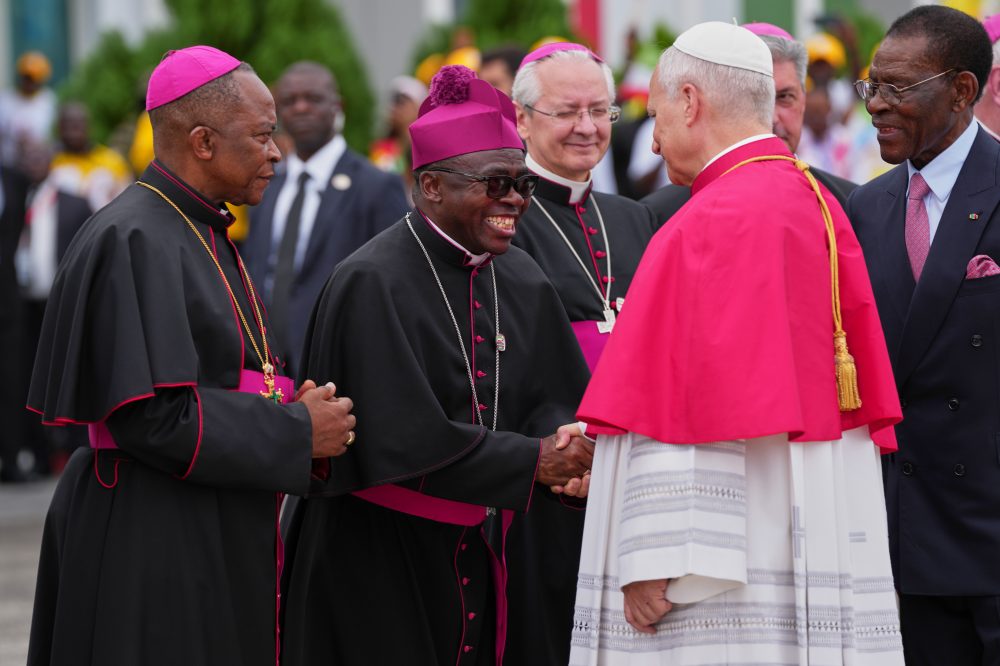

MALABO, Equatorial Guinea (TV Delmarva) — Pope Leo XIV toured a controversial detention facility in Equatorial Guinea on Wednesday, bringing international attention to longstanding human rights violations that advocacy organizations have criticized for years, particularly following recent U.S. migrant deportation agreements.
The pontiff’s visit to the detention center in Bata, a coastal city in the Central African nation, follows the example set by Pope Francis, who prioritized correctional facility visits during his papacy. Francis sought to provide hope to incarcerated individuals and demonstrate church solidarity while highlighting judicial misconduct, facility overcrowding, and systemic inequities.
This visit concluded Leo’s final complete day in Africa, wrapping up an extensive 11-day journey across four countries that began in Algeria to the north and included stops in Angola to the south, with Cameroon as an intermediate destination.
The pope’s schedule included celebrating Mass in Mongomo, located in the country’s eastern region, before traveling to Bata, the nation’s largest population center along the Atlantic coast. His itinerary also featured a prayer service at a monument honoring those killed in a 2021 military facility explosion in Bata that authorities attributed to carelessness.
While the United Nations human rights division praised Equatorial Guinea’s 2022 elimination of capital punishment, the country’s correctional system and judicial framework continue facing criticism from UN officials, human rights organizations, and the U.S. State Department.
The State Department’s 2023 country assessment documented numerous violations including unauthorized killings and detentions, politically motivated imprisonment, physical abuse, dangerous incarceration conditions, and “serious problems” regarding judicial autonomy.
“Amnesty International has serious concerns about the human rights situation in Equatorial Guinea,” said Marta Colomer Aguilera, senior campaigner at Amnesty’s West and Central Africa office.
She explained that physical abuse has been employed to force admissions of guilt or as punishment, human rights advocates face intimidation, and compromised judicial independence undermines fair trial guarantees.
The nation operates under President Teodoro Obiang Nguema Mbasogo, who has maintained control since 1979 and faces allegations of extensive graft and authoritarian governance.
Equatorial Guinea has joined other African countries in accepting millions of dollars through disputed agreements with the Trump administration to accommodate migrants expelled from the United States to nations where they have no connections.
Associated Press investigations reveal that no fewer than 29 such migrants without country ties have been sent there. These individuals were not housed in the Bata facility. Some continue being held in Malabo with limited legal and healthcare access, while others have been forcibly repatriated to their home countries where they may face persecution.
Government officials in Equatorial Guinea have rejected abuse allegations and have not responded to inquiries regarding violations connected to the U.S. deportation arrangement.
Leo, who was born in the United States, has condemned the Trump administration’s broader migration deportation strategy as “extremely disrespectful.”
Before his correctional facility visit, 70 human rights organizations released a public appeal to Leo, requesting that he address U.S. deportation practices to their country and urge African nations to reject participation in such programs.
“These practices circumvent humanitarian protections, expose refugees to detention and coercion, and subject individuals to refoulement, in direct contravention of international law,” they wrote, referring to the legal concept that prohibits countries from sending people to places where their lives or freedoms are at risk.
“The conditions under which these deportations have been carried out have also reflected a very troubling disregard for human life and safety. We call for the intercession of Pope Leo XIV to discourage African countries from being complicit in these violations and instead to protect these individuals,” the groups said.
EG Justice, which has consistently condemned political prisoner detention in Equatorial Guinea, signed the letter and encouraged Leo to exercise his moral influence on the issue.
“There are individuals — prisoners of conscience, and human rights activists — in detention whose cases raise serious humanitarian and due process concerns,” said Tutu Alicante, a U.S.-based activist who runs the EG Justice group. “At moments like this, sentence review and a real commitment to reform the judiciary can send a powerful signal of a willingness to turn a page toward justice and reconciliation.”
Alicante noted that officials had implemented “cosmetic steps” in recent months to enhance certain detention facilities but characterized them as temporary measures.
“The real test will be whether humane conditions, access to medical care, and basic rights are sustained long after the papal visit concludes,” he said.