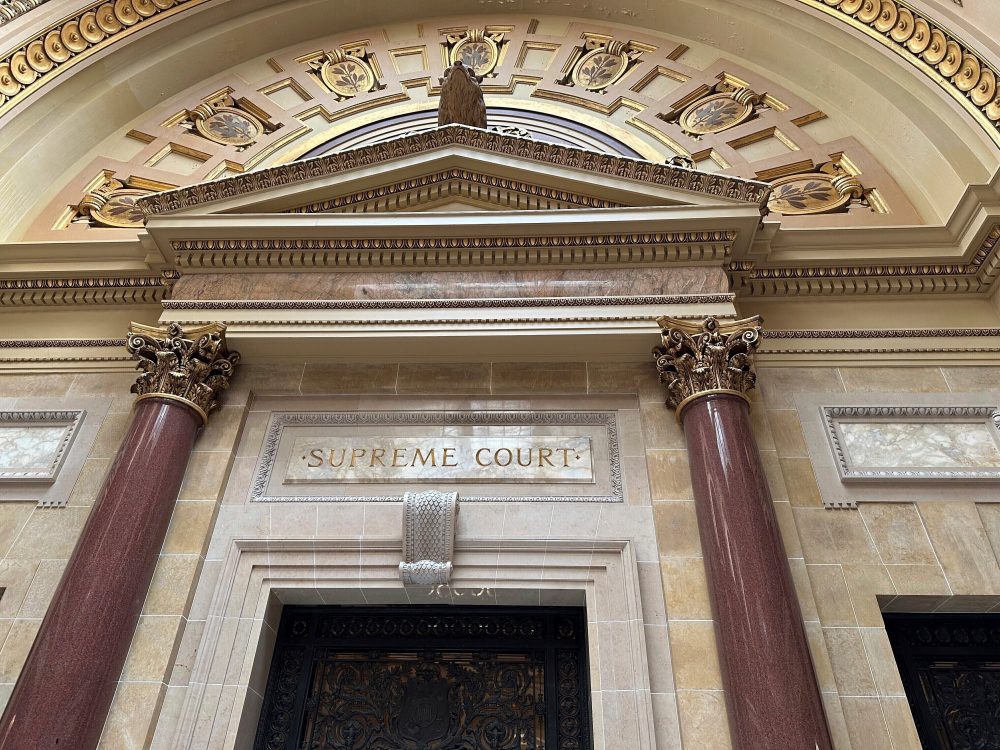

MADISON, Wis. — Wisconsin’s highest court has shut down a conservative activist’s effort to gain access to guardianship records that he claimed could reveal ineligible voters on the state’s registration rolls.
The case has been moving through the court system for several years and traces its origins to efforts by conservatives to challenge President Joe Biden’s 2020 victory over President Donald Trump in Wisconsin.
The dispute centered on a fundamental tension between protecting individuals’ privacy rights and ensuring that people who are legally ineligible to vote are not casting ballots.
Former travel executive Ron Heuer and his organization, the Wisconsin Voter Alliance, filed the lawsuit in 2022. They alleged that the number of voters who should be disqualified does not line up with Wisconsin’s official voter registration list. The lawsuit does not identify how many voters could potentially be affected.
Heuer asked the state’s Supreme Court to require counties to hand over records created when a judge rules that a person lacks the mental capacity to vote. He wanted those records compared against the voter registration list.
His attorney, Erick Kaardal, argued that privacy concerns and public records access could both be honored by blacking out sensitive personal details on the documents before releasing them.
However, the attorney representing Walworth County — which was fighting to keep the records sealed — pushed back on that argument. Attorney Sam Hall said at oral arguments that the whole point of obtaining the records was to match names against the voter rolls, which would require releasing the individuals’ names and addresses. Neither Hall nor Kaardal responded to requests for comment following the ruling.
Under Wisconsin law, a guardianship order is a court-issued arrangement that grants one person legal authority over another who has been found incapable of making decisions for themselves. A judge can strip someone under such an order of their right to vote if they are deemed unable to understand what an election is meant to accomplish.
In a 5-2 decision handed down Tuesday, the court’s liberal majority — joined by conservative Justice Brian Hagedorn — determined that the records in question are not available to the public, rejecting Heuer’s argument.
The case reached the Supreme Court after two lower appeals courts reached opposite conclusions. An appeals court in Madison had denied access to the records, while a separate appeals court in Waukesha ruled in 2023 that the records should be released — with birth dates and case numbers removed. The Supreme Court reversed that Waukesha ruling.
The legal battle was part of a broader campaign by those who disputed the 2020 presidential race results to raise questions about election integrity in the swing state. Heuer and the Wisconsin Voter Alliance filed similar lawsuits in 13 Wisconsin counties in 2022 seeking the same type of records.
Heuer and the organization have promoted conspiracy theories about the 2020 election in unsuccessful attempts to undo Biden’s Wisconsin win. Heuer was also hired as an investigator in a since-discredited election review led by former Wisconsin Supreme Court Justice Michael Gableman. That investigation found no evidence of fraud or misconduct that would have changed the election outcome.
The Wisconsin Voter Alliance also filed two separate lawsuits attempting to overturn Biden’s Wisconsin victory, both of which failed.
Biden beat Trump by nearly 21,000 votes in Wisconsin in 2020 — a margin that survived independent and partisan audits, multiple reviews, legal challenges, and recounts requested by Trump. In the 2024 election, Trump carried Wisconsin by roughly 29,000 votes.
No lawsuits are currently pending to challenge the 2024 Wisconsin election results, and no calls for an investigation into that outcome have been made.