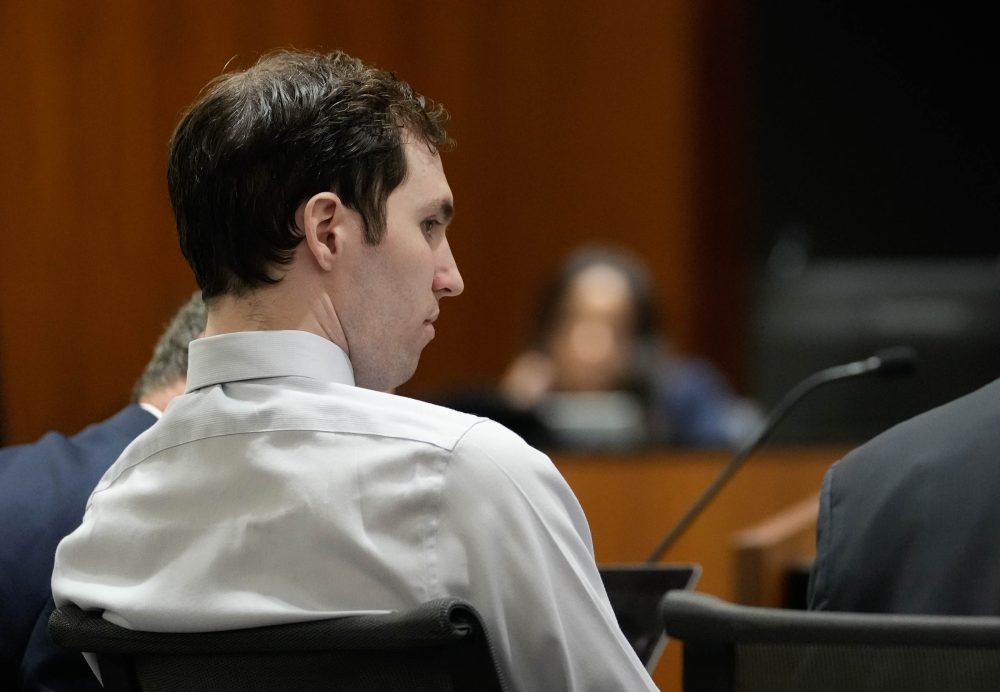

A weeklong preliminary hearing for the man accused of assassinating conservative activist Charlie Kirk is now in its second day, with prosecutors in Utah pushing to demonstrate they have sufficient evidence to bring the case to trial.
Tyler Robinson, 23, faces an aggravated murder charge in connection with the September 10th shooting of Kirk on the Utah Valley University campus. Prosecutors are seeking the death penalty. Robinson’s defense attorneys have made no statements regarding his guilt or innocence.
Tuesday’s proceedings are expected to include video footage from the Washington County sheriff’s office recorded on September 11th — the day Robinson turned himself in — along with a recorded statement from Robinson’s roommate, who was also his romantic partner.
Prosecutors allege Robinson left a note for his roommate that read: “I had the opportunity to take out Charlie Kirk and I’m going to take it.” Robinson also reportedly sent a text message saying he targeted Kirk because he “had enough of his hatred,” according to prosecutors.
Monday’s session produced no major revelations, but it was the most substantial presentation of evidence in the case so far. Former Utah Valley University Officer Christopher Bagley testified that he witnessed the shooting while Kirk was addressing a campus crowd of thousands. After the shooting, Bagley said he went to a nearby gravel rooftop and found what appeared to be a position where someone had been lying flat with a direct line of sight to where Kirk was standing.
“It looks like a sniper pad,” Bagley told the court.
Defense attorney Kathryn Nester’s objections were largely overruled by state District Judge Tony Graf on Monday. However, Graf did side with the defense in blocking the introduction of a compilation of surveillance videos from Utah Valley University, ruling that some had been altered — either zoomed in or marked with circles drawn around individuals. Prosecutors said they would attempt to reintroduce the footage Tuesday with those alterations removed.
During cross-examination, Nester questioned Bagley about an empty pistol holster found on the ground after the crowd dispersed. Bagley acknowledged he never took possession of the holster and was unsure whether it had been fingerprinted. Notably, Utah is an open carry state, allowing residents to carry firearms openly or concealed without a permit.
Legal experts say the prosecution faces a relatively low bar at this stage. Mark Kouris, a former prosecutor and state judge in Salt Lake City, explained that prosecutors only need to show reasonable grounds to believe Robinson committed the crime — a much lower standard than the “beyond a reasonable doubt” requirement at trial.
“This standard is extremely low, and the chances of them not getting through it are, quite frankly, almost nothing,” said Kouris, who now serves as an adjunct professor at the University of Utah’s S.J. Quinney College of Law.
Throughout Monday’s hearing, Robinson sat quietly between his attorneys, reviewing prosecution exhibits on a monitor and occasionally writing notes. His wrists were shackled to a chain around his waist.
Monday also marked the first time Kirk’s parents, Kathryn and Robert, and his widow, Erika, attended the courtroom proceedings since the case began. Robinson’s parents were also present, seated a few rows behind the Kirk family. Kirk’s family briefly stepped out of the courtroom twice — once when the officer began testifying about Kirk’s arrival on campus, and again when prosecutors played graphic videos of the shooting, including the moment Kirk was struck and the response from security personnel. Both times, they returned to their seats.
In addition to the video evidence, prosecutors have said they plan to present DNA evidence tying Robinson to the suspected murder weapon, autopsy findings, and witness statements. They are also expected to argue that the shooting endangered others at the campus event — an aggravating factor that could make the crime eligible for the death penalty under Utah law.
After the hearing concludes, Judge Graf will decide whether the case should move forward to trial, a step legal experts say is very likely.