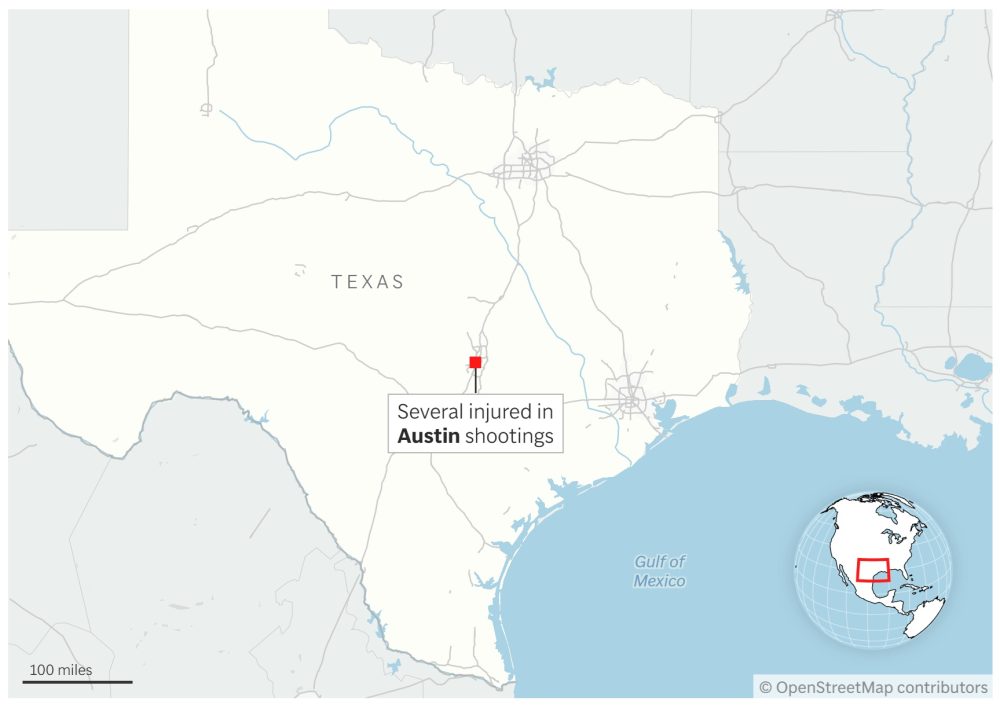
SAN DIEGO (AP) — A gunman fired multiple shots at a San Diego mosque on Monday, with law enforcement officials stating they believe individuals were wounded in the attack.
Officer Anthony Carrasco confirmed that witnesses reported hearing numerous gunshots at the Islamic Center of San Diego, located approximately 9 miles (14 km) north of the city’s downtown area. Authorities were uncertain whether the gunman was positioned inside or outside the building, or if the suspect had been apprehended. The San Diego Police Department announced on social media that the situation remains “still active but contained.”
Carrasco stated he could not provide additional details at that time.
According to its website, the Islamic Center represents the largest mosque in San Diego County. The facility houses the Al Rashid School, which the website indicates provides instruction in Arabic language, Islamic studies and the Quran.
Television aerial coverage captured more than a dozen children holding hands while being escorted from the center’s parking area, which was surrounded by numerous police vehicles. The white mosque sits within a neighborhood featuring homes, apartment complexes and strip malls that include Middle Eastern dining establishments and markets.
The governor’s office confirmed he was receiving updates on the situation.
“We are grateful to the first responders on the scene working to protect the community and urge everyone to follow guidance from local authorities,” his office posted on the social platform X.
The Islamic Center’s website describes its mission as serving not only the Muslim community but also working “with the larger community to serve the less fortunate, to educate, and to better our nation.” The facility hosts five daily prayer services and collaborates with various organizations and people of different faiths on social initiatives.
A rapidly expanding wildfire broke out Monday morning in Southern California, forcing residents from their homes and destroying at least one house.
The blaze began shortly after 10 a.m. in Simi Valley, located in Ventura County approximately 30 miles northwest of Los Angeles.
By just before noon, the fire had consumed more than 180 acres, said Scott Dettorre, spokesperson for the Ventura County Fire Department.
Television news helicopters captured images showing at least one residence engulfed in flames. Fire officials have not released specific numbers on property damage. Several helicopters were observed making water drops on the burning area while thick gray smoke covered the surrounding community.
Evacuation orders were issued for residents living in Simi Valley’s southern section. The city is home to more than 125,000 people.
Emergency responders worked urgently to prevent the fire from advancing down hillsides into residential areas of Thousand Oaks.
The National Weather Service issued an advisory for the region warning of winds between 20 and 30 mph lasting until 3 p.m.
Having accumulated over 50 NHL playoff appearances, Jack Eichel believes the Vegas Golden Knights shouldn’t alter their strategy as they advance deeper into postseason play.
“We know we need to be better, and you want to continue to elevate your game both individually and as a team the further you go,” Eichel said. “That’s our goal.”
However, executing that plan becomes increasingly challenging. Elite-level hockey has reached the third round, featuring three of the five top championship contenders still competing in conference finals. Vegas will battle the league’s top team Colorado in the Western Conference, while the perfect Carolina squad awaits the victor of the seventh game between Buffalo and Montreal.
Game 1: Wednesday, 8 p.m. ET (ESPN)
Favorite: Colorado (2-5)
The Avalanche claimed the Presidents’ Trophy for their outstanding regular season performance and maintained their position at the top of NHL standings for 156 straight days starting November 1, marking the longest such streak in 40 years. They eliminated Los Angeles with a sweep in round one and defeated Minnesota in five contests, mounting a comeback to finish off the Wild in overtime after trailing 3-0 away from home.
At this stage, the competition intensifies significantly.
“I would expect Colorado’s stiffest challenge is going to come here in this next series because Vegas has been around the block,” former player and coach-turned-TNT analyst Ed Olczyk said. “They’ve got an experienced coach. They’re getting goaltending that they didn’t get for a lot of the regular season.”
With Carter Hart between the pipes and Mitch Marner providing leadership, the Golden Knights have reached the Western final for the fourth occasion in their nine-season history. This marks their first appearance under coach John Tortorella, who assumed control in late March and guided the team through a 7-0-1 stretch to close the regular season plus additional playoff achievements.
“We feel really good about ourselves,” Tortorella said. “In playoffs, it’s not just the X’s and O’s and all. It’s how you feel, and the confidence level you have. I think we’re in a good spot.”
Colorado’s counterpart Jared Bednar isn’t concerned about his team’s ability to perform under increased scrutiny. The Avalanche sit four years past their 2022 Stanley Cup championship, while Vegas captured the title in ’23.
“We have the exact same expectations as Vegas does,” Bednar said. “We have very similar experience, too: probably close to half the roster winning a Stanley Cup a couple years ago, no success since, and here we are facing each other. So, pressure on us is no different than the pressure on them.”
Regarding player health, Vegas captain Mark Stone has been sidelined since exiting Game 3 against Anaheim with an undisclosed injury. Avalanche standout Cale Makar has been managing an apparent right arm or shoulder injury while teammate defenseman Sam Malinski and forward Artturi Lehkonen were unavailable for portions of the Minnesota series.
Game 1: Thursday, 8 p.m. ET (TNT, TruTV)
Favorite: Carolina (4-11)
The Hurricanes became the first franchise to complete clean sweeps of both opening rounds since the NHL adopted four best-of-seven series format in 1987. Their reward includes 11 complete days of rest before beginning the Eastern final.
“Obviously that’s not great,” Olczyk said. “That’s not ideal, but you’d rather have that than play back-to-back seven-game series and probably having guys being taped up to just get out there.”
Carolina captain Jordan Staal shares that perspective, dismissing concerns about potential rust and stating, “If anyone in the league was in a playoff series and they had the opportunity to win in four or seven, they would pick four.”
Another victory would match the 1985 Edmonton Oilers for the longest winning streak to begin playoffs.
With defending champion Florida eliminated after injuries disrupted the Panthers’ campaign and traditional powerhouses like Toronto and Tampa Bay knocked out early, conditions have aligned favorably for the Hurricanes to break through. They’ve advanced at least one round during each of Rod Brind’Amour’s eight seasons as coach but haven’t yet made the Stanley Cup Final.
“They’re perfect — no blemishes,” Olczyk said, highlighting Frederik Andersen’s goaltending and balanced offensive production as key factors. “I felt that it was them: It was Carolina and everybody else. And could they do it when they were the favorites and when the path was opened, could they take advantage? And they have taken full advantage.”
The eventual winner of the Sabres-Canadiens matchup will face a rapid transition from Monday night’s Game 7 to competing in Raleigh just 72 hours later. Montreal’s most recent third-round appearance came in 2021 during pandemic-adjusted divisional playoffs designed to address border restrictions, while Buffalo hasn’t advanced this far since back-to-back Eastern final appearances in 2006-07.
GREENBURGH, N.Y. — When NBA schedule makers paired Donovan Mitchell’s Cleveland Cavaliers against Jalen Brunson’s New York Knicks for a nationally broadcast season opener and Christmas Day game, they clearly saw this as the Eastern Conference’s premier matchup.
That prediction proved accurate.
Both teams return to Madison Square Garden’s bright lights where their season began Tuesday, but now they’ll compete in Game 1 of the Eastern Conference finals.
“It’s go-time now,” Brunson declared Monday.
New York has dominated the playoffs with record-breaking performances. Cleveland, strengthened by adding James Harden, gained momentum late in the regular season and convincingly eliminated Detroit, the East’s top seed, in round two.
This advancement marks Mitchell’s first conference finals appearance and brings him back to his hometown area. The Elmsford, New York native grew up near the Knicks’ practice facility.
“Yeah it’s great I get to play at home, woo, but it doesn’t matter,” Mitchell stated. “We’ve got to be locked in and ready to go, and I know we will be.”
New York secured the East’s third seed while Cleveland finished fourth, trailing Detroit and Boston significantly. However, seven months after the Knicks defeated the Cavaliers in Mike Brown’s coaching debut, both squads have fulfilled preseason expectations.
The Cavaliers started as the East’s wagering favorites and reclaimed that position following Harden’s acquisition from the Los Angeles Clippers. New York ranked second in preseason predictions but climbed to the top during the playoffs, and their performance demonstrates why.
The Knicks have captured seven consecutive victories and outpaced Atlanta and Philadelphia by a combined 194 points, marking the largest differential through any team’s initial 10 playoff contests. New York reached 140 points in both series-clinching games.
“They’re rested and they’re a juggernaut right now,” Cavaliers coach Kenny Atkinson observed. “I mean, it’s just what it is. It’s hard to blow out teams in the playoffs like they’ve been blowing out. Point differential means something in this league.”
Cleveland performed adequately rather than exceptionally throughout most of this postseason, requiring seven games to advance past both Toronto and Detroit. However, they claimed their final two road victories against the 60-win Pistons, including a dominant 125-94 Game 7 triumph.
Jarrett Allen contributed 23 points while Evan Mobley added 21 points and 12 rebounds, demonstrating that Cleveland’s strength extends beyond their prolific backcourt.
“I remember back in the day when I was with Pop, Pop said you need three All-Stars to win a championship. Well, they’ve got four,” Brown commented, referencing his assistant coaching tenure under Gregg Popovich in San Antonio.
New York defeated Cleveland in five games during the 2023 first round, Brunson’s inaugural New York season, extending their series record to 4-0 against the Cavaliers. The Knicks hold a 12-2 advantage in playoff matchups, having previously won series in 1978, 1995, and 1996.
Beyond Mitchell, both head coaches return to former organizations. Brown previously coached Cleveland twice, guiding them to their first NBA Finals in 2007. Atkinson, a Long Island native, served as Mike D’Antoni’s assistant with the Knicks before receiving his first head coaching opportunity in Brooklyn.
New York hasn’t competed since May 10, while Cleveland has just one complete day between rounds.
The extended break allows the Knicks to recover physically, with OG Anunoby returning to full practice after missing Philadelphia’s final two games with a strained right hamstring. Yet the layoff might disrupt a team operating in excellent rhythm.
“I’ve been in both situations. I’ve been playing while the team is waiting and I’ve been waiting while a team is playing, and you can say a lot theoretically,” Brown explained. “You could say that they’re going to be tired, but you can also say they have a competitive edge because they’ve been going at it for seven games and we’ve been off.”
Cleveland has received significant contributions beyond Mitchell and Harden.
Mobley has dominated on both ends, averaging 17 points while leading in rebounds (8.0) and tying for blocks (1.9). Allen has delivered strong Game 7 performances and benefited from Harden’s emphasis on interior offense.
Max Strus, Dennis Schroder, and Sam Merrill have provided crucial bench production. Strus made pivotal steals in Games 3 and 5 against Detroit. Schroder offers veteran ball-handling when Harden and Mitchell rest, while Merrill maintains 40.4% three-point accuracy.
JACKSONVILLE, Fla. — A former Jacksonville Jaguars head coach has been unsuccessful in his multi-million dollar arbitration battle against the NFL franchise that terminated him for cause in 2021, according to a source with knowledge of the legal proceedings.
The individual provided information to The Associated Press under the condition of anonymity due to non-disclosure agreements that prevent both parties from publicly discussing the matter. The source indicated the case reached resolution in 2025, though On3 initially reported the outcome Monday.
The Jaguars organization refused to provide comment, and attempts to reach Meyer for response were unsuccessful.
Team owner Shad Khan terminated Meyer for cause in December 2021, just hours after former player Josh Lambo publicly accused Meyer of physically kicking him during a practice session months prior — marking the final incident in a series of controversies during Meyer’s 11-month stint with the franchise.
Meyer attempted to manage a professional roster using collegiate methods. He decorated the facility with motivational sayings and phrases, implemented training camp-style drills during practice sessions, and maintained his flawed philosophy that coaching staff work for players while players perform for their coaches. He frequently brought in guest speakers for motivation and consistently blamed his assistant coaches for accumulating defeats rather than holding the professional athletes accountable.
Among Meyer’s most controversial actions occurred after a Thursday evening matchup in Cincinnati during late September. He decided to remain behind with relatives rather than return home with his squad, and was subsequently recorded the next evening acting inappropriately with a female patron at an establishment in Columbus, Ohio.
Abandoning his team demonstrated Meyer’s disconnect from professional football culture. This represented just one example of questionable judgment from a coach who achieved remarkable collegiate success — earning three combined championship titles — while leading programs at Bowling Green, Utah, Florida and Ohio State.
Meyer contested his dismissal through arbitration proceedings. A favorable ruling would have secured the remaining portion of his five-year agreement valued at approximately $6 million per year.
Meyer and Lambo remain engaged in separate civil litigation scheduled for trial in early August. Lambo voluntarily removed the Jaguars organization from his lawsuit earlier this year.
Lambo seeks more than $3.5 million in lost wages and emotional distress compensation related to Meyer’s alleged actions. The complaint filed in 4th Judicial Circuit Court in Duval County alleges Meyer established a hostile workplace and claims Lambo’s job performance declined following the kicking incident and verbal mistreatment from Meyer.
Meyer, 61, currently serves as a college football television analyst for Fox Sports and received induction into the College Hall of Fame in December.
A Palestinian worker has died from injuries sustained when Israeli forces opened fire as he attempted to enter Israel in search of employment, according to Palestinian medical authorities who confirmed his death on Monday.
This represents the second fatal incident within a week involving a Palestinian worker being shot while attempting to cross the border for employment purposes.
Palestinian health officials in Ramallah named the victim as 32-year-old Mahmoud Al-Amleh. Medical authorities reported he sustained gunshot wounds on Sunday morning from Israeli forces in Beit Ula village, located in the southern territory close to Hebron. Emergency responders transported Al-Amleh to a Hebron medical facility where he underwent emergency surgery.
Speaking to The Associated Press, Hamdan Al-Amleh explained that his cousin had joined other workers attempting to enter Israel for employment.
Israeli military officials acknowledged opening fire on Palestinians and wounding an individual. Military representatives stated that soldiers discharged their weapons because the Palestinians were believed to be damaging border infrastructure during their crossing attempt. The military’s official statement indicated that firing at suspects represents standard protocol during detention operations.
This incident follows another Palestinian fatality under comparable circumstances less than seven days earlier.
Prior to the conflict between Israel and Hamas, Israeli authorities permitted tens of thousands of Palestinians to work within Israel’s borders. However, Israel revoked the majority of these work permits following the Hamas-led assault on southern Israel that occurred on Oct. 7, 2023. As the West Bank’s economy continues to deteriorate and joblessness increases, growing numbers of Palestinians from the occupied territory have tried to enter Israel without authorization to find basic employment opportunities.
Data from the U.N. Office for the Coordination of Humanitarian Affairs indicates that Israeli military personnel or settlers have fatally shot no fewer than 47 Palestinians in the West Bank during this year through May 11.
OCHA reports that 17 Palestinians have lost their lives and more than 290 others have sustained injuries while attempting to cross the barrier since Oct. 7, 2023.
Drivers traveling on Chestnut Ridge Drive should plan for potential delays this afternoon due to ongoing traffic control operations in the area.
The flagging work is taking place along Chestnut Ridge Drive between Woodlytown Road and Mayapple Lane, with operations expected to wrap up by 5:30 PM today.
Officials describe the flagging operation as intermittent, meaning traffic flow will vary throughout the afternoon as work crews manage vehicle movement through the area.
Motorists are advised to allow extra travel time and consider alternate routes if possible to avoid delays.
Supporters of Bolivia’s former President Evo Morales joined massive demonstrations Monday as the South American nation grapples with its most severe economic crisis in decades.
The protests and highway blockades, which began more than two weeks ago, represent the most significant threat yet to President Rodrigo Paz, Bolivia’s first conservative president following almost 20 years of socialist leadership.
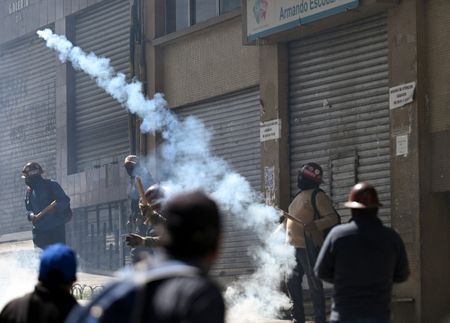
Following a six-day trek across the Andes mountains, thousands of Morales backers carrying dynamite sticks and slingshots arrived in the capital, where riot police awaited them. Explosions echoed through downtown La Paz as security forces responded with tear gas against demonstrators demanding the president step down just six months after taking office. “Homeland or death, we will win!” protesters shouted.
Paz assumed the presidency last year during a period when conservative leaders aligned with the Trump administration gained power across Latin America. Facing the country’s worst economic downturn in four decades, he has worked to address Bolivia’s fuel shortages, control its enormous budget deficit, and tackle the lack of U.S. dollars while managing powerful factions connected to Morales that threaten his administration.
Recently, his administration has negotiated agreements with protesting miners and educators who have agreed to halt their demonstrations.
Highway blockades have traditionally served as the primary tactic for social movements supporting Morales that say they speak for Bolivia’s predominantly rural Indigenous population. During the past 16 days, these roadblocks have trapped thousands of trucks on major routes, creating shortages of food, fuel and medical supplies in La Paz and other urban areas.
The administration sent police and military personnel throughout the nation over the weekend attempting to clear the blockades, resulting in an undetermined number of injuries and at least 90 arrests by Monday, the public prosecutor reported.
“They can march if it’s peaceful, but we will take action if they commit crimes,” Deputy Interior Minister Hernán Paredes stated Monday.
Paz claims Morales is directing the civil unrest to weaken his government.
Eight allied Latin American nations, spanning from Argentina to Panama, issued a collective statement last week condemning “any action aimed at destabilizing the democratic order.” The U.S. State Department joined the criticism Sunday, expressing support for Paz’s efforts “to restore order for the peace, security, and stability of the Bolivian people.”
Following Paz’s appeal, neighboring Argentina announced it would begin a week-long humanitarian airlift to help address shortages in the country.
Morales coordinated the recent march from his refuge in Bolivia’s isolated tropical region. He has remained hidden in the highlands for the past year and a half, avoiding an arrest warrant related to charges concerning his sexual relationship with a 15-year-old girl.
Morales maintains the allegations are politically motivated.
The National Weather Service has issued a Heat Advisory for New Castle County in Delaware and Eastern Chester County in Pennsylvania, warning residents of potentially dangerous heat conditions through Wednesday evening.
Heat index values are expected to reach up to 98 degrees, with some areas potentially hitting near 100 degrees during peak afternoon hours. The advisory, which began Sunday afternoon, will remain in effect until 8:00 PM Wednesday.
“Given the intensity of this early season stretch of heat and humidity, we are not acclimated to it yet, and therefore impacts could be greater if precautions are not taken,” the Weather Service warned. Record-setting high temperatures are possible through Wednesday.
Health officials stress the importance of staying hydrated and cool during this heat wave. Residents should drink plenty of fluids, stay in air-conditioned spaces when possible, avoid prolonged sun exposure, and check on elderly relatives and neighbors who may be more vulnerable to heat-related illnesses.
Relief is on the way. The Weather Service says showers and thunderstorms are expected to arrive Wednesday afternoon and evening, which should break this early season heat wave.
Stay with TV Delmarva for continued weather updates.
WILMINGTON — State transportation officials are alerting drivers about upcoming lane restrictions in New Castle County this Friday.
The Delaware Department of Transportation (DelDOT) will implement a lane closure on Woodlawn Road from the western edge of the traffic circle to Thompson Bridge Road on Friday, May 29th. The restriction will be in effect from 9:00 a.m. until 3:00 p.m. while crews conduct tree removal operations.
Officials are advising drivers to exercise caution when traveling through the work zone and to anticipate minor traffic delays during the six-hour period.
Additional details are available on DelDOT’s website at www.deldot.gov or through their mobile application.
Drivers traveling on Frederica Road should plan for potential delays as construction work continues to impact traffic flow in the area.
The roadway between Front Street and Market Street is experiencing intermittent lane restrictions that will remain active until 4 PM today. The closures are necessary to accommodate ongoing construction activities in the corridor.
Motorists are advised to allow extra travel time when using this route and consider alternate paths if possible during the affected hours.
The National Agricultural Statistics Service has issued its newest report detailing crop progress and agricultural conditions nationwide.
The agency’s Crop Progress and Condition Estimates document offers current data on how crops are developing and the state of farming operations.
This regular publication helps track agricultural trends and provides valuable information for farmers, researchers, and industry professionals monitoring crop performance throughout the growing season.
A Code Orange Air Quality Action Day has been issued for all of Delaware on Tuesday, May 19, as dangerous heat and stagnant atmospheric conditions are expected to lead to elevated ozone levels across the state.
According to the Delaware Department of Natural Resources and Environmental Control (DNREC), air quality levels are forecast to reach “Unhealthy for Sensitive Groups” for ozone pollution, especially during the afternoon and early evening hours. Fine particulate matter, or PM2.5, is expected to remain in the low-Moderate category.
The combination of several meteorological factors is expected to contribute to deteriorating air quality. A temperature inversion early Tuesday morning will trap pollutants near the ground, limiting vertical mixing in the atmosphere. At the same time, light to moderate southwesterly to westerly winds will transport additional regional pollution into Delaware from upwind areas.
Adding to the concern, mostly sunny skies and temperatures soaring into the middle 90s will enhance ozone production throughout the day. Ozone pollution tends to peak during hot, sunny weather when emissions from vehicles, industry, and other sources chemically react in the atmosphere.
Sensitive groups, including children, older adults, and individuals with asthma or other respiratory conditions, are encouraged to limit prolonged outdoor activity during the afternoon and evening hours when ozone concentrations are typically highest.
Conditions may remain somewhat elevated into Wednesday as another hot day with temperatures in the mid-90s is expected across southern Delaware. Continued west-southwesterly flow will keep transporting pollutants into the region, while sunny skies will support additional ozone development. Air quality levels are forecast to remain in the Moderate range statewide.
Relief is expected to arrive Thursday as a cold front moves offshore. Northeasterly winds behind the front will usher in a cooler and cleaner air mass into the Mid-Atlantic. Increasing cloud cover and scattered rain showers are also expected to suppress ozone formation, allowing air quality levels to improve back into the Good category for both ozone and PM2.5 across Delaware.
A controversial gold mining operation in Brazil’s Amazon rainforest faces a crucial legal decision Wednesday, as a court in the nation’s capital determines which level of government holds authority over the project’s environmental approval process.
The judicial panel in Brasilia must decide whether Brazil’s federal government or the northern state of Para holds jurisdiction to issue environmental permits for the mining venture operated by Canadian firm Belo Sun.
Since 2012, Belo Sun has worked to develop the Volta Grande gold extraction facility along the Xingu River in Para state. The proposed location sits approximately 20 kilometers (12.4 miles) from Belo Monte, ranked as the planet’s third-largest hydroelectric facility, whose operations have diminished river flow and significantly impacted nearby communities.
The Volta Grande operation would become the Brazilian Amazon’s largest gold mining facility.
Based on a 2015 feasibility analysis submitted by Belo Sun, the company plans to extract 3.52 million ounces of gold across 17 years, removing over 600 million tons of material. The mining site would span 24 square kilometers (9.2 square miles) and impact 125 hectares (309 acres) of Amazon rainforest.
A 2021 independent evaluation by researchers from the University of Sao Paulo and University of Amazonas determined the operation posed excessive risks and recommended rejection.
The assessment’s primary concern focused on the planned tailings dam, engineered to hold mining debris directly above a water channel near the Xingu River. Researchers warned that dam failure could rapidly release toxic materials into the river, endangering Indigenous and riverine populations along with the ecosystem.
The operation would also force relocation of 813 families, according to the Articulation of Indigenous Peoples of Brazil, or Apib. These communities, already severely impacted by droughts following the Belo Monte development, could experience additional hardship. The Belo Monte facility has decreased water flow in the Xingu River section where the Belo Sun operation is planned.
Using analysis from nonprofit Amazon Watch, prosecutors calculated the Volta Grande facility would generate approximately 3.7 million tons of carbon dioxide emissions, a greenhouse gas contributing to global warming. The calculation assumes one ton of carbon dioxide emissions per 28 grams of extracted gold.
The Volta Grande licensing process has encountered resistance from its inception.
In 2013, prosecutors moved to stop the process, pointing to inadequate consultation with affected Indigenous communities. In 2017, a complete federal court panel supported this position, mandating federal government approval and formal Indigenous community consultation before project advancement.
Nevertheless, in 2025, justices reversed that ruling and transferred licensing authority back to Para state. Prosecutors filed an appeal, contending the recent decision constituted a separate, new proceeding. The court will address the appeal Wednesday.
Last December, the Juruna and Arara Indigenous communities of the Xingu issued an open letter declaring they have never consented to the project, as mandated by the 2017 ruling. In a statement provided to The Associated Press, Belo Sun maintained it has conducted proper Indigenous consultation, following protocols established by affected communities and monitored by authorities.
Federal prosecutors contended that Brazil’s national government — rather than Para’s local government — should authorize the project given its nationwide implications. The operation would impact Indigenous territories, which falls under federal oversight, affect the Xingu River — a federal waterway — and further influence the Belo Monte hydropower facility, constructed by the federal government.
“From the start, as we did in Belo Monte, we have argued that the licensing falls under federal jurisdiction because it affects Indigenous lands and a federal river,” federal prosecutor Felício Pontes Jr., who is working on the case, said.
He noted that combined impacts with the hydroelectric facility represent a central concern. Brazilian courts have already established that Belo Monte’s effects exceeded initial projections.
In recent decisions, courts have mandated compensation for affected communities and required Norte Energia, the dam operating company, to supply clean water to families whose natural sources disappeared, as well as reassess water diversion from the Xingu River for turbine operations.
“This could create a major conflict if there isn’t a single authority licensing both projects, given the impacts one project has on the other,” the prosecutor said.
Should the court choose to transfer the case to federal oversight, the decision could nullify environmental permits issued in 2025 to Belo Sun by Para state. Regardless, parties may still pursue challenges. Additional lawsuits questioning the operation remain pending in courts.
Before the vote, Belo Sun announced initiation of new technical research for the Volta Grande operation. On May 12, the company reported hiring a mining consultancy to examine and update technical studies for the Installation License. The objective includes identifying enhancements, outlining updates to a definitive feasibility study and creating a phased project plan. Belo Sun anticipates completing this phase by the third quarter of 2026.
Belo Sun stated the Volta Grande facility remains subject to environmental licensing by appropriate regulatory and judicial authorities in Brazil.
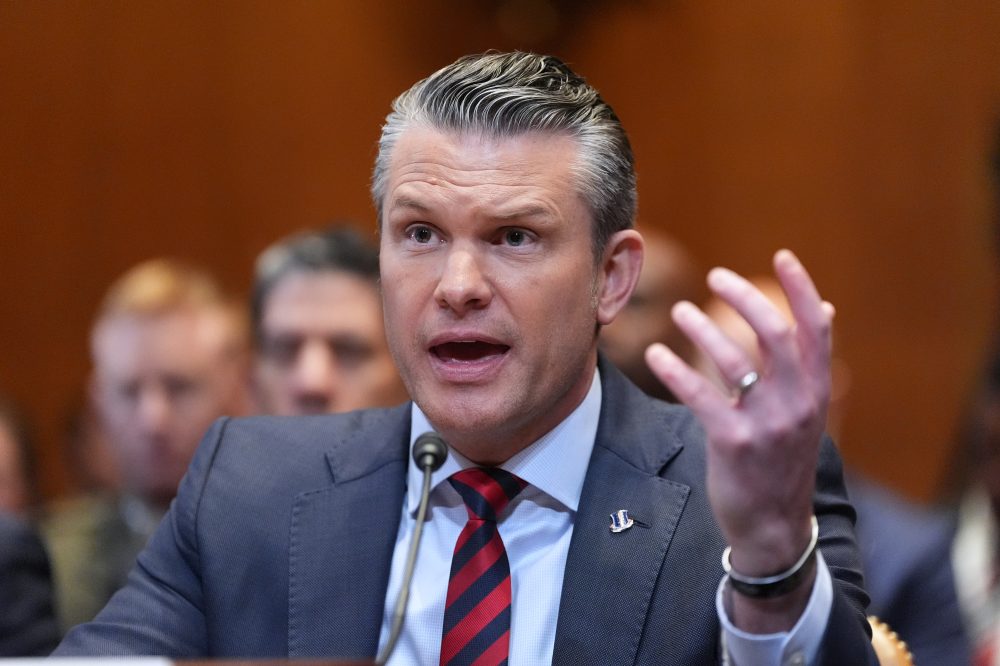
Pentagon chief Pete Hegseth made an unusual foray into electoral politics Monday, launching verbal attacks against one of President Donald Trump’s most vocal Republican opponents in Congress while inserting himself into a Kentucky House race that serves as a measure of the president’s influence.
Hegseth made the trip to Kentucky to deliver criticisms aimed at weakening Rep. Thomas Massie before Tuesday’s primary contest in Kentucky’s 4th Congressional District. The defense secretary claimed he was appearing “as a private citizen” rather than in his official Cabinet role.
However, Hegseth repeatedly invoked Trump’s name while endorsing Massie’s challenger, former Navy SEAL Ed Gallrein.
“President Trump needs reinforcements, and that’s what war fighters do. They stand behind leaders and have their back,” Hegseth said. “Too often, Thomas Massie has acted like his job is to stand apart from the movement that President Trump leads, instead of strengthening it. When President Trump needs backup, Massie wants to debate process.”
The defense secretary’s campaign involvement marks an unusual departure from standard practice while the country remains engaged in warfare, occurring as Trump seeks to showcase his ongoing control over the Republican Party amid growing economic worries and Iran war concerns fewer than six months from midterm voting.
Massie’s primary contest stands out this midterm cycle as a significant test of Trump’s influence. Presidential supporters have invested tens of millions into efforts to defeat Massie, creating what has become the costliest congressional primary battle in American history.
Massie, among the few Republican House members to publicly oppose Trump, has spoken against the Iran conflict and strongly advocated for making the Jeffrey Epstein files public.
“They’re desperate. That’s why they’re sending the secretary of war to my district,” Massie said Sunday on ABC’s “This Week.” “That’s why the president’s losing sleep and tweeting about this.”
Before Hegseth’s Kentucky visit, the Pentagon released a statement addressing accusations that the defense secretary violated regulations by using government funds for campaign activities.
“Secretary Hegseth is attending this event in his personal capacity. No taxpayer dollars will be used to facilitate his visit,” said Chief Pentagon Spokesman Sean Parnell. “His participation has been thoroughly vetted and cleared by lawyers, including the Department of War Office of General Counsel, and does not violate the Hatch Act or any other applicable federal statute.”
WASHINGTON — President Donald Trump announced Monday that he has postponed a military operation against Iran that was set to take place Tuesday, citing ongoing diplomatic efforts.
The president made the announcement through a social media post, explaining that serious negotiations are currently happening. This comes after Trump had warned that time was running out for Iran to reach an agreement or face renewed military action following a delicate ceasefire.
While Trump did not provide specifics about the military operation that was planned, he stated that he directed U.S. armed forces to remain ready for a comprehensive, major attack on Iran at any moment if diplomatic efforts fail to produce a satisfactory agreement.
For several weeks, Trump has warned that the ceasefire established in mid-April might collapse without a deal between the nations, though the requirements for such an agreement have varied over time.
Two Navy aircraft crashed in a dramatic midair collision during an Idaho air show Sunday, but remarkably all four crew members aboard both planes managed to eject safely before the jets plummeted to the ground in a fiery explosion.
The incident occurred during the “Gunfighter Skies” air show at Mountain Home Air Force Base, located approximately 57 miles southwest of Boise.
According to Cmdr. Amelia Umayam, spokesperson for Naval Air Forces, U.S. Pacific Fleet, just one of the four crew members sustained injuries and received hospital treatment Monday. The injuries were described as non-life-threatening.
Aviation expert Billie Flynn, a former F-35 senior test pilot and demonstration specialist, described the successful ejections as “truly remarkable.”
“It is astonishing considering the way the airplanes impacted each other — incomprehensible even,” Flynn stated.
The aircraft involved were two U.S. Navy EA18-G Growlers from Electronic Attack Squadron 129 based at Whidbey Island, Washington. Each plane carried two crew members.
The EA-18G Growler spans 60.2 feet in length and completed its inaugural flight in August 2006, marking the first new electronic warfare aircraft design in over 35 years, Navy records show. The aircraft saw its first combat deployment in Libya during 2011 and has since operated globally.
Spectator footage captured the moments before impact, showing one aircraft positioned slightly behind the other. Upon collision, the jets became locked together, with one plane’s underside pressed against the top of the other aircraft.
The combined wreckage then spun and rocked together, momentarily pointing skyward before rotating downward toward the earth. The ground impact created a massive fireball with black smoke billowing upward.
The crew members ejected in rapid sequence, their parachutes deploying as the aircraft began their fatal descent.
Flynn analyzed the collision footage and suggested pilot error as the likely cause.
The video evidence indicates the pilots were attempting to align their aircraft closely in a wing-tip to wing-tip formation but failed to complete the standard rejoining maneuver safely, Flynn explained.
“This is clearly a pilot error,” Flynn concluded.
Military officials have not disclosed any details about potential contributing factors to the crash. Umayam confirmed an investigation is ongoing while recovery operations for the destroyed aircraft continue.
“Our priority is to ensure the safety and well-being of our personnel, as well as security of the aircraft during the recovery,” Umayam stated in correspondence with The Associated Press.
John Cox, an aviation safety specialist and CEO of Safety Operating Systems, noted that air show pilots represent the elite tier of aviators, but operate within extremely narrow safety margins.
“Air show flying is demanding. It has very little tolerance,” Cox explained. “The people who do it are very good and it’s a small margin for error. I’m glad everybody was able to get out.”
The air show sector has pursued enhanced safety measures across approximately 200 annual events nationwide. The most recent fatal air show incidents occurred in 2024, claiming two lives in separate crashes at different venues.
Sunday’s Gunfighter Skies event marked the first air show at the base since 2018, when a hang glider pilot perished during a performance crash.
The base previously experienced a 2003 Thunderbirds aircraft crash during a maneuver attempt. That pilot avoided injury by directing the plane away from spectators and ejecting moments before ground impact.
John Cudahy, president and CEO of the International Council of Air Shows, reported significant safety improvements over recent decades. Annual U.S. air show fatalities averaged 3.8 deaths from 1991 to 2006, but have declined to an average of 1.1 deaths yearly since 2017, even accounting for a 2022 Dallas collision between vintage aircraft that killed six people. No air show deaths occurred in 2025 or 2023, and no spectator fatalities have happened at U.S. air shows since 1952.
MIAMI — A former business associate of Venezuelan leadership faced federal charges in Miami court Monday, accused of laundering money through an alleged bribery operation involving government officials.
Alex Saab appeared before a federal judge following his weekend deportation by acting President Delcy Rodríguez, who has been removing insider businesspeople suspected of corrupt activities with the previous administration.
Wearing shackles and prison clothing, the defendant responded “Yes, ma’am,” in English when informed of the single money laundering charge connected to an undisclosed bribery operation. Court documents were unsealed during the proceeding but remain unavailable to the public.
The 54-year-old Saab faced previous federal charges in 2019 under the first Trump presidency and was detained in Cape Verde during a fuel stop while on what Venezuelan officials called an important humanitarian trip to Iran.
President Joe Biden granted him a pardon in 2023 as part of a prisoner exchange that freed multiple detained Americans in Venezuela and returned a fleeing foreign defense contractor. The agreement, which was part of an unsuccessful Biden administration attempt to encourage free elections, drew sharp criticism from Republicans and federal investigators, who continued pursuing Saab for additional alleged crimes outside the limited pardon scope.
Federal authorities have historically characterized Saab as the former leader’s “bag man” and may seek his testimony against his previous associate, who faces drug trafficking charges in Manhattan following his January capture during a U.S. military operation.
This latest prosecution unfolds as the Trump administration works to reshape Venezuelan relations.
Trump and top officials have praised Rodríguez, who has opened Venezuela’s petroleum sector to American investment during rising oil costs linked to Iranian conflict. In return, the White House has reduced election pressure, despite constitutional requirements for voting within 30 days of a president becoming “permanently unavailable.”
However, Rodríguez confronts significant internal opposition from the ruling socialist party’s more radical elements, including figures like Interior Minister Diosdado Cabello, who maintains substantial security force influence and faces his own U.S. criminal charges.
Mario Silva, who previously hosted pro-government programming on state television before his removal following the former president’s capture, challenged Saab’s deportation legality, citing constitutional extradition prohibitions.
“The imperialists don’t negotiate. They conquer, test and probe — until our country shatters,” Silva stated during a Sunday social media livestream. “Nobody is safe right now.”
Silva noted that Venezuela’s previous efforts to secure Saab’s freedom exceeded actions taken for the former president and former First Lady Cilia Flores.
Possibly expecting criticism, Venezuela’s immigration department Saturday described Saab only as a “Colombian citizen who is implicated in committing several crimes in the United States of America, a fact that is widely known, notorious, and heavily documented in the media.”
Rodríguez’s current silence contrasts sharply with her previous support during Venezuela’s international campaign for his release from U.S. custody. She previously called him an “innocent Venezuelan diplomat” who was illegally “kidnapped” during a humanitarian mission to Iran to bypass the “immoral, imperial blockade” imposed by the United States.
While consolidating power, Rodríguez has separated herself from Saab, removing him from her Cabinet and eliminating his position as primary liaison for foreign companies seeking Venezuelan investments.
Saab built wealth through Venezuelan government deals. His 2019 charges involved a low-income housing contract that was never completed.
The Associated Press previously reported his investigation connection to another Justice Department case against Saab’s business partner, Alvaro Pulido, regarding the CLAP program established to provide basic foods — rice, corn flour, cooking oil — to impoverished Venezuelans during severe hyperinflation and currency collapse.
The 2021 indictment identified Saab as “Co-Conspirator 1” and alleged he helped create shell companies to bribe a pro-government governor who granted the partners an overpriced Mexican food box import contract.
Saab previously met secretly with the Drug Enforcement Administration before his initial arrest and, during a private 2022 court session, his attorneys disclosed his years-long cooperation helping the DEA investigate corruption within the former administration’s inner circle. Through this cooperation, he surrendered over $12 million in illegal profits from corrupt business activities.
Officials in the Maldives are examining several potential causes behind the tragic deaths of five Italian researchers during a cave diving expedition last week, with authorities questioning whether the team went far deeper underwater than originally intended.
The diving team entered the underwater cave on Thursday under the leadership of Monica Montefalcone, a 51-year-old marine ecology professor from the University of Genoa who frequently conducted research dives in Maldivian waters. Among those who perished were her daughter and four other researchers, including a diving instructor whose remains were retrieved from 60 meters below the surface.
This incident represents the most fatal single diving accident in the nation’s recorded history.
Mohamed Hussain Shareef, the chief spokesperson for the Maldives president’s office, confirmed that officials had authorized the research team to study soft corals at the Devana Kandu location.
“What we didn’t know was that it was cave diving,” Shareef explained. “Because, as divers will tell you and appreciate, it’s a very different discipline with its own sets of challenges and risks involved, and particularly at that depth, there are any number of things that could have gone wrong.”
Carlo Sommacal, Montefalcone’s husband, defended his wife’s expertise in statements to Italian news outlets, emphasizing she would never have endangered her daughter or team members. He characterized her as “one of the best divers in the world” with approximately 5,000 dives to her credit, describing her as “always conscientious” and “never reckless.”
“I’m sorry, I wasn’t there and I’m no expert, and from what I’m seeing and reading, even the experts don’t have definite answers but are merely making hypotheses – lots of them,” he communicated to Reuters through WhatsApp.
Finnish diving specialists located the remaining four victims on Monday within the cave’s deepest third chamber, where they were found “pretty much together,” according to Shareef. Recovery operations are scheduled to retrieve two bodies on Tuesday and the remaining two on Wednesday.
The dangerous nature of these depths became tragically apparent when a Maldivian rescue diver also lost his life during body recovery attempts last week. The non-profit Divers Alert Network Europe, which is coordinating the recovery mission, reported that their expert divers required sophisticated technical equipment, including closed-circuit rebreathers that recycle exhaled air, to locate the victims on Monday.
Shafraz Naeem, a veteran Maldivian diver who has navigated the Devana Kandu cave system more than 30 times under deep-exploration permits and currently advises the nation’s defense forces and police, explained that the cave opening sits approximately 55 meters down, with sunlight penetrating only the initial chamber before complete darkness takes over.
Diving specialists explain that increasing depth creates higher pressure around divers, causing each breath to deliver greater oxygen quantities to the lungs and bloodstream, even when breathing standard air. When this oxygen exposure becomes excessive or prolonged, it can overstimulate the central nervous system and cause tissue damage.
“It is incredibly dangerous to conduct dives at these depths on compressed air,” Naeem warned. “Theoretically oxygen toxicity starts to occur on compressed air at about 55 meters. That is very risky and very dangerous. You never know when oxygen toxicity will hit you.”
However, Riccardo Gambacorta, who previously served as diving instructor for victim Muriel Oddenino, disputed the oxygen poisoning theory.
“My personal opinion is that an unexpected incident may have occurred underwater. They essentially did not anticipate a certain situation,” he stated.
The Italian research team that entered the caves Thursday consisted of Montefalcone’s daughter Giorgia Sommacal, biologist Federico Gualtieri, researcher Oddenino, and diving instructor Gianluca Benedetti, whose body was recovered that same evening. Benedetti had resided in the Maldives for seven years.
Shareef announced the suspension of the vessel used by the diving team “because the regulations here say that if you want to take divers on expeditions, you need a dive school permit, which they didn’t have, sadly.”
Abdul Muhsin Moosa, operator of the MV Duke of York, stated his vessel held authorization for recreational diving to depths of 30 meters maximum.
“We are sharing these details with the government, as well,” he noted, explaining that arriving divers received briefings about Maldivian recreational diving restrictions prohibiting descents beyond 30 meters.
For recreational dives within 30 meters, standard compressed air contains 21% oxygen and 79% nitrogen, but deeper expeditions require oxygen concentrations above 32%, according to diving experts. For depths approaching 50 meters, specialists recommend divers carry at least two cylinders of specialized breathing gas each.
Investigators have not yet determined whether strong underwater currents may have forced the divers below their intended depths.
The chief executive of Nvidia expressed optimism Monday that China will eventually allow American semiconductor companies greater market access following last week’s diplomatic engagement between high-level U.S. and Chinese officials.
The technology company has secured necessary permits from American authorities to market its H200 processors, but Chinese regulators have not yet granted permission as the nation continues building its domestic semiconductor industry. Recent discussions between the U.S. President Donald Trump and Chinese President Xi Jinping did not yield immediate progress for Nvidia’s efforts to market H200 processors in China.
Speaking during a Bloomberg Television interview at a Dell-sponsored event, the executive shared his perspective on future market conditions.
“My sense is that over time, the market will open,” he stated.
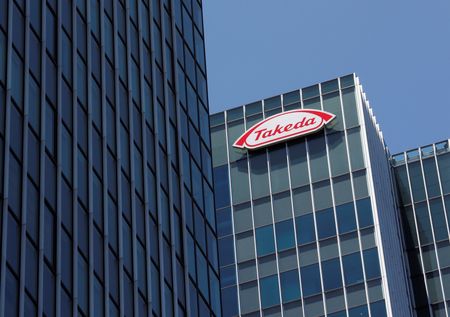
A federal jury in Boston ruled on Monday that Takeda Pharmaceutical employed anticompetitive tactics to prevent the launch of a generic alternative to Amitiza, its constipation treatment medication.
The jury determined that pharmacies, insurance companies, retailers and other parties suffered approximately $885 million in financial harm due to Takeda’s scheme to block the generic drug from entering the market.
The verdict represents a significant legal defeat for the pharmaceutical company in what was described as an antitrust case focused on delaying competition for the anti-constipation medication.
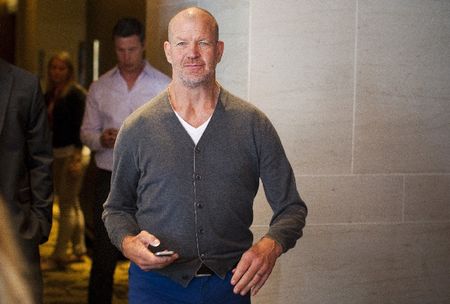
The person who started athletic apparel company Lululemon Athletica announced Monday that he’s prepared to come to terms on the main conditions offered by the fitness clothing manufacturer.
According to a regulatory document filed Monday, the business attempted without success to resolve its contentious proxy dispute with Wilson just last week, with the clothing company stating that its founder increased his demands during negotiations.
Wilson responded with his own statement, saying: “The Board has not provided me with detail on where our disagreements lie right now, but as of Friday last week, we seemed to be in full agreement on the principal terms.”
Third baseman Gio Urshela has called time on his professional baseball career, making the announcement Monday after spending a decade in Major League Baseball across eight different franchises and appearing in 851 games.
The 34-year-old player shared his decision through a heartfelt message on Instagram, writing: “Today is the day to close this chapter as a professional player, and this is not a moment to be sad. It is a moment to be grateful to God for allowing me to play this beautiful sport that changed my life.”
Urshela’s career truly flourished during his time with the New York Yankees from 2019 through 2021, following underwhelming stints in Cleveland during 2015 and 2017, plus a season in Toronto in 2018. His breakout 2019 campaign saw him post impressive numbers with a .314 batting average, 21 home runs, and 74 RBIs. He maintained strong performance in the pandemic-shortened 2020 season with a .298 average, followed by a .267 average with 14 homers and 49 RBIs in 2021.
The Yankees traded Urshela along with catcher Gary Sanchez to the Minnesota Twins on March 13, 2022, receiving infielders Josh Donaldson and Isiah Kiner-Falefa plus catcher Ben Rortvedt in return.
Following his Minnesota tenure, Urshela played for the Los Angeles Angels in 2023, split the 2024 season between the Detroit Tigers and Atlanta Braves, and most recently appeared with the Athletics in 2025. He entered free agency after participating in spring training with the Twins.
Urshela concludes his professional career with a .270 lifetime batting average, recording 312 runs, 73 home runs, and 352 RBIs over his 10-season tenure.
A Heat Advisory remains in effect for northern Delaware and southeastern Pennsylvania until 8:00 PM Wednesday, with dangerous heat index values climbing near 100 degrees.
New Castle County in Delaware and Eastern Chester County in Pennsylvania are under the advisory, issued by the National Weather Service. Maximum heat indices could reach 98 degrees, with record-setting temperatures possible through Wednesday afternoon.
The Weather Service warns this early-season heat wave poses heightened risks since our bodies haven’t yet adjusted to extreme temperatures. The combination of intense heat and high humidity significantly increases the danger of heat-related illnesses.
“Given the intensity of this early season stretch of heat and humidity, we are not acclimated to it yet and therefore impacts could be greater if precautions are not taken,” meteorologists stated.
Residents should drink plenty of fluids, stay in air-conditioned spaces, avoid direct sunlight, and check on elderly relatives and neighbors. Peak heating occurs during afternoon hours when conditions become most dangerous.
Relief is expected Wednesday evening when showers and thunderstorms move through the region, finally breaking this unseasonable heat pattern. Until then, take all necessary precautions when venturing outdoors and limit strenuous activities during peak afternoon hours.
Weather authorities have issued a heat advisory that will remain in effect from Saturday afternoon through Monday evening.
The National Weather Service Mount Holly New Jersey office announced the advisory on May 18 at 2:10 PM EDT, with the warning period extending until May 20 at 8:00 PM EDT.
Residents should prepare for elevated temperatures during this multi-day period and take appropriate precautions to stay safe in the hot conditions.
Thousands of demonstrators backing Bolivia’s former leftist leader Evo Morales took to the streets of La Paz on Monday, escalating civil unrest that has paralyzed the nation for almost two weeks and created critical shortages of essential goods including food, fuel and medical supplies.
The widespread disruptions have left commercial vehicles stranded on major highways and prevented patients from accessing medical care, according to government officials. Bolivia has requested assistance from Argentina, which responded by dispatching a military transport plane loaded with food aid.
ORIGINS OF THE CIVIL UNREST
What started as labor strikes in early May has transformed into a countrywide movement encompassing trade unions, mining workers, transportation employees and agricultural communities. Demonstrators are demanding that President Rodrigo Paz’s administration reverse budget-cutting policies and tackle escalating costs of living, with some groups demanding his removal from office.
Political experts indicate the civil disorder has expanded beyond local complaints to encompass broader opposition to the government’s economic policies.
PRIMARY CONCERNS OF PROTESTERS
The demonstrations focus on mounting financial hardships. Educational workers are seeking increased salaries and additional funding, while transportation unions have initiated indefinite work stoppages due to fuel scarcities and supply chain issues. Native and farming communities are resisting land reform policies they claim benefit wealthy property owners.
Even after the administration withdrew a disputed land reform law earlier this month, demonstrations have persisted.
GOVERNMENT’S REACTION
Paz, who assumed the presidency in November and inherited a struggling economy, has justified budget reductions and cuts to fuel subsidies as essential for restoring fiscal stability.
He is developing a legislative reform proposal for Congress that involves progressively removing fuel price regulations and implementing strategies to increase domestic energy output and investment.
The administration has attempted to reduce tensions through dialogue and salary improvements while sending approximately 3,500 security personnel to remove highway blockades. Officials report that roughly 57 individuals have been detained.
Government representatives have accused opposition figures and Morales supporters of promoting the roadblocks, which they claim have led to at least three fatalities, including patients who could not reach medical facilities.
EVO MORALES’ INVOLVEMENT
Morales, who led Bolivia from 2006 to 2019, has endorsed the demonstrations, characterizing them as a reaction to economic difficulties and political targeting.
Thousands of his followers have gathered after a judge found him in contempt earlier this month for not appearing in court regarding a trafficking case. Morales maintains his innocence.
“As long as the structural demands such as fuel, food, and inflation are not addressed, the uprising will not be halted,” he wrote on X.
INVESTOR SENTIMENT
Market responses have remained subdued so far, partly because Bolivian government bonds typically see limited trading activity. The additional yield that investors require for holding Bolivian debt compared to similar U.S. Treasury securities decreased in May to its lowest level since at least 2020, according to LSEG data.
Nevertheless, analysts caution about increasing risks.
“Bolivia is in a period of social and political stress, as an escalating national strike converges with mass protests and widespread roadblocks,” JPMorgan said in a client note.
HISTORICAL CONTEXT FOR BOLIVIA
Highway blockades have traditionally been a standard strategy employed by protesters. During the tenure of former left-wing president Luis Arce, comparable disruptions organized by groups supporting Morales along with mining and agricultural communities sometimes brought major transportation corridors to a standstill and resulted in billions in economic damage.
Political analysts note that Paz confronts the difficult task of stabilizing the economy while forming new political and social partnerships in a deeply divided political landscape.
“There are no easy or quick solutions in sight,” said economist Gonzalo Chavez.
The European Union decided Monday to continue sanctions against people and organizations connected to former Syrian President Bashar al-Assad’s administration for an additional year, but simultaneously removed seven government bodies from its restricted list as part of broader policy changes toward Damascus.
The restrictive measures will now remain in effect until June 1, 2027, according to an announcement from the European Council following the organization’s yearly assessment of its Syria sanctions policy.
Individuals and entities still on the list face frozen assets and restrictions on travel, while European Union citizens and businesses cannot provide financial resources to them.
The European Union stated that removing the seven entities from sanctions was designed to help “the strengthening of the EU’s engagement with Syria” after Assad’s government fell in late 2024 and a new administration under President Ahmed al-Sharaa took power.
Syria’s foreign ministry responded with a statement saying the sanctions relief for the seven entities would aid the nation’s recovery and rebuilding work, bolster government institutions, and help maintain stability.
The ministry also expressed approval for continuing sanctions against former Assad government figures accused of participating in violations against Syrian citizens.
In May 2025, the European Union removed all economic restrictions on Syria while maintaining measures targeting former Assad administration members and security-related sanctions.
The organization explained that networks connected to the previous government still maintain power and could interfere with Syria’s democratic transition and peace-building processes.
Earlier this month, the European Union also reinstated its full cooperation agreement with Syria, stating that the circumstances that caused its suspension during Assad’s violent response to demonstrators in 2011 no longer existed.
Drivers traveling on southbound Pennsylvania Avenue in New Castle County will encounter construction-related lane restrictions today.
The shoulder is currently closed between Hopeton Road and Westover Road as crews conduct construction work in the area. The closure is expected to last until 7 PM this evening.
Motorists are advised to use caution when traveling through the work zone and allow extra time for their commute.
A Minnesota county prosecutor filed criminal charges Monday against a federal immigration officer who shot a Venezuelan man during an immigration enforcement operation earlier this year.
Christian Castro, an Immigration and Customs Enforcement officer, faces four counts of second-degree assault and one count of filing a false crime report in connection with the January 14 shooting of Julio Cesar Sosa-Celis, according to Hennepin County Attorney Mary Moriarty, who announced the charges during a press conference. Authorities have issued an arrest warrant for Castro.
The shooting occurred after Castro and another federal officer pursued a different individual to an apartment duplex shared by that person and Sosa-Celis. During the incident, the federal officer shot Sosa-Celis in the leg, Moriarty said. She noted that both Sosa-Celis and the other resident were in the United States legally.
Initially, federal authorities claimed that Sosa-Celis and Alfredo Alejandro Aljorna had attacked an officer using a broom handle and snow shovel during the confrontation. However, a federal judge subsequently dropped those charges, and federal officials launched an inquiry into whether the two immigration officers provided false testimony under oath regarding the events.
Neither the Department of Homeland Security nor Justice Department officials responded immediately to requests for comment. DHS has previously stated that providing false testimony under oath constitutes a “serious federal offense” and that dishonest statements could lead to termination or criminal prosecution of officers.
Last month, Minneapolis officials made public surveillance footage of the incident, which was recorded from a distance by a municipal security camera.
The federal government deployed thousands of officers to the Minneapolis and St. Paul region as part of President Donald Trump’s nationwide deportation initiative. The Department of Homeland Security, ICE’s parent agency, labeled Operation Metro Surge as its most extensive immigration enforcement effort to date and declared it successful.
However, the multi-week operation generated significant tensions, and the fatal shootings of U.S. citizens Renee Good and Alex Pretti by federal officers sparked widespread protests and raised concerns about officer behavior.
Hennepin County, which encompasses Minneapolis, has been examining several incidents from the operation and brought charges last month against another ICE agent for alleged misconduct while performing official duties.
Minnesota officials and the Trump administration have disagreed over which government level has authority to investigate and prosecute officers for actions taken during official operations. The Trump administration has questioned whether Minnesota officials possess proper jurisdiction.
State authorities have expressed distrust in the federal government’s ability to investigate its own personnel or ensure accountability.
Hennepin County is still investigating the deaths of Good and Pretti and filed a lawsuit against the administration in March seeking access to evidence in those cases and the Sosa-Celis matter. While Moriarty has not brought charges in either death, she has expressed confidence that her office’s investigations will provide transparency, regardless of whether criminal charges result.
WASHINGTON — On Monday, Treasury Secretary Scott Bessent announced the United States will provide an additional 30-day window allowing nations to import Russian oil currently aboard vessels at sea, a decision aimed at addressing supply shortfalls triggered by conflict involving Iran.
This announcement represents an ongoing shift in policy from an administration that had previously indicated Russian oil sanctions would be reinstated. The temporary sanctions waiver was initially declared in early March and first extended in April, occurring just two days after Bessent stated at the White House he had no intentions of prolonging the sanctions relief.
This most recent 30-day extension follows Bessent’s previous statements to The Associated Press that the Russian oil sanctions waiver would expire, reflecting persistent global economic difficulties stemming from the Iran conflict as supply shortages drive up prices and hinder economic growth.
According to Bessent, the extension will benefit poorer countries requiring oil access because China will lose some of its capacity to “stockpile discounted oil” from Russia. However, the temporary suspension of sanctions carries risks by potentially helping Russia fund its military operations in Ukraine.
“This extension will provide additional flexibility, and we will work with these nations to provide specific licenses as needed,” Bessent stated on social media.
OAKLAND, Calif. — A federal court has thrown out legal claims brought by Elon Musk against OpenAI and its leadership team, with a jury determining that the billionaire entrepreneur missed the legal deadline to pursue his case.
The Tesla CEO, who helped establish OpenAI in 2015, had alleged that the artificial intelligence company’s executives abandoned their original commitment to operate as a nonprofit organization focused on benefiting humanity. Musk contributed $38 million during the company’s early years before accusing CEO Sam Altman and his senior leadership of secretly transitioning to a profit-driven business model.
A nine-member jury concluded that Musk’s legal challenge came too late, violating statute of limitations requirements. Judge Yvonne Gonzalez Rogers endorsed the jury’s advisory decision on Monday, officially rejecting Musk’s lawsuit. The jury reached their conclusion after just two hours of deliberation.
The legal proceedings, which started April 27 in Oakland, California, revealed details about the contentious split between these prominent technology figures and OpenAI’s early development. The company now carries an $852 billion valuation and is preparing for what could become one of the largest stock market debuts ever.
Altman and OpenAI maintained that no permanent commitment existed to maintain nonprofit status indefinitely. They contended that Musk understood this arrangement and pursued litigation after failing to gain exclusive control over the rapidly expanding AI enterprise.
The lawsuit sought financial compensation for OpenAI’s charitable division and demanded Altman’s removal from the company’s board. Musk’s withdrawal of financial support created a significant rift between the former collaborators. He claimed his actions were justified by deceptive practices that OpenAI’s board recognized when they dismissed Altman as CEO in 2023, though he regained his position within days.
The three-week proceedings featured testimony from Musk, Altman, his senior associate Greg Brockman, Microsoft CEO Satya Nadella, and numerous other technology industry figures. During his testimony spanning three days, Musk told jurors: “I think they’re going to try to make this lawsuit … very complicated, but it’s actually very simple. Which is that it’s not OK to steal a charity.”
Musk’s legal filing alleged “breach of charitable trust” and claimed that Altman and Brockman improperly benefited financially as ChatGPT’s creator gained tremendous value. Trial testimony revealed that Brockman’s ownership interest in OpenAI is valued at approximately $30 billion.
OpenAI dismissed Musk’s accusations as baseless resentment designed to harm its expansion while promoting Musk’s competing venture xAI, which he established in 2023. During questioning by OpenAI attorney William Savitt, Musk displayed defensive behavior.
“Your questions are not simple,” Musk stated during one exchange. “They are designed to trick me essentially.”
The jury also heard from former OpenAI board members Helen Toner and Tasha McCauley, who discussed their decision to terminate Altman in 2023. Both women were subsequently removed from the board when Altman resumed his leadership role.
Both Altman and Musk had sought the CEO position during OpenAI’s formative period. Altman testified about his concerns regarding Musk’s efforts to increase his influence over OpenAI, which aimed to responsibly develop artificial general intelligence surpassing human capabilities.
“Part of the reason we started OpenAI is we didn’t think AGI could be under the control of any one person, no matter how good their intents are,” Altman explained.
Concluding his testimony, Altman expressed his previous admiration for Musk before their relationship deteriorated.
“I felt like he had abandoned us, not come through on his promises, put the company in a very difficult place, jeopardized the mission, didn’t really care about the things I thought he cared about,” Altman said. “It’s been an extremely painful thing for me … to have someone that I respected so much not acknowledge that and continue to publicly attack us.”
Federal health officials have pulled back a charter for an important vaccine advisory committee due to what they’re calling an administrative mistake, according to a Monday notice in the Federal Register.
The Department of Health and Human Services explained that the withdrawal happened because they failed to follow proper timing rules required under federal regulations for making such changes.
Health Secretary Robert F. Kennedy Jr. had established a new charter on April 6 for the Advisory Committee on Immunization Practices, the group that provides guidance to the Centers for Disease Control and Prevention about vaccine recommendations across the United States.
This committee has been central to Kennedy’s wider push to transform how the country approaches vaccine policy. He previously dismissed and replaced all 17 independent specialists who had been serving on the committee last year.
The updated charter came after a March 16 ruling by U.S. District Judge Brian Murphy in Boston, who was handling a lawsuit challenging some of Kennedy’s vaccine policy modifications. The charter broadened the committee’s responsibilities to include examining vaccine dangers, safety data, and membership qualifications.
Murphy’s decision had temporarily suspended the committee’s operations, determining that its current members didn’t meet the requirements outlined in their own charter.
Last month, the Trump administration filed an appeal against Murphy’s ruling, which had prevented significant policy shifts under Kennedy’s direction, including plans to reduce the number of standard childhood vaccine recommendations.
A high-ranking Sudanese paramilitary officer who was jailed following international condemnation over footage showing him killing defenseless civilians has been freed from custody and sent back to active combat, according to nine sources who spoke with Reuters.
Two sources – including a Sudanese intelligence official and a commander from the paramilitary Rapid Support Forces – reported personally witnessing RSF Brigadier General al-Fateh Abdullah Idris, nicknamed Abu Lulu, fighting in Kordofan during March. A Chadian military officer informed Reuters that RSF officers had requested Abu Lulu’s return to combat to improve troop morale amid intense fighting.
Reuters interviewed 13 total sources claiming knowledge of Abu Lulu’s release, including three RSF commanders, one RSF officer, a family member of Abu Lulu, a Chadian military officer with RSF command connections, and seven additional sources with RSF leadership contacts or intelligence access regarding RSF field activities.
When questioned by Reuters, the RSF-led coalition government issued a Monday statement rejecting claims that Abu Lulu had been released. Ahmed Tugud Lisan, spokesman for the RSF-led Tasis government, said a special court would prosecute him and others charged with violations during the al-Fashir offensive.
“The talk about Abu Lulu being released is untrue, malicious, and completely false,” the statement said. “Abu Lulu and the others accused of violations during the liberation of al-Fashir have been in detention since their arrest and have never left prison.”
Reuters could not contact Abu Lulu directly.
SANCTIONS CITE WAR CRIMES
The RSF detained Abu Lulu in late October 2025, days following its violent capture of al-Fashir, a major North Darfur city. Several videos had emerged showing him killing defenseless individuals during the assault. His conduct led to the nickname “the butcher of al-Fashir,” which the U.N. Security Council referenced when imposing sanctions on him February 24 for human rights violations.
The three-year civil conflict between Sudan’s army and the RSF represents a vicious power battle for national control and financial resources. Aid organizations describe it as creating the world’s most severe humanitarian emergency. An independent U.N. investigation determined earlier this year that the mass murders in al-Fashir showed characteristics of genocide. Another U.N. investigation documented over 6,000 deaths by RSF fighters between October 25-27.
Four videos authenticated by Reuters demonstrate Abu Lulu shooting no fewer than 15 defenseless captives in al-Fashir on October 27, following the RSF’s city takeover. All victims wore civilian clothes. International law considers killing any unarmed, non-threatening person – including former combatants – a war crime.
Following international condemnation from U.N. officials, U.S. politicians and others, RSF leader Mohamed Hamdan Dagalo, called Hemedti, publicly admitted his fighters committed violations in al-Fashir and promised to establish an accountability committee for investigating abuses. On October 30, the RSF published video of Abu Lulu being transported to Shala prison in southwestern al-Fashir. The footage shows a handcuffed Abu Lulu being removed from a vehicle by armed personnel and placed in a cell. An unnamed RSF spokesperson at the prison states Abu Lulu “will be presented to a just trial in accordance with the law.”
In November, Al Jazeera reported Abu Lulu’s release, referencing unspecified online videos. However, on December 2, the leader of the RSF-appointed accountability committee informed Reuters they held Abu Lulu in custody while investigating him and other RSF soldiers for al-Fashir violations. Al Jazeera did not respond to Reuters’ questions about their November coverage.
Four sources informed Reuters that Abu Lulu was freed in December. Reuters could not verify his exact release date.
The family member stated that before Abu Lulu received authorization to resume Kordofan duties, he appeared before a November disciplinary panel of six senior officers. The hearing addressed videos featuring him that harmed the RSF’s image. Reuters could not confirm the hearing occurred or its results.
Abu Lulu belongs to the same clan as Hemedti, the RSF leader. Three sources – an RSF commander and RSF officer both connected to RSF leadership, plus a researcher with committee contacts investigating Abu Lulu – said Hemedti’s brother, Abdelrahim Dagalo, the RSF deputy commander, personally authorized Abu Lulu’s prison release.
The RSF officer explained that while the disciplinary committee had not formally released Abu Lulu, the deputy commander ordered his freedom through radio communication.
COMMAND RESPONSIBILITY
The Abu Lulu videos represent part of nearly 300 online videos from the offensive period analyzed by Reuters and the Sudan Witness project at the Centre for Information Resilience.
Abu Lulu was the sole commander Reuters identified in video footage shooting unarmed individuals. However, the Reuters-Sudan Witness investigation discovered three additional senior RSF commanders were present in the same location during the mass killings.
One Reuters-verified video shows Gedo Hamdan Abu Nashuk, the top RSF commander for North Darfur, walking beside Abu Lulu on October 27 morning. Reuters geolocated videos from this location and found Nashuk was recorded within 40 meters of two other videos showing Abu Lulu executing defenseless men. By analyzing shadows in the three videos, Reuters determined they were filmed within a two-hour timeframe.
Under international law, these leaders could face criminal liability for crimes their fighters committed during the conflict, according to Jehanne Henry, a human rights attorney and Sudan director at The Reckoning Project, a U.S. non-profit documenting war crimes.
The RSF did not address questions regarding specific commander actions during the al-Fashir offensive. On October 29, Hemedti stated that any soldier or officer committing crimes would face arrest and investigation, with results made public.
The RSF government has been delayed in prosecuting those accused of violations, spokesman Lisan explained, because it is “establishing state structures under difficult circumstances.”
“We are committed to achieving justice and holding all those who commit violations accountable,” Lisan said. “Any talk to the contrary is deliberate misinformation.”
WITNESS ACCOUNTS
Reuters interviewed six survivors in Chadian refugee camps who reported witnessing Abu Lulu killing civilians in al-Fashir before fleeing in October 2025.
Manazil Mousa, 25, identified Abu Lulu from videos a Reuters reporter showed her and said she encountered him while her family was escaping al-Fashir. She said he confiscated their phones and possessions, severely beat them, and shot and killed her brother, Mubarak.
“Abu Lulu is the one who abused us,” she said. “He was the one who killed Mubarak. He is the one who killed our families and killed our husbands.”
Madina Adam, 38, reported that Abu Lulu entered Al-Fashir University on October 27, where she was taking shelter with other civilians, and began killing women and children.
She recounted one incident where Abu Lulu asked a pregnant woman about her pregnancy stage, and when she answered “seven months,” he shot her seven times in the stomach. Two witnesses described the identical scene in a February U.N. report.
Adam said Abu Lulu then ordered 10 children to sit down and made them chant RSF slogans while recording. The children begged not to be killed, she said, but he shot all 10.
SECRECY ORDERED
An RSF commander reported that leadership instructed other officers to remain silent about Abu Lulu’s combat return. A different RSF commander and the relative said Abu Lulu was freed under conditions prohibiting him from filming or being filmed during battle. Reuters has found no images of him in action since his release.
“He has been free for about three or four months and is on the battlefield with his troops,” said one RSF commander, who declined to be named.
Abu Lulu’s relative explained the RSF required the commander’s expertise because its forces are encountering difficulties. After securing al-Fashir control, the RSF moved its offensive eastward into Kordofan region, between its territory and army-controlled areas. It has experienced fierce combat there.
“He is very popular with the troops and that’s good for their morale,” the relative said.
In multiple videos verified by Reuters and Sudan Witness, other RSF fighters celebrate Abu Lulu and his killings. In one filmed and posted online November 1, 2025, by Salah Abdeen Mohamed Azala, an RSF fighter, Azala states many fighters are prepared to replace Abu Lulu.
“If Abu Lulu disappeared, or you arrested him or tried him, we are all 1,000 Abu Lulus,” he says, speaking to the camera. “I too am Abu Lulu.”
According to a Monday report from The Athletic, the Professional Women’s Hockey League is preparing to reveal San Jose, California as the location for its 12th franchise during an announcement scheduled for Tuesday.
San Jose will join three other expansion teams set to begin competition in the 2026-27 season, including franchises in Detroit, Las Vegas and Hamilton, Ontario.
League officials have scheduled a press conference for 12:45 p.m. PT on Tuesday at the SAP Center, which serves as the home venue for the NHL’s San Jose Sharks.
This expansion represents a significant growth milestone for the PWHL, which has now expanded to twice its founding membership from 2023. The league originally launched with six teams based in Boston, Minnesota, Montreal, New York, Ottawa and Toronto. Two additional franchises in Vancouver and Seattle joined the competition in 2025.
San Jose’s addition continues a recent trend of Bay Area expansion in women’s professional sports. The Golden State Valkyries became part of the WNBA in 2025, while Bay FC joined the NWSL in 2024.
Three months following joint military action by the United States and Israel against Iran, an escalating standoff has developed with neither Washington nor Tehran showing signs of backing down, creating mounting economic hardship and increasing the likelihood of renewed warfare.
Policy experts are expressing growing alarm not about the possibility of reaching an agreement, but rather how much longer this volatile situation can continue before a strategic error by either the United States or Iran sparks another round of conflict.
Voices within the U.S. and Israel are increasingly advocating for additional military action, with certain officials believing that heightened pressure might diminish Tehran’s bargaining position and compel Iran to return to diplomatic discussions.
“There is one major problem with this theory: We have already tested it, repeatedly, and Iran did not capitulate,” said Danny Citrinowicz, a senior researcher on Iran at Israel’s Institute for National Security Studies and former head of the Iran branch in Israeli Defense Intelligence.
“We’re in a war of attrition with the prospect of a new U.S.-Israeli attack growing by the day,” said one regional official.
Iranian officials told Reuters concessions on their missile programme, nuclear capabilities or control of the Strait are not policy tools but ideological pillars of the Islamic Republic’s survival — giving them up is not compromise, it is surrender.
This perspective, according to Citrinowicz, explains why extended military confrontation has been unable to force Tehran away from its fundamental positions, and why additional escalation is unlikely to achieve success.
Multiple rounds of indirect diplomatic discussions facilitated by Pakistan have failed to yield any significant progress. The differences between the two sides remain enormous.
The United States is demanding that Iran cease uranium enrichment activities for two decades and transfer its existing stockpiles to American custody.
Iran is seeking an end to military strikes, security assurances, compensation for war damages, and acknowledgment of its authority over the Strait of Hormuz — conditions that Washington has dismissed.
Iran’s foreign ministry did not reply to a request for comment. The U.S. State Department did not immediately respond to a request for comment on the issues raised in this article.
President Donald Trump has warned Tehran that the “clock is ticking,” saying they “better get moving, FAST, or there won’t be anything left of them.” He threatened that if Tehran fails to reach a deal with Washington, it will face “a very bad time.”
Ali Vaez of the International Crisis Group said neither side has shown willingness to make “the painful concessions” needed for a deal. “Both believe time is on their side and they have the upper hand, and that perception is precisely what is making a deal impossible.”
The outcome is a prolonged struggle focused on one of the globe’s most vital shipping routes. Prior to the conflict, the Strait handled approximately 25% of worldwide oil commerce and 20% of liquefied natural gas shipments. Currently, with the waterway nearly sealed off, economic consequences are expanding and disrupting supply chains.
Former State Department Iran official Alan Eyre, who took part in past U.S.-Iran talks, said an agreement may be out of reach. “These two sides will never reach a deal. Trump doesn’t want to just win, he wants to humiliate Iran and be seen as having crushed Iran.”
Tehran views its enriched uranium reserves and dominance over the Strait of Hormuz as fundamental strategic resources vital to its survival. “Iran is therefore determined to use these assets to guarantee its interests,” a senior Iranian official said, adding capitulation is not an option.
“We fight, we die, but we don’t accept humiliation. Surrender is fundamentally incompatible with Iran’s identity.”
A second Iranian official contended that Tehran has already achieved victory — not through military defeat of Washington, but by maintaining its resistance. Extended periods of U.S. and Israeli attacks have been unable to break Iran’s resolve, strengthening its belief that its nuclear reserves and Strait control remain central to its defensive strategy.
Giving up these advantages would destroy that equilibrium. “Trump wants to declare victory but Iran won’t give it to him. Can the world economy withstand the pressure? That’s the question Trump owes the world an answer to,” he added.
Additional strikes would not alter Iran’s strategic thinking, only speed up escalation, he stated, emphasizing that Iran will not abandon enrichment activities or yield to ultimatums without reciprocal concessions from Washington.
However, beneath the defiant public stance, Iranian sources close to the establishment describe a more conflicted reality: Tehran does not want a prolonged “no war, no peace” scenario as inflation rises, unemployment worsens and strikes on key industries bleed an already battered economy.
Instead, they said, Iran is seeking a preliminary deal to end the war — reopening the Strait of Hormuz under Iranian oversight in exchange for lifting the U.S. blockade, before tackling harder issues such as sanctions relief and nuclear restrictions. The U.S. says ending the war must be deferred to later talks.
Regarding nuclear matters, Iranian sources indicate Tehran might dilute its 440 kilogram stockpile of highly enriched uranium or transfer portions overseas, preferably to Russia, maintaining it could retrieve the material if Washington breaches any future agreement. Washington has declined this proposal.
Iran is also advocating for a shorter suspension of enrichment than Washington’s 20-year requirement and complete access to $30 billion in frozen funds, but Washington has only agreed to release a quarter of those assets under a timetable, the sources added.
Tehran is pursuing a new management structure for the Strait of Hormuz, refusing to return to pre-conflict conditions, while the U.S. demands unconditional reopening — no fees, no restrictions — a division that may prove more difficult to resolve than the nuclear dispute itself.
Aaron David Miller, a former U.S. official and Middle East negotiator, says control of the Strait of Hormuz will be the key measure of success or failure for Washington. How this ends could define Trump’s foreign policy, he added, with the U.S. leader acutely sensitive to the risk of being seen as having lost.
Reopening the waterway without a political settlement, Miller added, would require “a prolonged American occupation with ground forces of Iranian territory”.
There is no military solution to the Strait of Hormuz other than the costly one that Trump may be unwilling to undertake, argued Vaez, leaving negotiations as the only viable path.
Despite operational gains of the U.S.-Israeli campaign, the strikes have failed to deliver a strategic knockout, Citrinowicz said.
“We didn’t topple the regime — we have a more radicalised one. We didn’t end Iran’s missile capacity. And they still have the uranium.”
Citrinowicz said overestimating pressure and underestimating Tehran’s resilience carries its own danger.
“It raises the risk that Washington once again enters a confrontation expecting coercion to produce capitulation, and discovers, too late, that the regime was prepared to absorb far more pain than anticipated,” he said.
Swedish truck manufacturer Volvo Group reached a $197 million agreement Monday with California’s Air Resources Board to resolve claims the company violated state regulations for heavy-duty truck engines.
The deal addresses accusations that Volvo improperly reported auxiliary emission control systems in more than 10,000 heavy-duty engines manufactured between 2010 and 2016 in California, leading to pollution levels that surpassed state limits, according to CARB.
Under the agreement, Volvo will pay $13 million in civil fines, contribute $71 million to CARB’s Air Pollution Control Fund, invest $108 million in California emissions-reduction initiatives, and cover $5 million of CARB’s investigation expenses, the company announced.
The settlement includes software updates and extended warranty coverage for approximately 7,200 engines currently operating in California.
California regulators praised Volvo’s cooperation, stating the company “acted transparently and in good faith in explaining and improving emissions control devices and fully cooperated with the state investigation.”
Volvo emphasized the agreement includes no acknowledgment of wrongdoing and said an internal investigation “found no evidence of bad faith.”
The truck manufacturer will record a $197 million charge against its second-quarter operating results, though this amount will be excluded from adjusted operating income calculations. The company expects an $89 million cash flow impact in the current quarter, with remaining payments distributed over five years.
Volvo Group plans to release its second-quarter financial results on July 17.
Congressional representatives have introduced bipartisan legislation that would impose annual charges on electric vehicle owners to help fund highway maintenance across the country.
The proposed measure would require electric vehicle drivers to pay $130 each year, while owners of certain plug-in hybrid models would face a $35 annual charge. These fees are designed to address the funding gap created as more drivers switch to vehicles that don’t contribute to gas tax revenues traditionally used for road repairs.
The legislation is part of a comprehensive five-year highway funding package worth $580 billion, which lawmakers must pass before the current authorization expires on September 30. Currently, most federal road repair funding comes from taxes on diesel fuel and gasoline, which electric vehicles don’t use.
Under the proposal, these annual charges would increase by $5 yearly beginning in 2029, eventually reaching $150 for electric vehicles and $50 for plug-in models.
The transportation committee is scheduled to consider the bill on Thursday. The legislation was jointly introduced by the committee’s Republican chair, Sam Graves, and top Democratic member, Rick Larsen.
Several states have already implemented similar fee structures for electric vehicles to ensure these drivers contribute to road maintenance costs. Federal lawmakers have avoided raising fuel taxes for three decades despite increasing infrastructure repair expenses. Earlier this year, some Republican senators proposed a much higher $1,000 charge on electric vehicles for highway funding.
The Sierra Club has voiced opposition to the legislation, stating it would reduce funding for electric vehicle charging infrastructure and “includes an irresponsible tax for EV and plug-in hybrid drivers.”
The bill also addresses autonomous vehicle regulations, directing federal transportation officials to create performance-based safety standards for self-driving buses, trucks, and commercial vehicles within two years. These rules would not cover passenger cars and would override state regulations.
Additionally, the legislation would mandate that autonomous school buses transporting children must have a human operator present.
An electric vehicle advocacy organization, the Electrification Coalition, previously argued that a $250 fee for electric vehicles would be excessive, noting that typical gas-powered vehicles contribute only $88 annually through federal fuel taxes.
Since 2008, more than $275 billion has been transferred from general government funds to cover road repairs, including $118 billion from the 2021 infrastructure legislation.
With congressional elections approaching in November, some lawmakers express concern about reaching an agreement on highway funding before the September 30 deadline.
Salisbury, MD – Officials in Salisbury, Maryland are launching a federally-funded initiative to enhance sidewalk accessibility throughout multiple neighborhoods by upgrading ADA-compliant ramps across the community.
The enhancement initiative will receive funding through the Community Development Block Grant program and will concentrate on Church Street, Doverdale, and additional neighborhoods to make sidewalk navigation safer and more accessible for all residents.
While sidewalk ramps may go unnoticed by many people, they become essential for parents with strollers, individuals using wheelchairs, and elderly residents attempting to cross streets safely. These accessibility features help make urban navigation easier for everyone in the community.
“This project is another step toward improving accessibility and connectivity throughout our neighborhoods,” said Mayor Taylor. “By upgrading ADA ramps, we are helping create more accessible sidewalks for residents and visitors while continuing to invest in infrastructure that benefits the entire community.”
This initiative represents part of Salisbury’s continued commitment to updating infrastructure, enhancing neighborhood connections, and developing public areas that provide greater safety and welcome for both residents and visitors.
Work crews are scheduled to start the improvements within the next few weeks. Pedestrians should expect temporary sidewalk disruptions during construction hours while teams complete the accessibility enhancements.
A new memoir reveals what it was like to grow up as the child of two prominent figures who helped establish the Weather Underground organization. Zayd Ayers Dohrn has written about his unusual childhood experiences in his book titled “Dangerous, Dirty, Violent, and Young.”
Dohrn’s parents are Bill Ayers and Bernardine Dohrn, who were among the founding members of the Weather Underground. The author recalls being aware from an early age that federal authorities were pursuing his family.
“I knew that the FBI was chasing us,” he says in describing his childhood memories of life while his parents evaded law enforcement.
The memoir provides an inside look at what it meant to live underground as a family during a turbulent period in American history, offering a personal perspective on the lasting impact of his parents’ radical activism on their son’s upbringing.
WASHINGTON, May 18 – The White House will host a swearing-in ceremony this Friday for Kevin Warsh, who will officially become the new chairman of the Federal Reserve, according to a White House official who spoke on Monday.
Last Wednesday, the Senate confirmed Warsh’s nomination to lead the Federal Reserve, placing the 56-year-old attorney and financial expert in charge of the nation’s central bank during a challenging period of rising inflation that could complicate efforts to implement the interest rate reductions that President Donald Trump has called for.
The appointment of Warsh, who was selected by Trump for the position, is expected to mark a new chapter in the relationship between the White House and the Federal Reserve following eight years of tensions, challenges from a worldwide pandemic, and battles against elevated inflation rates.
Warsh will assume control from current Fed Chair Jerome Powell.
The timing of the White House ceremony was initially disclosed by Fox Business.
Delaware State Police have taken a 28-year-old Wilmington resident into custody following an incident where she allegedly used pepper spray on two retail workers during an attempted theft at a local discount store.
Janaia Wright faces multiple charges including felony assault after the confrontation that occurred Sunday morning, May 17, 2026, around 10:30 a.m. at the Dollar Tree on Kirkwood Highway in Wilmington.
According to investigators, Wright concealed merchandise beneath two children who were sitting in a stroller and wagon, then tried to exit the store without making payment. Store staff confronted her about the theft attempt, prompting Wright to abandon the items and leave with the children.
Police say Wright came back to the business after discovering she had left her mobile phone behind during her initial departure. When she returned, Wright allegedly approached two workers and sprayed them with pepper spray before running from the scene. During her exit, she toppled a product display, damaging store inventory.
Emergency responders treated one employee at the location for injuries that were not considered life-threatening, while the second worker declined medical attention.
Officers located Wright outside the business and placed her under arrest. She was processed at Troop 6 and later appeared before Justice of the Peace Court 11, where she received a $5,600 unsecured bond.
Wright’s charges include:
• Assault Second Degree with a Disabling Chemical Spray (Felony) – 2 counts • Shoplifting Under $1,500 • Endangering the Welfare of a Child – 2 counts • Criminal Mischief Under $1,000
Kremlin leaders are finding it increasingly difficult to portray the ongoing Ukraine conflict — now entering its fifth year — as a far-off battle that doesn’t impact ordinary Russian citizens’ everyday lives.
Between frustrating online service outages and this month’s reduced Victory Day celebration, plus a major weekend drone strike in the Moscow area that left three dead, Russia’s comprehensive military campaign no longer appears to be a remote confrontation.
Ukrainian President Volodymyr Zelenskyy described the Moscow-area assault as rightful payback for the continuous and lethal Russian rocket and drone bombardments targeting Kyiv and other Ukrainian urban centers in recent days.
These escalating attacks occurred just days following statements from President Vladimir Putin and U.S. President Donald Trump indicating the Ukrainian conflict might be approaching its conclusion.
Russia’s Defense Ministry announced Sunday that its defensive systems intercepted 1,054 Ukrainian drones within a 24-hour period, marking one of the highest numbers the military has disclosed. Moscow Mayor Sergei Sobyanin stated that 81 drones were shot down by the capital’s defense systems between late Saturday and early Sunday morning.
The bombardment resulted in three fatalities near Russia’s capital, wounded 12 additional people, caused damage to numerous residential buildings and completely destroyed several private residences.
One drone struck within a Moscow refinery’s boundaries but failed to halt operations, Sobyanin reported. A separate drone impacted an oil storage tank at a facility, sparking a fire that covered the surrounding area with dark smoke.
Multiple Moscow aviation hubs halted activities, causing dozens of flights to face delays or rerouting. One Ukrainian drone crashed within the capital’s Sheremetyevo airport property but caused no structural damage, officials reported.
Ukraine’s success in breaking through Moscow’s extensive air defense network demonstrated both the expansion of its drone fleet and improved operational strategies. Kyiv has consistently increased its drone operations, targeting power infrastructure and weapons manufacturing sites, though the capital has proven more challenging to reach.
“The Moscow region is the most heavily saturated with Russian air defense systems,” Zelenskyy stated during a national address, adding that “our long-range capabilities are significantly changing the situation — and, more broadly, the world’s perception of Russia’s war.”
The weekend Moscow strike represented a warranted reaction to “Russia’s prolongation of the war and attacks on our cities and communities,” Zelenskyy declared.
“We are clearly telling the Russians: Their state must end its war,” he stated in a social media message.
Last week’s most devastating attack in Ukraine claimed 24 lives when a Russian missile destroyed a nine-story residential building in Kyiv.
These strikes followed a short U.S.-mediated three-day truce that failed to stop the combat but created a break in long-distance attacks, permitting Moscow to conduct its yearly May 9 military demonstration honoring Nazi Germany’s World War II defeat.
Worries about Ukraine’s extended-range drone strikes prompted Russian officials to reduce the parade’s scale. Unlike previous years, no tanks, missiles or other military equipment rolled through Red Square.
Following the parade, Putin declared the Ukraine war was approaching its conclusion, though he provided no explanation or timeline. He has maintained his extensive conditions for ending the conflict, including Ukraine’s withdrawal from four regions Moscow has claimed but never completely controlled. Kyiv has refused this demand.
Trump also stated last week that the war’s end was “getting very close,” despite U.S. mediation efforts showing little meaningful advancement and being essentially paused since starting its conflict with Iran.
The Moscow attacks occur as tensions increase within Russia regarding the war’s mounting expenses and increasingly restrictive government measures that have reduced Putin’s historically strong approval ratings.
Certain military bloggers and social media personalities previously supportive of the Kremlin have begun openly challenging some governmental policies.
Government restrictions on mobile internet access and blocking widely-used messaging applications have created substantial business losses and daily disruptions for millions of Russians, generating public anger.
Officials justified these measures by citing the necessity to prevent Ukrainian drone attacks, some of which use mobile internet for navigation. Critics condemn the shutdowns as authorities’ latest effort to increase internet control.
Rising frustration over these limitations led citizens to submit petitions to presidential offices and attempt organizing demonstrations that were promptly prevented.
As tensions escalate, Putin begins a two-day China visit on Tuesday.
State television networks attempted to minimize the Moscow attacks, giving them only brief coverage on some broadcasts. They instead highlighted last week’s successful test of a new intercontinental ballistic missile designed as a crucial component of Russia’s nuclear arsenal.
Multiple war bloggers claimed the weekend attack revealed air defense weaknesses requiring immediate fixes. Some called for the Kremlin to intensify Ukrainian attacks and target its leadership.
“The time has come to hit the decision-making centers,” Alexander Kots of the daily Komsomolskaya Pravda wrote.
Pro-Kremlin political commentator Sergei Markov wrote about awakening to explosion sounds over the weekend as defense systems engaged the attacking drones. He accused Kyiv’s allies of assisting Ukraine’s drone production increase, claiming “it was Europe that tried to hit Moscow.”
“As long as Europe believes it’s safe, such attempts will continue,” Markov stated.
Russian hardliners have long pressed the Kremlin to retaliate against increasing Ukrainian attacks by targeting Kyiv’s European allies.
Last month, the Defense Ministry released a European factory list allegedly involved in producing drones and components for Ukraine. It cautioned that Russian attacks using European-manufactured drones carry “unpredictable consequences.”
When asked Sunday by a state TV commentator why Moscow accepts being “bitten” in this manner, Kremlin spokesman Dmitry Peskov replied that its nuclear deterrent aims to counter threats to Russia’s survival.
LONDON — British Prime Minister Keir Starmer worked to solidify his position in office Monday, declaring he was focused on governing after accepting responsibility for Labour Party’s poor showing in elections that have threatened his leadership role.
Speaking to staff at Labour Party headquarters rather than the general public, Starmer acknowledged their dedication despite the party’s disappointing performance in May 7 local and regional contests.
“The election results were not the ones that we wanted, they were really tough. But you worked your socks off,” Starmer told the workers. “It’s not been easy circumstances in the last 10 days.”
The past two weeks have proven challenging for Starmer, who guided Labour to an overwhelming win just two years earlier. Multiple party officials have demanded his resignation while previous supporters are organizing efforts to remove him from leadership.
Wes Streeting, a prominent Labour legislator, stepped down from his health secretary position last week and declared his intention to compete in any Labour leadership contest against Starmer.
Andy Burnham, Greater Manchester mayor and another potential challenger, has received approval to compete in an upcoming special parliamentary election anticipated in the coming weeks. Should Burnham succeed, he could enter the leadership competition and present a significant challenge to Starmer.
On Monday, Starmer promised his complete backing for “whoever” seeks the available Labour seat, while stating he would not step down if Burnham prevails.
The identity of Britain’s next prime minister could be determined by approximately 76,000 voters in a small northwestern England election.
Focus centers on Makerfield, located near Manchester, where Burnham is anticipated to campaign.
Before this week, the well-regarded mayor could not challenge Starmer due to his absence from the House of Commons.
This situation shifted when Josh Simons, the Labour representative for that district, resigned to create an opening for Burnham.
Burnham has confirmed his intention to seek the Makerfield parliamentary seat. He stated that winning would allow him to bring his advocacy for northern England voters to the national stage and improve Labour’s prospects.
“If I get to stand, a vote for me will be a vote to change Labour, because Labour needs to change if we are to regain people’s trust,” he declared Monday. “I know what my party has offered in the past has simply not been good enough.”
British news outlets indicate the Makerfield election may occur on June 18.
Candidate applications for Labour’s nomination end Monday, with the party leadership endorsing their choice Thursday.
Despite his popularity and extensive Labour experience, the 56-year-old Burnham faces uncertainty in securing the seat.
Though historically a reliable Labour district, Makerfield has witnessed increasing support for Reform UK party, which opposes immigration and European Union ties.
Numerous local voters supported Brexit in the referendum ten years ago. Recent local contests saw Reform capture all constituency areas with approximately half the total votes.
Burnham’s campaign became more difficult after Streeting, his main leadership rival, called Brexit a “catastrophic mistake” Saturday and suggested Britain should eventually return to EU membership.
Political observers interpreted Streeting’s remarks as a direct confrontation with Burnham, who has previously indicated support for eventual EU rejoining but must navigate carefully to succeed in Makerfield.
Reform UK will likely emphasize immigration during the special election, with party leader Nigel Farage, a prominent Brexit advocate, quickly criticizing Burnham. In Monday’s Daily Express, Farage claimed Burnham “wants to drag you closer to the EU.”
Burnham attempted to dismiss such criticism, stating: “The last thing we should do right now is rerun those arguments.”
Coverage of Starmer’s difficulties overshadowed problems facing his political opponents across the spectrum.
A parliamentary oversight body launched an investigation last week into whether Farage failed to disclose a 5 million pound ($6.7 million) contribution from a supporter.
Farage explained the funds from Thailand-based cryptocurrency investor Christopher Harborne preceded his parliamentary campaign, were unrelated to politics, and covered personal security costs. He subsequently told the Sun newspaper the donation supported Brexit advocacy.
Sky News revealed Farage purchased a 1.4 million pound ($1.9 million) residence after receiving the money. However, Farage claimed he bought the property using earnings from appearing on reality television show “I’m A Celebrity… Get Me Out Of Here!”
Additionally, the Green Party leader, whose organization has also drawn votes from Labour, acknowledged missing the recent local elections.
Zack Polanski was relocating during the voting period and failed to complete voter registration at his new residence, according to a party representative.
Polanski also faces questions regarding unpaid taxes on an east London houseboat where he previously resided.
He has acknowledged incorrectly claiming British Red Cross spokesperson status during his 2022 campaign for deputy party leadership.
A vessel carrying emergency humanitarian supplies from the Mexican and Uruguayan governments reached Havana on Monday, bringing relief to Cuba as the island nation faces mounting economic difficulties.
The vessel, which set sail from Mexico, transported food supplies and personal hygiene products, officials announced.
Alberto López Díaz, Cuba’s food industry minister, noted the supplies come “at a time of great economic hardship, exacerbated by the tightening of the blockade imposed on our country by the United States government.”
In his statement, he explained the assistance would be handed out “with the utmost responsibility and respect,” with children, the elderly and vulnerable families receiving priority.
The island’s economic troubles and power grid failures have worsened throughout this year following the U.S. invasion of Venezuela in early January, which stopped vital oil deliveries from the South American nation.
Later in January, U.S. President Donald Trump warned he would impose tariffs on any nation that sells or supplies oil to the island.
An acute fuel shortage has continued, while power outages remain widespread throughout the island.
The nation’s top aviation official plans to acknowledge before lawmakers Tuesday that federal regulators ignored critical warning signs ahead of a devastating January aircraft collision that claimed 67 lives near Reagan Washington National Airport.
The National Transportation Safety Board concluded in January that multiple systematic breakdowns within the Federal Aviation Administration contributed to the deadly mid-air crash between a commercial regional aircraft operated by American Airlines and a military helicopter, marking the nation’s worst aviation tragedy in more than twenty years.
“Our airspace system was providing warning signals prior to that tragic evening. The issue was not a lack of data — it was a failure to translate that data into action,” FAA Administrator Bryan Bedford will tell a U.S. Senate Commerce subcommittee in written testimony. “That is the gap we are urgently closing.”
Bedford highlighted that the FAA has implemented multiple safety improvements, including a March decision to halt the practice of visual separation between aircraft and helicopters at major aviation facilities.
The March regulatory changes referenced two recent close-call situations, including a dangerous encounter between an American Airlines aircraft and a police helicopter near the San Antonio airport.
The administrator described an extensive internal restructuring currently underway at the FAA “that includes streamlining leadership roles (and) eliminating silos which hinder transparency and information sharing.”
Investigators determined the collision resulted from the FAA’s choice to permit helicopter operations near the airport without proper safeguards to maintain distance from commercial aircraft, combined with the agency’s inability to analyze data and implement recommendations for relocating helicopter routes away from the facility.
Data shows that beginning in 2021, Reagan airport experienced 15,200 air separation incidents involving commercial planes and helicopters, with 85 classified as close-call situations.
Following the 2025 tragedy, the FAA implemented helicopter traffic limitations around Reagan Airport and established similar restrictions at Baltimore, Las Vegas and Washington Dulles airports. The agency also decreased the rate of incoming flights at Reagan.
In related developments, the U.S. Department of Transportation is requesting Congressional approval for an additional $10 billion to advance air traffic control modernization efforts, building on $12.5 billion allocated in the previous year.
“With more than 18,000,000 flights managed and over one billion passenger movements traveling across our skies annually, our current system has reached its limits,” Bedford stated.
The opposition party in Cape Verde has successfully defeated the current ruling government in Sunday’s parliamentary elections, setting the stage for a return to power following a decade outside of government, according to preliminary vote tallies and party announcements released Monday.
The island nation in the Atlantic, consisting of 10 islands, has historically seen control shift back and forth between its two dominant political organizations: the Movement for Democracy (MpD), which has held power since 2016, and the African Party for the Independence of Cape Verde (PAICV).
Preliminary vote counts from the National Election Commission, covering 98.2% of voting locations, revealed PAICV captured 46.7% of votes, translating to 37 out of 72 parliamentary seats, while MpD secured 43.6%.
Francisco Carvalho, who leads PAICV, appears positioned to assume the role of prime minister following the current leader Ulisses Correia e Silva’s acknowledgment of electoral defeat in his initial post-election comments.
However, Correia e Silva noted uncertainty remained about whether PAICV had achieved a complete majority since ballot counting continued.
“The results, obviously, did not reach the level of our objectives, which were to win the elections, continue governing Cape Verde and move the country forward,” he said.
Carvalho celebrated the results as a mandate for transformation and stated voters had strongly endorsed his political agenda.
Carvalho, currently serving his second term as mayor of the capital, Praia, will now collaborate with President Jose Maria Neves, who also belongs to PAICV.
The nation functions under a combined presidential-parliamentary system, where the prime minister, chosen by the National Assembly, leads the government while the president maintains substantial authority including veto powers and serves as a mediator.
WASHINGTON, May 18 – President Trump is set to reveal a major expansion of the government’s prescription drug discount platform, TrumpRx.gov, during a Monday announcement, a White House official confirmed.
Bloomberg News reports that the administration plans to incorporate generic medications into the platform, with billionaire Mark Cuban expected to participate in the White House ceremony.
Cuban operates Cost Plus Drugs, an online pharmacy that provides discounted medications directly to customers.
The TrumpRx platform, which debuted in January, represents part of Trump’s most-favored-nation agreements with pharmaceutical companies designed to reduce prescription drug costs to match prices found in other developed countries.
Despite Trump’s promise to deliver prescription drug prices cheaper than anywhere else globally for Americans, a Reuters analysis of publicly available pricing data shows the website’s costs do not undercut those found in the United Kingdom.
Officials in Greenland announced Monday that diplomatic discussions with the United States have shown positive developments, while firmly rejecting any possibility of selling the Arctic territory to America.
Jeff Landry, the U.S. special envoy designated by President Donald Trump last year to pursue American control of Greenland, touched down in Nuuk on Sunday and conducted meetings Monday with Prime Minister Jens-Frederik Nielsen and Foreign Minister Mute Egede.
“We believe there is progress, and from Greenland’s side we are focused on finding a solution that is good for us all, and most importantly that threats of annexation, takeover or a purchase of Greenland and the Greenlandic people does not occur,” Nielsen stated to the press following his session with Landry.
Landry did not issue an immediate response, though he had previously informed local news outlets on Sunday that his mission was to “listen and learn”.
President Donald Trump’s demands that America must obtain or control Greenland, which operates as a semi-autonomous Danish territory, have created diplomatic friction between Washington and Copenhagen, despite both nations being founding NATO allies, and have generated broader concerns throughout Europe.
“They asked for a meeting, and we’ve explained our situation and standpoint, and that we have some red lines — we will not sell Greenland, we will own Greenland for all time,” Egede declared.
In an effort to reduce diplomatic strain, Greenland, Denmark and the United States reached an agreement earlier this year to conduct high-level diplomatic negotiations aimed at resolving the dispute, though results from these continuing discussions have not yet been announced.
America seeks to expand its military footprint in Greenland and incorporate it into President Donald Trump’s proposed “Golden Dome” defensive network designed to protect against nuclear threats.
The United States maintains one operational base in Greenland currently, the Pituffik Space Base located in the northwest region, a significant reduction from approximately 17 installations in 1945 when thousands of American military personnel operated facilities across the island.
Quarterback Aaron Rodgers has committed to returning to the Steelers for another campaign, putting pen to paper on a one-year contract for the 2026 season.
The team made the signing official on Monday, giving new head coach Mike McCarthy plenty of time before his target of having Rodgers participate in mandatory minicamp this June.
Multiple sources indicate the contract carries a value of up to $22 million.
Rodgers had kept his future plans in question after longtime head coach Mike Tomlin revealed he wouldn’t be returning to the Steelers for 2026. The veteran quarterback had emphasized that Tomlin’s leadership was a major factor in his decision to join the Steelers as an unrestricted free agent last year.
However, Rodgers has extensive history with McCarthy, who served as his coach in Green Bay from 2006 through 2018 before being brought on by the Steelers this January. The duo captured a Super Bowl championship in 2011 (defeating the Steelers), with Rodgers earning Super Bowl MVP honors.
During his 2025 campaign with the Steelers, Rodgers took every snap in 16 games, sitting out just one contest due to a wrist ailment. He posted a 65.7% completion rate, connecting on 327 of 498 attempts for 3,322 yards, 24 scoring passes, and only seven picks.
The four-time NFL MVP has now logged 21 seasons in the league. Across 264 career games with 257 starts, he maintains a 65.1% completion percentage with 66,274 passing yards, 527 touchdowns, and 123 interceptions.
A prominent figure in the dairy industry has announced his retirement after years of service to American farmers. Michael Dykes, who spent ten years at the helm of the International Dairy Foods Association, is stepping away from his leadership role.
The National Milk Producers Federation released a statement praising Dykes’ contributions to the agricultural sector. Gregg Doud, who serves as President and CEO of the organization, highlighted Dykes’ extensive background in farming and his impact on the industry.
“Michael Dykes has been an absolute workhorse for American agriculture. Dating from his childhood on a dairy farm through his decade of leadership at the International Dairy Foods Association, Michael’s accomplishments on behalf of the farmers of this country is a very long list. It has been an absolute honor to work with him on many issues over many years, and his dedication to the industry he serves has always been inspiring. Dairy farmers thank him for his leadership and wisdom, and we wish him the best in his next chapter,” Doud stated.
Dykes’ career in agriculture began early, growing up on a dairy farm before eventually taking on leadership responsibilities within the dairy foods sector. His retirement marks the end of a significant chapter in dairy industry advocacy.
ANNAPOLIS, MD (May 18, 2026) — State agriculture officials are keeping close watch on hardwood trees across western Maryland after unseasonable spring weather and insect activity caused widespread damage to forest areas.
The Maryland Department of Agriculture (MDA) reports that an early spring frost harmed newly emerging leaves in Allegany County, while outbreaks of leaf-eating caterpillars have been documented in Allegany, Garrett and Washington counties.
According to the department, these combined spring weather stresses have affected large sections of trees throughout all three counties in the western part of the state.
Cuban President Miguel Diaz-Canel issued a stark warning Monday, stating that any American military intervention against his nation would result in a “bloodbath” with devastating effects on regional peace and stability.
“Cuba does not represent a threat,” Diaz-Canel wrote in a message posted to X.
His remarks came in response to a Sunday Axios report that referenced classified intelligence sources. The report claimed Cuba has obtained more than 300 military drones and has considered using them against the U.S. naval base at Guantanamo Bay, American military ships, and Key West, Florida. Cuban officials dismissed the report as American fabrication designed to justify possible military intervention.
In Havana’s streets, residents expressed willingness to fight back against any attack, despite facing severe economic difficulties.
“I know Cuba is a strong country. Cubans are very brave and they are not going to find us unprepared,” said Sandra Roseaux, 57. “If they come, they will have to fight, because Cuba will respond. My country, hungry or however it may be, will respond. It is better that they do not come because there will be a fight.”
The communist nation, which has been at odds with Washington for decades, faces mounting pressure after the United States severed energy supplies following the arrest of the president of its former ally Venezuela in January. Recent weeks have brought fuel shortages and electricity blackouts lasting all but one or two hours daily.
Relations between the nations have deteriorated rapidly in recent days. Reuters previously reported that U.S. Department of Justice prosecutors are preparing to charge former Cuban leader Raul Castro in connection with Cuba’s 1996 downing of two aircraft operated by a humanitarian organization, according to a Justice Department source.
Foreign Minister Bruno Rodriguez posted on social media that Cuba, “like every nation in the world,” possesses the right to defend itself against external threats under the U.N. Charter and international law.
Havana resident Ulises Medina, 58, called for diplomatic solutions. “It would not be right for the United States to invade Cuba, nor for Cuba to invade the United States,” he said. “They must reach an agreement and talk and negotiate. Cuba, in any case, will defend itself because the country will not be surrendered.”
Charging Castro, 94 — the brother of late former leader Fidel Castro and a hero of the 1959 Cuban Revolution — would represent a significant escalation in pressure on Cuba by the Trump administration.
“The Cuban people do not let anyone interfere with their land,” said Jorge Villalobos, 87. “Cubans know how to defend themselves, even with sticks and stones.”
DraftKings announced it will shut down face-to-face wagering services at Wrigley Field while continuing to operate its bar and entertainment facility next to the Chicago Cubs’ historic stadium.
The company revealed Monday that May 31 will mark the last day for placing bets in person at the location, which opened two years ago.
The facility had been strategically positioned to capture heavy pedestrian traffic before, during and after Cubs games on Chicago’s north side at Sheffield Avenue and Addison Street.
Following the sportsbook’s debut at Wrigley, DraftKings and competing gambling companies have encountered significant tax hikes. Chicago imposed a 10.25% sports wagering tax on bets placed within the city and has a per-wager fee or tax.
“While we are proud of what we have built alongside the Chicago Cubs, we are taking a more focused approach to where we invest in the state,” DraftKings said. “The cost of operating in Illinois, including its high tax structure, makes it more difficult to justify continued investment in a standalone retail sportsbook.”
Baseball fans at Wrigley Field and throughout Illinois will continue to have the option of placing wagers at the stadium through mobile sportsbook apps.
NEW ORLEANS — A source familiar with the decision confirms the New Orleans Pelicans have selected Jamahl Mosley, the recently dismissed Orlando Magic coach, to lead their franchise, effectively ending James Borrego’s opportunity to secure the position permanently after serving as interim coach.
The source requested anonymity as the team has not yet made an official announcement regarding the hiring.
Mosley arrives in New Orleans following his departure from Orlando, where he coached for five years before being let go this month. His tenure with the Magic concluded after a devastating first-round playoff defeat to the Detroit Pistons, during which Orlando surrendered a 3-1 series advantage and squandered a 24-point advantage in the decisive seventh game.
During his time with Orlando, Mosley compiled a record of 189-221. Under his leadership, the Magic reached the NBA playoffs three consecutive years and captured the Southeast Division title twice, though they were ousted in the opening round each time.
Borrego stepped into the interim role for 70 games after taking control of a struggling 2-10 squad following Willie Green’s dismissal.
This marked Borrego’s second interim assignment and third overall opportunity to helm a coaching staff. He finished with a 24-46 record with the Pelicans, who failed to reach the postseason for consecutive years.
Prior to his New Orleans stint, Borrego coached the Charlotte Hornets from 2018 through 2022. His Charlotte squads secured Eastern Conference play-in tournament berths in both 2021 and 2022 but failed to advance to the actual NBA playoffs either year.
Following the conclusion of the 2025-26 regular season, Borrego expressed his desire to retain the Pelicans’ coaching position permanently and voiced confidence that a complete offseason would enable him to build a more competitive team.
Pelicans basketball operations chief Joe Dumars acknowledged Borrego as a legitimate candidate while noting his intention to explore options “outside the building” for the coaching vacancy.
With this hire, Mosley becomes the franchise’s third coach since Dumars assumed the role of executive vice president of basketball operations prior to last season.
Dumars’ choice to bring in Mosley provides the organization with a seasoned coach to guide a roster that added two first-round selections in the 2025 NBA Draft — guard Jeremiah Fears and forward Derik Queen — to complement existing stars forward Zion Williamson, wing Trey Murphy and guard Dejounte Murray.
Mosley emerged as the top choice among several candidates Dumars evaluated, including former player Rajon Rondo, Brooklyn Nets assistant Steve Hetzel, and former Los Angeles Lakers coach Darvin Ham, who currently serves as a senior assistant with Milwaukee. San Antonio Spurs assistant Sean Sweeney was also reportedly in consideration.
Prior to accepting his first head coaching opportunity with Orlando, Mosley served seven seasons as a key assistant under then-Dallas Mavericks coach Rick Carlisle, a period that coincided with developing Luka Doncic, who launched his NBA career in Dallas before moving to the Los Angeles Lakers via trade.
Before his Dallas tenure, Mosley worked with the Cleveland Cavaliers for four seasons.
Though Mosley never competed in the NBA as a player despite being a standout at Colorado, he played professionally across Australia, Europe and Asia before launching his NBA career in player development and scouting with Denver in 2005.
PITTSBURGH (AP) — Aaron Rodgers wasted no time jumping into his 22nd NFL campaign.
The veteran quarterback, who has earned NFL MVP honors four times, participated in voluntary organized team activities in Pittsburgh on Monday within minutes of finalizing a one-year contract with the Steelers.
The contract brings Rodgers back together with first-year Pittsburgh head coach Mike McCarthy. The pair had an extensive working relationship during their time together in Green Bay, which included capturing a Super Bowl championship against Pittsburgh following the 2010 campaign.
Last season, the 42-year-old quarterback led Pittsburgh to an AFC North championship, completing passes for 24 touchdowns while throwing seven interceptions. Rodgers appeared to appreciate playing for an organization with deep football traditions, similar to his experience in Green Bay, and will now return to help the Steelers break a playoff win drought that spans nearly ten years.
BEIRUT (AP) — Lebanon’s health ministry announced Monday that fatalities from the current conflict between Israel and the Iranian-backed Hezbollah have now exceeded 3,000 people.
Officials report the death count has reached 3,020, with casualties including 292 women and 211 children, as violence persists despite an unstable ceasefire agreement. The conflict initiated on March 2 when the Hezbollah militant organization launched attacks against Israel, occurring two days following joint U.S. and Israeli strikes on Iran.
Israeli forces have subsequently launched ground operations in southern Lebanon while conducting bombing campaigns in Beirut and surrounding regions, stating their objective is to prevent Hezbollah’s rearmament efforts. The organization, which holds significant political influence within Lebanon, has rejected demands from various sources, including Lebanon’s own government, to surrender its weapons.
The conflict has forced more than one million Lebanese citizens from their homes, with many seeking refuge in makeshift tent camps along roadways and coastal areas near Beirut. Israeli forces continue facing challenges from persistent Hezbollah drone strikes.
Historic face-to-face negotiations between Israeli and Lebanese representatives, with American mediation, resulted in a ceasefire that took effect April 17 and has been prolonged through June. The two nations have remained technically at war since Israel’s establishment in 1948.
Hezbollah, however, is not part of the talks.
Israeli representatives have emphasized dismantling Hezbollah’s military capabilities and view the current discussions as potentially leading to normalized diplomatic ties. Lebanese negotiators indicate they are pursuing a security arrangement or armistice that would fall short of full diplomatic normalization.
U.S. President Donald Trump has publicly called for a meeting between Lebanese President Joseph Aoun and Israeli Prime Minister Benjamin Netanyahu, while Aoun has declined to meet or speak directly with Netanyahu at this stage — a move that would likely generate blowback in Lebanon, where talks with Israel were met with protests.
Israeli casualties include twenty military personnel, two civilians within Israeli territory, and one defense contractor operating in southern Lebanon.
U.N. peacekeeping forces in southern Lebanon have also been caught in the crossfire and six have been killed.
DOVER, Del. — The leader of Delaware’s Division of Public Health will step away from his position this summer after more than three decades of service to the state.
Steven Blessing revealed his plans to retire from his role as director, with his departure scheduled for July 1, 2026. His announcement on May 18 brings to a close a remarkable 32-year career with the agency.
Blessing holds the distinction of being the first person without a medical degree to serve as the division’s director in Delaware’s history. Throughout his time in leadership, he guided the department through numerous transitions and established several significant programs that have left a lasting impact on public health in the state.
A top German diplomat suggested Monday that Turkey holds substantial power to affect the ongoing conflicts involving Ukraine and Iran, calling for enhanced cooperation between Ankara and the European Union.
German Foreign Minister Johann Wadephul emphasized Turkey’s strategic importance during a Berlin press conference alongside his Turkish counterpart Hakan Fidan. “Turkey has the potential to exert considerable influence on these trouble spots, not only because of its geographical proximity, but also because of its enormous political and economic significance,” Wadephul stated.
The German minister expressed support for deepening strategic partnerships between Turkey and the EU, noting that Germany backs including Turkey in discussions about the European Union’s defense and industrial policy development.
Regarding Turkey’s aspirations for EU membership, Wadephul offered encouragement while noting requirements must be fulfilled. “If Turkey wishes to join the European Union, it will find a friendly and reliable partner in Germany,” he said, though he emphasized that Turkey would need to satisfy all membership requirements.
Federal health authorities announced new protective measures Monday designed to minimize Ebola transmission risks in America following reports of a fresh outbreak in the Democratic Republic of Congo, while emphasizing that Americans face minimal immediate danger.
According to CDC officials, travelers who have visited or departed from the Democratic Republic of Congo, Uganda, and South Sudan within the previous 21 days will undergo screening and monitoring procedures.
The new protocols will exempt U.S. citizens, U.S. nationals, and lawful permanent residents, the CDC stated in announcing the order, which remains active for 30 days.
“The risk of Bundibugyo virus disease introduction into the United States is heightened by the virus’s incubation period, which can extend up to 21 days, allowing infected individuals to travel internationally while asymptomatic and therefore unlikely to be detected through routine symptom-based screening measures,” the CDC said.
Federal authorities will additionally enhance contact tracing efforts, expand laboratory testing capabilities and strengthen hospital preparedness across the nation, officials added.
The CDC’s announcement follows the deployment of medical teams to combat the outbreak in eastern DRC after the World Health Organization issued a public health emergency declaration, expressing concerns about potential spread following two confirmed cases in neighboring Uganda.
Multiple reports indicate that Nashville will receive approval to host its first-ever Super Bowl when NFL owners gather for meetings on Tuesday.
Super Bowl LXIV, set for February 2030, would take place at the Tennessee Titans’ new stadium facility that is currently being built. This would mark the inaugural time the championship game has been held in Nashville.
The league’s ownership group is conducting meetings in Orlando on Tuesday and Wednesday, where a formal decision and vote confirming Nashville as the host location is anticipated. The Music City demonstrated its ability to handle major NFL events during the 2019 NFL Draft, when fan attendance broke records for the occasion.
Construction is underway on the new Nissan Stadium, a $2.1 billion project featuring a retractable roof and complete enclosure. The 60,000-capacity facility sits along the Cumberland River and is slated to open by February 2027.
The NFL has increasingly selected cities with newly built stadiums to host the Super Bowl, breaking from the traditional pattern of warm-weather locations. Detroit, East Rutherford, N.J., and Minneapolis have all hosted the game in recent years following stadium construction.
Los Angeles’ SoFi Stadium will host the championship game in February 2027 for its second time. The league previously announced Las Vegas as the 2029 host city, marking the second time since Allegiant Stadium’s completion. Atlanta is scheduled to host in 2028.
Health authorities in Colorado confirmed Monday that an adult has died from hantavirus in an isolated case that has no connection to a recent outbreak on a cruise vessel in the Atlantic Ocean, according to the Colorado Department of Public Health and Environment.
Officials noted that the particular hantavirus strain responsible for this fatality typically appears in Colorado during this season, and they are currently working to determine how the individual was exposed to the virus.
While rodents serve as the main carriers of hantavirus, the disease can occasionally spread from person to person through extended close contact, though such transmission remains uncommon. The virus can remain dormant for approximately six weeks before symptoms appear.
Meanwhile, the MV Hondius, flying under a Dutch flag, arrived at Rotterdam on Monday. The vessel had been transporting roughly 150 passengers and crew members from 23 different nations when health authorities first notified the World Health Organization about a group of serious respiratory infections on May 2.
The cruise ship has recorded three fatalities. Combined with these deaths, WHO reports eight confirmed cases and two additional probable cases among those aboard the vessel.
A former Jacksonville Jaguars head coach will not receive a contract buyout following his dismissal just 13 games into a five-year deal in 2021, according to a Monday report from On3.com.
Urban Meyer, who had challenged the Jaguars’ choice to fire him “with cause,” was unsuccessful in his arbitration proceedings in a ruling that prevents the team from paying more than $30 million, the report stated.
Meyer, who captured three college football national titles at Florida (2006, 2008) and Ohio State (2014), was dismissed by Jacksonville on Dec. 16, 2021, following a 2-11 record to start the season.
His troubled NFL stint featured $300,000 in penalties for breaking offseason workout rules, a widely-circulated video showing him with a woman who was not his spouse at a bar, and missing a team flight back from Cincinnati following a defeat to the Bengals.
An abuse claim was also made by Jaguars kicker Josh Lambo, who subsequently detailed his alleged August 2021 incident with Meyer to the Tampa Bay Times.
“I’m in a lunge position. Left leg forward, right leg back,” he said. “… Urban Meyer, while I’m in that stretch position, comes up to me and says, ‘Hey, dips—, make your f—ing kicks!’ And kicks me in the leg. …
“It certainly wasn’t as hard as he could’ve done it, but it certainly wasn’t a love tap. Truthfully, I’d register it as a five (out of 10). Which in the workplace, I don’t care if it’s football or not, the boss can’t strike an employee. And for a second, I couldn’t believe it actually happened. Pardon my vulgarity, I said, ‘Don’t you ever f—ing kick me again!’ And his response was, ‘I’m the head ball coach, I’ll kick you whenever the f— I want.’”
Meyer disputed Lambo’s claims.
Those who provided testimony during the arbitration proceedings included Meyer, Lambo, former Jaguars general manager Trent Baalke, punter Logan Cooke and long snapper Ross Matiscik, according to the report.
Meyer maintains the option to contest the decision in court.
Delaware State University has celebrated its senior students through a special acknowledgment program coordinated by Strategic Enrollment Management and Veterans Affairs.
The recognition event honored students who are nearing completion of their academic programs at the university.
The nation’s highest court has decided to postpone addressing a legal matter that could dramatically restrict how the remaining sections of voting rights legislation are implemented.
This decision comes following recent actions by the court that have already reduced the strength of the law designed to protect minority voters’ rights.
The legal question at hand could potentially impose severe limitations on enforcement mechanisms for the law’s existing safeguards for minority voting access.
Belarus announced Monday that it has begun military exercises with Russia designed to rehearse nuclear weapon deployment and operational procedures using atomic weapons that Moscow has stationed within Belarusian territory.
The authoritarian leader Alexander Lukashenko has permitted Russia to position tactical nuclear weapons within his nation’s borders. Last December, Russia declared that its newest intermediate-range nuclear-capable Oreshnik missile system had been deployed to Belarus, a country that shares borders with Ukraine and the NATO nations of Poland, Latvia and Lithuania.
According to the Belarusian Defense Ministry, the military exercises will include missile forces and aircraft operations.
“During the exercise, in cooperation with the Russian side, it is planned to practice the delivery of nuclear weapons and preparations for their use,” the ministry said in a statement. The ministry noted that the exercises will concentrate on instructing military personnel in stealthy movement over extensive distances.
Officials stated that these military operations were scheduled beforehand and were not directed toward any specific third-party nations.
Lukashenko has maintained authoritarian control over the country of 9.5 million people for over thirty years. Western nations have imposed multiple sanctions on his administration due to human rights violations and for permitting Moscow to utilize Belarusian territory during the February 2022 invasion of Ukraine.
During 2024, the Kremlin unveiled an updated nuclear policy that brought Belarus within Russia’s nuclear protection framework. Russian President Vladimir Putin has stated that Moscow will maintain authority over its nuclear arsenal positioned in Belarus, while permitting its partner nation to choose targets during potential conflicts.
Russia has employed conventional versions of the Oreshnik weapon — named after the Russian term for hazelnut tree — against Ukrainian targets twice: once in November 2024 and again in January.
Putin has declared that Oreshnik’s multiple warheads descend at velocities reaching Mach 10 and cannot be stopped by defensive systems, claiming that multiple conventional strikes from such weapons could match the destruction of nuclear attacks.
Intermediate-range weapons have flight capabilities between 500 to 5,500 kilometers (310 to 3,400 miles). These weapon systems were prohibited under a Soviet-era agreement that both Washington and Moscow withdrew from in 2019.
Belarusian opposition leader Sviatlana Tsikhanouskaya condemned the military exercises, stating that Russian nuclear weapon placement has “turned Belarus into a target.”
“Lukashenko has turned Belarus into a platform for Russian threats, but Belarusians don’t need these weapons,” Tsikhanouskaya told The Associated Press. “Only a free Belarus will become a source of security, not nuclear blackmail, in Europe.”
LONDON (AP) — The estate that generates income for Prince William’s family is preparing to divest approximately one-fifth of its property holdings, valued at 1 billion pounds ($1.3 billion), during the next ten years. The funds will support housing construction, renewable energy expansion, and wildlife conservation initiatives.
The chief executive of the duchy, Will Bax, outlined these plans during a conversation with the Times of London, which the publication released on Monday. The strategy aligns with the estate’s goal of streamlining its widespread property interests and channeling profits into environmental and community-focused initiatives, as detailed in their latest yearly financial report.
According to Bax’s comments to the Times, William believes the duchy “shouldn’t just exist to own land.” He added, “It should first and foremost exist to have a positive impact on the world.”
This development occurs amid growing demands for Britain’s royal family and the Duchy of Cornwall to operate with greater financial transparency and demonstrate their worth to taxpaying citizens.
Established during the 14th century to generate revenue for the Prince of Wales, the duchy controls 52,173 hectares (131,393 acres) spread across 19 English counties.
According to Bax, the estate will concentrate its efforts on five core regions: the Isles of Scilly, Cornwall, Dartmoor, the Bath vicinity in southwestern England, and London’s Kennington district.
Property sales will enable the duchy to channel approximately 500 million pounds toward housing, renewable energy, and environmental initiatives, Bax explained.
The estate’s earnings fund both official duties and personal expenses for the Prince and Princess of Wales and their three children. Financial records show a profit of 22.9 million pounds for the fiscal year concluded March 31, 2025.
Although the current Prince of Wales receives the duchy’s operational earnings, he lacks authority to sell properties for personal gain. A board of directors supervises the duchy’s operations with the responsibility of preserving assets for future heirs. Government approval is required for significant property transactions to safeguard the long-term worth of these holdings.
Greenland’s Prime Minister Jens-Frederik Nielsen announced Monday that he held a cordial and constructive discussion with President Donald Trump’s special Arctic representative, while firmly emphasizing that Greenlandic independence remains non-negotiable.
The Arctic territory operates as a semiautonomous region under NATO member Denmark, while Trump has repeatedly expressed desires for American control over the island citing security concerns, sparking resistance from both Greenlandic and Danish officials.
“The Greenlandic people are not for sale. Greenlandic self-determination is not something that can be negotiated,” Nielsen stated to Danish TV 2 following his discussion on the island with the special representative, Louisiana Gov. Jeff Landry.
Nielsen emphasized that Greenlandic residents “seek good cooperation” with America, describing his “courtesy meeting” with Landry as conducted with “mutual respect and in a positive atmosphere.”
Upon arriving in Greenland Sunday, Landry reportedly indicated that Trump instructed him to “go over there and make as many friends as we can get,” according to public Danish broadcaster DR.
Greenland’s Foreign Minister Múte B. Egede informed media Monday that a collaborative team including America, Greenland, and Denmark remains active in addressing ongoing American requests for territorial control. Trump has claimed Russia or China might attempt to seize Greenland, though regional specialists have rejected this possibility.
“We haven’t been the ones creating obstacles to cooperation between the United States and Greenland,” the Greenlandic foreign minister stated, having also joined the discussion with Landry and his team in Greenland’s capital Nuuk.
“So if we are to continue down this positive and constructive path, we must await the working group’s report,” he explained to TV 2, noting the group’s efforts seem “more promising” than previously.
U.S. Ambassador to Denmark Ken Howery, accompanying the American delegation in Greenland, will officially open the U.S. Consulate’s updated Nuuk facilities, with both he and Landry scheduled to participate in a commercial event Tuesday and Wednesday, local outlets reported.
The president has withdrawn his legal action against the IRS and Treasury Department, clearing the path for a potential settlement agreement.
The lawsuit, filed in January, sought $10 billion in damages stemming from the unauthorized release of his tax documents that occurred years earlier.
By dropping the legal challenge, the administration appears to be moving toward resolving the dispute outside of court rather than pursuing the matter through lengthy litigation.
Motorists traveling on Doncaster Road should prepare for potential delays as construction crews continue work that requires intermittent lane closures at the intersection with East Edinburgh Drive.
The lane restrictions will remain active until 6 PM today as workers complete their project in the area.
Drivers are advised to allow extra travel time and consider alternate routes if possible to avoid potential delays during the construction period.
The future of the White House Correspondents’ Association dinner remains uncertain more than three weeks after a shooting incident threw the prestigious event into turmoil at the Washington Hilton.
A gunman stormed the hotel lobby and fired shots in what authorities describe as an assassination attempt on President Donald Trump. The incident has left organizers struggling to determine whether and how to reschedule the gathering.
Association president Weijia Jiang of CBS News, speaking from China where she was covering Trump, stated the organization “continues to weigh options for rescheduling the event.” Jiang was present during the shooting and took cover alongside the president when gunfire erupted.
“We will do this again,” Jiang declared at the time. Trump subsequently posted on social media that the dinner would be rescheduled within 30 days, though the decision doesn’t rest with him. That timeline would place the event later this month.
Such timing appears unlikely for an event typically hosting nearly 3,000 attendees. Sources indicate WHCA board members are exploring smaller venues, recognizing that any rescheduled event would need significant downsizing due to financial and security considerations. Officials don’t anticipate returning to the Washington Hilton or hosting a full-scale dinner anywhere.
Beyond logistical challenges, some critics are questioning whether the event should proceed at all. Those already uncomfortable with media figures socializing with the officials they cover are increasingly suggesting the dinner be permanently canceled.
Kelly McBride, an ethics specialist at the Poynter Institute journalism think tank, has long criticized the event as presenting a “bad look.” Despite supporters’ arguments that the dinner raises scholarship funds and celebrates First Amendment freedoms, McBride maintains her opposition.
“It undermines the public faith in how the press does its work, and it makes it looks like we are pals with the people we cover,” McBride explained.
McBride called the attack “deeply unfortunate,” noting that a Secret Service officer was wounded and is recovering. She emphasized that managing public perception now presents additional challenges, particularly with heightened security requirements.
“You’d have to make the Secret Service happy,” she observed. “I don’t know you do that unless it is in a government facility. But it can’t be in a government facility.” Such a venue would appear to compromise the WHCA’s independence.
McBride believes the situation highlights fundamental problems with an event whose original mission has been overshadowed by presidential attendance.
“I can’t imagine how they can possibly redo this event this year in a way that would accomplish everything they need,” she stated. “It sure would be easier just to call the whole thing off.”
However, some security professionals dispute concerns about the event’s safety.
“Can it be done safely? I would argue that it was done safely the first time,” said Jeff James, a former Secret Service officer who now operates a security company.
James pointed out that the attacker “never even got to the same floor as the president. He was stopped within about 30 feet of reaching the middle perimeter.” He emphasized the gunman “never came close to being within handgun range, let alone shotgun range,” calling the response a clear Secret Service success.
Anthony Cangelosi, a former Secret Service agent and instructor at the John Jay College of Criminal Justice, also praised the response and noted agents were prepared for such a “lone wolf” scenario. The suspect, Cole Tomas Allen of Torrance, California, was staying at the hotel during the incident.
“Obviously the optimal venue is one where there is nobody (else) there, like an arena, where the only people are the attendees and the protectees,” Cangelosi explained. “But you have to work with what you have, and they did a very good job.”
Jodie Ginsberg, chief executive officer of the Committee to Protect Journalists, attended the dinner to highlight press freedom issues but has grown concerned about the event’s priorities.
“It’s a big, extremely expensive social event at a time when journalists are being laid off in continuing high numbers,” Ginsberg observed.
She expressed frustration that during a time when “journalists are under threat like never before — last year was the deadliest year ever in CPJ’s history for journalists — more journalists being harassed online, more journalists are in jail than ever before, journalists in the U.S. are being raided by the FBI, arrested covering protests, knocked to the ground by ICE,” these issues receive little attention during “those four days of parties.”
Ginsberg worries that “we’re still sort of raising a toast to press freedom, yet often without having the courage to stand up in its defense when it actually gets threatened.”
Former CBS News executive Marcy McGinnis opposes rescheduling for practical reasons, noting the scholarship funds had already been collected.
“I am troubled by the optics, for sure,” McGinnis, co-founder of Exact Communication, acknowledged. “But I believe journalists who believe in true journalism, and holding power to account, will and are able to do their job when they have to cover someone — even if they hobnobbed at the dinner.”
One venue Trump suggested is definitively off the table: his unfinished White House ballroom.
“We need the ballroom,” the president stated, with his Justice Department using the issue to pressure preservationists to abandon their lawsuit over the $400 million project on the former East Wing site.
This option remains impossible for multiple reasons beyond its incomplete status. “It can never be in the ballroom,” McBride emphasized, for the WHCA to preserve any credibility.
Regardless of whether and where the event might be rescheduled, at least one attendee has made her decision.
“I’m never going to another,” declared Ginsberg of the CPJ. “I’ve had this conversation with a few colleagues from different organizations. I think the time has come to think about how we spotlight the importance of the First Amendment, of a free press, of the importance of journalism in a different way. I don’t think that this is it.”
Authorities in Austin, Texas have taken three juveniles into custody in connection with a weekend shooting spree that wounded four people across the city, according to local officials.
The suspects traveled throughout Austin in multiple stolen vehicles, opening fire on fire stations, apartment complexes, and residential homes during a crime spree that spanned from Saturday afternoon through Sunday morning, Austin Police Chief Lisa Davis announced Sunday.
Officers arrested two teenagers, aged 15 and 17, after stopping them in a stolen vehicle and pursuing them on foot when they attempted to flee. A third suspect who had also fled from the car was captured Sunday evening at a gas station in Manor, located approximately 15 miles northeast of Austin. Authorities confirmed this individual was also a minor but released no additional information about age or other details.
According to Davis, the weapon used in the shooting incidents had previously been stolen by the 15-year-old suspect, while the 17-year-old was already sought in connection with a different firearm theft.
City officials issued a shelter-in-place directive for a significant portion of south Austin on Sunday during the manhunt for the suspects. The order was subsequently canceled after two of the suspects were captured.
Emergency responders transported four shooting victims to area hospitals, with one person suffering life-threatening injuries, according to officials.
Davis reported that the suspects had taken at least four different vehicles during their movement around the city.
“We don’t have any specific motive that has been identified. In fact, these actions appear to be random,” Mayor Kirk Watson said.
Aaron Rai has etched his name in golf history by becoming the first player born in England to claim the PGA Championship in more than 100 years. The 31-year-old golfer, who once aspired to race in Formula 1 before pursuing golf, staged a remarkable comeback at Aronimink Golf Club in Newtown Square, Pennsylvania.
Trailing by three strokes as he made the turn, Rai delivered a championship-caliber performance that included sinking a spectacular 40-foot eagle on the ninth hole during an incredible stretch where he needed just one putt on seven consecutive greens. His defining moment came with a stunning 70-foot birdie putt across the 17th green that secured his victory. Rai finished with a final-round 65, five under par.
The victory makes Rai the first golfer of Indian heritage to capture a major championship. His journey from watching Tiger Woods on VHS tapes as a youngster in England to seeing his own name engraved on the Wanamaker Trophy represents a remarkable achievement built on humility and dedication.
Rai’s performance over the final 10 holes was historic, playing them at 6 under par. Only Jack Nicklaus during his legendary 1986 Masters triumph posted better numbers over a similar stretch to win a major championship. The Englishman surged past several of golf’s elite players to claim his first major title.
While Rai celebrated, other contenders struggled in the final round. Rory McIlroy’s bid for a comeback victory unraveled with frustration, including an angry confrontation with a spectator who shouted “U-S-A!” after McIlroy’s errant shot from thick rough at the 16th hole. The two-time PGA Championship winner appeared to use profanity while telling the fan to “shut up.” Other top players including Jon Rahm, Cam Smith, and Xander Schauffele also failed to mount successful challenges against Rai’s surge.
In NBA action, the Cleveland Cavaliers advanced to the Eastern Conference finals with a commanding 125-94 Game 7 victory over the Detroit Pistons. Donovan Mitchell led Cleveland with 26 points, while Jarrett Allen and Sam Merrill each contributed 23 points. Evan Mobley added 21 points and 12 rebounds as the fourth-seeded Cavaliers eliminated the East’s top seed. Cleveland will face the New York Knicks in the conference finals, with Game 1 scheduled for Tuesday in New York. This marks the Cavaliers’ first conference finals appearance since 2018.
Shai Gilgeous-Alexander of the Oklahoma City Thunder captured his second consecutive NBA Most Valuable Player award, becoming the 14th player in league history to win back-to-back MVP honors and the 18th to claim at least two MVP trophies. The Thunder, who won 64 games this season as defending champions, are preparing for an epic Western Conference finals matchup against Victor Wembanyama and the San Antonio Spurs, who won 62 games. The Spurs notably defeated the Thunder in all four of their regular season meetings. Game 1 of the series begins Monday in Oklahoma City.
At Indianapolis Motor Speedway, Alex Palou secured his second career Indianapolis 500 pole position with a qualifying speed average of 232.248 mph. The defending champion becomes the first title holder to earn the pole since 2010 and is the only driver in this year’s 33-car field to exceed 232 mph in qualifying. Alexander Rossi will start second at 231.990 mph, followed by David Malukas at 231.877 mph on the front row. Felix Rosenqvist, who led qualifying through the first two rounds, settled for fourth place at 231.375 mph.
Two American drivers faced disappointing qualifying results. Josef Newgarden will start 24th, while Kyle Kirkwood qualified 26th on a challenging day marked by high temperatures, hot track conditions, and strong winds. Kirkwood’s team failed to advance to the 12-car pole shootout, making it more difficult for him to close Alex Palou’s 27-point championship lead in next Sunday’s race.
In Major League Baseball, the Kansas City Royals continue to struggle despite outstanding individual performance from Bobby Witt Jr. The star player has been exceptional, hitting .395 with four home runs over his last 10 games, yet Kansas City lost seven of those contests. The Royals, who made the playoffs as a wild card team a couple of years ago and won 82 games in 2025, are currently tied with Detroit for last place in the AL Central division.
Meanwhile, the Chicago White Sox have found success with Japanese slugger Munetaka Murakami, who wasn’t initially expected to join the organization. Murakami leads the American League with 17 home runs and tops his team with 32 RBIs through Sunday’s games. The White Sox rank second in Major League Baseball with 66 total home runs. Murakami signed a $34 million, two-year contract in December after entering MLB’s posting system in November to a lighter market than anticipated.
Drivers using southbound Interstate 95 near the Route 273 interchange should plan for delays Tuesday morning as crews work to clean up an environmental hazard.
The Delaware Department of Transportation (DelDOT) has announced that the right lane will be closed on Tuesday, May 19th from 9:00 AM until 12:00 PM for emergency cleanup operations.
Work crews will be removing contaminated soil after diesel fuel was released overnight in the area, requiring immediate environmental remediation.
DelDOT is advising drivers to exercise caution when traveling through the work zone and to allow extra time for their commute due to expected minor traffic delays.
Following President Trump’s return to Washington after his Beijing visit, focus has shifted to rising tensions with Iran and potential U.S. response options.
During a conversation with Axios, the president delivered a stern message to Tehran, stating that “the clock is ticking.” Trump further indicated that without Iran offering an improved deal proposal, “they are going to get hit much harder.”
According to insider sources, the president plans to convene with his senior national security team in the Situation Room on Tuesday to examine potential military responses. U.S. officials report this meeting comes after multiple high-level weekend consultations.
Trump held discussions Sunday with Israeli Prime Minister Benjamin Netanyahu regarding the Iranian situation. The previous day, he gathered with key advisors at his Virginia golf facility, including Vice President J.D. Vance, Secretary of State Marco Rubio, White House envoy Steve Witkoff, and CIA Director John Ratcliffe.
Diplomatic channels remain active as Pakistan’s interior minister made a weekend trip to Tehran for discussions with Iranian officials. Pakistan currently functions as the designated intermediary between Washington and Tehran.
Separately, the United Arab Emirates’ sole nuclear facility suffered a drone attack. Officials report no significant damage or radiation release occurred, and no organization has claimed responsibility, though Iran remains under suspicion.
SRN News has created a daily audio program called “Global Landscape” that summarizes religious news from around the world in just two minutes. The program focuses on delivering current information about faith-related stories, cultural changes, and important events that highlight how religion intersects with international developments.
The brief audio format allows listeners to quickly stay updated on significant religious and cultural happenings across the globe. The feature is designed to provide accessible coverage of how faith communities and religious issues are affecting world events.
Commuters throughout the New York metropolitan area faced major transportation challenges Monday as a labor walkout affecting the Long Island Rail Road stretched into its third consecutive day, paralyzing America’s most heavily used commuter train system.
Representatives from labor unions and the Metropolitan Transportation Agency continued negotiations through much of Sunday evening, concluding discussions around 1 a.m. without reaching a resolution, despite intervention efforts from the National Mediation Board and New York Gov. Kathy Hochul. A union representative confirmed that bargaining resumed early Monday morning.
The transportation disruption has created significant hardships for working parents like Katie Dolgow, who teaches first graders in Manhattan. She reported spending an hour traveling from Long Island to Queens as frustrated commuters flooded the area’s already congested roadways.
“I have to get my son at daycare by 5:30. It’s going to take me longer getting home. I’m a teacher, I’m going to have leave work at 1:30,” she said.
Workers maintained picket lines outside major stations. Byron Lee, a locomotive engineer, explained the union position while demonstrating outside Penn Station in midtown Manhattan.
“We’re just asking for a reasonable cost of living adjustment on our wages,” Lee said. “People think that you don’t deserve it.”
The LIRR provides essential transportation services across a 118-mile corridor that encompasses Brooklyn and Queens within New York City, extending eastward to the Hamptons resort area. The rail system typically offers commuters an alternative to the region’s heavily congested highways during peak travel times.
The majority of passengers reside in two counties beyond New York City limits, home to approximately three million residents.
Service ceased and workers began striking at 12:01 a.m. Saturday when five labor organizations representing roughly half the railroad’s employees initiated their first work stoppage in thirty years.
The International Association of Machinists and Aerospace Workers and the Transportation Communications Union released a joint statement Sunday explaining that employees “are not asking for special treatment — they are simply fighting to keep up with the skyrocketing cost of living in the New York region after years without a raise.”
Contract discussions between the unions and MTA began in 2023 but have reached an impasse over compensation and healthcare benefits. The Trump administration became involved in September following union requests for expert mediation, though no agreement was achieved.
During Sunday’s press briefing, Hochul calculated that workers would forfeit all potential contract gains by continuing the three-day strike.
MTA Chairman Janno Lieber also called for swift resolution of the dispute.
“We are headed in a positive direction but we have to get it finished,” Lieber told WABC-TV.
The work stoppage initially impacted sports enthusiasts hoping to attend Yankees and Mets games or Knicks playoff matches at Madison Square Garden, situated directly above the railroad’s Penn Station terminal in Manhattan. This marks the LIRR’s first strike since a two-day walkout in 1994.
Federal regulations create substantial barriers for rail worker strikes and permit Congressional intervention to halt such actions, though lawmakers have not stepped in as they did during the 2022 freight railroad dispute.
Critical workers among the approximately 250,000 daily LIRR passengers utilized bus transportation from six Long Island locations beginning at 4 a.m. Monday. Evening rush hour typically spans from 3 p.m. to 7 p.m.
Hochul, a Democrat, has criticized the Trump administration for prematurely ending mediation efforts in September and contributing to the strike situation. Trump, a Republican, denied responsibility through his Truth Social platform.
“No, Kathy, it’s your fault, and now looking over the facts, you should not have allowed this to happen,” Trump said.
Hochul encouraged employers of Long Island workers to implement remote work arrangements when feasible.
“It’s impossible to fully replace LIRR service. So effective Monday, I’m asking that regular commuters who can work from home, should. Please do so,” she said.
The MTA contends that union salary demands would necessitate substantial fare increases and create disproportionate compensation compared to other unionized employees.
The unions, representing locomotive engineers, machinists, signalmen and other positions, argue that significant pay increases are necessary to address inflation and escalating living expenses.
NextEra Energy has announced plans to purchase Dominion Energy through an all-stock transaction worth approximately $67 billion, forming what would become a major utility powerhouse as artificial intelligence applications increase electricity demand nationwide.
The proposed acquisition represents one of this year’s largest merger announcements and would establish the globe’s biggest regulated electric utility company measured by market value, according to statements released by both firms on Monday.
The merged entity would provide service to roughly 10 million utility customer accounts spanning Florida, Virginia, North Carolina and South Carolina.
Richmond, Virginia-headquartered Dominion supplies electricity to hundreds of data facilities throughout Virginia while also delivering regulated power service to 3.6 million residential and commercial customers across Virginia, North Carolina, and South Carolina, plus regulated natural gas to 500,000 South Carolina customers.
NextEra, operating from Juno Beach, Florida, controls Florida Power & Light Company, which delivers electricity to approximately 12 million Florida residents. Last December, NextEra and Google Cloud revealed plans to expand their current partnership by developing new data center facilities nationwide.
This potential combination occurs as consumers concerned about rising electric costs are opposing AI data centers. Various governors, attorneys general and other officials protesting increasing electricity rates claim financially struggling residents face a dysfunctional system.
Government officials and legislators in no fewer than six states — Arizona, Indiana, Maryland, New Jersey, New York and Pennsylvania — are taking unprecedented steps to prevent utility rate hikes. Some are demanding utilities completely restructure how they fund major infrastructure improvements.
Under the agreement terms, Dominion shareholders would receive a fixed rate of 0.8138 NextEra Energy shares for every Dominion share they hold. Dominion stockholders would continue receiving Dominion’s existing quarterly dividend until the deal closes, plus a one-time $360 million cash distribution upon completion.
NextEra stockholders would control 74.5% of the merged company, with Dominion stockholders holding the remaining 25.5%.
NextEra CEO John Ketchum would lead the combined organization as chairman and CEO.
“We are bringing NextEra Energy and Dominion Energy together because scale matters more than ever— not for the sake of size, but because scale translates into capital and operating efficiencies. It enables us to buy, build, finance and operate more efficiently, which translates into more affordable electricity for our customers in the long run,” Ketchum said in a statement.
The merged company would maintain dual headquarters in Juno Beach, Florida, and Richmond, Virginia, while preserving Dominion Energy South Carolina’s current operational base in Cayce, South Carolina.
The organization would operate under NextEra’s brand and continue trading with its “NEE” symbol on the New York Stock Exchange. The board would consist of 10 NextEra directors and four from Dominion.
Both companies’ boards have approved the transaction, which is anticipated to finalize within 12 to 18 months. The deal requires shareholder approval from both NextEra and Dominion, plus various regulatory clearances, including Nuclear Regulatory Commission authorization.
Dominion shares surged more than 9.61% during morning trading, while NextEra stock dropped 5%.
Blue crab populations in the Chesapeake Bay have shown significant improvement according to the latest annual survey results released by state wildlife officials.
The joint Maryland-Virginia winter assessment found an estimated 349 million blue crabs living in the Bay during 2026, representing a substantial 46% jump from the previous year’s count of 238 million crabs.
Most encouraging to marine biologists was the dramatic recovery in young crab numbers. The survey documented 228 million juvenile blue crabs, which represents a remarkable 121% increase compared to last year’s findings. This marks the end of six straight years where juvenile numbers fell short of average levels, with both total and juvenile populations reaching their highest counts since 2019.
Adult male crab numbers also showed positive trends, with researchers estimating 37 million adult males in the Bay – a 43% improvement over the previous year’s survey.
However, adult female populations declined by 25% to 81 million crabs. While this number remains above the management threshold that could trigger regulatory action, it falls below target levels that officials hope to maintain.
“It’s very encouraging to see higher levels of blue crabs and juveniles, especially after a few years of lower juvenile recruitment,” said Mandy Bromilow, DNR’s blue crab program manager. “However, we’ll still have to remain vigilant about the population, given that we have seen declines since 2011.”
The harsh winter conditions took a toll on adult crabs, with mortality rates significantly higher than normal. Approximately 20% of adult males and 12% of adult females died during winter months, compared to typical rates of 9% and 7% respectively based on data from 1996 to 2026. Despite these losses, crab populations have demonstrated resilience following severe winter die-offs in the past, including a recovery in 2014.
These survey findings come as researchers are completing a comprehensive Chesapeake Bay blue crab stock assessment – a detailed analysis examining the species and factors influencing population trends. Initial results suggest more blue crabs exist in the Bay than previously calculated, though the species faces an overall population decline with no clear underlying cause.
Over the coming year, DNR officials plan to work with other jurisdictions, commercial watermen, and scientists to determine how to incorporate the stock assessment findings into their management approach.
The 2011 stock assessment and resulting management changes helped restore the Chesapeake’s blue crab population following more than ten years of low numbers and poor harvest levels. The current assessment will provide crucial updates to ensure management targets, thresholds, and sustainable fishing rates remain appropriate.
Maryland and Virginia have conducted the Winter Dredge Survey collaboratively since 1990, with annual results reviewed to maintain consistent management approaches across state boundaries. During the survey period from December through March, marine biologists use dredging equipment to capture, measure, document and release blue crabs at 1,500 locations throughout the Chesapeake Bay.
HARARE, Zimbabwe — Recent deadly disease outbreaks across Africa are spurring continental leaders to pursue greater independence from international health donors as global assistance has been cut in half during the past five years.
Declining aid exacerbated by policy changes is clashing with Africa’s rapidly expanding population exceeding 1.5 billion people. The latest Ebola outbreak involving a strain without approved treatments or vaccines follows closely after an unusual hantavirus outbreak aboard a cruise vessel that heightened continental health alerts.
Africa confronts “an equally dangerous threat” from funding shortfalls, according to Dr. Jean Kaseya, director-general of the Africa Centers for Disease Control and Prevention, who spoke while introducing an African health financing self-reliance program earlier this year.
“Every time we have an outbreak, many countries start to ask for partners because they don’t have in their budgets funding to respond, even to prepare for these outbreaks,” he stated during a briefing about the recent Ebola outbreak.
However, African nations recognize this dependency must end.
The Africa CDC describes the continent as currently experiencing “an unprecedented financing crisis.”
The organization reports that official development assistance has plummeted dramatically, declining from approximately $26 billion in 2021 to roughly $13 billion in 2025, as wealthy nations redirect focus toward broader geopolitical concerns like the Iran war and internal pressures.
For years, African leaders had promised to improve funding for their own healthcare systems, but these commitments stayed largely theoretical. A 2001 agreement called for countries to dedicate at least 15% of national budgets to health, yet among Africa’s 54 nations, only Rwanda, Botswana and Cape Verde remain on target.
“The conversation was somehow theoretical because the donor system was still functioning,” explained Dr. Alex Ajangba, a health financing expert and co-editor of the new African Journal of Health Economics, Systems and Policy. “But now that cushion is gone.”
He continued: “What we are seeing here is not a temporary dip of donor funding that we will recover from.”
Nations are speeding up efforts toward “health sovereignty,” with goals to fund and operate systems with significantly reduced dependence on external assistance.
Programs such as Ghana’s “Accra Reset” introduced in September, and the Africa Health Security and Sovereignty Agenda, endorsed by African leaders in February, seek to build long-term stability.
Health ministers are suggesting domestic approaches, including increased taxes on tobacco, alcohol and sugary beverages, combined procurement of medications to reduce expenses, expanding regional pharmaceutical and vaccine production and addressing system inefficiencies.
The urgency is clear. Africa purchases over 90% of its health supplies including vaccines and medications, while health crises — from mpox to cholera to Ebola — jumped from 153 outbreaks to 242 between 2022 and 2024, the Africa CDC reports. The organization aims for the continent to manufacture 60% of its vaccines by 2040.
“The word ‘health sovereignty’ has become a phrase that is used in almost every continental policy meeting right now,” Ajangba noted, cautioning it risks becoming merely a “slogan.”
Specialists say the continent possesses substantial wealth. Africa contains roughly 30% of global mineral reserves, including materials crucial to technology and renewable energy, yet much of this value disappears through unclear or weak agreements, illegal financial transfers, debt obligations and limited local mineral processing, with resources mainly exported unprocessed, Ajangba explained.
The continent loses approximately $40 billion yearly to illegal financial transfers in an extractive industry encompassing mining, gas and oil, the United Nations Economic Commission for Africa states.
Beyond addressing these challenges, another central element of African nations’ move away from aid dependence involves co-financing, demanding countries contribute more alongside donors.
Gavi, the global vaccine alliance, reports that lower-income countries provided a record $302 million toward vaccines in 2025, and roughly $1 billion during the past five years.
“This creates predictability,” Gavi chief executive Sania Nishtar told The Associated Press. “Reliance on aid for basic services does not.”
Yet the transition can generate controversy. The Trump administration has promoted co-financing as a central requirement of the “America First” health agreements it has established with nearly two dozen African nations. These arrangements reshape aid to Africa by demanding countries increase domestic spending within specified timeframes or risk losing support.
Some countries have refused the proposed agreements, angered by U.S. requests for health data sharing without guarantees that nations will gain any benefits from it. Others condemn suggested exchanges of health support for natural resources.
While most governments agree Africa needs to advance toward self-sufficiency, critics argue some of the U.S. conditions impose unrealistic demands on already stretched economies.
“They are being set up to fail,” said Asia Russell, executive director of Health GAP, an international advocacy group. “When an administration says, ‘If you don’t hit these numbers, you’re not going to get resources anymore,’ that is extremely serious.”
Many African countries face increasing debt pressures. Currently, about 40% spend more on debt than health.
“Many of these countries have huge debt service and other challenges,” said Jen Kates, a senior vice president at the nonprofit KFF, which focuses on health policy. “At the end of the day, it’s going to be people who live in those countries who will feel the effects.”
Africa’s debt has climbed to approximately $1.2 trillion, the African Export-Import Bank reports, creating harsh choices. Debt payments consume roughly 19% of government income in sub-Saharan African countries, United Nations data shows.
ACWORTH, Ga. — Georgia Representative Mike Collins, seeking to challenge Democratic Senator Jon Ossoff this November, proudly describes himself as a champion for President Donald Trump and his “Make America Great Again” agenda.
While this message typically resonates with Republican primary voters, some supporters express reservations before Tuesday’s primary election.
During a recent campaign event, Gary Waldrep, a local party committee chairman, questioned Collins about his strategy to attract “middle-of-the-road” voters who might be alienated by Trump.
This concern highlights Republican worries about their prospects in Georgia, where Democrats have shown electoral success in recent Senate races and Ossoff is no longer viewed as the vulnerable target he once appeared to be.
“I watch the polls just like everybody else,” Waldrep said. “I know it’s going to be close.”
Collins faces competition from Representative Buddy Carter and Derek Dooley, an attorney and former college football coach endorsed by outgoing Georgia Governor Brian Kemp. With Trump remaining neutral in the race, a June 16 runoff appears likely, which would consume additional time and resources before Republicans can concentrate on challenging Ossoff.
Should Ossoff be defeated, Democrats would have virtually no path to a Senate majority. He represents the only Democratic senator seeking reelection in a state Trump captured two years earlier.
While Trump has won Georgia in two of his three presidential campaigns and Republicans maintain control of the Atlanta statehouse, Ossoff and Senator Raphael Warnock have claimed three combined Senate victories over the past six years, each defeating Trump-aligned Republican opponents.
For this election cycle, Kemp declined Senate Republican leadership’s requests to challenge Ossoff and refused to support either Collins or Carter. Instead, he recruited Dooley, a longtime family friend and son of legendary coach Vince Dooley, encouraging Georgia Republicans to consider the newcomer candidate.
“My goal is here is to win our Senate seat back,” Kemp said Friday as he introduced Dooley at a gun store in Douglasville. “We need a political outsider to do that.”
Dooley, 57, stated in a recent interview that minimal policy differences exist among the candidates, “and so electability is everything.” His television advertisements attempt to appeal to both Trump’s base and moderate voters.
“I’m gonna work with President Trump, but for you,” he tells voters in one spot.
Collins, 58, serves his second House term while operating a trucking business and claims to have a “grassroots operation out there pounding the pavement across this state.”
The House member benefits from representing a district east of Atlanta, placing him within the state’s primary media market. He authored the Lakin Riley Act, named for a Georgia nursing student killed by a man also charged for being in the U.S. illegally. Trump signed the legislation last year, requiring immigrants accused of certain crimes to be detained without bond.
“I have proven that I can deliver for the state of Georgia,” Collins said in Acworth. “I can even do it with bipartisan legislation. And I never compromise my conservative values.”
Collins maintains an aggressive social media presence that has enhanced his reputation as a Trump-style provocateur while generating controversy. Among his most disputed posts was sharing a 2024 video showing University of Mississippi students, predominantly white males, harassing a Black woman.
“Ole Miss taking care of business,” Collins wrote.
Carter, serving his sixth term, represents a Savannah-area district in a less populated region of Georgia that rarely serves as a foundation for statewide campaigns. He has reduced advertising spending in recent weeks before the primary, indicating potential financial constraints.
The 68-year-old pharmacist has focused on a House ethics investigation examining whether Collins misused taxpayer funds by employing his former chief of staff’s girlfriend — now his campaign adviser — for work she allegedly never performed.
“If taxpayers can’t trust you to properly steward their money, how can they trust you to be a U.S. senator?” Carter asked Collins in a recent debate.
“Buddy,” Collins shot back, “I can tell through the voice that you know how the polling is going out there.”
Meanwhile, Dooley attempts to leapfrog his more seasoned opponents.
“I come from a whole different world than they come from,” he said. “Both of those guys represent everything that I’m running against. I want to change how Washington does its business, and I want people up there for the right reasons.”
Kemp cited several first-term Republican senators who lacked prior elected experience, including Ohio’s Bernie Moreno, Montana’s Tim Sheehy and Pennsylvania’s Dave McCormick.
“If you look around the country where Republicans have been successful beating Democratic incumbents, it has been political outsiders that have been victorious,” Kemp said.
The advantage, Dooley explained, is that “you’ve got to have somebody that’s going to stay on offense” without having a record to defend.
“It comes down to who can beat Jon Ossoff,” he said.
However, Trump has not provided a primary endorsement and Collins has struggled to match Ossoff’s fundraising success. Through April 29, Collins had collected $3 million from donors and contributed $650,000 of his personal funds. Ossoff has raised over $57 million and maintained $31 million in available cash as of April.
This situation has created opportunities for other candidates, with Carter and Dooley hoping to push Collins into a June 16 runoff.
WASHINGTON — The nation’s highest court took action Monday in a voting rights case involving Native American tribes, directing that a significant ruling be reviewed again following the Supreme Court’s recent weakening of the landmark civil rights legislation.
The justices instructed lower courts to reexamine the decision that ruled against the tribes and diminished an important enforcement tool: legal challenges brought by voters and civil rights organizations.
Civil rights organizations play a crucial role as they initiate the majority of legal challenges filed under Section 2 of the Voting Rights Act.
However, in a case from North Dakota involving two Native American tribes, the 8th U.S. Circuit Court of Appeals determined that only federal authorities have the power to file lawsuits to enforce the legislation.
This ruling contradicted established legal precedent spanning several decades. The Supreme Court halted the decision in July, permitting the tribes’ preferred district maps to remain in effect temporarily.
Despite this, the appeals court’s conclusion has been referenced in other cases, including Mississippi’s similar argument in a separate challenge regarding its state legislative boundaries. The court also returned that case for renewed consideration Monday.
Justice Ketanji Brown Jackson disagreed with the decision, stating in her dissent that both rulings deserved to be overturned.
The conservative majority has already weakened enforcement capabilities through their April ruling that eliminated a majority Black congressional district in Louisiana and significantly raised the bar for future successful cases.
In that ruling, the high court’s conservative majority determined that the map placed excessive emphasis on race by creating a district intended to provide Black voters an opportunity to choose their preferred candidate. This decision essentially restricted Voting Rights claims to maps that deliberately discriminate, establishing an extremely difficult standard to meet.
A Manhattan court has ruled that key pieces of evidence linking Luigi Mangione to the December shooting death of UnitedHealthcare CEO Brian Thompson will be admissible during his upcoming murder trial.
Judge Gregory Carro made the decision Monday, allowing prosecutors to present a firearm and notebook found in Mangione’s possession, despite defense objections that the items were obtained through an illegal search conducted before authorities secured a proper warrant.
The ruling represents a significant victory for the prosecution, as it enables them to present what they believe is the murder weapon along with materials they claim demonstrate the defendant’s motive. This decision aligns with a similar ruling made in Mangione’s federal proceedings.
However, the judge did impose some restrictions, ordering that certain items discovered during the initial search of Mangione’s backpack at the McDonald’s restaurant where he was apprehended must be excluded from evidence. These suppressed items include ammunition, a mobile phone, passport, wallet and computer chip. “I find that the search of backpack at the McDonald’s was an improper warrantless search,” the judge stated.
The state murder proceedings are scheduled to commence September 8, while jury selection for federal charges involving stalking will begin October 13, with testimony starting November 4. The state trial is anticipated to last between four and six weeks.
Mangione, age 28, has entered not guilty pleas in both legal proceedings and could face life imprisonment if convicted in either case.
Authorities discovered the evidence in question when they located Mangione eating breakfast at an Altoona, Pennsylvania McDonald’s on December 9, 2024, five days following Thompson’s fatal shooting outside a Manhattan hotel. Altoona is situated approximately 230 miles west of Manhattan.
According to prosecutors, the weapon – described as a 3D-printed pistol – corresponds to the firearm used in Thompson’s killing. The notebook, which prosecution attorneys have characterized as a “manifesto,” contains writings about wanting to “wack” a health insurance executive and fighting against “the deadly, greed fueled health insurance cartel.”
Defense attorneys contended that the search violated their client’s rights and that all discovered materials should be barred from trial because officers examined the backpack prior to obtaining proper authorization.
The prosecution argued the search was lawful because it occurred during an arrest and officers were adhering to Altoona police procedures requiring them to inspect for potentially dangerous items that might threaten officer or public safety. Authorities eventually secured a warrant, prosecutors noted.
Mangione’s initial statements to law enforcement became significant because body camera footage revealed he first provided officers with a false identity, claiming to be Mark Rosario. He later admitted to the deception and revealed his actual name after police verified his fraudulent New Jersey driver’s license through their database.
The false identification immediately provided Altoona officers grounds to arrest him and detain him for New York City police.
“If he had provided us with his actual name, he would not have committed a crime,” testified Officer Stephen Fox. An NYPD lieutenant confirmed that the Rosario alias matched the name the suspected shooter used when purchasing a bus ticket to New York and registering at a Manhattan hostel.
Although Mangione initially told police he refused to speak with them, officers continued engaging him for nearly 20 minutes before he acknowledged lying about his identity. Following this admission, a supervisor instructed Fox to inform Mangione of his right to remain silent.
A crucial element in determining whether suspects must receive those rights – referred to as a Miranda warning – involves whether they are considered to be in police custody.
Security footage captured a masked shooter firing at Thompson from behind on December 4, 2024, as he approached his company’s annual investor meeting at the New York Hilton Midtown. Police report that “delay,” “deny” and “depose” were inscribed on the ammunition, echoing terminology used to criticize how insurance companies avoid paying claims.
During a three-week hearing in December, Altoona police officers detailed how they executed Mangione’s arrest and examined his backpack. Prosecutors also presented body camera footage of Mangione’s arrest in court for the first time, with some segments released to the public.
Judge Carro had indicated he would review the body camera recordings before making his determination.
Based on testimony and video evidence, officers initiated their search of the bag at the McDonald’s but halted after discovering a loaded ammunition magazine concealed in underwear. This finding seemed to validate their suspicions that Mangione was the individual sought in Thompson’s killing.
“It’s him, dude. It’s him, 100%,” Fox stated on video, adding profanity as the searching officer, Christy Wasser, displayed the magazine.
Officers resumed searching the bag at the police station and located the firearm and silencer.
They conducted what is termed an inventory search and discovered the notebook along with additional notes, including what appeared to be task lists and potential escape plans, according to testimony.
This type of search, which involves documenting every item in a suspect’s confiscated property, is mandated by Altoona police policy, prosecutors explained. The judicial warrant was secured several hours later. Legal requirements regarding police search warrant procedures are complicated and frequently challenged in criminal cases.
Prosecutors have referenced Mangione’s handwritten diary extensively in court documents, including his admiration for Unabomber Ted Kaczynski.
The nation’s highest court on Monday declined to hear legal challenges from drug companies opposing a federal program that allows Medicare to negotiate prescription medication costs.
The justices offered no explanation for their decision to let stand previous rulings from a Philadelphia-based federal appeals court that had thrown out the pharmaceutical manufacturers’ legal arguments.
This price negotiation initiative emerged from the 2022 Inflation Reduction Act, ending years of political battles over whether federal officials should have direct bargaining power with drug companies regarding Medicare medication costs.
Under the legislation, federal officials must negotiate pricing for select expensive medications within the government insurance program serving seniors each year, with initial agreements taking effect in 2026.
The measure received zero support from Republican lawmakers when Democratic President Joe Biden signed it into law. Republicans have strongly criticized various provisions of the legislation, and Republican President Donald Trump has reversed programs supporting alternative energy initiatives.
However, the current administration has welcomed the power to bring pharmaceutical companies into price discussions.
To date, federal negotiators have secured pricing agreements for 25 Medicare-covered prescription medications, including widely-used GLP-1 treatments for weight loss and diabetes such as Ozempic, Rybelsus and Wegovy. This past January, the Trump administration identified additional medications for a third negotiation cycle, which will increase the total number of discounted drugs available to Medicare beneficiaries to 40.
Drug manufacturers have vigorously opposed this initiative, contending that officials seeking cost reductions should focus instead on controlling insurers and third-party pharmacy benefit managers.
Without judicial intervention, ending this program would likely require congressional action. The law establishing the initiative contains no expiration provision.
A 22-year-old man from Georgia has received a 15-year prison sentence after admitting to attempting to recruit individuals for violent attacks targeting Jewish communities, including a shocking scheme that involved disguising as Santa Claus to distribute poisoned candy to children. The defendant entered a guilty plea in November of last year on charges of soliciting hate crimes and sharing bomb-making instructions. Court documents reveal that in 2024, prosecutors stated the defendant instructed his group members to “target the Jewish community, Jewish schools, and Jewish children in Brooklyn with poison.”
In Australia, authorities have designated a neo-Nazi network as the second organization to be prohibited under new legislation that makes hate groups and their support illegal. This law was enacted following an anti-Semitic incident at a Hanukkah gathering at Sydney’s Bondi Beach in December that resulted in 15 deaths. Government officials stated that the National Socialist Network “changed their name, but didn’t change the fact that they were still an organization and were still engaging in the same sort of behavior that met the thresholds for this legislation.” A radical Muslim group became the first organization prohibited under this hate speech legislation in March.
Research from West Virginia University reveals that the majority of adults who participate in religious services visit multiple churches, at least sometimes. The findings show that approximately 12 percent of all service-attending adults regularly visit multiple congregations, while 45 percent do so occasionally. Among those attending various congregations, roughly three-quarters visit two different churches, with the remainder attending three or more locations. The study found that adults who practice this behavior tend to be more politically liberal, while political conservatives typically remain loyal to a single church.
A federal judge has prevented the Trump administration from demanding transgender patient records from Rhode Island’s largest medical facility. This ruling represents a defeat for the Department of Justice, which claims the data is necessary to investigate potential misbranding fraud. The DOJ has expressed particular concern regarding sex change procedures performed on minors. This Rhode Island ruling is the most recent development in the ongoing battle over children’s medical records. The previous week, 11 families initiated a class-action lawsuit in Maryland’s federal court attempting to prevent the department from accessing these documents.
Israeli military forces report they have successfully eliminated a major Hamas figure responsible for planning the October seventh attacks. The Israel Defense Forces and Israel Security Agency announced that Izz al-Din al-Haddad was killed during a targeted operation in Gaza City on Friday.
Military officials say al-Haddad led Hamas’s armed forces and was among the primary architects of the October seventh offensive. He had assumed control of military activities after the elimination of senior Hamas commanders Yahya Sinwar and Mohammed Sinwar.
Israeli authorities indicate al-Haddad was instrumental in overseeing Hamas’s captive operations, frequently positioning himself near hostages to avoid being targeted. Officials characterized him as among the organization’s most experienced leaders, having been involved with Hamas command for many years.
Regional diplomatic initiatives continue to face challenges. A high-ranking international official informed The Wall Street Journal that Hamas’s unwillingness to surrender weapons and its authority over Gaza’s civilian areas are blocking advancement toward comprehensive peace negotiations. Hamas has rejected these claims.
In another operation, American officials announce the elimination of a senior global ISIS commander in Africa.
U.S. authorities verified that American military personnel, collaborating with Nigerian forces, conducted what they termed a precisely coordinated mission in northeastern Nigeria. The objective, Abu Bilal al-Minuki, was considered the second-highest ranking ISIS leader internationally.
President Trump released a statement describing the operation as “flawlessly executed,” noting that al-Minuki had been among the most active terrorist commanders worldwide, participating in attack planning and directing kidnapping operations.
U.S. Africa Command reports the operation also eliminated other significant ISIS targets and represents part of ongoing efforts to sustain pressure on remaining terrorist organizations.
Additionally, a suspected international terror coordinator is now facing federal charges in the United States.
The FBI reports that an Iraqi individual, Mohammad Baqer Saad Dawood al-Saadi, has been transported to New York to answer charges connected to approximately twenty planned attacks throughout Europe.
Law enforcement officials claim al-Saadi organized activities for a pro-Iranian extremist organization, focusing on Jewish educational institutions, synagogues, and charitable organizations, along with American and Israeli targets.
FBI Director Kash Patel described the apprehension as a significant international achievement, stating it demonstrates continued efforts to prosecute high-level terror suspects.
Israeli Prime Minister Benjamin Netanyahu convened security discussions on Sunday as a Turkish-led convoy of vessels carrying pro-Palestinian activists approaches Gaza waters, seeking to challenge Israel’s maritime blockade.
The convoy includes 53 ships transporting approximately 400 activists and is anticipated to reach Israeli territorial waters in under 48 hours. The fleet launched from Turkey as the second mission of the Global Sumud Flotilla’s efforts to breach the Gaza blockade.
Weather conditions forced the convoy to make a temporary stop at a Greek island before continuing its journey. According to the Jerusalem Post, Netanyahu convened Israel’s security cabinet in preparation for the flotilla’s expected arrival.
This mission represents the second attempt by the Global Sumud flotilla, following an earlier effort in April when Israeli naval forces intercepted 20 vessels.
Israeli authorities have expressed particular concern about the participation of the Turkish IHH organization, which describes itself as providing humanitarian aid but has been classified by Israel as a terrorist entity due to its connections with Hamas. Participants in the current flotilla have links to IHH and associated organizations.
The IHH organization previously helped coordinate the 2010 Mavi Marmara flotilla, during which pro-Palestinian demonstrators attempted to break through Gaza’s naval blockade. When Israeli naval forces boarded the vessel, Shayetet 13 special forces faced armed resistance, with Israeli personnel sustaining injuries from attacks involving metal bars, knives, and other weapons.
The flotilla’s arrival coincides with ongoing delays in implementing the October 2025 ceasefire agreement between Israel and Hamas, which has stalled before entering its second phase. The primary obstacle involves Hamas’s required disarmament under the agreement, which the organization has refused to accept.
The American-supported 20-point Gaza proposal outlined terms for an immediate ceasefire, the return of all Israeli hostages, expanded humanitarian assistance, and a gradual Israeli military withdrawal tied to security guarantees and Hamas disarmament.
The plan also established provisions for internationally monitored reconstruction and governance structures for Gaza, specifically excluding Hamas from future leadership roles and establishing long-term discussions focused on regional stability and eventual Palestinian self-rule.
The United Nations Security Council convened a recent meeting to examine developments in Syria, with UN representatives and member nations describing what they characterized as “real but fragile progress” while advocating for enhanced support regarding recovery, stability, and transitional justice initiatives. Meeting participants also issued warnings about the effects of decreasing humanitarian funding and continuing security concerns.
The gathering occurred while Syria experiences ongoing political and security transformations, attracting heightened international focus on initiatives to stabilize the nation, reconstruct government institutions, fight terrorism, tackle missing persons issues, and promote transitional justice programs.
Throughout the proceedings, UN representatives assessed the political, humanitarian, and security conditions in the country, highlighting that Syria is navigating a delicate period that demands continuous international backing, especially as indicators of relative progress appear in certain regions while major economic, humanitarian, and security obstacles remain.
Conversations also covered the homecoming of refugees and internally displaced individuals, methods to encourage early recovery, and the significance of maintaining international initiatives to prosecute violators, determine the status of missing individuals, enhance stability, and stop extremist groups from reemerging.
The US delegation to the United Nations presented an extensive statement containing distinct political and security messages about Washington’s strategy toward Syria’s current situation.
Tammy Bruce, deputy US representative to the United Nations, stated during comments made at the Security Council meeting in New York on May 15, 2026, that President Donald Trump and the United States “stand with the Syrian people in supporting genuine transitional justice and the rule of law in Syria.”
Bruce opened by expressing gratitude to the session chair, along with Deputy Special Envoy for Syria Najat Rochdi Cordone and Undersecretary-General Tom Fletcher for their presentations to the Council.
The US representative declared that recent detentions conducted by Syrian authorities targeting members of former President Bashar Assad’s administration, who faced accusations of crimes against Syrian citizens, constitute “a strong step away from impunity and toward accountability.”
She continued that the United States “stands in solidarity with the millions of survivors of Assad’s brutality,” encouraging the Syrian government to utilize resources and knowledge provided by international partners to advance transitional justice and accountability initiatives.
Bruce emphasized the significance of collaboration with the UN’s International, Impartial and Independent Mechanism, characterizing such organizations as fundamental to the justice process.
The US representative also discussed missing persons, observing that “hundreds of thousands of Syrian families, along with many American families, are still waiting for answers regarding their missing loved ones.”
She explained that Syria’s healing process demands advancement on this complicated humanitarian matter, noting that the Independent Institution on Missing Persons holds important knowledge that could assist these initiatives.
Bruce promoted close collaboration between the Syrian government and international partners to deliver answers for families of the disappeared, while encouraging UN member nations to maintain support for international organizations and the Syrian government in promoting transitional justice and accountability.
In a different portion of her speech, the US representative commended the initiative started by Syrian authorities targeting terrorist networks and criminal organizations.
She stated the Assad regime “allowed Hezbollah and Captagon trafficking networks to operate or turned a blind eye to them,” contributing to destruction across Syria and the wider region.
In contrast, she noted, the new Syrian government has dismantled Hezbollah-linked plots, seized drug shipments, and coordinated with Jordan and Lebanon to combat cross-border crime.
The United States also welcomed cooperation with Syria as a full member of the Global Coalition to Defeat ISIS [The Islamic State].
Bruce explained that the Syrian government is collaborating with the United Nations and other organizations to rehabilitate, repatriate, and reintegrate populations affiliated with ISIS from northeastern Syria into their original communities.
She urged countries whose nationals remain in those areas to engage with Syrian authorities regarding their citizens.
While welcoming recent developments, the US diplomat emphasized that “much remains to be done,” referencing the assassination of a Shiite cleric near Damascus on May 1.
She said the incident reflects the persistence of serious security challenges and called on member states to support Syrian law enforcement agencies through information-sharing and capacity-building.
Bruce also expressed Washington’s anticipation for an upcoming side event during the UN High-Level Week on Counter-Terrorism, organized by the UN Office of Counter-Terrorism in cooperation with the European Union and Syria, focusing on Damascus’ approach to confronting ISIS.
Wrapping up her comments, the US representative mentioned Cordone’s recent visit to Syria, commending what she termed the “constructive engagement” between his team and Syrian officials.
Washington also expressed support for relocating the office of the UN special envoy to Damascus “as soon as possible,” contending that the office’s presence in Syria would enable it to better support both the Syrian government and the Syrian people.
The viewpoints shared during the Security Council meeting reflected a growing international movement toward backing Syria’s journey to stability and recovery, amid rising acknowledgment that persistent economic and humanitarian decline could jeopardize any political or security achievements made in recent months.
The meeting also showed increased international attention on transitional justice, accountability, missing persons, and counterterrorism as vital elements of any lasting transition or stabilization effort.
Simultaneously, multiple participants emphasized that current advancement remains delicate and demands sustained international backing, coordination with UN organizations, and sufficient funding for humanitarian and early recovery programs.
The approach taken by the United States during the meeting seemed to indicate a significant change in Washington’s strategy toward Syria’s changing situation, especially through repeated mentions of the “new Syrian government” in favorable terms and the focus on security cooperation, transitional justice, and counterterrorism.
Similarly, requests to move the UN envoy’s office to Damascus and strengthen cooperation with Syrian institutions reflected a wider movement toward direct international involvement inside Syria in an attempt to strengthen stability and prevent extremist groups and chaos from returning.
With ongoing economic, security, and humanitarian difficulties, the upcoming period appears crucial for Syria’s future, as observers wait to see whether continuing international efforts can transform what UN officials termed “real progress” into a lasting pathway toward recovery and stability.
Following the collapse of the Assad government in December 2024, over 1.2 million Syrians have chosen to return home voluntarily from surrounding nations, data from Syria’s General Authority for Border Crossings and Customs shows. Yet for countless others still living in exile, the choice to go back involves weighing damaged infrastructure, unreliable services, limited employment opportunities, and established lives created during years away from their homeland.
Standing at a border checkpoint, Samer gripped his child’s hand as his wife observed their travel bags stacked near a waiting bus. His possessions were few: clothing, important papers, and cherished photos kept safe throughout years of displacement. The 35-year-old had chosen to leave Turkey after more than ten years to return to his northern Syrian hometown, understanding that his former home had changed and the life he once knew might be gone forever.
Speaking with The Media Line, he explained the choice wasn’t simple but followed years of feeling disconnected and emotionally unsettled. “Living in his homeland, even with hardship, seemed more bearable than remaining abroad indefinitely,” he said. However, he acknowledged concerns about Syria’s struggling economy, inadequate services, and challenges in providing for his children’s future.
Samer’s situation mirrors the complex decision confronting thousands of Syrians living in Turkey, Germany, Lebanon, the Netherlands, and other countries: determining whether returning home is truly feasible, or if years spent in exile have established lives that are either too secure or too intricate to abandon.
Mushir Al-Rimah, who leads the media department at Syria’s General Authority for Border Crossings and Customs, informed The Media Line that voluntary returns from nearby countries between the Assad regime’s fall in December 2024 and April 2026 totaled approximately 1.211 million individuals, with over 715,000 coming from Turkey.
Al-Rimah explained that the authority has streamlined border crossing processes by reducing bureaucratic hurdles at checkpoints, accelerating documentation procedures, and offering traveler assistance. Around 120,000 individuals have voluntarily returned from Lebanon to Syria since the start of this year, he noted.
“The services provided include buses inside border crossings, medical points, ambulances when needed, and arrangements for transporting furniture and luggage, along with full customs exemptions, as part of efforts to encourage voluntary return and ease the burden on returnees,” Al-Rimah stated.
The United Nations High Commissioner for Refugees (UNHCR) calculated that 1,630,874 Syrian refugees had returned to Syria since December 8, 2024, through April 30, 2026, with numbers climbing to 1,645,180 by May 14. UNHCR explains their figure comes from cross-referencing various data sources, accounting for differences with the Syrian border authority’s administrative records.
Despite this wave of homecomings, millions of Syrians remain outside their country. UNHCR’s regional refugee data indicates approximately 4.7 million registered Syrian refugees in the area, including 2.87 million Syrians registered by Turkey’s government and 1.79 million registered with UNHCR across Egypt, Iraq, Jordan, and Lebanon, plus over 43,000 registered in North Africa. Lebanon presents a unique situation: UNHCR records about 490,000 registered Syrian refugees there, while Lebanese officials estimate the country houses roughly 1.12 million displaced Syrians. Germany and other European nations also shelter large Syrian populations, many having secured protection status, citizenship, employment, housing, and school enrollment for their children, creating vastly different considerations than refugees in neighboring countries face.
While the statistics are substantial, they don’t reveal the complete picture. International assessments have cautioned that returning individuals encounter damaged infrastructure, unreliable basic services, limited employment, and massive reconstruction costs. International refugee policy guidelines mandate that returns must be voluntary, safe, and dignified.
For numerous Syrians, the decision varies dramatically based on their exile location. Those in Turkey and Lebanon often encounter different pressures and motivations compared to Syrians who established lives in Europe, where citizenship, property ownership, healthcare access, education, and children’s integration can strongly outweigh emotional connections to Syria.
Hikmat Al-Hassan, 32, shared with The Media Line that his asylum years in Germany gradually transformed into a stable, integrated existence. He mastered German, finished vocational training, joined the workforce, purchased a home, and gained citizenship. His children attended German schools. Returning now, he explained, would mean abandoning stability constructed over many years, particularly when Germany’s healthcare and educational systems are challenging to compare with Syria’s present circumstances.
Souma Taha, 37, a Syrian journalist residing in Germany, expressed a comparable struggle. She informed The Media Line that her family has become completely established after years of employment and education, securing citizenship, and homeownership. She views leaving that stability as a significant risk, especially since healthcare and educational needs cannot easily be assured at equivalent levels within Syria.
“She said that the decision to return remains a complex mixture of emotion and belonging on one hand, and logic and stability on the other,” she noted.
For Syrians in Turkey, the attraction of home may be more powerful, but practical obstacles remain substantial. Ibrahim Badanjki, 29, who resides in Turkey, explained to The Media Line that while the desire to return persists, it encounters one significant barrier: housing. Numerous Syrian homes are destroyed or require extensive renovation, while property costs have increased beyond what many expatriates earning limited incomes can afford. Returning without secured housing, he said, is practically unfeasible, despite the psychological strain of exile.
Sobhi Al-Bassas, 36, who lives in the Netherlands, informed The Media Line that return is presently impossible because his home has been destroyed. He also mentioned security challenges, lack of employment opportunities, and absence of a stable environment. For the time being, he said, staying abroad represents the most practical choice.
Abdul Hay Al-Ahmad expressed that he has long been prepared to return but is awaiting improvements in services and education, particularly for children, to prevent the shock of an abrupt transition. His perspective demonstrates how return involves not just individual decisions but family considerations.
Raghad Suleiman, a Syrian woman who gained Turkish citizenship and married a Turkish citizen, outlined another complicated aspect: social integration and education. She told The Media Line that children raised in Turkey or Europe encounter difficulties with Arabic and adjusting to different educational systems, along with limited job opportunities and hiring favoritism within Syria.
Medical requirements can also complicate return decisions. Abdullah Janniyat, a Syrian living in Turkey, highlighted declining free support for prosthetics and increasing reliance on private facilities, making treatment a significant financial burden for many affected Syrians.
Some returnees have made the opposite decision despite these challenges. Malath Assaf, a young Syrian woman who returned from Turkey to Syria, said that years of displacement strengthened rather than diminished her connection to Syria, despite recognizing the country’s economic and living hardships. She told The Media Line that hope for a dignified return continues to exist, regardless of time passed.
Yasser Al-Hammadi, a Syrian who returned to northern Syria from Turkey following the Assad regime’s fall, shared a similar perspective focused on personal connection. He said he returned to Syria without regret, describing the decision as deeply personal and dependent on each person’s circumstances and sense of stability.
Collectively, these accounts demonstrate that returning to Syria is no longer simply an emotional decision. It involves balancing housing, employment, education, healthcare, security, social identity, and the stability many refugees established abroad during over a decade of conflict.
The Assad regime’s fall opened a door many refugees believed was permanently closed, but walking through it requires more than governmental change. For some, Syria remains home regardless of life’s difficulties. For others, return remains a delayed plan, awaiting a roof, a school, employment, dependable electricity, medical care, or sufficient confidence that going back won’t mean starting over completely.
Delaware’s agricultural sector is getting special recognition this week as Governor Matt Meyer has officially proclaimed May 17-23 as Delaware Grown Week throughout the state.
In his official declaration, Governor Meyer emphasized the significance of farming to the First State’s economy. “Agriculture is Delaware’s number one industry, and our family farms play a vital role in the prosperity of the state’s economy, communities, and environment,” the governor stated in his proclamation.
The week-long celebration is designed to showcase local agricultural products and honor the farming families who contribute to Delaware’s agricultural heritage. “We extend our sincere gratitude to Delaware’s farm families, farm” the proclamation continued, recognizing their ongoing contributions to the state.
A delicate ceasefire between Israel and Hamas faces mounting pressure after Israeli forces eliminated Hamas’s chief military commander on Friday.
Both Hamas and Israeli security officials verified the death of Izz al-Din al-Haddad in the targeted operation.
Israeli authorities consider al-Haddad a key planner behind Hamas’s October 7, 2023, assault on Israel, which sparked a broader Middle Eastern conflict.
Ido Zelkovitz, who leads the Middle Eastern Studies program at Yezreel Valley College and serves as a research fellow at the University of Haifa, spoke to The Media Line about the significance of the operation. “This is a significant move,” Zelkovitz explained. “This is not only the elimination of the person in charge of Hamas’ military operations, but he also had the knowledge about Hamas’ deployment from the bottom up and was at the heart of Hamas’ organizational memory.”
Zelkovitz further noted the pressure on Hamas leadership: “What we are seeing is Hamas more and more preoccupied with its survival, alongside its natural efforts to keep and develop its strength. Israel is gradually eliminating all of its leadership, and they are busy running from one hiding place to another.”
Israeli defense minister Israel Katz stated that Israel viewed al-Haddad as blocking progress on the US-mediated agreement’s next phases.
A statement issued Friday night after confirming al-Haddad’s death declared: “He held our hostages captive under extreme cruelty, launched terrorist attacks against our forces, and refused to implement the agreement led by US President Trump to disarm Hamas and demilitarize the Gaza Strip.”
The assassination occurs during an impasse between the parties regarding the ceasefire’s continuation. The central dispute centers on Israel’s insistence that Hamas surrender its weapons, which the militant organization rejects while Israel maintains its non-negotiable stance. Israel pledged to oust Hamas from authority when launching its counteroffensive in October 2023.
The truce took hold two years afterward, in October 2025. Hamas freed all remaining Israeli captives, while Israeli troops pulled back from certain Gaza areas, maintaining positions along the “Yellow Line” – zones where Israeli forces may continue operating under the ceasefire terms.
Israeli Prime Minister Benjamin Netanyahu announced last week that Israel maintains authority over 60% of the Gaza Strip.
Speaking to an audience, he stated: “Today its 60%, tomorrow we shall see,” hinting at Israel’s future plans.
The existing arrangement, where Israel controls significant portions of Gaza while Hamas retains authority, creates conditions for inevitable future hostilities between the adversaries.
UN statistics indicate that humanitarian assistance entering Gaza has grown consistently since the ceasefire began. The region and its residents, who endured intensive Israeli military operations, sustained devastating damage, with recovery projected to require years.
Sharona Shir Zablodovsky, a public policy and national security specialist at the Dvorah Forum, told The Media Line: “The confrontation is inevitable. The humanitarian aid, which is aimed at helping the civilian population, is still being taken over by Hamas, which is trading with it, raising funds for its own rehabilitation.”
UN data reveals a substantial decrease in humanitarian supplies seized by Hamas or civilians before reaching designated recipients.
Gaza’s humanitarian conditions remain critical. Residents continue experiencing severe shortages of basic necessities, including food, potable water, and healthcare. Recent UN assessments indicate more than two million inhabitants require urgent aid, worsened by continuing hostilities and restrictions that impede relief distribution.
Although humanitarian supply flows have improved markedly since the ceasefire, delivery remains uneven, keeping many civilians reliant on international assistance. Ongoing military operations and political deadlock intensify the crisis, maintaining Gaza’s population in persistent vulnerability and uncertainty.
Each side blames the other for ceasefire violations, endangering President Trump’s comprehensive Gaza peace initiative. The plan faces obstacles from Hamas’s weapon retention and Israel’s continued military presence and attacks in Gaza.
The American strategy, developed by President Trump’s advisors Jared Kushner and Middle East special envoy Steve Witkoff, envisions Gaza’s demilitarization and replacement of Hamas with a technocratic administration. These phases should have commenced according to the timeline.
Zelkovitz observed the lack of progress: “In reality, we have not seen any steps taken in this direction. Hamas has not accepted the basic conditions, and what we are seeing is a gradual intensification of the fighting between the sides.”
Zablodovsky shared similar concerns about deteriorating conditions, contending that Gaza’s fundamental dynamics remain essentially unchanged, forecasting additional violence for both parties.
“We are reaching a boiling point; the question is when the confrontation will come and what the intensity will be,” Zablodovsky stated. “As long as Hamas controls territory, with popular support, we are back at square one, and things haven’t changed.”
She added: “Israel’s policy needs to be to use more force and further promote voluntary immigration of Palestinians from Gaza.”
Shortly after taking office last year, President Trump suggested Gaza’s complete population relocate to neighboring nations during reconstruction. The proposal generated widespread international condemnation and rejection, with critics arguing it constituted forced displacement violating Palestinians’ homeland rights. Advocates presented the concept as addressing Gaza’s destruction and humanitarian emergency. Netanyahu’s senior coalition members welcomed the idea, viewing it as advancing their Gaza reoccupation aspirations.
Limited numbers of Gazans have departed through evacuation, medical transfer, and emigration programs since hostilities began. Complete permanent resettlement data remains unavailable, but available figures suggest minimal trends.
Meanwhile, Israel continues expanding its territorial control in Gaza.
While Hamas and international observers consider this Israeli ceasefire violations, Israel frames it as punishment for Hamas violations – specifically weapon retention and blocking technocratic governance in Gaza.
Zelkovitz explained Israel’s position: “It is also an Israeli statement about its operational intentions, giving it more control over territory that is needed in order to guarantee the safety of its forces in Gaza. Hamas has shown no interest in changing the reality on the ground the way the US and Israel want it to change.”
Following the ceasefire, Israel has expanded its Gaza presence and continued targeting Hamas positions. The Hamas-controlled Gaza Health Ministry reports over 850 Palestinian deaths since the truce began last fall.
Hamas has issued multiple recent declarations refusing disarmament.
Currently, both Hamas and Israel appear managing confrontation levels without major armed conflict escalation.
“We could see a re-run of what we saw before the war,” Zablodovsky warned, referencing nearly two decades when Hamas strengthened while Israel overlooked the buildup.
The ceasefire’s instability may not immediately trigger confrontation, but could create conditions where Israeli forces remain in Gaza alongside Hamas control of territory sections. However, the combination of military actions, humanitarian requirements, and political maneuvering displays characteristics of an unstable situation that could rapidly deteriorate.
International nuclear safety officials are condemning a drone attack that sparked a fire near a nuclear power facility in the United Arab Emirates on Sunday morning.
The International Atomic Energy Agency announced on social media that UAE authorities reported radiation levels at the Barakah Nuclear Power Plant remained within normal ranges following the incident. No personnel were injured when the drone strike ignited a fire in an electrical generator positioned beyond the facility’s inner security boundary.
According to the agency’s statement: “The IAEA has been informed by the UAE that radiation levels at the Barakah Nuclear Power Plant ( NPP) remain normal and no injuries were reported after a drone strike this morning caused a fire in an electrical generator located outside the inner site perimeter of the NPP.”
Emergency backup diesel generators have taken over electrical supply for the plant’s third unit while officials assess the damage. The IAEA confirmed it maintains ongoing communication with UAE officials and stands ready to offer support if requested.
“Emergency diesel generators are currently providing power to the NPP’s unit 3. The IAEA is following the situation closely and is in constant contact with the UAE authorities, ready to provide assistance if needed,” the agency stated.
IAEA Director General Rafael Grossi voiced serious alarm about the attack, declaring that any military operations that endanger nuclear facilities are completely unacceptable. The director general renewed his appeal for armed forces to exercise extreme caution around nuclear installations to prevent potential atomic accidents.
This attack occurred following Iran’s massive assault on the United Arab Emirates involving thousands of ballistic missiles, cruise missiles, and drones during recent hostilities. The Iranian offensive targeted both the Al Dhafra Air Base and various civilian and energy facilities throughout the UAE.
Political developments are also unfolding as President Donald Trump reportedly weighs additional military responses against Iran after completing diplomatic talks with Chinese President Xi Jinping in Beijing. Trump was scheduled to hold discussions with Israeli Prime Minister Benjamin Netanyahu on Sunday.
Speaking Sunday morning, Netanyahu stated: “Our eyes are also open regarding Iran. I will speak today, as I do every few days, with our friend President Trump.”
“I will certainly hear impressions from his trip to China, and perhaps other matters as well. There are certainly many possibilities, and we are prepared for every scenario,” Netanyahu added.
Lebanon and Israel have reached an agreement to extend their current ceasefire for an additional 45 days after two days of negotiations mediated by the United States in Washington, officials announced Friday.
The talks aimed to move forward with discussions for a more comprehensive agreement, even as violence persists along the border between the two nations.
Tommy Pigott, a spokesperson for the US State Department, described Friday’s meetings between Israeli and Lebanese officials on Thursday and Friday as “highly-productive.”
“The April 16 cessation of hostilities will be extended by 45 days to enable further progress,” Pigott said.
According to Pigott, political talks are set to continue in Washington on June 2 and 3, with military representatives from both nations planning to meet separately at the Pentagon on May 29 for security-focused discussions.
The ceasefire extension occurs amid continued violence between Israel and the Iran-backed Hezbollah terrorist organization. Talks have moved forward even as Hezbollah has launched drone and rocket strikes against Israel Defense Forces (IDF) personnel in southern Lebanon and northern Israel.
On Saturday, the IDF reported that Capt. Maoz Israel Recanati, 24, a platoon commander in the Golani Brigade’s 12th Battalion from Itamar, died in southern Lebanon when an explosive drone hit troops in the region.
Recanati became the 20th Israeli soldier to die in Lebanon during Operation Roaring Lion and the seventh fatality since the ceasefire began.
His death came one day after Staff Sgt. Negev Dagan, 20, from Dekel, was killed in southern Lebanon by Hezbollah mortar attacks.
Israeli forces have maintained their military operations against what they identify as Hezbollah positions in Lebanon.
Despite ongoing US-mediated negotiations, Hezbollah has refused direct dialogue and remains opposed to any broad peace deal with Israel. The organization has called diplomatic efforts with Israel pointless and labeled the negotiations as a “grave sin” and a “gratuitous and humiliating concession.”
In contrast, the Lebanese government officially advocates for dismantling Hezbollah’s weapons and ensuring the state maintains exclusive control over arms within the country. The government in Beirut also supports strengthening the Lebanese Armed Forces’ authority and eliminating Hezbollah’s separate military operations.
Bulgaria celebrated its maiden Eurovision triumph Saturday evening as singer Dara’s performance of “Bangaranga” topped the international song contest, while Israel’s contestant Noam Bettan claimed second place with “Michelle” for the nation’s back-to-back runner-up finish.
Dara accumulated 516 total points to secure Bulgaria’s historic first Eurovision championship, combining 312 votes from television audiences with 204 points from professional juries. Bettan’s total reached 342 points through 220 public votes and 123 jury selections. Though Israel ranked third among television viewers and eighth with jury panels, Bettan’s combined score earned the overall second-place finish.
The Israeli contestant’s performance drew mixed reactions from the arena crowd, with both cheers and jeers from protesters who opposed Israel’s contest participation. Following his song, Bettan called out “Am Yisrael Chai!”
Yuval Tzafir, who leads the Israeli delegation and directed “Michelle,” spoke to Israeli media about the achievement. “We brought enormous pride to the country in a difficult time. Second place twice is a huge victory. I’m proud of Noam–a true prince,” Tzafir stated.
This marks Israel’s second consecutive runner-up result, following last year’s second-place showing by Yuval Raphael performing “A New Day Will Rise.” Tzafir characterized Bettan’s Eurovision appearance as among Israel’s most impressive contest performances.
In his post-competition interview with Ynet, Bettan expressed satisfaction with the outcome. “Thank God who blessed us with second place. I feel proud, I feel like we won,” he said.
When questioned about the negative audience reactions during vote announcements, Bettan responded: “I heard them, but like lions we raised the flag and shouted ‘Am Yisrael Chai.’ We’re not ashamed of who we are.”
Bettan also reflected on his Eurovision experience, saying: “I didn’t know what to expect. I came without expectations and without thinking about what tomorrow would bring. I truly enjoyed it – from beginning to end.”
The Young Greens of Austria addressed the controversy surrounding Israel’s contest participation through an Instagram video that condemned antisemitism and criticized negative treatment of the Israeli delegation.
“Boycotting Israel’s participation in Eurovision, booing and harassing the Israeli artists will not free Palestine,” the organization stated. “What it will do is contribute to a hateful environment against Jews that makes Jewish life in Europe more and more unsafe. Which is why we’re giving zero points to antisemitism!”
The Israeli team encountered multiple technical difficulties before the final performance. According to Ynet reports, specialists flew in from Israel to address malfunctions with diamond display equipment used in rehearsals, while a costume specialist arrived to modify outfits for the dance performers.
Additionally, lead dancer Lihi Freud sustained a head injury when struck by a camera operated by an Austrian production cameraman during practice sessions.
“I choose to believe it wasn’t intentional. These things happen in the dance world,” Freud commented, noting she felt “shocked” and “dazed” before medical personnel approved her participation in the final show.
A stretch of unusually intense early season heat is expected to grip the Delmarva Peninsula and much of the Mid Atlantic through Wednesday, with temperatures running 10 to 20 degrees above average for mid May. Several locations could challenge daily and even monthly record highs as a strong upper level ridge and offshore Bermuda high pressure combine to deliver a prolonged period of summer-like warmth.
High temperatures across inland portions of Delaware, Maryland’s Eastern Shore, and surrounding inland areas are expected to climb into the upper 80s to middle 90s each afternoon through Wednesday. Tuesday currently appears to be the hottest day of the stretch, with widespread mid 90s anticipated across much of the region. Overnight temperatures will also remain exceptionally warm for this time of year, only falling into the mid 60s to lower 70s, which could challenge warm minimum temperature records for May 19th.
The pattern responsible for the heat features a large dome of high pressure in the upper atmosphere anchored over the East Coast through Tuesday before gradually weakening and shifting offshore Wednesday. At the surface, Bermuda high pressure positioned offshore is maintaining a persistent southerly to southwesterly flow, transporting much warmer air northward into the region.
While inland communities are expected to experience the most intense heat, coastal locations will see somewhat cooler conditions due to the influence of the Atlantic Ocean and developing sea breezes. Areas closer to the Delaware beaches and immediate coastline may remain in the 70s to middle 80s during the afternoon before temperatures gradually cool later in the day as marine air pushes inland.
Humidity levels are not expected to become excessively tropical, but dewpoints in the low to middle 60s will still create uncomfortable conditions given the lack of recent heat acclimation. Heat index values are forecast to remain close to actual air temperatures, meaning many inland areas will feel well into the 90s during the afternoon hours.
Heat Advisories have been issued for portions of the urban corridor as temperatures and heat indices approach early season warning criteria. Wilmington and parts of New Castle County may avoid the most intense heat at times due to cooling bay breeze influences.
The weather pattern will remain mostly dry through Tuesday with abundant sunshine and only a very isolated chance for a late day shower or thunderstorm well inland. By Wednesday, an approaching cold front may begin to introduce additional cloud cover and scattered showers or thunderstorms, which could slightly limit how hot temperatures become. Even so, temperatures are still expected to remain well above normal and near record territory, especially southeast of the Interstate 95 corridor where sunshine may persist longest.
Relief from the heat is expected to arrive late Wednesday into Thursday as the cold front moves through the region. Temperatures should gradually return closer to seasonal averages heading into the latter half of the week and next weekend.
Just a few seasons back, Kansas City made the playoffs as a wild card team and advanced through the first round. After securing Bobby Witt Jr. with an extended deal, the organization’s prospects appeared promising.
However, Kansas City took a step backward in 2025, though only marginally, finishing with 82 victories. This season’s beginning has raised more serious concerns.
Witt continues performing at an MVP level. He’s actually batting .395 with four home runs in his most recent 10 contests. The issue is that Kansas City dropped seven of those games. Despite the AL Central appearing more competitive than usual, the team cannot gain momentum. They’re currently sharing the division’s bottom spot with Detroit. While that situation creates urgency for the Tigers with Tarik Skubal approaching free agency after this season, Kansas City faces its own challenges.
The primary issue lies with the offense, which currently consists of Witt surrounded by underperforming players. Vinnie Pasquantino is hitting .202. Carter Jensen and Jac Caglianone have shown decent performance, though neither has experienced a significant breakthrough, and questions remain about whether these players — ages 22 and 23 — can deliver what Kansas City requires alongside Witt in coming seasons. Maikel Garcia has managed just three home runs across 200 plate appearances.
Additionally, veteran Salvador Perez is batting .205.
The pitching staff has performed somewhat better, but following more than a month of inconsistent performances, Cole Ragans exited his May 6 appearance with elbow discomfort and was subsequently placed on the injured list.
Kansas City can exercise patience — up to a certain extent. Witt’s deal could potentially extend through 2037 if both parties exercise various options. However, he possesses player options starting with the 2031 season, allowing him to potentially enter free agency at that time.
Currently, Kansas City has just three prospects listed in Baseball Pipeline’s top 100. All three rank outside the top 50 and are currently playing in Class A. Therefore, pressure mounts on players like Caglianone and Jensen to elevate their performance. That represents the most straightforward route for Kansas City’s improvement.
Milwaukee ranks last in major league home runs, yet they place sixth with 4.95 runs per contest. How are they achieving this? Clutch hitting plays a significant role. Milwaukee ranks fourth in baseball for batting average with runners in scoring position at .281. The team also ranks fourth in stolen bases with 49.
Another significant element is walks. Milwaukee places fourth in bases on balls and third in on-base percentage. It’s uncommon for a team displaying such limited power to maintain such a high walk rate, but Milwaukee is accomplishing this. Their 7-1 victory over San Diego on Thursday exemplified this approach. Milwaukee earned seven walks — including four consecutive in the opening inning — without hitting any home runs.
Milwaukee is among five major league teams with more stolen bases (49) than home runs (30). Who are the remaining teams?
Philadelphia’s Christopher Sánchez completed the full game Saturday, recording 13 strikeouts in a 6-0 victory over Pittsburgh. He now maintains a scoreless streak spanning 29 2/3 innings.
Sánchez became the third pitcher to deliver a shutout this season. Minnesota’s Bailey Ober accomplished this earlier in the week, and Miami’s Sandy Alcantara did so on April 1.
New York’s Mets achieved a significant comeback Sunday against the Yankees, but Philadelphia’s Friday performance in Pittsburgh was even more remarkable. The team fell behind 6-0 in the fourth inning and 8-3 in the seventh. They still trailed 8-5 in the ninth when Kyle Schwarber — who had already connected for two home runs — drew a bases-loaded walk with one out. Then Bryce Harper’s hit off the wall’s top tied the contest.
Philadelphia scored three runs in the 10th inning and won 11-9. Pittsburgh’s win probability reached 97.9% in the seventh inning, according to Baseball Savant.
Cleveland (51 steals and 50 homers), Tampa Bay (51-38), Miami (57-36) and Boston (35-33).
CHICAGO — Munetaka Murakami has developed a special handshake with infielder Miguel Vargas and credits teammate Mike Vasil’s magic wand celebration for helping power his latest home run. Fans wearing his No. 5 jersey fill the seats at Rate Field.
The Japanese power hitter wasn’t expected to land with the Chicago White Sox, but the partnership is proving highly successful.
Murakami appears completely comfortable alongside Chicago’s talented group of young position players, and they’ve been demolishing baseballs throughout this season. Through Sunday’s games, Murakami tops the American League with 17 home runs and leads his team with 32 RBIs, while the unexpected White Sox are second across all of baseball with 66 total homers.
“It’s the full lineup, one through nine. Feeding off each other,” Murakami said through his interpreter, Kenzo Yagi. “It’s a great confidence builder, seeing other players get good results. I just want to be that contributor and contribute to the lineup and contribute to the team’s wins.”
According to the Elias Sports Bureau, Murakami’s 17 homers rank as the third-highest total by any player in major league history during their initial 45 games. He also established a record by homering in eight straight series openers between April 14 and May 8.
When Murakami approaches home plate, one of baseball’s three true outcomes typically follows. He also stands among major league leaders with 36 walks and 66 strikeouts.
“He’s a superstar. There’s no other way to do it,” White Sox pitcher Davis Martin said. “You play against guys like (Mike) Trout, you play against guys like (Aaron) Judge and Yordan Alvarez and he’s doing the same things that they are. It’s an incredible thing to watch.”
Murakami becomes the fourth Japanese-born player in White Sox history, following Shingo Takatsu (2004-05), second baseman Tadahito Iguchi (2005-07) and outfielder Kosuke Fukudome (2012). Takatsu previously managed Murakami in Japan.
“He’s had to make a ton of adjustments to get comfortable,” White Sox manager Will Venable said. “And I know that probably is not easy for him. So yeah, he’s just a guy who has that flexibility to come into different environments and then get comfortable and I think this speaks a lot to his character and who he is.”
The 26-year-old Murakami earned Central League MVP honors in both 2021 and 2022. An oblique injury restricted him to just 56 games last season, though he still posted a .273 average with 22 homers and 47 RBIs.
He joined MLB’s posting system in November. With a lighter market than anticipated due to overblown concerns about his ability to handle velocity, the White Sox secured the slugger with a $34 million, two-year deal in December.
Since Murakami’s explosive start this season, White Sox general manager Chris Getz has received congratulatory calls from fellow GMs.
“One GM said ‘Congratulations, you beat the industry on this one,’” Getz said, “so that was nice to hear, and it’s worked out and you know we feel really excited about having him in a White Sox uniform and he’s helping us win baseball games.”
Murakami arrived late to his first spring training game due to traffic delays, but things have gone smoothly since then.
He launched solo homers in each of his first three regular-season contests. He demolished a 431-foot grand slam during a 9-2 win at the Athletics on April 17, starting a five-game home run streak. He delivered a three-run blast in an 8-7 victory over the Angels last month.
With Vasil continuing his magic wand routine in the White Sox dugout, Murakami went deep twice in his first career multihomer performance on Saturday night against the crosstown Cubs.
He’s no longer flying under the radar.
“He’s a dangerous hitter and a guy you definitely have to be careful with,” Mariners manager Dan Wilson said.
Murakami continues working to improve. He identified adjusting to different pitchers daily as his greatest challenge and is becoming more comfortable playing first base.
When asked about his biggest adjustment moving to the majors, he paused and smiled.
“Compared to Japan, here, the environment’s totally different,” he said. “The space, the fields and everything is really nice. That’s the … biggest surprise.”
WASHINGTON (AP) — Tuesday’s primary elections in Oregon will feature Democratic Gov. Tina Kotek facing nearly two dozen opponents as candidates compete for their party nominations across state and federal races. Additionally, voters will weigh in on a statewide ballot proposal to increase gas taxes for funding state road and bridge upgrades.
The primary elections are taking place within the broader context of national political trends, which typically influence midterm election years when voters often express dissatisfaction with the sitting president’s party through their ballots. Kotek has positioned President Donald Trump as a central opponent in her campaign messaging, while the vote on Measure 120 regarding increased vehicle fees and gas taxes for transportation infrastructure occurs amid rising fuel costs that have continued climbing since the Iran war began.
In her pursuit of a second term, Kotek confronts nine Democratic primary opponents. On the Republican side, 14 candidates are vying for the nomination, including Marion County Commissioner Danielle Bethell, state Rep. Ed Diehl, state Sen. Christine Drazan and financial planner and former NBA player Chris Dudley. Dudley previously sought the governor’s office in 2010, earning approximately 48% of votes in that year’s general election.
Current officeholders are also seeking reelection for U.S. Senate and all six U.S. House positions, with just one congressional member running unopposed for renomination.
Critical voting areas for both Democratic and Republican primaries include Multnomah, Washington and Clackamas counties surrounding Portland, plus Lane County where Eugene is located. Salem-based Marion County, Jackson County and Deschutes County also provide substantial vote totals in both parties’ primary contests.
In the 2010 gubernatorial primary, Dudley secured victory with 39% of votes against eight opponents. Among the most populated counties, he won Multnomah, Washington, Clackamas and Washington counties while finishing second in Lane County.
Key election details and data points that the AP Decision Team will track during vote counting include:
Oregon’s elections operate primarily through mail-in voting. Ballots submitted to drop boxes or county election offices must arrive by 8 p.m. local time, equivalent to 10 p.m. ET and 11 p.m. ET. Counties may extend their operating hours if desired. Nearly the entire state follows Pacific time, making the cutoff 11 p.m. ET in those regions. Areas observing Mountain time have a 10 p.m. ET deadline. Mailed ballots require an 8 p.m. local time postmark and must arrive by May 26 for counting.
The AP will report vote tallies and announce winners in competitive primaries for U.S. Senate, U.S. House, governor, state Senate and state House races, plus Measure 120 and the nonpartisan state labor commissioner contest.
Primary participation requires party registration matching the desired ballot. Democrats cannot vote in Republican primaries and vice versa. Independent or unaffiliated voters are excluded from both party primaries.
Oregon had approximately 3.1 million registered voters as of May 4, with roughly 988,000 registered Democrats and about 737,000 registered Republicans.
During the 2024 primaries, registered Democrats submitted between 420,000 and 456,000 votes across different races, while registered Republicans cast just under 300,000 votes.
The 2022 midterm primaries saw higher participation, with Democrats casting between 478,000 and 492,000 votes and Republicans submitting between 347,000 and 370,000 votes.
Mail-in voting has been Oregon’s standard practice since the 1990s. Voters can also use drop boxes and county election offices for ballot submission.
By Friday, nearly 513,000 ballots had been submitted for Tuesday’s election.
Given Oregon’s mail-in voting system, results arrive throughout election night and subsequent days. Several smaller counties report all or most Election Day voting results in their initial tallies.
During the 2024 presidential and state primary, the AP began reporting results at 11 p.m. ET when final polling locations closed. The night’s final update occurred at 5:11 a.m. ET with approximately 74% of total votes tallied.
The Associated Press avoids making projections and only declares winners when no possible scenario exists for trailing candidates to overcome their deficit. For uncalled races, the AP continues covering significant developments like candidate concessions or victory claims while clearly stating no winner has been declared and explaining the reasoning.
Oregon mandates automatic recounts for tied votes or margins of 0.2% or less of total votes. The AP may declare winners in recount-eligible races when determining the lead is too substantial for recounts or legal challenges to alter the outcome.
As of Tuesday, 168 days remain until the 2026 midterm elections.
WASHINGTON — President Donald Trump filed paperwork on Monday seeking to dismiss his $10 billion legal action against the Internal Revenue Service concerning the unauthorized release of his tax documents, following recent reports suggesting a settlement was imminent.
The information was revealed through documentation submitted to a federal courthouse in Florida, the location where the legal action was originally initiated.
Last week, ABC News initially reported that Trump was ready to abandon his legal case as part of an agreement that would establish a $1.7 billion compensation fund for presidential allies who claim they faced improper investigation and criminal charges.
The federal court documents did not include details regarding any possible settlement terms.
International financial markets experienced widespread declines while crude oil prices surged Monday following President Trump’s stern message to Iran that time is running out on stalled peace talks. Stock futures in the United States dropped as Asian markets retreated from recent record highs.
Additionally, authorities reported that a drone attack ignited a blaze near the United Arab Emirates’ only nuclear facility on Sunday, describing it as an “unprovoked terrorist attack.” While no group claimed responsibility, the incident underscored growing tensions as both the United States and Iran indicated their readiness to resume hostilities.
President Trump announced Monday his decision to drop a $10 billion legal action against the Internal Revenue Service regarding leaked tax documents, following reports suggesting a settlement was imminent.
The announcement came through a court document filed in federal court in Florida, where the legal challenge originated.
ABC News reported last week that Trump was willing to abandon his legal case as part of an agreement establishing a $1.7 billion compensation fund for presidential allies who claim they faced wrongful investigation and prosecution.
The court paperwork did not specify details of any proposed settlement.
More than three weeks have passed since the White House Correspondents’ Association dinner descended into chaos when an armed individual entered the Washington Hilton lobby and began shooting in what prosecutors describe as an assassination attempt against President Donald Trump, yet no new date has been set.
The association “continues to weigh options for rescheduling the event,” stated its president, Weijia Jiang of CBS News, speaking from China last week while covering Trump — she had taken cover alongside him when gunfire erupted that evening.
“We will do this again,” Jiang declared at the time. Trump posted on social media that the dinner would be rescheduled within 30 days (though that decision isn’t his to make), which would place it later this month.
Such timing appears unlikely, particularly for an event designed to host nearly 3,000 attendees. WHCA board members are exploring smaller venues, according to someone familiar with the planning, recognizing that any rescheduled event would need significant downsizing — addressing both financial and security considerations.
South Carolina lawmakers will begin comprehensive discussions Monday about redrawing the state’s congressional boundaries, launching what could be a contentious debate over whether to satisfy Trump’s push for a U.S. House map that might deliver complete Republican control.
Similar heated discussions have already occurred in Tennessee, Alabama and Louisiana as Republicans aggressively pursue opportunities created by a recent U.S. Supreme Court decision that reduced Voting Rights Act protections for minority-majority districts. This ruling has enabled Republicans to reconfigure districts with significant Black populations that traditionally elect Democrats.
In South Carolina, this strategy targets the seat held by U.S. Rep. Jim Clyburn, the sole Democrat among the state’s seven House representatives.
Early voting begins May 26 for South Carolina’s statewide primaries scheduled for June 9. Beyond congressional redistricting, pending state House legislation would shift U.S. House primaries to August. After House passage, the measure would proceed to the Senate.
China has committed to increasing purchases of U.S. agricultural goods including beef and poultry, agreeing to buy at an annual rate of $17 billion starting in 2026 and maintaining that level through 2027 and 2028, the White House announced Sunday.
China will restore access for U.S. beef imports and resume poultry purchases from states that the U.S. Department of Agriculture certifies as bird flu-free, according to the White House. These agreements supplement China’s soybean purchase commitments from last year.
The deals provide some relief for American farmers hurt by trade disputes as they lost a crucial export market for soybeans and other crops. Farmers face additional challenges from Trump administration policies — the conflict launched by the U.S. and Israel against Iran has disrupted shipping through the Strait of Hormuz, a critical trade route that has limited global fertilizer supplies and driven prices higher.
A drone attack ignited a fire near the United Arab Emirates’ only nuclear power facility on Sunday in what officials termed an “unprovoked terrorist attack.” No organization was identified as responsible, but the incident highlighted escalating war risks as the United States and Iran demonstrated their willingness to resume fighting.
No injuries or radiation releases were reported. The UAE, which houses air defense systems and personnel from Israel, has recently blamed Iran for drone and missile strikes. Tensions have increased around the Strait of Hormuz, a crucial energy shipping lane controlled by Iran, which faces a U.S. naval blockade.
The current ceasefire remains fragile, with diplomatic efforts toward lasting peace having stalled. Fighting has intensified between Israel and the Iran-supported Hezbollah militant organization in Lebanon despite an official ceasefire agreement.
Global stock markets primarily declined while oil prices jumped Monday after Trump cautioned Tehran that the “clock is ticking” as U.S.-Iran peace negotiations stall.
U.S. futures dropped while Japanese and South Korean markets retreated from record levels. In early European trading, Britain’s FTSE 100 gained 0.1% to 10,205.31. France’s CAC 40 declined 0.9% to 7,883.42, and Germany’s DAX fell 0.1% to 23,925.82.
During Asian trading hours, Tokyo’s Nikkei 225 dropped 1% to 60,815.95, with technology stocks leading the decline. The index reached historic intraday peaks above 63,000 last week.
The 10-year Japanese government bond yield jumped to 2.8%, its highest point since the late 1990s. This reflects a broader trend toward higher yields as the Bank of Japan gradually increases interest rates and rising energy costs fuel inflation expectations. The yield stood around 2.55% just one week earlier.
A recent survey from the Pew Research Center reveals shifting American attitudes toward religion’s role in society. The study found that 37% of Americans now believe faith is becoming more influential, marking the highest level recorded in almost 25 years.
Despite this increase, a majority of 61% still view religion as declining in influence across the nation. However, this represents a notable drop from the peak of more than 70% who held this view five years earlier.
The poll also discovered that approximately half of all Americans consider religion’s impact on the country to be positive, regardless of whether they see its influence growing or shrinking.