Blog

  • Your Delmarva Forecast: Thursday, April 9th

    Your Delmarva Forecast: Thursday, April 9th

    Good morning, Delmarva! We’re starting off this Thursday with some patchy frost across the peninsula, so if you’re heading out early, you might want to scrape those windshields or cover any tender plants. The good news is that frost will clear out by 10 AM as temperatures climb. Expect a pleasant afternoon with partly sunny skies and highs reaching a comfortable 55 degrees. We’ll have light southeast winds between 0 to 10 mph, making it a nice day to get outside once we shake off that chilly start. Tonight looks quiet with mostly clear skies and lows dropping to 38 degrees. We may see some patchy fog developing late, so drive carefully on your Friday morning commute. Looking ahead to Friday, we’re in for a treat! Sunny skies return with a delightful high of 69 degrees – perfect spring weather for any outdoor plans you might have. Friday night stays mild with partly cloudy skies and lows around 52. Stay warm this morning, Delmarva, and enjoy the beautiful weather heading our way!
  • Right Lane Blocked on Southbound I-495 in New Castle County Until Early Morning

    Right Lane Blocked on Southbound I-495 in New Castle County Until Early Morning

    Drivers traveling southbound on Interstate 495 in New Castle County should expect delays due to a lane closure that will last through the early morning hours.

    The Delaware Department of Transportation has blocked the right lane of I-495 south starting at Exit 2, which serves Terminal Avenue, and continuing to New Castle Avenue. Officials say the lane restriction will remain active until 3 a.m.

    Motorists are advised to use caution when approaching the work zone and to allow extra travel time. Traffic may be slower than usual as vehicles merge from the closed right lane into the remaining open lanes.

  • March Container Imports Drop Slightly as Economic Uncertainty Continues

    March Container Imports Drop Slightly as Economic Uncertainty Continues

    American seaports experienced a modest decline in shipping container activity during March, according to data released Thursday by supply chain technology firm Descartes Systems Group.

    The nation’s ports processed 2,353,611 twenty-foot equivalent units during the month, representing a 1.1% decrease compared to the same period last year. These standardized containers serve as the industry benchmark for measuring cargo volume.

    Despite the monthly decline, shipping activity for the first quarter of the year remains down 4.8% compared to 2025 levels. However, March’s container volumes still exceeded pre-pandemic figures from March 2019 by 32.3%, according to Descartes’ analysis.

    The company noted that this sustained activity demonstrates consistent consumer demand, even as businesses navigate uncertainty surrounding potential tariff changes and ongoing conflict in Iran.

    Container shipments arriving from China specifically totaled 711,652 units in March 2026, marking a 6.7% year-over-year reduction. Chinese imports represented 30.2% of all containers entering American ports last month.

    Economists frequently monitor container import patterns as an indicator of overall economic health, with volumes typically increasing during periods of growth and declining when economic activity slows.

  • Trump Threatens to Resume Military Action Against Iran Over Peace Deal Terms

    Trump Threatens to Resume Military Action Against Iran Over Peace Deal Terms

    President Trump has delivered a stark ultimatum to Iran, threatening to restart military operations if the nation rejects his proposed peace agreement conditions.

    The President outlined specific demands for any potential peace settlement, stating that Iran must halt all nuclear enrichment activities and guarantee that the Strait of Hormuz waterway stays accessible to international shipping traffic.

    These developments come as mixed signals emerge regarding the actual terms of the current ceasefire arrangement between the two nations.

    The strategic Strait of Hormuz serves as a critical shipping lane for global oil transportation, making its status a key concern for international commerce and energy markets.

    Trump’s latest statements add uncertainty to the fragile diplomatic situation as both sides navigate the complex negotiations surrounding a potential long-term peace framework.

  • Netherlands Police Seek International Sextortion Victims Including Americans

    Netherlands Police Seek International Sextortion Victims Including Americans

    DORDRECHT, Netherlands — Authorities in the Netherlands are conducting a social media outreach initiative to locate and provide assistance to teenage girls and young women across multiple countries, including the United States, who fell victim to an international online blackmail scheme involving explicit photographs.

    The investigation began after receiving information from U.S. Homeland Security Investigations and has identified over 50 female victims between ages 13 and 20 spanning six nations: the United States, Netherlands, United Kingdom, Germany, Montenegro, and Canada.

    The accused is 22-year-old Damian A., whose full name is withheld according to Dutch privacy laws. He was taken into custody in early 2023 and began facing trial Wednesday in Dordrecht. Court officials expect a decision within weeks, and both prosecution and defense attorneys confirm he has admitted guilt.

    “We are very worried because what these girls have had to endure is so extreme and so intense, and we know that there are more girls but we don’t know who they are,” Rotterdam Police Sexual Crimes Team member Milou van der Kolk told The Associated Press. She explained that evidence recovered from the defendant’s electronic devices suggests additional unidentified victims exist.

    Operating under the online identity “Turpien,” the suspect allegedly forced victims to inscribe “Owned by Turpien” on their bodies or display signs while performing progressively humiliating acts. Authorities also allege he distributed images of his victims to third parties.

    Van der Kolk noted that the Dutch initiative also serves to inform victims that their alleged abuser is now incarcerated and unable to cause further harm.

    “This case highlights the importance of strong international cooperation, such as between U.S. and Dutch authorities, which is essential for protecting children online and effectively investigating and prosecuting offenders across borders,” Homeland Security Investigations attache in The Hague Eben Roberts stated in an email to AP.

    “HSI is committed to solidify these partnerships to bring these child predators to face justice,” Roberts added.

    Roberts explained that the Netherlands campaign, which provides contact information and resources for victims seeking assistance, coordinates with a U.S. initiative called Know2Protect that addresses online child exploitation.

    Prosecutors revealed in a statement that psychological evaluation of the defendant determined he suffers from “an autism spectrum disorder and a sexual sadism disorder.” They are requesting a nine-year prison sentence plus mandatory psychiatric treatment. Charges include online assault and online rape, extortion, and creating, possessing and distributing child pornography.

    Law enforcement officials allege the abuse began when the suspect deceived victims into sharing explicit photographs by posing as a female peer. He subsequently threatened to distribute the images unless they provided additional material.

    The situation illustrates an expanding digital danger facing young people.

    “Sextortion is an increasingly significant societal problem,” prosecutors stated, highlighting that 2025 witnessed a 46% surge in online sex crimes compared to the prior year, totaling more than 3,000 incidents in the Netherlands.

  • Mercedes-Benz Vehicle Sales Decline 6% in First Quarter Amid China Struggles

    Mercedes-Benz Vehicle Sales Decline 6% in First Quarter Amid China Struggles

    The German luxury automaker Mercedes-Benz experienced a decline in global vehicle sales during the opening quarter of 2026, as the company continues to face significant challenges in the Chinese automotive market while restructuring its product offerings there.

    The luxury car manufacturer sold 419,400 vehicles worldwide during the first three months of the year, representing a 6% decrease compared to the same period in 2025, according to company data released Thursday from Berlin.

    The automaker saw positive momentum in other key markets, with European sales climbing 7% and United States sales surging 20% during the quarter. However, these gains were overshadowed by a dramatic 27% collapse in Chinese sales.

    The Chinese market has become increasingly competitive for Mercedes-Benz and its German competitor BMW, as both companies battle intense pricing pressure from domestic Chinese automotive brands in what represents the globe’s largest car market.

    Company officials characterized 2026 as a “transition year” for Mercedes-Benz operations in China, explaining that the sales downturn stems partially from discontinuing certain entry-level vehicle models as the company prepares to introduce updated product lines.

  • Kenya Challenges UN Findings on Haiti Mission Sexual Abuse Claims

    Kenya Challenges UN Findings on Haiti Mission Sexual Abuse Claims

    Kenya’s government is challenging findings from a United Nations investigation that confirmed sexual abuse allegations against personnel in a UN-supported anti-gang operation in Haiti, which consists primarily of Kenyan police officers.

    The UN released a report on February 16 stating that its Human Rights Office had confirmed four separate allegations of sexual exploitation and abuse from the previous year involving members of the international force.

    Kenya’s Foreign Minister Musalia Mudavadi responded this week in correspondence to UN Secretary-General Antonio Guterres, stating that Kenya’s own inquiry board had examined the accusations and determined them to be “found to be unsubstantiated.”

    “Investigations conducted were impartial and shared with all relevant stakeholders, including U.N. human rights offices,” Mudavadi stated in his letter.

    UN representatives in Kenya have not yet responded to requests for comment regarding the dispute.

    The international force, numbering approximately 1,000 personnel with Kenya providing the majority, began operations in June 2024 to fight gang organizations that have taken control of most of Haiti’s capital city.

    This controversy echoes past problems with the previous UN peacekeeping mission called MINUSTAH, which operated in Haiti from 2004 through 2017. That mission faced numerous accusations of sexual abuse and exploitation, including cases involving children, though only a small number of peacekeepers faced prosecution in their home nations.

  • Italian PM Calls for EU Budget Rule Suspension Amid Iran Crisis Concerns

    Italian PM Calls for EU Budget Rule Suspension Amid Iran Crisis Concerns

    ROME, April 9 – Italy’s Prime Minister Giorgia Meloni addressed parliament Thursday, calling on European Union leadership to contemplate temporarily halting budget deficit restrictions should conflicts involving the United States, Israel, and Iran intensify.

    During her parliamentary address, Meloni also indicated her administration stands prepared to implement measures aimed at preventing energy price manipulation, potentially including additional windfall taxes targeting energy sector companies.

    “We believe that discussing a possible temporary suspension of the Stability and Growth Pact should not be taboo. Not a waiver for individual Member States, but a general measure,” Meloni stated during her speech.

    The Prime Minister’s statements arrive as Italy prepares to reduce its economic growth projections for 2026 and subsequent years later this month. These revised estimates will complicate Italy’s efforts to reduce its deficit below the European Union’s mandated 3% of GDP threshold within the current timeframe.

    Between 2020 and 2023, European Union officials implemented what they termed a ‘general escape clause’ that suspended standard budget requirements, enabling member nations to address the COVID-19 pandemic’s economic impact, which resulted in widespread lockdowns, economic decline, and border closures across Europe.

    However, this emergency provision can only be utilized during significant economic downturns affecting the eurozone or the entire European Union – conditions that major economic forecasters do not currently anticipate.

    Italy maintains the option to invoke a national emergency clause that would permit deviation from EU-agreed budget targets during extraordinary circumstances beyond the country’s control. However, the government has dismissed this possibility while Rome remains subject to the excessive deficit procedure.

    “Italy remains ready to take every possible measure to prevent potential speculative behaviour (on energy prices), including, if necessary, further action regarding the profits of energy companies,” Meloni added during her address.

    Both Meloni and her predecessor Mario Draghi have previously implemented windfall taxes targeting the energy industry, resulting in legal challenges from affected corporations.

  • Papal African Journeys: A History of Dramatic Visits and Controversial Moments

    Papal African Journeys: A History of Dramatic Visits and Controversial Moments

    Pope Leo begins an ambitious four-country African journey on Monday, aiming to encourage global leaders to focus on the continent’s pressing needs. With over 20% of the world’s Catholic population residing in Africa, papal visits to the region have a rich and sometimes turbulent history.

    POPE PAUL VI (1963 to 1978)

    Breaking a 150-year tradition of papal isolation in Italy, Pope Paul VI became the first pontiff to travel to Africa when he journeyed to Uganda in 1969. The historic three-day trip occurred seven years following Uganda’s independence from British rule. During his stay, the pope delivered 19 addresses and consecrated 12 new Catholic bishops. Speaking before Uganda’s parliament, he advocated for peaceful conflict resolution. “No longer should violence be the means of resolving disagreements among men, but reason and love,” the pope declared.

    POPE JOHN PAUL II (1978 to 2005)

    John Paul II conducted 15 African journeys, reaching 41 nations across the continent. A 1988 nine-day expedition through five southern African countries was disrupted by violence in Lesotho, where armed individuals seized a bus carrying pilgrims and demanded political discussions with officials. The rescue mission resulted in the deaths of three attackers and two hostages. During the same tour, John Paul II denounced South Africa’s apartheid policies. His 1982 visit remains the most recent papal trip to Equatorial Guinea.

    POPE BENEDICT XVI (2005 to 2013)

    Benedict XVI made two African journeys during his papacy. His 2009 trip to Cameroon and Angola, while greeted by enthusiastic crowds, generated international controversy due to remarks made during his flight. When questioned about potentially easing the Church’s prohibition on condom use to combat HIV/AIDS transmission, Benedict stated that permitting condoms would only “increase the problem.” Given that approximately 22.5 million Africans were HIV-positive at the time, his comments triggered worldwide criticism.

    POPE FRANCIS (2013 to 2025)

    Francis has completed five African visits during his tenure. His 2015 journey to the Central African Republic marked the first time a pope had entered an active conflict zone, as the nation was experiencing a two-year sectarian war. Vatican advisors had recommended against the trip. Traveling from Uganda, Francis told the aircraft pilot: “I want to go to CAR, if you can’t manage it, give me a parachute!” In 2023, Francis made history by visiting South Sudan alongside the Archbishop of Canterbury, marking the first joint international trip by leaders of the Catholic and Anglican churches.

  • Terrorist Groups Clash for First Time in Niger as Sahel Violence Spreads

    Terrorist Groups Clash for First Time in Niger as Sahel Violence Spreads

    Two major terrorist organizations operating in West Africa have engaged in combat for the first time within Niger’s borders, representing a dangerous expansion of their ongoing conflict, according to security analysts.

    The Islamic State in the Sahel Province (ISSP) and the al Qaeda-affiliated Jama’at Nusrat al‑Islam wal‑Muslimin (JNIM) have been battling each other since 2019, but their confrontations had previously been limited to Mali and Burkina Faso. Last week marked the first instance of their rivalry extending into Niger.

    According to data from Armed Conflict Location & Event Data (ACLED), a organization that tracks global conflicts, these two groups have engaged in hundreds of battles over the past five years, leading to more than 2,100 fatalities.

    In a Monday statement, ISSP claimed responsibility for attacking a JNIM stronghold in Niger’s western Tillaberi region on April 2. The group reported eliminating 35 enemy fighters and capturing weapons along with motorcycles, stating the assault was retaliation for a JNIM attack on a local village in the same area.

    Human Rights Watch has previously documented ISSP’s involvement in deadly civilian attacks throughout the Tillaberi region. JNIM has not responded to the recent incident and remains unavailable for comment.

    Heni Nsaibia, who serves as ACLED’s senior West Africa analyst, described ISSP’s claims as having “quite high credibility” due to the organization’s track record of providing photographic proof of eliminated rivals and captured equipment.

    The expansion of inter-group violence demonstrates the minimal government authority present across much of the Sahel region, Nsaibia explained.

    “This competition will likely continue to fuel recruitment, expansion, and violence, making the jihadist insurgency increasingly difficult to contain,” he said.

    JNIM released its own video statement describing an April 5 operation in Nigeria’s Kebbi state, where the group claimed to have eliminated one rival fighter and captured another. The statement referred to their targets using the Arabic term “khawarij,” meaning separatists, which JNIM commonly applies to ISSP members but could indicate other groups as well.

    Beverly Ochieng, a senior analyst with Control Risks consulting firm, noted that inadequate security coordination between Nigeria and Niger has created opportunities for JNIM to establish operational bases and strategic positions in southern Niger and northwestern Nigeria.

    This expansion is “leading to clashes with the more well-established IS branches and affiliates,” she explained.

  • Freeze Warning in Effect: Protect Plants and Pipes as Temperatures Drop to 30 Degrees

    Freeze Warning in Effect: Protect Plants and Pipes as Temperatures Drop to 30 Degrees

    A Freeze Warning remains in effect across the Delmarva Peninsula until 9 AM this morning, with temperatures expected to dip as low as 30 degrees. The National Weather Service issued the warning early this morning for New Castle, Kent, and Sussex counties in Delaware, along with Queen Anne’s, Talbot, and Caroline counties on Maryland’s Eastern Shore. Areas of South Jersey are also under the warning. These sub-freezing temperatures pose a significant threat to tender plants, crops, and sensitive vegetation. The freeze conditions could also damage unprotected outdoor plumbing, including exposed pipes and sprinkler systems. Residents should take immediate action to protect their plants by covering them with blankets, tarps, or bringing potted plants indoors. Don’t forget to disconnect and drain garden hoses, and consider wrapping exposed pipes to prevent freezing and potential bursting. This unseasonably cold snap is particularly concerning for local farmers and gardeners who may have already begun spring planting. The timing makes it especially important to check on any newly planted flowers, vegetables, or young trees. Temperatures are expected to rise above freezing by mid-morning, with the Freeze Warning set to expire at 9 AM. Stay with TV Delmarva for continued weather updates.
  • Critics Question Trump’s Muted Reaction to Historic Artemis II Moon Mission

    Critics Question Trump’s Muted Reaction to Historic Artemis II Moon Mission

    The captivating sight of Artemis II completing its lunar orbit and beginning the trip back to Earth has mesmerized countless observers worldwide. However, President Trump appears notably absent from those expressing excitement about the milestone achievement, leading some political analysts to question his motives.

    According to critics, Trump’s restrained public reaction to the groundbreaking space mission appears to be a deliberate political strategy rather than genuine disinterest in the historic accomplishment.

  • Vancouver’s Squamish Nation Creates Housing Success Story Without Zoning Limits

    Vancouver’s Squamish Nation Creates Housing Success Story Without Zoning Limits

    The Squamish Nation in Vancouver recently had an opportunity that housing advocates across North America can only dream about – the chance to develop valuable urban property without the typical zoning restrictions that often limit construction projects.

    When faced with this rare freedom to build on prime real estate within the city, the Nation made a decision that directly addresses one of the most pressing urban challenges: they chose to prioritize housing development.

    This approach stands in stark contrast to the struggles many municipalities face when trying to increase housing availability, often hampered by complex zoning regulations and lengthy approval processes that can delay or prevent residential construction projects.

  • Parents Need to Address Rising Youth Gambling Issues, Experts Say

    Parents Need to Address Rising Youth Gambling Issues, Experts Say

    Mental health professionals are raising concerns about a troubling trend among teenagers and young adults who are developing serious issues with sports wagering and online gaming activities.

    Child development specialists stress that mothers and fathers should initiate discussions with their children about the dangers of gambling addiction before these behaviors escalate into serious problems.

    The rise in accessibility to betting platforms and gaming applications has created new challenges for families navigating these potentially harmful activities with their youth.

  • MAGA Leaders Turn Against Trump Over Iran Conflict

    MAGA Leaders Turn Against Trump Over Iran Conflict

    President Trump’s military engagement with Iran has created unexpected fractures within his political base, with prominent MAGA movement leaders now turning their criticism toward the president himself.

    The Iranian conflict has caused divisions among Trump’s typically loyal supporters, but instead of defending the administration’s foreign policy approach, several high-profile figures within the Make America Great Again movement have chosen to publicly oppose the president’s actions.

  • Freeze Warning Grips Delmarva; Temperatures Drop to 29 Degrees

    Freeze Warning Grips Delmarva; Temperatures Drop to 29 Degrees

    Listen to the Morning Delmarva Farm Report Update — April 9, 2026

    DELMARVA — A freeze warning remains in effect until 9:00 a.m. Thursday across the Delmarva Peninsula. Temperatures bottomed out near 29 degrees overnight with widespread frost, prompting authorities to advise farmers to protect sensitive crops and livestock.

    Agricultural Technology

    Livestock producers who implement genomic testing for their animals gain access to valuable information that can improve breeding programs, according to agricultural experts. The genetic analysis technology provides farmers with detailed data that enables more informed choices when selecting animals for reproduction, ultimately leading to better outcomes for operations.

    Markets

    Corn futures for May delivery stand at $4.12 per bushel. Soybeans are trading at $10.68. Wheat is at $5.31. Local grain elevators are paying $3.95 for cash corn.

    Forecast

    The freeze warning expires at 9:00 a.m. Thursday. Temperatures will climb to 55 degrees under mostly sunny skies with light southeast winds. Tonight’s low will drop to 38 degrees with partly cloudy conditions and patchy fog developing. Friday looks better with sunshine and a high near 63 degrees.

    This article is based on the Delmarva Farm Report Update Morning Edition, April 9, 2026. Hosted by Tom Bradley.

  • Romania’s President Names New Prosecutors Despite Widespread Opposition

    Romania’s President Names New Prosecutors Despite Widespread Opposition

    BUCHAREST, April 9 (Reuters) – Romania’s centrist leader Nicusor Dan selected seven new chief prosecutors and their deputies on Wednesday evening, moving forward with the appointments despite strong objections from advocacy groups and the nation’s highest judicial oversight authority. The decision has intensified worries about Romania’s weakening efforts to combat corruption.

    Transparency International has consistently placed Romania among the European Union’s most corruption-plagued nations.

    The European Union maintained special oversight of Romania’s judicial system following the country’s 2007 EU membership, but anti-corruption investigations have decelerated since this monitoring ended in 2023. Recent high-profile acquittals by the courts have heightened fears that the nation’s anti-corruption drive is losing steam.

    Dan selected Cristina Chiriac for the role of prosecutor general, named Viorel Cerbu to head the DNA anti-corruption prosecution office, and chose Codrin Miron to lead DIICOT, the anti-organized crime prosecution unit, along with four deputy positions.

    Chiriac’s selection as Prosecutor General drew the heaviest criticism, with advocacy organizations and investigative reporters alleging she concealed evidence regarding sexual abuse committed by a bishop who was subsequently found guilty. Chiriac has rejected these claims.

    “The expectation I now have from the prosecuting units … is to speed up activity to meet Romanians’ expectations, because Romanians see corruption, both high-level and in their daily interaction with state authorities,” Dan stated to members of the press.

    Romanian legal procedures require the president to select chief judges and prosecutors from candidates recommended by the justice minister, with review by the CSM judicial regulator, although CSM approval is not required by law.

    Justice Minister Radu Marinescu, who belongs to the leftist Social Democrats – the dominant party in the coalition government – maintained his support for these candidates even after the CSM repeatedly declined to endorse them.

    “The appointments … are a big mistake,” former justice minister Stelian Ion wrote on his Facebook page. “To so easily ignore CSM’s … negative opinion does not bode well.”

    Dan has stood by his selections, explaining that he reached his conclusions following extensive conversations with prosecutors.

    “(The appointments) are the right choice for the time we live in,” stated Dan, who secured his first five-year presidential term nearly a year ago. “If for some reason I am wrong, I will be penalised in four years.”

  • Ancient Sea Creature Loses Title as World’s Oldest Octopus After Scientific Mix-Up

    Ancient Sea Creature Loses Title as World’s Oldest Octopus After Scientific Mix-Up

    A prehistoric sea creature that held the distinction of being the planet’s most ancient octopus has been dethroned after researchers determined the fossil belongs to an entirely different species.

    Recent scientific analysis has revealed that the 300-million-year-old specimen currently recognized by Guinness World Records as the earliest octopus discovery is actually the remains of a nautilus-related creature — a tentacled sea animal that also possessed a protective shell.

    Thomas Clements, a zoologist from the University of Reading who spearheaded the investigation, explained that the fossil specimen known as Pohlsepia mazonensis has sparked controversy among scientists for years.

    “It’s a very difficult fossil to interpret,” he said. “To look at it, it kind of just looks like a white mush.”

    “If you look at it and you are a cephalopod researcher and you’re interested in everything octopus, it does superficially look a lot like a deep-water octopus,” Clements added.

    The hand-sized blob was discovered in Illinois’s Mazon Creek region, located roughly 50 miles southwest of Chicago — an area known for its abundance of prehistoric fossils that predate the dinosaur era.

    When paleontologists first classified the specimen as an octopus in 2000, it dramatically altered scientific understanding of how eight-armed cephalopods evolved, indicating they appeared far earlier in Earth’s history than experts had believed. The second-oldest confirmed octopus fossil dates back only 90 million years.

    “It’s a huge gap,” Clements said. “And so that big gap got researchers sort of questioning, ‘Is this thing actually an octopus?’”

    To unravel the puzzle of this “weird blob,” Clements and his research team employed a synchrotron — a device that accelerates electrons to generate light beams more intense than sunlight — to peer inside the fossilized rock. Their examination revealed a strip of feeding structures called a radula, containing rows of teeth found in all mollusks, including both nautiluses and octopuses. Each row contained 11 teeth, while octopuses possess either seven or nine.

    “This has too many teeth, so it can’t be an octopus,” Clements said. “And that’s how we realize that the world’s oldest octopus is actually a fossil nautilus, not an octopus.”

    The dental pattern corresponded with those of Paleocadmus pohli, a fossilized nautiloid species previously found in the same location. Clements suggested the misidentification likely occurred because the animal’s distinctive shell deteriorated before fossilization, making proper classification challenging.

    Following the publication of these findings in this week’s edition of Proceedings of the Royal Society B, Guinness World Records announced it will remove Pohlsepia mazonensis from its listing as the earliest known octopus.

    Managing Editor Adam Millward called the research “a fascinating discovery.”

    “We will be resting the original ‘oldest octopus fossil’ title and look forward to reviewing this new evidence,” he said.

    The specimen, named after its discoverer James Pohl, is housed at Chicago’s Field Museum.

    Clements suggested the museum shouldn’t feel disappointed by the new findings, noting they now possess “the oldest soft tissue nautilus in the world.”

    “The Field Museum have a small collection of these ancient nautiluses, which I think as a cephalopod worker is probably the best thing ever,” he said.

    The museum has been contacted for their response to the discovery.

  • Myanmar Parliament Confirms Cabinet Dominated by Military Leaders

    Myanmar Parliament Confirms Cabinet Dominated by Military Leaders

    NAYPYITAW, Myanmar (AP) — Thursday marked the parliamentary confirmation of Myanmar’s new cabinet, which is overwhelmingly composed of ex-military generals and officials who served in the previous army-controlled administration under Min Aung Hlaing.

    The cabinet formation comes after disputed elections held in December and January, yet shows minimal indication of a shift back to civilian control five years following the 2021 military coup that Hlaing orchestrated.

    Friday’s ceremony will see Min Aung Hlaing take the presidential oath of office alongside two deputy presidents and the newly confirmed cabinet officials.

    Aung Lin Dwe, the parliament’s speaker, announced that lawmakers unanimously endorsed all 30 ministerial appointments without any opposition.

    The official roster reveals that 24 appointees are either active or retired military personnel, or legislators affiliated with the military-supported Union Solidarity and Development Party. Among these ministers, 18 previously held cabinet positions in the former military administration, while four additional appointees served as military and governmental officials during that same period.

    Multiple cabinet members face international sanctions from foreign nations that have accused them of backing and participating in military rule or committing human rights violations.

    Lawmakers additionally confirmed the reappointment of the constitutional tribunal’s chairman, the nation’s top prosecutor, and Supreme Court justices.

    The Association of Southeast Asian Nations joined other international entities in refusing to acknowledge Myanmar’s recent elections, citing the exclusion of most opposition factions and severe limitations on political dissent. Combat zones affected by Myanmar’s continuing civil conflict prevented voting in certain regions.

  • Beijing Calls for Lasting Peace Following US-Iran Ceasefire Agreement

    Beijing Calls for Lasting Peace Following US-Iran Ceasefire Agreement

    BEIJING, April 9 – Chinese foreign ministry officials expressed optimism that involved nations will “grasp this chance at peace and bring the region back to stability as soon as possible” following the announcement of a US-Iran ceasefire agreement that ended weeks of Middle Eastern conflict.

    Foreign ministry spokesperson Mao Ning told reporters during a daily briefing that China has kept open lines of communication with all involved parties and “actively sought to promote reconciliation and prevent further fighting.”

    The two-week truce between the United States and Iran was announced Tuesday evening, bringing a temporary halt to hostilities that had disrupted international markets and created widespread geopolitical tensions.

    Chinese officials urged the involved nations to take advantage of this peaceful moment to “resolve differences through dialogue and consultation and work towards to early restoration of peace and stability in the Gulf and the Middle East region,” according to Mao’s statement.

    President Donald Trump announced plans to keep American military forces positioned in the Middle East until a permanent peace agreement with Iran can be established, while also issuing warnings about potential escalation should Iran violate ceasefire terms. Global oil markets continued to show volatility amid ongoing concerns about supply chains and potential restrictions affecting the Strait of Hormuz.

  • Israeli Forces Kill Hezbollah Leader’s Nephew in Beirut Strike

    Israeli Forces Kill Hezbollah Leader’s Nephew in Beirut Strike

    The Israeli Defense Forces announced Thursday that they successfully targeted and killed a high-ranking Hezbollah operative who was closely connected to the organization’s leadership.

    According to Israeli military officials, Ali Yusuf Harshi was eliminated during an overnight operation in the Beirut region. Harshi held dual roles within the Iran-supported Lebanese militant organization, serving both as the personal secretary to Hezbollah Secretary-General Naim Qassem and as Qassem’s nephew.

    “The IDF struck in the Beirut area and eliminated Ali Yusuf Harshi, the personal secretary and nephew of Hezbollah Secretary-General Naim Qassem,” military officials stated.

    The operation represents another targeted action by Israeli forces against Hezbollah leadership figures in Lebanon.

  • Migrant Boat Tragedy Claims Four Lives in English Channel

    Migrant Boat Tragedy Claims Four Lives in English Channel

    CALAIS, France – A tragic incident in the English Channel has left four people dead after a vessel transporting migrants bound for Britain capsized on Thursday, according to French officials.

    Authorities in Calais confirmed the deadly accident in an official statement, noting that the circumstances surrounding the incident continue to be evaluated. “A taxi-boat sinking occurred today. The situation is still being assessed and remains subject to change,” officials stated.

    The term “taxi-boats” has become common terminology among authorities to describe a new trafficking method that has emerged over the past year. Criminal organizations now use motorized dinghies to travel along the coastlines of northern France and Belgium, collecting migrants at various points along the shoreline.

    Migration data from the University of Oxford’s Migration Observatory reveals that approximately 2,200 people have successfully made the dangerous crossing through the Channel – one of the globe’s most congested shipping corridors – to reach Britain during the initial two months of 2026. The previous year saw roughly 41,500 individuals complete the treacherous journey.

  • 7-Eleven Parent Company Postpones North American Stock Listing Until 2027

    7-Eleven Parent Company Postpones North American Stock Listing Until 2027

    The parent company of the popular 7-Eleven convenience store chain announced Thursday it will delay plans to publicly list its North American business operations until at least the fiscal year beginning in April 2027.

    Seven & i Holdings, based in Tokyo, had originally planned to move forward with the stock listing during the latter half of 2026. A company representative cited unpredictable market conditions and challenges in forecasting consumer spending patterns as reasons for the postponement.

    The Japanese retail giant confirmed it remains committed to its massive share repurchase program, planning to buy back approximately 2 trillion yen (equivalent to $12.59 billion) in company stock through fiscal year 2030. The company has already completed 600 billion yen of this buyback initiative in the financial year that concluded in March 2025.

    Stock prices for Seven & i dropped 4.6% on Thursday following initial reports of the listing delay published by the Nikkei business publication just before market closing.

    This development follows last year’s dramatic takeover attempt when Canadian retail company Alimentation Couche-Tard made an unsolicited $46 billion offer to acquire Seven & i Holdings. The proposed deal, which would have represented Japan’s largest foreign acquisition in history, ultimately collapsed when Couche-Tard withdrew its bid, stating that Seven & i had declined to participate in meaningful negotiations.

  • China Eliminates Misleading Medical Ads from National Television

    China Eliminates Misleading Medical Ads from National Television

    SHANGHAI – Chinese broadcasting authorities announced Thursday they have successfully eliminated all misleading medical advertisements from national television networks by the end of March.

    The National Radio and Television Administration launched a comprehensive crackdown last August targeting deceptive healthcare advertising practices, including inflated benefits and fraudulent promotional content, according to an official statement posted online.

    Regulators indicated they plan to maintain ongoing oversight to prevent future violations.

  • Japanese Town Cancels Cherry Blossom Festival Due to Tourist Overcrowding

    Japanese Town Cancels Cherry Blossom Festival Due to Tourist Overcrowding

    FUJIYOSHIDA, Japan (AP) — It all began with one stunning photograph.

    A breathtaking image showing Japan’s iconic snow-covered Mount Fuji rising behind a crimson pagoda and delicate cherry blossoms quickly spread across social media platforms, capturing the essence of Japanese spring.

    Before long, visitors seeking their own version of this picture flooded the quiet mountain town. Problems quickly followed: endless traffic backups, scattered trash, rude tourists knocking on residents’ doors asking to use bathrooms, and visitors using front yards as restrooms.

    The situation became so overwhelming that Fujiyoshida officials decided in February to call off this year’s cherry blossom celebration — an event originally created ten years ago to attract visitors.

    Residents now describe the situation as “tourism pollution,” highlighting a growing challenge across Japan: While government leaders seek tourism revenue to help the struggling economy, local communities lack preparation for managing waves of international visitors.

    “This area is primarily an ordinary residential neighborhood, where balancing (tourism) with the safety of people’s living environment has become difficult,” Masatoshi Hada, manager of the Fujiyoshida Economics and Environment Department, told The Associated Press. “We decided not to promote a festival that would invite more visitors.”

    Despite canceling the festival, international tourists still flooded the area during early April when cherry blossoms peaked. Narrow roads leading to popular Arakurayama Sengen Park became packed with visitors waiting in line to capture the famous scenic views.

    Daily foreign visitor numbers have topped 10,000 in recent years, which has “threatened residents’ daily lives,” according to a February city statement.

    Similar overcrowding issues plague other Japanese destinations including Kyoto and Kamakura. Kyoto residents report tourists with oversized luggage jamming public buses.

    This “tourism pollution” coincides with Japan welcoming growing numbers of foreign workers as the nation’s population shrinks and ages. These changes have sparked xenophobia, with Prime Minister Sanae Takaichi’s nationalist administration proposing stricter foreign visitor regulations.

    While promising to tackle overtourism problems, the government aims to increase current tourist numbers from 40 million to 60 million annual visitors by 2030.

    Starting April 1, coinciding with cherry blossom season, Fujiyoshida deployed additional security personnel and banned tour buses and private vehicles from the scenic area, forcing visitors to walk to the park.

    During a recent visit, security officer Hiroaki Nagayama directed pedestrians away from congested zones. He reminded tourists to dispose of cigarettes properly and assisted lost visitors.

    “I’m struggling. I cannot communicate with them in Japanese. Some people buy food at stalls and leave litter behind,” Nagayama says. “I think what’s happening here is a typical example of overtourism.”

    Sitting outside his home nearby, 93-year-old resident Hitoshi Mori describes having numerous visitors as “good but annoying.”

    “It’s too crowded outside so I can only get groceries once a week and stock up on food,” he says.

    Visitors appear thrilled with the magnificent scenery, despite numerous signs demanding better behavior. Many endure hours-long waits to reach prime viewing locations.

    “It’s pretty (well) organized. When they let you come in, you have like five minutes to take as many pictures as you can, and it was amazing,” said Lisa Goerdert from Paris.

    Melbourne, Australia visitor Vicky Tran, traveling with family and friends, explained they couldn’t reach the pagoda viewpoint with Mount Fuji and cherry blossoms due to crowds. Nevertheless, she appreciated the scenery and neighborhood atmosphere.

    The tourist surge has created tensions between residents wanting tranquility and those launching businesses by converting yards into paid parking or opening new stores and food stands.

    A nearby shopping district that previously featured numerous closed family businesses has experienced renewed activity after another viral social media image showed Mount Fuji towering over the street.

    Crowds of tourists gather in the roadway photographing Mount Fuji, frequently blocking traffic while frustrated drivers honk their horns.

    The visitor influx represents a dramatic shift “for people like us who are used to a quiet suburban lifestyle,” says Masami Nakamura, who operates a long-established school uniform store with her spouse. “I only hope the tourists respect our rules and manners.”

    Even those benefiting from increased business find the crowds challenging.

    “I once almost hit a tourist who jumped into the street without looking,” said Kyoko Funakubo, a 60-year-old employee at a local hotel and a part-time vendor selling Fuji-themed souvenirs. “This place used to be almost abandoned, with many shuttered shops. But now, with many stores reopened or new shops that have opened, I feel good seeing this area come alive again.”

  • GOP Concerns Mount as Democrats Score Wins in Key States Before Midterms

    GOP Concerns Mount as Democrats Score Wins in Key States Before Midterms

    MADISON, Wisconsin — A frank evaluation of Republican setbacks in this week’s elections came directly from within the party’s own ranks.

    “We got our butts kicked,” stated U.S. Rep. Tom Tiffany, who is seeking the governor’s office.

    Tiffany’s comments addressed Democratic wins in Wisconsin’s Supreme Court race and the mayoral contest in Waukesha, a traditionally conservative Milwaukee suburb. Republicans also expressed concern about a Georgia special congressional election, where their nominee won by a significantly narrower margin than the party has historically achieved.

    These electoral shifts from Republican to Democratic control provide additional evidence of building Democratic energy as November’s midterm elections approach, with control of both chambers of Congress and numerous state governments at stake.

    “In rural, urban, red, blue, Democrats have overperformed everywhere,” stated Jared Leopold, a Democratic consultant whose clients include Keisha Lance Bottoms, a candidate for Georgia governor. “That is a significant canary in the coal mine about what November of ’26 is going to look like.”

    While some Republicans maintained there was no cause for alarm, noting their fundraising advantages over Democrats, others acknowledged challenges. Georgia strategist Stephen Lawson said “the sky is not falling.”

    However, Lawson also acknowledged his party is trailing historical performance levels and Republicans must be “looking at these results carefully.”

    Although special elections are often unreliable political indicators, Democrats have repeatedly shown unexpected strength. They captured a Texas state Senate district and secured a Florida state House seat in an area that encompasses President Donald Trump’s Mar-a-Lago resort in Palm Beach.

    Tuesday’s results in the race to fill Greene’s seat, who left Congress in January following disagreements with Trump, showed continued Democratic gains.

    Republican candidate Clay Fuller won by 12 points. In comparison, Greene had secured victory by 29 points two years earlier, and Trump carried the same district by nearly 37 points.

    “That’s a red alarm for Republicans,” stated Democratic strategist Meredith Brasher.

    Fuller defeated Shawn Harris, who intends to challenge him again in November.

    Jackie Harling, the district’s Republican chairwoman, attributed Greene’s departure to energizing Democrats while her party experiences “election fatigue.”

    “Marjorie Taylor Greene was like a freight train that you couldn’t stop, and when she pulled out, it gave Democrats hope and it gave them a shot at winning something they believed was unwinnable,” Harling stated.

    Georgia faces important races this year, including an open gubernatorial contest. Democratic Sen. Jon Ossoff is also defending his seat.

    There are indications that brewing dissatisfaction could work against Republicans just two years after Trump channeled voter frustration in his presidential comeback campaign.

    In November, Democrats ousted two Republican incumbents in statewide Public Service Commission races, which oversee utility regulation. Increasing electricity costs have become a campaign issue, particularly as massive data centers are constructed to support artificial intelligence.

    Georgia Democratic Party Chair Charlie Bailey is working to keep expectations realistic.

    “We could cement ourselves, put ourselves, on the slightly bluer side of purple,” he stated. “We’re not going to overnight turn into Colorado.”

    Wisconsin conducts statewide supreme court elections, and liberals increased their majority with a decisive 20-point victory Tuesday.

    Democrats made gains across red, blue and purple counties compared to last year’s judicial race, which was also won by the liberal candidate.

    “This to me was a very clear sign of momentum and enthusiasm for Democrats in the fall,” stated Wisconsin Democratic Party Chairman Devin Remiker.

    The state has its own open gubernatorial race this year, with Democrats hoping to gain legislative control and defeat Republican U.S. Rep. Derrick Van Orden.

    “It’s time for us to put this thing in overdrive,” stated Mandela Barnes, a Democratic former lieutenant governor seeking the governor’s office.

    Milwaukee County Executive David Crowley, another Democratic gubernatorial candidate, said it’s evident that “people are really upset with the Republican Party and their brand right now.”

    “But that doesn’t mean that they’re automatically going to come over to the Democrats,” Crowley stated. “And that’s why we have to continue to focus on the issues and speak to the values of all the voters here in the state of Wisconsin.”

    Tiffany, the Republican gubernatorial candidate in Wisconsin, warned against overinterpreting Tuesday’s outcomes.

    He stated “every election is unique,” and wasn’t modifying his campaign strategy. He said winning requires painting “that clear contrast of how we are going to help everyday Wisconsinites.”

    Democrats appeared to be gaining ground, including in Waukesha. The city sits outside Milwaukee in the Republican stronghold of Waukesha County.

    Democrat Alicia Halvensleben, president of the city’s Common Council, defeated Republican Scott Allen, among the state Assembly’s most conservative members.

    She noted Trump came up “a lot” during her campaigning, though she believes her victory centered on local issues and the state legislature’s failure to address them.

    “There’s so much uncertainty at the national level,” Halvensleben stated. “I think that level of uncertainty is causing people a lot of anxiety, all the way down to the local level.”

  • European Right-Wing Leaders Distance Themselves from Trump Over Iran Conflict

    European Right-Wing Leaders Distance Themselves from Trump Over Iran Conflict

    BUDAPEST, Hungary — President Donald Trump’s military actions against Iran have created unexpected friction with European conservative leaders who were once considered strong allies of his America First movement.

    While Vice President JD Vance made a high-profile campaign appearance this week supporting Hungarian Prime Minister Viktor Orbán, such displays of solidarity have become increasingly rare among Europe’s right-wing political figures.

    Several prominent conservative leaders across Europe have voiced opposition to Trump’s Iran strategy. Italian Prime Minister Giorgia Meloni blocked American forces from using a Sicilian air base for Iranian operations. Marine Le Pen, who leads France’s National Rally, characterized Trump’s military objectives as “erratic.” Meanwhile, Germany’s Alternative for Germany party leadership has demanded the withdrawal of U.S. military forces from German soil.

    Despite a temporary ceasefire with Iran, Trump’s endorsement of Orbán might not benefit the Hungarian strongman, who confronts a challenging election this weekend. Orbán has long served as a model for global conservatives and American right-wing figures who admire his immigration restrictions and governmental restructuring that keeps his Fidesz party in control.

    Charles Kupchan, who teaches international relations at Georgetown University and works as a senior fellow at the Council on Foreign Relations, believes Orbán’s historical relationship with Trump might shield him from some European anti-Trump sentiment, though this protection isn’t certain.

    “Getting a blessing from Donald Trump is now a mixed blessing,” Kupchan stated.

    The Iranian conflict backlash follows widespread European anger over Trump’s earlier threats against NATO member Denmark, demanding the country surrender Greenland to American control.

    Trump connected both controversies on Wednesday, criticizing NATO’s lack of support during recent military operations.

    “NATO WASN’T THERE WHEN WE NEEDED THEM, AND THEY WON’T BE THERE IF WE NEED THEM AGAIN,” Trump posted on social media. “REMEMBER GREENLAND, THAT BIG, POORLY RUN, PIECE OF ICE!!!”

    Daniel Baer, who served as an ambassador and State Department official during Barack Obama’s presidency, believes this latest European tension demonstrates the limitations of Trump’s efforts to build a global nationalist movement.

    “Building some sort of international coalition around national chauvinism is very difficult,” explained Baer, currently affiliated with the Carnegie Endowment for Peace. “It’s clear the majority of people in these countries, if not anti-American, have turned anti-Trump.”

    Orbán has distinguished himself by refusing to join the growing European opposition to Trump.

    During a recent interview with British conservative outlet GB News, Orbán suggested uncertainty about Trump’s Iran strategy, questioning “whether (Trump) has started a war or a peace.”

    “It hasn’t (been) decided yet, historians will make a decision on that,” Orbán explained. “I think we need some time to understand whether we are moving to the peace by these strikes, or just the opposite. It’s too early to say.”

    Orbán’s reluctance to criticize Trump extends beyond ideological alignment. The Hungarian leader has spent years convincing voters that his personal relationships with Trump and other world figures like Russian President Vladimir Putin make him uniquely qualified to advance Hungary’s global interests.

    He has consistently highlighted Trump’s endorsements to his supporters and built his reelection campaign around promises that his Trump administration partnership guarantees national security and economic growth.

    Orbán welcomed Vance’s visit enthusiastically this week. The vice president condemned European Union critics of Orbán for what he termed “foreign interference” in Hungarian elections while actively campaigning for the prime minister.

    During a Wednesday appearance at a prestigious Hungarian university that receives significant government funding and operates under the prime minister’s political director, Vance addressed what he called a “fragile truce” in the Iran conflict.

    Vance commended the institution for being “an institution that tries to build up the foundations of Western civilization.” The Trump administration has pursued similar influence over American elite universities, mirroring Orbán’s Hungarian educational policies.

    Some experts question Orbán’s approach, pointing to declining American approval ratings even within Hungary.

    “Vance’s visit could have the opposite effect on Orbán’s popularity than the one intended,” observed Mario Bikarsku, who analyzes European politics for risk intelligence firm Verisk Maplecroft.

    Kupchan argues that most European far-right movements have developed independent political strength without American support and may lack motivation to support Trump’s policies.

    “Trump’s effort to create a transnational movement of far-right populists may affect the margins, but the main reason you’re seeing Reform U.K. and AfD and National Rally and other far-right parties prosper has little to do with Trump and more to do with national factors,” he explained.

    This reflects a worldwide trend against incumbent governments. While this has generally helped opposition far-right parties across Europe, it threatens Orbán’s position after 16 years in power.

    “We’re living in an age,” Kupchan concluded, “where being an incumbent sucks.”

  • France: Iran-US Ceasefire Must Include Lebanon, Demands Major Concessions

    France: Iran-US Ceasefire Must Include Lebanon, Demands Major Concessions

    PARIS, April 9 – France’s Foreign Minister Jean-Noel Barrot declared Thursday that any ceasefire arrangement between Iran and the United States should encompass military operations in Lebanon, while also criticizing what he called “massive” Israeli military strikes from the day before.

    Speaking during a radio interview with France Inter, Barrot outlined his expectations that Iran will need to make significant compromises during upcoming peace negotiations scheduled to begin in Pakistan.

    “Iran must give up to have nuclear weapons and means to obtain them, must give up using its missiles and drones to threaten countries in the region and give up supporting groups like Hezbollah, Hamas and Houthis who destabilize the region,” Barrot stated during the broadcast.

    The French diplomat also insisted that Iran must allow unrestricted passage through the Strait of Hormuz as part of any comprehensive agreement.

  • Former Radio Free Europe Reporter Arrested in Russia on Treason Charges

    Former Radio Free Europe Reporter Arrested in Russia on Treason Charges

    Russian security forces have taken into custody a former freelance correspondent for Radio Free Europe on Thursday, charging him with treason, according to state media reports from Moscow.

    The Federal Security Service announced the arrest occurred in Chita, accusing the unidentified individual of betraying his country by working with Ukraine’s intelligence agency, the SBU. Ukrainian officials have not responded to the allegations.

    According to the FSB’s statement reported by TASS, the detained journalist allegedly transmitted sensitive information to Ukrainian intelligence operatives using the encrypted Telegram messaging platform.

  • UK Official Criticizes Israeli Attacks on Lebanon as ‘Deeply Damaging’

    UK Official Criticizes Israeli Attacks on Lebanon as ‘Deeply Damaging’

    LONDON, April 9 – Britain’s Foreign Secretary Yvette Cooper condemned Israeli military strikes against Lebanon on Thursday, describing the attacks as “deeply damaging” and warning they could threaten the stability of a ceasefire agreement between the United States and Iran.

    Speaking to Times Radio, Cooper emphasized the need to expand peace efforts to include Lebanon. “We want to see Lebanon included in the ceasefire,” Cooper stated. “We want it extended to cover Lebanon, because otherwise that will destabilise the whole region.”

    Cooper specifically criticized Israeli actions from the previous day, saying “That escalation that we saw from Israel yesterday was deeply damaging, and we want to see an end to hostilities.”

    The United Kingdom has come under intense scrutiny from President Donald Trump for what he sees as insufficient British support for America’s military campaign against Iran. Despite this pressure, Britain is collaborating with allied nations to help protect Gulf partners and explore options for reopening the strategically important Strait of Hormuz.

    When questioned about tensions with the United States, Cooper indicated that Britain could maintain its strong relationship with Washington while pursuing its own regional strategy. However, she expressed concern about Trump’s aggressive language, particularly his threats against Iranian civilization.

    “I think that the rhetoric that we’ve seen used has been completely wrong,” Cooper told Sky News. “That sort of escalatory rhetoric can have escalatory consequences.”

  • McDavid’s Hat Trick Powers Oilers Past Sharks, Takes Division Lead

    McDavid’s Hat Trick Powers Oilers Past Sharks, Takes Division Lead

    Edmonton superstar Connor McDavid delivered a spectacular five-point performance Wednesday evening, netting three goals and dishing out two assists as the Oilers defeated the San Jose Sharks 5-2 on the road.

    The victory boosted Edmonton’s record to 40-29-10 for 90 points, extending their hot streak to 6-1-1 over their last eight contests. The win also pushed the Oilers two points clear of the idle Vegas Golden Knights for first place in the Pacific Division.

    Jack Roslovic and Vasily Podkolzin each contributed one goal and one assist for Edmonton, while defenseman Evan Bouchard recorded two assists in the winning effort.

    Between the pipes for Edmonton, Connor Ingram faced 10 shots and allowed two goals before being pulled for the final period. Tristan Jarry took over in the third and turned away all four shots he encountered.

    San Jose got goals from Macklin Celebrini and Kiefer Sherwood in the losing effort. The Sharks fell to 37-33-7 with 81 points, suffering just their second defeat in seven games. Goaltender Alex Nedeljkovic made 21 saves in the loss.

    Sabres 5, Rangers 3

    Zach Benson found the net twice as Buffalo rallied for a victory against New York at Madison Square Garden.

    Ryan McLeod and Jason Zucker each recorded one goal and one assist for the Sabres, who claimed sole possession of the Atlantic Division’s top spot. Goalie Ukko-Pekka Luukkonen turned aside 17 shots for the win.

    New York got two goals from Alexis Lafreniere, while Adam Fox contributed one goal and one assist. Igor Shesterkin made 22 saves for the Rangers, who had been riding a two-game winning streak and had won five of their previous six matchups.

    Capitals 4, Maple Leafs 0

    Logan Thompson recorded 21 saves for his third shutout of the season as Washington kept their playoff hopes alive with a road victory over Toronto.

    Thompson has now blanked the Maple Leafs twice this season. Dylan Strome and Martin Fehervary each tallied one goal and one assist for the Capitals, while Ryan Leonard and Cole Hutson added single goals. Washington now sits three points behind Ottawa for the second Eastern Conference wild card spot and three points back of Philadelphia for third in the Metropolitan Division.

    Joseph Woll allowed three goals on 17 shots for Toronto, which has now dropped three consecutive games (0-2-1) and will miss the playoffs for the first time since 2016.

  • Cold Snap Brings Freeze Warning to Region Tuesday Morning

    Cold Snap Brings Freeze Warning to Region Tuesday Morning

    Weather officials have issued a freeze warning for Tuesday morning, alerting residents to prepare for potentially damaging cold temperatures.

    The National Weather Service office in Mount Holly, New Jersey issued the warning at 2:34 AM on April 9th, with the advisory remaining in effect until 9:00 AM the same day.

    The brief but intense cold snap comes as an unexpected weather pattern for this time in April, when temperatures typically begin warming for spring.

    Residents should take precautions to protect sensitive plants, outdoor plumbing, and pets during the warning period. The freeze conditions could damage or kill unprotected vegetation and crops.

  • McDavid’s Five-Point Performance Lifts Oilers to Top of Pacific Division

    McDavid’s Five-Point Performance Lifts Oilers to Top of Pacific Division

    SAN JOSE, Calif. — Following a disappointing overtime loss where Edmonton surrendered multiple leads against Utah, the Oilers turned to their captain for a bounce-back performance.

    Connor McDavid delivered exactly what his team required, recording his 15th career three-goal game while contributing two assists in Edmonton’s commanding 5-2 triumph over the San Jose Sharks on Wednesday night. The victory propelled the Oilers to the summit of the Pacific Division standings.

    “He knows our team needed a win,” coach Kris Knoblauch said. “We’re playing a little short-handed and he’s going to be the guy. Tonight every shift he was really dialed in and played extremely well. I’ve seen him play a lot of good games and that was one of his best.”

    McDavid wasted no time making his presence felt, finding the net during a power play on just his third shift of the game. He then set up Vasily Podkolzin for another man-advantage goal before the opening period concluded, and dominated the early portion of the second frame with two additional goals and another assist across his first seven shifts.

    When Edmonton’s captain performs at such an elite level, his teammates understand their role becomes straightforward.

    “Get him the puck,” Oilers defenseman Evan Bouchard said. “When you see him playing the way he was tonight, and honestly, most of the season, you want to get him the puck. He makes things happen when not many other people can.”

    The matchup featured McDavid facing off against fellow Canadian Olympic team member and Hart Trophy candidate Macklin Celebrini, who opened the scoring with a power-play goal for San Jose.

    McDavid responded with his first goal less than two minutes afterward, and the Sharks proved unable to contain him throughout the remainder of the contest.

    “He’s the best player in the league and he’s also the fastest so if you don’t really slow him down or get in his way he’s just going to skate by you,” Celebrini said. “It’s simple as that. You’ve seen it his whole career. I loved watching it when I was a fan but it’s super frustrating when you play against it.”

    McDavid’s season total now stands at 133 points, maintaining a six-point advantage over Tampa Bay’s Nikita Kucherov in the Art Ross Trophy competition. This marks his second-highest single-season output, trailing only his 153-point campaign in 2022-23.

    With three games remaining, McDavid requires just three more goals to reach the 50-goal plateau for the second time in his career, though his attention remains focused on team objectives. Edmonton currently holds a two-point lead over Vegas in the division, although the Golden Knights possess a game in hand.

    “We’ve got to punch our ticket,” McDavid said. “We’ve got three games left. We’ve still got to punch our ticket to the playoffs. Those individual things are nice but not at the top of mind.”

    Despite reaching consecutive Stanley Cup Finals over the previous two seasons, Edmonton has experienced an inconsistent campaign. However, the Oilers have compiled a 6-1-1 record over their last eight contests to seize control of the Pacific Division lead.

    With high-scoring linemate Leon Draisaitl potentially returning from injury before the playoffs begin, Edmonton aims to rediscover their championship form in time for another postseason run.

    “It’s been kind of an up-and-down year for us, honestly,” McDavid said. “We still feel like our best hockey is ahead of us. We’re kind of finding it right now, which is a good time to do it.”

  • Iranian Groups Using AI Memes to Target Trump, Shape War Narrative

    Iranian Groups Using AI Memes to Target Trump, Shape War Narrative

    Intelligence researchers have identified Iranian-backed organizations utilizing artificial intelligence technology to produce sophisticated digital propaganda targeting American audiences and President Trump during recent military conflicts involving the United States and Israel.

    Security experts believe these digital campaigns originate from Tehran-connected entities as part of Iran’s broader strategy to maximize impact despite limited conventional resources. This approach mirrors Iran’s tactics of threatening shipping lanes in the Strait of Hormuz to pressure global economic stability. While Wednesday’s ceasefire announcement offered hope for reduced tensions, numerous underlying conflicts remain unaddressed.

    “This is a propaganda war for them,” said Neil Lavie-Driver, an artificial intelligence researcher at the University of Cambridge, speaking about Iran’s strategy. “Their goal is to sow enough discontent with the conflict as to eventually force the West to cave in, so it is massively important to them.”

    Digital memes as warfare tools aren’t unprecedented, though AI-generated imagery represents a recent evolution. Similar artificial intelligence content flooded Ukrainian social media following Russia’s 2022 invasion. The term “AI slop” gained widespread usage last year describing the flood of imperfect digital images circulated online during Israel-Iran hostilities aimed at undermining the country’s nuclear capabilities.

    Since the current conflict began February 28th with coordinated U.S.-Israel military actions, these digital campaigns have featured sophisticated animated content mocking American leadership.

    The propaganda demonstrates fluency in both English language and American cultural references while mastering internet trolling techniques. Distributed across multiple social media platforms, these materials have generated millions of views, though their actual influence remains unclear.

    Content has depicted President Trump as aged, disconnected, and globally isolated. References include speculation about bruising visible on Trump’s right hand that sparked health concerns, divisions within Trump’s MAGA coalition, and Defense Secretary Pete Hegseth’s contentious confirmation proceedings.

    “They’re using popular culture against the No. 1 pop culture country, the United States,” explained Nancy Snow, a propaganda scholar who has authored over a dozen books on the subject.

    Among the Iranian-linked content circulating online are animations mimicking “Lego” movie aesthetics. One features an Iranian military leader rapping, “You thought you ran the globe, sitting on your throne. Now we turning every base into a bed of stone,” while Trump falls into a target constructed from “Epstein files,” referencing government investigation records of the disgraced financier and convicted sex offender Jeffrey Epstein.

    The production quality and internet infrastructure required suggest government connections, according to Mahsa Alimardani, director of WITNESS, a human rights organization focused on AI video evidence.

    “If you’re able to have the bandwidth needed to generate content like that and upload it, you are officially or unofficially cooperating with the regime,” she explained, noting Iran’s severe internet restrictions implemented during nationwide protest crackdowns earlier this year.

    Iranian state media has republished several memes, including content from Akhbar Enfejari (meaning Explosive News), the account responsible for the “Lego”-style videos.

    Akhbar Enfejari identifies as Iranians creating and distributing content from within Iran to challenge Western media dominance spanning decades.

    “They’ve long dominated the media landscape and, through that power, imposed narratives on many nations,” the organization told The Associated Press via Telegram messaging. “But this time, something feels different. This time, we’ve disrupted the game. This time, we’re doing it better.”

    Following the ceasefire announcement, Akhbar Enfejari posted: “IRAN WON! The way to crush imperialism has been shown to the world. Trump Surrendered.”

    Beyond meme campaigns from pro-Iranian groups, official Iranian government social media accounts have also targeted the United States, including Wednesday’s post from Iran’s South African Embassy stating, “Say hello to the new world superpower,” accompanied by an Iranian flag image. Both nations claimed victory following ceasefire agreements.

    Intelligence analysts attribute this sophisticated understanding of American politics and culture to Iran’s long-established propaganda infrastructure: decades of government programs designed to promote anti-American and anti-Israeli narratives.

    “This meme war comes from institutions that are very aware what the American public is aware of and pop cultural references that can appeal to them,” Alimardani noted.

    Experts indicate the United States and Israel aren’t conducting similar campaigns, and Iran’s internet restrictions would make reaching ordinary Iranian citizens extremely challenging.

    Early in the conflict, Israeli Prime Minister Benjamin Netanyahu released an AI-generated video appearing to show him speaking Farsi, urging Iranians to overthrow their government. The White House maintains steady meme production, but targets American audiences using clips from domestic television shows and sporting events.

    The government-operated Voice of America, which historically broadcast news to countries lacking free press traditions for decades, continues Farsi-language programming, though operating with minimal staff since Trump ordered its closure.

    “This world order is really changing overnight and the U.S. is not going to end up necessarily as the state that everybody listens to,” Snow observed.

  • West African Nation of Benin Holds Presidential Election Amid Security Crisis

    West African Nation of Benin Holds Presidential Election Amid Security Crisis

    Citizens of the West African nation of Benin cast ballots Sunday in a presidential election as departing President Patrice Talon concludes his ten-year tenure, leaving behind a complex record of economic advancement alongside rising Islamic extremist threats and increased restrictions on political dissent.

    Finance Minister Romuald Wadagni, 49, represents the ruling coalition and is viewed as Talon’s chosen heir. His sole challenger is opposition candidate Paul Hounkpè.

    The opposition suffered a significant setback in January’s parliamentary elections, failing to reach the required 20% threshold for legislative seats. This left Talon’s two allied parties controlling all 109 National Assembly positions, strengthening their position ahead of Sunday’s presidential contest.

    Opposition leader Renaud Agbodjo of The Democrats party was prevented from running after being unable to gather enough parliamentary endorsements—a requirement that critics argue was deliberately designed to exclude challengers.

    With major opposition figures excluded from the race, Wadagni enjoys frontrunner status, largely due to his solid economic credentials and backing from influential leaders across traditionally competing factions, according to political analyst Fiacre Vidjingninou from the Lagos-based Béhanzin Institute.

    “Ten years at the Finance Ministry have given him something rare in African politics: a quantified record — verifiable and difficult to dismantle in a serious debate,” Vidjingninou said.

    The initial voting round takes place April 12. A candidate must capture at least 50% of votes for an outright win, otherwise the top two contenders will face each other in a May 10 runoff.

    Close to 8 million citizens are registered to participate in the election.

    Wadagni’s campaign emphasizes the nation’s economic achievements during his finance ministry leadership. The International Monetary Fund reports Benin’s economy expanded 7% in the previous year, positioning it among West Africa’s most consistent economic performers.

    Throughout Talon’s presidency, the country maintained strong economic growth for almost ten years, fueled by agricultural production, commerce, and significant port development in the commercial center of Cotonou. This expansion transformed Benin into a crucial transportation hub for landlocked neighboring countries, while infrastructure development accelerated nationwide.

    Despite these achievements, economic benefits have not been distributed evenly, with widespread poverty persisting in rural communities and the impoverished northern regions.

    Although Benin has traditionally ranked among Africa’s most stable democratic nations, opposition politicians and human rights advocates have criticized Talon for weaponizing the judicial system against political rivals following his 2016 inauguration and subsequent electoral law modifications.

    Constitutional changes approved in November lengthened presidential terms from five to seven years, created a partially presidentially-appointed senate, and imposed additional barriers preventing opposition parties from gaining parliamentary representation.

    International human rights organizations Amnesty International and Human Rights Watch have condemned Talon’s systematic suppression of dissent, documenting unlawful detentions, severe limitations on public gatherings, and increasing pressure on independent news organizations.

    Recent years witnessed protests against increasing living costs, which government and security officials aggressively suppressed.

    This past December, military officers launched an unsuccessful attempt to overthrow Talon’s administration, representing the most recent in a wave of military coup attempts across the African continent. These coups typically follow similar patterns involving contested elections, constitutional disruption, security breakdowns, and youth frustration.

    The coup plotters specifically cited deteriorating security conditions in northern Benin as a primary grievance.

    For several years, the country has experienced cross-border violence in its northern territory from conflicts in neighboring Burkina Faso and Niger, where governments battle the al-Qaeda-linked extremist organization Jama’at Nusrat al-Islam wal-Muslimin, known as JNIM.

    The three-nation border region has remained a center of extremist activity, a situation worsened by limited security coordination with Niger and Burkina Faso, both currently governed by military leadership.

    Islamic militants killed 54 soldiers in an attack on military installations last year.

    Vidjingninou observed that while the failed coup attempt has damaged the outgoing administration’s stability reputation, the unstable environment might actually benefit the ruling party’s candidate.

    “In a context perceived as unstable, cautious voters tend to choose continuity and familiarity over the risk of the unknown,” he said.

    Cotonou civil servant Roch Gbenou identified two primary concerns ahead of Sunday’s election: fair wealth distribution and restoration of democratic liberties, which “appear to have been substantially restricted” recently.

    However, Gbenou expressed pessimism about the election, stating it “will ultimately only serve to legitimize a choice already made,” questioning the process’s credibility.

    Retired police officer Mathias Salanon praised Talon’s performance and expressed hope that the incoming president would stabilize both economic and political conditions.

    “In more than 50 years of my life I have not seen such a fierce will to develop the country as during President Patrice Talon’s 10 years,” he said.

    For Cotonou resident Sofiath Akadiri, healthcare access, education, and employment opportunities represent the most critical campaign priorities.

    “We also need social justice and the restoration of democratic norms,” she said.

  • Russian Citizens Protest Growing Internet Restrictions Amid Government Crackdown

    Russian Citizens Protest Growing Internet Restrictions Amid Government Crackdown

    Dozens of Russians gathered outside a government building in Moscow during a bright spring weekend, closely monitored by law enforcement as they submitted formal grievances about escalating digital restrictions.

    Citizens were filing complaints regarding the government’s expanding internet controls, which have included regular cellular internet blackouts, blocked messaging applications, and restricted access to thousands of websites and online services.

    The demonstration represented another indication of mounting frustration and anger over digital limitations that have disrupted Russian citizens’ everyday routines, damaged commercial operations, and attracted criticism from government allies.

    Understanding that unsanctioned protests face severe punishment, advocacy groups have attempted to organize approved demonstrations, posted notices on public boards, and pursued legal action. Business executives have appealed to officials to reverse these policies.

    Armenia’s leader even delivered an indirect criticism of Russia during a broadcast meeting with President Vladimir Putin on April 1. Prime Minister Nikol Pashinyan observed that in Armenia, “our social media, for example, is 100% free. There are no restrictions whatsoever.”

    Putin responded with a stern expression and slightly elevated eyebrows as he stared at Pashinyan.

    The restrictions serve not only to regulate Russians’ online access but have also created chaos in digital services, complicating ride-hailing, delivery orders, electronic payments, and personal communication.

    Opposition politician and Kremlin opponent Boris Nadezhdin expressed the sentiment of many frustrated Russians during an Associated Press interview: “This infuriates a huge number of people.”

    Russia has pursued complete governmental internet control for years, potentially isolating it from global networks by blocking countless websites, messaging platforms, and social media services that decline to comply with official demands.

    Citizens have adapted to bypassing these limitations through virtual private networks, or VPNs, despite government efforts to block these tools as well.

    However, restrictions intensified dramatically last year with comprehensive cellular internet shutdowns — and occasionally broadband interruptions — leaving only select websites and applications on government-approved “white lists.”

    Authorities justified these extreme actions as necessary to prevent Ukrainian drones from using Russian cellular networks for navigation during Kyiv’s counterattacks in Moscow’s 4-year-old full-scale invasion.

    Yet the shutdowns affected distant regions never targeted by Ukrainian drones, with residents and businesses condemning the measures as harmful.

    The Kremlin has targeted the nation’s two leading messaging applications — WhatsApp and Telegram — while promoting a government-supported “national” application called MAX, widely regarded as a monitoring device.

    Initially, voice and video communications on WhatsApp and Telegram were restricted. Subsequently, text messaging became virtually impossible without VPN access.

    Last week, Digital and Communications Minister Maksut Shadayev announced his ministry received instructions to further reduce VPN usage. Unverified media reports indicated his ministry suggested numerous additional anti-VPN measures. The ministry did not respond to AP’s comment request.

    Attorney Sarkis Darbinyan, co-founder of the RKS Global digital rights organization, explained to AP that authorities aim to force internet users into a “digital ghetto” of Russian, government-monitored applications and platforms.

    “The internet is no longer this universal digital good,” he stated.

    Recently, increasing numbers of Russian business leaders have expressed concerns about comprehensive restrictions and encouraged authorities toward more moderate policies.

    Alexander Shokhin, president of the Russian Union of Industrialists and Entrepreneurs, informed Putin at a recent organizational forum that cellular internet shutdowns “made life difficult for both businesses and citizens.”

    “Given the high level of mobile technology penetration in our lives, we hope that a systemic, balanced solution will be found,” stated Shokhin, a former 1990s government minister and United Russia party member since the 2000s.

    Putin appeared onstage with Shokhin and spoke directly after him but avoided addressing the concern.

    Similar appeals came from executives of two of Russia’s four cellular providers during a telecommunications conference last week. Beeline’s Sergei Anokhin and Megafon’s Khachatur Pombukhchan suggested that instead of cellular internet shutdowns, operators could identify suspicious users and restrict them individually, according to Russian news agency Interfax.

    “This would make life significantly easier for people, for clients,” Pombukhchan stated.

    Notable IT entrepreneur Natalya Kasperskaya criticized Roskomnadzor, attributing a recent banking and service outage to its intensified VPN blocking efforts.

    “There’s no technical way to block VPNs without disrupting the entire internet,” she posted on Telegram. “So, comrades, take screenshots of interesting websites, withdraw as much cash as possible, and get ready to listen to radio reports about foreign enemies who have blocked our once-beloved RuNet,” — referencing the Russian internet.

    Roskomnadzor denied responsibility, and Kasperskaya later issued an apology in another post, but she advocated for communication between authorities and the IT industry, emphasizing that “technical decisions sometimes cause downright shock and a desire to at least get an explanation.”

    Activists from Moscow to Far East Vladivostok have attempted organizing anti-internet restriction rallies since late February.

    Recognizing that unauthorized protests face harsh suppression and government opponents routinely face imprisonment, they proceeded carefully and requested authorization for gatherings according to strict demonstration regulations. Most applications were denied, and some activists faced arrest on various accusations.

    However, citizens managed small demonstrations in several cities. Elsewhere, activists posted flyers and banners on walls and public boards condemning the restrictions.

    Opposition politician Nadezhdin, his supporters, and other activist organizations have requested permission for rallies in dozens of cities on April 12, when Russia celebrates Cosmonautics Day, commemorating Yuri Gagarin’s 1961 flight as the first human in space.

    “We’re filing for authorization (and saying) we’re marking Cosmonautics Day,” Nadezhdin says with a knowing smile. “Our slogans will be (about the fact that) cosmonautics is impossible without science, technology and progress, and progress, science and technology development is impossible without connectivity, without communication, without the internet.”

    Nadezhdin says he remains committed to increasing pressure on authorities despite the crackdown. Public frustration over restrictions is “enormous,” and citizens are prepared to participate in authorized and secure protests, he added.

    Moscow-based opposition politician Yulia Galyamina shared his perspective in a video recorded last weekend near the presidential administration, where she and others submitted formal complaints, describing the discontent as “truly widespread.”

    “The more there is public outcry over the blocking of the internet, Telegram in particular, and depriving us of the possibility to communicate with each other, interact, express our political position, the bigger the effect will be,” she stated.

  • Peru Holds Presidential Election with Record 35 Candidates Amid Crime Crisis

    Peru Holds Presidential Election with Record 35 Candidates Amid Crime Crisis

    LIMA, Peru — Peru’s voters head to the polls Sunday facing an unprecedented choice among 35 presidential candidates, including a former government official, an entertainer, and the daughter of a deceased former president, as the South American nation seeks its ninth leader in just one decade.

    The historic election unfolds against a backdrop of escalating violent crime and corruption scandals that have left citizens deeply frustrated with their political system. Voters express little confidence in the candidates’ honesty or readiness to lead the country. The crime crisis has prompted many hopefuls to offer dramatic solutions, from constructing massive prison facilities to limiting inmates’ meals and bringing back capital punishment for severe offenses.

    Construction worker Juan Gómez, 53, expressed the despair many feel while carrying groceries to feed his family of five children. “You can’t trust anyone anymore, nothing’s going to change,” he said. “(Criminals) come on motorcycles, put a gun to your head… you look around and there’s no police officer. What are you going to do? You just let them rob you.”

    Over 27 million Peruvians between ages 18 and 70 are required to participate in the mandatory voting process, with approximately 1.2 million expected to vote from overseas, primarily from the United States and Argentina.

    Given the fractured political landscape and enormous candidate field, no contender is expected to secure the necessary 50% majority for an outright victory, making a June runoff election almost certain.

    The crime epidemic dominates public concerns and has sparked regular demonstrations across the country. Government statistics show homicides have doubled while extortion incidents have multiplied by five during the current decade.

    Retiree Raúl Zevallos, 63, described the daily fear residents experience. “You get on the bus, and you have to sit far from the driver; you don’t know if you’ll make it home alive,” he explained. “Criminals drive by on motorcycles, shoot, kill the driver, and you could die, too.”

    The violence claimed the lives of more than 200 public transportation operators in Peru during 2025. A government survey conducted by the National Institute of Statistics and Informatics revealed that 84% of urban residents fear becoming crime victims within the next year.

    Among the 35 contenders is conservative politician Keiko Fujimori, a former legislative member and daughter of the late President Alberto Fujimori, making her fourth bid for the presidency.

    Fujimori campaigns on tough anti-crime measures while simultaneously supporting legislation that legal experts argue hampers criminal prosecutions. Her political party has backed laws in recent years that eliminated pre-trial detention in specific situations and increased requirements for confiscating criminal proceeds.

    Her proposed reforms include anonymous judges for criminal proceedings and requiring prisoners to work for their meals if she wins the presidency.

    Another major candidate is Rafael López Aliaga, a conservative politician who previously served as Lima’s mayor. His platform includes establishing correctional facilities in Peru’s Amazon territory, permitting judges to hide their identities, and deporting foreign nationals residing illegally in the country.

    Comedian-turned-politician Carlos Álvarez seeks voter support by pledging to bring together leaders from El Salvador, Denmark, and Singapore to share their security expertise with Peru.

    This election also marks Peru’s return to a two-chamber legislative system for the first time in over three decades, following recent constitutional changes that will place significant authority in the new upper house. Unlike previous arrangements, the president cannot dissolve the Senate, though senators will possess the power to remove presidents from office.

    The new bicameral structure actually makes presidential impeachment simpler, requiring only 40 of 60 senators for approval. The previous single-chamber system needed 87 of 130 lawmakers to vote for removal, a power they used repeatedly and contributed to the country’s presidential instability over the past ten years.

    This legislative change proceeds despite 80% of voters rejecting the bicameral system in a 2018 public referendum. Lawmakers modified the Constitution in 2024 to enable the transition.

    Alejandro Boyco, who studies politics at the Institute of Peruvian Studies, explained that senators will select and oversee senior government officials, including the national Ombudsman, Constitutional Court justices, and certain Central Bank leadership positions. The upper chamber will also examine and modify legislation from the lower house.

    “They’ve concentrated too much power in a 60-people chamber,” Boyco observed. “They are not going to be immune to being corrupt.”

  • Thunder Lock Up NBA’s Best Record, Beat Clippers 128-110

    Thunder Lock Up NBA’s Best Record, Beat Clippers 128-110

    The Oklahoma City Thunder locked up the NBA’s best record Wednesday night, defeating the Los Angeles Clippers 128-110 in Inglewood, California, behind a dominant performance from Chet Holmgren.

    Holmgren delivered 30 points and pulled down 14 rebounds, while Shai Gilgeous-Alexander contributed 20 points and dished out 11 assists in the victory. The win secured Oklahoma City’s third straight Western Conference top playoff seed and extended their winning streak to seven games.

    Bench contributor Isaiah Joe chipped in 21 points and Jalen Williams provided 18 more for the Thunder, who captured their franchise’s first NBA championship last season. With the league’s best record now locked up, Oklahoma City will enjoy home-court advantage throughout the entire NBA Finals.

    For Los Angeles, Kawhi Leonard managed 20 points while Kobe Sanders added 17 off the bench. The Clippers have already secured their spot in the play-in tournament despite starting the season with a dismal 6-21 record. Los Angeles was without Darius Garland due to a toe injury.

    Brook Lopez and Jordan Miller each contributed 16 points for the Clippers, who remain in eighth place in the Western Conference standings. The final positioning for the eighth and ninth seeds will be determined Friday when Los Angeles travels to face the Portland Trail Blazers.

    Suns 112, Mavericks 107

    Devin Booker exploded for 37 points and nine assists while Dillon Brooks added 28 points, including a crucial late layup, as Phoenix defeated Dallas at home to secure the Western Conference’s seventh playoff seed.

    Reserve players Royce O’Neale and Collin Gillespie scored 14 and 13 points respectively for Phoenix (44-36), who nearly squandered an 18-point advantage and trailed during the fourth quarter of their final regular-season home contest. The Suns will host either the Clippers or Trail Blazers in Tuesday’s play-in tournament opener.

    John Poulakidas achieved career-highs with 23 points and five three-pointers for Dallas (25-55), while Marvin Bagley III added 20 points. The Mavericks have dropped 10 of their last 12 games. Cooper Flagg recorded 11 points, 13 rebounds and six assists, bolstering his Rookie of the Year candidacy in what has become a two-player race with former Duke teammate Kon Knueppel of Charlotte.

    Cavaliers 122, Hawks 116

    Donovan Mitchell poured in 31 points and Evan Mobley registered 22 points with a career-high-tying 19 rebounds, leading Cleveland past visiting Atlanta in what could preview an Eastern Conference playoff matchup.

    James Harden contributed 21 points and Jarrett Allen added 16 for Cleveland, which cannot finish lower than fourth in the Eastern Conference. The Cavaliers have now won four consecutive games and six of their past seven, moving within half a game of the third-place New York Knicks.

    Nickeil Alexander-Walker tallied 25 points and Jonathan Kuminga provided 24 off the bench for the fifth-place Hawks, who missed an opportunity to clinch a playoff berth. All-Star Jalen Johnson recorded 12 points, 11 rebounds and six assists before fouling out. Atlanta maintains a half-game lead over Toronto, though both teams risk falling into the play-in tournament.

    Pistons 137, Bucks 111

    Jalen Duren posted 21 points and nine rebounds to pace Detroit’s victory over visiting Milwaukee.

    The Pistons, who already own the Eastern Conference’s top seed, captured their fourth win in five recent outings. Duncan Robinson contributed 20 points while star player Cade Cunningham returned from an 11-game absence due to a collapsed lung, adding 13 points and 10 assists.

    Milwaukee suffered its second straight defeat and eighth loss in their last 10 contests. Michigan native Ryan Rollins paced the Bucks with 23 points, while Jericho Sims achieved a triple-double with 11 points, 11 rebounds and 10 assists.

    Magic 132, Timberwolves 120

    Paolo Banchero collected 20 points, eight rebounds and six assists as Orlando defeated visiting Minnesota for their fourth straight victory.

    Desmond Bane scored 18 points and Franz Wagner added 17 for Orlando, which climbed to seventh in the competitive Eastern Conference standings, half a game ahead of Philadelphia with two games remaining. Goga Bitadze contributed 14 points and a season-best 15 rebounds, while Tristan da Silva, Jalen Suggs and Jevon Carter each reached double figures.

    Terrence Shannon Jr. established career-highs with five three-pointers and 33 points for shorthanded Minnesota, which had already clinched the Western Conference’s sixth position Tuesday. Jaden McDaniels returned from a six-game knee injury absence to score 18 points in 19 minutes, while Naz Reid and Donte DiVincenzo added 15 and 12 points respectively.

    Nuggets 136, Grizzlies 119

    Jamal Murray scored 26 points while Nikola Jokic recorded his 34th triple-double of the season with 14 points, 16 rebounds and 10 assists, powering host Denver past Memphis for their tenth consecutive victory.

    Cameron Johnson provided 18 points as the Nuggets established a 1.5-game lead over both the Los Angeles Lakers and Houston Rockets for the Western Conference’s third seed.

    Cedric Coward finished with 27 points for Memphis, which has now lost six straight games and 19 of their past 21 contests.

    Spurs 112, Trail Blazers 101

    De’Aaron Fox scored 25 points and San Antonio’s bench players combined for 48 points as the host Spurs defeated Portland.

    San Antonio played without Victor Wembanyama (rib injury) and Stephon Castle (knee injury) but still managed their 13th victory in 14 games. The Spurs became locked into the Western Conference’s second seed when Oklahoma City won their contest.

    Deni Avdija led Portland with 29 points while Scoot Henderson added 20. The Trail Blazers remain ninth in the West, one game behind the Clippers ahead of Friday’s crucial meeting in Portland.

  • Chinese Bank Lending Expected to Jump Nearly 300% in March

    Chinese Bank Lending Expected to Jump Nearly 300% in March

    Economic analysts anticipate Chinese financial institutions dramatically increased their loan activity in March compared to the previous month, according to a new survey released Thursday.

    Seventeen economists surveyed expect Chinese banks distributed approximately 3.4 trillion yuan (equivalent to $497.61 billion) in fresh yuan-denominated loans during March, representing a substantial jump from February’s 900 billion yuan total.

    This lending surge follows predictable seasonal trends, as financial activity typically accelerates in March when business operations resume normal pace after Chinese New Year holidays and banking institutions work to achieve their quarterly lending goals.

    Despite the expected increase, the projected lending volume remains below the 3.64 trillion yuan that banks issued during March of the previous year.

    Citi Research analysts noted in their assessment: “Bills discounting rate has been moving sideways throughout March, indicating steady but not really strong credit demand.”

    Recent economic data shows China’s manufacturing sector grew at its strongest rate in twelve months during the previous month, supported by rising consumer demand.

    China’s central banking authority has committed to increasing financial support for domestic consumption, innovation initiatives, and small business enterprises, though officials have not indicated plans for immediate widespread interest rate reductions.

    Goldman Sachs revised its economic forecast on Sunday, withdrawing its prediction for a 10 basis-point rate decrease this year. The investment firm stated the central bank would likely implement policy easing “if the growth outlook deteriorates significantly.”

    The survey also projected the broader M2 money supply indicator would expand 8.9% in March compared to the same period last year, slightly down from February’s 9% growth rate.

    Economists estimate outstanding yuan loans increased 5.9% year-over-year in March, moderating from the previous month’s 6% expansion.

    Total social financing, which measures overall credit availability and market liquidity, likely more than doubled to reach 5.4 trillion yuan in March, up from February’s 2.38 trillion yuan.

  • Iranian Officials Head to Pakistan for Diplomatic Talks on Regional Conflicts

    Iranian Officials Head to Pakistan for Diplomatic Talks on Regional Conflicts

    A diplomatic team from Iran is set to arrive in Pakistan’s capital city Thursday evening for discussions aimed at resolving ongoing tensions with the United States and Israel, according to Iran’s ambassador to Pakistan.

    Ambassador Reza Amiri Moghadam announced the planned diplomatic mission in a social media post Thursday, stating the delegation would engage in substantive discussions.

    “Despite skepticism of Iranian public opinion due to repeated ceasefire violations by Israeli regime … Iranian delegation arrives tonight in Islamabad for serious talks based on 10 points proposed by Iran,” Moghadam wrote on the social media platform X.

    The diplomatic initiative comes as regional tensions continue to escalate in the Middle East, with Iran seeking to address conflicts through negotiations in Pakistan’s capital.

  • Blue Jays Beat Dodgers 4-3, End Six-Game Losing Streak in World Series Rematch

    Blue Jays Beat Dodgers 4-3, End Six-Game Losing Streak in World Series Rematch

    Toronto rallied for a crucial 4-3 victory over the Los Angeles Dodgers on Wednesday afternoon, with the winning run crossing the plate in the eighth inning thanks to a defensive miscue.

    The Blue Jays managed to claim the final game of their three-contest series against Los Angeles, which was a rematch of the 2025 World Series that the Dodgers captured. Toronto’s victory snapped a six-game losing streak while also halting Los Angeles’ five-game winning run. Relief pitcher Jeff Hoffman navigated through a single and walk in the final frame to secure his second save of the season, while Tyler Rogers (1-0) earned the victory after working 1 2/3 innings.

    The decisive sequence unfolded in the eighth when Davis Schneider drew a walk with one out against Ben Casparius (0-1), then advanced to third base on Andres Gimenez’s base hit. Schneider came home to score when catcher Will Smith’s throw sailed away during Gimenez’s successful steal of second base. Earlier offensive contributions came from George Springer and Jesus Sanchez, who each connected for RBI doubles, plus Daulton Varsho’s run-scoring single.

    Shohei Ohtani’s leadoff walk in the opening inning marked his 43rd consecutive game reaching base, dating back to August. This achievement matches Ichiro Suzuki’s 2009 record for the longest such streak by a Japanese-born player. On the mound, Ohtani worked six innings while surrendering just one unearned run on four hits and a walk, recording two strikeouts. Los Angeles got offensive production from Freddie Freeman and Will Smith with RBI singles, plus Teoscar Hernandez’s sacrifice fly.

    Guardians 10, Royals 2

    Angel Martinez delivered four hits including a grand slam as Cleveland dominated visiting Kansas City 10-2 in the deciding contest of their three-game set.

    Rhys Hoskins contributed three doubles along with an RBI and run scored, while Jose Ramirez and Juan Brito each recorded two hits, an RBI and run scored for Cleveland, which has captured three of its last four games. Guardians southpaw Joey Cantillo (1-0) surrendered two runs (one earned) and three hits across 5 2/3 innings, striking out nine while walking two.

    Bobby Witt Jr. managed two hits and an RBI for Kansas City, which has dropped three of four contests. Royals starter Cole Ragans (0-3) faced only five batters before exiting with a thumb contusion on his pitching hand after being struck by a Ramirez comebacker.

    Padres 8, Pirates 2

    Nick Castellanos knocked in two runs and Jake Cronenworth belted his first home run of the season to power San Diego past host Pittsburgh 8-2.

    The defeat continued Pittsburgh starter Mitch Keller’s run of hard luck, despite throwing six shutout innings. Through three starts this season, Keller owns a 1.00 ERA and has permitted only two runs across 18 innings, yet has just one victory to show for his efforts. Rookie Konnor Griffin and Joey Bart provided RBIs for Pittsburgh.

    San Diego’s Michael King (1-1) worked six innings while allowing two runs on four hits and three walks, striking out four batters on 95 pitches. Mason Miller handled a scoreless ninth inning, though his streak of 11 straight strikeouts ended when Mangum grounded out to conclude the game. Luis Campusano and Fernando Tatis Jr. each contributed an RBI.

    Red Sox 5, Brewers 0

    Sonny Gray delivered 6 1/3 scoreless innings and Trevor Story drove in two runs as Boston blanked visiting Milwaukee 5-0.

    Gray (2-0) held Milwaukee to three hits while walking two and striking out two. The triumph gave Boston consecutive victories for the first time this season, following their 3-2 win over the Brewers on Tuesday. The series finale victory also delivered Boston’s first series win of the campaign.

    Milwaukee starting pitcher Shane Drohan (0-1) made his major league debut but was removed with two outs in the third inning. He surrendered three runs on three hits while issuing four walks and striking out two. Three of those four walks came during Boston’s three-run third inning.

    Rangers 3, Mariners 0

    A three-run inning provided all the offense Texas needed to shut out Seattle 3-0 in Arlington, completing a three-game series sweep of the struggling Mariners.

    A bases-loaded throwing error by Mariners first baseman Connor Joe allowed two runs to score, and Texas tacked on another run in the fifth inning against Seattle starter Bryan Woo (0-1). The Rangers received five scoreless innings from starter MacKenzie Gore (2-0), who permitted one hit while striking out nine and walking two. Their bullpen then completed the shutout with four scoreless frames.

    The Mariners managed just three total runs throughout the series despite solid pitching performances. Seattle has now lost five consecutive games and seven of their last eight. The Mariners have been shut out three times during that eight-game stretch and haven’t scored more than three runs in any of those contests.

    Additional Scores:

    Rockies defeated Astros 9-1, with Hunter Goodman homering and Michael Lorenzen (1-1) earning his first win with Colorado. The victory completed a three-game home sweep of Houston, Colorado’s first series sweep of the Astros since 2012.

    Orioles topped White Sox 5-3, with Taylor Ward going 4-for-5 with three doubles and two RBIs as Baltimore completed a three-game series sweep in Chicago. Kyle Bradish (1-2) earned his first victory of the season.

    Marlins beat Reds 7-4, ending Cincinnati’s five-game winning streak behind Griffin Conine’s two-run homer and Connor Norby’s solo shot. Michael Petersen recorded his first career save.

    Cubs defeated Rays 6-2, with Nico Hoerner homering to highlight his three-hit performance as Chicago earned their first back-to-back wins and first series victory of the season.

    Cardinals beat Nationals 6-1, as Jordan Walker homered again and Alec Burleson drove in three runs in the decisive game of their three-game series in Washington.

    Athletics edged Yankees 3-2, with Brent Rooker delivering a tiebreaking sacrifice fly in the ninth inning for the victory in New York.

    Giants shut out Phillies 5-0, as Tyler Mahle combined with four relievers on a four-hitter and Rafael Devers broke a sixth-inning tie with a three-run home run.

    Braves defeated Angels 8-2, with Matt Olson homering and Ronald Acuna Jr. doubling twice in the rubber game of their series in Anaheim.

    Diamondbacks beat Mets 7-2, as Ryne Nelson earned the win with 5 2/3 solid innings for visiting Arizona, cooling off surging New York.

    Twins topped Tigers 8-6, with Royce Lewis going 2-for-3 with two RBIs as Minnesota won its third straight game in Minneapolis.

  • Global Markets Face Reality Check as Middle East Peace Hopes Fade

    Global Markets Face Reality Check as Middle East Peace Hopes Fade

    Global financial markets are experiencing a sobering moment as initial optimism about Middle East peace negotiations gives way to harsh realities on the ground.

    Following yesterday’s market rally based on diplomatic hopes, Asian equities and Wall Street futures have declined, though they’re maintaining most of their previous gains. The dollar remains steady while Treasury bonds failed to keep pace with European bond market improvements.

    Federal Reserve officials continue signaling patience regarding interest rate cuts, with some even discussing potential rate increases, which has dampened bond market enthusiasm.

    The weekend diplomatic talks between Iran and the United States face significant obstacles. Tehran is questioning the value of Saturday’s scheduled negotiations while Israel continues military operations in Lebanon. The negotiating positions remain far apart, with the two sides’ 10-point and 15-point proposals sharing virtually no common ground. Reports indicate that Tehran’s proposal differs significantly between its English translation and original Farsi version.

    A critical issue undermining market confidence involves the Strait of Hormuz shipping situation. Contrary to some U.S. officials’ claims about normal operations, the vital waterway remains severely restricted. Ship tracking data reveals vessels still backed up on both sides of the strait, with minimal traffic flowing through Iran’s controlled checkpoint at the northern entrance.

    The shipping disruption represents a massive decline from pre-conflict levels. Daily vessel transits have plummeted from approximately 138 ships to fewer than 10. Iran’s Revolutionary Guards are leveraging their newfound control over the waterway, requiring tanker inspections and approval along with fees of $1 per barrel or $2 million for very large crude carriers.

    These payments must be made in yuan or cryptocurrency, creating complications for those concerned about challenges to dollar dominance in oil markets. Ship owners face a difficult situation, as paying these fees would violate multiple international sanctions regimes even if they were willing to comply.

    The situation raises broader concerns about maritime freedom, a cornerstone of international trade. If Iran succeeds in charging transit fees through Hormuz, it could set a precedent for other nations to impose similar charges on strategic waterways like the Taiwan Strait, Bab el-Mandeb, Cape of Good Hope, or Cape Horn, potentially fragmenting global supply chains further.

    Thursday’s economic calendar includes several key data releases that could influence market direction, including U.S. personal spending, income and core inflation data for February, weekly unemployment claims, and the final fourth-quarter GDP revision. Germany will release February industrial output figures, while IMF Managing Director Kristalina Georgieva will deliver opening remarks ahead of the spring IMF and World Bank meetings.

  • Legendary American Mountaineer Jim Whittaker Dies at 97

    Legendary American Mountaineer Jim Whittaker Dies at 97

    A pioneering figure in American mountaineering has passed away. Jim Whittaker, who achieved the historic distinction of becoming the first American to reach Mount Everest’s peak, died Tuesday at his residence in Port Townsend, Washington, according to his family.

    Whittaker was 97 years old at the time of his death. Beyond his mountaineering achievements, he played a crucial role in the outdoor retail industry, serving as REI’s inaugural full-time staff member before eventually rising to lead the company as its president and chief executive officer.

    The mountaineering legend’s passing marks the end of an era for American adventure sports and outdoor recreation. His groundbreaking Everest ascent opened doors for future generations of American climbers and helped establish the United States as a force in high-altitude mountaineering.

  • Finland Opens World’s First Underground Nuclear Waste Storage Facility

    Finland Opens World’s First Underground Nuclear Waste Storage Facility

    OLKILUOTO, Finland — Deep beneath the Finnish countryside, an elevator plunges hundreds of meters into darkness, reaching a groundbreaking facility that could reshape how the world handles nuclear waste.

    “We are now at about minus 430 meters (1,411 feet),” said geologist Tuomas Pere as he navigated through a maze of artificial tunnels. “We are driving through 1.9-billion year old bedrock.”

    Following years of development, Finland stands ready to activate the globe’s first permanent nuclear waste burial site, creating a final destination for massive quantities of hazardous radioactive materials.

    Work on Onkalo — the Finnish word for “cave” — started along the western coastline in 2004. The facility occupies the remote Olkiluoto island within a thick forest. The nearest community, Eurajoki, lies approximately 15 kilometers (9.3 miles) away and houses roughly 9,000 residents, many employed at the nuclear plant or storage complex.

    The 1 billion euro ($1.2 billion) venture may soon receive approval, with officials anticipated to issue operating permits in the coming months.

    The Associated Press explored these underground chambers where human access will soon be permanently prohibited.

    Pere explained that officials selected this location — adjacent to three of Finland’s five nuclear reactors — due to its migmatite-gneiss rock foundation, recognized for exceptional stability and minimal earthquake danger.

    “It’s the isolation from civilization and mankind on the surface that’s important,” he explained while standing in a darkened storage tunnel destined for permanent sealing. “We can dispose of the waste more safely than by storing it in facilities located on the ground.”

    Through automated equipment at a neighboring packaging facility, radioactive fuel rods will be enclosed within copper containers before burial in deep tunnels exceeding 400 meters underground, surrounded by protective layers of water-absorbing bentonite clay.

    Posiva, the corporation managing Finland’s long-term nuclear fuel disposal, reports that Onkalo can accommodate 6,500 tons of used nuclear fuel.

    The burial containers are engineered to stay intact “long enough for the radioactivity of spent fuel to decrease to a level not harmful to the environment,” according to the company.

    “The solution that we have, it’s the missing point for sustainable use of nuclear energy,” stated Posiva communications manager Pasi Tuohimaa.

    Finnish nuclear operators are funding the initiative, he noted, explaining they have accumulated resources for decades specifically for this purpose.

    Posiva calculates that hundreds of thousands of years will pass before radiation levels return to natural background amounts.

    A 2022 International Atomic Energy Agency study found that nearly 400,000 tons of used fuel have been generated worldwide since the 1950s, with two-thirds sitting in temporary storage and one-third undergoing complex recycling procedures.

    Currently, global spent nuclear fuel remains in temporary storage within reactor pools and above-ground dry storage containers.

    No permanent underground commercial nuclear waste facility exists anywhere else worldwide. Sweden started constructing a repository in Forsmark — roughly 150 kilometers north of Stockholm — last year, though operations won’t begin until the late 2030s. France’s Cigéo project hasn’t started construction and faces public resistance.

    The Onkalo installation is scheduled to function until the 2120s before permanent closure.

    However, Edwin Lyman, nuclear power safety director at the Union of Concerned Scientists, an American nonprofit, cautioned that underground nuclear waste disposal remains filled with “uncertainties.”

    “My view of nuclear waste disposal is that there’s no good option, but it’s important to find the least bad option, and geologic disposal in general is going to be the least bad option among a range of, you know, bad options,” he explained.

    Lyman noted that copper containers holding spent nuclear fuel will eventually deteriorate, with varying scientific views on the timeline for this process.

    “The hope is that is such a slow process that most of the radioactive material will have decayed away by then. But again, there are uncertainties,” he said.

    Nevertheless, Lyman emphasized that burying spent nuclear fuel deep underground surpasses “leaving it on the surface of the Earth forever,” since surface-stored nuclear materials remain “vulnerable to sabotage.”

    “For many decades after spent fuel is discharged from a reactor, it’s so radioactive that it makes transporting and reprocessing very difficult,” Lyman explained. Eventually the primary radioactive elements will decay, he added, reducing handling risks.

    “So over time the plutonium becomes more accessible either to terrorists or to a country that may want to use it,” he said, noting that terrorists or nations could theoretically weaponize the material only with “an off-site reprocessing capability.”

    Reprocessing involves separating spent nuclear fuel to extract uranium and plutonium for new fuel production. This procedure creates proliferation dangers because isolated plutonium could potentially be redirected for nuclear weapon construction.

    Ultimately, nuclear waste repository risks will primarily impact “future generations,” Lyman concluded.

    To address this concern, researchers have established nuclear semiotics, an interdisciplinary study focused on creating warning systems about nuclear waste sites that humans could understand 10,000 years from now — or longer, considering the hundreds of thousands of years needed for nuclear waste to become safe.

    For perspective: early humans appeared roughly 300,000 years ago. Mesopotamians developed the first writing systems approximately 5,200 to 5,400 years ago. Britain’s Stonehenge dates back around 5,000 years, while Egypt’s Giza pyramids are about 4,500 years old.

    Austrian artist and inventor Martin Kunze has directed an expert panel on long-term information preservation at the Nuclear Energy Agency of the Paris-based Organization for Economic Cooperation and Development. He has created what he terms the “nuclear message” — essential information for future generations etched onto solid ceramic plates beneath hardened glazed surfaces.

    Kunze described the ceramic plates as “inexpensive and very robust” and recommended burying them “in large numbers” throughout the repository area and “inside the foundations” of every local residence. The objective involves distributing maximum ceramic plates across the region.

    Finnish authorities say the Onkalo nuclear repository demonstrates the nation’s comprehensive nuclear energy strategy.

    A 1994 law mandated that radioactive waste produced in Finland must be processed, stored and permanently disposed of within national boundaries.

    “Back then… some of the waste was still exported, but we wanted to take care of it ourselves,” said Sari Multala, Finland’s environment minister. “We also stick to the decisions, unlike many other countries.”

    Multala didn’t dismiss potentially accepting small quantities of nuclear waste from other nations. “In the small scale there could be some kind of possibilities, as long as it is allowed by the international regulators,” she said.

  • Indian Regional Elections Test Modi’s Political Reach in Opposition Territory

    Indian Regional Elections Test Modi’s Political Reach in Opposition Territory

    NEW DELHI (AP) — Polling commenced Thursday across India’s Assam and Kerala states, along with the federal territory of Puducherry, marking the beginning of crucial regional elections that will gauge Prime Minister Narendra Modi’s political influence beyond his party’s traditional base.

    These contests feature Modi’s Bharatiya Janata Party and its regional partners competing against various opposition groups. Currently, the BJP-led National Democratic Alliance controls Assam and Puducherry, while opposition forces govern Kerala.

    Voting will extend to two additional opposition-controlled regions, West Bengal and Tamil Nadu, before the month concludes. Official results across all five areas are scheduled for release on May 4.

    The electoral process unfolds as citizens grapple with escalating fuel prices and reduced availability of cooking gas stemming from ongoing Middle Eastern conflicts.

    These results may reveal whether Modi’s political organization can expand its influence by penetrating territories where opposition parties have historically held sway. Strong performance would strengthen his federal administration, particularly after the 2024 national elections required his party to depend on regional partnerships for government formation.

    For opposition movements nationwide, these elections represent a vital opportunity to establish sustained resistance against BJP control.

    In Assam, located in India’s northeast region, the BJP campaigns for re-election by promoting strict immigration policies, addressing a divisive topic in this state that shares borders with Bangladesh. The ruling party’s messaging centers on preventing illegal entry by Bengali-speaking Muslim populations.

    Kerala state in southern India offers distinct challenges, where governance has historically shifted between coalitions led by the Indian National Congress and communist organizations. Modi’s party faces difficulties establishing influence there despite significant investment in regional expansion efforts.

    Within Puducherry, the small federal territory, the BJP depends on partnership with local political groups to maintain its governing position.

    West Bengal represents the most closely monitored and controversial upcoming contest, where the regional Trinamool Congress party has maintained control through three successive terms. Modi’s organization has never held power in West Bengal, and disputes over voter registration procedures have heightened political friction.

    Opposition groups claim that election officials’ Special Intensive Revision process has prevented millions of citizens, particularly Muslim minorities, from participating in voting. India’s Election Commission has rejected these accusations, stating the review removed deceased, duplicate, and fraudulent voter registrations.

    Comparable registration reviews have occurred in multiple states throughout the country.

  • Middle East Ceasefire Threatened by Israeli Strikes, Iran Mine Deployment

    Middle East Ceasefire Threatened by Israeli Strikes, Iran Mine Deployment

    Iranian state-affiliated media outlets released information Thursday indicating that the nation’s Revolutionary Guard forces deployed naval mines in the Strait of Hormuz amid ongoing hostilities, appearing to be a strategic move to apply pressure during a fragile two-week truce between Iran, Israel and the United States that precedes potential talks in Islamabad.

    In a rare display of forceful criticism, United Nations Secretary-General António Guterres issued an “unequivocal” condemnation of Israeli military operations in Lebanon that resulted in hundreds of casualties Wednesday following the ceasefire announcement, his spokesperson Stéphane Dujarric confirmed.

    Israeli officials maintain that their ceasefire deal does not cover their ongoing conflict in Lebanon against Hezbollah, the militant organization backed by Iran, though both Iran and mediating nation Pakistan assert it should. Warning sirens echoed across northern Israel early Thursday as Hezbollah announced rocket attacks on the region.

    Iran responded to Israeli military actions against Hezbollah in Lebanon by shutting down the Strait of Hormuz once again on Wednesday.

    President Donald Trump posted on his Truth Social platform Thursday, declaring that American naval forces and military personnel will stay positioned near Iran “until such time as the REAL AGREEMENT reached is fully complied with.”

    Trump’s social media remarks seem designed to maintain pressure on Iran while questions surround the temporary two-week halt in fighting currently in effect.

    “If for any reason it is not, which is highly unlikely, then the ‘Shootin’ Starts,’ bigger, and better, and stronger than anyone has ever seen before,” Trump wrote.

    The president also emphasized that Iran would be prevented from developing nuclear capabilities and declared that “the Strait of Hormuz WILL BE OPEN & SAFE.” His statement comes while maritime traffic remains halted through the strategic waterway that serves as the narrow entrance to the Persian Gulf, previously handling 20% of global oil and natural gas shipments.

    A New York-based research organization has issued a warning that the temporary halt in the Iran conflict “hovers on the verge of collapse.”

    The Soufan Center indicated that Wednesday’s Israeli military operations in Lebanon could cause the agreement to unravel.

    “Even if Lebanon was formally outside the deal, the scale of Israel’s strikes was likely to be viewed as escalatory, nonetheless,” the organization stated in Thursday’s analysis.

    “Israel’s strikes can be understood both as an effort to drive a wedge between Iran and its proxies and as a response to being allegedly sidelined in the original ceasefire discussions.”

    The Al-Aqsa Mosque complex welcomed worshippers for dawn prayers Thursday after remaining shuttered throughout the Iran conflict, according to Jerusalem’s Islamic Waqf, the Jordanian religious body overseeing the site.

    Jerusalem police announced Wednesday that access limitations would be removed from all religious sites in the Old City beginning Thursday morning, with hundreds of officers and volunteers deployed throughout the area.

    During the now-suspended fighting, entry to Christian, Jewish and Muslim holy places was either completely banned or limited to small groups of worshippers, as Iranian missile strikes frequently forced Jerusalem residents to seek shelter.

    These limitations dampened Lent, Passover and Ramadan observances for many believers at some of the most sacred locations for Christianity, Islam and Judaism.

    However, the timing allows Orthodox Christians to celebrate Easter (Pascha) on Sunday, one week following Catholic and Protestant commemorations.

  • Oil Prices Surge Past $97 as Asian Markets Drop Amid Shaky Iran Ceasefire

    Oil Prices Surge Past $97 as Asian Markets Drop Amid Shaky Iran Ceasefire

    HONG KONG (AP) — Crude oil climbed back above $97 per barrel while Asian stock markets declined Thursday as investors questioned the durability of a two-week ceasefire between the United States and Iran.

    Market watchers expressed doubt about whether the recently announced truce was already unraveling following devastating Israeli attacks in Lebanon that resulted in hundreds of casualties. In response to the Lebanese strikes, Iran once again shut down the Strait of Hormuz shipping corridor.

    Japan’s Nikkei 225 index declined 0.9% to close at 55,824.30, while South Korea’s Kospi index dropped 1.6% to finish at 5,776.03.

    In Hong Kong, the Hang Seng index slipped 0.4% to 25,801.87, and China’s Shanghai Composite fell 0.7% to 3,965.70.

    Australia’s S&P/ASX 200 dipped 0.1%, and Taiwan’s Taiex also retreated 0.1%.

    U.S. stock futures pointed to a decline of more than 0.1% at Thursday’s opening.

    Energy prices rebounded Thursday, erasing earlier losses that occurred when news of the temporary truce first emerged. Brent crude, the global benchmark, gained 2.4% to reach $97.02 per barrel after briefly dropping below $92 when the ceasefire was initially announced.

    West Texas Intermediate, the U.S. oil standard, jumped 3.3% Thursday to $97.50 per barrel.

    Concerns about worldwide energy supplies persisted as the Strait of Hormuz remained mostly blocked despite repeated U.S. demands for its reopening. This critical waterway typically handles about 20% of global oil shipments.

    Diplomatic efforts to secure a lasting peace agreement could begin as early as Friday in Pakistan, with U.S. Vice President JD Vance anticipated to head the American delegation.

    U.S. markets rallied Wednesday after President Donald Trump revealed the two-week ceasefire arrangement with Iran late Tuesday evening.

    The S&P 500 surged 2.5% to 6,782.81, while the Dow Jones Industrial Average climbed 2.9% to 47,909.92. The Nasdaq composite advanced 2.8% to 22,635.00.

    As optimism grew about potential conflict reduction, airline stocks soared Wednesday with United Airlines jumping 7.9% and American Airlines rising 5.6%. Carnival cruise line shares rocketed 11.2% higher, recovering some losses accumulated since the Iran conflict began amid worries about elevated fuel expenses.

    Precious metals declined in Thursday trading, with gold dropping 0.7% to $4,743.20 per ounce and silver falling 1.6% to $74.18 per ounce.

    Currency markets saw the U.S. dollar strengthen to 158.66 Japanese yen from the previous 158.57 yen. The euro traded at $1.1668, up from $1.1663.

  • Guatemalan Man Admits Role in Fatal Mexico Smuggling Crash That Killed 50+

    A Guatemalan national admitted his guilt in federal court Wednesday for participating in a deadly human smuggling scheme that resulted in the deaths of more than 50 people in Mexico three years ago.

    The defendant entered his plea and accepted responsibility for his role in the illegal operation to transport migrants toward the United States when the truck carrying them crashed in Mexico during December 2021.

    The tragic incident claimed the lives of over 50 individuals who were being smuggled across the border as part of the illegal transportation network. The crash occurred in Mexico as the victims were being moved as part of the smuggling operation.

    Federal prosecutors handled the case against the man, who now faces sentencing for his involvement in the human trafficking scheme that ended in one of the deadliest smuggling incidents in recent years.

  • Young People Bringing Back iPods to Escape Smartphone Distractions

    Young People Bringing Back iPods to Escape Smartphone Distractions

    The iPod is experiencing an unexpected resurgence among younger generations.

    Apple’s discontinued music device has seen a dramatic spike in secondhand purchases four years after the company ended production. Young consumers are driving this trend, attracted not only to the device’s vintage aesthetic but also to its ability to provide focused music listening without algorithmic interference.

    “There’s a growing trend, particularly amongst younger users, to mitigate the ease with which they can be distracted by smartphones, often driven by mental health and well-being concerns,” explained Ben Wood, chief analyst at CCS Insight. “Having a dedicated music device, such as an iPod, is a good way to reduce your dependence on a smartphone and avoid being drawn into other activities, like doomscrolling through social media feeds, when you only really want to listen to music.”

    For those considering joining this retro movement, here’s what you need to know:

    While new iPods are no longer manufactured, finding used models remains relatively straightforward. Apple’s two-decade production run resulted in 450 million units sold, creating a substantial supply for the resale market.

    The secondhand marketplace is flourishing, with thousands of used iPod listings appearing on eBay. “Based on my discussions with people in the market, there has definitely been renewed interest in refurbished iPods,” Wood noted.

    However, buyers should exercise caution with eBay listings claiming to offer new devices. Many originate from Chinese sellers, and some customers have reported receiving refurbished units in fake packaging instead of genuine new products.

    Alternative purchasing options include Facebook Marketplace, peer-to-peer platform Mercari, and refurbished electronics retailer Back Market. The latter reported a 48% increase in iPod sales during the previous year compared to 2024, operating across the United States, Japan, and numerous European nations.

    Specialized businesses focusing exclusively on refurbished iPods have also emerged to meet demand.

    Sometimes the solution lies closer to home. One recent example involved a teenager discovering her grandmother’s silver iPod Nano, complete with original accessories, tucked away in a guest room drawer.

    An active online community provides support for enthusiasts, sharing maintenance advice and showcasing customized devices with aftermarket modifications like colorful faceplates.

    Apple produced several iPod variations throughout its lifespan.

    The inaugural 2001 model featured the iconic scroll wheel design. By the sixth generation, Apple branded it as the Classic.

    Subsequent releases included the compact Mini and Nano models, plus the screenless Shuffle. The Touch version introduced a glass touchscreen and iOS compatibility for app functionality, essentially creating an iPhone without cellular capabilities.

    Apple’s identification webpage can help determine specific model types for uncertain owners.

    Discovering an old iPod raises immediate functionality questions. Dead batteries require proper charging cables for revival.

    Recent iPod Touch generations utilized Apple’s Lightning connector, while all other models needed the distinctive 30-pin cable with its wide, flat connector. Though Apple discontinued these cables, aftermarket replacements remain available.

    If charging fails to restore function, battery replacement might be necessary. Additional issues could include damaged headphone ports or broken displays. Apple continues servicing only the final two iPod Touch generations.

    Independent repair services offer alternatives, or ambitious users can attempt self-repair using iFixit’s comprehensive guides and sourced replacement components.

    iPod Touch users face software restrictions. The seventh-generation model—the final version sold—supports only iOS 15, while earlier editions are limited to older operating systems. Other iPod variants avoid this limitation since they don’t use iOS.

    Starting fresh often requires factory resets to eliminate previous content and restore default settings. This process requires either Mac or Windows computers, with Apple providing detailed instructions.

    Windows users can manage their devices through iTunes, adding music files by dragging them into the iPod’s library or selecting “Add to Device” for previously purchased iTunes content.

    Mac users must utilize Apple Music since iTunes was discontinued for MacOS in 2019, though the drag-and-drop process remains equally simple.

    Apple Music subscribers can stream content on later iPod Touch models, but all other variants only support music files ripped from CDs or purchased from digital platforms.

    Most iPods offer basic functionality due to firmware limitations.

    However, their appeal partly stems from modification potential, Wood observed.

    “There is definitely a movement of people looking to take iPods and modify them for modern use,” he stated.

    Popular modifications include replacing factory firmware with open-source alternatives like RockBox, which Wood described as offering “greater control and add features that Apple had not included or did not exist at the time.”

    These enhancements enable high-resolution audio support, iTunes-independent music management, and listening history tracking for platforms like Last.fm, according to Wood.

  • Iranian Forces May Have Deployed Naval Mines in Key Shipping Route

    Iranian Forces May Have Deployed Naval Mines in Key Shipping Route

    DUBAI, United Arab Emirates — Iranian media outlets released navigation charts on Thursday indicating that the nation’s Revolutionary Guard forces may have deployed underwater mines in the strategically important Strait of Hormuz during recent military operations.

    The information appeared in reports from ISNA, a semiofficial Iranian news service, along with Tasnim, another news agency that maintains close ties with the Revolutionary Guard organization.

    According to the published chart, a large area was designated as a “danger zone” written in the Farsi language, positioned directly over the Traffic Separation Scheme — the primary shipping corridor vessels typically use when navigating through the strait. This marked area reportedly indicates where the Guard forces placed the explosive devices.

    The chart recommended that maritime traffic should instead travel through northern waters closer to Iran’s coastline near Larak Island, an alternative path that maritime observers noted some vessels adopted during the conflict period.

    The timeframe indicated on the navigation chart spanned from February 28 through Thursday, April 9.

    Whether the Revolutionary Guard has removed the alleged mines from the shipping route remains unknown. Military analysts suggest this disclosure may represent a strategic pressure move as Iran, Israel and the United States currently maintain a fragile two-week ceasefire while preparing for potential diplomatic talks in Islamabad.

  • Australia Backs Fuel Companies Amid Supply Crisis, Warns of Long-Term Disruptions

    Australia Backs Fuel Companies Amid Supply Crisis, Warns of Long-Term Disruptions

    MELBOURNE, Australia (AP) — The Australian government has committed to supporting two major fuel companies in purchasing petroleum products at elevated costs, as Prime Minister Anthony Albanese cautioned Thursday that supply shortages will persist long-term regardless of whether the Iran ceasefire remains in effect.

    Albanese announced that his administration has reached agreements with the nation’s top fuel suppliers, Ampol and Viva Energy, to guarantee contracts for gasoline and diesel purchased on spot markets at rates exceeding standard commercial prices.

    Under these arrangements, the government will also maintain authority over fuel distribution strategies, prioritizing rural communities and agricultural regions where service stations have experienced shortages in recent weeks, according to Albanese.

    “This will have a long tail, which is why after this we will travel to Singapore,” Albanese told reporters at an Ampol refinery in Australian city of Brisbane.

    “I’m looking forward to a constructive meeting with Prime Minister Lawrence Wong tomorrow,” Albanese said.

    “We don’t preempt one-on-one meetings at leaders’ levels, but the fact that we’re being welcomed at relatively short notice to Singapore speaks about the strength of the relationship,” he added.

    Singapore officials indicated that Albanese’s upcoming visit represents part of ongoing regional efforts to maintain fuel supply chains by enhancing Australia’s energy access, according to a government statement from Singapore.

    The two nations maintain significant energy trade relationships, with Australia serving as Singapore’s second-biggest liquefied natural gas provider while Singapore ranks as Australia’s primary source of refined petroleum products.

    “This visit follows Australia and Singapore’s joint commitment to keep fuel flowing between both countries and to work together to strengthen energy supply chain resilience,” Singapore said.

    The Prime Minister emphasized his administration’s rapid response to boost the country’s fuel availability.

    Albanese characterized this week’s announcement regarding a two-week Middle East ceasefire as a positive development.

    “If the ceasefire holds, that doesn’t mean that the world global capacity comes online in a week or a month. It will take as considerable period of time. This will have a long tail. That is very, very clear,” Albanese said.

  • Potential 2028 Democratic Candidates Rally Black Voters at Sharpton Conference

    Potential 2028 Democratic Candidates Rally Black Voters at Sharpton Conference

    NEW YORK — A parade of Democratic politicians eyeing potential 2028 presidential bids are making their pitch to Black activists this week at Rev. Al Sharpton’s National Action Network gathering in New York.

    Pennsylvania Governor Josh Shapiro kicked off the four-day event by launching sharp attacks against President Donald Trump’s administration, arguing that Trump’s leadership has made “everyone is less safe” and pointing to rising levels of antisemitism, Islamophobia, racism and bigotry across the country.

    “There’s more chaos, there’s more cruelty in our world,” Shapiro told the audience. “Even if we disagree on health care policy or tax policy or whatever, we should at least, at a baseline, have an honorable president of the United States. We do not have that right now.”

    The Pennsylvania governor, widely viewed as a leading contender for the next Democratic presidential nomination and positioned for reelection in his swing state this year, used his opening-day address to deliver harsh critiques of the Republican president. More than six potential White House hopefuls are addressing the conference to build relationships with Black community leaders, a crucial Democratic constituency.

    While the next presidential primary cycle won’t gain momentum until after this November’s midterm contests, this week’s gathering is highlighting a group of Democrats already positioning themselves for what’s expected to be a competitive primary battle.

    Currently, no obvious frontrunner has emerged.

    “Everybody’s talking about who may run for president,” said Sharpton, who founded and leads the National Action Network. “I want to first know what their vision is now, and what they’re doing now. So I’ve invited all of the people that could run.”

    Beyond Shapiro, the speaker lineup includes Maryland Governor Wes Moore, Illinois Governor JB Pritzker, former Transportation Secretary Pete Buttigieg, Kentucky Governor Andy Beshear, California Representative Ro Khanna, and Arizona Senators Mark Kelly and Ruben Gallego.

    Former Vice President Kamala Harris, who was the Democratic Party’s 2024 nominee, is also set to address the gathering. California Governor Gavin Newsom, another potential candidate, will skip the event due to a family obligation, though his team noted he met with Sharpton earlier this year.

    The significant role of Black voters in Democratic primaries is well-documented.

    During the 2020 race, Buttigieg performed well in Iowa’s caucus and finished second in New Hampshire — states with predominantly white populations — before Joe Biden swept South Carolina thanks to strong African American support.

    Biden’s established connections within the Black community, combined with perceptions of his general election viability, ultimately helped him overcome a strong challenge from progressive candidate Senator Bernie Sanders.

    While all the 2028 hopefuls are eager to criticize Trump, there’s widespread consensus that Democrats must also articulate their own positive agenda rather than simply opposing the current administration.

    The White House declined to comment on the conference.

    Khanna, a Sanders supporter who also spoke Wednesday, told The Associated Press that progressive candidates in 2028 could strengthen their appeal to Black voters “by speaking to the Civil Rights tradition and offering a vision rooted in Black history.”

    “A 2028 contender needs to articulate and run on a new moral vision for America,” Khanna explained. He added that any presidential candidate’s agenda “must be as much inspired by the greats of Douglass and King” — referencing abolitionist Frederick Douglass and Civil Rights icon Martin Luther King Jr. — while “offering a new vision for racial justice, economic justice, peace in the world, against militarism, against racism, against wealth inequality.”

    Shapiro, who was among Harris’ finalists for vice president in 2024, emphasized both his electoral prospects and dedication to African American issues during his appearance.

    He characterized Pennsylvania as “the ultimate swing state,” while supporting diversity, equity and inclusion initiatives and maintaining that law enforcement officers must be “held to account” for misconduct.

    He repeatedly targeted Trump, arguing that the upcoming midterm elections should serve as “a national referendum on Donald Trump and on what is happening in Washington, D.C.”

    Ashley Sharpton, Rev. Sharpton’s youngest daughter, expressed surprise at how engaged and energetic the audience was during Shapiro and Khanna’s presentations on the conference’s opening day. She said she’s anticipating speeches from Moore, Harris and Buttigieg.

    “That’s why people come,” she explained. “They want to get some of that energy, that consistency, that base.”

  • Federal Immigration Detention Plans Face Widespread Community Resistance

    Federal Immigration Detention Plans Face Widespread Community Resistance

    The Department of Homeland Security is reassessing a controversial initiative to turn commercial warehouses nationwide into immigration detention facilities, following widespread community pushback and infrastructure challenges.

    Secretary Markwayne Mullin has put new warehouse purchases on hold while reviewing contracts worth $1.074 billion for 11 facilities that were approved under his predecessor, Kristi Noem. The ambitious plan has encountered significant resistance from local officials and residents across multiple states.

    In Arizona, federal agents purchased a massive 418,000-square-foot facility in Surprise for $70 million without informing local authorities, according to state prosecutor Kris Mayes in correspondence to former Secretary Noem. Initial plans called for housing 1,000 to 1,500 people daily with a renovation contract exceeding $313.4 million. Current proposals have been scaled back to accommodate 250 weekly arrivals with a maximum capacity of 542 beds, Mayor Kevin Sartor reported.

    Florida officials discovered federal interest when a television crew observed contractors and government representatives touring a 439,945-square-foot industrial building in Orlando during January. ICE senior adviser David Venturella characterized the visit as “exploratory” when questioned by WFTV. City representatives confirmed they received no official communication about the facility through April.

    Georgia has become a focal point for opposition after ICE acquired a warehouse in Social Circle for $128.6 million, intended to detain between 7,500 and 10,000 individuals. Water supply concerns prompted city officials to physically lock the facility’s water meter. Federal proposals to transport drinking water and waste by truck were criticized as impractical by Democratic Senators Raphael Warnock and Jon Ossoff. A second Georgia purchase in Oakwood cost $68.2 million for a 540,408-square-foot facility, with City Manager B.R. White learning of the federal acquisition only when a warehouse supervisor informed a city inspector about clearing the site for new government ownership.

    Indiana warehouse owner Opus Holding LLC issued a statement denying negotiations with federal officials after Merrillville raised concerns about ICE representatives touring their 275,000-square-foot facility, citing legal restrictions on disclosure.

    Maryland’s attorney general filed suit to halt work on a $102.4 million warehouse purchase in Washington County, approximately 60 miles northwest of Baltimore, despite a $113 million renovation contract. The facility has created community division, with county commissioners voting to support ICE operations during a heated public meeting.

    Michigan officials in Romulus filed litigation after DHS spent $34.7 million on a 250,000-square-foot warehouse, arguing the location sits in a flood zone with inadequate sewage capacity for 500 detainees. The lawsuit also criticized federal officials for bypassing available state prison facilities and failing to consult local authorities.

    Minnesota warehouse owners in Woodbury and Shakopee suburbs withdrew from potential ICE agreements following public opposition, according to local officials.

    Mississippi plans were abandoned after Republican Senator Roger Wicker announced that Noem agreed to seek alternative locations following opposition from Byhalia elected officials and zoning authorities.

    Missouri developers Platform Ventures canceled the sale of a Kansas City warehouse after sustained public pressure.

    New Hampshire Governor Kelly Ayotte, a Republican, successfully opposed a proposed $158 million conversion of a Merrimack warehouse into a 500-bed processing center. Tensions escalated when an ICE official testified that DHS “has worked with Gov. Ayotte” and provided economic impact analysis, though Ayotte stated the document arrived hours after the testimony. The analysis contained errors referencing “ripple effects to the Oklahoma economy” and mentioned state sales and income taxes that don’t exist in New Hampshire.

    New Jersey faced dual lawsuits after DHS purchased a 470,044-square-foot Roxbury warehouse for $129.3 million, with state and township officials alleging they were kept uninformed. “State and local officials might not have a veto over DHS’s decisions, but this utter lack of communication and consultation flies in the face of federal law,” the lawsuit stated. ICE acknowledged an error regarding a Chester warehouse announcement, with Assemblyman Brian Maher confirming the facility was no longer under consideration.

    Oklahoma City Mayor David Holt announced in January that property owners informed him they ended discussions with DHS about potential warehouse acquisition or leasing.

    Pennsylvania acquisitions include warehouses in Tremont Township for $119.5 million and Upper Bern Township for $87.4 million. Democratic Governor Josh Shapiro pledged to fight the federal plans, with the state’s Department of Environmental Protection temporarily blocking water and sewage services to both facilities.

    Tennessee officials successfully opposed plans after ICE mistakenly announced completing a Lebanon warehouse purchase. Sheriff Robert Bryan warned that a facility housing 14,000 to 16,000 detainees would “significantly impact local law enforcement resources.” Mayor Rick Bell, identifying as a conservative Republican supporting border security, stated his town “is not the place” for such a facility. Republican Senator Marsha Blackburn later confirmed the deal was terminated.

    Texas has seen mixed results, with ICE spending $122.8 million on three Socorro warehouses totaling 826,780 square feet and $66.1 million on a 639,595-square-foot San Antonio facility. Both mayors oppose the projects, with Socorro officials questioning water availability and San Antonio receiving no federal communication through April. However, community resistance killed a Dallas suburb deal when Hutchins-area property company Majestic Realty Co. confirmed contact about their buildings but refused to sell or lease to DHS for detention purposes, providing no explanation.

    Utah officials were blindsided by a $145.4 million purchase of an 833,280-square-foot Salt Lake City warehouse, with no notification to Democratic city leaders or Republican state officials. Mayor Erin Mendenhall revealed that ICE later disclosed plans to house 7,500 to 10,000 people. The city responded by restricting water usage to a fraction of detention facility requirements. This purchase occurred two months after another Salt Lake City warehouse owner withdrew from federal negotiations amid protests.

    Virginia saw Jim Pattison Developments cancel a planned Richmond suburb warehouse sale in January following boycott threats, stating they were unaware of the intended detention use until after agreeing to the transaction.

  • Ex-NYC Police Sergeant Awaits Prison Sentence for Fatal Cooler Incident

    Ex-NYC Police Sergeant Awaits Prison Sentence for Fatal Cooler Incident

    NEW YORK — A former New York City police sergeant will discover his punishment Thursday after being found guilty of manslaughter for hurling a beverage-filled cooler at a fleeing suspect, causing a fatal motorized scooter accident.

    Erik Duran, the ex-sergeant, was found responsible for the 2023 death of Eric Duprey. Duran, who claimed he acted to shield fellow officers from the oncoming scooter, could receive a maximum prison term of 15 years.

    The incident has created division between law enforcement supporters and police reform advocates. The Sergeants Benevolent Association reports that thousands of officers have endorsed an online appeal requesting Duran avoid incarceration. At the same time, a small gathering of protesters appeared at a Bronx courthouse Tuesday demanding the harshest possible sentence, according to the Daily News.

    Duran was working with a narcotics unit conducting an undercover drug operation in the Bronx on August 23, 2023. Authorities stated that Duprey conducted a drug transaction with an undercover officer before attempting to escape on his scooter.

    Video footage captured Duprey operating the motorized scooter along a sidewalk heading toward a cluster of individuals. When he drew near, Duran — who was not wearing his uniform — grabbed a nearby person’s cooler and launched it.

    The container, packed with ice, water and soft drinks, hit Duprey. He lost command of his scooter, collided with a tree and fell to the ground.

    Duprey, age 30, was not protected by a helmet. He suffered severe head trauma and died almost immediately, according to prosecutors from New York Attorney General Letitia James’ office.

    Prosecutors contended that Duran had sufficient opportunity to alert others to move away but chose to throw the cooler out of frustration.

    Duran, meanwhile, gave testimony that he acted instinctively to protect other officers from the scooter racing in their direction.

    “He was gonna crash into us,” Duran stated during court proceedings, explaining that “all I had time for was to try again to stop or to try to get him to change directions.”

    He testified that he quickly attempted to assist Duprey upon witnessing the collision and the severity of his wounds.

    Duran chose to have his case decided by a judge rather than a jury. Judge Guy Mitchell declared him guilty, stating that his position as a police officer “has no bearing” on the proceedings.

    However, Sergeants Benevolent Association President Vincent Vallelong stated the guilty verdict delivered “a terrible message to hard-working cops” regarding the consequences of protecting themselves and colleagues.

    Duran served as a New York Police Department officer for 13 years until his suspension following the incident. He was terminated from the department after his conviction in February.

    Duprey earned his living as a delivery driver and was father to three young children. His mother, who claimed she was speaking with him via video call moments before his death, challenged police assertions that he sold narcotics and ran from authorities.

    Jon Roberts, an attorney representing Duprey’s family, expressed that they are “hopeful that the court will do justice for Eric and the loss that the entire family has endured and hope that this marks the beginning of the healing process.”
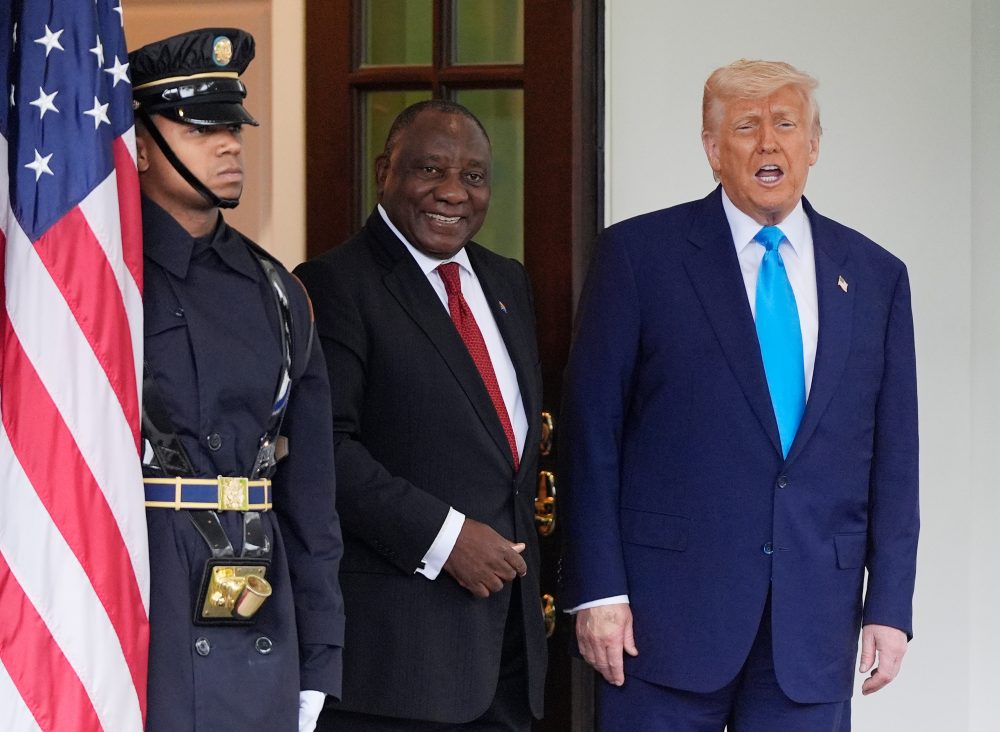
  • Maryland Immigration Detention Plan Sparks Protests, Now Under Review

    Maryland Immigration Detention Plan Sparks Protests, Now Under Review

    HAGERSTOWN, Md. — Car horns echoed and demonstrators chanted “Stop ICE!” outside a Washington County meeting where officials discussed routine matters including waste management budgets.

    The protests have become a regular occurrence since the Department of Homeland Security acquired a massive 825,000-square-foot warehouse in Washington County as part of a nationwide initiative to convert commercial buildings into immigrant detention centers.

    “This is a facility built for packages, not people,” said Patrick Dattilio, who leads Hagerstown Rapid Response, an organization opposing Immigration and Customs Enforcement, as he demonstrated outside the county commission session.

    Federal authorities have encountered strong resistance in communities where they spent $1.074 billion purchasing 11 warehouses under a program now being evaluated by Homeland Security Secretary Markwayne Mullin. Washington County stands out as the most cooperative location — where local leaders expressed backing for ICE despite public outcry with whistles and shouting. The processing center was planned to be among the first operational facilities in a project initiated under Mullin’s predecessor, Kristi Noem.

    However, DHS plans for the Washington County property are currently suspended — caught up in legal proceedings similar to other warehouse conversion projects nationwide. Uncertainty remains about whether Mullin will proceed with the facilities initiative or pursue alternative strategies as he implements President Donald Trump’s large-scale deportation program.

    The massive blue-and-white warehouse in Washington County has generated significant controversy partly due to how commissioners expressed their ICE support.

    While consistently stating their limited options since the federal government had already purchased the property, commissioners also passed a resolution during their February 10 session declaring their “unwavering support” for DHS and ICE.

    The resolution, which didn’t directly reference the warehouse acquisition, prompted such intense booing and shouting that the commission president emptied the chamber.

    The county also had its own interests. Officials sent the resolution to Noem the following day along with an email outlining hundreds of millions of dollars in sewer, airport and highway improvements they claimed were necessary, according to public records obtained by local resident Ethan Wechtaluk, who is seeking Congress in the district containing the warehouse.

    ICE, backed by substantial congressional funding, has signed a $113 million contract to modify the building for 500 to 1,500 detainees, but a judge temporarily stopped construction after Maryland’s attorney general filed suit. A court hearing is set for April 15.

    County commissioners ignored email and phone requests for comment. County administrator Michelle Gordon issued a statement saying commissioners were refusing all interview requests.

    Numerous county residents — in an area Civil War enthusiasts visit to see the Antietam battlefield before traveling to nearby Gettysburg — are angry both due to ethical concerns about the facility and because they learned about the purchase after the fact.

    “We have had no voice in this,” said Carroll Sager amid the noise of protesters and honking vehicles. Behind her, the sheriff’s department had blocked off part of the county building with crime scene tape to keep protesters away. Two deputies monitored the crowd.

    Inside the meeting, Sager sat silently, displaying a sign reading: “Disenfranchised in Washington County.”

    Resistance in other locations has included a New Jersey legal challenge alleging an “utter lack of communication” and a Michigan lawsuit questioning why DHS didn’t consider using vacant state prisons. Authorities in Salt Lake City and Pennsylvania have threatened to restrict or cut off water service. In Georgia, the town of Social Circle placed a lock on the water meter at a DHS-purchased warehouse.

    Additionally, concerns have emerged about DHS payment amounts for some warehouses. The agency paid twice the tax-assessed value for the New Jersey warehouse and nearly five times the assessed value of the Social Circle warehouse.

    During his confirmation hearing, Mullin faced questions about whether he would continue Noem’s warehouse-to-detention policy. Without making specific commitments, Mullin said the department wanted to “be good partners” with communities.

    Shortly after taking office, DHS suspended new warehouse purchases intended for immigrant housing. The agency is reviewing all contracts executed under Noem.

    Federal officials also stated in a recent Maryland lawsuit filing that “ICE is reconsidering the plans and scope of the warehouse.”

    When asked about potential changes for the Maryland facility, DHS responded in a statement: “As with any transition, we are reviewing agency policies and proposals.”

    The strategy involved converting the Maryland warehouse into an ICE processing center that would temporarily house recently detained immigrants before transferring them to other facilities for extended detention.

    ICE representatives have indicated the Washington County warehouse would address detention space requirements for the Baltimore ICE office. State legislators have raised concerns about the George H. Fallon Federal Building housing ICE detainees in downtown Baltimore, partly because bacteria causing Legionnaires’ disease was discovered in the water system.

    Activists and residents living near the Washington County warehouse continue monitoring developments.

    For almost thirty years, Nica Sutch has owned a home in western Maryland’s rolling hills, where she raised children and hosted grandchildren.

    When the warehouse was constructed several years ago to meet distribution center demand driven by online shopping growth, she convinced herself it could benefit the region economically.

    Now that ICE has acquired the building, she’s considering relocating.

    “I love the area,” she said during a backyard interview. “I love everything. This has been my home for 28 years.”

  • Long Island Serial Killer Rex Heuermann Admits to 8 Murders in Gilgo Beach Case

    Long Island Serial Killer Rex Heuermann Admits to 8 Murders in Gilgo Beach Case

    RIVERHEAD, N.Y. — After more than three decades, one of New York’s most notorious serial killing cases reached its conclusion this week when Rex Heuermann entered guilty pleas for multiple murders connected to the Gilgo Beach investigation.

    The 62-year-old architect admitted Wednesday to seven murder charges – three first-degree counts and four intentional murder charges – for killings that occurred between 1993 and 2010. During the court proceedings, Heuermann also confessed to an eighth murder, though formal charges haven’t been filed in that death.

    Showing no emotion during the hearing, Heuermann avoided looking toward the courtroom gallery where family members of his victims had gathered. His sentencing is scheduled for June, when he will receive life imprisonment without parole eligibility.

    The investigation gained international attention after authorities began discovering human remains along Long Island’s South Shore coastline starting in late 2010. For more than ten years, victim families lost hope that justice would ever come as the case remained cold.

    The breakthrough came in 2023 when DNA evidence linked Heuermann to the crimes, leading to his arrest.

    During Wednesday’s proceedings, Heuermann acknowledged that he strangled eight women, dismembering several of them before disposing of their bodies at isolated coastal locations. Many of those he targeted worked in the sex trade.

    Among his admitted victims was Karen Vergata, whom he killed in 1996, though prosecutors haven’t filed charges in her death.

    Six victims’ remains were discovered along Ocean Parkway near Gilgo Beach: Melissa Barthelemy, Maureen Brainard-Barnes, Amber Lynn Costello, Valerie Mack, Jessica Taylor, and Megan Waterman. Sandra Costilla’s body was located over 60 miles away in the Hamptons, while Vergata’s remains were initially found on Fire Island in 1996, with additional remains discovered near Gilgo Beach in 2011.

    Investigators identified Heuermann as a suspect in 2022 by cross-referencing vehicle registration records with witness accounts of a pickup truck seen when one victim vanished in 2010.

    Authorities gathered cell phone records showing Heuermann had contacted several victims shortly before their disappearances. His online search history revealed an obsession with the Gilgo Beach murders.

    The case broke open when surveillance officers followed Heuermann to his Manhattan workplace and watched him throw away pizza crust remnants. Crime lab analysis of DNA from those discarded crusts matched hair evidence found on burlap material used to restrain a victim.

    Suffolk County District Attorney Ray Tierney explained how investigators maintained secrecy throughout their probe to avoid alerting Heuermann. “We wanted the one person who mattered, the murderer, to think it’s business as usual,” Tierney said.

    As part of his plea agreement, Heuermann committed to full cooperation with the FBI’s behavioral analysis unit to assist in capturing other serial killers.

    Victim family members filled the courtroom Wednesday, with some crying as Heuermann described the murders in detail.

    Elizabeth Baczkiel, mother of victim Jessica Taylor, attended the hearing. Her 20-year-old daughter disappeared from Manhattan in 2003, with her remains found 45 miles east of Gilgo Beach in Manorville later that year.

    “I am glad that this is over as far as him pleading guilty,” Baczkiel said. “It took a big chunk of stress off of me and my family.”

    Melissa Cann, sister of victim Maureen Brainard-Barnes whose body was discovered in 2010, expressed gratitude for finally achieving justice.

    “This has been a long journey of hope — hope that one day we would stand here and say her name with justice beside it,” Cann said at a post-hearing news conference. “Today, that long, painful journey brings us to this moment.”

    Heuermann’s former wife, Asa Ellerup, and their daughter attended the guilty plea hearing. Ellerup expressed sympathy for victim families while requesting privacy for her own family. Their attorney, Robert Macedonio, confirmed that Ellerup and daughter Victoria had no knowledge of or involvement in the killings.

  • West Virginia Residents Face Electric Bills Higher Than Mortgages

    West Virginia Residents Face Electric Bills Higher Than Mortgages

    WEST COLUMBIA, W.Va. (AP) — Stacks of electricity bills cover Eric Pinson’s desk in organized rows, a constant reminder of the financial crisis hitting his camping trailer park in West Virginia. Located near a proposed data center and within sight of a massive coal-fired power plant that recently received millions in Trump administration funding for improvements, his facility has become ground zero for an affordability crisis.

    The trailer park had served as a last resort for people barely getting by financially. However, when power costs spiked last year, Pinson had no choice but to raise his all-inclusive monthly rent from $350 to $400. The increase forced at least 16 residents to leave, including some who had lived there for years.

    “They were just right on the edge. … It’s hard, just watching it happen, and so many of them,” he said, adding out-of-state workers have moved in to replace them as the state woos big investments such as data centers. “It’s all about change.”

    Across West Virginia, thousands of residents have been sharing images of monthly utility bills they cannot afford to pay. Their frustration centers on skyrocketing energy costs that have exceeded rent and mortgage payments this winter in one of America’s most energy-abundant yet economically disadvantaged regions.

    During his campaign, President Donald Trump pledged to “make America affordable again” by promising to slash Americans’ power bills by at least 50% within his first 12 to 18 months in office.

    However, electricity costs climbed 4.8% nationwide in February, while natural gas prices surged 10.9% compared to the previous year, according to Labor Department Consumer Price Index data. These increases outpaced overall inflation even before recent U.S. and Israeli military actions against Iran caused energy prices to spike further.

    Rebecca Michalski, who lives with a disability, was compelled to secure a loan this winter just to cover her electric bill due to excessive heating expenses. Her February statement totaled $940.08 — exceeding both her fixed income and mortgage payment. She remains behind on her bills and anticipates her power will eventually be disconnected.

    “It’s breaking me. And there’s nothing that can be done for it, unless the president does something,” said Michalski, adding she no longer supports Trump. “And I don’t see him doing it. He’s had plenty of time.”

    The White House stated that reducing electricity costs remains a primary objective for the president, emphasizing that he is “aggressively unleashing reliable energy sources like coal and natural gas.”

    West Virginia stands apart nationally due to its reluctance to embrace cleaner, more cost-effective energy alternatives such as natural gas, nuclear power, and renewable sources like wind and solar. The state maintains its dependence on outdated coal-fired power facilities more than any other state — generating approximately 87% of its electricity from coal.

    While monthly utility bills may be higher in other states, West Virginia wages have failed to keep up — it remains the only state where the median inflation-adjusted household income in 2023 fell below 1970 levels, according to Urban Institute research.

    Rising demand, severe weather conditions, infrastructure modernization and maintenance costs, and increasing natural gas prices are all driving electricity bills upward. Customers are also growing concerned as more energy-intensive data centers for artificial intelligence and cloud computing are planned. They’re raising questions about noise pollution, massive water usage, and potential impacts on their electricity rates.

    In February, Gov. Patrick Morrisey unveiled plans for a $4 billion data center spanning nearly 550 acres in Berkeley County.

    Charles “Duke” Hodge expects another data center to be constructed near his mobile home. The veteran and former railroad employee lives with his two dogs in the riverside park that has lost multiple camping trailers over the past year due to rising energy costs. While he’s in a slightly better financial position, he’s been forced to occasionally work part-time jobs to help cover his expenses. During peak summer months, he paid up to $140 monthly for electricity. But once he activated his heating system last fall, his bills began climbing dramatically.

    “Once fall hits, everybody expects it to go up, but not 200 to 300%,” he said. “I went from $120 a month to $275, then it went to $350. Now, the last one was $450.”

    That amount exceeds his mortgage payment by $60.

  • Massive Data Center Demand Threatens State Clean Energy Goals Nationwide

    Massive Data Center Demand Threatens State Clean Energy Goals Nationwide

    LAS VEGAS (AP) — Nevada’s primary electric company reports it will require electricity equivalent to three times what Las Vegas consumes simply to support planned data center facilities — and meeting that demand without fossil fuels appears unlikely.

    This situation puts Nevada at risk of failing to achieve its renewable energy mandate of 50% clean power by 2030.

    “I can’t remember a time in the history of the industry where we’ve seen as much interest in adding load, which is primarily driven by data centers,” stated Shawn Elicegui, senior vice president of regulatory and resource planning for NV Energy, the company supplying power to 90% of Nevada.

    Electric utilities nationwide face similar challenges as they work to satisfy surging power demands from data centers supporting artificial intelligence while maintaining commitments to transition away from fossil fuels toward renewable and carbon-free energy sources.

    North Carolina, experiencing its own data center boom, has seen its largest utility revise long-range plans to postpone coal plant closures and construct additional natural gas facilities. State legislators eliminated an intermediate carbon reduction target, raising environmental advocates’ concerns about meeting the 2050 zero-emission objective.

    NextEra Energy, serving commercial customers in more than a dozen states, abandoned its 2045 zero-emission target entirely due to “demand for all forms of power generation,” according to a recent company filing.

    The Trump administration has pushed states to utilize coal for manufacturing and data center energy needs. Technology companies are also scaling back their climate commitments to satisfy consumer artificial intelligence demands.

    “It’s very alarming, and it’s probably the single largest natural resource issue of our time,” commented Olivia Tanager, director of the Sierra Club’s Toiyabe chapter covering Nevada.

    Nevada ranks among America’s fastest-expanding data center markets due to its absence of corporate income taxes, affordable land prices, and data center tax incentives. Dozens of facilities already operate with additional projects planned. State legislators are now considering increased regulations while debating how to balance clean energy objectives with data centers’ economic advantages.

    Some facilities claim they want to contribute to solutions; the data center industry accounted for half of all corporate renewable energy purchases in 2024, according to Dan Diorio, vice president of state policy for the Data Center Coalition.

    However, renewable energy additions to the electrical grid aren’t expanding rapidly enough. Nationwide, gas turbine orders face backlogs while renewable project approvals require extensive time, industry analysts report.

    Located south of the Las Vegas Strip, the Switch data center spans nearly one square mile. As Southern Nevada’s largest data facility, it operates completely on renewable power, according to Chief Strategy Officer Jason Hoffman. Unlike competitors, Switch holds licensing to develop its own renewable energy sources at utility-company scale. The company has constructed 1 gigawatt of solar capacity and continues building additional solar installations. Switch uses NV Energy’s grid solely for electricity delivery while sourcing power from independent suppliers.

    Within the enormous buildings, hundreds of servers operate inside massive soundproof and waterproof enclosures. These systems store critical data for Switch’s customers, including major financial institutions, streaming platforms, e-commerce sites, casinos, and government agencies.

    During summer heat waves, when equipment cooling requires additional energy, Switch can disconnect from the grid and operate independently, Hoffman explained. The facility’s design minimizes air conditioning needs throughout other seasons.

    Many utilities and technology companies are adopting gas-powered generation for data centers, including the disputed xAI facility near Memphis utilizing mobile gas turbines mounted on semi-trailers.

    Tanager from the Sierra Club noted that several proposed Northern Nevada data centers would employ hundreds of low-grade diesel backup generators, degrading air quality. These backup systems activate during power outages and typically see limited use.

    During a recent seven-hour legislative session, Nevada residents voiced complaints to lawmakers about data center noise pollution and expressed concerns regarding water supply impacts and energy cost increases. Boulder City residents, home to Hoover Dam, are also opposing a proposed facility over similar issues.

    NV Energy mandates that data center developers fund their own infrastructure and energy requirements — though renewable sources aren’t mandatory.

    Nevada created a voluntary funding program allowing companies to finance NV Energy’s clean energy development and apply those investments toward corporate sustainability targets. This pioneering model led to a geothermal plant in Northern Nevada with Google as a partner.

    Environmental organizations want the state to mandate this model but remain concerned it wouldn’t generate sufficient clean energy to satisfy demand. They also fear NV Energy might increase fossil fuel dependence without guarantees that all proposed data centers will be constructed.

    NV Energy will require companies to execute contracts ensuring their state commitment before energy infrastructure development, Elicegui stated. The utility’s approach welcomes “growth” while ensuring companies accept responsibility for power requirements “whether they show up or not.”

    Nevada’s public utilities commission may impose penalties, grant exemptions, or implement other measures if it determines NV Energy failed to achieve state clean energy targets. The utility plans to release a detailed report by month’s end.

    Democratic Assemblymember Howard Watts of Las Vegas called it “unacceptable” to advance projects threatening the state’s renewable energy portfolio. Watts advocates requiring data centers to bear clean energy development costs. While many companies already take such steps, establishing these protections in law is essential, he argued.

    “Building more gas plants seems like going in the exact opposite direction of what we need to do as a state,” he stated, emphasizing Nevada’s “tremendous solar and geothermal energy potential.”

  • Trump Declares Military Forces Will Remain Near Iran Until Agreement Met

    Trump Declares Military Forces Will Remain Near Iran Until Agreement Met

    Former President Donald Trump declared Wednesday that American military forces will continue their deployment in and around Iran until the country meets the terms of what he called a “real agreement.”

    In a Wednesday post on his Truth Social platform, Trump stated: “All U.S. Ships, Aircraft, and Military Personnel, with additional Ammunition, Weaponry, and anything else that is appropriate and necessary for the lethal prosecution and destruction of an already substantially degraded Enemy, will remain in place in, and around, Iran, until such time as the REAL AGREEMENT reached is fully complied with.”

    The former president’s announcement came without additional details about the specific agreement he referenced or the current status of military deployments in the region.

  • Goldman Sachs Cuts Oil Price Forecasts After US-Iran Ceasefire Deal

    Goldman Sachs Cuts Oil Price Forecasts After US-Iran Ceasefire Deal

    Investment banking giant Goldman Sachs has revised downward its oil price projections for the second quarter of 2026, cutting estimates to $90 per barrel for Brent crude and $87 for U.S. crude following Wednesday’s announcement of a temporary ceasefire between the United States and Iran.

    The financial institution had previously anticipated Brent and West Texas Intermediate (WTI) oil would reach average prices of $99 and $91 per barrel respectively during that period.

    “Given the reduction in the risk premium at the front of the curve and already edging up oil flows through the SoH (Strait of Hormuz), we nudge down our Q2 forecast for Brent/WTI,” the investment bank explained in its research note.

    Oil markets have experienced significant volatility this week, with Brent crude declining more than 11% amid optimism that the strategically important Strait of Hormuz shipping lane could reopen following President Donald Trump’s agreement to the two-week ceasefire with Iranian leadership.

    Despite the overall weekly decline, oil prices climbed during Thursday’s early Asian trading hours as market participants expressed skepticism about whether Middle Eastern oil production would return to full capacity, given uncertainty about the durability of the ceasefire and ongoing restrictions in the critical waterway.

    For the latter half of 2026, Goldman Sachs maintained its price projections at $82 and $80 per barrel for Brent crude in the third and fourth quarters, while forecasting WTI at $77 and $75 respectively.

    The investment bank cautioned that upward pressure on prices remains the primary risk to their forecasts, citing possibilities of extended supply disruptions and continued production shortfalls from crude-producing nations.

    Should the ceasefire collapse and Middle Eastern oil production losses persist at approximately 2 million barrels daily, Goldman Sachs warned that Brent crude could surge to an average of $115 per barrel during the fourth quarter.

  • Mining Giant BHP’s Future CEO Visits China Amid Trade Tensions

    Mining Giant BHP’s Future CEO Visits China Amid Trade Tensions

    Brandon Craig, set to become the next chief executive of mining company BHP Group, traveled to Beijing this week for discussions with Chinalco leadership about expanding business partnerships, the Chinese aluminum corporation announced Thursday.

    The visit has drawn attention from investors as BHP continues to navigate challenging negotiations with China’s Mineral Resources Group, its largest customer. The dispute has escalated to the point where CMRG has prohibited its steel manufacturing facilities from purchasing certain BHP products while both sides work to finalize annual supply agreements.

    During last month’s statements, Craig indicated his priority would be improving BHP’s business relationships throughout China.

    According to a WeChat social media post from the company, Chinalco’s Chairman Duan Xiangdong held Wednesday meetings with Craig, expressing optimism about expanded collaboration between the two corporations.

    BHP representatives have not yet provided comments regarding the Beijing meetings.

    Craig is scheduled to officially begin his role as chief executive on July 1st.

  • Major Oil Trader Books First Tanker Since U.S.-Iran Ceasefire

    Major Oil Trader Books First Tanker Since U.S.-Iran Ceasefire

    A major international commodities trading company has booked a massive oil tanker for Middle Eastern crude transport to Asia, representing what industry sources believe is the first such arrangement since the recent U.S.-Iran ceasefire agreement.

    Glencore secured the Asian Lion, a massive vessel known as a very large crude carrier that can transport up to 2 million barrels of oil, according to shipping industry sources and LSEG tracking data. The supertanker is currently en route to the Middle East region.

    The trading giant agreed to pay W580 using the Worldscale industry standard for calculating shipping costs, sources revealed. This represents a significant increase from the W230 rate recorded on February 27, just before the conflict began. Additionally, the daily waiting fee stands at $580,000, which covers costs if the vessel takes longer than expected to complete loading and unloading operations.

    Company representatives from Glencore were not immediately available to provide comment regarding the vessel arrangement.

    Despite the ceasefire announcement, shipping industry officials expressed Wednesday that they require additional clarification about the agreement’s specific terms before resuming regular passage through the Strait of Hormuz. Iranian authorities have maintained that the strategic waterway continues to be restricted to vessels operating without proper authorization.

    Iranian officials indicated they would provide secure transit coordination through their military forces, though the country’s coastguard issued stern warnings Wednesday that unauthorized vessels would face being “targeted and destroyed.”

    Iran’s Revolutionary Guards naval division released navigational charts showing recommended shipping lanes within the Strait of Hormuz designed to help vessels avoid underwater explosive devices, according to reports from the semi-official Iranian news agency ISNA early Thursday.

    The six-week military confrontation virtually halted maritime traffic through the strategic waterway, which serves as a critical passage for approximately 20% of worldwide oil and liquefied natural gas shipments, causing global energy costs to surge dramatically.

  • ESPN’s Dick Vitale Reveals Medical Concerns After Recent Cancer Screenings

    ESPN’s Dick Vitale Reveals Medical Concerns After Recent Cancer Screenings

    Beloved college basketball announcer Dick Vitale revealed Wednesday that medical professionals discovered concerning findings during recent imaging tests, with the 86-year-old sports icon now preparing for a biopsy scheduled for this Friday.

    “Like countless others, each time I go for any kind of test I am a nervous wreck,” stated Vitale, who has been fighting cancer since 2021, in a release from ESPN. “The latest example is my scans last week. The anxiousness you feel about the uncertainty is off the charts. You just never know what’s next and it can be surprising or scary. While I feel great physically and mentally, I heard from doctors that the latest tests (a PET scan, CAT scan and two MRIs) showed some abnormalities.”

    “They are recommending some additional testing to determine next steps,” Vitale continued. “I’m hoping for the best, and we will see what the roadmap looks like after the upcoming biopsy.”

    The veteran broadcaster has faced multiple cancer battles, receiving melanoma and lymphoma diagnoses in 2021, followed by vocal cord cancer in 2023. Most recently, he had surgery to treat lymph node cancer in 2024. Despite these health challenges, Vitale returned to the broadcast booth and worked a First Four matchup last month featuring North Carolina State versus Texas alongside Charles Barkley.

    “Our teammate. Our friend. We love you, @DickieV. In your corner, always,” ESPN shared on social media platform X.

    Born in Passaic, New Jersey, Vitale transitioned from coaching basketball at both collegiate and professional levels to broadcasting. He joined ESPN’s coverage team during the 1979-80 college basketball season and became a household name in the sport. His contributions earned him induction into the Naismith Memorial Basketball Hall of Fame in 2008. He currently resides in Lakewood Ranch, Florida, with his spouse Lorraine.

    “As always,” Vitale concluded in his statement, “I plan to remain as active as ever and fight as hard as can be.”

  • Appeals Court Reverses Former Honduran President’s Criminal Conviction

    Appeals Court Reverses Former Honduran President’s Criminal Conviction

    A federal appeals court issued a decision Wednesday reversing the criminal conviction of Juan Orlando Hernandez, the former president of Honduras, and directed a lower court to dismiss all charges against him.

    The appellate court’s ruling marks a significant legal victory for Hernandez, who had been facing criminal charges in the United States justice system.

  • Vietnamese President To Lam Plans First International Trip to China Next Week

    Vietnamese President To Lam Plans First International Trip to China Next Week

    Vietnamese President To Lam is scheduled to make his inaugural international journey as the country’s leader next week, traveling to China for a four-day diplomatic mission from April 14 through 17.

    China’s official news agency Xinhua confirmed the upcoming visit on Thursday, validating earlier reports about the planned trip by Vietnam’s state president and Communist Party chief to the nation’s most influential neighbor.

    This marks Lam’s first foreign travel since assuming the role of state president, and sources indicate he is expected to hold discussions with Chinese President Xi Jinping during his stay.

    The visit underscores the importance of the relationship between Vietnam and China, which serves as Vietnam’s largest trading partner and carries significant weight in both economic and geopolitical matters for the Southeast Asian nation.

  • Route 13 Lane Closures Near New Castle Through Early Morning Hours

    Route 13 Lane Closures Near New Castle Through Early Morning Hours

    Motorists traveling on southbound Route 13 in New Castle should expect delays as construction crews have shut down two left lanes near the median strip.

    The lane closures are located on South DuPont Highway and are scheduled to remain in place until 5:00 AM, according to DelDOT officials.

    Drivers are advised to use caution when traveling through the work zone and consider alternate routes if possible to avoid potential traffic backups during the construction period.

  • Former Army Veteran Indicted for Sharing Classified Details with Reporter

    Former Army Veteran Indicted for Sharing Classified Details with Reporter

    Federal prosecutors have filed charges against a former U.S. Army veteran who allegedly shared classified military secrets with a journalist writing about corruption and criminal activity at a North Carolina military installation.

    Courtney Williams, 40, from Wagram, North Carolina, was indicted by a federal grand jury on Wednesday for allegedly transmitting classified national defense information to unauthorized individuals, including a reporter, according to the Department of Justice. The charges fall under the U.S. Espionage Act.

    The indictment highlights ongoing tensions between government transparency and national security as free-speech advocates continue expressing worries about aggressive prosecution of government employees who leak information to the press.

    From 2010 to 2016, Williams served with a specialized military unit at Fort Bragg, North Carolina, where she maintained a “Top Secret/Sensitive Compartmented Information security clearance,” federal officials stated.

    According to prosecutors, Williams engaged in extensive communication with a journalist between 2022 and 2025, participating in over 10 hours of phone conversations and exchanging more than 180 text messages. The reporter was gathering material for both an article and book about Williams’ former unit.

    Though court documents don’t name the journalist, author Seth Harp published “The Fort Bragg Cartel: Drug Trafficking and Murder in the Special Forces” last year, along with a related article that identified Williams as a source and quoted her statements directly.

    Federal prosecutors claim some of Williams’ quoted statements contained “classified national defense information.” They also allege she made unauthorized disclosures of sensitive national defense details through her personal social media profiles.

    Attempts to reach Williams’ legal representation were unsuccessful.

    Following the indictment announcement, Harp defended Williams, describing her as a “courageous whistleblower who exposed rampant gender discrimination and sexual harassment in the U.S. Army’s Delta Force.” He noted that Williams requested to be identified by name in his reporting and characterized the federal charges as “vague and weak.”

    The Justice Department referenced text messages Williams sent to the journalist around the book’s publication date, in which she voiced worries “about the amount of classified information being disclosed.” Prosecutors also said she messaged another unidentified person expressing fears about potential arrest related to her disclosures.

    When Williams joined the special military unit in 2010 and again upon her departure, she signed classified information non-disclosure agreements, according to the criminal complaint.

    Previous presidential administrations have occasionally pursued legal action against sources who leaked information to journalists attempting to expose government misconduct, with cases dating back to the Vietnam War-era “Pentagon Papers” and more recently involving Iraq war documents.

  • Freeze Warning in Effect Tonight: Protect Your Plants as Temperatures Drop to 26 Degrees

    Freeze Warning in Effect Tonight: Protect Your Plants as Temperatures Drop to 26 Degrees

    A Freeze Warning is in effect across the Delmarva Peninsula tonight as temperatures are expected to plummet to as low as 26 degrees, potentially damaging crops and tender vegetation. The National Weather Service issued the warning Tuesday evening for portions of Delaware, the Eastern Shore of Maryland, and parts of New Jersey, with freezing conditions expected to continue until 9 AM Thursday morning. Locally affected areas include New Castle, Kent, and Sussex counties in Delaware, as well as Queen Anne’s, Talbot, and Caroline counties on Maryland’s Eastern Shore. The warning also extends into parts of New Jersey including Cumberland, Atlantic, and Cape May counties. The biggest concern is damage to sensitive plants and crops that have already begun their spring growth. The unexpected late-season freeze could also threaten unprotected outdoor plumbing. Residents should take immediate action to protect tender plants by covering them or bringing potted plants indoors. Make sure to disconnect and drain garden hoses, and consider letting faucets drip slightly to prevent pipes from freezing. The Freeze Warning will expire at 9 AM Thursday morning, with temperatures expected to moderate as we head into the weekend. Stay with TV Delmarva for continued weather updates.
  • National Weather Service Issues Overnight Freeze Warning for Region

    National Weather Service Issues Overnight Freeze Warning for Region

    The National Weather Service office in Mount Holly, New Jersey has issued a freeze warning that took effect Monday evening at 9:52 PM and will remain in place until 9:00 AM Tuesday morning.

    The warning alerts residents to prepare for freezing temperatures that could damage sensitive vegetation and cause problems with exposed outdoor plumbing.

    Gardeners and homeowners are advised to bring in potted plants, cover tender garden plants, and ensure outdoor water pipes are protected from the cold.

    The freeze warning comes as unseasonably cold air moves through the region overnight, creating conditions that could harm plants that have already begun their spring growth.

  • US Dollar Recovers Amid Uncertainty Over Fragile Iran Ceasefire

    US Dollar Recovers Amid Uncertainty Over Fragile Iran Ceasefire

    Financial markets showed cautious optimism Thursday morning as the US dollar recovered from recent losses, with traders closely watching developments surrounding a precarious ceasefire agreement between the United States and Iran.

    Currency trading data revealed the dollar index, which tracks the greenback’s performance against major world currencies like the euro and Japanese yen, climbed 0.03% to reach 99.09. Meanwhile, the euro dropped 0.07% to $1.1654 in early session activity.

    The Japanese yen retreated from Wednesday’s stronger position, declining 0.06% against the dollar to settle at 158.7 yen per dollar. The British pound also slipped 0.04% to $1.3387.

    Wednesday’s trading session saw the dollar tumble to its lowest point in a month following news of the Middle East truce announcement.

    However, the ceasefire agreement faces significant challenges, with Israel maintaining its separate military operations against Iran-backed Hezbollah forces in Lebanon. Iranian officials have criticized both Israel and the United States for allegedly breaking the terms of the agreement, stating that continuing peace negotiations would be “unreasonable.”

    Maritime traffic through the strategically important Strait of Hormuz continues to face restrictions, with vessels still requiring special permits for passage. Shipping companies report they need additional assurances before returning to normal operations in the waterway.

    “Any signs that the ceasefire is breaking down, whether through renewed restrictions in the strait or spillover from regional conflicts like Lebanon, could push oil prices higher again, strengthen the U.S. dollar and weigh on risk assets,” explained Daniela Hathorn, senior market analyst at capital.com.

    Among global currencies, the dollar has emerged as the primary winner during the Iran conflict, largely because America produces more energy than it consumes, making it less vulnerable to economic disruption compared to oil-importing nations such as Japan and various European countries.

    The five-week military confrontation has undermined investor confidence worldwide, creating what experts describe as the most severe disruption to international oil and gas supplies in recorded history.

    Market analysts suggest the uncertain peace deal leaves Iran with enhanced control over shipping through the crucial strait compared to pre-conflict conditions, particularly after President Donald Trump stepped back from earlier threats to target Iranian civilian infrastructure.

    Thursday’s economic calendar includes the release of February personal spending figures and the PCE deflator from the United States. Akihiko Yokoo, senior analyst at Mitsubishi UFJ Bank, noted in a research report that while market sentiment has improved following the ceasefire announcement, the dollar-yen exchange rate may remain within current trading ranges during Tokyo sessions, though robust US economic data could spark a dollar rally.

    Bank of Japan Governor Kazuo Ueda is scheduled to testify before parliament beginning at 0415 GMT Thursday.

    Other currency movements included the Australian dollar weakening 0.13% against the greenback to $0.7034, while New Zealand’s currency declined 0.02% to $0.5821.

    Cryptocurrency markets also showed declines, with bitcoin falling 0.50% to $71,018.20 and Ethereum dropping 0.96% to $2,188.86.

  • Route 13 Lane Closure Between New Sweden Street and Millside Drive Until 6AM

    Route 13 Lane Closure Between New Sweden Street and Millside Drive Until 6AM

    Delaware Department of Transportation officials have implemented a temporary lane restriction on US Route 13 that affects morning commuters.

    The right travel lane has been shut down along the stretch of highway between New Sweden Street and Millside Drive. DelDOT indicates the lane closure will stay in place until 6:00 AM.

    Motorists traveling through this section of Route 13 should expect potential delays and plan for reduced traffic capacity during the closure period.

  • Construction Shuts Down Two Left Lanes on South DuPont Highway Overnight

    Construction Shuts Down Two Left Lanes on South DuPont Highway Overnight

    Motorists traveling on South DuPont Highway should expect delays as construction crews have blocked the two left lanes between 5th Street and 2nd Street.

    According to DelDOT traffic reports, the lane restrictions will stay in place until 7 AM while construction work continues in the area.

    Drivers are advised to use alternate routes or allow extra travel time when passing through this section of South DuPont Highway during the overnight hours.

  • Venezuela’s Leader Pledges Worker Pay Raise Amid Economic Crisis

    Venezuela’s Leader Pledges Worker Pay Raise Amid Economic Crisis

    CARACAS, Venezuela (AP) — Venezuela’s acting President Delcy Rodríguez delivered a plea for patience to the nation’s workforce on Wednesday, acknowledging that current salaries fall far short of covering basic living expenses while her administration tackles the country’s struggling economy.

    During a televised speech broadcast nationwide, Rodríguez announced plans for a salary boost beginning May 1. While she kept the specific amount under wraps, she emphasized the increase would be implemented carefully to prevent the surge in prices that occurred after the previous minimum wage adjustment.

    “This increase, as we have indicated, will be a responsible increase,” Rodríguez said. “Likewise in the near future, as Venezuela enjoys more resources that allow for the sustainability of salary improvements and workers’ income, we will continue moving forward on this path.”

    Government employees currently struggle to get by on approximately $160 monthly, while those in private companies earned an average of $237 last year. The nation’s minimum wage stands at 130 bolivars, equivalent to just $0.27, and hasn’t been adjusted since 2022. This amount falls dramatically short of the United Nations’ extreme poverty threshold of $3 daily.

    According to International Monetary Fund data, Venezuela faces a crushing inflation rate of 682%, marking the highest figure among all tracked nations. The country’s central bank recently published inflation statistics for the first time since November 2024, revealing the annual rate jumped to 475% in 2025 from the previous year’s 48%.

    These economic pressures have pushed food costs beyond the reach of many families.

    Rodríguez’s nationwide address occurred just one day ahead of planned worker demonstrations in the capital city of Caracas, where employees plan to march demanding higher wages. She emphasized to viewers that economic recovery takes time and urged both workers and business owners across all sectors to collaborate with her administration “to begin a sustained recovery and maintain this path of growth.”

    “It must be done with prudence, with awareness, with patience, but with a profound spirit of optimism about what the future holds for Venezuela,” Rodríguez said.

  • China Mediates Peace Deal Between Afghanistan and Pakistan After Deadly Border War

    China Mediates Peace Deal Between Afghanistan and Pakistan After Deadly Border War

    Two neighboring nations have pledged to pursue diplomatic solutions rather than military action following deadly border clashes that claimed hundreds of lives, according to Chinese officials who facilitated peace negotiations.

    Representatives from Afghanistan and Pakistan concluded a week of discussions in Urumqi, a city in western China, where they committed to avoiding further military escalation while working toward long-term peace, Chinese Foreign Ministry spokesperson Mao Ning announced during Wednesday’s briefing in Beijing.

    “The three parties agreed to explore a comprehensive solution to the issues in the relations between Afghanistan and Pakistan, and clarified the core and priority issues that need to be addressed,” Mao stated during her daily press conference.

    According to the Chinese spokesperson, all participants recognized that “terrorism is the core issue affecting the relationship” between the two countries.

    The warring nations promised they won’t “take actions that would escalate or complicate the situation,” officials said.

    While Pakistani authorities remained silent about the diplomatic discussions, Afghanistan’s Foreign Ministry spokesman Abdul Qahar Balkhi confirmed the completion of the China-hosted negotiations on Wednesday.

    Writing on social media platform X, Balkhi described the sessions as taking place in a “constructive atmosphere,” covering topics including diplomatic ties, security concerns and regional peace. He expressed gratitude to Beijing for facilitating the discussions and voiced optimism that the diplomatic process would enhance trust and cooperation throughout the region.

    Chinese officials initiated the peace talks last week following the outbreak of hostilities between the neighboring countries in February.

    Pakistan had declared itself in “open war” with Afghanistan and conducted aerial bombardments on Afghan territory, including strikes in the capital city of Kabul.

    On Tuesday, Afghanistan’s Foreign Ministry characterized the negotiations as productive.

    The United Nations humanitarian coordination office reported Tuesday that the military confrontation has forced 94,000 residents to flee their homes, while an additional 100,000 civilians in two Afghan border districts have been completely isolated by the fighting since February.

    Despite the ongoing diplomatic efforts, Afghan officials have repeatedly accused Pakistan of conducting artillery attacks across the international boundary during the peace talks.

    Pakistani authorities claim Afghanistan provides sanctuary to extremist groups responsible for deadly attacks on Pakistani soil, particularly the Pakistani Taliban organization known as Tehrik-e-Taliban Pakistan or TTP. This militant group maintains separate operations from but shares allegiances with the Afghan Taliban, which assumed control of Afghanistan in 2021 after American-led forces withdrew. Afghan leadership rejects these allegations.

  • Hawaii Anesthesiologist Convicted in Cliff Attack on Wife

    Hawaii Anesthesiologist Convicted in Cliff Attack on Wife

    HONOLULU — A Hawaii anesthesiologist facing murder charges for allegedly attacking his wife during a cliffside hike has been found guilty of the reduced charge of attempted manslaughter.

    Gerhardt Konig, 47, was convicted Wednesday by a Honolulu jury following one day of deliberations. The conviction for attempted manslaughter based on extreme mental or emotional disturbance could result in up to 20 years behind bars.

    Defense attorney Thomas Otake announced plans to file an appeal.

    According to prosecutors, Konig orchestrated a plan to kill his wife Arielle during what was supposed to be a birthday weekend getaway to Honolulu in March 2025. The state alleged he attempted to force her over a cliff edge, tried to inject her with a syringe, and struck her with a rock before two passing hikers heard her screams and intervened.

    Konig maintained during his testimony that his wife initiated the violence by hitting him with a rock first, claiming he responded in self-defense.

    In closing arguments Tuesday, deputy prosecutor Joel Garner told jurors that Konig had developed multiple strategies for killing his wife during their birthday trip to Honolulu in March 2025. When his attempt to force her off the cliff failed, prosecutors said he tried injecting her with a syringe containing an unidentified substance.

    “Every backup plan ends in Arielle’s death,” Garner stated while showing jurors the rock and photographs of her injuries.

    The defense argued no such schemes existed, with Otake repeatedly questioning the credibility of Arielle Konig’s testimony. Gerhardt Konig entered a not guilty plea to attempted murder charges, maintaining he acted in self-defense against his wife’s initial attack.

    Otake challenged the prosecution’s narrative, asking jurors why someone with access to a syringe in an isolated location would engage in a struggle before attempting to use it.

    “You would use the syringe first,” Otake argued. “It makes no sense.”

    The trial began last month, approximately one year after the couple’s hike on Honolulu’s Pali Puka trail ended with Arielle bloodied and shouting that her husband had tried to murder her.

    The couple had left their two young sons at home on Maui during the trip. Prosecutors said Gerhardt Konig, angered by his wife’s relationship with a colleague, launched the attack near a scenic overlook. Only the intervention of two other hikers stopped the assault, according to Garner.

    The proceedings, which were livestreamed by Court TV, revealed details about the couple’s marital troubles leading up to the hiking incident and conflicting accounts of what transpired on the trail.

    During his testimony, Gerhardt Konig revealed he had discovered his wife’s affair by accessing her phone while she slept. Arielle Konig described the relationship as an “emotional affair” involving flirtatious text messages with a coworker, which became a topic of discussion during their hike.

    Arielle Konig testified that her husband seized her and attempted to move her toward the cliff’s edge, prompting her to throw herself to the ground to maintain her grip. She said he positioned himself over her with a syringe in hand, which she managed to knock away. In her struggle to escape, she bit his forearm and grabbed his testicles, she testified.

    Her husband disputed pushing her toward the edge and claimed she struck him in the face with a rock. He said he took the rock from her and hit her twice in self-defense.

    Gerhardt Konig also denied carrying any syringes on the mountain or attempting to stab his wife. His defense team argued no syringe was recovered at the scene because none was ever present.

    Otake portrayed Gerhardt Konig not as someone capable of attempted murder, but as a man grappling with marital infidelity and doing his best. The attorney read from a heart-shaped birthday card Gerhardt Konig had written to his wife, calling her “the heart of our family” and stating, “The kids and I hit the jackpot with you.”

    Gerhardt Konig testified that after watching his wife crawl away, he felt his marriage and career were finished and contemplated suicide by jumping. Before doing so, he contacted his adult son from a previous marriage. The son later told authorities that his father confessed to trying “to kill your stepmom” — a statement Gerhardt Konig denied making.

    Konig claimed he called his son to say farewell.

    Garner noted that during that phone call, the defendant made no mention of striking his wife in self-defense.

    He remained hidden on the mountain for approximately eight hours before deciding to come down, and even attempted to flee when police approached him, Garner said.

    His wife has since initiated divorce proceedings.

    EDITOR’S NOTE: This story discusses domestic violence. If you or someone you know needs assistance, please contact the national domestic violence hotline: 1-800-799-7233 in the U.S.

  • Guatemalan Man Admits Role in Deadly Migrant Smuggling Operation

    Guatemalan Man Admits Role in Deadly Migrant Smuggling Operation

    A 42-year-old man from Guatemala entered a guilty plea Wednesday in federal court, admitting his role in a human trafficking operation that resulted in a catastrophic truck accident in Mexico that claimed over 50 lives in 2021.

    Daniel Zavala Ramos now faces the possibility of life behind bars after entering his plea in U.S. District Court in Laredo, Texas. He admitted to one count of conspiracy to transport undocumented migrants from Guatemala through Mexico to the United States, an operation that put lives at risk and resulted in multiple deaths and serious injuries, according to the U.S. Department of Justice.

    His sentencing hearing is scheduled for July 7.

    Ramos represents the first conviction among six Guatemalan nationals charged in connection with the semi-truck disaster. The remaining five defendants have a final pretrial conference scheduled for June 3, court documents show. Ramos’ legal representative did not respond to requests for comment Wednesday evening.

    The tragic incident occurred on December 9, 2021, when a semi-trailer carrying at least 160 migrants, predominantly from Guatemala, struck the support structure of a pedestrian overpass and flipped over, according to authorities. The collision resulted in at least 53 fatalities and left more than 100 people injured. Video from the scene revealed the horrific aftermath, showing victims trapped in a tangled mass within the truck’s destroyed cargo container.

    Among those who perished were unaccompanied minors, the Justice Department confirmed.

    The accident took place on a highway approaching the capital of Chiapas state, approximately 160 miles from the Guatemala-Mexico border and roughly 1,400 miles south of the Texas-Mexico border.

    Law enforcement announced the arrests of Ramos and his five co-defendants in Guatemala and Texas in 2024, marking the third anniversary of the tragedy. Ramos was transferred from Guatemala to face charges in 2025, the DOJ confirmed.

    Federal prosecutors revealed that the Guatemalan group orchestrated a scheme to transport migrants from Guatemala through Mexico to the United States in exchange for money. When dealing with unaccompanied minors, the defendants allegedly coached them on what to say if caught by authorities.

    The trafficking network transported people on foot and in various vehicles including small buses, livestock trucks, and tractor-trailers, authorities said. They also used Facebook Messenger to coordinate the provision of fake identification documents to help migrants enter the United States, according to investigators.

  • AI Company Anthropic Faces Mixed Court Rulings in Pentagon Blacklist Fight

    AI Company Anthropic Faces Mixed Court Rulings in Pentagon Blacklist Fight

    WASHINGTON — A federal appeals court in Washington D.C. on Wednesday declined to prevent the Pentagon from placing artificial intelligence company Anthropic on a blacklist, creating conflicting legal decisions on the same matter.

    The D.C. Court of Appeals turned down Anthropic’s emergency request to halt Pentagon restrictions against the San Francisco-based AI firm while the court continues gathering evidence in the ongoing case. The company had sought protection from penalties related to a disagreement over military use of its Claude chatbot technology for autonomous weapons and potential domestic surveillance.

    However, this legal defeat follows a victory for Anthropic in a separate San Francisco federal court case addressing identical issues. In that proceeding, a judge compelled President Donald Trump’s administration to eliminate a designation marking the company as a national security threat.

    Last month, Anthropic initiated both lawsuits in San Francisco and Washington, claiming the Trump administration was conducting an “unlawful campaign of retaliation” due to the company’s efforts to restrict how its AI systems could be used militarily. The administration characterized Anthropic as a liberal organization attempting to control U.S. defense policy.

    In the San Francisco proceeding, U.S. District Judge Rita Lin determined the Trump administration exceeded its authority by categorizing Anthropic as a supply chain threat unable to collaborate with defense contractors and implementing other measures that could damage a company competing for AI dominance against competitors like OpenAI’s ChatGPT and Google.

    Following that ruling, the Trump administration eliminated the negative classifications from Anthropic and took additional actions allowing government workers and contractors to continue utilizing Claude and other AI chatbots, based on court documents filed in San Francisco this week.

    The Washington appeals court reached a different conclusion, despite acknowledging the company would “likely suffer some degree of irreparable harm” from being labeled a supply chain risk. The appeals court found insufficient justification to issue its own directive reversing the administration’s actions, partially because “the precise amount of Anthropic’s financial harm is not fully clear.”

    Additional evidence in the case will be presented during a hearing scheduled for May 19 before the appeals court.

    “We’re grateful the court recognized these issues need to be resolved quickly and remain confident the courts will ultimately agree that these supply chain designations were unlawful,” Anthropic said in a statement.

    Matt Schruers, CEO of the Computer & Communications Industry Association technology trade group, voiced concerns that the contradictory court rulings in the dispute between Anthropic and the Trump administration will create confusion in the business environment during a crucial period.

    “The Pentagon’s actions and the DC Circuit’s ruling create substantial business uncertainty at a time when U.S. companies are competing with global counterparts to lead in AI,” Schruers said.

  • FedEx and Pilots Union Strike Tentative Deal After Nearly 3-Year Negotiation

    FedEx and Pilots Union Strike Tentative Deal After Nearly 3-Year Negotiation

    The shipping giant FedEx and the union representing over 5,000 of its aviators announced Wednesday they have struck a preliminary contract agreement following nearly three years of bargaining sessions.

    Negotiations between FedEx executives and the Air Line Pilots Association (ALPA) have been ongoing since May 2021.

    The proposed contract would boost pilots’ hourly compensation by approximately 40% by 2026, with additional yearly raises of 3% scheduled from 2028 through 2030, according to union officials.

    Senior pilots serving as captains would receive retroactive compensation up to $150,000 for wages lost during the extended negotiation period, while first officers would collect up to $102,500 in back pay.

    “The tentative agreement will next be presented to the FedEx Master Executive Council for their review,” union representatives stated, noting the agreement emerged from discussions facilitated by the National Mediation Board.

    The Memphis-based shipping company, which maintains the globe’s largest cargo aviation fleet with 390 freight aircraft and 313 turboprop planes, has verified the preliminary contract with its aviators’ union.

    Last year, company pilots voted down a previous proposed agreement that included a 30% salary boost and enhanced retirement benefits, with younger aviators expressing concerns about job outsourcing practices.

  • GOP Senator Pushes Taiwan to Approve Defense Budget During Taipei Visit

    GOP Senator Pushes Taiwan to Approve Defense Budget During Taipei Visit

    A Republican U.S. Senator traveled to Taiwan this week with a clear message for the island’s government: approve the massive defense spending package that’s been stuck in legislative limbo.

    Senator Jim Banks, who serves on the Senate Armed Services Committee, met with Taiwan President Lai Ching-te on Wednesday in Taipei, where he pressed for action on a $40 billion military spending proposal that has faced opposition in Taiwan’s parliament.

    The defense budget was introduced by President Lai last year as Taiwan seeks to strengthen its military capabilities amid ongoing tensions with China, which considers the democratic island part of its territory.

    During their meeting, Banks praised Lai’s approach to military spending, comparing it to President Donald Trump’s proposed $1.5 trillion defense budget for the United States.

    “But your Legislative Yuan has to do its part and pass the special budget, and that’s one message that I want to send to your leadership,” Banks stated, referring to Taiwan’s parliament by its official name.

    The Indiana senator emphasized the broader implications of Taiwan’s decision, telling Lai: “When you pass the special budget in the legislature, that is a signal to China, and to the rest of the world, that Taiwan is serious about peace through strength. I appreciate President Lai’s leadership in making that happen.”

    The spending proposal remains gridlocked in Taiwan’s Legislative Yuan, where opposition parties hold a majority and continue debating the government’s plan alongside alternative, lower-cost proposals.

    Banks wasn’t the first American lawmaker to deliver this message recently. Another delegation of U.S. representatives visited Taipei last week with similar appeals for the defense budget’s passage.

    The political dynamics surrounding the issue are complex. Cheng Li-wun, who leads Taiwan’s main opposition party, the Kuomintang (KMT), is currently visiting mainland China and may meet with Chinese President Xi Jinping. The KMT has stated it supports military spending but won’t approve what it calls blank checks, arguing that diplomatic dialogue with Beijing is equally crucial.

    Relations between Taiwan and China remain tense under President Lai’s leadership. Beijing refuses diplomatic contact with Lai, labeling him a separatist. Lai has rejected China’s claims over Taiwan, maintaining that only the Taiwanese people should determine their island’s future.

    Senator Banks was among 37 lawmakers from both parties who wrote to Taiwanese political leaders in February, expressing concerns about the delayed defense spending legislation.

  • Canadian Prime Minister Talks with Historic Artemis II Lunar Mission Crew

    Canadian Prime Minister Talks with Historic Artemis II Lunar Mission Crew

    Canadian Prime Minister Mark Carney connected with astronauts aboard the historic Artemis II mission Wednesday, honoring the nation’s first astronaut to journey around the moon during what has been a bright spot in sometimes tense U.S.-Canada relations under President Trump’s administration.

    Royal Canadian Air Force Colonel Jeremy Hansen, age 50, has achieved the distinction of being the first international crew member on a lunar mission. Hansen is flying alongside three American astronauts on NASA’s Artemis II lunar flyby, which represents a crucial milestone in the space agency’s ambitious goal to land astronauts on the moon by 2028, competing with China’s lunar ambitions.

    The crew’s 10-day journey is scheduled to conclude Friday when their capsule splashes down in waters off San Diego.

    “Canadians couldn’t be more proud of you personally, both this mission and our collaboration with the United States,” Carney told Hansen during their conversation.

    The prime minister also made a lighthearted comment about hoping the crew preferred maple syrup over Nutella on their morning pancakes, referencing a moment that went viral when cameras captured a floating jar of Nutella in the spacecraft’s zero-gravity environment. The maple leaf serves as Canada’s national emblem.

    Hansen, who joined Canada’s astronaut program in 2009 and pledged to return with a Canadian flag from the mission, represents decades of cooperation between the U.S. and Canada in human space exploration. During the call, he discussed the importance of accepting risk both in space missions and broader endeavors.

    “As a country, we have to be willing to have some failures,” Hansen said. “And we fail in this space program, but we just assure ourselves we’re not going to stay or rest in those failures. We’re going to push through them,” the astronaut explained while also answering questions from Canadian students.

    This historic mission occurs during a period of strained trade relationships between the neighboring nations, following Trump’s implementation of tariffs on Canadian products and his repeated suggestions that Canada should become America’s 51st state. The groundbreaking lunar mission has provided a positive focal point for U.S. relations amid various international tensions involving strikes on Iran, trade disputes, and challenges to global institutions.

  • Asian Markets Wobble as Gulf Tensions Persist, Oil Prices Rise

    Asian Markets Wobble as Gulf Tensions Persist, Oil Prices Rise

    Asian financial markets displayed a more cautious tone Thursday as the tenuous Gulf ceasefire began showing strain, pushing petroleum prices upward and serving as a reminder to investors that inflationary pressures will persist for an extended period.

    The Strait of Hormuz showed little evidence of meaningful reopening, with Iran asserting authority over the crucial petroleum shipping lane and requiring fees for secure transit.

    “You have a fifth of the world’s oil supply moving through a corridor that is still effectively under the influence of one of the parties to the conflict,” said Nigel Green, CEO at deVere Group. “That’s not stability.”

    “You don’t need a full blockade to move oil markets sharply higher again,” he added. “Missiles are still being launched in the Gulf, Israel is still engaged on another front, and yet markets are behaving as though the region has normalised.”

    Consequently, U.S. crude futures climbed 2.8% to reach $96.99 per barrel, while Brent crude increased 2.1% to $96.74.

    Japan’s Nikkei index fluctuated around unchanged levels after surging 5.4% in the prior trading session. South Korean markets declined 0.4% following the previous day’s 6.8% rally. The MSCI Asia-Pacific index excluding Japan dropped 0.3%.

    U.S. markets showed weakness in pre-market trading, with S&P 500 and Nasdaq futures both declining 0.2% as Wednesday’s rally momentum faded.

    European markets presented mixed signals, with EUROSTOXX 50 futures gaining 0.1%, German DAX futures falling 0.3%, and British FTSE futures advancing 0.5%.

    **PRICE PRESSURES MOUNTING**

    Energy costs remaining approximately 40% above pre-conflict levels means an inflationary surge will soon appear in economic data worldwide.

    Thursday’s expected U.S. core inflation data for February is projected to show a substantial 0.4% monthly increase for the second consecutive month, occurring before the recent energy price spike.

    Federal Reserve meeting minutes revealed increasing numbers of officials believe interest rate increases may be necessary to combat inflation, though many still prefer rate reductions as the next policy move.

    This development limited Treasury bond gains, which were smaller compared to significant advances in European debt markets. Ten-year U.S. Treasury yields remained at 4.29%, up from 3.96% before Iran was attacked.

    Federal funds futures now indicate only 7 basis points of rate cuts for the remainder of this year, abandoning expectations for 50 basis points of reductions since February’s end.

    “The committee broadly agreed that it was too early to act, suggesting the Fed will likely remain on hold this year, in line with our view,” said analysts at JPMorgan in a note.

    They also anticipate risks shifting toward just one European Central Bank rate increase this year instead of two.

    The changing interest rate outlook helped the dollar recover some initial losses, with the euro unchanged at $1.1660 and below its peak of $1.1721.

    The dollar stabilized at 158.60 yen after declining to 157.89 during Wednesday’s session.

    Gold remained flat at $4,718 per ounce following an overnight peak of $4,777.

  • Disney Expected to Eliminate 1,000 Workers in Coming Weeks

    Disney Expected to Eliminate 1,000 Workers in Coming Weeks

    The Walt Disney Company is reportedly preparing to eliminate up to 1,000 worker positions over the next several weeks, with a significant portion of the layoffs expected to impact the entertainment giant’s marketing division, according to a Wednesday report from the Wall Street Journal.

    The newspaper cited unnamed sources familiar with the matter for its reporting on the anticipated workforce reduction. Reuters was unable to independently confirm the information, and Disney representatives had not provided a response to requests for comment as of Wednesday evening.

  • Route 13 Construction Brings Overnight Lane Closures Through Early Morning

    Route 13 Construction Brings Overnight Lane Closures Through Early Morning

    Motorists traveling along a busy stretch of US-13 will encounter intermittent lane restrictions as construction crews continue their work through the early morning hours.

    The Delaware Department of Transportation reports that the section of US-13 running from Schafer Road to where it splits with US-40 will experience periodic lane closures as part of ongoing construction activities.

    These traffic disruptions are expected to remain in effect until 5 a.m., potentially affecting early morning commuters and overnight travelers in the area.

    Drivers are advised to allow extra travel time and exercise caution when navigating through the work zone during these overnight hours.

  • Left Lanes Blocked on US-40 Between Porter Road and Church Road Until 3 AM

    Left Lanes Blocked on US-40 Between Porter Road and Church Road Until 3 AM

    Motorists traveling on US-40 should expect delays tonight as left lanes remain blocked in both eastbound and westbound directions between Porter Road and Church Road.

    According to DelDOT traffic officials, the lane restrictions will stay in effect until 3 AM. Drivers are advised to use caution when traveling through the work zone and allow extra time for their commute.

    The nature of the work requiring the lane closures has not been specified by transportation officials.

  • Senegal Workers Rally Against Government’s Unfulfilled Promises

    Senegal Workers Rally Against Government’s Unfulfilled Promises

    Workers, union representatives, and opposition members filled the streets of Dakar, Senegal on Wednesday, voicing anger over what they describe as unfulfilled government commitments and escalating living expenses amid the nation’s serious debt problems.

    The demonstration was coordinated by Senegal’s primary labor organizations alongside an opposition group called the Front for the Defense of Democracy and the Republic (FDR).

    According to Mody Guiro, who leads the National Confederation of Senegalese Workers – the nation’s biggest labor organization – officials had violated an agreement from the previous year that halted work stoppages in return for commitments to improve pay and workplace conditions. Government officials point to an unprecedented debt emergency left by the former administration as limiting available funds.

    Demonstrators donned red scarves and union headwear while carrying signs calling for the reinstatement of dismissed government employees and reduced income taxation. Some voiced demands for Prime Minister Ousmane Sonko’s removal from office.

    The current administration in this West African nation, headed by Sonko and President Bassirou Diomaye Faye, assumed control in April 2024 with pledges to implement sweeping changes, including anti-corruption efforts, youth employment initiatives, and better utilization of the country’s natural resources.

    However, the PASTEF party’s transformation plans have encountered significant hurdles. A government review conducted in 2025 uncovered debt totaling $13 billion – higher than previously disclosed – left behind by the prior government. Discussions with the International Monetary Fund regarding new financial assistance have reached an impasse as the country’s budget situation deteriorates.

    The nation’s debt compared to its economic output has climbed to approximately 132%, ranking among Africa’s most severe.

    These financial challenges have intensified everyday hardships for citizens, particularly affecting young people who represent about 75% of the population under age 35.

    In February of last year, demonstrations at the country’s premier public university regarding unpaid student assistance resulted in aggressive action by law enforcement, causing one student’s death.

    “The nation has come to a halt. The government must find ways to restart Senegal’s economy rather than creating conflicts at every turn,” stated Mohamed Fall, a young activist participating in Wednesday’s demonstration.

    Pape Laobe Samb, another demonstrator, represents one of over 700 Dakar port employees who lost their jobs since early 2025 as the government restructures state organizations.

    “This isn’t what they told voters they would do. They claimed they would generate employment and advance the nation, but they’ve done exactly the reverse,” Samb explained to reporters after working at the port for more than twelve years before his dismissal.

    The port’s administrator, selected shortly after President Faye took office, has characterized these actions as eliminating questionable contracts from the previous government. Union representatives dispute this explanation, contending that dismissed workers were primarily those connected to the former administration and that the terminations violated legal procedures.

  • North Korea Claims New Missile Tests Include Cluster Bomb Warheads

    North Korea Claims New Missile Tests Include Cluster Bomb Warheads

    North Korea announced Thursday that its recent weapons testing included ballistic missiles equipped with cluster bomb warheads, marking another escalation in the country’s military capabilities targeting South Korea.

    The announcement from North Korean state media followed South Korea’s detection of multiple missile launches from the North’s eastern coast on Wednesday, marking the second day of weapons testing this week.

    According to the Korean Central News Agency, the weapons demonstrations spanned three days beginning Monday and featured anti-aircraft systems, alleged electromagnetic warfare equipment, and carbon-fiber explosives.

    South Korean military officials reported that Wednesday’s missiles traveled between 240 and 700 kilometers (150 to 434 miles) before splashing down in the ocean. They also tracked at least one projectile fired Tuesday from near Pyongyang, North Korea’s capital.

    Japanese defense officials confirmed that none of Wednesday’s weapons landed in Japan’s exclusive economic waters, while U.S. military representatives stated the Tuesday and Wednesday launches presented no direct danger to America or its regional partners.

    The state news agency detailed tests of cluster munition systems mounted on Hwasong-11 ballistic missiles, which mirror Russia’s Iskander design with low-altitude, evasive flight patterns to bypass defense systems. According to the report, these short-range missiles with cluster warheads “can reduce to ashes any target covering an area of 6.5-7 hectares (16 to 17.2 acres) with the highest-density power.”

    South Korean military officials have not yet responded to North Korea’s weapons claims.

    The missile tests highlight ongoing hostilities between the neighboring countries, dampening South Korean expectations for improved diplomatic relations.

    Jang Kum Chol, a senior official at North Korea’s Foreign Ministry, declared Tuesday evening that South Korea would forever remain the North’s “most hostile enemy state” and ridiculed Seoul’s current government for attempting to restart stalled negotiations, labeling its leaders “world-startling fools.”

    North Korean leader Kim Jong Un has halted nearly all diplomatic engagement with Seoul and Washington following the breakdown of his nuclear negotiations with President Donald Trump in 2019. Since then, he has fast-tracked development of nuclear-armed missiles capable of reaching U.S. territories and allies across Asia.

    Kim has also strengthened relationships with Russia, China, and other nations in conflict with the United States as he seeks to end international isolation and boost his regional influence. North Korean media reports that Chinese Foreign Minister Wang Yi is scheduled to arrive Thursday for a two-day visit as part of ongoing diplomatic cooperation between the two countries.

  • Memphis Rapper Denied Bail in Dallas Armed Robbery Case

    Memphis Rapper Denied Bail in Dallas Armed Robbery Case

    A Memphis rapper will stay behind bars after a federal judge in Dallas denied his release on kidnapping charges stemming from an alleged armed confrontation with Gucci Mane’s record label owner.

    Lontrell Williams Jr., known professionally as Pooh Shiesty, faced U.S. Magistrate Judge Renee Harris Toliver on Wednesday during a detention hearing. Eight additional defendants have been charged in connection with the January incident at a Dallas recording studio, where authorities say multiple victims were held at gunpoint and robbed.

    Federal prosecutors have not publicly identified the alleged victims, referring to them only by initials in court documents. One victim, identified as R.D., owns 1017 Records, the music label operated by Gucci Mane, whose real name is Radric Delantic Davis.

    “I find that the weight of the evidence against you is strong,” Toliver stated during the proceeding.

    The judge highlighted Williams’ previous criminal record and his failure to comply with home detention conditions following an earlier firearms conspiracy conviction in Florida.

    Defense attorney Bradford Cohen challenged the prosecution’s case during the hearing. “The FBI doesn’t take three months to arrest someone if they believe everything that was said the night that it occurred,” Cohen argued.

    Federal authorities arrested the rapper last week on allegations that he orchestrated the Dallas studio meeting to negotiate his recording contract with 1017 Records.

    Court documents detail how Williams allegedly requested a private conversation with the record label owner in a studio booth. Prosecutors claim he then presented contract cancellation documents and brandished what appeared to be an AK-style weapon while compelling the executive to sign the papers.

    The affidavit states Williams subsequently stole the victim’s wedding band, timepiece, jewelry, and money.

    Though originally from Memphis, Tennessee, Williams had reportedly been residing in a luxury apartment building in Frisco, a Dallas-area suburb, according to federal investigators. Court records indicate several co-defendants made the trip from Memphis to Dallas before the alleged incident occurred.

    Gucci Mane has established himself as a foundational figure in trap music, alongside Atlanta contemporaries T.I. and Jeezy. His career launched in the mid-2000s with the hit track “Icy” before developing an extensive musical portfolio.

  • NYC Activist Admits to Torching 11 Police Cars in $800K Arson Spree

    NYC Activist Admits to Torching 11 Police Cars in $800K Arson Spree

    NEW YORK — A 22-year-old activist from Brooklyn with multiple prior arrests at pro-Palestinian demonstrations has admitted guilt in federal court for deliberately burning 11 police department vehicles during a summer arson attack.

    Jakhi McCray entered his guilty plea on Wednesday for the June 12 incident that resulted in $800,000 worth of damage to New York City Police Department property, according to law enforcement officials.

    The conviction carries a required minimum sentence of five years behind bars, with the possibility of up to 20 years in federal prison at his upcoming sentencing hearing.

    “By deliberately setting fire to multiple police vehicles in the pre-dawn hours, the defendant put at risk the lives of first responders and residents asleep in their beds nearby, and ultimately, strained resources meant to protect the community,” U.S. Attorney Joseph Nocella said in a statement Wednesday.

    According to federal prosecutors, McCray climbed over a security fence to access a police vehicle storage facility in Brooklyn, where he ignited flames that destroyed 10 patrol cars and one trailer. When an officer on duty noticed him, he fled through a gap in the fencing, but investigators say he accidentally left behind evidence including a lighter used for cigars and eyewear containing his fingerprints.

    McCray voluntarily surrendered to authorities one month following the incident. During that time, he issued a public statement condemning what he described as intimidation tactics used against individuals who have criticized “the genocide in Palestine and the kidnapping of migrants.” He revealed he had been taken into custody 12 times before and claimed both media outlets and law enforcement had repeatedly made false statements about him.

    McCray’s legal representative, Ron Kuby, directed inquiries to an activist organization that has rallied behind McCray.

    The Support Committee for Jakhi McCray released a statement Wednesday calling him a “dedicated organizer, activist, and community member whose work has touched countless lives.”

  • UD Softball’s Shaffer Reaches 100 Career Runs Milestone in Victory

    UD Softball’s Shaffer Reaches 100 Career Runs Milestone in Victory

    University of Delaware senior Sydney Shaffer etched her name into the record books Wednesday, becoming just the ninth player in Blue Hens softball history to reach 100 career runs scored during Delaware’s 5-2 victory over Villanova on April 8.

    Shaffer achieved the milestone with a home run that helped propel the Blue Hens to their second win over the Wildcats this season, completing Delaware’s first season sweep of Villanova since 2017.

    The victory also marked a significant turning point for the Blue Hens, lifting their record above .500 for the first time since their season-opening 1-0 start. The team’s improved performance against their Big East rivals demonstrates the program’s continued growth under the current coaching staff.

    Shaffer’s achievement places her among an elite group of Delaware softball players who have consistently contributed to their team’s offensive success throughout their careers. Her milestone home run not only secured a personal accomplishment but also played a crucial role in the team’s latest victory.

  • Northbound I-95 Lane Closures Continue Until Early Morning

    Northbound I-95 Lane Closures Continue Until Early Morning

    Motorists traveling on northbound Interstate 95 should expect delays as two right lanes remain blocked between Chapman Road and Exit 5A.

    According to the Delaware Department of Transportation, the lane restrictions will stay in place until 5:00 AM.

    Drivers are advised to use caution in the area and allow extra travel time when using this section of the interstate.

  • Haiti Delays Voter Registration for First Presidential Election in 10 Years

    Haiti Delays Voter Registration for First Presidential Election in 10 Years

    PORT-AU-PRINCE – Haiti’s electoral authority announced Wednesday that it is delaying voter registration that was scheduled to commence on April 1st, stating that new registration dates will be revealed soon for what would be the Caribbean nation’s first presidential election in ten years.

    The electoral council, known as CEP, had originally set August 30th as the date for the initial round of presidential voting in the region’s most populated Caribbean country.

    But ongoing security deterioration throughout the nation has displaced more than 1.4 million residents – representing approximately 12% of Haiti’s total population – raising serious questions about whether authorities can conduct a legitimate and fair electoral process.

  • Venezuela’s Acting President Promises Worker Pay Raise Starting May 1

    Venezuela’s Acting President Promises Worker Pay Raise Starting May 1

    Acting President Delcy Rodriguez of Venezuela announced Wednesday that her administration plans to implement a wage increase for workers beginning May 1, describing it as a “responsible increase” to worker compensation.

    Rodriguez did not specify the exact amount of the planned wage adjustment during her announcement.

    Currently, Venezuela’s minimum wage stands at 130 bolivares monthly, a rate that has remained unchanged since March 2022 and equals only a few cents in U.S. currency. However, many government workers receive additional compensation through bonuses and supplemental payments that can bring their total monthly earnings to approximately $150.

    “Our immediate, medium-term and long-term goal is to steadily and gradually restore workers’ incomes through productive growth in both the hydrocarbons and mining sectors, which generate immediate revenue once production recovery takes place,” Rodriguez stated during her televised announcement on state television.

    The acting president emphasized that the wage adjustment would consider potential inflationary effects and indicated that Venezuela would continue progressing in this direction as additional resources become available to the country.

    During her address, Rodriguez also renewed calls for the United States to lift economic sanctions imposed on the South American nation.

    Relations between the two countries have improved following the U.S. capture of President Nicolas Maduro during a raid in Caracas earlier this year. The Trump administration has since been collaborating with Rodriguez and exploring opportunities to expand American involvement in Venezuela’s petroleum and mining industries.

    Rodriguez, who has backed recent legislative efforts to encourage increased private and foreign investment in both sectors, announced plans to establish a commission that will identify which assets the state considers strategically important. She warned that those hoping for the privatization of PDVSA, the state-owned oil company, would be disappointed.

  • Delaware State Softball Sweeps Doubleheader Against Chestnut Hill

    Delaware State Softball Sweeps Doubleheader Against Chestnut Hill

    Delaware State University’s softball squad captured both games in a doubleheader matchup against Chestnut Hill, delivering a complete sweep for the Hornets.

    The team’s performance showcased their ability to maintain momentum across multiple games in a single day, demonstrating the depth and consistency of the roster.

    The doubleheader results continue Delaware State’s season as they work through their conference schedule and build toward postseason play.

  • Oregon Court Ruling Threatens $1 Billion Wildfire Settlement for Victims

    Oregon Court Ruling Threatens $1 Billion Wildfire Settlement for Victims

    PORTLAND, Ore. — A significant legal victory for utility company PacifiCorp could put more than $1 billion in wildfire victim compensation in jeopardy following a Wednesday decision by Oregon’s appeals court.

    The three-judge panel at the Oregon Court of Appeals overturned a lower court’s verdict and ordered a new examination of the class-action lawsuit, citing problems with how the jury was instructed during a 2023 trial. That original trial had found PacifiCorp responsible for negligent conduct when it failed to shut off electrical power despite fire safety warnings from senior officials, resulting in punitive damages awarded to affected property owners.

    Following that initial verdict, additional juries have mandated that PacifiCorp pay more than $1 billion in compensation to a class representing thousands of wildfire victims.

    The appellate court determined that the trial judge made an error by telling jurors they could apply evidence from four separate wildfire incidents to every member of the plaintiff class.

    “We conclude that … that instruction was legally erroneous, because certain evidence at trial, particularly related to causation, did not necessarily apply to every class member,” the judges wrote. “We further conclude that giving the instruction was prejudicial to PacifiCorp. Consequently, we reverse and remand.”

    The court emphasized that class members owned more than 2,000 different properties affected by various fires, with some locations “separated by well over a hundred miles.” The disasters encompassed the Santiam Canyon blaze in northwestern Oregon, the Echo Mountain Complex fire along the coastline, and the South Obenchain and 242 fires in the state’s southwestern region.

    Oregon’s Labor Day weekend fires in 2020 rank among the state’s most catastrophic natural disasters on record. The blazes claimed 11 lives, consumed over 1,560 square miles of land, and eliminated thousands of residential structures.

    Questions remain about the lawsuit’s future direction and whether plaintiff attorneys will challenge the appellate decision before Oregon’s highest court. More than 1,000 class members have trials scheduled for 2026 and 2027.

    “There are no winners in wildfire; however, the Court’s decision supports PacifiCorp’s longstanding belief that this process was prejudicial and not appropriate for managing wildfire litigation,” the utility said in a statement. “The company remains open to resolving reasonable claims and will continue to defend against unsupported claims.”

    Legal representatives for the plaintiffs characterized the decision as a “procedural setback” while asserting that “nothing in this ruling suggests the jury got it wrong.”

    “In fact, the Court rejected PacifiCorp’s efforts to win this appeal on the merits. Instead, what the court addressed was a single jury instruction, charting several paths forward — including fixing that instruction and trying the case again.”

    In related developments, PacifiCorp has committed to paying more than $2 billion in settlements for various lawsuits connected to the 2020 fires, including $575 million to federal authorities for wildfire damage on government property in Oregon and California.

    This past February, PacifiCorp revealed intentions to sell its wind energy, natural gas production, and distribution infrastructure in Washington state to Portland General Electric Company for $1.9 billion as part of efforts to strengthen its financial position. Despite challenging wildfire verdicts through appeals, PacifiCorp has been required to secure court bonds, creating pressure on the company’s available cash resources.

  • North Carolina Army Vet Faces Espionage Charges for Leaking Military Secrets

    North Carolina Army Vet Faces Espionage Charges for Leaking Military Secrets

    A former military contractor from North Carolina is facing federal espionage charges after authorities say she leaked classified information about an elite Army unit to a journalist, potentially endangering national security.

    Federal prosecutors have charged Courtney Williams, 40, of Wagram, North Carolina, with violating the Espionage Act for allegedly disclosing sensitive details about her work supporting a specialized military unit at Fort Bragg.

    “Anyone divulging information they vowed to protect to a reporter for publication is reckless, self-serving and damages our nation’s security,” said Reid Davis, FBI special agent in charge for North Carolina, in a Department of Justice statement.

    According to federal officials, Williams broke her sworn commitment to protect national secrets during her time as a contractor and later employee supporting Army special operations.

    “Williams swore an oath to safeguard our nation’s secrets as an employee supporting a Special Military Unit of the Army, but she allegedly betrayed that oath by sharing classified information with a media outlet and putting our nation, our warfighters, and our allies at risk,” stated Roman Rozhavsky, assistant director of the FBI’s Counterintelligence and Espionage Division.

    Williams appeared in Raleigh federal court Wednesday, where a magistrate judge made public the charges that were initially filed last week. She remains in custody of the U.S. Marshals Service with additional hearings scheduled for next week.

    Court documents do not identify Williams’ attorney, and a family member reached by phone declined to provide comment on the allegations.

    While court papers don’t specify the journalist or military unit involved, the timing and circumstances align with a 2025 Politico story titled “My Life Became a Living Hell: One Woman’s Career in Delta Force, the Army’s Most Elite Unit.” The article accompanied journalist Seth Harp’s book “The Fort Bragg Cartel,” which details allegations of sexual harassment and discrimination.

    Harp defended Williams in a statement to WRAL-TV, calling her “a brave whistleblower and truth-teller.”

    “Former Delta Force operators disclose ‘national defense information’ on podcasts and YouTube shows every day, but the government is going after Courtney for the sole reason that she exposed sexual harassment and gender discrimination in the unit,” Harp’s statement read. “This is a vindictive act of retaliation, plain and simple.”

    FBI Special Agent Jocelyn Fox detailed in court documents that Williams received security clearance as a defense contractor in April 2010 before becoming a Defense Department employee that November.

    In her role as an operational support technician, Williams had access to “Tactics, Techniques and Procedures” used for planning and executing “sensitive missions” within the special military unit, Fox wrote.

    Williams lost her classified access following an internal investigation, and she was debriefed in September 2015 when she signed additional nondisclosure agreements, according to the FBI agent.

    Federal investigators allege Williams maintained contact with the unnamed journalist from 2022 through 2025, during which time they had more than 10 hours of phone conversations and exchanged over 180 messages.

    Fox referenced a text message Williams allegedly sent around the time the book and article were published.

    “Other than a few factual errors, I would definitely have been concerned with the amount of classified information being disclosed,” Williams’ message stated, according to court papers. “I thought things I was telling you so you could have a better general understanding of how the (SMU) was set up or operated would not be published and it feels like an entire TTP (Tactics, Techniques and Procedures) was sent out in my name giving them a chance to legally persecute me.”

    The FBI affidavit also cited a conversation Williams had with her mother.

    “I might actually get arrested, and I don’t even get a free copy of the book,” Williams allegedly told her mother. When asked why she might face arrest, Williams responded “for disclosing classified information.”

    Investigators have identified at least 10 collections of documents that Williams apparently planned to share with the journalist, Fox wrote in the court filing.

  • Aid Worker Deaths Surge Globally: Over 1,000 Killed in Three Years

    Aid Worker Deaths Surge Globally: Over 1,000 Killed in Three Years

    The United Nations announced Wednesday that humanitarian workers worldwide are facing unprecedented dangers, with more than 1,000 killed in the last three years—a figure that represents almost three times the fatalities recorded in the prior three-year span.

    Tom Fletcher, the UN’s top humanitarian official, addressed the Security Council with stark language about the crisis. “This is not an accidental escalation — it is the collapse of protection,” Fletcher stated.

    The statistics Fletcher presented show that of the 1,010-plus humanitarian workers who lost their lives between 2023 and 2025, the Gaza Strip and West Bank accounted for more than 560 deaths. Sudan saw 130 fatalities, South Sudan recorded 60, while Ukraine and Congo each had 25 deaths. These numbers stand in sharp contrast to the 377 deaths documented from 2020 through 2022.

    The dramatic increase in casualties coincided with the conflict that erupted between Israel and Hamas in October 2023. While a ceasefire took effect in October 2025, violence including shootings and airstrikes has continued.

    Fletcher reported that 2024 marked a particularly deadly year, with 383 aid workers killed across global conflict zones as they provided essential services like food distribution, water access, shelter, and medical care. The previous year, 2023, saw at least 326 aid workers killed across 21 nations.

    “They died in clearly marked convoys and on missions coordinated directly with authorities,” the undersecretary-general for humanitarian affairs explained.

    The Security Council convened to review a resolution passed in May 2024 that condemned attacks on humanitarian personnel and UN staff, while demanding that all fighting forces protect these workers under international law.

    Fletcher posed challenging questions to the 15-member council, asking whether the killings occurred because international law “is no longer convenient” or because “it is more important to protect those designing, selling, supplying and firing lethal weapons?”

    “Or is it because member states see these numbers as collateral damage, part of the fog of war? Or worse, are we now seen as legitimate targets?” he continued. “Perhaps the most chilling question: If these deaths were ‘preventable’, why then were they not prevented?”

    Beyond the killings, Fletcher described how humanitarian personnel face additional challenges, being “restricted, penalized and delegitimized” while being told which areas they cannot access and which populations they cannot assist.

    Fletcher cited Yemen as a stark example, where Houthi rebels are holding 73 UN staff members and numerous NGO workers in arbitrary detention.

    Other restrictions include Afghanistan’s prohibition on female humanitarian workers, Israel’s limitations on UN and international organizations operating in Gaza, and drone attacks in Ukraine that have forced aid workers to retreat from frontline areas.

    “These trends, alongside the collapse in funding for our lifesaving work, are a symptom of a lawless, bellicose, selfish and violent world,” Fletcher declared.

    He urged the UN’s 193 member countries to honor the 2024 resolution’s requirements to safeguard humanitarian workers and hold accountable those who commit crimes against them.

  • China Races Against US to Land Astronauts on Moon by 2030

    China Races Against US to Land Astronauts on Moon by 2030

    NASA’s groundbreaking Artemis mission has heightened the stakes for China’s ambitious plan to put astronauts on the lunar surface by 2030, as the space race between the two superpowers enters a critical phase.

    This week, four American astronauts aboard Artemis II ventured past the moon’s dark far side, reaching depths of space never before achieved by humans. This milestone sets the foundation for Artemis IV’s planned lunar touchdown in 2028.

    The planned American return to the moon after more than 50 years has captured Beijing’s attention, as China develops comprehensive technology for its inaugural crewed lunar mission. This includes the Long March-10 rocket system, the Mengzhou spacecraft, and the Lanyue lunar landing vehicle.

    China has achieved remarkable progress recently, becoming the only nation to successfully retrieve robotic samples from both sides of the moon. Its human spaceflight program has also demonstrated expertise in space station operations and managing orbital emergencies.

    “There is no bigger prize for China on the table today than landing people on the moon, this is the essential next step for China on the road to preeminence in space,” said Clayton Swope, deputy director of the Aerospace Security Project at the U.S.-based Center for Strategic and International Studies (CSIS).

    Both Washington and Beijing are building institutional frameworks for future permanent lunar habitation. The American-led Artemis Accords for lunar exploration face competition from the Chinese and Russian-backed International Lunar Research Station initiative.

    “The question now is no longer simply who gets there first, but who can stay longer and do more,” Kang Guohua, an aerospace professor at the military-linked Nanjing University of Aeronautics and Astronautics, told China’s state-backed Global Times last week.

    UNTESTED TECHNOLOGY CHALLENGE

    Beijing faces the significant challenge of validating completely new lunar mission technology within four years, proving that all equipment being developed for the 2030 mission can function reliably on its first deployment.

    China’s space agency announced in 2023 that the mission would utilize two Long March-10 rockets – one carrying a crewed vessel and another transporting a lunar lander. These craft would meet and connect in lunar orbit, allowing two astronauts to descend to the surface, gather samples, return to orbit, reconnect with the main spacecraft, and journey home.

    The Mengzhou spacecraft has capacity for up to seven astronauts, though China’s space agency hasn’t revealed the crew size or members for the 2030 mission.

    China’s previous robotic lunar expeditions have provided valuable expertise in communications, spacecraft meetings, and docking procedures around the moon. However, human missions demand much stricter safety standards, and crucial mission components are still undergoing evaluation, including the rocket and spacecraft systems.

    In February, China conducted the first low-altitude escape test for the Long March-10 carrying a Mengzhou spacecraft at a Hainan Island launch facility. The capsule’s return module successfully separated following an abort signal and landed safely in the ocean.

    Last year, the Lanyue lunar lander’s ascent and descent systems underwent testing in Hebei province. Despite these important achievements, testing must intensify for China to approve the system for human lunar missions by 2030.

    Nevertheless, CSIS’s Swope believes China is making consistent progress and considers it “very plausible” that the deadline will be met.

    “China has a history of setting deadlines for space activities and closely meeting those deadlines, there are no public signs of any missteps or setbacks to Beijing’s crewed lunar landing plans,” he said.

    POLITICAL IMPLICATIONS

    The competition extends beyond technical achievements to geopolitical influence. As tensions between the U.S. and China escalate across trade, technology, and military domains, lunar exploration has emerged as another competitive battlefield.

    American experts cite China’s increasing defense expenditures, use of space diplomacy to expand global influence, expanding private launch industry, and successful robotic lunar missions as proof that Beijing is highly determined to reach the moon rapidly, despite avoiding competitive language publicly.

    “China might avoid directly using language that suggests there is a lunar or space race, but their overall strategic goal is to be the hegemon in space,” said Kathleen Curlee, a research analyst at Georgetown University’s Center for Security and Emerging Technology.

    Meanwhile, China may be progressing faster than publicly acknowledged. Wu Weiren, chief architect of China’s lunar exploration program, told Reuters last year that the 2030 target was deliberately cautious.

    “Eastern peoples always leave a little room when they speak,” he said. “If I can do a 10, I tend to say eight or nine.”

  • Macron Pushes for Lebanon Inclusion in US-Iran Ceasefire Deal

    Macron Pushes for Lebanon Inclusion in US-Iran Ceasefire Deal

    French President Emmanuel Macron reached out to both Iranian and American leadership Wednesday, pressing them to extend their newly established ceasefire to encompass Lebanon and other conflict zones while Israeli bombardments persist in Beirut.

    Washington and Tehran established a two-week suspension of hostilities on Tuesday, yet Israel launched its most devastating assault on Lebanon Wednesday, resulting in over 250 deaths since hostilities with Hezbollah escalated last month.

    While American and Israeli officials have stated that Lebanon falls outside the scope of the Iranian ceasefire arrangement, Pakistan, which served as a crucial mediator during negotiations, indicated the pause in fighting would encompass Beirut.

    Sources close to Iran’s diplomatic stance reveal that Tehran has communicated through intermediaries that any ceasefire framework with America and Israel must encompass Lebanon.

    During his conversations with Iranian President Massoud Pezeshkian and U.S. President Donald Trump on Wednesday, Macron emphasized that bringing Lebanon into the agreement represents “a necessary condition for the ceasefire to be credible and lasting.”

    The French leader stressed that any comprehensive agreement between these nations must tackle issues surrounding Iran’s nuclear weapons development, ballistic missile capabilities, regional interference, and efforts to disrupt shipping lanes in the Strait of Hormuz.

    Macron additionally contacted Lebanese President Joseph Aoun and Prime Minister Nawaf Salam, denouncing Israel’s “indiscriminate strikes” as a danger to maintaining any sustainable ceasefire arrangement.

    “I reiterated the need to preserve Lebanon’s territorial integrity and France’s determination to support the efforts of the Lebanese authorities to uphold the country’s sovereignty and implement the Hezbollah disarmament plan,” Macron stated.

  • Pakistan Emerges as Key Mediator in US-Iran Ceasefire Talks

    Pakistan Emerges as Key Mediator in US-Iran Ceasefire Talks

    A dramatic diplomatic breakthrough occurred when Pakistan successfully facilitated a two-week ceasefire agreement between the United States and Iran, averting potential military action just hours before President Donald Trump’s strike deadline was set to expire. The temporary truce has opened a crucial diplomatic window following weeks of escalating tensions and concerns about a broader regional conflict.

    Pakistan has swiftly positioned itself at the center of ongoing negotiations. As part of the agreement, Tehran has also consented to temporarily reopen the Strait of Hormuz, ensuring safe passage for shipping through this critical waterway that is essential to global energy markets. Pakistani leadership has framed this truce as an opportunity to transition from crisis management to substantive negotiations addressing sanctions, uranium enrichment, regional security, and future conflict resolution.

    Demonstrating the high stakes of this diplomatic opening, President Trump is sending a senior delegation to Islamabad for the talks, headed by Vice President JD Vance and including special envoy Steve Witkoff and Jared Kushner.

    On Wednesday, Pakistani Prime Minister Shehbaz Sharif announced that the United States and Iran, along with their respective allies, had reached an agreement for an immediate ceasefire across multiple conflict zones. In an early morning social media post, Sharif welcomed this development and expressed his “deepest gratitude” to leadership in both Washington and Tehran for what he characterized as a vital step toward regional stability.

    Sharif has also extended invitations to both sides to send delegations for high-level discussions in Islamabad on April 10 to secure a more comprehensive settlement. Iran has confirmed its participation. According to a statement from the Prime Minister’s Office, Sharif conducted a 45-minute phone conversation with Iranian President Masoud Pezeshkian on Wednesday afternoon.

    Pezeshkian expressed appreciation to the prime minister, commended Pakistan’s efforts in establishing a temporary ceasefire, and confirmed Iran’s participation in the upcoming Islamabad talks. Various media sources, citing Iran’s Islamic State News Agency, have reported that Iranian Parliament Speaker Mohammad Bagher Ghalibaf is expected to lead Tehran’s delegation for Friday’s negotiations.

    Despite the pause in fighting, Iran’s negotiating stance indicates that Tehran is pursuing much more than just a brief halt to hostilities. Presented through Pakistani intermediaries on April 6, 2026, shortly before the breakthrough, Tehran’s 10-point framework outlines the terms it seeks for a broader, more lasting settlement with the United States and Israel.

    Iran’s demands encompass military, nuclear, economic, and regional issues:

    1. A firm commitment from the United States and Israel not to attack Iran in the future.

    2. Continued Iranian sovereignty and control over the Strait of Hormuz.

    3. Recognition of Iran’s right to pursue uranium enrichment for peaceful purposes.

    4. Lifting of all primary US sanctions imposed on Iran.

    5. Removal of all secondary sanctions targeting foreign companies and countries doing business with Iran.

    6. Termination of all United Nations Security Council resolutions against Iran.

    7. Ending all International Atomic Energy Agency resolutions related to Iran’s nuclear program.

    8. A halt to attacks on Iran and its regional allies, including in Iraq, Lebanon, and Yemen.

    9. Compensation or reconstruction support for damage caused during the conflict.

    10. Broader regional de-escalation, including safe navigation arrangements in the Strait of Hormuz, possible transit mechanisms, elements of US military withdrawal from the region, and a framework for long-term peace and security guarantees.

    These demands demonstrate that the Islamabad talks extend far beyond simply maintaining the ceasefire. They will also examine whether Washington and Tehran can begin to bridge differences over sanctions relief, recognition of peaceful uranium enrichment, control over the Strait of Hormuz, and broader security guarantees.

    The American president characterized the proposal as “a workable basis on which to negotiate,” helping to pave the way for the temporary ceasefire. Confirming the pause on his official social media account, President Trump wrote: “Based on conversations with Prime Minister Sharif and Field Marshal Asim Munir of Pakistan, and wherein they requested that I hold off the destructive force being sent tonight to Iran, and subject to the Islamic Republic of Iran agreeing to the complete, immediate, and safe opening of the Strait of Hormuz, I agree to suspend the bombing and attack of Iran for a period of two weeks.”

    Iranian Foreign Minister Abbas Araghchi stated in a social media post that “for a period of two weeks, safe passage through the Strait of Hormuz will be possible via coordination with Iran’s Armed Forces and with due consideration of technical limitations.” Israel announced on Wednesday that it supports the US president’s decision to suspend airstrikes on Iran but clarified that the ceasefire does not include Lebanon.

    Pakistani officials and regional diplomats have described Islamabad as the primary intermediary once direct communication between Washington and Tehran broke down. They indicated that Pakistan helped shape the agreement while collaborating with Turkey, Egypt, Saudi Arabia, and other regional actors.

    Egypt supported this effort through direct engagement with both sides. Foreign Minister Badr Abdelatty conducted high-level calls with US special envoy Witkoff and Iranian officials. Cairo also collaborated with Ankara and Islamabad on earlier proposals, including a 45-day pause tied to Gulf security concerns and the reopening of the Strait of Hormuz.

    Turkey also worked to strengthen the communication channel Pakistan was helping to maintain. Under Foreign Minister Hakan Fidan, Ankara conducted quiet shuttle diplomacy, utilizing its relationships with both Washington and Tehran to encourage restraint, test compromise language on sanctions and regional assurances, and preserve communication channels when direct talks failed.

    China appeared more indirectly in diplomatic accounts. Diplomatic sources suggested that Beijing was involved in consultations around the ceasefire framework. During an interview with AFP, the American president indicated that China played a role in bringing Iran to the negotiating table.

    Last month, Pakistan’s Foreign Minister Ishaq Dar hosted a meeting with his counterparts from Saudi Arabia, Turkey, and Egypt to discuss de-escalation efforts before traveling to Beijing for further consultations. China, Iran’s largest trading partner, later called for joint efforts with Pakistan to help end the conflict.

    Details of the back-channel diplomacy still depend heavily on accounts from officials and analysts. An Islamabad-based official familiar with the ceasefire process, speaking on condition of anonymity, told The Media Line, “Iran’s recent attacks on Saudi Arabia had significantly worsened the situation, pushing President Trump toward insisting on taking a very tough course of action.”

    The same official indicated that the Trump administration was also aware of a growing perception, especially in Saudi Arabia, that the United States had abandoned its closest ally and was failing to ensure its protection.

    That official added that “a complex internal rift appeared to be behind Iran’s recent attack, with indications that elements within the Iranian Revolutionary Guard carried out the operation without the consent of the political leadership and in opposition to a ceasefire. At a time when Pakistan-Iran negotiations had entered a decisive phase, the attack dealt a serious blow to peace efforts.”

    The official further argued that Pakistan was operating in a challenging environment as it tried to prevent a wider war by acting as a bridge between Iran and Saudi Arabia, despite efforts by some actors to sabotage the process.

    In that context, the official said, Pakistan remains engaged in seeking middle ground through what some officials have informally called the “Islamabad Accord.”

    Pakistani officials described Islamabad’s role as central to the breakthrough, with Prime Minister Sharif and Field Marshal Munir facilitating back-channel exchanges between Washington and Tehran after direct communication stalled. Both held calls with President Trump and Iranian Foreign Minister Araghchi to help finalize the framework.

    Saudi Arabia, which has faced major fallout from Iranian strikes in recent weeks, adopted what officials described as a restrained response.

    Muhammed Alhamed, a Saudi geopolitical analyst specializing in Middle Eastern diplomacy, told The Media Line: “Riyadh understands that a wider war would not only threaten Gulf security but also put the global energy market and the broader economy at serious risk.”

    He emphasized that “Saudi Arabia showed restraint under direct threat, prioritized stability, and acted with full awareness of the consequences that any broader escalation would have on the region and the world.”

    Alhamed said the recent unprovoked attacks on Saudi territory clearly indicated Iran’s efforts to draw Riyadh into the conflict.

    He said: “Iran’s brazen attacks on the Gulf States, combined with disruptions and the closure of the Strait of Hormuz, were dangerously provocative. Nevertheless, Saudi Arabia and the Gulf States responded with measured strategic patience, not from weakness, but from a profound sense of responsibility.”

    Praising Pakistan’s diplomacy, Alhamed said careful dialogue, patience, and trust in Pakistan’s facilitation were essential to steer the region away from further escalation and toward a more durable outcome.

    Aimen Jamil, a strategic affairs analyst based in Islamabad, told The Media Line that “Pakistan’s role in the emerging ‘Islamabad Accord’ reflects a calculated use of backchannel diplomacy rather than traditional mediation. Acting as a discreet facilitator, Islamabad positioned itself as a trusted conduit at a moment of acute escalation, enabling direct yet deniable communication between Washington and Tehran when formal diplomacy had stalled.”

    She added that “Pakistan’s effectiveness stemmed from its unique strategic position, maintaining working ties with both the United States and Iran. Coordinated military and political engagement, along with quiet support from key partners such as China, helped sustain urgency, apply pressure, and reduce mistrust between the parties.”

    Jamil said Pakistan’s push was driven not only by diplomacy but also by the risks of prolonged conflict, including energy disruptions, economic strain, and regional spillover.

    While the ceasefire remains fragile and temporary, she said Pakistan has managed to create a viable de-escalation channel. Its longer-term significance, she argued, will depend on whether the Islamabad talks can turn a short pause into a broader and lasting agreement.

    Mohsin Durrani, an Islamabad-based expert on regional security and diplomatic affairs, told The Media Line: “Pakistan’s role provided temporary stabilization, creating space for broader negotiations without ceding core leverage. While not guaranteeing a full resolution, it underscores the effectiveness of coordinated multilateral efforts. Upcoming Islamabad talks will test whether this pause can lead to lasting regional stability.”

    He said: “Trump described Iran’s 10-point draft as a ‘workable basis’ for negotiation and announced a conditional two-week suspension of strikes, contingent on Iran reopening the Strait under its military oversight.”

    Durrani said the arrangement allowed Washington to maintain that it had achieved its immediate military aims while shifting the focus of negotiations toward Iranian priorities.

    He added that Israel, facing unanticipated operational costs, had adopted a more measured posture, though its longer-term territorial ambitions appeared deferred rather than abandoned.

    Durrani also said that any enduring settlement would require Iran to address the two-state dimension in later discussions.

    “It highlights Pakistan’s strategic importance in shaping regional stability and underscores the country’s diplomatic significance,” he added.

    The test now is whether the Islamabad talks can move beyond the ceasefire and yield tangible progress on sanctions, uranium enrichment, regional security, and navigation through the Strait of Hormuz.

  • Israeli Soldier Dies in Lebanon Combat, Five Others Injured in Fighting

    Israeli Soldier Dies in Lebanon Combat, Five Others Injured in Fighting

    Israeli military officials announced Wednesday that Staff Sgt. Tuval Lipshitz, a member of the Golani Brigade, died during fighting with Hezbollah militants in southern Lebanon as military operations continue in the region.

    The fatal encounter happened Tuesday afternoon when soldiers from Golani Battalion 13 were conducting reconnaissance operations in the village of a-Taybeh. During their mission to survey new territory, the troops came under attack from Hezbollah fighters who fired on them at point-blank range.

    Lipshitz, who was from Beit She’an, lost his life in the firefight. Five other soldiers sustained injuries, with one critically wounded and four others suffering moderate to minor wounds. Military officials confirmed the injured personnel were transported for medical treatment and their families received notification.

    Israeli troops responded with return fire during the confrontation, and the military launched aerial bombardments to secure the surrounding area. Military leaders believe several Hezbollah militants were eliminated as they sought shelter in nearby structures.

    This death increases the total Israeli military fatalities in Lebanon to 12 since Operation Roaring Lion began in Iran.

    The announcement comes after several recent military casualties. Earlier this week, Staff Sgt. Guy Ludar from the Maglan unit died in an accidental friendly fire incident in southern Lebanon. A unit officer was critically wounded and airlifted to Rambam Hospital in Haifa.

    Monday saw four members of the Nahal Brigade reconnaissance unit killed in Lebanese combat operations: Capt. Noam Madmoni, 22, from Sderot; Staff Sgt. Ben Cohen, 21, from Lehavim; Staff Sgt. Maksim Antis, 21, from Bat Yam; and Staff Sgt. Gilad Harel, 21, from Modi’in Maccabim-Re’ut. That incident also left six soldiers wounded, with one in critical condition.