A prominent LGBT advocacy organization has announced plans to invest a record amount of money in the upcoming midterm elections, targeting Republican candidates across multiple competitive races.
The Human Rights Campaign revealed it will allocate $15 million toward opposing Republicans in key battleground districts. According to the organization, this financial commitment represents the largest sum it has ever dedicated to a midterm election cycle.
The substantial investment follows what the group describes as a series of setbacks for the Gay Rights movement, including defeats in electoral contests and unfavorable court decisions in recent years.
The organization’s strategy includes involvement in eight House contests, while also providing support to Democratic Senate candidates across six different states.
As America prepares to mark its 250th anniversary, renewed attention is being paid to the nation’s founding documents and their religious foundations. The Declaration of Independence contains several references to divine authority that shaped the justification for American independence from Britain.
In the document’s initial section, Thomas Jefferson wrote that human equality and America’s right to break away from British rule stemmed from “the Laws of Nature and of Nature’s God.” Historical research reveals that Benjamin Franklin contributed additional language stating that these fundamental rights were “endowed by their Creator.”
Fresh research from LifeWay Research shows that three out of four Protestant worshippers who regularly participate in church services have formed enduring friendships with fellow congregation members. According to the findings, 77% of consistent Protestant attendees report building meaningful, long-term connections within their faith communities.
The survey data also indicates that 66% of respondents actively work to establish personal connections with other members of their congregations. According to the research team, “Building relationships is one of eight signposts that measure characteristics evident in believers who are progressing in spiritual maturity.”
A juvenile has been taken into custody following a hit-and-run incident that left an 8-year-old child injured at a Smyrna park last Friday.
Smyrna Police Department officers responded to Sunnyside Park in the Sunnyside Development around 4:00 p.m. on May 15, 2026, after receiving reports that someone had been struck by a dirt bike.
According to police investigation, the young victim was playing on the basketball courts when a juvenile riding a dirt bike unlawfully collided with him, resulting in injuries to the child.
Authorities determined that after striking the 8-year-old, the dirt bike operator left the area without providing notification or assistance.
Following their investigation into the incident, police arrested the juvenile responsible on charges of vehicular assault.
Pakistan has delivered an updated Iranian peace proposal to the United States as diplomatic efforts to end the Middle East conflict remain deadlocked, according to a Pakistani source who spoke to Reuters on Monday.
“We don’t have much time,” the source warned when questioned about closing the negotiation gaps, noting that both nations “keep changing their goalposts”.
Iranian Foreign Ministry spokesperson Esmaeil Baghaei verified that Tehran’s position had been “conveyed to the American side through mediator Pakistan”.
U.S. President Donald Trump declared last week that a ceasefire agreement with Iran, established in early April, was “on life support” following Tehran’s response to an American proposal, which highlighted significant remaining disagreements between both parties on multiple matters.
Key obstacles blocking progress in negotiations include Iran’s nuclear ambitions and its control over the Strait of Hormuz, where Tehran has halted shipping operations that typically transport one-fifth of global oil and liquefied natural gas supplies.
Iran has demanded a complete end to warfare across all theaters, including Lebanon, where U.S. ally Israel is engaged in combat with Iran-backed Hezbollah militants. Tehran has refused to address its nuclear programme until achieving a “permanent end of hostilities”.
Tehran’s additional demands include war damage compensation, termination of the U.S. naval blockade, guarantees against future attacks, and the restoration of Iranian oil sales.
Baghaei stated Tehran was ready for any outcome.
“As for their threats, rest assured that we are fully aware of how to respond appropriately to even the smallest mistake from the opposing side,” Baghaei declared during a televised weekly press conference.
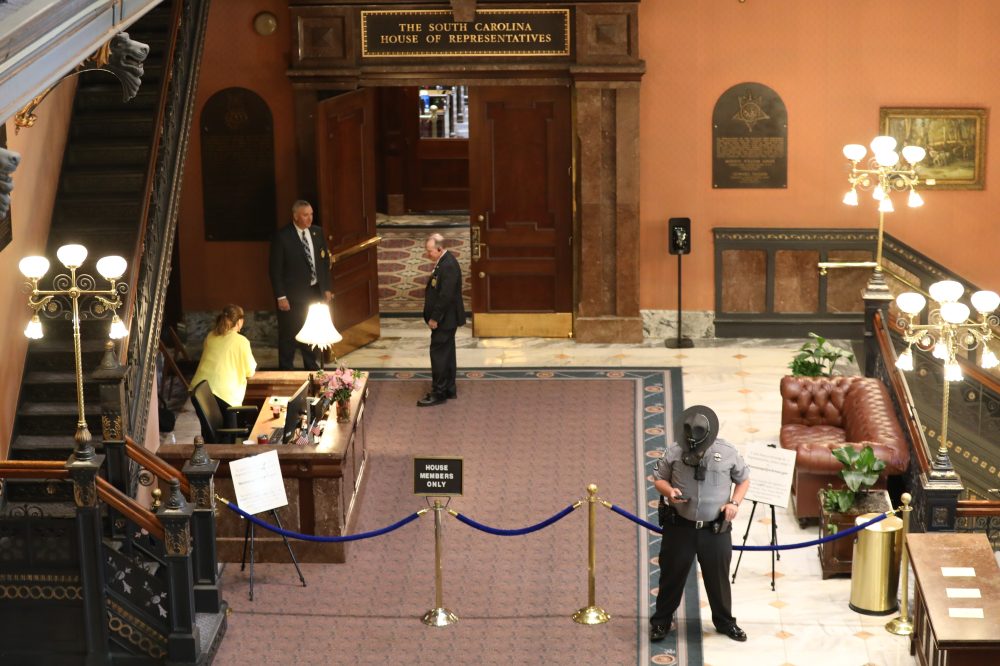
COLUMBIA, S.C. (AP) — South Carolina state House members will begin comprehensive discussions Monday about redrawing the state’s congressional boundaries, launching what could be a contentious debate over whether to fulfill President Donald Trump’s request for a U.S. House map that might deliver all seats to Republicans.
Similar heated discussions have already occurred in Tennessee, Alabama and Louisiana as the GOP works aggressively to capitalize on a recent U.S. Supreme Court decision regarding race-based gerrymandering. This court decision has created opportunities for Republicans to restructure districts containing significant Black voter populations that opponents argue were originally crafted to ensure Democratic victories.
For South Carolina, this strategy involves going after the district currently represented by U.S. Rep. Jim Clyburn, who stands as the sole Democrat within the state’s seven-member House delegation.
Clyburn has stated he plans to continue serving regardless of any district modifications. During a recent meeting with reporters in Washington, he mentioned having residences in Columbia, Charleston and Santee, stating: “I live in three districts. I’ll decide which one to run in.”
Early voting for South Carolina’s statewide primary elections is set to start May 26, with the main primaries occurring June 9. Beyond congressional redistricting, proposed House legislation would shift U.S. House primaries to August. This bill requires Senate approval after passing the House.
Republican Gov. Henry McMaster, who convened the special legislative session for redistricting purposes, emphasized South Carolina’s need to send maximum Republican representation to Washington to help block potential Democratic House control and Trump impeachment efforts.
Nationally, Republicans currently lead the redistricting fight. Following Trump’s endorsement of Texas Republican redistricting efforts last year, the GOP believes it could secure up to 15 additional seats through new House maps across Texas, Missouri, North Carolina, Ohio, Florida, Tennessee and Alabama. Democrats project gaining six seats from revised maps in California and Utah. However, legal challenges continue in several states, with voters ultimately determining election outcomes.
Additionally, courts have overturned Virginia’s redistricting attempt, a decision that likely preserved 4 Republican districts from elimination.
Delaware’s environmental agency has unveiled a comprehensive five-year strategy designed to guide wetland protection efforts across the state through 2030.
The newly released Delaware Wetland Program Plan serves as a roadmap for addressing research, educational outreach, management practices, and conservation priorities related to the state’s wetland ecosystems.
According to the plan, the primary goal is to expand Delaware’s wetland coverage while enhancing the quality and functionality of these critical environmental areas. The strategy emphasizes the numerous benefits that healthy wetlands provide to communities and ecosystems throughout the region.
The comprehensive approach outlined in the document will guide decision-making and resource allocation for wetland-related initiatives over the next five years, focusing on preserving and restoring these vital natural resources.
Worcester County officials have successfully obtained state grant funding to upgrade the water infrastructure serving the Newark community.
The modernization initiative will focus on improving the existing water system to enhance service reliability and water quality for area residents.
County administrators announced the grant award, which will support comprehensive infrastructure improvements to the Newark water distribution network.
The funding represents a significant investment in the community’s essential services and will help ensure residents have access to dependable water service for years to come.
Worcester County government facilities will remain closed on Monday, May 25th, according to an announcement from county officials.
The closure will affect all county administrative offices and services for the day. Residents should plan accordingly for any county business they may need to conduct.
Normal operations are expected to resume the following business day.
Motorists traveling eastbound on W Newport Pike should expect delays this afternoon as construction crews have shut down the right lane between Harbeson Pl and Tolliver Dr.
The lane closure is expected to remain in effect until 5 PM today, potentially impacting evening commute traffic in the area.
Drivers are advised to allow extra travel time and use caution when passing through the construction zone.
Drivers using Route 15 southbound should expect delays today as construction crews have closed the right lane in a section of the roadway.
The lane closure affects the stretch of Route 15 (Dundee Road) traveling south between Wooded Way and Bison Road. Construction activities are causing the temporary lane restriction.
Transportation officials indicate the right lane will remain closed until 4 PM today. Motorists are advised to allow extra travel time and use caution when driving through the work zone.
ROME (AP) — The Vatican announced Monday that a major launch event will take place May 25 for the pontiff’s inaugural document addressing artificial intelligence, focusing on protecting human dignity during the AI era, with participation from Anthropic co-founder Christopher Olah.
Olah’s attendance at the Vatican carries notable importance and indicates that the U.S. pontiff’s stance on artificial intelligence may create fresh tensions with the Trump administration.
The Trump administration directed all federal agencies in February to cease utilizing Anthropic’s AI systems and levied additional significant sanctions after the company declined to grant the U.S. military unlimited access to its artificial intelligence capabilities. The company has filed a lawsuit against the administration, claiming illegal retaliation for its efforts to establish restrictions on AI technology deployment.
The pontiff, who has prioritized AI issues during his early papal tenure, expresses deep worry about artificial intelligence applications in military conflicts and advocates for oversight of the technology’s implementation.
The papal participation in unveiling “Magnifica Humanitas” (Magnificent Humanity) marks an unusual approach, as such announcements typically occur in the Vatican press facility with a limited group of officials and guests fielding media inquiries.
Instead, the Vatican plans an elaborate presentation in its primary auditorium featuring prominent figures: Cardinal Víctor Manuel Fernández, the doctrine leader, and Cardinal Michael Czerny, who oversees development, will serve as primary presenters. Olah joins other lay participants including theologians Anna Rowlands and Leocadie Lushombo.
Cardinal Pietro Parolin, the Vatican secretary of state, will deliver closing remarks while the pope will address attendees and provide a final blessing, according to Vatican officials.
The pontiff executed the document on May 15, marking exactly 135 years since his predecessor Pope Leo XIII endorsed his landmark encyclical “Rerum Novarum,” or Of New Things. That historic document examined worker protections, capitalist limitations, and governmental and employer responsibilities during the Industrial Revolution.
The earlier encyclical established the basis for contemporary Catholic social doctrine, and the current pope has referenced it regarding the AI transformation, viewing it as presenting similar fundamental challenges that the Industrial Revolution created more than a century earlier. The upcoming encyclical is anticipated to frame AI concerns within the church’s social teachings, encompassing labor, justice and peace matters.
Anthropic leader Dario Amodei previously served at OpenAI before departing with colleagues to establish Anthropic in 2021. Their departure stemmed from disagreements with OpenAI leader Sam Altman regarding AI safety protocols. The newer enterprise committed to enhanced focus on safety measures for artificial general intelligence technology that both San Francisco companies seek to develop.
This year, the privately-owned Anthropic reported its valuation reached $380 billion, placing its Claude chatbot in competition with OpenAI and Elon Musk’s rocket company SpaceX, which recently combined with his AI venture xAI, creator of the Grok chatbot.
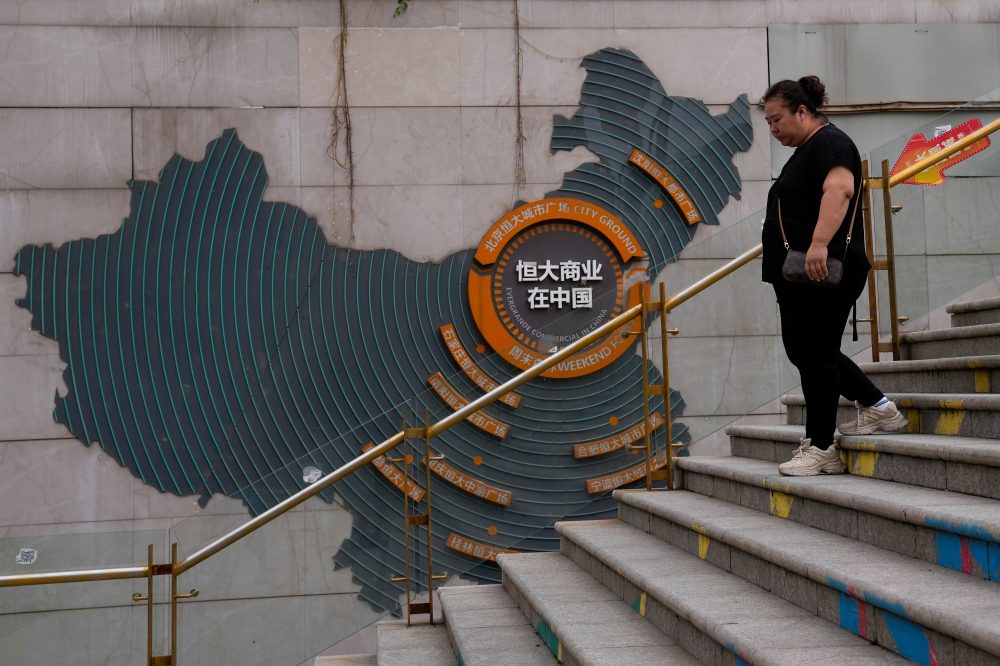
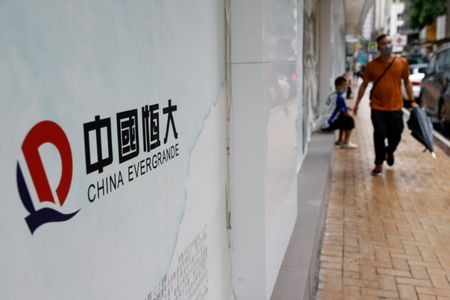
HONG KONG — Court-appointed liquidators handling the collapse of Chinese real estate giant China Evergrande are pursuing 57 billion yuan ($8.4 billion) from accounting firm PwC in Hong Kong court proceedings, officials revealed Monday.
The massive financial claim targets PwC International, PwC Hong Kong and the firm’s mainland Chinese operations, according to court testimony. Judges have not yet ruled on the allegations.
The real estate company, formerly among China’s biggest property developers, initially failed to meet debt obligations in 2021 and accumulated over $300 billion in outstanding debts, making it the globe’s most heavily indebted development company.
The company’s collapse created a cash flow crisis throughout China’s real estate market, leading to declining sales and property values that continue affecting the sector today.
Following a Hong Kong court’s liquidation order for China Evergrande in early 2024, appointed liquidators filed legal action against PwC citing alleged “negligence” in auditing services as they work to recover funds for creditors.
Hong Kong financial regulators announced last month that PwC would pay HK$1.3 billion ($166 million) in penalties and compensation related to its auditing of Evergrande’s financial records prior to the company’s failure, citing violations of professional responsibilities.
PwC stated last month that they recognized their Evergrande audit work “fell well below our high expectations and the expectations of our stakeholders” and confirmed implementing “accountability and remediation measures” in recent months.
This followed separate action by mainland Chinese regulators in September 2024, who imposed 441 million yuan ($62 million) in penalties on PwC for its Evergrande auditing, while revealing the developer had artificially increased revenues by approximately $80 billion in 2019 and 2020 financial reports.
Company founder Hui Ka Yan, previously ranked among Asia’s wealthiest individuals, entered guilty pleas in April to mainland Chinese charges including fraud and bribery.
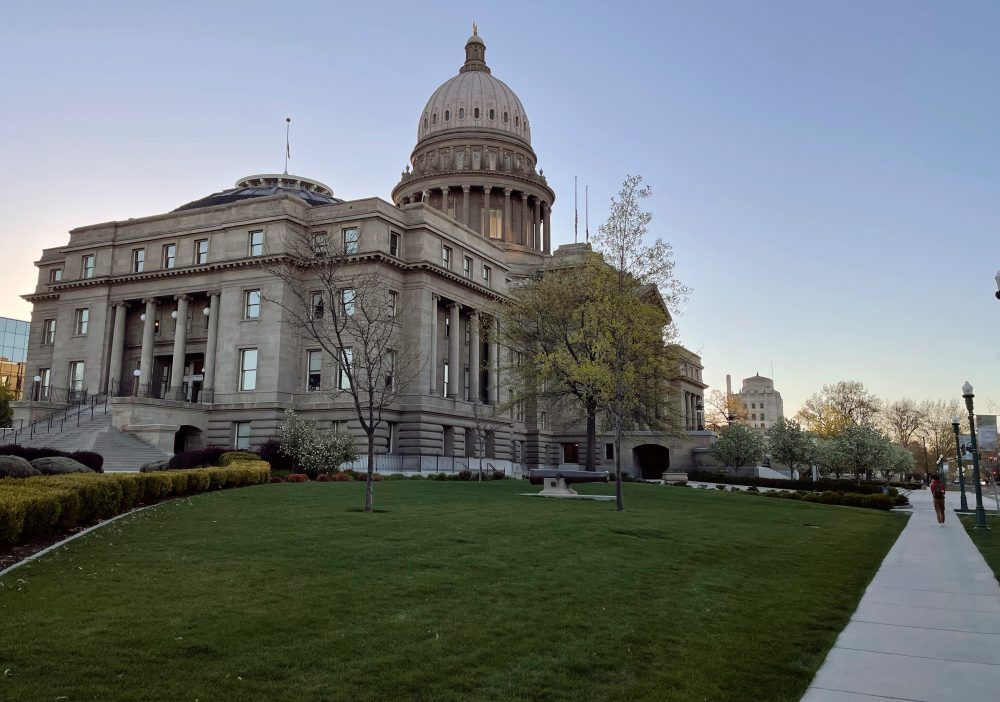
Idaho residents will select nominees for federal, state and local positions during Tuesday’s primary elections.
These races will determine the candidates for November’s general election, where Republicans are counting on strong Idaho performance to help maintain control of both chambers of Congress.
In the U.S. Senate race, Republican incumbent Jim Risch seeks a fourth term while facing three primary opponents. Risch has significantly outpaced his challengers Joe Evans, Denny LaVe and Josh Roy in campaign fundraising as the primary campaign enters its final stretch.
Three Democrats are competing for their party’s Senate nomination: David Roth, Nickolas “007” Bonds and Brad Moore. Campaign finance records show only Roth has raised funds for his campaign, collecting approximately $7,500, though his campaign had no money remaining as of March 31. Roth previously ran as the Democratic nominee for the 2nd Congressional District in 2024 and sought the U.S. Senate seat in 2022.
For governor, Republican Brad Little is pursuing a third term against seven primary opponents, though he maintains a substantial fundraising lead. Little’s campaign had collected roughly $1.9 million and retained about $1.2 million by mid-May. His closest fundraising competitor was Mark Fitzpatrick, a bar owner and former police officer, who raised approximately $185,000 and had roughly $35,000 remaining. The other candidates lagged considerably behind in fundraising.
On the Democratic side for governor, attorney Terri Pickens leads in campaign fundraising. She ran unopposed for the party’s lieutenant governor nomination in 2022 and now faces three opponents in 2026.
Primary contests for lieutenant governor, secretary of state, state controller, state treasurer, state attorney general and state schools superintendent will also appear on ballots, though both Democratic and Republican candidates for these positions face no primary opposition.
Idaho ranks among the nation’s most consistently Republican states. In the 2024 presidential race, President Donald Trump captured approximately 67% of the vote, marking his fourth-strongest state performance after Wyoming, West Virginia and North Dakota.
The state’s last Democratic victories came in 2008 for U.S. House, 1990 for governor and 1974 for U.S. Senate.
Voting concludes at 8 p.m. local time, translating to 10 p.m. and 11 p.m. Eastern Time. Most of the state follows Mountain time with polls closing at 10 p.m. ET, while Pacific time zone areas close at 11 p.m. ET.
The Associated Press will report vote totals and announce winners in competitive primaries for U.S. Senate, U.S. House, governor, state Senate and state House positions.
Democratic primary participation is open to any registered voter regardless of party affiliation. Republican primaries are restricted to registered Republicans only. Voters can register in-person during early voting or on Election Day, and unaffiliated voters may join a party on Election Day.
Registration data from February 2 showed slightly over 1 million registered Idaho voters. Republicans comprised about 628,000, Democrats roughly 120,000, and approximately 259,000 claimed no party affiliation.
During 2022’s state primaries, Republican primary participation ranged from about 265,000 to 282,000 votes, representing roughly 27% of registered voters then. Democratic primary turnout that year spanned from about 25,000 to 33,000 votes, approximately 3% of registered voters.
Early voting comprised about 14% of Republican primary votes and roughly 29% of Democratic primary votes in 2022.
By May 12, approximately 38,000 ballots had been submitted for Tuesday’s election, including about 27,000 in the Republican primary and roughly 9,600 in the Democratic primary.
Most of Idaho’s 44 counties typically report all or nearly all early and absentee voting results in their initial evening update. About half of all counties release complete vote totals in their first report regardless of voting method.
During Idaho’s 2024 general election, the Associated Press initially reported results at 11:13 p.m. ET, just 13 minutes after final poll closure. The evening’s final update came at 6:23 a.m. ET with roughly 90% of total votes tallied.
The Associated Press does not make projections and only declares winners when no possible scenario exists for a trailing candidate to overcome the deficit. For uncalled races, the AP will report significant developments like candidate concessions or victory claims while clearly stating no winner has been declared and explaining the reasoning.
Idaho law provides no automatic recount procedures, but candidates may request and fund recounts regardless of vote margins. The state or county covers recount costs if the margin is 0.1% or less of total votes, or if the recount alters the outcome. The AP may declare winners in races subject to potential recounts if the lead appears too substantial for recounts or legal challenges to change results.
Tuesday marks 168 days until the 2026 midterm elections.
WASHINGTON (AP) — Kentucky’s primary elections on Tuesday feature a high-stakes Republican showdown where Congressman Thomas Massie, a prominent critic of President Donald Trump within the GOP, confronts a primary challenger backed by the former president. The contest represents another chapter in Trump’s ongoing effort to remove Republicans he views as unfaithful from the party.
Voters across Kentucky will select candidates for the U.S. Senate, six House seats, and state legislative positions. Louisville residents will narrow down multiple mayoral candidates.
The spotlight race occurs in Kentucky’s 4th Congressional District, where Massie campaigns for the Republican nomination to serve his eighth complete term. His challenger is Ed Gallrein, who farms and previously served as a Navy SEAL, launching his campaign after Trump encouraged him to run.
Among Washington Republicans, Massie stands out for opposing Trump’s major domestic and international policy proposals, voting against the former president’s landmark tax legislation and his approach to Iran policy. He has also spearheaded congressional efforts to make public documents related to Jeffrey Epstein, the convicted sex offender.
While Massie holds a fundraising edge, Gallrein has maintained competitiveness throughout the race. The sitting congressman spent more than twice what his challenger did during the campaign, though both candidates entered the final month with similar cash reserves.
Northern Kentucky’s 4th Congressional District runs along the Ohio River and borders both Indiana and Ohio. Trump captured approximately 67% of district votes in the 2024 general election, winning every one of its 21 counties with at least 59% support. Massie faced no opposition in 2024 and earned 65% of votes in his 2022 reelection. While Massie won every county in 2022, Trump’s 2024 performance exceeded his in all counties except two.
The U.S. Senate primaries feature nearly 20 candidates vying to replace longtime GOP Senate Majority Leader Mitch McConnell, who is stepping down after seven terms. The 11 Republican candidates include Congressman Andy Barr, who has received Trump’s backing, and former state Attorney General Daniel Cameron, a onetime McConnell aide who has criticized his former boss during campaigning.
Seven Democrats are seeking their party’s nomination, including former state Representative Charles Booker, military veteran and 2020 Senate candidate Amy McGrath, and state House Minority Leader Pamela Stevenson.
Louisville’s mayoral race features incumbent Craig Greenberg seeking a second term against 10 challengers. The nonpartisan primary will send the top two vote recipients to the general election.
Key election details and metrics the AP Decision Team will track during vote counting include:
Voting ends at 6 p.m. local time, translating to 6 p.m. ET and 7 p.m. ET. Most Kentucky polling locations operate on Eastern time and close at 6 p.m. ET, while Central Time Zone locations close at 7 p.m. ET.
The AP will report vote totals and announce winners in competitive primaries for U.S. Senate, U.S. House, and Louisville mayor.
Primary participation is limited to voters registered with each respective political party. Democrats cannot vote in Republican primaries and Republicans cannot vote in Democratic primaries. Independent and unaffiliated voters are excluded from both primaries.
Kentucky had approximately 3.4 million registered voters as of April 24, with roughly 1.6 million Republicans and 1.4 million Democrats.
The 2022 U.S. Senate primaries drew about 386,000 Republican votes and approximately 292,000 Democratic votes.
Early voting accounted for roughly 21% of Democratic votes and 17% of Republican votes in the 2023 state primaries.
By Wednesday, about 27,000 ballots had been submitted for Tuesday’s election, with approximately 14,000 from Republicans and 12,000 from Democrats.
Counties follow different vote reporting procedures. Early and absentee ballot results from medium and large counties typically appear in initial updates, usually before Election Day in-person voting results.
During the 2024 primary, the AP released first results at 6:06 p.m. ET, six minutes after most state polls closed. The final update came at 9:47 p.m. ET with over 99.9% of votes tallied.
The Associated Press avoids making projections and only declares winners when no possible scenario exists for trailing candidates to overcome their deficit. For uncalled races, the AP will report significant developments like candidate concessions or victory claims while clarifying that no winner has been declared and explaining the reasoning.
Kentucky mandates automatic recounts for U.S. Senate, U.S. House, state General Assembly, and most statewide races when the margin is 0.5% or less of total votes. The AP may call winners in recount-eligible races if the lead is too substantial for recounts or legal challenges to alter the outcome.
Tuesday marks 168 days remaining until the 2026 midterm elections.
WASHINGTON (AP) — Alabama’s primary elections Tuesday will be incomplete, with just three of the state’s seven congressional districts conducting their races following a Supreme Court ruling that forced GOP officials across several southern states to abandon their congressional maps.
Voting in Alabama’s remaining four districts has been delayed until a special primary on Aug. 11 as state leaders reinstate previously drawn Republican district lines that remove one of two majority-Black U.S. House districts currently represented by Democrats.
These court-mandated changes in Alabama, Louisiana and Tennessee, combined with earlier legislative redistricting efforts in other states during the middle of the decade, represent a broader Republican strategy endorsed by President Donald Trump to enhance the party’s odds of retaining its U.S. House control in the 2026 midterm contests.
The August postponement affects only the 1st, 2nd, 6th and 7th Congressional District primaries. Alabama residents will select candidates Tuesday for the 3rd, 4th and 5th Congressional Districts as originally scheduled, along with U.S. Senate and numerous state and local positions.
For the gubernatorial contest, U.S. Sen. Tommy Tuberville joins two other candidates seeking the Republican nomination to succeed term-limited GOP Gov. Kay Ivey. The Democratic field includes former U.S. Sen. Doug Jones among its hopefuls.
U.S. Rep. Barry Moore pursues the Republican Senate nomination to take Tuberville’s place, competing against six other GOP contenders while four Democrats vie for their party’s nod.
Moore currently serves the 1st Congressional District, which will conduct its primary in August. Former Republican U.S. Rep. Jerry Carl is among those seeking that position.
Trump has backed Tuberville for governor, Moore for Senate and Carl for the 1st Congressional District. The former president’s support should prove influential in a state where he achieved his sixth-strongest showing in the 2024 race. Republican primary victors in most Tuesday races will enjoy considerable advantages in November’s general election.
Alabama mandates that primary contenders secure majority support to prevent a June 16 runoff.
Key details about the election and metrics the AP Decision Team will track during vote counting:
Voting ends at 7 p.m. CT, equivalent to 8 p.m. ET.
The AP will deliver vote tallies and announce winners in competitive primaries for U.S. Senate, U.S. House Districts 3, 4 and 5, governor, lieutenant governor, attorney general, secretary of state, treasurer, auditor, agriculture commissioner, Public Service Commission, state school board, state Senate and state House, plus two constitutional amendments.
All registered voters may participate in either party’s primary. While Alabama doesn’t register voters by party affiliation, participants must declare party preference when choosing their primary ballot.
Approximately 3.8 million voters were registered in Alabama as of Thursday.
During 2022 and 2024, Democratic primaries for U.S. Senate, governor and president each drew under 190,000 votes, while Republican primaries for the same offices attracted 600,000 or more votes.
Most Alabama voters cast ballots on Election Day rather than beforehand. The state remains among the few nationwide without some form of early in-person voting. During 2024 primaries, roughly 4% of Democratic primary participants and about 1% of Republican primary voters used mail ballots.
County-by-county vote reporting methods differ. Most counties typically publish absentee results in their initial update, sometimes combined with Election Day in-person voting data.
During the 2024 primary, the AP initially released results at 8:03 p.m. ET, three minutes after polls closed. The final vote update occurred at 1:50 a.m. ET with over 99% of votes tallied.
The Associated Press avoids making projections and declares winners only when no possible scenario exists for trailing candidates to overcome their deficits. When races remain undecided, the AP continues reporting significant developments like candidate concessions or victory claims while clarifying it hasn’t declared a winner and explaining the reasoning.
Alabama automatically triggers recounts for ballot measures when victory margins equal 0.5% or less of total votes. A 2010 Alabama Attorney General opinion determined the state’s automatic recount statute doesn’t cover primaries. The AP may declare winners in recount-eligible races if it determines leads are too substantial for recounts or legal challenges to alter outcomes.
Beginning Tuesday, 28 days remain until the June 16 primary runoff, 84 days until the Aug. 11 special U.S. House primaries and 168 days until the 2026 midterm elections.
WASHINGTON (AP) — Georgia wraps up primary voting Tuesday in what promises to be heated contests for both the governor’s mansion and a critical U.S. Senate position that may determine which party controls the narrowly split upper chamber.
These primary battles will establish the framework for two high-profile November elections with political consequences extending well past Georgia’s state lines.
Voters across Georgia will select candidates for numerous positions including U.S. House seats, state legislative posts, and various statewide roles like lieutenant governor, secretary of state, and attorney general. Ballot measures also include nonpartisan judicial elections, featuring two contested state Supreme Court races.
Eight Republican candidates are competing for the chance to replace term-limited GOP Governor Brian Kemp. The field features state Attorney General Chris Carr, healthcare business leader Rick Jackson, Lieutenant Governor Burt Jones, and Georgia Secretary of State Brad Raffensperger.
While Jones has secured President Donald Trump’s backing, Jackson is challenging the worth of that presidential support by investing over $83 million of his own money into his campaign.
Democratic contenders include former Atlanta Mayor Keisha Lance Bottoms, former Republican Lieutenant Governor Geoff Duncan, former state Senator Jason Esteves, state Representative Derrick Jackson, and former state labor commissioner and former DeKalb County CEO Mike Thurmond.
Should no candidate capture a majority in the primary election, the leading two vote recipients will compete in a June 16 runoff.
The eventual successor to Kemp will serve during 2028 and may become a significant player in the upcoming presidential race if Georgia maintains its competitive status from 2020 and 2024. Trump previously criticized Kemp for declining to assist in overturning his 2020 Georgia defeat to Democrat Joe Biden, though the two politicians reconciled in 2024 before Trump’s successful reelection bid.
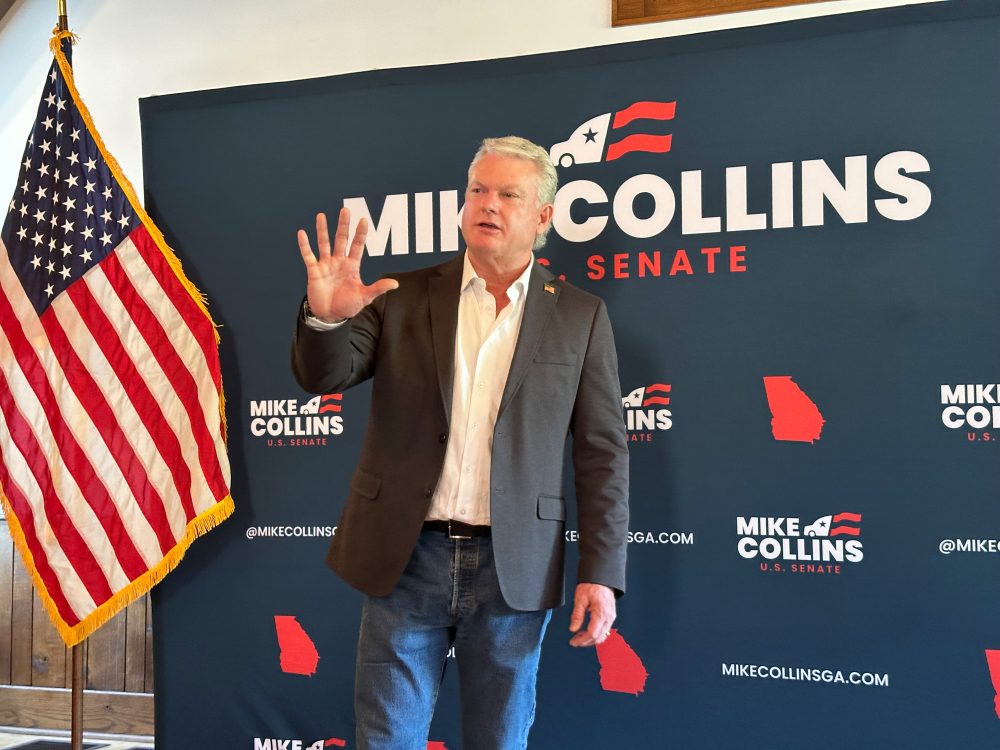
For the U.S. Senate contest, five Republicans are campaigning to face first-term Democratic Senator Jon Ossoff, who faces no primary opposition. Candidates include Representatives Buddy Carter and Mike Collins, plus former University of Tennessee football coach Derek Dooley, who has received Kemp’s support.
Carter has collected and spent more funds than his GOP competitors, though he, Collins and Dooley entered the month with similar financial resources of approximately $1.7 million in their campaign accounts.
A successful Ossoff reelection campaign in November would be essential for Democratic ambitions to regain chamber control.
The Atlanta metropolitan counties of Fulton, Gwinnett, Cobb and DeKalb represent the state’s largest population centers and hold significant influence in both parties’ statewide primary elections. Fulton and DeKalb typically carry more weight in Democratic primaries, while Cobb and Gwinnett generally provide larger vote shares in Republican races. Cherokee and Forsyth counties, also part of the greater Atlanta region, tend to play bigger roles in Republican rather than Democratic primaries. Both counties delivered strong support for Trump across his three presidential campaigns.
Key election details and data points the AP Decision Team will track during vote counting include:
Polling locations close at 7 p.m. Eastern Time.
The Associated Press will deliver vote tallies and announce winners in competitive primaries for U.S. Senate, U.S. House, governor, lieutenant governor, secretary of state, attorney general, agriculture commissioner, insurance commissioner, state school superintendent, labor commissioner, Public Service Commission, state Senate and state House, plus nonpartisan state Supreme Court and Court of Appeals elections.
All registered voters may vote in either primary since Georgia doesn’t require party registration.
Thursday’s count showed approximately 8.1 million registered Georgia voters.
During 2022, around 1.2 million ballots were submitted in Republican governor and U.S. Senate primaries, compared to roughly 730,000 votes in Democratic primaries.
Early voting accounted for about 51% of the 2022 Democratic primary turnout and approximately 41% of Republican primary participation.
By Thursday, around 696,000 votes had already been submitted for Tuesday’s election, with about 381,000 in the Democratic primary and roughly 305,000 in the Republican primary.
Counties typically report mail-in and early in-person voting results at the beginning of election night. More than half of all counties usually release their complete or near-complete mail and early voting tallies in their initial update.
During the 2022 primary, the Associated Press published initial results at 7:13 p.m. Eastern Time, just 13 minutes after polls closed. The final vote update occurred at 3:29 a.m. Eastern Time with approximately 99% of votes tallied.
The Associated Press avoids making projections and only declares winners when determining no possible scenario exists for a trailing candidate to overcome the deficit. For uncalled races, the AP continues reporting significant developments like candidate concessions or victory claims while clearly stating no winner has been declared and explaining the reasoning.
Georgia lacks automatic recount procedures, but candidates may request recounts when margins equal 0.5% or less of total votes. The Associated Press may declare winners in recount-eligible races if determining the lead is too substantial for recounts or legal challenges to alter results.
As of Tuesday, 28 days remain until the June 16 primary runoff and 168 days until the 2026 midterm elections.
Pennsylvania voters will head to polling stations Tuesday to select Democratic candidates for four congressional seats that party leaders view as essential to regaining control of the U.S. House this November.
The Republican Party currently maintains a narrow House majority, with only a small number of districts potentially determining which party controls the chamber in the coming term. Democratic strategists have identified four GOP-held Pennsylvania districts as prime opportunities for gains.
Four Republican incumbents face no opposition in their party’s primaries: U.S. Reps. Brian Fitzpatrick in the 1st Congressional District, Ryan Mackenzie in the 7th Congressional District, Rob Bresnahan in the 8th Congressional District and Scott Perry in the 10th Congressional District.
Former Democratic Vice President Kamala Harris won the 1st District by a small margin in 2024, while Republican President Donald Trump secured victories by wider margins in the 7th, 8th and 10th Districts.
Commonwealth voters will simultaneously choose nominees for lieutenant governor and candidates for both legislative chambers.
Twenty-five of Pennsylvania’s 50 state Senate positions and all 203 state House positions will be contested in November’s general election. Democrats currently control the state House by a narrow margin, while Republicans maintain an advantage in the state Senate.
Democratic Gov. Josh Shapiro faces no primary challengers in his reelection campaign and has used his campaign activities to support his preferred congressional candidates.
Shapiro has endorsed Bucks County Commissioner Bob Harvie over former congressional aide Lucia Simonelli for the chance to face Fitzpatrick in the 1st District. For Mackenzie’s 7th District position, he supports retired firefighter and union leader Bob Brooks in a four-candidate primary that also includes military veteran and former prosecutor Ryan Crosswell. His choice to challenge Perry in the 10th District is former TV news anchor Janelle Stelson, who previously sought the seat in 2024. Scranton Mayor Paige Cognetti runs uncontested for the Democratic nomination to face Bresnahan in the 8th District, and she also has Shapiro’s backing.
State Treasurer Stacy Garrity will be the governor’s Republican challenger in November, as she faces no primary opposition.
Voting locations close at 8 p.m. ET.
The AP will report vote tallies and announce winners in competitive primaries for U.S. House, lieutenant governor, state Senate and state House positions, plus a special election in state House District 196.
Participation in party primaries is restricted to voters registered with that specific party. Democratic voters cannot cast ballots in Republican contests and vice versa. Voters registered as independent or unaffiliated cannot participate in either party’s primary.
Pennsylvania had nearly 9 million registered voters as of May 11. Democratic registrations exceeded Republican registrations, 3.8 million to 3.6 million. Approximately 1.2 million voters were unaffiliated with any party.
About 1.1 million Democratic primary ballots and roughly 953,000 Republican primary ballots were submitted in the 2024 presidential primaries, which occurred well after Trump and President Joe Biden had secured their nominations.
During the more contested U.S. Senate primaries in 2022, both Republican and Democratic voters each submitted approximately 1.3 million ballots.
Early voting accounted for roughly 45% of the 2024 Democratic presidential primary turnout and 17% of the Republican primary participation.
Through Thursday, approximately 385,000 Democratic primary ballots and about 129,000 Republican primary ballots had been submitted for Tuesday’s election.
Counties follow different procedures for releasing vote counts, though most report absentee ballot results alongside Election Day in-person voting throughout the evening. About one-third of counties publish all or nearly all early and absentee vote totals in their initial evening report.
During the 2024 primary, the AP published initial results at 8:01 p.m. ET, roughly one minute after polls closed. The final vote update occurred at 2 a.m. ET with approximately 91% of total votes tallied.
The Associated Press does not issue projections and will only declare a winner when determining that no possible scenario exists for a trailing candidate to overcome the deficit. When races remain undecided, the AP will report significant developments, including candidate concessions or victory claims, while clearly stating that no winner has been declared and explaining the reasoning.
Pennsylvania law mandates automatic recounts for statewide contests with victory margins of 0.5 percentage points or smaller. For other races, voters may request recounts from county election boards or through court petitions. The AP may announce a winner in races subject to recounts if the margin is determined to be too large for a recount or legal challenge to alter the outcome.
As of Tuesday, 168 days remain until the 2026 midterm elections.
Pakistan has delivered an updated Iranian peace proposal to the United States in an effort to resolve the ongoing Middle East conflict, a Pakistani source revealed to Reuters on Monday. The source cautioned that negotiating parties “don’t have much time” to bridge their remaining disagreements.
The Iranian Foreign Ministry spokesperson Esmaeil Baghaei subsequently verified that Tehran’s position had been “conveyed to the American side through Pakistan,” though he declined to provide specific details about the proposal’s contents.
A tenuous ceasefire remains active following six weeks of conflict that erupted after U.S.-Israeli military strikes against Iran. However, Pakistan-mediated negotiations have reached an impasse, prompting U.S. President Donald Trump to describe the current truce as “on life support.”
The Pakistani source declined to elaborate on the specifics of the updated proposal. When questioned about the timeline for resolving outstanding issues, the source expressed frustration that the parties “keep changing their goalposts” and emphasized: “We don’t have much time.”
The United States has called on Tehran to dismantle its nuclear capabilities and end its effective blockade of the Strait of Hormuz, a critical waterway that typically handles one-fifth of global oil and liquefied natural gas shipments.
Iran has countered by demanding financial compensation for war-related damages, termination of U.S. blockades on Iranian ports, and cessation of hostilities across all theaters, including Lebanon where Israel continues fighting the Iran-supported Hezbollah militia.
In a weekend post on Truth Social, Trump warned that “the Clock is Ticking” for Iran, stating “they better get moving, FAST, or there won’t be anything left of them. TIME IS OF THE ESSENCE!”
According to an Axios report, Trump is scheduled to convene with senior national security advisers on Tuesday to evaluate options for potentially resuming military operations.
Nuclear ambitions remain another significant obstacle in the negotiations. The United States and other major powers seek assurances that Iran will not pursue nuclear weapons development.
Tehran maintains it has no intention of developing such weapons and continues to seek war damage compensation, guarantees against future attacks, and restoration of Iranian oil export operations.
Baghaei indicated Tehran was ready for any eventuality, telling a televised weekly press briefing: “As for their threats, rest assured that we are fully aware of how to respond appropriately to even the smallest mistake from the opposing side.”
While hostilities have diminished since the April ceasefire implementation, Iran has continued launching drone attacks toward Gulf nations that host U.S. military installations.
A drone strike ignited a fire at a nuclear facility in the United Arab Emirates, officials reported Sunday, while Saudi Arabia announced intercepting three incoming drones.
Iran escalated its UAE attacks this month following Trump’s announcement of a naval operation to reopen the Strait of Hormuz, which he called off after 48 hours.
Global financial markets declined Monday as the recent drone incidents drove up oil prices and bond yields, raising concerns about inflation.
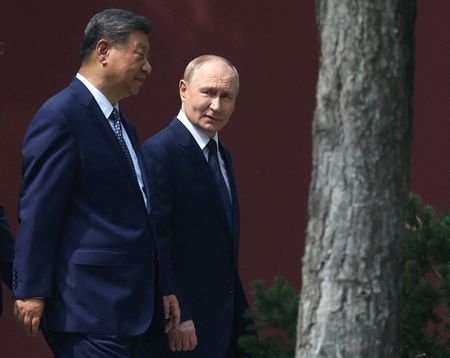
Trump, facing November midterm elections that pose political challenges for his Republican Party, conducted discussions with Chinese President Xi Jinping last week but failed to secure Chinese assistance in resolving the crisis.
The shipping disruptions through the Strait of Hormuz have triggered the most severe oil supply shortage in recorded history, driving crude prices up by 50% or more.
Some White House officials express concern that Trump’s foreign policy approach and its impact on domestic gasoline costs could jeopardize Republican congressional control, particularly as war-weary Americans prioritize living expenses over international conflicts.
The famous sandal manufacturer Birkenstock is experiencing a dramatic decline in investor confidence as its strategy to become a high-end luxury brand appears to be stumbling.
When the company launched its stock market debut in 2023, it marketed itself as a centuries-old footwear maker transforming into a contemporary luxury brand. However, recent market performance indicates investors are now viewing the business more as a specialized footwear company with a dedicated but limited customer base, rather than a potential luxury giant comparable to companies like LVMH, which holds a partial stake in the ergonomic shoe manufacturer.
These concerns deepened following last week’s earnings report, where the company revealed slower quarterly expansion and declined to increase its yearly revenue projections, citing trade tariffs and Middle Eastern conflicts as contributing factors. Stock prices plummeted over 14% to hit an all-time low of $32.44, reducing the company’s total market value by nearly 38% from its $9.3 billion initial public offering valuation.
This market reaction highlights a widening gap between the company’s original positioning and current investor assessment. The brand occupies a middle ground between luxury and mainstream markets – more upscale than typical footwear companies in terms of distribution control and pricing strategies, yet lacking the scope and product diversity of established luxury brands.
“Investor expectations likely became inflated once the brand was valued more like a luxury fashion company than a footwear company,” explained Keith Fraley, an assistant professor at the Fashion Institute of Technology in New York. According to Fraley, the current challenge involves preserving exclusivity while pursuing worldwide expansion.
This fundamental tension permeates the company’s operations. Manufacturing most of its products in Germany strengthens its premium positioning but exposes the business to elevated production costs compared to competitors who manufacture in Asian markets.
Meanwhile, consumer demand shows signs of weakening. While affluent customers have accepted price increases, budget-conscious shoppers are reducing purchases as elevated living expenses impact discretionary spending.
These challenges were apparent in the most recent quarter, with profit margins declining due to dollar weakness against the euro and tariff costs doubling to 20%, damaging profitability in the United States, its primary market. The company’s adjusted EBITDA margin dropped 270 basis points in the latest quarter, with management indicating these pressures will continue affecting margins throughout the year.
Industry analysts and brand specialists note that the company’s signature contoured cork footbed sandals, which define its brand identity, function primarily as seasonal summer footwear, making substantial growth difficult despite expansion into clogs, boots and sneakers. Rather than achieving high-growth luxury status, investors are now adjusting expectations toward viewing it as a stable but more limited consumer brand.
“Fashion markets eventually ask the same question: is this timeless or did everyone who wanted in buy enough?” commented Michael Ashley Schulman, a partner at Cerity Partners.
This sentiment change is reflected in current valuations. Company shares now trade at approximately 13 times projected earnings, matching industry standards – a significant drop from the premium valuation when the stock reached its peak of 123.17.
In comparison, rival company Crocs has escaped similar market punishment partly because it already trades at mainstream footwear valuations – 7 times its upcoming 12-month earnings – while maintaining profit margins exceeding 20%.
“If (Birkenstock) chases volume by opening too many wholesale doors or relying on promotions, they will lose the luxury premium they’ve spent decades building,” warned Eric Tsytsylin, a brand strategy partner at Lippincott, a global brand consultancy.
Stock market futures fell on Monday morning as investors grappled with climbing Treasury bond yields and rising oil costs, while looking ahead to major corporate earnings announcements later this week.
The 10-year Treasury yield, which has an inverse relationship with bond prices, climbed as high as 4.631% during early trading – marking its peak level since February 2025 – before pulling back slightly to 4.607%.
Bond market selling intensified due to surging oil prices, raising worries that inflation might keep interest rates high for an extended period. Brent crude was trading at $110.66 per barrel following setbacks in efforts to resolve the Iran conflict after a drone attack on a nuclear facility in the United Arab Emirates.
“The concern for investors is that higher yields do not stay confined to bond markets. They can weigh on equity valuations, particularly in growth and technology sectors, while also increasing pressure on governments carrying large debt burdens,” said Lale Akoner, global market strategist at eToro.
Stock markets had experienced significant gains in recent weeks, with both the S&P 500 and the technology-focused Nasdaq hitting new record levels as excitement about artificial intelligence helped investors overlook inflation concerns stemming from climbing oil prices.
However, that positive sentiment diminished following Friday’s bond market decline. Market participants now see more than a 40% probability that the Federal Reserve will increase interest rates in January, based on CME’s FedWatch tool, following last week’s inflation data that came in higher than anticipated.
As of 7:19 a.m. Eastern Time, Dow futures had dropped 322 points or 0.65%, S&P 500 futures were down 30.5 points or 0.41%, and Nasdaq 100 futures fell 112 points or 0.38%.
Market watchers will also focus on the Federal Reserve’s meeting minutes, scheduled for release on Wednesday, along with leadership changes at the central bank as former Governor Kevin Warsh prepares to take over as chair. He faces an early challenge in managing the White House’s push for lower interest rates while dealing with more aggressive stances from Fed officials.
Company earnings reports represent another critical factor for markets. The world’s most valuable company, which is set to announce results on Wednesday, comes as a robust first-quarter earnings period nears its end.
Market expectations are elevated for the company, whose stock has gained 36% since its March bottom, while the Philadelphia SE Semiconductor Index has jumped more than 60% this year driven by strong appetite for AI-related semiconductor products.
The world’s largest retailer is also scheduled to release earnings this week, potentially providing insights into how American consumers are managing higher energy costs and broader inflation challenges.
In premarket trading Monday, Dominion Energy shares surged 14.2% following a Bloomberg News report that power company NextEra Energy was in talks for a primarily stock-based acquisition of the smaller utility, valuing it at approximately $76 per share or roughly $66 billion.
UnitedHealth Group dropped 4.7% after Berkshire Hathaway disclosed it had sold many of its smaller equity positions, including shares in the health insurance company.
Regeneron stock tumbled 11.8% after the pharmaceutical company’s experimental therapy failed to achieve its primary objective in a late-stage study involving patients with advanced melanoma, a form of skin cancer.
A Swiss watchmaker had to close multiple locations and restrict customer lines after the debut of their newest timepiece sparked chaotic scenes and physical altercations among buyers worldwide.
Swatch’s new Royal Pop pocket watch, created in partnership with Audemars Piguet, retails between $400 and $420 – significantly less expensive than typical Audemars Piguet luxury timepieces that cost thousands. This price difference has motivated many purchasers to immediately resell the watches online at dramatically increased prices.
Video footage and social media content documented lengthy customer lines at retail locations in New York, London, Barcelona and Dubai over the weekend, with disruptions at several sites requiring law enforcement response. Footage captured customers fighting outside a Swatch location in Milan and other cities.
The chaos stemming from an intense social media marketing push forced Swatch to respond quickly as circumstances threatened to spiral beyond control.
“To ensure the safety of both our customers and staff in Swatch stores, we kindly ask you not to rush to our stores in large numbers to acquire this product,” Swatch said in a statement over the weekend.
A company representative stated Monday that difficulties occurred on the release date at approximately 20 Swatch locations out of 220 worldwide due to unusually long lines and inadequate organization at certain shopping centers, though conditions have since stabilized.
The representative noted the company has recorded millions of website visits and 11 billion social media impressions since announcing the collaboration. Sales figures for Royal Pop have not yet been released.
Complete sets of all eight Royal Pop designs reached prices exceeding $25,000 on the StockX marketplace Sunday, while unofficial retailers sold custom straps to convert the pocket watches into wristwatches for more than $50.
“I think there’s a small window of opportunity going on here for the flippers who potentially are going to make a lot of money,” said Jon White, director of British precious metals dealer Gold Traders.
He questioned whether the inflated values would persist in secondary markets. “It’s bonkers, absolutely bonkers,” he added.
Audemars Piguet timepieces typically sell for hundreds of thousands of dollars. Auction house Sotheby’s reported that a 1921 Grosse Pièce astronomical pocket watch sold for $7.7 million last December.
Swatch stock prices rose nearly 18% in the week following the initial partnership announcement this month. However, shares have dropped more than 7% since reaching a peak May 8th as investors learned the timepieces would only be offered as pocket watches.
NextEra Energy announced Monday it will acquire Dominion Energy in a massive $66.8 billion transaction, marking one of the power sector’s biggest deals as companies scramble to meet growing electricity needs driven by artificial intelligence data centers.
The acquisition represents part of an industry-wide consolidation trend, with energy companies working to expand their operations to serve unprecedented power consumption increases.
The Florida-based NextEra ranks among the globe’s top energy developers, and acquiring Dominion Energy’s assets will allow the company to enter the PJM Interconnection market while taking advantage of Virginia’s position as a major data center hub.
Under the agreement terms, NextEra will provide 0.8138 shares of its stock for every Dominion share outstanding, resulting in NextEra investors controlling 74.5% of the merged entity.
Company officials expect the deal to finalize within 12 to 18 months.
Dominion Energy carried $44.11 billion in total long-term debt as of March 31.
This purchase advances NextEra’s strategy to capitalize on booming data center electricity requirements from major technology companies. The utility previously reached an agreement with Alphabet’s Google in the past year to restart an Iowa nuclear facility.
The Virginia-headquartered Dominion currently serves nearly 51 gigawatts of data center capacity under contract, with clients including Alphabet, Amazon, Microsoft, Meta, Equinix, CoreWeave and CyrusOne.
Dominion operates in Virginia’s service area that encompasses Northern Virginia’s “Data Center Alley,” recognized as the planet’s largest data center concentration and among the world’s fastest-expanding electricity markets.
Drivers should expect intermittent lane closures on E Sewell Street today due to ongoing construction work. The affected area is located at the railroad crossing situated between Walnut Street and Church Street.
The lane restrictions are expected to remain in place until 5 PM this evening. Motorists traveling through the area should plan for potential delays and consider alternate routes if possible.
Motorists traveling on northbound Route 113 should be aware of a shoulder closure affecting traffic flow in the Bridgeville area.
The Delaware Department of Transportation reports that the northbound shoulder of Route 113 is currently closed between North Street and Bridgeville Road due to construction activities.
The shoulder restriction is scheduled to remain in effect until 4 PM today. Drivers are advised to use caution when traveling through the work zone and expect possible delays during the closure period.
Motorists traveling north on Coastal Highway should expect delays due to construction activity blocking one lane of traffic.
The Delaware Department of Transportation reports that the right lane remains closed on northbound Route 1 in the stretch running from West Farmington Road to East Atlantic Street.
Construction crews are expected to complete their work and reopen the lane by 4 PM this afternoon.
Drivers are advised to allow extra travel time and use caution when passing through the construction zone.
Drivers using Ennis Drive are experiencing periodic lane restrictions today due to ongoing construction work in the area.
The intermittent lane closures are affecting the stretch of roadway between Limestone Road and Croom Mills Drive, according to traffic officials.
The construction-related lane restrictions are expected to continue until 5:30 PM today. Motorists are advised to plan for potential delays and consider alternate routes if possible.
Motorists traveling on Ennis Drive should expect delays this afternoon as construction crews continue work that requires intermittent lane closures.
The affected stretch runs between Limestone Road and Croom Mills Drive, where drivers may encounter temporary lane restrictions as work progresses throughout the day.
Officials indicate the construction-related lane closures will remain in effect until 5:30 PM today. Drivers are advised to plan for extra travel time or consider alternate routes if possible.
Transportation workers across Kenya launched a nationwide work stoppage Monday, bringing the capital city of Nairobi to a standstill as they demonstrated against soaring fuel costs.
The strike left travelers without options throughout various neighborhoods while downtown areas sat empty. Those with personal cars chose to remain at home as demonstrators set tire fires across main thoroughfares.
School officials from the Kenya Association of Private Schools recommended that member institutions evaluate student safety for travel to classes, leading most educational facilities to switch to remote learning for the day.
Fuel costs in Kenya reached unprecedented levels last Friday, with diesel jumping 23.5% and gasoline climbing 8%.
President William Ruto, currently traveling outside the country, has not yet addressed the new pricing. During the previous price adjustment in April, he linked increases to the Iran war while cutting taxes to limit price spikes at that time.
The Kenya National Chamber of Commerce and Industry warned Friday that the higher fuel costs would impact all goods and services throughout the nation.
“The April–May comparison shows that while global crude oil prices increased by about 10.7%, Kenya’s diesel price rose by 23.5% over the same period. This points to the continued role of domestic cost buildup,” the chamber of commerce said in a statement.
Former deputy president Rigathi Gachagua, who switched to the opposition following his impeachment in October 2024 over corruption, pointed to corrupt businesspeople seeking higher profit margins as the cause of the dramatic price surge.
He drew comparisons between Kenya’s fuel costs and those in nearby landlocked nations that depend on Kenyan ports for fuel imports, including Uganda, where prices remain lower.
Kenya functions as a critical transportation center for merchants bringing goods through Mombasa’s port for overland distribution.
Hungary and Ukraine announced plans Monday to start high-level discussions regarding the treatment of ethnic Hungarians living in Ukraine, signaling a possible improvement in the strained relationship between the two neighboring nations.
Relations between the countries had deteriorated over several years under Hungary’s previous pro-Russian administration led by former Prime Minister Viktor Orbán, which declined to offer financial or military support to help Ukraine defend against Russia’s full-scale invasion.
Orbán, who lost power in a decisive April election, had defended many of his administration’s anti-Ukraine positions by citing alleged limitations on language and educational opportunities for approximately 100,000 ethnic Hungarians residing in Ukraine’s Zakarpattia region.
Ukraine enacted legislation in 2017 requiring Ukrainian as the primary language of instruction beyond fifth grade, which was designed to counter Russian influence but also impacted other minority languages, creating frustration among Romanian, Bulgarian and Hungarian communities.
Hungary’s new Foreign Minister Anita Orbán announced on X Monday that “expert-level consultations aimed at resolving the rights of the Hungarian minority” would commence as early as this week.
These discussions will establish “an important foundation for the prompt and reassuring settlement of minority rights issues,” Orbán posted, noting she has no family connection to the former prime minister.
“I trust that the dialogue will be constructive and productive, and that the negotiations will soon bring tangible progress for the Hungarian community,” she added.
The initiative represents an early indication that bilateral relations, which had reached historic lows under Orbán’s leadership, might be improving. His nationalist-populist administration had obstructed vital European Union assistance to Ukraine, delayed sanctions against Moscow, and threatened to hinder Ukraine’s eventual EU membership aspirations.
Leading up to the April vote, Orbán’s administration conducted an intense anti-Ukraine campaign, portraying the neighboring nation as a fundamental danger to Hungary that could devastate its economy and force involvement in the conflict.
However, the victory of the center-right Tisza party and its leader, Prime Minister Péter Magyar, has raised expectations that Hungary’s new leadership would adopt a more collaborative stance.
Demonstrating the dramatic shift in Moscow relations following Magyar’s election, Hungary’s new foreign minister recently called in the Russian ambassador regarding a major drone attack in Zakarpattia — an action that would have been nearly impossible during Orbán’s 16-year rule.
Ukrainian President Volodymyr Zelenskyy described the diplomatic summons in Budapest as an “important message” and expressed gratitude to the new administration for its response.
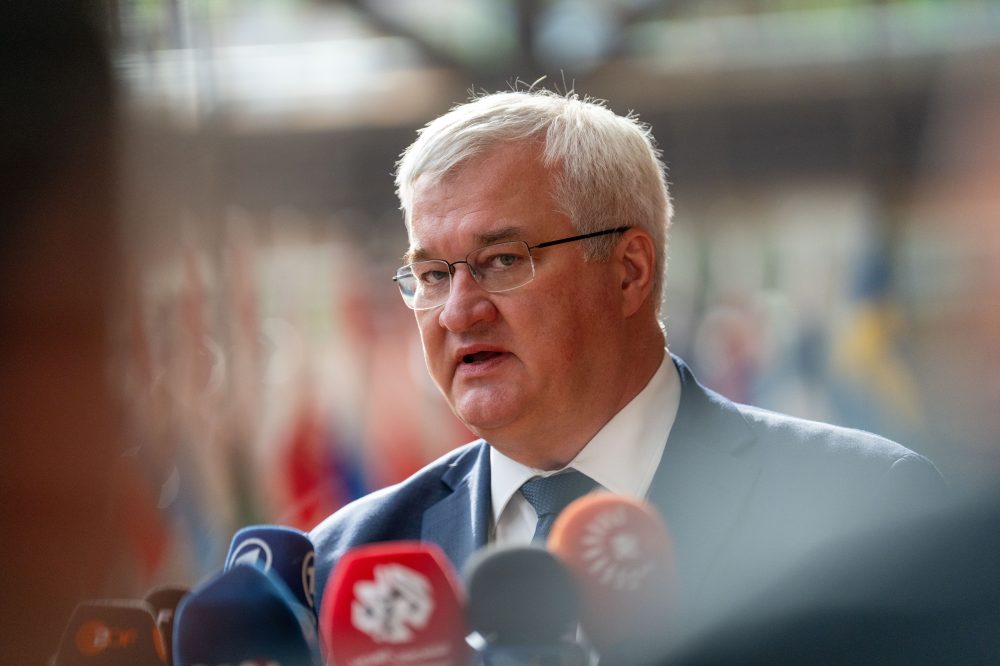
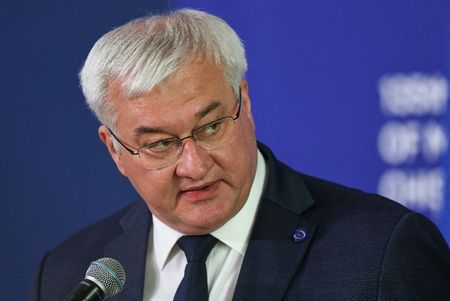
Ukrainian Foreign Minister Andrii Sybiha posted on X Monday that his government stands “ready to open a new, mutually beneficial chapter in Ukrainian-Hungarian relations without delay,” seeking to “restore trust and good-neighborly relations between our countries.”
Sybiha noted that during a telephone conversation with Anita Orbán, he had expressed appreciation for “the Hungarian government’s principled and swift reaction to the latest Russian strikes against Ukraine.”
ROME (AP) — A violent incident involving a vehicle and knife attack in Modena has sparked a national conversation about immigration integration in Italy, according to the country’s interior minister who spoke publicly Monday.
Interior Minister Matteo Piantedosi stated that while terrorism has been ruled out, the weekend attack cannot be viewed as simply an isolated incident, emphasizing it reveals significant issues with social integration and community distress.
The violence occurred Saturday when a 31-year-old Italian citizen of Moroccan heritage drove his vehicle into pedestrians before crashing through a store window, injuring eight people with four in critical condition.
Law enforcement identified the suspect as Salim El Koudri, who officials say tried to escape on foot and used a knife to injure another person before being subdued by witnesses and arrested by police. He faces charges including massacre and aggravated injury, with a court decision on his detention expected Monday.
Speaking to Il Giornale newspaper, Piantedosi emphasized that investigators found no evidence of terrorist planning, instead pointing to what he called “a real and serious issue of social distress” combined with mental health problems.
“At this stage, there are no elements that correspond to the classic profile of a terrorist who plans violent actions,” Piantedosi said. “But all this cannot lead us to dismiss the attack as the act of an isolated madman.”
The minister characterized the civilian attack as “of absolute gravity,” stating it brings up “profound questions” regarding integration, identity and social marginalization, especially concerning some second-generation immigrants.
Local officials revealed that the suspect was born in Italy, attended university, had received a personality disorder diagnosis, and expressed dissatisfaction with his employment and social circumstances.
Piantedosi also referenced an email El Koudri had sent to his educational institution containing offensive remarks about Christians, though he later issued an apology, potentially indicating resentment connected to perceived unfair treatment.
“He may have been driven by resentment linked to a sense of having suffered discrimination,” Piantedosi said, while noting that investigators continue working to determine the complete motivation behind the violence.
The incident has intensified political discussions in Italy, where migration control and restrictions represent a central component of Premier Giorgia Meloni’s conservative political platform.
However, Piantedosi attempted to separate the Modena incident from the administration’s immigration policies, emphasizing the perpetrator’s citizenship status.
“We are working on repatriations of foreign nationals who commit crimes, but here we are talking about an Italian citizen,” he said in the interview. “This is something different.”
Nevertheless, the minister connected the event to wider integration difficulties, contending that legal documentation, citizenship or higher education do not automatically ensure successful community integration.
Piantedosi also cautioned against oversimplifying the situation by focusing exclusively on mental health aspects. Officials noted the man received treatment in 2022 for what they described as a schizoid disorder before discontinuing his care.
“It would be superficial to deny psychiatric discomfort, just as it would be to use it to avoid a broader reflection on social and cultural fragilities,” the minister said.
The violence prompted strong political responses throughout Italy. Deputy Premier Matteo Salvini, who leads the anti-immigration League party, called the suspect a “second-generation criminal” on social media, reiterating demands for tougher immigration policies.
Foreign Minister Antonio Tajani disputed that description, emphasizing that the man holds Italian citizenship rather than being a migrant. Tajani planned to visit Modena Monday to see the injured victims.
Opposition politicians also condemned efforts to use the attack for political gain, while local leaders rejected attempts to connect the violence with immigration issues.
The incident has also brought renewed attention to second-generation Italians — individuals born or raised in Italy to immigrant parents — who frequently become focal points in discussions about identity, citizenship and community integration.
Italy’s citizenship laws mean many such individuals do not receive automatic Italian recognition at birth and must pursue citizenship through application processes later. They often encounter integration-related pressures, including difficulties in education, job markets and social acceptance, despite being raised in Italy.
Modena Mayor Massimo Mezzetti dismissed broad generalizations about foreigners as “nonsense,” highlighting that two Egyptian migrants were among the people who helped restrain the attacker.
Thousands of community members assembled in Modena’s main Piazza Grande during the weekend to demonstrate support for the victims.
One woman continues to face life-threatening injuries from the crash, while other victims also suffered serious harm, according to officials.
VATICAN CITY, May 18 — The Vatican announced Monday that Pope Leo will publish his inaugural comprehensive document on May 25, which is anticipated to focus on artificial intelligence developments and threats to workers’ rights.
The document, called an encyclical, is also expected to condemn ongoing global conflicts. The work will carry the title “Magnifica Humanitas” (Magnificent Humanity) and received the pope’s formal signature on Friday before its scheduled release, according to a Vatican statement.
In an uncommon step for a Catholic pontiff, Leo, who is the first U.S. pope, plans to participate in a Vatican presentation of the document on its publication date.
A major German banking institution has officially declined a massive acquisition proposal from an Italian competitor, escalating a corporate battle that has been brewing for months.
On Monday, Commerzbank’s leadership formally turned down UniCredit’s bid to purchase the German financial institution, continuing their resistance to the international merger attempt.
The Italian bank has accumulated the largest ownership stake in Commerzbank and recently presented a buyout proposal valuing the German lender at approximately 39 billion euros ($45.37 billion), though this figure falls short of current market pricing.
In their official response, Commerzbank’s supervisory and management boards stated they “recommend that shareholders not accept UniCredit’s exchange offer.”
The German bank’s leadership expressed strong criticism of the proposal, stating it “does not reflect the fundamental value of Commerzbank” and describing it as “vague and entails considerable risks.”
Commerzbank has maintained consistent opposition to any merger, previously characterizing UniCredit’s proposal as “vague and coercive” with “quasi-nil premium.”
However, Monday marked the first time the German institution provided an official stance and guidance to its shareholders regarding the takeover attempt.
This formal rejection will likely extend the corporate struggle for control of one of Germany’s major financial institutions, a conflict that began in 2024 when UniCredit started building its ownership position in the competitor, eventually reaching nearly 30% control.
Pharmaceutical company Merck announced Monday that its investigational cancer treatment achieved primary endpoints in advanced clinical testing for patients battling cancer of the uterine lining.
According to the company, the experimental medication sacituzumab tirumotecan demonstrated improved survival outcomes and slowed disease advancement when compared to standard chemotherapy treatments in patients whose endometrial cancer had continued to progress after receiving conventional therapies.
The clinical study included 776 participants diagnosed with advanced or recurring endometrial cancer.
A Nobel Peace Prize-winning human rights advocate from Iran has been released from hospital care following treatment for a suspected heart attack, according to a family-operated foundation that announced the news Monday.
Narges Mohammadi, age 54, received the prestigious Nobel Peace Prize in 2023 while serving time behind bars for her work promoting women’s rights and fighting against capital punishment in Iran.
The activist received an additional prison sentence earlier this year in February, the foundation reported, during the period leading up to military conflict between the U.S. and Israel against Iran.
Medical emergency struck Mohammadi in late March when she experienced what doctors believed was a heart attack. Hospital treatment began a month afterward, starting at a medical facility in the northwestern city of Zanjan. Following a temporary halt to her prison sentence with significant bail requirements, she was moved to Tehran’s Pars Hospital for continued care.
“Her recovery demands strict medical supervision outside prison walls. Returning her to detention is a death sentence,” Mohammadi’s daughter, Kiana Rahmani, stated according to the foundation.
Officials from the foreign ministry did not provide an immediate response when asked for comment, and state-controlled media outlets have not covered the situation.
Mohammadi’s repeated imprisonments have drawn international concern. Her most recent arrest occurred in December following her public criticism regarding the death of lawyer Khosrow Alikordi. Legal officials told media representatives that she had made inflammatory statements during Alikordi’s memorial service.
The Nobel committee responded to her detention by demanding Tehran release her without delay.
“Narges Mohammadi was initially hospitalized in the CCU of Mousavi Hospital in Zanjan from May 1st to May 10th,” the foundation reported.
“After 150 days since her brutal arrest in Mashhad… following a temporary suspension of her sentence, she was transferred by an ambulance to the CCU of Pars Hospital in Tehran from May 10th to May 17th,” the foundation continued.
Compass Minerals is working to re-enter the lithium industry through a collaboration with technology startup EnergyX to harvest the battery metal from Utah’s Great Salt Lake, as demand and pricing for the essential mineral continue climbing amid efforts to increase domestic production.
The two companies have entered into a memorandum of understanding that, should it move forward, would involve General Motors-backed EnergyX investing over $400 million while deploying its direct lithium extraction technology to pull the metal from the highly saline lake. The Great Salt Lake is believed to hold more than 2.4 million metric tons of lithium reserves.
Organizers in Alabama held a civil rights demonstration over the weekend designed to launch a season-long campaign of voter engagement and community organizing throughout the Southern United States.
The weekend march represents the beginning of what activists are planning as an extensive summer of civic activities and voter mobilization efforts across the region.
The American automaker Ford announced Monday its strategy to introduce seven new vehicle models across Europe by 2029, aiming to boost struggling passenger car sales and compete against aggressive expansion from Chinese automotive companies while protecting its position in Europe’s commercial vehicle marketplace.
Among the planned releases, five will be passenger vehicles, featuring both a compact electric car and a small electric SUV model.
The nation’s second-largest automaker also voiced opposition to Europe’s electric vehicle regulations, arguing that “CO2 targets must reflect actual consumer demand” and advocating for legislation that embraces plug-in hybrid and extended-range electric vehicles rather than focusing exclusively on fully electric automobiles.
“We don’t build vehicles to meet regulatory mandates; we build them for people,” stated Jim Baumbick, Ford’s European president.
During its European restructuring efforts, Ford has shuttered its Saarlouis facility in Germany and eliminated positions at its Cologne manufacturing plant.
A decade earlier, Ford ranked as Europe’s fourth-largest automaker with continental sales exceeding 1 million vehicles, based on industry lobby group ACEA statistics.
In the previous year, the company’s sales dropped to just over 426,000 vehicles, causing it to slip to eighth position, trailing behind Mercedes-Benz.
Ford’s revival efforts come as Chinese manufacturers, including BYD and Chery, are establishing European operations with rapidly increasing sales figures.
While Ford achieved only 0.1% sales growth in Europe last year, BYD experienced nearly 270% growth.
Within the commercial vehicle segment, Ford has maintained its status as one of Europe’s leading brands, although Stellantis achieves higher sales through its portfolio of multiple brands.
The company announced Monday it will immediately begin European sales of its Ranger Super Duty pickup truck, targeting emergency services, forestry operations, mining companies, and military applications.
Ford also plans to introduce sales of a fully electric transit van designed for urban environments later this year.
A cooking fuel crisis thousands of miles away in India is playing a surprising role in California’s skyrocketing gas prices, highlighting how the global energy supply chain connects distant regions in unexpected ways.
The link between India’s cooking gas shortage and California’s $6-per-gallon gasoline stems from what experts are calling the most severe energy supply disruption ever recorded. Both problems trace back to the ongoing U.S.-Israeli conflict with Iran and its devastating impact on global fuel markets.
Iran’s virtual blockade of the Strait of Hormuz has created chaos in worldwide oil trading, blocking access to approximately one-fifth of global oil supplies that previously flowed through this critical waterway. This disruption has forced nations to rapidly deplete their emergency reserves and implement crisis management strategies to address widespread fuel shortages.
India’s response to these shortages has inadvertently worsened California’s gasoline situation. As the world’s most populous nation, India relies heavily on liquefied petroleum gas for cooking in homes across the country. With Middle Eastern LPG supplies cut off—previously accounting for more than 90% of India’s LPG imports—the government has ordered domestic refineries to maximize LPG production.
To meet this directive, Indian refineries have reduced their output of alkylates, specialized motor fuel additives that use LPG as a raw material. This reduction creates a significant problem for California, which depends on these alkylates for its unique gasoline formulation designed to meet strict environmental standards.
California’s gasoline requirements are particularly stringent, mandating cleaner-burning fuel additives to combat smog. The state’s specialized gasoline blend makes it especially vulnerable to alkylate shortages, creating what analysts describe as a perfect storm for price increases.
“With India’s LPG supply constrained by the closure of the Strait of Hormuz, refiners there are producing and exporting less alkylate, adding pressure to an already tight California gasoline market,” said Mason Hamilton, chief economist for the American Petroleum Institute industry group.
The timing couldn’t be worse for California drivers. The state’s motorists are already facing the highest gasoline costs since 2022 due to the global fuel supply crisis, and reduced alkylate availability threatens to push prices even higher as summer driving season increases demand, according to GasBuddy analyst Patrick De Haan.
“The more acute the alkylate supply shortfall becomes, the higher it could push prices in California,” De Haan said.
State officials acknowledge the challenging situation but maintain cautious optimism. A spokesperson for the California Energy Commission said the state recognizes India’s changing priorities but currently maintains adequate gasoline and blending component supplies. While the agency doesn’t anticipate immediate shortfalls, it continues monitoring the evolving situation closely.
Current market data paints a concerning picture for consumers. California’s average retail gasoline price reached $6.14 per gallon on Friday, following a peak of $6.16 on May 7—the highest level in over three years. State gasoline inventories remain near historic lows, and analysts predict prices could climb beyond $6.50 in coming weeks.
The price disparity with the rest of the nation is stark. While California drivers pay over $6 per gallon, the national average stood at $4.52 on Friday, according to GasBuddy data. This gap reflects California’s stricter environmental regulations, which require more expensive fuel blends during peak summer months, explained Kpler lead research analyst Nikhil Dubey.
India faces its own severe challenges that make continued alkylate exports nearly impossible. The LPG shortage has become so acute that citizens wait in lengthy queues for cooking gas cylinders, often leaving empty-handed and turning to black market purchases. Restaurants and businesses warn of potential closures if the situation doesn’t improve.
Major Indian refineries have already begun adjusting operations. Reliance, which operates the world’s largest refinery in Jamnagar, Gujarat, announced this month it would reduce alkylate production and exports to maximize LPG output. Industry data shows India’s total alkylate exports dropped to 33,000 barrels per day in April, roughly half the 61,000 barrels per day exported in March and the lowest level since October 2023.
California Governor Gavin Newsom faces limited options to address rising fuel costs while the Iran conflict continues. Traditional relief measures like tax reductions could backfire by increasing demand, potentially worsening the alkylate shortage and creating even higher prices for consumers, De Haan warned.
“You can’t put more pressure on a system struggling under the existing weight on it,” De Haan said.
One potential solution involves waiving California’s strict fuel specifications to reduce alkylate requirements, though this would compromise the state’s environmental standards. De Haan suggests this may be the governor’s only viable option to control prices.
“His hands are tied. That’s the only choice he has,” De Haan said.
However, the California Energy Commission spokesperson indicated the agency doesn’t believe waiving blending requirements would benefit the state, leaving few clear paths forward as the crisis continues.
WASHINGTON – The United States Federal Reserve is entering a new chapter as former governor Kevin Warsh prepares to take the helm as chair, following eight years of tensions with the White House, a worldwide pandemic, and battles against rising prices.
This transition also marks a shift for President Donald Trump, who will lose his frequent target Jerome Powell, though Powell will stay on as a Fed governor and continue leading the central bank temporarily until Warsh officially takes over. Trump’s selection of Warsh for Fed chair appears aimed at creating better relations between the White House and the nation’s central bank.
Back in 2016, Powell had served just a few months in his initial term when Trump started criticizing him over the Fed’s decisions to increase interest rates. Currently, Trump is calling for rate reductions, but Warsh might also let him down given inflation risks and the more aggressive stance of fellow Fed officials.
Market observers currently anticipate Warsh may need to increase rates by January.
Here’s the current situation as the Warsh-led Fed begins:
INFLATION
Trump had pledged that prices would drop immediately upon taking office, but inflation measures indicate this hasn’t occurred. Due to ongoing effects from import tariffs, oil price increases during the U.S.-Israeli conflict with Iran, and continued robust investment and consumer spending, Warsh assumes control while inflation moves further beyond the Fed’s 2% goal. Multiple Fed governors have voiced concerns about mounting price pressures.
The Powell era did experience higher average inflation compared to previous leaders. However, a recent developing “disinflation,” or declining inflation rate, changed direction following the double impact of increased tariffs and higher energy expenses.
UNEMPLOYMENT
Besides managing inflation, the Fed’s responsibility includes using policy tools to maintain strong employment. These two objectives sometimes clash. Increasing prices might require the Fed to restrict policy and threaten job creation, or elevated unemployment could demand lower rates which risks economic overheating. The Fed is attempting to decide if this represents one of those conflicting moments.
However, while inflation requires reduction, the unemployment rate has stayed stable and remains relatively low by historical measures at 4.3%.
Supporters of rate reductions have claimed the job market appears weaker than statistics suggest, with genuine risks of rapid joblessness increases. But recently, policymakers have shown greater concern about climbing prices.
THE BALANCE SHEET
The Fed’s portfolio of assets and liabilities represents a distinctive economic entity. It contains the nation’s gold reserves and accounts for all physical U.S. currency held in banks or stored privately. However, most of its current $6.7 trillion in assets and corresponding liabilities consists of U.S. Treasury and mortgage-backed securities serving dual functions.
These large holdings essentially represent Fed money injected into the economy in exchange for Treasury or mortgage bonds. They were gathered to help the U.S. economy survive crises such as the COVID-19 pandemic. They remain as part of the Fed’s tools for managing short-term interest rates.
Warsh is anticipated to examine various regulatory and policy modifications to reduce the substantial balance sheet. This could result in extended discussions with minimal immediate progress. Warsh has shown confidence in his capacity to create comprehensive “regime change,” and Fed observers might consider the balance sheet’s size as one measure of his success.
Achievement will depend on factors like how the U.S. Treasury’s debt issuing schedule or international investors react to any modifications Warsh implements to reduce the balance sheet. Long-term interest rates on U.S. government debt, which influences what consumers pay for home mortgages and other loans, have already been climbing, and a smaller Fed balance sheet could create additional upward pressure.
INTEREST RATES: UP, DOWN OR SIDEWAYS?
The Fed has maintained interest rates unchanged since December, and policymakers generally believe the current policy rate of 3.5% to 3.75% is appropriate. It’s considered still somewhat “restrictive,” meaning it creates downward pressure on inflation and limits overall demand, but not so severely that it threatens a sharp unemployment increase. Policymakers also believe the current rate could be reduced quickly if necessary to a level that would maintain job market stability.
Some of Warsh’s colleagues are already concerned about high inflation and want to use the Fed’s policy statement to indicate that rate increases, rather than rate cuts, may be forthcoming.
Such a choice would present an immediate challenge for Warsh, confronting Trump with a more aggressive language shift at Warsh’s first meeting in June.
But the upcoming discussion under the Fed’s new leadership will be comprehensive and may require time to resolve, addressing issues like artificial intelligence’s impact on the job market and productivity, and the continuing development of a workforce limited by an aging population and immigration levels that have dropped significantly under Trump.
DUBAI, United Arab Emirates (AP) — Nobel Peace Prize winner Narges Mohammadi of Iran has been discharged from a Tehran medical facility following more than two weeks of treatment, according to her supporters who announced the news Monday.
Supporters are urging that the 54-year-old Mohammadi remain at her residence for continued medical care and daily physical therapy sessions.
On May 1, Mohammadi required emergency transport from her prison facility to a medical center in northwestern Iran after losing consciousness. Nearly 10 days following that incident, she was granted bail and moved to the Tehran hospital facility where medical specialists conducted examinations.
The Nobel Prize was awarded to her in 2023 during her incarceration, and she has faced multiple imprisonments during her activism career. Her current detention period started in December following her arrest in Mashhad, a city in northeastern Iran.
According to her family members, her physical condition had been declining while incarcerated, partially due to severe physical assault during her arrest. She experienced cardiac arrest in March and has been dealing with a lung blood clot that predates her imprisonment, requiring blood-thinning medication and medical supervision.
A court in Spain has cleared the Colombian pop star of tax fraud charges and directed the Spanish government to refund more than 55 million euros ($64 million) in penalties and interest that were improperly assessed, according to court documents reviewed Monday by The Associated Press.
This verdict concludes several years of tax-related legal issues in Spain for the internationally known performer.
The court’s decision centers on a disagreement regarding Shakira’s tax obligations for 2011, where Spanish tax officials failed to establish that the entertainer maintained residency in Spain, according to the Madrid court’s ruling.
Under Spanish law, an individual must remain in the country for more than 183 days annually to qualify as a tax resident. Tax officials could only demonstrate that Shakira was present in Spain for 163 days during that particular year, the court determined.
Over approximately the last ten years, Spain’s tax collection agency has pursued high-profile soccer players including Lionel Messi and Cristiano Ronaldo for allegedly underpaying their tax obligations. While both athletes were convicted of tax evasion, they escaped imprisonment due to Spanish legal provisions that permit judges to suspend sentences of less than two years for individuals with no prior criminal record.
Environmental advocacy groups have filed formal opposition against plans by US-listed Equinix to construct two data centers in Cape Town, South Africa, citing inadequate disclosure of environmental and resource impacts.
The Housing Assembly, representing over 20 communities in South Africa’s Western Cape region, along with UK-based non-profit Foxglove, submitted the challenge to city planning officials. The groups argue that approval cannot proceed without essential information needed to properly evaluate the project’s effects.
This opposition reflects growing resistance from local communities as technology companies expand computing infrastructure worldwide, with residents expressing concerns about increased utility costs, water strain, noise levels, and environmental pollution.
“There is simply not enough information for a decision on a project of this scale, with no substantive detail on water use, emissions, electricity demand, diesel generators, air pollution, noise or even the buildings themselves,” stated Rosa Curling, co-executive director at Foxglove.
The proposed development would include two major data facilities with combined electrical requirements reaching 160 megawatts, though specifics about backup power systems remain unclear, according to planning documents.
Water consumption represents a particularly critical concern given Cape Town’s history of water shortages, Curling noted. The city experienced a devastating drought from 2017-2018, known as the ‘Day Zero’ crisis, forcing authorities to shut off most residential water supplies when reservoir levels dropped to dangerous levels.
“There seems to be this rush to develop data centres without people properly thinking through what the impact will be,” commented Saadiyah Kwada, an attorney with the Legal Resources Centre in Cape Town.
Equinix, which currently operates a facility in Johannesburg using completely renewable energy according to company information, declined to provide comment regarding the formal objection.
King David Golf Club, which owns the King Air Industrial development site designated for the data centers, and Equinix have 30 days to submit responses, followed by a 180-day decision period for city officials.
The development company declined comment, while Cape Town city officials did not respond to media inquiries.
Meanwhile, South Africa’s government announced Wednesday its commitment to increasing digital infrastructure investment, including data centers, through tax benefits and policy changes designed to expand connectivity while addressing regulatory obstacles.
Regeneron’s stock value tumbled 11.8% during premarket trading Monday following news that the pharmaceutical company’s experimental cancer therapy failed to achieve its primary objective in a late-stage clinical trial involving patients with advanced melanoma.
The biotechnology firm’s combination therapy using fianlimab-cemiplimab did not demonstrate statistically significant improvement in progression-free survival (PFS), which measures the duration patients live without experiencing worsening of their advanced melanoma condition.
Advanced melanoma represents a severe type of skin cancer that has the potential to metastasize quickly throughout the body, creating significant treatment challenges.
The clinical trial evaluated fianlimab combined with Regeneron’s already-approved medication cemiplimab, marketed as Libtayo, as an initial treatment option.
While the experimental combination therapy demonstrated a numerical enhancement of 5.1 months in median PFS compared to Merck’s Keytruda, this improvement failed to achieve statistical significance.
Evercore analyst Cory Kasimov characterized the outcome negatively, stating “These results are the worst-case scenario,” while noting that although the fundamental impact remains relatively contained currently, market sentiment would probably deteriorate additionally.
MOSCOW, May 18 – Moscow officials are expressing significant optimism about President Vladimir Putin’s upcoming visit to China this week, stating both nations will use the opportunity to strengthen their strategic alliance.
Putin’s visit is scheduled for Tuesday and Wednesday, occurring just days after U.S. President Donald Trump concluded his own talks with President Xi Jinping in China.
“We have very serious expectations for this visit,” said Kremlin spokesman Dmitry Peskov on Monday.
The relationship between China and Russia, which possesses the world’s largest natural resource reserves, has grown stronger following Western sanctions imposed on Russia over the Ukraine conflict. Officials have described their alliance as having “no limits.”
“We and our Chinese friends refer to it as a particularly privileged and strategic partnership,” Peskov explained.
According to Peskov, Putin’s delegation will feature several deputy prime ministers, cabinet officials, and business executives.
When questioned about potential discussions regarding the proposed Power of Siberia 2 gas pipeline – a project that could eventually transport an additional 50 billion cubic metres annually from Russia’s Arctic gas reserves through Mongolia to China – Peskov indicated broad economic topics would be covered.
“All issues that are on the economic agenda of our bilateral relations will naturally be addressed,” he stated.
International companies operating technology centers in India are taking a cautious approach to new hiring as artificial intelligence transforms the workplace and geopolitical concerns mount, according to the head of a major consulting firm.
Lalit Ahuja, who founded and leads ANSR, a company that assists businesses in establishing and managing global operations centers, spoke about the changing landscape on Monday. His firm works with major corporations including FedEx, Target and Lowe’s.
“There is a sense of cautiousness,” Ahuja explained to Reuters. “Companies are hiring fewer people, just as a matter of abundant caution.”
India has become the preferred destination for more than half of the world’s international capability centers, thanks to its extensive pool of skilled workers, reduced operational expenses, and increasing capacity to handle sophisticated roles in technology, finance and engineering sectors.
But the emergence of artificial intelligence technology presents new challenges to India’s competitive advantage by potentially reducing staff requirements for certain positions and changing the nature of work performed at these global facilities.
According to Ahuja, recruitment numbers are dropping by 30% to 50%. Some corporations that originally envisioned establishing centers with workforces exceeding 5,000 people are now reducing their plans to approximately 2,000 employees. He declined to provide additional specifics.
Industry projections indicate India will accommodate nearly 2,200 global centers employing a workforce of 2.36 million people by the conclusion of the fiscal year ending in March, based on research from IT industry organization Nasscom and consulting firm Zinnov released this month.
Looking ahead, Ahuja anticipates that with recruitment expected to remain limited in the short term, newcomers to the market will fuel expansion as businesses develop core staff alongside larger flexible employee pools that can expand or contract according to operational requirements.
This strategy represents growing weariness with a “wait-and-watch” mentality, as corporations opt to employ fewer workers than originally intended, launch operations on a reduced scale, and monitor how situations develop.
“Companies are now undertaking bold experiments,” Ahuja noted.
“You can always hire more, but it’s always difficult to let go of people.”
Electric vehicle manufacturer Xpeng announced Monday that it has launched large-scale manufacturing of autonomous taxis at its facility in Guangzhou, with plans to achieve completely driverless taxi service by early 2027.
The company, which competes with Tesla, is ramping up its focus on autonomous vehicles and humanoid robotics as rivalry grows stronger in the world’s biggest automotive market.
According to the company, the autonomous taxi utilizes Xpeng’s GX platform and represents China’s first “production-ready, pre-assembled robotaxi model developed entirely with in-house technologies.”
Xpeng intends to launch test robotaxi services during the latter half of this year.
The manufacturer expects to produce hundreds to thousands of these autonomous vehicles within the coming 12 to 18 months, according to President Brian Gu, who spoke with Reuters last month.
A recent decision by the Supreme Court may significantly diminish the electoral influence of racial-minority communities in legal challenges involving the Voting Rights Act, according to new analysis.
The high court’s ruling has implications that extend beyond congressional representation, potentially affecting at least 17 state and local governments nationwide, research reveals.
The decision comes as communities across the country continue to commemorate the 60th anniversary of the historic Bloody Sunday march in Selma, Alabama, which was instrumental in advancing the passage of the original Voting Rights Act.
Legal experts suggest the ruling could reshape how voting rights cases are argued and decided at multiple levels of government, from state legislatures to city councils and county commissions.
A nationwide movement toward fiber-rich diets is introducing more Americans to the diverse world of legumes, as industry leaders set ambitious consumption targets for the coming decade.
The current emphasis on dietary fiber is encouraging consumers to explore the extensive variety of beans available, according to industry observers. This nutritional trend is coinciding with the U.S. bean industry’s goal to double American pulse consumption by 2030.
The push reflects growing awareness of the nutritional benefits and affordability that beans offer to consumers seeking healthier dietary options.
A Phoenix-area community recently experienced quite the adventure when a massive tortoise named Rex decided to take an unscheduled stroll through the neighborhood.
The escaped reptile created more than just neighborhood excitement – Rex’s adventure away from home demonstrates the unique difficulties that come with keeping sulcata tortoises as companion animals.
While Rex wandered the Arizona suburb, local residents mobilized to help locate the tortoise’s family and ensure his safe return home.
Georgia’s primary election on Tuesday highlighted a tale of two parties, with Republicans pouring significant financial resources into heated gubernatorial and U.S. Senate races while Democrats mobilized unprecedented voter participation.
The GOP dominated campaign spending across the competitive primary contests, particularly in the high-stakes races for governor and U.S. Senate. These Republican matchups have drawn considerable attention and financial investment as candidates vie for their party’s nomination.
On the Democratic side, party officials are counting on a surge in voter enthusiasm to carry them to victory in two crucial state supreme court contests. The increased Democratic turnout represents a record-breaking level of participation for the party in this primary cycle.
The contrasting strategies reflect each party’s approach to the election season, with Republicans focusing on financial firepower while Democrats emphasize grassroots mobilization and voter engagement to achieve their electoral goals.
Good morning, Delmarva! We’re looking at another gorgeous day across the peninsula with plenty of sunshine and comfortable conditions for your Monday.
Temperatures will climb to a warm 91 degrees this afternoon under crystal clear skies. You’ll notice light southerly winds between 0 to 10 mph, making it feel quite pleasant despite the warmer temperatures. It’s perfect weather for any outdoor activities you have planned!
Tonight, expect mostly clear skies with temperatures dropping to a comfortable 70 degrees – ideal for evening walks or dining outdoors.
Looking ahead to Tuesday, the sunshine continues with temperatures climbing even higher to 94 degrees. While we’re getting into the warmer territory, the clear conditions persist. Tuesday night will remain mostly clear with lows around 73 degrees.
This beautiful stretch of weather is exactly what we love to see in late spring! Make sure to stay hydrated during the peak afternoon hours and enjoy these fantastic conditions while they last.
I’m your TV Delmarva meteorologist reminding you to make it a great day out there!
Inside an unremarkable facility at Kirtland Air Force Base in New Mexico’s high desert, sophisticated liquid-cooled computing systems quietly work through some of America’s most challenging mathematical calculations: modeling hypersonic nuclear weapons traveling through Earth’s atmosphere and simulating nuclear warhead interactions.
For over ten years, the processors powering this classified and intensive work originated from major semiconductor companies such as Nvidia or Advanced Micro Devices.
However, as these corporations focus more on creating processors for artificial intelligence applications while dealing with supply constraints, administrators overseeing the systems at Sandia National Laboratories – which runs the computers at Kirtland and serves as one of three U.S. facilities responsible for creating and maintaining America’s nuclear weapons stockpile – face growing uncertainty about securing computing resources for their high-precision scientific calculations.
“The pressure we’re feeling right now is on the computing front and also from the supply chain,” said Steve Monk, the manager of Sandia’s high-performance computing team, explaining the challenge of getting chips that meet his needs. “Looking to the future, it’s a bit stressful in terms of our ability to deliver to the mission.”
The laboratory’s situation demonstrates how the competition for superior AI processors has unexpectedly created opportunities for smaller companies like NextSilicon, an Israeli startup whose processors are undergoing evaluation through a Sandia program, to enter markets previously controlled by industry giants. This also highlights Sandia’s role in nurturing and developing new computing technologies, having previously collaborated extensively with Nvidia during the company’s rise in supercomputing and continuing to work with Nvidia on innovative memory solutions.
A primary worry for Sandia officials involves double-precision floating point computation, a technical concept referring to the ability to calculate extremely large and small numbers while maintaining accuracy and avoiding rounding mistakes. For years, Nvidia and AMD competed to advance this type of computing speed, securing supercomputing agreements with universities and government laboratories.
However, AI applications don’t require double-precision computing to the same extent as physics simulations. Although AMD is developing a chip version targeted at scientific computing, the double-precision capabilities of Nvidia’s upcoming Rubin processors have decreased by certain standards, causing concern among numerous scientists in the high-performance computing field, according to Ian Cutress, chief analyst at More Than Moore, a chip consulting firm.
Daniel Ernst, senior director of supercomputing products at Nvidia, said the company remains committed to scientific computing, aiming to create a balanced chip that can run real-world scientific applications alongside AI work.
The evolving processor market has led Sandia officials to evaluate products from newcomers like NextSilicon, whose processor employs an entirely different computational method than graphics processing units (GPUs) or central processing units (CPUs) from Nvidia and AMD.
On Monday, Sandia, NextSilicon and Penguin Solutions, the company that integrated NextSilicon’s processors into a supercomputer, announced the systems have achieved an important technical benchmark using comprehensive supercomputing evaluations that qualify the processors for potential government system deployment.
This achievement positions NextSilicon’s processors for an autumn decision regarding whether to begin testing them with more challenging computational problems that closely mirror the nuclear security work they would ultimately need to perform.
NextSilicon’s processors can execute double-precision computing and are engineered to reconfigure themselves dynamically for improved efficiency. The company’s chips conserve power by utilizing a data flow architecture that reduces the time and energy spent moving data between the computing system’s memory.
Sandia’s collaboration with chip companies frequently helps technologies gain widespread adoption. Liquid cooling systems for processors were considered unusual when Sandia began encouraging Intel, AMD and Nvidia to develop the technology over ten years ago, and they are now standard.
James Laros, a senior scientist at Sandia who oversees a program to test new computing architectures at Sandia, said the work with smaller players like NextSilicon is aimed at ensuring Sandia can always procure the chips it needs, even if major chip firms shift focus.
“We have to keep available options to complete our mission, because the mission is not optional,” Laros said.
Hungary’s President Tamas Sulyok is standing firm against demands from the country’s new Prime Minister Peter Magyar that he step down, according to an interview released Monday where Sulyok stated no valid grounds exist for his departure.
Magyar’s TISZA party scored a decisive victory over Viktor Orban’s longtime ruling Fidesz party in April elections, bringing an end to Orban’s 16-year grip on power. The new leadership has vowed to address rule of law concerns and implement other changes that have been central to ongoing tensions between Hungary’s capital and European Union officials.
Describing the April vote as a “vote for a change of regime,” Magyar has been intensifying demands that Sulyok, who was backed by Fidesz, along with other officials step down before May concludes.
“There is currently no legal reason or constitutional justification that could justify my resignation,” Sulyok stated to Index.hu.
“I remain faithful to my oath, and as long as the exercise of my office is not impossible, I intend to fulfil the mandate I have undertaken.”
While Hungary’s presidential position is primarily symbolic, Sulyok retains authority to send legislation back to lawmakers for review or submit laws to the Constitutional Court, actions that could obstruct Magyar’s planned reforms.
Magyar has demanded that Sulyok and other “puppets” installed during Orban’s tenure resign, noting that Orban’s policies frequently created conflicts with EU leadership and resulted in blocked funding from the European bloc.
During his Index.hu interview, Sulyok argued that the presidency should represent national unity and disputed characterizations of the election as a regime shift, describing it instead as simply a governmental transition.
Magyar has warned that should Sulyok refuse to resign, he plans to leverage his party’s strong electoral mandate to modify constitutional and other legal provisions to remove him from office.
Responding to Sulyok’s interview comments, Magyar posted on Facebook Monday that Hungary requires a president who remains independent of political factions and repeated his assertion that the president represents a “puppet of the failed system.”
“You must leave! And you will leave,” he declared.
An 82-year-old Venezuelan woman has passed away just 10 days after learning her son died while in government custody, according to the NGO that represented his case.
Carmen Navas had spent almost a year looking for her detained son and became well-known throughout Venezuela as she publicly asked for details about her 50-year-old son, Victor Quero. Authorities disclosed 10 days ago that Quero had died from respiratory failure at the notorious Rodeo I prison facility last July.
According to Alfredo Romero, who leads Foro Penal, correctional facility staff had continuously informed Navas that they were unaware of her son’s whereabouts.
Venezuelan opposition leader Maria Corina Machado expressed condolences for Navas through social media, commending her for standing up to a “terror apparatus” in her quest to locate her son.
“Not just a mother died; a woman who turned pain into courage and despair into denunciation was extinguished,” Machado wrote, adding that Navas’ voice had become that of thousands of mothers seeking disappeared or imprisoned children.
Earlier this year, after the U.S. attacked Caracas and captured President Nicolas Maduro and his wife, Venezuela’s government passed an amnesty law intended to free hundreds of people rights groups consider political prisoners.
Venezuelan authorities have always denied holding political prisoners and said those detained committed legitimate crimes.
A high-ranking Taiwanese official stated Monday that Taiwan would be open to direct communication between President Donald Trump and President Lai Ching-te, as the island nation works to address worries stemming from Trump’s comments after his recent meeting with Chinese leader Xi Jinping.
During their Beijing meeting last week, Trump and Xi had discussions about Taiwan, which China claims as its territory. Xi issued warnings about potential conflict if the Taiwan situation isn’t managed appropriately.
Following the summit, Trump offered various statements regarding Taiwan, including expressing uncertainty about future weapons sales, hinting at possible communication with Lai, and noting that the United States was “not looking to have somebody say, ‘Let’s go independent’”.
No direct communication has taken place between a serving U.S. president and Taiwan’s leader since Washington changed its diplomatic recognition from Taipei to Beijing in 1979.
Taiwan Deputy Foreign Minister Chen Ming-chi informed reporters that Trump’s statements had “caused some unnecessary concern” in Taiwan, though the government maintains that “nothing has changed.”
Chen explained that Taiwan would be receptive if Trump genuinely wishes to communicate with Lai.
“Of course, we would also ask: based on what you have said, does that mean you want to speak with our president? If he says yes, then should we make the relevant arrangements? We very much hope to have such an opportunity,” Chen added.
The United States serves as Taiwan’s primary international supporter and weapons provider.
Taiwan’s leadership disputes Beijing’s claims of sovereignty over the island, maintaining that only Taiwan’s citizens have the authority to determine their own future.
Congo’s health minister revealed plans Sunday evening to establish three Ebola treatment facilities in the eastern Ituri region during a visit to the area affected by the current disease outbreak.
Samuel Roger Kamba, the health minister, spoke while in Bunia, Ituri’s capital and most populous city, stating: “We know that the hospitals are already under stress because of the patients. But we are preparing to have treatment centers at all three sites in order to be able to expand our capabilities.”
On Sunday, the World Health Organization issued a declaration naming the Ebola disease outbreak a public health emergency of international concern, following reports of more than 300 suspected cases and 88 fatalities in Congo, along with two deaths in Uganda. While the outbreak’s center is in Ituri, cases have emerged in the capital city Kinshasa and in Goma, eastern Congo’s largest urban area.
The WHO Regional Office for Africa posted on X Sunday that a 35-member expert team from the WHO and the Congolese Ministry of Health had reached Bunia, the Ituri province capital, bringing 7 tons of emergency medical supplies and equipment.
The Ebola virus spreads easily through contact with bodily fluids including vomit, blood, or semen. While uncommon, the disease it produces is serious and frequently deadly.
The WHO’s emergency designation aims to mobilize donor organizations and nations to respond. According to WHO criteria, this classification indicates the situation is grave, poses international transmission risks, and demands coordinated global action.
Jean Kaseya, Director-General of the Africa Centre for Disease Control and Prevention, spoke to Sky News on Sunday, saying: “Currently I’m on panic mode because people are dying, I don’t have medicines, I don’t have vaccine to support countries. Yesterday I called for a meeting of all partners, we have some candidate vaccine, some candidate medicine, we are pursuing this route. We hope that we can have something in the next coming weeks.”
Medical officials report the present outbreak, initially confirmed Friday, stems from the Bundibugyo virus, an uncommon Ebola strain lacking approved treatments or vaccines. Despite more than 20 Ebola outbreaks occurring in Congo and Uganda, the Bundibugyo virus has been identified only twice before.
The Bundibugyo virus initially appeared in Uganda’s Bundibugyo district during a 2007-2008 outbreak affecting 149 individuals and causing 37 deaths. Its second occurrence was in 2012 during an outbreak in Isiro, Congo, resulting in 57 cases and 29 fatalities.
Syria will participate in private discussions with G7 finance ministers and central bank governors during a meeting in Paris on Monday, according to a source with knowledge of the arrangements, representing another milestone in the nation’s rising international profile following Bashar al-Assad’s departure from power less than two years ago.
Syrian Finance Minister Yisr Barnieh is anticipated to join the gathering, with conversations expected to center on Syria’s long-term economic recovery and efforts to reconnect with international financial networks, the source indicated.
The G7 finance leaders are holding a two-day conference addressing worldwide economic challenges, including trade disputes and consequences from ongoing conflicts in the Middle East and Ukraine.
Years of warfare and international isolation have left Syria’s economy severely weakened. Although many sanctions have been reduced or eliminated following former president Assad’s departure, economic rebuilding has progressed slowly as investors and financial institutions remain cautious about compliance concerns and the logistical challenges of reestablishing Syria’s connections to worldwide financial networks.
Both Syria and Ukraine are anticipated to participate in portions of the meetings, highlighting the G7’s focus on supporting stability in nations considered crucial for regional and international security.
The informed source noted that Syria’s involvement represents preparation for the G7 leaders’ summit scheduled for June and demonstrates efforts to draw President Ahmed al-Sharaa’s administration closer to major world economies.
For Damascus, taking part in G7 financial discussions represents another milestone in its campaign to rejoin the international community, secure reconstruction assistance, and demonstrate its emerging role as an important player in regional transformation.
Inter IKEA, the company that manages franchising for the Swedish furniture retailer across 63 nations, announced it will eliminate 850 positions worldwide as part of a cost-reduction strategy responding to decreased consumer spending and demand.
The organization oversees product sourcing from manufacturing facilities globally and provides inventory to 13 franchise operators running IKEA locations. The company faces pressure from increased operational expenses and U.S. trade tariffs while implementing a strategic transformation from large suburban warehouse facilities to smaller urban retail spaces in an effort to attract customers.
“We need to become faster, shorten the decision-making processes, and simply concentrate our efforts on these priorities,” Inter IKEA Chief Financial Officer Henrik Elm told Reuters in an interview.
Leadership changes occurred at both Inter IKEA and Ingka Group, its largest franchisee operating most IKEA locations globally, following two consecutive years of sales declines. Ingka Group separately revealed plans in March to eliminate 800 office positions.
Elm explained that consumer confidence erosion, already occurring over an extended period, had been “accelerated” by the Iran war. The military conflict has caused significant fuel price increases, straining household finances and reducing consumer willingness to purchase discretionary items such as home improvements or furniture.
“In times when consumer confidence is very much affected, the disposable incomes are really going down for many, especially the consumers we want to reach,” said Elm.
“Our ability to lower the prices so they can afford IKEA is more essential than ever before, and of course you can’t achieve that if you have too high a cost base,” he added.
The workforce reduction includes 300 positions in Sweden, where Inter IKEA operates a primary hub in Almhult, the location where IKEA was established in 1943. The job cuts represent approximately 3% of Inter IKEA’s total workforce of 27,500 employees.
Aid flotilla organizers announced Monday that Israeli military personnel had taken control of one of their humanitarian vessels bound for Gaza, while communication was severed with a second ship in the eastern Mediterranean waters.
Israel’s foreign ministry had declared earlier that day on X that the country “will not allow any breach of the lawful naval blockade on Gaza.”
The Global Sumud Flotilla vessels had launched their journey Thursday from southern Turkey’s coast, marking their third attempt to transport humanitarian supplies to Gaza following previous interceptions by Israeli forces in international waters.
Video footage captured military ships moving toward the aid vessels on Monday.
“Military vessels are currently intercepting our fleet and (Israeli) forces are boarding the first of our boats in broad daylight,” the Global Sumud Flotilla posted on X.
“We demand safe passage for our legal, non-violent humanitarian mission.”
Israeli officials also urged “all participants in this provocation to change course and turn back immediately” in their public statement.
A previous aid convoy had launched from Spain on April 12, but Israeli military forces intercepted those vessels as well, transporting over 100 pro-Palestinian activists to Crete while detaining two additional individuals in Israel.
Tesla CEO Elon Musk announced Monday that he anticipates autonomous vehicles operating without human drivers will become more common throughout the United States before the end of this year.
During a video presentation at the Smart Mobility Summit in Tel Aviv, Musk revealed that driverless cars are currently functioning in three Texas cities without safety operators present, and stated this program would grow to cover the entire country within 2024.
Looking ahead to the future of transportation, Musk made bold predictions about artificial intelligence taking over driving duties. “Five years from now and certainly 10 years from now … probably 90% of all distance driven will be driven by the AI in a self-driving car,” he said. “So overwhelmingly, it’ll be quite a niche thing in 10 years to actually be driving your own car.”
In a Fortune magazine interview released Monday, President Donald Trump expressed regret over not securing a larger government ownership position in Intel for the United States.
“Should have asked for more” was Trump’s response when discussing the government’s stake in the technology company during the conversation with Fortune.
The leader of Ultimate Fighting Championship participated in NPR’s interview series focused on newsmakers, discussing the mixed martial arts organization with host Steve Inskeep.
The conversation centered on how the combat sport has expanded over recent years and touched on a planned White House event.
A Sunday gathering on the National Mall organized with White House assistance centered on the goal of rededicating the United States to God. The event brought together current administration officials and Christian religious leaders, though other faith traditions had minimal representation in the proceedings.
A national radio program recently featured a discussion about how the Trump administration approaches the relationship between religious institutions and government. The conversation took place on a prominent public radio network.
The interview included Robert Jones, who serves as president and founder of the Public Religion Research Institute. Jones provided analysis on the current administration’s stance regarding the separation of church and state.
The discussion aimed to put the Trump administration’s policies in historical context by examining how previous presidential administrations have handled similar church-state issues.
Ten municipal leaders across the United States have become members of an international alliance originally formed in Eastern Europe, aimed at sharing tactics to safeguard democratic institutions and combat authoritarian threats.
The coalition, known as the Pact of Free Cities, allows participating city leaders to collaborate and share effective strategies for defending democracy within their communities.
Listen to the Morning Delmarva Farm Report Update — May 18, 2026
DELMARVA — China has agreed to purchase at least $17 billion worth of American farm products annually over the next 3 years, in addition to existing soybean agreements, the White House announced Sunday. The commitment came out of negotiations during President Trump’s trip to Beijing.
The White House also reported separate agreements that would restart exports of poultry and beef to China.
Markets
July corn futures are at $4.71 per bushel. November soybeans are at $11.92. July wheat is at $6.43.
At Laurel Grain Company in Laurel, Delaware, corn for July delivery is bringing $5.15 a bushel. November soybeans are at $11.42.
Livestock Management
Dairy specialists are urging farmers to take a proactive approach to calf hydration year-round, not just during heat waves or illness. Experts say preventative fluid management should receive the same attention as other standard healthcare practices for young cattle.
Forecast
Today across Delmarva, sunny skies with a high of 81 degrees and south winds 5 to 15 miles per hour. Tonight will see mostly clear conditions with a low of 67. Tuesday looks sunny again with a high of 85.
This article is based on the Delmarva Farm Report Update Morning Edition, May 18, 2026. Hosted by Tom Bradley.
Russian President Vladimir Putin confronts increasingly limited options in Ukraine as his military forces struggle to make meaningful progress while Western economic sanctions continue draining his country’s resources, according to Estonia’s intelligence leadership.
Kaupo Rosin, Estonia’s foreign intelligence chief and a senior intelligence official on NATO’s eastern border, informed Reuters that Russia is experiencing higher casualty rates than recruitment numbers in the fifth year of its comprehensive military campaign. He noted that implementing widespread military conscription would likely face strong public opposition and could threaten domestic stability.
“All these factors together are creating a situation where some people in Russia including in the higher levels understand that they have a big problem. Hard to say what Putin thinks about it, but I think all these factors are starting to float into his decision-making,” Rosin stated during an interview conducted in Tallinn.
Recent months have seen Russian military units achieving some of their most limited territorial gains in Ukraine since 2023, occurring one year following their comprehensive invasion of Ukraine. Russia’s $3 trillion economy experienced a 0.3% decline during the initial quarter.
Putin maintains that government initiatives aimed at strengthening the economy are starting to produce favorable outcomes, and he has consistently stated that Russian military forces will continue operations until achieving all their objectives.
Rosin indicated that the primary factor behind Russia’s deteriorating financial circumstances was sanctions targeting the financial sector that were “really, really hurting,” while punitive actions against Russia’s oil export industry were also restricting revenue streams.
“I think it’s very difficult choices for them now. It’s hard to predict what they will decide in this current situation,” he said.
Estonia, which maintains a direct land boundary with Russia, serves as a prominent Ukraine supporter within the NATO military alliance and European Union, consistently urging fellow members to intensify pressure against Moscow.
“So my message is let’s push forward with (sanctions). This is not the time to hesitate, just let’s keep going,” he emphasized.
A separate European intelligence leader, speaking under anonymity conditions, told Reuters in independent comments that while growing pressure indicators on Russia were evident, no signs suggested this was altering Moscow’s strategic approach to the conflict.
“It’s very difficult for me to see that they (Russia) would get rid of their objective to get the whole Donbas area… and Russia is in no hurry, basically,” the official explained.
Russia has maintained during U.S.-facilitated peace negotiations that Ukraine must retreat from the eastern Donbas territory as part of any agreement, a demand that Kyiv has dismissed.
The Donbas territory includes the Russian-controlled province of Luhansk and the Donetsk area, portions of which Ukraine has successfully defended against prolonged Russian military operations.
The intelligence official added that Russia appeared unlikely to moderate its war objectives or that any significant “big breakthrough” was approaching. The official characterized Russian society as demonstrating resilience.
“It is wishful thinking that now Russia’s leadership is in some way eroding, or Putin is somehow challenged (domestically)…” the official stated.
The Estonian intelligence leader forecasted that Russia would maintain its goal of controlling Ukraine while Putin continues in leadership, and would also position substantial military forces along Ukraine’s borders following the conflict’s conclusion.
Additionally, he predicted that after hostilities end, Moscow will attempt to build up its military presence along NATO borders and pursue “military dominance … from the Arctic until the Black Sea.”
“The military ambition is very, very big on the Russian side,” he stated, predicting Moscow would persist in conducting sabotage operations in Western nations despite risks to civilian populations.
Russia has repeatedly denied participation in sabotage planning or attacks, dismissing such claims as Western fear tactics.
“Russia sees this (such attacks) as something which doesn’t ignite a big war,” Rosin concluded.
Australia’s biggest bank announced Monday it has hired Mary-Anne Williams to fill a newly created position as chief AI scientist, marking the first time an Australian financial institution has established such a role.
Williams will transition from her current position at the University of New South Wales, where she holds the role of deputy director at the university’s AI Institute along with other responsibilities.
The bank did not specify Williams’ start date in their announcement.
According to the financial institution’s statement, Williams brings knowledge spanning cutting-edge research, international industry partnerships, robotics, startup consulting, and real-world AI implementation across business, government, and community sectors.
Leading a team of AI researchers, Williams stated her priorities will include enhancing understanding of AI’s impact on society and promoting responsible artificial intelligence development throughout the organization.
This hiring represents part of the bank’s expanded AI investments, which feature partnerships with Anthropic, Amazon Web Services, Microsoft and OpenAI.
American technology companies and financial services organizations have been recruiting top AI executives from universities as they prioritize advanced research capabilities for responsible AI expansion.
JAKARTA, May 18 – Indonesian President Prabowo Subianto declared his nation will keep expanding its military strength in response to global uncertainties, speaking Monday during a ceremony where he formally delivered six Rafale fighter aircraft and additional defense equipment to the country’s Air Force.
The Southeast Asian nation had already taken delivery of three Rafale fighters in January, with three additional aircraft presented during Monday’s official handover event.
These six jets represent a portion of a larger procurement of 42 Rafale aircraft from Dassault Aviation, finalized through an $8.1 billion agreement in 2022.
“I believe this is a milestone in strengthening our capabilities. We must continue to enhance our defence capabilities as a deterrent. We have no interest other than safeguarding our own territory,” Prabowo stated at the ceremony.
Following Indonesian tradition, Prabowo blessed one of the Rafale aircraft by spraying its nose with flowered water, a customary practice symbolizing good fortune when receiving new items.
The former special forces commander also transferred four Dassault Falcon 8X aircraft, one Airbus A400M MRTT, a Thales’ GM403 GCI Radar system, Meteor BVR missiles and AASM Hammer smart weapons to the military.
These defense acquisitions were originally negotiated while Prabowo held the position of defense minister in the prior administration.
The Dassault Falcon aircraft will serve as official transport for the president, vice president, and visiting heads of state.
Monday’s delivery marked the second Airbus A400M received by Indonesia, following the first unit delivered in November of the previous year.
Prabowo has indicated plans to purchase four additional units of the large transport aircraft, which has the capacity to carry heavy cargo including excavators, food supplies, clothing and medical equipment.
American military officials announced Monday that U.S. forces launched fresh airstrikes targeting Islamic State militants in northeastern Nigeria over the weekend, working in partnership with Nigerian authorities.
The U.S. Africa Command reported that no American or Nigerian personnel were injured in Sunday’s military operations.
These latest strikes came just one day after a joint U.S.-Nigerian mission successfully eliminated Abu-Bilal al-Minuki, who served as the global second-in-command for the Islamic State organization, according to statements from U.S. President Donald Trump and Nigerian President Bola Ahmed Tinubu.
In describing the weekend operation, Tinubu praised the close collaboration between Nigerian and American military units, calling it “a daring joint operation that dealt a heavy blow to the ranks of the Islamic State.”
President Trump expressed gratitude to Nigeria’s leadership for their cooperation in the mission, despite having previously criticized the country for inadequate protection of Christian communities against militant Islamic groups.
The northeastern Nigerian region of Borno has been plagued by ongoing violence from Boko Haram militants and their offshoot organization, Islamic State West Africa Province, for the past 17 years. This prolonged conflict has resulted in thousands of deaths and forced approximately 2 million residents from their homes.
MANILA, Philippines — Philippine senators opened an impeachment trial Monday targeting Vice President Sara Duterte on criminal allegations, as the nation faces severe political turmoil that resulted in armed confrontation within the legislative building last week.
Last Monday, the House of Representatives voted by a large margin to impeach Duterte on accusations of unexplained wealth, improper use of government money, and making a public statement threatening the president’s assassination if political conflicts led to her own death.
The vice president, who has declared her intention to run for president in 2028, has rejected the accusations but declined to provide detailed responses to the specific allegations.
Her father, former President Rodrigo Duterte, remains in custody by the International Criminal Court facing crimes against humanity accusations. These charges relate to anti-drug operations he directed during his presidency that resulted in the deaths of thousands of primarily small-time suspects.
Before the impeachment proceedings began, 13 out of 24 senators, primarily supporters of the Duterte family, suddenly seized control of the Senate leadership last Monday, casting doubt on how the trial will conclude.
The vice president has accused President Ferdinand Marcos Jr., who was once her political partner and co-candidate in the 2022 election, of “kidnapping” her sick father, referencing his detention and transfer to the international court in The Hague last March.
The growing conflict between the nation’s top two officials demonstrates the profound political splits that have historically troubled this dynamic Asian democracy.
Senator Ronald dela Rosa, who worked as Rodrigo Duterte’s chief of national police and implemented his violent drug enforcement campaigns, is among the senators. The ICC has identified dela Rosa as a co-conspirator and issued an arrest warrant for him last Monday.
On that same day, Dela Rosa, who had been absent from the Senate for months while avoiding arrest, unexpectedly appeared in the chamber to help Sen. Alan Peter Cayetano, a major Duterte supporter, secure a narrow majority and claim the Senate leadership position.
Dela Rosa informed reporters he emerged from hiding and traveled to the Senate in Cayetano’s vehicle but nearly faced arrest by National Bureau of Investigation officers. He rushed into a stairwell and ran to the Senate floor, where Cayetano and other supporters placed him under the chamber’s “protective custody.”
A tense confrontation between Senate security staff and government agents stationed in a nearby government facility turned violent Wednesday night, with Senate personnel discharging what their supervisor, Mao Aplasca, described as warning shots. Marcos urged citizens to stay calm during a late-night television address.
Cayetano subsequently reported that dela Rosa had vanished from the Senate. Officials stated they were examining whether the gunfire incident may have been orchestrated to facilitate dela Rosa’s escape.
Major international financial institutions have upgraded their projections for China’s currency, citing the nation’s robust export performance and stabilized trade relationships with the United States.
China’s yuan has steadily climbed throughout this year, gaining almost 3% against the dollar to reach 6.8040 per dollar on Monday, while also rising approximately 2.6% compared to its primary trading partner currencies.
Several prominent banks have adjusted their forecasts:
HSBC has increased its year-end projection to 6.65 per dollar, up from its previous estimate of 6.75, based on expectations of continued modest currency strengthening.
Beyond China’s highly competitive export sector, “RMB internationalisation, long-term diversification from USD and economic rebalancing are key domestic structural themes supporting the RMB. Externally, U.S.-China economic relations have become stable and more constructive since May 2025,” HSBC analysts noted in their research.
Deutsche Bank anticipates that this year’s robust Chinese import activity will drive additional yuan appreciation.
“A surge in China’s imports of upstream products will likely be followed by a further pickup in export orders, or a recovery of domestic demand, or both,” Deutsche Bank economists Yi Xiong and Deyun Ou wrote in their analysis.
Deutsche Bank has revised its primary forecast, now expecting the currency to reach 6.55 per dollar by the end of 2026, compared to their earlier prediction of 6.7.
Goldman Sachs similarly anticipates continued and “longer-lasting” yuan appreciation, driven by China’s exceptional external surplus and competitive export capabilities.
Even with challenges from the Iran conflict and elevated energy prices, Goldman stated the medium-term perspective remains favorable, supported by anticipated worldwide investment in energy security and renewable technologies that would boost China’s export sector.
The American bank now projects the yuan will reach 6.80, 6.70 and 6.50 per dollar over three, six and twelve-month periods, revised from their previous estimates of 6.85, 6.80 and 6.70.
BEIJING, May 18 – Beijing’s foreign ministry expressed strong opposition Monday to nations offering venues for what it termed “Taiwan independence separatist” actions, following the arrival of Taiwan’s foreign minister in Switzerland for activities connected to a World Health Organization gathering.
Ministry spokesperson Guo Jiakun delivered harsh criticism during a routine press conference, stating: “The Taiwan authorities’ practice of sending people around the world to wedge into conferences to grab attention is nothing more than the behaviour of petty clowns; it will only bring humiliation on themselves and is doomed to fail.”
Beijing announced last week it would again block Taiwan from participating in the WHO’s annual World Health Assembly occurring this week, maintaining its position that Taiwan belongs to Chinese territory.
Belarus announced on Monday that it is conducting military training exercises involving nuclear weapons, according to the country’s defense ministry.
The defense ministry released a statement explaining the purpose of the exercises: “The aim of the exercise is to improve the personnel’s level of training, to test the Airborne Forces’ readiness to carry out their tasks, and to organise combat operations from unplanned areas.”
Officials emphasized that the military training exercises are not targeting any particular nation and do not create security risks for the surrounding region.
The nuclear weapons being used in these drills belong to Russia, which has deployed them in Belarus. Russian President Vladimir Putin has previously stated that Moscow maintains control over the nuclear weapons positioned in Belarus.
Court-appointed liquidators handling the collapse of Chinese property developer Evergrande Group are pursuing 57 billion yuan ($8.4 billion) in damages from accounting firm PwC, claiming the auditor failed to properly perform its duties, according to testimony Monday in a Hong Kong courtroom.
The massive damage claim adds to substantial penalties already levied against the international accounting firm by Chinese and Hong Kong regulators following Evergrande’s spectacular collapse with more than $300 billion in debt, marking it as among the largest failures in China’s troubled real estate market.
The liquidators are demanding 38 billion yuan from PwC International, PwC Hong Kong and PwC’s Chinese division combined. An additional sum is being pursued from the Hong Kong and China offices specifically.
Monday’s court session centered on determining what level of liability PwC International should face in the matter.
Richard Handyside, representing PwC International in court, contended his client should be removed from the lawsuit entirely. He maintained that the Big Four accounting network operates as separate entities, with the Hong Kong and China offices functioning independently rather than as subsidiaries.
Handyside further argued that PwC International never directly communicated with Evergrande and bore no “duty of care” regarding the property developer’s financial auditing processes.
However, Adrian Beltrami, speaking for the liquidators, countered that PwC International operates as the umbrella organization and bears responsibility for ensuring quality standards across all member firms.
Evergrande failed to meet its international debt obligations in late 2021, and Hong Kong’s High Court mandated the company’s liquidation in 2024.
Chinese authorities imposed severe sanctions on PwC’s domestic operation in 2024, including a six-month business suspension and a record-breaking 441 million yuan ($65 million) penalty related to its Evergrande audit work.
China Securities Regulatory Commission investigators determined that PwC Zhong Tian LLP “turned a blind eye” to and “even condoned” Evergrande’s revenue inflation and bond issuances based on falsified financial data.
Hong Kong regulators similarly concluded that PwC Hong Kong severely violated its professional obligations during its Evergrande auditing work.
The Hong Kong office faced a HK$300 million penalty and six-month suspension, while also agreeing with the city’s securities regulator to establish a HK$1 billion ($128 million) fund for compensating Evergrande’s independent minority shareholders.
Outstanding creditor claims against Evergrande total approximately $45 billion, though liquidators report that only around $255 million in assets had been sold through last August.
Stock prices for Advanced Medical Solutions plummeted by up to 27% during Monday trading after private equity company TA Associates announced it was abandoning its potential acquisition of the British medical supply company.
The private equity firm made its decision public on Friday, stating it would not be moving forward with a purchase offer for the medical supplier.
Spain’s conservative People’s Party claimed victory in Sunday’s regional election in Andalusia but will need to form a coalition with the far-right Vox party to maintain control after losing their outright majority.
The election in Spain’s most populated region served as a political preview for next year’s anticipated national contest, where the same conservative alliance aims to remove Socialist Prime Minister Pedro Sanchez after nearly a decade of left-wing leadership.
Campaign issues centered heavily around healthcare system failures, drug trafficking problems, and joblessness throughout the region.
The People’s Party secured 53 legislative seats, dropping from their previous 58 in 2022 and falling short of the 55-seat threshold needed for complete control in the 109-member regional assembly.
The Socialist Party lost two positions, ending with 28 seats in what represents their poorest performance ever in what was once considered their electoral fortress. Meanwhile, Vox gained one seat for a total of 15, improving from their previous 14.
The left-wing regional party Adelante Andalucia experienced significant growth, jumping from two seats four years ago to eight, while the leftist Por Andalucia coalition maintained their existing five seats.
“We said it would be complicated. We have fallen short,” regional leader Juanma Moreno of the PP stated, having campaigned on promises of moderate governance without Vox involvement.
The People’s Party has previously established coalition agreements with Vox in the Extremadura and Aragon regions and appears positioned to create a similar arrangement in Castile and Leon in the coming weeks.
Socialist candidate Maria Jesus Montero, who previously held positions as the nation’s Budget Minister and Sanchez’s first deputy, accepted responsibility for the disappointing outcome and promised her party would address its shortcomings.
Andalusia remained solidly Socialist territory until 2018, when anti-establishment sentiment fueled Vox’s rise. This marked the first occasion in Spain’s democratic era that the People’s Party struck a deal with far-right forces for support, though that arrangement dissolved in 2022 when the PP achieved absolute majority control.
PARIS, May 18 (Reuters) – Treasury Secretary Scott Bessent announced Monday his intention to urge fellow G7 finance ministers to implement a comprehensive sanctions framework designed to prevent financial resources from reaching what he characterized as Iran’s “war machine.”
The Treasury Secretary also characterized the recent diplomatic mission to China, which included a U.S. delegation headed by President Donald Trump, as “very successful.”
The White House announced Sunday that China has agreed to address American concerns regarding critical mineral shortages, following agreements reached during last week’s leadership summit. However, the announcement stops short of demanding the elimination of export restrictions that have caused significant disruptions to US aerospace and semiconductor production.
Beijing implemented these controls in April 2025 as a response to US President Donald Trump’s Liberation Day tariffs. The restrictions continue to severely limit exports of specific rare earth materials, despite an agreement reached at October’s Busan summit where the White House stated China had pledged to “effectively eliminate” all existing and planned critical mineral export controls.
Six months later, the White House’s most recent statement appears to quietly accept that China’s export control system will remain operational. The announcement also failed to address whether a temporary one-year suspension of broader Chinese rare earth restrictions, set to end in November, would be renewed.
According to Sunday’s fact sheet outlining major outcomes from the Beijing summit, China committed to addressing American concerns about shortages of essential minerals and rare earths, specifically yttrium, scandium and indium.
The document also indicated China would tackle US worries regarding export limitations on rare earth processing technology, which Beijing strictly protects to safeguard domestic manufacturers who handle nearly all global production.
In contrast to the White House announcement, China’s Ministry of Commerce did not reference rare earths in its own summary released Saturday.
“The gap in this case is not ideal, but fine,” stated Cory Combs, associate director at macro research firm Trivium China.
“What’s most important is that both sides have clearly, credibly indicated interest in stability and they are able to effectively market that message to their own domestic audiences.”
While export permits for rare earths are being processed for industries such as automotive and consumer electronics, companies operating in sensitive sectors where these materials have potential military uses continue facing significant delays.
Previous reporting revealed that persistent shortages of yttrium — a component in heat-resistant coatings for aircraft engines — and scandium utilized in semiconductor production have seriously affected American industry. Businesses have pressured Washington to negotiate with Beijing on their behalf.
Among the critical minerals the White House mentioned for the first time is indium, which serves an essential function in both upstream and downstream semiconductor supply chains and has appeared on China’s export control list since February 2025.
The compound indium phosphide is vital for producing advanced photonic chips that utilize light rather than electricity for data processing, along with high-speed optical lasers employed in fiber optic networks and 6G systems. Another compound, indium tin oxide, is necessary for manufacturing LED displays in consumer electronics.
Companies like Coherent are increasing production of photonic chips that are being rapidly incorporated into AI data center development worldwide.
Chinese indium exports have dropped substantially in the 14 months following February 2025 compared to the equivalent period previously, according to customs data. Global shipments have decreased by approximately two-thirds, with US shipments falling by 77%.
Coherent’s CEO joined the executive delegation that accompanied Trump during his visit, with all participating companies confronting regulatory or political challenges in China. Coherent controls a 40% global market share in indium phosphide optical components.
“If Chinese licensing remains slow or politically contingent, Coherent could face higher input costs, allocation problems, delayed capacity expansion, and difficulty meeting hyperscaler demand,” explained Paul Triolo, partner and China technology policy lead at DGA-Albright Stonebridge Group.
NEW DELHI, May 18 – A judicial ruling in India has directed Apple to work with regulators examining antitrust allegations concerning the company’s iPhone application marketplace, rejecting the technology giant’s attempt to suspend proceedings while it contests penalty regulations.
The Delhi High Court issued a directive posted to its website Saturday stating Apple “shall fully cooperate,” while instructing the Competition Commission of India (CCI) to delay issuing any final ruling until July 15 at the earliest.
The tech company had sought a suspension of the proceedings and claimed the CCI overstepped its authority by requiring the firm to provide financial documents – information normally required for determining penalties – while Apple maintains an active challenge to penalty legislation, according to Reuters reporting.
Regulators have pursued Apple’s financial records following a 2024 investigation that determined the company misused its market dominance.
Apple has rejected any wrongdoing and opposed CCI requirements, contending it has contested India’s complete antitrust penalty framework and the regulatory body should delay action.
This Indian matter represents one of numerous antitrust challenges Apple confronts worldwide for suspected competitive violations. India serves as an important marketplace for Apple, with iPhones holding 9% market share compared to 4% from two years prior, according to Counterpoint Research data.
Cleveland demonstrated their playoff experience Sunday night, delivering a commanding Game 7 performance on the road in the Eastern Conference semifinals.
Their veteran presence showed, and that familiarity with high-pressure situations made all the difference.
Donovan Mitchell topped all players with 26 points, while Jarrett Allen delivered another standout performance in a series-deciding game, helping Cleveland secure their Eastern Conference finals berth with a dominant 125-94 victory over Detroit in the final game of their semifinal matchup.
Allen dominated his matchup against Jalen Duren 23-7, Sam Merrill contributed 23 points coming off the bench, and Evan Mobley recorded his series-first double-double with 21 points and a game-leading 12 rebounds. The fourth-seeded Cavaliers will now battle the third-seeded New York Knicks in a best-of-seven series beginning Tuesday night at Madison Square Garden.
Cleveland wasted little time looking toward their next challenge.
“This is fantastic. I’m excited, believe me. But we’ve got to be more disciplined (Tuesday),” Mitchell told a television audience, making a reference to two series-opening losses at Detroit, then a defeat at home in Game 6 with a chance to advance. “We shouldn’t have to wait to get hit, to get punched in the mouth and face a go-home situation.”
Dominating the top-seeded Pistons across all aspects of the game, Cleveland established a 20-point advantage during the opening half, stretched their lead to 26 points in the third quarter, and cruised to their first Eastern finals appearance since defeating the Boston Celtics in seven games during 2018.
Detroit’s quest to reach the Eastern finals continues for an 18th straight season, as All-Star guard Cade Cunningham struggled to a 13-point performance while missing all seven attempts from beyond the arc, and Tobias Harris went scoreless from the field on six attempts, finishing with just five points.
Extending their Game 7 winning streak to six straight dating to 2008, Cleveland shot 50.6% (43 of 85) compared to Detroit’s 35.3% (30 of 85) while controlling the boards 50-41.
Allen, who recorded 22 points and 19 rebounds when Cleveland required a Game 7 to eliminate the Toronto Raptors in the opening round, scored 15 of his 23 points before halftime. He praised Mitchell’s approach for setting the early tone.
“He started out the game not trying to take it over, not trying to score every single basket,” the big man praised in a televised on-court interview moments after the final horn. “He started the game trying to distribute the ball. That’s huge for a leader like him — trying to get everybody else going, then getting himself going second.”
The decisive victory should benefit Cleveland’s preparation for their upcoming series, with just one day of rest before traveling to New York.
“We know it’s going to be a loud environment. But we know that we can do it,” Allen boasted. “We came into an incredible arena like this and took over the game. We just have to do it again.”
Daniss Jenkins paced Detroit with 17 points and five assists, while Duncan Robinson added 13 points and Caris LeVert contributed 11. Duren led the team with nine rebounds.
During his postgame media session, Pistons coach JB Bickerstaff praised Cleveland while looking ahead to future opportunities.
“We knew it was going to be a tough series and a tough test for us. (The Cavaliers) outplayed us; give them credit for it,” he said. “Just like last year (when the Pistons lost in the first round to the Knicks), we’ll put it in our pocket. We’ll learn from it, and next year we’ll grow and be a better team.”
Ukraine’s Foreign Minister Andrii Sybiha announced Monday that he engaged in productive weekend discussions with Hungary’s Foreign Minister Anita Orban regarding minority rights concerns.
The officials have scheduled expert-level discussions between their nations for this week focused on addressing issues affecting the Hungarian minority population living in Ukraine’s Zakarpattia region, according to Sybiha’s announcement.
“We are prepared to work with the new Hungarian government on all issues of our bilateral agenda, including the national minority topic, with the aim of restoring trust and good-neighbourly relations between our countries,” Sybiha wrote on X.
The Ukrainian foreign minister characterized his weekend conversation with Orban as “constructive and substantive” and said the upcoming consultations would seek “practical and robust solutions for the Hungarian minority in the Zakarpattia region.”
Motorists traveling on Interstate 495 southbound toward US-13 southbound should prepare for intermittent lane restrictions that will continue until 5 a.m.
The lane closures are currently affecting traffic flow in the area, and drivers are advised to plan for potential delays during their commute.
Travelers should consider alternate routes or allow extra time when using this corridor until the restrictions are lifted in the early morning hours.
ROTTERDAM, Netherlands (AP) — A cruise vessel affected by a fatal hantavirus outbreak is set to dock at Rotterdam’s port in the Netherlands Monday morning.
The MV Hondius completed a six-day voyage from the Canary Islands, where the final passengers were removed from the ship by staff wearing complete protective equipment and put on aircraft bound for over 20 nations for quarantine purposes.
The virus outbreak aboard the vessel has infected 11 individuals, with nine cases receiving confirmation. Three travelers have lost their lives, including a Dutch couple whom health authorities believe were initially infected with the virus during a visit to South America.
The Public Health Agency of Canada reported that one of four Canadian citizens in isolation following their departure from the ship tested positive on Sunday, and they would provide details about the case to the World Health Organization.
The ship completed its voyage from Tenerife along the African and European coastlines carrying 25 crew members and two medical staff. Ship operator Oceanwide Expeditions stated that no one aboard the vessel is showing any symptoms.
Crew members unable to travel home will undergo quarantine in the Netherlands, according to the Dutch health ministry’s announcement last week. Approximately two dozen passengers and crew are currently quarantined in the Netherlands after reaching the country through multiple flights during the past two weeks.
Eighteen Americans are presently under medical supervision at specialized treatment centers in the United States equipped to handle patients with hazardous infectious illnesses.
Following the disembarkation of all individuals on board, the vessel will undergo decontamination according to Dutch public health protocols. “Personal protective measures are being taken to ensure that the cleaners do not need to quarantine after the cleaning,” the health ministry stated in correspondence to the Dutch parliament last week.
Public health authorities will examine the ship before permitting it to resume operations. The hantavirus outbreak on the MV Hondius represents the first documented incident on a cruise vessel.
The Dutch company operating the cruise ship indicated it does not anticipate any modifications to its business operations. The company has an Arctic voyage departing from Keflavik, Iceland, scheduled for May 29.
France’s Pasteur Institute announced Saturday that it completed full genetic sequencing of the Andes virus identified in a French passenger from the MV Hondius cruise vessel and determined it corresponds with viruses previously identified in South America, showing no indication of new features that would increase transmission or severity.
COLUMBIA, S.C. — South Carolina state lawmakers will begin comprehensive discussions Monday regarding a proposal to reconfigure the state’s congressional boundaries, launching what could be an extended and contentious debate over whether to fulfill President Donald Trump’s vision for a House map delivering complete Republican control.
Similar heated discussions have already unfolded in Tennessee, Alabama and Louisiana as the GOP moves decisively to capitalize on a recent U.S. Supreme Court decision that diminished Voting Rights Act safeguards for minority-majority districts. This court decision has created opportunities for Republicans to redesign districts containing substantial Black voter populations that traditionally elect Democratic candidates.
Within South Carolina, this strategy focuses on the district currently represented by U.S. Rep. Jim Clyburn, who stands as the sole Democratic member among the state’s seven House representatives.
Clyburn has declared he will not step down from office, regardless of any district modifications. Speaking to reporters in Washington last week, he noted his residences in Columbia, Charleston and Santee, stating: “I live in three districts. I’ll decide which one to run in.”
“It ain’t about Jim Clyburn’s district,” he said. “This isn’t about voting. This is about turning the clock back to Jim Crow 2.0.”
Early voting begins May 26 for South Carolina’s statewide primary elections scheduled for June 9. Beyond congressional redistricting, proposed House legislation would postpone U.S. House primaries until August. The measure requires Senate approval if it passes the House.
Republican Gov. Henry McMaster, who convened the special legislative session on redistricting, emphasized the importance of maximizing South Carolina’s Republican representation in Washington to help prevent Democratic House control and potential Trump impeachment efforts.
However, certain Republicans worry that attempting to create a 7-0 Republican House delegation might dilute GOP voter strength too broadly, potentially making currently safe Republican districts vulnerable to Democratic challenges.
Republicans currently lead in nationwide redistricting efforts. Following Trump’s call for Texas Republicans to redistrict last year, the GOP believes it could secure up to 15 additional seats through new maps in Texas, Missouri, North Carolina, Ohio, Florida, Tennessee and Alabama. Democrats anticipate gaining six seats from revised maps in California and Utah. Legal challenges continue in several states, with voters ultimately determining electoral outcomes.
NEWPORT NEWS, Va. — Nearly three years after a shocking school shooting, a former elementary school assistant principal will face a jury on criminal charges for allegedly disregarding warnings about a young student who brought a firearm to campus.
Ebony Parker’s trial begins Monday in Newport News, Virginia, where prosecutors have filed eight felony child neglect charges against her — one count for each bullet in the weapon that a 6-year-old brought into teacher Abby Zwerner’s first-grade classroom at Richneck Elementary in January 2023.
Each felony charge could result in up to five years behind bars if Parker is convicted. Court documents state the charges claim Parker “did commit a willful act or omission in the care of such students, in a manner so gross, wanton and culpable as to show a reckless disregard for human life.”
Legal experts note that bringing criminal charges against school administrators following campus shootings is extremely uncommon. The incident stunned both the local military shipbuilding community and the nation, raising troubling questions about how such a young child could obtain a weapon and use it against an educator.
In November, a jury sided with Zwerner in her civil lawsuit, awarding her $10 million after determining that Parker, the former assistant principal, failed to respond to multiple warnings about the student possessing a gun.
The shooting occurred while Zwerner sat at a reading table in her classroom. She required hospitalization for almost two weeks, underwent six surgical procedures, and lost full function in her left hand. The bullet came dangerously close to her heart and still remains lodged in her chest.
Parker stood as the sole defendant in the civil case after a judge removed both the district’s superintendent and the school’s principal from the lawsuit.
According to the lawsuit, Parker had a responsibility to safeguard Zwerner and other individuals after receiving information about the weapon. Zwerner’s legal team argued that Parker took no action during the hours leading up to the shooting, despite multiple staff members informing her that the student carried a gun in his backpack.
During testimony, Zwerner stated she first learned about the weapon before recess from a reading specialist who had been alerted by other students. The shooting happened several hours afterward. Even with her injuries, Zwerner managed to evacuate her students from the classroom before eventually losing consciousness in the school office.
Court records show Zwerner is expected to provide testimony in the criminal proceedings.
The student’s mother received a sentence of nearly four years in prison on felony child neglect and federal weapons violations. Her son informed investigators he scaled a dresser to take the gun from his mother’s purse.
The Food and Drug Administration has given the green light to a new blood pressure medication that could help millions of Americans struggling with uncontrolled hypertension, the Anglo-Swedish pharmaceutical company AstraZeneca announced Monday.
The newly approved medication, called Baxfendy, represents a fresh approach for patients whose high blood pressure remains problematic even while taking current medications. Federal regulators have authorized its use alongside other blood pressure treatments.
Company officials project the medication could bring in over $5 billion in yearly revenue at its peak sales period.
Unlike traditional blood pressure medications such as water pills and ACE inhibitors, Baxfendy works by blocking the creation of aldosterone, a hormone that can elevate blood pressure and heighten the chances of heart and kidney complications. This hormonal targeting represents a departure from older treatment methods that don’t tackle these underlying hormone issues.
Researchers are also investigating whether Baxfendy could treat chronic kidney disease and heart failure conditions.
The approval gives AstraZeneca a competitive edge over U.S. biotech company Mineralys Therapeutics, which is working on a competing medication called lorundrostat. Federal regulators are currently reviewing Mineralys’ drug, with a decision anticipated in December.
According to World Health Organization statistics, approximately 1.4 billion people globally suffer from high blood pressure, making it a leading contributor to early death. Government figures show nearly half of American adults – roughly 120 million people – deal with elevated blood pressure.
Federal drug officials based their approval on results from an advanced clinical trial where the medication substantially lowered blood pressure in patients whose condition remained uncontrolled or resistant to existing treatments.
During the study, participants taking a 2 mg dose of Baxfendy along with standard care saw their systolic blood pressure drop by 9.8 millimetres of mercury from starting levels after 12 weeks, when compared to those receiving a placebo. The 1 mg dose reduced the pressure created by the heart’s pumping action by 8.7 mmHg.
AstraZeneca obtained the medication through its $1.8 billion purchase of CinCor Pharma in February 2023.
A major German industrial company announced Monday it will shut down an automotive manufacturing facility in Indiana by late March 2025 as part of a broader restructuring effort.
Thyssenkrupp revealed in a Monday statement that its Terre Haute production facility will cease operations as the company overhauls its automotive division.
The company plans to consolidate its chassis manufacturing operations at its Ohio location in Hamilton, according to the announcement.
Approximately 320 workers are currently employed at the Terre Haute facility, which will undergo a gradual shutdown process, the company stated.
The Washington Nationals have launched an investigation following a disturbing incident at Sunday’s baseball game where several individuals displayed a banner promoting a white nationalist website and demanding the deportation of “100+ million” people.
The incident occurred during the team’s daily “Salute to Service” ceremony honoring military personnel and veterans, which takes place before the fourth inning. Three people unfurled the controversial banner in the upper deck along the first-base line at Nationals Park.
When a stadium usher tried to take down the banner, the three individuals holding it pulled it away and quickly left the ballpark, according to a team spokesperson.
Team officials have successfully identified and permanently banned at least one person involved in the incident from Nationals Park. The organization is collaborating with the Metropolitan Police Department for additional investigation but has not revealed the identity of the banned individual.
“The Washington Nationals vehemently condemn discriminatory and hateful rhetoric, and we strive to make our home field a safe space for our fans,” the team said in a statement to multiple media outlets.
Jake Lang, a Jan. 6 rioter and conservative influencer, took credit for the banner on social media.
The Athletic reported that it is not clear at this time how the banner got through security, with the stadium’s magnetometers able to detect weapons but would not flag something like a nylon sign.
The team’s official policy states that “signs, banners and fan activities do not distract from the enjoyment of sports games or other forms of entertainment” and includes specific restrictions on size and materials used.
According to stadium guidelines, the baseball park “is not a forum or place for use by the public at large for assembly and speech, for use by certain speakers or for the discussion of certain subjects.”
Permitted messages must focus on Major League Baseball, Nationals players, management, staff, broadcast entities, or family-friendly occasions like birthdays, anniversaries, and engagements.
The policy specifically prohibits banners and signs containing messages that are “slanderous,” “obscene, vulgar or indecent and inappropriate for viewing by children,” contain “fighting words” likely to provoke conflict, serve commercial purposes, or include “derogatory matter relating to race, ethnicity, color, sex, sexual orientation, gender identity or expression, religion, national origin, ancestry, disability, marital status, age, personal appearance, familial status, familial responsibilities, matriculation, political affiliation, source of income, status as a victim of an intrafamily offense, place of residence or business or any other category protected by D.C. law.”
Stadium management maintains the authority to remove non-compliant banners or require guests to stop displaying them immediately.
The Nationals lost Sunday’s game to the Baltimore Orioles by a score of 7-3.
A Hong Kong courtroom concluded closing arguments Monday in a national security case targeting two former leaders who organized large-scale memorial events for the 1989 Tiananmen Square protests.
For many years, Hong Kong remained the sole location within China where citizens could publicly gather to remember the 1989 crackdown. These memorial gatherings were prohibited starting in 2020, and the two former coordinators faced charges in 2021 for allegedly encouraging subversion under national security legislation imposed by Beijing that has effectively silenced the city’s democracy advocacy movement.
The defendants, Chow Hang-tung and Lee Cheuk-yan, previously led the Hong Kong Alliance in Support of Patriotic Democratic Movements of China and have entered not guilty pleas. A conviction could result in prison sentences of up to 10 years.
Legal experts view this prosecution as evidence of diminishing Western-style freedoms in the city, which Beijing had committed to preserving for five decades following Hong Kong’s 1997 transfer from British control. Both Beijing and Hong Kong officials maintain the security legislation is essential for maintaining civic order.
Throughout the proceedings, prosecutors emphasized the alliance’s central goal of “ending one-party rule,” claiming the defendants encouraged others to pursue illegal methods to topple China’s Communist Party leadership. The prosecution maintained the accused were not seeking constitutional reforms.
During Monday’s session, prosecutor Ned Lai stated that speech, assembly and association rights have limitations, claiming Lee and Chow were trying to obscure the case’s focus through human rights defenses.
“The freedoms of speech, association and assembly mentioned by D2 and D4 are not ‘trump cards’ that can override the law,” Lai stated, using the defendants’ court identification numbers.
In earlier court sessions, Lee rejected the notion that “ending one-party rule” meant dismantling Communist Party authority. He contended it represented progress toward democratic governance, allowing citizens to choose their leaders, and that the Communist Party should abandon “dictatorship.”
Chow, a legal professional representing herself, maintained her previous writings were not meant to provoke action or animosity but rather to help Hong Kong residents better understand mainland China, where many citizens also aspire to democratic reforms.
A third co-defendant, Albert Ho, admitted guilt when proceedings started in January. Guilty pleas often lead to reduced sentencing.
The proceedings, originally planned for 75 days, are anticipated to conclude ahead of schedule. However, the presiding judges have not announced when they will issue their decision.
Massive crowds participated in Hong Kong’s yearly Tiananmen memorial events until officials prohibited them in 2020 citing COVID-19 health concerns.
Following the lifting of pandemic restrictions, pro-Beijing organizations held a festival at the former vigil location. Individuals who attempted to honor the event near the site on June 4, the anniversary date, were arrested.
Asian financial markets experienced widespread declines Monday while crude oil prices surged following President Trump’s stark warning to Tehran that time is running out as diplomatic efforts to end the ongoing conflict remain stalled.
American market futures dropped more than 0.6% in early trading.
Japanese and South Korean exchanges retreated from recent record highs. The Nikkei 225 in Tokyo declined 0.9% to 60,843.09, with technology stocks leading the downturn after the index hit all-time peaks above 63,000 last week.
Japanese government bond yields on 10-year notes climbed to 2.8%, reaching the highest point since the late 1990s as part of a broader trend toward increased yields. The Bank of Japan’s gradual interest rate increases and rising energy costs have sparked inflation concerns, pushing yields up from approximately 2.55% just a week earlier.
Seoul’s Kospi recovered to gain 0.9% at 7,558.50 after earlier losses during the trading session. The index had crossed 8,000 on Friday, boosted by artificial intelligence-driven technology stock purchases, before declining on investor profit-taking.
Hong Kong’s Hang Seng dropped 1.6% to 25,543.32. Shanghai’s Composite index slipped 0.1% to 4,132.24 following disappointing Chinese retail sales data for April.
Australia’s S&P/ASX 200 fell 1.4% to 8,508.40.
Taiwan’s Taiex decreased 1.1%, while India’s Sensex declined 0.6%.
Crude oil markets rallied after Trump’s social media warning to Iran stating “the Clock is Ticking, and they better get moving, FAST, or there won’t be anything left of them” following discussions with Israeli Prime Minister Benjamin Netanyahu.
Market participants remain wary given Trump’s history of setting Iran deadlines before stepping back, creating uncertainty about the Strait of Hormuz situation and its effects on worldwide energy transportation, including oil and natural gas. The waterway remains largely blocked, while American naval forces have maintained a maritime blockade of Iranian ports since last month.
Weekend drone attacks on a United Arab Emirates nuclear facility heightened concerns about potential conflict escalation.
International Brent crude prices rose 1.9% to $111.31 per barrel, compared to roughly $70 per barrel in late February before the Iran conflict began. U.S. benchmark crude traded 2.3% higher at $107.83 per barrel.
“Re-escalation risks are increasing,” wrote ING commodities strategists Warren Patterson and Ewa Manthey in their research analysis. Despite increased shipping activity near the strait recently, they noted “this can change quickly.”
The analysts also highlighted oil market reactions to the absence of concrete progress on the Iran situation following last week’s closely watched summit between Trump and Chinese President Xi Jinping in Beijing. The White House reported both nations agreed the Strait of Hormuz must stay open.
American officials hoped Beijing might leverage its economic relationships with Iran to facilitate peace negotiations and reopen the strait. Trump mentioned in a recent interview that Xi indicated China “would like to be of help” in ending the conflict, though Beijing’s specific role remains unclear.
U.S. 10-year Treasury yields reached approximately 4.63%, up from 4.47% last Thursday and significantly higher than the nearly 4% level maintained before the Iran conflict.
Friday saw the S&P 500 benchmark drop 1.2% from its previous day’s record. The Dow Jones Industrial Average fell 1.1% while the technology-focused Nasdaq composite lost 1.5%.
Currency markets showed the dollar strengthening to 159.02 Japanese yen from 158.62 yen. The euro traded at $1.1626, up from $1.1622.
A major international bank announced Monday the creation of a $4 billion lending program designed to help Chinese sustainable technology firms expand their operations worldwide.
HSBC unveiled its new Sustainability and Transition Credit Facility to provide financial backing for mainland Chinese businesses working in clean energy, electric vehicles, data centers, and artificial intelligence technologies.
The timing coincides with growing global demand for renewable energy sources like wind and solar power, which have become cost-competitive alternatives to traditional fossil fuels amid ongoing conflicts including the Iran war.
China has established itself as the world’s top producer of solar panels and battery technology, while also leading global deployment of various environmentally-friendly technologies as part of its emissions reduction strategy and international expansion goals.
Market projections indicate significant growth potential in these sectors. Worldwide electric vehicle sales are expected to reach 26 million units by 2026, according to HSBC’s research. Meanwhile, the International Energy Agency forecasts that data center electricity consumption could nearly double to 945 terawatt hours by 2030.
Under the new lending arrangement, HSBC will offer extended credit terms, faster approval processes, and customized financial solutions for qualifying businesses.
“China is home to some of the world’s most dynamic low-carbon companies” that are “setting new benchmarks in high-end manufacturing,” said Natalie Blyth, HSBC’s global head of sustainable finance and transition.
“As they scale internationally, they need financial partners with the global reach and expertise to support them. This facility is designed to provide exactly that,” Blyth said.
Research from Australian group Climate Energy Finance indicates that Chinese companies have pledged over $180 billion toward international clean technology investments since 2023.
The ongoing U.S.-Israeli conflict with Iran has generated financial losses of at least $25 billion for businesses worldwide, with costs continuing to mount, according to a new analysis.
An examination of corporate announcements since the conflict began reveals the widespread economic impact affecting companies across the United States, Europe and Asia. Businesses are dealing with escalating energy costs, disrupted supply chains and blocked trade routes resulting from Iran’s control over the Strait of Hormuz.
The analysis found that no fewer than 279 corporations have pointed to the war as a reason for implementing protective measures to reduce financial damage, such as raising prices and cutting production. Additional companies have paused dividend payments or stock buybacks, temporarily laid off workers, implemented fuel surcharges, or requested emergency government aid.
This disruption represents another major challenge for global business following the COVID-19 pandemic and Russia’s invasion of Ukraine, leading to reduced expectations for the remainder of the year with little indication that a peace agreement is near.
“This level of industry decline is similar to what we have observed during the global financial crisis and even higher than during other recessionary periods,” Whirlpool CEO Marc Bitzer told analysts after it slashed its full-year forecast in half and suspended its dividend.
As economic growth decelerates, companies’ ability to raise prices will diminish and fixed expenses will become more difficult to manage, analysts warn, putting profit margins at risk in the second quarter and beyond. Continued price increases are expected to drive inflation higher, further damaging consumer confidence that is already weakened.
“Consumers are holding back on replacing products and rather repairing them,” Bitzer said.
The home appliance manufacturer is among many affected companies. Businesses including Procter & Gamble, Malaysian condom maker Karex and Toyota have issued warnings about the growing financial impact as the conflict reaches its third month.
Iran’s closure of the Strait of Hormuz — the world’s most important energy transit point — has driven oil prices beyond $100 per barrel, representing an increase of more than 50% since before the war began.
The blockade has increased shipping expenses, limited access to raw materials and eliminated trade routes essential for moving goods. Availability of fertilizers, helium, aluminum, polyethylene and other crucial materials has been affected.
Twenty percent of companies examined in the review — which produce items ranging from cosmetics to tires and detergent, plus cruise operators and airlines — have reported financial damage from the war.
Most affected companies were located in the UK and Europe, where energy expenses were already high, while nearly one-third came from Asia, demonstrating those areas’ heavy dependence on Middle Eastern oil and fuel products.
For comparison, hundreds of companies had reported more than $35 billion in expenses by October last year related to U.S. President Donald Trump’s 2025 tariffs.
Airlines represent the largest portion of measured war-related expenses, accounting for almost $15 billion, as jet fuel costs have nearly doubled. As the supply chain problems continue, additional companies from various sectors are raising concerns. Japan’s Toyota projected a $4.3 billion impact while P&G estimated a $1 billion after-tax profit loss.
Fast-food chain McDonald’s announced earlier this month that it anticipated higher long-term cost inflation from continuing supply-chain problems, the type of warning that had previously been limited to industrial company earnings calls.
The increase in fuel costs is reducing demand from lower-income consumers, CEO Chris Kempczinski explained, noting that “elevated gas prices are the core issue we’re seeing right now.”
Nearly 40 companies in the industrial, chemical, and materials sectors have announced price increases due to their dependence on Middle Eastern petrochemical supplies.
Newell Brands Chief Financial Officer Mark Erceg stated earlier this month that each $5 increase in oil prices per barrel adds approximately $5 million in expenses.
German tire manufacturer Continental anticipates losses of at least 100 million euros ($117 million) starting in the second quarter because rising oil prices are making raw materials more costly.
Continental executive Roland Welzbacher explained earlier this month that it would require three to four months before impacting the company’s financial statements. “It probably hits us late in Q2, and then it will come in full-blown in the second half,” he said.
Corporate earnings remained strong during the first quarter, helping explain why major stock indices like the S&P 500 have reached record highs despite rising energy costs and increasing bond yields due to inflation concerns.
Since March 31, forecasts for second-quarter net profit margins have been reduced by 0.38 percentage points for S&P 500 industrial companies, 0.14 percentage points for consumer discretionary firms and 0.08 percentage points for consumer staples, according to FactSet data.
European companies listed on the STOXX 600 will experience margin pressure starting in the second quarter, as passing along additional costs will become more challenging and hedging protection ends, Goldman Sachs analysts noted.
Consumer-oriented industries including automobiles, telecommunications, and household goods are experiencing negative forecast adjustments of more than 5% for the next 12 months, according to Gerry Fowler, UBS head of European equity strategy.
In Japan, analysts have reduced second-quarter earnings growth estimates to 11.8% since late March, cutting previous projections in half.
“The true earnings hit has not yet materialized in most companies’ results,” said Rami Sarafa, CEO of Cordoba Advisory Partners.
Global financial markets are grappling with escalating energy costs and inflation fears as diplomatic efforts between the United States and Iran continue to stall. Market participants had previously anticipated that both nations would reach an agreement quickly, but Tehran continues to deploy attack drones while President Trump communicates through social media in capital letters.
The critical Strait of Hormuz shipping route remains largely blocked, with only a handful of vessels managing to pass through compared to the typical 136 ships per day before the conflict began. This dramatic reduction in oil transport has caused global petroleum reserves to decline rapidly, with industry experts projecting that one billion barrels of crude oil will be lost by May’s end.
Energy analysts warn that actual supply shortages will likely emerge in June, requiring significant demand reduction to stabilize markets through substantially higher prices. Brent crude has climbed back above $111 per barrel, while September contracts have exceeded $100.
The energy price surge threatens to worsen global inflation just as the summer driving season approaches, and economic data from China already shows signs of strain. Chinese retail sales increased by only 0.2% in April, well below the anticipated 2.0% growth, while manufacturing output also disappointed expectations.
Bond markets have continued their decline as 10-year Treasury yields reached 4.631%, their peak since February 2025, and 30-year yields hit 5.159%. These elevated borrowing costs will expand Washington’s already substantial budget deficit, combining debt service concerns with inflation pressures.
The current administration has shown little interest in fiscal restraint, instead proposing a $1.5 trillion defense budget while spending billions on construction projects including a ballroom and a triumphal arch.
These interconnected challenges involving conflict, energy prices, inflation, interest rates, and government debt will dominate discussions when G7 finance ministers and central bankers convene in Paris today. The meeting will also serve as an early test for new Fed Chair Kevin Warsh as he navigates between inflation management and President Trump’s preference for lower interest rates.
Rising yields are also increasing the discount rate applied to future corporate profits, putting pressure on already elevated stock valuations in certain sectors. Although earnings reports have generally been positive, Citi analysts note that much of the improvement stems from temporary gains, including tariff refunds that benefit companies rather than the customers who originally paid them.
According to Citi’s analysis, just 20 companies accounted for nearly all positive earnings surprises. When excluding artificial intelligence and energy sectors, S&P 500 earnings projections remained unchanged for 2027.
This backdrop sets high stakes for AI leader Nvidia’s earnings announcement on Wednesday, where market expectations are extremely elevated. Wall Street anticipates revenue of approximately $78.5 billion, representing an 80% year-over-year increase, with adjusted earnings per share between $1.75 and $1.78. Despite beating forecasts in its previous report, Nvidia’s stock declined in after-hours trading.
Monday’s key market-moving event includes the G7 finance ministers and central bankers meeting hosted by France in Paris.