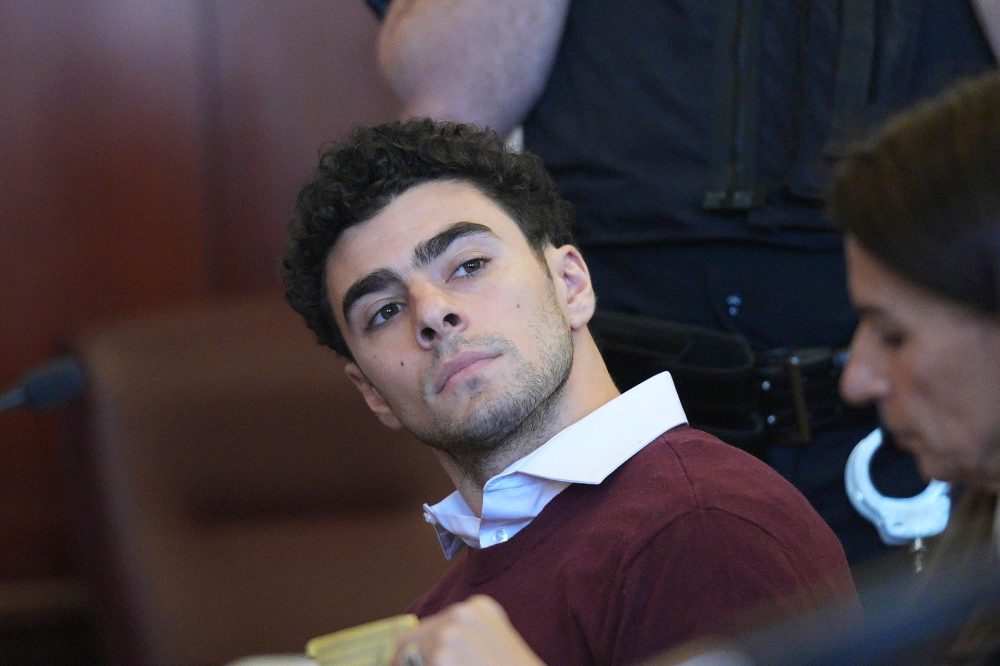

A Manhattan court has ruled that key pieces of evidence linking Luigi Mangione to the December shooting death of UnitedHealthcare CEO Brian Thompson will be admissible during his upcoming murder trial.
Judge Gregory Carro made the decision Monday, allowing prosecutors to present a firearm and notebook found in Mangione’s possession, despite defense objections that the items were obtained through an illegal search conducted before authorities secured a proper warrant.
The ruling represents a significant victory for the prosecution, as it enables them to present what they believe is the murder weapon along with materials they claim demonstrate the defendant’s motive. This decision aligns with a similar ruling made in Mangione’s federal proceedings.
However, the judge did impose some restrictions, ordering that certain items discovered during the initial search of Mangione’s backpack at the McDonald’s restaurant where he was apprehended must be excluded from evidence. These suppressed items include ammunition, a mobile phone, passport, wallet and computer chip. “I find that the search of backpack at the McDonald’s was an improper warrantless search,” the judge stated.
The state murder proceedings are scheduled to commence September 8, while jury selection for federal charges involving stalking will begin October 13, with testimony starting November 4. The state trial is anticipated to last between four and six weeks.
Mangione, age 28, has entered not guilty pleas in both legal proceedings and could face life imprisonment if convicted in either case.
Authorities discovered the evidence in question when they located Mangione eating breakfast at an Altoona, Pennsylvania McDonald’s on December 9, 2024, five days following Thompson’s fatal shooting outside a Manhattan hotel. Altoona is situated approximately 230 miles west of Manhattan.
According to prosecutors, the weapon – described as a 3D-printed pistol – corresponds to the firearm used in Thompson’s killing. The notebook, which prosecution attorneys have characterized as a “manifesto,” contains writings about wanting to “wack” a health insurance executive and fighting against “the deadly, greed fueled health insurance cartel.”
Defense attorneys contended that the search violated their client’s rights and that all discovered materials should be barred from trial because officers examined the backpack prior to obtaining proper authorization.
The prosecution argued the search was lawful because it occurred during an arrest and officers were adhering to Altoona police procedures requiring them to inspect for potentially dangerous items that might threaten officer or public safety. Authorities eventually secured a warrant, prosecutors noted.
Mangione’s initial statements to law enforcement became significant because body camera footage revealed he first provided officers with a false identity, claiming to be Mark Rosario. He later admitted to the deception and revealed his actual name after police verified his fraudulent New Jersey driver’s license through their database.
The false identification immediately provided Altoona officers grounds to arrest him and detain him for New York City police.
“If he had provided us with his actual name, he would not have committed a crime,” testified Officer Stephen Fox. An NYPD lieutenant confirmed that the Rosario alias matched the name the suspected shooter used when purchasing a bus ticket to New York and registering at a Manhattan hostel.
Although Mangione initially told police he refused to speak with them, officers continued engaging him for nearly 20 minutes before he acknowledged lying about his identity. Following this admission, a supervisor instructed Fox to inform Mangione of his right to remain silent.
A crucial element in determining whether suspects must receive those rights – referred to as a Miranda warning – involves whether they are considered to be in police custody.
Security footage captured a masked shooter firing at Thompson from behind on December 4, 2024, as he approached his company’s annual investor meeting at the New York Hilton Midtown. Police report that “delay,” “deny” and “depose” were inscribed on the ammunition, echoing terminology used to criticize how insurance companies avoid paying claims.
During a three-week hearing in December, Altoona police officers detailed how they executed Mangione’s arrest and examined his backpack. Prosecutors also presented body camera footage of Mangione’s arrest in court for the first time, with some segments released to the public.
Judge Carro had indicated he would review the body camera recordings before making his determination.
Based on testimony and video evidence, officers initiated their search of the bag at the McDonald’s but halted after discovering a loaded ammunition magazine concealed in underwear. This finding seemed to validate their suspicions that Mangione was the individual sought in Thompson’s killing.
“It’s him, dude. It’s him, 100%,” Fox stated on video, adding profanity as the searching officer, Christy Wasser, displayed the magazine.
Officers resumed searching the bag at the police station and located the firearm and silencer.
They conducted what is termed an inventory search and discovered the notebook along with additional notes, including what appeared to be task lists and potential escape plans, according to testimony.
This type of search, which involves documenting every item in a suspect’s confiscated property, is mandated by Altoona police policy, prosecutors explained. The judicial warrant was secured several hours later. Legal requirements regarding police search warrant procedures are complicated and frequently challenged in criminal cases.
Prosecutors have referenced Mangione’s handwritten diary extensively in court documents, including his admiration for Unabomber Ted Kaczynski.