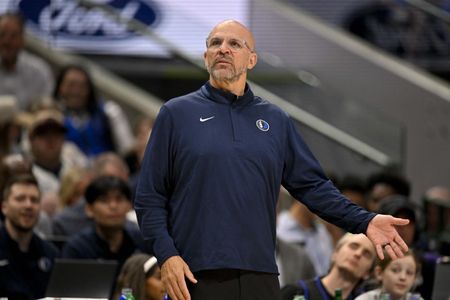
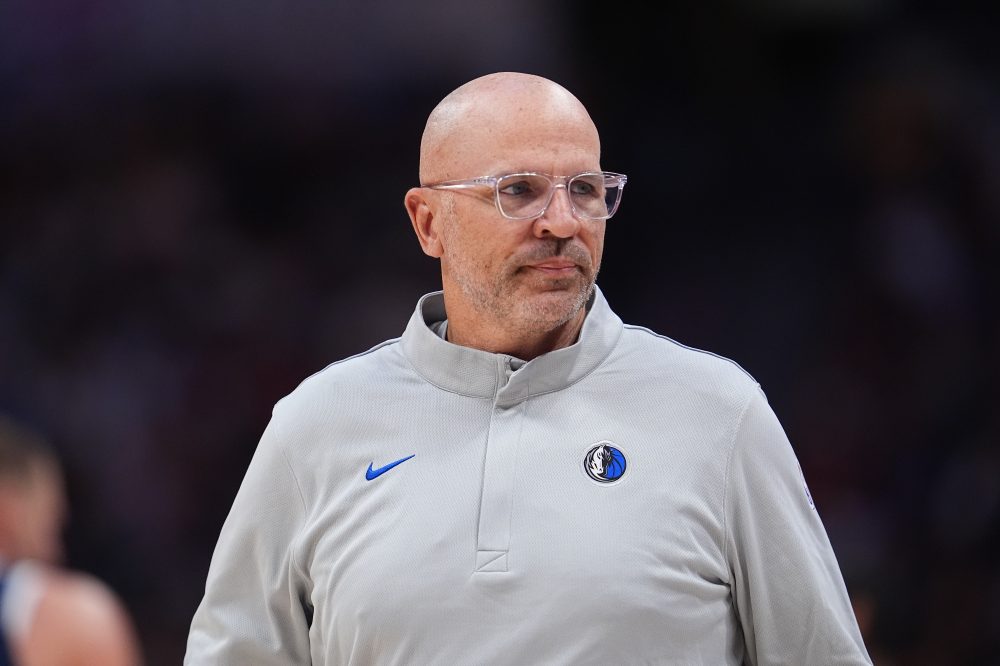
The Dallas Mavericks and head coach Jason Kidd have reached a mutual decision to separate after five years together, the team revealed on Tuesday.
Kidd’s time leading the franchise produced mixed results, with two seasons of 50 or more victories, highlighted by a Western Conference title in 2023-24. However, that squad fell to the Boston Celtics in the NBA Finals, losing the series in five games. The coach also oversaw three seasons with losing records, including a disappointing 25-56 campaign last year.
“Jason has had a meaningful impact on the Dallas Mavericks, both as a Hall of Fame player and as the head coach who helped lead this franchise back to the NBA Finals,” Mavericks president Masai Ujiri said. “We are thankful for Jason’s leadership, his professionalism and his commitment to the team. In my short time here, I’ve developed an enormous amount of respect for what he has built. He will always be an important part of the Mavericks family.”
During his Dallas tenure, Kidd compiled a 205-205 regular season record along with a 22-18 mark in playoff games. His overall coaching record stands at 388-395 in regular season play and 31-33 in postseason contests.
The 53-year-old coach recently received a contract extension in October 2025, leaving four years and more than $40 million still owed on his agreement.
Kidd’s standing with fans deteriorated following the February 2025 trade that sent superstar Luka Doncic elsewhere. While Kidd claimed he only learned about the transaction at “the 11th hour,” he became linked to the move that transformed Dallas from a championship contender into a lottery franchise.
Team leadership indicated their intention to begin an immediate and thorough coaching search.
“As we evaluate the future of our basketball program, we believe this is the right moment for a new direction for our team,” Ujiri said. “We have high expectations for this franchise and a responsibility to build a basketball organization capable of sustained championship contention. We will conduct a thorough, disciplined search for our next head coach and continue to evaluate our entire basketball operations staff to ensure we compete at the standard Mavs fans expect and deserve.”
The former point guard enjoyed a distinguished playing career that earned him Hall of Fame recognition and brings a decade of head coaching experience to his resume. He previously guided the Brooklyn Nets to a successful 44-38 season before moving to Milwaukee in 2014. His Milwaukee teams struggled to maintain consistency, achieving a winning record just once (42-40 in 2016-17) before his dismissal during the following campaign.
Following two years as an assistant coach with the Los Angeles Lakers, Dallas hired Kidd in 2021. He had previously played eight seasons with the Mavericks during a 19-year career that included 10 All-Star selections.
Kidd experienced early success upon returning to Dallas, guiding the team to a 52-30 record and Western Conference finals berth in his first season. The strong performance, fueled by Doncic’s excellence and two playoff series victories, earned him sixth place in Coach of the Year voting.
After the Finals run two seasons later, he placed ninth in that same award consideration.
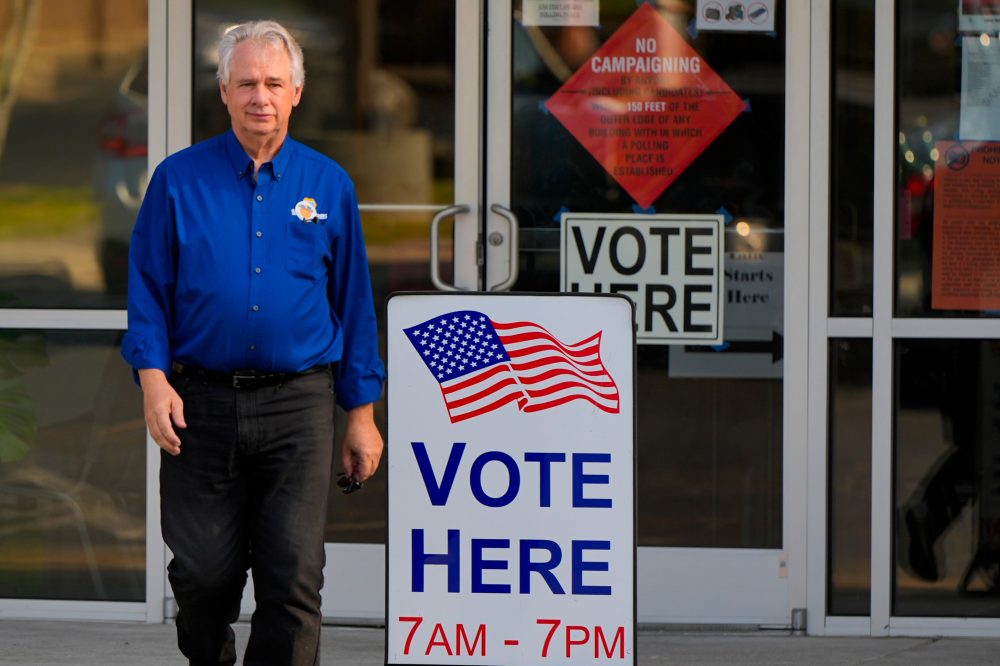
Georgia’s Republican gubernatorial primary will advance to a runoff election between two candidates who both back Trump, as the state continues to serve as a critical political battleground.
The state represents a key swing territory where both major political parties are working to establish their strategic direction for the upcoming fall election season, with contests for both the senate seat and the governor’s office at stake.
Voters lined up at polling locations throughout the state during the primary election process, as Georgia residents participated in selecting their party nominees for the general election.
The New Jersey Devils have decided to keep head coach Sheldon Keefe on the bench, multiple reports confirmed Tuesday.
The organization announced it has dismissed goaltending coach Dave Rogalski and will be moving assistant coach Sergei Brylin to a different role within the team.
New general manager Sunny Mehta, who joined the organization on April 16, conducted a review of the coaching staff and chose to keep Keefe, who still has two years left on his current deal.
Keefe previously coached in Toronto for five seasons from 2019 to 2024 before taking over the Devils’ bench in May 2024. In his debut season with New Jersey, he guided the team to a playoff berth, though they fell to the Carolina Hurricanes in the first round of the Eastern Conference playoffs by a 4-1 series margin.
This past season, New Jersey matched their previous win total of 42 games but failed to secure a postseason spot, ending Keefe’s impressive run of six straight playoff appearances with his teams.
During his tenure with the Devils, Keefe has compiled a record of 84 wins, 70 losses, and 10 overtime losses across two seasons. His overall coaching record stands at 296-167-50 over seven seasons.
Rogalski had been part of the coaching staff since the 2020-21 season. The team’s defensive performance declined this year, allowing 3.09 goals per game compared to 2.68 the previous season.
Before joining the Devils, Mehta worked as assistant general manager and head of analytics for the Florida Panthers from 2023 to 2026, where he was part of two Stanley Cup championship teams.
Professional basketball’s postseason tournament is celebrating a dramatic surge in television viewership through the first two rounds of competition.
League officials announced Tuesday that games have drawn an average of 4.5 million viewers per contest, with broadcasts distributed among ABC, ESPN, and newer media partners NBC/Peacock and Amazon Prime Video.
The league reports this represents the strongest viewership numbers in 29 years, dating back to 1997.
Amazon Prime Video separately revealed that the decisive seventh game of the Eastern Conference semifinals, where the Cleveland Cavaliers defeated the top-ranked Detroit Pistons, attracted 6.53 million viewers. This figure exceeded the previous year’s equivalent second-round finale between Oklahoma City and Denver by 3 percent.
The playoff action continues with the Cavaliers traveling to face the New York Knicks Tuesday evening for the opening game of the Eastern Conference championship series. Meanwhile, the San Antonio Spurs defeated the reigning champion Thunder in a double-overtime thriller Monday night in the first game of the Western Conference finals.
The federal government has agreed to abandon tax claims against President Trump through an expanded settlement arrangement with the Internal Revenue Service, according to official documents.
Under the terms of the settlement agreement, the United States is permanently prohibited and banned from investigating or pursuing President Trump, his sons, and the Trump organization regarding existing tax matters, based on documentation published on the Department of Justice website.
The settlement represents a significant development in the ongoing tax disputes involving the former president and his business interests.
DALLAS — The Dallas Mavericks have dismissed head coach Jason Kidd following five seasons with the franchise, announcing the separation just two weeks after bringing on former Toronto Raptors executive Masai Ujiri as team president and governor.
Dallas officials announced Tuesday they were separating from Kidd, characterizing the decision as mutually agreed upon. The Hall of Fame point guard previously helped bring the franchise its sole championship as a player in 2011.
During his May 5 introduction, Ujiri remained uncommitted regarding Kidd’s future, stating he would speak with the coach while assessing every element of the organization.
“As we evaluate the future of our basketball program, we believe this is the right moment for a new direction for our team,” Ujiri said in a statement. “We have high expectations for this franchise and a responsibility to build a basketball organization capable of sustained championship contention.”
Under Kidd’s leadership, the Mavericks achieved two significant playoff campaigns alongside Luka Doncic, advancing to the NBA Finals in 2024 after reaching the Western Conference finals two years earlier against Golden State.
Dallas traded Doncic to the Los Angeles Lakers during the 2024-25 campaign, acquiring Anthony Davis as the primary asset in an exchange that proved disastrous for the organization. The Mavericks failed to reach the playoffs that year and again in 2025-26.
The 53-year-old coach had expressed enthusiasm about working with 2025 No. 1 overall draft selection Cooper Flagg, who earned Rookie of the Year honors. That responsibility will now shift to his successor.
Kidd concluded his Dallas tenure with an even .500 regular-season mark (205-205), perfectly reflecting the inconsistent nature of his time with the team.
The Western Conference finals appearance occurred during his inaugural season, when Dallas upset the favored Phoenix Suns in a road Game 7 during the second round. The Mavericks fell to the eventual champion Warriors in five games.
Then-general manager Nico Harrison acquired Kyrie Irving the following season, though injuries to both him and Doncic prevented them from forming an elite scoring tandem. Dallas failed to qualify for the playoffs.
During their sole healthy campaign together in 2023-24, Doncic and Irving guided the Mavericks to their first Finals appearance since Kidd’s championship-winning playing days.
Nine months afterward, Harrison stunned the league by dealing Doncic. Due to injuries, Irving and Davis shared the court for merely 2 1/2 quarters.
Harrison received his dismissal early in the 2025-26 season following a poor start and another Davis injury. Davis was subsequently dealt to Washington, and despite exceptional performances from Flagg, the Mavericks concluded with a 26-56 record.
Dallas joins Orlando, Chicago and Portland as franchises seeking new head coaches. The Trail Blazers utilized Tiago Splitter in an interim capacity this season. Since the regular season concluded, Milwaukee has brought in Taylor Jenkins while New Orleans hired Jamahl Mosley.
Among the 12 coaches who have guided teams to NBA Finals since 2019, seven have departed those organizations — including four championship winners: Nick Nurse with Toronto in 2019; Frank Vogel with the Lakers in 2020; Mike Budenholzer with Milwaukee in 2021; and Michael Malone with Denver in 2023.
Additional coaches who reached the Finals since 2019 but no longer remain with those franchises include: Monty Williams (Phoenix in 2021), Ime Udoka (Boston in 2022) and Kidd.
Kidd holds a 388-395 record across nine-plus seasons as a head coach. He transitioned directly from playing to coaching, guiding Brooklyn to the second playoff round in 2013-14. He departed for Milwaukee, where he was dismissed midway through his fourth season.
Following two seasons as a Lakers assistant, including their 2020 championship run in the playoff bubble alongside LeBron James and Davis, Kidd joined the Mavericks.
Ujiri advised reporters against interpreting his non-committal stance regarding Kidd’s return, noting coaches had lengthy tenures during his previous basketball operations roles with Toronto and Denver.
NEW YORK (AP) — After an extended absence, Gerrit Cole and the New York Yankees are preparing for his highly anticipated comeback.
The pitcher is slated to make his season debut Friday evening when New York faces Tampa Bay, marking his first major league appearance in nearly 19 months following Tommy John surgery.
Cole, a six-time All-Star who earned the 2023 AL Cy Young Award, last took the mound in the majors during October 2024’s World Series Game 5 against the Los Angeles Dodgers.
“It’s been tough. I mean, I’ve missed it quite a bit,” he said Tuesday at Yankee Stadium. “There’s been some blessings along the way as well. I talked about my family, and spending time with my boys. But largely I’m just looking forward to being really tired and having that exhaustion, like, mean something.”
Manager Aaron Boone indicated that Cole was scheduled for a bullpen session Tuesday and will face pitch limitations Friday.
“He hasn’t been in that flow of competition for 17 months. That being said, it is Gerrit Cole,” Boone said. “He looks great to me. So, my expectation is that he’s going to be really good.”
Despite Max Fried joining the injured list last weekend with a left elbow bone bruise, Boone explained the team had originally planned for Cole to complete a seventh minor league rehabilitation appearance this week before returning to a big league rotation featuring Cam Schlittler, Carlos Rodón, Will Warren and Ryan Weathers.
However, following the 35-year-old right-hander’s 86-pitch performance across 5 1/3 innings for Triple-A Scranton/Wilkes-Barre against Syracuse on Saturday evening, Cole and the organization shifted their approach.
“We just kind of continued to work through that. Didn’t want to make any rash decisions just because Max was out. This isn’t about that spot. It’s like, we were going to play the long game with this,” Boone said.
“But in just like, all the talks with the trainers, pitching group, Gerrit, his support group and all that, we just felt like he has done everything he needs to be ready to compete now at this level. So, I’m really excited to get him back and excited for him because, again, knowing the long road that it’s been and the blood, sweat and tears he put in the rehab process.”
During his latest minor league appearance, Cole’s four-seam fastball averaged 97 mph and topped out at 99.6 mph.
“When we all looked at it and just considered all the variables, it checked all the boxes,” he said.
Cole will take the mound for the series opener at Yankee Stadium against the AL East division rival Rays, who completed a three-game sweep of New York last month in Florida and held the league’s best record at 31-15 entering Tuesday.
“I expect it to be intense. Tough matchup. Lot of balls in play. Control the running game,” Cole said. “Lot of pressure from the other team.
“I’m most looking forward to just competing at the highest stage,” he added. “Pretty high stakes Friday night for May, and I mean, it’s just a blessing to play the game. You get a better sense of that once you’re removed from it.”
Cole expressed satisfaction with his advancement through the lengthy rehabilitation period.
“I felt like any return around this point, even with a few weeks ahead of time, would be generally viewed as a good return-to-play plan and a good level of execution. I mean, I expected to do well. I didn’t really hit any significant snags. And so, you put a lot of hard work in and execute along the way and this is where it takes you,” he said.
“It didn’t feel very quick, yet it’s been very efficient and optimal.”
Cole holds a career record of 153-80 with a 3.18 ERA across 12 major league seasons with the Pirates, Astros and Yankees. The two-time ERA champion’s comeback to an already-solid rotation should provide substantial support for second-place New York, which stood at 29-19 entering Tuesday, three games behind Tampa Bay.
“This is a good measuring stick. So you get a good litmus test of where you are,” Cole said. “I’m confident. I’m optimistic. But I definitely know there’s some work in front of us. It’s just the right time to take the next step.
“I’m as prepared as possible to do the best I can, whatever challenges come our way on Friday.”
Cole underwent testing in 2025 after surrendering two home runs during his second spring training appearance against Minnesota on March 6, and received reconstructive elbow surgery five days afterward.
This year, he completed two one-inning spring training starts on March 18 and 24, then started minor league rehabilitation outings on April 17. He posted a 4.71 ERA across 28 2/3 innings, allowing 28 hits while recording 28 strikeouts and three walks.
“We’re all excited for him and know the long road that it’s been to get back to this point,” Boone said. “I’m sure there’s been some trying moments for him, but I also feel like he’s handled it all really well, and there’s been a discipline to what he’s done.”
Lebanese health officials reported that Israeli airstrikes across southern Lebanon on Tuesday resulted in the deaths of at least 19 people, among them four women and three children, according to Lebanon’s Health Ministry. The deadly attacks continue the pattern of near-daily violence from both sides that has persisted even with a fragile, U.S.-mediated ceasefire currently in effect for the Israel-Hezbollah conflict.
Israeli military officials did not provide immediate comment regarding the casualties or specific incidents, though they confirmed targeting more than 25 Hezbollah infrastructure locations in southern Lebanon between Monday afternoon and Tuesday afternoon.
The current round of Israel-Hezbollah fighting commenced on March 2 when the Lebanese militant Hezbollah group launched rockets at Israel, occurring two days following attacks by the United States and Israel on Iran.
Lebanese government officials reported that a single attack on the village of Deir Qanoun al Nahr in the coastal Tyre province resulted in 10 fatalities, including three children and three women. Three additional people sustained injuries, including one child.
While the ministry offered no additional details regarding the attack, the state-run National News Agency reported that it demolished a house, trapping several people beneath the debris. Recovery teams retrieved their bodies later that day.
The ministry also documented another airstrike on the southern city of Nabatieh that claimed four lives and injured 10 others, including two women. A third attack in the neighboring village of Kfar Sir resulted in five deaths, including one woman.
These recent fatalities occurred one day after the death toll in the current fighting between Israel and Hezbollah exceeded 3,000, and two days following the extension of the U.S.-brokered truce for an additional 45 days. The ceasefire has been active since April 17.
Israel has conducted an invasion of southern Lebanon and launched bombardments of Beirut, the capital, along with other regions, stating its focus on Hezbollah infrastructure. Hezbollah, functioning as both a militant organization and influential political entity in Lebanon, has maintained resistance to disarmament pressure, including from Lebanon’s own government.
The conflict has forced more than a million Lebanese people from their homes, with some taking shelter in tents positioned along roadways and near the Mediterranean Sea in Beirut.
Meanwhile, Israel has faced challenges in stopping persistent Hezbollah drone strikes aimed at its forces operating on Lebanese territory and northern Israeli border communities.
Israeli military officials confirmed that one soldier died on Tuesday during combat operations in southern Lebanon, bringing the total number of Israeli military deaths to 21 since the current conflict began.
Ed Gallrein, with support from U.S. President Donald Trump, defeated sitting Representative Thomas Massie in Tuesday’s Republican primary for Kentucky’s 4th congressional district, according to projections from NBC News.
The primary election served as a gauge of Trump’s ability to influence Republican voters against those who have criticized him. Massie, who has served northern Kentucky areas in the House of Representatives since 2012, has been a vocal opponent of Trump throughout the president’s second term in office.
Gallrein will now become the Republican Party’s candidate for the House seat in the general election.
WASHINGTON – The nation’s major airline carriers are voicing strong opposition to a White House initiative that would force smaller airports to replace Transportation Security Administration screeners with private security personnel, according to written testimony obtained by Reuters.
Chris Sununu, who leads Airlines for America, plans to address a House committee Wednesday, emphasizing that keeping private security “remains an option for airports and does not become a mandatory program is paramount to the U.S. aviation industry.”
The proposal comes as part of President Donald Trump’s plan from last month to eliminate more than 9,400 positions and reduce funding by over $1.5 billion from the TSA, which currently employs 60,000 people and oversees security operations at airports nationwide.
A federal regulatory agency has taken legal action against Minnesota’s groundbreaking legislation that would completely prohibit prediction market operations within state borders.
The U.S. Commodity Futures Trading Commission filed the lawsuit on Tuesday, one day following Minnesota Governor Tim Walz’s signing of the legislation. The Democratic governor approved a measure that will criminalize the operation, hosting, or promotion of prediction markets starting August 1.
These digital platforms enable users to earn money by making predictions about various events, including sporting competitions and political elections. The industry has become the focal point of disputes regarding state gaming authorities’ authority to oversee the multi-billion dollar prediction market sector.
Kalshi, recently valued at $22 billion during a funding round, has been engaged in multiple legal battles with states that allege the company operates an unlawful, unlicensed betting service that permits gambling by adults under 21 years old.
During President Donald Trump’s administration, the CFTC has aligned with these companies’ stance that event contracts traded on prediction markets fall solely within the federal agency’s regulatory authority over “swaps,” which are derivative contract instruments.
In the Tuesday filing, the CFTC contended that Minnesota’s unprecedented legislation violates constitutional principles by creating state-level criminal penalties for operating derivatives markets that federal law governs.
“This Minnesota law turns lawful operators and participants in prediction markets into felons overnight,” CFTC Chairman Michael Selig said in a statement.
Minnesota Attorney General Keith Ellison, a Democrat, in a statement said his office was reviewing the lawsuit and would respond in court. He said he was concerned about the harms prediction markets pose to Minnesotans.
“Prediction markets are designed to be addictive and prey especially on young people and low-income folks,” Ellison said. “They help the ultra-rich get richer and the rest of us get poorer.”
A Polymarket spokesperson said in a statement that the CFTC’s case demonstrated how Minnesota’s law “runs counter to the federal government’s established framework for regulating prediction markets.”
Kalshi spokesperson Elisabeth Diana said: “Outside of this ban being unenforceable, it’s also a terrible idea for the citizens of Minnesota because it reduces competition and drives activity offshore.”
The federal agency has initiated legal proceedings against multiple states to prevent enforcement actions against prediction market companies. The commission recently secured a judicial ruling preventing Arizona from pursuing criminal charges against the New York-based Kalshi.
Nevada remains the sole state that has obtained a court-enforced prohibition against Kalshi that is currently in effect. Massachusetts’ supreme court is deliberating whether to maintain a temporarily suspended injunction that would prevent Kalshi from offering sports betting contracts within that state.
According to a Tuesday report from Axios, U.S. President Donald Trump plans to participate in the G7 leaders gathering scheduled for June in France, where he will address topics including artificial intelligence, trade policies, and crime-fighting efforts, a White House official told the news outlet.
The president’s agenda includes discussions on connecting U.S. aid with trade agreements, encouraging the use of artificial intelligence technologies developed in America, and working to diminish China’s influence over essential mineral supply networks, according to the Axios report.
This year’s G7 summit will be hosted by France, with world leaders meeting at the lakeside resort of Evian-les-Bains located at the base of the French Alps from June 15-17.
Relations between Trump and several G7 member nations have become more tense recently, particularly due to his conflict with Iran and other international matters.
The United Kingdom’s foreign office confirmed early Wednesday that James Roscoe, who served as deputy head of mission at the British embassy in Washington, has departed from his role.
Roscoe held the position of deputy ambassador to the United States before leaving his post, according to the announcement from Britain’s foreign ministry.
Motorists should expect delays at a busy intersection along S. DuPont Highway as construction crews continue their work.
Left turn lanes at the intersection of US Route 13 and Old North Road are currently closed to traffic due to ongoing construction activities. The lane closures are expected to remain in place until 5AM.
Drivers traveling through the area should plan for additional travel time and consider alternate routes if possible. The construction work is affecting traffic flow at this major intersection along the heavily traveled corridor.
A major sweeping operation is currently underway on northbound Route 141 at the Interstate 95 interchange, according to traffic officials.
The road maintenance work extends from the I-95 area up to Route 2 and includes both entrance and exit ramps in the affected zone.
The sweeping operation is expected to continue until 12:00 AM, potentially causing delays for motorists traveling through the area during evening hours.
Drivers are advised to plan alternate routes or allow extra travel time when navigating through this section of Route 141 until the operation concludes at midnight.
Worcester County commissioners convened for a budget planning session on Tuesday, May 19, 2026, at their government facility in Snow Hill, Maryland.
The work session was held at 11:30 a.m. in the Commissioners Meeting Room at the Worcester County Government Center, located at 1 West Market Street in Snow Hill, MD 21863.
A video recording of the budget work session is available for public viewing online through the county’s video streaming platform.
Motorists traveling on US 13 should expect delays as construction crews have closed the left lane in both directions along a section of the highway.
The lane closure affects the stretch of US 13 between Voshells Mill Star Hill Road and Shamrock Avenue, with work continuing through the overnight hours until 5 AM.
Drivers are advised to allow extra travel time and exercise caution when passing through the construction zone. Traffic is being maintained in the remaining lanes during the work period.
Marine biologists have documented two humpback whales that completed extraordinary migrations spanning the Pacific Ocean between Australia and Brazil, setting new distance records for the species.
Researchers identified the massive marine mammals through their unique tail markings captured at locations roughly 9,000 miles (14,500 kilometers) apart. Both whales swam in different directions and covered greater distances than any previously documented humpback whale journey.
“It’s a very rare event, but it is a really wonderful demonstration of just how wide-ranging these animals are,” said Phillip Clapham, former head of a NOAA whale research program who was not involved with the new findings.
These massive creatures are famous for their extensive ocean travels following established migration patterns, usually routes passed down from their mothers. During warmer seasons, they hunt for krill and small fish, then move to tropical breeding areas when winter arrives.
Monitoring animals that live primarily beneath the ocean surface presents significant challenges for scientists. For this research, marine biologists examined more than 19,000 whale photographs collected over four decades by research teams and volunteer citizen scientists.
Computer recognition technology helped researchers match whales by analyzing their tail fins’ unique color markings and irregular edges. Scientists confirmed two distinct whales appeared at breeding locations in eastern Australia and Brazil across multiple years, indicating they had made the crossing between these distant regions.
One whale’s journey measured just over 9,300 miles (15,000 kilometers), surpassing earlier record holders including a humpback that swam from Colombia to Zanzibar.
The research findings appeared Tuesday in the journal Royal Society Open Science.
Because photographs only captured the whales at their starting and ending points, scientists cannot determine the precise paths they followed during their epic voyages.
Since whales rarely migrate between different mating areas, researchers remain uncertain about what motivated these two animals to undertake such unusual journeys. The whales might have encountered other whale groups at common feeding areas and chosen to follow them rather than return to their original locations, study co-author Stephanie Stack with the Pacific Whale Foundation said in an email.
“Finding not one but two individuals that have crossed between Australia and Brazil challenges what we thought we knew about how separate these populations really are,” Stack said.
Similar long-distance travels prove more challenging for whales in the Northern Hemisphere, where large landmasses create barriers to cross-ocean migration.
Researchers noted these record-setting journeys demonstrate the remarkable traveling capabilities of humpback whales. These tracking techniques could prove valuable for monitoring whale populations as climate change alters ocean temperatures, potentially shifting krill habitats and affecting where humpbacks travel to feed and reproduce.
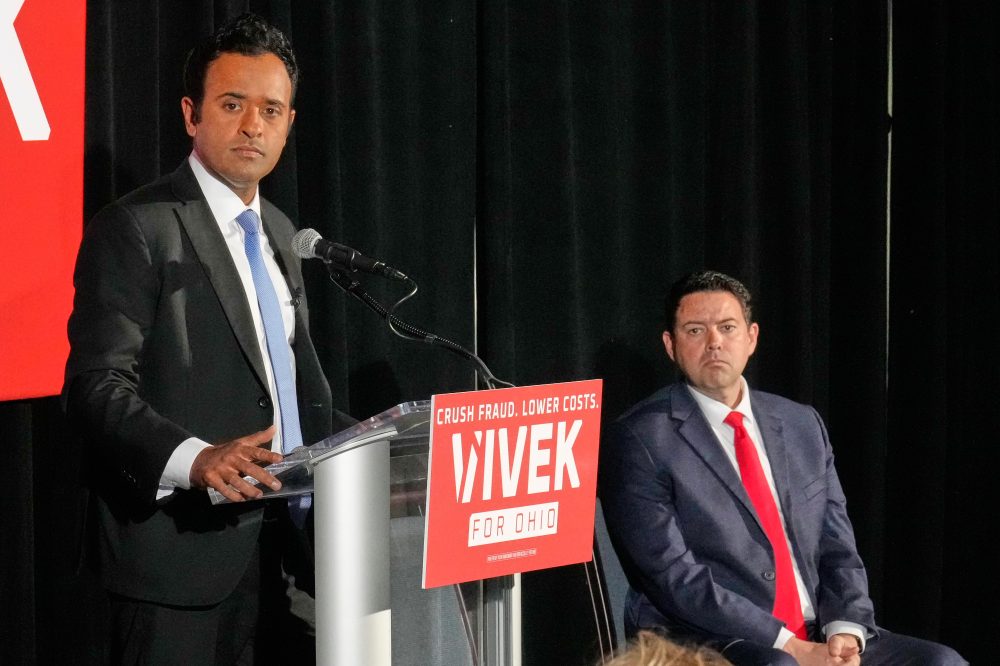
COLUMBUS, Ohio — Vice President JD Vance has expanded his Medicaid fraud investigation to include Ohio, creating political challenges for Republican gubernatorial candidate Vivek Ramaswamy, who is also a close political ally.
Just one day before Ramaswamy secured victory in Ohio’s May 5 primary election, Vance announced on X that his anti-fraud task force would investigate the Buckeye State. This announcement coincided with a Daily Wire investigation that exposed widespread abuse in Ohio’s Medicaid-funded home health care system.
Shortly afterward, U.S. House Republicans established a new Task Force on Defending Constitutional Rights and Exposing Institutional Abuses, naming the Ohio fraud allegations as their initial focus.
This represents a significant shift for Vance, whose previous high-profile enforcement actions have primarily focused on Democratic-controlled states like Minnesota, California and Maine. While he has attempted to counter accusations of partisan targeting by pointing to investigations in Republican states such as Florida, Vance has specifically blamed Democrats for enabling Medicaid fraud.
On Tuesday, Ramaswamy embraced the political moment by announcing that combating Medicaid fraud would be his “absolute top priority.” His strategy to lower healthcare expenses and “crush” Medicaid waste includes renegotiating Ohio’s agreement with the Centers for Medicare and Medicaid Services to secure better fraud-prevention incentives and reduce bureaucratic red tape.
Based on a waiver that Tennessee secured during the previous Trump presidency, this new agreement could generate $3.1 billion in savings for healthcare programs, according to campaign projections.
During Ramaswamy’s press event, criticism of the state’s Department of Medicaid, which has operated under Republican Gov. Mike DeWine for seven years, was a recurring topic. This criticism came not only from Ramaswamy but also from current Republican officials who have overseen Ohio’s existing oversight mechanisms for years.
When questioned about whether the Republican establishment that has governed for over 15 years should bear responsibility for missing Medicaid fraud, Ramaswamy declined to assign blame. “I’m not playing that game, OK?”
“I think we need a fresh approach, and what my candidacy represents is, I believe, a bottom-up movement and a demand for change, positive change in the state,” he stated. “A movement beyond the status quo that takes a lot of this for granted.”
Ramaswamy’s running mate, Ohio Senate President Rob McColley, wielded significant influence over the state budget that eliminated Ohio’s Joint Medicaid Oversight Committee last year. This committee was responsible for monitoring Medicaid, a federal-state healthcare program serving more than 25% of Ohio residents. The panel was examining contracts with Gainwell, the country’s largest Medicaid claims processor, when it was dissolved.
State Rep. Jennifer Gross, a Republican who sat on the committee, said Tuesday that the panel could have supported Vance’s and Ramaswamy’s fraud-fighting objectives.
“I believe that if we had kept JMOC it always could have been something that we kept in place that could have morphed into a DOGE Ohio, an Ohio Medicaid DOGE,” she stated.
The Trump administration has positioned its anti-fraud initiatives as protection for taxpayers facing economic pressures. Multiple state-level Republicans and candidates have adopted similar approaches.
However, some of these financial pressures stem from federal government policies. New Medicaid work requirements enacted by Congress are anticipated to burden hospitals nationwide and cause millions of enrollees to lose coverage.
DeWine has responded defensively to the criticism. Under scrutiny from his own party, the former congressman, U.S. senator and state attorney general unveiled new Medicaid fraud prevention measures on May 13, including suspending new enrollments in the home health program highlighted by the Daily Wire. He defended the “nation-leading work” Ohio was already conducting in this area.
On Tuesday, his spokesman Dan Tierney defended the governor’s track record and that of the state’s $43 billion Medicaid program, which covers more than 25% of all Ohioans.
“A general sentiment that Ohio was not working to combat or prosecute Medicaid fraud prior to the publication of the Daily Wire stories is just not true,” he stated. “There may be people who were unaware of Medicaid fraud prior to that, but Mike DeWine was not one of them.”
Tierney highlighted that Ohio consistently ranks among the nation’s top states for prosecuting Medicaid fraud, achieving 2,300 indictments, 2,200 convictions and recovering $644 million since 2011. He noted that DeWine set records for Medicaid fraud convictions three times as Ohio attorney general, and his successor, Republican Dave Yost, has surpassed those records twice.
Republican Ohio Auditor Keith Faber, who is seeking the attorney general position in 2026, said Tuesday that the Medicaid fraud Ramaswamy is emphasizing was already known to state officials. He stated that his office presented multiple findings to DeWine’s former Medicaid director, Maureen Corcoran, who resigned in September after serving more than six years.
Documents obtained by The Associated Press through public records requests reveal that Corcoran was battling the oversight committee over access to fiscal experts crucial to Ohio’s budgeting process shortly before the committee was eliminated. These investigations ceased when the committee was disbanded.
“As governor, Dr. Amy Acton will prioritize rooting out Medicaid fraud, waste, and abuse while ensuring that Ohioans can access affordable, quality healthcare,” campaign spokeswoman Addie Bullock said in a statement. “Dr. Acton is fighting to lower healthcare costs, protect Medicaid and Medicare access, and end the rampant corruption in Ohio’s Statehouse that has allowed fraud, waste, and abuse for far too long.”
WASHINGTON — The Defense Department’s internal oversight office will examine whether proper targeting procedures were followed during military strikes against suspected drug-smuggling vessels in Latin American waters that have resulted in nearly 200 fatalities since September.
According to a May 11 correspondence to Defense Department leadership, the review will specifically examine adherence to the six-phase Joint Targeting Cycle protocol. This framework encompasses a military commander’s objectives, target identification, analysis, decision-making, execution and evaluation phases.
In a Tuesday statement, the Pentagon inspector general’s office indicated the review was “self-initiated” and declined to establish a completion timeline. Bloomberg first reported on the evaluation.
The examination will not address the legal aspects of these strikes, which have faced sharp criticism from Democratic legislators and military law experts. The current administration characterizes its actions as warfare against Latin American drug cartels, citing their role in fatal overdoses affecting American communities.
This campaign of destroying small vessels suspected of drug trafficking in the eastern Pacific Ocean and Caribbean Sea has continued since September, resulting in at least 193 total deaths. U.S. Southern Command reported one survivor from the most recent May 8 attack, though it remains unclear whether the Coast Guard located and rescued this individual, which could increase the casualty count.
Military officials have not presented evidence of drug cargo aboard any targeted vessels, instead consistently referencing intelligence in social media communications confirming these boats were “transiting along known narco-trafficking routes.”
The military’s initial September strike has generated particular concern among legislators and military law experts. Two individuals initially survived the attack that claimed nine lives, but while clinging to debris, their vessel was struck a second time, killing them.
The top Democrat on the House Armed Services Committee said in December that the survivors were “basically two shirtless people clinging to the bow of a capsized and inoperable boat, drifting in the water — until the missiles come and kill them.”
The White House defended the secondary strike, stating it was conducted “in self-defense” to ensure complete vessel destruction and complied with armed conflict regulations.
Worcester County commissioners have scheduled their regular meeting for Tuesday, May 19, 2026, beginning at 11:30 a.m. at the Worcester County Government Center.
The session will take place in the Commissioners Meeting Room, located at 1 West Market Street in Snow Hill, Maryland.
Public documents for the meeting are available online, including the official agenda and meeting packet materials. Additional documentation is also accessible through the county’s website.
Residents who cannot attend in person can view the proceedings through a live video stream, with the link provided on the county’s event page. The meeting materials and video access demonstrate the county’s commitment to transparency in local government operations.
Regional officials in Russia reported drone strikes targeting manufacturing facilities near Nevinnomyssk in the southern Stavropol region on May 20, according to Governor Vladimir Vladimirov’s announcement on social media.
The governor did not release additional information about the attacks. The targeted area houses Nevinnomyssky Azot, a major chemical manufacturing facility that has previously been struck by Ukrainian drone operations.
Meanwhile, Ukrainian regional authorities reported that five individuals sustained injuries when Russian forces struck Dnipro, a city in the country’s southeast. Regional governor Oleksandr Hanzha made the announcement via Telegram, though Reuters was unable to independently confirm these reports.
Both Russia and Ukraine have consistently denied intentionally striking civilian targets during the ongoing conflict.
Hotel operators and labor unions in New York City have successfully negotiated an eight-year contract covering approximately 25,000 employees, preventing a potential work stoppage that could have created chaos during the FIFA World Cup, according to the president of the Hotel Association of New York City.
Following weeks of intensive bargaining sessions, Vijay Dandapani, who serves as the association’s president and chief executive, described the sentiment among hotel owners as “overall positive,” despite making substantial compromises during negotiations.
“We came a long way from where things were,” Dandapani said.
Although FIFA, the international soccer organization, did not participate in the discussions, the anticipated arrival of soccer fans significantly increased pressure on both sides to reach an agreement. Union organizers had threatened a work stoppage and encouraged tourists to boycott certain hotels.
Dandapani characterized the possibility of a walkout as a “very real threat,” pointing to similar labor disputes that have occurred in cities such as Los Angeles and Boston.
Specific details regarding wages and benefits in the new contract were not immediately disclosed. Dandapani clarified that a figure of approximately $200,000 represents compensation levels at the contract’s conclusion, rather than starting wages.
Hotel management approached the negotiations seeking to maintain financial viability, contending that New York’s hospitality sector has not completely bounced back from pandemic impacts. Room occupancy continues to lag behind 2019 figures, while inflation-adjusted rates remain below previous levels, according to Dandapani.
He additionally pointed to external challenges, including the conflict in Iran, trade tariffs and visa complications.
The agreement comes after the city withdrew a proposed regulation that hotel operators claimed would have dramatically increased labor expenses by restricting housekeepers’ room assignments and mandating double wages beyond specific limits. Industry representatives estimated this measure could have increased payroll costs by roughly 40%.
While the new contract will increase operational expenses, hotel operators anticipate that tourist activity and significant events will help offset these costs.
“We believe strongly in the New York City market,” Dandapani said, while emphasizing that the city must work to reduce business operating costs.
NFL Commissioner Roger Goodell announced the league will work with Florida’s Attorney General James Uthmeier following receipt of a legal subpoena regarding the organization’s diversity hiring policies.
The Attorney General’s office issued the subpoena on May 13 as part of an investigation into possible civil rights violations connected to the Rooney Rule and other NFL employment policies and programs.
“I think we have been very clear about our programs, and we obviously evaluate them all the time, not just for how they get better, but also to make sure that they’re consistent with the law,” Goodell stated Tuesday at league meetings in Orlando, Florida. “We’re engaging with the Florida attorney general and will continue to. We’ll share everything we’re doing with them. We think it’s certainly within the law, but also something very positive.”
In March, Uthmeier warned of potential enforcement measures against the NFL unless it halted the 23-year-old Rooney Rule, which mandates teams interview a minimum of two external minority candidates for head coaching, general manager and coordinator roles. Teams must also interview at least one minority candidate for quarterbacks coach positions.
In correspondence to Goodell, Uthmeier characterized the Rooney Rule as “blatant race and sex discrimination.”
The legal document requires the league to appear at the attorney general’s Tallahassee office on June 12. It demands comprehensive documentation, including “all diversity reports, coaching census data, or demographic surveys that reflect the race and sex of coaching staffs of the teams from 2017 to the present.”
The investigation includes examination of the accelerator program, which the NFL established in 2022 as an expansion of the Rooney Rule to boost diversity among coaching staff and front office leadership.
The accelerator program provides participants chances to network with team owners and executives, plus attend educational sessions preparing them for future job interviews.
Following a pause last May, the NFL conducted its updated accelerator program Monday and Tuesday in Orlando. The revised version now includes nonminority participants, with nearly half of this year’s attendees being white men.
“There are a lot of candidates up there that are diverse, that are getting the opportunity to improve themselves and to get exposure, to get an opportunity,” Goodell said. “So, the people that are up there are the best of the best and they are a very diverse group, but they are the best of the best. And what we’re trying to do here is to make them even better and to give them opportunities. And that’s what I heard is that one, they appreciate the opportunity; two, it was helpful in that.”
Kansas City Chiefs wide receiver Rashee Rice has been sentenced to 30 days behind bars after failing a drug test for marijuana, violating his probation conditions. The Dallas-area incident stems from his involvement in a highway collision that injured several people two years ago.
Officials from the Texas State Attorney’s Office announced that Rice must begin serving his jail term immediately as part of his original punishment for the third-degree felony charge of racing and causing bodily injury. His release date is scheduled for June 16. The Chiefs organization has refused to provide any statement regarding the legal matter.
In other sports news, the NAACP has launched a campaign urging Black athletes, former students, supporters and the public to avoid supporting athletic programs at public universities in states targeting longtime Black legislators through redistricting efforts.
The organization announced the initiative Tuesday, as civil rights advocates seek to pressure Republican-controlled state governments through mass demonstrations and economic boycotts. Should Black athletes join this boycott, it could significantly impact rosters for major football and basketball teams throughout the Southeastern Conference and Atlantic Coast Conference. The Congressional Black Caucus has also stated it will resist key legislation supported by college athletic conferences unless conference officials stand against the redistricting campaigns.
Meanwhile, Victor Wembanyama delivered a spectacular performance in his conference finals debut, posting remarkable statistics of 41 points, 24 rebounds, and three blocked shots. These numbers represent an unprecedented conference finals opening game in the NBA’s eight-decade history.
The San Antonio standout dominated every aspect of the Spurs’ 122-115 double-overtime Game 1 triumph over Oklahoma City to begin the Western Conference finals Monday evening. He showcased powerful dunks, celebrated with intensity, and energized his teammates throughout the contest. Despite his individual brilliance, Wembanyama emphasized that team victory was his primary focus. San Antonio head coach Mitch Johnson praised him, saying “he has a rare desire to step into every moment that’s in front of him.”
Women’s flag football is advancing toward NCAA championship recognition, with a potential title game occurring just before the sport debuts in the 2028 LA Olympics. The NCAA Committee on Access, Opportunity and Impact voted Tuesday to support adding a national collegiate flag football championship across Divisions I, II and III as early as spring 2028.
This represents significant progress toward full NCAA championship inclusion for women’s flag football. The sport requires 40 schools to sponsor it at the varsity level for recommendation approval. According to NCAA data, over 100 schools are planning to compete in the upcoming academic year.
NFL Commissioner Roger Goodell confirmed the league is working with Florida Attorney General James Uthmeier following a subpoena issued last week. Uthmeier delivered the subpoena to the NFL on May 13 as part of an investigation into potential civil rights violations concerning the Rooney Rule and other league employment practices, policies and programs.
The attorney general had previously threatened possible enforcement measures against the league in March unless it suspended the 23-year-old Rooney Rule. The subpoena requires the league to appear at the attorney general’s Tallahassee, Florida office on June 12.
Aaron Rai captured the PGA Championship title in what many consider a surprising victory, though his triumph was built on exceptional shot-making rather than luck. Rai demonstrated championship-level performance and executed memorable shots at Aronimink throughout the tournament.
The most remarkable aspect was his ability to outperform some of golf’s elite competitors. The PGA Championship itself also emerged as a winner, often labeled as the fourth major tournament. This week’s competition thoroughly tested every element of the game from driving to putting.
Two-time Wimbledon champion Carlos Alcaraz has withdrawn from next month’s grass-court Grand Slam tournament due to his persistent wrist injury. Alcaraz suffered the wrist injury during last month’s Barcelona Open, which also forced his withdrawal from this weekend’s French Open.
The tennis star began the year by claiming the Australian Open championship, becoming the youngest male player to capture all four major tennis titles.
The Vegas Golden Knights’ request to reduce their penalty for violating media access regulations has been rejected by the NHL, and they will forfeit a second-round draft pick this year. Two sources familiar with the situation confirmed this information to The Associated Press on Tuesday, speaking anonymously since the league had not publicly announced the appeal outcome.
The league penalized Vegas with the loss of their second-round selection and imposed a $100,000 fine on coach John Tortorella for what officials termed flagrant violations of media regulations. Tortorella declined to speak with reporters and the team failed to provide locker room access following their series-clinching Game 6 victory.
The removal of a massive whale mural in Dallas to prepare for upcoming World Cup artwork has generated significant public backlash. The mural had become a cherished feature of the downtown area for many residents.
This month, people walking by began observing that the artwork, which had adorned two complete walls of a parking structure for nearly three decades, was being covered with solid blue paint. Wyland, who created the original mural, released a statement expressing that the destruction left him “deeply disheartened.” Hundreds of upset individuals have signed a Change.org petition protesting the mural’s removal.
The iconic gelatin brand famous for its vibrant artificial colors is introducing a natural alternative to satisfy growing consumer preferences for cleaner ingredients.
Kraft Heinz Co. announced Tuesday the launch of Jell-O Simply, a collection of ready-to-eat gelatin products that eliminates synthetic colors and artificial sweeteners. The company reports these new offerings contain at least 25% less sugar compared to traditional varieties.
Three flavors are currently available in retail locations: orange, raspberry lemonade and blueberry. According to Kathryn O’Brien, Kraft Heinz’s head of marketing for desserts, the vibrant colors come from natural sources including vegetable juice, fruit juice and turmeric root extract.
The company plans to broaden the Jell-O Simply product line in August with vanilla and chocolate instant pudding options, plus banana and strawberry gelatin mixes. This expansion represents part of the food manufacturer’s wider shift toward natural ingredients.
Market data from NielsenIQ shows the challenges facing artificially-colored products like traditional Jell-O. Sales of prepared gelatin have dropped 21% in the past four years, while gelatin mix sales declined 4% during the same period, reflecting consumer demand for more natural food options.
Government pressure has also influenced the industry’s move away from artificial additives. The U.S. Food and Drug Administration recently prohibited Red 3 dye from American food products during the final weeks of the Biden administration. Subsequently, Trump administration officials encouraged manufacturers to voluntarily eliminate other petroleum-derived artificial colors.
Retail pressure is adding to this trend, with Target announcing in February its decision to discontinue cereals containing synthetic colors by summer.
Kraft Heinz committed last summer to eliminating artificial dyes from all U.S. products by 2027. The company stated that 90% of its American products already exclude synthetic dyes, noting it removed artificial colors from macaroni and cheese in 2016. However, brands including Jell-O, Kool-Aid and Crystal Light still contain these additives.
O’Brien characterized Jell-O Simply as a “meaningful evolution” for the brand that has existed for 125 years. She emphasized that the product maintains the familiar jiggle, taste and bright appearance consumers expect.
“We know families are looking for treats that strike the right balance between great taste and ingredients they can feel good about, and they don’t want to sacrifice the brands they know and love to get there,” O’Brien said in a statement.
The Jell-O Simply line will become a permanent fixture in the company’s product range, remaining available even after artificial colors are eliminated from standard Jell-O products next year. Traditional Jell-O varieties may continue to include artificial sweeteners, differentiating them from the Simply line.
Both product lines share gelatin as their main ingredient, a colorless and tasteless substance created from animal collagen. The Michigan State University Center for Research on Ingredient Safety explains that collagen comes from skin, bones and connective tissues of animals such as cows, pigs or fish.
Consumers will pay a premium for the natural alternative, similar to other products like Lay’s Simply Cheetos. A four-pack of Jell-O Simply costs $3.99, representing a 46-cent increase over regular Jell-O four-packs, according to company pricing.
WASHINGTON — Congressional Republicans are expressing growing resistance to a $1 billion security enhancement package for the White House complex and the president’s ballroom, despite backing from President Donald Trump and the U.S. Secret Service as lawmakers prepare for an anticipated vote this week.
GOP leaders are revising their approach after the Senate parliamentarian determined Saturday that the proposal failed to qualify for inclusion in legislation targeting immigration enforcement funding. Even with potential modifications to satisfy parliamentary rules, the plan’s future remains unclear as multiple Republican senators voice concerns about the security expenditures while White House-Senate relations have grown more strained recently.
“In the end it’s going to come down to what we have the votes to pass,” said Senate Majority Leader John Thune, R-S.D., said Tuesday, suggesting that the support was still an open question.
Thune indicated that discussions continue across both chambers and with the White House regarding the legislation’s structure and compliance with parliamentary requirements.
Multiple GOP senators have indicated they’re unlikely to back legislation carrying the full $1 billion White House security cost.
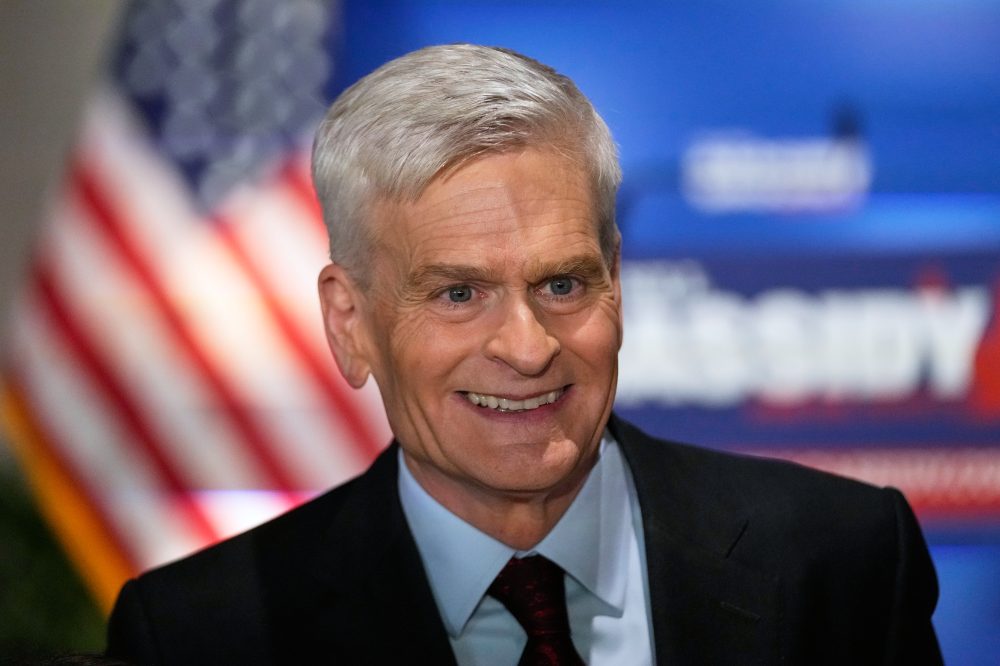
People “can’t afford groceries and gasoline and healthcare, and we’re going to do a billion dollars for a ballroom?” asked Louisiana Sen. Bill Cassidy, who lost reelection in the GOP primary on Saturday after Trump endorsed one of his opponents.
Cassidy described the initiative, covering Secret Service training and a White House visitor center alongside security for Trump’s ballroom, as rushed given unresolved project details. He noted the Trump administration has failed to deliver engineering studies, environmental reviews, or architectural plans to Congress.
“And by the way, the president has pledged to us that he would use private donations to pay for it,” Cassidy said.
Republican Sens. Rand Paul of Kentucky and Lisa Murkowski of Alaska have similarly indicated potential opposition to the security funding, joining others expressing reservations. Sen. Thom Tillis, R-N.C., has declared his opposition unless the proposal undergoes changes.
The security funding debate and Trump’s ballroom project emerge as Senate Republicans work to maintain their majority in upcoming midterm elections while Democrats emphasize affordability as a key campaign theme.
“Americans can barely afford to keep a roof over their own heads,” Senate Democratic Leader Chuck Schumer, D-N.Y. “They should not be forced to pay for a golden roof over Trump’s head.”
While Republicans typically align with Trump, this week has seen heightened friction between the Senate and White House, including disputes over the announcement of a $1.8 billion court settlement compensating Trump’s allies who claim they faced political targeting.
“I don’t see a purpose for that,” Thune told reporters Tuesday morning.
Later that day, Trump unexpectedly endorsed a Texas Republican primary candidate opposing incumbent Sen. John Cornyn, frustrating GOP senators who had spent months urging Trump to support Cornyn.
“Not very enthusiastic” is how Murkowski described her own mood after Trump’s endorsement and the Republicans’ weekly conference lunch.
Sen. Jim Justice, R-W.Va., said he’s supportive of the security money and thinks it is necessary to protect the president. But he conceded that the optics aren’t very good for Republicans, and that they haven’t communicated about it very well.
“We’ve got people out there who are worried about how in the world they’re going to have enough gas to get home,” Justice said.
Republicans are exploring options to reduce White House security funding or substantially narrow the proposal while seeking votes and parliamentarian approval. They’re employing a complex budget procedure called reconciliation to circumvent Democrats, who have obstructed funding for U.S. Immigration and Customs Enforcement and Border Patrol for months.
Thune emphasized that immigration enforcement funding represents the legislation’s “principal objective.”
Floor consideration will trigger an extended series of votes allowing Democrats to propose removing various bill components.
The Homeland Security and Governmental Affairs Committee approved the immigration elements of the $72 billion package Tuesday morning during a session where Democrats seeking ICE and Border Patrol reforms presented approximately five dozen amendments.
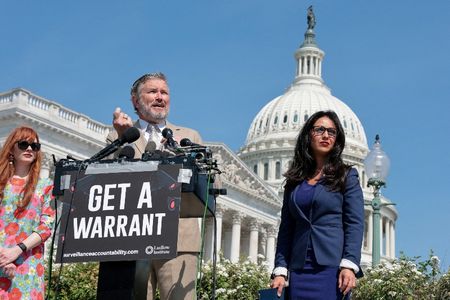
The Republican-controlled committee rejected all Democratic amendments, including requirements for federal agents to display surnames and identification numbers on uniforms and obtain judicial warrants before entering homes.
NEW YORK (TV Delmarva) — The United Nations announced Tuesday that it has revised downward its economic projections for worldwide growth while increasing inflation expectations due to ongoing Middle Eastern conflicts and climbing energy costs.
Economic analysts at the U.N. now project worldwide GDP expansion at 2.5% for 2026, a reduction from the 2.7% prediction made in January. Officials warned the figure could drop further to just 2.1% under more challenging conditions.
Such weak expansion would rank among the poorest performance levels seen this century, excluding periods during the COVID-19 pandemic and the 2008 financial crisis, according to Shantanu Mukherjee, director of economic analysis in the U.N. Department of Economic and Social Affairs, who spoke during a press briefing.
Worldwide inflation expectations have been adjusted upward to 3.9% for this year, representing an increase of 0.8% from January projections, following military strikes by the U.S. and Israel against Iran. Iran’s response included blocking the Strait of Hormuz, a vital shipping route for oil, natural gas, fertilizer and other petroleum-based products.
“Increased energy prices are a potent factor, as are the prices of refinery products that are crucial to industrial production and commercial transport,” Mukherjee said.
However, he emphasized that inflation impacts will vary across different nations.
Wealthier developed nations are expected to see inflation climb from 2.6% in 2025 to 2.9% in 2026. Developing countries face steeper increases, with inflation anticipated to jump from 4.2% to 5.2% as elevated energy, transportation and import costs reduce actual purchasing power.
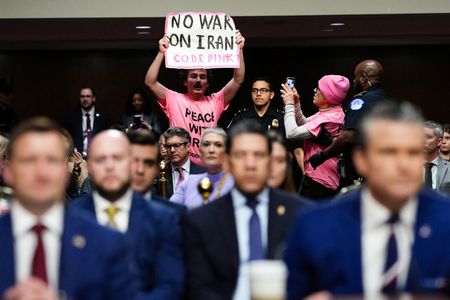
WASHINGTON — The U.S. Senate moved forward Tuesday with legislation designed to compel President Donald Trump to end military involvement in Iran, with an increasing number of Republicans breaking ranks with the president’s position.
Following Trump’s decision to launch military action against Iran in late February, Democrats have repeatedly brought forward war powers measures requiring the president to either secure congressional authorization for the conflict or pull back U.S. forces. While Republicans had previously managed to block these initiatives, Louisiana Sen. Bill Cassidy — coming off a recent primary defeat where Trump backed his challenger — changed his vote to provide key support for moving the bill forward.
The narrow 50-47 margin highlighted the small yet significant group of Republicans backing efforts to end the Iranian conflict. While the measure will proceed to a final vote, the schedule remains uncertain. Several Republican senators were absent Tuesday, and their opposition could potentially sink the legislation if they maintain their current position on the war.
The vote nevertheless revealed growing Republican concerns about a conflict currently under a tenuous ceasefire that has contributed to increased fuel costs across the country.
Republican Sens. Rand Paul of Kentucky, Susan Collins of Maine and Lisa Murkowski of Alaska had all supported comparable war powers measures before and cast similar votes Tuesday. Cassidy backed the legislation for the first time.
Following his primary defeat last week, Cassidy came back to Washington stating he took pride in his constitutional duties and would thoroughly weigh his positions on various Trump administration priorities.
DALLAS (AP) — Dallas residents are expressing outrage over the removal of a treasured downtown whale mural as the city prepares to host World Cup soccer matches this summer.
“I see that mural almost every day on my way to school and then one day they were painting it over,” Katy Rose Cusick said. “And it was just so incredibly shocking to me that that could happen so quickly.”
Crews have been working this month to cover the massive artwork that has adorned two complete sides of a downtown parking structure for almost three decades. The space will be used for new artwork connected to the approaching World Cup games. Wyland, who originally painted the mural, expressed his disappointment in a public statement, saying the elimination has left him “deeply disheartened.”
“When a piece that has carried meaning for generations can be erased without dialogue, it raises serious questions about how we value public art, artists, and the communities these works were created to serve,” Wyland said.
Two high school seniors, Cusick and Joshua Hurston, who attend a local arts-focused school, launched an online petition through Change.org to bring attention to protecting historical artwork. Their effort has collected hundreds of supporters, many sharing childhood memories of seeing the whale artwork.
“If we couldn’t save necessarily the mural, making sure that something like this doesn’t happen again,” he said.
A representative from the regional World Cup planning organization stated they anticipate “unveiling a new piece that captures this current historical moment and reflects the energy, unity, and global spirit surrounding the World Cup 2026.” They noted that a “portion” of Wyland’s original work will remain “as a tribute to its lasting impact on the city.”
The city will host more World Cup games than any other venue in the tournament shared between the U.S., Canada and Mexico. Nine matches are scheduled at AT&T Stadium in nearby Arlington, the home field of the Dallas Cowboys. During the World Cup, the stadium with the retractable roof will be renamed Dallas Stadium.
Downtown Dallas Inc. confirmed in a statement that they participated in initial conversations about the artwork and verified it was not included in the city’s official public art collection before connecting the World Cup organizers with the property owners. A representative for the building owners, Slate Asset Management, said they were contacted by Downtown Dallas Inc. and the organizing committee this year about donating the wall space for a new public art piece created by a local artist.
The whale artwork, called “Whaling Wall 82,” was unveiled in 1999. Wyland has created more than 100 similar whale-themed murals worldwide as part of his efforts to promote ocean conservation.
“This was more than paint on a wall — it was part of my work, alongside the Wyland Foundation, to bring people together to protect our oceans and clean water,” he said.
President Donald Trump announced Tuesday his backing of Texas Attorney General Ken Paxton in the Republican primary runoff, energizing Paxton’s campaign to unseat incumbent Senator John Cornyn ahead of next week’s election.
Trump declared on social media that Paxton is “a true MAGA Warrior who has ALWAYS delivered for Texas and will continue to do so in the United States Senate.”
The announcement came during a Paxton rally, sparking celebration among attendees who broke into dancing to “YMCA,” a familiar tune from Trump rallies.
“I have so much respect for the president and appreciate so much his endorsement,” Paxton told supporters at the Allen, Texas gathering.
Both candidates qualified for the May 26 runoff after emerging as the leading vote-getters in the March 3 primary, where no contender secured a majority. Early voting began Monday and runs through Friday.
This endorsement represents another example of Trump’s strategy to eliminate Republicans who have opposed him from the party. His recent victories include the defeats of Republican Sen. Bill Cassidy in Louisiana and Indiana state senators who challenged him on redistricting matters.
Trump also selected and backed a challenger to Kentucky U.S. Rep. Thomas Massie in Tuesday’s primary. Massie’s efforts to release the Jeffrey Epstein files and his vocal opposition to the Iran war have frustrated Trump, whose backing of Ed Gallrein is creating Massie’s toughest reelection battle to date.
While the four-term Cornyn has supported Trump’s agenda in Washington, Paxton has positioned himself as a champion for the Make America Great Again movement. Trump’s backing puts him in conflict with his party’s establishment, which believes Cornyn offers the stronger candidacy for November’s general election. The Republican winner will face Democratic state Rep. James Talarico.
A Contentious and Costly Republican Fight
At a campaign stop in Lubbock later Tuesday, Cornyn acknowledged Trump’s endorsement “will certainly have an impact on the race” but declared “we’re not giving up the fight.”
“I know who gets to choose our senators and it’s the people of Texas,” Cornyn stated. “And there’s no substitute for that.”
Cornyn, who confirmed he had not discussed the endorsement with Trump, reinforced his campaign message that in November’s general election against Talarico, Paxton would be “a weak nominee who jeopardizes everything we care about.”
Talarico responded in a statement that “it doesn’t matter who wins this runoff. We already know who we’re running against: the billionaire megadonors and their corrupt political system.”
In his social media message, Trump called Cornyn “a good man,” but criticized that “he was not supportive of me when times were tough.” He expressed frustration that “John was very late in backing me in what turned out to be a Historic Run for the Republican Nomination.”
The contest between Cornyn and Paxton has become a harsh and costly fight over the Republican Party’s direction, pulling resources away from other competitive races nationwide.
Cornyn’s campaign and supporting super PACs have dramatically outspent Paxton on advertisements since last year, with most funding targeting attacks on Paxton. This week, Cornyn’s campaign and allied groups will have invested over $87 million in advertising, according to AdImpact, an ad-tracking company, including more than $18.5 million since the March 3 primary.
Paxton’s campaign and a single super PAC have spent significantly less than pro-Cornyn organizations, totaling $9.2 million on advertising, with approximately $4.9 million spent since the primary election on March 3.
Capitol Hill Worries
Senate Republicans emerged from a luncheon expressing disappointment over Trump’s decision and its consequences for Cornyn. GOP leaders have publicly expressed concern that Republicans will need to invest millions more in a general election with Paxton as the nominee.
“I’m sad, I’m actually sad,” said Republican Sen. Cynthia Lummis, explaining she believed Cornyn had superior chances in the general election.
“Now it’ll just cost us a fortune,” she added.
The endorsement energized attendees at Paxton’s Tuesday event. Caroline Zadeh called it an “awesome thing” and said she trusts “Trump to do the right thing.”
“We’ve had Cornyn in the office for quite a while,” she expressed regarding her frustrations with the senator, noting “a lot of controversy between him and Trump’s administration.”
On the opposing side, Bennie Newman, 84, said he cast his ballot for Cornyn on Tuesday before learning of the endorsement, which came as “a surprise” and “a disappointment.”
Newman supports Trump, but would still have chosen Cornyn because he “has almost been impeccable in terms of his reputation,” he explained. Citing some of Paxton’s controversies, he argued that the attorney general would be a less viable candidate against Talarico in November’s general election.
Trump has maintained a sometimes strained relationship with Cornyn, particularly after the senator suggested in 2023 that Trump could not secure the presidency again in 2024 and that his “time has passed him by.”
Cornyn also initially criticized Trump’s plan for a border wall between the U.S. and Mexico — a project he now endorses.
A former state attorney general and state Supreme Court judge, Cornyn first won statewide office 36 years ago. His reserved approach and judicial demeanor differ from the passionate rhetoric of Trump and his Make America Great Again movement.
Cornyn has received backing from Senate Republican leadership, including South Carolina Sen. Tim Scott, chairman of the National Republican Senatorial Committee, who cautioned that “it is a strong possibility we cannot hold Texas if John Cornyn is not our nominee.”
Some Republican leaders have expressed concern the party will need to allocate significantly more money to defend the seat with Paxton as the nominee — funds they could direct toward Senate races in more competitive states. Paxton was acquitted in a 2023 impeachment trial on corruption charges. He also reached a deal in 2024 to end a long-running securities fraud case.
Three former racing stars will be honored as the NASCAR Hall of Fame announced its Class of 2027 inductees on Tuesday, with Kevin Harvick earning selection in his first year of eligibility alongside Jeff Burton and Larry Phillips.
The voting took place Tuesday at the Charlotte Convention Center, where Harvick and Burton were selected from 10 Modern Era candidates while Phillips was chosen from five Pioneer Era nominees.
Lesa France Kennedy was also named as this year’s Landmark Award recipient for Outstanding Contributions to NASCAR.
The induction ceremony is scheduled for January 22 at the NASCAR Hall of Fame in Charlotte.
At age 50, Harvick stepped away from full-time competition following the 2023 season, finishing his 23-year career with 60 Cup Series wins, ranking him 11th all-time. His achievements include the 2014 Cup Series title and championships in what is now known as the O’Reilly Auto Parts Series in 2001 and 2006.
Harvick’s career began when he took over for the late Dale Earnhardt after the seven-time champion’s fatal crash at the 2001 Daytona 500. Working with team owner Richard Childress, Harvick achieved immediate success, capturing his third race and earning 2001 NASCAR Rookie of the Year honors.
Throughout his career, Harvick reached at least five wins in a season four different times, with his best year coming in 2020 when he won nine races. Known by his nickname “The Closer,” Harvick now works as an analyst for Fox Sports’ NASCAR broadcasts.
Burton, who like Harvick was recognized among NASCAR’s 75 Greatest Drivers in 2023, accumulated 21 Cup Series victories and 27 O’Reilly Series wins during his career. “The Mayor” of NASCAR achieved his career-best season in 1999 with six race wins. The 58-year-old received his Hall of Fame selection in his sixth year of eligibility.
Currently, Burton serves as a broadcaster for NBC Sports and works as an adviser for NASCAR’s drivers’ council.
Phillips’ racing accomplishments are estimated to include 1,000 or possibly 2,000 victories according to his crew chief James Ince, though NASCAR notes the exact number remains uncertain due to Phillips competing on various surfaces across multiple locations where results weren’t always documented. Phillips passed away in September 2004 at 62 years old.
According to NASCAR, Phillips became the first driver to claim five NASCAR Weekly Series championships, and between 1989 and 1996, he won 220 out of 289 NASCAR-sanctioned events.
Kennedy serves as NASCAR’s Executive Vice Chair and brings over three decades of experience with International Speedway Corporation. Recognized as one of sports’ most influential women, Kennedy has held various executive positions including secretary, treasurer, executive vice president and CEO.
In 2016, Kennedy received induction into the Cynopsis Sports Business Hall of Fame.
The selection process involved a 50-member voting panel consisting of NASCAR representatives, NASCAR Hall of Fame officials, track owners, media personnel, competitors including drivers, owners and crew chiefs, nationwide fan voting, and reigning NASCAR Cup Series champion Kyle Larson.
Harvick earned 92% of Modern Era votes while Burton received 32%. Neil Bonnett finished third in voting, followed by Randy Dorton and Greg Biffle. Phillips captured 38% of Pioneer Era votes.
Fan voting through NASCAR.com selected Harry Hyde for the Pioneer category and Greg Biffle and Kevin Harvick for the Modern Era.
WASHINGTON, May 19 – The United States Senate moved forward Tuesday with legislation designed to restrict President Donald Trump’s military authority regarding Iran, requiring congressional approval before any war operations could continue.
The resolution represents an uncommon challenge to the Republican president’s war-making powers, though the proposal still faces multiple procedural hurdles before it could take effect.
The measure would effectively halt any military conflict with Iran unless President Donald Trump secures proper authorization from Congress first.
New York Yankees right-handed pitcher Gerrit Cole will take the mound Friday at Yankee Stadium against the Tampa Bay Rays, marking his return to major league action after a 14-month absence due to Tommy John surgery.
The former Cy Young Award recipient sat out the entire 2025 season following elbow issues that arose during spring training, leading doctors to recommend the surgical procedure. Cole’s most recent competitive appearance was in Game 5 of the 2024 World Series, where the Los Angeles Dodgers defeated the Yankees 4-1 to claim the championship.
The 35-year-old hurler completed six rehabilitation appearances across three minor league levels this spring, posting a 5.28 ERA over 29 innings pitched. Earlier this week, Yankees skipper Aaron Boone had not committed to Cole’s return, suggesting the team might send him for an additional rehab outing.
New York’s roster move sending pitching prospect Elmer Rodriguez back to Triple-A Scranton/Wilkes-Barre created the opening for Cole’s comeback when the rotation cycle came around.
The Yankees currently trail the division-leading Rays by three games and recently placed star southpaw Max Fried on the 15-day injured list with a left elbow bone bruise, which had necessitated Rodriguez’s second promotion this season.
The six-time All-Star earned the 2023 AL Cy Young Award while wearing pinstripes, compiling a 15-4 record with a league-best 2.63 ERA across 33 starts.
During the 2024 campaign, he posted an 8-5 mark with a 3.41 ERA in 17 appearances, having missed the season’s first half due to elbow soreness. Cole delivered strong postseason performance for New York’s playoff run that year, recording a 1-0 record with a 2.17 ERA in five starts.
Throughout his major league career spanning stints with the Pittsburgh Pirates (2013-17), Houston Astros (2018-19) and New York (2020-24), Cole has accumulated a 153-80 regular-season record with a 3.18 ERA in 317 starts. His postseason resume includes an 11-6 record with a 2.77 ERA over 22 starts.
A Heat Advisory remains in effect for northern Delaware and surrounding areas as dangerously hot temperatures grip the region through Wednesday evening.
The National Weather Service warns heat index values could reach 99 degrees, with some areas approaching 100 degrees during peak afternoon hours both today and Wednesday. New Castle County in Delaware, along with portions of southeastern Pennsylvania and southern New Jersey, are under the advisory until 8 PM Wednesday.
“Given the intensity of this early season stretch of heat and humidity, we are not fully acclimated to it,” meteorologists warn, noting that impacts could be greater without proper precautions.
Health officials urge residents to drink plenty of fluids, stay in air-conditioned spaces, and avoid prolonged sun exposure. Check on elderly relatives and neighbors who may be more vulnerable to heat-related illnesses.
Relief is on the way. Showers and thunderstorms are expected to arrive Wednesday afternoon and evening, bringing an end to this unseasonably hot weather pattern.
The advisory affects New Castle County in Delaware, plus Mercer, Camden, Gloucester, and northwestern Burlington counties in New Jersey, and Philadelphia, Delaware, eastern Chester, eastern Montgomery, and lower Bucks counties in Pennsylvania.
Good evening, Delmarva! We’re wrapping up a beautiful Tuesday with mostly clear skies and pleasant conditions across the peninsula. Tonight will be quite mild with temperatures staying warm around 73 degrees and mostly clear skies continuing. You’ll feel a gentle southwest breeze at about 10 mph – perfect for any evening outdoor plans.
Wednesday brings a dramatic change to our weather pattern. We’ll start sunny and hot, climbing to a sizzling 95 degrees – the hottest day we’ve seen this season! But don’t get too comfortable, because Mother Nature has other plans. By afternoon and evening, we’re tracking showers and thunderstorms moving into the area.
The stormy weather continues Wednesday night with temperatures dropping to a much more comfortable 59 degrees. Thursday isn’t looking much drier, with showers and thunderstorms likely to stick around and temperatures rebounding to 66 degrees.
If you have outdoor plans for Wednesday, get them done early before those storms roll in. Stay weather-aware and have a great evening, Delmarva!
The International Christian Embassy Jerusalem has named Dr. Susan Michael as the new chairwoman of its International Board of Trustees, positioning a veteran Evangelical Israel advocate to head one of the globe’s most prominent Christian organizations backing Israel.
According to the Jerusalem-headquartered group, Michael takes the helm from Rev. Ingolf Ellssel of Germany, who held the leadership role for a decade and a half. The organization’s president, Dr. Jürgen Bühler, noted that Michael brings extensive organizational experience, having participated in the ministry since it began 46 years ago.
“We are so pleased that Dr. Susan Michael was just chosen as the new Chairperson of our International Board of Trustees,” Bühler stated. “She has achieved so many accomplishments over her years as ICEJ USA National Director, rising in stature and influence as a key pro-Israel Christian leader in America and beyond.”
Bühler emphasized that Michael’s connection to the ministry reaches back to “our inception in 1980.”
Michael presently leads the Christian Embassy’s USA Branch as president. According to the organization, she has emerged as an influential Evangelical advocate for Israel while fighting antisemitism both domestically and globally.
The board appointment arrives as the American division of the organization strengthens its advocacy and outreach initiatives. During a video presentation at the International Leadership Conference in Prague the previous week, Michael explained that the U.S. branch has focused recent efforts on reorganizing and expanding its nationwide involvement.
She emphasized the creation of American Christian Leaders for Israel, known as ACLI, which brings together pastors, ministry heads, and pro-Israel groups throughout the country into what she termed a “network of networks.”
The National Religious Broadcasters designated ACLI as its main advocacy collaborator on Israel matters last year. Michael gained election to the NRB Board of Directors earlier this year.
Michael also coordinated the third Israel Advocacy Day in Washington the previous week in partnership with the Israel Allies Foundation and Eagles’ Wings ministry. The organization reported that the gathering drew over 500 rabbis, pastors, and Jewish and Christian community leaders to Washington to demonstrate support for Israel.
“At a time of rising antisemitism and growing challenges facing Israel, the role of building strong relationships between Christians and Jews has never been more important,” Michael said.
Listen to the Evening Delmarva Farm Report Update — May 19, 2026
DELMARVA — A northwest Missouri farmer is assessing replant needs after excessive rainfall hit his operation. Ryan Meyerkorth from Atchison County reported receiving more than 6 inches of rain during April, followed by another 7 inches in the last 48 hours. Portions of his soybean crops have been affected by the heavy precipitation.
Policy
The Agriculture Secretary announced today that federal agencies are speeding up permits for new fertilizer plants to help cut farm input costs. Secretary Brooke Rollins said the approval process for an ammonia production facility under construction in Louisiana could be completed within 45 days through the Army Corps of Engineers, representing a significant acceleration in the typical permitting timeline.
Markets
July corn futures closed today at $4.75¼, down 1¾ cents. July soybeans settled at $12.09½, dropping 3½ cents. July Chicago wheat gained 2¾ cents, finishing at $6.67¼.
For local cash bids, corn at Laurel Grain Company in Laurel, Delaware is bringing $5.20 a bushel for July delivery. Soybeans are $11.50 for July.
Forecast
The region is under a heat advisory tonight with mostly clear skies and a low around 70°F. Wednesday looks sunny with a high near 87°F before afternoon thunderstorms develop. Thursday brings showers and thunderstorms likely with cooler temperatures in the mid-60s.
This article is based on the Delmarva Farm Report Update Evening Edition, May 19, 2026. Hosted by Tom Bradley.
The NCAA has taken a major step toward establishing a national championship for women’s flag football, potentially launching the title competition just before the sport debuts at the 2028 Olympic Games in Los Angeles.
On Tuesday, the NCAA Committee on Access, Opportunity and Impact approved a recommendation to create national collegiate flag football championships across Divisions I, II and III, targeting spring 2028 for the inaugural tournament.
While the decision isn’t finalized, this represents significant progress for the emerging sport. The recommendation required sponsorship from 40 schools at the varsity level, but more than 100 institutions are already preparing to field teams during the upcoming academic year, the NCAA reported.
“Today is a landmark day for collegiate athletics, as women’s flag football officially becomes an NCAA championship sport,” said Marion Terenzio, chair of the Committee on Access, Opportunity and Impact Emerging Sport Subcommittee and president at SUNY Cobleskill. “This step recognizes a sport whose growth, competitiveness and national momentum have been impossible to ignore. Elevating flag football to championship status affirms that progress and opens new doors for women to compete at the highest level.”
The approval process continues with each division needing to review the recommendation and submit proposals by July 1. Following that timeline, voting would occur in January 2027, requiring unanimous approval from all three divisions to move forward. Officials would also establish an oversight committee for NCAA women’s flag football.
Flag football would join other sports that achieved NCAA championship recognition through the Emerging Sports for Women program, including rowing in 1996, ice hockey in 2000, water polo in 2000, bowling in 2003, beach volleyball in 2015, wrestling in 2025, acrobatics and tumbling in 2026, and stunt in 2026.
“The momentum behind the game reflects the passion of athletes, coaches, administrators and partners across the country who have embraced flag football and invested in creating more opportunities for female athletes,” said Izell Reese, founder and CEO of RCX Sports, the official operator of NFL FLAG. “We’re excited to continue working alongside the NCAA, NFL and school leaders to help accelerate that growth and build sustainable pathways for the next generation.”
Jacqie McWilliams Parker, chair of the Committee on Access, Opportunity, added: “Girls want to play. Whenever you give access and opportunity to an easier way to play, the better the success and numbers in participation you see.”
The International Olympic Committee approved flag football for the Los Angeles Olympic program in 2023, alongside cricket, baseball-softball, lacrosse and squash.
Female participation in flag football continues surging nationwide. Over 20 states now recognize it as an official girls’ high school varsity sport, and NFL clubs approved launching a professional flag football league in December 2025.
The growth extends to youth levels as well. USA Football research shows participation among girls ages 6 to 12 jumped 283% between 2015 and 2024.
“This is great news for flag football,” USA Football CEO Scott Hallenbeck said. “Growing the game is central to our mission, and the potential for women’s flag football to have a fully recognized NCAA championship does exactly that.”
ORLANDO, Fla. — Professional football will expand its global presence with more games scheduled outside American borders.
League owners gave their approval Tuesday for increasing international contests to 10 games starting after the upcoming season. This represents the highest number of overseas games permitted under the current collective bargaining agreement with the NFL Players Association.
NFL Commissioner Roger Goodell has stated that 16 international games remains the ultimate target.
This season will feature a record-breaking nine international contests spanning four continents, marking the debut of regular-season play in France and Australia. Rio de Janeiro will host its first game, while London gets three contests, with additional games planned for Munich, Spain, and Mexico City.
“Our strategy is not one and done so our goal is to go back to those markets that we’re establishing,” NFL executive Peter O’Reilly said. “There are parts of the world that we are looking at for future years, maybe not ’27, beyond. Asia would be an example of that. Japan would be a good example within Asia of a market that has complexity.”
When asked about the possibility of an international Super Bowl, O’Reilly offered measured optimism.
“I don’t know if I can fully parse that in terms of feasibility versus likelihood, but if you’re just talking feasibility, obviously, as we go to new stadiums around the world, we’re getting a better sense of those buildings,” O’Reilly said. “And, as we go around the whole world, we get a sense of the passion there, and the partnerships, governmental partnerships, private sector partnerships, and otherwise. So I think all of that strengthens the foundation that you need to perhaps someday on a far off horizon have an international Super Bowl.
“You have great buildings like Tottenham (in London) that were built with the NFL in mind from Day 1. So I think passion, partners, some stadiums, there’s some feasibility, obviously a lot of other factors, inclusive of the fact there’s tremendous demand as we saw today from Nashville, from the U.S. cities in hosting this major event and the massive economic impact that comes with it, but we’re learning every day to increase the feasibility.”
Owners also passed a measure eliminating teams’ ability to shield two home games from international scheduling.
The league’s Inspire Change program has exceeded half a billion dollars in funding.
Since its 2017 inception, the NFL has distributed nearly $575 million to support thousands of partner organizations and nonprofits through four main areas: education, economic advancement, police/community relations and criminal justice reform.
Nine nonprofit organizations will receive renewed funding, including Big Brothers Big Sisters of America, Law Enforcement Action Partnership and Center for Employment Opportunities.
“It’s really a credit to the NFL family for contributing back to our communities that need us to reach the under resourced and the underserved,” said Anna Isaacson, senior vice president of social responsibility for the NFL. “The dollar amount is big, but it’s really what that dollar amount represents. It’s thousands of organizations over the last nine years that have received grants from NFL clubs, from club foundations, from the NFL Foundation, to do the work in their communities across the four pillars of Inspire Change.”
The funding renewals received approval from the Player-Owner Social Justice Committee, a 12-member group featuring current and former players from the Players Coalition alongside team owners.
“Our mission as the Players Coalition is to use our collective voices and influence to advocate for the individuals actively making a difference in their communities,” Arizona Cardinals offensive tackle Kelvin Beachum said. “The collaborative work with the NFL’s Inspire Change initiative gives players the opportunity to raise awareness of social issues and direct funds to solve them.”
Nashville and the Tennessee Titans’ upcoming Nissan Stadium will host the 2030 Super Bowl.
The Titans remain on track to complete their new venue directly opposite the existing Nissan Stadium by February, wrapping up the three-year construction project. The NFL previously brought the 2019 draft to Music City.
“That for us changed the future of the draft, arguably changed the future of the Titans and the community,” NFL Commissioner Roger Goodell said. “And I think this is the next great step in a remarkable football journey and a great community in Nashville. We can’t wait to be there.”
Los Angeles will host this season’s Super Bowl, followed by Atlanta in 2028 and Las Vegas in 2029.
Minnesota will welcome the 2028 draft to Minneapolis.
Owners approved bringing the three-day event to Minneapolis, which previously hosted the 2018 Super Bowl when the Eagles beat the Patriots 41-33.
Washington will host next year’s draft.
“Minnesota knows how to show up for big moments, and we’ve experienced it firsthand,” Goodell said. “Working with the Minnesota Vikings and Minnesota Sports and Events, we look forward to bringing the 2028 NFL draft to this great community, driving positive economic impact throughout the region, and hosting an incredible event for fans and the next generation of the NFL.”
The NFL draft took place in New York from 1965 to 2014. Radio City Music Hall served as the venue nine times, with the Rockettes’ spring show forcing the draft into May in 2014. The league relocated to Chicago for two years, achieved significant success, and transformed the draft into a major attraction, particularly for cities unable to host a Super Bowl.
“For three days, Minnesota will become the center of the football world,” Vikings owner/President Mark Wilf said. “The 2028 NFL draft will give us an opportunity to showcase not just U.S. Bank Stadium, but the energy, hospitality and pride that define Minneapolis-St. Paul and the entire state and region. We have no doubt the community will deliver a world-class event that is unique to Minnesota.”
Federal ethics documents show President Donald Trump has shattered longstanding presidential tradition by executing thousands of stock transactions in companies whose business prospects he can directly influence through his policy decisions.
Ethics filings reveal Trump’s investment portfolio conducted over 3,600 buying and selling transactions during the first three months of this year, with many investments targeting corporations whose financial performance has been shaped by his presidential actions.
The trading activity included investments worth as much as $6 million in Nvidia, a company that received Trump’s authorization last year to sell advanced computer chips to China. His investment holdings also acquired shares in multiple defense contractors affected by conflicts involving Iran, such as Lockheed Martin, General Dynamics and Northrop Grumman.
“If he were defense secretary, he would be committing a crime,” said Richard Painter, the chief White House ethics adviser in the George W. Bush administration and a big critic of congressional trading, too. “Technically he can do this, but it is fundamental breach of trust.”
While federal regulations prohibit government employees from maintaining financial holdings that their policy work could influence, presidents receive an exemption from this restriction.
A representative for the Trump family business stated that outside parties manage the president’s investment portfolio with “sole and exclusive” decision-making power.
“Neither President Trump, his family, nor The Trump Organization plays any role in selecting, directing, or approving specific investments,” spokesperson Kimberly Benza said in a statement. “They receive no advance notice of trading activity and provide no input regarding investment decisions or portfolio management.”
Ethics experts have noted that simply knowing which companies are in his portfolio creates potential problems, as this knowledge could influence presidential decisions on matters ranging from healthcare regulations to military contracts to international conflicts.
The ethics filing submitted to the federal Office of Government Ethics spans over 100 pages and indicates potentially more than $100 million in transactions over the three-month period, with trades occurring at a rate of approximately 50 per business day.
While the documentation shows more stock purchases than sales, determining exact proportions remains difficult since the reports provide value ranges rather than specific dollar amounts for each transaction.
Trump has historically maintained relatively small stock market investments compared to his overall wealth, though this pattern appears to be shifting alongside his expanding fortune, which has included significant cash increases.
Following his return to the presidency, the Trump Organization has collected tens of millions in advance payments from international developers seeking to license his name for resort projects, plus hundreds of millions from cryptocurrency transactions that remain largely anonymous, making it impossible to determine if buyers seek presidential influence.
Every recent president has eliminated their stock holdings before taking office, transferred funds to broadly diversified investments, or established “blind” trusts to prevent knowledge of their specific holdings.
George H.W. Bush and Bill Clinton both utilized blind trust arrangements. George W. Bush sold his stock holdings entirely. Barack Obama maintained investments only in broadly diversified mutual funds. Joe Biden conducted no stock trading.
Beyond Nvidia, the president’s portfolio contains investments in Apple, Boeing and Tesla. The chief executives of all four corporations joined Trump during his recent trip to China.
The investment holdings also include Intel, the semiconductor company in which the federal government acquired a 10% ownership stake last year.
The portfolio of the president, known for his preference for fast food, recently added restaurant chain stocks including Shake Shack, Papa John’s and Cheesecake Factory.
USHUAIA, Argentina — Scientists investigating a fatal hantavirus outbreak aboard a cruise ship last month began capturing rodents in forests near Argentina’s southernmost city on Tuesday, seeking to determine whether the deadly virus exists in a region previously considered free of the disease.
Researchers dressed in bright blue protective gloves and surgical masks examined 150 cage traps they had placed the night before, placing deceased rodents into black plastic bags before transporting them to a temporary laboratory for blood sample collection.
Tuesday’s rodent collection operation launched field research as part of Argentina’s broader probe into what caused the disease outbreak on the MV Hondius, which resulted in three deaths and multiple illnesses while triggering an international effort to locate passengers and their contacts.
The research team working through muddy terrain to collect the dead animals refused to discuss their activities with reporters. Argentina’s state-supported Malbrán Institute, the nation’s premier infectious disease research facility, indicated the team would continue this process for three additional days before transporting specimens to the institute’s primary laboratory in Buenos Aires for hantavirus testing. While testing may require up to one month, officials provided limited additional information.
“They were able to capture what was expected,” said Martín Alfaro, the spokesperson for the local health ministry of Tierra del Fuego.
The investigation began nearly two weeks after Argentina’s Health Ministry initially announced plans to deploy the Malbrán Institute team to Ushuaia. This popular tourist location where the cruise began its journey — known for being situated at the “end of the world” — functions as the primary entry point for Antarctic travel.
Hantavirus has never been documented in Ushuaia or throughout the broader Tierra del Fuego archipelago. However, provincial authorities from northern Patagonian regions where hantavirus commonly occurs maintain that the outbreak’s first known victims — a Dutch couple with a passion for birdwatching — did not travel there during the timeframe when they likely became infected.
The Dutch visitors finished an extensive road journey through Chile and Argentina in late March, spending several days birdwatching and hiking in Ushuaia before departing on the ship April 1.
Local health officials have strongly disputed the national government’s original theory that the cruise ship infection chain started when the couple visited an Ushuaia landfill. Both individuals have since passed away, making it more difficult for Argentine investigators to track their movements throughout the country to identify where they acquired the virus.
Present across southern Chile and Argentina, the Andes virus can occasionally transmit between humans in uncommon instances. Most Andes virus outbreaks, according to experts, result from contact with air polluted by waste products from the long-tailed pygmy rice rat called the “colilargo” that thrives in northern Patagonian forests.
The colilargo does not exist beyond the Strait of Magellan in Tierra del Fuego, which researchers believe is too harsh and remote for this rodent species. However, a related subspecies inhabits forests surrounding Ushuaia, and researchers have never studied whether it can carry hantavirus.
Insisting that tourism-reliant Tierra del Fuego is not responsible for the cruise ship outbreak, local health officials expressed support for a wider investigation goal: determining whether their province contains hantavirus during an era of climate change. They noted scientists were setting traps in two locations where the colilargo subspecies thrives — the national park and forested slopes above Ushuaia’s main pebble beach.
“The province has never done this kind of testing before,” Alfaro said. “It’s important that we rule out the possibility of transmission occurring here.”
Hantavirus infections have risen in recent years throughout Argentina, a pattern researchers connect to colilargos significantly expanding their territory due to climate change and human development.
Former President Donald Trump made unfounded allegations on Monday claiming Maryland election officials, including the state’s Democratic governor, deliberately distributed hundreds of thousands of illegal mail-in ballots to benefit Democratic candidates.
Trump posted his accusations on Truth Social and reiterated them during a White House healthcare event, stating he would request the attorney general and Justice Department to launch an investigation.
These allegations followed a vendor mistake that required election officials to mail new ballots to certain voters before Maryland’s June 2026 gubernatorial primary.
Trump stated: “In Maryland, they sent out 500,000 Illegal Mail In Ballots, and they got caught! So now, they’re going to send out 500,000 more Mail In Ballots, but nobody knows what’s happening with the first 500,000 they sent. In addition, many of these ballots went to Democrats, so any Republican running in Maryland doesn’t have a chance! This was done by the Corrupt Governor of the State, Wes Moore. He allowed this to happen in order to make sure that Democrats win.”
However, these claims are inaccurate. The Maryland State Board of Elections confirmed that no unlawful mail-in ballots were distributed. Instead, certain voters received primary ballots for the incorrect political party because of a vendor mistake. Affected voters will get replacement ballots, and the original incorrect ballots sent to election offices will be invalidated. Voters have been told to discard their original ballots if they haven’t returned them yet.
Security measures including unique identifiers on ballot envelopes prevent voters from casting multiple ballots. The mistake won’t benefit either political party since Maryland holds separate Republican and Democratic primaries to select general election candidates.
“It bears repeating that no fake OR illegal mail-in ballots were distributed,” posted Jared DeMarinis, Maryland’s state administrator of elections, on X Monday evening. “The wording in President Trump’s continued posts about Maryland’s elections creates an environment of misinformation on a voting right. Mail-in voting is not a partisan issue. Mail-in voting is legal.”
DeMarinis added clarification: “Maryland elections are administered, supervised and managed by the bipartisan State Board of Elections — not the Governor.” He noted that he serves as “the chief State election official in charge of implementing and conducting the election.”
A spokesperson for the governor, Ammar Moussa, described Trump’s claims as “false and irresponsible” and advised, “Marylanders should look to the State Board of Elections for accurate information — not social media misinformation designed to undermine confidence in our elections.”
When asked for response, the White House referred The Associated Press to Trump’s Truth Social post.
According to the state Board of Elections, only voters who received ballots before May 14 were impacted. The board hasn’t disclosed the exact number of affected voters, their party registration, or the quantity of replacement ballots being distributed. Neither the board nor the vendor — Taylor Print & Visual Impressions Inc. — provided these figures when requested. DeMarinis said Friday, “With over 500,000 voters requesting mail-in ballots, we want to eliminate any doubt in its integrity or accuracy.”
The board chose to send replacement ballots to all potentially affected voters because the vendor couldn’t precisely determine which voters received correct versus incorrect ballots. These voters will get postcards notifying them of incoming new ballots, plus email and text alerts if they’ve signed up for such notifications. The replacement ballot will arrive in an envelope marked “REPLACEMENT BALLOT INSIDE” with a return envelope labeled “REPLACEMENT ENVELOPE.”
Voters receiving replacement ballots should not use their original ballot and must return the replacement in the proper envelope for their vote to count. The board anticipates completing the replacement ballot mailing process by May 29 on a rolling schedule.
Mark Lindeman, policy and strategy director at Verified Voting, a nonpartisan election technology organization, noted that “nobody can vote twice” in the coming election because “each returned mail ballot envelope is authenticated against voter records before the ballot is accepted and counted.” He added that the error likely won’t significantly impact the election.
“Given how quickly the error was discovered, it is unlikely to have even a small effect on the primary election over a month from now. Beyond that, it cannot possibly affect the general election, so Trump’s claim that ‘any Republican running in Maryland doesn’t have a chance!’ makes no sense. It fits into a pattern of baseless, unworthy attacks on U.S. elections and election officials.”
The Texas Rangers brought back right-handed pitcher Chris Martin from the 15-day injured list on Tuesday, while sending fellow right-hander Gavin Collyer down to Triple-A Round Rock.
Martin, who will celebrate his 40th birthday next month, was placed on the IL on April 15 due to a right shoulder impingement. Before getting hurt, he posted a 1-1 record with a 7.11 ERA across eight bullpen outings.
Throughout his career since 2014, Martin holds a 19-25 record with a 3.39 ERA and 16 saves across 426 career appearances (all in relief) while playing for seven different teams, including two separate periods with the Rangers (2018-19, 2025-current). He earned a World Series championship with the Atlanta Braves in 2021.
Collyer, 25, first appeared in the major leagues on April 15. In his 14 relief outings, he has compiled a 1-0 record with a 2.84 ERA, recording 10 strikeouts and issuing eight walks over 12 2/3 innings pitched.
American chipmaker Analog Devices announced Tuesday its plans to purchase Empower Semiconductor in a $1.5 billion cash transaction, strengthening its artificial intelligence power management capabilities.
Both companies stated the acquisition will help improve power delivery systems for artificial intelligence and other demanding computing applications, where power limitations often create bottlenecks.
Key transaction details include:
• Empower CEO Tim Phillips explained his company was established to address “the hardest problem in AI power delivery,” referring to power bottlenecks that limit AI performance. “Our technology enables the power density, speed and efficiency required by AI processors to reach their full potential,” Phillips stated.
• The acquisition is anticipated to finalize during the latter half of 2026, pending regulatory approval.
• After completion, Phillips will remain at Analog Devices to oversee integrated voltage regulator technology initiatives.
• PJT Partners serves as financial advisor to Analog Devices, while Barclays advises Empower Semiconductor on the transaction.
• Analog Devices stock prices rose 1.2% in after-hours trading following the announcement.
WASHINGTON – Vice President JD Vance clarified Tuesday that a planned U.S. military deployment to Poland has been postponed, emphasizing that this does not constitute a withdrawal of American forces from Europe.
Speaking to reporters during a White House briefing, Vance explained that the administration seeks to push Europe to “take more ownership” of collective defense efforts.
“We’re not talking about pulling every single American troop out of Europe. We’re talking about shifting some resources around in a way that maximizes American security. I don’t think that’s bad for Europe,” Vance stated.
The administration has been conducting a comprehensive assessment of American military presence across Europe, with expectations of reductions following demands from the president that NATO assume greater responsibility for European security. Military officials have yet to release specific details about future troop arrangements throughout the region.
“We’ve not reduced the troop levels in Poland by 4000 troops. What we did is that we delayed a troop deployment that was going to go to Poland, that’s not a reduction, that’s just a standard delay in rotation that sometimes happens in these situations,” Vance explained.
News of the altered deployment plans for the 4,000 service members has sparked strong opposition from congressional members who worry about potential abandonment of American allies.
Tuesday brought shocking results at the Hamburg Open in Germany, where second-seeded Ben Shelton and fourth-seeded defending champion Flavio Cobolli both fell to unexpected defeats.
In the biggest surprise of the day, German player Daniel Altmaier delivered a stunning blow to World No. 6 Shelton, winning 4-6, 7-6 (4), 6-4 in a marathon match lasting two hours and 51 minutes. The victory sends Altmaier into the quarterfinals despite entering the tournament ranked No. 65 with just a 4-13 record this season. Shelton appeared poised for victory when he held a 5-4 lead in the second set with a chance to close out the match on his serve, but Altmaier mounted a dramatic comeback.
In another major upset, Peruvian qualifier Ignacio Buse eliminated Italy’s Cobolli with a straight-set victory of 6-2, 7-5 in just one hour and 31 minutes. Buse dominated the match by recording more winners than his opponent 15-13 and never allowed Cobolli a single break point opportunity.
Canada’s Felix Auger-Aliassime, the tournament’s top seed, successfully navigated his opening match by defeating Vit Kopriva of the Czech Republic 7-5, 6-1. Additional victorious players included Russia’s fifth-seeded Karen Kachanov, Italy’s seventh-seeded Luciano Darderi, France’s Ugo Humbert, and American lucky loser Aleksandar Kovacevic. The second-round contest between sixth-seeded Tommy Paul and Argentina’s Tomas Martin Etcheverry had to be halted due to insufficient light, with each player claiming one set 7-6 (5).
At the Geneva Open in Switzerland, Norway’s sixth-seeded Casper Ruud bounced back from his recent loss to World No. 1 Jannik Sinner in the Italian Open final by defeating Jenson Brooksby 6-3, 7-5 in first-round action. The world No. 17 Ruud capitalized on half of his break point opportunities, converting five of 10 chances against Brooksby, who managed more winners 28-21 but also committed significantly more unforced errors 22-12.
Other Geneva Open results included Spain’s eighth-seeded Jaume Munar’s dominant 6-0, 6-3 victory over American qualifier Nishesh Basavareddy, Belgium’s Raphael Collignon’s 6-3, 7-6 (5) win against France’s Adrian Mannarino, Australia’s Alexei Popyrin’s three-set triumph over French qualifier Clement Tabur 7-6 (2), 6-7 (5), 6-4, and Serbia’s Laslo Djere’s 6-4, 3-6, 6-3 victory over Australia’s James Duckworth.
Georgetown, Del., May 19, 2026: Sussex County officials are blending traditional priorities with innovative approaches in their financial blueprint for the upcoming fiscal year.
On Tuesday, May 19, 2026, county leadership presented a proposed $300 million spending plan for Fiscal Year 2027, designed to support various local programs including public safety, wastewater system expansion, and ongoing open space conservation efforts. The proposal introduces groundbreaking initiatives for county government, featuring the establishment of a building permit fee for independent public school districts and a coordinated billing system with ambulance purchase cost-sharing for local fire and emergency medical service organizations—significant developments as southern Delaware experiences growth and increasing service demands.
Although the total budget represents an increase of approximately $15 million, or 5.2 percent, compared to the current year—driven primarily by capital expenditures for public wastewater enhancements—the general fund segment covering daily operations is growing by only $4 million, or 3.6 percent. The county’s property tax rate of 2.14 cents per $100 of assessed value, established last year after the court-mandated reassessment project, will stay the same.
“This budget is forward looking to a future that presents new challenges for County government, but it continues the past traditions of limited government, disciplined spending, and delivering critical local public services for the best value possible,” said County Administrator Todd F. Lawson, who presented to County Council the proposed budget for the fiscal year that begins July 1. “Times and demands may change, but the need for sound financial planning remains.”
Key components of the proposed FY2027 budget include:
$74.6 million allocated for wastewater infrastructure, encompassing treatment plant expansions, new service territories, enhanced capacity, and additional improvements to county utility networks;
$7.6 million designated for local fire and ambulance organizations to support operational expenses, including EMT wages, plus an extra $1.6 million for a coordinated ambulance billing and vehicle purchase cost-sharing program to assist basic life support (BLS) operations;
$7.4 million earmarked to purchase open space and agricultural land for future preservation;
As much as $7 million, based on construction activity, in new revenue generated by a proposed $5 per $1,000 construction value fee on most building permits, with proceeds allocated to local school districts for capacity-related infrastructure projects;
Enhanced funding, rising from $5.8 million to $6.1 million, for the county’s agreement with the State of Delaware for additional state police troopers assigned to Sussex County;
$3.4 million for new paramedic facilities in the Dewey Beach, Lincoln, and Milton regions;
$1.25 million for affordable housing programs, including rehabilitation assistance for low-income families and homebuying settlement support;
$1 million for municipalities that provide local law enforcement services;
Several fee adjustments are recommended, including annual increases of $36 for sewer service and $90 for unmetered water on public utility systems, along with new and modified charges for the Geographic Information, Engineering, and Planning & Zoning departments.
County government funding comes from multiple sources, including property taxes, realty transfer taxes, building permits, and various service fees.
Council President Doug Hudson praised the budget team, including Mr. Lawson and Finance Director Gina A. Jennings, for developing the balanced plan. “Our constituents benefit thanks to the hard work of these folks, who keep the taxpayers top of mind every budget year,” President Hudson said.
County Council will hold a public hearing on the proposal during its 10 a.m. meeting Tuesday, June 16, 2026, in council chambers at the County Administrative Offices building, 2 The Circle, in Georgetown. The public can comment on that date, or submit comments through the web at [email protected]. By law, Council must adopt a budget by June 30.
To view a copy of the proposed Fiscal Year 2027 budget, as well as the accompanying budget presentation, visit www.sussexcountyde.gov/county-budget.
DOVER — Governor Matt Meyer announced today that the Delaware State Senate has approved all five members of the Delaware Public Service Commission (PSC), officially creating new leadership during a critical period for utility oversight and energy policy in the state.
Governor Meyer has also appointed Commissioner Harold Gray to lead the Commission as Chair.
The confirmations come at what officials describe as a pivotal time for utility regulation and energy policy decisions in Delaware.
Electrical outages are becoming more frequent nationwide as extreme weather intensifies due to climate change. Underground power infrastructure proves far more dependable than overhead cables during severe storms and weather events.
Currently, only approximately one-fifth of America’s electrical grid runs below ground, despite the superior reliability of buried systems. The vast majority of power distribution still relies on overhead lines that remain vulnerable to wind, ice, and falling trees.
In northern Michigan, several utility companies are now exploring initiatives to transition more of their electrical infrastructure underground as a strategy to improve service reliability for customers.
WASHINGTON – Amid the loud noise of heavy machinery and construction work, President Donald Trump took a group of reporters on Tuesday to view the ongoing construction of his planned White House ballroom, built where the former East Wing once stood, as he worked to defend a project facing obstacles in Congress.
The administration is seeking $1 billion in taxpayer funding for security enhancements across the White House grounds, which includes the ballroom project. However, the Senate parliamentarian determined this proposal couldn’t be part of legislation funding immigrant enforcement agencies over three years, while multiple Republican lawmakers have expressed concerns about the cost during an election year when citizens are dealing with elevated prices for gas, food and other necessities driven higher by the Iran war and oil supply disruptions.
Acting as a salesman for his project, Trump unexpectedly brought White House reporters to an observation platform above the construction area on a windy, warm morning while hard-hatted workers in bright yellow safety vests worked below.
Display easels showing architectural drawings of the ballroom structure were arranged nearby, with at least one blown over by wind gusts. “Give that to me, I’ll hold it,” Trump said to a staff member.
“There will never be another building like this built, that I can tell you,” Trump said to the assembled media.
He emphasized the structure’s security features, particularly its “dead flat” roof constructed from “very strong steel” and described it as “drone-proof” because “if a drone hits it, it bounces off, it won’t have any impact — but it’s also meant as a drone port, so it protects all of Washington, the roof of the building.”
He explained that military personnel will “stay on it” to monitor the city.
Trump noted there’s no air conditioning or similar equipment on the rooftop for security purposes, saying all ductwork and similar systems were concealed inside the building’s walls, which will function as a “shield” for a military hospital, research areas, offices for the first lady and her team, and a complete kitchen — along with a ballroom capable of holding 1,000 guests.
He described how the ballroom structure extends six stories below ground and is truly “complex” because “everything is intertwined.”
“The roof goes with the ground floor, the ground floor goes with the roof. The roof also goes down into the basement,” the president explained. “This is one well-knit building. One thing doesn’t work without the other.”
He reiterated that the $400 million ballroom expense will be funded by donors, including himself, and that construction is proceeding “in strict coordination” with military officials and the U.S. Secret Service.
“This is not going to be paid for by the taxpayer,” Trump stated. “This is a gift to the United States of America.”
However, it appears to be a gift many don’t want, as surveys indicate most Americans are against the ballroom, which is currently involved in federal court battles. A Washington Post/ABC News/Ipsos poll from April revealed that most Americans, 56%, disapprove of Trump’s choice to demolish the East Wing for the ballroom, with just 28% supporting it.
The National Trust for Historic Preservation filed a lawsuit to stop construction until Congress gives approval for the building plans.
Trump claimed he will have “very little” opportunity to use the ballroom himself. He recently stated it will be completed in September 2028, just under six months before his presidency concludes.
“This is really for other presidents,” he commented.
Trump avoided answering whether he would contribute more of his personal funds if Congress denies the $1 billion funding request.
White House spokesperson Davis Ingle stated Trump’s construction tour wasn’t a response to congressional challenges. “President Trump is the most transparent president of all time and was excited to showcase to the press and American people the amazing gift he is giving to the White House and generations of future presidents to come,” Ingle commented.
Trump also discussed other beautification efforts he’s pursuing throughout the city, including reactivating inactive park fountains. He said he’s spending significantly less to restore the Lincoln Memorial Reflecting Pool compared to his Democratic predecessors.
“I’m doing a job on the Reflecting Lake for a fraction of what they paid,” Trump said. He’s having the surface painted blue and aims to reopen it by July 4. Another nonprofit organization, The Cultural Landscape Foundation, has filed suit to stop this project as well.
Secretary of State Marco Rubio is set to attend a NATO foreign ministers gathering in Sweden this week, as European allies express mounting concerns about President Donald Trump’s commitment to the alliance and America’s military presence in the region amid ongoing tensions over the Iran war and escalating energy costs.
The State Department announced Tuesday that Rubio will participate in the NATO conference in Helsingborg on Friday, marking one of the final high-level NATO sessions before alliance leaders convene for their summit in Ankara, Turkey, this July.
Following the Sweden meeting, Rubio will continue to India for visits to four cities: Kolkata, Agra, Jaipur and New Delhi. During his time there, he plans to meet with Indian officials and is anticipated to hold discussions with his counterparts from India, Australia and Japan, the other three nations in the “Quad” grouping of Indo-Pacific democracies.
During his time in Sweden, Rubio will reiterate longstanding American calls “for increased defense investment and greater burden sharing in the alliance,” according to a State Department announcement.
The department noted he will also address Arctic concerns and convene with NATO’s Arctic member nations “to discuss our shared economic and security interests in the Arctic and our strengthened posture in the High North.”
While the announcement didn’t specifically reference Greenland, Trump has upset Europeans with ongoing discussions about acquiring the Danish territory. Trump’s special envoy for Greenland, Louisiana Gov. Jeff Landry, made a visit to the island this week.
Greenland’s Prime Minister Jens-Frederik Nielsen stated Monday that his meeting with Landry was respectful and constructive, though he emphasized that the Greenlandic people demand self-determination.
“The Greenlandic people are not for sale. Greenlandic self-determination is not something that can be negotiated,” Nielsen was quoted by Danish TV 2 as saying after meeting Landry.
Europeans who have concerns about Trump often view Rubio’s participation in transatlantic meetings favorably due to his more diplomatic approach and composed manner.
He has been sent on multiple such assignments this year, including the Munich Security Conference in February and a recent trip to Italy, where he met with Italian leaders and the pope following Trump’s criticism of the pontiff regarding his positions on crime and the Iran war.
Prior to the NATO foreign ministers gathering, the alliance’s senior military leader said Tuesday he doesn’t anticipate additional reductions of American forces from Europe in the near future, beyond the 5,000 troops Trump announced would depart the continent.
These comments from U.S. Lt. Gen. Alex Grynkewich come after Trump’s unexpected announcement of the military move earlier this month. The U.S. leader has disagreed with allies regarding the Iran war and demanded modifications.
The Pentagon subsequently clarified it would reduce European troop numbers by thousands through canceling scheduled deployments to Poland and Germany rather than withdrawing forces currently based there.
When questioned Tuesday about Trump’s intentions for troop numbers in Poland, Vice President JD Vance said the administration’s priority is advancing “European independence and sovereignty.” He also challenged claims that the U.S. is cutting troop levels in Poland.
“What we did is that we delayed a troop deployment that was going to go to Poland,” Vance told White House reporters. “That’s not a reduction. That’s just a standard delay in rotation that sometimes happens in these situations.”
Trump’s announcement caught NATO off guard and occurred despite American commitments to coordinate military decisions with allies and prevent security vulnerabilities.
Trump expressed particular frustration with Germany after Chancellor Friedrich Merz stated the United States was being “humiliated” by Iranian leadership and criticized what he described as insufficient U.S. strategy in the conflict.
U.S. Secretary of State Marco Rubio is set to travel to Sweden this week for discussions with NATO foreign ministers, followed by a diplomatic visit to India, the State Department announced Tuesday.
The diplomatic trip comes amid ongoing tensions between the current administration and both NATO allies and India. President Donald Trump has repeatedly threatened withdrawal from the NATO alliance while also implementing significant tariffs on India.
Rubio’s first stop will be Helsingborg on May 22, where State Department spokesperson Tommy Pigott said he will “discuss the need for increased defense investment and greater burden sharing in the Alliance.”
During his Sweden visit, the Secretary of State will also hold discussions with representatives from Arctic Seven nations including Canada, Denmark, Norway, Sweden, Finland and Iceland. These talks will focus on “shared economic and security interests,” according to Pigott.
Following the NATO meetings, Rubio will spend May 23 through 26 in India, making stops in Kolkata, Agra, Jaipur, and New Delhi. His agenda includes conversations about energy security, trade relationships, and defense cooperation.
The current administration has consistently pushed NATO member countries to increase their contributions to collective military efforts. Tensions have escalated after European nations refused to provide naval support for securing the Strait of Hormuz and following Trump’s previous suggestion to purchase Greenland, a semi-autonomous Danish territory.
European leadership has acknowledged the need for greater responsibility in regional security matters. NATO member nations established new spending benchmarks last year, targeting 3.5% of GDP for core defense and 1.5% for broader security measures including cybersecurity, infrastructure and logistics.
While Trump and Indian Prime Minister Narendra Modi maintained positive relations during Trump’s initial presidency, the relationship deteriorated after India faced some of the steepest U.S. tariffs last year. Many of those tariffs have since been reduced, and both nations are currently negotiating a trade agreement to prevent future tariff increases.
India participates in the Quad alliance alongside the United States, Japan and Australia. Japan’s Jiji Press reported that Foreign Minister Toshimitsu Motegi plans to visit New Delhi on May 26 for a Quad meeting focused on strengthening supply chains for critical minerals as a response to China.
The State Department’s announcement did not reference any Quad meeting plans.
During an April phone conversation, Trump and Modi emphasized the importance of maintaining open and secure passage through the Strait of Hormuz, which handles 40% of India’s crude oil imports.
University of Michigan basketball player Morez Johnson has officially committed to the 2026 NBA Draft, putting to rest any questions about whether he might return to Ann Arbor for another college season.
The forward posted impressive numbers during the previous campaign, recording 13.1 points per game along with 7.3 rebounds while appearing in all 40 contests for the championship-winning Wolverines, who finished with a 37-3 record. Johnson originally began his college career at Illinois, where he made just eight starting appearances before transferring to play under head coach Dusty May.
Johnson joins two other Michigan starters who are expected to be selected in the opening round of next month’s professional draft. Center Aday Mara could potentially be chosen in the lottery portion, while All-American Yaxel Lendeborg has earned recognition among Field Level Media’s Top 25 prospects.
“I am excited to chase my lifelong dream of playing in the NBA,” Johnson said. “Every stop along my journey has prepared me for this moment, and I’m extremely grateful.”
Coach May has been active in rebuilding the roster through the transfer portal as Michigan prepares to defend its national championship. The program previously found success with transfers, including Johnson and the other two top draft prospects currently on the team.
The incoming class includes Moustapha Thiam from Cincinnati, Jalen Reed from LSU, and J.P. Estrella from Tennessee, who will help form Michigan’s new core group.
Wide receiver Rashee Rice of the Kansas City Chiefs has been sentenced to 30 days in jail following a probation violation after testing positive for marijuana, according to reports from several news outlets on Tuesday.
Rice was processed into custody Tuesday afternoon at a Dallas County, Texas facility and is scheduled for release on June 16. This timing will cause him to be absent from organized team activities and a mandatory minicamp.
KSHB 41 News in Kansas City first reported the news and secured court documentation showing Rice’s positive test result for THC.
The Chiefs organization has not issued a statement regarding the matter.
Rice’s probation stems from his involvement in a street-racing incident that resulted in injuries to several individuals on a Dallas highway in March of 2024. He entered guilty pleas last July to two third-degree felonies and received five years of probation along with deferred adjudication on a 30-day jail term.
The NFL has already handed Rice a six-game suspension to begin the 2025 season for violating the league’s personal conduct policy.
The 26-year-old Rice recorded 53 receptions for 571 yards and five touchdowns across eight games in the previous season. Selected by the Chiefs in the second round of the 2023 draft, Rice has accumulated 156 catches for 1,797 yards and 14 touchdowns over 28 career contests.
A Brazilian senator has confirmed he held a face-to-face meeting with a controversial banker following the financier’s arrest and subsequent release under electronic monitoring conditions.
Senator Flavio Bolsonaro made the admission on Tuesday regarding his encounter with Daniel Vorcaro, whose failed financial institution Banco Master collapsed amid fraud investigations. Vorcaro was initially detained last year before being released with monitoring equipment, then imprisoned again in March on charges of corrupting a former central bank official.
The senator’s connection to the disgraced banker came under public examination after The Intercept Brasil news outlet published details of their relationship last week. Master bank was shut down permanently in November during ongoing probes into questionable lending practices.
The senator, who holds right-wing political views and harbors presidential aspirations, has maintained that his association with Vorcaro centered solely on securing funding for a documentary about his father, former President Jair Bolsonaro. He characterized the arrangement as a straightforward investment without any reciprocal political benefits.
During Tuesday’s media briefing, the senator explained that his late 2025 meeting with Vorcaro aimed to terminate their business discussions once the banker’s alleged misconduct became widely known.
“I did go to meet him to put an end to the matter and to say that if he had told me the situation was as serious as it was, I would have looked for another investor much earlier,” Flavio Bolsonaro told reporters.
The revelation has sent shockwaves through Brazilian financial markets, with investors concerned the scandal could influence the outcome of this year’s closely contested presidential election.
Recent polling data shows Brazilian President Luiz Inacio Lula da Silva has gained a seven-point lead over the senator in the first major survey conducted since the banker controversy emerged. Previous polls had shown the two candidates running essentially even.
GEORGETOWN – Drivers in Georgetown should expect traffic delays on Depot Street this week as railroad crews perform essential maintenance work.
The Delaware Department of Transportation has announced that Delmarva Central Railroad workers will begin resurfacing and conducting routine upkeep at the railroad crossing on Depot Street starting Tuesday, May 26, 2026 at 7:00 am.
The maintenance project will necessitate periodic lane restrictions at the railroad crossing location on Depot Street. Crews anticipate finishing all work by 5:00 pm on Thursday, May 28, 2026.
Motorists are advised to plan for potential delays and consider alternate routes during the three-day construction period.
Kansas City Chiefs wide receiver Rashee Rice will spend the next month behind bars after violating his probation by testing positive for marijuana, stemming from his involvement in a multi-vehicle collision on a Dallas freeway in 2024.
According to the Texas State Attorney’s Office on Tuesday, Rice must now fulfill the 30-day jail term that was included in his original sentencing from July, when he entered guilty pleas to third-degree felony charges including collision causing serious bodily injury and highway racing resulting in bodily harm.
Under his plea deal from last summer, Rice received five years of deferred probation along with the conditional 30-day jail sentence that he must now serve, according to prosecutors.
The Kansas City Chiefs organization chose not to provide a statement about the matter Tuesday. An attempt to reach Rice’s legal representative was unsuccessful.
The jail term comes during the NFL’s offseason training period, potentially causing the 26-year-old player to miss organized team workouts and minicamp activities this spring.
According to prosecutors, Rice was behind the wheel of a Lamborghini Urus SUV traveling 119 mph on March 30, 2024, when he performed “multiple aggressive maneuvers around traffic” before colliding with other vehicles. Following the crash on North Central Expressway, prosecutors stated that Rice did not attempt to assist those in the other cars and escaped the scene on foot.
During training camp before the previous season, Rice expressed that he had “completely changed” and matured from the incident, which also resulted in a six-game suspension for breaking the league’s personal conduct standards.
“You have to learn from things like that,” Rice stated. “I’ve learned and taken advantage of being able to learn from something like that.”
Rice has been active for portions of three seasons, sitting out time due to both the suspension and a knee injury. He contributed to Kansas City’s Super Bowl victory during the 2023 season.
A Heat Advisory remains in effect for New Castle County and surrounding areas until 8 PM Wednesday, as dangerously hot conditions grip the region. The National Weather Service warns heat index values could reach 99 degrees, with maximum readings near 100 degrees during peak heating hours both today and Wednesday afternoon.
The advisory covers New Castle County in Delaware, along with parts of southeastern Pennsylvania and southern New Jersey, including Philadelphia, Camden, Gloucester, and Mercer counties. Weather officials emphasize this early-season heat wave poses heightened risks since our bodies haven’t acclimated to such intense conditions yet.
‘Given the intensity of this early season stretch of heat and humidity, impacts could be greater if precautions are not taken,’ according to the National Weather Service Mount Holly office.
Residents should drink plenty of fluids, stay in air-conditioned spaces when possible, avoid prolonged sun exposure, and check on elderly relatives and neighbors. Relief is coming – showers and thunderstorms are expected Wednesday afternoon and evening, which will break this dangerous heat pattern.
The advisory expires at 8 PM Wednesday. Stay with TV Delmarva for continued weather updates throughout this heat event.
Delaware Governor Matt Meyer has directed that flags at all state facilities be lowered to half-staff following the death of former Wilmington Mayor Mike Purzycki, who died Tuesday.
The governor’s flag order serves as recognition of Purzycki’s dedication to public service throughout his career in Delaware government. Meyer issued the directive to honor the former mayor’s contributions to the state.
Flags at state-owned buildings and properties will remain at half-staff in tribute to Purzycki’s legacy of service.
The tech giant is preparing to launch an extensive collection of artificial intelligence innovations, featuring a digital assistant designed to handle tasks automatically for users without constant supervision.
The concept of “agentic” AI took center stage during the company’s yearly developer gathering, Google I/O, held this week. The forthcoming AI assistant, called Gemini Spark, represented just one highlight among numerous revelations shared at Tuesday’s event.
“We are firmly in our agentic Gemini era,” Google CEO Sundar Pichai said Tuesday before a packed amphitheater near the company’s Mountain View, California, headquarters. “I’ve played around with all sorts of agents and you can really see the potential, but it’s still early days when it comes to making agents easy to use, super secure and truly helpful.”
The search company and its corporate parent, Alphabet Inc., have invested billions of dollars in artificial intelligence research and development. A top financial executive revealed during an investor call in late April that capital spending could reach as much as $190 billion this year. However, these investments appear to be generating returns, with quarterly financial results demonstrating robust growth. Share prices have increased an additional 11% following the earnings announcement.
During his keynote presentation, Pichai revealed that the Gemini application reached 400 million monthly users last year, but has now exceeded 900 million users, representing more than double the previous year’s figure.
The company’s newest suite of models, called Gemini 3.5, began rolling out Tuesday to users worldwide, starting with Gemini 3.5 Flash. The Flash version prioritizes processing speed, and the company claims 3.5 Flash represents its most powerful agentic and coding model to date, while operating approximately four times faster than competing systems.
This model now serves as the standard for the Gemini application and “AI mode” within the company’s search platform. Development continues on the 3.5 version of Gemini Pro, which is currently being tested internally with an expected launch next month.
Gemini 3.5 incorporates enhanced safety protocols and protective measures, reducing the likelihood of producing harmful material or incorrectly declining to respond to legitimate inquiries, according to company officials.
The announcement also included details about Gemini Omni, a new model enabling users to produce high-quality video content through various input methods, including text, images, videos and audio. Videos generated by Omni can be modified easily through conversational interactions with the system. Future capabilities will include image and audio creation, though no timeline was provided for these additions.
Company representatives explained that Omni’s video output will appear more lifelike than content from competing models due to its comprehension of physical principles such as gravity, kinetic energy and fluid dynamics.
Gemini Omni Flash, the initial release in the Omni series, became available Tuesday for Google AI Plus, Pro and Ultra subscribers via the Gemini app and Google Flow. Starting this week, it will be offered at no charge through YouTube Shorts and YouTube Create App.
Every video produced with Omni will feature the company’s invisible digital watermark, SynthID, while content verification capabilities are being added to the Gemini application. This feature identifies whether photos or videos were generated by AI or captured with camera equipment and modified using AI tools. The verification system will appear in Chrome search results in upcoming months. The company also announced that AI firms Open AI, Kakao and Eleven Labs are incorporating its SynthID technology into more of their AI-generated material.
Operating on Gemini 3.5 technology, Gemini Spark will handle repetitive, everyday responsibilities such as organizing meeting notes, emails and messages, then producing documents containing key insights and action items. Unlike existing assistants, Spark functions through cloud computing, allowing it to continue operating even when users close their laptops or lock their devices.
The autonomous capabilities of AI assistants distinguish them from traditional chatbots, though this functionality has also generated concerns about the technology’s influence. Gemini Spark is programmed to request approval before executing “high-stakes” actions such as sending emails or making purchases, the company explained.
A limited group of testers will gain access to the assistant starting Tuesday, with plans to expand beta access to U.S.-based subscribers of the Google AI Ultra service.
This summer, Gemini Spark will function directly within the Chrome browser, according to company officials.
During last year’s conference, the most significant development was the introduction and deployment of “AI mode” for the company’s search engine. This feature provides users with conversational responses to their inquiries before displaying relevant links, building upon previously implemented changes that transformed how users experience and interact with the platform.
AI mode searches have more than doubled each quarter since launching last year, with the feature recently exceeding 1 billion monthly users, according to Liz Reid, Google’s head of search.
The updated default model for search will now be Gemini 3.5 Flash, and the company is launching what it describes as an intelligent search interface. This modification, which Reid characterizes as the most significant search box improvement in 25 years, means the interface will adjust to accommodate longer queries and can assist users in formulating their questions through AI-powered suggestions rather than traditional autocomplete.
Users can now search using multiple input types, incorporating text, images, video, files and even Chrome browser tabs as search parameters. The enhanced search interface begins its rollout Tuesday in all countries and languages where AI mode is currently accessible.
The company also revealed a new feature called the Universal Cart, described as “a truly intelligent shopping cart.” It operates across different retailers and services, allowing users to add items while browsing search results, chatting with Gemini, watching YouTube, or reading emails in Gmail. The cart utilizes Gemini models to immediately begin working when items are added, searching for discounts and price reductions, providing pricing history data and notifying users when out-of-stock items become available.
The Universal Cart feature will become available to users through search and the Gemini app this summer, with YouTube and Gmail integration following later.
WASHINGTON — Federal authorities have reached an agreement to permanently abandon tax claims related to President Donald Trump as part of a settlement resolving his $10 billion legal action against the Internal Revenue Service concerning the disclosure of his tax documents.
A settlement document posted on the Department of Justice website Tuesday indicates the federal government is “forever barred and precluded” from reviewing or pursuing Trump, his sons, and the Trump organization regarding current tax matters.
On Monday, the Trump administration revealed the establishment of an approximately $1.8 billion compensation fund for supporters of the Republican president who feel they have been unfairly investigated and charged. Democrats and government oversight groups have criticized this arrangement as “corrupt” and violating constitutional principles.
The “Anti-Weaponization Fund,” totaling $1.776 billion, will enable individuals who believe they were singled out for criminal charges due to political motivations, including actions by the Biden administration Justice Department, to request compensation. Acting Attorney General Todd Blanche described this as “a lawful process for victims of lawfare and weaponization to be heard and seek redress.”
A separate settlement document released on the DOJ website Monday shows Trump will receive an official government apology but “will not receive any monetary payment or damages of any kind” from the resolution.
Political opposition figures in the Bahamas are calling for a formal investigation following accusations by a United States federal agent linking an unnamed senior politician to drug trafficking activities.
According to court documents, a suspected drug dealer who lived through a recent aircraft accident near Florida was found carrying approximately $30,000 in cash stored in a bag marked with an unidentified high-ranking Bahamian official’s name.
The individual in question had been sent back to the Bahamas over ten years ago following convictions for drug and money laundering offenses. Federal authorities now accuse him of moving cocaine from the Bahamas into the United States. Court filings from May 14 in the Southern District of New York detail allegations that he met with the unnamed politician at Nassau’s Bahamian Parliament building in October 2024 to discuss arrangements for moving approximately 1,000 kilograms (2,200 pounds) of cocaine. The documents claim the politician “could provide security for the planned cocaine shipment” and was presented to another unnamed suspect as a “future associate.”
These accusations add to mounting troubles for the Bahamas, where the police commissioner stepped down in December 2024 following the indictment of a sergeant and two officers in what federal prosecutors described as “a massive cocaine conspiracy enabled by corrupt Bahamian government officials.”
Michael Pintard, who leads the opposition Free National Movement party, stated Monday that he doubts the Bahamas’ prime minister, who won reelection on the same day as the plane crash, will take action against those involved.
“We issued warnings about the close relationship between members of this administration and characters of interest to police locally and internationally,” he told reporters.
Latrae Rahming, spokesman for the office of the prime minister, did not immediately return a message seeking comment on Tuesday.
“If the prime minister has not spoken to it, I don’t want to be the first one to address a matter of that significance,” he told local reporters on Monday.
U.S. Drug Enforcement Administration Special Agent Michael Coleman asserted in his deposition that multiple drug trafficking organizations are ferrying loads “under the protection of local officials” in the Bahamas.
He alleged that the suspected drug trafficker who survived the plane crash owns a business he uses to “bid on Bahamian government-issued construction contracts and launder his narcotics trafficking proceeds.”
Coleman said the suspect was one of 11 people who survived the crash off the coast of Florida late last week. He was rescued and later arrested.
The DEA agent said the agency has been investigating drug trafficking organizations operating in countries including the Bahamas since roughly 2022.
Dr. Duane Sands, chairman of the Free National Movement party, told The Nassau Guardian newspaper on Monday that the current administration was bringing shame and embarrassment to the Bahamas as he called for a commission of inquiry.
“The Bahamian people are entitled to know,” he was quoted as saying. “The heart and soul of our country are at stake.”
A Virginia assistant principal dismissed multiple alerts from staff members about a 6-year-old carrying a weapon that was subsequently used to injure his teacher, according to prosecutors who spoke during Tuesday’s court proceedings.
The criminal trial began for Ebony Parker, facing eight felony child neglect charges stemming from the January 2023 incident at Richneck Elementary School in Newport News, Virginia. The shooting injured first-grade educator Abby Zwerner while she was in her classroom.
Before the incident occurred, multiple school staff members informed Parker of their suspicions that the child was carrying a weapon in his backpack, but Parker reportedly responded that the student’s parent would arrive shortly for pickup, according to special prosecutor Josh Jenkins.
“Does she say ‘search the child’? No,” Jenkins told the jury. “Does she say ‘call the police,’ or does she call the police? No. Does she remove the child from the classroom and separate him? No.
“She didn’t even get up from her desk. She didn’t leave her office. Warning after warning after warning, she did nothing.”
However, Parker’s defense attorney, Curtis Rogers, argued that teaching staff should have taken action if they suspected a weapon was present, suggesting they should have at minimum removed the child from among approximately 19 other students in the room.
“That did not occur,” Rogers said. “Each one of those individuals had the authority to move those classmates.”
Rogers stated that prosecutors must demonstrate Parker’s behavior reflected reckless endangerment of lives. He instead attributed responsibility to Zwerner and other staff who had observed the child’s behavior before the shooting occurred.
“What about these other people who had direct contact with this child?” Rogers said.
The school’s protocols at that time mandated reporting crisis situations to administrative staff who were obligated to respond, Jenkins explained. A counselor had requested authorization to search the student, but Parker refused since only administrators or security personnel could conduct searches. The security officer was stationed at a different school during this time.
This meant Parker and the building’s principal were the only ones authorized to take action, but the principal remained unaware of the situation because Parker had not informed her, Jenkins stated.
“There was only one person in the school that day that had both the authority to act and the knowledge of the ongoing crisis, and that person, you will see, was Dr. Parker,” Jenkins said.
Zwerner testified as the initial witness in the proceedings. She described how the student had thrown her phone to the floor several days prior and displayed a “violent” demeanor on the day of the shooting.
While outside during recess, the student kept both hands inside the pockets of an oversized jacket throughout the entire period. Zwerner sent a text message documenting this observation to a reading specialist who had received earlier tips from students about the weapon and had reported this information to Parker.
Following recess, the student maintained the jacket in the classroom, where Zwerner sustained her injury at a reading table. Zwerner required hospitalization for almost two weeks, underwent six surgical procedures, and has lost complete function in her left hand. The bullet came close to striking her heart and remains lodged in her chest.
The eight charges Parker confronts include one count for each bullet contained in the weapon brought into the classroom, according to prosecutors. Each charge could result in up to five years of imprisonment if convicted.
Legal experts note that criminal prosecution of school administrators following shooting incidents is uncommon. The incident created widespread concern throughout this military shipbuilding community and nationally, raising questions about how such a young child obtained access to a firearm and harmed his educator.
A jury granted $10 million to Zwerner during a civil proceeding last November where Parker, who has since left the school, served as the sole defendant.
The student’s parent received nearly four years in prison for felony child neglect and federal weapons violations.
WASHINGTON — Two dozen Democratic-led states and the District of Columbia filed a federal lawsuit Tuesday targeting new restrictions on federal student loan borrowing, claiming the limitations will damage healthcare education and training programs.
The legal challenge argues that the Trump administration’s borrowing caps will create particular hardships for students in critical medical fields, potentially worsening healthcare shortages in communities nationwide.
“This rule will shut talented people out of critical professions and leave communities with fewer healthcare providers they desperately need,” New York Attorney General Letitia James stated in writing. “We cannot afford fewer nurses, fewer providers, or fewer opportunities for working people to enter these essential fields.”
Federal education officials pushed back against the criticism, maintaining that the new borrowing limits are already encouraging higher education institutions to reduce their tuition costs.
“Clearly, these Democratic governors and attorneys general are more concerned about institutions’ bottom-line rather than American students and families’ ability to access affordable postsecondary education,” Under Secretary of Education Nicholas Kent responded in a written statement.
The controversial restrictions stem from the One Big Beautiful Bill Act that Congress approved in 2025, establishing maximum borrowing amounts of $100,000 for graduate-level programs and $200,000 for professional degree programs.
Under previous regulations, graduate students could borrow federal funds up to their program’s total cost. The new borrowing restrictions will begin in July.
Federal education officials classify professional degrees as including pharmacy, dentistry, veterinary medicine, chiropractic, law, medicine, optometry, osteopathic medicine, podiatry and theology programs.
However, numerous other healthcare disciplines including nursing, physical therapy, dental hygiene, social work and occupational therapy were left out of this classification. Additional licensed fields such as accounting and education also received no special designation.
The policy modifications have generated significant opposition from healthcare education advocates, who warn that underserved communities will bear the greatest impact from reduced medical provider training.
“This rule will be felt in real communities, for example, in rural areas where nurse practitioners, midwives, and nurse anesthesiologists are often the only providers of core care services,” American Nurses Association president Jennifer Mensick Kennedy stated when the final regulations were approved last month.
IndyCar officials announced Tuesday that WNBA star Caitlin Clark has been chosen to serve as grand marshal for this Sunday’s Indianapolis 500 race.
The Indiana Fever guard will deliver the traditional command directing drivers to report to their vehicles as part of the official pre-race festivities.
“I’m looking forward to experiencing an iconic piece of what makes Indiana so special and being part of the time-honored tradition of ‘The Greatest Spectacle in Racing,’” said Clark.
Clark was selected as the top pick in the 2024 WNBA draft and shattered numerous records during her first professional season, including surpassing the league’s all-time assists record.
Past grand marshals for the Indy 500 have included Baseball Hall of Famer Derek Jeter and 14-time MLB All-Star Alex Rodriguez.
Nigerian military officials announced Tuesday that combined operations with American forces have eliminated 175 Islamic State fighters during recent coordinated attacks in the country’s northeastern region.
According to the Defence Headquarters, the joint missions with U.S. Africa Command targeted and destroyed militant checkpoints, weapon storage sites, operational centers, and financial networks belonging to Islamic State West Africa Province, the group responsible for an extended insurgency in the area.
Islamic State has increasingly focused its efforts on African operations after experiencing significant losses in Middle Eastern territories, with Africa representing 86% of the organization’s worldwide activities during the initial quarter of 2026, based on data from crisis monitoring group Armed Conflict Location & Event Data.
“As of 19 May, assessments indicate that 175 ISIS militants have been eliminated from the battlefield,” Nigeria’s Defence spokesperson Major-General Samaila Uba said in a statement.
The military operations eliminated several key Islamic State figures, beginning with Abu-Bilal al-Minuki on May 16, whom both nations identified as the organization’s second-highest global leader. Additional weekend raids resulted in the deaths of Abd al-Wahhab, an ISWAP commander responsible for coordinating attacks and propaganda operations, along with Abu Musa al-Mangawi and Abu al-Muthanna al-Muhajir, described as a senior communications official and close ally of al-Minuki.
Defence Headquarters officials stated these missions are part of a continuing effort to “hunt down and destroy” militants posing threats to Nigeria and surrounding areas.
NEW YORK — The National Hockey League has rejected the Vegas Golden Knights’ request to overturn penalties imposed for violating media access requirements, according to two sources familiar with the matter who spoke to The Associated Press on Tuesday.
The sources requested anonymity since the league has not publicly disclosed the appeal outcome.
Last Friday, the NHL stripped Vegas of a second-round draft selection and imposed a $100,000 fine on coach John Tortorella for what officials described as blatant violations of media policies. Following the team’s series-clinching Game 6 win at Anaheim on Thursday evening, Tortorella declined to meet with reporters and the organization failed to provide locker room access.
When announcing the penalties, league officials noted that the Golden Knights had received prior warnings about failing to comply with media and other organizational policies. The team was given an opportunity to present their case directly to Commissioner Gary Bettman this week, but their efforts to recover the draft pick or reduce the financial penalty were ultimately unsuccessful.
This marks the harshest penalty ever imposed by the league for media access violations. Vegas will begin the Western Conference Final on Wednesday evening against the Colorado Avalanche.
When questioned about the sanctions on Saturday, Tortorella responded to Las Vegas media members: “We put out a statement as an organization, and so we’ll go back that. We have no more comment on that.” The referenced statement merely acknowledged awareness of the league’s announcement and indicated no additional comments would be forthcoming.
Tortorella assumed coaching duties on an interim basis following Bruce Cassidy’s dismissal on March 29. Under his leadership, the Golden Knights posted a 7-0-1 record in their final eight regular-season contests, then defeated the Utah Mammoth and the Ducks to reach the Western Conference final for the fourth time in the franchise’s nine-year history.
At age 67, Tortorella previously guided the Tampa Bay Lightning to Stanley Cup victory in 2004. Throughout his NHL career, he has accumulated $262,000 in fines for various infractions.
OKLAHOMA CITY (AP) — The statistics tell an extraordinary story: 41 points, 24 rebounds, and three blocks.
Victor Wembanyama delivered a conference finals debut performance unmatched in the NBA’s eight decades of existence.
The San Antonio standout dominated every aspect of the court during the Spurs’ 122-115 double-overtime triumph against Oklahoma City in Monday night’s Western Conference finals opener. He threw down dunks, celebrated with intensity, and struck poses for his teammates throughout the marathon contest.
However, Wembanyama’s sole focus remained on his team’s victory.
“The relentlessness is built as well,” Wembanyama said. “First of all, the first thing is physical ability, getting stronger as the years go on. And the mental toughness, you have to have it all the time. Yes, it takes a toll, but we will rest in July.”
His comment about resting in July carries significant weight — it’s currently May. Should San Antonio advance to play in June, they would be competing for the NBA championship. This appears to be both his expectation and his objective.
“He has a rare desire to step into every moment that’s in front of him,” Spurs coach Mitch Johnson said. “And I think he has showed in his three years, in a lot of different situations, with a lot of different circumstances, that he’s going to attack those moments. Doesn’t mean they’ll always work out for him or be exactly the outcome that he wants, but he has some rare God-given ability. He puts in even more work and preparation into maximizing that and his disposition and mentality and approach is reflected at times in the way he handles those moments.”
Meanwhile, Spurs guard Dylan Harper had an outstanding rookie performance that might have been overlooked. Harper contributed 24 points, 11 rebounds, six assists and seven steals. He became only the second rookie alongside Magic Johnson to record at least 15 points, five assists and five steals in a conference finals contest.
Despite Harper’s exceptional showing, the 7-foot-4 Wembanyama commanded the spotlight.
Breaking down Wembanyama’s remarkable evening:
At age 22, he set a record as the youngest player to achieve those numbers in NBA postseason history, beating Kareem Abdul-Jabbar’s previous mark by seven months when Abdul-Jabbar posted 46 points and 25 rebounds in 1970.
Including regular season games, he ranks as the second-youngest player ever to reach those totals. Bob McAdoo accomplished a 45-point, 25-rebound performance at age 21 in 1973.
These exceptional performances are becoming increasingly frequent for Wembanyama. He has now recorded 10 career games with 40 or more points. Half of those occurred during his first 2 1/2 seasons, while the other five have happened within the past three months.
His 24 rebounds surpassed his previous career-high of 23, which he achieved on his 21st birthday — Jan. 4, 2025, in a game against Denver. Since that occurred during regular season play, it remains his official “career-high” while his playoff performance stands separately.
Making 12 free throws on 13 attempts tied his second-best free throw performance as a professional. He converted 16 free throws in a loss to Denver last month. His 12-of-13 shooting represented one of his finest free throw displays in the NBA; he previously went 12-for-12 against Phoenix in March and 16-for-17 against the Nuggets in April.
College students celebrating their graduation are making their feelings about artificial intelligence crystal clear – and they’re not happy about it. At commencement ceremonies nationwide, graduates have loudly jeered speakers who brought up the topic of AI during what should be celebratory addresses.
The former head of Google, Eric Schmidt, encountered vocal disapproval this past weekend while delivering remarks to roughly 10,000 graduates at the University of Arizona. When Schmidt discussed AI’s expanding influence, the crowd’s displeasure became audible.
“It will touch every profession, every classroom, every hospital, every laboratory, every person and every relationship you have,” Schmidt said, as booing began to build in the audience.
“I know what many of you are feeling about that. I can hear you,” Schmidt responded as the boos continued. “There is a fear in your generation that the future has already been written, that the machines are coming, that the jobs are evaporating … and I understand that fear.”
The subject matter struck students as insensitive, according to Olivia Malone, a 22-year-old University of Arizona graduate heading to law school.
“His speech was incredibly disrespectful to students,” said Malone. “We as students are discouraged from using it and penalized for using it. And then to have our speaker be the champion of AI is just like, OK? Why?”
The hostile reception toward commencement speakers discussing AI at various institutions reveals widespread concern among current college students.
Students nationwide and through numerous recent studies express worry about determining which abilities, academic fields and career paths will remain relevant as AI advances.
Research from the Institute of Politics at the Harvard Kennedy School shows roughly 70% of college students view AI as threatening their employment opportunities in a 2025 survey.
Recent polling by Gallup examining Generation Z individuals and young adults aged 14 to 29 revealed growing pessimism toward AI technology. Approximately half of Gen Z teenagers and adults report using AI on a daily or weekly basis. However, frustration with the technology has grown compared to last year, while enthusiasm and optimism about AI continues dropping.
Real estate executive Gloria Caulfield encountered similar pushback when she emphasized artificial intelligence’s emergence during her keynote address this month at the University of Central Florida.
“The rise of artificial intelligence is the next industrial revolution,” Caulfield said, as boos erupted, to her surprise. She turned around to ask those behind her, “What happened?”
“OK, I struck a chord. May I finish?” said Caulfield, who is vice president of strategic alliances at the Tavistock Development Company in Orlando.
“Only a few years ago, AI was not a factor in our lives,” she said, prompting cheers. “And now, AI capabilities are in the palm of our hand,” she said to more jeering.
Music industry executive Scott Borchetta received comparable treatment when addressing Middle Tennessee State University’s graduating class about AI’s impact on the music business.
“AI is rewriting production as we sit here,” said Borchetta, the CEO of Big Machine Records, as the students in caps and gowns booed. “I know it. Deal with it … Do something about it. It’s a tool. Make it work for you.”
Schmidt delivered comparable guidance to graduates: While their concerns are understandable, they possess the ability to influence AI’s future development.
The recommendations didn’t resonate with students like Malone, who felt the former Google executive’s remarks served his own interests rather than inspiring graduates.
“It felt like a big advertisement. It felt like the longest Gemini ad ever,” said Malone, noting that the choice of Schmidt as keynote speaker had also been controversial because his name appears in the Epstein files. “Everybody I was sitting by was really hooting and hollering about that, yelling, ‘Epstein files! Epstein files!’”
Some of the negative response from new graduates comes from the challenging employment landscape they’re facing. Unemployment among college graduates between ages 22 and 27 has climbed to its highest point in twelve years.
Sami Wargo recently completed her studies at Marquette University in Milwaukee, where an AI specialist served as the undergraduate commencement speaker despite student efforts to petition the school for a different choice.
“Given how AI has become an increasing threat towards our jobs, especially for our graduating class, we thought it was a little bit tone deaf,” said Wargo, who majored in digital media and minored in advertising.
Chris Duffey, an AI evangelist at Adobe who recently used AI to “co-author” a book titled “Superhuman Innovation: Transforming Business with Artificial Intelligence,” took the stage anyway.
“Innovation,” he told the students, “will reveal what can be done, but only you can decide what should be done.”
Wargo reported that she participated with fellow students around her in expressing disapproval of his remarks.
The 21-year-old has submitted applications for approximately 30 positions but hasn’t secured employment yet. Many job postings require applicants to “collaborate with AI,” but “I don’t know what that means,” she said, noting that most of her classes banned her from using AI.
Being forced to confront all the uncertainty during their graduation ceremony, she explained, created another “little dent in what was supposed to be a celebratory day.”
The National Football League has chosen Nashville to host the 2030 Super Bowl at the Tennessee Titans’ upcoming enclosed stadium, marking the first time the championship game will be played in Music City.
Team owners cast their votes Tuesday to award the game to Nashville’s new $2.1 billion facility. The decision comes after the city demonstrated its capabilities during the highly successful 2019 NFL draft, which set new attendance records for the league.
Commissioner Roger Goodell noted that Nashville had proven itself in every area except having an appropriate venue. He praised the city’s performance during the draft, saying it established new benchmarks for the league.
“That for us changed the future of the draft, arguably changed the future of the Titans and the community,” Goodell said. “And I think this is the next great step in a remarkable football journey and a great community in Nashville. We can’t wait to be there.”
Construction of the new facility is progressing on schedule, with completion expected in February after three years of building. The stadium is being constructed directly opposite the existing Nissan Stadium. While some questioned whether the planned seating capacity would be sufficient for a Super Bowl, league representatives monitored the development process closely.
By scheduling the 2030 Super Bowl for Nashville, the Titans will have three complete seasons to address any operational issues that may arise.
Controlling owner Amy Adams Strunk expressed excitement about Nashville’s inaugural Super Bowl and acknowledged the support of Goodell, fellow team owners, and the Nashville Convention & Visitors Corp.
“We cannot wait for our community to experience an event of this magnitude and for the world to see the energy, hospitality, and culture that make our city so special on a global stage,” she said. “We look forward to bringing an unforgettable Super Bowl experience to Nashville together.”
The NFL’s leadership was impressed by Nashville’s unique approach during the 2019 draft, which featured live musical performances between player selections and major artists like Tim McGraw headlining nightly festivities. Crowds gathered in the Lower Broad entertainment district, with additional activities held at the Titans’ current venue, accessible via a pedestrian walkway.
“We are grateful to the NFL for the confidence they have placed in our community,” said Deana Ivey, president and CEO of the Nashville Convention & Visitors Corp. “Nashville has earned a reputation for hosting major events at the highest level, and we are ready to welcome the world.”
Among NFL cities, only New Orleans and Las Vegas offer more hotel accommodations within one mile of their stadiums. Nashville’s hospitality market is expected to grow to 658 hotels with over 80,000 rooms by 2030, compared to the current availability of more than 61,000 rooms.
The stadium construction involves $760 million in bonds from Nashville’s sports authority plus $500 million in state bonds. This combined $1.2 billion in taxpayer funding represented the largest public investment in an NFL stadium when approved in 2022.
Burke Nihill, the Titans’ president and CEO, credited the support from municipal, state, and community officials for making Tuesday’s announcement achievable.
“We are grateful to the NFL for the opportunity to host in 2030,” he said. “Beyond the game itself, this event will create lasting impact for Nashville, our fans, and the entire region for years to come.”
This selection extends the NFL’s Super Bowl schedule, which includes SoFi Stadium in Inglewood, California, for 2027, followed by Atlanta in 2028 and Las Vegas in 2029.
Nashville has broader ambitions beyond securing a Super Bowl for the new Nissan Stadium. Former Tennessee Gov. Bill Haslam, who also serves as controlling owner of the NHL’s Nashville Predators, leads the Music City Major Events group formed in 2023 to attract additional premier events to the venue.
The league also revealed Tuesday that Minnesota will host the 2028 draft, marking ten years since that city last hosted a Super Bowl in 2018. Pittsburgh welcomed a record 805,000 attendees over three days during April’s draft. Washington is set to host the 2027 NFL draft.
A Heat Advisory remains in effect for northern Delaware and surrounding areas until 8 PM Wednesday, as dangerous heat and humidity grip the region. The National Weather Service warns heat index values could climb as high as 98 degrees, with some areas potentially reaching near 100 degrees during peak afternoon hours.
New Castle County in Delaware, along with parts of southeastern Pennsylvania and southern New Jersey, are under the advisory. Record-setting temperatures are possible through Wednesday, making this an unusually intense early-season heat event.
“Given the intensity of this early season stretch of heat and humidity, we are not acclimated to it yet and therefore impacts could be greater if precautions are not taken,” meteorologists warn.
Health officials urge residents to drink plenty of fluids, stay in air-conditioned spaces, avoid prolonged sun exposure, and check on elderly relatives and neighbors. Hot temperatures and high humidity significantly increase the risk of heat-related illnesses.
Relief is on the way. Showers and thunderstorms are expected to move through the area Wednesday afternoon and evening, breaking the dangerous heat pattern. Residents should monitor weather conditions closely and take heat safety seriously until temperatures drop.
The latest federal agriculture statistics show a mixed picture for the poultry industry in April, with egg production rising while some chick hatching numbers declined.
According to new data, April egg production increased by 5 percent compared to previous levels. However, the hatching of egg-type chicks saw a small decrease during the same timeframe.
On the broiler side of the industry, hatching of meat-type chicks rose by 3 percent in April, indicating continued demand for chicken production.
The statistics reflect ongoing trends in the nation’s poultry sector, which supplies both eggs and chicken meat to consumers nationwide.
DOVER, Del. (May 19, 2026) – Highway safety officials in Delaware are teaming up with state police and municipal law enforcement departments statewide to establish a sobriety checkpoint this Friday, May 22nd, in Sussex County during Memorial Day weekend operations.
The Delaware Office of Highway Safety (OHS) announced the checkpoint as part of enhanced enforcement measures targeting impaired drivers over the holiday weekend. State police and local departments throughout Delaware are participating in the coordinated effort.
The checkpoint will take place on Friday as authorities ramp up patrols and enforcement activities for one of the year’s busiest travel weekends.
A Heat Advisory remains in effect for northern Delaware and surrounding areas until 8 PM Wednesday as dangerous heat and humidity grip the region.
The National Weather Service says heat index values could climb as high as 99 degrees, with some areas approaching 100 degrees during peak afternoon hours both today and Wednesday. New Castle County in Delaware is included in the advisory, along with parts of southeastern Pennsylvania and southern New Jersey.
“Given the intensity of this early season stretch of heat and humidity, we are not fully acclimated to it,” warns the Weather Service. This makes heat-related illnesses more likely if proper precautions aren’t taken.
Officials urge residents to drink plenty of fluids, stay in air-conditioned spaces when possible, and avoid prolonged sun exposure. Don’t forget to check on elderly relatives and neighbors who may be more vulnerable to extreme heat.
Relief is coming. Showers and thunderstorms are expected to move through Wednesday afternoon and evening, bringing an end to this dangerous early-season heat wave.
The Heat Advisory expires at 8 PM Wednesday. Stay with TV Delmarva for continued weather updates and cooling center information throughout this heat event.
Motorists traveling north on Route 1 are experiencing lane restrictions today due to ongoing construction work. The right lane has been closed to traffic in the area between King Street and W James Street.
According to traffic officials, the lane closure is expected to last until 4 PM. Drivers are advised to plan for potential delays and consider alternate routes if possible during the affected timeframe.
Weather officials have announced a heat advisory that went into effect Sunday afternoon at 2:25 PM and will remain in place until Monday evening at 8:00 PM.
The advisory was issued by the National Weather Service Mount Holly office, alerting residents to prepare for dangerous heat conditions during this timeframe.
Residents are advised to take appropriate safety measures during the advisory period, including staying hydrated and limiting outdoor activities during peak heat hours.
Primary elections taking place Tuesday across five states – Kentucky, Alabama, Idaho, Oregon and Pennsylvania – will serve as another measure of President Donald Trump’s continuing influence among Republican voters.
In Kentucky, U.S. Rep. Tom Massie faces what he describes as his toughest reelection challenge since first winning office in 2012. Speaking to The Associated Press, Massie called this primary “by far the most challenging reelection I’ve ever faced,” despite representing a district Trump carried by 35 points in the previous election.
Massie drew Trump’s ire for several positions: voting against the president’s major tax package due to national debt concerns, advocating for Jeffrey Epstein file releases, and opposing the decision to engage in military action with Iran. Massie maintains these stances align with Trump’s original America First campaign pledges.
Voters have consistently returned Massie to office since 2012, appreciating his independent streak and spirited approach. They previously ignored Trump’s 2020 social media call to remove Massie from the Republican Party, when Trump labeled him a “third rate Grandstander.”
Kentucky’s Democratic Senate primary features recognizable candidates: former state lawmaker Charles Booker and former Marine pilot Amy McGrath. McGrath previously defeated Booker and other contenders in the 2020 Democratic primary to challenge McConnell. No Democrat has claimed a Kentucky U.S. Senate seat since 1992.
In Pennsylvania, the governor faces no primary opposition and has invested resources supporting Democratic candidates for U.S. House and state legislative races. Shapiro is positioned to surpass his previous campaign spending records and has contributed over $900,000 this election cycle to state Democratic Party coffers.
This election year provides Shapiro an opportunity to demonstrate political influence in a key swing state, potentially positioning himself for a 2028 presidential bid.
U.S. Sen. Chris Coons, D-Delaware, accused Trump of pursuing a “campaign of retribution” against political opponents. Speaking to reporters at the U.S. Capitol Tuesday, Coons pointed to Secretary of Defense Pete Hegseth’s campaigning against Rep. Massie ahead of Kentucky’s primary as the latest example.
“That continues to prevent Republicans from having the courage to speak out on matters of principle, which I think is putting all of us at risk,” Coons stated.
Voters in one state are deciding on a 6-cent-per-gallon gasoline tax increase approved by the Democratic-controlled Legislature last fall. The timing coincides with rising fuel costs attributed to the conflict with Iran.
Democrats supported the tax and additional fees to fund road improvements and address transportation budget shortfalls. Republicans successfully organized a referendum campaign to place the tax increases before voters, arguing they worsen cost-of-living pressures.
While Democrats attribute rising gas prices primarily to Trump’s military engagement with Iran, they acknowledge the challenging timing of the ballot measure, which complicates national Democratic messaging on affordability during midterm campaigns.
A deadly drone attack struck a crowded marketplace in Sudan’s West Kordofan province on Tuesday morning, leaving 28 people dead and injuring dozens more, according to a local human rights organization.
The Emergency Lawyers, a rights advocacy group that monitors violations during Sudan’s ongoing conflict, reported on social media that the marketplace in Ghubaysh was hit during peak hours when it was packed with civilians. The organization attributed the attack to the army.
Sudan has been engulfed in warfare since April 2023, when longstanding friction between the military and the rival paramilitary Rapid Support Forces erupted into full conflict. The RSF currently maintains control over West Kordofan.
A representative from Sudan’s military told The Associated Press that the army does not attack civilians or civilian facilities. A second military source also disputed the allegations, claiming that an army drone targeted two RSF military vehicles that were refueling near the marketplace, destroying both vehicles and killing occupants without harming any civilians.
Both sources requested anonymity as they lacked authorization to speak with media outlets. The RSF has not yet responded to requests for comment.
According to the Emergency Lawyers, thousands of residents throughout West Kordofan and surrounding regions depend on the Ghubaysh marketplace for food and vital goods.
Sudan’s civil war has claimed no fewer than 59,000 lives, forced approximately 13 million people from their homes, and created famine conditions across large portions of the nation. Over 30 million citizens require emergency humanitarian aid.
Unmanned aircraft attacks have emerged as the most lethal danger facing civilians in Sudan’s war, with both military forces and the RSF receiving drone supplies from various nations across the Middle East and other regions.
United Nations human rights chief Volker Türk has recently urged action to halt drone shipments to Sudan. U.N. data shows that drone strikes killed no fewer than 880 civilians from January through April.
According to Türk, both the army and RSF deploy drones to gain control of disputed territories, interrupt enemy mobilization, and create instability in opponent-held regions. The RSF recently launched drone strikes against Khartoum International Airport and other locations near Sudan’s capital, which fell under army control last year.
Data from the U.S.-based Armed Conflict Location & Event Data project reveals that drone attacks killed at least 2,670 people in 2025, including both fighters and civilians, representing a 600% surge in drone-related fatalities and an 81% rise in drone strikes compared to the prior year.
Experts indicate that sophisticated drones provided by international supporters have enabled both warring factions to escalate attacks on heavily populated zones, intensifying the conflict and raising concerns about a broader proxy war.
OMAHA, Neb. — Federal health authorities announced Tuesday that they have placed two passengers from a hantavirus-affected cruise ship under mandatory quarantine at a Nebraska medical facility.
The quarantine directives were authorized by Dr. Jay Bhattacharya, the acting director of the Centers for Disease Control and Prevention, according to a CDC statement.
These two individuals are part of a group of 18 cruise ship passengers currently under medical evaluation in a specialized unit at the University of Nebraska Medical Center in Omaha. The remaining 16 passengers have been requested to remain at the medical facility until May 31, the CDC reported.
A quarantine involves isolating and limiting the movement of individuals who have been exposed to an infectious illness to monitor whether they develop symptoms. This measure is rarely used, and the CDC’s statement did not explain why only 2 of the 18 passengers received mandatory quarantine orders.
Last Wednesday, the World Health Organization reported that 11 hantavirus infections connected to the cruise ship have been documented, with three fatalities. Laboratory testing has verified eight of these cases.
Hantaviruses typically transmit when individuals breathe in contaminated particles from rodent waste. However, the specific strain responsible for this outbreak, known as the Andes virus, has the potential for person-to-person transmission in uncommon circumstances. Public health authorities state that the general public faces minimal risk from this cruise ship outbreak.
Republican lawmakers in South Carolina’s House chamber dismissed Democratic opposition Tuesday while advancing toward a crucial vote on congressional redistricting that could help the GOP secure another seat in November’s midterm elections.
The redistricting proposal, backed by President Donald Trump, would reconfigure the state’s sole Democratic-controlled U.S. House district to benefit Republicans as part of a wider national strategy to preserve the party’s narrow House majority in the midterms.
To allow time for implementing the proposed new map, the South Carolina measure would pull U.S. House contests from the state’s June 9 primaries and establish a special August primary to choose nominees for the state’s seven congressional seats. Already submitted absentee and military overseas ballots for congressional races would be discarded.
Throughout Tuesday’s proceedings, Democrats raised repeated objections while Republicans consistently voted down their proposed changes.
“What you all are doing is wrong,” Democratic state Rep. JA Moore declared, continuing: “You can justify it, rationalize it, but it’s wrong.”
Several other Southern states are pursuing similar tactics as they rush to redraw U.S. House boundaries following a recent U.S. Supreme Court ruling that eliminated a majority-Black district in Louisiana for being an unlawful racial gerrymander and substantially reduced Voting Rights Act safeguards for minority districts.
Louisiana’s congressional primaries, originally set for last Saturday, were delayed until later this summer by Republican Gov. Jeff Landry to provide time for creating new districts.
Alabama conducted primary voting Tuesday, but the state intends to invalidate results in four of its seven U.S. House districts and conduct special primaries August 11 for those districts using different boundaries. The redrawn districts could assist Republicans in gaining another seat come November.
Overall, Republicans believe they could capture up to 15 additional seats through revised U.S. House districts across seven states, while Democrats anticipate gaining as many as six seats from new House districts in two states. However, this count may shift as court battles continue in multiple states. Voters will ultimately determine if these predictions prove accurate.
The consequences could reach beyond government and politics.
The NAACP announced Tuesday it was urging Black athletes and fans to boycott athletic programs at public universities in states that “have moved to limit, weaken or erase Black voting representation.” The initiative specifically targets Alabama, Florida, Georgia, Louisiana, Mississippi, South Carolina and Texas — although new voting districts haven’t been implemented in all these locations yet.
In South Carolina, Democratic state House members spent hours Monday debating the proposed modifications. This prompted the Republican-majority chamber to alter Tuesday’s rules by restricting members to just one amendment and imposing time constraints on speeches.
Democratic state Rep. Beth Bernstein urged lawmakers to support a voter education initiative, noting that elections would appear dramatically different in 2026. She worried that some voters might avoid the polls altogether. However, her amendment was defeated.
“When confusion becomes a barrier, a barrier becomes silence, and silence becomes a vote that was never cast,” Bernstein stated.
Democratic Rep. Lonnie Hosey suggested prohibiting the drawing of districts solely to benefit one party. But Republicans quickly defeated his amendment as well.
“I love you and I believe you love me. But sometimes that doesn’t show,” said Hosey, who has served in the House for 27 years.
Republican legislators are working against approaching deadlines. Early voting is scheduled to begin May 26 for the June 9 primaries.
WASHINGTON — Federal appeals court judges displayed clear disagreement Tuesday during oral arguments in a high-stakes legal battle between the Pentagon and artificial intelligence firm Anthropic, which alleges Defense Secretary Pete Hegseth improperly designated the company as a national security threat after it questioned ethical AI use in military operations.
The three-judge panel from the U.S. Court of Appeals for the District of Columbia Circuit gave no timeline for their decision, though their questioning and comments suggested possible leanings in the complex case.
Judge Karen LeCraft Henderson expressed skepticism about the Pentagon’s rationale for classifying Anthropic as a supply-chain security threat.
“To me, this is just a spectacular overreach by the (Defense) Department,” Henderson stated. The judge was appointed by Republican President George H. W. Bush.
Meanwhile, Judge Neomi Rao, appointed by Republican President Donald Trump, challenged what authority the court should have to override Hegseth’s decision-making. The conflict between the Pentagon and Anthropic revolves around artificial intelligence applications in autonomous weapons systems and potential domestic surveillance.
“I take the secretary to be making more general points than the ones that you’ve identified,” Rao addressed Anthropic lawyer Kelly Dunbar. “It’s about risk, and they say, ‘Well, based on what we know, we can’t trust that the (AI) model may not have something embedded within it that is going to create a problem for military capabilities.”
The San Francisco-headquartered Anthropic initiated legal proceedings in both Washington, D.C., and San Francisco following the Pentagon’s supply-chain risk classification and Trump’s directive ordering federal agencies to cease using the company’s technology. Anthropic contends the Pentagon is conducting illegal retaliation by applying a designation typically reserved for foreign adversaries who might compromise national security infrastructure.
While Anthropic maintains neither lawsuit aims to compel government contracts with the firm, the company argues Hegseth’s supply-chain designation has caused permanent damage to its reputation.
The D.C. circuit previously denied Anthropic’s motion for preliminary relief that would have suspended the Pentagon’s actions during the appeals process.
In a related proceeding, a federal judge in San Francisco sided with Anthropic last month, prohibiting the Pentagon from maintaining its supply-chain risk label on the company.
In pre-hearing documents filed for Tuesday’s Washington session, Anthropic argued it lacks capability to alter its Claude AI system after deployment within classified Pentagon military networks.
However, Justice Department lawyer Sharon Swingle countered to the D.C. Circuit panel that Anthropic maintains clear capacity to disrupt the Pentagon’s use of the company’s AI technology “for critical military operations.”
“It’s undisputed that the failure of the model in active military operations could have catastrophic national-security consequences and put service members’ lives at risk,” she argued.
Dunbar characterized Hegseth’s supply-chain risk designation as having “defied congressionally mandated procedures, exceeded statutory limits and violated the Constitution.”
“For the first time ever, the secretary turned a powerful national security authority against an American company, and he did so to gain leverage in a contract dispute,” Dunbar contended.
Judge Gregory Katsas, also a Trump appointee, participated in Tuesday’s oral arguments.
A security guard who lost his life protecting worshippers during a deadly shooting at a San Diego mosque is being remembered as a hero whose quick actions prevented additional casualties.
Amin Abdullah served as security at the Islamic Center of San Diego, where he welcomed visitors daily with warm smiles and the traditional Arabic greeting “as-salamu alaikum,” meaning “peace be upon you,” according to Mahmood Ahmadi, a regular mosque attendee.
While officials have not officially identified the three victims of the attack by two teen shooters, family friend Shaykh Uthman Ibn Farooq confirmed Abdullah’s identity after speaking with one of his sons as the family prepared funeral arrangements.
“He wanted to defend the innocent so he decided to become a security guard,” Farooq said.
Abdullah had served the mosque faithfully for more than ten years, showing up almost daily while supporting his wife and nine children, Farooq noted.
San Diego Police Chief Scott Wahl praised the security guard’s response during Monday’s incident, though he did not mention Abdullah by name, stating the guard “played a pivotal role” in limiting the attack’s severity.
“It’s fair to say his actions were heroic,” the chief said Monday. “Undoubtedly he saved lives today.”
The Islamic Center of San Diego ranks among the area’s largest mosques, drawing thousands of visitors from throughout the region during significant religious holidays. Beyond hosting five daily prayers, the facility offers meals during Ramadan, operates an Arabic and Islamic studies school, and includes a retail store.
Abdullah grew up in a Christian household and shared his spiritual journey in a 2019 YouTube video, explaining how he embraced Islam after completing high school.
“My mother saw a change in me,” he said. “I’m starting to help out around the house, being more respectful, I got a job.”
Farooq recalled meeting Abdullah soon after his conversion to Islam during the 1990s. The two had recently traveled together on a pilgrimage to Mecca, where Abdullah maintained his positive demeanor despite becoming ill during the trip, Farooq remembered.
“Even when he was feeling ill, he was just a very light-hearted, genuine person, always smiling, always taking care of others,” Farooq said.
Josie-Ana Edenshaw vividly remembers her first encounter with Abdullah during her initial mosque visit. Feeling anxious and confused about parking, she watched as he approached to offer assistance.
Edenshaw described the community’s devastation over Abdullah’s death. According to messages in a congregants’ WhatsApp group, a teacher present during the shooting reported that Abdullah immediately radioed “active shooter” upon spotting the attackers, alerting staff and educators inside the building. The teacher was unavailable for comment.
“Every single day those kids had that amazing security guard that protected them,” Edenshaw said. “That’s something that’s going to impact them every single day for the rest of their life.”
Abbos Rakhmatov, a three-year mosque member who had been there that morning shortly before the shooting occurred, expressed his shock at the tragedy. He noted Abdullah’s serious approach to his responsibilities, regularly patrolling and inspecting the property.
“He was the model for everyone of us,” said Rakhmatov. “Always smiling, always caring about our community.”
The Northampton County Sheriff’s Office joined law enforcement agencies across Virginia in supporting the Special Olympics Torch Run on Wednesday, June 3, 2026.
Officers from the department participated in the annual tradition that brings together police departments and sheriff’s offices to raise awareness and funds for Virginia Special Olympics athletes.
The Law Enforcement Torch Run serves as a way for officers to show their support for individuals with intellectual disabilities who compete in Special Olympics events throughout the state.
A California federal court has thrown out Elon Musk’s massive $150 billion legal challenge against artificial intelligence company OpenAI, with jurors determining the billionaire entrepreneur filed his case too late.
The nine-person jury in Oakland reached their unanimous decision in under two hours following a three-week trial. US District Judge Yvonne Gonzalez Rogers immediately accepted the jury’s recommendation and dismissed the lawsuit due to statute of limitations issues.
Musk’s legal challenge centered on allegations that CEO Sam Altman and OpenAI President Greg Brockman violated their fiduciary responsibilities by shifting away from the company’s founding nonprofit goals toward a commercial, profit-focused business model backed by Microsoft.
The lawsuit claimed Altman broke a nonprofit agreement after Musk contributed $38 million to OpenAI. Musk contended that Altman took his financial support while secretly planning to convert the organization into a money-making enterprise aimed at personal enrichment instead of creating artificial intelligence to help humanity.
OpenAI’s attorneys successfully demonstrated that Musk had been aware of the company’s intentions to transition to a for-profit model for years before he finally brought the lawsuit in 2024.
The court decision clears away a major legal hurdle for OpenAI as the company moves toward a highly anticipated stock market debut that could potentially place the firm’s worth at approximately $1 trillion.
After the ruling, Musk took to social media platform X to denounce the court’s decision, calling the dismissal a “calendar technicality.” His lawyer, Marc Toberoff, announced plans to challenge the ruling in the Ninth Circuit appeals court.
Musk continued his criticism of Altman and Brockman in another X post, writing: “Altman & Brockman did in fact enrich themselves by stealing a charity. The only question is WHEN they did it! Creating a precedent to loot charities is incredibly destructive to charitable giving in America.”
Tehran has outlined its conditions for resolving ongoing regional tensions, calling for swift US military withdrawal from the area, financial compensation, cessation of hostilities in Lebanon, and removal of economic sanctions, based on Iranian media coverage and official statements.
Deputy Foreign Minister Kazem Gharibabadi stated that Tehran is also seeking the unfreezing of Iranian assets and termination of what he characterized as a US naval blockade against the nation, the IRNA news agency reported.
A Walla report indicated that disputes concerning Iran’s nuclear activities continue to be the main barrier in Tehran’s most recent proposal. The report noted that Israeli and American objectives conflict with Iranian requirements and referenced an analysis suggesting Iran may be using the talks to buy time.
Walla additionally reported that preparations have been made with other Middle Eastern nations in case President Trump chooses to approve fresh military strikes on Iran.
Reuters noted that Iran’s current proposal bears strong similarities to an earlier offer that President Trump rejected last week.
In a Monday Truth Social post, he revealed that leaders from Qatar, Saudi Arabia, and the United Arab Emirates had requested he postpone plans for additional strikes on Iran during ongoing talks.
“This Deal will include, importantly, NO NUCLEAR WEAPONS FOR IRAN!” President Trump wrote.
Prior to Monday’s announcement suspending planned military action, President Trump had been organizing what was characterized as a significant operation targeting Iran. He subsequently explained his decision to postpone the action was to create space for diplomatic efforts aimed at preventing Iran from developing nuclear weapons.
At the same time, Iranian military leaders have issued warnings about further escalation should Iran face renewed attacks.
Army spokesperson Brigadier General Mohammad Akraminia indicated Iran would retaliate by widening the conflict, according to Iran’s state media.
“If the enemy acts foolishly and once again falls into the trap of the Zionists and carries out another act of aggression against our dear Iran, we will open new fronts against them using new methods and capabilities,” he said.
Two African nations have formed a new alliance to strengthen their control over Red Sea maritime activities while regional disputes with Ethiopia continue to escalate.
Officials from Egypt and Eritrea formalized a maritime transportation partnership on Sunday in Asmara, with President Isaias Afwerki overseeing the ceremony. Egyptian Foreign Minister Badr Abdelatty and Transport Minister Kamel al-Wazir traveled to the Eritrean capital for the signing.
The new partnership will create a direct cargo shipping connection linking Egyptian and Eritrean Red Sea ports. Officials say the arrangement aims to boost trade relationships and improve logistics coordination between the two nations.
Both governments declared that Red Sea security matters should be handled exclusively by countries that border the waterway, rejecting involvement from external regional powers.
Leaders from both countries also conducted an Egyptian-Eritrean Business Forum to explore joint investment opportunities and commercial partnerships. The discussions covered transportation infrastructure, mining operations, pharmaceutical development, and fishing industries, plus sharing knowledge about port construction and expansion projects.
This collaboration emerges as Egypt and Eritrea strengthen their coordination throughout the Horn of Africa region while managing ongoing conflicts with Ethiopia. These disputes involve Ethiopia’s attempts to gain Red Sea port access through neighboring Somaliland, plus continuing disagreements about the Grand Ethiopian Renaissance Dam project.
The two countries, separated by a border spanning 1851 kilometers, have been increasing their economic and naval coordination as part of wider regional partnership initiatives.
Egypt has been building stronger diplomatic and military relationships across the Horn of Africa. During late 2024, Cairo established a three-way cooperation agreement with Eritrea and Somalia designed to enhance regional coordination while restricting Ethiopian influence throughout the area.
The Delaware Farm Bureau has selected two Kent County college students to fill their summer internship positions.
Harmony “Montana” Golden from Felton and Dillana Reed from Camden will work together to advance the organization’s goals of supporting Delaware’s agricultural community through education and advocacy efforts that benefit both farming families and consumers.
Golden, who moved to Felton from Panama City, Florida, is currently studying Agricultural Studies at Warner University in Lake Wales, Florida, where she’s also pursuing minors in Marketing and Education as a sophomore. Her agricultural background comes from being raised on her family’s farm and participating in FFA during her youth. Golden hopes to use this internship to develop practical experience in agricultural advocacy, network with industry leaders, and develop professional skills through the organization’s programs and activities. When not studying, she works as an intern with Youth Leaders in Production Agriculture and leads her campus chapter of Delight, a college ministry. Her career goals include becoming an agriculture educator or working in a role that advances the farming industry.
“This opportunity means a lot to me because it allows me to grow professionally, build confidence, and take meaningful steps toward my future career while working in a field I am passionate about,” said Golden about the summer internship.
Reed, who grew up in Camden, is currently completing her junior year at Delaware Valley University in Doylestown, Pennsylvania, studying agribusiness with a focus on livestock, dairy, and equine studies. Her connection to the organization’s mission comes from her family’s farming background and personal understanding of the difficulties facing agricultural producers. When not in class, Reed assists with farm operations, cares for her horse, and competes with her university’s western equestrian team. Her family’s connection to the organization and its commitment to supporting both the agricultural sector and local communities motivated her interest in the internship. Reed is excited to develop expertise in various agricultural areas, particularly policy issues, member services, and industry advocacy.
“I take pride in my agricultural roots and am grateful for the opportunity to grow professionally while contributing to an organization that supports Delaware agriculture and its producers,” said Reed.
The interns’ primary summer project will center on encouraging Delaware families to use locally-grown specialty crops in their regular meal planning. This effort will include creating simple recipes, promoting local farmers markets, and producing cooking demonstration videos with organization members, chefs, and other community food advocates. The project receives funding from the United States Department of Agriculture Specialty Crop Block Grant and involves collaboration with the Delaware Department of Agriculture. The goal is to build stronger relationships between consumers and local farmers, increase the use of specialty crops in everyday cooking, and promote family involvement in both cooking and agriculture.
More information about Delaware Farm Bureau is available at defb.org. Those interested in sharing recipes or participating in cooking videos can contact Assistant Executive Director and Marketing Coordinator Mikayla Paul at [email protected].
Iranian military forces deployed air defense systems Monday evening on Qeshm Island following reports of unmanned aircraft activity above the strategically vital Strait of Hormuz region, according to Iranian news outlets.
The Mehr News Agency reported that defense systems were brought online late Monday on the island, which is positioned close to the crucial shipping corridor.
According to the semi-official Tasnim news agency, Iranian defense units were mobilized to eliminate what they characterized as “hostile targets” following the reported detection of unmanned aircraft over Qeshm Island’s airspace.
Government officials did not quickly offer an official statement regarding why the defense systems were deployed.
Provincial officials in Hormozgan later confirmed through the country’s Students News Network that the island experienced no strikes, harm, or detonations.
Social media users shared information about the event before government announcements were made public, with multiple posts alleging that explosions were audible on the island overnight.
This event represents another in a string of reported unmanned aircraft interceptions conducted by Iranian defense forces in recent weeks, including similar occurrences over Tehran.
On May 6, Iranian officials announced their defense systems had intercepted what they called “small drones and reconnaissance drones” in the vicinity of Qeshm Island within the Strait of Hormuz. Officials reported no casualties from that incident.
Security experts are raising alarms about digital currencies serving as primary channels for terrorist financing, following recent discoveries of massive funding networks that moved hundreds of millions of dollars to extremist organizations.
Military and intelligence officials recently disclosed findings about an Iranian-coordinated funding operation that channeled vast sums to terror groups through Turkey. According to authorities, Iran supplied the money and oversaw the network using operatives and intermediaries connected to financiers in Turkey, who then managed and coordinated the funds.
Officials say the money was cleaned through multiple avenues, including currency exchanges, shell companies, charitable organizations, legitimate businesses, and digital currency networks.
These illegal financial pathways enable terrorist organizations to survive and function. Military authorities stated that such mechanisms were among those that made possible the devastating October 7, 2023, attack.
Dr. Gideon Fisher, an attorney with the Law Office of Dr. Gideon Fisher & Co., explained to The Media Line that his practice has been focusing on the financial infrastructure that enables terrorism to operate, particularly networks utilizing digital currency. Following the massacre, his firm has represented numerous attack victims. He is presently working with thousands, all officially recognized as terror victims by the National Insurance Institute.
Fisher noted that legal action can be pursued not just against the terrorist organization that executed an attack, but also against parties that allegedly funded those activities or made them possible. The objective, he stated, is not only to assist victims, though that remains the main priority, but also to make future terrorism financing more difficult.
“On top of the moral obligations, it is a strategic move to cut off terrorism at its financial groups,” Fisher told The Media Line.
Digital currency is commonly considered one of the main financial channels utilized by terrorist organizations.
Initially, digital currency became infamous through platforms like Silk Road, where it facilitated illegal activities, including terrorism and other criminal operations. While the industry has become much more regulated recently, the anonymous characteristics of digital currency have made it simpler for terrorist entities to hide fund flows and disguise complex transaction networks. Specialists say these systems have also been exploited by state-connected actors seeking to circumvent international sanctions, similar to the network recently exposed by military forces.
Fisher’s legal team has filed suit against the Palestine Liberation Organization, claiming it illegally transferred money to terrorists, including payments to families of Palestinians jailed for attacks that harmed or killed people. He contended that the money encouraged and enabled terrorist organizations to strengthen their operations before October 7.
“In our lawsuit against Binance, we describe that they intentionally and/or negligently provided extensive cryptocurrency services to Hamas, and they were asked to do so because Hamas realized that they cannot use the banking system,” Fisher said. “No banks would provide Hamas with any services, so Hamas was forced to use an alternative method, and they chose crypto. They had thousands of transactions that helped facilitate the October 7 attack.”
Binance ranks among the world’s largest digital currency exchanges. The lawsuit claims the company violated international sanctions and US laws prohibiting financial support for terrorism.
Dr. Amir Bushansky, blockchain and crypto advisor to the law office of Dr. Gideon Fisher, shared Fisher’s concerns, but noted the digital currency industry has transformed significantly in recent years, partially due to legal cases and increasing regulation. He said that, unlike previously, it is now much more difficult to hide one’s identity on crypto networks, particularly in the United States.
“More and more misuse in criminal activities is being traced down in the crypto market,” Bushansky explained. “Naturally, there were rumors, even lately, that part of the reduction in the Bitcoin value was due to some Iranian leaders pulling their funds.”
While allegations about past activity remain central to lawsuits like Fisher’s, Bushansky said the regulatory environment surrounding digital currency has become far more stringent in recent years. He observed that anti-money laundering (AML) and Know Your Customer (KYC) requirements now make it much more challenging to engage in criminal activity or finance terrorism on major crypto platforms.
Digital currency users operate through wallet numbers and public addresses rather than verified names and identities. As such, any individual can open a digital account and transfer funds without being identified or traced.
“You were not exposed by your name and address identity, and therefore you could pass on funds around the world,” Bushansky explained. He contrasted that system with traditional banking, where AML and KYC regulations already required institutions to track funds, verify their source, and understand the purpose of transactions, making transfers far more traceable for both senders and receivers.
But Bushansky said new international regulations are increasingly binding digital currency platforms to the same standards as banks, and that by 2027, AML and KYC requirements are expected to apply broadly across the crypto industry.
“From 2027, the crypto stock exchange will be bound to supply details about the users to tax authorities around the world,” Bushansky said. “Many countries have already signed on to the plan.”
Snir Levi is the founder and CEO of Nominis, a blockchain intelligence company that traces and maps illegal digital currency wallets. The company works with regulators and organizations seeking to combat crypto-enabled illicit activities and terror financing.
“We provide services today for clients all over the world, including law enforcement agencies, payment providers dealing with cryptocurrencies. With our platform, they’re able to conduct risk screening for wallets and understand where funds came from – the ‘source of funds’ and the destination of funds, to confirm that the wallet they are about to interact with has not been linked or involved in money laundering or terror financing,” Levi told The Media Line.
Nominis, for example, develops forensic tools that help investigators identify connections between digital wallets. The company also has a designated team focused on monitoring high-risk jurisdictions and tracking activity related to terror financing, illegal weapons, drug trafficking, human trafficking, and other criminal operations.
Currently, the company is particularly focused on detecting wallets connected to terror financing, including networks similar to the one recently identified by military forces.
“We have uncovered a lot of wallets that are linked to illicit activities and other terror financing entities in Gaza, but also in other places in the world. And based on these, we’re able to detect other illicit entities and networks, such as shell companies,” he said. Shell companies are businesses used to conceal the true source or destination of funds.
Nominis also played a role in uncovering a scheme reported earlier this year by The Washington Post, in which Iran’s Islamic Revolutionary Guard Corps (IRGC) allegedly exploited the global digital currency ecosystem to move nearly $150 million through two London-registered exchanges, ZedCex and ZedXion, between 2023 and 2025.
According to Levi, Nominis helped corroborate and verify that wallets linked to the IRGC routed massive volumes of the USDT stablecoin through the TRON blockchain into accounts on exchanges acting as crypto hubs. The funds were allegedly funneled through platforms that obscured the origin and destination of transactions, making it harder for authorities to trace potential terror financing activity.
Levi also shared links to crypto brokers operating in Gaza, including Quick4Pay, which on its website advertises a large client base in “occupied Palestine” and other Arab states.
“Readers need to understand how deep this problem is,” Levi said. He warned that, despite expected regulatory changes, enforcement may remain limited largely to the United States and certain Western countries. He argued that if other jurisdictions continue allowing limited transparency and oversight, digital currency could remain a significant channel for terror financing and potentially facilitate future attacks.
The Islamic State terror organization has dramatically intensified its messaging this week, distributing new propaganda materials that encourage members and international fighters within Syria to “continue fighting” against Syrian government forces while discouraging surrender or departure from the nation.
This messaging campaign arrives during a critical period as Syrian leadership works to strengthen security oversight across eastern territories and desert regions, where dormant terror cells continue sporadic operations. Security experts indicate this latest communication represents the organization’s strategy to capitalize on current security vulnerabilities and reestablish itself as an active threat following years of military defeats and loss of controlled territory.
The statement credited to ISIS specifically targeted international fighters, asserting that Syrian government forces “will gradually eliminate them” while encouraging participation in what the group termed a “new phase of fighting.” The communication also promoted strikes against Syrian military and security personnel, particularly targeting Deir ez-Zur, Raqqa, and desert areas where ISIS has maintained irregular operations recently.
Security analysts monitoring Syrian developments view this messaging as ISIS’s effort to reassert both media influence and military capability while attempting to revive inactive cells and reorganize surviving fighters following substantial casualties over recent years.
ISIS initially appeared publicly in Syria during 2013, expanding from Iraq during the Syrian conflict’s chaos and deteriorating security environment. Originally operating as “Islamic State in Iraq and al-Sham,” the organization eventually separated from al-Qaida and engaged in violent conflicts with Syrian opposition groups.
From 2014 to 2015, ISIS achieved maximum strength after capturing extensive territories throughout Syria and Iraq, notably seizing Raqqa city, which it proclaimed the “capital of the caliphate,” along with significant portions of Deir ez-Zor, Syrian desert areas, and Iraqi border regions. During this period, the organization maintained extensive networks of domestic and international fighters, plus funding through petroleum sales, taxation, smuggling operations, and comprehensive media campaigns that recruited thousands of global fighters.
Throughout its expansion period, ISIS developed into one of the region’s most extreme and structured militant organizations, attracting thousands of foreign combatants from Arab, Asian, European, Caucasus, and North African nations.
United Nations and Western intelligence estimates suggest over 40,000 international fighters joined ISIS in Syria and Iraq between 2013 and 2017. However, the group progressively weakened following military campaigns by the US-led international coalition, combined with Syrian army operations, Russian forces, and Syrian Democratic Forces (SDF), leading to major stronghold losses and culminating in its final territorial defeat at Baghouz in 2019. Subsequently, the organization transitioned to covert operations using small mobile units rather than direct territorial governance.
Current attacks primarily involve ambushes, improvised explosives, targeted killings, and swift strikes on checkpoints and military installations, especially throughout the expansive Syrian desert between Homs and Deir ez-Zor and remote areas along the Iraqi border. A February 2025 UN Security Council Analytical Support and Sanctions Monitoring Team report estimated ISIS maintains 1,500 to 3,000 fighters across Iraq and Syria, with most leadership concentrated in Syria. These operatives reportedly function in small units supported by logistical networks, smugglers, and sympathizers facilitating movement and supply chains.
UN investigators and counterterrorism specialists report thousands of foreign nationals with suspected ISIS connections remain in al-Hol, Roj, and other SDF-operated detention centers throughout northeastern Syria. The unresolved foreign fighter situation continues presenting major security challenges, with UN monitors cautioning that extremist networks in Syria still exploit instability and limited government control in certain areas.
Specialists believe ISIS’s recent appeal to these fighters demonstrates organizational concerns about losing remaining experienced personnel while attempting to mobilize them for new operations focused on guerrilla tactics and prolonged conflict strategies.
Abdul Rahman Riyad, a Syrian affairs analyst specializing in security and political developments, explained to The Media Line that the recent message “reflects ISIS’s attempt to exploit any transitional phase or security shifts in order to reactivate its cells.” He noted the organization recognizes its inability to maintain broad territorial control and now depends on propaganda, incitement, and attrition strategies using small mobile units. He also observed that targeting foreign fighters reveals concerns about fragmenting remaining human and military resources.
Retired Brig. Gen. Mustafa al-Sheikh, a security and strategic affairs expert, told The Media Line that ISIS “is no longer capable of returning in the traditional form it appeared in during 2014, but it still poses a security threat due to the flexibility of its cells and their ability to move through desert regions.” He described how ISIS currently employs rapid ambushes, limited nighttime operations, and targeting military transportation and supply routes, explaining that “what we are witnessing today is a different version of the organization, one that depends more on guerrilla warfare and security exhaustion than on direct control of cities.”
Syrian academic and political researcher Dr. Mahmoud al-Hamza told The Media Line that ISIS’s latest communication contains “more propaganda and psychological dimensions than indications of a broad military comeback.” He explained the group attempts to maintain its reputation among supporters following years of defeats, emphasizing mobilizing rhetoric and projecting active operations despite ongoing security pressure. He added that ISIS exploits security weaknesses or economic and social crises to rebuild covert networks, particularly in desert and border areas that remain challenging to secure completely.
Syrian authorities maintain the group’s threat remains manageable. A security spokesperson for the Syrian Interior Ministry told The Media Line that security agencies “continue to monitor ISIS cell movements closely” and have successfully prevented multiple plots and arrested organization-linked individuals in recent months.
The spokesperson, whose identity remains confidential for security purposes, stated the recent propaganda messages “reflect the weakness the organization is experiencing more than any real strength on the ground.” Security forces continue desert and eastern Syrian operations and will prevent terrorist threats from reemerging through intensive security and intelligence coordination preventing exploitation of security gaps.
While ISIS no longer maintains the military and political capabilities that previously enabled establishing its proclaimed “caliphate,” recent developments suggest the organization’s threat persists as it continues seeking opportunities to exploit instability and security vulnerabilities for reactivating armed networks within Syria. As Syrian forces and allies maintain pursuit operations, the foreign fighter issue and camps throughout northeastern Syria remains among the country’s most complex challenges, amid increasing concerns these environments could foster extremism resurgence in coming years.
The Islamic State organization has intensified its messaging campaign over recent days, distributing new propaganda materials that call on its members and international recruits within Syria to maintain their armed resistance against government forces and avoid surrendering or departing the nation.
This messaging campaign arrives during a critical period as Syrian authorities work to strengthen security measures across eastern territories and desert regions, where dormant ISIS cells continue periodic operations. Security analysts interpret this latest communication as the group’s effort to capitalize on current security challenges and reassert itself as a viable fighting force following years of military defeats and loss of controlled areas.
The statement credited to ISIS particularly targeted international combatants, asserting that Syrian government forces would systematically eliminate them and encouraging participation in what the organization termed a fresh combat phase. The communication also promoted attacks on Syrian military and security personnel, with specific emphasis on Deir ez-Zur, Raqqa, and desert territories where ISIS has maintained sporadic activity in recent months.
Security specialists monitoring Syrian developments view this messaging as ISIS’s attempt to strengthen both its media visibility and military operations while working to reawaken inactive cells and consolidate remaining fighters following substantial casualties over recent years.
ISIS initially appeared publicly in Syria during 2013, expanding from Iraq during the Syrian conflict’s upheaval and declining security environment. Originally known as the Islamic State in Iraq and al-Sham, the organization eventually separated from al-Qaida and engaged in violent conflicts with Syrian opposition groups.
The group achieved maximum influence between 2014 and 2015, capturing extensive areas throughout Syria and Iraq, including Raqqa city, which it designated as its caliphate headquarters, plus significant portions of Deir ez-Zor, desert regions, and Iraqi border zones. During this period, the organization maintained extensive networks of domestic and international fighters, funded through petroleum sales, taxation, smuggling operations, and comprehensive media campaigns that recruited thousands of global participants.
Throughout its expansion period, ISIS became among the region’s most extreme and structured militant organizations, drawing thousands of international fighters from Arab, Asian, European, Caucasian, and North African nations.
United Nations and Western intelligence assessments suggest over 40,000 international fighters joined ISIS in Syria and Iraq from 2013 to 2017. The organization subsequently weakened through military campaigns by the US-led coalition, combined with Syrian army operations, Russian forces, and Syrian Democratic Forces, losing major strongholds and ultimately its final territorial base in Baghouz during 2019. Since then, the group has transitioned to covert operations using small mobile units rather than direct territorial administration.
Current attacks primarily involve ambushes, explosive devices, targeted killings, and swift strikes on checkpoints and military installations, particularly throughout the expansive Syrian desert between Homs and Deir ez-Zor and remote areas along the Iraqi frontier. A February 2025 UN Security Council Analytical Support and Sanctions Monitoring Team assessment estimated ISIS strength in Iraq and Syria at 1,500 to 3,000 fighters, with most, including senior leadership, located in Syria. These combatants reportedly function in small units supported by logistical networks, smugglers, and sympathizers facilitating movement and supply operations.
UN investigators and counterterrorism specialists report thousands of foreign nationals with suspected ISIS connections remain in al-Hol, Roj, and other detention centers operated by the Syrian Democratic Forces in northeastern Syria. The uncertain situation of international fighters continues as a significant security challenge, with UN observers cautioning that extremist networks in Syria benefit from ongoing instability and limited government control in certain regions.
Security experts believe ISIS’s recent appeal to these fighters demonstrates organizational concerns about losing remaining experienced personnel while attempting to mobilize them for guerrilla warfare and prolonged conflict strategies.
Abdul Rahman Riyad, a Syrian affairs analyst specializing in security and political developments, explained to The Media Line that the recent message demonstrates ISIS’s efforts to take advantage of transitional periods or security changes to reactivate its cells. He noted the organization recognizes its inability to maintain broad territorial control and now depends on propaganda, incitement, and attrition tactics through small mobile units. He observed that the group’s emphasis on international fighters reveals concerns about the breakdown of its remaining human and military resources.
Retired Brig. Gen. Mustafa al-Sheikh, a security and strategic affairs expert, stated to The Media Line that ISIS cannot return to its traditional 2014 formation, but continues threatening security through flexible cell operations and desert mobility. He described ISIS’s current reliance on quick ambushes, limited nighttime operations, and targeting military transportation and supply routes, explaining that the current version emphasizes guerrilla tactics and security exhaustion over direct urban control.
Syrian academic and political researcher Dr. Mahmoud al-Hamza told The Media Line that ISIS’s latest appeal contains more propaganda and psychological elements than indicators of significant military resurgence. He explained the group seeks to maintain its reputation among supporters following years of defeats, emphasizing mobilizing rhetoric and portraying continued activity despite ongoing security pressure. He added that ISIS exploits security weaknesses and economic or social crises to rebuild covert networks, particularly in desert and border areas that remain challenging to secure completely.
Syrian authorities maintain the group’s threat remains manageable. A security spokesperson for the Syrian Interior Ministry told The Media Line that security agencies continue closely monitoring ISIS cell activities and have recently prevented multiple plots while arresting organization-linked individuals.
The spokesperson, whose identity remains confidential for security purposes, indicated that recent propaganda messages demonstrate the organization’s weakness rather than actual ground strength. Security forces continue desert and eastern Syria operations and will prevent terrorist threats from reemerging through intensive security and intelligence coordination designed to prevent exploitation of security gaps.
While ISIS no longer maintains the military and political capabilities that previously enabled its self-proclaimed caliphate, recent developments suggest the organization’s threat persists as it continues seeking opportunities to exploit instability and security vulnerabilities to reactivate armed networks within Syria. As Syrian forces and allies maintain pursuit operations, the international fighter issue and northeastern Syria camps remain among the country’s most complex challenges, with growing concerns these environments could foster extremism resurgence in coming years.
For Juli Skinner, a member of the Ponca Tribe of Oklahoma who serves as senior director of the Cherokee Nation’s behavioral health center, incorporating cultural elements into addiction recovery isn’t just beneficial—it’s essential.
Through her experiences in foster care, child welfare work, and tribal behavioral health, Skinner has witnessed how traditional practices provide healthy coping mechanisms and spiritual connections.
“Culture is such a protective factor,” Skinner said. “Historical trauma has hit a lot of people — Native Americans, tribes — hard. Lost language, lost traditional ways, and we’ll never get all of that back.”
While Skinner has observed these advantages firsthand, the Cherokee Nation in Oklahoma has lacked inpatient treatment facilities that integrate cultural elements—until now. The tribe, where Skinner has served for over ten years, is set to change this approach.
Next year, the Cherokee Nation will launch a residential and intensive outpatient treatment facility in Tahlequah, the tribal headquarters location. The center will weave ancient customs into the recovery process, featuring traditional stickball activities and on-site cultivation of selu, the Cherokee word for corn.
Funding for this project stems from approximately $150 million the tribe obtained through legal settlements with opioid companies. The 45,000-square-foot facility will accommodate 100 residential patients and include an outpatient center offering continued support services.
Native American tribes joined thousands of state and local jurisdictions in filing lawsuits against pharmaceutical companies, distributors, pharmacies and related businesses over the past decade, seeking accountability for an opioid epidemic responsible for over 900,000 American deaths since 1999.
These corporations have agreed to settlements totaling almost $58 billion, based on data compiled by Christine Minhee, who maintains the Opioid Settlement Tracker. The majority of these funds must address the ongoing crisis, though some communities have found it challenging to determine optimal usage strategies.
Approximately $1.3 billion from the overall settlement amount will be distributed among hundreds of tribes and Alaska Native corporations over several years.
As the largest among 575 federally recognized tribes, Cherokee Nation became the first to file suit against opioid manufacturers in 2017. The tribe counts more than 450,000 citizens, with many living in Oklahoma following federal policies that displaced Cherokee people from the southeastern United States.
Principal Chief Chuck Hoskin Jr. explained that Cherokee leadership chose to actively participate in opioid litigation after being excluded from similar tobacco company lawsuits during the late 1990s.
“There will never be another era in which there’s some industry that does damage to the Cherokee Nation, damage to the Cherokee people, where we will be bystanders looking for state legislatures, state attorney(s) general to get us justice,” he said.
The opioid epidemic has evolved through three distinct phases: initial prescription painkiller deaths, followed by heroin, and most recently fentanyl and other synthetic substances over the past decade. Native American opioid death rates matched those of white Americans until fentanyl’s emergence. Since then, particularly during the coronavirus pandemic, Native Americans have experienced higher rates of opioid-related fatalities.
Ashley Caudle, a Cherokee Nation citizen, witnessed this crisis directly while operating her small business last year. She routinely stocked free Narcan outside her Stilwell storefront, located 20 miles east of Tahlequah.
“I had to restock that thing every week, almost daily,” Caudle said.
Within the 14 counties comprising Cherokee Nation territory, over 1,000 people died between 2020 and 2024. Hoskin Jr. noted that many fatalities occurred in rural communities where language and cultural practices remain strongest. He views behavioral health investment as preserving the tribe’s essential foundation.
“In many ways, our success here is part of an existential effort,” Hoskin Jr. said. “Whether what it means to be Cherokee is going to continue on; that’s only true if we have people that continue our lifeways and continue to speak our language and pass that down.”
Cultural elements are woven throughout the new treatment center’s entire design concept. During the planning process, the tribe conducted community listening sessions with members and elders. Cherokee language specialists are completing work on the center’s name.
The building features expansive windows overlooking rolling hills and grazing cattle. Its eastern orientation welcomes the sunrise, and it sits within a short distance of a sweat lodge. Residential patients will have access to a stickball court, traditional food gardens, fitness facilities, and meditation spaces.
According to Skinner, typically 50 to 70 tribal citizens require residential treatment connections monthly. Currently, when individuals seek substance abuse help through emergency rooms, primary care physicians, or local clinics, the tribe refers them to contracted facilities not owned by Cherokee Nation.
The upcoming center represents the first facility completely operated by Cherokee Nation, providing services at no cost to tribal citizens.
“I can hardly wait until we have our own,” Skinner said.
The Tahlequah treatment center will join two other reservation locations providing intensive outpatient services to Cherokee Nation citizens.
Skinner explained that the tribe is developing a comprehensive care system encompassing various treatment approaches beyond residential care. Returning to previous living environments where addiction was active can make maintaining sobriety particularly challenging.
Caudle, the Cherokee Nation citizen from Stilwell, personally knows individuals who could have benefited from the resources the tribe is developing. Her mother and brother both battled substance abuse, ultimately leading to their deaths.
Reflecting on how the new Tahlequah facility might have affected their lives, Caudle said, “I guess there’s a lot of ‘what ifs’ and ‘woulda, coulda, shouldas,’ and that will never change. But the opportunities that people will have with this facility and the potential is huge.”
Caudle continues pursuing her own healing journey while sharing this knowledge with her son, Elliot.
“If he messes up, it’s not ‘get out of my house. I never want to see you again,’” Caudle said. “(It’s) let’s pick yourself back up and let’s try again. Same concept I want people to embrace as a community.”
SIMI VALLEY, Calif. — Authorities ordered more than 17,000 residents to evacuate Tuesday as a dangerous wildfire bore down on suburban communities in Southern California.
The Sandy Fire, fueled by strong winds, erupted Monday in hillsides overlooking Simi Valley, located roughly 30 miles northwest of Los Angeles.
As of Tuesday morning, the blaze had burned through more than two square miles of dried vegetation and leveled at least one residence, the Ventura County Fire Department reported.
Initial wind gusts exceeding 30 mph drove the flames forward, but overnight conditions brought some relief to firefighting crews, according to department spokesperson Andrew Dowd.
“We’ve made a lot of progress against this fire with those improved weather conditions,” Dowd said. He noted that teams were working to gain additional ground before wind speeds pick up once more.
Officials reported no containment of the fire. Investigators are working to determine what sparked the blaze.
Evacuation directives and advisories remained active across multiple neighborhoods throughout Simi Valley, which houses more than 125,000 residents.
Separately, fire crews were working to control a massive 23-square-mile fire burning on Santa Rosa Island off the Southern California coastline. That blaze consumed a cabin and equipment building while prompting the evacuation of 11 National Park Service workers.
Santa Rosa serves as a favored spot for outdoor recreation and provides habitat for island foxes, spotted skunks and elephant seals.
NATO’s highest-ranking military commander stated Tuesday that he anticipates no additional reductions in American military personnel stationed across Europe, at least in the immediate future, beyond the 5,000 service members that U.S. President Donald Trump recently declared would depart the continent.
These comments from U.S. Lt. Gen. Alex Grynkewich came after Trump’s unexpected announcement earlier this month regarding the troop reduction. The American president has engaged in disputes with international partners concerning the Iran conflict and has demanded various modifications.
Defense officials later clarified that the reduction would involve canceling scheduled deployments to Poland and Germany rather than removing military personnel currently based in those locations.
Trump’s declaration caught NATO off guard and occurred despite American commitments to collaborate on military decisions with partner nations and prevent security vulnerabilities.
“It will be 5,000 troops coming out of Europe,” Grynkewich told reporters at NATO headquarters in Brussels, where top officers from across the 32-nation military organization were meeting. “It’s all that I’m expecting in the near term.”
Trump expressed particular frustration with Germany following Chancellor Friedrich Merz’s statement that the United States was being “humiliated” by Iranian leadership and his criticism of what he described as insufficient U.S. strategy in the conflict.
There had been initial concerns that additional reductions might follow, and Grynkewich’s statements may help ease those worries.
Under the current plan, approximately 4,000 soldiers from the Army’s 2nd Armored Brigade Combat Team will not proceed to Poland as originally scheduled, while the German deployment of roughly 1,000 personnel specialized in operating long-range rocket and missile systems has been suspended. Officials are still finalizing many specifics.
Grynkewich mentioned that he had discussions earlier that day with military leaders positioned along the front lines with Ukraine and Russia — including commanders from Estonia, Latvia, Lithuania and Poland — regarding “some of the options and how we might array capabilities on the eastern flank.”
While he maintained that European security would remain intact, he cautioned that European partners should prepare for additional reductions in future years.
“Over the long term, we absolutely should expect additional redeployments as European continues to build capability and capacity and step up to provide more of the conventional defense of Europe,” Grynkewich said.
“It’s going to be an ongoing process for several years,” he said, but added: “We’re going to stay well-synchronized with our allies moving forward.”
The number of departing troops represents a relatively small portion compared to the estimated 80,000 American military personnel currently positioned throughout Europe and hasn’t caused significant concern among partner nations, though the lack of coordination in their withdrawal and the perception that Germany was being penalized has created tension.