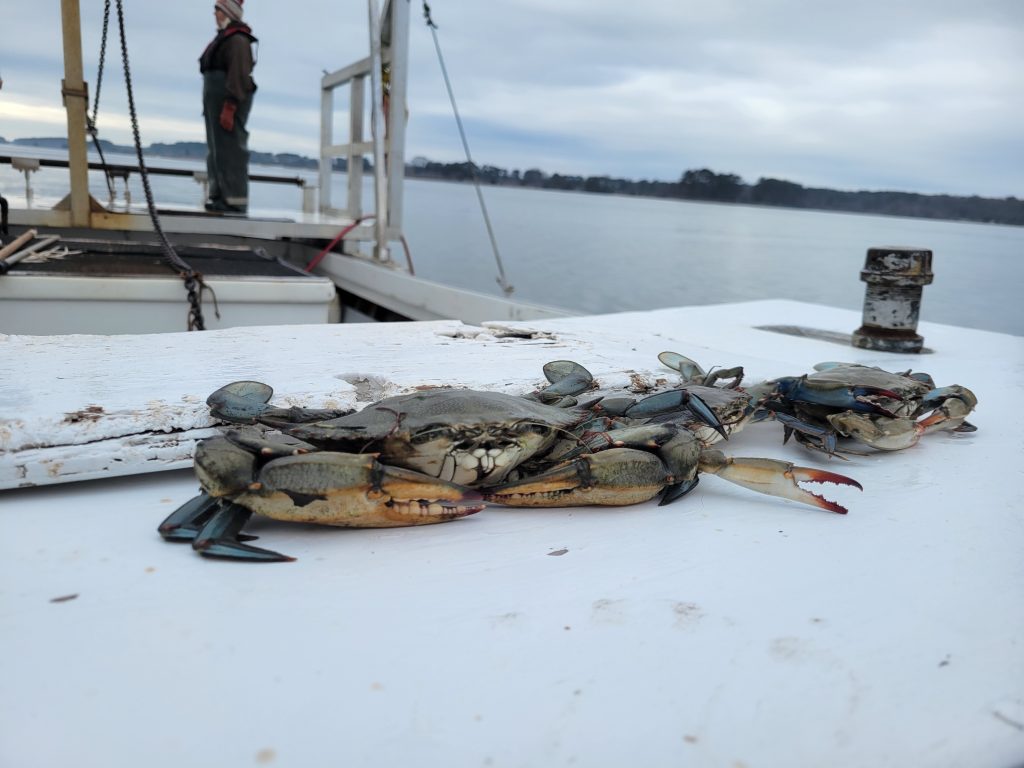

Blue crab populations in the Chesapeake Bay have shown significant improvement according to the latest annual survey results released by state wildlife officials.
The joint Maryland-Virginia winter assessment found an estimated 349 million blue crabs living in the Bay during 2026, representing a substantial 46% jump from the previous year’s count of 238 million crabs.
Most encouraging to marine biologists was the dramatic recovery in young crab numbers. The survey documented 228 million juvenile blue crabs, which represents a remarkable 121% increase compared to last year’s findings. This marks the end of six straight years where juvenile numbers fell short of average levels, with both total and juvenile populations reaching their highest counts since 2019.
Adult male crab numbers also showed positive trends, with researchers estimating 37 million adult males in the Bay – a 43% improvement over the previous year’s survey.
However, adult female populations declined by 25% to 81 million crabs. While this number remains above the management threshold that could trigger regulatory action, it falls below target levels that officials hope to maintain.
“It’s very encouraging to see higher levels of blue crabs and juveniles, especially after a few years of lower juvenile recruitment,” said Mandy Bromilow, DNR’s blue crab program manager. “However, we’ll still have to remain vigilant about the population, given that we have seen declines since 2011.”
The harsh winter conditions took a toll on adult crabs, with mortality rates significantly higher than normal. Approximately 20% of adult males and 12% of adult females died during winter months, compared to typical rates of 9% and 7% respectively based on data from 1996 to 2026. Despite these losses, crab populations have demonstrated resilience following severe winter die-offs in the past, including a recovery in 2014.
These survey findings come as researchers are completing a comprehensive Chesapeake Bay blue crab stock assessment – a detailed analysis examining the species and factors influencing population trends. Initial results suggest more blue crabs exist in the Bay than previously calculated, though the species faces an overall population decline with no clear underlying cause.
Over the coming year, DNR officials plan to work with other jurisdictions, commercial watermen, and scientists to determine how to incorporate the stock assessment findings into their management approach.
The 2011 stock assessment and resulting management changes helped restore the Chesapeake’s blue crab population following more than ten years of low numbers and poor harvest levels. The current assessment will provide crucial updates to ensure management targets, thresholds, and sustainable fishing rates remain appropriate.
Maryland and Virginia have conducted the Winter Dredge Survey collaboratively since 1990, with annual results reviewed to maintain consistent management approaches across state boundaries. During the survey period from December through March, marine biologists use dredging equipment to capture, measure, document and release blue crabs at 1,500 locations throughout the Chesapeake Bay.