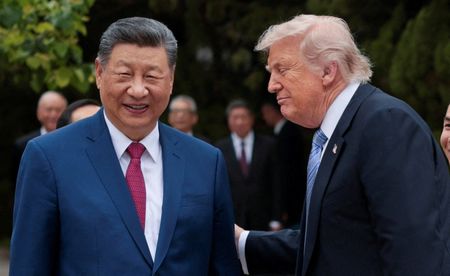
A major German industrial company announced Monday it will shut down an automotive manufacturing facility in Indiana by late March 2025 as part of a broader restructuring effort.
Thyssenkrupp revealed in a Monday statement that its Terre Haute production facility will cease operations as the company overhauls its automotive division.
The company plans to consolidate its chassis manufacturing operations at its Ohio location in Hamilton, according to the announcement.
Approximately 320 workers are currently employed at the Terre Haute facility, which will undergo a gradual shutdown process, the company stated.
The Washington Nationals have launched an investigation following a disturbing incident at Sunday’s baseball game where several individuals displayed a banner promoting a white nationalist website and demanding the deportation of “100+ million” people.
The incident occurred during the team’s daily “Salute to Service” ceremony honoring military personnel and veterans, which takes place before the fourth inning. Three people unfurled the controversial banner in the upper deck along the first-base line at Nationals Park.
When a stadium usher tried to take down the banner, the three individuals holding it pulled it away and quickly left the ballpark, according to a team spokesperson.
Team officials have successfully identified and permanently banned at least one person involved in the incident from Nationals Park. The organization is collaborating with the Metropolitan Police Department for additional investigation but has not revealed the identity of the banned individual.
“The Washington Nationals vehemently condemn discriminatory and hateful rhetoric, and we strive to make our home field a safe space for our fans,” the team said in a statement to multiple media outlets.
Jake Lang, a Jan. 6 rioter and conservative influencer, took credit for the banner on social media.
The Athletic reported that it is not clear at this time how the banner got through security, with the stadium’s magnetometers able to detect weapons but would not flag something like a nylon sign.
The team’s official policy states that “signs, banners and fan activities do not distract from the enjoyment of sports games or other forms of entertainment” and includes specific restrictions on size and materials used.
According to stadium guidelines, the baseball park “is not a forum or place for use by the public at large for assembly and speech, for use by certain speakers or for the discussion of certain subjects.”
Permitted messages must focus on Major League Baseball, Nationals players, management, staff, broadcast entities, or family-friendly occasions like birthdays, anniversaries, and engagements.
The policy specifically prohibits banners and signs containing messages that are “slanderous,” “obscene, vulgar or indecent and inappropriate for viewing by children,” contain “fighting words” likely to provoke conflict, serve commercial purposes, or include “derogatory matter relating to race, ethnicity, color, sex, sexual orientation, gender identity or expression, religion, national origin, ancestry, disability, marital status, age, personal appearance, familial status, familial responsibilities, matriculation, political affiliation, source of income, status as a victim of an intrafamily offense, place of residence or business or any other category protected by D.C. law.”
Stadium management maintains the authority to remove non-compliant banners or require guests to stop displaying them immediately.
The Nationals lost Sunday’s game to the Baltimore Orioles by a score of 7-3.
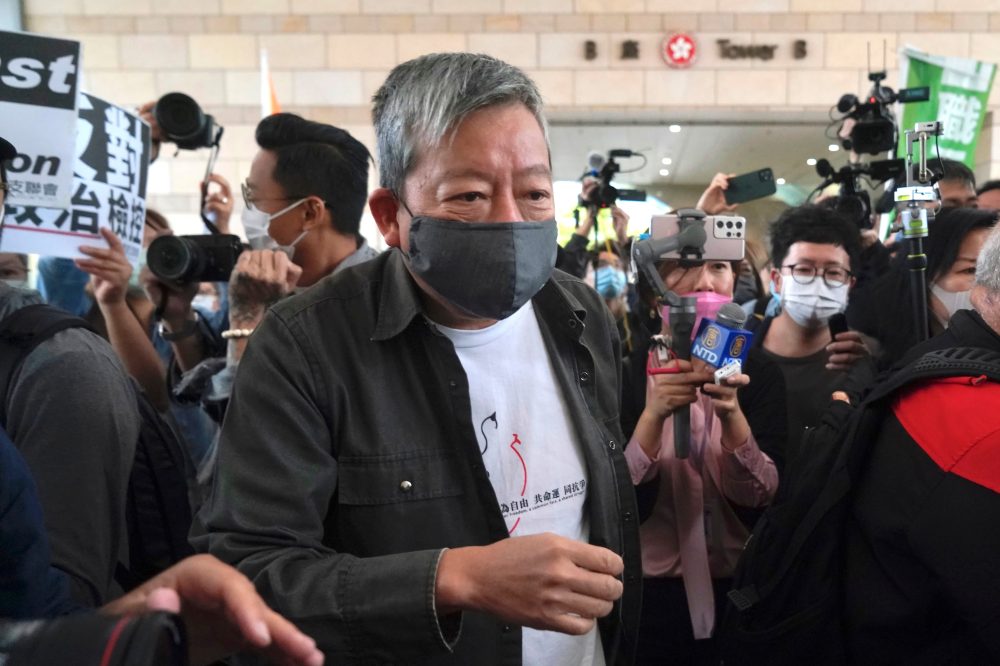
A Hong Kong courtroom concluded closing arguments Monday in a national security case targeting two former leaders who organized large-scale memorial events for the 1989 Tiananmen Square protests.
For many years, Hong Kong remained the sole location within China where citizens could publicly gather to remember the 1989 crackdown. These memorial gatherings were prohibited starting in 2020, and the two former coordinators faced charges in 2021 for allegedly encouraging subversion under national security legislation imposed by Beijing that has effectively silenced the city’s democracy advocacy movement.
The defendants, Chow Hang-tung and Lee Cheuk-yan, previously led the Hong Kong Alliance in Support of Patriotic Democratic Movements of China and have entered not guilty pleas. A conviction could result in prison sentences of up to 10 years.
Legal experts view this prosecution as evidence of diminishing Western-style freedoms in the city, which Beijing had committed to preserving for five decades following Hong Kong’s 1997 transfer from British control. Both Beijing and Hong Kong officials maintain the security legislation is essential for maintaining civic order.
Throughout the proceedings, prosecutors emphasized the alliance’s central goal of “ending one-party rule,” claiming the defendants encouraged others to pursue illegal methods to topple China’s Communist Party leadership. The prosecution maintained the accused were not seeking constitutional reforms.
During Monday’s session, prosecutor Ned Lai stated that speech, assembly and association rights have limitations, claiming Lee and Chow were trying to obscure the case’s focus through human rights defenses.
“The freedoms of speech, association and assembly mentioned by D2 and D4 are not ‘trump cards’ that can override the law,” Lai stated, using the defendants’ court identification numbers.
In earlier court sessions, Lee rejected the notion that “ending one-party rule” meant dismantling Communist Party authority. He contended it represented progress toward democratic governance, allowing citizens to choose their leaders, and that the Communist Party should abandon “dictatorship.”
Chow, a legal professional representing herself, maintained her previous writings were not meant to provoke action or animosity but rather to help Hong Kong residents better understand mainland China, where many citizens also aspire to democratic reforms.
A third co-defendant, Albert Ho, admitted guilt when proceedings started in January. Guilty pleas often lead to reduced sentencing.
The proceedings, originally planned for 75 days, are anticipated to conclude ahead of schedule. However, the presiding judges have not announced when they will issue their decision.
Massive crowds participated in Hong Kong’s yearly Tiananmen memorial events until officials prohibited them in 2020 citing COVID-19 health concerns.
Following the lifting of pandemic restrictions, pro-Beijing organizations held a festival at the former vigil location. Individuals who attempted to honor the event near the site on June 4, the anniversary date, were arrested.
Asian financial markets experienced widespread declines Monday while crude oil prices surged following President Trump’s stark warning to Tehran that time is running out as diplomatic efforts to end the ongoing conflict remain stalled.
American market futures dropped more than 0.6% in early trading.
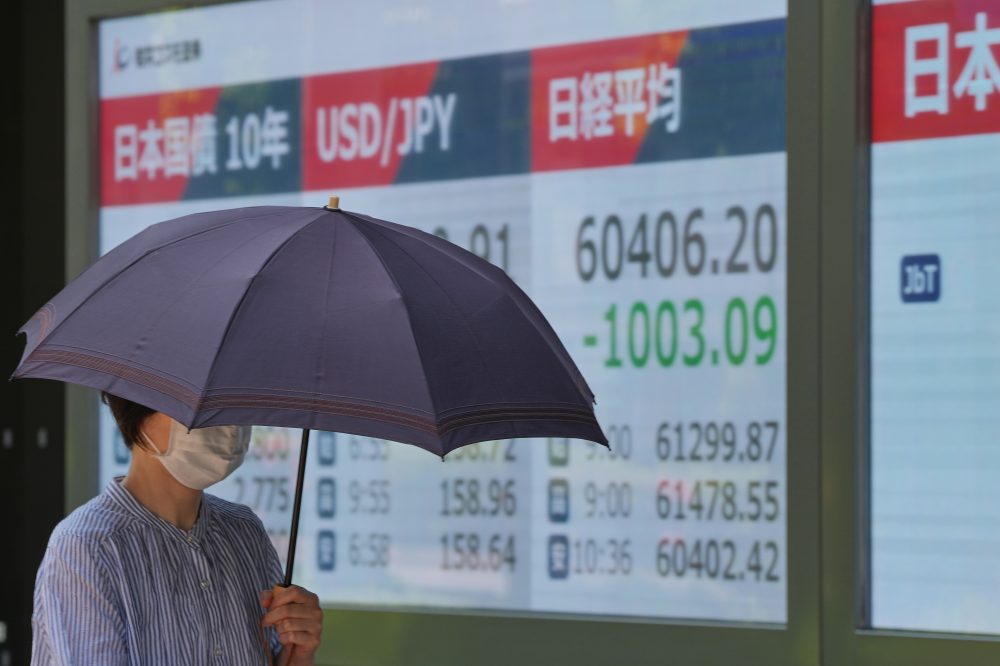
Japanese and South Korean exchanges retreated from recent record highs. The Nikkei 225 in Tokyo declined 0.9% to 60,843.09, with technology stocks leading the downturn after the index hit all-time peaks above 63,000 last week.
Japanese government bond yields on 10-year notes climbed to 2.8%, reaching the highest point since the late 1990s as part of a broader trend toward increased yields. The Bank of Japan’s gradual interest rate increases and rising energy costs have sparked inflation concerns, pushing yields up from approximately 2.55% just a week earlier.
Seoul’s Kospi recovered to gain 0.9% at 7,558.50 after earlier losses during the trading session. The index had crossed 8,000 on Friday, boosted by artificial intelligence-driven technology stock purchases, before declining on investor profit-taking.
Hong Kong’s Hang Seng dropped 1.6% to 25,543.32. Shanghai’s Composite index slipped 0.1% to 4,132.24 following disappointing Chinese retail sales data for April.
Australia’s S&P/ASX 200 fell 1.4% to 8,508.40.
Taiwan’s Taiex decreased 1.1%, while India’s Sensex declined 0.6%.
Crude oil markets rallied after Trump’s social media warning to Iran stating “the Clock is Ticking, and they better get moving, FAST, or there won’t be anything left of them” following discussions with Israeli Prime Minister Benjamin Netanyahu.
Market participants remain wary given Trump’s history of setting Iran deadlines before stepping back, creating uncertainty about the Strait of Hormuz situation and its effects on worldwide energy transportation, including oil and natural gas. The waterway remains largely blocked, while American naval forces have maintained a maritime blockade of Iranian ports since last month.
Weekend drone attacks on a United Arab Emirates nuclear facility heightened concerns about potential conflict escalation.
International Brent crude prices rose 1.9% to $111.31 per barrel, compared to roughly $70 per barrel in late February before the Iran conflict began. U.S. benchmark crude traded 2.3% higher at $107.83 per barrel.
“Re-escalation risks are increasing,” wrote ING commodities strategists Warren Patterson and Ewa Manthey in their research analysis. Despite increased shipping activity near the strait recently, they noted “this can change quickly.”
The analysts also highlighted oil market reactions to the absence of concrete progress on the Iran situation following last week’s closely watched summit between Trump and Chinese President Xi Jinping in Beijing. The White House reported both nations agreed the Strait of Hormuz must stay open.
American officials hoped Beijing might leverage its economic relationships with Iran to facilitate peace negotiations and reopen the strait. Trump mentioned in a recent interview that Xi indicated China “would like to be of help” in ending the conflict, though Beijing’s specific role remains unclear.
U.S. 10-year Treasury yields reached approximately 4.63%, up from 4.47% last Thursday and significantly higher than the nearly 4% level maintained before the Iran conflict.
Friday saw the S&P 500 benchmark drop 1.2% from its previous day’s record. The Dow Jones Industrial Average fell 1.1% while the technology-focused Nasdaq composite lost 1.5%.
Currency markets showed the dollar strengthening to 159.02 Japanese yen from 158.62 yen. The euro traded at $1.1626, up from $1.1622.
A major international bank announced Monday the creation of a $4 billion lending program designed to help Chinese sustainable technology firms expand their operations worldwide.
HSBC unveiled its new Sustainability and Transition Credit Facility to provide financial backing for mainland Chinese businesses working in clean energy, electric vehicles, data centers, and artificial intelligence technologies.
The timing coincides with growing global demand for renewable energy sources like wind and solar power, which have become cost-competitive alternatives to traditional fossil fuels amid ongoing conflicts including the Iran war.
China has established itself as the world’s top producer of solar panels and battery technology, while also leading global deployment of various environmentally-friendly technologies as part of its emissions reduction strategy and international expansion goals.
Market projections indicate significant growth potential in these sectors. Worldwide electric vehicle sales are expected to reach 26 million units by 2026, according to HSBC’s research. Meanwhile, the International Energy Agency forecasts that data center electricity consumption could nearly double to 945 terawatt hours by 2030.
Under the new lending arrangement, HSBC will offer extended credit terms, faster approval processes, and customized financial solutions for qualifying businesses.
“China is home to some of the world’s most dynamic low-carbon companies” that are “setting new benchmarks in high-end manufacturing,” said Natalie Blyth, HSBC’s global head of sustainable finance and transition.
“As they scale internationally, they need financial partners with the global reach and expertise to support them. This facility is designed to provide exactly that,” Blyth said.
Research from Australian group Climate Energy Finance indicates that Chinese companies have pledged over $180 billion toward international clean technology investments since 2023.
The ongoing U.S.-Israeli conflict with Iran has generated financial losses of at least $25 billion for businesses worldwide, with costs continuing to mount, according to a new analysis.
An examination of corporate announcements since the conflict began reveals the widespread economic impact affecting companies across the United States, Europe and Asia. Businesses are dealing with escalating energy costs, disrupted supply chains and blocked trade routes resulting from Iran’s control over the Strait of Hormuz.
The analysis found that no fewer than 279 corporations have pointed to the war as a reason for implementing protective measures to reduce financial damage, such as raising prices and cutting production. Additional companies have paused dividend payments or stock buybacks, temporarily laid off workers, implemented fuel surcharges, or requested emergency government aid.
This disruption represents another major challenge for global business following the COVID-19 pandemic and Russia’s invasion of Ukraine, leading to reduced expectations for the remainder of the year with little indication that a peace agreement is near.
“This level of industry decline is similar to what we have observed during the global financial crisis and even higher than during other recessionary periods,” Whirlpool CEO Marc Bitzer told analysts after it slashed its full-year forecast in half and suspended its dividend.
As economic growth decelerates, companies’ ability to raise prices will diminish and fixed expenses will become more difficult to manage, analysts warn, putting profit margins at risk in the second quarter and beyond. Continued price increases are expected to drive inflation higher, further damaging consumer confidence that is already weakened.
“Consumers are holding back on replacing products and rather repairing them,” Bitzer said.
The home appliance manufacturer is among many affected companies. Businesses including Procter & Gamble, Malaysian condom maker Karex and Toyota have issued warnings about the growing financial impact as the conflict reaches its third month.
Iran’s closure of the Strait of Hormuz — the world’s most important energy transit point — has driven oil prices beyond $100 per barrel, representing an increase of more than 50% since before the war began.
The blockade has increased shipping expenses, limited access to raw materials and eliminated trade routes essential for moving goods. Availability of fertilizers, helium, aluminum, polyethylene and other crucial materials has been affected.
Twenty percent of companies examined in the review — which produce items ranging from cosmetics to tires and detergent, plus cruise operators and airlines — have reported financial damage from the war.
Most affected companies were located in the UK and Europe, where energy expenses were already high, while nearly one-third came from Asia, demonstrating those areas’ heavy dependence on Middle Eastern oil and fuel products.
For comparison, hundreds of companies had reported more than $35 billion in expenses by October last year related to U.S. President Donald Trump’s 2025 tariffs.
Airlines represent the largest portion of measured war-related expenses, accounting for almost $15 billion, as jet fuel costs have nearly doubled. As the supply chain problems continue, additional companies from various sectors are raising concerns. Japan’s Toyota projected a $4.3 billion impact while P&G estimated a $1 billion after-tax profit loss.
Fast-food chain McDonald’s announced earlier this month that it anticipated higher long-term cost inflation from continuing supply-chain problems, the type of warning that had previously been limited to industrial company earnings calls.
The increase in fuel costs is reducing demand from lower-income consumers, CEO Chris Kempczinski explained, noting that “elevated gas prices are the core issue we’re seeing right now.”
Nearly 40 companies in the industrial, chemical, and materials sectors have announced price increases due to their dependence on Middle Eastern petrochemical supplies.
Newell Brands Chief Financial Officer Mark Erceg stated earlier this month that each $5 increase in oil prices per barrel adds approximately $5 million in expenses.
German tire manufacturer Continental anticipates losses of at least 100 million euros ($117 million) starting in the second quarter because rising oil prices are making raw materials more costly.
Continental executive Roland Welzbacher explained earlier this month that it would require three to four months before impacting the company’s financial statements. “It probably hits us late in Q2, and then it will come in full-blown in the second half,” he said.
Corporate earnings remained strong during the first quarter, helping explain why major stock indices like the S&P 500 have reached record highs despite rising energy costs and increasing bond yields due to inflation concerns.
Since March 31, forecasts for second-quarter net profit margins have been reduced by 0.38 percentage points for S&P 500 industrial companies, 0.14 percentage points for consumer discretionary firms and 0.08 percentage points for consumer staples, according to FactSet data.
European companies listed on the STOXX 600 will experience margin pressure starting in the second quarter, as passing along additional costs will become more challenging and hedging protection ends, Goldman Sachs analysts noted.
Consumer-oriented industries including automobiles, telecommunications, and household goods are experiencing negative forecast adjustments of more than 5% for the next 12 months, according to Gerry Fowler, UBS head of European equity strategy.
In Japan, analysts have reduced second-quarter earnings growth estimates to 11.8% since late March, cutting previous projections in half.
“The true earnings hit has not yet materialized in most companies’ results,” said Rami Sarafa, CEO of Cordoba Advisory Partners.
Global financial markets are grappling with escalating energy costs and inflation fears as diplomatic efforts between the United States and Iran continue to stall. Market participants had previously anticipated that both nations would reach an agreement quickly, but Tehran continues to deploy attack drones while President Trump communicates through social media in capital letters.
The critical Strait of Hormuz shipping route remains largely blocked, with only a handful of vessels managing to pass through compared to the typical 136 ships per day before the conflict began. This dramatic reduction in oil transport has caused global petroleum reserves to decline rapidly, with industry experts projecting that one billion barrels of crude oil will be lost by May’s end.
Energy analysts warn that actual supply shortages will likely emerge in June, requiring significant demand reduction to stabilize markets through substantially higher prices. Brent crude has climbed back above $111 per barrel, while September contracts have exceeded $100.
The energy price surge threatens to worsen global inflation just as the summer driving season approaches, and economic data from China already shows signs of strain. Chinese retail sales increased by only 0.2% in April, well below the anticipated 2.0% growth, while manufacturing output also disappointed expectations.
Bond markets have continued their decline as 10-year Treasury yields reached 4.631%, their peak since February 2025, and 30-year yields hit 5.159%. These elevated borrowing costs will expand Washington’s already substantial budget deficit, combining debt service concerns with inflation pressures.
The current administration has shown little interest in fiscal restraint, instead proposing a $1.5 trillion defense budget while spending billions on construction projects including a ballroom and a triumphal arch.
These interconnected challenges involving conflict, energy prices, inflation, interest rates, and government debt will dominate discussions when G7 finance ministers and central bankers convene in Paris today. The meeting will also serve as an early test for new Fed Chair Kevin Warsh as he navigates between inflation management and President Trump’s preference for lower interest rates.
Rising yields are also increasing the discount rate applied to future corporate profits, putting pressure on already elevated stock valuations in certain sectors. Although earnings reports have generally been positive, Citi analysts note that much of the improvement stems from temporary gains, including tariff refunds that benefit companies rather than the customers who originally paid them.
According to Citi’s analysis, just 20 companies accounted for nearly all positive earnings surprises. When excluding artificial intelligence and energy sectors, S&P 500 earnings projections remained unchanged for 2027.
This backdrop sets high stakes for AI leader Nvidia’s earnings announcement on Wednesday, where market expectations are extremely elevated. Wall Street anticipates revenue of approximately $78.5 billion, representing an 80% year-over-year increase, with adjusted earnings per share between $1.75 and $1.78. Despite beating forecasts in its previous report, Nvidia’s stock declined in after-hours trading.
Monday’s key market-moving event includes the G7 finance ministers and central bankers meeting hosted by France in Paris.
An artificial intelligence company called Anthropic plans to meet with the Financial Stability Board to address cybersecurity weaknesses in the worldwide financial system that were discovered by its newest AI model called Mythos, according to a Financial Times report published Monday.
Sources familiar with the planned discussion provided the information to the Financial Times, though Reuters was unable to immediately confirm the report.
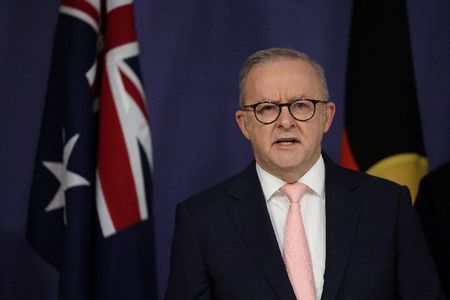
SYDNEY, May 18 – Australia’s center-left administration is confronting significant public opposition following the implementation of sweeping investment tax reforms in their recent budget, marking a departure from campaign commitments, two major polling surveys reveal.
The administration announced last week plans to restrict capital gains tax benefits and negative gearing policies on investment properties as part of efforts to tackle generational inequality in wealth distribution.
Critics have argued these policies have historically favored older, more affluent property investors in the housing market.
A Newspoll survey taken following the budget announcement showed 47% of respondents viewed the measures as harmful to economic growth.
Additionally, 60% of those polled described the housing policy changes as either a “step in the wrong direction” or said they would “make no difference.”
The budget received a negative 25-point net approval score, marking it as the least popular in recent decades according to the poll of 1,252 respondents.
Despite the budget’s poor reception, the Labor government’s primary support level held steady at 31%. Prime Minister Anthony Albanese maintained his position as voters’ preferred leader, though his approval rating remained at negative 17%.
Opposition leader Angus Taylor saw his approval rating climb one point to negative 12%, while support for the conservative-coalition opposition fell one point to 20%. The far-right One Nation party gained 3 points, reaching 27% support.
A second Resolve poll surveying 1,800 voters showed the budget had a negative impact on Labor’s primary support, which dropped 3 points to 29%.
One Nation benefited from this shift, gaining 2 points to reach 24%, while the coalition remained at 23%.
In the Resolve survey, Taylor emerged as voters’ preferred prime minister choice, leading Anthony Albanese 33% to 30%.
The budget proved particularly unpopular among older demographics, property investors, and homeowners, with roughly 40% in each group stating that Labor’s broken campaign pledges negatively affected their opinion of the party.
Younger Australian citizens and renters showed less opposition to the proposed changes, according to polling data.
Property investment tax reform represents a politically challenging issue in Australia. Labor had promised during their 2025 election campaign not to alter housing-related taxes before winning a decisive second term.
The actor who portrayed Jack Ryan makes his comeback as the CIA analyst in ‘Jack Ryan: Ghost War’ on Prime Video, while the creators behind ‘Stranger Things’ are executive producing a Netflix series featuring retirement home residents fighting creatures. These are among the fresh television shows, movies, music releases and video games arriving on streaming platforms this week.
Additional streaming highlights selected by entertainment journalists include a gender-focused comedy featuring Sacha Baron Cohen and Rosamund Pike called ‘Ladies First,’ the conclusion of ‘The Chi’ with its eighth season, and a comprehensive Lego Batman video game that serves as a tribute to the Dark Knight’s history.
— Following a four-year gap since the Tom Clancy spy series concluded, John Krasinski reprises his role as Jack Ryan in ‘Jack Ryan: Ghost War’ (Prime Video, Wednesday). This marks the sixth movie and third reimagining of the Jack Ryan property. Returning cast members include Wendell Pierce, Michael Kelly and Betty Gabriel.
— ‘Ladies First’ (Netflix, Friday, May 22) features Sacha Baron Cohen and Rosamund Pike in a comedy about gender roles. Cohen portrays a sexist individual who awakens in an alternate reality where women hold power. The cast also includes Charles Dance, Emily Mortimer and Richard E. Grant.
— Nominated for an Academy Award in the animated feature category, ‘Arco’ (Hulu, Friday, May 22) presents a vibrant French adventure involving time travel. The story follows a boy called Arco from the year 2932 who accidentally journeys to 2075, where a young girl discovers and befriends him in a future world featuring robotic caregivers and ongoing environmental catastrophes. The reviewer described it as an animated and imaginative story that ‘directly confronts ecological apocalypse and yet still finds a thrillingly optimistic note to end on.’
— Last December, Quentin Tarantino’s ‘Kill Bill Vol. 1’ and ‘Kill Bill Vol. 2’ were combined into a single film. Following its cinema release, the merged version ‘Kill Bill: The Whole Bloody Affair’ arrives Friday, May 22, on Peacock. The connecting element is a 7½ minute animated segment originally removed from the initial release.
— Less than twelve months before the Grammy Awards transition to ABC for the coming decade, CBS and the Recording Academy have collaborated again for a two-hour special presentation. ‘Forever Young: A Grammy Salute to Rod Stewart Live’ broadcasts Tuesday on CBS. The program combines concert footage with interviews, featuring archive material and backstage moments — perfect entertainment for Rod Stewart enthusiasts. Paramount+ Premium subscribers can watch it live or on-demand through CBS stations; Paramount+ Essential members can stream it the following day.
— British singer-songwriter Maisie Peters enhances her narrative abilities on her latest album, ‘Florescence,’ releasing Friday. The record serves as perfect background music for those experiencing romance — or anyone susceptible to her folk-pop appeal.
— Previously, Lowertown — the New York-based duo of Olivia Osby and Avsha Weinberg originally from Atlanta — were a promising bedroom pop group perhaps overly influenced by indie rock figure Alex G, contracted with Dirty Hit Records connected to the 1975. Friday marks the release of their new album, ‘Ugly Duckling Union,’ on Summer Shade Records, representing their finest work yet. Rough melodies have evolved into catchier hooks (the compelling love track ‘I Like You A Lot’), folk-jazz experiments are crafted in stream-of-consciousness style featuring harmonica and 12-string guitar (‘Big Thumb’), story-driven verses are exchanged between performers for heightened emotion (‘Worst Friend.’) Fans of lo-fi, indie rock should take notice — this could become one of the year’s standout releases.
— In ‘You’re Killing Me,’ Brooke Shields portrays a successful author who collaborates with a true crime podcast presenter to investigate a murder case. The six-part series premieres Monday on Acorn TV.
— Emmy-winning actress Tatiana Maslany features in ‘Maximum Pleasure Guaranteed’ as a struggling divorced woman who observes a criminal act happening live through a webcam. Jake Johnson (‘New Girl’) appears as her former spouse. The initial two episodes launch Wednesday on Apple TV.
— The creators behind ‘Stranger Things’ have shifted from developing a teen-centered narrative to executive producing a show about a different age group. Netflix’s ‘The Boroughs,’ premiering Thursday, chronicles inhabitants of a peaceful retirement community who unite to fight monsters. The cast includes Geena Davis, Bill Pullman, Alfred Molina, Alfre Woodard and Denis O’Hare.
— ‘The Chi’ concludes with its eighth and final season Friday, May 22 on Paramount+. Developed by Lena Waithe, the series tells a coming-of-age tale about South Side Chicago residents attempting to overcome violence and institutional racism.
— The Dark Knight has consistently delivered powerful action, but Lego Batman excels at breaking things apart. ‘Lego Batman: Legacy of the Dark Knight’ seeks to offer a comprehensive career overview, incorporating aspects from multiple decades of films and television programs. Classic villains including the Joker, the Penguin, Two-Face and Bane create their typical chaos, and players struggling with these antagonists can collaborate with a partner controlling Robin, Batgirl or Catwoman. Developer TT Games specializes in highlighting the humorous aspects of Bruce Wayne and his allies, and this interpretation of Gotham City represents the studio’s most elaborate project. Respond to the call Friday, May 22, on PlayStation 5, Xbox X/S or PC.
— The adorable dinosaur Yoshi might have stolen scenes in April’s ‘The Super Mario Galaxy Movie,’ but he’s been a featured character on Nintendo systems for years. In ‘Yoshi and the Mysterious Book,’ he discovers a speaking encyclopedia called Mr. E, with each double-page section transforming into a realm for the character to explore. Yoshi maintains his ability to use his tongue against foes — but can also allow friendly creatures to join him and utilize their abilities. The game offers a pleasant journey designed for younger players, though adults will enjoy the beautiful graphics. Begin the adventure Thursday on Switch 2.
— Following visits to the United States, Europe, Australia and Mexico, Microsoft’s ‘Forza Horizon 6’ racing game is finally speeding into a major automotive culture destination: Japan. The location offers everything from coastal paths to mountain highways to Tokyo’s illuminated streets. Beyond numerous racing competitions, both on-road and off-road, players can practice tricks, make deliveries or gather fast-food characters. You might even encounter a massive robot. With 550 authentic vehicles available for collection, filling your collection will require months. The race begins Tuesday on Xbox X/S and PC.
Beneath bright stage lighting, hundreds of transgender women prepared their traditional sarees, placed fresh flowers in their hair, and awaited their turn to appear before enthusiastic audiences at one of India’s most significant transgender community events.
Taking place annually in the village of Koovagam in Tamil Nadu, southern India, this festival combines religious devotion with celebration of beauty. During daytime hours, transgender women visit a temple to pay tribute to a Hindu god through ceremonies based in ancient stories and mourning. When evening arrives, they honor glamour, personal identity, and happiness while participating in a colorful beauty competition.
The event revolves around the Hindu story of Aravan, a fighter from the religious text Mahabharata who volunteered to die before combat but wanted to wed beforehand. The tale tells how the Hindu god Krishna changed into female form to marry Aravan. Numerous transgender women throughout India view this story as an uncommon holy acknowledgment of changing gender identity, and annually recreate this wedding during the festival.
This gathering, which attracted hundreds of transgender women last month, has evolved into both a religious journey and a strong statement of identity in a nation where many transgender individuals continue experiencing prejudice, attacks and rejection.
The event also occurred during a period of worry for the transgender community. Many participants came while growing increasingly concerned about a disputed national proposal that advocates fear might weaken previously secured rights for India’s transgender population by demanding medical committee permission for official gender recognition.
For numerous participants, the festival held deep spiritual meaning.
Shanshi, who uses only one name, has attended the festival for five years and called Aravan “God for all transgender people.”
“When we gather here, it is for one reason — to worship Lord Aravan by getting married to him,” she said, after a Hindu priest tied a sacred thread around her neck, symbolically marrying her to the deity.
Other attendees discussed violence and difficulties outside the festival location.
Nazariya Kutty, 28, said she was forced out of her family home as a teenager and later survived domestic abuse and sexual assault in a marriage she hoped would bring stability. She rebuilt her life through delivery jobs before reopening her travel business.
Now back at Koovagam with friends, she said the rituals give her strength.
“I am waiting to be the bride of Lord Aravan,” Kutty said. “I have faith he will restore whatever I have lost.”
Despite the festival’s spiritual intensity, the mood stayed festive. The village of Koovagam also became a lively beauty competition, where style and community became the main focus.
Behind the scenes at this year’s beauty contest, participants wearing sparkling sarees shared mirrors and cosmetics before walking onto the platform as music rang throughout the village.
For 24-year-old Surya Kutty, earning the Miss Koovagam title represented a life-changing moment after years of attending the festival with close companions.
“This win has given me the confidence to participate in national and international events,” she said.
Beyond the competition and ceremonies, many visitors called the event an unusual place of acceptance for a community that still encounters obstacles to employment, shelter and medical care throughout India.
Surya said the festival creates a rare sense of belonging.
“Here we meet other transgender people and feel loved and cared by everyone,” she said. “These are special days meant exclusively for us.”
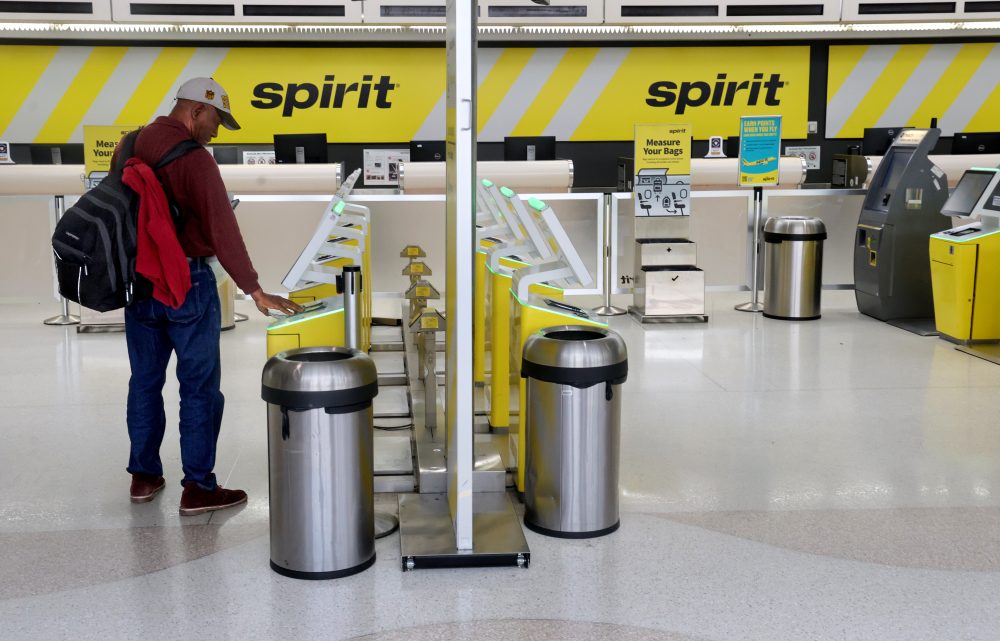
Following Spirit Airlines’ abrupt overnight closure, an attorney representing the bankrupt budget airline appeared before a federal judge to express regret to cost-conscious travelers who may now find it difficult to locate reasonably priced flights.
“We apologize most specifically for those Americans who may now be priced entirely out,” Spirit lawyer Marshall Huebner said in court, thanking all the passengers who relied on the airline during its 34-year run, many of whom, he said, “could not otherwise have afforded air travel.”
The May 3 collapse of Spirit isn’t the only challenge facing vacation planners just one week before Memorial Day traditionally kicks off the busy summer travel period. Escalating jet fuel expenses linked to the Iran conflict have driven up ticket prices and related charges throughout the commercial aviation sector. Two remaining budget carriers in the United States have just completed a merger.
The uncertain future for affordable air travel demonstrates how challenging it has become for budget, bare-bones airlines to survive while facing volatile fuel expenses, inflation and intensifying competition. While low-cost airlines attract customers focused solely on ticket prices, established carriers can more readily generate income to counter fuel expenses through first-class cabins, loyalty programs, business travel contracts, extra fees and sophisticated pricing systems.
“Dynamic pricing has taken away one of the last structural advantages that low-cost carriers had,” said Shye Gilad, a former airline captain who now teaches at Georgetown University.
For many years, budget carriers succeeded by providing fares that established airlines frequently couldn’t offer without losing profits. However, that advantage has diminished as the “big three” — American, Delta and United — became more skilled at customizing prices for different passengers, and as JetBlue, Southwest and other airlines that historically marketed themselves as cheaper options started pursuing wealthier customers.
Currently, major airlines can offer a small number of no-frills seats at Spirit-equivalent prices while continuing to charge higher amounts for regular and premium tickets throughout their aircraft. This development has made it more difficult for budget airlines to compete based purely on cost.
“They can’t just be the cheapest airline anymore,” Gilad said. “They have to be the smartest low-cost airline.”
Similar to gasoline and diesel costs, jet fuel prices have increased since the Iran war disrupted Middle East oil deliveries 11 weeks ago. This pressure led the Association of Value Airlines, a trade organization representing Allegiant Air, Avelo Air, Frontier Airlines, Spirit Airlines and Sun Country Airlines, to request $2.5 billion in emergency financial assistance from the administration in late April.
Airlines for America, the industry group for Alaska Airlines, American, Delta, JetBlue and Southwest, rejected the proposal, arguing that federal assistance would create an unfair competitive advantage for budget carriers.
“Government intervention on behalf of those airlines would punish other airlines that have engaged in self-help in order to deal with increased costs and reward airlines who haven’t made those tough decisions,” Airlines for America said in a statement. “And, in the long-term, sustaining businesses that cannot earn their cost of capital harms competition and consumers by making it more difficult for other airlines to compete.”
Transportation Secretary Sean Duffy denied the request on the same day Spirit ceased operations.
Prior to the recent fuel cost increases, industry consolidation was already occurring among budget airlines. Alaska Airlines finalized its $1 billion acquisition of Hawaiian Airlines in September 2024 after both companies agreed to preserve service levels on important routes within Hawaii and between Hawaii and the mainland United States where they faced limited competition.
Spirit had been an unsuccessful takeover target for both Frontier and JetBlue as its financial losses grew following the coronavirus pandemic.
Allegiant announced last week it had completed its approximately $1.5 billion purchase of Sun Country, a transaction initially revealed in January. The merged airline combines passenger service with Sun Country’s freight operations and charter business serving sports teams, casinos and the U.S. Department of Defense.
“Consolidation is a signal” of weakness in the industry, Gilad said. “If you can remove a competitor and improve your product offering, you might be able to eke out more profit.”
Other analysts point to the variety within the budget airline industry, a characteristic that could help some carriers better withstand rising fuel costs and market disruptions.
“Budget airlines are a pretty peculiar creature,” Vikrant Vaze, an aviation systems expert at Dartmouth College’s engineering school, said, describing a category that has encompassed struggling carriers like Spirit to giants like Southwest Airlines, which grew from a low-cost pioneer into one of the largest U.S. airlines.
“Even though they can be clubbed together as budget airlines, if you want a big umbrella term, they’re very different from each other,” Vaze said. “They have very different levels of budget-ness.”
Allegiant’s emphasis on vacation travel focuses on smaller airports with reduced direct competition. JetBlue, a hybrid low-cost carrier, relies more heavily on premium seating and loyalty perks than Spirit ever did.
Frontier most closely resembles Spirit’s approach as an ultra low-cost carrier, though industry analysts say it began this volatile period with stronger cash reserves and could gain from Spirit’s departure. The airline has already started expanding into former Spirit-dominated markets including Las Vegas, Detroit and the Florida cities of Orlando and Fort Lauderdale.
Gilad recognizes similarities to his own background working as a pilot and flight-training instructor at Independence Air, a brief low-cost airline that previously operated as a regional carrier for United and Delta. The airline, which started in mid-2004 as conflict between U.S.-led forces and insurgents in Iraq caused fuel prices to spike, closed during bankruptcy proceedings in January 2006.
“They burned through almost $200 million in 18 months,” Gilad said. “It was just that quick that they were gone.”
He noted that the same underlying pressures continue today, but fewer budget airlines remain to absorb them.
MANILA, May 18 – The Philippine Senate was scheduled to assemble on Monday as an impeachment tribunal that may determine Vice President Sara Duterte’s political future, with an intense confrontation between competing political factions expected to dominate the proceedings.
The impeachment proceedings represent a crucial moment that could either destroy Duterte’s aspirations for the 2028 presidency or bolster her standing as the primary candidate to replace her political adversary, President Ferdinand Marcos Jr, who cannot seek reelection under constitutional restrictions.
The trial unfolds during a period of significant political upheaval, occurring just days following disorder and gunfire in the upper chamber and a potentially game-changing shift in Senate leadership, both connected to the return from concealment of a pro-Duterte senator sought by the International Criminal Court.
As legislators prepared to vote on Duterte’s impeachment in the lower chamber on May 11, politician Ronald “Bato” dela Rosa emerged from hiding to deliver a pivotal Senate vote installing Duterte supporter Alan Peter Cayetano as Senate president, making Cayetano the officer who will oversee the impeachment proceedings.
Duterte faces her most significant political challenge and could be prohibited from holding public office if found guilty in the trial, while her father, former President Rodrigo Duterte, awaits his own ICC trial regarding his lethal “war on drugs” campaign.
Sara Duterte, 47, stands accused of improperly using government funds, accumulating unexplained assets and making death threats against Marcos, the first lady and a former House speaker. She maintains her innocence.
The trial’s start date remains uncertain. Marcos has kept his distance from her impeachment proceedings, describing it as a matter for the legislature to handle.
Both Marcos and Duterte come from influential political dynasties and campaigned as allies in the 2022 election. However, their partnership quickly deteriorated, resulting in a bitter split and Marcos turning her father over to the ICC.
Political experts suggest the Senate leadership transformation sparked by dela Rosa’s comeback may have altered the power dynamics in a chamber that includes Duterte supporters and allied politicians among its 24 members, who will act as jurors.
A guilty verdict requires support from two-thirds of the Senate.
“Given that we now have a new majority, thanks to the efforts of Senator Bato, it would make prosecuting Vice President Sara in the impeachment court a little more difficult,” said Ederson Tapia, public administration professor at the University of Makati.
Dela Rosa’s emergence after six months underground generated dramatic events that captivated the Philippines, with the former police commander sheltering for days in the heavily protected Senate before warnings of his pending arrest caused chaos, shooting and his departure hours afterward.
As the primary enforcer of the former president’s anti-drug campaign, dela Rosa, 64, faces accusations of crimes against humanity. The Marcos government confirmed Friday it will pursue his arrest.
Dela Rosa, whose location remains unknown, rejects the charges and has requested a Supreme Court order to prevent his detention, claiming no legal foundation exists to execute a warrant from an international tribunal. The solicitor-general disputes this argument.
Ukrainian officials reported Monday that Russian forces conducted overnight drone and missile strikes on May 18, targeting the southern city of Odesa and the southeastern city of Dnipro, leaving 11 people wounded, including two children.
Drone strikes hit residential areas, a school and a kindergarten in Odesa, the major Black Sea export port, according to Serhiy Lysak, who heads the local military administration and posted the information on the Telegram messaging platform.
“An 11-year-old boy and a 59-year-old man were injured in the attack,” he added.
In a separate assault, Russian missiles struck the southeastern Ukrainian city of Dnipro, wounding nine individuals including a 10-year-old boy, regional governor Oleksandr Hanzha reported via Telegram.
Meanwhile, Russian officials said drones were intercepted overnight in the southern Rostov region, including strikes near the port city of Taganrog along the Sea of Azov, according to regional governor Yuri Slyusar’s Telegram post.
Previous reports from Sunday indicated that at least four people died, three in the Moscow region, following what officials described as Ukraine’s largest overnight drone assault on the Russian capital in over a year.
Reuters noted it could not independently confirm battlefield accounts. Both nations deny intentionally striking civilian targets.
Carson Benge delivered the decisive hit in the 10th inning for the second time in seven days as the New York Mets completed a remarkable comeback from a five-run deficit to defeat the visiting New York Yankees 7-6 in the final game of this season’s opening Subway Series on Sunday.
Luis Torrens contributed a crucial two-run pinch-hit double in the sixth inning when the Mets trailed 6-1, and Tyrone Taylor sent the game to extra innings with a three-run blast in the ninth off David Bednar. Devin Williams (3-1) induced an inning-ending double play to set up the Mets’ opportunity to win in the 10th.
Freddy Peralta navigated six walks to surrender three runs on two hits across five innings for the Mets, while Yankees starter Elmer Rodriguez gave up one run on five hits in 4 1/3 innings.
Tim Hill (0-1) allowed Benge’s decisive hit. Anthony Volpe recorded three RBIs for the Yankees, and Ben Rice connected for his 15th home run of the campaign. The Yankees concluded their nine-game road trip with a 2-7 record.
White Sox 9, Cubs 8 (10 innings)
Edgar Quero connected on a walkoff two-run blast to propel the host Chicago White Sox to an extra-innings triumph in the deciding game against the Chicago Cubs.
Both Quero and Tristan Peters, who launched a go-ahead three-run homer in the eighth, hit their first home runs of the season. Quero and Andrew Benintendi each collected three hits for the White Sox, who closed their homestand with a 7-2 mark. Tyler Davis (2-1) surrendered one unearned run on three walks in the top of the 10th.
Alex Bregman recorded two hits and two RBIs for the Cubs. Michael Conforto also contributed two hits, including a game-tying three-run blast in the ninth. Ryan Rolison (3-1) gave up the walkoff homer.
Braves 8, Red Sox 1
Austin Riley and Mike Yastrzemski both homered to power Atlanta to a victory over visiting Boston in the deciding game of their series.
Grant Holmes (3-1) allowed five hits and one walk while fanning four across six innings. Drake Baldwin joined Riley and Yastrzemski in supporting Holmes by contributing two RBIs each. The Braves dominated the Red Sox despite being outhit nine to eight.
Brayan Bello (2-5) surrendered seven runs on eight hits across five innings. He struggled immediately, requiring 30 pitches in the opening frame while allowing a three-run homer to Riley. Nick Sogard delivered Boston’s only run with a ninth-inning double that prevented Atlanta’s shutout.
Rays 6, Marlins 3
Taylor Walls’ fourth-inning triple drove in three runs for Tampa Bay, which defeated visiting Miami and captured two of three games in the rivalry weekend series in St. Petersburg, Fla.
Drew Rasmussen (4-1) allowed seven hits and two walks across 5 1/3 innings, but the Rays right-hander permitted just two runs while earning his second straight victory. Junior Caminero and Yandy Diaz homered against Marlins pitcher Eury Perez (2-6), whose personal losing streak reached five starts. Caminero’s solo shot, his team-leading 12th homer of the season, came in the first to give the Rays an early advantage.
Miami took the lead with a two-run third inning thanks to RBI singles from Xavier Edwards (2-for-5) and Otto Lopez (2-for-4).
Phillies 6, Pirates 0
Zack Wheeler threw seven scoreless innings to outpitch Paul Skenes as visiting Philadelphia completed a three-game sweep of Pittsburgh with a shutout victory.
Wheeler (3-0) allowed only three singles and a double with one walk and eight strikeouts while reducing his ERA to 1.99 in five starts. Bryce Harper and Bryson Stott homered for the Phillies to extend their winning streak to four games. Philadelphia is now 15-4 since Don Mattingly replaced Rob Thomson as manager late last month.
Skenes (6-3) surrendered five earned runs — his highest total since Opening Day — across five-plus innings while giving up six hits and a walk. He received no offensive support from the Pirates, who managed just five hits and were shut out for the second consecutive day.
Blue Jays 4, Tigers 1
Kevin Gausman delivered six shutout innings in a rebound effort and Vladimir Guerrero Jr. homered and scored twice as visiting Toronto defeated struggling Detroit.
Gausman allowed only four hits without issuing a walk, one start after surrendering seven runs (six earned) and 10 hits in 4 2/3 innings against Tampa Bay on Monday. Daulton Varsho had a double and triple while scoring twice and driving in one run after delivering a game-winning single Saturday.
Detroit starter Jack Flaherty (0-5) couldn’t prevent the Tigers from losing their 10th game in 12 attempts, allowing four runs and five hits across six innings. Jahmai Jones produced the Tigers’ lone run with a pinch-hit groundout.
Orioles 7, Nationals 3
Gunnar Henderson collected four hits, including a home run, and Baltimore defeated host Washington to prevent the three-game sweep.
Henderson had a solo blast, double and two singles, while Coby Mayo and Colton Cowser also homered for Baltimore, which had dropped three of four and scored three runs or fewer in eight of its previous nine games. Anthony Nunez (2-0) pitched 1 1/3 scoreless innings in relief.
Jacob Young homered for the Nationals, who were seeking their first home series sweep of the season. James Wood contributed two hits and a walk.
Guardians 10, Reds 3
Cleveland launched six home runs, including two from Kyle Manzardo, to dominate the deciding game against in-state rival Cincinnati.
The Guardians scored all their runs via the long ball. Brayan Rocchio, Chase DeLauter, Jose Ramirez and Angel Martinez also went deep for Cleveland, which received six solid innings from Gavin Williams (6-3), ending his two-start losing streak.
Elly De La Cruz hit his team-leading 11th homer for the Reds, who watched starter Brady Singer (2-4) get tagged for five runs on seven hits (including three homers) across four innings.
Rangers 8, Astros 0
Jake Burger contributed two extra-base hits, including a two-run double that sparked a five-run seventh inning, and Nathan Eovaldi pitched seven shutout innings as visiting Texas prevented a series sweep with a shutout of Houston.
Burger started the scoring with a two-run homer in the fifth. Kyle Higashioka followed Burger’s seventh-inning RBI double with his own two-run single and capped the scoring with a solo homer in the ninth. Eovaldi (5-4) surrendered five hits and two walks with a season-high-tying eight strikeouts.
Astros right-hander Peter Lambert (2-4) traded zeros with Eovaldi through four innings. He gave up five runs on three hits over six-plus innings. Zach Dezenzo had two of Houston’s five hits.
Giants 10, Athletics 1
Harrison Bader launched a grand slam and Luis Arraez homered for the second time in three games to help San Francisco capture its series against the A’s in West Sacramento, Calif.
Bader’s second career grand slam came during an eight-run eighth inning as the Giants broke open a tight contest. Arraez collected three hits and went 8-for-12 with five runs in the series, which San Francisco won after losing the opener.
San Francisco’s Adrian Houser (2-4) worked six solid innings and three relievers completed the game. Houser surrendered one run and four hits. Athletics starter Jeffrey Springs (3-4) suffered a tough-luck defeat, allowing two runs (one earned) on five hits across six innings.
Twins 5, Brewers 4
Kody Clemens went 2-for-4 with two doubles and two RBIs and Minnesota held on for a victory over Milwaukee to salvage the finale of a three-game series in Minneapolis.
Garrett Mitchell and Christian Yelich each connected for solo home runs for Milwaukee, which suffered only its second loss in 10 games. Sal Frelick and Jake Bauers each drove in one run for the Brewers.
Twins right-hander Bailey Ober (5-2) surrendered three runs on six hits across five innings. He walked two and struck out one. Brewers right-hander Grant Anderson (1-2) gave up one run on two hits in 1 2/3 innings of relief. He followed starter Robert Gasser, who allowed three runs (two earned) on three hits across four innings in his season debut.
Royals 2, Cardinals 0
Stephen Kolek surrendered four hits while working into the seventh inning, and Salvador Perez drove in both runs, highlighted by a solo homer, as visiting Kansas City ended its six-game losing streak with a shutout of St. Louis.
Kolek (2-0) walked only one batter and struck out three across 6 1/3 innings. Royals relievers Daniel Lynch IV and Lucas Erceg (11 saves) combined to surrender one hit and a walk over the final 2 2/3 innings.
Cardinals starter Andre Pallante (4-4) was equally effective while allowing eight hits across 6 2/3 innings. St. Louis, which entered on a three-game winning streak, was held to five singles and didn’t bat with a runner in scoring position until the ninth.
Diamondbacks 8, Rockies 6
Corbin Carroll hit two home runs and drove in three runs to help Arizona defeat Colorado in Denver.
Following a 105-minute weather delay to begin the series finale, Michael Soroka (6-2) worked 5 2/3 innings, surrendering two runs on six hits while striking out eight and walking two. Lourdes Gurriel Jr. homered and Gabriel Moreno collected three hits for Arizona, which captured its first road series since taking two of three from the Baltimore Orioles from April 13-15.
Michael Lorenzen (2-6) suffered his fourth consecutive loss for the Rockies, giving up seven runs (six earned) on nine hits across 4 2/3 innings. Willi Castro drove in two runs for Colorado, which dropped its sixth game in eight contests.
Padres 8, Mariners 3
Gavin Sheets connected for two home runs and Lucas Giolito teamed with two relievers on a one-hitter in his San Diego debut during a victory over host Seattle to complete a sweep of this season’s six-game Vedder Cup series.
Giolito, signed as a free agent by the Padres on April 22, surrendered one hit and no runs through five innings. He walked the first three batters in the sixth and was removed. Sheets finished with four RBIs, adding an RBI double in the seventh for the Padres, who secured the game with a five-run sixth.
The Mariners’ only hit was Luke Raley’s one-out single to right in the second inning. George Kirby (5-3) surrendered six runs on six hits across 5 2/3 innings. Seattle’s top prospect Colt Emerson made his major league debut, going 0-for-2 with a walk and a run.
Dodgers 10, Angels 1
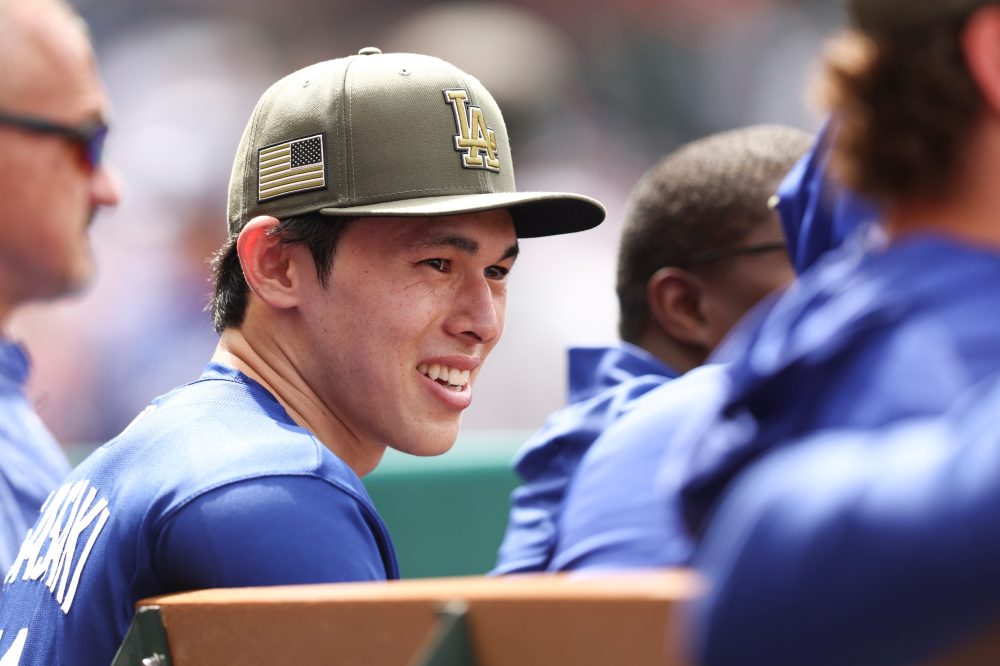
Roki Sasaki surrendered one run on four hits across seven innings and Kyle Tucker went 3-for-5 with a double and three RBIs as the Los Angeles Dodgers completed a three-game Freeway Series sweep of the Los Angeles Angels in Anaheim, Calif.
Sasaki (2-3) didn’t issue a walk for the first time in 16 career regular-season starts and struck out a career-high eight batters. Shohei Ohtani went 3-for-5 with two RBIs and a run scored, Hyeseong Kim also had two hits, an RBI and two runs scored, and Andy Pages drove in two runs for the Dodgers, who extended their winning streak to five games.
Nolan Schanuel had two hits and a run scored, Mike Trout doubled and Yoan Moncada had an RBI single for the Angels, who suffered their sixth straight loss and eighth defeat in nine games. Grayson Rodriguez (0-1) made his Angels debut in his first start since July 31, 2024, after undergoing Tommy John surgery. The right-hander allowed seven runs on seven hits across 3 2/3 innings.
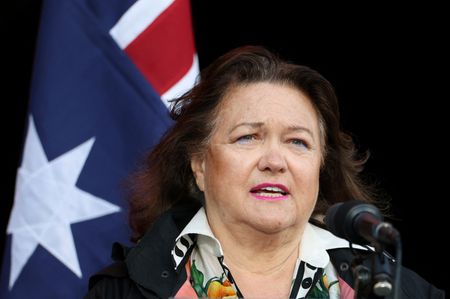
The mining company controlled by Australia’s wealthiest individual, Gina Rinehart, has diversified its American investment holdings by purchasing defense contractor stocks, precious metals, and rare earth mineral companies, recent regulatory documents revealed Monday.
Hancock Prospecting shifted $133 million of its $3.3 billion American portfolio during March, acquiring stakes in defense contractors CrowdStrike, L3Harris, Lockheed, Northrop Grumman and RTX, according to documentation filed May 15.
The investment strategy also included purchasing shares in major gold mining company Newmont. Additionally, Hancock Prospecting acquired a 6.3% ownership stake in Rare Earths Americas during the current quarter, separate documentation from May 14 indicated.
The company expanded its ownership in copper mining firm Hudbay Minerals by approximately 10% while completely divesting from Chilean lithium company SQM, despite jointly developing the Andover lithium project in Australia with that firm.
Hancock’s largest investments continue to be concentrated in Invesco’s QQQ Trust technology exchange-traded fund and American rare earths company MP Materials, which collectively represented 47% of the portfolio’s total value at the conclusion of March, according to financial analysis.
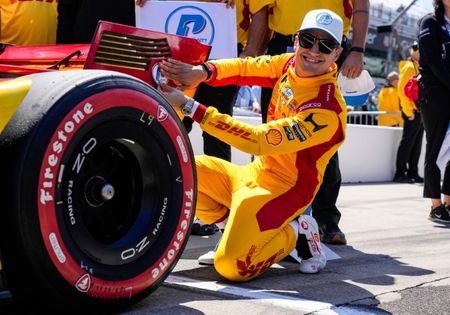
Spanish racing driver Alex Palou has secured the top starting position for this year’s Indianapolis 500, positioning himself perfectly for a potential repeat championship when the race unfolds on May 24.
The 29-year-old driver achieved his second career pole position during Sunday’s qualifying session at Indianapolis Motor Speedway, recording a four-lap average speed of 232.248 mph.
As the current four-time and reigning IndyCar Series champion, Palou previously earned pole position for the 2023 race, where he ultimately placed fourth. The last defending champion to start from pole position in the following year’s race was four-time Indy 500 winner Helio Castroneves in 2010.
“I have no words,” Palou expressed regarding his pole position for the 110th running of the Indianapolis 500. “That was incredible. It just feels incredible. Great start to the month of May.”
“Did not expect it. You could see the celebration was really high (after winning the pole) because this morning when we woke up, we did not expect this speed.”
Joining Palou’s No. 10 Honda from Chip Ganassi Racing on the front row are Chevrolet drivers Alexander Rossi from Ed Carpenter Racing and David Malukas from Team Penske. The 2016 champion Rossi posted a personal-best average of 231.990 mph, while Malukas claimed third place with 231.877 mph.
An interesting twist occurred when Palou’s wife, Esther, randomly selected the 31st position out of 33 drivers during Friday evening’s blind draw for qualifying order. Saturday’s qualifying session was canceled due to rain, compressing the entire qualifying process into Sunday with elimination rounds reducing the field from 33 to 12 to six drivers for grid determination.
During the first qualifying round, Palou ranked 11th with a four-lap average of 231.155, then improved to second-fastest in the subsequent round (231.665) behind Felix Rosenqvist from Meyer Shank Racing. His team successfully adjusted the car setup for the warmer, sunny conditions during the day’s hottest period.
“I have to say being on the 31st — thanks to my wife, by the way, for drawing that number — I think being there allowed us to work on those conditions,” Palou commented. “It’s not easy to do everything the way this team is executing.”
The second row features Rosenqvist’s Honda in fourth place (231.375) alongside Chevrolets driven by Santino Ferrucci (230.846) from A.J. Foyt Racing and Pato O’Ward (230.442) from Arrow McLaren.
Katherine Legge earned the 27th starting position in the No. 11 Chevrolet, placing her on Row 9. Legge intends to compete in both the Indianapolis 500 and Coca-Cola 600, which would make her the first female driver to successfully complete the “Double” if accomplished on May 24.
The Double requires drivers to participate in both premier races, covering 1,100 miles with minimal time between the Indy and NASCAR Cup Series events. Five drivers have previously attempted this challenge since John Andretti originated and completed the concept in 1994 while driving for A.J. Foyt Racing.
The 45-year-old Legge will race in the Indy 500 for A.J. Foyt Racing before flying directly to drive the No. 78 car for Live Fast Motorsports in the Coca-Cola 600 in Charlotte, N.C., which begins several hours afterward. She has previously entered and qualified for four Indy 500 races and represents the only woman in the 2026 field.
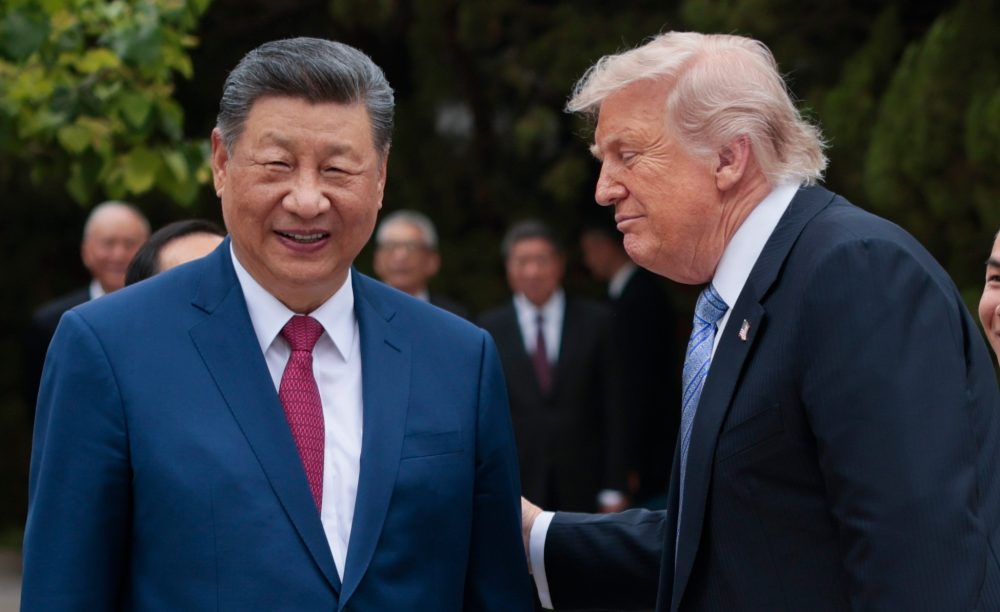
Following President Donald Trump’s recent summit with Chinese President Xi Jinping in Beijing, China has committed to purchasing American agricultural goods at a rate of $17 billion annually beginning in 2026 and continuing through 2028, the White House announced Sunday.
The agreement will reopen Chinese markets to US beef and allow poultry imports from states that the U.S. Department of Agriculture has certified as bird flu-free, according to the White House. These new commitments come in addition to previous soybean purchase agreements from last year.
American farmers who suffered during the trade conflict are finding some relief in these deals, as they had watched a crucial export market for soybeans and other agricultural products disappear. Farmers are also facing additional challenges from Trump administration policies, including the US and Israel’s conflict with Iran that has disrupted shipping through the Strait of Hormuz, limiting global fertilizer supplies and driving up costs.
Beijing has not yet independently verified the agreement details.
On Saturday, China’s Ministry of Commerce stated that both nations would “resolve or make substantial progress toward resolving certain non-tariff barriers and market access issues” concerning agricultural products.
According to a ministry spokesperson, the US will “actively work” to address China’s concerns about detained dairy products, seafood, potted bonsai exports, and recognizing Shandong province as bird-flu-free. Meanwhile, China will “likewise actively work” to resolve US concerns about beef processing facility registration and poultry meat exports from specific states to China.
Both countries also committed to expanding trade, including agricultural goods, through measures like mutual tariff reductions on “a specific range of products,” though the spokesperson did not identify which products would be affected.
Recognizing the connection between food security and national security, China has broadened its agricultural import sources, increasingly relying on Brazil, Argentina and other nations instead of the US.
U.S. Department of Agriculture statistics reveal that China’s purchases of American agricultural products reached $38 billion in 2022 but dropped to $8 billion in 2025. Soybean purchases specifically fell from nearly $18 billion in 2022 to $3 billion in 2025.
The extent of additional Chinese purchases from American soybean producers remains unclear. These farmers faced severe impacts during the trade war, as China, historically the top foreign purchaser of American soybeans, completely halted purchases last year following Trump’s tariff increases on Chinese goods.
This new agreement expands upon an October trade agreement between Trump and Chinese President Xi Jinping, where China agreed to resume US soybean purchases. The White House reported that China committed to buying 12 million metric tons in the current marketing year and 25 million metric tons annually for the following three years.
The White House stated that hundreds of US beef facilities, including operations managed by Tyson and Cargill, will regain export access to China, though the volume of beef sales remains uncertain.
China allowed licenses for hundreds of US beef plants to lapse last year, causing import values to fall below $500 million in 2025, according to USDA data. Chinese purchases of US beef had reached a peak of $2.14 billion in 2022, government statistics show.
US poultry meat and product exports to China totaled $286 million in 2025, declining from over $1 billion in 2022.
During last week’s summit, Trump and Xi explored methods to strengthen economic cooperation, including expanding market access for American companies in China and increasing Chinese investment in US industries, the White House reported. The leaders agreed to establish separate trade and investment boards, though they provided limited details about these proposals or how they would differ from current trade discussions.
The Board of Trade will enable both governments to manage trade in “non-sensitive goods,” while the Board of Investments will create a forum for discussing investment-related matters, according to the White House.
China’s Ministry of Commerce explained that both entities would address each side’s concerns regarding trade and investment. The Board of Trade, the ministry spokesperson noted, would allow discussions about issues like tariff reductions on specific products. “In principle, the two sides agreed to reduce tariff on products of respective concern at equivalent scale,” the spokesperson stated.
When Xi met with US business leaders accompanying Trump on the trip last week, he indicated that China’s opportunities would expand further. Brian Sikes, CEO of agricultural giant Cargill, was among those who traveled to Beijing.
Soybeans, which China uses for livestock feed and biofuels, rank among America’s top agricultural exports. Previously, soybean exports to China represented approximately half of all US agricultural exports to the Asian country.
USDA statistics show the US exported 10.9 million metric tons of soybeans to China as of May 7, positioning China to meet its earlier commitment by the marketing year’s end on August 31. This amount falls significantly below the 25 million to 30 million metric tons China purchased in previous years.
Prior to Trump’s originally scheduled Beijing visit in late March, which was delayed due to the Iran conflict, the American Soybean Association encouraged him to prioritize soybeans in trade discussions with Xi.
Scott Metzger, president of the association, said Thursday the organization hopes to see “additional soybean purchases this marketing year, as well as continued progress toward fulfilling future purchase commitments.”
“Greater certainty and consistency in the marketplace help provide farmers with the confidence they need as they make decisions for the year ahead,” he said.
Financial markets worldwide suffered widespread losses Monday as escalating energy costs stemming from the Middle East conflict heightened concerns about inflation and prompted investor speculation about potential interest rate increases by central banks globally.
The benchmark 10-year U.S. Treasury yield, which operates in reverse to bond prices, surged to its peak level since February 2025 during early Asian trading, reaching 4.6310% after climbing over 20 basis points during the previous week.
The two-year yield hit a 14-month peak at 4.1020%, while the 30-year U.S. Treasury yield climbed to a one-year maximum of 5.1590%.
These developments followed rising oil prices Monday, as diplomatic efforts to resolve the Iran war seemed to have reached an impasse after a drone attack targeted a nuclear facility in the United Arab Emirates.
“Fresh drone attacks on the UAE’s Barakah nuclear plant and Saudi territory, coupled with Trump’s ‘clock is ticking’ ultimatum and a planned Situation Room meeting on Tuesday, have sharply elevated the risk of renewed full-scale hostilities,” said analysts at OCBC.
After more than two months of Middle East conflict, investors are growing increasingly concerned about the economic consequences of the warfare as price pressures intensify and what implications this might have for worldwide interest rate policies.
“The ‘higher for longer’ story is coming back, even if actual rate hikes are still not the base case,” said Charu Chanana, Saxo’s chief investment strategist.
Financial markets are currently indicating greater than 50% odds that the Federal Reserve will implement rate increases by December, based on the CME FedWatch tool, while the European Central Bank is expected to raise rates as soon as next month and the Bank of England approximately twice during this year.
The shift in U.S. Treasury yields affected broader markets, with Germany’s bund futures and French OAT futures each declining roughly 0.4% during early trading sessions.
In Japan, yields on the 30-year Japanese government bond jumped 17 basis points to reach record highs at 4.170% while the 10-year yield hit its peak level since October 1996 at 2.800%.
The Japanese government bond selloff intensified after Reuters reported that Tokyo will probably issue additional debt to help finance a proposed supplementary budget designed to mitigate economic damage from the Middle East war.
Chinese fast-fashion retailer Shein has purchased American clothing brand Everlane from its primary investor L Catterton for approximately $100 million, according to a Sunday report from Puck News that cited sources with knowledge of the transaction.
The report indicated that holders of common stock in Everlane would not receive any payment from the acquisition. Details regarding whether preferred shareholders would obtain cash payments or Shein equity as part of the transaction were not disclosed.
Reuters was unable to independently confirm the acquisition. Representatives from Everlane, Shein, and L Catterton did not provide immediate responses to Reuters’ requests for comment.
Companies such as Shein and Temu have transformed the retail market through competitive pricing strategies, targeted marketing campaigns, and exploiting tax advantages that previously provided them with benefits over domestic retailers.
According to a March report from Puck News, private equity company L Catterton and Everlane Chief Executive Alfred Chang had been looking for an investor to help manage approximately $90 million in outstanding debt.
The private equity company was prepared to provide additional capital if a partner investor could be found, but was also considering a complete sale of the company, the report stated.
China’s largest memory chip manufacturer is projecting substantial financial gains as artificial intelligence continues to drive unprecedented demand in the semiconductor industry.
Changxin Memory Technologies announced Sunday that it anticipates first-half revenue will range from 110 billion to 120 billion yuan (approximately $17.62 billion), according to an updated prospectus filing. The dramatic increase reflects the company’s optimistic outlook as memory chip prices climb worldwide.
The surge in memory chip costs stems from an artificial intelligence boom that has created what industry experts call a memory supercycle. This trend has been so significant that it helped propel Samsung Electronics’ market value beyond $1 trillion during May.
According to the company, worldwide demand for dynamic random-access memory chips has outpaced available supply as computing needs continue expanding and major manufacturers have modified their production schedules. These market conditions have caused DRAM prices to climb dramatically since the latter half of 2025. The firm noted that its revenue grew rapidly as it increased production and sales while enhancing its product portfolio.
Industry watchers and international investors are paying close attention to the company’s upcoming initial public offering, viewing it as an indicator of China’s advancement in DRAM chip technology. These components have gained critical importance during the AI revolution because they facilitate quicker data transfer between processors and memory systems.
The Hefei-located firm projects that net profit for shareholders could reach as high as 57 billion yuan during the first six months of the year.
During the opening quarter, the company’s revenue soared over 700% compared to the previous year, reaching 50.8 billion yuan. The firm recorded a net profit of 25 billion yuan, a stark contrast to the 1.6 billion yuan net loss reported during the corresponding period twelve months earlier.
Economic momentum in China weakened significantly during April, with manufacturing production and consumer spending figures falling well below analyst expectations, according to new government data released Monday.
The National Bureau of Statistics reported that manufacturing output increased by 4.1% compared to the same period last year, a notable decline from March’s 5.7% growth rate. This figure also missed the anticipated 5.9% growth that economists had predicted and represents the weakest performance since July 2023.
Consumer spending patterns showed even more concerning trends, with retail sales climbing only 0.2% in April, a sharp drop from the 1.7% increase recorded in March. This marked the smallest gain since December 2022 and fell significantly short of the 2% growth economists had forecasted.
The weakness in consumer behavior was particularly evident in the automotive sector, where domestic vehicle sales plummeted 21.6% year-over-year in April. This decline represents the seventh consecutive month of falling car sales, despite automakers increasing their focus on international markets to compensate for domestic weakness.
Investment activity also showed troubling signs, with fixed-asset investment declining 1.6% during the first four months of 2026, a reversal from the 1.7% growth seen in the January through March period.
Economic analysts attributed some of the investment slowdown to decreased activity in the construction sector, as measured by purchasing managers’ surveys, along with severe rainfall affecting southern regions of the country.
These April statistics suggest that the strong performance China demonstrated in the first quarter may already be losing momentum. The economy had grown 5.0% in the opening three months of the year, reaching the higher end of the government’s annual target range of 4.5% to 5.0%.
However, experts have cautioned that the recovery appears unbalanced, with industrial production continuing to outpace domestic consumer demand.
The ongoing decline in the real estate sector continues to weigh on overall economic growth, while conflicts in the Middle East have created additional external pressures at a time when domestic consumption remains weak.
Property investment showed further deterioration in April compared to the previous year, adding to economic headwinds.
While stronger-than-expected export performance and government controls on domestic fuel pricing have helped cushion the impact of energy market volatility, sustained higher input costs could pressure manufacturer profit margins and further dampen household spending if international conflicts continue.
Senior government officials have committed to bolstering the nation’s energy security, speeding up technological independence, and gaining greater supply chain control in response to external economic shocks.
The Politburo reaffirmed its “proactive” fiscal approach and “appropriately loose” monetary policy stance, using terminology consistent with previous official statements and indicating no immediate plans for additional economic stimulus measures.
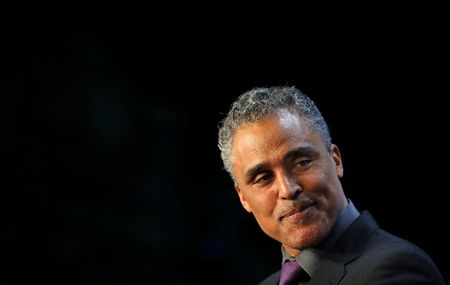
Rick Fox, the retired NBA champion, has been selected to serve in the Bahamian Senate, securing one of four positions designated for opposition party members.
Fox’s selection to the 16-member Senate by the Free National Movement (FNM) occurred just days following his unsuccessful campaign for a seat in the Bahamian House of Assembly.
“Picked Rick – Soon to be sworn in to the upper house: Rick Fox!” the FNM posted on their Facebook page Sunday evening.
Fox has not yet responded to requests for comment regarding his appointment.
Born in Canada to a Bahamian father and Canadian mother, Fox spent 14 seasons as a forward in the National Basketball Association, playing for both the Los Angeles Lakers and Boston Celtics.
During his career with the Lakers, he captured three NBA championships between 2000 and 2002 before hanging up his jersey in 2004.
The retired athlete first entered Bahamian political life in 2022 when the ruling Progressive Liberal Party named him as an ambassador-at-large.
Fox subsequently switched to the opposition party and mounted an unsuccessful campaign for parliament representing the Garden Hills constituency.
Traffic is being impacted on northbound Interstate 495 after a vehicle fire forced the closure of two right lanes at North DuPont Highway, also known as US Route 13.
The lane closures are affecting traffic flow in the area where the interstate intersects with the major highway corridor.
Motorists traveling through the area should expect delays and consider alternate routes while crews work to clear the incident.
A powerful 5.2 magnitude tremor struck China’s southwestern Guangxi region during the early morning hours on Monday, claiming two lives and prompting the evacuation of more than 7,000 residents from Liuzhou city as rescue teams continue their search operations.
According to reports from CCTV and state news agency Xinhua, authorities have confirmed two fatalities with one person still unaccounted for. Four individuals were transported to medical facilities, though officials report none sustained life-threatening injuries.
The seismic event caused significant structural damage, with state broadcaster CCTV confirming that thirteen buildings crumbled during the early morning quake.
Railway officials have issued warnings about potential transportation delays as crews conduct safety inspections of track infrastructure throughout the affected region.
Despite the destruction, state media indicates that essential services including communications, electrical power, water distribution, gas supply, and traffic flow continue to function normally in the earthquake zone.
Austin law enforcement officials announced Sunday that they have detained two teenage suspects following a weekend crime spree that involved a dozen separate shooting incidents across the Texas capital.
During a news briefing, Austin Police Chief Lisa Davis revealed that officers had arrested a 15-year-old and a 17-year-old male in connection with the shooting incidents that occurred throughout Saturday and into early Sunday morning across south and east sections of the city.
The violent episodes resulted in four individuals being struck by gunfire, according to Davis. One victim sustained serious wounds while three others received minor injuries during the incidents.
Davis disclosed that the younger suspect had stolen a firearm from a retail establishment on Saturday. The older teen was already wanted on an outstanding arrest warrant for allegedly stealing a weapon from that same store, the chief explained.
Throughout their crime spree, the pair stole more than four different vehicles while traveling around Austin, Davis reported. She noted that information from the Travis County Sheriff’s Office indicated a third young Hispanic male escaped on foot when officers captured the two juveniles.
The police chief stated that investigators have not yet determined what motivated the shooting incidents, which remain under active investigation.
Davis described how two of the shooting episodes targeted separate fire stations, with one incident resulting in damage to a truck. Additional shootings were directed at residential structures throughout the area, she explained.
An activist investment firm has acquired a substantial ownership position in diagnostics company Bio-Rad Laboratories and intends to pressure the company to improve its declining stock performance, according to a Wall Street Journal report published Sunday.
The company’s stock value has declined more than 18% during the current year.
The investment firm has also purchased shares in a German biopharma equipment company called Sartorius, in which Bio-Rad holds an investment position, the WSJ report stated, referencing sources with knowledge of the situation.
Reuters was unable to immediately confirm the report. The investment firm, Bio-Rad, and Sartorius did not provide immediate responses to comment requests.
The WSJ report did not reveal the specific amount of shares the investment firm holds in either Bio-Rad or Sartorius.
The activist investor, which has maintained significant involvement in the healthcare industry, considers Sartorius to be a high-caliber company with substantial growth opportunities, according to the report.
Bio-Rad recently reduced its revenue growth projections for 2026 following a first-quarter net loss of $527 million. The company blamed the loss on changes in the fair market value of its Sartorius AG investment.
Bio-Rad’s stock price ended Friday’s trading at $246.53, resulting in a market value of $6.69 billion, based on LSEG data.
NEWTOWN SQUARE, Pennsylvania – English golfer Aaron Rai captured his first major championship title with a spectacular final-round performance at the PGA Championship on Sunday, shooting a brilliant 65 at Aronimink Golf Club to claim the Wanamaker Trophy.
The 31-year-old golfer entered the tournament as a massive 300-1 longshot and began Sunday’s final round among 43 players within five strokes of the lead, including several well-known competitors.
Rai maintained his focus under pressure, recording four birdies during the final nine holes, highlighted by a remarkable 68-foot putt for birdie at the 17th hole. His victory makes him the first golfer from England to capture the PGA Championship in 107 years.
“There’s so many different things that you face, whether that is in the game, whether that is acquiring the skills, putting the time in that is required, facing all the setbacks that come along with it,” Rai reflected after his victory.
“It is certainly a roller coaster to get to these points, and a week like this, an achievement like this, certainly makes it all feel very much worthwhile. It’s an absolute dream come true.”
Two-time major winner Jon Rahm, who finished in a tie for second place, praised Rai as one of the most courteous and respectful competitors on the PGA Tour.
Rai credits his modest approach to life to his childhood in the English Midlands, where he was raised by parents who immigrated from India and Kenya.
“My mom and my siblings were very fast to reinforce the importance of just being a good person and trying to do the right things away from golf,” he explained.
The champion also acknowledged his wife, professional golfer Gaurika Bishnoi from India, and his father, who influenced his distinctive practice of wearing two gloves and placing protective covers on his iron clubs – habits that remind him of how valuable his equipment was during his youth.
“My dad was with me every day that I went to practice from the age of four or five years old, he actually quit his job and started to focus on my golf from a really young age,” Rai shared.
“He was very much an advocate to really just stay in your lane, focus on the things that you can do and I didn’t really mix with a lot of other junior golfers, which didn’t give me a perspective of what was normal.”
Fellow competitors consistently described the world number 44 golfer using terms like dedication and perseverance when asked about his character on Sunday.
“There are a lot of guys that work extremely hard … so I think that’s a prerequisite of what is just required to try and compete out here,” Rai noted.
“It’s reaffirming to know that the things that we’re doing are working and they’re leading to continued development within the game. Hopefully I can just continue to move along a pretty similar path moving forwards.”
The last Englishman to win the PGA Championship was Jim Barnes, who claimed the Wanamaker Trophy in 1916 and again in 1919.
“There’s a lot of incredible and historic English players over those 100 years who have had phenomenal careers,” Rai said.
“To be the person that’s the first one in such a long time from England is an amazing thing, and something to be extremely proud of. I’m very proud to be from England (and) I’m very proud of India and Kenya as well … I’m very proud of representing all three, really.”
The U.S. dollar strengthened against most major global currencies on Monday as escalating Middle East conflicts drove oil prices higher and worldwide bond market declines reduced investor appetite for risk, according to financial analysts.
The euro dropped to $1.1609 while the British pound fell to $1.3305, with both currencies declining more than 0.1% against the dollar.
The Australian dollar, which tends to be sensitive to market risk, weakened by 0.4% to reach $0.7121, while New Zealand’s currency remained relatively stable at $0.5827.
The dollar index, a measurement of the American currency’s performance against a collection of major world currencies, rose slightly to 99.393.
Energy markets saw significant movement on Monday, with Brent crude oil futures jumping more than 1% to exceed $110 per barrel. This increase followed an attack on a nuclear facility in the United Arab Emirates and apparent stagnation in efforts to resolve the U.S.-Israeli conflict with Iran.
“It appears conditions for risk and bonds are deteriorating, and conditions for the dollar rally to extend this week are ripe,” analysts at Barclays wrote in a note.
The financial experts noted that continued blockages in the Strait of Hormuz are creating additional upward pressure, with the dollar typically gaining 0.5% to 1% for every 10% increase in oil prices.
Global bond markets continued their decline with little indication of recovery, as Treasury yields remained high due to concerns that Middle East energy disruptions could accelerate inflation.
Interest rates on benchmark U.S. 10-year Treasury notes and two-year notes, which generally follow Federal Reserve interest rate expectations, reached 4.607% and 4.085% respectively, approaching their highest levels in a year.
“Near term, USD may stay better bid on dips if yields remain elevated and markets continue to price a more hawkish Fed reaction function,” Christopher Wong, FX strategist at OCBC, said in a note.
Wong explained that this week’s attention will focus on the Federal Open Market Committee’s meeting minutes and U.S. flash Purchasing Managers’ Indexes, which may provide clarity on Federal Reserve concerns about persistent inflation and whether U.S. economic activity remains strong under tighter financial conditions.
The dollar traded at 158.84 against the Japanese yen, rising 0.04% from previous U.S. levels, with continued yen weakness putting investors on watch for potential intervention.
China’s offshore yuan was trading at 6.8163 yuan per dollar ahead of Chinese economic activity data scheduled for release later Monday.
ANAHEIM, Calif. — Roki Sasaki’s challenging major league journey appears to be heading in the direction most anticipated when he signed with the Los Angeles Dodgers before last season began.
The young pitcher delivered seven innings of outstanding baseball, allowing just four hits during Los Angeles’ commanding 10-1 win against the Los Angeles Angels on Sunday. This performance marked the most impressive and extended outing of his unpredictable time wearing Dodgers blue.
The 24-year-old pitcher from Japan achieved personal milestones with eight strikeouts and zero walks, displaying newfound self-assurance that was absent throughout much of his previous campaign. Sasaki (2-3) consistently puzzled Angels hitters while aggressively targeting the strike zone using a 98 mph fastball complemented by an expanding array of off-speed offerings.
“I think he has confidence in who he is as a big league pitcher, and we’re seeing some of the fruits right now,” Dodgers manager Dave Roberts said.
Despite facing the club with baseball’s poorest record, Sasaki’s arsenal is clearly functioning at an elite level he has seldom achieved as a major league starter.
He arrived as a highly-touted prospect in January 2025 when he selected the Dodgers for what could be a six-year commitment. However, following a debut season where virtually everything went wrong, Sasaki is just now demonstrating why every major league organization coveted his services for their starting rotation.
“I actually felt better in my last outing, but today I felt able to throw strikes a little bit more,” Sasaki said through his interpreter. “Also the offense did a great job of scoring a lot of runs.”
While Sasaki hasn’t commanded most of his previous starts, Roberts noted he’s clearly moving in the right direction. The pitcher is also developing good chemistry with catcher Dalton Rushing, who earned praise from Roberts for his exceptional game-calling at Angel Stadium.
“He looked really good today,” Rushing said. “Obviously it’s really good momentum for him to carry forward, but at the same time, there’s opportunities for him to be even better. We know that’s not his ceiling. What he just did is obviously the best we’ve seen him to this point, but I trust that guy has got a lot more in the tank, and we’re going to continue to push. But it was fun to watch.”
Sasaki is once more attempting to secure a regular position in the Dodgers’ starting lineup this year after notably struggling to establish himself during his first season. He later sat out four and a half months due to shoulder issues, but remarkably returned as Los Angeles’ relief pitcher during their championship pursuit, helping secure a consecutive World Series victory.
Sasaki’s relief work proved crucial for the depleted Dodgers roster, though it didn’t alter their future vision for his role. He entered spring preparation as a rotation candidate once more — but then consistently performed poorly in Arizona, undermining his self-belief.
Precisely fifty percent of the hitters he encountered during exhibition games managed to reach base safely, as Sasaki battled command issues.
Roberts explained the Dodgers’ guidance to Sasaki has remained unchanged: cease focusing on minor mechanical adjustments or perfecting new offerings, and instead challenge hitters in the strike zone using his already impressive abilities.
While it required time for Sasaki to embrace this approach, the message is now resonating clearly — and his aggressive mindset is simultaneously enhancing his pitching mechanics. Sasaki induced 18 swings and misses from Angels batters, contributing significantly to his personal-best strikeout performance.
“I think one of the reasons is mechanical,” Sasaki said of his recent success. “Things are kind of clicking, and I was able to execute really well throughout the game today.”
The Dodgers require Sasaki’s excellence as they navigate another season plagued by significant pitching injuries. Expensive acquisitions Blake Snell and Tyler Glasnow are sidelined once more, while closer Edwin Diaz remains unavailable alongside Jack Dreyer, their most frequently utilized reliever.
Los Angeles continues pitching exceptionally well, entering the weekend ranked third in major league ERA. Both Rushing and Roberts anticipate Sasaki playing a significant role in maintaining that standard.
“Pretty much it’s a confidence thing,” Rushing said. “He needs to trust his stuff, understand how good his stuff is, and execute. … With the stuff he has, it’s easy to miss barrels, and we hadn’t quite got to see that just yet. Today was obviously a big step forward.”
MELBOURNE, Australia — Following her release from a three-year imprisonment in Beijing, Cheng Lei has dedicated herself to reconstructing her existence. The journalist has authored a book and theatrical work, experimented with comedic performance, and resumed her media profession.
Her experience has provided unusual insight into the brutal realities of China’s secretive detention facilities. Additionally, she has offered a deeply personal account of perseverance, demonstrating how purpose can emerge from adversity.
“I think when your life gets shattered and you lose so many things that used to define you, you do have a kind of freedom to reorganize your atoms and create a new you,” Cheng told The Associated Press during rehearsals for a play about her incarceration, “1154 Days.”
“For me, it’s a fuller appreciation of life and much more adventurousness and also a serene sort of quiet fearlessness,” she added.
Theatrical work represents one of several new pursuits that have characterized the China-born Australian’s existence since her deportation from Beijing in October 2023.
After immigrating from China at age 10 with her family, she obtained Australian citizenship. She characterized herself as an unfulfilled accountant when she departed Australia at 25 seeking opportunities in media.
Cheng had risen to become a presenter for the “Global Business” program on China state broadcaster CCTV English, following two decades of developing her bilingual journalism career across Asia. This chapter concluded suddenly in August 2020, when a Beijing State Security Bureau official informed her at CCTV headquarters that she faced investigation for providing state secrets to foreign organizations. She was blindfolded and taken to an undisclosed facility.
In October 2023, a Beijing court found her guilty of illegally providing state secrets abroad and imposed a sentence of two years and 11 months in prison. By the time of sentencing, she had nearly completed that duration in custody.
Her violation consisted of breaking by seven minutes an embargo in May 2020 on the then-Chinese Premier Li Keqiang’s annual report that revealed, unusually, no economic growth target would be set for China that year due to pandemic uncertainty, Cheng wrote in her memoir published last year. She said she hadn’t been aware of an embargo.
Cheng believes she was a victim of hostage diplomacy, punished as an Australian citizen because her government had demanded an investigation into the origins of COVID-19. On April 19, 2020, Australia’s then-Foreign Minister Marise Payne called for an inquiry into the pandemic. China’s Ministry of State Security began investigating Cheng four days later on “suspicion of endangering state security.”
“Why me? Why that time? All these questions I’m still asking,” Cheng said.
One month prior to Cheng’s detention, Australia cautioned its citizens they faced potential “arbitrary detention” in China. All Australian journalists employed by Australian media organizations subsequently departed. The final two, the Australian Financial Review’s Michael Smith and Australian Broadcasting Corp.’s Bill Birtles, left in September 2020, following diplomatic confrontations. They were individually questioned by police regarding Cheng before receiving permission to exit China.
COVID drove an already strained relationship between Australia and China to unprecedented lows. An enraged Beijing ceased accepting calls from Australian government ministers. Formal and informal restrictions were imposed on Australian exports including wine, coal, barley and lobsters.
The conservative Australian government that provoked China’s anger was succeeded by the current center-left Labor Party government in May 2022 elections, prior to the gradual removal of trade barriers.
Australian officials had addressed Cheng’s detention during high-level bilateral discussions, just as they continue to pressure Beijing to release another Australian, Yang Hengjun.
The Chinese-born democracy blogger received a suspended death sentence in 2024, after a Beijing court convicted him of espionage.
The 60-year-old has remained in custody since arriving in China on a flight from the United States in 2019. He is expected to learn within weeks whether his penalty will be changed to life in prison.
His supporters fear he wouldn’t survive a long prison sentence due to his deteriorating health.
Cheng expressed feeling obligated to those like Yang, who have become victims of the Chinese justice system, to speak out against it.
The most difficult phase of her imprisonment occurred initially: six months under Residential Surveillance at a Designated Location, or RSDL.
Cheng explained that authorities concentrate immediately on breaking prisoners to secure guilty pleas through isolation, continuous monitoring, enforced silence and severe limitations on physical movement. Despite enduring what she termed the “stultifying monotony,” Cheng received credit for only three of her six months in RSDL toward her sentence.
“I know people who are still going through RSDL, or unfair, unjust, arbitrary detention in China. Or being sentenced to ludicrous, harsh sentences for standing up for other people, for standing up for human rights,” Cheng said.
“They would want this story to be told because they don’t have a voice. And for the people who are too scared to talk because their families are hostages in China, this is for them too,” she added.
The theatrical production debuts May 28 in Melbourne, where Cheng, 50, currently resides with her daughter Ava, 17, and son Alex, 15. Both children had been visiting family in Melbourne when China closed its borders due to the pandemic in early 2020, months before Cheng’s arrest.
The play’s publicist says the work reveals how the mind adapts, resists and even creates under pressure.
“In isolation, she built television programs in her head, devised memory games and found unexpected ways to connect with herself, others and even with her captors,” a press release says.
Cheng describes it more directly: her work focuses on emotions.
“It’s about how it feels to have everything taken away from you. How it feels to be with three other people all the time in the same little cell for three years, how it feels to be watched every minute of the day and how it feels to finally regain your freedom.”
Cheng hopes audiences will see past China’s assertions of being a just and orderly society that follows the rule of law, as Beijing positions itself as a more dependable international partner than the United States under President Donald Trump.
Stand-up comedy represents another new venture in Cheng’s post-imprisonment life. She initially performed on a Melbourne stage in June 2024 — eight months following her release — alongside China-born Australian activist and writer Vicky Xu.
“If you can’t joke about incarceration, then you have no sense of humor,” Cheng told the Australian Financial Review at the time. “Humor got me through much of it and brightened the cell for me and my cellmates.”
Cheng delivered a five-minute performance at the Melbourne International Comedy Festival’s RAW Competition for newcomers in February and eagerly anticipates additional opportunities. She joked with her audience that she’d need a longer slot to cover her story of imprisonment in China for so-called espionage.
“Life is a tragic comedy and we should mine it,” Cheng quipped. “I just have a bit more material than others.”
Samsung Electronics and its South Korean labor union will participate in fresh government-mediated negotiations Monday as they work to prevent a potential strike at the global technology company, which represents nearly 25% of South Korea’s total exports.
These discussions come after initial government-facilitated talks regarding compensation and bonus programs failed last week, with a planned work stoppage set to start Thursday at the world’s biggest memory chip manufacturer.
Government leaders in South Korea, including the prime minister and finance minister, have expressed alarm about the possibility of a strike, cautioning that such action could seriously threaten economic expansion, export performance, and financial market stability.
South Korean President Lee Jae Myung posted on social media Monday that business management authority should receive equal respect with worker rights within the nation’s free-market system.
“In South Korea, which has adopted a liberal democratic order and capitalist market economy, labour should be respected as much as businesses, and corporate management rights should be respected as much as labour rights,” Lee wrote on X.
He noted that employees deserve appropriate payment for their work, while investors who accept financial risks and potential losses through their investments also merit a portion of company profits.
South Korean Prime Minister Kim Min-seok announced Sunday that officials would explore every available option, including emergency arbitration measures, to stop a strike from occurring.
An emergency arbitration directive, which the labor minister can implement when officials determine a labor dispute may damage the economy or public welfare, instantly blocks workplace action for 30 days while the National Labor Relations Commission handles mediation and arbitration procedures.
The union stated Sunday it would resist arbitration pressure and reject any compensation agreement if the company presents a worse offer.
Following last week’s failed negotiations, leadership from Samsung’s semiconductor unit appealed to the union to avoid striking, referencing worries from important chip clients including Nvidia, media outlets reported.
The executives indicated some customers suggested they might briefly halt shipment acceptance during a strike due to quality assurance concerns, according to reports citing a meeting attendee.
Samsung chose not to provide comments on this issue.
Samsung Electronics’ stock price increased 0.7% during morning trading, while the benchmark KOSPI index dropped 2.5%.
Asian stock markets experienced declines Monday as new drone incidents in the Gulf region drove oil prices higher and affected bond markets, while investors await this week’s earnings report from tech giant Nvidia to gauge the sustainability of the artificial intelligence market surge.
A drone attack sparked a blaze at a nuclear facility in the United Arab Emirates, and Saudi Arabia confirmed stopping three drone attempts, as U.S. President Donald Trump cautioned that Iran needs to move “fast” to secure an agreement.
The crucial Strait of Hormuz continues to allow only minimal shipping traffic as Tehran works to establish formal authority over the passage that previously handled 20% of global oil commerce.
Capital Economics analysts cautioned that “The closure is draining global oil inventories fast,” predicting “Inventories could reach critical levels by end-June, setting the stage for Brent at $130-140pb, if not higher.”
They further warned, “If the strait is closed through year-end and oil stays around $150pb into 2027, that would push inflation to near 10% in the UK and euro zone, send rates back to their recent peaks and lead to global recession.”
Brent crude prices rose 1.2% to $110.63 per barrel, while U.S. crude increased 1.0% to $106.42 per barrel.
G7 finance ministers are meeting in Paris Monday to address the Strait of Hormuz situation and essential raw material supply chains, though political tensions may challenge the group’s unity.
Worries that elevated energy costs will persist and fuel inflation led to significant losses in global bond markets Friday.
U.S. 10-year Treasury yields reached 4.584%, climbing 23 basis points during the previous week, while 30-year bonds hit 5.109% after rising 18 basis points weekly.
Market participants now worry that central banks worldwide may need to implement tighter policies to prevent an inflation surge, with a Federal Reserve rate increase now viewed as having even odds this year.
The Fed’s latest meeting minutes, scheduled for release Wednesday, are expected to reveal the extent of committee pressure for adopting a neutral position rather than maintaining an easing preference.
Japan’s Nikkei dropped 0.4%, following a 2% weekly decline from record levels. South Korean markets fell 2.1% as the previously hot market cooled slightly after semiconductor demand had driven it to historic highs.
MSCI’s comprehensive Asia-Pacific index excluding Japan decreased 0.6%. Chinese markets reached four-year highs last week but face upcoming data releases on April retail sales and industrial production.
S&P 500 futures declined 0.4% and Nasdaq futures lost 0.5% in early trading.
Despite Wall Street’s support from positive earnings, Citi analysts observed that half the earnings improvement came from temporary factors like tariff adjustments and asset revaluations. Both profit gains and overall index performance showed narrow foundations.
Analyst Scott Chronert noted, “We identify 20 stocks that contributed the majority of index earnings upside,” adding that “Forward guidance increases also show a similar narrow focus.”
He emphasized that “Broadening is a necessary condition for meaningful index upside from here,” which “will require a better line of sight to the Iran conflict wind-down.”
The critical artificial intelligence sector faces a key test with Nvidia’s Wednesday earnings announcement, where expectations are extremely high for the world’s most valuable corporation.
Nvidia stock has gained 36% since March lows, while the Philadelphia SE semiconductor index has jumped over 60%, driven by intense chip demand as technology companies invest heavily in AI infrastructure development.
This week also brings earnings from multiple retailers including Walmart, offering insights into consumer responses to elevated energy costs.
In currency trading, risk concerns have supported the dollar as the globe’s most liquid currency. The U.S. position as a net energy exporter provides advantages over Europe and most Asian regions.
The euro traded at $1.1620 after dropping 1.4% last week. The pound remained weak at $1.3318, having plunged 2.3% weekly as political uncertainty compounded existing pressure on the gilt market.
The dollar maintained strength against the yen at 158.64, with only the possibility of Japanese intervention preventing another speculative challenge to the 160.00 technical level.
In commodities, gold remained unchanged at $4,540 per ounce, showing limited appeal as either a safe haven or inflation protection.
Drivers traveling on northbound Interstate 95 should expect delays due to ongoing construction work that has shut down the left lane between 9th Street and the Brandywine River Bridge.
The lane closure is scheduled to remain in place until 5 AM, according to traffic officials. Motorists are advised to plan for extra travel time and use caution when driving through the work zone.
The construction activity is affecting traffic flow during overnight hours as crews work to complete necessary roadway improvements in the area.
The intersection of Hyett’s Corner Road and US Route 13 has been shut down following a vehicle collision, according to traffic officials.
Emergency responders are currently on scene managing the crash situation. Motorists are advised to seek alternate routes while crews work to clear the roadway.
No additional details about the accident or potential injuries have been released at this time. The duration of the road closure remains unknown as authorities continue their response efforts.
NEW YORK — Carson Benge reached first base and lifted both arms triumphantly after delivering the game-winning hit for the New York Mets in extra innings, marking his second walk-off RBI in just five days.
A collision between Yankees players Anthony Volpe and Max Schuemann behind the pitcher’s mound allowed Marcus Semien to score the deciding run on Benge’s two-hop grounder, as both defenders tumbled to the ground after Schuemann had fielded the ball.
“Once it went over the pitcher’s head I kind of knew,” Benge said.
The dramatic victory came after Tyrone Taylor launched a crucial three-run blast off All-Star closer David Bednar with two outs in the ninth inning, followed by Benge’s walk-off hit one frame later, as the Mets shocked the New York Yankees 7-6 on Sunday to capture two games of their three-game Subway Series at Citi Field.
“He’s like 20 years old, hitting a bunch of walk-offs,” the 32-year-old Taylor said as he walked by the 23-year-old Benge to address the postgame media scrum.
The comeback snapped a streak of 91 straight losses for the Mets when behind after eight innings, dating back to Pete Alonso’s three-run homer off Devin Williams that sparked their victory at Milwaukee in the deciding Game 3 of their 2024 NL Wild Card Series.
The injury-depleted Mets (20-26) reached 10-5 in May despite playing without injured regulars Francisco Lindor, Francisco Alvarez, Jorge Polanco and Luis Robert Jr., while the Yankees (28-19) finished a disappointing 2-7 road trip before returning home for seven games against AL champion Toronto and AL East-leading Tampa Bay.
“Guys are playing tough and making the plays they need to but just coming up a little bit short,” Yankees captain Aaron Judge said. “We’ve got to have a short memory, move on and get ready … because we’ve got a big division opponent coming in.”
Called up from the minors on Tuesday after shortstop José Caballero suffered a broken finger, Volpe contributed a go-ahead two-run single and drew a bases-loaded walk for his first RBIs this season. His production helped the Yankees establish leads of 5-1 in the sixth and 6-3 in the seventh, positioning them for what would have been their first series victory at Citi Field since 2018.
Benge and Bo Bichette opened the ninth with back-to-back singles against Bednar. After Juan Soto grounded into a forceout and Mark Vientos struck out, Taylor connected on a first-pitch hanging curveball that traveled 404 feet, barely staying fair inside the left-field foul pole.
“I didn’t know it was going to stay fair,” Taylor said. “I kind of waited there to see if it would.”
Taylor’s teammates surrounded him in the dugout celebration, as he beamed while still wearing his wraparound sunglasses and received the team’s ceremonial orange construction helmet and matching hi-visibility vest.
Earlier in the contest with the score tied 1-1 in the fifth, Taylor entered as a pinch hitter with two outs and runners on the corners but was denied by center fielder Trent Grisham, who made a spectacular diving catch. Taylor also lined out to Schuemann near the left-field warning track in the seventh.
Those near-misses convinced Benge that Taylor was destined for a clutch hit in the ninth.
“I kind of blacked out for him,” Benge said. “I had a feeling. I didn’t tell him but I had a feeling, and to be able to see that was so sick.”
Bednar suffered his second blown save in 12 opportunities and now carries a 4.95 ERA. He has surrendered runs in six of his past nine outings.
“Overall it’s unacceptable, especially in that spot,” Bednar said. “It’s just very frustrating.”
Williams (3-1), now pitching for the Mets, induced Austin Wells to ground into an inning-ending double play in the 10th.
Tim Hill (0-1) took over for Bednar to start the bottom half, and A.J. Ewing advanced Semien, the automatic runner, to third base with the first sacrifice bunt of his professional career. The Yankees positioned Schuemann from left field to create a five-man infield, and Luis Torrens — whose pinch-hit two-run double had narrowed the gap in the sixth — was struck by a pitch.
Benge’s chopper hit off home plate and bounced high before settling between the mound and second base. Schuemann, stationed to the right of second, caught the ball on a short hop and prepared to throw to catcher Austin Wells when Volpe crashed into his right shoulder, sending Schuemann stumbling.
“A no-man’s land there,” Volpe said. “We’re both just trying to make a play on the ball.”
Semien had reached the halfway point to home when Schuemann secured the ball. Once Schuemann regained his footing, throwing home was futile.
“With Timmy on the mound, it’s more than likely going to be a ground ball in that situation,” Schuemann said. “It’s just one of those things that we’re both going to be aggressive to that baseball no matter what. We both want to make a play.”
The Mets claimed their second consecutive victory despite committing a costly fielding error that allowed a run to score. Bichette moved over from shortstop but let Grisham’s sixth-inning popup in shallow left field bounce off his glove, one day after Benge dropped Cody Bellinger’s fly ball for his second defensive mistake in right field during the homestand.
“We get down. We get punched in the face. We get back up,” Mets manager Carlos Mendoza said. “Today was a perfect example when, like I said, we didn’t play our best game and we still are able to shake hands at the end.”
Three white rats jumped from small containers into a large enclosure on Sunday while other rodents explored temporary tunnels and ate applesauce provided by their caretaker at an indoor venue in Buenos Aires, Argentina.
The scene was part of Ratapalooza, a yearly event in the Argentine capital that encourages people to adopt laboratory rodents that are no longer needed for research or have become excess inventory at animal facilities.
Team Ratas, which means rats in Spanish, hosts events like Ratapalooza to connect these animals with adoptive families. Argentine law permits keeping rats or mice as companions, provided they are not wild animals.
The event resembles a community fair, featuring booths that sell keychains, cups, stickers and hair accessories shaped like rats and mice. Proceeds support veterinary care and food costs for the rodents, which volunteers care for in their homes before finding permanent placements.
María Gabriela Aponte worked at one booth, holding Camamberto, one of three rats she has taken in, while selling plant-based food, mouse-shaped pins and stickers.
She explained that all the animals came from laboratories, specifically from vivariums where research animals live under carefully regulated conditions.
“People don’t really know, or they have a very specific perception of, what a pet is,” Aponte told The Associated Press. “Rats are very intelligent and sweet.”
Dominique Verdier, a Team Ratas representative, explains that potential adopters must have access to a veterinarian who specializes in exotic animals, provide a large cage with plenty of enrichment items, and commit to spending at least one hour daily with their new pets.
Team Ratas leads efforts in Argentina and Latin America to relocate laboratory rats and mice that would face euthanasia without foster placement.
The program began in 2016 when Verdier took in two rats after learning from a friend that the university where they had been used for studies no longer required them.
She established a rescue network with 90 foster families in Buenos Aires and surrounding communities, caring for hundreds of animals from 11 research facilities and laboratories. Over the past decade, she has saved more than 8,000 animals and successfully placed approximately 3,000 in homes.
Her organization has gained more than 60,000 Instagram followers.
Contact with rats and mice may raise health concerns given the current fatal hantavirus outbreak on the cruise ship MV Hondius after it docked in Argentina this month.
Hantavirus typically spreads through inhaling particles from infected wild rodent waste, with these animals commonly found in Patagonia in southern Argentina.
Verdier, who cares for most of the 37 rodents in her own home, emphasizes that laboratory rats pose no health risks.
“They do not transmit diseases because they have not had contact with the street nor are they inoculated with viruses and bacteria,” she said.
The laboratories that have worked with Team Ratas for years only provide animals that have never been exposed to viruses or bacteria.
“Several laboratories prefer to euthanize the animals, while others tell me, ‘Take them away, we don’t want to sacrifice them’,” she added.
Veterinarian Silvina Diaz from the University of Buenos Aires conducts research on rat and mouse nervous systems in an experimental laboratory.
She endorses finding new homes for the rodents after their research work concludes.
“It is great that they’re doing this work of rehoming animals in families that can give them a good life,” said Diaz, who serves as a contact between veterinary technicians and Team Ratas.
Verdier, who remains committed to placing these small animals in loving homes, says she has grown accustomed to social media criticism.
“If people see a dog shelter, they might admire it, but when I mention Ratapalooza they say, ‘What you’re doing is silly’,” she said. “And I say that I’ve been doing this for 10 years and it keeps growing.”
Motorists are being advised to avoid the intersection of Hyett’s Corner Road and US Route 13 following a vehicle collision that has shut down the roadway.
Traffic officials have completely closed the area to allow emergency responders to work at the crash site. No timeline has been provided for when the intersection will reopen to normal traffic flow.
Drivers are encouraged to seek alternate routes until the roadway closure is lifted and normal traffic patterns resume.
Finance ministers from the world’s leading economies are meeting in Paris this week to address mounting global economic tensions and work toward better coordination on essential raw material supplies, though political disagreements may challenge the group’s ability to reach consensus.
The gathering spans two days and comes on the heels of a recent summit between the U.S. President and Chinese President that produced limited economic progress, while underlying tensions over Taiwan and trade remained despite outward diplomatic politeness.
French Finance Minister Roland Lescure, who is hosting the discussions, has identified fundamental global economic imbalances as a central focus of the Paris meetings. These imbalances are creating trade disputes and could potentially lead to volatile unwinding in financial markets.
“The way the global economy has been developing for the past 10 years or so is clearly unsustainable,” he said, pointing to a pattern in which China under-consumes, the United States over-consumes and Europe under-invests.
Lescure emphasized that the G7 provides a venue for honest conversations among allies during a period of growing tensions with Washington.
“These discussions are not easy. I’m not going to tell you that we agree on everything, including, of course, first and foremost with our American friends,” he told journalists ahead of the meeting.
The finance ministers will seek updates on relations between the U.S. and China following the recent leadership summit, as well as the latest American initiatives to reopen the Strait of Hormuz, particularly after the administration ended a sanctions waiver on Russian seaborne oil over the weekend.
French officials involved in planning the meeting indicated that simply getting all parties to acknowledge their role in trade and capital flow imbalances would represent progress, though American representatives may resist such acknowledgment.
Philip Luck, director of the economics program at Washington’s Center for Strategic and International Studies, expressed skepticism about U.S. cooperation on this front.
“I’d be shocked if they’re going to sign on to the idea this is the U.S.’s fault in some way,” said Luck.
The agenda also includes examining economic consequences from the Middle East conflict and instability in global bond markets, which particularly concerns Japan.
Britain’s finance ministry announced that Rachel Reeves would “press for coordinated action to limit inflation and supply chain pressures, and restore freedom of navigation through the Strait of Hormuz” during the meetings, while also reinforcing the government’s goal to reduce trade barriers between Britain and the European Union.
Internal disagreements within the G7 are making it more difficult to present a united front as ministers prepare for a leaders summit scheduled for June 15-17 in the spa town of Evian.
A major secondary focus involves critical minerals and rare earth elements, where G7 governments are working to coordinate efforts aimed at reducing dependence on China, which controls supply chains essential for electric vehicles, renewable energy systems, and defense technologies.
Lescure stated the G7 would advocate for enhanced coordination to monitor markets, predict disruptions, and develop alternative supply sources through joint projects across allied nations. The objective is ensuring that “no country can ever again have a monopoly” over such materials, according to his remarks.
G7 nations are attempting to establish a shared set of tools to stabilize markets and promote domestic investment, potentially including price floors for producers, collective purchasing arrangements, and tariffs.
However, Luck, who previously worked on this issue in the Biden administration, cautioned that the initiative represents a long-term effort unlikely to produce immediate results from the finance ministers’ gathering.
“We are in the very early innings of figuring this out,” he said. “I don’t think there’s agreement on a strategy even within the U.S. government, let alone being able to articulate that in a convincing way to our partners in order to get them to sign on.”
A luxury cruise vessel struck by a deadly hantavirus outbreak reached Rotterdam Monday morning, where Dutch officials had arranged quarantine protocols for the 27 people still aboard the MV Hondius.
Local officials confirmed they established isolation facilities for some international crew members, though uncertainty remains about whether they will complete the full 42-day recommended quarantine period.
The Dutch-registered vessel was transporting approximately 150 passengers and crew from 23 nations when health authorities first notified the World Health Organization about a cluster of serious respiratory cases on May 2.
The outbreak has claimed three lives — a Dutch couple and a German citizen — since it began.
Oceanwide Expeditions operates the ship, which became stranded near Cape Verde this month when local authorities refused to allow passengers ashore because of the health emergency. Following WHO and EU requests, Spain coordinated an evacuation at the Canary Islands, after which the vessel headed to Rotterdam with minimal crew and two additional medical personnel.
The virus spreads mainly through rodents but can occasionally transmit between humans during extended, close contact. The incubation period can extend up to six weeks.
Crew members, passengers who previously departed the vessel, and their contacts have been placed in quarantine across multiple countries worldwide.
This outbreak involves the Andes virus strain, which has been present in Argentina and Chile for many years. The European Centre for Disease Prevention and Control reports that ship samples show no significant virus mutations.
The WHO updated its case total Friday to 10 from 11 after an uncertain U.S. case came back negative. As of May 15, there were 10 WHO-documented cases — eight confirmed and two probable — including the three fatalities.
British Columbia’s government announced Saturday that one Canadian former passenger of the Hondius had tested positive for hantavirus. The WHO stated Sunday it awaits official confirmation but noted this would bring the total to 11 cases.
Health officials indicated earlier this month that additional cases were anticipated but emphasized the situation differs completely from COVID and does not represent a pandemic threat.
Because of the extended incubation period, the search for new cases may persist for months, challenging authorities’ post-COVID communication strategies.
The WHO advises monitoring and quarantining high-risk contacts for 42 days following exposure, while recommending low-risk contacts monitor themselves and seek medical attention if symptoms appear.
Some Rotterdam residents voiced mild concerns about the MV Hondius’s arrival, worrying people might not comply with quarantine requirements, but told reporters they don’t anticipate a new pandemic.
“What is concerning to me is how well will people … stay in quarantine,” said 35-year-old Rotterdam resident Claudia Eduardo. “Because we know during the pandemic a lot of people didn’t abide to the rules.”
Eighteen-year-old Aleks Mladenovic said hearing about the hantavirus outbreak initially frightened him, but research helped calm his fears. “It’s not a new thing. We’ll probably figure something out and get on top of it again,” he said. “I am not worried at all.”
Russian officials claim their forces shot down more than 3,100 Ukrainian drones during the previous seven days, according to state media reports citing military data.
The RIA news agency compiled figures showing the highest number of drone interceptions occurred on two specific dates – May 13 and May 17 – when Russian forces allegedly destroyed 572 and 1,054 aircraft respectively. Most of the reported shootdowns took place over areas within European Russia, according to the compiled information.
The claims follow Ukraine’s most significant nighttime drone assault on Moscow in more than 12 months, which resulted in the deaths of at least four individuals, local authorities reported Sunday. Three of those fatalities occurred in the Moscow region during the large-scale attack.
NEWTOWN SQUARE, Pennsylvania, May 17 – Aaron Rai of England secured his inaugural major championship victory on Sunday, capturing the PGA Championship with a three-stroke margin over Jon Rahm of LIV Golf and Alex Smalley at Aronimink Golf Club.
The tournament marked Rai’s first major title triumph in professional golf.
Drivers traveling on southbound DuPont Parkway should plan for potential delays as construction work has forced the closure of the right lane at Boyds Corner Road.
The lane restriction is currently in place and is expected to continue until 5:30 AM, according to traffic officials.
Motorists are advised to use caution when traveling through the construction zone and allow extra time for their commute.
Military personnel are recovering after two aircraft crashed following a collision during an air show performance at an air force base in Idaho.
The incident occurred during the aerial demonstration when the two jets appeared to make contact with each other before going down. The flight crews were able to eject from their aircraft before the crash.
According to officials from the base, all aircrew members involved in the accident are currently in stable condition. The military installation confirmed the condition of the personnel following the incident.
The collision happened during the scheduled air show performance at the Idaho military facility, which was hosting the aviation event featuring various military aircraft demonstrations.
Houston Astros star Jose Altuve is heading to the injured list following a Grade 2 left oblique strain he sustained during Saturday’s contest, team manager Joe Espada announced to media on Sunday.
The veteran second baseman received an MRI examination Sunday morning after being pulled from the game before the final inning. Altuve showed visible discomfort during his plate appearance in the eighth inning when he made contact on a ground ball to third base, choosing not to run to first and instead returning to the dugout while clearly in pain.
Espada declined to provide a specific recovery timeframe for Altuve’s return to action.
“Obviously just not what we wanted to hear,” Espada said. “But we find ourselves having to fight through this one here. So these young players are going to continue to get opportunities.”
Houston’s roster challenges continue to mount with third baseman Carlos Correa already out for the remainder of the season following ankle surgery, while Jeremy Pena has been unavailable since April 11 due to a hamstring injury, though he may return as early as Monday when the team travels to Minnesota.
The 36-year-old Altuve is batting .245 this season with four home runs and 12 RBIs across 42 games. The nine-time All-Star has spent his entire 16-season major league career in Houston, compiling a .302 lifetime batting average along with 259 home runs and 901 RBIs.
The Seattle Mariners have promoted their top prospect, infielder Colt Emerson, from Triple-A Tacoma ahead of Sunday’s matchup with the San Diego Padres.
To create space on the roster, Seattle moved infielder/outfielder Brendan Donovan to the 10-day injured list due to a groin injury. The roster move dates back to May 16.
The 20-year-old Emerson is preparing for his first major league appearance, starting at third base and hitting ninth in the batting order against San Diego.
MLB Pipeline ranks Emerson as Seattle’s top prospect and sixth-best overall across all of baseball.
The Mariners noted that at 20 years and 301 days old, Emerson will become the youngest player to make his Seattle debut since right-hander Felix Hernandez, who was 19 years and 118 days old when he debuted on Aug. 4, 2005.
Among all players making their major league debuts this season, Emerson ranks as the second-youngest behind Pittsburgh Pirates shortstop Konnor Griffin, who is 19.
The left-handed batter has compiled a .255 average with seven home runs and 26 RBIs across 38 games at Triple-A Tacoma this year. Seattle selected him in the first round of the 2023 draft, taking him 22nd overall.
Emerson secured his future with the organization on March 31, agreeing to an eight-year contract worth $95 million that runs through 2033, with Seattle holding an option for 2034.
The injured Donovan, 29, has posted a .274 batting average with three homers and eight RBIs in 25 games this season. Seattle acquired him from the St. Louis Cardinals during the offseason.
Standard Chartered announced Monday that Manus Costello will serve as the bank’s new permanent chief financial officer, taking over from Diego De Giorgi, who stepped down in February following almost three years at the financial institution.
The bank had previously appointed Peter Burrill to fill the CFO position on an interim basis in early February after De Giorgi’s sudden departure. De Giorgi left the Asia- and Africa-focused banking institution to take a leadership role at Apollo, where he will oversee the EMEA region.
The loss of De Giorgi was considered a significant setback for the bank, given that he was regarded as a potential successor to Standard Chartered Chief Executive Bill Winters, who holds the distinction of being the longest-tenured banking leader among major British financial institutions.
According to Standard Chartered, Costello will assume the role of interim group chief financial officer with immediate effect and will become a member of the board as an executive director, pending regulatory approval.
Costello became part of the banking organization in 2024 when he took on the position of global head of investor relations, bringing with him a quarter-century of expertise in equity research, the bank noted.
The new CFO will work from London and will report directly to Winters.
Crude oil markets saw significant increases Monday following a drone strike on a nuclear facility in the United Arab Emirates, while diplomatic efforts to resolve U.S.-Israeli tensions with Iran have reached an impasse.
By 2202 GMT, Brent crude futures had jumped $1.36 to reach $110.62 per barrel, marking a 1.24% increase. Meanwhile, U.S. West Texas Intermediate crude rose $1.84 to $107.26 per barrel, representing a 1.75% gain.
The price surge comes as U.S. President Donald Trump is anticipated to review potential military responses regarding Iran, adding to market uncertainty in the region.
Multiple American citizens currently in the Democratic Republic of Congo are believed to have come into contact with suspected Ebola cases during the nation’s recent outbreak, according to a report published Sunday by STAT News. Several of these exposures are considered high-risk situations.
The report indicates that at least one person among this group may have shown signs of illness.
Reuters was unable to immediately confirm these details.
The World Health Organisation has designated the Ebola outbreak affecting the Democratic Republic of Congo and Uganda as a public health emergency of international concern. The outbreak has resulted in 80 suspected fatalities.
The president and several administration officials spoke at a conservative Christian prayer gathering held on the National Mall over the weekend.
The religious event was put together by Freedom 250, a public-private organization that is working alongside the White House to coordinate celebrations for America’s upcoming 250th birthday celebration this summer.
The gathering drew worshippers who participated in Christian music and prayer as part of what organizers called a dedication ceremony in honor of the nation’s milestone anniversary.
Motorists traveling southbound on Interstate 95 should expect delays due to construction work that has closed two right lanes overnight.
The lane restrictions are in effect along the stretch of highway from the Delaware Christina River Bridge to the Newark Toll Plaza, with lanes expected to reopen by 7 AM.
Drivers are advised to allow extra travel time and use caution when navigating through the construction zone during the morning commute.
BOISE, Idaho — Four Navy aviators are in stable condition after successfully ejecting from two military aircraft that collided during a weekend air show performance at Mountain Home Air Force Base in western Idaho, military officials confirmed Sunday.
The mid-air collision occurred between a pair of U.S. Navy EA18-G Growlers assigned to Electronic Attack Squadron 129 stationed at Whidbey Island, Washington, according to Cmdr. Amelia Umayam, spokesperson for Naval Air Forces, U.S. Pacific Fleet.
Umayam confirmed in a statement that the aircraft were conducting an aerial demonstration when the incident occurred. All four aviators from both jets managed to eject safely, and military officials have launched an investigation into the crash.
Base personnel reported that the crew members are currently in stable condition following the incident.
No individuals on the ground at the military installation were injured during the crash, according to Kim Sykes, marketing director with Silver Wings of Idaho, which assisted in organizing the air show.
“Everyone is safe and I think that’s the most important thing,” Sykes stated.
Military base officials announced on social media that the facility was immediately secured following the incident, and organizers canceled the remaining air show activities.
Spectator footage shared on social media captured four parachutes deploying as the aircraft descended toward the ground near the base, located approximately 50 miles south of Boise.
The EA-18G Growler represents a specialized version of the F/A-18 Super Hornet fighter aircraft equipped with advanced electronic warfare capabilities.
Witness Shane Ogden was recording the two aircraft as they performed their maneuver when the collision occurred. His footage shows the jets making contact before spinning together while crew members ejected and their parachutes deployed. The aircraft then fell in tandem, creating a large explosion upon ground impact as the aviators descended safely nearby.
“I was just filming thinking they were going to split apart and that happened and I filmed the rest,” Ogden explained in a text message. He departed shortly after the incident to avoid interfering with emergency response teams.
Event organizers described the well-attended air show, featuring flight demonstrations and parachute exhibitions, as both a tribute to aviation heritage and a showcase of contemporary military technology. The U.S. Air Force Thunderbirds demonstration squadron served as the featured performers for both days of the event.
Weather conditions at the time included clear visibility with wind gusts reaching 29 mph, according to the National Weather Service.
Aviation safety specialist John Cox, who serves as CEO of Safety Operating Systems, noted that air show performers represent elite pilots operating with minimal margin for error.
“Air show flying is demanding. It has very little tolerance,” Cox explained. “The people who do it are very good and it’s a small margin for error. I’m glad everybody was able to get out.”
This year’s Gunfighter Skies event marked the first air show at the facility since 2018, when a hang glider pilot was killed during a performance crash.
A previous incident in 2003 involved a Thunderbirds aircraft that crashed during a maneuver attempt. The uninjured pilot successfully directed the aircraft away from spectators and ejected moments before ground impact.
The air show community has focused on enhancing safety measures across approximately 200 annual events throughout the United States. The most recent fatal air show incident occurred in 2022 when two historic military aircraft collided during a Dallas event, resulting in six fatalities.
John Cudahy, president and CEO of the International Council of Air Shows, reported that historical averages showed about two annual deaths at U.S. air shows, but the past decade has seen that number drop to approximately one death per year. No air show fatalities occurred in 2024 or 2025, and no spectator has been killed at an air show since 1952.
“Safety wise we’ve enjoyed really an unprecedented term of few accidents,” Cudahy stated.
The survival of both aircraft crews may enable investigators to quickly determine the cause of Sunday’s collision, as the aviators will be able to provide firsthand accounts of their observations and experiences leading up to the incident.
Military conflicts have resulted in the cancellation of approximately 10 air shows this year at installations where units are deployed for combat operations. However, the majority of scheduled air shows have proceeded as planned.
A major energy company acquisition could be announced within days, according to a weekend report from Bloomberg News. NextEra Energy is reportedly in negotiations to purchase Dominion Energy through a primarily stock-based transaction valued at roughly $66 billion.
The proposed deal would price Dominion shares at approximately $76 each, with NextEra offering roughly 0.8 shares of its own stock for every Dominion share currently outstanding, according to the Bloomberg report. The transaction could potentially be revealed as soon as Monday.
The acquisition would involve NextEra, a U.S. power company, taking over the smaller Virginia-based utility company. Reuters was unable to independently confirm the Bloomberg report at this time.
North Korean leader Kim Jong Un has directed military officials to bolster border forces and other key military divisions as part of efforts to “more thoroughly deter war,” according to state media reports from Monday.
The North Korean leader delivered these instructions during a Sunday gathering with army division and brigade commanders, state media KCNA reported.
Kim urged military leaders to revamp training programs and increase hands-on exercises to address evolving modern combat tactics and North Korea’s advancing military capabilities, KCNA stated.
The leader also emphasized that upcoming initiatives should reshape operational strategies to align with the rapid advancement of military technology and equipment, implementing these changes in unit combat preparation.
According to KCNA, Kim highlighted the importance of ideological commitment and remaining alert against the “arch enemy,” language North Korea commonly uses when referring to South Korea.
All four crew members aboard two Navy aircraft that crashed during an air show demonstration in Idaho on Sunday successfully ejected to safety, according to U.S. Navy officials.
The collision occurred when two E/A-18G Growler aircraft struck each other while performing an aerial display approximately 2 miles from Mountain Home Air Force Base during the Gunfighter Skies Air Show, according to Cmdr. Amelia Umayam, a spokesperson for Naval Air Forces, U.S. Pacific Fleet.
The crash happened at approximately 12:10 p.m. MDT as the aircraft were conducting their demonstration flight during the weekend air show event, Umayam reported.
“The incident is under investigation. More information will be released as it becomes available,” Umayam said.
Following the accident, Mountain Home Air Force Base implemented security lockdown procedures, as announced on the base’s official Facebook page.
The aircraft that collided belonged to Electronic Attack Squadron 129, stationed at Whidbey Island, Washington, according to Umayam. The jets were part of the U.S. Navy’s E/A-18G “Vikings” Growler Demo Team, which was listed among the scheduled performers for the air show.
This weekend’s event represented the first Gunfighter Skies Air Show held in eight years. The previous show in 2018 was marred by tragedy when a hang glider pilot was killed in a crash.
Local emergency response agencies, including the Mountain Home Fire Department, Mountain Home Police Department and Elmore County emergency management coordinator, have not yet provided statements regarding the incident.
A beloved figure in the peace movement and counterculture community celebrated a major milestone as Wavy Gravy marked his 90th year. The well-known philanthropist and activist was honored with a large-scale birthday celebration organized by the city of San Francisco.
Motorists traveling on westbound Capitol Trail should expect delays overnight as construction crews conduct work requiring intermittent lane restrictions.
The lane closures are occurring between Redmill Road and Brewster Drive, with work scheduled to continue until 5 AM.
Drivers are advised to plan alternate routes or allow extra travel time when using this section of roadway during the overnight hours.
Two American soccer players who are vying for spots on the United States Men’s National Team suffered injuries during Sunday’s matches, raising concerns about their availability for the upcoming World Cup.
Brenden Aaronson, an attacking midfielder, sustained a left leg injury while competing for Leeds United, though early reports suggest the injury may not threaten his World Cup participation.
Chris Richards, a defender hoping to make the national team roster, also suffered an injury on Sunday when he twisted his left ankle during Crystal Palace’s match. The substitute player briefly left the field but returned after about a minute and finished the game.
Aaronson’s injury occurred in the 58th minute of Leeds United’s Premier League contest against Brighton & Hove Albion. The 25-year-old player from Medford, New Jersey, was seen holding his left leg as the medical staff rushed onto the field. He hobbled off the pitch and was substituted in what became a 1-0 win for Leeds.
Richards, age 26, hails from Alabama and developed through FC Dallas’s youth system before transferring to Bayern Munich’s academy in Germany in 2018. The defender spent two seasons in Germany’s top league before transferring to Crystal Palace in 2022.
National team coach Mauricio Pochettino is scheduled to announce his 26-player World Cup roster on May 26 during a public ceremony in New York.
This season, Aaronson leads Leeds United with five assists while contributing four goals, appearing in 35 of the team’s 37 matches.
Aaronson joined Leeds on a five-year contract in 2022. Following the club’s relegation, he spent the 2023-24 season on loan with FC Union Berlin in the German Bundesliga before returning to the English club in West Yorkshire.
The midfielder received his initial national team invitation in October 2019, made his debut in 2020, and participated in all three United States matches during the 2022 World Cup.
Richards has made 36 appearances for the national team since 2020, netting three goals, but was left off the 2022 World Cup squad. This season, he has featured in 33 Premier League matches for Crystal Palace, scoring once.
OKLAHOMA CITY (AP) — While this Western Conference finals showdown isn’t unprecedented, it certainly carries the weight and excitement typically reserved for championship games.
The stage is set for an extraordinary battle: Shai Gilgeous-Alexander leading the title-defending Oklahoma City Thunder, who captured 64 victories during the regular season, against Victor Wembanyama and the San Antonio Spurs, who secured 62 wins this season — including four victories over Oklahoma City. The Western Conference finals begin Monday night in Oklahoma City.
“Just the words — ‘conference finals’ — is crazy,” Wembanyama said. “It’s something I heard my whole life and now being in it is just special.”
NBA history shows this level of excellence rarely collides in playoff competition. Only six previous playoff series have featured teams with 62 or more wins (or equivalent .756 winning percentage during seasons with fewer than 82 games). The most recent occurrence was the Chicago vs. Utah matchup in the 1998 NBA Finals.
Previous elite matchups include: Chicago-Utah in 1997’s finals, Chicago-Seattle in 1996’s finals, Boston-Los Angeles Lakers in 1985’s finals, Boston-Philadelphia in 1981’s Eastern Conference finals, and Lakers-Milwaukee in 1972’s West finals.
While the initial four high-caliber matchups determined NBA champions since they occurred in the finals, the previous conference finals battles between similarly dominant teams also produced championship results, with Boston claiming the 1981 title and the Lakers capturing 1972’s crown.
“It’s fitting because both teams earned their way here,” Thunder coach Mark Daigneault said Sunday. “I mean, that’s how it works. You’ve got to win four games to advance and then you’ve got to win four games again — and if you do that, you’re in the Western Conference finals. And that’s what makes it fitting. It is a team we have a ton of respect for. We know what they’re capable of. It’s an opponent that is incredibly worthy and that we’re going to need to be our best to beat and we understand that.”
These franchises haven’t met in postseason play since 2016, when Oklahoma City eliminated San Antonio in six games during the Western Conference semifinals. Just five players from that series — Kevin Durant, Steven Adams, Russell Westbrook, Kyle Anderson and Kawhi Leonard — continue playing in the NBA, though none remain with either franchise.
San Antonio dominated the season series 4-1, capturing three of those victories by double-digit margins. No other NBA teams combined managed more than six such decisive wins against Oklahoma City this season.
“You could take a bit from it,” Spurs guard De’Aaron Fox said. “But the playoffs is a different story, obviously.”
Oklahoma City holds a significant advantage in deep playoff experience.
San Antonio’s roster includes just five players with conference finals or NBA Finals scoring experience — yet only one of those five, Luke Kornet, averages double-digit minutes during this postseason. Harrison Barnes contributes 9.8 minutes per contest, while Kelly Olynyk, Mason Plumlee and Bismack Biyombo rarely see action in the regular rotation.
Conversely, Oklahoma City features 12 players who have scored during Rounds 3 or 4 of playoff competition, with most gaining that experience during last season’s championship run.
Dating back to Game 7 of last season’s playoffs, the Thunder have captured nine straight playoff victories — maintaining perfection at 8-0 this postseason.
Monday’s victory would place this Oklahoma City squad among just 11 NBA teams to achieve 10-game postseason winning streaks. The Thunder could also join eight teams that started playoff runs with 9-0 records.
“Everything that we’ve done so far is behind us,” Gilgeous-Alexander said. “We still haven’t reached our goal. We have two more series to win until we reach our ultimate goal and that’s what we’re focusing on.”
Oklahoma City’s presence was anticipated: defending champions returning their entire roster, heavy preseason favorites for this year’s title.
San Antonio’s arrival, however, was unexpected.
Preseason predictions placed the Spurs’ win total at 44.5 games. With 66-1 championship odds, San Antonio ranked 17th among 30 teams entering the season.
Now the Spurs stand among the NBA’s final four teams, suggesting they’ve exceeded expectations.
“Ahead of schedule what?” asked Spurs coach Mitch Johnson. “I understand the general expectations of what we were supposed to do in October aren’t necessarily aligned with where we’re at right now. So, if that’s your question, I would guess by general consensus then we’re ahead of that schedule. But we never talked about what we were going to be or what we were going to do. We just knew that we had a lot of potential and we were going to try to be the best team we can be.”
Former UFC champion Ronda Rousey delivered a remarkable conclusion to her mixed martial arts journey Saturday evening, defeating Gina Carano by submission in just 17 seconds.
The following day, the 39-year-old fighter disclosed the message she delivered to Carano moments before their brief encounter in the ring.
“I told her, ‘I respect you and I’m breaking your arm,’” Rousey said. “No contradiction there. I was hoping to come out as unscathed as possible. I didn’t really want to hurt her. It was beautiful. It felt like the magic was back.”
Following her victory, Rousey declared her intention to retire once again. She quickly brought Carano to the ground, defended against a guillotine choke attempt, delivered several strikes from a dominant position, and secured her trademark submission hold.
The Rousey-Carano bout served as the main event for Netflix’s inaugural MMA broadcast. Both fighters, the former inaugural UFC bantamweight champion and the 44-year-old Carano, were returning to competition after extended breaks from the sport. Rousey claimed victory with her signature armbar technique in the featherweight contest held in Inglewood, California, marking Most Valuable Promotions’ first mixed martial arts event.
The victory marked Rousey’s fourth win achieved in less than 35 seconds, bringing her professional record to 13-2-0 while earning her 10th submission victory.
“There’s no way I could’ve ended it better than this,” Rousey added. “This is a storybook ending if this is the end of my book as a fighter. I never thought I would come back. It didn’t cross my mind at all. But getting back into it reminded me of the joy that it gave me from the very beginning.
“Gina brought me into this sport, and she brought me back to it. We both needed to reclaim our bodily identity and rewrite our own ending together. It lifted a huge weight off my shoulders. I feel like I got the closure I needed.”
The Texas Rangers’ star shortstop Corey Seager missed Sunday’s game and has been scheduled for an MRI to examine his troublesome back injury.
Back problems forced Seager to sit out Saturday’s 4-1 defeat to the Houston Astros on their home field. The veteran player had been rested during Friday’s contest and developed back discomfort Saturday morning.
Speaking with reporters Sunday, Seager explained that his back remained too stiff for him to take the field.
Despite his condition, he had attempted to convince Texas manager Skip Schumaker to include him in the starting roster.
“He was in here before I got here,” Schumaker said. “I got here early, and he was here before me trying to get in the lineup.”
The 32-year-old is currently experiencing offensive struggles, posting a .179 batting average this season while enduring a career-high 27 straight at-bats without a hit. Through 42 games, he has recorded seven home runs and 20 RBIs.
This marks Seager’s fifth campaign with Texas, following his World Series MVP performance in 2023 when the Rangers defeated the Arizona Diamondbacks in a five-game series. That same year, he finished second in regular-season MVP voting behind Shohei Ohtani of the Los Angeles Angels.
Seager previously earned World Series MVP honors with the Los Angeles Dodgers in 2020 and has been selected to five All-Star games throughout his career.
Saudi Arabia’s military forces stopped three unmanned aircraft on Sunday after the drones crossed into the kingdom’s territory from Iraq, according to officials.
The country’s defense ministry stated it will implement appropriate operational responses to counter any efforts to breach the nation’s sovereignty and security.
Although tensions related to the Iran conflict have mostly decreased following a ceasefire that began in April, unmanned aircraft have continued to be sent from Iraq toward Gulf nations, including Saudi Arabia and Kuwait.
Moldovan government officials are strongly condemning Russian President Vladimir Putin’s recent decision to provide expedited citizenship pathways for residents living in the breakaway region of Transdniestria, viewing the action as a direct threat to their sovereignty.
The separatist territory split from Moldova back in 1990 while the country remained part of the Soviet Union, and following a short-lived armed conflict in 1992, both sides have coexisted in relative stability.
Approximately 1,500 Russian military personnel, whom Russia often characterizes as peacekeeping forces, maintain positions between the two territories, while the breakaway region continues to receive significant financial support from Moscow.
Moldova’s administration, which has set a goal of European Union membership by 2030, views both the separatist territory and the Russian military deployment as tools for Moscow to influence their domestic policies. Last month, military leaders from the Russian contingent were prohibited from entering Moldovan territory.
Putin’s Friday directive allows the 350,000 people living in Transdniestria to obtain Russian passports while bypassing standard residency and other typical requirements. Roughly half of the population already possesses Russian citizenship.
“Probably, they want more people to send to the war in Ukraine,” President Maia Sandu, a frequent critic of Russia’s invasion of its neighbour, told a conference in Estonia on Saturday.
“It’s probably one way to threaten us again, because Russia does not like the actions we have been taking on reintegration on the economic and financial (sectors). The people in the Transdniestria region have to think twice.”
She noted that numerous residents from the territory had already obtained Moldovan passports to “feel safer” following the start of the conflict.
Prime Minister Alexandru Munteanu stated Saturday evening that his administration was weighing concrete responses, noting that diplomatic protests to the Russian ambassador regarding Russian drone incursions into Moldovan airspace had failed to influence Moscow’s behavior.
Ukrainian President Volodymyr Zelenskiy characterized Putin’s citizenship offer as equivalent to “Russia designating the territory of Transdniestria as supposedly its own.” He announced that Ukraine and Moldova would develop “a joint assessment and joint action.”
Russia’s ambassador to Moldova, Oleg Ozerov, defended the policy to the state TASS news agency, claiming it was motivated by humanitarian concerns due to Moldova’s “increasing pressure on Transdniestria.”
He dismissed Moldovan objections to the decree as “hypocrisy,” pointing out that many Moldovans were securing passports from Romania, Moldova’s western neighbor.
SALISBURY, Md. – Salisbury University’s baseball squad has earned its place among the nation’s top college baseball programs once more. The Sea Gulls, currently ranked seventh nationally, captured the NCAA Division III Baseball Regional championship on Sunday with a thrilling 4-3 victory over the Hobart Statesmen that required extra innings to decide.
The dramatic contest concluded when Jake Witter connected for a game-winning hit with runners on base in the bottom of the 12th inning, sending the home crowd at Donnie Williams Sea Gull Baseball Stadium into celebration. The marathon game showcased both teams’ determination, but ultimately the Sea Gulls prevailed in the championship round of the regional tournament.
This latest regional title continues Salisbury University’s tradition of excellence in collegiate baseball, as the program once again demonstrates why it consistently ranks among the elite teams in Division III competition.
SALISBURY, Md. – Salisbury University’s women’s lacrosse team has earned a trip to the NCAA Final Four following a dominant 17-4 victory against Christopher Newport University in Sunday’s NCAA Regional Final Elite Eight matchup at Sea Gull Stadium.
The second-ranked Sea Gulls overwhelmed the 19th-ranked Christopher Newport squad to secure their place in the national semifinals. This achievement marks the 15th time in the program’s history that Salisbury has reached the Final Four stage of the NCAA tournament.
The victory also represents the team’s third Final Four appearance within the last six seasons, highlighting the continued excellence of the women’s lacrosse program at Salisbury University.
With this decisive win, the Sea Gulls will now travel to Rochester for the NCAA Final Four competition as they continue their pursuit of a national championship.
BUFFALO, N.Y. — A wild and unpredictable NHL playoff series between the Buffalo Sabres and Montreal Canadiens will reach its conclusion Monday night with a winner-take-all Game 7 at Buffalo’s home arena (7:30 p.m. EDT, ESPN).
The series has defied conventional wisdom, with Buffalo’s coach Lindy Ruff joking about his team’s poor home performance while Montreal’s coach Martin St. Louis used scientific terminology to describe his team’s mindset heading into the final game.
“It didn’t get switched,” Ruff commented Sunday with a laugh, acknowledging Buffalo’s disappointing 2-4 home record during these playoffs. “But we’re looking forward to giving our fans our best game.”
St. Louis offered a unique perspective on his team’s approach following Saturday’s crushing 8-3 defeat at home in Game 6. Rather than focusing on bouncing back, he prefers the concept of bouncing forward.
“I just feel bounce back, you come back to where you were,” St. Louis explained. “Bounce forward, you’re actually further than where you were. Physics.”
The winner will advance to face the well-rested Carolina Hurricanes, who completed sweeps of both their playoff series and have been waiting since their 3-2 overtime victory against Philadelphia on May 9. Carolina will host the Eastern Conference finals opener Thursday night.
This series has been characterized by road team success, early-period scoring explosions totaling 20 of 45 goals in first periods, frequent goaltender changes, and Buffalo’s unconventional decision to skip practice before Game 6.
Saturday’s contest perfectly illustrated the series’ chaotic nature. Montreal raced to a 3-1 advantage by the 10:14 mark of the opening period before surrendering seven consecutive goals. The reverse occurred in Game 5, where Buffalo held a 3-2 lead at the 10:15 mark of the first period before falling 6-3 at home.
Ruff has been so concerned about replicating road success that he contemplated having his team stay at a Buffalo hotel Sunday night, despite playing at home.
“I don’t know the answer. I can try to make one up,” Ruff admitted regarding his squad’s impressive 5-1 road record.
Montreal is drawing inspiration from their first-round series victory over Tampa Bay. After losing 1-0 at home in Game 6 of that series, the Canadiens responded with a 2-1 series-clinching triumph on the road.
“It’s disappointing to have this effort on home ice. We can’t let that be our last game,” captain Nick Suzuki said about dropping to 2-4 at Montreal. “We’ve been in this situation already, so we have experience, and we just got to win one game.”
Both franchises represent the youngest teams by average age remaining in playoff contention and are relatively new to recent postseason success. Buffalo is experiencing their first playoff appearance in 15 years, while Montreal is making their fourth postseason run in nine years.
Montreal holds an advantage in Game 7 experience after defeating Tampa Bay, while Buffalo’s roster includes only eight players who have participated in a seventh game.
Among those veterans is forward Alex Tuch, who compiled a 2-1 record in seventh games during his four seasons with Vegas. His most memorable loss came when the Golden Knights surrendered four third-period power-play goals in a 5-4 overtime defeat to San Jose during a 2019 first-round series.
“I’m going to try to give some of my wisdom, but at the same time, I don’t want to talk too much about my past experiences or what could go right or what can go wrong,” Tuch said.
“I’ve said it a hundred times, you got to go out there and just play hockey,” he continued. “I think we’re the better team. I think we’re going to come out and compete hard, and that’s all we can control.”
Historically, Buffalo holds a 1-6 record in seventh games, with their sole series victory occurring in a 1997 first-round matchup against Ottawa. Montreal boasts a 16-9 Game 7 record, tied with Boston for the NHL lead in seventh-game victories.
Goaltending remains uncertain for both teams. Ukko-Pekka Luukkonen is anticipated to start for Buffalo after being removed during Game 5. He performed well in relief Saturday, stopping all 18 shots after replacing Alex Lyon, who allowed three goals on four attempts.
Montreal plans to start rookie Jakub Dobes, who was pulled after surrendering six goals on 33 shots in Game 6.
“Every loss is hard to sleep on, but in playoffs, it’s really after midnight you move on,” Canadiens veteran forward Phillip Danault said. “I know we’re young, but there’s no excuses. We know how we can play and we know how good we can be.”
Dover Motor Speedway hosted its first NASCAR All-Star Race on Sunday, but the event quickly turned into a demolition derby that knocked out several major drivers before the final segment even began.
Multiple collisions during the opening two 75-lap portions caught more than half of the 36 cars competing. While 19 drivers made it to the 200-lap sprint for $1 million, Chase Elliott and Ross Chastain were forced out when their vehicles couldn’t be fixed in time, and replacement cars weren’t permitted. Kyle Larson, Ryan Blaney, Kyle Busch, Brad Keselowski, Bubba Wallace and Christopher Bell entered the concluding stage driving damaged machines.
In golf news, Kurt Kitayama made history at the PGA Championship by shooting a 63 in the final round, matching the lowest closing score ever recorded in a major tournament. The 33-year-old from California became just the ninth golfer to achieve a 63 in a major’s final round and only the second to accomplish this feat at the PGA Championship. Kitayama attributed his success to exceptional putting, sinking more than 141 feet worth of putts throughout the round.
The tournament at Aronimink features an unusual mix of established stars and newcomers. Alex Smalley holds a two-shot advantage and will compete in the final pairing alongside Matti Schmid. This marks the first occasion in 23 years at any major where the concluding group consisted of two players who had never claimed victory on any of the world’s primary professional tours.
At Indianapolis Motor Speedway, Felix Rosenqvist recorded the top four-lap average speed of 232.599 mph during the opening round of Indianapolis 500 qualifying. David Malukas finished second at 231.813 mph, with Conor Daly taking third at 231.744 mph, securing spots in the 12-driver pole competition.
Tennis saw Jannik Sinner become the first Italian man in five decades to capture the Italian Open title, defeating Casper Ruud 6-4, 6-4 in the championship match. The world’s top-ranked player also became only the second man after Novak Djokovic to claim all nine Masters 1000 tournaments. Sinner has now won 29 consecutive matches and stands 17-0 on clay courts this season heading into the French Open.
In basketball news, the NBA will announce this season’s Most Valuable Player award on Sunday, with Shai Gilgeous-Alexander considered the heavy favorite. The timing mirrors last year when Gilgeous-Alexander received the honor one day before the Oklahoma City Thunder played a Western Conference finals home game.
Soccer headlines include a North Korean women’s team arriving in South Korea for the first time in eight years to participate in a regional competition, and West Ham facing potential relegation from the Premier League after losing 3-1 to Newcastle.
Officials at Mountain Home Air Force Base in Idaho are looking into a crash involving two military aircraft that went down near the installation on Sunday, according to a base spokesperson who spoke with Reuters.
The pair of EA-18G Growler jets went down approximately two miles away from Mountain Home Air Force Base while the Gunfighter Skies Air Show was taking place on Sunday, based on information shared on X by Airshow News.
“Emergency responders are on the scene and investigation is underway and more details will be released as they become available,” the spokesperson said.
A Louisiana voter’s harsh assessment of Senator Bill Cassidy following this weekend’s Republican primary painted a vivid picture of political desperation. Charles Wandfluh, 57, from a New Orleans suburb, compared the incumbent’s campaign efforts to a frantic animal.
“He’s just a squirrel running around the tree, chasing nuts to find whatever he can get to benefit him,” Wandfluh explained after casting his ballot.
Cassidy’s political maneuvering ultimately failed on Saturday, as his third-place primary finish highlighted how difficult it has become for Republicans to survive politically without Trump’s blessing. Despite having more campaign funds than his competitors, Cassidy couldn’t even secure a spot in the runoff election.
The senator’s political journey during the Trump era was marked by notable contradictions. Though trained as a physician, he chose to support Robert F. Kennedy Jr.’s nomination for health secretary despite Kennedy’s well-known opposition to vaccines, leading to inevitable conflicts once Kennedy assumed the role.
Most significantly, Cassidy never recovered from his decision to vote for Trump’s conviction during the impeachment proceedings related to the January 6th Capitol attack five years ago. His subsequent efforts to demonstrate loyalty to Trump’s policy priorities failed to win back Republican voters’ trust.
“He was trying to portray himself side by side with Trump, like he has worked with Trump on this and that,” Wandfluh said. “I’m like, ‘You voted to impeach the guy!’”
The June 27th runoff will feature U.S. Representative Julia Letlow, who received Trump’s endorsement, against state Treasurer John Fleming, a former Trump administration member. Letlow led Saturday’s voting.
“There is no greater endorsement than the endorsement of President Trump,” Letlow declared. “We’ll always be singing that from the mountaintops.”
Trump celebrated the results on social media, calling it a “great victory speech tonight by Julia!!!” He also delivered a final blow to Cassidy’s political career, criticizing the senator’s lack of appreciation for past support.
“His disloyalty to the man who got him elected is now a part of legend, and it’s nice to see that his political career is OVER!” Trump posted.
South Carolina Senator Lindsey Graham, who previously clashed with Trump but has since become a loyal supporter, offered no sympathy for Cassidy’s defeat.
“What’s the headline? Trump’s strong. Those who try to destroy Trump politically, stand in the way of his agenda, are going to lose,” Graham stated Sunday on NBC’s “Meet the Press.” “You can disagree with President Trump, but if you try to destroy him, you’re going to lose. Because this is the party of Donald Trump.”
Graham’s own history with Trump includes calling him a “kook” who was “unfit for office” and initially saying “enough is enough” after January 6th. However, unlike Cassidy and six other Republican senators, Graham didn’t vote to convict during the impeachment trial.
Of the seven Republicans who voted for conviction, four chose not to seek reelection: Richard Burr of North Carolina, Mitt Romney of Utah, Ben Sasse of Nebraska and Pat Toomey of Pennsylvania.
Alaska’s Lisa Murkowski successfully won reelection in 2022 while Trump was out of office, and she continues to criticize him. Maine’s Susan Collins faces Trump’s criticism but hasn’t encountered a primary challenger as she seeks a sixth term this November. Her position remains important for Republican congressional control, representing a state that Democratic candidate Kamala Harris won in the recent presidential election.
Trump’s continued influence over the party is remarkable considering his lame-duck status—constitutional limits prevent a third term despite his occasional suggestions otherwise—and challenging poll numbers. He faces ongoing inflation concerns, economic dissatisfaction, and an unpopular conflict with Iran, yet Republicans largely remain aligned with his leadership.
As Trump moves through the second half of his current term, he appears to be completing a comprehensive party transformation that began ten years ago, with his desire for political revenge showing no signs of diminishing.
This month, he successfully removed five Indiana state senators who opposed his redistricting proposal. Tuesday’s Kentucky primary features his support for a challenger against U.S. Representative Thomas Massie, who angered Trump by opposing his major tax legislation due to national debt concerns, advocating for Jeffrey Epstein file releases, and opposing the Iran military action.
Trump even suggested targeting U.S. Representative Lauren Boebert of Colorado over her Massie support during the weekend.
“Even though I long ago endorsed Boebert, if the right person came along, it would be my Honor to withdraw that Endorsement, and endorse a good and proper alternative,” Trump stated, though Colorado’s candidate filing deadline passed months ago.
Following his loss, Cassidy spoke to supporters in Baton Rouge about Trump’s influence without directly naming him.
“Our country is not about one individual. It is about the welfare of all Americans, and it is about our Constitution,” the senator said. “And it is the welfare of my people, and my state, and my country, and our Constitution to which I am loyal.”
However, Trump’s role remained central for many Republican voters.
Mark Schulingkanp, 46, who works in shipping, supported Letlow specifically to avoid the tensions that characterized Cassidy’s Trump relationship.
“Getting federal dollars into the state is the most important thing to me, to help people with jobs,” he explained. “Clearly having a senator that the president doesn’t like could cause a challenge or impede federal dollars coming to the state for roads, bridges, so many different programs.”
Jeanelle Chachere, a 66-year-old nurse, called Cassidy a “phony” and voted for Letlow based solely on Trump’s endorsement.
“I’m going by what he says because I like what he does,” she said.
Cassidy’s political predicament was further complicated by losing support from some quarters for accommodating Trump’s wishes.
Mark Workman, a 75-year-old retired physician, voted for Fleming to protest Cassidy’s support for Kennedy’s confirmation.
“If Cassidy had stood up and blocked RFK, I would definitely have supported him because that would have been a strong, ballsy move,” Workman said. “He had the ability to stop him and he was too weak to do that.”
NEWTOWN SQUARE, Pennsylvania – Kurt Kitayama delivered a spectacular putting performance Sunday, firing a seven-under 63 in the final round that matched the major championship record for lowest closing score at Aronimink Golf Club.
The remarkable round made Kitayama only the second golfer to post a 63 in a PGA Championship final round, matching Brad Faxon’s achievement from 1995. Overall, he became the ninth player to record such a score in any of golf’s four major tournaments.
When reporters asked about his exceptional performance, Kitayama responded: “The putter God. I felt like I was holding the world out there. What my eye saw, that’s what the ball was doing. And that’s a good feeling. I think just the putter kind of carried me today.”
Beginning the day trailing 54-hole leader Alex Smalley by 10 strokes, Kitayama started in the fourth group and immediately made his move with three straight birdies. He maintained that momentum throughout a flawless round, adding four additional birdies without dropping a shot, bettering the tournament’s previous best score by two strokes.
His stellar performance moved him into the top 10 at three-under for the tournament, positioning him just three shots behind the lead before Smalley had even begun his final round.
Reflecting on his outstanding day, Kitayama explained: “It was kind of one of those rounds for me that the putter clicked. I was just rolling it. It was just lights out for me.”
Los Angeles moved left-handed pitcher Jack Dreyer to the 15-day injured list on Sunday due to discomfort in his left shoulder, while bringing up right-handed pitchers Paul Gervase and Chayce McDermott from Triple-A Oklahoma City.
The team also sent left-hander Charlie Barnes down to Triple-A as part of their roster adjustments.
The 27-year-old Dreyer shares the team lead in game appearances with left-hander Tanner Scott, both having pitched in 20 games. During his second year in the majors, he holds a 2-1 record with a 2.08 ERA and has recorded 24 strikeouts across 21 2/3 innings.
Over his career spanning two seasons, Dreyer has compiled a 5-3 record with a 2.76 ERA in 87 game appearances, including five starts. He delivered shutout performances in four postseason games last year, with two of those coming during the World Series matchup against the Toronto Blue Jays.
The 25-year-old Gervase pitched three innings in his single appearance for Los Angeles this year on May 9, giving up one run.
McDermott, 27, will be making his first appearance for the team after being traded from the Baltimore Orioles on April 16 in exchange for minor league right-hander Axel Perez. During his time with Baltimore from 2024-25, he posted a 12.79 ERA across five game appearances.
Barnes, 30, has pitched two scoreless relief outings for the team this season, most recently throwing one inning on Saturday against the Los Angeles Angels.
Lithuanian officials announced Sunday that they discovered a crashed Ukrainian military drone within their borders, according to the country’s National Crisis Management Centre.
The unmanned aircraft went undetected as it crossed into Lithuanian territory and was not carrying any explosive devices, according to Vilmantas Vitkauskas, who leads the crisis management center.
Officials found the wreckage in the village of Samane, located approximately 40 kilometers from Latvia’s border and 55 kilometers from Belarus, the center reported.
Ukrainian officials have not yet responded to the incident.
In a related development, Latvia’s military issued a drone warning Sunday morning near its Russian border, prompting NATO fighter jets on Baltic Air Police duty to respond to the area.
According to the Latvian army, one drone briefly crossed into Latvian territory during the alert period.
Beginning in March, multiple Ukrainian drones have strayed into the airspace of NATO countries Latvia, Lithuania and Estonia, all of which share borders with Russia and its partner Belarus.
Ukrainian officials have repeatedly stated that these wayward drones were intended to target Russian military installations but became misdirected due to Russian electronic interference.
Several of these aircraft have crashed and detonated upon impact, including two drones that struck a Latvian oil storage facility on May 7, causing fires.
Following that incident, Latvian Prime Minister Evika Silina dismissed her defense minister, which ultimately resulted in her government’s collapse on May 14.
In April, the three Baltic nations declared they have never permitted their land or airspace to be used for drone strikes against Russian targets.
The Los Angeles Angels have brought right-handed pitcher Grayson Rodriguez back from the injured list, setting him up to make his first appearance for the team in Sunday’s home game against the Los Angeles Dodgers.
To make room on the roster, the Angels sent right-handed pitcher Alek Manoah down to Triple-A Salt Lake.
The 26-year-old Rodriguez joined the Angels through an offseason trade with the Baltimore Orioles in exchange for outfielder Taylor Ward. Baltimore originally selected Rodriguez as their first-round pick, 11th overall, in the 2018 draft. He missed the entire previous season following elbow surgery.
Rodriguez has compiled a 20-8 record with a 4.11 ERA across 43 major league starts spanning the 2023 and 2024 seasons. He threw 12 2/3 innings during spring training with the Angels before being placed on the injured list due to shoulder inflammation.
In his two minor league rehabilitation appearances, Rodriguez posted a 2.79 ERA across 9 2/3 innings, striking out 18 batters while issuing just two walks.
The 28-year-old Manoah struggled significantly in Saturday’s game against the Dodgers, allowing nine runs (eight earned) in just 1 1/3 innings. This marked his third appearance for the Angels after being sidelined for over a month at the season’s start with a right middle finger contusion.
Manoah previously played his first four major league seasons with the Toronto Blue Jays and holds a career record of 29-20 with a 3.45 ERA across 78 appearances, including 75 starts.
Jeff Landry, the United States special representative tasked by President Donald Trump with advancing American territorial interests in Greenland, touched down in the capital city of Nuuk on Sunday, according to local news outlets.
The Louisiana governor has supported Trump’s vision of bringing the expansive Arctic region under U.S. control. However, this objective faces firm resistance from leadership in both Greenland and Denmark, who have consistently stated the territory cannot be purchased.
Video footage broadcast by public media outlet DR captured Landry stepping off an aircraft in Nuuk.
His itinerary includes participation in the ‘Future Greenland’ business conference scheduled for May 19-20, where he will be joined by U.S. ambassador to Denmark Kenneth Howery.
While Business Greenland, which organized the conference, did not extend a direct invitation to Landry, officials noted the event maintains open registration for interested participants.
The U.S. embassy in Copenhagen announced earlier this week that Landry and Howery would “meet with a wide range of Greenlanders to listen and learn with a goal of expanding economic opportunities, building people-to-people ties, and increasing understanding between the United States and Greenland.”
In an effort to reduce diplomatic friction, Greenland, Denmark and the United States reached an agreement earlier this year to conduct high-level diplomatic discussions aimed at addressing the dispute, though results from these continuing conversations have not been disclosed.
Greenland Prime Minister Jens-Frederik Nielsen indicated earlier this week that expanding U.S. military presence remains a topic in current discussions with Washington.
No formal meetings between Landry and Greenlandic government officials have been announced for his current visit.
WASHINGTON — Large crowds gathered at the National Mall on Sunday for an all-day Christian prayer event described as a “rededication of our country as One Nation under God.”
With the Washington Monument serving as a backdrop, Christian worship music filled the air from a stage designed with clear religious symbolism. The setup featured arched stained-glass windows beneath towering columns that resembled government architecture, displaying images of the nation’s founding fathers next to a white cross.
Multiple speakers highlighted the connections between Christianity and America’s founding, a combination of themes that opponents had previously criticized as promoting Christian nationalism.
Speaking from the platform, the Rev. Robert Jeffress openly welcomed the Christian nationalist label, which many consider a negative term. “If being a Christian nationalist means loving Jesus Christ and loving America, count me in,” stated the well-known Southern Baptist pastor.
President Donald Trump was scheduled to speak to attendees through a recorded video presentation. Additional high-ranking Republicans, including Defense Secretary Pete Hegseth, Secretary of State Marco Rubio and House Speaker Mike Johnson, R-La., were also listed as participants in this year’s commemorations of America’s 250th anniversary.
Hegseth, who has incorporated Christian language and worship into his role leading the Pentagon, delivered a video message asking attendees to pray to “our Lord and Savior Jesus Christ.” Drawing on George Washington’s religious beliefs, he stated, “Let us pray without ceasing. Let us pray for our nation on bended knee.”
The gathering was coordinated by Freedom 250, a public-private partnership with White House support.
NEWTOWN SQUARE, Pennsylvania, May 17 – Alex Smalley, considered a longshot before the tournament began, finds himself in unfamiliar territory as he prepares for Sunday’s final round of the PGA Championship with a two-stroke advantage over a crowded field of competitors.
The golfer, who had never been in contention at a major championship prior to this week, will face unprecedented pressure as a record-breaking 22 players sit within four shots of his lead at Aronimink Golf Club. Smalley held co-leader status after both the first and second rounds before securing his first solo 54-hole lead of his professional career with Saturday’s two-under 68, putting him at six-under for the tournament.
Smalley’s previous best performance in a major came at last year’s PGA Championship where he finished tied for 23rd place. He will tee off at 2:35 p.m. ET alongside Germany’s Matti Schmid, creating a final pairing of two golfers who have yet to claim a PGA Tour victory. The last occurrence of such a pairing was during the 2022 U.S. Open featuring Matt Fitzpatrick and Will Zalatoris.
Sitting two strokes behind the leader alongside Schmid are Spain’s Jon Rahm and Canada’s Nick Taylor, who make up the second-to-last group, while Sweden’s Ludvig Aberg and England’s Aaron Rai will play in the group ahead of them.
Masters winner Rory McIlroy and Xander Schauffele are positioned three shots back from the leader.
Current world number one and defending champion Scottie Scheffler began the day tied for 23rd position, five strokes behind the leader. Through his first six holes, Scheffler remained at even par after canceling out an early birdie with a bogey.
Kurt Kitayama, playing in the day’s fourth group, matched the major championship record for lowest final-round score with a flawless seven-under 63, finishing the tournament at three-under overall.
Kitayama’s performance puts him alongside Brad Faxon from 1995 as the only players to shoot a final-round 63 at a PGA Championship, and marks him as the ninth golfer to achieve this score in any major championship’s final round.
ABUJA, Nigeria — More than 80 students have been kidnapped from Nigerian schools during a series of militant raids over the past week, according to local authorities and human rights organizations who reported the incidents on Sunday. The attacks represent the most recent wave of school abductions plaguing the West African nation as officials continue fighting various extremist and armed factions.
Armed groups struck an elementary school located in Borno state, situated in Nigeria’s northeastern region, during the timeframe spanning Wednesday through Thursday. During this assault, militants seized 42 students from the Askira Uba and Chibok regions.
According to Amnesty International, this raid occurred in Mussa village, positioned near Sambisa Forest — a known base for Boko Haram militants and their breakaway faction, which operates as an Islamic State affiliate called the Islamic State West Africa Province.
In Nigeria’s southwestern territory, armed groups struck two high schools in Oyo state within hours of each other on Friday, resulting in the kidnapping of at least 40 students, Amnesty’s Nigeria division reported. These types of abductions occur infrequently in this specific region.
The human rights organization issued a warning Sunday that abduction fears are driving numerous children away from educational institutions, while families are removing young girls from schools and forcing them into marriages as a protective measure against these attacks.
Peter Wabba, a government representative from Mussa, stated Sunday that he received information indicating the “exact number” of children taken from Oyo was 48.
“The government is assuring us that they are doing their possible best to see that these children are rescued but up till now, we are still waiting,” he told The Associated Press.
Amnesty also stated that officials “never fulfill promises to investigate the incidents and bring the perpetrators to justice.”
“Victims and their families continue to be denied access to justice,” it said.
On Saturday, police spokesperson Ayanlade Olayinka informed the AP that authorities had detained three armed suspects related to the Oyo assault, which occurred in the Oriire region, approximately 220 kilometers (135 miles) from Lagos city.
Community members identified the suspects, leading to their arrests, Olayinka explained. Authorities did not indicate whether they were pursuing additional suspects.
Student kidnappings occur frequently throughout Nigeria, Africa’s most densely populated country, particularly in northern territories. During the previous year, two large-scale school abductions shocked the nation, with over 300 children taken from northern area institutions.
Educational facility kidnappings have become synonymous with Nigeria’s security crisis, and experts suggest this occurs because criminal organizations view schools as valuable targets they can use to generate greater public attention.
Crowds of enthusiastic supporters carrying Bulgarian flags gathered to celebrate Eurovision champion Dara as she touched down in her homeland Sunday.
Looking exhausted yet joyful, the 27-year-old performer stepped off the plane at Sofia’s Vasil Levski Airport holding her Eurovision trophy high. The country’s leading TV networks interrupted their scheduled programming to broadcast the airport celebration live.
“This award marks the beginning of my future international career,” Dara said.
The artist claimed Bulgaria’s historic first Eurovision victory Saturday night in Vienna with her upbeat dance track “Bangaranga,” marking a milestone for the southeastern European nation in the annual competition.
“We have done something great for Bulgarian music, and I hope this sends a message that Bulgaria’s performers and artists deserve stronger support,” Dara said.
She described Bulgaria as “an exceptionally talented nation that will continue to receive more and more attention.”
The performer, born Darina Yotova, triumphed over 24 rival acts in Saturday evening’s championship round of the continental music showcase. Her song’s catchy rhythms and precisely coordinated dance performance resonated with both professional judges from participating nations and television audiences worldwide, whose combined voting determines the champion.
Sofia Mayor Vassil Terziev joined other dignitaries welcoming the star at the airport. Terziev announced the capital stands prepared to stage the competition’s next installment in 2027, coinciding with Bulgaria’s 20th anniversary of European Union membership.
Government officials across the Balkan nation expressed collective national celebration.
Parliamentary speaker Mihaela Dotsova described Dara’s achievement as an “inspiration for the nation,” while President Iliana Yotova characterized it as a “triumph for Bulgaria” and Prime Minister Rumen Radev declared it “a victory with global resonance.”
Health authorities in Canada have verified on Sunday that one passenger among four Canadians who came back from a cruise vessel experiencing a hantavirus outbreak has been confirmed to carry the virus.
The Public Health Agency of Canada validated the positive result one day following an announcement by British Columbia’s provincial public health officer that the individual had received a “presumptive positive” result, with additional testing scheduled at the National Microbiology Lab in Winnipeg.
“One individual’s sample was confirmed positive for hantavirus,” the national agency said in a statement.
According to the statement, a second person who traveled with the confirmed case has tested negative for the virus. Both individuals, described as a couple in their 70s from the Yukon, are currently receiving care at a hospital in Victoria.
The group of four Canadian passengers arrived back in British Columbia the previous Sunday. In addition to the couple, the group included someone in their 70s from Vancouver Island and a person in their 50s from British Columbia who resides overseas.
All four individuals remain in isolation.
The outbreak aboard the cruise vessel MV Hondius has resulted in three fatalities. The Canadian case represents the tenth person from the ship to receive a positive test result.
Health authorities believe a Dutch couple, who are among the three deceased, were initially exposed to the virus during a visit to South America.
Officials with Canada’s public health agency stated they are implementing precautionary measures to safeguard citizens.
“The overall risk to the general population in Canada from the Andes hantavirus outbreak linked to the MV Hondius cruise ship remains low at this time,” the statement said. “All confirmed cases to date have been passengers or crew on the MV Hondius cruise ship.”
The agency reported that it has shared details about the positive case with the World Health Organization and will continue providing information to assist the ongoing worldwide investigation into the outbreak.
World number one Jannik Sinner made tennis history Sunday by defeating Norway’s Casper Ruud 6-4, 6-4 in the Italian Open championship match, achieving a rare career milestone known as the “Golden Masters.”
The 24-year-old Italian became just the second player following Novak Djokovic to capture all nine ATP Masters 1000 tournament titles. Playing on home court, Sinner finally claimed the championship that had eluded him through six previous attempts, including a loss to Carlos Alcaraz in last year’s final.
The match saw Ruud take an early 2-0 advantage with a service break in the opening set, but Sinner quickly responded by breaking back. At 4-4 in the first set, Sinner executed a brilliant backhand that created a break point opportunity, which he converted when Ruud sent his return long, giving the Italian a crucial 5-4 edge.
Sinner secured an early break in the second set’s opening game, which proved sufficient to close out the victory. This triumph marks his fifth ATP 1000 championship this year and extends his remarkable Masters winning streak to 34 consecutive matches.
The victory made Sinner the first Italian man to capture the Rome singles title since Adriano Panatta accomplished the feat in 1976. His championship came on the same day that Simone Bolelli and Andrea Vavassori claimed the men’s doubles crown, marking the first time an Italian duo had won that title in 66 years.
Sinner’s current Masters dominance includes recent victories in Paris, Indian Wells, Miami, Monte Carlo, Madrid, and now Rome, establishing him as the sport’s premier player on the tour’s most prestigious stage below the Grand Slams.
A major French maritime shipping company has halted all cargo operations involving Cuba effective immediately, the firm announced Sunday, referencing a recent U.S. executive order from earlier this month.
CMA CGM, the French shipping corporation, made the announcement in a written statement provided to news outlets. “Following the U.S. Executive Order issued on May 1, CMA CGM has decided to suspend its bookings to or from Cuba until further notice,” the statement read.
The shipping company indicated it is keeping a close watch on developments and will modify its business practices to ensure compliance with current regulations. The suspension affects all new cargo reservations between the company and Cuban ports, with no timeline given for when services might resume.
President Donald Trump is scheduled to convene with his senior national security team on Tuesday in the Situation Room to review potential military responses concerning Iran, according to a weekend report from Axios.
The meeting details were provided by two U.S. officials to the news outlet on Sunday, though the information has not been independently confirmed by other sources.
The reported gathering would bring together the president’s top national security advisers to examine military options related to the ongoing Iran situation.
WASHINGTON — The White House announced Sunday that China has agreed to purchase a minimum of $17 billion in American agricultural products annually for the years 2026, 2027, and 2028.
According to a White House fact sheet, this pledge emerged from recent discussions between U.S. President Donald Trump and Chinese President Xi Jinping that took place last week.
On Sunday, the Chicago Cubs promoted left-handed pitcher Ty Blach from their Triple-A Iowa affiliate to the major league roster.
Along with this move, the Cubs sent right-hander Javier Assad down to Triple-A and moved right-hander Hunter Harvey to the 60-day injured list.
The 35-year-old Blach will be making his first appearance with the Cubs organization after posting a 2-3 record with a 5.23 ERA across five outings at Iowa, including three starting assignments. Throughout his seven-year major league career, he has compiled a 23-33 record with a 5.42 ERA over 156 games, with 70 of those being starts, playing for the San Francisco Giants from 2016-19, Baltimore Orioles in 2019, and Colorado Rockies from 2022-24.
Chicago plans to utilize Blach as a relief pitcher coming out of the bullpen.
Assad, who is 28 years old, had recorded a 3-1 mark with a 5.88 ERA through eight games this season for the Cubs, making three starts among those appearances. During his five-year tenure with Chicago, he has accumulated a 21-13 record with a 3.61 ERA across 86 total games, including 57 starts.
The 31-year-old Harvey was moved to the injured list last month due to right triceps inflammation. This season, he appeared in four relief outings, going 0-1 with a 6.75 ERA.
Authorities are examining the circumstances surrounding a deadly collision between a motorcycle and car that claimed the life of a Wilmington resident on Saturday afternoon.
The incident unfolded around 1:00 p.m. on May 16, 2026, at the intersection where Limestone Road meets Ocheltree Lane in Wilmington. According to investigators, the motorcyclist was heading north on Limestone Road (DE 7) toward a green light when a Honda Accord traveling in the opposite direction’s left-turn lane began making a turn despite facing a flashing red arrow. The turning vehicle moved directly into the motorcycle’s path, prompting the rider to lay his Harley-Davidson Street Bob down in an attempt to avoid impact. The bike slid across the pavement before colliding with the Honda, throwing the rider from his motorcycle.
The motorcyclist, a 38-year-old Wilmington man who was wearing protective headgear, was rushed to a nearby medical facility where he succumbed to his injuries. Authorities are withholding his identity pending family notification.
The Honda’s driver, a 77-year-old woman from Edgewood, Maryland, sustained no injuries in the crash.
Traffic was diverted from the area for roughly four hours while investigators conducted their preliminary examination of the scene.
The Delaware State Police Collision Reconstruction Unit continues to examine the incident. Investigators are requesting that anyone who saw the crash or has relevant information reach out to Senior Corporal D. McKenna at (302) 365-8486. Tips can also be submitted through private messages to the Delaware State Police Facebook page or by contacting Delaware Crime Stoppers at (800) 847-3333.
Those affected by sudden loss or crime-related trauma can access support through the Delaware State Police Victim Services Unit and Delaware Victim Center, which provides round-the-clock assistance via their hotline at 1-800-VICTIM-1 (1-800-842-8461). Support can also be requested by emailing [email protected].
Authorities with the New Castle County Division of Police are actively searching for a missing 19-year-old Wilmington resident after issuing a Gold Alert.
Dionis Deloya disappeared from the vicinity of Christiana Hospital during the early morning hours of Saturday, May 16, 2026, at approximately 2:00 a.m.
Law enforcement officials report that despite conducting thorough search operations, they have not been able to find or make contact with Deloya, prompting serious concerns about his wellbeing.
NEW YORK (AP) — As a major rail strike entered its second day, New York’s governor made an urgent appeal to union representatives to return to contract negotiations, warning that both workers and hundreds of thousands of daily passengers will suffer if the work stoppage continues.
“This is my official invitation. We didn’t want you to leave. You left. You’re welcome to come back. I’ll provide refreshments, whatever you like. Just c’mon back,” the governor said during a press briefing on what marks the first strike in three decades for the transit system.
Speaking alongside the head of the Metropolitan Transportation Authority that operates the railway commonly called the “LIRR,” the governor urged union leaders to reach an agreement before Monday morning’s rush hour begins.
“We all know that the railroad is the lifeblood of Long Island. Without it, life as we know it is simply not possible. The bottom line is, no one wins in a strike. Everyone is hurt,” she said.
Following the press conference, the International Association of Machinists and Aerospace Workers and the Transportation Communications Union issued a joint statement saying union workers “are not asking for special treatment — they are simply fighting to keep up with the skyrocketing cost of living in the New York region after years without a raise.”
The rail service, connecting New York City with its eastern suburban communities, stopped all operations just after midnight Friday when five labor unions representing approximately half the workforce began their walkout.
Contract talks between the unions and the Metropolitan Transportation Authority have continued for months, with discussions breaking down over employee wages and healthcare costs. While the previous administration attempted to facilitate an agreement, unions were legally permitted to strike beginning at 12:01 a.m. Saturday.
Kevin Sexton, national vice president of the Brotherhood of Locomotive Engineers and Trainmen, indicated no future bargaining sessions are currently planned.
“We’re far apart at this point,” Sexton said Saturday. “We are truly sorry that we are in this situation.”
MTA Chairman Janno Lieber claimed the authority “gave the union everything they said they wanted in terms of pay” and suggested to him it seemed the unions had always planned to strike.
The work stoppage, the first for the LIRR since a brief 1994 strike, will likely disrupt plans for sports enthusiasts hoping to attend Yankees and Mets games this weekend or watch the Knicks’ playoff series at Madison Square Garden, which sits directly over the railroad’s Penn Station terminal in Manhattan.
The station lacked its typical weekend activity on Saturday afternoon. Only several dozen travelers were visible in the main area, mostly carrying luggage from Amtrak services, which remain unaffected by the strike.
Electronic boards that typically display train schedules instead showed phantom departures marked “No Passengers.” Several notices posted on customer service windows informed passengers that rail service was suspended due to the labor dispute.
Platform entrances were sealed with portable barriers and security gates while MTA police officers monitored the area, guiding people toward alternative transportation options.
Should the shutdown extend into the work week, approximately 250,000 weekday passengers will need to find alternate routes from Long Island suburbs to the city. Many will likely face the region’s infamous traffic congestion on roadways.
The governor, a Democrat, criticized the previous administration for ending mediation prematurely and allowing negotiations to reach a strike. The former president, a Republican, responded on his Truth Social platform, denying involvement in the strike and saying he “never even heard about it until this morning.”
“No, Kathy, it’s your fault, and now looking over the facts, you should not have allowed this to happen,” the former president said, reaffirming his support for Long Island politician Bruce Blakeman, who is running against the governor in her reelection campaign. “If you can’t solve it, let me know, and I’ll show you how to properly get things done.”
The MTA announced plans for limited bus service to New York City subway terminals. The governor encouraged businesses and organizations with Long Island employees to allow remote work when feasible.
“It’s impossible to fully replace LIRR service. So effective Monday, I’m asking that regular commuters who can work from home, should. Please do so,” she said.
The MTA stated that the unions’ original salary increase requests would have resulted in higher passenger fares and affected contract talks with other unionized employees.
The unions, representing locomotive engineers, machinists, signalmen and other railway personnel, argued that significant pay increases were necessary to help workers manage inflation and increased living expenses.
WASHINGTON, May 17 – Former President Donald Trump issued a stern warning directed at Iran through his social media platform on Sunday, cautioning of serious repercussions if the nation’s leadership fails to take swift action.
In his Truth Social message, Trump stated: “For Iran, the Clock is Ticking, and they better get moving, FAST, or there won’t be anything left of them. TIME IS OF THE ESSENCE!”
The warning comes as tensions continue between the United States and Iran over various international issues.
A major French advertising company announced Sunday it has reached an agreement to purchase an American data collaboration business for approximately $2.2 billion in cash.
Publicis Groupe revealed it will acquire LiveRamp through an all-cash transaction offering shareholders $38.50 per share. This purchase price represents a 29.8% premium above LiveRamp’s stock value at market close on May 15, the final trading session before the acquisition announcement. The deal carries a total equity valuation of $2.546 billion and incorporates $379 million in acquired net cash.
Both companies’ boards have given unanimous approval to the acquisition, which Publicis expects will boost earnings starting in the first year after completion.
Following the announcement, the French advertising company increased its financial projections for 2027 and 2028, raising constant-currency growth expectations to 7%-8% for net revenue and 8%-10% for headline earnings per share. These updated targets exceed the company’s previous guidance ranges of 6%-7% and 7%-9% respectively.
LiveRamp operates an extensive network connecting over 25,000 publisher domains and more than 500 technology and data partners spanning 14 markets worldwide. The company maintains a workforce of approximately 1,300 employees.
Sherman Lewis, a college football standout who captured four Super Bowl championships as an NFL assistant coach, passed away Friday at the age of 83.
Michigan State revealed Lewis’s death on Saturday evening, though the university did not specify what caused his passing.
During his playing career as a halfback for the Spartans, Lewis earned All-American honors and placed third in Heisman Trophy balloting in 1963 following a season in which he accumulated 880 yards and nine touchdowns from scrimmage.
Following brief professional playing stints with the Toronto Argonauts in 1964 and the New York Jets from 1966-67, Lewis returned to Michigan State in 1969 to join Duffy Daugherty’s coaching staff. He continued working for the Spartans through 1982.
Hall of Fame coach Bill Walsh brought Lewis to the San Francisco 49ers’ coaching ranks in 1983. During his nine seasons as the team’s running backs coach, Lewis earned three Super Bowl championships before adding a fourth ring while serving as offensive coordinator for the Green Bay Packers from 1992-99.
Lewis later held offensive coordinator positions with the Minnesota Vikings from 2000-01 and the Detroit Lions from 2003-04, and worked as an offensive consultant for the Washington franchise in 2009.
On June 28, 2023, the Pro Football Hall of Fame honored Lewis as part of the Awards of Excellence Class of 2023. This recognition program celebrates important contributors to professional football across five categories, including assistant coaches.
MEXICO CITY, May 17 – A deadly assault in Mexico’s Puebla state has resulted in ten fatalities, including one minor, according to the state’s public security ministry. The attack occurred Sunday in the municipality of Tehuitzingo, where gunmen targeted the victims – six men, three women, and a child.
Authorities from both state and federal levels have initiated a collaborative investigation and operational response to track down those responsible for the violence.
The state’s public security ministry has committed to “zero impunity” regarding these killings and confirmed that intelligence operations are currently in progress to determine what motivated the deadly assault.
Thousands of demonstrators gathered Saturday in Montgomery, Alabama, for a major rally opposing conservative efforts to eliminate congressional districts that were created to protect Black political representation.
The demonstration took place in Alabama’s capital city, where participants voiced their opposition to attempts by conservative states to dismantle voting districts that have helped ensure African American communities maintain political influence in Congress.
The event drew large crowds to Montgomery, a city with deep historical significance in the civil rights movement, as activists work to preserve electoral representation that took decades to establish.
The NBA’s Most Valuable Player award announcement is scheduled for Sunday evening, and the timing bears a striking resemblance to last year’s reveal. In the previous season, Shai Gilgeous-Alexander received the MVP honor just 24 hours before he and the Oklahoma City Thunder took the court for a Western Conference finals home game.
History appears poised to repeat itself this year. The league will unveil this season’s MVP winner on Sunday, exactly one day ahead of another Thunder home game in the West finals, this time against the San Antonio Spurs. The announcement will air on Amazon Prime Video beginning shortly after 7:30 p.m. EDT.
Betting odds have strongly favored Gilgeous-Alexander in recent weeks to capture what would be his second straight MVP award. The league previously named him among the three finalists last month, alongside the Spurs’ Victor Wembanyama and Denver Nuggets’ three-time MVP Nikola Jokic.
Regardless of how the voting concludes, this marks the fifth straight year that international players will claim the top three spots in MVP voting. Gilgeous-Alexander hails from Canada, Wembanyama represents France, and Jokic comes from Serbia.
The previous season saw Gilgeous-Alexander finish first, followed by Jokic and Milwaukee’s Giannis Antetokounmpo, who was born in Greece to Nigerian parents.
In 2024, Jokic claimed the top spot, with Gilgeous-Alexander second and Luka Doncic of Slovenia third. Doncic previously played for Dallas and now suits up for the Los Angeles Lakers.
The 2023 voting results placed Philadelphia’s Joel Embiid first, followed by Jokic and Antetokounmpo. Embiid was born in Cameroon and has since obtained U.S. citizenship.
In 2022, Jokic topped the balloting ahead of Embiid and Antetokounmpo.
Golden State’s Stephen Curry holds the distinction as the most recent U.S.-born player to crack the MVP top three, finishing third in 2021 behind Jokic and Embiid. Antetokounmpo also claimed MVP honors in 2019 and 2020. The last American-born player to win the award was James Harden in 2018 while playing for Houston. Since that victory, Harden has suited up for four different teams.