SALISBURY, MD — Salisbury Fire Department has received the American Heart Association’s Mission: Lifeline® EMS Silver Achievement Award, honoring the department’s excellence in treating patients suffering from the most critical types of heart attacks and strokes.
The national recognition celebrates the department’s focus on enhancing patient outcomes for those facing severe cardiovascular emergencies through prompt, scientifically-backed medical care that begins before hospital arrival.
“We are proud to be recognized by the American Heart Association for our team’s commitment to excellence and our shared mission to improve patient outcomes. The Mission: Lifeline program enables us to apply best practices and clinical guidelines every day to give our patients the best possible chance of survival.”
Emergency medical services providers serve as a vital component in the survival chain, frequently beginning treatment up to an hour sooner than patients who transport themselves to hospitals. EMS teams receive training in quickly identifying heart attacks and strokes, performing resuscitation procedures, and ensuring swift transport, all contributing to faster medical interventions once patients reach the hospital.
The American Heart Association’s Mission: Lifeline® EMS represents a nationwide effort focused on strengthening care systems for patients facing high-risk, time-critical medical emergencies. This program fosters cooperation between EMS departments, emergency dispatch centers, and hospitals to remove obstacles to immediate treatment from the moment of the initial 911 call through hospital discharge.
“Arguably the most important link in the chain of survival for acute stroke and cardiovascular emergencies is emergency medical services and prehospital professionals,” said Kacey Kronenfeld, M.D., FAEMS, Chair of the American Heart Association’s Mission: Lifeline EMS Taskforce. “Early identification, stabilization, and coordination within regional systems of care give patients the best chance for rapid, definitive therapies and positive outcomes.”
“This recognition reflects the dedication and excellence of the Salisbury Fire Department. We are proud of our firefighters and EMS personnel for the lifesaving care they provide to our community every day,” said Mayor Randy Taylor.
The Mission: Lifeline EMS Silver Achievement Award honors agencies for their work to enhance comprehensive care and patient outcomes. Through achieving specific program benchmarks, The Salisbury Fire Department has shown its commitment to providing exceptional care throughout each phase of patient treatment.
TRUJILLO, Peru — Along Peru’s northwestern Pacific coastline, market vendor Gladys Saavedra watches warily as unfamiliar faces approach the small marketplace where she and other women workers face a grim reality: collectively pay $300 monthly to criminal extortionists or face devastating consequences.
When the women at the Trujillo market refused the demands last June, criminals torched their workplace. The vendors protested and demanded government protection in the following days, but received no help. This lack of response came as no shock to Saavedra, whose home was bombed with explosives during another extortion scheme in August 2024.
As Peruvians prepare to choose their next president in Sunday’s runoff election, this escalating gang violence has become voters’ primary concern. Many citizens will venture to polling locations with deep anxiety about becoming crime targets during their journey.
“You can’t even stick your head out for fear of being shot,” Saavedra, 49, said.
While extortion first appeared in Trujillo over two decades ago, the criminal activity has exploded across Peru during the past five years. Government statistics show extortion reports jumped fivefold to 28,948 cases in the previous year, while homicides doubled to reach 2,226 in 2025.
Law enforcement officials and security analysts link the criminal organizations’ growth in Trujillo to their connection with unlawful gold mining operations. These groups initially earned money by offering protection services to illegal miners in nearby areas, then invested those profits in hiring assassins, purchasing firearms, and expanding their urban influence.
Government figures reveal that illegal mining produces roughly $7 billion each year, significantly exceeding the approximately $1.2 billion generated annually through drug trafficking.
Transportation companies became the initial extortion targets, with drivers facing death if payments weren’t made. These workers remain prime victims, as at least 239 drivers were murdered nationwide last year, according to the independent Observatory of Crime and Violence.
More than half of those killed operated motorcycle taxis, commonly used in city outskirts where paved roads are scarce. However, bus driver murders have sparked transportation strikes and public demonstrations.
Security specialists connect organized crime’s growing influence in Peru to profits that long-established criminal organizations earn from illegal gold extraction in the Andes and Amazon regions. Peru exported 100 tons of illegally extracted gold in 2025, nearly equaling the 109 tons of legally mined gold it exported.
In a Trujillo district that produces one-fourth of the nation’s footwear, union representative Máximo Varas reported that approximately 1,500 small business operators in the shoe industry make payments to extortionists to continue operating.
“Everyone pays — even I get extorted. No one is safe,” he said.
Throughout Trujillo, numerous buses, restaurants, corner shops, nightclubs, and educational institutions display stickers on their building fronts. These markers include puma images, crosses, and Batman symbols. Law enforcement officials explained that these stickers signal businesses have made extortion payments. Authorities sometimes patrol Trujillo removing these markers and replacing them with police stickers.
Business owner Iván Díaz, 58, believes violence has grown “unreasonably” in Trujillo. Criminals disguised as law enforcement officers abducted him from his workplace in 2023, holding him captive for 11 days. To secure a $250,000 ransom, his kidnappers severed portions of two fingers on his right hand and transmitted torture videos to his relatives to “advance the payment.”
“I had to adapt to reality and keep a cool head,” Díaz said.
Courts sentenced four members of the criminal organization Los Pulpos to life imprisonment in May for Díaz’s kidnapping. This group originated in Trujillo during the 1990s and later spread operations into neighboring Chile.
The Ministry of Economy calculated in July that criminal activity costs Peruvians approximately $5 billion annually. This amount encompasses government investment in police operations plus private expenditures on surveillance equipment and security personnel.
Peru’s peripheral neighborhoods lack paved streets, clean water, and electrical service, but most critically, they lack police presence. By comparison, affluent municipalities like the capital’s San Borja, where both presidential candidates — conservative Keiko Fujimori and progressive Roberto Sánchez — reside, maintain large numbers of uniformed officers plus additional private security forces patrolling their areas.
Security professionals argue that fighting crime requires eliminating corruption within the national police force, which employs approximately 130,000 officers, plus substantial funding for investigations.
An investigator working on organized crime cases, who requested anonymity because he lacks authorization to speak with media, told The Associated Press that technology limitations prevent police from tracking phones linked to digital payment systems that criminals use for collecting extortion money.
Congressman-elect and former police officer Harvey Colchado stated that each of the nation’s 70 police investigative divisions received $29,000 monthly budgets five years ago, but currently operate without funding as the government redirected money to other purposes. He noted this problem worsens due to recent legislation supported by both Fujimori’s and Sánchez’s parties that complicates criminal prosecutions.
The legislation Colchado mentioned removed preliminary detention in specific situations and increased requirements for seizing criminal property and conducting searches.
“This is a cancer,” Saavedra said. “(Police) don’t have the resources to trace the calls, to know where the messages are coming from. That’s the only way to stop it.”
The city of Trujillo in Peru is grieving for victims lost to violent criminal activity that has swept through this urban center. Local entrepreneurs face mounting challenges as gang-related extortion spreads throughout numerous communities across this South American nation.
Public safety concerns have become a dominant issue as Peru approaches its presidential runoff election this Sunday, affecting how citizens conduct their everyday activities and view their nation’s prospects.
Statistics reveal a dramatic escalation in criminal activity over recent years. Extortion incidents have multiplied five times in the last half-decade, with nearly 29,000 cases documented in 2025. Homicides have similarly escalated, more than doubling during this timeframe, as officials report 2,226 fatalities occurred in the previous year.
Organized crime syndicates are increasingly focusing on small-scale entrepreneurs, including transportation workers, marketplace sellers, and various business operators, forcing them to make routine payments to continue their operations.
The consequences reach well beyond financial damage. Throughout Peru, citizens report experiencing persistent feelings of insecurity as explosive attacks, abductions, murders, and intimidation tactics have escalated dramatically.
Nearly every Peruvian appears to have personal connections to criminal victimization. Community members and family members have faced extortion demands to maintain their businesses, or have suffered kidnapping or murder.
Discovering bodies in public areas or recovered from remote locations has become a regular occurrence.
Certain districts see businesses posting markers showing they comply with extortion demands, while other establishments spend significant amounts on private protection services due to insufficient police coverage.
Specialists in public safety link the expansion of criminal organizations to revenue from unauthorized mining operations and additional illegal enterprises, combined with persistent underfunding of police investigative departments and obsolete equipment. They additionally cite recent legislative modifications that have complicated authorities’ ability to arrest suspects, confiscate criminal proceeds, and eliminate criminal organizations.
Claymont — The Delaware Department of Transportation (DelDOT) is notifying drivers about upcoming ramp closures at the I-95/Naamans Road interchange for dangerous tree removal operations.
Traffic restrictions will affect multiple ramps in the area, with each ramp being shut down individually. The first closure will impact the ramp leading from Naamans Road to northbound I-95 on Saturday, June 13th between 6:00 am and 3:00 pm.
Later that same day on June 13th, crews will also close the ramp connecting southbound I-95 to Naamans Road for the tree removal work.
PARIS, June 2 – The French President and Rwanda’s leader joined together on Tuesday to dedicate a new memorial in Paris honoring those killed in the 1994 genocide targeting Tutsis in Rwanda.
The French President stated the memorial positions the Tutsi genocide “at the heart of our capital and our history,” describing it as “the culmination of a long and painstaking quest for the truth.”
During a May 2021 trip to Rwanda, the French President acknowledged his nation’s role in the Rwandan genocide and expressed hope for forgiveness, attempting to repair relations following years of Rwandan claims that France played a role in the 1994 massacre of approximately 800,000 people — primarily ethnic Tutsis. He did not, however, offer a formal apology.
This followed findings from a commission appointed by the French President that determined in March 2021 that France had been blinded by colonial perspectives regarding events preceding the genocide and carried “serious and overwhelming” responsibility for not anticipating the massacre.
The memorial, located along the Seine river in central Paris, is called “L’Archive.” Portuguese artist Grada Kilomba created the design, which features two black monuments and includes an engraved dedication to the hundreds of thousands of men, women, and children killed between April and July 1994.
WASHINGTON – President Donald Trump announced Tuesday that he will participate in the annual White House Correspondents’ Association dinner after accepting their speaking invitation.
The traditional event has been rescheduled and will take place on July 24, Trump confirmed.
Federal officials announced Tuesday they have chosen two mining initiatives to receive $134 million in government funding aimed at harvesting rare earth elements from industrial waste materials.
The federal government has been working to increase domestic production of these critical minerals while reducing America’s reliance on China, which controls most of the world’s rare earth supply network.
Approximately $67 million will go toward an initiative headed by the Colorado School of Mines and ElementUSA to construct a processing center in Louisiana. This facility will extract and process rare earth materials from bauxite waste products.
Officials expect the Louisiana plant to test commercial-scale operations and generate between 150 and 1,000 metric tons of rare earth materials each year from mining waste.
The Department of Energy also chose Phoenix Tailings for a second project to construct a testing facility in Oklahoma. Working alongside the Massachusetts Institute of Technology, this initiative will transform industrial waste materials into pure rare earth metals while creating a new domestic supply chain.
Last month, the federal agency had already chosen rare earth magnet manufacturer USA Rare Earth to receive as much as $19.3 million for a pilot processing operation designed to strengthen domestic supply networks.
MOSCOW – Russia’s major economic conference, officially called the St. Petersburg Economic Forum, begins Wednesday with an unusual mix of American attendees drawn to Moscow’s stance against what they call “anti-wokery” and its promotion of “traditional values.”
Several notable U.S. figures are scheduled to participate in the event:
CANDACE OWENS
The conservative social media personality and podcast host, known for her sharp criticism of Israel, U.S. aid to Israel, feminism and other topics, will address a panel about managing parenting responsibilities in large families while maintaining career success. The 37-year-old currently faces a prominent defamation case in the U.S. brought by French President Emmanuel Macron and his spouse Brigitte over false statements Owens made claiming Brigitte was born male.
“I have been wanting to go to St Petersburg for a very, very long time just as a Christian in general just to see some of those cathedrals and churches,” Owens stated before her journey.
STEVEN SEAGAL
The former action movie star and martial arts practitioner has maintained a longtime appreciation for President Vladimir Putin, who granted him Russian citizenship in 2016. Seagal currently serves as a special representative for Russia’s Foreign Ministry focusing on humanitarian connections with the United States and Japan.
The frequent Russia visitor endorsed Moscow’s 2014 takeover of Ukraine’s Crimea region as “very reasonable,” became a member of a pro-Kremlin political organization in 2021, and has expressed support for Russia’s military action in Ukraine. He is scheduled to participate in a cultural discussion panel.
RODNEY MIMS COOK JR.
As Chairman of the U.S. Commission of Fine Arts, Cook is managing U.S. President Donald Trump’s disputed White House ballroom addition project and is leading the official American delegation to the conference.
According to the Kremlin, he represents the first U.S. official to participate since 2017/18, and the first since Russia deployed tens of thousands of soldiers into Ukraine in 2022. Cook will participate in discussions about U.S.-Russian cultural exchange.
Speaking to Russia’s TASS state news service before the conference, Cook explained he was attending as a cultural minister and Christian rather than in a political capacity. He mentioned his previous work helping restore Russian churches and on Tuesday presented a religious icon to a male monastery in St. Petersburg.
ANDREW AND TRISTAN TATE
Andrew Tate shared footage of himself and his brother receiving a musical Russian greeting at Moscow’s airport before the forum. However, the siblings, known for keeping their supporters uncertain about their plans, have not yet confirmed they will attend the conference.
Both have faced criminal investigations in Romania on allegations including human trafficking since December 2022, though neither case has reached trial. They also confront charges in Britain including rape, actual bodily harm and human trafficking. Both deny any wrongdoing.
The brothers are former kickboxers holding both U.S. and British citizenship. Andrew Tate, who describes himself as a misogynist, has attracted millions of online followers by advocating an extremely masculine lifestyle that critics argue involves degrading women.
Federal dairy farmers saw improved conditions in April as the Margin Coverage Program administered by USDA reported a margin of $10.54 per hundredweight, representing an increase of $0.97 per hundredweight compared to the previous month. This marked the second month in a row during 2024 where the Program did not trigger payments at any coverage tier. The improved margin resulted from a $1.10 per hundredweight jump in the all-milk price compared to March, along with a $0.13 per hundredweight rise in the April DMC feed cost calculation, which was influenced by modest increases across all three feed ingredients in the formula.
By the conclusion of May, USDA’s DMC Decision Tool website indicated projections showing no additional DMC payments expected for the remainder of the year, with the exception of a potentially minor payment in August. The forecast covering the final eight months of the year revealed an uncommon pattern with two margin peaks, both reaching slightly over $11.00 per hundredweight in May and November, separated by a low point of $9.70 per hundredweight in August, with an annual average of $10.05 per hundredweight.
The latest “Masters of the Universe” film appears confused about its target demographic. While contemporary blockbusters typically aim for broad appeal to justify massive production budgets for movies based on vintage toys, He-Man will never achieve the cultural impact that Barbie has accomplished.
The character and visual style — featuring muscular physiques and distinctive hairstyles — remains firmly anchored in 1980s culture. The toy line debuted in 1982 as competition for Star Wars merchandise. An animated television show followed in 1983, leading to a 1987 film starring Dolph Lundgren that failed both critically and commercially during the franchise’s peak years.
While some fans have embraced that original “Masters of the Universe” movie as an entertaining cult favorite, and several animated shows have appeared over recent decades, He-Man appears culturally frozen in that era. The property became a nostalgic artifact alongside Saturday morning cartoons — except for an internet meme featuring “What’s Up?” by 4 Non Blondes, which gets a nod in this new film. However, even that viral video dates back to 2005.
Travis Knight directed this version after successfully creating something appealing from “Transformers” with “Bumblebee.” However, this production seems uncertain about its identity. It functions as an expensive B-movie that’s simultaneously cartoonish and campy while constantly making excuses for those qualities. The violence level likely excludes children under ten years old. The filmmakers attempt something similar to Taika Waititi’s “Thor” films or “Guardians of the Galaxy,” but fail to fully embrace what that HEYYEYAAEYAAAEYAEYAA internet video understood perfectly: He-Man is fundamentally absurd. Not just the character, but everything — the appearance, the character names, even the catchphrase “by the power of Greyskull, I have the power.”
The screenplay, credited to numerous writers, tries to make much of this material into repetitive humor. The story explains awkward character names like Fisto and Ram Man as products of a child’s creativity. The plot establishes a scenario where Prince Adam (portrayed as a child by Artie Wilkinson-Hunt) gets evacuated from Eternia for safety when Skeletor (Jared Leto) conquers the realm. After fifteen years stranded on Earth, he works a mundane human resources position, shares an apartment with a roommate, and desperately searches for the Power Sword that represents his only chance to return home. Though he’s developed into an attractive adult (Nicholas Galitzine), he remains extremely socially awkward and openly discusses his background. Predictably, everyone considers him mentally unstable.
Fortunately, his Earth-based scenes are brief (though perhaps not brief enough in a film that stretches to an excessive 142 minutes, including a Lundgren appearance) before he returns to Eternia attempting to restore the kingdom. Initially, everyone dismisses him, including his childhood friend Teela, who has become a warrior with model-like features (played with detached coolness by Camila Mendes), until he learns to wield the sword that immediately grants him superhuman abilities. It’s challenging to convey how unexciting and undramatic this simple solution feels.
The extensive cast performs admirably given the material. Galitzine displays charm and sweetness in his awkwardness, but his character lacks development. Idris Elba contributes amusing seriousness to a defeated warrior struggling with lost confidence. As Skeletor, Leto embraces theatrical excess with a dramatic British accent that evokes Paul F. Tompkins’ Andrew Lloyd Webber impression more than Bane. This isn’t necessarily negative — Leto and Alison Brie, playing his mistreated assistant, appear to enjoy themselves most, resembling refugees from “Power Rangers” — but it raises questions about why they didn’t simply hire an English character actor initially. Other performers fare worse: Morena Baccarin serves mainly atmospheric purposes as The Sorceress, while Kristen Wiig delivers a forgettable performance as a robotic warrior.
The film attempts to explore themes about masculine expectations and authority, but these elements remain disorganized and unclear while failing to meaningfully include female characters in the conversation.
The movie might have succeeded better by fully embracing Saturday morning cartoon sensibilities with fewer self-mocking jokes. However, that approach would have demanded greater certainty about the project’s fundamental purpose.
“Masters of the Universe,” distributed by Amazon MGM Studios and opening in theaters Friday, receives a PG-13 rating from the Motion Picture Association for “sequences of violence and action, some suggestive material and language.” The runtime is 142 minutes. Rating: Two stars out of four.
Drivers traveling on Dairy Farm Road should plan for delays today as construction crews have closed the southbound lane between Route 9 and Beaver Dam Road.
The lane restriction is expected to remain in place until 5 PM, according to traffic officials.
Motorists are advised to use alternate routes or allow extra travel time when passing through the construction zone.
The planet’s fourth documented mass coral bleaching crisis appears to have concluded in 2025, marking the end of a devastating period for marine ecosystems worldwide.
Environmental scientists have been tracking this global phenomenon, which caused widespread damage to coral reef systems across multiple regions. The bleaching event affected numerous coral formations, including those in the Florida Keys where extensive white, colorless coral sections were observed.
Mass coral bleaching occurs when coral organisms expel the algae living in their tissues, causing them to turn completely white. This process typically happens when corals experience stress from environmental changes, particularly rising water temperatures.
Documentation from locations like Cheeca Rocks in the Florida Keys in 2023 showed large areas of bleached coral, illustrating the scope of the crisis. These images captured the stark contrast between healthy coral and the bleached sections that had lost their vibrant colors.
This marks only the fourth time scientists have recorded a mass bleaching event of this global scale, highlighting the increasing threats facing the world’s coral reef ecosystems. The conclusion of this event in 2025 provides researchers with an opportunity to assess the long-term impacts on affected reef systems and marine biodiversity.
President Donald Trump issued an executive order concerning artificial intelligence on Tuesday, nearly two weeks following his decision to delay a White House event due to worries that a comparable policy might weaken America’s competitive advantage in AI development.
The directive creates a system for federal agencies to evaluate national security threats posed by the most sophisticated AI technologies for as long as a month prior to their public launch. According to the order, the government will collaborate with reliable partners “that will have early access to covered frontier models to promote secure innovation and strengthen the cybersecurity of critical infrastructure.”
The degree to which this order differs from the version he chose not to sign on May 21 remains unclear.
Trump called off an Oval Office meeting with technology industry leaders last month due to his dissatisfaction with the earlier draft’s language. “We’re leading China, we’re leading everybody, and I don’t want to do anything that’s going to get in the way of that lead,” Trump stated to reporters during that time.
The previous proposal was described as a voluntary partnership with participating American technology firms, including Anthropic, OpenAI and Google.
President Donald Trump modified import duties on steel, aluminum and copper through an executive order issued Monday, reducing rates on certain farming machinery and broadening coverage for other industrial equipment.
Through the executive action, Trump reduced import duties on farm machinery such as combines and harvesters, along with heating, ventilation, and air conditioning systems, bringing the rate down to 15% from the previous 25%.
The president also broadened the existing industrial equipment category that receives a 15% tariff rate to encompass mobile industrial machinery like bulldozers and forklifts — provided they come from nations that maintain trade agreements with the United States.
The executive action establishes that nations using a minimum of 85% melted and poured or smelted and cast steel or aluminum by weight may receive a reduced 10% duty rate, designed to incentivize foreign companies to utilize American metals.
The modifications became effective Monday and are scheduled as temporary measures ending in 2027.
“In my judgment, this temporary modification appropriately accounts for these products’ roles in productive economic activity in the United States,” Trump stated in his executive order.
Import duties on copper, steel and aluminum were first established during Trump’s initial presidency in 2018 through Section 232 of the Trade Expansion Act of 1962 — legislation that permits tariffs on imports considered threats to national security. He reinstated those duties in April 2025.
Trump has continued modifying metal and metal product tariffs since that time. In June 2025, he increased nearly all steel and aluminum import duties to a severe 50% from the previous 25%.
In April 2026, he established a uniform 50% rate for items manufactured entirely or nearly entirely from aluminum, steel, or copper — including steel coils or aluminum sheet — while creating a 25% tariff rate for derivative items made “substantially” from steel, aluminum or copper.
Barry Appleton, a law professor and co-director New York Law School’s Center for International Law, suggested the modifications seem more connected to upcoming midterm elections than genuine assistance for agricultural producers.
“Farm bankruptcies are soaring, farm sentiment is declining, and Republican senators are openly warning their party is heading toward midterm losses in key agricultural states,” he stated. “This proclamation is the White House’s response: throw the farm belt a bone before voters go to the polls.”
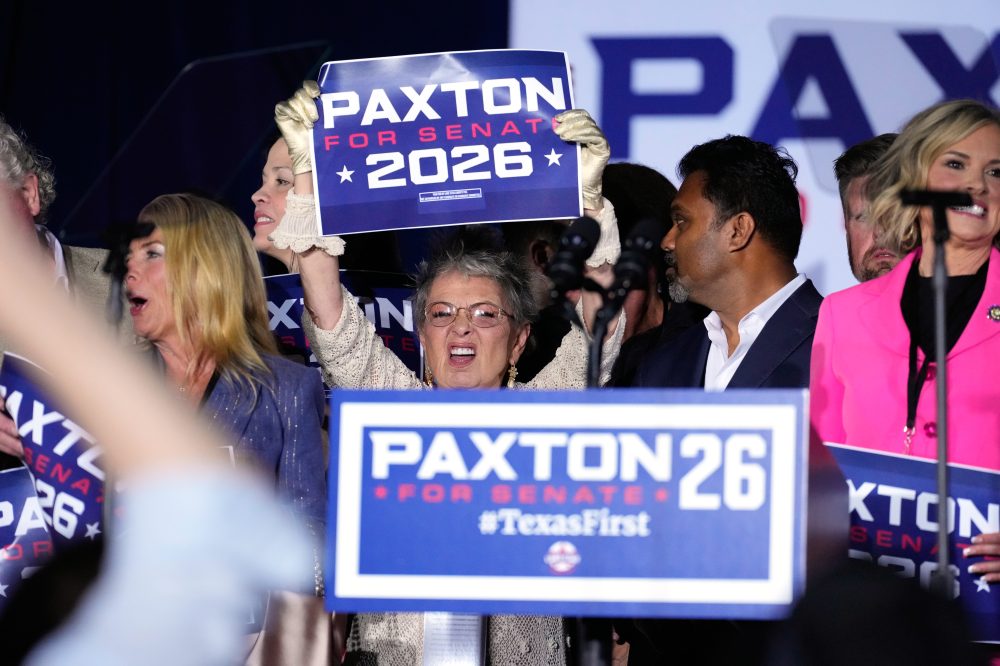
Two embattled U.S. Senate candidates made their way to Washington Tuesday, seeking to solidify party backing despite mounting concerns about their troubled campaigns. Texas Republican Ken Paxton and Maine Democrat Graham Platner are both working to convince party leaders they can win crucial races this November.
Both politicians are visiting the nation’s capital as their respective parties worry these candidates might jeopardize winnable seats during the midterm elections, with Senate control hanging in the balance for Trump’s remaining two years in office.
Paxton’s Washington agenda includes a White House meeting with President Donald Trump, following the president’s endorsement that helped him defeat Sen. John Cornyn in last month’s Texas runoff. A source familiar with the president’s schedule confirmed the planned meeting but wasn’t authorized to speak publicly about it.
Republican senators have expressed doubts about Paxton’s viability against Democratic challenger James Talarico this fall. The Texas attorney general carries significant baggage, including criminal charges, impeachment proceedings, and public revelations about extramarital affairs.
Paxton is also scheduled to sit down with Senate Majority Leader John Thune, who had supported Cornyn in the primary race. During the campaign, the Senate Republicans’ fundraising organization harshly criticized Paxton, calling his conduct “repulsive and disgusting” and highlighting his estranged wife’s statement that she sought divorce “on biblical grounds.”
On the Democratic side, Platner plans to meet with multiple Democratic senators following recent revelations about his marriage troubles and counseling sessions after he allegedly sent explicit text messages to other women.
Sen. Martin Heinrich, scheduled to meet with Platner today, expressed doubt that Maine voters care much about Platner’s marital issues. When asked about Platner’s chances in the race, Heinrich responded “we’ll have to see” and “I suspect so.”
These latest personal revelations have intensified Democratic concerns about Platner, who previously faced criticism over old Reddit comments that minimized sexual assault and a tattoo associated with Nazi imagery. Platner has issued apologies for the posts and had the tattoo covered.
Similar to Paxton’s situation in Texas, Platner wasn’t the party establishment’s preferred choice, as Senate Minority Leader Chuck Schumer had endorsed Maine Gov. Janet Mills. However, Platner became the likely nominee after Mills ended her campaign several weeks ago due to fundraising challenges.
Maine’s primary election is set for June 9, where Platner would face Sen. Susan Collins, a Republican seeking her sixth term. Unseating Collins represents a key component of Democratic efforts to reclaim Senate control.
Collins has successfully fended off Democratic challengers repeatedly throughout her career. During the 2020 election, she secured reelection despite Democrat Joe Biden winning Maine by nearly nine percentage points over Trump.
In Texas, some Republicans worry they may need to redirect valuable resources to help Paxton compete against Talarico, who has emerged as a national fundraising success story.
Despite Republican dominance in Texas spanning decades, leading party figures acknowledge this race could genuinely be competitive.
During Trump’s first term midterms eight years ago, Texas Sen. Ted Cruz barely survived a challenge from Democratic fundraising star Beto O’Rourke, winning by fewer than 3 percentage points.
Republicans currently maintain a 53-47 Senate majority and appeared well-positioned to keep control earlier in the election cycle. However, as Trump’s approval ratings decline and primary battles produce challenging nominees, Democrats have grown increasingly optimistic about their opportunities.
With Senate control at stake, party members have generally rallied behind both Platner and Paxton, despite reservations about their political vulnerabilities.
“My priority is to make sure that Republicans control the majority so we can continue the agenda that we’re on,” said Sen. Roger Marshall, R-Kansas, on Tuesday. “Ken Paxton is absolutely necessary as far as keeping that majority. I have faith that the people of Texas will support him, and he’ll get across the finish line.”
Sen. Bernie Sanders, a Vermont independent who caucuses with Democrats, confirmed Monday his continued support for Platner. “Of course,” he said. “Why would I not?”
The independent senator, who plans to meet with Platner, suggested the nation should “focus on issues more important than the Platner marriage.”
Democratic lawmakers in New York have entered the national battle over congressional district boundaries, though any changes won’t impact this year’s midterm contests.
State legislators introduced legislation Monday aimed at gaining greater influence over how district lines are drawn, potentially setting the stage for more favorable congressional maps in the 2028 election cycle.
The initiative represents Democrats’ response to Republican redistricting activities in other states, though current state constitutional requirements prevent immediate map changes. Any constitutional modification must receive legislative approval twice across separate years before appearing on a voter referendum.
The proposed changes would alter existing redistricting regulations in the state constitution, making it easier for Democrats to create new districts while eliminating current restrictions on politically advantageous boundary drawing.
While the amendment wouldn’t influence this year’s congressional races, it could become significant in future cycles following a U.S. Supreme Court decision that weakened key Voting Rights Act protections, sparking intensified redistricting conflicts nationwide.
Similar efforts are developing in other states. Maryland’s Democratic-controlled legislature may examine a constitutional amendment this summer for congressional redistricting before 2028. Georgia’s Republican legislators plan to modify congressional and state legislative boundaries following the Supreme Court decision.
Mississippi’s Republican governor has indicated expectations that lawmakers will redraw districts for the U.S. House, state legislature and state Supreme Court by 2027.
This redistricting activity followed President Donald Trump’s encouragement for Republicans to utilize available methods for creating district lines that could help maintain the GOP’s slim House majority in November’s midterm elections. Democrats responded with counter-efforts in various states, though anti-gerrymandering regulations sometimes limited their options.
Democratic Gov. Kathy Hochul described her state’s proposal as giving “New Yorkers the power to fight back against attempts by Donald Trump and his allies to rig our elections.”
“As Republicans across the country redraw maps to shield themselves from accountability, it’s more important than ever that New Yorkers have a voice in the process,” she said.
The constitutional amendment maintains the existing bipartisan independent redistricting commission while establishing stricter deadlines for redistricting proposals. It would also permit map approval through simple legislative majority votes.
Legislative passage is anticipated this week, but another approval will be required next year before the measure reaches voters in 2027. If voters approve, Democrats could begin adjusting districts for 2028 elections.
New York Republicans have criticized Democrats for attempting to undermine the state’s redistricting procedures.
“New York Democrats, who proclaim to want to protect democracy, they only protect it when it’s convenient, when it suits their purpose, when it helps them gain power,” said U.S. Rep. Mike Lawler, a Republican who controls a purple district in New York’s Hudson Valley.
“They don’t care one iota about our elections, they don’t care one iota about the integrity of our elections when it doesn’t serve their purpose,” he said.
Earlier this year, the U.S. Supreme Court dismissed a Democratic challenge to the boundary lines of New York City’s sole Republican-controlled congressional seat.
State legislative Democrats modified the congressional map in 2024 to provide modest advantages in several competitive districts, helping their party secure additional seats. Democrats presently hold most of the state’s congressional districts.
Canada is pushing the United States and Mexico to extend their trilateral trade pact for an additional 16 years, timing the request as U.S. President Donald Trump renews his rhetoric about incorporating Canada as America’s 51st state.
On Tuesday, Dominic LeBlanc, Canada’s minister for U.S. trade, dispatched correspondence to United States Trade Representative Jamieson Greer and Mexico’s Secretary of Economy Marcelo Ebrard expressing Canada’s position on the matter.
“The Agreement is highly beneficial to each of our countries and to the integrated North American economy,” LeBlanc wrote.
The correspondence arrives before the planned July assessment of the United States-Mexico-Canada Agreement, known as USMCA, which represents the current version of a North American trade framework that has connected the three nations’ economies since the early 1990s.
Both LeBlanc and Canada’s Chief Trade Negotiator, Janice Charette, traveled to Washington on Tuesday for discussions with Greer. LeBlanc has previously cautioned that the trade pact might face yearly assessments and suggested such uncertainty could be an aim of the Trump administration.
Trump shared “51st State!” on social media Monday, linking to coverage about Canada potentially entering a technical recession. U.S. Ambassador to Canada, Pete Hoekstra, subsequently shared the same post.
“I can’t believe I have to say this again, but Canada will never be the 51st state. Canada is not for sale,” Ontario Premier Doug Ford posted in response on Tuesday.
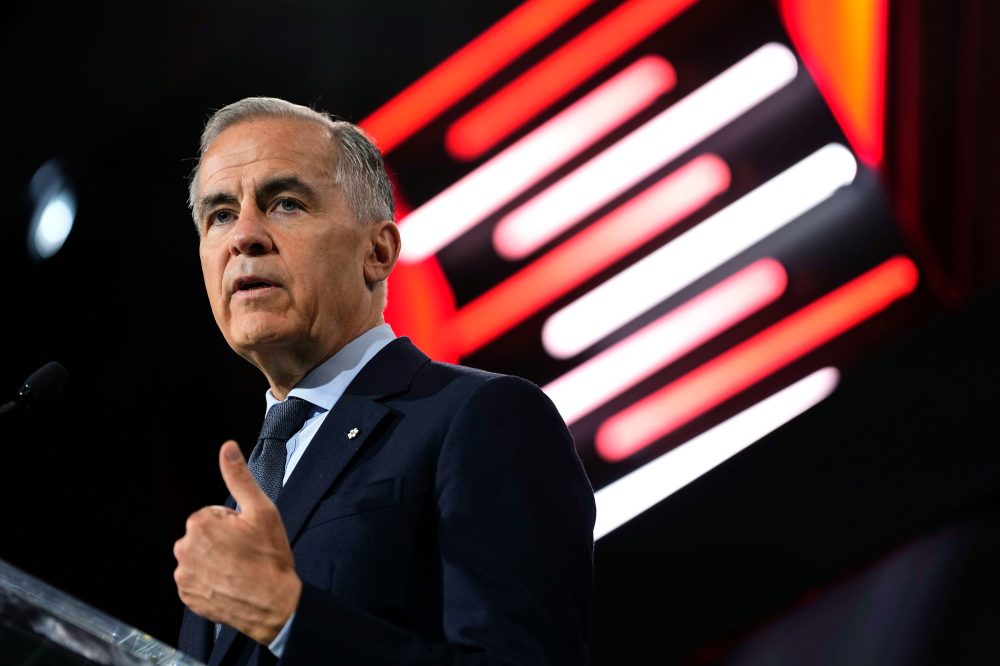
Prime Minister Mark Carney admitted to some economic challenges in Canada while entering Cabinet meetings Tuesday. Carney noted that the U.S. maintains roughly 30 trade disputes with Canada versus nearly 60 with Mexico.
The United States has the option to exit the agreement with six months’ notice, implement yearly reviews moving forward, or approve another 16-year extension.
“There is a possibility of a new partnership there,” Carney said.
The USMCA has protected Canada and Mexico from many of Trump’s protectionist policies since numerous goods from both nations fall under the free trade framework. However, certain targeted tariffs on products like aluminum continue to harm the interconnected North American economic system.
Trump’s repeated suggestions about making Canada the 51st state have angered Canadians, leading to significant numbers canceling travel plans to the United States.
Three dairy organizations have formally requested that the Office of the U.S. Trade Representative include protections for common food names as a mandatory requirement in the modernization of the African Growth and Opportunities Act. NMPF, USDEC, and the Consortium for Common Food Names filed their official request on May 13.
The African Growth and Opportunities Act is federal legislation that grants sub-Saharan African nations tariff-free entry to American markets provided they satisfy specific economic and human rights criteria.
In their formal request, the dairy groups praised the Trump administration for emphasizing and incorporating common name provisions into nine mutual trade deals so far, which allow American dairy producers to sell products using internationally recognized generic names such as “parmesan” and “feta.” The organizations called on USTR to carry this approach forward into AGOA by establishing common name protections as a mandatory requirement for participating nations.
The issue carries considerable weight because the European Union has systematically employed geographical indication clauses in trade deals to exclude American competitors by claiming exclusive rights to generic cheese terminology. The modernization of AGOA presents an important opportunity to counter this pattern, and NMPF is working alongside congressional partners and administration officials to establish fair competition for American dairy products throughout Africa.
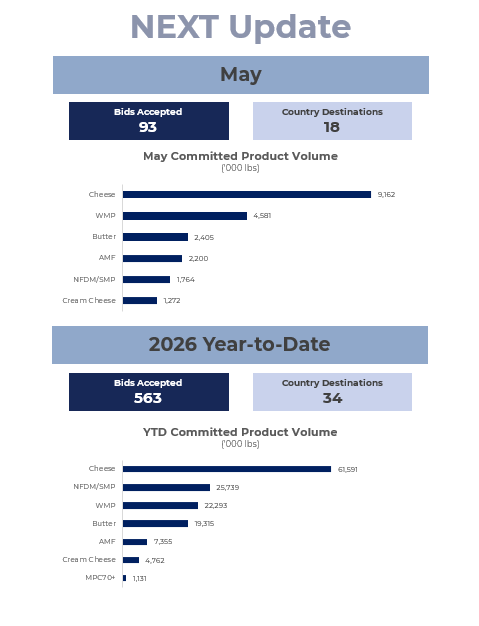
During May, cooperatives belonging to NEXT finalized 93 export agreements, representing 21.4 million pounds of dairy products for NEXT-supported international sales in 2026. The shipments are destined for buyers across Asia, the Americas, and the Middle East-North Africa region, with deliveries scheduled between May and December.
International sales play a vital role in supporting dairy farmers and their cooperatives nationwide. Regardless of whether cooperatives directly participate in overseas trade, accessing global markets remains crucial. NEXT serves as a bridge to connect American dairy products with international buyers by addressing competitive challenges facing U.S. dairy exports.
The dairy product volumes mentioned represent existing delivery contracts rather than finalized export shipments. NEXT will distribute export support payments to successful bidders only after confirming actual product shipment and delivery through proper documentation requirements.
The National Milk Producers Federation and the U.S. Dairy Export Council joined forces with Farmers for Free Trade to organize a roundtable discussion about the U.S.-Mexico-Canada Agreement on May 6 at the Belgioioso facility in Green Bay, Wisconsin. The event brought together Congressman Tony Wied, R-WI, Land O’Lakes producer Amber Horn-Leiterman, and leaders from Wisconsin’s agricultural and business sectors.
During the gathering, the National Milk Producers Federation advocated for specific enhancements to dairy-related sections of the trade agreement, focusing on stopping Canada’s continued mishandling of dairy tariff-rate quota management, tackling Canadian workarounds of dairy protein export rules, and making sure Mexico maintains complete U.S. cheese market access.
The organization continued its advocacy efforts two days later in Arizona, where Jim Boyle, Jr. from United Dairymen of Arizona took part in a May 8 Phoenix roundtable discussion with the governor. The Arizona Chamber of Commerce & Industry and Farmers for Free Trade organized the event.
Boyle spoke about the increased export possibilities that dairy farmers have received through both the North American Free Trade Agreement and the current trade deal, while stressing the significance of enhancing and extending the existing agreement.
As the required July 1, 2026, joint review of the trade agreement draws near, the National Milk Producers Federation and the U.S. Dairy Export Council are working to ensure that unresolved dairy disputes with Canada are settled, that trade with Mexico stays completely open, and that all three countries agree to continue the trade partnership.
According to a Tuesday report from The Athletic, the National Women’s Soccer League championship match for 2026 is scheduled to take place on November 21 at Audi Field in Washington, D.C.
This will mark only the second occasion since the league began in 2013 that the championship will be held in the nation’s capital, which serves as home to the Washington Spirit. The previous time was during the 2022 season, when the Portland Thorns claimed victory over the Kansas City Current with a 2-0 win in front of 17,624 spectators.
League officials have not provided any statement regarding the reported plans.
Since the league’s first season in 2013, only one other location has welcomed the championship game more than once – Providence Park in Portland, Oregon, which hosted the event in both 2015 and 2018.
The championship will cap off a playoff format featuring eight qualifying teams from what will be a 16-team league, with quarterfinal and semifinal rounds preceding the final match.
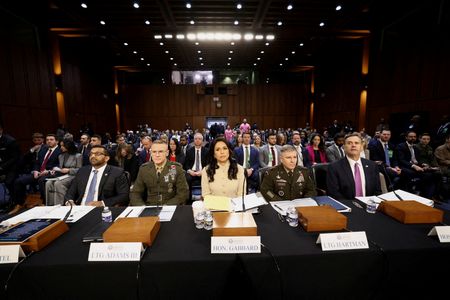
WASHINGTON, June 2 (Reuters) – America’s premier intelligence agency has withdrawn from participating in key national security assessments, including reports on the Iran conflict, as tensions with the nation’s top intelligence office reach a breaking point, according to sources with knowledge of the situation.
The conflict between the CIA and the Office of the Director of National Intelligence (ODNI) has been escalating for over twelve months, undermining the cooperative intelligence analysis that presidents have historically depended on for navigating international crises, according to a government official and three individuals with direct insight into the matter.
The sources requested anonymity when discussing confidential internal issues.
Central to these disputes is disagreement over a special team established in April 2025 by Tulsi Gabbard, the director of national intelligence, according to the sources.
The CIA, under Director John Ratcliffe’s leadership, argues that Gabbard’s Director’s Initiatives Group has operated irresponsibly by bypassing established intelligence-sharing and declassification procedures, according to two sources. ODNI representatives counter that the CIA has repeatedly prevented the team from accessing intelligence materials.
This breakdown in intelligence agency cooperation occurs during a critical period for the Trump administration, as the United States remains engaged in the Iran conflict while confronting security threats from Chinese military buildup to Russia’s ongoing war in Ukraine.
The situation also indicates that reforms implemented after September 11, 2001, which established a director of national intelligence to coordinate America’s 18 intelligence organizations, have failed to eliminate institutional dysfunction.
“ODNI is supposed to be the oil in the system that keeps the arteries of the intelligence community flowing, that removes blockages,” said Beth Sanner, a former deputy director of national intelligence during President Donald Trump’s first term.
“When you’re not doing that, then you set up the potential that agencies are just going to kind of pull back into their stove pipes and you set yourself up for intelligence failures.”
Gabbard announced last week her intention to resign as Trump’s top intelligence official on June 30, citing her husband’s health issues. Trump announced Tuesday his selection of Federal Housing Finance Agency chief Bill Pulte as acting director of national intelligence.
“The president and policymakers continue to receive the best intelligence and analysis” from the intelligence agencies, said Olivia Coleman, an ODNI spokeswoman, adding that ODNI and the agencies it oversees “communicate and collaborate daily with CIA counterparts across the full spectrum of intelligence products and operations.”
The Director’s Initiatives Group “operated within ODNI’s oversight authorities and in support of the president’s executive orders,” Coleman said.
Reuters reported in February that Gabbard had disbanded the team and moved its staff to other positions within her agency following congressional examination of its operations.
“Under Director Ratcliffe, CIA quickly moved out on President Trump’s priorities with a more aggressive agency taking smart risks to outmaneuver our adversaries and give the United States a decisive advantage,” CIA Director of Public Affairs Liz Lyons said.
White House spokesman Davis Ingle said Trump’s “peace through strength foreign policy is a tried-and-true approach that keeps America safe and deters global threats,” and media efforts to sow internal division would fail.
“President Trump has full confidence in his entire exceptional national security team,” Ingle said.
REDUCED PARTICIPATION IN INTELLIGENCE REPORTS
The CIA’s decision to substantially reduce its involvement in reports produced by Gabbard’s office represents one of the most significant outcomes of the agencies’ mutual mistrust.
The CIA has traditionally been a primary contributor to analyses produced by the National Intelligence Council (NIC), America’s leading intelligence analytical organization. These reports hold considerable influence, particularly during wartime.
Two sources with direct knowledge indicated that reports concerning Iran — where U.S. military forces have been engaged since February — are among those the agency no longer routinely contributes to.
The CIA and ODNI now function essentially as separate analytical entities, the sources indicated.
At one time last year, the CIA, responding to tensions between the agencies, temporarily stopped publishing NIC reports on the internal intelligence community distribution platform it manages, briefly restricting access to the analytical products, sources said.
A government official described the reports being withheld for “a few hours” due to a “processing issue.”
The inter-agency tensions began shortly after Gabbard took office in February 2025, the four sources indicated.
One of her initial actions was to establish stronger oversight of the Presidential Daily Brief production, sources said. The CIA had historically played a leading role in assembling the brief, a top-secret daily collection of intelligence reports prepared for the president.
Relations deteriorated further with the establishment of the Director’s Initiatives Group to “root out” alleged politicization of the intelligence community, sources said.
The team also worked to declassify materials concerning the assassination of former President John F. Kennedy, while investigating election voting machine security and COVID-19 origins.
Critics, including former intelligence professionals, allege the team was created as a mechanism for retaliation against Trump’s perceived political opponents.
Team members repeatedly requested the CIA provide intelligence and materials necessary for ODNI-directed investigations, but felt insufficient information was supplied, according to two knowledgeable sources.
REMOVAL OF CIA PERSONNEL
In May 2025, Gabbard removed two senior CIA officials who headed the NIC.
An intelligence official speaking anonymously about internal government affairs said ODNI dismissed the two “because they created a toxic work environment, as documented in a workforce survey, and because they had a history of politicizing intelligence.”
The official provided no evidence supporting these allegations.
In August, Gabbard revoked security clearances from 37 current and former officials, inadvertently exposing the identity of an undercover CIA operative working abroad.
Gabbard accused the 37 of politicizing and leaking intelligence, but provided no supporting evidence.
Former officials and others alleged the action was partially retaliatory for a 2017 intelligence assessment concluding Russia had conducted an extensive influence campaign to favor Trump in the 2016 presidential election.
The CIA-ODNI disputes became public last month when a CIA officer assigned to the Director’s Initiatives Group testified to a Senate committee that the agency prevented the group from accessing intelligence regarding COVID-19 origins.
This disagreement has prompted an investigation by the intelligence community inspector general’s office, an independent oversight body located at ODNI, according to two sources familiar with the inquiry.
Reuters was unable to establish the investigation’s parameters.
The House of Representatives voted on May 13 to pass bipartisan legislation known as the Combatting Organized Retail Crime Act (CORCA), with strong backing from NMPF and the U.S. Dairy Export Council.
NMPF has led advocacy efforts for this legislation, with staff conducting meetings with Congressional members and the White House National Economic Council to emphasize the serious harm that organized cargo theft inflicts on dairy shipping operations. On April 30, NMPF President & CEO Gregg Doud held discussions with Sen. Chuck Grassley, R-IA, who is the bill’s primary sponsor, to discuss how dairy operations face exposure to container break-ins and to express appreciation for his leadership on the matter.
While dairy products typically aren’t the primary target of organized criminal operations, they have increasingly become unintended victims, resulting in expensive shipment returns, limited insurance options, and genuine threats to food safety and the reputation of U.S. dairy as a reliable global supplier.
The legislation would create a coordination center under the Department of Homeland Security to streamline investigation and prosecution activities. NMPF actively worked to guarantee that food and agriculture sectors remained part of the final bill, which now moves forward to the Senate for consideration.
Staff members dedicated to supporting young dairy farmers from various cooperatives came together on May 19-20 to explore ways to better nurture the dairy industry’s emerging leaders.
The two-day conference took place in Middleton, WI, with Foremost Farms USA serving as host. Seventeen staff members from nine different member cooperatives participated, joined by representatives from industry organizations such as the American Jersey Cattle Association, Professional Dairy Producers, Dairy Girl Network and Dairy Management Inc.
Conference attendees shared successful strategies and discussed various approaches to enhance young farmer participation in cooperative programs and to find and obtain sponsorship funding. The gathering also featured a presentation by Courtney Berner from the University of Wisconsin Center for Cooperatives, who outlined methods cooperatives can implement to facilitate smoother leadership changes and provide better support for up-and-coming leaders in the dairy sector.
Dairy industry leaders will gather next week in Arlington, Virginia for the NMPF board meeting, which will feature educational sessions on artificial intelligence and coordinated congressional advocacy efforts involving both board members and Young Cooperators.
The comprehensive schedule includes multiple components:
Various committee sessions are planned, covering the Immigration Task Force, Political Action Committee, Economic Policy Committee and Scholarship Committee. Agricultural officials Deputy Secretary of Agriculture Stephen Vaden and Ambassador Julie Callahan will share insights on the farming economy and trade conditions.
A bipartisan fundraising breakfast for the Political Action Committee will feature Tony Wied, R-WI, and Josh Riley, D-NY. Leadership from Dairy Management Inc., including CEO Barb O’Brien and NMPF Board Member Charles Krause, will provide organizational updates.
Educational sessions and conversations, including the artificial intelligence workshop focused on dairy industry applications, will begin June 8 and extend beyond the official meeting dates of June 9-10, when the NMPF Animal Health and Wellbeing Committee convenes. The NMPF Young Cooperators annual fly-in has been scheduled to coincide with the board meeting this year, enabling greater board member involvement. Legislative discussions will focus on agricultural workforce solutions for dairy operations, maintaining flavored milk programs in schools, supporting the DAIRY PRIDE Act, and pushing for farm bill passage to reach the president’s desk.
Curtis Blair anxiously monitored his inbox throughout the weekend, waiting for word from the NBA about Finals referee selections. The anticipation was excruciating.
“Every two minutes, I’d check,” Blair explained.
After three days of silence, Blair was returning from visiting his parents in Virginia when he discovered a missed call in his driveway. The caller was Albert Sanders Jr., who oversees NBA referee operations as executive vice president.
That phone call delivered the news Blair had been hoping to receive for years.
When Blair returned the call, he learned he would join the NBA Finals officiating crew for the first time. Among the dozen referees chosen to work the championship series starting Wednesday between San Antonio and New York, Blair stands as the sole rookie selection.
“Very emotional moment, very emotional moment for me, because I’ve been right there on the doorstep for so many years,” Blair expressed. “Yeah, very emotional. This is my 18th year and one thing I had to realize going through this journey is that everybody has their own journey. Everybody has their own timetable. You become a referee, become an umpire, you get to the first round, the second round, third round. You just have to worry about yourself and your journey.”
The NBA announced the complete roster Tuesday. Scott Foster leads the group with his 19th Finals assignment, setting the record among active officials. Joining Foster and Blair are: Tony Brothers (15th Finals), Marc Davis (15th), James Capers (14th), Zach Zarba (13th), John Goble (10th), Josh Tiven (7th), James Williams (6th), Courtney Kirkland (5th), Sean Wright (3rd) and Tyler Ford (2nd).
Game crews are typically announced at 9 a.m. EDT each game day.
“Being selected to work the NBA Finals is the highest honor for an NBA official, and I congratulate them on an outstanding and well-earned achievement,” stated Byron Spruell, the NBA’s president for league operations. “We are grateful for their unwavering dedication to the game and pursuit of excellence in their craft.”
Blair was drafted by Houston in the second round of 1992 but never appeared in an NBA regular season contest. After playing overseas, he transitioned to officiating and has worked over 1,000 NBA games since joining in 2008.
Officials chosen for the Finals receive distinctive white warm-up jackets exclusively for championship series participants. While Blair owns two from serving as an alternate in 2021 and 2022, this jacket carries deeper significance.
“This is so funny,” Blair noted. “One referee called me and he said, ‘I know you got two other white jackets, but they had an asterisk on it. So, you can throw those away. Now you got a real one.’”
Rehoboth Beach has scheduled its annual municipal election for Saturday, August 8, 2026, following the city’s tradition of holding the vote on the second Saturday in August.
Voters will select a mayor and fill two commissioner seats during the election. Candidates had until June 1 to submit their nominating petitions.
Four individuals have filed to run for mayor:
Commissioner Suzanne Goode
William J. Raak
Commissioner Susan Stewart
Commissioner Craig Thier
Three candidates are seeking commissioner positions:
Jeffery Goode
Commissioner Patrick Gossett
Commissioner Mark Saunders
According to the city charter, the Board of Commissioners will review each candidate’s qualifications during their regular meeting on June 18.
Election day voting will run from 10 a.m. to 6 p.m. at the Convention Center. Additional information about the election process, voter requirements, and absentee ballot procedures is available on the city’s website at Local Elections section.
The Minneapolis-based food giant General Mills has reached an agreement to transfer ownership of its Häagen-Dazs ice cream retail locations in mainland China to a group of investors that includes the Chinese tea company Ningji.
According to a company announcement released Monday evening, the transaction will grant the purchasing group exclusive rights to operate Häagen-Dazs branded ice cream shops and gift retail businesses throughout mainland China. General Mills will maintain its distribution agreements for Häagen-Dazs products with Chinese grocery stores and food service companies.
The companies did not reveal the purchase price for the transaction. Officials expect the sale to be finalized before the year ends.
When contacted Tuesday, General Mills did not provide immediate information about the total number of Häagen-Dazs locations it operates in China. The company’s most recent annual filing indicates it runs 332 ice cream shops globally.
Ningji currently manages approximately 3,000 tea retail locations throughout China. The company launched its store network in 2021 and has secured investment backing from ByteDance, the Beijing-based company behind TikTok, along with Shunwei Capital.
According to Yaling Jiang, an independent Chinese consumer analyst, Häagen-Dazs has been setting premium pricing in China “without delivering sufficient product value or cultural relevance.”
The brand’s offerings — conventional ice cream with elevated fat content — have “passed its peak” in China as consumers increasingly prefer low-fat, airy gelato alternatives, she noted.
International companies have increasingly been transferring ownership of their Chinese operations to local investors amid declining consumer confidence and slower economic expansion.
Starbucks announced in November its plans to establish a joint venture with Chinese private equity company Boyu Capital in an approximately $4 billion arrangement that gives Boyu up to 60% ownership of its Chinese operations.
In February, Toronto-headquartered Restaurant Brands International — which owns the U.S. fast food chain Burger King — announced the formation of a joint venture with Chinese investment company CPE to manage and grow the Burger King restaurant network in China.
Under that agreement, CPE contributed roughly $350 million to the joint venture and holds approximately 83% ownership of the operation.
WASHINGTON — Federal officials have unveiled plans to impose 25% import fees on goods coming from Brazil, accusing the South American nation of engaging in unfair trade practices that harm American business interests.
The proposal was announced Monday evening following a federal trade investigation that criticized Brazil for weak anti-corruption measures and imposing its own unfair import duties on American products.
U.S Trade Representative Jamieson Greer acknowledged having productive discussions with President Luiz Inácio Lula da Silva and other Brazilian leaders alongside President Donald Trump. However, Greer stated that “we continue to have substantial differences in resolving the issues identified in this investigation.”
Officials have set July 6 as the date for public input on the proposed import fees.
Trade attorney Ryan Majerus from King & Spalding pointed out that the administration’s proposal leaves out more than half of American imports from Brazil, excluding items like aircraft and essential minerals.
The current administration used Section 301 of the Trade Act of 1974 as the legal basis for examining Brazil’s trade policies.
Previously, the administration had imposed a 50% tariff on Brazilian goods last year, primarily in response to Brazil’s legal action against former president Jair Bolsonaro for attempting to challenge his 2022 election loss.
The U.S. Supreme Court determined in February that the administration exceeded its legal authority by using the International Emergency Economic Powers Act of 1977 to implement broad tariffs on trading partners, including the measure targeting Brazil.
Nevertheless, tariffs imposed under Section 301 have withstood court challenges, and officials are expected to rely on this legal framework for additional tariffs and to recover tax revenue lost due to the Supreme Court’s rejection of the previous tariff structure.
IRBIL, Iraq — A major Iran-backed armed faction in Iraq announced Tuesday that it plans to transfer its weaponry to government oversight, representing a significant development in the new administration’s push to bring independent militias under state authority.
Asaib Ahl al-Haq announced the establishment of a committee to manage this transition, which will include cataloging its personnel, armaments and equipment while coordinating with the armed forces’ commander-in-chief. The organization framed this choice as responding to appeals from Iraq’s leading Shiite religious authority and the Iran-aligned Coordination Framework, Parliament’s dominant bloc that controls Iraqi politics.
The Middle Eastern conflict has highlighted the weakness of Iraq’s governmental structures and their insufficient capacity to control these organizations. A separate standoff between Washington and the militias has intensified the situation, with groups functioning as extensions of Iran’s regional efforts and increasing attacks on U.S. interests in Iraq until a fragile ceasefire agreement was established in April.
The initial major development occurred one week prior, when prominent Shiite cleric Muqtada al-Sadr announced his Saraya al-Salam militia, alternatively called the Peace Brigades, would separate from his political organization and merge with state institutions.
Facing Washington’s pressure, Prime Minister Ali al-Zaidi has been attempting to establish state control over armaments. Al-Zaidi, a 40-year-old banker who took office last month, has positioned a state weapons monopoly as central to his agenda. The Trump administration has cautioned against any government influenced by Iran-linked groups and connected defense cooperation and funding to initiatives aimed at controlling them.
Numerous Iran-backed militias receive funding through Iraq’s state budget and are integrated within the security structure, though they remain outside government authority. This situation has attracted criticism from the United States and other nations that have suffered from their attacks and argue Baghdad has not taken sufficient action.
Multiple armed groups allied with Iraq’s Coordination Framework have adopted different positions regarding efforts to place weapons under state oversight. Two significant organizations, Kataib Hezbollah and Harakat al-Nujaba, have opposed disarmament, connecting the matter to Iraq’s sovereignty and foreign military presence.
Kataib Hezbollah praised other groups’ decisions to place weaponry under state control but stated its own military operations will persist as part of what it calls “resistance work.” In a recent statement from its Abu Mujahid al-Assaf social media channel, the organization indicated it would provide coordination with the Popular Mobilization Forces instead of surrendering weapons.
The PMF, a state-supported coalition of primarily Shiite armed organizations, was established in 2014 to combat the Islamic State group. Many of its constituent groups maintain independent command structures and Iranian connections.
Delaware State Police have taken a 43-year-old Harbeson resident into custody on multiple felony charges, including his third DUI offense and serious drug violations, after a Sunday evening traffic stop.
Authorities arrested Michael Mock following an incident that occurred on May 31, 2026, around 9:40 p.m. A state trooper observed a Chevrolet Camaro traveling westbound on John J. Williams Highway near Robinsonville Road, noting the vehicle was exceeding the speed limit and weaving across lanes.
After stopping the vehicle, the trooper made contact with Mock, who displayed clear indicators of being under the influence. Following the administration of standardized field sobriety tests, Mock was placed under arrest for impaired driving. A subsequent inventory search of his vehicle revealed significant contraband.
Officers discovered approximately 169.83 grams of heroin, equivalent to roughly 5,661 individual bags, along with a .40 caliber handgun, a large capacity magazine with ammunition, and drug-related equipment.
Records checks revealed Mock had previously been convicted twice on DUI-related charges, making this arrest his third such offense.
Following his arrest, Mock was transported to Troop 7 headquarters and processed on numerous charges. He appeared before Justice of the Peace Court 11 for arraignment and was subsequently housed at Sussex Correctional Institution under a $69,500 cash bond.
The extensive list of charges against Mock includes:
Possess, Purchase, Own, or Control a Deadly Weapon, Semi Auto or Auto, by Person Prohibited Who Also Possesses a Controlled Substance (Felony)
Carrying a Concealed Deadly Weapon – Firearm (Felony)
Possession of a Firearm During the Commission of a Felony (Felony)
Possession of a Large Capacity Magazine (Felony)
Possession with Intent to Deliver a Controlled Substance, Tier 3 Quantity (Felony)
Possession of a Controlled Substance, Tier 3 Quantity (Felony)
Two University of Delaware baseball players have been honored for their outstanding academic performance alongside their athletic achievements.
College Sports Communicators revealed Tuesday that graduate student Doug Marose and Junior Ryan McLaughlin have both earned Academic All-District recognition for their excellence in the classroom.
The Academic All-District program recognizes student-athletes who demonstrate strong performance both on the field and in their academic pursuits. The honors highlight the commitment these Blue Hens players have shown to balancing their educational responsibilities with their baseball careers.
Both Marose, who is completing his graduate studies, and McLaughlin, currently a junior, represent the University of Delaware baseball program’s dedication to developing well-rounded student-athletes who excel in multiple areas of their college experience.
A Bahrain court issued a life imprisonment sentence Tuesday for a National Intelligence Service agent connected to a detainee’s death while in government custody.
According to Bahrain’s state news agency, the verdict followed an investigation that determined the unnamed intelligence officer caused the detainee’s death. Authorities brought charges in April that included “assault resulting in death.”
While the public prosecutor’s special investigative unit withheld the victim’s identity, the timing corresponds with Mohamed al-Mousawi, a 32-year-old Shiite Muslim. Family members received his body showing bruises, burns and cuts, according to witnesses present at the morgue and funeral. An Associated Press interview with a Physicians for Human Rights forensic specialist revealed the injuries were consistent with blunt force trauma and torture.
Al-Mousawi was part of a larger group detained or prosecuted for demonstrations backing Iran or espionage-related charges during the conflict’s peak, when Iranian missiles targeted Bahrain. The Sunni-led nation with a Shiite majority hosts the U.S. Navy’s Fifth Fleet. Officials have characterized the predominantly Shiite demonstrators as Iranian agents.
Human rights organizations criticized the arrest operations and called for a probe into Al-Mousawi’s death.
The Bahrain Institute for Rights and Democracy declared Tuesday that the life sentence was insufficient, calling for openness regarding the officer’s identity and the events leading to Al-Mousawi’s death.
Bahrain’s administration has rejected claims of sectarian bias, stating that officials have operated within legal bounds and that independent organizations examine abuse allegations.
HARARE, Zimbabwe (AP) — A constitutional amendment proposal was presented to Zimbabwe’s Parliament on Tuesday by the nation’s justice minister, seeking to prolong the presidency of the 83-year-old leader and change the electoral system from direct public voting to legislative appointment.
The legislation would postpone upcoming 2028 elections by two years and keep President Emmerson Mnangagwa in office until 2030. Additionally, it would increase the duration of terms for the president, MPs, councilors and mayors from five years to seven years.
The proposal has intensified political discord in a nation where government opponents frequently face detention or intimidation.
Justice Minister Ziyambi Ziyambi stated last week that he plans to finish the legislative procedures and secure Parliamentary approval by June’s conclusion, allowing Mnangagwa to enact the law afterward.
Mnangagwa has held office since 2017 after the widely-supported military-assisted removal of his former mentor and long-serving leader, Robert Mugabe, who passed away in 2019.
The governing ZANU-PF party maintains a Parliamentary majority and has developed positive relationships with a segment of the divided opposition.
Opponents maintain that lengthening presidential terms necessitates a public referendum. Advocates respond that Parliament has authority to approve these modifications since the two-term restriction would stay intact, despite each term becoming longer. Zimbabwe’s Constitutional Court has not yet decided on multiple legal challenges against the proposal.
Severe weather events including hurricanes, floods, wildfires and other natural disasters can trigger intense feelings of anxiety and psychological distress.
Mental health professionals who work with disaster survivors say there are effective strategies to manage this stress. Creating a comprehensive emergency plan stands out as one of the most crucial steps, experts emphasize.
“Preparation is always one of the most powerful tools that I can imagine — not just for safety, but also for mental health,” said Ruben Juarez, a health economist at University of Hawaii professor who directed the Maui Wildfires Exposure Study, which looked at health and social impacts of the deadly 2023 fires.
After a disaster passes, mental health experts recommend working to rebuild normalcy through seeking support networks, returning to daily routines and assisting others in recovery efforts.
Kevin Westmoreland, who co-owns The Corner Kitchen in Asheville, North Carolina, had previously learned meditation and breathing techniques to manage restaurant industry pressures. These skills proved valuable when Hurricane Helene’s remnants brought devastating flooding two years ago, sending water and debris through his establishment and leaving “everything was tossed around inside the building as if it was in a blender,” he recalled.
“All you could do to get through it is try to take a breath and move forward, step by step,” he said.
Advance preparation represents a powerful tool for reducing disaster-related anxiety, including developing detailed response plans for emergency situations.
Creating evacuation strategies and assembling emergency supply kits can help people feel more in control during uncertain times, said Melissa Brymer, a psychologist and director of terrorism and disaster programs at the UCLA-Duke National Center for Child Traumatic Stress.
She recommends a step-by-step guide for families at ready.gov/plan. The American Red Cross also has extensive guides for hurricane preparedness. Make sure to consider special preparations for anyone with disabilities, special needs, new mothers and expectant mothers, Brymer advises. Also make sure that pets are included in disaster plans.
Since weather patterns remain unpredictable, accepting that certain factors will remain beyond personal control can help reduce stress levels.
Staying well-informed through reliable sources can also help people feel more prepared for extreme weather situations. Mental health experts suggest focusing on factual information and monitoring official weather alerts and warnings.
The Anxiety and Depression Association of America recommends discussing worries and concerns with trusted friends, family members, therapists or other supportive individuals.
When speaking with children, parents should use straightforward language while explaining that storms occur naturally. While children may feel scared of severe weather, many are also curious to understand these phenomena better.
Adults should acknowledge when situations feel stressful, Brymer noted. However, some discussions should remain between adults to prevent unnecessarily frightening young people.
“Kids kind of register our panic, and then they’re going to panic if we’re starting to panic,” she said. “We don’t want them to start worrying for us.”
Research from the Maui wildfires study revealed that psychological impacts spread throughout entire communities, affecting many residents who lived outside the directly burned areas, Juarez explained. This highlights the importance of recognizing that community disasters can affect mental health even when homes or neighborhoods escape direct damage.
Westmoreland said maintaining perspective helped him manage stress after Helene’s impact.
“We try to look at it like it’s just a business and equipment — as long as our employees are safe, those are the important things,” he said.
The historic restaurant, constructed around 1895 by American industrialist George Vanderbilt in the Biltmore Village section of Asheville, has reopened following extensive renovation and repair work.
Additional recommendations from the Anxiety and Depression Association include:
— Engaging in meaningful activities like blood donation, assembling care packages or volunteering to assist others. These actions can provide purpose and counter feelings of helplessness.
— Connecting with others facing similar challenges for mutual support.
— Recognizing that persistent symptoms lasting several weeks may indicate post-traumatic stress disorder and warrant professional assistance.
A dismissed police officer from North Carolina now faces criminal charges after doorbell camera footage captured him striking a woman multiple times in the face during an arrest.
Karson Hyder, 22, surrendered himself at the Cleveland County Detention Center on Monday morning following assault charges stemming from Friday’s incident. He posted a $10,000 secured bond and was released. The footage showing the former Shelby officer hitting Cherrie Moore has gained widespread attention across social media platforms.
The incident occurred while Hyder was responding to a breaking-and-entering report. Department officials suspended him on Friday and terminated his employment the following day.
Court documents indicate that Moore, 34, ran from the scene and fought against being arrested, with charges stating she assaulted Hyder by “grabbing and ripping (his) uniform.”
However, a separate arrest warrant filed Monday accuses Hyder of unlawfully assaulting Moore by “grabbing Moore by the arm, pushing her to the ground and striking her in the face with a closed fist, thereby inflicting serious injury possible broken nose and busted lip.”
State investigators announced Saturday they had launched their own probe into Hyder’s actions. Court documents do not show legal representation for the former officer, and attempts to reach him by phone were unsuccessful.
Moore initially faced charges including breaking and entering, resisting arrest, and assaulting a public officer, though authorities have dropped the latter two charges. She was released without having to post bond. Phone numbers linked to Moore were not working.
Moore’s legal representative, Ronald Haynes, shared with The Associated Press via email that his client “is recovering and receiving treatment for her mental health.”
“The heinous actions of former Officer Karson Hyder will forever negatively impact Ms. Cherrie Moore and her family,” Haynes stated. “It’s a small relief that city officials responded so promptly to terminate and charge Mr. Hyder.”
GREENWOOD, Ind. – A Salisbury University baseball player has earned academic recognition for the second time during his college career. Cole Williams, who plays as a right-handed pitcher for the Sea Gulls, was selected for College Sports Communicators Academic All-District honors.
The College Sports Communicators organization announced the award on Tuesday, marking Williams’ second time receiving this academic distinction during his time with the baseball program.
The National Dairy Farmers Assuring Responsible Management (FARM) Environmental Stewardship Program announced on May 19 that it has updated its Version 3 assessment system, incorporating the newest scientific advances from the Ruminant Farm Systems (RuFaS) model that drives FARM ES Version 3.
Several important factors drove this enhancement:
The updated system now accounts for farming practices when producers provide additional information about their crop operations, which will be included in their overall environmental impact calculations. Emissions from feed production will be separated into purchased versus farm-grown sources for operations that supply cropping details.
Scientists have made significant advances in waste management calculations, including improved temperature sensitivity, enhanced methane modeling for young animals, and the ability to specify how solids are handled after separation processes.
The RuFaS research team will be better positioned to assist FARM ES with technical questions since the program will operate on the most current model framework.
Scientific documentation from the RuFaS team will match the model version used by FARM ES, making it easier for cooperatives, processors, customers, and consultants to understand emission calculations.
Changes to FARM ES reporting will better support greenhouse gas protocol standards for livestock and supply chain reporting.
The platform enhancement demonstrates FARM Environmental Stewardship’s dedication to providing top-tier scientific approaches that serve operations of varying sizes, locations and production methods.
FARM Environmental Stewardship offers a system developed by and for America’s dairy industry, supported by peer-reviewed, reliable research. Dairy producers across the United States actively influence the program, creating unified industry responses to supply chain demands and helping consolidate sustainability tracking into a single system.
FARM ES highlights the excellent conservation practices dairy farmers have implemented for decades and increasingly functions as a pathway for producers to participate in supply chain reward programs and other initiatives that directly benefit their environmental efforts.
Governor Matt Meyer revealed today a collaboration with Thomas Jefferson University that will bring a regional campus of Sidney Kimmel Medical College to Delaware, marking the establishment of the state’s inaugural four-year medical school and representing a significant commitment to improving healthcare accessibility statewide.
Currently, Delaware ranks among just three states across the country that lack a medical school, making this partnership a historic milestone for the First State’s medical education landscape.
President Donald Trump has issued an executive order targeting artificial intelligence advancement and security measures, the White House announced Tuesday.
The directive instructs federal agencies to create cybersecurity standards for sophisticated AI systems, based on the order’s text made public by the White House. The mandate also tells agencies to focus on strengthening cyber protection throughout the government.
The directive requests that the U.S. Treasury secretary establish an AI “cybersecurity clearinghouse, in voluntary collaboration with the AI industry and operators of critical infrastructure, that coordinates and deconflicts scanning for software vulnerabilities, discovers and validates such vulnerabilities, and coordinates and prioritizes remediation and distribution of vulnerability patches,” according to the order’s language.
Alexander Zverev moved closer to his first Grand Slam championship after defeating Spanish teenager Rafael Jodar 7-6(3) 6-1 6-3 to advance to the French Open semifinals on Tuesday.
The German second seed overcame an early setback to secure victory against the 19-year-old opponent, earning his fifth semifinal berth at Roland Garros in the past six years. With Carlos Alcaraz sidelined by injury and both world number one Jannik Sinner and 24-time Grand Slam champion Novak Djokovic already eliminated, Zverev has an excellent opportunity to capture his first major championship.
His next opponent will be either Czech player Jakub Mensik or Brazil’s Joao Fonseca, with a finals berth on the line.
When questioned about reaching another semifinal, Zverev demonstrated his focus on the bigger prize ahead.
“Not really, I don’t really care. I want to keep going, be in the tournament and win the matches ahead of me, that’s my goal,” he said.
“It was a very tough test against a very good player.”
The match started according to expectations, with the highly-regarded Jodar taking an early 4-2 advantage by breaking Zverev’s serve in the opening set.
But the experienced German maintained his focus and fought back into contention, utilizing a series of crosscourt backhand shots that forced his young opponent out of position. Zverev managed to even the score at 5-5 before dominating the tiebreak to claim the first set.
After dropping that crucial opening set, Jodar was unable to recover his form and never mounted a serious challenge for the remainder of the match.
WASHINGTON, June 2 – America’s top diplomat emphasized Tuesday that the United States has not altered its stance regarding Taiwan and continues to support maintaining the existing situation.
“The most important thing to understand is we want to see the status quo preserved as-is at this moment. That’s our policy, that’s what we’ve said, that’s what we continue to say,” Secretary of State Marco Rubio told lawmakers during testimony before the Senate Foreign Relations Committee.
“It’s a very … delicate relationship to balance, but our policy on Taiwan is not changing,” Rubio added.
Concerns arose in Taipei last month following a summit meeting in Beijing between U.S. President Donald Trump and Chinese President Xi Jinping, with questions emerging about America’s dedication to supporting the democratically governed island’s ability to protect itself.
Federal agriculture officials released two significant nutrition policy updates on May 8th that will benefit dairy producers nationwide: new guidelines for milk offerings in school meal programs and revised food stocking requirements for stores accepting SNAP benefits.
The National Milk Producers Federation praised the federal decision to implement the Whole Milk for Healthy Kids Act through updated regulations taking effect June 8th. This marks the first time since 2012 that schools will be permitted to serve whole milk and 2% milk in federally supported meal programs.
During the rule development process, NMPF pushed for comprehensive milk access across all school feeding programs, not limited to lunch service. The organization successfully advocated for inclusion of breakfast programs, the Special Milk Program, and the Child and Adult Care Food Program. Schools will now have flexibility to provide whole, 2%, 1% or skim milk varieties in both unflavored and flavored options throughout all meal services.
On the same date, federal officials unveiled revised stocking requirements for retailers participating in the Supplemental Nutrition Assistance Program.
The modified SNAP regulations maintain dairy’s status as a required food category while expanding recognized varieties to include flavored milk, sour cream and shredded cheese as distinct products. Plant-based milk alternatives face new restrictions, with only three varieties counting toward dairy stocking obligations. These changes align with recommendations NMPF submitted in November comments to federal regulators.
Butter has been removed from mandatory stocking lists and reclassified as an accessory item, matching the treatment of other cooking fats. SNAP recipients can continue purchasing butter with benefits, but stores will no longer need butter inventory to qualify for program participation. Retailers must still maintain seven different dairy products to meet SNAP certification standards.
Dairy farmers across the nation are being urged to prepare for a potential outbreak of New World screwworm after Mexican authorities documented more than 1,200 cases during May. The closest confirmed infection sits approximately 31 miles from the United States border, leading agricultural experts to warn that an American outbreak could happen soon.
The parasite poses a serious threat to livestock by creating severe wounds that may result in death, making early detection by farmers crucial for prevention and treatment efforts. Federal regulators have responded by expanding the list of medications available to combat the pest through emergency and conditional approvals.
The Food and Drug Administration took action on May 19 by issuing an emergency use authorization for doramectin injection, known as Dectomax-CA1, allowing its use in lactating and dry dairy cows along with replacement heifers 20 months and older. This medication had already received conditional approval for younger female dairy cattle under 20 months, but the emergency authorization broadens treatment options for producers facing a potential outbreak.
The FARM Antibiotic Stewardship Program, which stands for Farmers Assuring Responsible Management, has published guidance containing details about currently approved and authorized treatments for New World screwworm. This resource aims to help farmers make informed decisions that safeguard their livestock while ensuring responsible antimicrobial usage.
Federal agriculture officials have established a comprehensive five-part strategy emphasizing rapid detection, treatment and containment measures, livestock movement restrictions, and investment in innovative treatment and control methods. Industry organizations have participated in coordination meetings with federal and state officials to establish effective prevention practices and have endorsed a registration application for NovoFly that was submitted on April 22.
Farmers who believe they may have infected animals should immediately contact their veterinarian to file a report, obtain samples for laboratory testing, and receive treatment guidance. Federal agriculture officials have established an informational website that offers current updates and information about confirmed cases.
Once the screwworm enters American territory, farmers should anticipate movement restrictions in affected regions, including mandatory inspections and treatments to prevent further spread. Agricultural producers are advised to collaborate with their veterinarians and coordinate with state animal health authorities regarding movement protocols.
BRUSSELS, June 2 – Media company Paramount Skydance Corp has submitted a request to European Union regulators for permission to acquire Warner Bros Discovery, according to documents filed with the European Commission on Tuesday.
The European Commission, which serves as the competition watchdog for the EU, has established July 7 as the target date for rendering its verdict on the proposed deal.
Payment processing giant Mastercard announced Tuesday a significant executive shake-up that will see Ling Hai promoted to chief financial officer, taking over from Sachin Mehra, who will transition to a newly established chief business officer position.
The leadership restructuring takes effect August 3 and represents the company’s effort to consolidate customer-focused operations under unified leadership while enhancing coordination between different markets.
“The changes to the management team signal to us that Mastercard is moving to unify its customer focus across all markets,” RBC Capital Markets analyst Daniel R. Perlin stated.
Hai brings significant global operational expertise to the CFO role, having previously managed Mastercard’s operations throughout Asia Pacific, Europe, the Middle East and Africa regions.
Mehra, who served as CFO beginning in 2019, will transition to directing worldwide country operations along with sales enablement, partnerships and digital commercialization within a consolidated go-to-market leadership framework, according to the company.
The restructuring also includes Linda Kirkpatrick, currently president of the Americas, moving into the chief services officer position, replacing Craig Vosburg.
Perlin noted the organizational changes could prove beneficial if they lead to enhanced regional interoperability and stronger enterprise relationships with international customers.
This management overhaul occurs as Mastercard pursues investments in stablecoins and expands its commercial payments and services divisions while seeking growth opportunities beyond traditional card-network business.
Increased regulatory transparency and broader stablecoin adoption have opened new digital payment opportunities, spurring competition between Mastercard and competitor Visa for early market positioning.
The company reported first-quarter earnings in April that exceeded Wall Street projections, supported by steady consumer spending that maintained transaction volumes throughout its payment network.
Nevertheless, rising global energy costs are generating concerns about potential pressure on consumer spending strength, creating uncertainty in the economic forecast.
Contract discussions between Dauch Corp and the United Auto Workers union have remained at a standstill since workers began striking at the Michigan facility on Sunday, a union representative confirmed Tuesday.
Josh Jager, who serves as bargaining chairman for Local 2093 and has worked at the company for 24 years, told reporters that Dauch Corp has not reached out to restart contract talks. The UAW local represents approximately 1,000 employees at the facility and submitted their contract demands to management Sunday evening.
“They are on the clock, they are under the gun but their finger is not on the trigger yet,” Jager said.
The company, previously called American Axle, has not yet provided a response to requests for comment.
Workers have maintained picket lines outside the Three Rivers, Michigan axle manufacturing plant since Monday morning. The facility plays a crucial role in supporting General Motors’ lucrative pickup truck operations.
According to Jager, the majority of axles produced at the Three Rivers location are shipped to GM’s heavy-duty truck assembly plant in Flint, Michigan.
Multiple sources, including Jager, estimate that GM maintains roughly two weeks’ worth of axle inventory to sustain production during the strike. Union officials report observing approximately 250 management employees entering the facility to maintain axle manufacturing operations.
A General Motors representative confirmed that truck production remained operational Tuesday.
The striking workers are seeking pay raises, improvements to work-life balance policies, and preservation of their current healthcare coverage.
Employees accepted pay cuts in 2008, and since that time, the highest hourly wage has risen by $4 to reach $22 per hour, Jager explained. The union is pushing for maximum wages exceeding $30 per hour.
A California federal jury has found securities analyst Andrew Left guilty of operating a market manipulation scheme that defrauded everyday investors.
Left, who worked as a financial analyst, trader, and frequent guest on business television programs like CNBC and Fox Business, faced charges filed in July 2024 including one count of running a securities fraud scheme, 17 counts of securities fraud, and one count of lying to federal investigators. His business model involved short selling, where he profited by wagering that stock prices would decline.
Federal prosecutors announced Tuesday that Left was found guilty on one count of operating a securities fraud scheme and 12 counts of securities fraud. His sentencing is set for Aug. 31, and he could receive up to 25 years behind bars.
“Andrew Left used his expertise to profit at the expense of retail investors, ordinary people who owned the stocks he targeted. He callously boasted that it was like ‘taking candy from a baby,’” Assistant Attorney General A. Tysen Duva of the Justice Department’s Criminal Division, said in a statement. “Egregious schemes like this strike at the heart of free, fair and open markets, and warrant prosecution when they involve criminal manipulation. Investors should have confidence that U.S. markets are safe and free from the type of deliberate manipulation that Left engaged in to enrich himself at the expense of American investors.”
Federal prosecutors had previously revealed that Left operated through Citron Research, which maintained a website featuring investment analysis. His research covered major corporations including Tesla and GameStop as well as Grand Canyon Education and Peloton.
Court documents revealed that Left would analyze publicly traded corporations and issue stock recommendations. His analysis frequently featured dramatic headlines (“Investors Peddling Themselves into Frenzy”) and inflammatory language designed to trigger maximum market response. Prosecutors alleged Left deliberately leveraged his power to influence stock values by focusing on companies favored by individual investors and using social media posts to manipulate markets for quick profits.
The charges further claimed that prior to releasing Citron’s analysis, Left would establish trading positions in the companies he planned to discuss and prepare to rapidly exit those positions following publication to capitalize on price swings triggered by his reports.
Following the verdict, Left posted his disagreement on social media platform X through the Citron Research account.
“We disagree with the jury and this does not stop here,” the post said. “We will keep fighting for free, honest speech and opportunity, the backbone of this country. This is not over.”
Seven states filed a federal lawsuit Tuesday challenging the Trump administration’s controversial agreement to pay a French energy company $1 billion to abandon offshore wind developments.
The agreement, which became public in March, allows TotalEnergies to receive what amounts to a full refund of its offshore wind lease payments for projects off New York and North Carolina, provided the company redirects that money toward fossil fuel investments instead.
New York led the legal challenge, joined by attorneys general from Connecticut, Maine, Massachusetts, New Jersey, Rhode Island and Vermont. The states are specifically contesting the cancellation of the New York lease, which represents the larger project and most of the financial settlement. They argue the cancellation will damage their states’ economies, power systems and environmental objectives.
“This administration cooked up a sham deal to pay a foreign energy company hundreds of millions of taxpayer dollars to abandon offshore wind and invest in oil and gas instead,” New York Attorney General Letitia James said in a statement. “We are fighting back to stop this illegal agreement that threatens to erase over a thousand union jobs and cheat millions of New Yorkers out of clean, affordable energy.”
New York Gov. Kathy Hochul said she and James will continue to aggressively fight back against President Donald Trump’s “overt and never-ending hostility toward offshore wind.” Trump, who often talks about his hatred of wind power, has said his goal is to not let any “windmills” be built.
The legal filing in District Court for the District of Columbia names administration officials, including Interior Secretary Doug Burgum, as defendants, and argues that they canceled the lease without following proper procedures. The states are asking a federal judge to vacate the lease cancellation and settlement agreement with TotalEnergies’ subsidiary, Attentive Energy.
The Interior Department did not immediately respond to a request for comment Tuesday, but Burgum defended the deal last month during a hearing at the House Natural Resources Committee.
U.S. Rep. Dave Min, a California Democrat, asked Burgum if it’s appropriate for Interior to send $1 billion to a foreign oil company to stop producing energy, while people are dealing with sky-high utility bills.
Burgum said TotalEnergies was simply refunded their money, which they have already invested in other energy projects in the U.S.
“They essentially gave the U.S. government an interest-free loan and their money was refunded to them,” he said.
Min said the cancellation of TotalEnergies’ offshore wind leases is a case study on Interior’s “economically illiterate and unlawful energy strategy.”
TotalEnergies purchased the lease off New York and New Jersey, in 2022, for $795 million. This was planned as a larger project, with the potential to generate 3 gigawatts of clean energy to power nearly one million homes. It would have brought $10 billion in savings to ratepayers across New York, with $500 million in savings for low-income households, on electricity bills, according to the complaint filed Tuesday.
TotalEnergies also purchased a lease for its Carolina Long Bay project in 2022 for about $133 million. It aimed to generate more than 1 gigawatt there, enough to power about 300,000 homes.
Burgum has said companies were sold a product that was only viable when propped up by massive taxpayer subsidies when they bid for these offshore wind leases in 2022, under former President Joe Biden.
The Trump administration is spending nearly $2 billion to get energy companies to walk away from U.S. offshore wind projects. It adopted this strategy after federal courts thwarted Trump’s efforts to stop offshore wind development through executive action.
Democrats in Congress are investigating the TotalEnergies agreement, and California is investigating a deal that ended a floating offshore wind project, Golden State Wind, proposed off the state’s central coast.
Bluepoint Wind also agreed to end its lease for an offshore wind project in the early stages of development off the coasts of New Jersey and New York. Tuesday’s complaint does not challenge this agreement, as the lease has not been canceled yet.
Delaware State Police have taken into custody 49-year-old Badara Kone from Smyrna on charges of killing his 10-year-old daughter, Fatima Kone, along with ongoing physical abuse of two other children in the household.
Officers were called to a home on Oakwynn Circle in Smyrna around 2:00 a.m. on May 28, 2026, where they discovered Fatima dead in her bedroom. The Delaware State Police Homicide Unit was brought in to assist with the investigation after the initial response.
According to investigators, Badara repeatedly hit Fatima with a leather belt on May 27, 2026, claiming it was discipline, which resulted in severe physical harm. Authorities say the child fell during the beating and likely struck her head against furniture. Her siblings helped bring her to her bedroom after the attack, where she was later discovered dead, though emergency services weren’t contacted for a significant amount of time.
Two male siblings, ages 15 and 11, were taken to a nearby hospital for precautionary health checks during the investigation. Medical examinations there provided evidence that both boys had suffered repeated physical abuse.
Badara was brought to Troop 2 on May 28, 2026, where he faced charges related to the abuse of the male children. Justice of the Peace Court 3 arraigned him and he was held at the Delaware Department of Correction with a $17,000 cash bond.
The charges for the abuse of the boys include:
Continuous Child Abuse Intentionally/Recklessly Engages in 3 or More Acts – 2 Counts (Felony)
Child Abuse Fourth Degree – 8 counts
The Delaware Division of Forensic Science performed an autopsy on Fatima’s body, determining her death was a homicide resulting from multiple blunt-force trauma.
The Delaware Department of Justice approved murder charges on June 1, 2026. A warrant was issued and Badara appeared before Justice of the Peace Court 2, where he remained in Delaware Department of Correction custody with a $180,000 cash bond.
The murder charge is:
Murder by Abuse or Neglect Second Degree (Felony)
The Delaware State Police Homicide Unit is continuing their investigation. Investigators are requesting anyone with information about this case or the Kone family to reach out to Captain J. Laird at (302) 741-2727 or Detective M. Csapo at (302) 741-2729. Tips can also be submitted through private Facebook messages to the Delaware State Police or by contacting Delaware Crime Stoppers at (800) 847-3333.
Victims or witnesses of crimes, or those who have lost loved ones to sudden death and need support, can access the Delaware State Police Victim Services Unit / Delaware Victim Center 24 hours a day at 1-800-VICTIM-1 (1-800-842-8461). The Victim Services Unit can also be reached by email at [email protected].
Jeff Bezos’ space company announced Tuesday that essential fuel storage systems and other vital launch infrastructure survived last week’s devastating rocket explosion at Cape Canaveral Space Force Station in Florida.
The massive New Glenn rocket, which plays a crucial role in NASA’s Artemis moon program, exploded during an engine test, destroying a lightning tower and the transporter-erector system used for moving and positioning the rocket. The explosion created shock waves that were felt throughout the state.
CEO Dave Limp reported that the methane, hydrogen and oxygen storage tanks appear undamaged. The water storage tank also survived intact, and the remaining support tower can be fixed without replacement. A booster and additional rocket components stored in the vicinity escaped damage.
Limp characterized the situation as “a bit of good news” in a post on X, stating: “We will fly again before the end of this year.”
Investigators are still working to determine what caused the explosion.
The incident occurred just two days after NASA granted Blue Origin a multi-hundred-million-dollar contract, selecting New Glenn rockets to deliver two rovers to the moon before the first Artemis crew members arrive to operate them. The New Glenn system is also essential for launching the company’s Blue Moon lander, which will transport astronauts to the lunar surface in future missions.
NASA plans to achieve the first crewed moon landing since Apollo 17 in 1972 as early as 2028.
Administrator Jared Isaacman posted on X that the space agency will “do all we can” to restore launch pad operations quickly “while staying extremely focused on progressing the lander.”
Blue Origin’s New Glenn series of reusable rockets — honoring John Glenn, the first American to orbit Earth — has completed only three launches. The system is smaller than SpaceX’s Starship, which conducts test missions to the edge of space from Texas. NASA has contracted both Starships and Blue Moon landers to transport Artemis astronauts to the lunar surface in upcoming years.
Voters across multiple states are heading to the polls today for primary elections that could reshape the political landscape heading into November’s general election.
In California, despite being the entertainment capital of the world, the gubernatorial contest lacks celebrity appeal. However, Los Angeles is seeing a reality TV figure seeking the mayor’s office as the city gears up to welcome the Olympics.
Tuesday’s primary battles extend beyond California. Democratic leaders see a unique opportunity to make gains in Iowa, a predominantly rural state that has consistently slipped from their grasp in recent election cycles. On the Republican side, concerns are mounting over a New Jersey House member whose mysterious prolonged absence threatens the party’s narrow congressional majority.
The Golden State’s voters are selecting candidates to lead America’s largest state by population, with no frontrunner emerging among those seeking to replace Democratic Gov. Gavin Newsom. Congressional races and the Los Angeles mayoral contest also appear on ballots statewide.
New Mexico’s primary slate features competitions for House seats, a Senate position, and numerous statewide positions, though the governor’s race commands the spotlight. Former Interior Secretary Deb Haaland is seeking the Democratic nomination, potentially marking a groundbreaking moment for Native American political leadership.
In New Jersey, attention centers on one of this cycle’s most watched House races in the competitive district currently held by Rep. Tom Kean Jr. The incumbent has faced intense public questioning after failing to cast more than 100 House votes while dealing with an undisclosed health matter. Today’s Democratic primary will determine his November challenger.
Rep. Tom Kean Jr. faces no Republican opposition in Tuesday’s primary for New Jersey’s 7th congressional district. However, his unexplained medical leave spanning over three months has intensified criticism as he missed more than 100 congressional votes.
Trump offered support via social media Monday night, claiming Kean was “working tirelessly” to advance the MAGA agenda.
While Kean avoids primary competition today, he’s campaigning for reelection in one of the nation’s few truly contested congressional districts this fall. Multiple Democrats competing to challenge him in November have centered their campaigns around his absence and the mystery surrounding it.
Political observers nationwide focus every two years on a Democratic-leaning Central Valley congressional district in California. Republican Rep. David Valadao has successfully defeated multiple Democratic opponents, with the exception of 2018 when he narrowly lost. He regained the position two years afterward.
Democratic strategists redrew district boundaries to create additional obstacles for Valadao. They recruited Assemblywoman Jasmeet Bains, a moderate representing the region in the state capital, as their candidate. However, she faces competition from political science professor and school board member Randy Villegas, who holds more liberal positions. Today’s primary outcome will decide Valadao’s general election opponent.
California’s electoral system places all candidates on a single ballot without regard to party membership. The state has operated under this framework for over ten years.
This arrangement has sometimes produced general elections between two candidates from the same party. This occurred notably in Senate contests during 2016 and 2018, when Democrats competed against each other.
However, the governor’s race has consistently advanced one Republican and one Democrat to November. Democratic officials worried about being shut out this year due to their crowded candidate field, though these concerns have lessened as the race nears conclusion.
Maintaining control of Iowa represents a crucial element in the GOP’s strategy to preserve its Senate majority.
A super PAC connected to Senate Republicans has committed $29 million to keep the seat under GOP control.
Democratic leadership has controlled the governor’s mansion since 2011, when Jerry Brown succeeded Republican Arnold Schwarzenegger.
Democrats have maintained strong control over the state Legislature as well.
Republican candidates Steve Hilton and Chad Bianco argue Democratic leadership bears responsibility for the state’s high gas and housing costs, homelessness problems, and various other challenges. Both have promised to cut regulations and taxes.
Hilton has secured President Donald Trump’s endorsement, which may benefit him in the primary while potentially harming him in the general election within the heavily Democratic state.
The Republican candidates include U.S. Rep. Randy Feenstra, state Rep. Eddie Andrews, businessman and former conservative political director Zach Lahn, former state Rep. Brad Sherman, and former director of the state Department of Administrative Services Adam Steen.
Should no candidate receive at least 35% of Republican primary votes, the nomination would be decided at a contested state party convention.
Trump endorsed Feenstra on Friday, declaring on social media that “Randy is MAGA all the way!”
Generational tensions dividing the Democratic Party are playing out in California’s primary contests.
In the Los Angeles area’s 32nd District, 42-year-old attorney Jake Levine is mounting a challenge against Brad Sherman, 71, who has served 15 terms in the House of Representatives.
Similarly, in the 7th District near Sacramento, 40-year-old city councilwoman Mai Vang is challenging Doris Matsui, 81, who has occupied the seat since her husband, himself a longtime congressman, passed away in 2005.
Tom Steyer, the former hedge fund executive turned environmental activist, invested nearly $200 million of his personal wealth on advertising alone.
The billionaire’s advertising campaign represents the most expensive in the nation this election cycle, according to data from advertising tracker AdImpact.
Steyer’s gubernatorial opponents and critics have alleged he’s attempting to purchase the election.
He has defended his expenditures, stating he’s battling powerful corporate forces that are inflating living costs throughout the state. Pacific Gas & Electric, a major California utility company, is among the corporations and business groups funding advertisements opposing Steyer.
“I’m only working for the people of California,” Steyer stated last week.
The candidates include former mayor of rapidly expanding Rio Rancho Gregg Hull, cannabis business owner Duke Rodriguez, and public relations professional Doug Turner.
While Hull and Turner have not connected their campaigns to the MAGA movement, Rodriguez recently received a cease-and-desist order from attorneys representing Trump for “deceptive use” of the president’s image in campaign materials. The winner of this contest faces significant challenges in a state where no Republican has won statewide office in a decade.
Maryland’s Best has launched its summer initiative with the introduction of a campaign titled “Eat Well. Buy Local.” alongside the unveiling of a redesigned logo on June 2, 2026.
The program aims to encourage Maryland residents and tourists to support local agricultural businesses and food establishments throughout the summer months. The initiative promotes shopping at farms, farmers markets, restaurants and retailers that offer locally-produced items.
As people plan their summer dining experiences and backyard barbecues, the campaign urges them to consider purchasing from local sources to support the state’s agricultural community and food industry.
CLEVELAND (AP) — When Myles Garrett inked his record-setting contract extension last year, he made it clear that financial security wouldn’t soften the blow of missing the playoffs.
“If it’s about the money, then I can just pack it in and not go out there and give my best effort. But I plan to be the best leader possible as well as dominating on Sundays, Mondays and Thursdays,” Garrett stated last March.
This perspective explains why Garrett’s tenure with the Cleveland Browns concluded Monday when the organization sent him to the Los Angeles Rams, just over a year after he penned a $204.8 million, four-year extension with $122.8 million in guaranteed money.
Cleveland shipped the two-time AP NFL Defensive Player of the Year to Los Angeles in exchange for pass rusher Jared Verse and three future draft selections.
Garrett had requested a trade during last year’s Super Bowl week, though he ultimately agreed to the extension a month afterward that established him as the NFL’s highest-paid non-quarterback at that time.
General manager Andrew Berry had previously insisted that Garrett would complete his entire career in Cleveland and eventually be inducted into the Pro Football Hall of Fame representing the franchise. However, consistent quarterback struggles, organizational turmoil, and the catastrophic Deshaun Watson acquisition have left the Browns in perpetual rebuilding mode.
“We were sincere in that desire as we entered this offseason and did not envision a world where Myles was not a Cleveland Brown,” Berry stated Monday. “However, as we embark on a new era of Browns football with a young core and a replenished asset base, we felt this move was important to our transition.”
Berry successfully completed the transaction after Cleveland and Garrett modified his contract in March, postponing option payments scheduled for the 2026-28 seasons. The initial payment of approximately $10 million was originally due March 28 but was pushed back to near the regular season’s start.
The trade will still result in a salary cap impact of $15.53 million this season and $25.56 million next year for Cleveland.
The renewed relationship between Garrett and the Browns following his contract extension proved brief.
“To lose the same way every time, it’s frustrating as hell,” Garrett expressed on Oct. 12 following a 23-9 defeat at Pittsburgh, where Cleveland’s offense failed to reach the end zone.
Rookie Dillon Gabriel was making his second start at quarterback after taking over for veteran Joe Flacco, who had been dealt to AFC North division rival Cincinnati.
Following the Pittsburgh defeat, Garrett recorded at least a half-sack in nine consecutive contests. He established a franchise record with five against New England in Week 8, collected four versus Baltimore in Week 11, and added three more the next week at Las Vegas. He surpassed the single-season record of 22½ sacks previously held by Pro Football Hall of Famer Michael Strahan and Pittsburgh’s T.J. Watt during the fourth quarter of his final Browns appearance in the season finale at Cincinnati.
Following Kevin Stefanski’s dismissal, numerous defensive players advocated for coordinator Jim Schwartz to receive the head coaching promotion.
“I’m committed to winning, and as long as the team (and) organization are doing so and they’re committed to that same thing, then I’m all on board. But if we’re thinking anything other than winning — tanking or rebuilding, that’s not me,” Garrett said on Jan. 2.
The organization passed over Schwartz and chose Todd Monken in late January. Schwartz departed after three seasons in Cleveland one week later.
Monken revealed two weeks ago that he had not encountered Garrett in person since his hiring.
Garrett — who holds a minority ownership in the Cavaliers — made several visits to Cleveland during the NBA playoffs but avoided stopping at the Browns’ facility.
Cleveland selected Garrett with the first overall pick in 2017. He experienced the NFL’s second 0-16 campaign during his rookie season, the initial year of five double-digit loss seasons he would endure.
Garrett contributed to Cleveland’s first playoff victory since the 1994 season, a 48-37 triumph over Pittsburgh in an AFC wild-card game during his fourth year in 2020. The Browns qualified for the playoffs again in 2023, falling to Houston in the opening round, but compiled an 8-26 record over the most recent two seasons.
Since 2017, Cleveland holds the league’s sixth-worst record at 58-90-1.
The 30-year-old Garrett — a five-time All-Pro selection — became the first NFL player to achieve at least 12 sacks in six straight seasons (2020-25) and remains the only player with double-digit sacks in each of the past eight years. His 125½ career sacks rank tied for 20th in league history.
“What I can say with complete honesty is this; I gave this city everything I had. I suited up and wore those colors with pride, and I don’t regret a second of being part of this storied franchise. Every Sunday. Every offseason. Every play, Every down. Every moment. You gave me more in return than I can ever repay,” Garrett wrote in a social media message to Browns supporters. “The best days for this franchise are ahead, Thank you for letting me grow here. Thank you for believing in me.
“Loving you is easy, leaving you is the hard part. Thank you for nine unforgettable years.”
The Browns have utilized 42 different quarterbacks for at least one start since their 1999 return, including 15 during the past nine seasons.
The constant quarterback changes represent a primary reason Cleveland has achieved just four winning seasons since returning and why Monken becomes the seventh head coach hired by Jimmy and Dee Haslam since purchasing the franchise in 2012.
Jimmy Haslam acknowledged last year that the Browns “took a big swing and miss” when they traded three first-round selections to Houston for Watson in 2022 and awarded him a fully guaranteed, five-year, $230 million contract that stands as the worst in NFL history.
Nevertheless, Watson appears favored to start Week 1 at Jacksonville despite not playing since Week 7 of the 2024 season due to two Achilles tendon injuries. Watson is competing with Shedeur Sanders, who started the final seven games as a rookie last season, posting a 3-4 record with seven touchdown passes, 10 interceptions, and a 68.1 passer rating.
Should Cleveland continue struggling at quarterback, they will possess two first-round picks in 2027.
While Garrett’s trade didn’t yield three first-round selections, it did secure a young pass rusher in Verse. Along with the 2027 first-round pick, Cleveland obtained a second-round selection in 2028 and a third-rounder in 2029.
Verse’s arrival provides the Browns with the past two AP Defensive Rookies of the Year. Carson Schwesinger captured last season’s honor after leading NFL rookies with 156 tackles and 11 tackles for loss.
Verse, selected 19th overall in the 2024 draft, recorded 4½ sacks as a rookie and 7½ sacks last season, plus three forced fumbles.
The head of the National Football League has received a congressional invitation to testify as federal lawmakers examine the organization’s television contracts and its growing use of subscription-based streaming platforms for game broadcasts.
The chairman of the House Judiciary Committee, Rep. Jim Jordan, R-Ohio, delivered a letter on Monday to the commissioner requesting his participation in a June 10 hearing focused on the league’s media agreements and their adherence to the Sports Broadcasting Act of 1961.
This decades-old legislation provides professional sports organizations with specific antitrust protections, enabling them to combine their broadcasting rights and conduct negotiations collectively while shielding them from certain legal challenges.
However, the statute’s coverage extends solely to traditional broadcast television. Previous court decisions have determined that cable, satellite, and streaming platforms fall outside its scope. Lawmakers from both parties have expressed support for modernizing the legislation, with president Donald Trump joining those criticizing the NFL’s movement toward streaming services.
Jordan’s correspondence states that the upcoming hearing will “examine the extent to which the antitrust exemption created by the SBA has been used by the professional sports leagues to harm consumers and whether potential legislative remedies may be needed to address that harm.”
A league representative has not yet provided a response regarding the congressional letter.
This congressional action coincides with an ongoing Justice Department investigation into possible anticompetitive behavior by the NFL. When the inquiry became public in April, a government source not permitted to speak publicly about active investigations described it as being “about affordability for consumers and creating an even playing field for providers.”
Earlier this year in March, Sen. Mike Lee, R-Utah, contacted both the Justice Department and Federal Trade Commission requesting they examine whether the league’s content distribution methods align with the 1961 legislation. The FTC has also solicited public input regarding the migration of live sporting events from traditional television to streaming platforms.
League officials maintain that 87% of their games remain accessible through free television, noting that contests shown exclusively on cable or streaming remain available through over-the-air broadcasts in the home regions of participating teams.
The organization maintains broadcasting and streaming partnerships with CBS/Paramount+, NBC/Peacock, ABC/ESPN/ESPN+, Fox, NFL Network, Amazon Prime Video, Netflix and YouTube TV. Thursday evening games transitioned to Prime Video in 2022, with the league subsequently moving playoff wild-card contests, Christmas Day matchups, and a Black Friday game to streaming services.
During the upcoming season, Netflix will broadcast an opening-week matchup between the San Francisco 49ers and Los Angeles Rams from Melbourne, Australia, along with a Green Bay Packers-Rams game scheduled for the day before Thanksgiving.
PHILADELPHIA — The Philadelphia Eagles have officially parted ways with star wide receiver A.J. Brown, completing a trade Monday that sends him to the New England Patriots in exchange for two draft selections.
The long-expected transaction brings to a close Brown’s four-year run with the Eagles, during which he established himself as potentially the franchise’s most talented receiver ever — though also one of its most challenging.
Brown’s relationship with the organization, particularly with Super Bowl MVP quarterback Jalen Hurts, deteriorated alongside his declining performance in 2025 as the team faced a June 1 deadline when his contract would become less burdensome on the salary cap. Philadelphia will save as much as $133 million in total cash.
The financial impact still carries some pain.
Philadelphia can now distribute $43.4 million in dead money across the 2026 and 2027 seasons.
The arrangement — including the 2028 first-round selection and 2027 fifth-round pick obtained from New England — appears beneficial in theory.
In practice, the Eagles will certainly feel Brown’s absence, as he recorded 339 receptions for 5,034 receiving yards and 32 touchdowns across four seasons with Philadelphia. Brown, who will celebrate his 29th birthday later this month, joined the team through a trade with the Tennessee Titans during the 2022 draft and signed a four-year, $100 million contract.
Brown posted 106 receptions for 1,456 receiving yards in 2023 following his 88-catch, 1,496-yard debut season with Philadelphia in 2022, earning him one of the franchise’s most lucrative deals.
He committed to a three-year extension in April 2024 featuring $84 million in guaranteed compensation.
Philadelphia captured the Super Bowl during the 2024 season — Brown was spotted reading a motivational self-help book on the sidelines during their playoff run — but the positive atmosphere didn’t persist much longer.
Brown served not only as Philadelphia’s primary wide receiver but also ranked among the franchise’s all-time great pass catchers. He surpassed 1,000 receiving yards in each of his four Eagles seasons — including back-to-back campaigns exceeding 1,400 yards — and played a vital role on two Super Bowl teams.
“It is hard to find great players in the NFL and A.J.’s a great player,” Eagles general manager Howie Roseman said at the end of the season.
Brown expressed gratitude to the Eagles, staff and supporters through a social media message, stating, “Playing for this city has been an honor. And I’m thankful for every moment in midnight green.”
However, Brown grew frustrated last season as Philadelphia’s offense struggled, ultimately resulting in a coaching change at offensive coordinator.
Brown and Eagles head coach Nick Sirianni engaged in a heated sideline argument during their wild-card defeat to the 49ers, requiring chief security officer Dom DiSandro to step in. Brown angrily removed his helmet and continued shouting toward Sirianni.
Brown remained silent following that game, maintaining a pattern of avoiding media interviews throughout the season’s final weeks.
Brown had expressed displeasure about his statistical output — or lack thereof — last season and openly discussed his desire for an expanded role in the offensive scheme.
He frequently shared mysterious messages on social media, including a September update that read: “If you’re not welcomed, not listened to, quietly withdraw. Don’t make a scene. Shrug your shoulders and be on your way.”
Brown is now headed to New England, where he’ll reconnect with head coach Mike Vrabel, who previously coached him in Tennessee.
Philadelphia foreshadowed Brown’s departure during April’s draft by selecting Southern California wide receiver Makai Lemon in the first round. Lemon earned the Biletnikoff Award as college football’s premier receiver after hauling in 79 passes for 1,156 yards — leading all Power Four conferences — and 11 touchdowns for the Trojans.
Philadelphia had previously acquired receivers Dontayvion Wicks, “Hollywood” Brown and Elijah Moore to potentially complement top receiver DeVonta Smith.
Brown never had the opportunity to meet his new teammates in the locker room after missing last week’s voluntary organized team activities.
“For us, we’re focused on learning the offense,” Hurts said last week. “It really doesn’t change in terms of our approach to improve.”
Hurts and Brown reportedly experienced relationship issues in 2024 when Eagles defensive end Brandon Graham mentioned that “things have changed” in their connection. Both players minimized any conflict, but speculation about their partnership continued through last week’s organized team activities.
Selected 51st overall from Mississippi in 2019, Brown had been Tennessee’s most successful receiver draft pick since the franchise relocated to Tennessee in 1997. He earned Pro Bowl recognition in 2020 and accumulated 185 career receptions for 2,995 yards and 24 touchdowns before Philadelphia acquired him for a first-round pick in the 2022 draft.
Brown seeks the satisfaction, production and financial success in New England that eluded him at his previous two destinations.
“It’s going to be a hard time for me to say anything bad about A.J. Brown,” Eagles running back Saquon Barkley said at OTAs. “I’m a big fan of A.J. Brown, one of my really good friends, one of my favorite teammates I’ve ever been around, just respect him as a man. But this is the business.”
DAKAR, Senegal (AP) — A political crisis is brewing in Senegal after dismissed Prime Minister Ousmane Sonko declared his majority party will refuse to join the newly formed government following months of disputes with President Bassirou Diomaye Faye, creating concerns about governmental paralysis in a nation already struggling with overwhelming debt burdens.
Sonko and Faye were once political partners within Pastef, which stands for Patriotes Africains du Sénégal pour le Travail, l’Éthique et la Fraternité in French. Under Sonko’s leadership, the party commands a commanding parliamentary presence with 130 seats in the 165-member legislature.
“We are entering a real opposition dynamic,” stated Babacar Ndiaye, a political analyst at the Senegal-based Wathi think tank on Tuesday, noting that Pastef could pursue a no-confidence vote against the newly installed government, potentially triggering a governance crisis.
The cabinet unveiled Monday by newly appointed Prime Minister Ahmadou Al Aminou Lo excludes any prominent members from the majority party or Sonko’s close political allies, who had previously controlled important ministerial positions.
According to Sonko, who stated that Pastef would “not participate in this government due to points of disagreement” with both Faye and Lo, he was dismissed along with all cabinet members in May after prolonged friction with the president.
Despite their previous alliance when they assumed power in April 2024, Faye and Sonko have publicly clashed over crucial policy matters in recent months, particularly regarding negotiations for International Monetary Fund financing.
The West African nation confronts an escalating debt emergency and increasing living costs, ranking among Africa’s most indebted countries by debt-to-GDP ratio. An official government review conducted last year uncovered previously unreported obligations totaling $13 billion left by the former administration.
President Donald Trump announced Tuesday his selection of federal housing finance Director Bill Pulte to serve as acting director of national intelligence, stepping in for Tulsi Gabbard.
The president revealed the unexpected choice on Truth Social, highlighting Pulte’s current role leading the Federal Housing Finance Agency and overseeing mortgage giants Fannie Mae and Freddie Mac. “has deep experience managing the most sensitive matters in America, the safety and soundness of the Markets, and over 10 Trillion Dollars at Fannie Mae/Freddie Mac,” Trump stated. Pulte will maintain his existing responsibilities while taking on the intelligence role, following Gabbard’s departure last month after she disclosed her husband’s cancer diagnosis.
Meanwhile, financial markets are sending warning signals about inflation that could complicate Trump’s political outlook ahead of the midterm elections. Rising energy costs from the Iran conflict have pushed up government bond prices, driving interest rates higher and making everyday purchases more expensive for Americans. While Trump believes a fraud task force could generate enough savings to balance the federal budget, economists view that goal as unlikely given the current deficit size. The higher borrowing costs are making it more difficult for people to purchase homes, buy vehicles, or manage credit card payments.
In the technology sector, artificial intelligence firm Anthropic is preparing for a public stock offering after filing confidentially with securities regulators. The company, which developed the Claude chatbot, recently secured $65 billion in private investment that values the five-year-old startup at $965 billion, establishing it among the world’s most valuable emerging companies.
Israeli defense exports hit unprecedented levels in 2025, reaching over $19 billion and representing a 30% jump from the previous year, according to the country’s Defense Ministry. More than half of last year’s transactions were large contracts worth $100 million or above. The sales figures have more than doubled over five years, even amid international criticism of Israel’s military actions against Gaza, Hezbollah, and Iran. Defense Minister Israel Katz noted the numbers strengthen Israel’s standing as a major defense technology leader, with officials planning to focus on drone defense innovation.
Wall Street’s remarkable winning streak showed signs of cooling Tuesday as Alphabet’s stock decline weighed on broader market performance. The S&P 500 dropped 0.1% following Monday’s record high, while the Dow Jones Industrial Average fell 121 points and the Nasdaq remained unchanged. Market watchers suggest the rally may be due for a pause after nine consecutive weeks of gains for the S&P 500. Alphabet shares declined after the company announced plans to raise $80 billion through stock sales to fund artificial intelligence projects, while AI chip manufacturers saw their shares rise.
American job opportunities surged in April despite economic disruption from the Iran conflict, with employers posting 7.6 million open positions compared to 6.9 million in March. The Labor Department figures exceeded economist predictions of 6.8 million openings, demonstrating labor market strength amid geopolitical uncertainty. Both layoffs and voluntary job departures decreased, indicating worker confidence in employment prospects. The job market is rebounding from a challenging 2025 when employers added fewer than 10,000 positions monthly, the weakest performance outside a recession since 2002.
The British government announced its commitment to reducing greenhouse gas emissions by 87% from 1990 levels by 2042, maintaining its net-zero objectives despite global energy supply disruptions. Energy Secretary Ed Miliband confirmed the administration will follow recommendations from the independent Climate Change Committee for upcoming emissions targets. While scientists support the goal’s alignment with 2050 carbon neutrality plans, they emphasize the need for specific implementation strategies. Opposition lawmakers advocate for increased domestic oil and gas production to reduce energy imports.
Scottish court proceedings revealed details of how former Scottish leader Nicola Sturgeon’s estranged husband embezzled over 400,000 pounds from the Scottish National Party through fraudulent invoices and falsified records. Peter Murrell faced charges Tuesday in Edinburgh’s High Court for purchasing hundreds of personal items with party money between 2010 and 2022, including a motorhome and Nintendo games. Murrell entered a guilty plea while Sturgeon, who led the SNP for ten years, denies involvement and was cleared after her 2023 arrest. Sentencing is scheduled for later this month.
Florida’s attorney general filed suit against OpenAI and CEO Sam Altman Monday, alleging the company deliberately hid ChatGPT’s dangers while promoting the product to consumers. Attorney General James Uthmeier accused the firm of suppressing internal safety concerns and misleading users about potential risks. The legal action references two recent criminal incidents where suspects reportedly used OpenAI technology for planning attacks. OpenAI responded that its systems consistently directed users toward professional help, including mental health resources, and confirmed cooperation with law enforcement in both cases.
Nvidia introduced advanced processors designed to bring sophisticated artificial intelligence capabilities to Windows computers, with CEO Jensen Huang announcing the chips will power new laptop and desktop models from Microsoft and Dell starting this fall. Speaking at the Nvidia GTC conference in Taipei Monday, Huang described efforts to transform personal computing through locally-running AI agents. Industry analysts believe Nvidia’s innovation could reshape the PC marketplace, expand home AI applications, and provide consumers with additional technology options.
A Scottish political party executive admitted to stealing more than $540,000 from party funds to finance personal purchases including gaming systems, luxury timepieces, and a recreational vehicle, according to court proceedings Tuesday.
Peter Murrell, 61, who previously served as chief executive of the Scottish National Party and was married to former Scottish leader Nicola Sturgeon, appeared at Edinburgh’s High Court where prosecutors outlined his elaborate theft scheme. Prosecutor Alan Cameron explained how Murrell fabricated invoices and altered financial records to conceal his crimes.
The stolen funds, taken from an account containing membership dues and member contributions, financed an extensive array of purchases. Court documents showed Murrell bought two vehicles, a recreational vehicle, and high-end merchandise including timepieces and crystal glassware. His shopping list also included ordinary household goods such as yard equipment, electric dental care devices, and bathroom cleaning tools.
Cameron explained that Murrell exploited his authority over the party’s financial accounts to conduct his spending scheme. To avoid detection, he mislabeled his purchases in the party’s financial tracking system — including recording a $4,136 robotic grass-cutting machine as “legal fees.”
Last week, Murrell entered a guilty plea to embezzlement charges covering the period from 2010 through 2022. Sturgeon, who headed the SNP for ten years, has firmly denied any involvement in Murrell’s criminal activities, stating she was “deceived, misled and betrayed.” The couple announced their divorce last year.
Authorities arrested Sturgeon in June 2023 during the financial investigation, though police later cleared her of wrongdoing. Murrell awaits sentencing later this month.
Prosecutors detailed Murrell’s purchases by category, revealing the scope of his spending. He acquired a recreational vehicle that was incorrectly invoiced as a “van” and never made available to other party members. His luxury purchases included $57,474 worth of Amazon orders using SNP credit cards, encompassing PlayStation and Nintendo gaming systems, a Super Mario video game, cutlery sets, kitchen equipment, and premium Montblanc writing instruments.
Additional high-end purchases included luxury leather products and office supplies from London’s Smythson store, an ornate silver wine coaster falsely categorized as “leadership expenses,” two premium Bremont timepieces recorded as “event merchandise,” and salt and pepper mills from Lalique.
Murrell’s vehicle purchases involved buying a Volkswagen Golf in 2016 with $22,220 in party money, later trading it for a Jaguar while claiming the expense supported party events. In 2021, he sold the luxury car and kept approximately $63,844 for himself.
LONDON (AP) — Britain’s leadership announced Tuesday its commitment to maintaining net-zero objectives while facing energy supply challenges from international conflicts, establishing a plan to slash the nation’s greenhouse gas emissions by 87% compared to 1990 levels over the coming 15 years.
Britain established a legally mandated objective in 2008 to reach net zero carbon emissions by 2050. Legal requirements force the administration to create emission limits for upcoming five-year periods following a rigid schedule.
Energy Secretary Ed Miliband announced the administration will follow recommendations from its independent Climate Change Committee regarding the 87% objective for the upcoming period spanning 2038 through 2042.
Officials contend that transitioning toward renewable energy sources will shield the nation from fuel cost volatility experienced during the Russia-Ukraine conflict and Middle Eastern tensions.
“As Britain faces the second fossil fuel shock of the decade, the only way to protect family and business finances is to drive for clean homegrown power that we control,” Miliband said.
Researchers indicated the objective positions Britain to achieve its 2050 net zero commitment, although Tuesday’s declaration lacks specific implementation details.
“I think this is very good news as a milestone to net zero at 2050. But, alongside the ambition, we need both a coherent joined-up plan to achieve it and a delivery board — independent of government, politics and the (Climate Change Committee) — tasked with making it happen,” said Martin Siegert, professor of geosciences at the University of Exeter.
Opposition Conservative and Reform UK parties contend the administration should reduce renewable energy objectives and increase North Sea oil and gas extraction to decrease Britain’s reliance on foreign energy sources.
Conservative Party energy spokeswoman Claire Coutinho said that the emissions target “will make us weaker, poorer and send everyone’s energy bills even higher.”
The nation’s job market demonstrated remarkable strength in April, with employers advertising 7.6 million open positions despite ongoing economic challenges stemming from the Iran conflict, according to new federal data.
The Labor Department announced Tuesday that April’s job vacancy numbers represented a substantial increase from March’s 6.9 million openings and marked the highest level recorded since May 2024. The figure significantly exceeded economist predictions of 6.8 million available positions.
While companies reduced layoffs during the month, fewer Americans chose to leave their jobs voluntarily — an indicator that workers feel optimistic about their employment opportunities.
The nation’s employment sector has been bouncing back from a challenging 2025. During that period, employers across companies, nonprofits and government agencies created less than 10,000 positions monthly, representing the weakest job creation outside of a recession since 2002.
Employment trends have improved this year, with monthly job creation averaging 76,000 positions from January through April. Substantial tax refunds resulting from a comprehensive tax reduction measure passed during the previous year have provided economic momentum in 2026, helping to counterbalance the effects of dramatically increased energy costs following the February 28 military action by the United States and Israel against Iran. However, these refund payments are nearly complete and their economic stimulus effect is diminishing.
The country’s job creation needs have also decreased compared to previous years. Immigration enforcement measures and Baby Boomer workforce exits mean fewer individuals are seeking employment. Consequently, the break-even threshold — representing monthly job creation required to maintain steady unemployment rates — has declined to approximately zero from 155,000 monthly positions needed two or three years earlier, based on research from Federal Reserve economists Seth Murray and Ivan Vidangos published in April.
The Labor Department plans to release May employment statistics on Friday. Economic forecasters anticipate the data will reveal employers created 100,000 new positions during that month.
Law enforcement officials in Iowa are examining a deadly shooting spree that left six family members dead, allegedly carried out by a relative who ended his own life during an encounter with officers on Monday.
Police discovered four victims who had been shot to death after responding to a residence in Muscatine, located approximately 50 miles southeast of Cedar Rapids, according to Muscatine Police Chief Anthony Kies during a press briefing.
Law enforcement personnel subsequently located the suspected gunman, 52-year-old Ryan Willis McFarland from Muscatine, on a walking path within the city limits, Kies reported.
“While talking to Ryan Willis McFarland, he took his own life,” the police chief said.
Investigators later discovered two additional male victims, also believed to be McFarland’s relatives, who had been fatally shot at separate locations throughout the community, Kies explained. One victim was located inside a residence while the other was found deceased at a commercial establishment, he noted.
Officials have not yet disclosed the identities of those killed or provided additional information about the victims.
“Today I simply do not have the words, this act of evil and what it has done to our community,” Kies said.
The municipal police force continues examining the shootings, working to analyze multiple crime scenes and conduct witness interviews. Investigators are requesting anyone with relevant information to reach out to the department’s major crimes division.
Kies acknowledged that McFarland had previous criminal charges on his record, though he declined to provide specific information about his past offenses.
EDITOR’S NOTE — This story includes discussion of suicide. If you or someone you know needs help, the national suicide and crisis lifeline in the U.S. is available by calling or texting 988. There is also an online chat at 988lifeline.org.
WILMINGTON, Del. (June 2, 2026) – Art enthusiasts will have the opportunity to view fresh artwork from artist Milton Downing as the Delaware Division of the Arts’ Mezzanine Gallery unveils his solo exhibition called A Good Tree.
The exhibition will run from June 5 through July 3, 2026, featuring Downing’s latest creations. Gallery visitors can attend the opening reception this Friday, June 5, between 5 and 7 p.m. at the Mezzanine location.
The show represents a showcase of Downing’s newest artistic works in the state-operated gallery space.
Five American citizens who were aboard the MV Hondius cruise ship during a hantavirus outbreak have been discharged from medical monitoring and allowed to return to their home states, officials announced Tuesday.
The passengers had been under observation for three weeks at the National Quarantine Unit at the University of Nebraska Medical Center following the disease outbreak on the vessel.
Health officials from the Centers for Disease Control and Prevention had mandated that these individuals remain at the facility until May 31 for monitoring purposes.
Medical center officials stated that the released passengers will undergo continued surveillance for an additional 21-day period under the supervision of their respective local and state health agencies.
The CDC reports that a total of 41 American citizens are currently being watched for potential infection. Of these individuals, 18 were passengers aboard the cruise ship who had already returned to the United States prior to health authorities identifying the hantavirus outbreak.
WASHINGTON — President Donald Trump announced Tuesday his selection of Bill Pulte, who leads the Federal Housing Finance Agency, to serve as interim director of national intelligence, stepping in for Tulsi Gabbard.
The unexpected decision was revealed by Trump on Truth Social, highlighting Pulte’s role as head of the Federal Housing Finance Agency and his oversight of mortgage giants Fannie Mae and Freddie Mac. In his announcement, Trump praised Pulte’s qualifications, stating he “has deep experience managing the most sensitive matters in America, the safety and soundness of the Markets, and over 10 Trillion Dollars at Fannie Mae/Freddie Mac, a substantial increase from where it was just 12 months ago.”
According to Trump’s announcement, Pulte will continue in his current roles while temporarily serving as intelligence director, following Gabbard’s departure last month when she stepped down after disclosing her husband’s cancer diagnosis.
Defense exports from Israel soared to an unprecedented $19 billion in the past year, representing a 30% jump from the previous year, according to Tuesday’s announcement from Israel’s Defense Ministry.
The ministry reported that over half of last year’s transactions were large-scale agreements worth $100 million or higher, with total sales more than doubling over the past five years. This growth occurred amid international condemnation of Israel’s military operations in Gaza and conflicts with Hezbollah and Iran.
The ministry declined to reveal the identities of purchasing nations.
Industry officials indicate that nations publicly committed to avoiding Israeli defense contractors are still discreetly making purchases. Analysts explain that governments seek Israeli equipment because it has been proven in combat situations, allowing them to witness the effectiveness of weapons and systems in active use.
Defense Minister Israel Katz stated: “There is a clear and unmistakable thread connecting the (army’s) battlefield achievements across all fronts, the extraordinary capabilities of Israel’s defense industries, and the success of Israeli defense exports around the world.” He emphasized that these rising numbers strengthen Israel’s standing as a major defense technology leader while creating an obligation to continue advancing innovation.
The Defense Ministry highlighted anti-drone technology as a key area for future development, noting challenges faced during conflicts with Iran. These unmanned aircraft present detection difficulties for radar systems designed to track fast-moving missiles and can be confused with birds or aircraft.
The recent Defense Tech Expo held in Tel Aviv demonstrated increasing global demand for Israeli military equipment, with companies displaying weapons and gear influenced by recent military engagements. However, the event also exposed tensions between military technology promotion and political controversy over its application, as demonstrators criticized Gaza’s extensive damage as experimental testing for Israeli armaments.
Israel’s Defense Ministry maintains that its equipment serves to protect the nation and its citizens, rejecting claims that combat zones are used as testing facilities.
Missile, rocket, and air defense systems comprised over 25% of last year’s sales, matching the previous year’s pattern, according to ministry data. The ministry also noted significant growth in observation and optronics systems sales. Optronics involves electronics using optical, infrared, or ultraviolet radiation for applications including rifle targeting systems.
Research from the Stockholm International Peace Research Institute published in March revealed that Israel has overtaken the United Kingdom in global arms export market share for the first time, establishing it as the world’s seventh-largest weapons supplier.
Nine students charged with orchestrating a fatal fire at a girls’ boarding school in central Kenya faced a judge Tuesday as authorities requested additional time to complete their investigation into the deadly incident.
The High Court in Naivasha, located 90 kilometers (55 miles) west of Nairobi, the capital, announced it would decide Wednesday whether to allow the detention of the accused students for an additional month while the probe continues.
The devastating blaze occurred on May 28 at Utumishi Girls School, sweeping through a dormitory that housed 202 students. According to investigators, the school matron was unable to unlock an emergency exit, forcing all students to flee through just one door.
The nine accused students have remained in police custody for five days. During questioning, authorities learned the fire began when someone used a matchstick and paraffin to ignite a mattress near the dormitory exit. Officials have not yet disclosed any motive for the attack.
DNA testing results to identify some victims whose bodies were severely burned are scheduled to be released Wednesday.
Security camera footage recovered from the destroyed dormitory captured six students igniting the fire just before other students awakened and rushed to escape the flames that ultimately injured 79 people.
Following this tragedy, five additional school fires have broken out across the nation, and the Kenya Red Cross has responded to 37 school fires since January began. None of these other incidents resulted in deaths or injuries.
School fires occur frequently in Kenya, where educational facilities often suffer from overcrowded classrooms and dormitories while lacking accessible firefighting equipment. The most devastating incident happened in 2001 when 67 students perished in Machakos County, while the latest fatal fire occurred in 2024, claiming 21 children’s lives in Nyeri County.
Previous cases have involved students deliberately setting fires at their schools due to disciplinary conflicts.
Northampton County has unveiled a new self-guided driving tour designed to showcase the area’s historical significance and attractions. The initiative is part of the county’s US250 program, offering residents and visitors an opportunity to explore the region independently.
The driving tour provides participants with a structured route that highlights key points of interest throughout Northampton County. Visitors can follow the designated path at their own convenience, making stops at various locations along the way.
This new tourism offering represents the county’s efforts to promote local heritage and encourage exploration of the area’s historical landmarks and scenic destinations.
The United States has approved travel authorization for Woodensky Pierre, allowing the sole member of Haiti’s national soccer squad who remains in the Caribbean nation to join his team for World Cup preparations, according to an official announcement Tuesday.
Pierre was set to depart for Florida on Tuesday, confirmed Thecieux Jeanty, who serves as spokesperson for Haiti’s soccer federation, in comments to The Associated Press.
“It was a great moment for him, a moment of happiness,” he said.
The rest of the squad arrived in Florida the previous week to begin World Cup preparations. This marks Haiti’s second qualification for the tournament, with their previous appearance occurring more than fifty years ago.
While waiting for his travel documents, Pierre had been practicing with local athletes in an affluent section of Port-au-Prince. Security concerns at the team’s regular stadium in Haiti’s capital forced the national team to conduct their “home” qualifying matches in Curaçao instead.
Pierre hails from Cite Soleil, a coastal community that has faced ongoing challenges with food insecurity and criminal gang activity.
The team is set to face New Zealand in a preparation match on Tuesday, followed by Peru on Friday.
Haiti’s World Cup campaign begins June 13 in Foxborough, Massachusetts, where they will face Scotland. Their schedule continues with a match against five-time champion Brazil on June 19 in Philadelphia, and concludes group play against Morocco on June 24 in Atlanta.
Cambodia’s leadership has submitted formal documentation to a United Nations maritime authority requesting mandatory mediation in a sea boundary conflict with Thailand, the country’s Prime Minister Hun Manet announced Tuesday.
The contested waters are thought to hold substantial reserves of natural gas and other valuable energy resources that both nations claim.
Cambodia’s move to involve the U.N. Convention on the Law of the Sea, known as UNCLOS, follows Thailand’s decision last month to cancel a 25-year-old agreement between the two countries designed to address competing maritime boundary claims.
Thailand withdrew from the pact unilaterally in May as diplomatic relations deteriorated following significant military confrontations along their shared land boundary last year.
The armed conflicts from the previous year generated nationalist sentiment, creating political demands for Thai Prime Minister Anutin Charnvirakul to end the maritime agreement.
During a live television appearance on TVK state broadcasting, Hun Manet announced that his administration had provided official notification to both Thailand and the U.N. secretary-general to initiate mandatory mediation procedures under UNCLOS protocols.
“Cambodia has never violated the sovereignty of other states,” he said.
“At the same time, we are unwaveringly determined to defend Cambodia’s sovereignty. Today, we continue to honor that responsibility, not through force, but through international law; not through unilateral action, but through peaceful engagement.”
The timeline for when the dispute might be resolved remains uncertain.
Anutin addressed the development by informing media representatives that Cambodia’s initiative did not pose concerns for Thailand. He had earlier stated that Thailand would pursue maritime boundary solutions following UNCLOS frameworks, though he disagreed with Cambodia’s approach of forcing mediation.
UNCLOS decisions do not legally bind participating nations, despite both countries having signed the international treaty.
Thailand has historically opposed allowing external parties to resolve territorial matters rather than handling them through direct bilateral negotiations. The country has maintained that a 1962 International Court of Justice decision granting Cambodia control of the mountaintop Preah Vihear temple near their border was unjust, contributing to persistent tensions between the neighboring nations.
Two prominent news organizations have disclosed their investigative approach used to examine claims of inadequate medical treatment within immigration detention facilities operated by U.S. Immigration and Customs Enforcement during the second Trump presidency.
The news outlets examined thousands of immigration-related court filings to uncover healthcare allegations from individuals held in ICE custody. Due to the absence of a complete, publicly accessible database containing medical grievances from those detained by ICE, the organizations turned to immigration court documents to locate healthcare-related accusations presented in federal court proceedings.
While these court filings are primarily intended to contest the lawfulness of someone’s detention rather than address confinement conditions, they occasionally contain claims about insufficient medical attention.
However, these legal documents aren’t always accessible to the public. Federal regulations limit public access to these petitions filed by immigration detainees. Most case information available on court websites includes only judicial orders and case summaries describing other documents. The original petitions can only be obtained through physical visits to federal courthouses nationwide. A nonprofit organization called the Immigration Justice Transparency Initiative operates Habeas Dockets, which organizes volunteers across the country to collect these documents and publish them online.
The news organizations examined case records from approximately 33,000 cases submitted by detainees between Jan. 20, 2025, and March 2026. Most cases contained only basic procedural details, including filing dates and court decisions. Only around 4,400 cases included the original petitions.
The organizations also collected several dozen additional case files from courthouses, attorneys, and the Massachusetts federal district court website, which publishes most petitions under a special court order.
Reporters conducted keyword and computer-assisted searches of court documents, including petitions, motions, and orders, looking for terms potentially indicating medical neglect, including surgery, medications, insufficient medical care, and treatment for ongoing health conditions like diabetes and high blood pressure.
The search identified approximately 500 cases that potentially contained medical neglect allegations. Multiple reporters manually examined each case, resulting in more than 300 cases that included specific accusations in sworn court documents of delayed, refused, or inadequate healthcare.
To maintain strict standards, the organizations excluded dozens of cases that claimed insufficient medical care but provided no specific details, such as a petitioner stating they were sick but not receiving proper treatment, or a judge noting that a petitioner complained about ICE ignoring medical issues. Cases were also excluded when petitioners only claimed they were denied special diets, exercise, or other health-related accommodations, such as someone with Parkinson’s disease unable to exercise properly or claims that provided food was unsuitable for diabetic patients.
The organizations noted that their analyzed cases were not randomly chosen and do not represent all immigration court filings nationwide. The allegations were not independently confirmed. Many court documents remain unavailable to the public, and not all detainees present medical concerns in court proceedings, meaning their findings provide only a partial view of the overall situation rather than a complete assessment.
A comprehensive investigation by KFF Health News and The Associated Press has uncovered widespread claims of insufficient medical treatment at immigration detention centers spanning at least 33 states.
Those held in detention report missing essential medications or receiving them late for serious health conditions such as high blood pressure, diabetes, depression, epilepsy, Parkinson’s disease, and HIV. Pleas for medical assistance went ignored for weeks at a time. Blood sugar levels climbed dangerously high. Infections worsened without treatment. Cancer cases went unaddressed. Some detainees experienced collapses and seizures.
Immigration detention centers and U.S. jails have historically faced challenges in addressing the healthcare requirements of those in their custody. However, the system is now overwhelmed by a surge in detentions following President Donald Trump’s return to the presidency: Immigration and Customs Enforcement was holding more than 75,000 immigrants by mid-January, a significant increase from approximately 40,000 one year prior.
The Department of Homeland Security was contacted by KFF Health News and AP six days prior to publication for a response to these findings but provided no statement. The DHS acting chief medical officer, Sean Conley, has previously stated “it is both policy and longstanding practice for aliens to receive timely and appropriate medical care from the moment they enter ICE custody” and noted the department hires healthcare professionals to uphold high standards. “This is better, more responsive healthcare than many aliens have ever received in their entire lives,” he has stated.
Detention facilities and private prison companies under contract with DHS that responded to inquiries about this investigation claimed they adhere to ICE standards and provide proper medical treatment when needed. Some indicated they were not aware of the allegations detailed in legal documents; others placed responsibility on the detainees for gaps in their healthcare.
The news organizations examined thousands of legal cases filed since Trump’s second inauguration using habeas corpus petitions to challenge what they argue are illegal detentions by ICE. These records provide an unusual glimpse into how detainees claim — often under oath — ICE is managing their healthcare needs. Reporters conducted interviews with more than 50 detainees, relatives, and attorneys.
The investigation found that claims of medical neglect span the extensive detention network, including facilities not intended for housing people, county jails, and hastily established locations with informal names like “Alligator Alcatraz.”
Vermont attorney Andrew Pelcher explained that previously, detainees with severe medical conditions would typically have been released on humanitarian parole, partly to avoid the expense of their treatment.
Currently, under “mandatory detention” policies, individuals remain incarcerated with serious and costly medical conditions.
A citizen of Romania who had undergone multiple heart procedures, including an emergency triple bypass in April 2025, was arrested in July. The 52-year-old required 16 daily medications as part of his recovery. Court documents allege that while held by ICE in Baltimore, he went without any medication for two days before being transferred to a New Jersey facility.
AP and KFF Health News are not identifying individuals mentioned in court records without their permission.
He was admitted to hospitals three times for chest pain, partly because the detention facility failed to supply all his medications despite “countless requests,” according to medical records and court filings. Hospital discharge documents referenced by his attorney show he received only eight of his 16 medications following his second hospital release.
Several weeks later in August, he suffered a stroke during a video call with his daughter, court filings state. “He was struggling to breathe, and was pointing at his chest where he was again experiencing pain, and suddenly stopped speaking.” His daughter called for help through the video screen, the petition states. “Eventually an officer came in to assist him and cut the feed.”
The man was unable to speak for four days, according to the document. He was sent back to detention, where he stayed until a federal judge ordered his release in November.
Detainees who receive poor healthcare have limited options for recourse. The Department of Homeland Security eliminated most functions of the Office of the Immigration Detention Ombudsman last year. In early May, they closed the office completely, claiming Congress failed to provide funding.
Immigration attorney Matt Boles from Georgia noted that ombudsman staff previously helped coordinate medical care or looked into neglect complaints. Now, he explained, there is no one to contact for assistance.
Meanwhile, families of detainees report feeling powerless, making frantic calls to facilities, government offices, and elected officials while witnessing their relatives’ health decline.
Riya Khan watched her mother’s condition worsen at the California City Detention Facility, operated by CoreCivic, a private prison corporation. During a visit one week after her mother’s arrival at the Mojave Desert facility, Riya observed that the 64-year-old woman was trembling as she walked unsteadily to her chair. Her breathing was difficult.
Masuma Khan arrived in the U.S. from Bangladesh in 1997. Like 70% of detention population, Khan has no criminal record. She was detained in October during her routine ICE check-in appointment.
Throughout the month she was held, her daughter reports, she only sporadically received medications for various conditions including high blood pressure, hypothyroidism, and prediabetes.
CoreCivic spokesperson Brian Todd stated that the company manages chronic conditions according to relevant medical standards.
“Nothing matters more to CoreCivic than the health, safety and well-being of the people in our care,” Todd stated.
Khan reported receiving her asthma medication for the first time just two days before her release, and her glaucoma eye drops never arrived. Staff members informed Khan she needed to purchase some medications from the commissary, but those items were not available there, her daughter explained.
Dora Schriro, a former ICE employee who now works as a special adviser to the American Bar Association, explained that legal precedent requires the government to provide people in immigration detention with the same level of care given to those in regular jails awaiting trial. However, administrators have discretionary authority and medical care standards differ.
Detainees are often relocated across the nation without advance notice, disrupting their treatment. A woman from El Salvador reported missing a week of HIV medication when transferred from Colorado to a Wyoming county jail.
A man from Russia documented that while held in Texas, he consulted with a gastroenterologist regarding painful gallstones and arranged a surgical consultation. “Unfortunately, I never got to see him, due to my being moved around various detention centers.”
Advocacy groups report that even clear disabilities, such as legal blindness, are overlooked.
One detainee who had lost one eye and suffered from severe glaucoma in the remaining eye needed eye drops twice daily to preserve his remaining sight. However, he reported that some days the medication was not provided.
He documented that his vision was rapidly declining, and he feared complete blindness would prevent him from ever seeing his infant son again.
A nationwide investigation has uncovered disturbing allegations of medical neglect affecting immigration detainees held in facilities across the United States, with some individuals resorting to desperate measures like extracting their own teeth due to untreated pain.
An investigation conducted by KFF Health News and The Associated Press discovered that detainees in at least 33 states have filed federal lawsuits claiming immigration detention centers are providing inadequate healthcare. The investigation analyzed thousands of court cases and interviewed more than 50 detainees, family members and attorneys.
The allegations include stories of an Albanian man who removed his own tooth after enduring months of pain at a New Mexico facility, a Honduran mother who required hospitalization for heart issues after being denied blood pressure medication in Florida, and a Venezuelan man whose leg became infected with flesh-eating bacteria when staff failed to transport him to a scheduled medical appointment in Vermont.
Detainees report missing critical medications for serious conditions such as diabetes, high blood pressure, depression, epilepsy, Parkinson’s disease and HIV. According to court documents, requests for medical assistance have gone unanswered for weeks, leading to rising blood sugar levels, worsening infections, untreated cancers, and incidents of collapse and seizures.
The detention system is experiencing significant strain as the detained population has surged to more than 75,000 immigrants as of mid-January, compared to approximately 40,000 one year prior.
Research published in JAMA in April indicated that ICE custody has become more deadly than it has been in two decades. The Department of Homeland Security has reported 51 deaths in detention since the start of the current administration, with suicides reaching unprecedented levels.
The Department of Homeland Security did not respond to requests for comment made six days before publication. However, the department’s acting chief medical officer, Sean Conley, has previously stated that “it is both policy and longstanding practice for aliens to receive timely and appropriate medical care from the moment they enter ICE custody” and emphasized that DHS recruits healthcare professionals to maintain high standards. “This is better, more responsive healthcare than many aliens have ever received in their entire lives,” he said.
Individual facilities and private prison companies contracting with DHS that responded to inquiries said they adhere to ICE standards and provide medical care when required. Some claimed unfamiliarity with the allegations detailed in court documents, while others attributed medical care gaps to the detainees themselves.
Vardan Gukasian, a political dissident and former paramedic who spent years imprisoned in Armenia, described his experience in a March court declaration while contesting his 13-month detention in Henderson, Nevada. “I have never seen such disregard or medical neglect like this anywhere,” he wrote.
Madeleine Skains, a spokesperson for the city of Henderson, stated that medical care is always available at the facility and that the court had not ordered changes to his care.
In June, when Gukasian experienced symptoms of uncontrolled high blood pressure including dizziness, nosebleeds and headaches, his cellmate attempted to get help by banging on their door. “When it did not arrive, the rest of the block banged on their doors,” he wrote. Gukasian was hospitalized that same day.
The current administration’s mass deportation efforts have resulted in hundreds of thousands of people being detained during routine immigration check-ins, traffic stops, at their homes and in hospitals. Approximately 70% of detainees have no criminal conviction, and their immigration proceedings are civil rather than criminal in nature.
A father of six in Georgia described being injured while shackled during transport to an Atlanta facility when the vehicle jolted, throwing him into a metal armrest. “I couldn’t understand why they treated me so harshly,” he said. His wound became infected with E. coli, he reported, because he had to sleep on a dirty concrete floor amid leaking toilets.
Court records indicate that staffers at Stewart Detention Center in rural Lumpkin, Georgia, did not adequately respond to that man’s medical requests until he lost consciousness and was transported to a hospital approximately one hour away. There, he said, a doctor informed him he had narrowly avoided amputation of his left leg. Brian Todd, a spokesperson for CoreCivic, the private prison company operating the facility, said medical staff found no records of a case matching this description.
The 48-year-old man, who moved to the U.S. from Guatemala more than two decades ago, was released in October and is now a legal permanent resident. However, he remains uncertain about returning to his construction job because he says he can no longer lift heavy objects due to his injury.
Some detainees and their attorneys report being denied even basic care, including gauze for open foot wounds, prenatal care for high-risk pregnancies, pillows to ease pain for those with advanced stomach cancer, and sanitary pads for postpartum bleeding.
During an October hearing concerning a 70-year-old woman who alleged the government lost her glasses during arrest, Judge Benita Pearson, a federal judge in Ohio, stated: “I would like to believe the government has the best interest of those it holds in detention for whatever period of time. If one is unable to see due to the loss of glasses when detained, that should be fixed.”
Dora Schriro, who previously worked for ICE and now serves as a special adviser to the American Bar Association, explained that case law requires the government to provide people in immigration detention with the same care afforded to those in traditional jails awaiting trial. However, administrators have discretion and medical care standards vary.
Frequent transfers of detainees across the country, often without warning, interrupt ongoing treatment. A woman from El Salvador reported missing a week of HIV medication when she was transferred from Colorado to a county jail in Wyoming.
A Russian man wrote that he consulted with a gastroenterologist about painful gallstones while detained in Texas and scheduled an appointment with a surgeon. “Unfortunately, I never got to see him, due to my being moved around various detention centers.”
Advocates say even obvious disabilities, such as legal blindness, are being ignored. A detainee who lost one eye and had severe glaucoma in the other required twice-daily eye drops to preserve his remaining vision. However, he said some days the drops never arrived.
“Now, I can only see a little bit straight in front. It now often looks like I’m seeing through gauze,” the man wrote in a court declaration. “This makes me very afraid that one of these times I am going to open my eyes and not be able to see anything at all.”
He expressed fear that he wouldn’t be able to see his infant son grow up.
“It’s just sort of brazen indifference to really obvious problems, things you would have thought absurd a decade ago — like the fact that you can’t see,” said the man’s attorney, Brian Hoffman. “Before, you could attempt to work with folks on the government side and maybe shame them into doing the right thing. Now, it’s sort of like anything you want done you have to go to court and sue over.”
Even court orders don’t always guarantee compliance. One California judge ordered the government to take a man showing signs of prostate cancer to a specialist for diagnosis and treatment, but records show they failed to do so. Lawyers representing ICE told the judge that officials missed the appointment due to an “internal scheduling error.” CoreCivic, which operates that facility, said it was unable to comment on active litigation.
When immigrants file habeas corpus petitions, they exercise a right to challenge unlawful imprisonment that dates back to medieval times. More than 40,000 such petitions have been filed during the current administration, driven by decisions last year to deny bond to many people held on immigration charges. Judges are divided on whether this practice is legal, and the question appears headed to the Supreme Court.
Many habeas claims have succeeded, but judges typically cite reasons unrelated to the medical neglect described in the petitions, such as being held too long before deportation.
The more than 300 medical neglect claims identified in this investigation represent only a fraction of the problem. Details of habeas corpus cases are often hidden due to a federal rule preventing public online viewing of such documents. KFF Health News and AP obtained some documents directly and received records on 4,400 cases from Habeas Dockets, a project of the nonprofit Immigration Justice Transparency Initiative. However, tens of thousands more remain largely inaccessible.
Some judges have written that the habeas process is not the appropriate venue for raising medical neglect allegations and have declined to release detainees based on those claims. Not every detainee who believes they experienced medical neglect files a habeas petition or mentions their medical issues if they do.
Jose-Antonio Segismundo’s petition made no mention of being unable to see an oncologist for abdominal cancer while detained for more than seven months at the Florida detention facility known as Alligator Alcatraz and Folkston D Ray ICE Processing Center in Georgia. Medical records in his court filings show he was arrested approximately five weeks before his scheduled appointment with a cancer specialist.
His wife, Maria Jose Gonzalez, said he received no treatment despite her sending his medical records and explaining his condition to officials at Folkston. When his stomach pain erupted, often suddenly and intensely, she said they provided him with Tylenol.
Christopher Ferreira, spokesperson for Geo Group which operates Folkston, said the company follows ICE standards and provides healthcare and access to off-site medical specialists when needed.
This spring, Segismundo, 48, was deported to Mexico, a country he left nearly 30 years ago, Gonzalez said. Now, she said, he will have to restart his search for care in the Oaxacan village where he grew up.
Detainees receiving inadequate healthcare have limited recourse. DHS last year eliminated most functions of the Office of the Immigration Detention Ombudsman and shut the office entirely in early May, citing lack of funding from Congress.
Previously, ombudsman staff could facilitate medical care or investigate complaints of neglect, according to Matt Boles, an immigration attorney in Georgia. Now, he said, there’s no one to contact.
Meanwhile, detainees’ families report feeling helpless, making desperate calls to facilities, the government and their legislators while watching their loved ones deteriorate.
Riya Khan watched her mother become sicker at the California City Detention Facility, owned by CoreCivic. When she visited a week after her mother arrived at the Mojave Desert facility, Riya said the 64-year-old woman stumbled into her seat, shaking with labored breathing.
Masuma Khan came to the U.S. from Bangladesh in 1997. She has no criminal history according to her records and was detained in October when she appeared for her regular ICE check-in.
During the month she was detained, according to her daughter, she only intermittently received medications for conditions including high blood pressure, hypothyroidism and prediabetes.
Todd said CoreCivic treats chronic conditions in line with applicable medical standards. “Nothing matters more to CoreCivic than the health, safety and well-being of the people in our care,” Todd said.
Khan said she received her asthma medication for the first time two days before release and her glaucoma eye drops never arrived. Staff told Khan she needed to purchase some medications from the commissary, but it didn’t stock them, her daughter said.
Before ICE detained Masuma Khan, she made friends with everyone, her daughter said. She had worked for years at Lucky Boy, an iconic Pasadena fast-food restaurant, and in her free time fed birds and left out fruit for bees that visited her apartment’s balcony.
Now she’s too scared to go outside. She still must regularly check in with ICE, and she’s terrified each time.
Previously, detainees with serious medical needs would likely have been released on humanitarian parole, partly to avoid the cost of their care, said Vermont attorney Andrew Pelcher.
In fiscal year 2023 — before the detained population soared — ICE spent more than $390 million on healthcare for detained noncitizens, according to its most recent annual report to Congress. At a May conference, then acting director Todd Lyons said ICE has spent “almost half a billion dollars” on detainee healthcare this year.
Now, under “mandatory detention,” attorneys say people are remaining locked up with serious — and expensive — conditions.
A Romanian citizen underwent several heart surgeries, including an emergency triple bypass in April 2025, before his July arrest. As part of his recovery, the 52-year-old was required to take 16 daily medications. While at an ICE field office in Baltimore, his court filings allege, he went two days without any medication before officials moved him to a New Jersey facility.
He was hospitalized three times while detained, complaining of chest pains — partly because, according to medical records and court documents, despite “countless requests,” the detention center did not provide all his medications. Hospital discharge papers cited by his lawyer show he received only eight of the 16 medications after his second hospital release.
“Can you please talk to the ICE facility to make sure they give him his medications?” his treatment providers wrote in medical records included in his court filings. “He was admitted last week for chest pain and today he was readmitted again for chest pain secondary to non compliance for medications.”
Several weeks later in August, he suffered a stroke while on a video call with his daughter, according to court filings. “He was struggling to breathe, and was pointing at his chest where he was again experiencing pain, and suddenly stopped speaking.” His daughter screamed for help through the video monitor, according to his petition. “Eventually an officer came in to assist him and cut the feed.”
The man lost his ability to speak for four days, the document states. He was returned to detention, where he remained until a federal judge ordered his release in November.
Cassandra Amador waits for the phone to ring every morning, desperate to ask her husband the question that has awakened her every night for months: “Did you get your medicine?”
Her husband, Pedro Javier Amador Gutierrez, 36, has high blood pressure and depends on the state-run Florida facility nicknamed “Deportation Depot” to administer the prescriptions that have kept him alive for years. Many mornings, he tells his wife he did not receive them.
When she talks to him, she said, he sounds weaker and more frightened every day, unlike the upbeat man who would take her kids out for ice cream.
“You can hear in his voice how he feels,” she said.
Now, she said, he’s considering returning to Cuba, which he fled due to political persecution, out of fear that he will die in detention without his medicines. Amador and her children would accompany him, she said, even though she was born in New Jersey, has never been to Cuba and doesn’t speak much Spanish.
He has already collapsed twice at the Baker Correctional Institution in Sanderson, Florida, his wife said. She’s terrified that next time, he won’t get up.
Secretary of State Marco Rubio is scheduled to appear before Congress on Tuesday, where lawmakers are expected to grill him on the Trump administration’s foreign policy initiatives worldwide, particularly regarding Iran, marking his first Capitol Hill testimony since the Iran war commenced.
Republican senators are planning to convene Tuesday to determine their next course of action following the Justice Department’s announcement that it would honor a court directive temporarily halting the rollout of a $1.776 billion compensation fund intended for President Donald Trump’s political supporters.
Acting Attorney General Todd Blanche is also scheduled to appear on Capitol Hill Tuesday for testimony before the House Appropriations Committee. While the session was originally planned to address the Justice Department’s budget matters, congressional members will likely concentrate their inquiries on the compensation fund issue.
Former First Lady Expresses Shock at Former Vice President’s Election Criticism
The former first lady revealed Tuesday her astonishment that the former vice president documented in her personal memo that Joe Biden’s pride and political aspirations essentially harmed Democratic chances in the 2024 presidential race.
“I was a little surprised she wrote that,” Jill Biden said on MSNOW’s “Morning Joe,” adding that “Joe and Kamala, me, Doug (Emhoff), I thought we were a great team.”
She continued by stating that “when Joe got out, he handed over the reins to Kamala” and “had full confidence in her.”
The television appearance is part of Jill Biden’s promotional campaign for her recently published memoir documenting the Bidens’ White House experience.
The former first lady indicated that her spouse and Harris maintain a positive relationship and that Harris “just called two days ago” to inquire about his well-being.
Federal Court Strikes Down Military’s Transgender Service Ban
A federal appeals court panel determined Monday that a Pentagon regulation unlawfully prohibited transgender individuals from serving in the military, marking another judicial defeat for President Donald Trump’s comprehensive policy agenda.
The prohibition continues to be enforced. The U.S. Supreme Court permitted the Pentagon to begin implementing it last year while legal proceedings remain ongoing.
The majority decision from a three-judge panel of the U.S. Court of Appeals for the District of Columbia circuit determined that the Trump administration’s regulation was crafted to bar individuals from military service based on their gender identity.
The panel’s recent decision would prevent the military from discharging current service members identified in the legal case, but would not permit new transgender individuals to enlist. However, the judges suspended their ruling to allow the administration to pursue additional review.
Tuesday Primary Elections Feature California Governor Race and Iowa Democratic Hopes
Despite being the entertainment capital’s home state, California’s gubernatorial contest lacks notable celebrity involvement. Los Angeles presents a different scenario, where a reality TV figure is seeking the mayor’s office as the city prepares for Olympic hosting duties.
Additional primary contests are occurring Tuesday. Democrats are counting on an unusual opportunity to recover territory in Iowa, a predominantly rural state that has consistently eluded their grasp in recent election cycles. Republicans are confronting challenges with a New Jersey congressman whose unexplained absence could jeopardize their narrow majority.
Defense Department Restricts Media Access to Press Office
As part of a series of actions limiting media access at the Pentagon, the Defense Department has designated its press office as a classified area off-limits to journalists.
Acting Pentagon press secretary Joel Valdez confirmed the change on X, stating there was “nothing controversial” about the decision and explaining it resulted from speechwriters who handle classified materials now using the space.
“The Pentagon Press Office has been redesignated as a Sensitive Compartmented Information Facility due to speechwriters from the Office of the Secretary of War sharing the facility,” Valdez wrote.
“These speechwriters routinely handle classified material … as a result, journalists will no longer be permitted to enter the office space. There’s nothing controversial about that.”
GOP Senators Seek Clarity on Settlement Fund as Trump Weighs Options
Senate Republicans plan to meet Tuesday to plan their response after the Justice Department announced it would honor a court directive suspending implementation of a $1.776 billion compensation fund created for victims of political lawfare.
GOP senators who opposed the settlement before departing for a Memorial Day break two weeks prior indicate they want additional details from the administration regarding the fund’s future, which could potentially benefit Trump supporters who assaulted police and stormed the Capitol on Jan. 6, 2021. Sources familiar with his thoughts suggest Trump is reconsidering whether to proceed with the plan.
Immigration enforcement funding legislation has become entangled in the controversy, providing three years of funding for Trump’s immigration agencies. Republicans suddenly departed without approving it after Democrats threatened amendments to eliminate or reduce the settlement fund, which would force Republicans to take public positions and potentially threaten funding for Immigration and Customs Enforcement and Border Patrol.
Acting Attorney General Todd Blanche is returning to Capitol Hill following the Trump administration’s indication it was suspending controversial plans for the nearly $1.8 billion fund that could compensate victims of political lawfare. Tuesday’s House Appropriations Committee hearing was originally planned to discuss the Justice Department’s budget, but lawmakers will likely concentrate on questioning about the fund’s creation, which was established to settle the Republican president’s lawsuit against the Internal Revenue Service regarding his tax return leak. Numerous Republican senators have urged the administration to impose restrictions or abandon the concept entirely.
SRN News has created a daily audio program called “Global Landscape” that focuses on religious news from around the world. The two-minute segment offers listeners a quick overview of the day’s most important faith-related stories and developments.
The program covers significant happenings, cultural changes, and major events where religion intersects with world affairs. According to SRN News, this brief audio feature serves as an efficient way for audiences to stay informed about religious developments occurring globally.
A new leader has taken control of the Chaldean Church, a major religious institution in the Middle East, beginning his role in Baghdad. Polis the Third formerly held the position of Archbishop in Mosul, a city in northern Iraq. His installation occurs during a period when Iraq’s Christian community has experienced severe population decline following the 2003 American-led military action that removed Saddam Hussein from power, and the subsequent emergence of ISIS. The extremist organization established a caliphate across significant portions of Iraq, causing immense suffering for Christians. Current estimates place Iraq’s Christian population at 150,000, a dramatic decrease from the 1.5 million believers present in 2003.
In Washington, President Trump is implementing changes to increase administrative oversight of the billions in federal grant funding distributed by government agencies, aiming to eliminate wasteful spending and fraudulent activities. The Human Rights Campaign, the nation’s largest advocacy organization for gay rights, has criticized the president’s initiative because it will eliminate funding for programs supporting abortion, transgender issues, or LGBT causes. Mr. Trump maintains that taxpayers should not be compelled to fund such initiatives. His planned regulatory changes would mandate that senior political appointees examine grant funding to ensure compliance with legal requirements and administration objectives.
Legislators in Ghana have approved legislation imposing prison sentences up to 10 years for individuals who advocate for LGBT activities, reviving a measure long championed by religious organizations in the West African nation. The law, anticipated to receive approval from President John Mahama, would also establish three-year prison terms for those participating in LGBT behavior. Ghana enacted similar legislation two years prior, but the president never signed it into law. Following that, advocacy groups and religious organizations continued promoting a revised version of the bill, and Mahama has signaled his intention to support it.
Jewish community leaders throughout New York City and the nation are voicing disappointment that Mayor Zohran Mamdani skipped the annual celebration honoring Israel this past weekend. He departed from a longstanding political tradition in the city due to his pro-Palestinian stance. Manhattan’s Israel Day parade on Sunday has historically attracted mayors and elected officials for many years. The event also draws thousands of participants waving blue-and-white flags while celebrating Israel’s establishment in 1948. Mamdani’s non-attendance was anticipated, but it has angered critics who consider his opposition to Israeli policies as anti-Semitic.
A well-known Washington DC institution is preparing to commemorate America’s upcoming 250th anniversary with special programming focused on the nation’s religious heritage. The facility will launch “The Bible and America 250,” a comprehensive celebration featuring fresh exhibitions, educational presentations, and a theatrical performance exploring George Washington’s religious beliefs.
Museum spokesman Anthony Schmidt explained to the Christian Post the significant role scripture played during the nation’s early years. “The Bible was just such an immense cultural authority during the Founding Era. Writings of that time just dripped with Biblical imagery and allusions,” Schmidt stated.
Motorists traveling on southbound Route 15 should expect delays due to ongoing construction work that has forced the closure of the right lane.
The lane restriction affects the stretch of roadway between Route 10 (Willow Grove Road) and Bison Road, with crews expected to complete their work by 4 PM today.
Drivers are advised to use caution when traveling through the construction zone and to consider alternate routes if possible to avoid potential traffic backups.
SALISBURY, Md. — City crews will shut down a section of East William Street on Tuesday, June 2, 2026, to replace aging water infrastructure as part of Salisbury’s continued efforts to upgrade and maintain its water distribution network.
The Department of Waterworks Utilities Division will install new water service lines in the 800 block of East William Street. During the construction, the street will be blocked to through traffic from Naylor Street to Long Avenue starting at 9:00 a.m. Officials expect the work to wrap up around 3:30 p.m., unless unexpected issues arise.
City officials are asking drivers to find alternative routes and exercise caution near the construction zone. Both utility locators and Central Alarm have received advance notice about the scheduled project.
City leaders expressed gratitude for residents’ understanding while crews carry out these essential infrastructure upgrades.
Questions about the project can be directed to the Utilities Division at 410-548-3103.
Teenage tennis sensation Mirra Andreeva crushed veteran Sorana Cirstea 6-0, 6-3 at the French Open, advancing to her second career semifinal appearance. The 19-year-old completely outplayed the 36-year-old Cirstea, who was making her first quarterfinal appearance in 17 years. Tuesday’s match took place under the closed roof at Court Philippe-Chatrier due to rain in Paris, where Andreeva’s powerful baseline shots and aggressive net play proved too much for the experienced opponent.
In a stunning NFL move, the Cleveland Browns shipped two-time AP NFL Defensive Player of the Year Myles Garrett to the Los Angeles Rams in a major trade. Cleveland received pass rusher and linebacker Jared Verse along with future draft picks: a first-rounder in 2027, a second-round selection in 2028, and a third-round pick in 2029. Garrett is scheduled to arrive at the Rams’ training facility Tuesday for a press conference about the deal. The star defender was notably absent from Cleveland’s offseason workouts, and Coach Todd Monken revealed two weeks ago that he hadn’t met face-to-face with Garrett since his hiring in late January.
The Philadelphia Eagles made another splash by sending wide receiver A.J. Brown to the New England Patriots. In return, Philadelphia will get a 2028 first-round draft pick and a 2027 fifth-round selection for the three-time Pro Bowler. Brown’s departure follows a disappointing 2025 campaign where he became frustrated with Philadelphia’s lackluster offensive performance as the team struggled to repeat as Super Bowl champions. His move to New England reunites him with coach Mike Vrabel, under whom Brown played for three years after Tennessee selected him in the 2019 draft.
The Stanley Cup Final features two teams with contrasting roster-building philosophies. Since their founding, the Vegas Golden Knights have pursued an aggressive approach, taking advantage of their expansion draft and making bold moves to create the most expensive lineup possible under salary cap rules. Meanwhile, the Carolina Hurricanes have taken a more measured strategy, focusing on drafting and acquiring players who mesh well with coach Rod Brind’Amour’s tactical approach. Both franchises have defied traditional team-building wisdom, but only one will claim the championship trophy this spring.
Baseball’s labor tensions are escalating as the players’ union chief vows to resist management’s salary cap demands. Major League Baseball introduced a salary cap proposal last week and appears ready to implement a lockout when the current agreement ends December 1. Interim executive director Bruce Meyer declared that the union “has never been broken” and never will be. He stressed that baseball players maintain the strongest solidarity among professional athletes, which explains why they’ve successfully avoided salary restrictions. No future bargaining sessions have been arranged between the sides.
The NBA Finals begin Wednesday with an intriguing matchup between the San Antonio Spurs and New York Knicks, highlighting the meteoric rise of Victor Wembanyama. The promotional focus mirrors a historic 1949 event at Madison Square Garden, where the marquee advertised “Geo Mikan vs Knicks” rather than “Minneapolis Lakers vs. New York Knicks,” showcasing the NBA’s first transformational big man. Today’s series could similarly be billed as “Wemby vs Knicks” given Wembanyama’s global appeal and continued ascension to basketball’s biggest stages.
Pope Leo XIV has maintained his passion for tennis since his election last year, incorporating the sport into his weekly routine as part of his Augustinian beliefs about combining physical activity with spiritual practice. The Pope’s tennis enthusiasm gained attention during a meeting with top-ranked player Jannik Sinner. Leo typically reserves Mondays and Tuesdays for tennis at the papal retreat in Castel Gandolfo outside Rome, where he plays with his secretary. Former U.S. Open champion Marin Cilic praised the Pope’s love of tennis, noting it’s “amazing to hear that Pope Leo loves tennis” and describing it as a game best enjoyed “without pressure of time, without pressure of tournaments.”
Ten years after Muhammad Ali’s passing, his widow reflects on the boxing icon’s enduring impact. Lonnie Ali says his legacy of compassion continues, noting that he “showed up every day with kindness and empathy in his heart for people who are in need.” The Ali Center in Louisville, Kentucky, is hosting a “Day of Compassion” this week to encourage acts of service and caring. Ali passed away June 3, 2016, following a lengthy battle with Parkinson’s disease. Earlier this year, his image appeared on a U.S. Postal Service stamp for the first time.
Soccer passion in Latin America transcends the boundaries of stadiums and takes on almost religious significance. With the 2026 World Cup approaching, supporters throughout the region describe rituals, beliefs and emotional connections to their teams that mirror forms of collective worship. Argentine fans practice “cábalas” — repetitive behaviors they believe can influence match results. In Brazil and Chile, supporters discuss clubs and players using terminology typically associated with faith and community. From Boca Juniors tattoos to Maradona memorabilia treated as sacred relics, soccer fandom provides identity, belonging and shared happiness.
BYU freshman sensation AJ Dybantsa leads The Associated Press’ early 2026 NBA mock draft projections. The first-team AP All-American has consistently been favored for the top selection, currently held by the Washington Wizards. Joining him among elite one-and-done candidates are Kansas guard Darryn Peterson, Duke forward Cameron Boozer and North Carolina forward Caleb Wilson. The next group features promising freshman guards including Illinois’ Keaton Wagler, Arizona’s Brayden Burries, Arkansas’ Darius Acuff Jr. and Houston’s Kingston Flemings. Michigan could see three Wolverines selected in the first round following their first NCAA championship since 1989. The draft’s opening round is scheduled for June 23.
RALEIGH, N.C. — As the Stanley Cup Final approaches between the Vegas Golden Knights and Carolina Hurricanes, the contrasting philosophies that built these championship contenders have come into sharp focus.
Speaking before the series, one general manager outlined his team’s approach to roster construction. “We want to be aggressive off the ice,” the GM explained. “When you have a chance to add really high-end players, we never want to miss out on it.”
Surprisingly, those words came from Carolina’s Eric Tulsky, whose organization has traditionally been viewed as more cautious in their moves. Meanwhile, Vegas under Kelly McCrimmon has built a reputation for pursuing every elite talent on the market.
Since Tulsky assumed control two years ago, the Hurricanes have become more aggressive, though his challenge remains identifying players who mesh with coach Rod Brind’Amour’s intensive system. The Golden Knights have continued their pattern of adding marquee names in their quest for a second championship in their brief franchise history.
Only one strategy will conclude with a Cup celebration.
“It probably should be more fun than we appreciate in the moment,” McCrimmon reflected. “We have made a lot of big decisions over our time in the league — very bold. I always say that to be big or bold is one thing. You’ve got to make good decisions, and I think that we’ve collectively through our hockey ops have done a good job of that. It’s exhilarating to win.”
Carolina’s roster features six homegrown players who came through their development system, including top defenseman Jaccob Slavin, key forwards Seth Jarvis, Sebastien Aho and Andrei Svechnikov, plus emerging winger Jackson Blake.
Goaltender Frederik Andersen joined as a free agent, while secondary scorers Taylor Hall and Logan Stankoven arrived via trades. Tulsky, who holds a Harvard degree and Ph.D. in chemistry from the University of California at Berkeley, apprenticed under former GM Don Waddell before completing the roster construction on his own.
McCrimmon praised Waddell’s influence and commended his opponent for shrewd drafting and trading decisions.
“They’ve consistently been building their team, and they’ve done it different ways,” McCrimmon observed. “Looking at it from the outside, they’ve been aggressive in their way of doing that. They have an idea what they want it to look like, the type of players that their organization will make good use of and they go out and get those guys.”
Not every acquisition succeeds. Tulsky made a significant wager in January 2025, trading young forwards Martin Necas and Jack Drury in a complex three-team deal that brought big winger Mikko Rantanen and veteran Taylor Hall to Carolina.
When Rantanen showed no interest in extending his contract, Tulsky pivoted and dealt him to Dallas in exchange for young Logan Stankoven and draft picks.
“Sometimes it doesn’t go the way you hoped, and you’ve got to be ready to figure out how you’re going to move forward from there,” Tulsky acknowledged. “One of the strengths of our organization is we’re not afraid to take those swings, but we’re confident that if we just keep staying aggressive, some will work out, some won’t (and) we’ll end up ahead of where we would be if we just stayed passive the whole time.”
Stankoven, free-agent addition Nikolaj Ehlers and other newcomers like Eric Robinson and Mark Jankowski have seamlessly adapted to Brind’Amour’s system. Tulsky, who began as a hockey blogger before entering management, applies analytical thinking while relying on his scouting staff for talent evaluation suited to their coach’s demands.
“We’ve really focused on finding people who fit the way we want to play,” Tulsky explained. “We ask players to play a very distinctive style, and our scouts have done a great job finding players who can come in and look their best playing the way Rod needs them to play.”
Vegas was constructed for immediate success from inception. Original GM George McPhee maximized the expansion draft, selecting talent from all 30 existing teams while negotiating additional deals to acquire even more assets.
That initial group delivered a shocking Final appearance during the franchise’s first season in 2017-18, anchored by goaltender Marc-Andre Fleury and featuring forwards William Karlsson and Reilly Smith plus defensemen Shea Theodore and Brayden McNabb. Karlsson, Theodore and McNabb have remained throughout the franchise’s existence, while Smith returned after a short departure.
Throughout their history, McPhee and McCrimmon have embraced blockbuster transactions. They’ve acquired Mark Stone, Jack Eichel, Tomas Hertl and Noah Hanifin through trades, signed Alex Pietrangelo in free agency, and completed a sign-and-trade for Mitch Marner.
“We appreciate how George and Kelly operate,” McNabb said. “They’re always trying to build a winning team, and they’ve done a great job for the nine years.”
The Golden Knights have reached the playoffs in eight of their nine seasons, captured the Cup in 2023, and remained consistent championship threats.
“It’s a privilege,” McCrimmon stated. “We don’t take it for granted. We work real hard. You have to get lucky along the way at times, also. That’s kind of been our objective right from the opening season.”
McNabb believes McCrimmon is fulfilling his responsibilities. Players have no objections to Vegas constantly pursuing elite talent.
“I don’t know if he’s in on every player, but he’s trying to make the team better and that’s what you want and you appreciate,” McNabb noted. “You want to be on a team that’s trying to get better and have the best team going into playoffs and performing in playoffs.”
A distinct top group of college players expected to leave after one season has emerged for this month’s NBA draft.
BYU’s AJ Dybantsa had been extensively mentioned as the top selection before earning first-team Associated Press All-American honors. His primary competition for the number one spot is Kansas combination guard Darryn Peterson, with Tobacco Road forwards Cameron Boozer from Duke and Caleb Wilson from North Carolina following close behind.
The initial major decision point appears to be at the fifth position with a group of one-and-done guards available.
With the opening round scheduled for June 23, the AP’s first mock draft begins with the long-standing frontrunner:
The 6-foot-9, 217-pound Dybantsa led the nation with 25.5 points per game by challenging defenses through his shot creation ability, free throw success (leading nationally with 229 makes and 296 attempts) and teammate assistance (3.7 assists). Synergy gave him “Excellent” ratings in analytics as the ball handler in pick-and-roll situations (87th percentile) and post-up plays (94th). He scored 26.9 points in seven contests against top-10 opponents, including 35 points in a defeat to Final Four participant Arizona and nearly achieving a triple-double (29 points, 10 rebounds, nine assists) in defeating sixth-ranked Iowa State.
The talent and athletic ability are unquestionable, along with his playmaking and scoring capabilities. The 6-5, 199-pound Peterson scored 20.2 points per game through drives and transition play, connected on 38.2% of three-point attempts and made 82.6% of free throws. The primary concerns centered on his availability. He experienced full-body cramping requiring hospitalization before the season began, missed 11 contests due to injury or illness and often had restricted playing time due to daily health uncertainties.
The 6-8, 253-pound son of former Duke and NBA player Carlos Boozer became the fifth freshman to receive AP men’s national player of the year honors. He posted 22.5 points and 10.2 rebounds per game, able to score through contact (55.6% field goal percentage) or from distance (39.1% on threes). Synergy gave him “Excellent” ratings against man-to-man defense (94th percentile), post-up situations (86th) and catch-and-shoot opportunities (95th). He’s an effective passer (4.1 assists) when facing double-teams and running offense, notably setting up Isaiah Evans’ crucial three-pointer to defeat defending national champion Florida.
Wilson became an instant standout with dynamic athletic ability and a personality that embraced the spotlight. The second-team AP All-American scored 19.8 points and grabbed 9.4 rebounds while excelling near the basket and in fast-break situations with his relentless energy. He’ll need to add muscle to his thin build (6-9, 211) and develop his three-point shooting (25.9%). Wilson had a national-leading 66 dunks before suffering a broken left hand in mid-February, then broke his right thumb during practice when close to returning in March.
The 6-5, 188-pound freshman progressed from four-star recruit to second-team AP All-American while guiding Illinois to its first Final Four appearance since 2005, scoring 17.9 points with 5.1 rebounds and 4.2 assists. He made 39.7% of three-point shots, including nine threes in a 46-point showing against Purdue. He earned the Jerry West Award as the nation’s top shooting guard, though he has a slight build and lacks elite athletic ability.
The 6-4, 215-pound freshman combination guard possesses a solid frame and two-way capabilities. He led scoring (16.1) for a 36-win Final Four squad, shooting 49.1% overall and 39.1% from beyond the arc. He ranked fourth at the combine in standing vertical leap (35 inches).
The 6-2, 186-pound freshman is an explosive point guard who finished third nationally in scoring (23.5) and 14th in assists (6.4). His notable performances included 49 points in a double-overtime defeat at Alabama, plus a three-game stretch (91 points, 12 three-pointers) during the Razorbacks’ first Southeastern Conference Tournament championship in 26 years.
The 6-3, 183-pound freshman earned third-team AP All-American recognition as a point guard with disruptive defensive skills. Flemings shot efficiently (47.6% overall, 38.7% on threes, 84.5% on free throws) while pressuring opponents in transition and off the dribble. He maintained nearly a 3:1 assist-to-turnover ratio and set a Cougars freshman record with 42 points in a defeat to Texas Tech.
The 6-5, 180-pound guard scored 18.2 points with 4.7 assists, but demonstrated his scoring capability with 45 points and 10 three-pointers against N.C. State in February. He also had three other 29-point performances. The main concern was back problems, which kept him out for eight games at midseason then returned to sideline him for the final six games, including two March Madness contests.
There’s an appealing combination of versatility and smooth athleticism with the 6-10, 211-pound freshman, a playmaking passer and second-leading scorer (16.7) for a team that advanced to the NCAA Elite Eight. He’ll need to gain strength and relies heavily on his jump shot, with catch-and-shoot attempts representing nearly 19% of his usage according to Synergy. However, a month-long stretch in the SEC (22.8 points with 39.1% three-point shooting from Jan. 10 to Feb. 20) demonstrated his potential.
The UAB transfer earned first-team AP All-American status while helping the Wolverines capture their first national championship since 1989. He has a strong build (6-9, 241) and impressive wingspan (better than 7-3). He also shot 37.2% from three-point range in the highest volume of his career and displayed competitive toughness while playing through ankle and knee injuries during the Final Four against Arizona and in the championship game against UConn.
He was prominent in the large lineup that powered Michigan’s title run and projects as a defensive presence. The 7-3, 255-pound junior from Spain scored 12.1 points with 6.8 rebounds and 2.4 assists while ranking sixth nationally in blocks (2.6). He led all combine participants in standing reach (9-9) and finished second in wingspan (7-6).
The lean 6-3, 176-pound sophomore excelled as a scorer (22.0) and facilitator (5.0) as a third-team AP All-American, improving his shooting efficiency (50.1% overall, 39.9% on three-pointers). He performed well as the ball handler in pick-and-roll situations (94th percentile in Synergy) and consistently defeated man-to-man defenses in halfcourt sets (90th).
Another key contributor to Michigan’s NCAA championship run, the 6-9, 251-pound sophomore is a versatile player with physicality, and his strong frame could allow him to play small-ball center. He averaged 13.1 points, 7.3 rebounds and 1.1 blocks. He has better than a 7-3 wingspan and excelled as a cutter, in post-up situations and finishing near the rim.
The 6-5, 184-pound sophomore transferred after two seasons at Tennessee and flourished in a leading role with the Bears, averaging 18.9 points, 5.8 rebounds and 2.6 assists while shooting 49.4% overall and 37.4% on threes. He ranked among combine leaders in standing vertical leap (second at 38 inches) and maximum vertical leap (third at 42.5 inches).
The 6-8, 222-pound native of Mexico has completed two seasons in the National Basketball League’s “Next Stars” development program that produced lottery selections LaMelo Ball, Josh Giddey and Alex Sarr. The 19-year-old averaged 11.9 points and 6.1 rebounds last season with his versatility, athleticism and nearly 7-foot wingspan.
Health represents the biggest concern for the 6-9, 253-pound sophomore. The former McDonald’s All-American was a physical, athletic force at Arizona State before tearing his right knee’s anterior cruciate ligament in February 2025. He transferred to Kentucky but appeared in only four games due to ongoing issues in that knee. He ranked fourth among all combine participants in wingspan (better than 7-5).
The 6-10, 248-pound native of Germany tied Duke star Cameron Boozer for the national lead with 22 double-doubles after averaging 18.5 points and a nation-leading 11.8 rebounds in his only college season. Steinbach shot 57.7% from the field, made 18 three-pointers (34.5%) and averaged 1.2 blocks with his better than 7-2 wingspan.
The 6-3, 186-pound point guard progressed from Division II to Drake and then to Iowa, where he guided the Hawkeyes to their first NCAA Elite Eight appearance since 1987. He averaged 19.8 points, 4.4 assists and 1.4 steals, becoming the first player to lead Iowa in those three statistics in 26 years. Synergy rated him as “Excellent” as the ball handler in pick-and-roll situations (91st percentile), working in isolation (84th) and finishing at the rim (90th).
The 6-11, 240-pound freshman came as a McDonald’s All-American with lengthy skills and perimeter shooting that earned him MVP honors at the NBPA Top 100 camp in summer 2024. He accepted a supporting role for a top-10 team, averaging 9.5 points and a team-leading 7.9 rebounds. He made 30 three-pointers (33.3%) to demonstrate inside-outside ability, received positive ratings at the rim from Synergy and ranked fifth at the combine in wingspan (7-5).
The 6-7, 211-pound wing played two seasons at Xavier before succeeding in a primary role with the Longhorns, averaging 17.3 points, 7.5 rebounds and 3.6 assists. He also showed active defense by averaging 1.6 steals. He’ll need to develop his perimeter shooting after making just 34.4% last season and 29.3% through three seasons.
The 6-8, 226-pound Graves was the West Coast Conference’s freshman of the year and top sixth man in a supporting role. He averaged 11.8 points and 6.5 rebounds while shooting 51.2% overall and 41.3% from three-point range. He also demonstrated defensive potential by averaging 1.9 steals and 0.9 blocks.
The 6-7, 245-pound freshman was an important part of a Final Four team that spent nine weeks at number one in the AP Top 25 poll. He scored mainly in transition, on post-ups or as the roller in pick-and-roll situations while averaging 14.1 points, 5.6 rebounds and 2.6 assists. He hasn’t demonstrated much range (7 of 20 on threes). Peat tied for fifth at the combine in standing vertical leap (34.5 inches).
The 6-1, 180-pound sophomore was a third-team AP All-American who averaged 18.5 points while ranking fifth nationally in assists (7.4). He projects as a scoring facilitator who shot 40% on three-pointers over two seasons. He excelled as the ball handler in pick-and-roll situations (93rd percentile in Synergy) and as a catch-and-shoot option (90th).
The second-team AP All-American and senior utilized his strong build (6-8, 246) to average 16.4 points and 7.4 rebounds. His passing stands out; he averaged 4.8 assists with the ability to run offense and create open shots for teammates while maintaining nearly a 2-to-1 assist-to-turnover ratio.
The 6-1, 186-pound freshman was an unexpected star, ranking seventh nationally in scoring (23.2). He’s somewhat undersized but had the quickness to score in transition or halfcourt sets. He recorded eight 30-point games, including 40 in a victory against Georgia Tech.
The 6-11, 227-pound junior fits today’s preferred style of big men who can shoot from outside. The 22-year-old from Estonia succeeded (17.0 points, 8.7 rebounds) in a breakthrough season that included shooting 42.6% on threes (40 of 94) after making just 31.6% (19 of 60) in two seasons at Arizona.
The sophomore offers game-changing ability to get hot from outside, shooting 38% on three-pointers through two college seasons and making at least four threes in 14 games last year. He’ll need to add weight to a thin 6-6, 186-pound frame to handle physical contact.
The 6-10, 264-pound senior with a better than 7-4 wingspan developed into an interior presence as the Huskies advanced to the NCAA championship game. He posted career-high averages of 14.7 points, 9.0 rebounds, 2.3 assists and 2.0 blocks while showing soft touch in the paint.
The 6-3, 190-pound freshman is a perimeter-stretching scorer (15.6) playing alongside top professional prospect Darius Acuff Jr. He shot 47.9% from three-point range (56 of 117) after Christmas, a 25-game period covering the Razorbacks’ run to the SEC Tournament championship and the NCAA Sweet 16.
MEXICO CITY (AP) — The necklace hanging around Santiago García’s neck bore no religious symbols or holy images, but it held profound spiritual meaning for him.
Years earlier, when García’s grandmother was hospitalized in critical condition, the Argentine supporter removed his treasured Boca Juniors pendant and gently placed it around her neck.
“Boca will save you,” García whispered to his grandmother. “And it did. So now it’s hers.”
García’s unwavering belief in his team reflects the sentiment of countless fans throughout Latin America as the region looks ahead to the 2026 World Cup. Across nations from Argentina to Mexico, dedication to soccer frequently extends into daily life, creating customs and convictions centered around the sport.
“There has been an emotional connection between the public and their soccer teams for a long time,” said Mexican analyst Erick Fernández. “It fosters identity and bonds that make us feel part of a sporting process that represents us.”
In Argentina, where Lionel Messi was born, sporting fervor typically passes down through generations while allegiance to teams grows stronger with time. Pope Francis himself — an Argentine native and devoted San Lorenzo supporter — expressed agreement with those who call soccer the world’s most beautiful game.
García inherited his Boca Juniors allegiance from his father. He explained that his mother originally followed a different team, but switched to Boca after meeting his father.
“You usually support your mother’s or father’s club,” García said. “Soccer is the backbone of it all, but you develop a sense of belonging to a team and carry it with you everywhere.”
Though he gave away his Boca pendant and the power he felt it possessed, the team’s influence had already become permanently marked on his body.
When García turned 17, he had lyrics from the club’s anthem tattooed across his chest. Fourteen years have passed, yet those words hold the same significance today as when the tattoo was completed.
“It belongs to a song that is like a chant of war for us,” he said. “It’s like saying: ‘No matter the storm, no matter what happens, we will always be there for you.’”
Pope Francis once addressed an audience by saying soccer is a team sport whose appeal stems from its collaborative nature.
Among supporters as well, enthusiasm grows through community bonds. Singing team songs, crying after wins or losses, and hugging strangers in stadiums create experiences that can resemble forms of group worship.
“Each person can support a team, but the sense of togetherness that generates ‘communitas’ — a word associated with religion — is only possible when people gather,” said Argentine anthropologist Eloísa Martín.
This collective identity can produce both harmful and beneficial outcomes. A supporter who believes a fellow fan has been attacked by opponents might respond aggressively in ways he normally wouldn’t. However, the same force can build solidarity, prompting fans to assist strangers simply because they root for the same team.
“Soccer creates a community even for those who lack one,” Martín said.
Recently, among thousands of supporters walking toward Maracanã stadium in Rio de Janeiro was Adilvania Santos. Wearing Fluminense’s maroon and green uniform, the 27-year-old explained that following the team had sustained her during challenging personal times.
“I get emotional talking about Fluminense,” said Santos, who described the passion for her club as the most important aspect of her life, apart from her family. “Some people come together to go to church. For us, accompanying Fluminense is also sacred.”
Santos attempts to attend every match despite residing nearly 100 kilometers (about 60 miles) from Rio. When watching games at home, she isolates herself in her bedroom to prevent disruptions from family members who might not share her team loyalty.
“Soccer deeply moves Brazilians because it creates a sense of belonging, identity and hope,” said Jeferson Mengali, a Catholic priest in the Bragança Paulista diocese and a lifelong fan of Corinthians. “People suffer, work hard and face difficulties, and soccer becomes a space for collective joy.”
Mengali served as a chaplain for Corinthians for many years. He conducted religious services with the team and attended practice sessions and games.
“I have always liked praying before important games,” he said. “Asking more for serenity than victory.”
Though not every soccer enthusiast prays, many follow rituals they think can affect game results. In Argentina these behaviors are called “cábalas.” According to Martín, they became common during the 1990s.
Cábalas take many forms. Supporters might use the same cup, occupy the identical seat, or put on the same undergarments for every game. Others insist on viewing matches with particular people, while some refuse to watch entirely after deciding they curse their team.
Customs continue if the team succeeds and stop if it fails. For certain fans, skipping a match can feel like a personal sacrifice made to help ensure victory.
In García’s household, his father occupies a particular chair when Boca performs well. If opponents score, he switches seats. His mother tidies the house rather than watching the game, pausing periodically to inquire about the score.
García’s present cábala involves wearing identical jerseys throughout the season and keeping a small Diego Maradona image with him constantly.
“After he died, he was rapidly sanctified by the people,” García said. “He became a figure bigger than sports.”
Argentines seldom use his surname Maradona. He’s simply “El Diego,” as one might reference a relative or longtime neighborhood friend.
“Maradona is the player, while ‘El Diego’ is the one people turn to like a family member when they need help,” Martín said. “Sacredness only works when there’s a community behind it.”
Icons like “El Diego” or Brazil’s “The King” Pelé enjoy worldwide recognition. But other Latin American soccer fans worship personal heroes of their choosing.
In Chile, Héctor Hermosilla displays a black-and-white photograph of Colo Colo club founder David Arellano in his residence.
“He founded Colo Colo in 1925 and before every match I always say goodbye to him and ask him to watch over us,” Hermosilla said.
He vividly recalls going to his first game in 1986 and becoming captivated by the energy within the venue. From that moment forward, he devotedly began supporting his team, journeying from Chile’s northern regions to Puerto Montt, regarded as the entrance to Patagonia.
To fund his travels, he and his wife transcribed Colo Colo’s famous songs and sold copies to supporters, earning him the nickname “Nano Fotocopia.”
“There were around 20 songs and I would make photocopies and sell them for 100 pesos,” he said.
Typewriters and copying machines eventually became outdated. Hermosilla now sells jewelry, accessories and other items to pay for trips he takes with his wife and teenage son.
While in Chile, Hermosilla continues attending Sunday matches and performing a ceremony he has maintained since the 1980s. Under Arellano’s photograph, he requests the founder’s blessing, gathers his merchandise for sale, and travels to a grilled chicken restaurant where fans congregate.
“He is like our God,” Hermosilla said. “He is the one who guides us.”
RAMALLAH, West Bank (AP) — Multiple ceasefire agreements have been declared with considerable publicity across Gaza, Lebanon and Iran. Yet military operations persist throughout these regions.
Over recent weeks, Israeli military units have seized additional territory in Gaza while eliminating two senior Hamas leaders and more than a dozen other individuals. In Lebanon, Israeli forces took control of a Crusader fortress during the weekend in what represents their furthest advance in 26 years, while Hezbollah continued launching rockets toward northern Israel.
Combat in Lebanon displayed no signs of diminishing Tuesday, following U.S. President Donald Trump’s announcement that both parties had committed once more to reducing tensions.
The United States and Iran have exchanged military strikes, including incidents on Monday, while attempting to negotiate a more permanent peace agreement. Iran continues controlling the Strait of Hormuz, sustaining a worldwide energy crisis, as the U.S. works to strengthen its maritime blockade of Iranian harbors.
While none of the combating factions have formally abandoned their ceasefire commitments, the concept is quickly becoming meaningless.
Trump promoted the October Gaza ceasefire as a significant diplomatic achievement that might lead to Middle Eastern stability. However, despite ending two years of comprehensive warfare and securing the freedom of all remaining captives from Hamas’ Oct. 7, 2023, assault, no additional advancement has occurred.
Hamas continues to maintain its weapons, while Israeli forces have moved forward instead of retreating. An international peacekeeping force remains absent, a replacement Palestinian government stays uncertain, and rebuilding the extensively destroyed region has not commenced.
Hundreds of thousands of Palestinians continue living in deplorable temporary shelters, enduring sewage odors and rodent problems, while fearing Israeli military strikes.
The U.S. and Israel hold Hamas responsible, claiming its unwillingness to surrender weapons has delayed progress. Hamas charges Israel with repeatedly breaking the ceasefire, including through consistent strikes that have resulted in at least 932 Palestinian deaths, including women and children, since implementation, according to local medical authorities.
Throughout Gaza and Lebanon, Israel maintains it reserves the authority to attack when facing perceived dangers or when suspected fighters attempt to cross sometimes unclear battle lines — boundaries that shift as forces capture additional ground.
Israel currently occupies approximately 60% of Gaza, up from roughly half when the ceasefire was established, and Prime Minister Benjamin Netanyahu recently announced plans to capture more territory.
A Lebanon ceasefire established in April has minimally affected combat between Israel and the Iran-supported Hezbollah, especially in southern Lebanon, where they continue exchanging fire as Israel expands its control of Lebanese land.
During the weekend, Israeli forces planted their flag atop Beaufort castle, representing their furthest penetration into southern Lebanon since concluding the 1982-2000 occupation. Hezbollah retaliated with extended rocket strikes into northern Israel.
Israel had maintained conducting attacks following an earlier 2024 ceasefire. Hezbollah had stopped firing until the U.S. and Israel struck Iran on Feb. 28, triggering the broader conflict. Hezbollah never formally endorsed the April ceasefire but promised compliance if Israel stopped its attacks and departed Lebanon.
Israel declares it will continue military operations until rocket and drone threats against its northern communities are eliminated, either through its own efforts or by the Lebanese government disarming Hezbollah. This appears increasingly unlikely as fighting has intensified, despite ongoing Israeli-Lebanese talks.
Iran has simultaneously requested a Lebanon ceasefire as part of any agreement with the United States.
A broader ceasefire established in early April involving the U.S., Iran and Israel aimed to conclude the regional conflict and reopen the Strait of Hormuz, a vital shipping route whose blockade caused petroleum prices to surge, creating economic hardship well beyond the area.
Iran initially declared the strait’s reopening after the ceasefire agreement, but decided to close it again following the U.S. naval blockade implementation. Trump demands Iran reopen the waterway and make substantial compromises regarding its controversial nuclear program, while Iran seeks a permanent war conclusion, blockade removal and sanctions relief.
Both parties seemed near an agreement last week but failed to finalize one. Trump has consistently threatened to restart warfare if Iran doesn’t abandon its highly enriched uranium reserves, while Iranian representatives state they won’t discuss nuclear matters until achieving a more stable truce.
The parties have continuously exchanged attacks in the strait, with the U.S. responding to what it describes as threats to commercial vessels or its own personnel, and Iran retaliating with missile and drone strikes on Gulf nations hosting American troops.
On Monday, the U.S. reported bombing radar and drone facilities in Iran after Tehran destroyed an American drone over the weekend. Iran subsequently claimed it attacked American personnel in Kuwait with missiles, which the U.S. says it intercepted.
In a statement published on X, U.S. Central Command declared it “will continue to protect our forces from Iranian aggression while supporting the ongoing ceasefire.”
ROME (AP) — Pope Leo XIV made a significant appointment Tuesday in his effort to restructure Vatican media operations by selecting Maria Montserrat Alvarado, the Mexican-American leader of Catholic media giant EWTN News, to head the Holy See’s communications division.
Alvarado will take over from Paolo Ruffini as the prefect of the Dicastery of Communications, which oversees the Vatican’s broadcasting, radio, digital, publishing and print media outlets. The department operates with one of the largest budgets among Vatican offices.
Leo’s decision to appoint both a woman and a layperson to lead such a significant Vatican office continues a trend established by Pope Francis, who elevated multiple women to senior positions within the Holy See’s administrative structure, which continues to be primarily led by male clergy.
The pontiff, who was born in Chicago, has signaled his intention to transform how the Catholic Church and Vatican share their message globally. As part of this initiative, he has called cardinals to Rome this month for discussions to “reassess the effectiveness of ecclesial communication, including at the level of the Holy See, from a more explicitly missionary perspective,” along with other matters.
Alvarado currently serves as president and chief operating officer of EWTN News, an organization that describes itself as the world’s largest Catholic media network. Based in Washington, D.C., the company operates television, radio, digital and publishing platforms in seven languages. The EWTN network, which typically takes conservative positions, encompasses the Catholic News Agency, National Catholic Register and ACI Group news services, among other divisions.
A Mexico City native, Alvarado came to EWTN as a news presenter following executive roles at the Becket Fund for Religious Liberty, an organization that has pursued church-state litigation in the United States to defend religious freedom.
Throughout Pope Francis’ tenure, EWTN’s programming frequently showcased English-speaking detractors of the Argentine pontiff. In 2021, Francis condemned such media criticism as “the work of the devil” in remarks that many understood as targeting EWTN.
Secretary of State Marco Rubio is scheduled to appear before Congressional committees on Tuesday, marking his initial testimony since the Iran conflict commenced, where he will address questions regarding the Trump administration’s struggling diplomatic initiatives worldwide.
Republican senators plan to convene Tuesday to determine their next course of action following the Justice Department’s announcement that it will honor a court directive halting the execution of a $1.776 billion settlement fund intended to provide compensation to President Donald Trump’s political supporters.
Acting Attorney General Todd Blanche is also scheduled to appear on Capitol Hill Tuesday for a session with the House Appropriations Committee. While the meeting was originally planned to address the Justice Department’s budget proposals, legislators are expected to concentrate their inquiries on the settlement fund controversy.
In other developments, a federal appeals court panel ruled Monday that a Pentagon directive prohibiting transgender individuals from serving in the military violated federal law, delivering another judicial blow to President Donald Trump’s policy agenda.
The majority decision from the three-judge panel of the U.S. Court of Appeals for the District of Columbia circuit determined that the Trump administration’s directive was crafted to bar individuals from military service based on their gender identity.
The prohibition continues to be enforced. The U.S. Supreme Court permitted the Pentagon to begin implementing it last year while legal challenges proceed.
The panel’s latest decision would prevent the military from dismissing current service members identified in the case, though it would not permit new transgender individuals to enlist. However, the judges suspended their ruling to allow the administration to pursue additional review.
In election news, several states are conducting primary elections Tuesday. Democrats see an opportunity to make gains in Iowa, a predominantly rural state that has consistently favored Republicans in recent cycles. Republicans face challenges in New Jersey where a congressman’s unexplained absence could jeopardize their narrow majority.
The Defense Department has implemented another restriction on media access, designating its press office as a classified area where journalists are no longer permitted.
Acting Pentagon press secretary Joel Valdez confirmed the change on X, stating there was “nothing controversial” about the decision, explaining that speechwriters who handle classified materials now work in the space.
“The Pentagon Press Office has been redesignated as a Sensitive Compartmented Information Facility due to speechwriters from the Office of the Secretary of War sharing the facility,” Valdez wrote.
“These speechwriters routinely handle classified material … as a result, journalists will no longer be permitted to enter the office space. There’s nothing controversial about that.”
This development, initially reported by The Washington Post, occurs amid growing friction between news organizations and the second Trump administration, with conflicts emerging in public forums and courtrooms.
Regarding the settlement fund, GOP senators who opposed the measure before departing for Memorial Day recess two weeks ago are seeking additional details from the administration about the fund’s future. The fund could potentially benefit Trump supporters who assaulted police officers and stormed the Capitol on Jan. 6, 2021. Trump is reportedly reconsidering whether to proceed with the fund, according to someone familiar with his deliberations.
The controversy has complicated legislation that would provide funding for Trump’s immigration enforcement agencies over three years. Republicans departed Washington without approving the measure after Democrats threatened to propose amendments eliminating or reducing the judgment fund, which would force Republicans to take public positions on the issue and potentially threaten funding for Immigration and Customs Enforcement and Border Patrol.
During Tuesday’s hearings, the former Republican senator will appear before House and Senate committees to present the State Department’s annual budget proposal. However, attention will likely turn to the unstable ceasefire between Washington and Tehran, which has faced additional strain from recent retaliatory strikes.
Cabinet officials, including Rubio, have supported Trump’s choice to initiate the conflict despite previous commitments to avoid “forever wars” in the Middle East. This defense has become more challenging due to Trump’s changing objectives for the conflict.
Since the war’s beginning two months ago, a small but increasing number of Republicans have joined Democrats in questioning the enormous costs and broader economic impact of the conflict as they approach fall midterm elections.
A decade after Muhammad Ali’s passing, his widow is reflecting on how the boxing legend’s impact reached far beyond his athletic achievements and into the realm of humanitarian service, she shared in a recent interview.
Lonnie Ali spoke with reporters this week as the 10th anniversary of her husband’s death approaches on June 3, 2016, following his lengthy fight against Parkinson’s disease.
“He transcended boxing into every space you can imagine,” she told The Associated Press this week ahead of the 10-year anniversary of Ali’s death on June 3, 2016, after a long battle with Parkinson’s disease.
Speaking from The Muhammad Ali Center in Louisville, Kentucky, where she serves as lifetime director, Lonnie Ali shared her late husband’s guiding philosophy. “Muhammad lived by this mantra: service to others is the rent we pay for our room here on earth,” she explained. “He showed up every day with kindness and empathy in his heart for people who are in need.”
The heavyweight champion, nicknamed the “Louisville Lip” in his birthplace, gained fame during the 1960s not only for his bold personality and boxing prowess but also for his advocacy on civil rights matters. He captured the heavyweight championship on three separate occasions and is considered by many to be boxing’s most significant and influential figure.
To mark Wednesday’s anniversary, The Ali Center is hosting a “Day of Compassion” designed to encourage acts of kindness and community service. Lonnie Ali expressed hopes that this could become a yearly tradition celebrating volunteer work and charitable efforts.
She emphasized that the event focuses on “the core values that made up Muhammad Ali” during a time when the nation faces increasing division.
“Today, we are in a place where we are losing touch with our humanity and with each other,” she said. “It’s causing rifts, not just in families and communities, but in this nation. We’re becoming increasingly polarized and separated, and sort of retreating to people who think like us, look like us, and not really reaching out.”
Lonnie Ali also called on elected officials to govern with greater compassion, referencing recent Supreme Court decisions that have weakened the 1965 Voting Rights Act.
“We should always be thinking about how we can uplift a community, not how we can make it harder for them,” Lonnie Ali said. “We want equal representation in this country. You can’t have equal representation when you’re denying people voting rights, you can’t do that.”
Despite current challenges, she remains optimistic, drawing inspiration from how Louisville united during the week-long tribute to Ali in 2016. The commemoration culminated with a funeral procession that passed by the champion’s humble childhood residence in the downtown area. Former President Bill Clinton and actor Billy Crystal delivered eulogies, while Will Smith, who played Ali in a 2001 film, served as a pallbearer.
The memorial service in Ali’s hometown was broadcast live to millions of viewers worldwide. Recently, Ali’s image appeared on a U.S. Postal Service stamp for the first time, demonstrating his lasting cultural significance.
“We’re talking about people who traveled thousands of miles to come here, who had never met the man, never laid eyes on him personally, but wanted to … give their last respects to him: kings, princes, presidents, heads of state, celebrities, sports figures,” Lonnie Ali said.
Economic conditions in Iran have deteriorated to levels not witnessed since the 1940s, as the nation’s Central Bank released data Monday showing inflation has skyrocketed to historic proportions.
The bank’s report marks the first time officials have formally recognized what Iranian citizens already experience daily when shopping for groceries, paying taxi fares, or seeking medical care: their currency has been devastated by ongoing warfare and the uncertainty surrounding potential escalation.
According to the Central Bank data, consumer prices for a standard basket of goods and services climbed 77.2% in May compared to the previous year. The monthly increase from April alone was 8.5%. Essential items including medicine, transportation, tobacco, and communication services saw even steeper price jumps of 113.8% year-over-year.
The last time Iran experienced comparable economic hardship was in 1942, when British and Soviet forces occupied the country and seized control of its railway system, creating severe food shortages. Combined with poor agricultural yields, this led to widespread hunger and disease outbreaks that claimed many lives.
A domestic research organization, the Bamdad Institute of Economic Studies, characterized the current inflation figures as “an unprecedented rate since World War II.” The Central Bank itself did not comment on the historical significance of these numbers.
The economic deterioration stems from multiple factors, including military strikes that have damaged Iranian businesses and oil facilities this year. Additionally, a U.S. naval blockade continues to intercept Iranian oil shipments bound for international markets, cutting off a crucial revenue stream. Tax collections have also declined as businesses struggle even during periods when fighting has paused.
The Iranian rial has experienced catastrophic devaluation, falling from 32,000 per dollar in 2015 to more than 1.7 million per dollar currently.
“We will definitely have higher prices,” Iranian President Masoud Pezeshkian cautioned in May. “We are fighting and we must accept this hardship.”
Historical precedent suggests such economic pressure could trigger widespread civil unrest. Food price increases in 2017-2018 led to demonstrations that resulted in over 20 deaths and hundreds of arrests. Later protests over gasoline subsidies reportedly killed more than 300 people. Earlier this year, currency-related demonstrations became the most significant challenge to the Islamic Republic since the 1979 revolution.
Despite efforts by hardline groups to maintain morale through weapons training and public ceremonies, experts warn that new protests could emerge if families can no longer afford basic necessities.
“I have no doubt that if Trump leaves (Iran without a formal peace deal) … most probably, we will see something like January by the end of summer because of the economic and social situations,” analyst Mohsen Jalilvand said in a video published by Iran’s Fararu news website.
Tehran-based economist Saeed Leilaz, speaking to The Associated Press, warned that annual inflation in Iran could reach 80%.
“Iran’s society cannot tolerate above 25%” annual inflation, he said.
The Washington Nationals have terminated Sean Hudson from his position as Director of Community Relations following his admission that he deliberately targeted pitcher Trevor Williams due to personal disagreements with the player’s religious beliefs. Hudson acknowledged in an interview with the O’Keefe Media Group that he intentionally kept Williams out of community outreach activities and prevented his inclusion on the team’s social media platforms. The pitcher, who practices the Catholic faith, has previously posted criticism of drag queens on his social media accounts. Hudson stated that his opposition to Williams’s viewpoints motivated him to systematically exclude the player from various team-related opportunities and promotional activities.
The nation’s highest court faces a busy period ahead as justices prepare to announce decisions on more than 20 pending cases before their summer break begins in July. Among these upcoming rulings, one case stands out as particularly significant regarding transgender issues.
The court will determine whether states possess the authority to prevent biological males from participating in female athletic competitions at both high school and college levels. This decision could have far-reaching implications for student athletics across the country.
The upcoming ruling follows a previous significant decision from last year, when the justices issued a major ruling supporting state legislation that prohibits minors from receiving gender transition surgeries.
Members of the Yazhong Church are left without a place of worship after Chinese officials demolished their building. Authorities first forced out the congregation before using bulldozers to destroy the structure located in China’s mountainous southern region.
According to China Aid, the demolition took place after church members declined to hang the Chinese flag within their sanctuary. The incident is part of a broader campaign by the ruling Communist Party targeting Christian communities across the nation.
A dramatic increase in gang violence involving children has prompted Sweden to consider an unprecedented response: imprisoning 13-year-olds convicted of serious crimes.
The Scandinavian nation has witnessed a dramatic escalation in gang-related violence over the past ten years, with criminal organizations increasingly using minors to carry out shootings and bombings. This trend has distinguished Sweden from other European nations and created a challenging dilemma for officials dealing with violent juvenile offenders.
The current administration, which took office in 2022 and faces a competitive election this September with crime as a central concern, argues that previous lenient policies have proven ineffective. Their solution involves lowering the age of criminal accountability from 15 to 13 and placing convicted minors in specialized detention facilities instead of social services programs.
Criminal organizations in Sweden generate approximately 185 billion Swedish crowns ($20 billion) annually through drug trafficking, large-scale fraud, and theft operations. Law enforcement officials estimate these groups include 17,500 active members and 50,000 associates. These networks exploit social media platforms to recruit teenagers and sometimes children as young as 11 to execute violent crimes throughout the Nordic region.
The proposed legislation would establish Sweden’s criminal responsibility age below that of most European nations. Young offenders convicted of the most severe crimes would be housed in specialized facilities, including one designed specifically for female inmates.
“We have an emergency,” Justice Minister Gunnar Strommer declared in April.
“Last year, 52 children under the age of 15 were involved in legal trials suspected of murder or attempted murder. So we’re not talking about theft, not even assault or robbery. We’re talking about murder.”
Parliamentary representatives will decide on this legislation, which includes a five-year review provision, on June 15.
Reducing the accountability age represents just one strategy in combating gang violence, alongside extended prison terms and enhanced law enforcement authority.
The conservative administration claims its aggressive approach is producing positive outcomes. Fatal shootings decreased to 44 in 2025 from a high of 62 in 2022, while more gang members face incarceration.
However, preventing criminal recruitment of children presents a greater challenge. Officials believe imprisonment will serve as a deterrent while intensive rehabilitation programs will reduce repeat offenses.
Rosersberg prison, located north of Stockholm, is among three facilities being modified to house the most violent teenage criminals. Daily life will emphasize education, with recreational time allocated for television, video games, and gymnasium activities. Cell doors will be secured at 8 p.m. nightly.
Prison Governor Gabriel Wessman anticipates receiving the first young inmates following the summer months. The primary challenge compared to adult inmates will involve providing comfort and support to teenagers, some experiencing their first separation from parents.
“They will grow up in here,” he explained, noting the facility must guide them through adolescence. While phones are prohibited, chess instruction will help develop focus. However, emotional support remains essential.
“It’s not that uncommon in the outside world that boys at this age have soft toys,” Wessman observed. “Maybe we should see that we have one in every cell.”
Sweden’s current approach places its most serious juvenile offenders under social services supervision, but this system faces widespread criticism. According to a Swedish National Audit Office report, nine out of ten young gang members in youth facilities reoffend, with eight out of ten eventually serving adult prison sentences.
The majority government argues that imprisonment will safeguard the public, deliver justice for victims, and sever gang connections. Parliamentary voting on the legislation is scheduled for June 15.
Opposition voices express concern about the impact on these children.
“A 13-year-old is a child — one who is not even legally old enough to purchase energy drinks,” stated opposition Centre Party spokeswoman Wilma Roth. “Children under 15 who commit serious crimes should be taken into care and provided treatment, rather than being imprisoned.”
Sweden’s law enforcement and correctional officials have also expressed reservations about the proposal.
Britain and Northern Ireland, where criminal responsibility begins at age 10, are currently considering raising their threshold.
Denmark previously lowered its criminal responsibility age to 14 in 2010, but researchers determined this change had no impact on crime rates.
Stockholm University Criminology Professor Felipe Estrada Dorner acknowledged that incarcerating already disadvantaged youth could damage their future prospects, while recognizing society’s need for protection.
“We cannot have murderers walking our streets,” he stated.
A spacecraft manufacturing company announced Tuesday it has secured $500 million in new investment funding, highlighting growing financial interest in the commercial space industry.
Impulse Space, which creates vehicles capable of transporting satellites and other cargo within orbit following launch, completed what the company calls a Series D funding round. According to someone with knowledge of the deal, this investment places the company’s worth at $4.26 billion.
The business was established by Tom Mueller, who served as the initial employee at SpaceX and worked as the propulsion engineer responsible for developing rocket engines that helped transform Elon Musk’s enterprise into the leading global launch service provider.
Venture capital firms 137 Ventures and Banner VC jointly led the investment round, pushing the total funding received by the Redondo Beach, California-based business beyond $1 billion, according to Impulse.
This fundraising demonstrates significant investor interest in companies developing infrastructure for the commercial space economy’s next stage, moving beyond traditional launch rockets.
With decreasing launch expenses and increasing satellite deployments, there’s growing demand for vehicles capable of moving spacecraft between different orbits, transporting payloads further into space, and maintaining satellites already positioned in orbit.
“Launch has pretty much been solved. The challenge now is getting everywhere else beyond low Earth orbit,” Mueller, who serves as CEO of Impulse Space, told Reuters.
The company creates orbital transfer vehicles and propulsion systems engineered to relocate satellites more rapidly once they’ve reached space.
According to Impulse, the company has completed three missions and obtained customer contracts worth hundreds of millions of dollars. Their product lineup includes Mira, a maneuvering spacecraft currently operating in orbit, and Helios, a larger transfer vehicle scheduled for its inaugural flight in 2027.
“For Helios, commercial customers can launch on a Falcon 9 and take six, eight or 10 months to reach their final orbit. Our pitch is: ‘launch with Helios and we’ll get you there the same day,’” said President and Chief Operating Officer Eric Romo.
Investment excitement surrounding the space sector has increased following SpaceX’s filing last month for what could become the largest IPO in history. The filing detailed ambitious expansion plans covering Starlink satellite internet services, artificial intelligence infrastructure and reusable Starship rockets.
The anticipated SpaceX IPO has heightened investor attention toward a new generation of startups created by former SpaceX executives and engineers who are developing satellite, spacecraft and orbital logistics businesses.
Other investors participating in the Impulse funding round included Founders Fund, Lux Capital and Linse Capital, the company reported.
Drivers using northbound DuPont Boulevard should expect delays this afternoon as construction crews have closed the right lane between W North Street and Bridgeville Road.
The lane restriction on Route 113 northbound is expected to remain in effect until 4 PM today while work continues in the area.
Motorists are advised to allow extra travel time and use caution when passing through the construction zone.
Motorists should expect traffic delays on Christiana Road (State Route 273) where it crosses over Interstate 95 southbound due to construction activities causing periodic lane restrictions.
The temporary lane closures are affecting traffic flow in the area and are expected to remain in place until 5 PM today.
Drivers are advised to plan for extra travel time and consider alternate routes if possible while the construction work continues.