
MEXICO CITY (AP) — The necklace hanging around Santiago García’s neck bore no religious symbols or holy images, but it held profound spiritual meaning for him.
Years earlier, when García’s grandmother was hospitalized in critical condition, the Argentine supporter removed his treasured Boca Juniors pendant and gently placed it around her neck.
“Boca will save you,” García whispered to his grandmother. “And it did. So now it’s hers.”
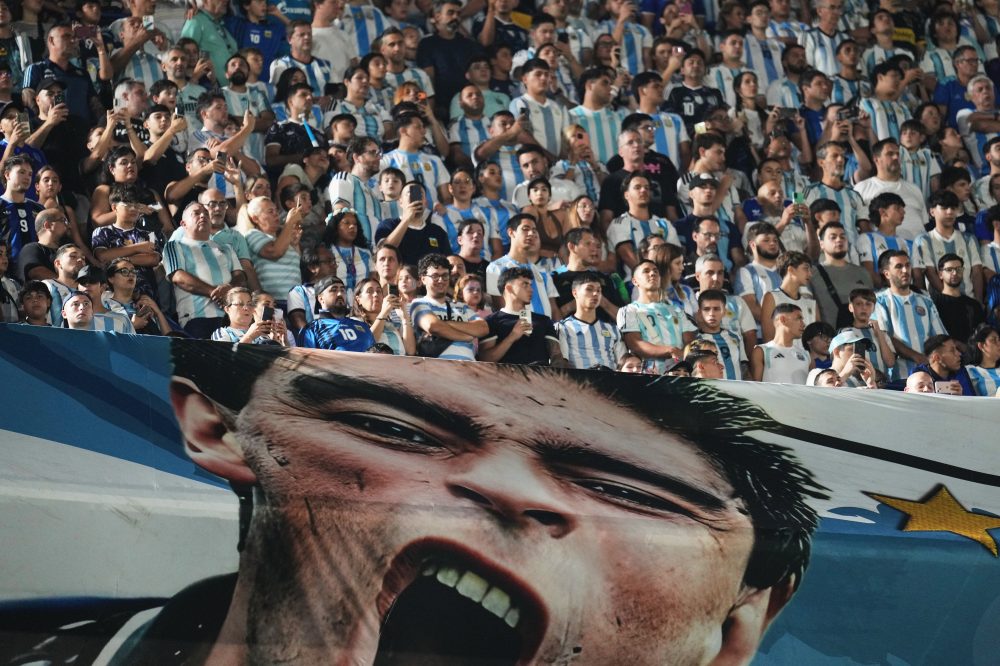
García’s unwavering belief in his team reflects the sentiment of countless fans throughout Latin America as the region looks ahead to the 2026 World Cup. Across nations from Argentina to Mexico, dedication to soccer frequently extends into daily life, creating customs and convictions centered around the sport.
“There has been an emotional connection between the public and their soccer teams for a long time,” said Mexican analyst Erick Fernández. “It fosters identity and bonds that make us feel part of a sporting process that represents us.”
In Argentina, where Lionel Messi was born, sporting fervor typically passes down through generations while allegiance to teams grows stronger with time. Pope Francis himself — an Argentine native and devoted San Lorenzo supporter — expressed agreement with those who call soccer the world’s most beautiful game.
García inherited his Boca Juniors allegiance from his father. He explained that his mother originally followed a different team, but switched to Boca after meeting his father.
“You usually support your mother’s or father’s club,” García said. “Soccer is the backbone of it all, but you develop a sense of belonging to a team and carry it with you everywhere.”
Though he gave away his Boca pendant and the power he felt it possessed, the team’s influence had already become permanently marked on his body.
When García turned 17, he had lyrics from the club’s anthem tattooed across his chest. Fourteen years have passed, yet those words hold the same significance today as when the tattoo was completed.
“It belongs to a song that is like a chant of war for us,” he said. “It’s like saying: ‘No matter the storm, no matter what happens, we will always be there for you.’”
Pope Francis once addressed an audience by saying soccer is a team sport whose appeal stems from its collaborative nature.
Among supporters as well, enthusiasm grows through community bonds. Singing team songs, crying after wins or losses, and hugging strangers in stadiums create experiences that can resemble forms of group worship.
“Each person can support a team, but the sense of togetherness that generates ‘communitas’ — a word associated with religion — is only possible when people gather,” said Argentine anthropologist Eloísa Martín.
This collective identity can produce both harmful and beneficial outcomes. A supporter who believes a fellow fan has been attacked by opponents might respond aggressively in ways he normally wouldn’t. However, the same force can build solidarity, prompting fans to assist strangers simply because they root for the same team.
“Soccer creates a community even for those who lack one,” Martín said.
Recently, among thousands of supporters walking toward Maracanã stadium in Rio de Janeiro was Adilvania Santos. Wearing Fluminense’s maroon and green uniform, the 27-year-old explained that following the team had sustained her during challenging personal times.
“I get emotional talking about Fluminense,” said Santos, who described the passion for her club as the most important aspect of her life, apart from her family. “Some people come together to go to church. For us, accompanying Fluminense is also sacred.”
Santos attempts to attend every match despite residing nearly 100 kilometers (about 60 miles) from Rio. When watching games at home, she isolates herself in her bedroom to prevent disruptions from family members who might not share her team loyalty.
“Soccer deeply moves Brazilians because it creates a sense of belonging, identity and hope,” said Jeferson Mengali, a Catholic priest in the Bragança Paulista diocese and a lifelong fan of Corinthians. “People suffer, work hard and face difficulties, and soccer becomes a space for collective joy.”
Mengali served as a chaplain for Corinthians for many years. He conducted religious services with the team and attended practice sessions and games.
“I have always liked praying before important games,” he said. “Asking more for serenity than victory.”
Though not every soccer enthusiast prays, many follow rituals they think can affect game results. In Argentina these behaviors are called “cábalas.” According to Martín, they became common during the 1990s.
Cábalas take many forms. Supporters might use the same cup, occupy the identical seat, or put on the same undergarments for every game. Others insist on viewing matches with particular people, while some refuse to watch entirely after deciding they curse their team.
Customs continue if the team succeeds and stop if it fails. For certain fans, skipping a match can feel like a personal sacrifice made to help ensure victory.
In García’s household, his father occupies a particular chair when Boca performs well. If opponents score, he switches seats. His mother tidies the house rather than watching the game, pausing periodically to inquire about the score.
García’s present cábala involves wearing identical jerseys throughout the season and keeping a small Diego Maradona image with him constantly.
“After he died, he was rapidly sanctified by the people,” García said. “He became a figure bigger than sports.”
Argentines seldom use his surname Maradona. He’s simply “El Diego,” as one might reference a relative or longtime neighborhood friend.
“Maradona is the player, while ‘El Diego’ is the one people turn to like a family member when they need help,” Martín said. “Sacredness only works when there’s a community behind it.”
Icons like “El Diego” or Brazil’s “The King” Pelé enjoy worldwide recognition. But other Latin American soccer fans worship personal heroes of their choosing.
In Chile, Héctor Hermosilla displays a black-and-white photograph of Colo Colo club founder David Arellano in his residence.
“He founded Colo Colo in 1925 and before every match I always say goodbye to him and ask him to watch over us,” Hermosilla said.
He vividly recalls going to his first game in 1986 and becoming captivated by the energy within the venue. From that moment forward, he devotedly began supporting his team, journeying from Chile’s northern regions to Puerto Montt, regarded as the entrance to Patagonia.
To fund his travels, he and his wife transcribed Colo Colo’s famous songs and sold copies to supporters, earning him the nickname “Nano Fotocopia.”
“There were around 20 songs and I would make photocopies and sell them for 100 pesos,” he said.
Typewriters and copying machines eventually became outdated. Hermosilla now sells jewelry, accessories and other items to pay for trips he takes with his wife and teenage son.
While in Chile, Hermosilla continues attending Sunday matches and performing a ceremony he has maintained since the 1980s. Under Arellano’s photograph, he requests the founder’s blessing, gathers his merchandise for sale, and travels to a grilled chicken restaurant where fans congregate.
“He is like our God,” Hermosilla said. “He is the one who guides us.”