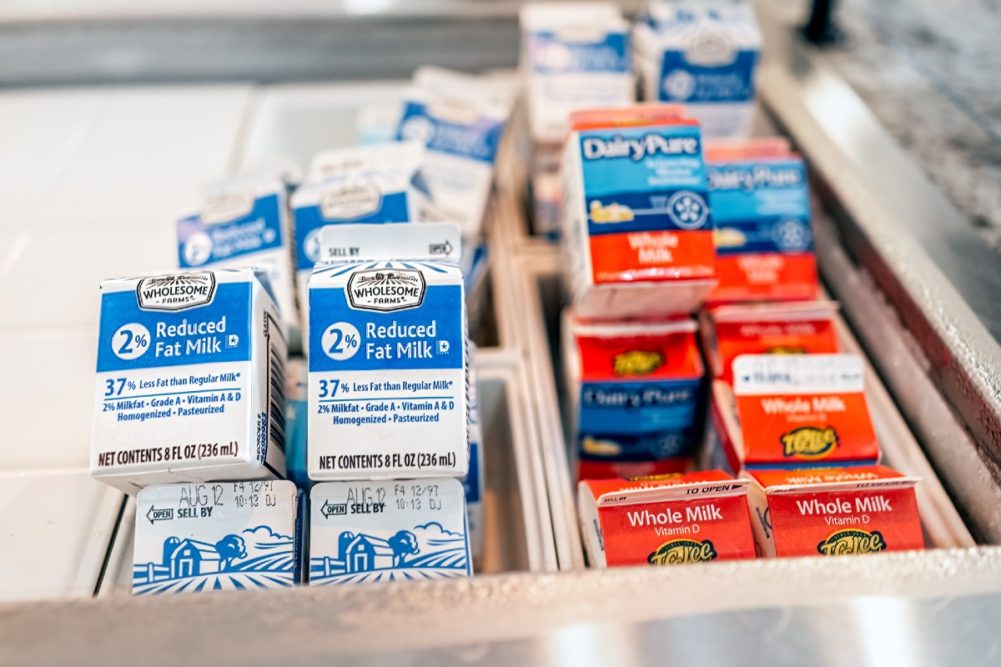

Federal agriculture officials released two significant nutrition policy updates on May 8th that will benefit dairy producers nationwide: new guidelines for milk offerings in school meal programs and revised food stocking requirements for stores accepting SNAP benefits.
The National Milk Producers Federation praised the federal decision to implement the Whole Milk for Healthy Kids Act through updated regulations taking effect June 8th. This marks the first time since 2012 that schools will be permitted to serve whole milk and 2% milk in federally supported meal programs.
During the rule development process, NMPF pushed for comprehensive milk access across all school feeding programs, not limited to lunch service. The organization successfully advocated for inclusion of breakfast programs, the Special Milk Program, and the Child and Adult Care Food Program. Schools will now have flexibility to provide whole, 2%, 1% or skim milk varieties in both unflavored and flavored options throughout all meal services.
On the same date, federal officials unveiled revised stocking requirements for retailers participating in the Supplemental Nutrition Assistance Program.
The modified SNAP regulations maintain dairy’s status as a required food category while expanding recognized varieties to include flavored milk, sour cream and shredded cheese as distinct products. Plant-based milk alternatives face new restrictions, with only three varieties counting toward dairy stocking obligations. These changes align with recommendations NMPF submitted in November comments to federal regulators.
Butter has been removed from mandatory stocking lists and reclassified as an accessory item, matching the treatment of other cooking fats. SNAP recipients can continue purchasing butter with benefits, but stores will no longer need butter inventory to qualify for program participation. Retailers must still maintain seven different dairy products to meet SNAP certification standards.