A motor coach operator is facing multiple manslaughter charges after a devastating multi-vehicle collision on a Virginia interstate that claimed five lives in a fiery chain-reaction accident.
Jing Sheng Dong, 48, of Staten Island, New York, was initially hit with two felony involuntary manslaughter charges on Saturday following the Friday morning crash. A Stafford County Circuit Court grand jury has now expanded the charges, adding three more manslaughter counts and one misdemeanor reckless driving charge on Monday.
The tour bus operator is being held without bail while receiving medical treatment for injuries sustained in the accident, which took place in the early morning on Interstate 95 approximately 45 miles southwest of Washington, D.C.
Investigators determined that Dong did not reduce speed when encountering slower traffic near a construction work area, causing his bus to crash into the rear of a Chevrolet Suburban. The impact pushed the Suburban into an Acura SUV and additional vehicles in the area.
The Acura burst into flames, and four victims, including two minors, died in that vehicle, state police reported. The fifth fatality occurred in the Suburban that received the initial impact from the bus.
State police confirmed that all five deceased victims were Massachusetts residents. The collision left more than 40 additional people with injuries, according to officials.
NASA Administrator Jared Isaacman revealed Monday that fixing the damaged Blue Origin launch facility following last week’s massive rocket explosion could require years of work, potentially stretching repairs until 2028.
Speaking during an interview at CNBC’s CEO Council Summit, Isaacman indicated that restoring the launch pad would “take some serious time,” with a 2028 completion date falling “within the realm” of possibility, according to the network’s coverage.
The catastrophic incident occurred Thursday when Blue Origin’s massive New Glenn rocket burst into flames during what should have been a standard engine test while secured to the launch structure. The rocket was being prepared for its fourth orbital mission since January 2025 through a routine static “hot-fire” examination.
The timing of this setback poses significant challenges for billionaire Jeff Bezos’ Blue Origin rocket program and Amazon satellite operations, as the company works to establish stronger competition against Elon Musk’s SpaceX, currently the dominant private space launch provider globally.
Sources within the company and industry reported over the weekend that the blast left the launch facility “practically destroyed,” with engineering assessments suggesting repairs will halt operations for a minimum of six months.
The accident at the U.S. Space Force facility in Cape Canaveral, Florida resulted in no personnel injuries. Additionally, the Amazon Leo satellites intended for the rocket’s payload had not yet been installed when the explosion occurred.
The New Glenn rocket, which honors late astronaut John Glenn, the first American to achieve Earth orbit, serves as a key component in NASA’s Artemis lunar program for transporting moon landers and supplies.
Detroit Tigers left-handed pitcher Tarik Skubal, who has claimed the American League Cy Young Award twice, completed a four-inning simulated game Monday at Tropicana Field in St. Petersburg, Florida, marking significant progress in his recovery and positioning him for a potential rehabilitation assignment this weekend.
During the practice session, Skubal delivered 64 total pitches with 45 finding the strike zone while recording six strikeouts.
“It was obviously a step in the right direction and continuing to show progress and throw with freedom,” manager A.J. Hinch said. “Velo was normal, which means high. And his reactions are starting to get even more and more competitive. To me, that’s signaling that he’s getting closer to pitching competitively than he is rehabbing.”
Through seven appearances in 2026, Skubal has compiled a 3-2 record alongside a 2.70 ERA and 0.95 WHIP. His dominance continues with 45 strikeouts across 43 1/3 innings pitched while issuing just six walks, maintaining his rate of more than one strikeout per inning.
Following his seven-inning performance on April 29 in Atlanta, the pitcher was sidelined and placed on the 15-day injured list May 4, with the designation backdated to May 1, due to loose bodies discovered in his left elbow. On May 6, he underwent arthroscopic surgery to clear the debris, with medical professionals confirming no additional ligament damage was present.
“I think it was another good day, another positive day,” Skubal said after the sim game. “I feel great now, went through all my post-throw stuff in the weight room and the training room and I feel good. Now I just need to sleep well, wake up and see how I feel tomorrow.
“But like I said last time, don’t expect anything to be different. I’m going to be general pitching sore, but that’s a good thing.”
Since Skubal’s most recent mound appearance, the Tigers have struggled significantly, posting a 7-22 record entering Monday’s matchup against the Tampa Bay Rays. Their overall 22-28 mark represents the American League’s poorest record.
Motorists traveling on northbound Interstate 95 should expect delays this morning as construction crews have closed the two left lanes in the area between the toll plaza and State Route 72.
The lane restrictions are part of ongoing construction work and are expected to remain in place until 7 a.m. today.
Drivers are advised to plan for extra travel time and use caution when approaching the work zone area.
The Hawaiian Volcano Observatory announced Monday that Kilauea volcano has achieved a historic milestone, recording 48 separate lava fountaining episodes since its current eruption cycle started in December 2024.
According to Katie Mulliken, a geologist and spokesperson with the observatory, this marks the highest number of fountaining episodes ever documented during a single eruption at Kilauea.
“Episodes are separated by periods during which little to no lava erupts. Since lava is coming from the same vents in a crater at Kilauea’s summit, it is the same overall eruption,” she explained in an email statement.
The current volcanic activity stands out for multiple reasons, Mulliken noted, particularly because of its accessibility to both local residents and visitors. She contrasted this with a previous eruption in the 1980s that produced 47 lava fountaining episodes across approximately 3½ years but occurred in a much more isolated location.
“The ongoing eruption is also reshaping the topography at the summit,” she said.
However, the spectacular lava displays come with potential risks, as the fountains can affect surrounding communities through the dispersal of volcanic debris and ash, scientifically referred to as tephra.
Situated on Hawaii’s Big Island, Kilauea ranks among the planet’s most active volcanic sites.
LAS VEGAS — Authorities arrested a 17-year-old barrel racing participant over the weekend following accusations that she attacked three competing horses with a pocketknife at a Las Vegas venue, police and event officials reported.
Officers responded to reports of an injured animal early Saturday at South Point Hotel, Casino & Spa, located approximately 8 miles from the Strip and featuring an extensive equestrian facility. Investigators discovered that three horses had sustained injuries, the Las Vegas Metropolitan Police Department stated.
Animal cruelty investigators identified the teenage girl, who had barn access, as a potential suspect. Police did not release the 17-year-old’s name but confirmed she faces 12 charges connected to animal maiming and torture, plus three counts of malicious destruction of private property, according to law enforcement and the South Point Hotel, Casino & Spa.
The injured animals underwent medical care from the event’s on-site veterinarian for wounds that were not life-threatening. While the horses are anticipated to make full recoveries, they will be unable to compete in upcoming events.
The incident occurred during a National Barrel Horse Association competition where top performers earned substantial cash prizes. Barrel racing involves riders guiding their horses around barrels positioned in a cloverleaf formation within a timed format. The National Barrel Horse Association verified the teenager was participating in the Las Vegas competition.
“The safety and well-being of all guests, participants and equine athletes on property is our highest priority, and we are thankful that all the horses involved are safe,” the South Point Hotel, Casino & Spa said in a statement to The Associated Press. “In over 20 years of having over 35 equestrian events each year, no horses have ever been purposely injured by a contestant at the South Point Arena.”
Three competitors shared their experiences on social media, describing how they discovered their horses with multiple stab wounds.
Arielle Phillips reported on Facebook that she observed the suspect near the barn housing her horse, Detail, shortly after midnight. Phillips explained she departed and returned moments later to discover the girl washing blood from her horse’s wounds.
A veterinarian confirmed Detail had been stabbed repeatedly, she stated.
“She is traumatized,” Phillips wrote of her horse. “Everytime she runs away from the approach of my hand, I burst into tears.”
Hailey Krahenbuhl’s horse, Saaul Good, nicknamed “Sully,” also suffered multiple stab wounds, she shared on Facebook. The pair had dominated U.S. barrel racing and claimed first place in their category Friday, just hours before the attack, the National Barrel Horse Association confirmed. Krahenbuhl earned $1,805 for the victory, organization records showed.
A third horse, Rocket, was stabbed three times, the owner reported.
The White House announced Monday that U.S. President Donald Trump has issued a proclamation modifying import tariffs on certain copper, aluminum and iron products.
Under the new directive, tariff rates on specific agricultural machinery will decrease from 25% to 15%. Additionally, mobile industrial equipment including bulldozers and forklifts will face a 15% tariff rate “when imported from trade deal countries that are entitled to such treatment,” according to the White House statement.
The proclamation also establishes a pathway for international companies to receive a 10% tariff rate provided “their capital equipment include at least 85% U.S. melted and poured or smelted and cast steel or aluminum by weight.”
These tariff modifications will remain in effect through December 31, 2027 “to spur near–term investments that will rebuild the Nation’s industrial base,” the White House stated.
A prominent Chinese artificial intelligence company announced Monday evening its intention to go public through Shanghai’s technology-focused stock exchange.
Knowledge Atlas Technology JSC, which operates under the name Zhipu AI, revealed plans to offer shares on the Shanghai Stock Exchange’s Sci-Tech Innovation Board. The AI firm stands among the top competitors in China’s competitive artificial intelligence marketplace.
According to the announcement, Zhipu AI would offer A shares valued at 0.10 yuan each, totaling anywhere from 9.1 million to 38.8 million shares. This offering would account for between 2% and 8% of the company’s complete share ownership.
The company did not reveal how much money it expects to generate through the stock offering.
Zhipu AI outlined plans to complete the share issuance within one year of receiving approval documentation from the China Securities Regulatory Commission. Following the completion of share distribution, the company will seek to have its stock listed and traded on the exchange.
The firm also announced it will rebrand its English corporate name from Knowledge Atlas Technology Joint Stock Co to Z.AI Co to better match its business operations.
Two Tampa Bay Rays players were forced to leave Monday’s game against the Detroit Tigers due to separate injuries that sidelined key members of their lineup.
Shortstop Taylor Walls departed in the bottom of the third inning because of tightness in his left hamstring, with team officials describing his removal as a precautionary decision. Walls had not yet stepped into the batter’s box for his first plate appearance when he was pulled from the contest. The infielder had previously dealt with hamstring problems last week that caused him to miss a pair of games.
Oliver Dunn came in as a pinch-hitter for Walls during the third frame and assumed shortstop duties in the fourth inning. Ben Williamson later entered the game to replace Dunn.
During the fourth inning, Simpson encountered an unfortunate mishap while attempting to steal a base.
Simpson was running from first to second base when Detroit pitcher Ty Madden delivered a wild pitch. However, Simpson’s helmet came loose, bounced off the ground, and struck him in the mouth as he slid headfirst into the bag. Medical staff could not immediately determine if the impact damaged his teeth or caused a lip laceration.
Ryan Vilade entered as a pinch-runner for Simpson and remained in the game to cover left field.
Simpson brings significant speed to the Rays’ offense, having swiped 14 bases this season following his impressive 44 stolen bases during his first year in the majors. The outfielder also leads the American League with four triples this season. His performance on Monday, going 1-for-2 at the plate, maintains his .284 batting average.
Walls carries a .208 batting average across 44 games this year in his sixth season with the Tampa Bay organization.
Australia’s current account deficit exceeded expectations during the first quarter, as the nation experienced its first trade shortfall in seven years, creating substantial pressure on economic expansion.
The Australian Bureau of Statistics released figures on Tuesday revealing the current account posted a A$27.1 billion ($19.41 billion) deficit for the March quarter, an increase from the revised A$23.0 billion deficit recorded in the prior quarter. Economists had predicted a smaller A$23.2 billion deficit.
According to the ABS, net exports will reduce gross domestic product by 0.8 percentage points during the first quarter, exceeding analyst predictions of a 0.5 percentage point reduction.
The chief executive of Nvidia stated Tuesday that his company possesses sufficient manufacturing capacity to handle strong demand growth for both central processing units and graphics processing units as the artificial intelligence industry continues expanding.
Jensen Huang made these remarks during Nvidia’s GTC press conference at Computex week in Taiwan, one day after the $5 trillion semiconductor company revealed a new processor that brings AI functionality directly to devices.
The company’s latest processor, scheduled for release this fall, will integrate AI capabilities straight into laptop and desktop computers, creating competition with companies like Advanced Micro Devices, Intel and Apple.
According to Huang, the RTX Spark PC processor represents Nvidia’s collaboration with Microsoft to “reinvent the PC” for the artificial intelligence age.
The Nvidia chief executive, who was born in Taiwan’s southern city of Tainan, revealed plans last week for approximately $150 billion in annual investment in Taiwan, calling the island nation the center of the AI revolution.
Drivers traveling on northbound Interstate 95 should expect delays due to a lane restriction currently in effect. The right lane is blocked between Route 141 and the point where I-95 northbound connects with I-495 northbound.
According to traffic officials, the lane closure will remain active until 5 AM. Motorists are advised to plan for extra travel time and use caution when navigating through the affected area.
No additional details about the reason for the closure were immediately available.
Motorists traveling on I-95 and Route 896 should expect periodic lane restrictions as work crews install rumble strips throughout the area.
Both northbound and southbound lanes on I-95 are experiencing intermittent closures, along with Route 896 traffic in both directions. The mobile construction unit is also affecting all entrance and exit ramps within the work zone.
Drivers are advised to allow extra travel time and exercise caution when passing through the construction area while the rumble strip installation continues.
Motorists traveling southbound on Coastal Highway should expect delays tonight due to construction activity near Fred Hudson Road.
The right lane closure on Route 1 southbound at Fred Hudson Road is currently in effect for ongoing construction work. Traffic restrictions will remain in place until 3:00 AM.
Drivers are advised to use caution when traveling through the construction zone and allow extra time for their commute during the overnight hours.
The American dollar maintained stability on Tuesday as financial markets adopted a cautious stance regarding Middle East peace negotiations, following Lebanon’s declaration of a restricted ceasefire between Hezbollah and Israel, though continuing regional tensions kept investors wary.
Market participants have approached any advancement toward resolving the Iran conflict with careful consideration, considering the delicate nature of a U.S.-Iran ceasefire established in early April.
The dollar index, which tracks the currency’s performance against six major counterparts, retreated from previous increases following Monday’s Lebanon announcement. Though the agreement indicated some reduction in tensions, it remains constrained within the context of a broader regional war that has interfered with oil transportation through the Strait of Hormuz.
“We expect the U.S. and Iran to agree to gradually re-open the Strait of Hormuz and a 60-day extension of the ceasefire to negotiate Iran’s uranium enrichment sometime this week,” Kristina Clifton, a senior currency strategist at the Commonwealth Bank of Australia, wrote in a note.
“Good news about the war ending will weigh on the USD because it is a safe haven currency,” she added.
The dollar index remained unchanged at 99.17, with the euro climbing 0.03% to $1.1634 and sterling rising 0.07% to $1.346.
The American currency had strengthened when the conflict commenced on February 28, supported by safe-haven interest and the U.S. economy’s comparatively minimal vulnerability to energy-related price increases. Nevertheless, it has surrendered some of those advances due to questions about the conflict’s direction.
In Japan, Finance Minister Satsuki Katayama stated Tuesday that officials remained prepared to act in the foreign exchange market when necessary and avoided discussing recent currency fluctuations.
The Japanese yen declined 0.02% versus the dollar to 159.66 per dollar after Katayama’s comments, with the 160 threshold broadly viewed by markets as a point that could trigger intervention.
“If dollar/yen breaks above 160, the risk of surpassing the April 30 high would increase markedly, raising the likelihood of stronger verbal warnings and a renewed round of rate checks or actual intervention,” said Mizuho Securities chief currency strategist Masafumi Yamamoto.
Financial markets are also eagerly anticipating a presentation by Bank of Japan Governor Kazuo Ueda on Wednesday for potential indications about whether the central bank will move forward with a rate increase the following week.
Later Tuesday, the U.S. Labor Department will publish job openings information before Friday’s highly anticipated monthly employment data, while the euro zone’s May consumer price index will also be released.
Markets are predicting the U.S. central bank’s next action will be to increase its benchmark interest rate, contrasting with expectations for a reduction before the Iran war began, given escalating energy costs and their anticipated effect on inflation.
Friday’s release of the monthly U.S. employment data could influence the Fed’s policy direction in the immediate future. The figures are projected to reveal an increase of 85,000 jobs in May and no modification in the existing 4.3% unemployment rate, based on a Reuters survey of economists.
The Australian dollar increased 0.1% to $0.7162 against the dollar, while New Zealand’s currency advanced 0.07% to $0.5933.
In digital currencies, bitcoin dropped 0.13% to $71,277.59. Ethereum fell 0.04% to $2,001.94.
Emergency crews and charitable organizations worked with heavy machinery Monday to retrieve victims following a devastating explosion of stored mining explosives in northeastern Myanmar that claimed dozens of lives.
The deadly blast happened at noon on Sunday in Kaungtup village, located in Namhkam township within Shan state close to the Chinese border.
According to a Monday evening statement from the Ta’ang National Liberation Army, the ethnic rebel organization governing the region, fatalities from the explosion have climbed to 43, with seven of those victims being children. Earlier casualty reports from emergency responders had varied between 38 and 45 deaths. Confirming precise numbers has proven challenging due to the explosive force that dismembered victims’ remains.
The organization reported that 112 individuals sustained injuries, including 25 children, with 37 people in critical condition, sparking fears the death count may rise further.
“Rescue operations and the compilation of casualty figures were still underway,” said the statement.
Numerous resource-abundant regions of Myanmar, where mining activities operate with minimal oversight, fall under the authority of various armed groups engaged in periodic conflicts with the central government while pursuing increased independence. Fatal incidents, including catastrophic landslides, occur with notable frequency.
The TNLA reported that Sunday’s explosion involved gelignite utilized for local mining and stone quarrying operations. While gelignite sees widespread use, it becomes extremely dangerous when stored incorrectly over extended periods.
Village inhabitants from the community of 200 households stated they received no notification that explosive materials were being housed in their area.
The TNLA announced that an investigation into the explosion’s specific cause is currently in progress.
This tragedy has drawn attention to Myanmar’s profitable yet minimally regulated mineral sector and Chinese financial involvement in the nation’s resource extraction operations.
Two area residents informed The Associated Press on Monday that mining facilities producing silicon metal raw materials — an essential industrial component for semiconductors, solar panels, and aluminum alloys — operate in mountainous terrain approximately 15 kilometers southwest of Namhkam town.
The residents, speaking anonymously for personal security reasons, stated these mining operations are jointly managed by the TNLA and Chinese business interests and remain off-limits to most local people. The AP could not independently confirm these claims.
Myanmar’s mining sector serves as a significant global source of rare earth materials, copper, tin, and valuable gemstones, particularly jade and rubies, functioning as China’s primary supplier for materials that undergo processing and refinement there.
China maintains a complicated relationship as Myanmar’s military-backed government’s leading ally while simultaneously building connections with ethnic minority organizations.
Chinese Foreign Ministry spokesperson Lin Jian in Beijing offered profound sympathies and confirmed that a Chinese citizen hurt in the explosion is receiving medical care. Beijing has offered support for managing the incident’s consequences.
The TNLA, which belongs to the Three Brotherhood Alliance, gained control of the Namhkam region in late 2023 during a significant campaign against the military government. This fighting represents part of the wider chaos following the February 2021 military takeover, which removed Aung San Suu Kyi’s elected administration and sparked extensive armed opposition.
Although the TNLA agreed to a China-brokered ceasefire with the military in late 2023, regional stability remains fragile, and mineral and gemstone extraction provides essential revenue for both the central government and the rebel organizations opposing it.
Golden State Warriors basketball star Stephen Curry revealed Tuesday through social media that his Curry Brand has entered into a new partnership with Li Ning, a major Chinese athletic apparel company.
Li Ning, established by an Olympic gold medal-winning gymnast of the same name, operates as one of China’s largest sportswear retailers with over 7,600 retail locations across Asia.
“It’s amazing to see how he’s grown his namesake company as an athlete founder, knowing I have those same hopes and aspirations for Curry Brand,” Curry said.
While Curry characterized the agreement as a “long-term” collaboration, he did not reveal financial details or the specific value of the contract.
The partnership will involve establishing Curry Brand retail outlets in both China and the United States, according to Curry’s announcement.
Li Ning has previously pursued becoming a major force in global basketball, having secured sponsorship agreements with NBA players Dwayne Wade and Jimmy Butler in the past.
The Chinese company did not immediately provide a response when asked for comment regarding the new partnership.
Petroleum markets retained most of their substantial gains from Monday during early Tuesday trading, driven by ongoing confusion about diplomatic discussions between Washington and Tehran and potential reopening of the Strait of Hormuz.
Conflicting reports emerged Monday about the status of negotiations, with the president stating that discussions with Iran were continuing, while Tasnim news agency reported Tehran had paused indirect talks with Washington.
Brent crude futures climbed 6 cents, representing a 0.06% increase to $95.04 per barrel at 0001 GMT, while U.S. West Texas Intermediate dropped 17 cents, or 0.18%, to $91.99 per barrel.
Both petroleum benchmarks had surged over 5% during Monday’s session but reduced those increases after the president indicated he hadn’t received confirmation that Iran was halting discussions with Washington and that Israel had committed to withdrawing forces preparing for potential attacks on southern Lebanon.
During a Monday CNBC interview, the president expressed indifference about whether negotiations concluded.
Later, the president posted on social media that talks with Iran were ongoing and told ABC News Monday he anticipates an agreement to extend the ceasefire and reopen the Strait of Hormuz “over the next week,” according to the outlet’s X post.
“The market is currently focused on whether there’s any concrete progress or setbacks in U.S.-Iran negotiations, the tone and substance of statements from both sides (particularly Iran’s threats regarding the Strait of Hormuz), and actual physical tanker movements through the waterway,” said Tim Waterer, chief market analyst at KCM Trade.
Waterer noted that the diplomatic negotiations’ status will ultimately decide whether current risk premiums remain in oil pricing or begin to decrease.
Lebanon announced Monday a partial ceasefire between Hezbollah and Israel, representing a limited reduction in tensions that have intensified the broader conflict with Iran.
“With headlines continuing to fly out of the Middle East, oil prices are set to remain volatile until clearer evidence of progress towards a peace deal emerges,” said Tony Sycamore, market analyst at IG.
Iran has essentially stopped nearly all non-Iranian maritime traffic entering and leaving the Gulf since hostilities began, restricting approximately one-fifth of worldwide oil and liquefied natural gas shipments and pushing prices up by 50% or higher.
American crude exports reached a record 5.6 million barrels daily in May as the Middle East crisis increased demand for the nation’s petroleum from Asian and European refineries, ship tracking data revealed Monday.
A preliminary survey released Monday indicated U.S. crude reserves likely decreased by roughly 3.6 million barrels during the week ending May 29, continuing the previous week’s decline, while distillate and gasoline supplies also probably dropped.
Shipping industry leaders meeting in Athens Monday emphasized that any peace agreement between the U.S. and Iran must establish clear guidelines allowing vessels to resume standard operations through the Strait of Hormuz.
Asian financial markets displayed hesitant trading patterns Tuesday morning as geopolitical tensions in the Middle East region tempered investor enthusiasm sparked by artificial intelligence developments.
The MSCI Asia-Pacific stock index excluding Japan wavered between positive and negative territory during early trading hours, ultimately falling 0.5%. Korean equities led the decline with a 2% drop after opening higher, while S&P 500 electronic mini futures decreased 0.3% and Japan’s Nikkei 225 tumbled 0.7%.
Market analysts from Westpac explained the volatility in a research report: “Conflicting news coming out of the Middle East left markets whipsawing, with Iran stating that negotiations with the U.S. have been suspended, only for President Trump to follow up in recent hours with reassurances that talks are continuing ‘at a rapid pace’.”
Brent crude oil maintained stability near $95 per barrel following Lebanon’s announcement Monday of a partial ceasefire agreement between Hezbollah and Israel, potentially opening doors for renewed diplomatic efforts to conclude the three-month conflict between the United States and Iran.
Energy prices had surged more than 4% Monday after reports emerged that Tehran had paused indirect diplomatic discussions with the U.S.
During Monday’s session, the S&P 500 gained 0.3% after the ISM manufacturing PMI climbed to 54.0 in May from the prior month’s 52.7, surpassing forecasts to achieve a four-year high, apparently fueled by companies accelerating orders due to rising costs and supply shortages related to the Iranian conflict.
David Rosenberg, founder and president at Rosenberg Research in Toronto, noted in a client communication: “That the equity market is in boom mode is not up for debate,” despite elevated energy costs and climbing real interest rates. “The S&P 500 is now up nine weeks in a row, a streak we last witnessed in late 2023.”
Asian artificial intelligence suppliers posted gains following news that AI company Anthropic had privately submitted paperwork for a U.S. initial public offering, potentially achieving a trillion-dollar market value.
Alphabet stock declined 0.7% after the technology company announced plans to pursue $80 billion in equity fundraising, including investment from Berkshire Hathaway, as part of an ambitious strategy to finance AI infrastructure expansion.
The U.S. dollar index, tracking the currency’s performance against six major counterparts, remained stable at 99.18, staying within the narrow trading band established over the past three weeks.
The 10-year U.S. Treasury bond yield dropped 2.0 basis points to 4.455%. Gold prices fell 0.1% to $4,479.17.
In digital currency markets, bitcoin decreased 0.2% to $71,232.83, while ether held steady at $2,002.03.
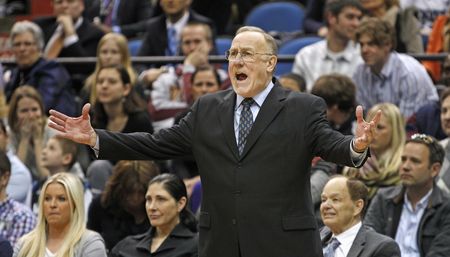
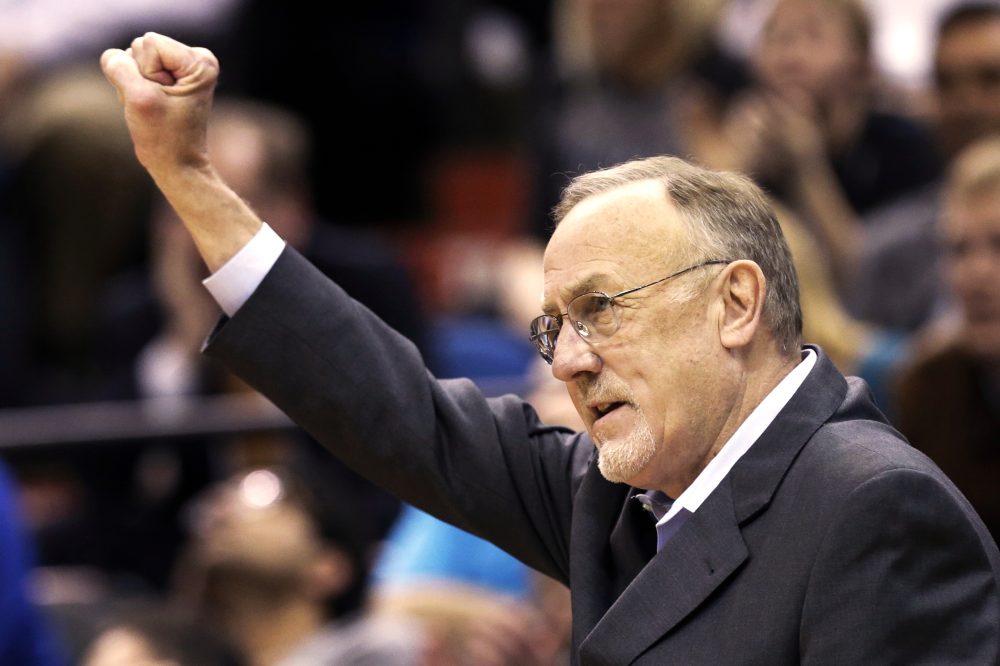
Basketball Hall of Fame coach Rick Adelman has passed away at age 79, according to an announcement Monday from the National Basketball Coaches Association.
With 1,042 career victories, Adelman holds the 10th spot among all-time NBA coaching wins. He achieved his most notable success while leading the Portland Trail Blazers, an organization where he had previously played during the 1970s. Under his guidance, the Trail Blazers captured Western Conference championships and reached the NBA Finals in both 1990 and 1992.
During his 23-season coaching tenure spanning five franchises – the Trail Blazers (1988-94), Golden State Warriors (1995-97), Sacramento Kings (1998-2006), Houston Rockets (2007-11) and Minnesota Timberwolves (2011-14) – Adelman compiled a 1,042-749 record with a .582 winning percentage. His squads qualified for postseason play 16 times, posting a 79-78 playoff record.
The basketball community recognized his contributions with his 2021 Hall of Fame induction and the NBCA’s Chuck Daly Lifetime Achievement Award in 2023.
“Adelman will be remembered not only as a coach and a player, but also as a mentor to so many in the basketball community,” the NBCA said in a statement. “Our thoughts and prayers go out to the entire Adelman family during this difficult time.”
As a player, Adelman suited up for five different teams during seven NBA seasons from 1968-1975, spending his longest stretch in Portland from 1970-73.
Among his six children, Adelman’s son David currently serves as head coach of the Denver Nuggets.
The Portland Trail Blazers issued their own tribute Monday.
“The Portland Trail Blazers organization is deeply saddened by the passing of Rick Adelman, a franchise legend and Naismith Basketball Hall of Famer. Rick was one of the most influential figures in franchise history, a member of the inaugural 1970 team and integral coach throughout the 80s and 90s, guiding the team to Finals appearances in 1990 and 1992.
“Rick’s basketball brilliance helped shape multiple eras of Trail Blazers basketball, earning the respect and admiration of the basketball community and cementing his legacy. His thoughtful leadership, integrity, and kindness impacted all those around him on and off the court. We extend our heartfelt condolences to the entire Adelman family, and all those in the world of basketball who were touched by his impact.”
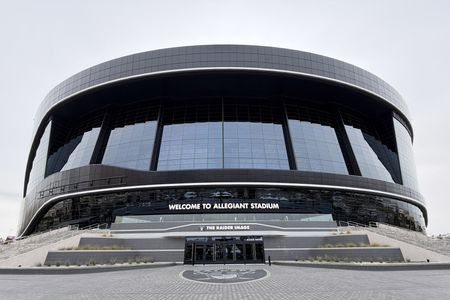
The upcoming 2026-27 College Football Playoff will span more than a month, with 11 total games beginning December 18 and wrapping up with the national championship game on January 25 at Allegiant Stadium in Las Vegas.
Officials from the CFP, ESPN and TNT Sports revealed the complete schedule on Monday, including start times and television coverage details. ESPN’s expanded broadcast package will include five games that have been sublicensed to TNT Sports and its affiliated networks.
Viewers will be able to watch all ESPN network games through the ESPN App, while first-round matchups broadcast on TNT and truTV will also stream on HBO Max.
Officials will announce the campus locations for first-round CFP games on December 6.
Three quarterfinal matchups will also receive their time slots on December 6 and will take place on January 1, hosted by the Peach Bowl at Mercedes-Benz Stadium in Atlanta, the Cotton Bowl at AT&T Stadium in Arlington, Texas, and the Rose Bowl in Pasadena, California. The remaining quarterfinal game at the Fiesta Bowl is scheduled for December 30 in Glendale, Arizona.
Following a two-week intermission, the semifinal rounds will occur at the Orange Bowl on January 14 in Miami Gardens, Florida, and the Sugar Bowl on January 15 in New Orleans.
The complete 2026-27 College Football Playoff timeline:
(All times Eastern)
Friday, December 18 — One first-round matchup at campus location, 8 p.m. (ESPN)
Saturday, December 19 — Three first-round matchups at campus locations, noon (ABC, ESPN), 3:30 and 7:30 p.m. (TNT, truTV, HBO Max)
Wednesday, December 30 — quarterfinal at Fiesta Bowl, Glendale, Arizona, 7:30 p.m. (TNT, truTV, HBO Max)
Friday, January 1 — three quarterfinals, venues to be determined, noon (TNT, truTV, HBO Max), 4 p.m. (ABC, ESPN), 8 p.m. (ESPN)
Thursday, January 14 — semifinal at Orange Bowl, Miami Gardens, Florida, 7:30 p.m. (TNT, truTV, HBO Max)
Friday, January 15 — semifinal at Sugar Bowl, New Orleans, 7:30 p.m. (ABC, ESPN)
Monday, January 25 — CFP National Championship, Allegiant Stadium, Las Vegas, 7:30 p.m. (ABC, ESPN)
Drivers traveling westbound on Kirkwood Highway should expect delays due to an ongoing construction project that has closed the right lane between Cleveland Avenue and Main Street.
The lane closure affects the stretch of Route 72 and will continue through early Tuesday morning, with the restriction scheduled to lift at 5:00 AM.
Motorists are advised to allow extra travel time and use caution when driving through the construction zone.
RALEIGH, N.C. (AP) — Several pivotal days in early March 2025 altered the trajectory of the NHL season, with Mitch Marner standing at the center of those changes.
As Marner approached the final months of his Toronto contract, indicators suggested he wouldn’t extend his stay. Meanwhile, Carolina had obtained soon-to-be free agent Mikko Rantanen from Colorado through a three-team deal in late January, though it became apparent after weeks that this arrangement wouldn’t become permanent.
Toronto and Carolina explored the potential for swapping Marner and Rantanen. However, Marner controlled his fate through a complete no-movement clause, ultimately choosing to remain in Toronto for another playoff attempt before selecting Vegas through a sign-and-trade arrangement in late June rather than entering free agency.
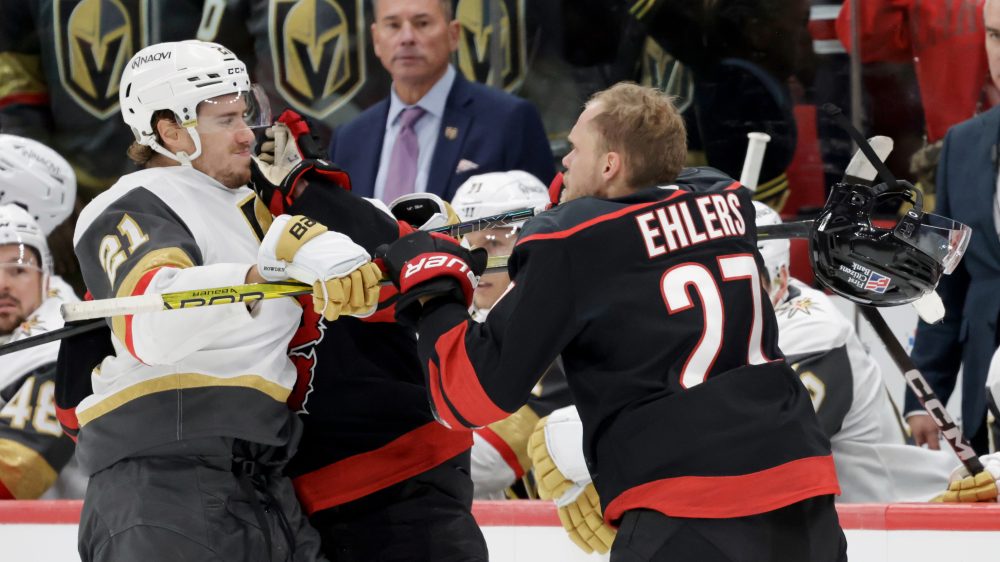
This choice by Marner created a chain reaction that brought Vegas and Carolina to their current position, facing each other in the Stanley Cup Final that begins Tuesday evening. Carolina responded by trading Rantanen to Dallas for Logan Stankoven — who became one of their top performers in this playoff run — plus a draft pick they later used to acquire K’Andre Miller last summer, while preserving cap space to sign premier free agent Nikolaj Ehlers.
Vegas secured Marner, who now tops all playoff scorers and demonstrates why Carolina had shown interest. When asked about the team’s attraction to Marner, general manager Eric Tulsky refused to comment since Marner plays for a different organization.
“I can answer that one,” coach Rod Brind’Amour said. “What don’t you like about him?”
During last spring’s speculation about a potential Marner-Rantanen exchange, personal factors extended beyond hockey considerations. Marner’s wife, Stephanie, was expecting their first child, and Marner calls the Toronto region home.
Toronto advanced to the second round before surrendering a 2-0 series advantage to defending and eventual repeat champion Florida. Carolina was swept by the Panthers in the Eastern Conference final, still lacking a crucial element.
Throughout this season, Marner maintained a point-per-game pace. He’s recorded seven goals and 14 assists for a playoff-leading 21 points.
“Mitch is playing with tremendous confidence,” GM Kelly McCrimmon said. “I think he’s really savoring the moment.”
Marner praised the coaching staff for positioning him for success and his teammates for converting scoring opportunities. Sporting a Vegas hoodie during Cup final media day, he maintains he’s not considering alternative scenarios like playing for Carolina.
“No, I’m not a guy that lives in the past,” Marner said. “I’m in the present. I’m here in the moment.”
Tulsky referenced Rantanen when discussing risk-taking, stating “Sometimes it doesn’t go the way you hoped, and you’ve got to be ready to figure out how you’re going to move forward from there.” While trading Martin Necas to Colorado for Rantanen didn’t succeed, acquiring veteran winger Taylor Hall from Chicago in the same transaction certainly has.
Pursuing Marner falls into the same category, but their backup plan succeeded remarkably. Stankoven has made a significant impact for Carolina as the second-line center alongside Hall and Jackson Blake, proving why he was the primary asset received from Dallas for Rantanen.
If Marner had chosen Carolina, Stankoven might still be playing for Dallas. Instead, he had to process the unusual experience of being traded.
“I didn’t see it coming,” Stankoven said. “Everything kind of happens for a reason. Obviously, Dallas got their player, and I just want to become the best version of myself here in Carolina. Just how welcoming everyone has been here, the fans, my teammates, I absolutely love the city and couldn’t be happier that I was able to sign long term here.”
On the same day Stankoven signed an eight-year, $48 million deal, Tulsky utilized one of the first-round selections from the Rantanen trade to obtain Miller from the New York Rangers and secure him long-term. By week’s end, Ehlers selected Carolina from multiple attractive options.
Miller has flourished with his new environment, and Ehlers, alongside Stankoven, has provided Carolina with the offensive production they missed during previous playoff campaigns that concluded before the final.
“(Ehlers) adds things to it that aren’t what we would ask a lot of players to do,” Tulsky said. “Having that kind of ability on the team — someone who could just create scoring chances out of thin air — it always makes you more dangerous.”
The basketball world is mourning the loss of Rick Adelman, a Basketball Hall of Fame coach who passed away at age 79, according to an announcement Monday from the National Basketball Coaches Association.
Adelman, whose son David Adelman currently coaches the Denver Nuggets, accumulated 1,042 victories during his NBA coaching career, ranking him 10th all-time in league history. No cause of death was immediately released.
His impressive coaching record places him among elite company – only four other coaches have managed more games while maintaining a superior winning percentage compared to Adelman. Those coaches are Pat Riley, Gregg Popovich, Jerry Sloan and George Karl. During his career, Adelman guided the Portland Trail Blazers to two NBA Finals appearances and served as head coach for teams in Sacramento, Houston, Minnesota and Golden State.
The coaches’ association, which presented Adelman with its Chuck Daly Lifetime Achievement Award in 2023, released a tribute statement saying: “Adelman will be remembered not only as a coach and a player, but also as a mentor to so many in the basketball community.”
When the award was presented three years ago, Indiana coach Rick Carlisle praised Adelman’s impact, stating: “Rick Adelman’s NBA coaching career has been highlighted by innovation, integrity and excellence. His teams always played to their strengths, and Rick always found subtle ways to reinvent NBA basketball to help his players thrive. His quiet, unassuming nature belies his impact as one of the great NBA coaches of all time.”
Before his coaching success, Adelman spent six seasons as an NBA player from 1969 to 1975, serving as a point guard for five different franchises. However, he discovered his true passion behind the bench.
In their tribute, the Kings organization noted that Adelman “will be remembered for the way he inspired those around him — with humility, integrity, kindness, and an unwavering belief in the power of teamwork.”
Adelman’s journey to NBA coaching began unexpectedly. Initially planning to coach at the high school level, he found his lack of experience challenging. Instead, he launched his coaching career at Chemeketa Community College in Salem, Oregon.
During his Hall of Fame induction speech, Adelman recalled: “We had great success there. The one thing I did not realize is Jack Ramsey was following my team.”
Ramsey, who was leading the Portland Trail Blazers at the time, brought Adelman in for an interview when a coaching position became available. Adelman spent three seasons under Ramsey’s guidance, followed by 2 1/2 additional seasons working with Mike Schuler. He stepped into the interim head coach role with 35 games remaining in the 1988-89 season.
Reflecting on that period in 2021, Adelman said: “We had a team that was ready to win.”
Blazers owner Paul Allen gave Adelman the opportunity to coach the full 1989-90 season, launching a remarkable coaching journey. Portland achieved 59 victories that year behind stars Clyde Drexler, Terry Porter, Jerome Kersey and Buck Williams, advancing to the NBA Finals before losing to Detroit.
This success propelled Adelman forward. He returned to the NBA Finals with the Blazers two seasons later, this time falling to Chicago. Following his Portland tenure, Adelman spent two years coaching at Golden State before moving to Sacramento, where he compiled eight consecutive winning seasons during an eight-year period. His Sacramento teams featured notable players including Vlade Divac, Peja Stojaković, Mike Bibby, Chris Webber, Jason Williams, Bobby Jackson and current Kings coach Doug Christie.
Throughout his coaching career, Adelman worked with 210 different players who appeared in at least one NBA game under his guidance.
Veteran guard Kyle Lowry, who played for 20 seasons, shared his appreciation Monday night: “He actually challenged me and poured into trusting me. That was important for me. He didn’t have to. He could have done everything else, he could have played other players, but he believed in me. … He just trusted his players. He just wanted to win. And if it wasn’t for him, I don’t know what career I would have. It’s a sad day.”
A thunderous double boom echoed across New England this past weekend, rattling houses and causing pets to scatter in fear while residents turned to social media for answers.
“Did anyone else hear that boom?”
“Anyone feel that?”
NASA initially confirmed over the weekend that a meteor caused the disturbance, but the space agency shared far more remarkable information on Monday.
The space rock weighed as much as an elephant and measured 5 feet (1.52 meter) across, hurtling through space at 42,000 mph (67,592.5 kph) before hitting Earth’s atmosphere. The object disintegrated high above New England on Saturday, releasing energy comparable to roughly 230 tons of TNT, which NASA said explains the loud booms.
NASA shared these extraordinary facts through a social media update Monday, along with additional data.
The space object consisted of natural materials — not satellite parts or space junk — and streaked through the atmosphere for approximately 26 miles (41.8 kilometers), NASA reported, before plunging into Cape Cod Bay off southeastern Massachusetts.
The space agency emphasized that while meteors happen frequently, most don’t attract this level of attention.
“They often occur over the ocean or unpopulated areas with no witnesses, or during the daytime, making them difficult to spot,” NASA stated.
The incident sparked immediate theories and confusion.
The thunderous sound led residents in Massachusetts and Rhode Island to wonder if an earthquake had struck or if a tree had crashed down. Many shared stories of their dogs becoming agitated. At least one person suggested extraterrestrial activity.
A resident in Peabody, Massachusetts, described thinking a massive tree had struck his home due to the windy conditions that day. After stepping outside, he discovered most of his neighbors gathered in the street with identical questions.
Multiple people submitted reports to the U.S. Geological Survey, documenting the tremors they experienced through the National Earthquake Information Center, agency spokesman Steve Sobie confirmed.
The organization created an event page after receiving numerous “Did you feel it?” submissions on its website. However, Sobie noted that no activity appeared on the agency’s seismographs, confirming the shaking wasn’t earthquake-related.
The American Meteor Society collected dozens of accounts from Delaware to Montreal from people who either heard the double boom, felt ground vibrations, or witnessed the fireball, according to program monitor Robert Lunsford.
TORONTO (AP) — Prime Minister Mark Carney declared Monday that his nation is not protecting Jewish citizens, who face unprecedented levels of targeted hatred.
Speaking at Holy Blossom Temple in Toronto, Carney acknowledged that anti-Jewish sentiment has reached heights unseen since the end of World War II throughout Canada. He pointed to statistics showing that more than two-thirds of all hate crimes motivated by religion last year were aimed at Jewish Canadians, despite Jews representing just 1% of the nation’s population.
“The horror and shame are global. Our actions must be local. They start with clearly admitting that Canada’s civic compact is failing Jewish Canadians,” Carney stated during his address.
The prime minister detailed violent acts committed by antisemites across the country, including gunfire directed at Jewish schools, firebomb attacks on synagogues, assaults on community centers, targeting of Jewish-owned businesses, and forcing Jewish students away from shared campus areas at universities.
While acknowledging that antisemitism affects Europe, Australia and the United States, Carney emphasized that Canada’s antisemitism crisis is “specific, severe and demands a targeted response.”
Global antisemitic incidents have increased dramatically since the Israel-Hamas conflict started on Oct. 7, 2023.
Noah Shack, the CEO of the Centre for Israel and Jewish Affairs, stated before the speech that the Canadian government needs to strengthen efforts to protect community security and fight hatred.
Carney outlined his government’s recent legislative efforts to address antisemitism and other forms of hate over the past year. He announced $75 million (US $54 million) in funding to help faith-based institutions obtain security infrastructure and hire additional security staff.
“It pains me that we had to commit $75 million to this, any dollar to this,” Carney remarked.
The prime minister revealed plans for a new Ministerial Advisory Council on Rights, Equality and Inclusion that will study the causes, scope and factors behind antisemitism. According to his office, the council will assess the impact and guide future investments in education, prevention and community safety initiatives.
“I want to be clear about what these potential measures are, and what they are not. They are not curtailments of freedom of expression. They are not constraints on legitimate criticism of any government on any subject anywhere,” Carney explained.
“They are the basic standards we owe one another, in our shared public institutions, to ensure that no Canadian community is driven from those institutions by hatred.”
The Democratic Party filed court documents on Monday signaling their intention to challenge a federal judge’s refusal to immediately halt President Donald Trump’s executive order that restricts mail-in voting procedures.
Trump issued the executive order on March 31, instructing federal agencies to create a registry of verified U.S. citizens and mandating that the U.S. Postal Service only deliver mail-in ballots to individuals appearing on state-approved voter rolls.
The Democratic Party contested the directive, claiming it violates constitutional protections and threatens to prevent millions of Americans from exercising their voting rights.
U.S. District Judge Carl Nichols, based in Washington, rejected the Democrats’ request for an emergency halt to the order in his May 28 decision, stating the request was too early since federal departments had not yet begun implementing Trump’s directive.
Judge Nichols’ decision avoided ruling on the legality of Trump’s March 31 order and currently leaves existing voting procedures unchanged for Americans.
The Justice Department has not yet provided a response regarding the Democratic Party’s appeal filing.
The Postal Service announced a proposed regulation on May 29 that would mandate states supply voter lists for those receiving mailed ballots. The public comment period extends 30 days before the Trump administration can implement the final rule.
Another federal court in Boston is scheduled to consider arguments Tuesday in a separate legal challenge to the executive order filed by a group of Democratic-led states.
Trump has consistently promoted unsubstantiated allegations that his 2020 electoral loss resulted from extensive voting irregularities and has repeatedly attacked mail-based voting systems.
Voting by mail is widely recognized by election experts as a reliable and secure method for casting ballots.
Trump’s Republicans face competitive races as they work to maintain their congressional majority in November’s midterm elections.
The Securities and Exchange Commission is pushing back against judicial criticism of its settlement agreement with Elon Musk concerning his Twitter stock purchases, arguing the deal represents legitimate negotiations rather than improper coordination.
In court documents filed in Washington D.C. federal court, the SEC responded to concerns raised by the presiding judge about the settlement terms, which would require a trust bearing Musk’s name to pay $1.5 million.
The regulatory agency claims Musk violated disclosure rules by waiting 11 days beyond the required timeframe in March and April 2022 to report his Twitter stock acquisitions, allegedly allowing him to continue purchasing shares at lower prices before the market became aware of his activity.
Musk has maintained the late disclosure was unintentional. He eventually acquired Twitter for $44 billion in October 2022, subsequently rebranding the platform as X.
During a May 13 court session, U.S. District Judge Sparkle Sooknanan expressed skepticism about approving the agreement without thorough review.
The judge questioned the SEC’s decision to impose the fine on the trust rather than directly on Musk, and expressed concern that the penalty represented only 1% of his alleged $150 million in improper profits. She emphasized her responsibility to ensure the settlement serves public interests and is free from collusion or corruption.
In Monday’s court filing, the SEC characterized the settlement as “fair, reasonable, and appropriate,” stating it “was not the result of any improper collusion between the parties” but instead “arose from arm’s length negotiations among counsel of record, and reflects compromises from each side.”
The agency also argued that the $1.5 million penalty represents the largest fine of its kind, and that targeting the trust follows established SEC precedent in similar cases.
“The public benefits from an injunction that has the practical effect of binding Musk whenever he acts through the Revocable Trust, an investment vehicle that he appears to use to manage much of his wealth,” the SEC stated.
Musk’s legal representatives have not yet provided comment on the SEC’s latest filing.
The billionaire, who previously served as an adviser to Republican President Donald Trump, has accused the SEC of political motivation and violating his free speech rights by filing the lawsuit six days before Democratic President Joe Biden left office.
The current administration has scaled back certain corporate enforcement activities as SEC Chair Paul Atkins reshapes the agency’s regulatory focus.
Former SEC enforcement chief Margaret Ryan, who departed unexpectedly in March after only six months in the position, had disagreed with agency leadership regarding the enforcement program’s direction.
The beverage giant announced Monday that it’s weighing an initial public stock offering for Hindustan Coca-Cola Beverages, which operates as the company’s primary bottling facility in India.
Officials indicated they’re preparing to list shares on the BSE and the National Stock Exchange by 2027, while also considering selling part of their ownership stake in the operation.
The Indian conglomerate Jubilant Bhartia Group finalized its acquisition of a 40% ownership interest in Hindustan Coca-Cola Beverages during 2025.
“The Coca-Cola Company will stay invested in this important bottler and focus on growing our portfolio of global and local brands in India,” said Sanket Ray, Coca-Cola president for India and Southwest Asia and emerging large markets lead.
The soft drink manufacturer has encountered rivalry in India from Reliance’s consumer products brand Campa Cola. Bloomberg News previously reported that such a public offering could assign the bottling operation a value of $10 billion.
A legislative panel investigating Jeffrey Epstein’s activities in New Mexico announced Monday that it has issued subpoenas to 14 organizations as part of its probe into the late convicted sex offender.
The New Mexico Truth Commission, meeting for the second time since its creation in February, requested evidence from various entities including federal law enforcement, the state governor’s office, and a scientific institute located in Santa Fe.
During Monday’s session, the commission received testimony from Rachel Benavidez, who says she survived sexual abuse at Epstein’s ranch in New Mexico. Family members of the late Virginia Giuffre, another survivor, also provided testimony.
The commission was formed after the Justice Department released millions of documents related to Epstein that revealed new details about what occurred at his New Mexico property.
State Representative Andrea Reeb, who serves on the bipartisan panel, explained that investigators plan to examine how state and federal agencies handled the Epstein matter before issuing subpoenas to specific individuals.
“Let’s say, for example, we decide to pull in the former attorney general, we need to have that information of what their office has in order to properly question them,” Reeb explained to reporters following the meeting.
The organizations receiving subpoenas include Deutsche Bank, the FBI, the New Mexico Department of Justice, the New Mexico State Land Commission, the Santa Fe County Sheriff’s Office, and the Santa Fe Institute, a scientific foundation in the state capital, according to New Mexico Representative Andrea Romero, who chairs the commission.
Ukraine’s capital city came under intense bombardment from Russian forces during the early hours of Tuesday, with witnesses reporting a massive column of smoke billowing from the city as officials instructed citizens to take cover immediately.
The city’s mayor, Vitali Klitschko, reported that flames erupted in the Podil district at a non-residential site, while a nine-story residential building caught fire after what appeared to be debris impact on its rooftop.
“In the Obolon district, cars are burning after being struck by falling missile debris. There are also fires at two locations in open areas, including one near a kindergarten,” Klitschko said on Telegram.
On Monday evening, Ukrainian President Volodymyr Zelenskiy had renewed his calls for caution regarding potential large-scale Russian bombardment and emphasized the importance of heeding air raid warnings.
“Intelligence warnings regarding Russian strikes remain in effect. A massive strike is possible, they have prepared one,” Zelenskiy said in his nightly video address.
“Our defenders are ready 24/7 to the fullest extent possible with the supplies currently available.”
Russian officials announced last week their plans to conduct “systematic strikes” against Ukrainian military installations and command centers in the capital, while advising foreign nationals to evacuate.
The threatened escalation was described as retaliation for a drone attack the previous week on housing facilities in Ukraine’s Russian-controlled Luhansk region that resulted in 21 deaths. Ukrainian officials have rejected responsibility for that incident.
Motorists traveling eastbound on Kirkwood Highway are facing traffic restrictions due to a lane closure affecting the right lane between Library Avenue and Anna Way.
The lane closure is expected to remain in place until 6AM, according to traffic officials.
Drivers are advised to plan for potential delays and consider alternate routes when possible during the closure period.
SEATTLE (AP) — Billionaire philanthropist and business leader Melinda French Gates is set to become a minority owner of the Seattle Kraken hockey team, subject to approval from the NHL.
The 61-year-old French Gates, who was formerly married to Microsoft co-founder Bill Gates, brings a net worth of $30 billion according to Forbes to an ownership consortium led by majority owner and managing partner Samantha Holloway. Other investors in the group include David Wright, Andy Jassy, and veteran Hollywood producer Jerry Bruckheimer.
“As a longtime Seattle resident, it means a lot to me to have the chance to make this investment in our city and its future,” French Gates said in a statement. “I’m a big believer in the power of sports, and after many years of cheering on Seattle from the sidelines, I’m excited to have an even deeper connection to the Seattle sports community.”
This marks French Gates’ first ownership position in a major professional sports organization. Her investment comes as the Kraken ownership team works to position itself for potential ownership of an NBA team, should professional basketball return to the Emerald City for the first time since the SuperSonics departed for Oklahoma City almost two decades ago.
The Kraken ownership group announced the formation of One Roof Sports and Entertainment in March, creating an umbrella organization to “oversee a growing portfolio of properties and fuel new opportunities.” During that announcement, Holloway stated that One Roof would pursue bringing an NBA franchise to Seattle if the league decides to expand.
Holloway also revealed in March that the group had reached an agreement to purchase additional ownership shares in Climate Pledge Arena from Oak View Group, making the organization the majority owner of the venue. OVG maintains a minority ownership position.
French Gates, who was raised in Dallas and earned degrees in computer science and economics along with an MBA from Duke University, currently leads Pivotal, an organization she established to advance social progress for women and young people both domestically and internationally.
She previously established and co-led the Gates Foundation, recognized as the world’s largest philanthropic organization.
“I am excited to welcome Melinda to our ownership group,” Holloway said in a statement. “Melinda is an impressive business leader, philanthropist and importantly, a Seattle sports fan. We share many of the same values, including a deep commitment to Seattle and a belief in building organizations that create lasting impact.”
SAN FRANCISCO — Basketball superstar Stephen Curry has signed a major new footwear and clothing contract with Chinese athletic brand Li-Ning.
The Golden State Warriors player’s Curry Brand revealed Monday the extended partnership designed to expand Curry’s international presence across basketball, golf and lifestyle markets. The collaboration between Curry and Li-Ning will focus on brand development and product creation, along with sports culture programs driven by what they described as “a shared commitment to inspiring the next generation of athletes around the world.”
Curry described the agreement as “the partnership of a lifetime.” During what many viewed as his sneaker free-agency period earlier this year, he tested Li-Ning footwear previously worn by both Dwyane Wade and teammate Jimmy Butler.
The 38-year-old basketball star ended his relationship with Under Armour last November following more than ten years together, then spent the remainder of the season rotating through different sneaker brands nearly every game — selecting pairs from a large container stationed beside his locker at Chase Center.
The Defense Department has banned reporters from accessing its press office, marking another step in a series of measures that limit media access to the Pentagon facility.
Acting Pentagon press secretary Joel Valdez announced the decision on X, explaining that the office space has been reclassified as restricted because speechwriters who work with sensitive materials now use the area.
“The Pentagon Press Office has been redesignated as a Sensitive Compartmented Information Facility due to speechwriters from the Office of the Secretary of War sharing the facility,” Valdez wrote.
“These speechwriters routinely handle classified material … as a result, journalists will no longer be permitted to enter the office space. There’s nothing controversial about that.”
The Washington Post was first to report this development, which occurs during heightened friction between news media and the second Trump administration that has extended into courtroom disputes.
Defense reporters previously held credentials allowing broad access throughout the Pentagon building for interactions with press staff. However, in October, most media organizations surrendered their access passes and departed the Pentagon rather than accept government-imposed limitations on their reporting activities.
The New York Times filed its second lawsuit against the Defense Department on May 18, following an earlier legal action in December. The newspaper contends that mandatory escort requirements for journalists on Pentagon property breach First Amendment protections and represent “an unconstitutional attempt by the Pentagon to prevent independent reporting on military affairs.”
The publication initiated the second legal challenge after suing over new regulations established by Defense Secretary Pete Hegseth, targeting an emergency policy “that the Pentagon hastily put into place after a federal judge ruled in The Times’s favor in its original lawsuit.” The updated rules mandate constant supervision of journalists while inside Pentagon facilities.
These restrictions took effect in March after U.S. District Court Judge Paul L. Friedman overturned previous limitations. The judge subsequently determined in April that the temporary policy violated his March decision. Despite this ruling, escort requirements continue under an appeals court order that suspended portions of Friedman’s directive pending the government’s appeal, which remains active.
An Iraqi citizen facing charges for allegedly orchestrating at least 18 attacks across Europe entered a not guilty plea Monday in a Manhattan federal courtroom, where he declared himself a “prisoner of war” and made statements about civilian casualties.
Mohammad Baqer Saad Dawood Al-Saadi eventually took his seat in the federal courthouse after two marshals approached him at the judge’s direction. One marshal placed a hand on his shoulder to guide him to his chair.
Al-Saadi appeared cooperative rather than disruptive as he made comments beyond his plea response. The charges allege he conspired to provide material support to Kata’ib Hizballah, an Iran-backed Iraqi Shia militant group, and Iran’s Islamic Revolutionary Guard Corps.
“I’m not guilty in a war situation,” Al-Saadi stated, before adding through an Arabic translator: “I’m a prisoner of war. I’m not a threat. Children and women are being killed by your rockets.”
Judge Colleen McMahon responded by saying: “The defendant will be seated please,” which prompted the marshals behind Al-Saadi to move up to where he was seated.
The U.S. government has designated both Kata’ib Hizballah and Iran’s Islamic Revolutionary Guard Corps as foreign terrorist organizations. Federal prosecutors allege Al-Saadi served as a Kata’ib Hizballah commander.
However, his attorney, Andrew Dalack, informed the judge that his client was employed by the Iraqi government, though he did not elaborate on the specific role.
The defense attorney revealed Al-Saadi spent two weeks in an underground Turkish prison before being transferred to FBI custody.
“I’m sure it was unpleasant, to say the least,” the judge said.
Dalack explained Al-Saadi has been held in solitary confinement at a federal detention facility in Brooklyn but hopes to contact Iraqi diplomatic counsel and his mother and siblings, though he anticipates the U.S. government will severely restrict his communications.
When charges against Al-Saadi were announced last month, Dalack told reporters that his client believed he was being persecuted for his relationship with Qasem Soleimani, the Revolutionary Guard leader who was killed in a U.S. drone strike in 2020.
The 18 European attacks Al-Saadi is charged with include the firebombing of a bank in Amsterdam and with stabbing Jewish men in London.
Federal authorities also stated in court documents that he attempted to attack a New York City synagogue last month and provided an undercover law enforcement officer with photos and maps of Jewish centers in Los Angeles and Scottsdale, Arizona, that he planned to target.
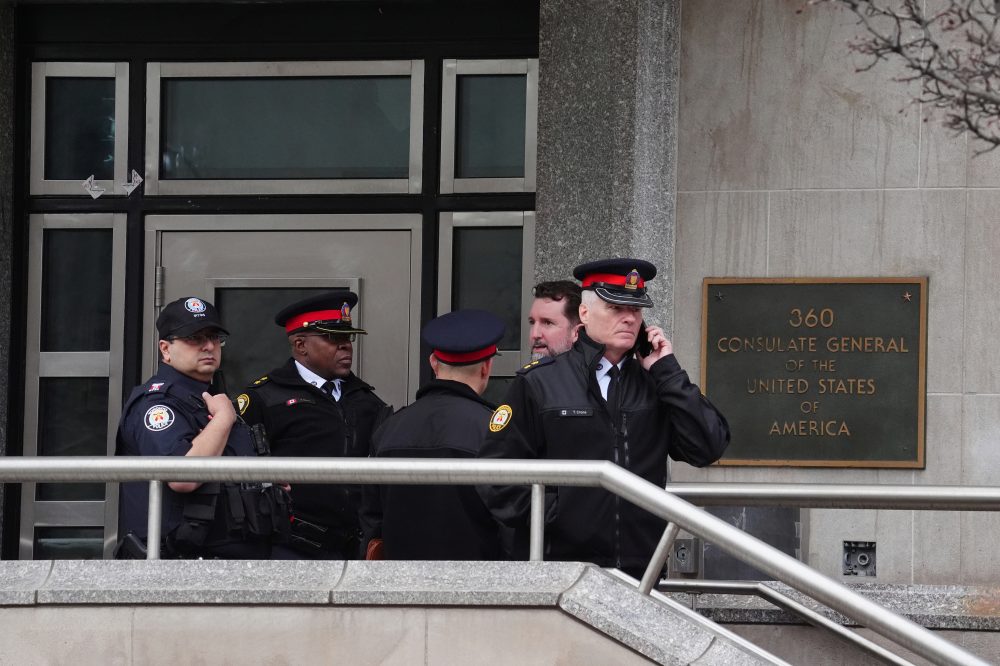
Al-Saadi is also accused of involvement in two recent attacks in Canada: an attack on a synagogue and a shooting at the U.S. consulate in Toronto in March. U.S. prosecutors said he directed and urged other people to attack U.S. and Israeli interests, including by killing Americans and Jews.
Al-Saadi posted about the attacks on Snapchat and Telegram and spoke about them in phone calls recorded by an FBI informant whose help he solicited in planning attacks in the U.S., according to court papers.
NEW YORK (AP) — Despite reaching a settlement just one month ago, the courtroom drama between Blake Lively and Justin Baldoni continues.
The two performers recently announced they had resolved their dispute without going to trial, ending Lively’s allegations that Baldoni orchestrated a reputation-damaging campaign against her following her accusations of sexual harassment during production of their 2024 movie “It Ends With Us.”
However, on Monday, Lively’s attorneys appeared before a judge seeking to force Baldoni to cover her attorney costs and additional penalties. Her legal team argued she deserves compensation under California legislation because a judge dismissed Baldoni’s countersuit last year, which had accused her of defamation and extortion.
Both performers were absent from the proceedings in front of U.S. District Judge Lewis J. Liman in New York.
Baldoni’s attorney, Ellyn Garofalo, criticized Lively’s team for attempting “an end run” around the trial that was avoided through their settlement agreement. Though the monetary details of their resolution remain confidential, Garofalo informed the court it concluded without Baldoni or his production company “paying a cent of the $300 million in damages she was demanding.”
“Reopening this for basically what is an alternative trial would involve reopening discovery, new experts, new expert depositions,” she said.
Michael Gottlieb, representing Lively, contends that Baldoni’s legal action against Lively exemplified exactly the type of case the California statute aims to prevent. The legislation seeks to shield sexual harassment survivors from lengthy and harmful court battles.
Following more than an hour of legal arguments, Liman withheld an immediate decision.
The performers have been engaged in litigation since the end of 2024 concerning the troubled production of “It Ends With Us.”
Lively had alleged that Baldoni made unwelcome remarks about her physical appearance during filming, crossed physical boundaries while shooting intimate scenes, and insisted on nudity during a childbirth sequence despite her objections.
She further claimed Baldoni and his production company then coordinated a campaign to harm her public image and undermine her credibility, anticipating she might publicly reveal her grievances.
Baldoni, who both directed and appeared in the dark romantic drama alongside Lively, rejected claims of harassment or orchestrating any smear tactics. He maintained that her allegations were fabricated as part of her scheme to gain creative authority over the film. His countersuit targeted both Lively and her spouse, “Deadpool” star Ryan Reynolds, alleging defamation and extortion.
The court eventually threw out Lively’s sexual harassment allegations, determining she couldn’t pursue them under federal statutes since she worked as an independent contractor rather than an employee on set. Her retaliation claims were proceeding toward trial before the settlement was reached.
Following their agreement, both parties issued a joint statement acknowledging that Lively’s concerns “deserved to be heard” and expressing their shared commitment to “workplaces free of improprieties and unproductive environments.”
“It Ends With Us,” based on Colleen Hoover’s popular 2016 novel exploring a relationship that becomes abusive, hit theaters in August 2024 and performed better than anticipated at the box office.
Lively gained recognition through the 2005 movie “The Sisterhood of the Traveling Pants” and starred in “Gossip Girl” from 2007 to 2012, later appearing in films such as “The Town” and “The Shallows.”
Baldoni gained fame through the television comedy “Jane the Virgin,” helmed the 2019 movie “Five Feet Apart,” and authored “Man Enough,” examining contemporary masculinity concepts.
Motorists traveling on northbound Route 13 will encounter a lane restriction due to ongoing construction activity. The right lane is currently blocked between Voshell Mill Road and Shamrock Avenue.
According to traffic officials, the lane closure will continue until 5:00 AM. Drivers are advised to use caution and expect potential delays while traveling through the construction zone.
The head of the U.S. Department of Homeland Security announced Monday that international flight operations at Newark Liberty International Airport will continue without interruption, thanks to cooperation from New Jersey law enforcement agencies working near a detention facility.
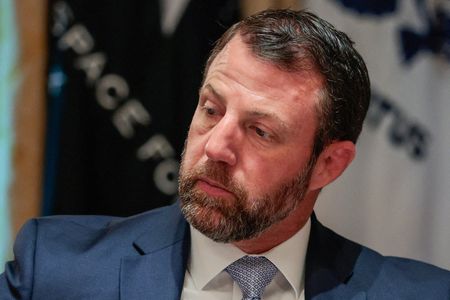
Secretary Markwayne Mullin made the announcement during a Dallas press conference, stating: “As long as we continue to have this partnership with local and state law enforcement, then there’ll be no need to do so.”
The comments follow last Friday’s action by New Jersey Governor Mikie Sherrill, who deployed state police to take charge of the area surrounding a migrant detention center in Newark. The facility had been the site of ongoing confrontations between demonstrators and federal Immigration and Customs Enforcement personnel for a full week.
Governor Sherrill, a Democrat, explained her decision was meant to reduce growing tensions and violent incidents occurring outside Delaney Hall, a detention facility with 1,000 beds run by private contractor Geo Group.
While Mullin confirmed he had developed contingency plans to reassign customs personnel from the airport to help with security operations at Newark Airport – which serves as a primary hub for United Airlines near New York City – he emphasized such measures aren’t necessary due to state and local law enforcement involvement.
Last Thursday, Mullin had issued a warning that the Trump administration might suspend processing of international travelers and freight at Newark Airport. Following that announcement, major airline companies, travel organizations, and business groups cautioned on Friday that blocking border processing at Newark or other significant U.S. airports could create widespread disruption, leaving thousands of tourists and American citizens stranded while preventing essential cargo deliveries.
Mullin has consistently indicated he could similarly suspend immigration processing at over a dozen additional airports located in designated sanctuary cities, including Boston, Denver, Philadelphia, Chicago, Los Angeles, Seattle and San Francisco.
According to the U.S. Travel Association, completely shutting down international flight operations at the 18 airports serving sanctuary cities would cause economic losses exceeding $70 billion and affect 68 million international travelers annually.
International visitors are anticipated to arrive in large numbers for this month’s soccer World Cup, which the U.S., Canada and Mexico are hosting together. The championship match is scheduled for July 19 in East Rutherford, New Jersey, located approximately 12 miles from Newark Airport.
A powerful earthquake measuring 6.1 on the Richter scale occurred in waters near southern Italy during the early morning hours on Tuesday, according to the German Research Centre for Geosciences.
The seismic event was recorded at a depth of 253 kilometers (157.21 miles) below the surface, the German Research Centre for Geosciences reported.
Officials in Australia announced Tuesday that the nation’s wheat production this year will reach its lowest point in three years, driven by elevated fertilizer expenses and drought conditions affecting certain regions.
As one of the world’s leading wheat exporters, Australia’s diminished crop output will tighten global grain supplies, potentially driving up food costs that already hit two-year peaks last month following crop damage in the United States.
The Australian Bureau of Agricultural and Resource Economics and Sciences (ABARES) released quarterly projections showing wheat production will total 26.7 million metric tons this harvest season.
This represents a decline of approximately 9 million tons compared to the previous season and falls roughly 8 million tons below the five-year average, based on agency data.
Fertilizer expenses have surged dramatically since the conflict in Iran disrupted shipments from Gulf region suppliers. These elevated costs will likely lead farmers to reduce fertilizer application, limiting crop yield potential, according to ABARES, which operates under the agriculture ministry.
Additionally, eastern regions of Australia have experienced extended periods of insufficient rainfall over recent months. While May brought beneficial precipitation that improved growing conditions, the national weather service continues forecasting El Nino patterns and below-normal rainfall in upcoming months.
“It will be crucial that adequate and timely supply of fertiliser is available and adequate rainfall is received to meet current yield projections,” ABARES said.
The agency projects wheat planting areas will decrease 12% from last season to 10.9 million hectares, marking the smallest planted area since the 2019/20 growing season.
Barley cultivation, which demands less fertilizer than wheat, is expected to expand 4% from the previous season to 5 million hectares, though total production will still decline 15% to 14.1 million tons, ABARES reported.
Canola planting areas, requiring substantial fertilizer but commanding higher market prices than wheat, should contract 6% to 3.5 million hectares, with harvest volumes dropping 20% to 6.2 million tons.
Australia’s planting season is concluding, with harvest operations scheduled to begin near year’s end.
A Newark resident is facing stalking and indecent exposure charges after police say he was caught peering into someone’s apartment windows on multiple occasions.
According to Newark Police, the man was taken into custody after being identified as the person responsible for several incidents involving a victim’s residence. Investigators say the suspect was observed looking through the windows of the victim’s apartment building on different occasions.
Police report that during at least one of these incidents, which occurred on Tuesday, May 26, 2026, around 9:45 a.m., the man allegedly exposed himself while engaging in this behavior.
The arrest came after police were able to identify the suspect in connection with the multiple window peeping incidents. Authorities have not released additional details about how the suspect was identified or whether there may be other victims.
The case remains under investigation by Newark Police.
RALEIGH, N.C. — Rod Brind’Amour can pinpoint precisely when he believed the Carolina Hurricanes had what it takes to compete for the Stanley Cup.
“Eight years ago,” he stated. That marked the beginning of Brind’Amour’s tenure as head coach, starting a path of consistent playoff appearances and near-misses at reaching the final until this season.
The Vegas Golden Knights entered the league nine years ago, and from their aggressive expansion draft strategy to this spring’s run, they’ve maintained championship aspirations. Their inaugural season ended with a final appearance, and they captured the title in 2023. This third Cup Final appearance may be their most unexpected.
This matchup between Vegas and Carolina represents nearly ten years of development for two franchises in non-traditional hockey markets that have emerged as elite teams. Their paths have converged for this moment, a best-of-seven championship series starting Tuesday evening.
“It’s for all the marbles,” Golden Knights forward Cole Smith commented. “Just the way they play, they play a really fast game. So do we. It’s going to be a really great series.”
Carolina claimed their sole Stanley Cup title in 2006, when Brind’Amour served as team captain. He spent 9 1/2 seasons as a player with the organization and seven additional years as an assistant coach before his 2018 promotion. He has participated in 98 of Carolina’s 100 playoff wins since the franchise relocated from Hartford in 1997.
“Roddy’s been at the helm of it the whole time and just establishing the culture that we do have here,” said defenseman Jaccob Slavin, currently in his 11th campaign with the club. “It’s been building and building and we’ve been close and knocking at the door. I think we finally just have the right personnel, the right commitment, the right buy-in because our game really hasn’t changed.”
Slavin, captain Jordan Staal, grinder Jordan Martinook and center Sebastian Aho have remained together since Brind’Amour’s promotion, while wingers Andrei Svechnikov and Seth Jarvis and goaltender Frederik Andersen joined the established core over time. The Hurricanes captured at least one playoff round annually but had never managed three consecutive series victories.
“We’ve been trying really hard for eight years, and it’s not anybody’s fault,” Martinook explained. “It’s just we’ve fallen short.”
Logan Stankoven, obtained at the trade deadline last year when Mikko Rantanen was sent to Dallas six weeks after Carolina got him from Colorado, has excelled at center on the second line between Taylor Hall and Jackson Blake. Stankoven paces the squad with nine goals.
Hall, who arrived from Chicago in that initial three-way trade with Rantanen, leads the Hurricanes with 16 points. Nikolaj Ehlers, signed last summer as a free agent, had a monster Game 2 of the East final after they lost the series opener, including scoring the overtime winner.
“I don’t think I’ve done anything special to get this group (here),” Ehlers said. “This group was ready for it.”
Carolina stands 12-1 this postseason, the fewest defeats to reach the final since 1983. Brind’Amour believes this is where his squad has deserved to be for an extended period but acknowledges remaining work.
“I don’t think we have broken through,” Brind’Amour said. “You’ve got to win. I know everyone makes a lot about getting this far, but nobody’s going to remember who comes in second.”
Vegas finished second during its inaugural campaign when nobody anticipated the expansion franchise would compete. The Golden Knights advanced to the final before falling to Washington in five games.
“Set the tone right away,” said center William Karlsson, one of three original “Misfits” remaining from the franchise’s start. “That came out of nowhere.”
Initial general manager George McPhee’s selections of Karlsson, defensemen Shea Theodore and Brayden McNabb and winger Reilly Smith — back after a year and a half absence — from other organizations positioned Vegas for success. Intelligent draft choices, free agent acquisitions and trades by McPhee and current GM Kelly McCrimmon created a culture of winning at any cost.
“It’s what you want to be as an athlete,” McNabb said. “You want to be on a team that does that.”
Additions like Mark Stone, Jack Eichel, Ivan Barbashev and Alex Pietrangelo helped the Knights capture the Cup in their sixth season. They’ve reached the playoffs in all but one year.
Pietrangelo’s career-ending injury created room to acquire Mitch Marner on June 30. Marner tops all playoff scorers with 21 points, finding success during a time of year that eluded him through nearly a decade with the Toronto Maple Leafs.
“I think our team is deeper and a better team than what he had played on in Toronto,” McCrimmon said. “Not that Toronto didn’t have real good teams, but you have to have that depth throughout your roster because to go through three rounds or ultimately, hopefully, four rounds, everybody’s got to take their turn.”
Pavel Dorofeyev has emerged as a breakout performer in that regard, and he and teammate Brett Howden share the lead for most postseason goals with 10 each. Karlsson returned in the second round after missing the previous six months with an undisclosed injury.
Goaltender Carter Hart, a controversial signing last fall after he and four other Hockey Canada junior players were acquitted of sexual assault, has found his rhythm. Hart stopped 118 of 125 shots in a West final sweep of Colorado.
Most significantly, Vegas has won 19 of 24 games since McCrimmon dismissed coach Bruce Cassidy in late March and hired John Tortorella, whom he had never met or spoken with previously.
“We asked ourselves, ‘Who can come in and give us that kind of a bump?’” McCrimmon said. “John was the guy that we really felt strongly could do that.”
SAN ANTONIO (AP) — Back in December 1949, the marquee outside Madison Square Garden advertised an upcoming event simply as “Geo Mikan vs Knicks.”
The sign didn’t read “Minneapolis Lakers vs. Knicks.” It highlighted just George Mikan. The league’s original extraordinary big man.
That scenario feels familiar today. Wednesday marks the beginning of the NBA Finals, with San Antonio taking on the Knicks for the championship. And the advertising for this matchup — whether in San Antonio, New York, Paris or anywhere else across the world — might as well read “Wemby vs Knicks.”
Victor Wembanyama continues advancing to increasingly prominent platforms. The current version of the NBA’s exceptional big man — a designation previously belonging to players like Mikan, Bill Russell, Wilt Chamberlain, Kareem Abdul-Jabbar, Shaquille O’Neal — will command global attention throughout this series, and likely for every contest he participates in going forward. He’s already achieved superstar status. This series provides his initial opportunity to add championship to his accomplishments.
“This is the best basketball on the planet that’s being played right now,” Wembanyama said after San Antonio won Game 7 at Oklahoma City to capture the Western Conference title. “And the crazy thing is … I want to do that 15, 20 more times. Let’s hope it doesn’t become an addiction. Maybe it is already.”
The addiction comparison seems appropriate. San Antonio has become completely devoted to him.
The city lacks Major League Baseball, NHL, or NFL franchises. When it comes to major professional sports, only the Spurs exist. Anyone traveling just five minutes in any direction throughout this city will witness the evidence.
Summer has arrived with school out in San Antonio. Monday found the city’s public library bustling with activity, and several children discovered a new exhibit near the entrance. “Read Like Wemby,” the display announced, showcasing five books that Wembanyama has reportedly enjoyed reading. An Instagram account — wembybooks — began sharing photos of him with various books, local San Antonio media picked up the story, and the library developed their concept.
“We want to make sure people have access to those and people can read them,” said Scott Williams, the marketing manager for the San Antonio Public Library. “And so, we thought, ‘Let’s do a display and let’s do a book list and make sure that people can easily find what Wemby’s reading so that they can read it too.’”
The outcome?
“The interest has been huge,” Williams said. “Ultimately, we’re looking at two things. We want people to pay attention to the library, we want people to come here and notice us, and we want people checking out these books and reading. It’s been a success on both fronts.”
Therefore, Wemby encourages literacy.
He also draws visitors to seafood establishments — even during closed hours.
Rudy’s Seafood remains closed on Mondays. During a 15-minute period Monday afternoon, four vehicles arrived. They weren’t seeking meals. They came to view the Spurs artwork — featuring current players and coaches alongside a recently refreshed Gregg Popovich, plus newly added George Gervin and Manu Ginobili, among others.
Mark and Christina Lerma have relatives in San Antonio but reside in Nebraska. They won’t attend the NBA Finals — ticket costs are prohibitively expensive — but they visited Rudy’s to honor their beloved team. Mark sported a recently purchased Spurs NBA Finals cap and Wembanyama jersey; Christina wore all black and displayed footage of a Spurs dress she had worn Sunday.
Their Spurs loyalty spans many years. And Wembanyama, predictably, has rapidly earned a special position in their devotion.
“He’s dominant,” Mark Lerma said. “He changes the game.”
They enthusiastically mentioned that Wembanyama has visited the restaurant to view the Spurs tribute, which has existed for years and receives updates when necessary.
“A lot of people stop and do selfies,” said Roland Ramirez, who owns the restaurant. “They’re doing graduation pictures with the backdrop. It’s pretty nice for the community. You know, the Spurs are pretty big right now here in San Antonio.”
He has previously met Wembanyama and was impressed by his demeanor.
“The first vibe I got off of him was he was just very humble,” Ramirez said. “He talked to my wife … he was very humble with everybody. You could see all the emotion he had when he won the Western Conference finals and the crying, he’s just a very emotional guy, very humble, very, very nice guy. That’s what people are really feeding off. He’s humble, but he’s hungry for a championship. And when he gets on the floor, he’s a whole different monster.”
He’s unique. Just as Mikan was 77 years ago. Wemby vs. the Knicks. A premier showdown awaits.
Motorists should plan alternate routes as a portion of Paper Mill Road remains inaccessible to westbound traffic due to construction work currently underway.
The affected roadway spans from Corner Ketch Road to North Star Road, with the closure expected to continue until 5 AM.
Drivers are advised to seek alternative routes during this time period to avoid delays and potential traffic backups in the area.
A blockbuster Monday trade sending two-time AP Defensive Player of the Year Myles Garrett from Cleveland to Los Angeles has added him to a growing list of elite NFL players moved during their prime years.
The surprising Garrett trade occurred approximately nine months following another shocking move involving a premier pass rusher, when Micah Parsons was transferred from Dallas to Green Bay just prior to last season’s opening.
Los Angeles will surrender 2024 AP NFL Defensive Rookie of the Year Jared Verse, along with draft selections including a 2027 first-round pick, 2028 second-round choice, and 2029 third-round selection to Cleveland in the transaction, which remains contingent on a physical examination.
Monday’s activity included additional star movement, as Philadelphia shipped receiver A.J. Brown to New England in exchange for a 2028 first-round selection and 2027 fifth-round pick.
Green Bay surrendered two first-round selections and defensive tackle Kenny Clark last August to acquire Parsons from Dallas. Parsons recorded 12 1/2 sacks across 14 contests with the Packers before suffering a season-ending knee injury that damaged Green Bay’s campaign.
Dallas utilized their initial first-round selection to move down three positions in April’s draft, selecting defensive end Malachi Lawrence in round one, plus cornerback Devin Moore and defensive end LT Overton in the fourth round.
Several other NFL superstars have been moved during their peak performance years:
Immediately before the 2018 season began, Oakland and Chicago completed a transaction resembling the Parsons deal. The Raiders sent two-time All-Pro and former Defensive Player of the Year winner Mack to the Bears for two first-round selections after contract negotiations failed.
The 2018 deal ultimately disappointed both franchises. While Mack performed excellently in Chicago, earning All-Pro recognition in his debut year, he couldn’t help the Bears capture a playoff victory during his four seasons before moving to the Chargers.
Oakland selected running back Josh Jacobs with their first pick, who performed well before departing via free agency after 2023. Their second first-round choice was squandered on cornerback Damon Arnette, who was released midway through his sophomore campaign.
Dallas history’s most renowned trade occurred during Jerry Jones’ inaugural ownership season in 1989, when the Cowboys sent Herschel Walker to Minnesota for a package eventually yielding eight draft picks, including three first-rounders. Dallas utilized those selections to draft Hall of Famer Emmitt Smith and key contributors to three Super Bowl championships like Darren Woodson, Kevin Smith and Russell Maryland.
Minnesota failed to win a playoff contest during Walker’s two-plus seasons there.
Jones completed another famous transaction that powered Dallas’ 1990s dynasty by acquiring the pass rusher from San Francisco for second- and third-round picks in 1992. Haley became the defensive piece Dallas needed to capture three Super Bowls during his initial four seasons, defeating the 49ers in the NFC championship en route to the first two titles.
Moss was a three-time All-Pro and the league’s most feared deep threat when Minnesota dealt him to Oakland in 2005 for a package including the No. 7 overall draft selection. The move benefited neither franchise as Minnesota chose Troy Williamson, who managed 79 receptions across three seasons, while Oakland won six games over two years.
Moss was subsequently dealt to New England in 2007, establishing an NFL record with 23 touchdown receptions in his debut season as the Patriots became the sole team to achieve a 16-0 regular season.
Six years after Minnesota traded him to the New York Giants, Tarkenton returned to the Vikings in 1972 following four Pro Bowl appearances in six New York seasons. Tarkenton guided Minnesota to three Super Bowl appearances across seven seasons in his second tenure — losing each time — and earned NFL MVP honors in 1975.
The unhappy Dickerson was moved from the Los Angeles Rams to Indianapolis in 1987 through a major deal that also sent Cornelius Bennett to Buffalo. Dickerson helped the Colts reach the playoffs for the first time in a decade during his debut season, then led the NFL in rushing during 1988.
Faulk topped the NFL with 2,227 yards from scrimmage in 1998 when Indianapolis surprisingly decided to trade him to St. Louis. The Colts drafted Hall of Famer Edgerrin James in the first round as Faulk’s successor, but the Rams clearly won the exchange.
Faulk helped create the “Greatest Show on Turf” offense as St. Louis captured the Super Bowl in his first season. Faulk accumulated nearly 1,500 more yards from scrimmage and 18 more touchdowns than any other player from 1999-2001, winning AP Offensive Player of the Year all three seasons and MVP in 2000.
McCaffrey transformed San Francisco’s offense after being acquired from Carolina during the 2022 season for a four-pick package. McCaffrey accumulated 3,233 yards and scored 31 touchdowns across his first 27 regular-season games for the Niners before injuries limited him last season.
He earned AP Offensive Player of the Year in 2023 when he helped San Francisco reach the Super Bowl.
Dean was coming off an All-Pro campaign in 1980 when he was traded the next year to San Francisco for a package including a first-round pick. His arrival helped launch the 49ers dynasty. He earned All-Pro honors in 1981 when San Francisco won its first of five championships across a 14-season span and recorded a 17 1/2-sack season in 1983 before Hall of Fame induction.
In a major star-for-star exchange, Denver obtained Bailey from Washington for star running back Clinton Portis. Portis achieved four 1,000-yard rushing seasons with Washington, but the Broncos emerged as the clear winner.
Bailey played 10 additional seasons, earning All-Pro recognition his first three seasons, leading the league with 10 interceptions in 2006 and gaining Hall of Fame entry.
Warfield had achieved consecutive Pro Bowl selections for Cleveland when Don Shula acquired him during his first season as Miami’s head coach. Warfield provided a crucial deep threat for the Dolphins, making five straight Pro Bowl appearances. Warfield earned All-Pro honors twice and helped Miami win consecutive Super Bowls, including the perfect 17-0 season in 1972.
Traditional healers in Peru conducted a spiritual ceremony Monday to offer blessings for the two contenders in this weekend’s decisive presidential election, as the South American nation prepares to choose a new leader amid ongoing political turmoil and corruption issues.
The ceremonial blessing represents a customary practice performed at the beginning of each year and prior to major elections.
The spiritual leaders assembled at Herradura Beach in Lima’s Chorrillos district, displaying images of both presidential hopefuls during the seaside ceremony.
The final contest features Keiko Fujimori, a conservative politician and daughter of former disgraced President Alberto Fujimori, against Roberto Sánchez, a nationalist congressman and ex-minister. Current polling shows the race extremely close ahead of Sunday’s vote.
During April’s initial voting round, Fujimori secured slightly more than 17% of ballots cast, while Sánchez captured approximately 12% among a large group of contenders. The first round experienced significant operational difficulties that prevented thousands of citizens both domestically and internationally from voting. The country’s election officials required several weeks to confirm the final two candidates for the decisive round.
The ceremonial blessing incorporated flower petals, fresh fruit, coca leaves, and aromatic palo santo wood pieces, along with black tobacco, ceremonial swords, and ritual dolls. The shamans also ignited bright-colored flares and played traditional drums.
“The ritual we perform is primarily intended to ensure that the best candidate is the one who represents our Peru,” said shaman Andrés de los Santos, who had traveled to Lima from the north of the country.
While the spiritual leaders offered no predictions during this ceremony, they have made forecasts previously. At the conclusion of 2025, they predicted Venezuela’s then-President Nicolás Maduro, now facing drug trafficking charges in the United States, would no longer be in office by the end of 2026.
Sunday’s victor will become Peru’s ninth president within a 10-year span, taking over from José María Balcázar, who assumed the interim presidency in February. Balcázar succeeded another temporary leader, José Jerí, who was removed due to corruption accusations after serving only four months.
Peru’s incoming president will take the oath of office on July 28 for a five-year term.
Five American passengers who were quarantined at a Nebraska medical facility following hantavirus exposure on a cruise ship have been cleared to return home, federal health authorities announced Monday.
The individuals will finish their monitoring period at home after staying healthy and fulfilling requirements for supervision outside the isolation unit at the University of Nebraska Medical Center.
These five passengers are departing Omaha approximately three weeks after they and 13 other Americans were transported to Nebraska following a fatal hantavirus outbreak aboard a cruise vessel in the South Atlantic Ocean.
While hantaviruses typically transmit through inhalation of contaminated rodent waste particles, the strain responsible for this outbreak, known as the Andes virus, may occasionally spread between humans.
According to the World Health Organization, 13 confirmed or suspected hantavirus infections, including three fatalities, have been connected to the cruise ship.
Health authorities stated that no Andes virus infections have been verified in the United States, and public risk remains minimal.
A spokesperson for Nebraska Medicine confirmed Monday that none of the American passengers has displayed any symptoms.
Previous outbreaks have shown hantavirus symptoms can emerge up to 42 days after exposure, though medical professionals note most individuals who become ill develop symptoms within 21 days.
Omaha physicians overseeing the passengers had previously indicated they would evaluate each individual case to determine suitability for completing the recommended 42-day isolation period at home.
Government officials coordinated transportation for the five departing individuals, working with state and local agencies. Authorities specified the travel would not involve commercial airlines, with proper containment protocols implemented. State health departments will maintain daily symptom tracking, round-the-clock supervision and advisory services.
Two of those returning to their residences live outside New York City, according to city Health Commissioner Dr. Alister Martin.
Jake Rosmarin, one of the passengers remaining in quarantine, wrote on his blog Sunday that he intends to complete his final three weeks at the Omaha facility to ensure immediate medical access if needed and to avoid potentially exposing others.
Rosmarin, who shares daily updates about his situation, said he respects others’ decisions to leave.
“For me personally, this experience has been incredibly traumatic,” Rosmarin said. “I don’t think I’ve fully processed everything yet, and right now I don’t want to leave until I know there is no risk of me getting sick or putting my family, friends, or the general public at risk.”
Not all quarantined individuals in Nebraska have been satisfied with the arrangement. Approximately one week after the 18 passengers arrived, federal health officials issued mandatory quarantine orders requiring two passengers who wished to depart to remain at the facility.
Vermont Senator Bernie Sanders announced Monday his continued endorsement of Graham Platner, despite recent news coverage regarding the Maine Democratic Senate hopeful’s inappropriate text communications with multiple women during his marriage.
Over the weekend, Platner released a video featuring his spouse, Amy Gertner, who had previously informed his campaign about the text exchanges last year. In the recording, Gertner dismissed the media attention as mere “gossip” and commented that “being married is hard.”
Sanders, who provided crucial early support for Platner’s campaign, confirmed to The Associated Press Monday that he continues backing the former military service member and oyster farmer in his bid to challenge incumbent Republican Senator Susan Collins.
“People can’t afford healthcare. Can’t afford groceries. Can’t afford to put gas in their cars. And I think it might be a good idea if we focused on the important issues facing the working families of Maine and this country,” Sanders stated.
The Vermont lawmaker mentioned plans to meet with Platner during his Washington visit this week, expressing his belief that the nation should “focus on issues more important than the Platner marriage.”
Platner will also participate in a fundraising event co-organized by Ron Klain, President Joe Biden’s former chief of staff.
The Democratic candidate seeks his party’s nomination in what observers consider one of the nation’s most significant Senate contests, as Democrats aim to defeat the long-serving Republican Senator Susan Collins and reclaim chamber control. Maine’s primary election occurs June 9, with Platner’s main Democratic opponent, Governor Janet Mills, having ended her campaign in April.
This Friday evening, Platner will join California progressive Representative Ro Khanna and two Maine Democratic candidates at a “get out the vote” event in Bar Harbor’s historic theater in the coastal community.
A motorcoach operator who had faced previous speeding violations received additional criminal charges Monday following a deadly multi-vehicle collision in Virginia that claimed five lives and left dozens injured.
Jing Sheng Dong, 48, of Staten Island, New York, originally faced two involuntary manslaughter charges after the early Friday morning collision on Interstate 95. Monday’s grand jury decision added three more involuntary manslaughter charges plus one reckless driving charge, the Stafford County Commonwealth’s Attorney’s Office announced.
Officials report that Dong was operating a motorcoach traveling from New York to North Carolina when he collided with multiple vehicles that had reduced speed in a construction area. The victims included a Massachusetts family of four from Greenfield who were traveling to attend a wedding, along with a 25-year-old woman from Worcester, Massachusetts.
While Dong remained in the hospital Monday, court records reveal he had previously faced speeding allegations in Colonial Heights, Virginia, during November 2024 and in Annapolis, Maryland, this past March. The Maryland incident involved accusations of operating a motorcoach at 72 mph in a 50 mph zone.
The Virginia speeding case resulted in a conviction for traveling 73 mph in a 55 mph zone, with Dong paying $219 in fines and court costs. He also faces a pending trespassing charge in Mecklenburg County, Virginia, from July.
E&P Travel Inc., headquartered in Kings Mountain, North Carolina, operated the bus involved in Friday’s collision. A board member confirmed the National Transportation Safety Board is conducting an investigation into the crash.
Legal documents from the bus crash case do not identify an attorney representing Dong. Attorneys handling his trespassing case and Maryland speeding case did not respond to Monday requests for comment.
Prosecutor Eric Olsen stated that Dong will be transferred to jail following his hospital discharge.
A major electric utility company announced Monday that it has entered discussions with large technology firms about potential partnerships for nuclear power plant construction, with the tech companies sharing financial responsibility for the projects.
The utility, headquartered in North Carolina and providing electricity across much of the southeastern United States, has experienced unprecedented demand from companies constructing data centers that require massive amounts of energy, pushing national electricity usage to historic levels.
During a recent interview, the company’s chief executive officer Harry Sideris explained that the utility has explored expanding its nuclear energy capacity to meet this surging demand. The company currently operates more nuclear facilities than any other regulated utility in the nation.
Nuclear plant construction projects have historically faced significant challenges, frequently exceeding initial budget projections and timeline estimates. This track record has made electric utilities reluctant to shoulder the complete financial burden of new reactor construction independently.
A private wealth manager who was identified in federal documents related to convicted sex offender Jeffrey Epstein has departed from Merrill Lynch, according to a company representative.
Paul V. Morris, whose name surfaced in Department of Justice files concerning Epstein, is no longer with the Bank of America subsidiary, a company representative confirmed. The departure was initially disclosed by Bloomberg News.
The representative would not reveal the timing of Morris’s exit or clarify whether his departure was connected to his documented connections with Epstein.
According to his LinkedIn profile, Morris began working at Merrill in August 2016. Federal documents revealed that while employed there, Morris communicated with both Epstein’s personal assistant and his accountant during 2017 and 2018.
Department of Justice records indicate Morris previously worked at JPMorgan Chase and Deutsche Bank. His name surfaces multiple times throughout the Epstein documentation. One document shows he was part of a JPMorgan team that gave approval for Epstein to become a client in 2011.
The nation’s largest bank, JPMorgan, currently faces legal action from women alleging Epstein sexually abused them, along with separate litigation from the U.S. Virgin Islands, where Epstein owned property.
A source with knowledge of the situation confirmed that Epstein was never a client of Merrill Lynch, Bank of America’s wealth management division.
Attempts to contact Morris by phone were unsuccessful, and he did not respond to messages sent through LinkedIn or his Merrill Lynch email address.
According to Bloomberg’s reporting, Morris maintained regular contact with Epstein following his employment at Bank of America.
Morris’s LinkedIn profile indicates he headed the Morris Group within Merrill Private Wealth Management.
Major financial institutions are facing increased examination regarding their connections to Epstein, who died in a New York City jail in 2019 while awaiting trial on federal sex trafficking charges. Officials ruled his death at the Metropolitan Correctional Center a suicide.
The Wall Street Journal had previously disclosed that JPMorgan Chase executives continued meeting with Epstein even after the institution chose to terminate his accounts in 2013.
In a similar pattern, Department of Justice documentation showed that Deutsche Bank kept managing Epstein’s accounts after notifying him in late 2018 that their business relationship would end, finally cutting all connections only after his arrest in July 2019.
An Israeli networking software company announced Monday it has completed a $410 million funding round, bringing its total fundraising to $1 billion since inception.
DriveNets said the investment was spearheaded by Bessemer Venture Partners and Atreides Management. AMD and Red Dot Capital came aboard as fresh investors, while current backers Pitango and D1 Capital Partners continued their support.
According to CEO Ido Susan, the funding will help the company address rapidly growing demand for large-scale artificial intelligence infrastructure solutions.
The company chose not to reveal its current valuation following this investment round and did not respond immediately to requests for additional details.
Venture capital has been flowing heavily into AI infrastructure companies in recent years, allowing these firms to grow while avoiding the ups and downs of public stock markets.
The company’s technology enables telecommunications companies and data centers to create and operate networks using standard, commercially available equipment instead of expensive specialized systems. This approach supports both high-speed connections and AI processing needs.
Since its establishment in 2015, DriveNets has formed partnerships with technology company Broadcom, Japan’s Fujitsu, and Indian IT services company Wipro.
Charlie Kawwas, president of Broadcom’s semiconductor solutions group, commented on the significance of network performance in AI development.
“As AI systems reach unprecedented scale, the performance of the underlying network fabric has become a primary driver of AI economics,” Kawwas said.
Aryna Sabalenka secured her spot in the French Open quarterfinals on Monday with a commanding 7-5, 6-3 victory over Naomi Osaka in an electrifying night session encounter at Roland Garros.
The Belarusian tennis star faced one of her toughest challenges yet in her quest for a first French Open title, but demonstrated the relentless power that has made her a dominant presence in women’s tennis this season. The match marked the first women’s night session contest at the tournament in three years.
“She is such a great player, she plays super aggressive tennis,” Sabalenka commented courtside, later entertaining spectators with a playful moonwalk. “I’m happy with how I was able to put back the pressure on her. It’s amazing to play the night session in front of all of you guys.”
“I’m super happy with my serve. I’m super pleased overall with the performance today,” she added.
Osaka, competing in her first French Open fourth round, started aggressively and jumped to an early 2-0 advantage following a double fault from her opponent. However, the world number one quickly regained momentum, using her signature powerful groundstrokes to fight back into contention.
The turning point came at 5-5 in the first set when Sabalenka delivered a crushing return that forced Osaka into a backhand error, securing the crucial break. In the second set, Sabalenka’s consistent heavy hitting gradually wore down her opponent, culminating in a delicate half-volley winner that gave her a 4-3 lead and ultimate control of the match.
Sabalenka’s victory extends her remarkable run of reaching at least the quarterfinals in her past 14 Grand Slam tournaments. Her next opponent will be Russia’s Diana Shnaider, who upset American Madison Keys 6-3, 3-6, 6-0 in another surprising result at this year’s clay court major.
In other women’s action, Anna Kalinskaya advanced to her first French Open quarterfinal with a hard-fought 6-4, 2-6, 7-6(7) triumph over 28th seed Anastasia Potapova. This marks only the second time the Russian has reached the quarterfinal stage of any Grand Slam event.
“I was definitely nervous,” Kalinskaya admitted after her victory.
“I meant like some moments when after losing my serve, at 5-5 in the third set, being 40-love up and then losing the game. I was frustrated because I wanted to win that game and to be up in the score and have a bit of advantage to finish the match.”
“When it didn’t work, I was upset. But it was a very fast changeover, so I had to reset and continue to play,” she continued.
Potapova acknowledged missing several key opportunities in what she characterized as a “mental” battle on Court Suzanne Lenglen.
“She played great and she held her nerve better than me in some moments,” Potapova reflected.
“I know what I need to work on to make sure that it’s not going to happen again,” she said.
Tournament officials also announced that Paraguayan player Adolfo Daniel Vallejo received a $65,000 fine for comments suggesting female umpires lacked the courage to manage unruly crowds after his Friday loss.
French hopes ended when Diane Parry, the final home player remaining in the women’s draw, fell 6-3, 6-2 to Polish qualifier Maja Chwalinska.
Despite the tennis disappointment for local fans, there was celebration as Paris St Germain stars Ousmane Dembele and Bradley Barcola displayed their two Champions League trophies to the Roland Garros crowd on Monday, following their team’s second consecutive European title with a victory over Arsenal two days earlier.
In tennis news beyond Paris, Serena Williams announced her return to competition next week at the Queen’s Club Championships, where the 44-year-old American will compete in doubles after receiving a wildcard. British media reports indicate she will partner with Canadian teenager Victoria Mboko in the June 8-14 event.
On the men’s side, Italian players maintained their country’s presence in the quarterfinals after world number one Jannik Sinner’s elimination. Flavio Cobolli defeated American Zachary Svajda 6-2, 6-3, 6-7(3), 7-6(5), while Matteo Berrettini overcame Juan Manuel Cerundolo 6-3, 7-6(2), 7-6(6).
Canadian fourth seed Felix Auger-Aliassime completed his collection of Grand Slam quarterfinal appearances with a convincing 6-3, 7-5, 6-1 victory over Chilean Alejandro Tabilo.
Drivers traveling on Elderon Drive should prepare for temporary lane restrictions as construction work continues throughout the day.
The ongoing construction activities are causing periodic lane closures that will remain in effect until 5 PM today. Motorists are advised to plan for potential delays and consider alternate routes if possible.
The construction work is expected to impact traffic flow intermittently as crews complete their scheduled activities in the area.
Denmark’s Social Democratic leader Mette Frederiksen announced Monday that she has successfully negotiated a centre-left coalition government, allowing her to retain leadership during ongoing diplomatic tensions with U.S. President Donald Trump regarding Greenland’s status.
The agreement to establish a minority government provides Frederiksen with her third straight term leading the country, bringing closure to months of political uncertainty following March elections that saw 12 different parties gain representation in Denmark’s parliament.
“I have been to see His Majesty the King and announced that a government can be formed after long negotiations,” Frederiksen told reporters.
Frederiksen’s centrist alliance lost parliamentary control during the March 24 elections as Danish voters expressed frustration with rising living costs, though her Social Democratic Party maintained its position as the largest parliamentary faction with 38 seats out of 179 total, a decrease from their previous 50 seats.
Following over two months of political negotiations between the Social Democrats and the right-wing Liberals, both seeking to lead a new administration, the 48-year-old Frederiksen ultimately obtained sufficient parliamentary support to form her government.
The new administration faces pressing priorities including managing diplomatic discussions concerning Greenland, which Trump has suggested annexing, along with accelerating Denmark’s military expansion as European security concerns mount due to Russia’s ongoing conflict in Ukraine.
Drivers using Vines Creek eastbound should be aware of ongoing construction affecting traffic flow this afternoon.
The left shoulder is currently blocked between Maine Street and Armory Road (Route 20) as crews perform construction work in the area.
The shoulder closure is scheduled to remain in effect until 3 PM today. Motorists are advised to use caution when traveling through the work zone and allow extra time for their commute.
DOVER, DE – Delaware State University Athletics has announced that season ticket packages are now available for purchase for the upcoming 2026 football season.
The Hornets are gearing up for what the athletics department expects to be another memorable campaign, with head coach DeSean Jackson entering his second year at the helm of the program.
According to the university’s athletics department, multiple season ticket options have been made available to give supporters the best chance to back the Hornets and Coach Jackson throughout the upcoming season.
Fans interested in securing their seats for the 2026 season can choose from several different ticket package options that have been designed to accommodate various supporter needs.
Listen to the Evening Delmarva Farm Report Update — June 1, 2026
DELMARVA — The USDA’s first seasonal assessment shows the nation’s major crops in solid shape, with 67% of U.S. corn rated good to excellent, though that’s down 2 points from last year. Soybeans are tracking at 66% good to excellent.
While those numbers look strong nationally, growing conditions vary sharply by region. Some areas are dealing with drought stress while others are getting too much rain, creating challenges for Delmarva growers as well.
A crop consultant in northwest Missouri is warning that heavy rainfall is fueling weed pressure, especially waterhemp, and raising concerns about nitrogen loss in fields.
Policy
The USDA opened applications today for its Farmer Bridge Assistance Program targeting specialty crop growers. The initiative delivers more than $1.6 billion calculated on 2025 planting plans and covers almost 270 different specialty crops.
Markets
Livestock futures posted solid gains Monday. August live cattle rose $1.55 to close at $240.60. October contracts climbed $1.90 to $232.32. Feeder cattle showed even stronger performance with August contracts jumping $3.12 to $351.55.
On the grain side, corn at Laurel Grain Company in Laurel, Delaware is bringing $4.89 a bushel for July delivery. Soybeans are $11.39 for November.
Forecast
Partly cloudy skies are expected tonight with a low of 52° and northeast winds 10 to 15 mph. Tuesday brings sunny skies and 71° with light south winds.
This article is based on the Delmarva Farm Report Update Evening Edition, June 1, 2026. Hosted by Tom Bradley.
FOXBOROUGH, Mass. — Wide receiver A.J. Brown is departing Philadelphia after a disappointing stint with the Eagles to rejoin his former coach in New England.
New England completed the acquisition of the standout pass-catcher from Philadelphia on Monday, finalizing a deal that had been widely speculated about for months.
Philadelphia announced they will get a 2028 first-round draft selection and a 2027 fifth-round pick in exchange for the receiver who has made three Pro Bowl appearances.
The move follows Brown’s difficult 2025 campaign in Philadelphia, where he became increasingly dissatisfied with an Eagles attack that struggled with consistency as the franchise was unable to repeat as Super Bowl champions.
Brown spent three years playing for Vrabel after Tennessee selected him in the 2019 draft.
The 28-year-old Brown became Philadelphia’s primary receiving target following his acquisition from Tennessee by the Eagles in 2022.
Brown delivered consecutive Pro Bowl performances in his initial two Philadelphia seasons, hauling in 88 receptions for 1,496 yards and 11 scores in 2022, followed by 106 catches for 1,456 yards and seven touchdowns in 2023.
Brown captured a Super Bowl championship during the 2024 campaign, but his satisfaction declined last season as Philadelphia’s offensive production faltered — resulting in a coaching change at offensive coordinator after a wild-card playoff defeat to San Francisco.
This situation sparked increased speculation about a potential trade during the current offseason. The move was delayed past April’s NFL draft likely because Philadelphia would have faced approximately $43 million in dead salary cap penalties for 2026 versus roughly $16 million this year and $27 million next season if the trade occurred after June 1.
In the end, a valuable draft selection proved sufficient to convince Philadelphia to part with a talent of Brown’s stature.
New England had been considered a logical destination for Brown since the team cut receiver Stefon Diggs in March. Diggs topped New England with 85 catches and 1,013 receiving yards plus four scores in his lone 2025 season with the Patriots, contributing to their Super Bowl appearance where they fell to the Seattle Seahawks.
Losing Diggs made securing a top receiving threat for quarterback Drake Maye an urgent need. New England did sign former Green Bay Packers receiver Romeo Doubs during free agency. However, he doesn’t provide the immediate offensive transformation that Brown’s arrival could deliver.
Maye confirmed last week that he had heard the speculation linking Brown to New England.
“If he ends up being on our team, great. What a great player. And if he doesn’t, we’ve still got to work these guys here,” Maye said. “It’s a tough balance, but I know he’s a phenomenal player.”
Patriots defensive tackle Milton Williams, who was teammates with Brown on Philadelphia’s 2024 Super Bowl-winning squad, believes the receiver would make a significant impact.
“He can definitely help our team,” Williams said. “Great dude. Monster on the field, great in the locker room, holding guys accountable and holding himself accountable. That’s everything you want in a player of his caliber.”
Brown departs Philadelphia among the most productive receivers in team history. He surpassed 1,000 receiving yards in each of his four seasons with the Eagles. Brown accumulated 339 total catches and 32 touchdowns while serving as a key contributor on two Eagles squads that reached the Super Bowl during his time there.
Vrabel was beginning his second year as Tennessee’s head coach when the franchise chose Brown in the second round of the 2019 draft.
Brown recorded 185 catches for 2,995 yards and 24 touchdowns during the following three seasons, reaching his peak with a 2020 campaign that earned him Pro Bowl recognition after recording 70 receptions for 1,075 yards and 11 touchdowns.
However, Tennessee ultimately dealt Brown to Philadelphia on the second day of the 2022 draft despite having one year remaining on his rookie contract. The organization insisted it preferred to keep him but believed his contract extension demands were excessive.
Vrabel repeatedly said during that offseason that Brown would remain on the team as long as he was the head coach, but circumstances forced a different outcome.
“Unfortunately, we understand that if we’re going to be here awhile we’re not going to be able to keep every single player that we draft and develop,” Vrabel said at the time.
The leader of the baseball players’ union declared his organization will resist management’s proposed salary cap for as long as necessary while negotiations continue amid threats of a work stoppage that could eliminate games in the upcoming season.
Major League Baseball put forward a salary cap proposal last week and seems prepared to begin a lockout once the existing labor agreement ends on December 1st.
“Our union has never been broken and never will be,” interim executive director Bruce Meyer stated Monday during a virtual press conference with reporters. “Our players have what they have, including being the only sport that doesn’t have this ultimate restriction, the salary cap, because our players have always been the most unified and that’s going to continue.”
“The unions in the other sports didn’t agree to salary-cap systems because they thought it was a good thing for players. That’s not what happened,” he continued. “In one way or the other, they were not able to fight the way that our union has and not criticizing anybody, it’s just a fact. Our union has always been the most solid, and that’s why our union has the best system.”
The league’s Thursday proposal would limit team expenditures in 2027 to $245.3 million, based on luxury tax payroll calculations that incorporate $20.1 million for benefits and the pre-arbitration bonus pool. The plan would also create a spending floor of $171.2 million, requiring certain teams to increase their payrolls. The Los Angeles Dodgers, who spend the most in baseball, carried a $415.2 million payroll on this year’s opening day — approximately $170 million above the suggested cap.
The league’s plan requests an even revenue split with players from designated income sources, including money spent on signing bonuses for high school and college players, plus international amateur players entering their first contracts.
“It’s not even a real 50%. It’s taking billions of dollars off the top before they’re proposing to even share any of that,” Meyer explained. “Players’ share under their proposal would go down. Players’ share for this season, 2026, is projected to be well over 50%. … Had MLB’s proposal been in place in 2026, players would, we estimate — would lose over half a billion dollars.”
Player contracts this season, calculated using average annual values and incorporating benefits and the pre-arbitration bonus pool, amount to $6.14 million, based on the league’s opening-day numbers. Draft slot value signing bonuses in this year’s amateur draft reach approximately $359 million, with international signing bonus pools totaling $208 million.
“They’ve effectively managed to cobble together the worst system for players in any of the major sports, and not even close,” Meyer stated.
Military operations targeting suspected drug-trafficking vessels in Latin American waters have resulted in over 200 fatalities since September, when the current administration launched what it describes as a necessary effort to combat drug smuggling.
The ongoing strikes have been accompanied by limited evidence supporting administration claims about eliminating “narco-terrorists,” with U.S. President Donald Trump characterizing the situation as an “armed conflict.”
Legal experts and critics have raised concerns about both the lawfulness and effectiveness of these operations, noting that fentanyl responsible for numerous fatal overdoses typically enters the U.S. through overland routes from Mexico. The targeted vessels operating in Caribbean and eastern Pacific waters are known to transport cocaine rather than fentanyl.
Trump has argued that traditional methods of intercepting vessels at sea over many decades have proven ineffective. However, the U.S. Coast Guard achieved record cocaine seizures in 2024, the last year of former U.S. President Joe Biden’s administration, confiscating 225 metric tons of the substance.
The military operations commenced in September near Venezuela’s Caribbean coastline and extended to the Eastern Pacific by October. October proved to be the most lethal month of the campaign, with 45 fatalities recorded. Pacific waters have seen the majority of this year’s strikes.
Trump and other high-ranking officials have maintained that these vessels are operated by narco-terrorists and cartel operatives.
The Associated Press conducted investigations in a Venezuelan region where some suspected boats originated and confirmed the identities of four men killed in the operations. Through multiple interviews, local residents and family members described the deceased as primarily laborers or fishermen earning $500 per voyage.
These strikes coincided with the most significant U.S. military presence in Latin America in decades, part of a pressure strategy that led to the January arrest of Venezuela’s then-President Nicolás Maduro.
More than 60 vessels have been targeted during the extended operation.
Trump has asserted that the strikes have destroyed fentanyl-carrying boats and that each eliminated vessel has prevented 25,000 American deaths. Experts and former U.S. counternarcotics officials characterize Trump’s claims as either greatly exaggerated or factually incorrect.
Over the last ten years, U.S. officials have consistently warned about increasing overdose fatalities, especially from opioids and synthetic opioids. Opioid overdose deaths peaked during 2021-2023 at approximately 80,000 annually but decreased to an estimated 55,000 in 2024. Experts credit this reduction partially to Biden administration efforts to increase access to life-saving overdose prevention medications. Federal statistics indicate further decline, with an estimated 44,000 deaths last year.
Conversely, cocaine overdose deaths, primarily from drugs produced in Colombia and Peru, occur less frequently than fentanyl fatalities. Approximately 22,000 Americans died from cocaine overdoses in 2024, declining from over 29,000 the previous year, according to federal data. Cocaine overdose deaths dropped further to an estimated 19,000 in 2025.
South American drug shipments to the U.S. consist primarily of cocaine. Fentanyl typically enters the U.S. through overland Mexican routes, where it’s manufactured using chemicals imported from China and India.
The operation has faced severe criticism, particularly after revelations that military forces killed survivors of the initial boat attack in a subsequent strike. Administration officials and numerous Republican lawmakers defended the actions as legal and necessary, while Democratic lawmakers and legal scholars characterized the killings as murder or potential war crimes.
Amanda Klasing, national director for government relations at rights watchdog Amnesty International USA, stated last week that the “extrajudicial killings are becoming normalized” as casualties continue mounting.
“Not only are these killings illegal, they are immoral,” she said. “People of good conscience cannot allow this to continue, yet Congress has so far failed to halt, or even slow down, this lethal and unlawful campaign.”
In January, relatives of two Trinidadian nationals killed in an October boat strike filed a federal lawsuit, describing the attack as a war crime and part of an “unprecedented and manifestly unlawful U.S. military campaign.” The legal complaint reflects widespread concerns about the boat strikes, highlighting that they lack congressional authorization and occur during peacetime when no military conflict exists between the U.S. and drug cartels that would justify lethal attacks under international law.
“These premeditated and intentional killings lack any plausible legal justification. Thus, they were simply murders, ordered by individuals at the highest levels of government and obeyed by military officers in the chain of command,” the lawsuit states.
NEW ORLEANS (AP) — Louisiana’s highest court delivered a narrow 4-3 ruling Monday that upholds the elimination of an elected position captured by a New Orleans man who served almost three decades behind bars for a murder conviction that was later overturned.
The split decision effectively blocks Calvin Duncan from taking on his role as Orleans Parish clerk of criminal court, a position he secured in a historic election last year before Republican state legislators moved quickly to dissolve the office during the spring session.
Democratic justices issued a scathing minority opinion, arguing the majority’s decision creates a pathway for state lawmakers to override voter decisions. However, the conservative majority countered that “this change was entirely within the authority of the legislature.”
The high court also turned down the New Orleans City Council’s proposal for a special election that would have allowed Duncan another opportunity to seek office.
“At a time when our voting rights are under unprecedented attack, this decision clarifies that if we want to live in a democracy, we have to fight for it with every tool our system of government provides,” Duncan said in a statement.
Republican Gov. Jeff Landry approved legislation dissolving the New Orleans clerk’s position, with GOP legislators promoting it as essential for streamlining government operations. Backers insisted the measure had no connection to Duncan or his criminal history.
Democratic officials condemned the action as governmental overreach by a predominantly white, conservative Legislature that they claim sought to undermine the wishes of a mostly Black city. Similar racial tensions emerged recently when Landry approved new congressional boundaries that removed one of Louisiana’s two majority-Black House districts.
Duncan faced conviction for a 1981 homicide and gained his freedom in 2011. A district judge in Orleans Parish threw out Duncan’s conviction in 2021, determining he was wrongfully found guilty, and prosecutors dismissed all charges. The National Registry of Exonerations includes Duncan’s case.
NEW YORK (AP) — A heated confrontation at CBS News has exposed deep divisions within the legendary “60 Minutes” program, as veteran reporter Scott Pelley launched a scathing attack against network leadership during a staff meeting this week.
During Monday’s introduction of new executive producer Nick Bilton, Pelley directly challenged CBS News chief Bari Weiss, claiming she was “murdering the show” and questioning Bilton’s credentials for his new role, according to media reports from Status, a publication focused on industry coverage.
The tense 10 a.m. gathering saw Pelley interrogating Bilton about recent dismissals, including former producer Tanya Simon and reporters Sharyn Alfonsi and Cecilia Vega, Status reported after obtaining audio from the meeting. Weiss did not attend the session.
The veteran correspondent criticized Bilton’s background, telling him his credentials were “slender” for leading the prestigious newsmagazine. Bilton previously worked as a technology writer and documentary maker without traditional television news experience.
Pelley’s criticism extended beyond the new producer to Weiss herself, claiming she lacked proper qualifications and had caused “catastrophic” damage to “CBS Evening News,” which Pelley formerly hosted, according to Status.
When Bilton defended his boss, saying “Bari loves this institution” and “she loves ’60 Minutes,’” Pelley fired back with harsh words. “She’s murdering ’60 minutes.’ She does not love this place. She was brought in to kill it and she’s doing exactly that,” Status quoted him as saying.
CBS News representatives did not respond immediately to requests for comment about the confrontation.
However, a network insider speaking anonymously told The Associated Press that both Weiss and Bilton had attempted to contact Pelley privately following last week’s staff changes. They wanted to reassure him of his importance to the program and their desire for his continued involvement.
The source expressed disappointment that Pelley chose to voice his concerns publicly despite their private outreach efforts.
The New York Times, which also reviewed meeting recordings, described Pelley’s distinctive voice trembling during the exchange. An unnamed meeting participant told the newspaper that while Weiss had planned to attend, staff “asked her not to.”
The confrontation occurred four days after Weiss announced significant changes to the 57-year-old program in a staff memo, declaring it was time for fresh leadership at the top-rated news show. Weiss has generated controversy since assuming control of CBS News last October.
In their announcement, Weiss and CBS News president Tom Cibrowski outlined their vision for “building a show that thrives in the 21st century.”
“That requires a new approach,” they explained, describing plans for “expanding ’60 Minutes’ beyond a one-hour television broadcast, deepening its role across CBS News, and holding everything we produce to the ambition, fairness, and fearlessness that have defined ’60 Minutes’ at its best.”
The executives praised Bilton’s appointment, stating he “embodies the energy and ambition that animated the founders of the show. We cannot imagine a better fit.”
According to Status, other staff members applauded Pelley multiple times during his remarks, particularly when he criticized the recent dismissals as harsh treatment.
Bilton reportedly stood his ground against the veteran correspondent’s challenges. “I have been a journalist for 25 years, Scott,” Status quoted him as responding. “I have sat and talked with incredibly powerful people like you have. None of it intimidates me, OK? So you are not going to intimidate me in front of this group of people.”
Wall Street’s major stock indexes climbed to record highs Monday, powered by artificial intelligence companies despite mixed signals about ongoing U.S.-Iran diplomatic discussions that created volatility throughout the trading session.
The market rally was driven primarily by technology stocks after President Donald Trump indicated that diplomatic conversations between the two nations were continuing. However, the gains showed unusual concentration, with only two sectors advancing while the majority of the market declined.
Market analyst Jamie McGeever examined what he calls the “K-shaped” U.S. economy in his Monday analysis, noting how personal savings have dropped to historic lows while corporations and wealthy asset owners benefit from AI-related investment spending. “Something has to give, right?” he wrote.
The technology sector jumped 2.5% and energy gained 1.9%, but the remaining nine sectors in the S&P 500 fell, with utilities dropping 3% and leading the decline. Individual tech stocks showed mixed results – Dell and Oracle each surged 10%, while Nvidia climbed 6% and Micron crossed the $1,000 mark. However, Qualcomm fell 9% and both Meta and Intel declined 5%.
The AI investment boom accelerated with several major developments. Nvidia introduced new processors designed to bring artificial intelligence capabilities directly to laptop and desktop computers. Anthropic announced it has privately submitted paperwork for a U.S. stock market debut, joining OpenAI in preparation for public trading. SpaceX is also expected to price its public offering later this month.
These potential listings could represent up to $4 trillion in combined market value, raising questions about whether the market can handle such large new offerings and whether current valuations indicate a market peak.
Manufacturing data released Monday showed U.S. factory activity expanding at its strongest pace in four years, driven by AI-related capital spending. This growth surprised many economists, particularly given concerns about tariffs, inflation, and low consumer confidence.
Currency markets saw the dollar strengthen broadly, with the USD/JPY pair approaching 160.00. New Zealand’s dollar and the Swedish krona each fell 1%, while Argentina’s peso dropped 1.5%. Bitcoin declined 3% to its lowest level since mid-April.
Oil prices spiked on Middle East tensions, with Brent crude rising 5% and West Texas Intermediate up 6%. Natural gas fell 3% while gold declined 1%. Treasury bond yields increased by as much as 3 basis points.
Global markets showed strength in Asia, with South Korea gaining 4% and major indexes including MSCI World, MSCI Asia ex-Japan, and Japan’s Nikkei all reaching new highs. European and UK markets declined.
Looking ahead, market watchers will monitor developments in the Middle East, along with economic data from Australia, South Korea, and the eurozone. U.S. job opening figures for April will be released, and Federal Reserve officials from Minneapolis and Cleveland are scheduled to speak.
The Seattle Kraken hockey franchise revealed Monday that billionaire philanthropist Melinda French Gates will be purchasing a minority ownership position in the team.
Financial details of the transaction, which must receive approval from the NHL, have not been made public.
The agreement brings together French Gates, who previously was married to Microsoft’s founder Bill Gates and holds a $30 billion net worth per Forbes estimates, with the Kraken’s ownership organization (One Roof Sports and Entertainment), led by Samantha Holloway.
“As a longtime Seattle resident, it means a lot to me to have the chance to make this investment in our city and its future,” French Gates said in a press release. “I’m a big believer in the power of sports, and after many years of cheering on Seattle from the sidelines, I’m excited to have an even deeper connection to the Seattle sports community. Seattle is an engine of innovation in so many ways, and Samantha Holloway’s leadership of the Kraken and Climate Pledge Arena reflects that.”
“I am excited to welcome Melinda to our ownership group,” Holloway added in the press release. “Melinda is an impressive business leader, philanthropist and importantly, a Seattle sports fan. We share many of the same values, including a deep commitment to Seattle and a belief in building organizations that create lasting impact.”
Since beginning play during the 2021-22 season, the Kraken have reached the playoffs only one time across their initial five seasons. In May, the organization brought in the Sportsology Group, a consulting company, to conduct an independent review of their hockey operations division.
Hewlett Packard Enterprise delivered exceptional quarterly performance on Monday, moving its long-term financial targets ahead by two years as artificial intelligence infrastructure demand drives unprecedented growth, causing stock prices to climb 36% in after-hours trading.
The technology company, which faces competition from Dell and Super Micro Computer, is experiencing increased sales of servers and networking equipment as customers build systems to support AI programs like ChatGPT.
Major U.S. technology companies including Alphabet and Amazon are planning to invest more than $700 billion in AI infrastructure this year, creating significant opportunities for equipment providers like HPE.
These market conditions allowed HPE to increase its fiscal 2026 revenue growth projections to 29% through 33%, a substantial jump from previous estimates of 17% to 22%. The company now anticipates annual networking division revenue growth of 72% to 75%, rising from earlier projections of 68% to 73%.
The company achieved record revenue growth of 40%, reaching $10.68 billion and exceeding analyst predictions of $9.79 billion. Adjusted earnings per share hit 79 cents, surpassing expectations of 53 cents.
“The strength of the quarter was largely driven by the performance of our traditional server business, which is really focused on enterprise customers,” CFO Marie Myers told Reuters.
Myers explained that this quarter marked a significant transition as businesses began implementing agentic AI as a primary operational component.
On Monday, the company announced the appointment of Elliott Investment Management partner Christopher Hsu to its board under their cooperation agreement established in July of last year.
HPE stated that its updated fiscal 2026 projections for adjusted earnings per share and free cash flow exceed what the company previously expected to accomplish by fiscal 2028.
The company increased its annual adjusted earnings per share forecast to a range of $3.35 to $3.45, compared to earlier estimates of $2.30 to $2.50. Previous fiscal 2028 projections had anticipated adjusted earnings per share of at least $3.00.
HPE reported an AI backlog exceeding $6.3 billion, including AI systems and networking equipment for AI applications, with 61% of orders coming from government agencies and major corporate clients.
“We do expect to ship and convert significantly more AI revenue in the back half of the year. We expect that actually to peak in Q4,” Myers said.
The company also unveiled a fiscal 2027 growth strategy, projecting revenue increases of 8% to 12%, which exceeds analyst estimates of 5.8%.
Chile’s far-right leader Jose Antonio Kast delivered his inaugural national address to Congress on Monday, outlining an ambitious legislative plan focused on crime reduction, spending cuts, and economic expansion as he works to rebuild his political standing.
During his speech from Congress in the coastal city of Valparaiso, the president detailed proposals to bolster police forces, strengthen immigration enforcement, and eliminate social benefits for certain individuals with criminal records.
“Starting tomorrow we’re going to move forward with a very intense legislative and administrative agenda,” Kast said.
The address comes at a crucial time for the president, who is working to regain political momentum following declining public approval and internal government upheaval. Successfully implementing his security and economic campaign pledges is viewed as essential for maintaining support from his political coalition.
Outside the congressional building, demonstrators engaged in confrontations with law enforcement during Kast’s remarks.
“Our government’s main goal, and there is no other, is that when our mandate is over, Chileans live better, are safer and have more opportunities,” Kast said.
The president also revealed plans for legislation addressing electrical utility pricing, streamlining government processes, and updating small to medium-sized mining operations. These proposals complement existing congressional legislation aimed at spurring economic development and employment growth.
Kast secured a decisive victory in the 2025 presidential runoff election by campaigning on tough crime and immigration enforcement platforms.
However, since assuming office in March, public support has declined significantly from 57% to 38%, based on polling data from Cadem.
Early in his presidency, Kast encountered a major test when the Iran conflict forced his administration to implement substantial fuel price increases.
The president also dismissed his security minister and another senior cabinet official in May following increased public criticism.
World number one Aryna Sabalenka advanced to the French Open quarterfinals Monday night, defeating Naomi Osaka 7-5, 6-3 in Paris at Roland Garros.
The Belarusian player pushed forward in her quest for her first French Open title, overcoming early struggles in what marked the tournament’s first women’s evening match in three years.
With this victory, Sabalenka extended her impressive streak of reaching the quarterfinals in her past 14 Grand Slam tournaments. She will face Russian Diana Shnaider in the next round.
“She is such a great player, she plays a super aggressive tennis. I’m happy with how I was able to put back the pressure on her. It’s amazing to play the night session in front of all of you guys,” Sabalenka told the Philippe Chatrier crowd after the match, where she entertained fans with a ‘Moon Walk’ celebration.
“I’m super happy with my serve. I’m super pleased overall with the performance today,” she added.
The match began with Osaka taking an early 2-0 advantage after Sabalenka committed a double fault. However, the top-seeded player quickly responded by breaking back and later secured a crucial break for a 6-5 first-set lead with a powerful return that the 16th-seeded Osaka couldn’t handle, sending her backhand into the net.
In the second set, after holding serve to tie at 3-3, Sabalenka broke Osaka’s serve for a 4-3 lead, concluding an extended rally with a skillful half volley.
Osaka, competing in her first fourth-round appearance at the French Open, was unable to mount a comeback and lost the final games of the match, falling on Sabalenka’s first match point opportunity.
The rocket and satellite company SpaceX has allocated 5% of its upcoming initial public offering shares for specific employees and individuals chosen by executive leadership, allowing these recipients to avoid standard post-IPO selling restrictions, regulatory documents revealed Monday.
These reserved shares will be available at the IPO price through a special directed share program. Any shares not purchased through this arrangement will be made available to public investors, the company stated.
The regulatory documents did not reveal the total number of shares that would be distributed under this plan or name the individuals eligible to participate.
This announcement highlights SpaceX’s unconventional strategy for post-IPO stock transactions as the aerospace company seeks a market valuation of approximately $1.75 trillion.
Most companies that go public typically restrict insider stock sales for about six months after their debut on the stock market, but SpaceX has established special exemptions for certain participants and designed a gradual release system for restricted shares based partially on company performance metrics and stock price goals.
This framework would allow some shareholders to begin selling their stock soon after SpaceX releases its first quarterly financial report as a public company, assuming certain criteria are satisfied. Additional restricted shares would become available for sale in the following months, with all remaining shares becoming freely tradable after six months.
According to the filing, SpaceX CEO Elon Musk, who maintains 85.1% of the company’s voting control and owns 12.3% of Class A shares, has committed to avoiding stock sales for approximately one year following the public offering. Other major investors face similar one-year selling restrictions, though the documents do not specify the extent of their ownership stakes.
These tiered lock-up arrangements gained popularity during the IPO surge of 2020 and 2021, when companies such as Airbnb, DoorDash and Snowflake implemented similar gradual share-release systems. Recently, AI chip manufacturer Cerebras and cybersecurity firm Rubrik have employed comparable strategies.
An Iraqi citizen suspected of belonging to an Iran-supported militia group created a disruption in a Manhattan federal courtroom Monday while entering a not guilty plea to terrorism-related charges.
Mohammad Baqer Saad Dawood Al-Saadi declared his innocence in an unexpected courtroom statement, telling the court “I am not a criminal.”
The defendant appeared in Manhattan federal court where his attorney, Andrew Dalack, submitted a not guilty plea for eight criminal counts, including conspiracy to provide material support to Kata’ib Hezbollah, which U.S. authorities classify as a terrorist organization backed by Iran.
Speaking through an Arabic interpreter, Al-Saadi stated: “I am not guilty and we are in a war situation.”
The defendant continued his remarks, telling the court “Children are being killed by your rockets,” while making gestures toward the area where U.S. District Judge Colleen McMahon and Manhattan U.S. Attorney’s office prosecutors were positioned.
Al-Saadi did not specify which particular incident he was referencing in his statement.
Iranian authorities report that a February 28 attack on a girls’ school in Iran resulted in the deaths of more than 175 children and teachers.
According to Reuters reporting, a preliminary internal U.S. military review indicated American forces were probably responsible for the incident, based on information from two U.S. officials.
Pentagon officials have not confirmed any initial conclusions from their investigation. A Pentagon representative stated Monday that the inquiry remains active.
During Monday’s proceedings, Al-Saadi appeared in a beige prison uniform with shackles around his ankles.
When the defendant began speaking, McMahon spoke loudly and commanded him to sit down. Two U.S. marshals who had been positioned behind Al-Saadi moved toward the defense table, and he complied with the order to be seated as they approached.
U.S. authorities took Al-Saadi into custody in Turkey last month during a period of increased American focus on Iran-supported militia groups accused of attacking American personnel and allies in various regions since the U.S. and Israel entered into conflict with Iran.
Federal prosecutors state that Kata’ib Hezbollah operates under the direction of Iran’s Islamic Revolutionary Guard Corps.
According to prosecutors, Al-Saadi assisted in planning roughly 18 attacks across Europe in recent months, though not all of these attacks were carried out, and during March and April he conspired to conduct attacks within the United States, including targeting a New York synagogue.
Drivers traveling on Pennsylvania Avenue should plan for potential delays as construction activity has resulted in the closure of the southbound right lane at Kennett Place.
The lane restriction is scheduled to remain in place until 5 PM today, according to traffic officials.
Motorists are advised to use caution when traveling through the work zone and to consider alternate routes if possible to avoid congestion in the area.
Weather authorities have extended a hazardous swimming advisory that will remain active through Sunday evening at 8:00 PM.
The National Weather Service Mount Holly office in New Jersey first issued the rip current warning on Saturday at 4:49 PM EDT, alerting beachgoers to dangerous ocean conditions.
The advisory warns swimmers and surfers about the presence of strong currents that can pull people away from shore and into deeper waters.
More than twelve years after a young woman was found dead on a New Castle street, her murder case remains without resolution.
Kendra Dobyns, age 19, was found deceased in the roadway during the early morning of June 1, 2012. A person walking by discovered her body in the unit block of Pyles Lane in New Castle’s Hamilton Park neighborhood.
The incident occurred in the 19720 zip code area, and investigators have continued working on the case despite the passage of time. The circumstances surrounding Dobyns’ death have kept the case classified as a cold case homicide.
Authorities are still seeking information that could help solve this unsolved murder from over a decade ago.
Motorists traveling on Route 1 are experiencing lane restrictions at Trap Shooters Road where debris has forced the closure of the left lane.
The Delaware Department of Transportation is reporting the lane blockage, which is affecting traffic flow in the area. Drivers are advised to use caution and expect delays while navigating through the affected section.
No timeline has been provided for when the lane will reopen to normal traffic.
Drivers traveling eastbound on East Delaware Avenue should prepare for continued lane restrictions through the summer of 2026.
The Delaware Department of Transportation reports that the right lane will remain closed between South College Avenue and Academy Street until June 5, 2026 at 3:00 PM.
Motorists are advised to plan alternate routes or allow extra travel time when navigating through this area during the extended closure period.
Wild turkey hunters across Maryland brought home 5,094 birds during the 2026 spring hunting season, according to state wildlife officials. The total represents a 5% bump compared to the previous year’s numbers, though it still falls short of the all-time high of 5,356 birds recorded in 2023.
“Favorable weather helped contribute to another productive spring season for Maryland turkey hunters,” said Karina Stonesifer, Director of the Maryland Department of Natural Resources Wildlife and Heritage Service. “While populations can fluctuate across regions and from year to year, turkey hunters continue to enjoy quality hunting opportunities across Maryland.”
Garrett County topped the state’s harvest numbers with 542 birds taken, while Charles County came in second with 452 turkeys. Worcester County rounded out the top three with 430 birds harvested. Both Allegany and Washington counties also saw hunters bring home more than 300 birds each.
The spring season kicked off with the Junior Turkey Hunt on April 11-12, which gave young hunters the first opportunity to participate. During that special weekend, youth hunters successfully harvested 441 wild turkeys, making up 8% of the season’s total take. Sunday hunting contributed 14% to the overall statewide numbers.
Hunters looking ahead to next season can purchase their 2026-27 licenses starting July 1 through the Maryland DNR website. The fall hunting calendar begins September 1 with mourning dove season, followed by deer archery season starting September 11.
The Justice Department has announced it will comply with a judicial ruling that temporarily suspended a $1.776 million fund established to help victims of government weaponization, despite voicing strong opposition to the court’s decision.
Federal officials stated they strongly disagree with the court’s determination to halt the fund, but confirmed they will honor the legal order while it remains in effect.
The fund was created to provide financial assistance to individuals who claim they were targeted through the improper use of government power and resources.
Officials in Newark, New Jersey are responding to escalating demonstrations outside an immigration detention facility with the implementation of a curfew. The mayor of Newark, Ras Baraka, spoke with NPR’s Juana Summers regarding the deteriorating situation surrounding protests at the Delaney Hall Detention Facility.
According to reports, the demonstrations taking place outside the detention center have become increasingly violent over recent days, prompting city leadership to take action. The curfew represents the mayor’s response to address public safety concerns as tensions continue to rise in the area surrounding the facility.
Motorists traveling on Abelia Lane are experiencing intermittent lane restrictions today as construction crews continue their work in the area.
The lane closures affect the stretch of Abelia Lane running from Willow Creek Lane to Oakridge Court, with traffic disruptions expected to last until 5PM this evening.
Drivers are advised to plan for potential delays and consider alternate routes if possible while the construction work is underway.
WEST SACRAMENTO, Calif. — After completing a winning road series against the Athletics, Yankees manager Aaron Boone expressed frustration with the challenging conditions at the minor league facility where Oakland temporarily plays their home games.
“I didn’t play in the PCL. But I feel like I’ve experienced it a couple times here when it gets hot like this,” Boone commented Sunday after New York’s 13-8 victory over the A’s. “You’re never feeling safe. … Just glad to escape here and get on the bird. It’s a challenging place to play. You have to figure it out.”
Now in their second year at Sutter Health Park in the Sacramento region, the Athletics continue struggling with a venue that dramatically favors offensive production.
Extreme temperatures and air currents transform routine fly balls into home runs, while high skies and shifting winds make defensive plays unpredictable. These factors create one of baseball’s most offense-friendly environments and appear to be wearing down Oakland’s pitching staff.
During their latest home stretch, the A’s managed just one victory in six games, surrendering 47 runs to Seattle and New York — including 13 runs in a single inning versus the Yankees — establishing a troubling trend at their interim location before relocating to Las Vegas.
Despite showing potential this season and spending considerable time atop the AL West standings before their recent struggles, Oakland’s home-road performance gap is stark. The team ranks 10th in baseball with a 17-14 away record, while their 11-17 home mark ranks second-worst.
Pitching performance explains the disparity.
Oakland surrenders 3.01 more runs per contest at home compared to road games. According to Sportradar, this differential would establish a new major league record for a complete season, surpassing the previous high of 2.82 set by the Phillies in 1923 and exceeding any season played at Denver’s high altitude.
“You watch games here,” Athletics manager Mark Kotsay explained regarding the pitching challenges at their ballpark. “You got to keep the ball down the zone and get the ball on the ground. We’ve paid for our mistakes probably more than what we’ve paid for mistakes on the road. That being said, we’ve got to play better defense at home. … That’s a combination of what it takes to pitch better. It’s also to play better.”
Despite Oakland’s attempts to minimize the ballpark’s influence, knowing they cannot alter the circumstances, the statistics tell a clear story. The ease with which baseballs carry affects pitcher confidence, making them hesitant to attack hitters aggressively.
At home, the A’s issue walks at the majors’ second-highest frequency, compared to 18th-highest during road games. Oakland pitchers walked 16 batters during the Yankees series, including four with bases loaded.
“We’re not going to overfocus on home-road splits right now but obviously we’re well aware that we haven’t played well in this ballpark,” Kotsay acknowledged.
However, Oakland’s pitchers say they attempt to prevent the conditions from affecting their mental approach.
“You can try and pitch to it, and if you do that, it might work one time, but you might also do something that you don’t want to do, or try and do something you’re not good at,” A’s starter Aaron Civale stated. “Sometimes the wind’s blowing out here, sometimes the wind is blowing out in another stadium or different place. So there’s factors everywhere, rain, weather, cold, hot. It’s all conditions that we can’t control. Unless you have a roof over your head, then surely there’s nothing you can do about it.”
While Athletics pitchers have suffered more from environmental factors than visiting teams, the conditions challenge everyone. Saturday evening, Yankees starter Ryan Weathers delivered the type of performance that typically produces excellent results.
Weathers recorded 10 strikeouts across 6 2-3 innings and generated swings and misses on over 40% of swings for only the third time in his career. However, three home runs — including two on pitches he considered well-executed — proved damaging in a 6-4 defeat.
Despite understanding the risks associated with any fly ball, Weathers said he couldn’t modify his pitching strategy.
“I did my time in the PCL, so I know how these parks work,” he explained. “But obviously, that can’t go into your decision-making, can’t go into your pitching.”
WASHINGTON — Federal officials announced Monday they will follow a court order that temporarily stops a compensation fund worth nearly $1.8 billion designed for allies of President Donald Trump. The decision comes after facing legal challenges and strong criticism from Republican lawmakers worried about possible payments to those involved in the January 6, 2021, Capitol riot.
The Justice Department’s announcement follows a Friday decision by a federal judge in Virginia who ordered the fund’s creation to be stopped while awaiting further legal arguments scheduled for later this month. Department officials stated they “disagree strongly” with the court’s decision but will follow the order.
The administration had supported the $1.776 billion “Anti-Weaponization Fund,” which was created to settle Trump’s legal case against the Internal Revenue Service regarding leaked tax documents. Officials described it as a necessary remedy for what they claim was politically motivated law enforcement actions during the previous administration.
While some Trump supporters, including Capitol riot participants, welcomed news of the fund, Congressional Republicans responded with strong opposition. Lawmakers confronted acting Attorney General Todd Blanche about the fund during a private meeting last month that Sen. Ted Cruz of Texas described as one of “the roughest meetings I’ve seen in my entire time in the Senate.”
Friday brought two court decisions that put the fund’s future in doubt.
A Virginia judge temporarily stopped the fund’s creation and set a June 12 hearing to consider arguments about extending her order preventing the government from proceeding with the fund during ongoing legal challenges.
“This Fund was open to anybody who was so weaponized, targeted, or persecuted, whether they were Democrat, Republican, Conservative, Independent, or otherwise,” the Justice Department stated while expressing disagreement with the ruling. “The Department will abide by the Court’s ruling.”
In a separate case, the federal judge in Florida handling Trump’s IRS lawsuit ordered Trump’s legal team to address “grievous allegations” from settlement opponents who claim the president dropped his case to avoid court examination of an improper agreement. U.S. District Judge Kathleen Williams gave them until June 12 to provide written responses to claims of collusion and whether the case should be reopened because the court was the “victim of a fraud.”
LGBTQ+ celebrations have kicked off nationwide this month, with colorful parades and community gatherings taking place from major metropolitan areas to smaller communities.
This year’s rainbow-themed events unfold while President Donald Trump’s administration implements measures aimed at reducing transgender rights and limiting diversity, equity and inclusion programs.
According to Jordan Braxton, co-president of USA Prides, an organization representing Pride groups nationwide, these celebrations have always maintained their activist origins.
“A festival is a time to celebrate,” she said. “Those are acts of resistance, too.”
These commemorations trace back to a brutal police assault on the Stonewall Inn, a New York gay establishment, which occurred on June 28, 1969.
That incident triggered widespread public demonstrations and launched the modern gay rights movement during an era when most LGBTQ+ individuals concealed their sexual orientation and gender identity.
Commemorative marches took place one year later in June 1970 across Chicago, Los Angeles, New York and San Francisco to honor that milestone.
Today, similar events occur in major metropolitan areas, suburban communities and rural towns globally.
In 1999, President Bill Clinton designated June as Gay and Lesbian Pride Month through an executive proclamation. Democratic presidents have continued this tradition annually during their terms, while Republican presidents, including Trump, have declined to issue such declarations.
While parades and street festivals serve as the main attractions for Pride observances, many communities offer additional programming.
San Francisco Pride incorporates a golf tournament and human rights conference. Twin Cities Pride in Minneapolis organizes a bar crawl, while Central Alabama Pride in Birmingham hosts a vocal competition.
Major celebrations this year include Los Angeles on June 14, Chicago on June 20 and 21, San Francisco on June 27 and New York on June 28. International observances are planned this month in Paris, Rome, Sao Paulo and Tokyo.
While these established events span more than five decades, Haddon Township, New Jersey, a Philadelphia suburb, will host only its sixth official Pride celebration. A parade is planned for Thursday, followed by a community gathering on Friday.
Isis Petrie Williams, president of Haddon Township Pride, expects 2,000 to 3,000 parade participants, including area high school marching bands, youth athletic teams and many volunteers distributing candy.
“We decided to have a radical expression of joy, acceptance and love, centered on exposure and community connection,” she said.
For many years, government policies nationwide generally became more inclusive toward LGBTQ+ individuals, culminating in the June 2015 U.S. Supreme Court decision that established marriage equality nationwide.
Recently, however, multiple policies have shifted in the opposite direction.
In March, the Supreme Court struck down Colorado’s prohibition on “conversion therapy” for LGBTQ+ minors, determining it infringed upon free speech rights.
Last year during Pride Month, the U.S. Supreme Court upheld Tennessee’s prohibition on gender-affirming medical care for transgender youth.
Throughout this decade, most Republican-led state legislatures have enacted comparable limitations on gender-affirming treatment, prohibited transgender women and girls from participating in female athletic competitions, and regulated restroom access for transgender individuals in educational settings and sometimes other public facilities.
Trump has issued executive directives pursuing similar policies at the federal level.
On Monday, one such policy faced a setback when a court determined that the military’s transgender service member prohibition was unlawful.
Corporate support for Pride events declined last year among some major companies.
Braxton observed that investment companies are reducing their involvement this year, following the lead of corporations like Anheuser-Busch and Walmart in the previous year.
“It’s all because of Trump’s DEI policies. Corporations are afraid that if they sponsor a Pride event, they are going to get scrutinized from this administration, which is completely sad,” she said.
However, she noted that smaller celebrations have experienced increased support from local business sponsors.
This trend holds true for Haddon Township Pride in New Jersey. Williams reported that the Coast Guard represents the only major national sponsor to withdraw support in recent years.
In contrast, area hospitals, dining establishments, legal practices, coffee houses and other local enterprises are providing financial backing.
WASHINGTON — Federal officials plan to dramatically reduce the number of American diplomatic facilities in Africa authorized to handle visa applications from foreign nationals wanting to enter the United States.
Nearly 50 American diplomatic posts currently handling visa requests will be cut down to 20 locations within the next few weeks, three federal officials and an internal document obtained by The Associated Press reveal. While no firm timeline has been established, the transition is anticipated for June, according to the sources who requested anonymity since they lack authorization to speak publicly.
This reduction represents part of the current administration’s broader strategy to tighten controls on both temporary and permanent visa issuance, supporting wider goals to restrict American immigration and target individuals who exceed their authorized stay periods. The administration has also reduced staffing levels at diplomatic facilities worldwide.
During a conference call held last Friday, American diplomatic personnel, including consular leadership, received notification about the planned reduction of visa operations throughout Africa, one source who participated in the discussion reported.
Following approval from Secretary of State Marco Rubio last week, the State Department will limit consular functions to only 20 designated “hubs” across Africa, the officials and internal document confirm.
African visa processing has previously faced disruptions from travel restrictions affecting specific nations, requirements for applicants to provide bonds reaching $15,000, and more recent limitations due to the Ebola crisis.
These updated policies will require residents of countries without hub facilities to journey to one of the 20 designated locations, potentially creating substantial travel obstacles and expenses.
Diplomatic offices in non-hub nations will continue operating but with restricted service capabilities. These locations will maintain assistance for American citizens needing passport updates and emergency consular help, plus handle special national interest situations and diplomatic visa requests.
The State Department declined to comment on the specific memo details but stated it “is constantly evaluating its overseas operations in order to deploy taxpayer resources in a way that advances America’s priorities as efficiently and effectively as possible.”
Officials added this “includes a visa process that maintains rigorous standards of security screening and vetting and aligns resources and operational capacity with America’s national interests.”
The internal document identifies these 20 continuing hubs: Abidjan, Ivory Coast; Accra, Ghana; Addis Ababa, Ethiopia; Cape Town, South Africa; Dakar, Senegal; Dar-Es-Salaam, Tanzania; Djibouti, Djibouti; Johannesburg, South Africa; Kampala, Uganda; Kigali, Rwanda; Kinshasa, Congo; Lagos, Nigeria; Lome, Togo; Luanda, Angola; Malabo, Equatorial Guinea; Monrovia, Liberia; Nairobi, Kenya; Port Louis, Mauritius; Praia, Cape Verde; and Yaounde, Cameroon.
Lebanon’s diplomatic mission in Washington announced Monday that Hezbollah has agreed to a United States-proposed ceasefire arrangement that would halt mutual attacks and potentially expand throughout Lebanon.
According to a statement released by Lebanon’s presidential office on X, the plan would initially prevent Israeli attacks on Beirut’s southern neighborhoods while the Iran-supported Hezbollah would cease its strikes against Israel. This comes after Israeli threats to target the capital’s suburban areas on Monday.
Speaking to Hezbollah’s Al-Manar television network, the group’s lawmaker Hassan Fadlallah indicated Hezbollah would back a comprehensive ceasefire throughout Lebanon as a step toward Israeli military withdrawal. Fadlallah noted the organization would monitor whether the hostilities cessation holds in upcoming days.
The European Union’s council and parliament have successfully negotiated an agreement on new regulations that will allow member nations to expedite the removal of individuals residing illegally within their territories, according to an announcement Monday from Cyprus, which currently holds the rotating EU Council presidency.
The new regulation is designed to streamline deportation procedures across EU member states, enabling faster processing of cases involving people without legal authorization to remain in the countries.
Former NFL quarterback Russell Wilson is set to join CBS’s ‘NFL Today’ studio team, according to a Monday report from Front Office Sports.
The Super Bowl-winning quarterback will take over from Matt Ryan, who departed after a three-year run to become president of football for the Atlanta Falcons.
Neither CBS nor Wilson’s representatives provided comment when contacted about the reported move.
The 37-year-old Wilson played in three games at the start of last season with the New York Giants before being benched in favor of rookie Jaxson Dart.
Wilson’s career began with a successful ten-year stint with the Seattle Seahawks, followed by two seasons in Denver and single seasons with Pittsburgh and New York.
During his time with Seattle, Wilson posted a 104-53-1 record as a starter, highlighted by a dominant 43-8 win over the Broncos in Super Bowl XLVIII following the 2013 season.
Throughout his 205-game career (202 starts) spanning the Seahawks (2012-21), Broncos (2022-23), Steelers (2024) and Giants (2025), Wilson threw for 46,966 yards with 353 touchdowns and 114 interceptions while completing 64.6% of his passes. His career achievements include ranking 12th all-time in touchdown passes and 16th in passing yards, along with earning the Walter Payton NFL Man of the Year award in 2020. The quarterback was also selected to 10 Pro Bowls during his playing career.
WASHINGTON, June 1 – Democratic Senator Elizabeth Warren is pushing the Trump administration to eliminate a regulatory gap that may have permitted sophisticated American artificial intelligence semiconductors to reach foreign subsidiaries of Chinese corporations, according to a statement obtained by Reuters.
Warren, who holds the top Democratic position on the Senate Banking Committee, also requested that Commerce Secretary Howard Lutnick provide testimony regarding this matter.
The Commerce Department did not immediately respond to a request for comment.
WASHINGTON, June 1 – A $1.8 billion fund intended to provide taxpayer-funded compensation to President Donald Trump’s political allies has been suspended, according to two sources with knowledge of the matter who spoke on Monday.
The fund, dubbed an “anti-weaponization” initiative, originated from a legal agreement between Trump’s Justice Department and the Internal Revenue Service. This settlement was designed to resolve an extraordinary lawsuit in which the president had demanded $10 billion related to what he claimed was improper handling of his tax documents.
The state of Florida has initiated legal proceedings against artificial intelligence company OpenAI and its chief executive in state court this Monday, according to court documents.
The legal action centers on claims that the company did not adequately inform users about potential risks associated with its ChatGPT technology, while simultaneously promoting the product as both safe and dependable for users, including children.
Court filings indicate the state alleges OpenAI presented its artificial intelligence chatbot as reliable and secure rather than providing appropriate warnings about possible hazards the technology might pose to users.
The National Agricultural Statistics Service has issued its latest report documenting agricultural progress and crop conditions nationwide.
The agency’s newly released assessment provides current data on crop development and field conditions across multiple farming sectors.
This regular reporting helps track the status of agricultural production and provides valuable information for farmers, agricultural businesses, and industry stakeholders monitoring seasonal crop advancement.
Officials have confirmed that Ayona Bradley has been found safe, leading to the cancellation of the Gold Alert that had been issued for her disappearance.
The alert, which mobilizes law enforcement and the public to assist in locating missing individuals, is no longer active following Bradley’s recovery.
Fruit and vegetable farmers nationwide can now apply for financial assistance through a federal program worth $1.625 billion that was officially launched June 1st.
The Assistance for Specialty Crop Farmers Program provides more funding than originally promised, surpassing the $1 billion commitment made by the Trump administration in late 2025 when they announced relief payments for producers dealing with market disruptions and rising production costs. This financial support aims to help farmers weather economic challenges until new provisions from the Republican reconciliation legislation passed in July 2025 take effect this October.
How to Apply and Who Qualifies
The Farm Service Agency will identify eligible participants and create pre-completed application forms (Form CCC-556) available through the department’s online system starting June 1st for those with Login.gov credentials. Farmers who lack online accounts or prefer in-person assistance can obtain applications at local FSA offices beginning June 8th. All applications must be turned in by August 7th.
To qualify for payments, producers must have grown eligible specialty crops during the 2025 crop year and submitted crop acreage reports to FSA by April 24, 2026.
Farmers must also have completed additional required paperwork (Forms CCC-902, CCC-941, and AD-1026) or file these documents by August 9, 2027.
Individual payment limits are set at $250,000 per applicant, and those with adjusted gross incomes exceeding $900,000 cannot participate.
Payment amounts differ by crop type, with produce categorized into payment tiers based on average yearly revenue per acre as calculated by the department.
Tier
Per-acre payment
Crop examples (partial list)
1
$650
Fresh grapes, strawberries, lettuce, onions, green bell peppers, arugula, carrots, mushrooms, garlic, freestone peaches, and okra
2
$225
Apples, sweet potatoes, tomatoes, chili peppers, squash, and pumpkins
3
$65
Pecans, sweet corn, cashew, and hazelnuts
Qualifying bean and pea varieties will receive $25 per acre. However, bean and pea types already covered under the Farmer Bridge Assistance program cannot receive payments through this new specialty crop initiative. The department may expand the eligible crop list if officials determine other producers experienced comparable economic hardships.
Crops produced in controlled settings like greenhouses or hydroponic facilities generally won’t qualify for payments, though mushrooms are exempt from this restriction.
Officials anticipate approved applicants will start receiving their payments within the current month.
A federal appeals court delivered a split decision Monday regarding the military’s transgender service policy, preventing the discharge of current transgender troops while permitting continued restrictions on new enlistments.
The U.S. Court of Appeals for the District of Columbia Circuit issued a 2-1 decision stating that the 2025 policy was unlawfully driven “by the bare desire to harm a politically unpopular group.”
However, the court acknowledged the Pentagon’s extensive authority over military recruitment criteria and ruled that transgender individuals can continue to be prohibited from joining the armed forces while litigation proceeds involving current and prospective transgender service members.
Circuit Judge Robert Wilkins, appointed by Democratic President Barack Obama, explained the court’s reasoning: “It appears to us to be a much greater hardship to end a military career than to delay the start of one.”
In his dissenting view, Circuit Judge Justin Walker, a Trump appointee, argued that courts “have neither the expertise nor the authority to decide whether the military can exclude the plaintiffs from its ranks.”
The legal representative for the plaintiffs, Jennifer Levi from LGBTQ rights organization GLAD Law, praised the court’s action.
“This decisive ruling confirms that the Trump Administration has no legitimate basis to discharge transgender service members who have met every demanding standard and proven, time and again, their fitness and dedication to serve,” Levi stated.
The Pentagon has not yet provided a response to requests for comment.
This decision partially overturns a 2025 ruling from a Washington, D.C. federal judge who had completely halted the policy’s enforcement during ongoing legal proceedings. That judge determined the policy constituted sex-based discrimination and potentially violated constitutional equal protection guarantees.
In January 2025, President Donald Trump issued an executive order declaring that embracing a transgender identity “conflicts with a soldier’s commitment to an honorable, truthful, and disciplined lifestyle.” Defense Secretary Pete Hegseth quickly enacted Trump’s directive, leading to immediate legal challenges.
This military restriction represents one component of a wider Trump administration initiative to eliminate recognition and support for transgender individuals across American society.
Federal departments have withdrawn lawsuits supporting transgender employees, terminated agreements benefiting transgender students, and initiated probes into medical facilities and physicians providing gender-affirming care to minors.
Department of Defense statistics show approximately 1.3 million active-duty military personnel. Transgender advocacy organizations estimate up to 15,000 transgender individuals serve in the military, though government officials place the figure in the low thousands.
In May 2025, the U.S. Supreme Court permitted the policy’s implementation by overturning a judge’s temporary restraining order from a separate Washington state case.
However, Judge Wilkins noted in Monday’s D.C. Circuit opinion that the Supreme Court provided no explanation for its decision and may have ruled on procedural grounds rather than case substance.
Airlines seeking to avoid conflict-disrupted airspace in the Middle East are increasingly flying through Syria, bringing the country a potential financial windfall after more than a decade of aviation isolation.
Data from Syria’s General Authority for Civil Aviation reveals that 11,801 aircraft crossed through Syrian airspace during May – a dramatic increase from the 4,267 flights recorded in February, which was the final complete month before the Iran war began affecting regional aviation routes. The May figures represent a 375% jump compared to the same period last year.
For 14 years during Syria’s civil war that concluded with President Bashar al-Assad’s removal in late 2024, the country’s airspace remained off-limits to commercial aviation.
This dramatic shift in flight patterns could prove financially beneficial for Syria, particularly after the country raised its airline fees earlier this year.
Using Syria’s newly implemented flat rate of $499 per aircraft, Reuters calculations suggest that May’s air traffic volume could have produced up to $5.9 million in overflight fees.
Officials from the General Authority for Civil Aviation refused to discuss potential revenue figures or provide details about the updated fee structure.
The routing changes began after U.S. and Israeli military actions initiated the Iran war on February 28, forcing the closure of Iraqi and Gulf airspace that carriers had previously depended upon during March.
While a ceasefire allowed airspace to reopen in April, flight-tracking services Flightradar24 and AirNav indicate that most European-bound flights from Dubai and Doha – two major global aviation centers – now travel across central Syria instead of Iraq.
Choosing Syrian routes reduces both travel time and fuel expenses, helping airlines offset rising international oil costs triggered by war-related disruptions.
According to Turkish Transport Minister Abdulkadir Uraloglu, Syria has enhanced its Damascus International Airport infrastructure after receiving sophisticated radar and navigation equipment from Turkey in late 2024.
Despite these improvements, OPSGroup, which monitors aviation risks, warns that Syrian airspace remains dangerous and currently operates under “procedural control only” – the most elementary form of air traffic management.
Aviation officials note that current traffic levels remain below half of pre-war volumes, with the increase primarily involving Gulf-based carriers. Europe’s aviation safety authority continues advising airlines to avoid the country and surrounding region due to ongoing Iran-related conflicts.
Carriers from Asia and North America are also largely steering clear of Middle Eastern airspace.
Syrian officials, however, express optimism about the trend.
“The increase in overflight traffic reflects the beginning of a real shift in how airlines view Syrian airspace, as a viable and dependable route once again within the regional air traffic network,” General Authority for Civil Aviation head Omar al-Hosari told Reuters.
Al-Hosari explained that GACA has modernized air routes, reevaluated traffic flows, and enhanced navigation, monitoring and air traffic management systems while implementing risk-focused safety evaluations that meet International Civil Aviation Organization standards.
As part of overhauling overflight payment procedures, GACA has contracted the fee collection process to Syrian ground handling companies, along with OPSGroup and International Flight Planning Solutions, a private Lebanese flight-planning business.
Syria’s uniform $499 flight fee – split between a $430 primary charge and a $69 communication cost – applies to all aircraft regardless of size, type or operational category, according to GACA documentation examined by Reuters and FAS Aero, a government-contracted handling agent. Ground handling companies frequently impose additional charges.
During Assad’s rule, Syria collected $75 from smaller aircraft for overflight privileges, or approximately $1 to $1.25 per metric ton for larger planes, according to OPSGroup and a Syrian aviation official who requested anonymity.
The GACA documentation also indicates a 50% fee reduction for domestic flights and Syrian-registered aircraft, plus complete exemptions for aircraft carrying heads of state, official government delegations, and search and rescue missions.
NEW YORK (AP) — Reaching the NBA Finals demonstrates that both the New York Knicks and San Antonio Spurs have executed numerous intelligent decisions throughout their journeys.
Every team requires a superstar player, whether it’s a Jalen Brunson or a Victor Wembanyama. Those stars need supporting talent around them. Teams also need the proper coaching leadership.
However, this championship series, beginning Wednesday in San Antonio, demonstrates there isn’t a single formula for assembling all these components. Among the 10 players San Antonio will likely feature most heavily in their rotation during this series, six were selected by the Spurs in the draft. For New York’s 10 most probable contributors, just one was originally drafted by the Knicks.
This represents Large Market versus Small Market philosophy. Free agency acquisitions versus draft development. The Knicks versus Spurs matchup isn’t merely a battle for the NBA championship, it’s also a collision of contrasting organizational approaches — with Knicks President Leon Rose appearing to continuously adjust until discovering the proper combination, while the Spurs have constructed their roster through the draft process.
“I’ve said it before, I’ll keep saying it: Leon and his staff have done a freaking fantastic, fantastic job,” Knicks coach Mike Brown said.
Whether the savior was LeBron James, Kevin Durant or another superstar, there was perpetual optimism that someone would eventually rescue the Knicks — who are appearing in the finals for the first time since 1999. They failed to reach the playoffs 16 times during the 27 seasons that followed, including a nine-year period (not long ago) when they couldn’t win even one playoff series. Regardless of their strategy, nothing was producing results.
Building a championship-caliber team requires fortunate circumstances — the Spurs understand this well, having benefited from several favorable lottery outcomes including the one that delivered Wembanyama in 2023 — but also requires strong management. It demands courageous choices, like investing over $100 million in a former second-round selection in Brunson who had primarily served as a reserve in Dallas, or surrendering five first-round draft picks to acquire Mikal Bridges, who has never achieved All-Star status but has become a crucial component of this Knicks championship run.
“It took a long time for us to get here,” Spurs forward Keldon Johnson said. “It took a village.”
The Knicks can express the same sentiment. They simply chose an alternative path.
Rose was brought aboard in March 2020. He had worked as an agent for many years, and James was among the athletes he once represented. Rose’s hiring occurred near the conclusion of another characteristically chaotic season in New York, when the coach (David Fizdale) had been dismissed early in the campaign, and subsequently the president who terminated him (Steve Mills) was also removed.
Among Rose’s initial decisions was hiring the coach who would establish the organization’s expectations and culture — Tom Thibodeau. Thibodeau achieved success, though apparently not sufficient success. Therefore, the Knicks switched to Brown this season, representing another instance of their ongoing adjustments.
The Spurs, conversely, value stability. They haven’t conducted a coaching search in over three decades; Gregg Popovich appointed himself coach in 1996 and when he suffered a stroke in November 2024, Mitch Johnson took over on an interim basis. Johnson received the permanent position last spring, and it was never uncertain that the Spurs would proceed in that direction.
“This team,” Johnson said, “has now been pretty damn consistent for a long time.”
Not the Knicks, who became a source of ridicule throughout the league.
Hall of Fame figures like Isiah Thomas and Phil Jackson were entrusted with franchise control, only to cause disasters. Jeff Hornacek lost more than 100 games across two seasons, and Derek Fisher (96) and Fizdale (83) would have reached that mark if they had completed their second seasons.
Free agent signings like Joakim Noah failed spectacularly. High draft selections (Frank Ntilikina, Jordan Hill, Kevin Knox) proved unsuccessful, and even when the Knicks made correct decisions, such as selecting Kristaps Porzingis, they were so poorly managed that he demanded a trade. They finished with a league-worst 17-65 record in 2018-19, fielding lineups that featured players like Emmanuel Mudiay, Lance Thomas, Noah Vonleh, Damyean Dotson and Allonzo Trier.
The summer prior to Rose’s arrival had been another significant free agency disappointment for the Knicks. Durant and Kyrie Irving not only declined to sign but joined forces in Brooklyn, and suddenly it appeared the Knicks weren’t even the most important franchise in New York. This mirrored 2010, when the Knicks positioned themselves to sign two superstars but witnessed James and Chris Bosh unite with Dwyane Wade in Miami.
The Knicks aspired to be the team facing the Heat in significant playoff battles during that era. Instead, they watched the Spurs compete against that Heat squad twice in NBA Finals matchups.
That Spurs dynasty concluded — Tim Duncan, Tony Parker, Manu Ginobili all retired — and reconstruction began. The lottery balls delivered Wembanyama, who made everything achievable.
However, numerous other decisions, while less spectacular, proved intelligent.
For example: in 2023, Philadelphia released Julian Champagnie to sign Mac McClung prior to the dunk contest during All-Star weekend. McClung has participated in 17 NBA games, while Champagnie connected on 18 three-pointers during the Western Conference finals. Advantage to the Spurs.
“Everybody says it’s all Victor, and don’t get me wrong, he’s unbelievable,” former Milwaukee coach Doc Rivers said earlier this season. “But that’s a team they’ve put together. It’s not just Victor. It’s a team.”
The Knicks attempted other high-profile moves, like the 2019 summer when they signed Julius Randle in free agency and selected RJ Barrett with the No. 3 draft pick. Those players eventually became components of subsequent transactions; Barrett and Immanuel Quickley were traded to Toronto in 2023 for OG Anunoby and Randle was included in the package that brought Karl-Anthony Towns from Minnesota to New York in a major deal before the 2024-25 season.
During this process, Josh Hart — who had already played for three other franchises — was obtained in a 2023 trade where Rose sent away Cam Reddish, a former top-10 selection who is no longer in the NBA. For Anunoby, who had been competing in the same division, it was evident that the Knicks were constructing something meaningful.
“Definitely progression,” Anunoby said, adding, “getting better and better each year.”
Rose avoids discussing it publicly. Maintaining a low profile, he hasn’t conducted interviews with Knicks reporters for five years and refused to comment through a spokesperson for this story.
But here both the Knicks and Spurs stand. In the Finals. Different routes, identical objective.
“I’m glad that this year we’re seeing ourselves start to mature,” Towns said, “and round out what the vision was from Day 1.”