
A distinct top group of college players expected to leave after one season has emerged for this month’s NBA draft.
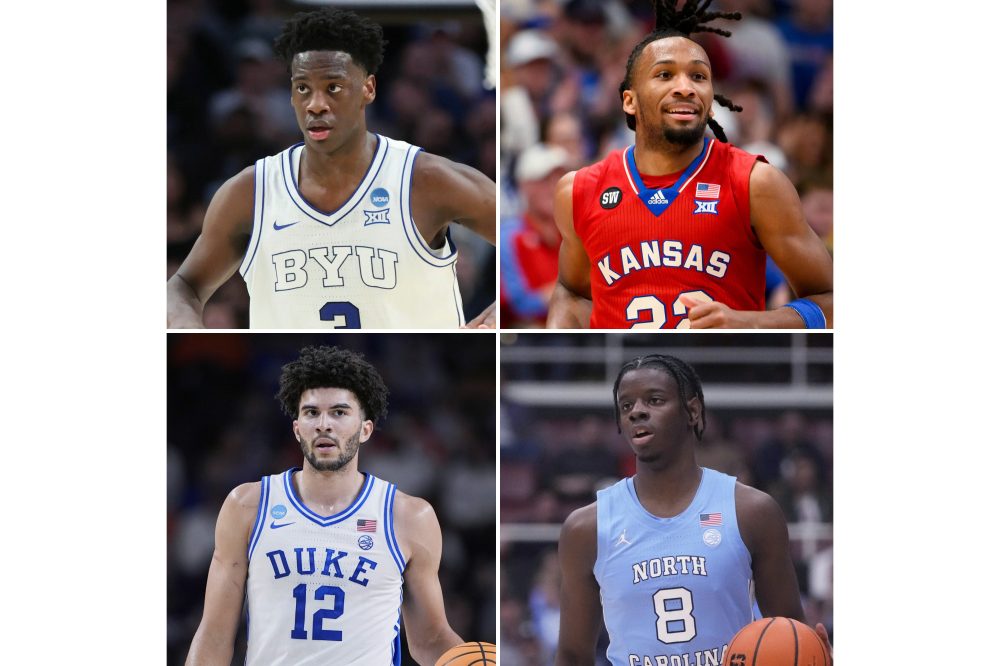
BYU’s AJ Dybantsa had been extensively mentioned as the top selection before earning first-team Associated Press All-American honors. His primary competition for the number one spot is Kansas combination guard Darryn Peterson, with Tobacco Road forwards Cameron Boozer from Duke and Caleb Wilson from North Carolina following close behind.
The initial major decision point appears to be at the fifth position with a group of one-and-done guards available.
With the opening round scheduled for June 23, the AP’s first mock draft begins with the long-standing frontrunner:
The 6-foot-9, 217-pound Dybantsa led the nation with 25.5 points per game by challenging defenses through his shot creation ability, free throw success (leading nationally with 229 makes and 296 attempts) and teammate assistance (3.7 assists). Synergy gave him “Excellent” ratings in analytics as the ball handler in pick-and-roll situations (87th percentile) and post-up plays (94th). He scored 26.9 points in seven contests against top-10 opponents, including 35 points in a defeat to Final Four participant Arizona and nearly achieving a triple-double (29 points, 10 rebounds, nine assists) in defeating sixth-ranked Iowa State.
The talent and athletic ability are unquestionable, along with his playmaking and scoring capabilities. The 6-5, 199-pound Peterson scored 20.2 points per game through drives and transition play, connected on 38.2% of three-point attempts and made 82.6% of free throws. The primary concerns centered on his availability. He experienced full-body cramping requiring hospitalization before the season began, missed 11 contests due to injury or illness and often had restricted playing time due to daily health uncertainties.
The 6-8, 253-pound son of former Duke and NBA player Carlos Boozer became the fifth freshman to receive AP men’s national player of the year honors. He posted 22.5 points and 10.2 rebounds per game, able to score through contact (55.6% field goal percentage) or from distance (39.1% on threes). Synergy gave him “Excellent” ratings against man-to-man defense (94th percentile), post-up situations (86th) and catch-and-shoot opportunities (95th). He’s an effective passer (4.1 assists) when facing double-teams and running offense, notably setting up Isaiah Evans’ crucial three-pointer to defeat defending national champion Florida.
Wilson became an instant standout with dynamic athletic ability and a personality that embraced the spotlight. The second-team AP All-American scored 19.8 points and grabbed 9.4 rebounds while excelling near the basket and in fast-break situations with his relentless energy. He’ll need to add muscle to his thin build (6-9, 211) and develop his three-point shooting (25.9%). Wilson had a national-leading 66 dunks before suffering a broken left hand in mid-February, then broke his right thumb during practice when close to returning in March.
The 6-5, 188-pound freshman progressed from four-star recruit to second-team AP All-American while guiding Illinois to its first Final Four appearance since 2005, scoring 17.9 points with 5.1 rebounds and 4.2 assists. He made 39.7% of three-point shots, including nine threes in a 46-point showing against Purdue. He earned the Jerry West Award as the nation’s top shooting guard, though he has a slight build and lacks elite athletic ability.
The 6-4, 215-pound freshman combination guard possesses a solid frame and two-way capabilities. He led scoring (16.1) for a 36-win Final Four squad, shooting 49.1% overall and 39.1% from beyond the arc. He ranked fourth at the combine in standing vertical leap (35 inches).
The 6-2, 186-pound freshman is an explosive point guard who finished third nationally in scoring (23.5) and 14th in assists (6.4). His notable performances included 49 points in a double-overtime defeat at Alabama, plus a three-game stretch (91 points, 12 three-pointers) during the Razorbacks’ first Southeastern Conference Tournament championship in 26 years.
The 6-3, 183-pound freshman earned third-team AP All-American recognition as a point guard with disruptive defensive skills. Flemings shot efficiently (47.6% overall, 38.7% on threes, 84.5% on free throws) while pressuring opponents in transition and off the dribble. He maintained nearly a 3:1 assist-to-turnover ratio and set a Cougars freshman record with 42 points in a defeat to Texas Tech.
The 6-5, 180-pound guard scored 18.2 points with 4.7 assists, but demonstrated his scoring capability with 45 points and 10 three-pointers against N.C. State in February. He also had three other 29-point performances. The main concern was back problems, which kept him out for eight games at midseason then returned to sideline him for the final six games, including two March Madness contests.
There’s an appealing combination of versatility and smooth athleticism with the 6-10, 211-pound freshman, a playmaking passer and second-leading scorer (16.7) for a team that advanced to the NCAA Elite Eight. He’ll need to gain strength and relies heavily on his jump shot, with catch-and-shoot attempts representing nearly 19% of his usage according to Synergy. However, a month-long stretch in the SEC (22.8 points with 39.1% three-point shooting from Jan. 10 to Feb. 20) demonstrated his potential.
The UAB transfer earned first-team AP All-American status while helping the Wolverines capture their first national championship since 1989. He has a strong build (6-9, 241) and impressive wingspan (better than 7-3). He also shot 37.2% from three-point range in the highest volume of his career and displayed competitive toughness while playing through ankle and knee injuries during the Final Four against Arizona and in the championship game against UConn.
He was prominent in the large lineup that powered Michigan’s title run and projects as a defensive presence. The 7-3, 255-pound junior from Spain scored 12.1 points with 6.8 rebounds and 2.4 assists while ranking sixth nationally in blocks (2.6). He led all combine participants in standing reach (9-9) and finished second in wingspan (7-6).
The lean 6-3, 176-pound sophomore excelled as a scorer (22.0) and facilitator (5.0) as a third-team AP All-American, improving his shooting efficiency (50.1% overall, 39.9% on three-pointers). He performed well as the ball handler in pick-and-roll situations (94th percentile in Synergy) and consistently defeated man-to-man defenses in halfcourt sets (90th).
Another key contributor to Michigan’s NCAA championship run, the 6-9, 251-pound sophomore is a versatile player with physicality, and his strong frame could allow him to play small-ball center. He averaged 13.1 points, 7.3 rebounds and 1.1 blocks. He has better than a 7-3 wingspan and excelled as a cutter, in post-up situations and finishing near the rim.
The 6-5, 184-pound sophomore transferred after two seasons at Tennessee and flourished in a leading role with the Bears, averaging 18.9 points, 5.8 rebounds and 2.6 assists while shooting 49.4% overall and 37.4% on threes. He ranked among combine leaders in standing vertical leap (second at 38 inches) and maximum vertical leap (third at 42.5 inches).
The 6-8, 222-pound native of Mexico has completed two seasons in the National Basketball League’s “Next Stars” development program that produced lottery selections LaMelo Ball, Josh Giddey and Alex Sarr. The 19-year-old averaged 11.9 points and 6.1 rebounds last season with his versatility, athleticism and nearly 7-foot wingspan.
Health represents the biggest concern for the 6-9, 253-pound sophomore. The former McDonald’s All-American was a physical, athletic force at Arizona State before tearing his right knee’s anterior cruciate ligament in February 2025. He transferred to Kentucky but appeared in only four games due to ongoing issues in that knee. He ranked fourth among all combine participants in wingspan (better than 7-5).
The 6-10, 248-pound native of Germany tied Duke star Cameron Boozer for the national lead with 22 double-doubles after averaging 18.5 points and a nation-leading 11.8 rebounds in his only college season. Steinbach shot 57.7% from the field, made 18 three-pointers (34.5%) and averaged 1.2 blocks with his better than 7-2 wingspan.
The 6-3, 186-pound point guard progressed from Division II to Drake and then to Iowa, where he guided the Hawkeyes to their first NCAA Elite Eight appearance since 1987. He averaged 19.8 points, 4.4 assists and 1.4 steals, becoming the first player to lead Iowa in those three statistics in 26 years. Synergy rated him as “Excellent” as the ball handler in pick-and-roll situations (91st percentile), working in isolation (84th) and finishing at the rim (90th).
The 6-11, 240-pound freshman came as a McDonald’s All-American with lengthy skills and perimeter shooting that earned him MVP honors at the NBPA Top 100 camp in summer 2024. He accepted a supporting role for a top-10 team, averaging 9.5 points and a team-leading 7.9 rebounds. He made 30 three-pointers (33.3%) to demonstrate inside-outside ability, received positive ratings at the rim from Synergy and ranked fifth at the combine in wingspan (7-5).
The 6-7, 211-pound wing played two seasons at Xavier before succeeding in a primary role with the Longhorns, averaging 17.3 points, 7.5 rebounds and 3.6 assists. He also showed active defense by averaging 1.6 steals. He’ll need to develop his perimeter shooting after making just 34.4% last season and 29.3% through three seasons.
The 6-8, 226-pound Graves was the West Coast Conference’s freshman of the year and top sixth man in a supporting role. He averaged 11.8 points and 6.5 rebounds while shooting 51.2% overall and 41.3% from three-point range. He also demonstrated defensive potential by averaging 1.9 steals and 0.9 blocks.
The 6-7, 245-pound freshman was an important part of a Final Four team that spent nine weeks at number one in the AP Top 25 poll. He scored mainly in transition, on post-ups or as the roller in pick-and-roll situations while averaging 14.1 points, 5.6 rebounds and 2.6 assists. He hasn’t demonstrated much range (7 of 20 on threes). Peat tied for fifth at the combine in standing vertical leap (34.5 inches).
The 6-1, 180-pound sophomore was a third-team AP All-American who averaged 18.5 points while ranking fifth nationally in assists (7.4). He projects as a scoring facilitator who shot 40% on three-pointers over two seasons. He excelled as the ball handler in pick-and-roll situations (93rd percentile in Synergy) and as a catch-and-shoot option (90th).
The second-team AP All-American and senior utilized his strong build (6-8, 246) to average 16.4 points and 7.4 rebounds. His passing stands out; he averaged 4.8 assists with the ability to run offense and create open shots for teammates while maintaining nearly a 2-to-1 assist-to-turnover ratio.
The 6-1, 186-pound freshman was an unexpected star, ranking seventh nationally in scoring (23.2). He’s somewhat undersized but had the quickness to score in transition or halfcourt sets. He recorded eight 30-point games, including 40 in a victory against Georgia Tech.
The 6-11, 227-pound junior fits today’s preferred style of big men who can shoot from outside. The 22-year-old from Estonia succeeded (17.0 points, 8.7 rebounds) in a breakthrough season that included shooting 42.6% on threes (40 of 94) after making just 31.6% (19 of 60) in two seasons at Arizona.
The sophomore offers game-changing ability to get hot from outside, shooting 38% on three-pointers through two college seasons and making at least four threes in 14 games last year. He’ll need to add weight to a thin 6-6, 186-pound frame to handle physical contact.
The 6-10, 264-pound senior with a better than 7-4 wingspan developed into an interior presence as the Huskies advanced to the NCAA championship game. He posted career-high averages of 14.7 points, 9.0 rebounds, 2.3 assists and 2.0 blocks while showing soft touch in the paint.
The 6-3, 190-pound freshman is a perimeter-stretching scorer (15.6) playing alongside top professional prospect Darius Acuff Jr. He shot 47.9% from three-point range (56 of 117) after Christmas, a 25-game period covering the Razorbacks’ run to the SEC Tournament championship and the NCAA Sweet 16.