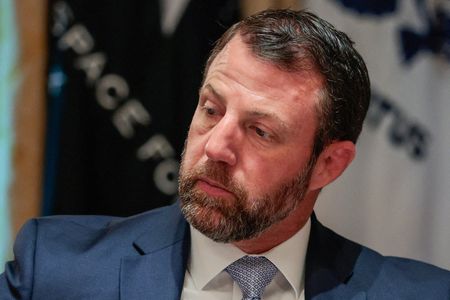
The head of the U.S. Department of Homeland Security announced Monday that international flight operations at Newark Liberty International Airport will continue without interruption, thanks to cooperation from New Jersey law enforcement agencies working near a detention facility.
Secretary Markwayne Mullin made the announcement during a Dallas press conference, stating: “As long as we continue to have this partnership with local and state law enforcement, then there’ll be no need to do so.”
The comments follow last Friday’s action by New Jersey Governor Mikie Sherrill, who deployed state police to take charge of the area surrounding a migrant detention center in Newark. The facility had been the site of ongoing confrontations between demonstrators and federal Immigration and Customs Enforcement personnel for a full week.
Governor Sherrill, a Democrat, explained her decision was meant to reduce growing tensions and violent incidents occurring outside Delaney Hall, a detention facility with 1,000 beds run by private contractor Geo Group.
While Mullin confirmed he had developed contingency plans to reassign customs personnel from the airport to help with security operations at Newark Airport – which serves as a primary hub for United Airlines near New York City – he emphasized such measures aren’t necessary due to state and local law enforcement involvement.
Last Thursday, Mullin had issued a warning that the Trump administration might suspend processing of international travelers and freight at Newark Airport. Following that announcement, major airline companies, travel organizations, and business groups cautioned on Friday that blocking border processing at Newark or other significant U.S. airports could create widespread disruption, leaving thousands of tourists and American citizens stranded while preventing essential cargo deliveries.
Mullin has consistently indicated he could similarly suspend immigration processing at over a dozen additional airports located in designated sanctuary cities, including Boston, Denver, Philadelphia, Chicago, Los Angeles, Seattle and San Francisco.
According to the U.S. Travel Association, completely shutting down international flight operations at the 18 airports serving sanctuary cities would cause economic losses exceeding $70 billion and affect 68 million international travelers annually.
International visitors are anticipated to arrive in large numbers for this month’s soccer World Cup, which the U.S., Canada and Mexico are hosting together. The championship match is scheduled for July 19 in East Rutherford, New Jersey, located approximately 12 miles from Newark Airport.
A powerful earthquake measuring 6.1 on the Richter scale occurred in waters near southern Italy during the early morning hours on Tuesday, according to the German Research Centre for Geosciences.
The seismic event was recorded at a depth of 253 kilometers (157.21 miles) below the surface, the German Research Centre for Geosciences reported.
Officials in Australia announced Tuesday that the nation’s wheat production this year will reach its lowest point in three years, driven by elevated fertilizer expenses and drought conditions affecting certain regions.
As one of the world’s leading wheat exporters, Australia’s diminished crop output will tighten global grain supplies, potentially driving up food costs that already hit two-year peaks last month following crop damage in the United States.
The Australian Bureau of Agricultural and Resource Economics and Sciences (ABARES) released quarterly projections showing wheat production will total 26.7 million metric tons this harvest season.
This represents a decline of approximately 9 million tons compared to the previous season and falls roughly 8 million tons below the five-year average, based on agency data.
Fertilizer expenses have surged dramatically since the conflict in Iran disrupted shipments from Gulf region suppliers. These elevated costs will likely lead farmers to reduce fertilizer application, limiting crop yield potential, according to ABARES, which operates under the agriculture ministry.
Additionally, eastern regions of Australia have experienced extended periods of insufficient rainfall over recent months. While May brought beneficial precipitation that improved growing conditions, the national weather service continues forecasting El Nino patterns and below-normal rainfall in upcoming months.
“It will be crucial that adequate and timely supply of fertiliser is available and adequate rainfall is received to meet current yield projections,” ABARES said.
The agency projects wheat planting areas will decrease 12% from last season to 10.9 million hectares, marking the smallest planted area since the 2019/20 growing season.
Barley cultivation, which demands less fertilizer than wheat, is expected to expand 4% from the previous season to 5 million hectares, though total production will still decline 15% to 14.1 million tons, ABARES reported.
Canola planting areas, requiring substantial fertilizer but commanding higher market prices than wheat, should contract 6% to 3.5 million hectares, with harvest volumes dropping 20% to 6.2 million tons.
Australia’s planting season is concluding, with harvest operations scheduled to begin near year’s end.
A Newark resident is facing stalking and indecent exposure charges after police say he was caught peering into someone’s apartment windows on multiple occasions.
According to Newark Police, the man was taken into custody after being identified as the person responsible for several incidents involving a victim’s residence. Investigators say the suspect was observed looking through the windows of the victim’s apartment building on different occasions.
Police report that during at least one of these incidents, which occurred on Tuesday, May 26, 2026, around 9:45 a.m., the man allegedly exposed himself while engaging in this behavior.
The arrest came after police were able to identify the suspect in connection with the multiple window peeping incidents. Authorities have not released additional details about how the suspect was identified or whether there may be other victims.
The case remains under investigation by Newark Police.
RALEIGH, N.C. — Rod Brind’Amour can pinpoint precisely when he believed the Carolina Hurricanes had what it takes to compete for the Stanley Cup.
“Eight years ago,” he stated. That marked the beginning of Brind’Amour’s tenure as head coach, starting a path of consistent playoff appearances and near-misses at reaching the final until this season.
The Vegas Golden Knights entered the league nine years ago, and from their aggressive expansion draft strategy to this spring’s run, they’ve maintained championship aspirations. Their inaugural season ended with a final appearance, and they captured the title in 2023. This third Cup Final appearance may be their most unexpected.
This matchup between Vegas and Carolina represents nearly ten years of development for two franchises in non-traditional hockey markets that have emerged as elite teams. Their paths have converged for this moment, a best-of-seven championship series starting Tuesday evening.
“It’s for all the marbles,” Golden Knights forward Cole Smith commented. “Just the way they play, they play a really fast game. So do we. It’s going to be a really great series.”
Carolina claimed their sole Stanley Cup title in 2006, when Brind’Amour served as team captain. He spent 9 1/2 seasons as a player with the organization and seven additional years as an assistant coach before his 2018 promotion. He has participated in 98 of Carolina’s 100 playoff wins since the franchise relocated from Hartford in 1997.
“Roddy’s been at the helm of it the whole time and just establishing the culture that we do have here,” said defenseman Jaccob Slavin, currently in his 11th campaign with the club. “It’s been building and building and we’ve been close and knocking at the door. I think we finally just have the right personnel, the right commitment, the right buy-in because our game really hasn’t changed.”
Slavin, captain Jordan Staal, grinder Jordan Martinook and center Sebastian Aho have remained together since Brind’Amour’s promotion, while wingers Andrei Svechnikov and Seth Jarvis and goaltender Frederik Andersen joined the established core over time. The Hurricanes captured at least one playoff round annually but had never managed three consecutive series victories.
“We’ve been trying really hard for eight years, and it’s not anybody’s fault,” Martinook explained. “It’s just we’ve fallen short.”
Logan Stankoven, obtained at the trade deadline last year when Mikko Rantanen was sent to Dallas six weeks after Carolina got him from Colorado, has excelled at center on the second line between Taylor Hall and Jackson Blake. Stankoven paces the squad with nine goals.
Hall, who arrived from Chicago in that initial three-way trade with Rantanen, leads the Hurricanes with 16 points. Nikolaj Ehlers, signed last summer as a free agent, had a monster Game 2 of the East final after they lost the series opener, including scoring the overtime winner.
“I don’t think I’ve done anything special to get this group (here),” Ehlers said. “This group was ready for it.”
Carolina stands 12-1 this postseason, the fewest defeats to reach the final since 1983. Brind’Amour believes this is where his squad has deserved to be for an extended period but acknowledges remaining work.
“I don’t think we have broken through,” Brind’Amour said. “You’ve got to win. I know everyone makes a lot about getting this far, but nobody’s going to remember who comes in second.”
Vegas finished second during its inaugural campaign when nobody anticipated the expansion franchise would compete. The Golden Knights advanced to the final before falling to Washington in five games.
“Set the tone right away,” said center William Karlsson, one of three original “Misfits” remaining from the franchise’s start. “That came out of nowhere.”
Initial general manager George McPhee’s selections of Karlsson, defensemen Shea Theodore and Brayden McNabb and winger Reilly Smith — back after a year and a half absence — from other organizations positioned Vegas for success. Intelligent draft choices, free agent acquisitions and trades by McPhee and current GM Kelly McCrimmon created a culture of winning at any cost.
“It’s what you want to be as an athlete,” McNabb said. “You want to be on a team that does that.”
Additions like Mark Stone, Jack Eichel, Ivan Barbashev and Alex Pietrangelo helped the Knights capture the Cup in their sixth season. They’ve reached the playoffs in all but one year.
Pietrangelo’s career-ending injury created room to acquire Mitch Marner on June 30. Marner tops all playoff scorers with 21 points, finding success during a time of year that eluded him through nearly a decade with the Toronto Maple Leafs.
“I think our team is deeper and a better team than what he had played on in Toronto,” McCrimmon said. “Not that Toronto didn’t have real good teams, but you have to have that depth throughout your roster because to go through three rounds or ultimately, hopefully, four rounds, everybody’s got to take their turn.”
Pavel Dorofeyev has emerged as a breakout performer in that regard, and he and teammate Brett Howden share the lead for most postseason goals with 10 each. Karlsson returned in the second round after missing the previous six months with an undisclosed injury.
Goaltender Carter Hart, a controversial signing last fall after he and four other Hockey Canada junior players were acquitted of sexual assault, has found his rhythm. Hart stopped 118 of 125 shots in a West final sweep of Colorado.
Most significantly, Vegas has won 19 of 24 games since McCrimmon dismissed coach Bruce Cassidy in late March and hired John Tortorella, whom he had never met or spoken with previously.
“We asked ourselves, ‘Who can come in and give us that kind of a bump?’” McCrimmon said. “John was the guy that we really felt strongly could do that.”
SAN ANTONIO (AP) — Back in December 1949, the marquee outside Madison Square Garden advertised an upcoming event simply as “Geo Mikan vs Knicks.”
The sign didn’t read “Minneapolis Lakers vs. Knicks.” It highlighted just George Mikan. The league’s original extraordinary big man.
That scenario feels familiar today. Wednesday marks the beginning of the NBA Finals, with San Antonio taking on the Knicks for the championship. And the advertising for this matchup — whether in San Antonio, New York, Paris or anywhere else across the world — might as well read “Wemby vs Knicks.”
Victor Wembanyama continues advancing to increasingly prominent platforms. The current version of the NBA’s exceptional big man — a designation previously belonging to players like Mikan, Bill Russell, Wilt Chamberlain, Kareem Abdul-Jabbar, Shaquille O’Neal — will command global attention throughout this series, and likely for every contest he participates in going forward. He’s already achieved superstar status. This series provides his initial opportunity to add championship to his accomplishments.
“This is the best basketball on the planet that’s being played right now,” Wembanyama said after San Antonio won Game 7 at Oklahoma City to capture the Western Conference title. “And the crazy thing is … I want to do that 15, 20 more times. Let’s hope it doesn’t become an addiction. Maybe it is already.”
The addiction comparison seems appropriate. San Antonio has become completely devoted to him.
The city lacks Major League Baseball, NHL, or NFL franchises. When it comes to major professional sports, only the Spurs exist. Anyone traveling just five minutes in any direction throughout this city will witness the evidence.
Summer has arrived with school out in San Antonio. Monday found the city’s public library bustling with activity, and several children discovered a new exhibit near the entrance. “Read Like Wemby,” the display announced, showcasing five books that Wembanyama has reportedly enjoyed reading. An Instagram account — wembybooks — began sharing photos of him with various books, local San Antonio media picked up the story, and the library developed their concept.
“We want to make sure people have access to those and people can read them,” said Scott Williams, the marketing manager for the San Antonio Public Library. “And so, we thought, ‘Let’s do a display and let’s do a book list and make sure that people can easily find what Wemby’s reading so that they can read it too.’”
The outcome?
“The interest has been huge,” Williams said. “Ultimately, we’re looking at two things. We want people to pay attention to the library, we want people to come here and notice us, and we want people checking out these books and reading. It’s been a success on both fronts.”
Therefore, Wemby encourages literacy.
He also draws visitors to seafood establishments — even during closed hours.
Rudy’s Seafood remains closed on Mondays. During a 15-minute period Monday afternoon, four vehicles arrived. They weren’t seeking meals. They came to view the Spurs artwork — featuring current players and coaches alongside a recently refreshed Gregg Popovich, plus newly added George Gervin and Manu Ginobili, among others.
Mark and Christina Lerma have relatives in San Antonio but reside in Nebraska. They won’t attend the NBA Finals — ticket costs are prohibitively expensive — but they visited Rudy’s to honor their beloved team. Mark sported a recently purchased Spurs NBA Finals cap and Wembanyama jersey; Christina wore all black and displayed footage of a Spurs dress she had worn Sunday.
Their Spurs loyalty spans many years. And Wembanyama, predictably, has rapidly earned a special position in their devotion.
“He’s dominant,” Mark Lerma said. “He changes the game.”
They enthusiastically mentioned that Wembanyama has visited the restaurant to view the Spurs tribute, which has existed for years and receives updates when necessary.
“A lot of people stop and do selfies,” said Roland Ramirez, who owns the restaurant. “They’re doing graduation pictures with the backdrop. It’s pretty nice for the community. You know, the Spurs are pretty big right now here in San Antonio.”
He has previously met Wembanyama and was impressed by his demeanor.
“The first vibe I got off of him was he was just very humble,” Ramirez said. “He talked to my wife … he was very humble with everybody. You could see all the emotion he had when he won the Western Conference finals and the crying, he’s just a very emotional guy, very humble, very, very nice guy. That’s what people are really feeding off. He’s humble, but he’s hungry for a championship. And when he gets on the floor, he’s a whole different monster.”
He’s unique. Just as Mikan was 77 years ago. Wemby vs. the Knicks. A premier showdown awaits.
Motorists should plan alternate routes as a portion of Paper Mill Road remains inaccessible to westbound traffic due to construction work currently underway.
The affected roadway spans from Corner Ketch Road to North Star Road, with the closure expected to continue until 5 AM.
Drivers are advised to seek alternative routes during this time period to avoid delays and potential traffic backups in the area.
A blockbuster Monday trade sending two-time AP Defensive Player of the Year Myles Garrett from Cleveland to Los Angeles has added him to a growing list of elite NFL players moved during their prime years.
The surprising Garrett trade occurred approximately nine months following another shocking move involving a premier pass rusher, when Micah Parsons was transferred from Dallas to Green Bay just prior to last season’s opening.
Los Angeles will surrender 2024 AP NFL Defensive Rookie of the Year Jared Verse, along with draft selections including a 2027 first-round pick, 2028 second-round choice, and 2029 third-round selection to Cleveland in the transaction, which remains contingent on a physical examination.
Monday’s activity included additional star movement, as Philadelphia shipped receiver A.J. Brown to New England in exchange for a 2028 first-round selection and 2027 fifth-round pick.
Green Bay surrendered two first-round selections and defensive tackle Kenny Clark last August to acquire Parsons from Dallas. Parsons recorded 12 1/2 sacks across 14 contests with the Packers before suffering a season-ending knee injury that damaged Green Bay’s campaign.
Dallas utilized their initial first-round selection to move down three positions in April’s draft, selecting defensive end Malachi Lawrence in round one, plus cornerback Devin Moore and defensive end LT Overton in the fourth round.
Several other NFL superstars have been moved during their peak performance years:
Immediately before the 2018 season began, Oakland and Chicago completed a transaction resembling the Parsons deal. The Raiders sent two-time All-Pro and former Defensive Player of the Year winner Mack to the Bears for two first-round selections after contract negotiations failed.
The 2018 deal ultimately disappointed both franchises. While Mack performed excellently in Chicago, earning All-Pro recognition in his debut year, he couldn’t help the Bears capture a playoff victory during his four seasons before moving to the Chargers.
Oakland selected running back Josh Jacobs with their first pick, who performed well before departing via free agency after 2023. Their second first-round choice was squandered on cornerback Damon Arnette, who was released midway through his sophomore campaign.
Dallas history’s most renowned trade occurred during Jerry Jones’ inaugural ownership season in 1989, when the Cowboys sent Herschel Walker to Minnesota for a package eventually yielding eight draft picks, including three first-rounders. Dallas utilized those selections to draft Hall of Famer Emmitt Smith and key contributors to three Super Bowl championships like Darren Woodson, Kevin Smith and Russell Maryland.
Minnesota failed to win a playoff contest during Walker’s two-plus seasons there.
Jones completed another famous transaction that powered Dallas’ 1990s dynasty by acquiring the pass rusher from San Francisco for second- and third-round picks in 1992. Haley became the defensive piece Dallas needed to capture three Super Bowls during his initial four seasons, defeating the 49ers in the NFC championship en route to the first two titles.
Moss was a three-time All-Pro and the league’s most feared deep threat when Minnesota dealt him to Oakland in 2005 for a package including the No. 7 overall draft selection. The move benefited neither franchise as Minnesota chose Troy Williamson, who managed 79 receptions across three seasons, while Oakland won six games over two years.
Moss was subsequently dealt to New England in 2007, establishing an NFL record with 23 touchdown receptions in his debut season as the Patriots became the sole team to achieve a 16-0 regular season.
Six years after Minnesota traded him to the New York Giants, Tarkenton returned to the Vikings in 1972 following four Pro Bowl appearances in six New York seasons. Tarkenton guided Minnesota to three Super Bowl appearances across seven seasons in his second tenure — losing each time — and earned NFL MVP honors in 1975.
The unhappy Dickerson was moved from the Los Angeles Rams to Indianapolis in 1987 through a major deal that also sent Cornelius Bennett to Buffalo. Dickerson helped the Colts reach the playoffs for the first time in a decade during his debut season, then led the NFL in rushing during 1988.
Faulk topped the NFL with 2,227 yards from scrimmage in 1998 when Indianapolis surprisingly decided to trade him to St. Louis. The Colts drafted Hall of Famer Edgerrin James in the first round as Faulk’s successor, but the Rams clearly won the exchange.
Faulk helped create the “Greatest Show on Turf” offense as St. Louis captured the Super Bowl in his first season. Faulk accumulated nearly 1,500 more yards from scrimmage and 18 more touchdowns than any other player from 1999-2001, winning AP Offensive Player of the Year all three seasons and MVP in 2000.
McCaffrey transformed San Francisco’s offense after being acquired from Carolina during the 2022 season for a four-pick package. McCaffrey accumulated 3,233 yards and scored 31 touchdowns across his first 27 regular-season games for the Niners before injuries limited him last season.
He earned AP Offensive Player of the Year in 2023 when he helped San Francisco reach the Super Bowl.
Dean was coming off an All-Pro campaign in 1980 when he was traded the next year to San Francisco for a package including a first-round pick. His arrival helped launch the 49ers dynasty. He earned All-Pro honors in 1981 when San Francisco won its first of five championships across a 14-season span and recorded a 17 1/2-sack season in 1983 before Hall of Fame induction.
In a major star-for-star exchange, Denver obtained Bailey from Washington for star running back Clinton Portis. Portis achieved four 1,000-yard rushing seasons with Washington, but the Broncos emerged as the clear winner.
Bailey played 10 additional seasons, earning All-Pro recognition his first three seasons, leading the league with 10 interceptions in 2006 and gaining Hall of Fame entry.
Warfield had achieved consecutive Pro Bowl selections for Cleveland when Don Shula acquired him during his first season as Miami’s head coach. Warfield provided a crucial deep threat for the Dolphins, making five straight Pro Bowl appearances. Warfield earned All-Pro honors twice and helped Miami win consecutive Super Bowls, including the perfect 17-0 season in 1972.
Traditional healers in Peru conducted a spiritual ceremony Monday to offer blessings for the two contenders in this weekend’s decisive presidential election, as the South American nation prepares to choose a new leader amid ongoing political turmoil and corruption issues.
The ceremonial blessing represents a customary practice performed at the beginning of each year and prior to major elections.
The spiritual leaders assembled at Herradura Beach in Lima’s Chorrillos district, displaying images of both presidential hopefuls during the seaside ceremony.
The final contest features Keiko Fujimori, a conservative politician and daughter of former disgraced President Alberto Fujimori, against Roberto Sánchez, a nationalist congressman and ex-minister. Current polling shows the race extremely close ahead of Sunday’s vote.
During April’s initial voting round, Fujimori secured slightly more than 17% of ballots cast, while Sánchez captured approximately 12% among a large group of contenders. The first round experienced significant operational difficulties that prevented thousands of citizens both domestically and internationally from voting. The country’s election officials required several weeks to confirm the final two candidates for the decisive round.
The ceremonial blessing incorporated flower petals, fresh fruit, coca leaves, and aromatic palo santo wood pieces, along with black tobacco, ceremonial swords, and ritual dolls. The shamans also ignited bright-colored flares and played traditional drums.
“The ritual we perform is primarily intended to ensure that the best candidate is the one who represents our Peru,” said shaman Andrés de los Santos, who had traveled to Lima from the north of the country.
While the spiritual leaders offered no predictions during this ceremony, they have made forecasts previously. At the conclusion of 2025, they predicted Venezuela’s then-President Nicolás Maduro, now facing drug trafficking charges in the United States, would no longer be in office by the end of 2026.
Sunday’s victor will become Peru’s ninth president within a 10-year span, taking over from José María Balcázar, who assumed the interim presidency in February. Balcázar succeeded another temporary leader, José Jerí, who was removed due to corruption accusations after serving only four months.
Peru’s incoming president will take the oath of office on July 28 for a five-year term.
Five American passengers who were quarantined at a Nebraska medical facility following hantavirus exposure on a cruise ship have been cleared to return home, federal health authorities announced Monday.
The individuals will finish their monitoring period at home after staying healthy and fulfilling requirements for supervision outside the isolation unit at the University of Nebraska Medical Center.
These five passengers are departing Omaha approximately three weeks after they and 13 other Americans were transported to Nebraska following a fatal hantavirus outbreak aboard a cruise vessel in the South Atlantic Ocean.
While hantaviruses typically transmit through inhalation of contaminated rodent waste particles, the strain responsible for this outbreak, known as the Andes virus, may occasionally spread between humans.
According to the World Health Organization, 13 confirmed or suspected hantavirus infections, including three fatalities, have been connected to the cruise ship.
Health authorities stated that no Andes virus infections have been verified in the United States, and public risk remains minimal.
A spokesperson for Nebraska Medicine confirmed Monday that none of the American passengers has displayed any symptoms.
Previous outbreaks have shown hantavirus symptoms can emerge up to 42 days after exposure, though medical professionals note most individuals who become ill develop symptoms within 21 days.
Omaha physicians overseeing the passengers had previously indicated they would evaluate each individual case to determine suitability for completing the recommended 42-day isolation period at home.
Government officials coordinated transportation for the five departing individuals, working with state and local agencies. Authorities specified the travel would not involve commercial airlines, with proper containment protocols implemented. State health departments will maintain daily symptom tracking, round-the-clock supervision and advisory services.
Two of those returning to their residences live outside New York City, according to city Health Commissioner Dr. Alister Martin.
Jake Rosmarin, one of the passengers remaining in quarantine, wrote on his blog Sunday that he intends to complete his final three weeks at the Omaha facility to ensure immediate medical access if needed and to avoid potentially exposing others.
Rosmarin, who shares daily updates about his situation, said he respects others’ decisions to leave.
“For me personally, this experience has been incredibly traumatic,” Rosmarin said. “I don’t think I’ve fully processed everything yet, and right now I don’t want to leave until I know there is no risk of me getting sick or putting my family, friends, or the general public at risk.”
Not all quarantined individuals in Nebraska have been satisfied with the arrangement. Approximately one week after the 18 passengers arrived, federal health officials issued mandatory quarantine orders requiring two passengers who wished to depart to remain at the facility.
Vermont Senator Bernie Sanders announced Monday his continued endorsement of Graham Platner, despite recent news coverage regarding the Maine Democratic Senate hopeful’s inappropriate text communications with multiple women during his marriage.
Over the weekend, Platner released a video featuring his spouse, Amy Gertner, who had previously informed his campaign about the text exchanges last year. In the recording, Gertner dismissed the media attention as mere “gossip” and commented that “being married is hard.”
Sanders, who provided crucial early support for Platner’s campaign, confirmed to The Associated Press Monday that he continues backing the former military service member and oyster farmer in his bid to challenge incumbent Republican Senator Susan Collins.
“People can’t afford healthcare. Can’t afford groceries. Can’t afford to put gas in their cars. And I think it might be a good idea if we focused on the important issues facing the working families of Maine and this country,” Sanders stated.
The Vermont lawmaker mentioned plans to meet with Platner during his Washington visit this week, expressing his belief that the nation should “focus on issues more important than the Platner marriage.”
Platner will also participate in a fundraising event co-organized by Ron Klain, President Joe Biden’s former chief of staff.
The Democratic candidate seeks his party’s nomination in what observers consider one of the nation’s most significant Senate contests, as Democrats aim to defeat the long-serving Republican Senator Susan Collins and reclaim chamber control. Maine’s primary election occurs June 9, with Platner’s main Democratic opponent, Governor Janet Mills, having ended her campaign in April.
This Friday evening, Platner will join California progressive Representative Ro Khanna and two Maine Democratic candidates at a “get out the vote” event in Bar Harbor’s historic theater in the coastal community.
A motorcoach operator who had faced previous speeding violations received additional criminal charges Monday following a deadly multi-vehicle collision in Virginia that claimed five lives and left dozens injured.
Jing Sheng Dong, 48, of Staten Island, New York, originally faced two involuntary manslaughter charges after the early Friday morning collision on Interstate 95. Monday’s grand jury decision added three more involuntary manslaughter charges plus one reckless driving charge, the Stafford County Commonwealth’s Attorney’s Office announced.
Officials report that Dong was operating a motorcoach traveling from New York to North Carolina when he collided with multiple vehicles that had reduced speed in a construction area. The victims included a Massachusetts family of four from Greenfield who were traveling to attend a wedding, along with a 25-year-old woman from Worcester, Massachusetts.
While Dong remained in the hospital Monday, court records reveal he had previously faced speeding allegations in Colonial Heights, Virginia, during November 2024 and in Annapolis, Maryland, this past March. The Maryland incident involved accusations of operating a motorcoach at 72 mph in a 50 mph zone.
The Virginia speeding case resulted in a conviction for traveling 73 mph in a 55 mph zone, with Dong paying $219 in fines and court costs. He also faces a pending trespassing charge in Mecklenburg County, Virginia, from July.
E&P Travel Inc., headquartered in Kings Mountain, North Carolina, operated the bus involved in Friday’s collision. A board member confirmed the National Transportation Safety Board is conducting an investigation into the crash.
Legal documents from the bus crash case do not identify an attorney representing Dong. Attorneys handling his trespassing case and Maryland speeding case did not respond to Monday requests for comment.
Prosecutor Eric Olsen stated that Dong will be transferred to jail following his hospital discharge.
A major electric utility company announced Monday that it has entered discussions with large technology firms about potential partnerships for nuclear power plant construction, with the tech companies sharing financial responsibility for the projects.
The utility, headquartered in North Carolina and providing electricity across much of the southeastern United States, has experienced unprecedented demand from companies constructing data centers that require massive amounts of energy, pushing national electricity usage to historic levels.
During a recent interview, the company’s chief executive officer Harry Sideris explained that the utility has explored expanding its nuclear energy capacity to meet this surging demand. The company currently operates more nuclear facilities than any other regulated utility in the nation.
Nuclear plant construction projects have historically faced significant challenges, frequently exceeding initial budget projections and timeline estimates. This track record has made electric utilities reluctant to shoulder the complete financial burden of new reactor construction independently.
A private wealth manager who was identified in federal documents related to convicted sex offender Jeffrey Epstein has departed from Merrill Lynch, according to a company representative.
Paul V. Morris, whose name surfaced in Department of Justice files concerning Epstein, is no longer with the Bank of America subsidiary, a company representative confirmed. The departure was initially disclosed by Bloomberg News.
The representative would not reveal the timing of Morris’s exit or clarify whether his departure was connected to his documented connections with Epstein.
According to his LinkedIn profile, Morris began working at Merrill in August 2016. Federal documents revealed that while employed there, Morris communicated with both Epstein’s personal assistant and his accountant during 2017 and 2018.
Department of Justice records indicate Morris previously worked at JPMorgan Chase and Deutsche Bank. His name surfaces multiple times throughout the Epstein documentation. One document shows he was part of a JPMorgan team that gave approval for Epstein to become a client in 2011.
The nation’s largest bank, JPMorgan, currently faces legal action from women alleging Epstein sexually abused them, along with separate litigation from the U.S. Virgin Islands, where Epstein owned property.
A source with knowledge of the situation confirmed that Epstein was never a client of Merrill Lynch, Bank of America’s wealth management division.
Attempts to contact Morris by phone were unsuccessful, and he did not respond to messages sent through LinkedIn or his Merrill Lynch email address.
According to Bloomberg’s reporting, Morris maintained regular contact with Epstein following his employment at Bank of America.
Morris’s LinkedIn profile indicates he headed the Morris Group within Merrill Private Wealth Management.
Major financial institutions are facing increased examination regarding their connections to Epstein, who died in a New York City jail in 2019 while awaiting trial on federal sex trafficking charges. Officials ruled his death at the Metropolitan Correctional Center a suicide.
The Wall Street Journal had previously disclosed that JPMorgan Chase executives continued meeting with Epstein even after the institution chose to terminate his accounts in 2013.
In a similar pattern, Department of Justice documentation showed that Deutsche Bank kept managing Epstein’s accounts after notifying him in late 2018 that their business relationship would end, finally cutting all connections only after his arrest in July 2019.
An Israeli networking software company announced Monday it has completed a $410 million funding round, bringing its total fundraising to $1 billion since inception.
DriveNets said the investment was spearheaded by Bessemer Venture Partners and Atreides Management. AMD and Red Dot Capital came aboard as fresh investors, while current backers Pitango and D1 Capital Partners continued their support.
According to CEO Ido Susan, the funding will help the company address rapidly growing demand for large-scale artificial intelligence infrastructure solutions.
The company chose not to reveal its current valuation following this investment round and did not respond immediately to requests for additional details.
Venture capital has been flowing heavily into AI infrastructure companies in recent years, allowing these firms to grow while avoiding the ups and downs of public stock markets.
The company’s technology enables telecommunications companies and data centers to create and operate networks using standard, commercially available equipment instead of expensive specialized systems. This approach supports both high-speed connections and AI processing needs.
Since its establishment in 2015, DriveNets has formed partnerships with technology company Broadcom, Japan’s Fujitsu, and Indian IT services company Wipro.
Charlie Kawwas, president of Broadcom’s semiconductor solutions group, commented on the significance of network performance in AI development.
“As AI systems reach unprecedented scale, the performance of the underlying network fabric has become a primary driver of AI economics,” Kawwas said.
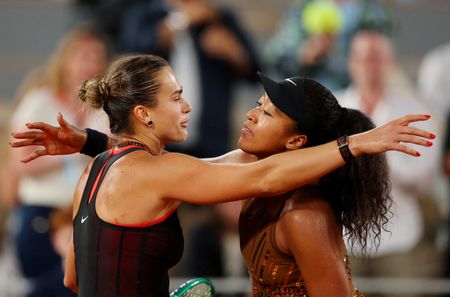
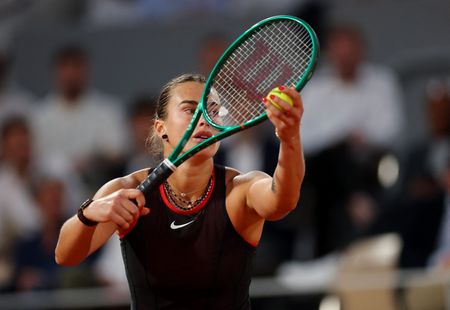
Aryna Sabalenka secured her spot in the French Open quarterfinals on Monday with a commanding 7-5, 6-3 victory over Naomi Osaka in an electrifying night session encounter at Roland Garros.
The Belarusian tennis star faced one of her toughest challenges yet in her quest for a first French Open title, but demonstrated the relentless power that has made her a dominant presence in women’s tennis this season. The match marked the first women’s night session contest at the tournament in three years.
“She is such a great player, she plays super aggressive tennis,” Sabalenka commented courtside, later entertaining spectators with a playful moonwalk. “I’m happy with how I was able to put back the pressure on her. It’s amazing to play the night session in front of all of you guys.”
“I’m super happy with my serve. I’m super pleased overall with the performance today,” she added.
Osaka, competing in her first French Open fourth round, started aggressively and jumped to an early 2-0 advantage following a double fault from her opponent. However, the world number one quickly regained momentum, using her signature powerful groundstrokes to fight back into contention.
The turning point came at 5-5 in the first set when Sabalenka delivered a crushing return that forced Osaka into a backhand error, securing the crucial break. In the second set, Sabalenka’s consistent heavy hitting gradually wore down her opponent, culminating in a delicate half-volley winner that gave her a 4-3 lead and ultimate control of the match.
Sabalenka’s victory extends her remarkable run of reaching at least the quarterfinals in her past 14 Grand Slam tournaments. Her next opponent will be Russia’s Diana Shnaider, who upset American Madison Keys 6-3, 3-6, 6-0 in another surprising result at this year’s clay court major.
In other women’s action, Anna Kalinskaya advanced to her first French Open quarterfinal with a hard-fought 6-4, 2-6, 7-6(7) triumph over 28th seed Anastasia Potapova. This marks only the second time the Russian has reached the quarterfinal stage of any Grand Slam event.
“I was definitely nervous,” Kalinskaya admitted after her victory.
“I meant like some moments when after losing my serve, at 5-5 in the third set, being 40-love up and then losing the game. I was frustrated because I wanted to win that game and to be up in the score and have a bit of advantage to finish the match.”
“When it didn’t work, I was upset. But it was a very fast changeover, so I had to reset and continue to play,” she continued.
Potapova acknowledged missing several key opportunities in what she characterized as a “mental” battle on Court Suzanne Lenglen.
“She played great and she held her nerve better than me in some moments,” Potapova reflected.
“I know what I need to work on to make sure that it’s not going to happen again,” she said.
Tournament officials also announced that Paraguayan player Adolfo Daniel Vallejo received a $65,000 fine for comments suggesting female umpires lacked the courage to manage unruly crowds after his Friday loss.
French hopes ended when Diane Parry, the final home player remaining in the women’s draw, fell 6-3, 6-2 to Polish qualifier Maja Chwalinska.
Despite the tennis disappointment for local fans, there was celebration as Paris St Germain stars Ousmane Dembele and Bradley Barcola displayed their two Champions League trophies to the Roland Garros crowd on Monday, following their team’s second consecutive European title with a victory over Arsenal two days earlier.
In tennis news beyond Paris, Serena Williams announced her return to competition next week at the Queen’s Club Championships, where the 44-year-old American will compete in doubles after receiving a wildcard. British media reports indicate she will partner with Canadian teenager Victoria Mboko in the June 8-14 event.
On the men’s side, Italian players maintained their country’s presence in the quarterfinals after world number one Jannik Sinner’s elimination. Flavio Cobolli defeated American Zachary Svajda 6-2, 6-3, 6-7(3), 7-6(5), while Matteo Berrettini overcame Juan Manuel Cerundolo 6-3, 7-6(2), 7-6(6).
Canadian fourth seed Felix Auger-Aliassime completed his collection of Grand Slam quarterfinal appearances with a convincing 6-3, 7-5, 6-1 victory over Chilean Alejandro Tabilo.
Drivers traveling on Elderon Drive should prepare for temporary lane restrictions as construction work continues throughout the day.
The ongoing construction activities are causing periodic lane closures that will remain in effect until 5 PM today. Motorists are advised to plan for potential delays and consider alternate routes if possible.
The construction work is expected to impact traffic flow intermittently as crews complete their scheduled activities in the area.
Denmark’s Social Democratic leader Mette Frederiksen announced Monday that she has successfully negotiated a centre-left coalition government, allowing her to retain leadership during ongoing diplomatic tensions with U.S. President Donald Trump regarding Greenland’s status.
The agreement to establish a minority government provides Frederiksen with her third straight term leading the country, bringing closure to months of political uncertainty following March elections that saw 12 different parties gain representation in Denmark’s parliament.
“I have been to see His Majesty the King and announced that a government can be formed after long negotiations,” Frederiksen told reporters.
Frederiksen’s centrist alliance lost parliamentary control during the March 24 elections as Danish voters expressed frustration with rising living costs, though her Social Democratic Party maintained its position as the largest parliamentary faction with 38 seats out of 179 total, a decrease from their previous 50 seats.
Following over two months of political negotiations between the Social Democrats and the right-wing Liberals, both seeking to lead a new administration, the 48-year-old Frederiksen ultimately obtained sufficient parliamentary support to form her government.
The new administration faces pressing priorities including managing diplomatic discussions concerning Greenland, which Trump has suggested annexing, along with accelerating Denmark’s military expansion as European security concerns mount due to Russia’s ongoing conflict in Ukraine.
Drivers using Vines Creek eastbound should be aware of ongoing construction affecting traffic flow this afternoon.
The left shoulder is currently blocked between Maine Street and Armory Road (Route 20) as crews perform construction work in the area.
The shoulder closure is scheduled to remain in effect until 3 PM today. Motorists are advised to use caution when traveling through the work zone and allow extra time for their commute.
DOVER, DE – Delaware State University Athletics has announced that season ticket packages are now available for purchase for the upcoming 2026 football season.
The Hornets are gearing up for what the athletics department expects to be another memorable campaign, with head coach DeSean Jackson entering his second year at the helm of the program.
According to the university’s athletics department, multiple season ticket options have been made available to give supporters the best chance to back the Hornets and Coach Jackson throughout the upcoming season.
Fans interested in securing their seats for the 2026 season can choose from several different ticket package options that have been designed to accommodate various supporter needs.
Listen to the Evening Delmarva Farm Report Update — June 1, 2026
DELMARVA — The USDA’s first seasonal assessment shows the nation’s major crops in solid shape, with 67% of U.S. corn rated good to excellent, though that’s down 2 points from last year. Soybeans are tracking at 66% good to excellent.
While those numbers look strong nationally, growing conditions vary sharply by region. Some areas are dealing with drought stress while others are getting too much rain, creating challenges for Delmarva growers as well.
A crop consultant in northwest Missouri is warning that heavy rainfall is fueling weed pressure, especially waterhemp, and raising concerns about nitrogen loss in fields.
Policy
The USDA opened applications today for its Farmer Bridge Assistance Program targeting specialty crop growers. The initiative delivers more than $1.6 billion calculated on 2025 planting plans and covers almost 270 different specialty crops.
Markets
Livestock futures posted solid gains Monday. August live cattle rose $1.55 to close at $240.60. October contracts climbed $1.90 to $232.32. Feeder cattle showed even stronger performance with August contracts jumping $3.12 to $351.55.
On the grain side, corn at Laurel Grain Company in Laurel, Delaware is bringing $4.89 a bushel for July delivery. Soybeans are $11.39 for November.
Forecast
Partly cloudy skies are expected tonight with a low of 52° and northeast winds 10 to 15 mph. Tuesday brings sunny skies and 71° with light south winds.
This article is based on the Delmarva Farm Report Update Evening Edition, June 1, 2026. Hosted by Tom Bradley.
FOXBOROUGH, Mass. — Wide receiver A.J. Brown is departing Philadelphia after a disappointing stint with the Eagles to rejoin his former coach in New England.
New England completed the acquisition of the standout pass-catcher from Philadelphia on Monday, finalizing a deal that had been widely speculated about for months.
Philadelphia announced they will get a 2028 first-round draft selection and a 2027 fifth-round pick in exchange for the receiver who has made three Pro Bowl appearances.
The move follows Brown’s difficult 2025 campaign in Philadelphia, where he became increasingly dissatisfied with an Eagles attack that struggled with consistency as the franchise was unable to repeat as Super Bowl champions.
Brown spent three years playing for Vrabel after Tennessee selected him in the 2019 draft.
The 28-year-old Brown became Philadelphia’s primary receiving target following his acquisition from Tennessee by the Eagles in 2022.
Brown delivered consecutive Pro Bowl performances in his initial two Philadelphia seasons, hauling in 88 receptions for 1,496 yards and 11 scores in 2022, followed by 106 catches for 1,456 yards and seven touchdowns in 2023.
Brown captured a Super Bowl championship during the 2024 campaign, but his satisfaction declined last season as Philadelphia’s offensive production faltered — resulting in a coaching change at offensive coordinator after a wild-card playoff defeat to San Francisco.
This situation sparked increased speculation about a potential trade during the current offseason. The move was delayed past April’s NFL draft likely because Philadelphia would have faced approximately $43 million in dead salary cap penalties for 2026 versus roughly $16 million this year and $27 million next season if the trade occurred after June 1.
In the end, a valuable draft selection proved sufficient to convince Philadelphia to part with a talent of Brown’s stature.
New England had been considered a logical destination for Brown since the team cut receiver Stefon Diggs in March. Diggs topped New England with 85 catches and 1,013 receiving yards plus four scores in his lone 2025 season with the Patriots, contributing to their Super Bowl appearance where they fell to the Seattle Seahawks.
Losing Diggs made securing a top receiving threat for quarterback Drake Maye an urgent need. New England did sign former Green Bay Packers receiver Romeo Doubs during free agency. However, he doesn’t provide the immediate offensive transformation that Brown’s arrival could deliver.
Maye confirmed last week that he had heard the speculation linking Brown to New England.
“If he ends up being on our team, great. What a great player. And if he doesn’t, we’ve still got to work these guys here,” Maye said. “It’s a tough balance, but I know he’s a phenomenal player.”
Patriots defensive tackle Milton Williams, who was teammates with Brown on Philadelphia’s 2024 Super Bowl-winning squad, believes the receiver would make a significant impact.
“He can definitely help our team,” Williams said. “Great dude. Monster on the field, great in the locker room, holding guys accountable and holding himself accountable. That’s everything you want in a player of his caliber.”
Brown departs Philadelphia among the most productive receivers in team history. He surpassed 1,000 receiving yards in each of his four seasons with the Eagles. Brown accumulated 339 total catches and 32 touchdowns while serving as a key contributor on two Eagles squads that reached the Super Bowl during his time there.
Vrabel was beginning his second year as Tennessee’s head coach when the franchise chose Brown in the second round of the 2019 draft.
Brown recorded 185 catches for 2,995 yards and 24 touchdowns during the following three seasons, reaching his peak with a 2020 campaign that earned him Pro Bowl recognition after recording 70 receptions for 1,075 yards and 11 touchdowns.
However, Tennessee ultimately dealt Brown to Philadelphia on the second day of the 2022 draft despite having one year remaining on his rookie contract. The organization insisted it preferred to keep him but believed his contract extension demands were excessive.
Vrabel repeatedly said during that offseason that Brown would remain on the team as long as he was the head coach, but circumstances forced a different outcome.
“Unfortunately, we understand that if we’re going to be here awhile we’re not going to be able to keep every single player that we draft and develop,” Vrabel said at the time.
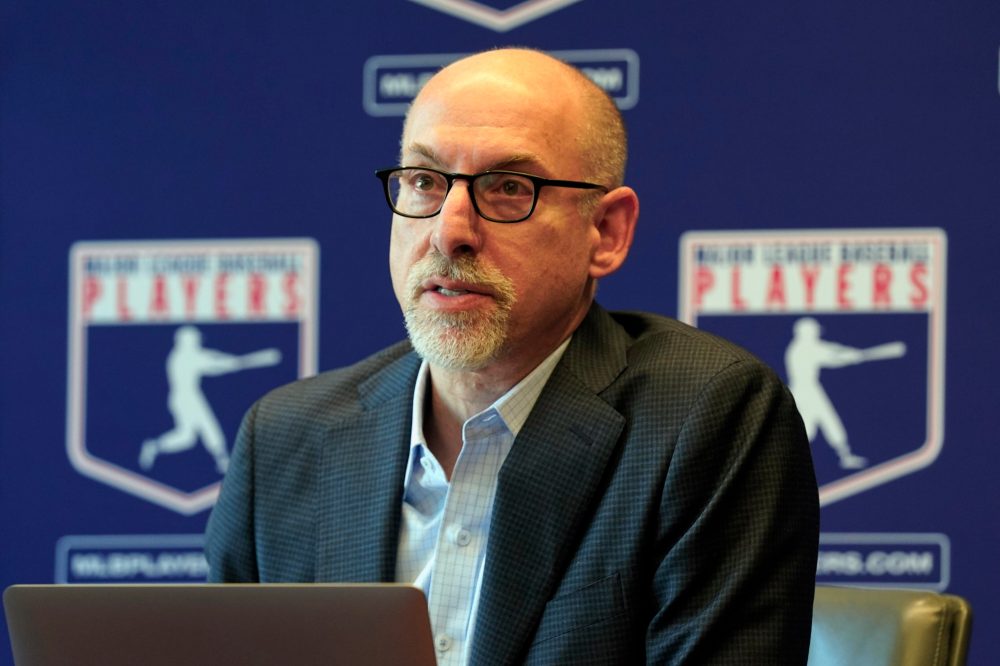
The leader of the baseball players’ union declared his organization will resist management’s proposed salary cap for as long as necessary while negotiations continue amid threats of a work stoppage that could eliminate games in the upcoming season.
Major League Baseball put forward a salary cap proposal last week and seems prepared to begin a lockout once the existing labor agreement ends on December 1st.
“Our union has never been broken and never will be,” interim executive director Bruce Meyer stated Monday during a virtual press conference with reporters. “Our players have what they have, including being the only sport that doesn’t have this ultimate restriction, the salary cap, because our players have always been the most unified and that’s going to continue.”
“The unions in the other sports didn’t agree to salary-cap systems because they thought it was a good thing for players. That’s not what happened,” he continued. “In one way or the other, they were not able to fight the way that our union has and not criticizing anybody, it’s just a fact. Our union has always been the most solid, and that’s why our union has the best system.”
The league’s Thursday proposal would limit team expenditures in 2027 to $245.3 million, based on luxury tax payroll calculations that incorporate $20.1 million for benefits and the pre-arbitration bonus pool. The plan would also create a spending floor of $171.2 million, requiring certain teams to increase their payrolls. The Los Angeles Dodgers, who spend the most in baseball, carried a $415.2 million payroll on this year’s opening day — approximately $170 million above the suggested cap.
The league’s plan requests an even revenue split with players from designated income sources, including money spent on signing bonuses for high school and college players, plus international amateur players entering their first contracts.
“It’s not even a real 50%. It’s taking billions of dollars off the top before they’re proposing to even share any of that,” Meyer explained. “Players’ share under their proposal would go down. Players’ share for this season, 2026, is projected to be well over 50%. … Had MLB’s proposal been in place in 2026, players would, we estimate — would lose over half a billion dollars.”
Player contracts this season, calculated using average annual values and incorporating benefits and the pre-arbitration bonus pool, amount to $6.14 million, based on the league’s opening-day numbers. Draft slot value signing bonuses in this year’s amateur draft reach approximately $359 million, with international signing bonus pools totaling $208 million.
“They’ve effectively managed to cobble together the worst system for players in any of the major sports, and not even close,” Meyer stated.
Military operations targeting suspected drug-trafficking vessels in Latin American waters have resulted in over 200 fatalities since September, when the current administration launched what it describes as a necessary effort to combat drug smuggling.
The ongoing strikes have been accompanied by limited evidence supporting administration claims about eliminating “narco-terrorists,” with U.S. President Donald Trump characterizing the situation as an “armed conflict.”
Legal experts and critics have raised concerns about both the lawfulness and effectiveness of these operations, noting that fentanyl responsible for numerous fatal overdoses typically enters the U.S. through overland routes from Mexico. The targeted vessels operating in Caribbean and eastern Pacific waters are known to transport cocaine rather than fentanyl.
Trump has argued that traditional methods of intercepting vessels at sea over many decades have proven ineffective. However, the U.S. Coast Guard achieved record cocaine seizures in 2024, the last year of former U.S. President Joe Biden’s administration, confiscating 225 metric tons of the substance.
The military operations commenced in September near Venezuela’s Caribbean coastline and extended to the Eastern Pacific by October. October proved to be the most lethal month of the campaign, with 45 fatalities recorded. Pacific waters have seen the majority of this year’s strikes.
Trump and other high-ranking officials have maintained that these vessels are operated by narco-terrorists and cartel operatives.
The Associated Press conducted investigations in a Venezuelan region where some suspected boats originated and confirmed the identities of four men killed in the operations. Through multiple interviews, local residents and family members described the deceased as primarily laborers or fishermen earning $500 per voyage.
These strikes coincided with the most significant U.S. military presence in Latin America in decades, part of a pressure strategy that led to the January arrest of Venezuela’s then-President Nicolás Maduro.
More than 60 vessels have been targeted during the extended operation.
Trump has asserted that the strikes have destroyed fentanyl-carrying boats and that each eliminated vessel has prevented 25,000 American deaths. Experts and former U.S. counternarcotics officials characterize Trump’s claims as either greatly exaggerated or factually incorrect.
Over the last ten years, U.S. officials have consistently warned about increasing overdose fatalities, especially from opioids and synthetic opioids. Opioid overdose deaths peaked during 2021-2023 at approximately 80,000 annually but decreased to an estimated 55,000 in 2024. Experts credit this reduction partially to Biden administration efforts to increase access to life-saving overdose prevention medications. Federal statistics indicate further decline, with an estimated 44,000 deaths last year.
Conversely, cocaine overdose deaths, primarily from drugs produced in Colombia and Peru, occur less frequently than fentanyl fatalities. Approximately 22,000 Americans died from cocaine overdoses in 2024, declining from over 29,000 the previous year, according to federal data. Cocaine overdose deaths dropped further to an estimated 19,000 in 2025.
South American drug shipments to the U.S. consist primarily of cocaine. Fentanyl typically enters the U.S. through overland Mexican routes, where it’s manufactured using chemicals imported from China and India.
The operation has faced severe criticism, particularly after revelations that military forces killed survivors of the initial boat attack in a subsequent strike. Administration officials and numerous Republican lawmakers defended the actions as legal and necessary, while Democratic lawmakers and legal scholars characterized the killings as murder or potential war crimes.
Amanda Klasing, national director for government relations at rights watchdog Amnesty International USA, stated last week that the “extrajudicial killings are becoming normalized” as casualties continue mounting.
“Not only are these killings illegal, they are immoral,” she said. “People of good conscience cannot allow this to continue, yet Congress has so far failed to halt, or even slow down, this lethal and unlawful campaign.”
In January, relatives of two Trinidadian nationals killed in an October boat strike filed a federal lawsuit, describing the attack as a war crime and part of an “unprecedented and manifestly unlawful U.S. military campaign.” The legal complaint reflects widespread concerns about the boat strikes, highlighting that they lack congressional authorization and occur during peacetime when no military conflict exists between the U.S. and drug cartels that would justify lethal attacks under international law.
“These premeditated and intentional killings lack any plausible legal justification. Thus, they were simply murders, ordered by individuals at the highest levels of government and obeyed by military officers in the chain of command,” the lawsuit states.
NEW ORLEANS (AP) — Louisiana’s highest court delivered a narrow 4-3 ruling Monday that upholds the elimination of an elected position captured by a New Orleans man who served almost three decades behind bars for a murder conviction that was later overturned.
The split decision effectively blocks Calvin Duncan from taking on his role as Orleans Parish clerk of criminal court, a position he secured in a historic election last year before Republican state legislators moved quickly to dissolve the office during the spring session.
Democratic justices issued a scathing minority opinion, arguing the majority’s decision creates a pathway for state lawmakers to override voter decisions. However, the conservative majority countered that “this change was entirely within the authority of the legislature.”
The high court also turned down the New Orleans City Council’s proposal for a special election that would have allowed Duncan another opportunity to seek office.
“At a time when our voting rights are under unprecedented attack, this decision clarifies that if we want to live in a democracy, we have to fight for it with every tool our system of government provides,” Duncan said in a statement.
Republican Gov. Jeff Landry approved legislation dissolving the New Orleans clerk’s position, with GOP legislators promoting it as essential for streamlining government operations. Backers insisted the measure had no connection to Duncan or his criminal history.
Democratic officials condemned the action as governmental overreach by a predominantly white, conservative Legislature that they claim sought to undermine the wishes of a mostly Black city. Similar racial tensions emerged recently when Landry approved new congressional boundaries that removed one of Louisiana’s two majority-Black House districts.
Duncan faced conviction for a 1981 homicide and gained his freedom in 2011. A district judge in Orleans Parish threw out Duncan’s conviction in 2021, determining he was wrongfully found guilty, and prosecutors dismissed all charges. The National Registry of Exonerations includes Duncan’s case.
NEW YORK (AP) — A heated confrontation at CBS News has exposed deep divisions within the legendary “60 Minutes” program, as veteran reporter Scott Pelley launched a scathing attack against network leadership during a staff meeting this week.
During Monday’s introduction of new executive producer Nick Bilton, Pelley directly challenged CBS News chief Bari Weiss, claiming she was “murdering the show” and questioning Bilton’s credentials for his new role, according to media reports from Status, a publication focused on industry coverage.
The tense 10 a.m. gathering saw Pelley interrogating Bilton about recent dismissals, including former producer Tanya Simon and reporters Sharyn Alfonsi and Cecilia Vega, Status reported after obtaining audio from the meeting. Weiss did not attend the session.
The veteran correspondent criticized Bilton’s background, telling him his credentials were “slender” for leading the prestigious newsmagazine. Bilton previously worked as a technology writer and documentary maker without traditional television news experience.
Pelley’s criticism extended beyond the new producer to Weiss herself, claiming she lacked proper qualifications and had caused “catastrophic” damage to “CBS Evening News,” which Pelley formerly hosted, according to Status.
When Bilton defended his boss, saying “Bari loves this institution” and “she loves ’60 Minutes,’” Pelley fired back with harsh words. “She’s murdering ’60 minutes.’ She does not love this place. She was brought in to kill it and she’s doing exactly that,” Status quoted him as saying.
CBS News representatives did not respond immediately to requests for comment about the confrontation.
However, a network insider speaking anonymously told The Associated Press that both Weiss and Bilton had attempted to contact Pelley privately following last week’s staff changes. They wanted to reassure him of his importance to the program and their desire for his continued involvement.
The source expressed disappointment that Pelley chose to voice his concerns publicly despite their private outreach efforts.
The New York Times, which also reviewed meeting recordings, described Pelley’s distinctive voice trembling during the exchange. An unnamed meeting participant told the newspaper that while Weiss had planned to attend, staff “asked her not to.”
The confrontation occurred four days after Weiss announced significant changes to the 57-year-old program in a staff memo, declaring it was time for fresh leadership at the top-rated news show. Weiss has generated controversy since assuming control of CBS News last October.
In their announcement, Weiss and CBS News president Tom Cibrowski outlined their vision for “building a show that thrives in the 21st century.”
“That requires a new approach,” they explained, describing plans for “expanding ’60 Minutes’ beyond a one-hour television broadcast, deepening its role across CBS News, and holding everything we produce to the ambition, fairness, and fearlessness that have defined ’60 Minutes’ at its best.”
The executives praised Bilton’s appointment, stating he “embodies the energy and ambition that animated the founders of the show. We cannot imagine a better fit.”
According to Status, other staff members applauded Pelley multiple times during his remarks, particularly when he criticized the recent dismissals as harsh treatment.
Bilton reportedly stood his ground against the veteran correspondent’s challenges. “I have been a journalist for 25 years, Scott,” Status quoted him as responding. “I have sat and talked with incredibly powerful people like you have. None of it intimidates me, OK? So you are not going to intimidate me in front of this group of people.”
Wall Street’s major stock indexes climbed to record highs Monday, powered by artificial intelligence companies despite mixed signals about ongoing U.S.-Iran diplomatic discussions that created volatility throughout the trading session.
The market rally was driven primarily by technology stocks after President Donald Trump indicated that diplomatic conversations between the two nations were continuing. However, the gains showed unusual concentration, with only two sectors advancing while the majority of the market declined.
Market analyst Jamie McGeever examined what he calls the “K-shaped” U.S. economy in his Monday analysis, noting how personal savings have dropped to historic lows while corporations and wealthy asset owners benefit from AI-related investment spending. “Something has to give, right?” he wrote.
The technology sector jumped 2.5% and energy gained 1.9%, but the remaining nine sectors in the S&P 500 fell, with utilities dropping 3% and leading the decline. Individual tech stocks showed mixed results – Dell and Oracle each surged 10%, while Nvidia climbed 6% and Micron crossed the $1,000 mark. However, Qualcomm fell 9% and both Meta and Intel declined 5%.
The AI investment boom accelerated with several major developments. Nvidia introduced new processors designed to bring artificial intelligence capabilities directly to laptop and desktop computers. Anthropic announced it has privately submitted paperwork for a U.S. stock market debut, joining OpenAI in preparation for public trading. SpaceX is also expected to price its public offering later this month.
These potential listings could represent up to $4 trillion in combined market value, raising questions about whether the market can handle such large new offerings and whether current valuations indicate a market peak.
Manufacturing data released Monday showed U.S. factory activity expanding at its strongest pace in four years, driven by AI-related capital spending. This growth surprised many economists, particularly given concerns about tariffs, inflation, and low consumer confidence.
Currency markets saw the dollar strengthen broadly, with the USD/JPY pair approaching 160.00. New Zealand’s dollar and the Swedish krona each fell 1%, while Argentina’s peso dropped 1.5%. Bitcoin declined 3% to its lowest level since mid-April.
Oil prices spiked on Middle East tensions, with Brent crude rising 5% and West Texas Intermediate up 6%. Natural gas fell 3% while gold declined 1%. Treasury bond yields increased by as much as 3 basis points.
Global markets showed strength in Asia, with South Korea gaining 4% and major indexes including MSCI World, MSCI Asia ex-Japan, and Japan’s Nikkei all reaching new highs. European and UK markets declined.
Looking ahead, market watchers will monitor developments in the Middle East, along with economic data from Australia, South Korea, and the eurozone. U.S. job opening figures for April will be released, and Federal Reserve officials from Minneapolis and Cleveland are scheduled to speak.
The Seattle Kraken hockey franchise revealed Monday that billionaire philanthropist Melinda French Gates will be purchasing a minority ownership position in the team.
Financial details of the transaction, which must receive approval from the NHL, have not been made public.
The agreement brings together French Gates, who previously was married to Microsoft’s founder Bill Gates and holds a $30 billion net worth per Forbes estimates, with the Kraken’s ownership organization (One Roof Sports and Entertainment), led by Samantha Holloway.
“As a longtime Seattle resident, it means a lot to me to have the chance to make this investment in our city and its future,” French Gates said in a press release. “I’m a big believer in the power of sports, and after many years of cheering on Seattle from the sidelines, I’m excited to have an even deeper connection to the Seattle sports community. Seattle is an engine of innovation in so many ways, and Samantha Holloway’s leadership of the Kraken and Climate Pledge Arena reflects that.”
“I am excited to welcome Melinda to our ownership group,” Holloway added in the press release. “Melinda is an impressive business leader, philanthropist and importantly, a Seattle sports fan. We share many of the same values, including a deep commitment to Seattle and a belief in building organizations that create lasting impact.”
Since beginning play during the 2021-22 season, the Kraken have reached the playoffs only one time across their initial five seasons. In May, the organization brought in the Sportsology Group, a consulting company, to conduct an independent review of their hockey operations division.
Hewlett Packard Enterprise delivered exceptional quarterly performance on Monday, moving its long-term financial targets ahead by two years as artificial intelligence infrastructure demand drives unprecedented growth, causing stock prices to climb 36% in after-hours trading.
The technology company, which faces competition from Dell and Super Micro Computer, is experiencing increased sales of servers and networking equipment as customers build systems to support AI programs like ChatGPT.
Major U.S. technology companies including Alphabet and Amazon are planning to invest more than $700 billion in AI infrastructure this year, creating significant opportunities for equipment providers like HPE.
These market conditions allowed HPE to increase its fiscal 2026 revenue growth projections to 29% through 33%, a substantial jump from previous estimates of 17% to 22%. The company now anticipates annual networking division revenue growth of 72% to 75%, rising from earlier projections of 68% to 73%.
The company achieved record revenue growth of 40%, reaching $10.68 billion and exceeding analyst predictions of $9.79 billion. Adjusted earnings per share hit 79 cents, surpassing expectations of 53 cents.
“The strength of the quarter was largely driven by the performance of our traditional server business, which is really focused on enterprise customers,” CFO Marie Myers told Reuters.
Myers explained that this quarter marked a significant transition as businesses began implementing agentic AI as a primary operational component.
On Monday, the company announced the appointment of Elliott Investment Management partner Christopher Hsu to its board under their cooperation agreement established in July of last year.
HPE stated that its updated fiscal 2026 projections for adjusted earnings per share and free cash flow exceed what the company previously expected to accomplish by fiscal 2028.
The company increased its annual adjusted earnings per share forecast to a range of $3.35 to $3.45, compared to earlier estimates of $2.30 to $2.50. Previous fiscal 2028 projections had anticipated adjusted earnings per share of at least $3.00.
HPE reported an AI backlog exceeding $6.3 billion, including AI systems and networking equipment for AI applications, with 61% of orders coming from government agencies and major corporate clients.
“We do expect to ship and convert significantly more AI revenue in the back half of the year. We expect that actually to peak in Q4,” Myers said.
The company also unveiled a fiscal 2027 growth strategy, projecting revenue increases of 8% to 12%, which exceeds analyst estimates of 5.8%.
Chile’s far-right leader Jose Antonio Kast delivered his inaugural national address to Congress on Monday, outlining an ambitious legislative plan focused on crime reduction, spending cuts, and economic expansion as he works to rebuild his political standing.
During his speech from Congress in the coastal city of Valparaiso, the president detailed proposals to bolster police forces, strengthen immigration enforcement, and eliminate social benefits for certain individuals with criminal records.
“Starting tomorrow we’re going to move forward with a very intense legislative and administrative agenda,” Kast said.
The address comes at a crucial time for the president, who is working to regain political momentum following declining public approval and internal government upheaval. Successfully implementing his security and economic campaign pledges is viewed as essential for maintaining support from his political coalition.
Outside the congressional building, demonstrators engaged in confrontations with law enforcement during Kast’s remarks.
“Our government’s main goal, and there is no other, is that when our mandate is over, Chileans live better, are safer and have more opportunities,” Kast said.
The president also revealed plans for legislation addressing electrical utility pricing, streamlining government processes, and updating small to medium-sized mining operations. These proposals complement existing congressional legislation aimed at spurring economic development and employment growth.
Kast secured a decisive victory in the 2025 presidential runoff election by campaigning on tough crime and immigration enforcement platforms.
However, since assuming office in March, public support has declined significantly from 57% to 38%, based on polling data from Cadem.
Early in his presidency, Kast encountered a major test when the Iran conflict forced his administration to implement substantial fuel price increases.
The president also dismissed his security minister and another senior cabinet official in May following increased public criticism.
World number one Aryna Sabalenka advanced to the French Open quarterfinals Monday night, defeating Naomi Osaka 7-5, 6-3 in Paris at Roland Garros.
The Belarusian player pushed forward in her quest for her first French Open title, overcoming early struggles in what marked the tournament’s first women’s evening match in three years.
With this victory, Sabalenka extended her impressive streak of reaching the quarterfinals in her past 14 Grand Slam tournaments. She will face Russian Diana Shnaider in the next round.
“She is such a great player, she plays a super aggressive tennis. I’m happy with how I was able to put back the pressure on her. It’s amazing to play the night session in front of all of you guys,” Sabalenka told the Philippe Chatrier crowd after the match, where she entertained fans with a ‘Moon Walk’ celebration.
“I’m super happy with my serve. I’m super pleased overall with the performance today,” she added.
The match began with Osaka taking an early 2-0 advantage after Sabalenka committed a double fault. However, the top-seeded player quickly responded by breaking back and later secured a crucial break for a 6-5 first-set lead with a powerful return that the 16th-seeded Osaka couldn’t handle, sending her backhand into the net.
In the second set, after holding serve to tie at 3-3, Sabalenka broke Osaka’s serve for a 4-3 lead, concluding an extended rally with a skillful half volley.
Osaka, competing in her first fourth-round appearance at the French Open, was unable to mount a comeback and lost the final games of the match, falling on Sabalenka’s first match point opportunity.
The rocket and satellite company SpaceX has allocated 5% of its upcoming initial public offering shares for specific employees and individuals chosen by executive leadership, allowing these recipients to avoid standard post-IPO selling restrictions, regulatory documents revealed Monday.
These reserved shares will be available at the IPO price through a special directed share program. Any shares not purchased through this arrangement will be made available to public investors, the company stated.
The regulatory documents did not reveal the total number of shares that would be distributed under this plan or name the individuals eligible to participate.
This announcement highlights SpaceX’s unconventional strategy for post-IPO stock transactions as the aerospace company seeks a market valuation of approximately $1.75 trillion.
Most companies that go public typically restrict insider stock sales for about six months after their debut on the stock market, but SpaceX has established special exemptions for certain participants and designed a gradual release system for restricted shares based partially on company performance metrics and stock price goals.
This framework would allow some shareholders to begin selling their stock soon after SpaceX releases its first quarterly financial report as a public company, assuming certain criteria are satisfied. Additional restricted shares would become available for sale in the following months, with all remaining shares becoming freely tradable after six months.
According to the filing, SpaceX CEO Elon Musk, who maintains 85.1% of the company’s voting control and owns 12.3% of Class A shares, has committed to avoiding stock sales for approximately one year following the public offering. Other major investors face similar one-year selling restrictions, though the documents do not specify the extent of their ownership stakes.
These tiered lock-up arrangements gained popularity during the IPO surge of 2020 and 2021, when companies such as Airbnb, DoorDash and Snowflake implemented similar gradual share-release systems. Recently, AI chip manufacturer Cerebras and cybersecurity firm Rubrik have employed comparable strategies.
An Iraqi citizen suspected of belonging to an Iran-supported militia group created a disruption in a Manhattan federal courtroom Monday while entering a not guilty plea to terrorism-related charges.
Mohammad Baqer Saad Dawood Al-Saadi declared his innocence in an unexpected courtroom statement, telling the court “I am not a criminal.”
The defendant appeared in Manhattan federal court where his attorney, Andrew Dalack, submitted a not guilty plea for eight criminal counts, including conspiracy to provide material support to Kata’ib Hezbollah, which U.S. authorities classify as a terrorist organization backed by Iran.
Speaking through an Arabic interpreter, Al-Saadi stated: “I am not guilty and we are in a war situation.”
The defendant continued his remarks, telling the court “Children are being killed by your rockets,” while making gestures toward the area where U.S. District Judge Colleen McMahon and Manhattan U.S. Attorney’s office prosecutors were positioned.
Al-Saadi did not specify which particular incident he was referencing in his statement.
Iranian authorities report that a February 28 attack on a girls’ school in Iran resulted in the deaths of more than 175 children and teachers.
According to Reuters reporting, a preliminary internal U.S. military review indicated American forces were probably responsible for the incident, based on information from two U.S. officials.
Pentagon officials have not confirmed any initial conclusions from their investigation. A Pentagon representative stated Monday that the inquiry remains active.
During Monday’s proceedings, Al-Saadi appeared in a beige prison uniform with shackles around his ankles.
When the defendant began speaking, McMahon spoke loudly and commanded him to sit down. Two U.S. marshals who had been positioned behind Al-Saadi moved toward the defense table, and he complied with the order to be seated as they approached.
U.S. authorities took Al-Saadi into custody in Turkey last month during a period of increased American focus on Iran-supported militia groups accused of attacking American personnel and allies in various regions since the U.S. and Israel entered into conflict with Iran.
Federal prosecutors state that Kata’ib Hezbollah operates under the direction of Iran’s Islamic Revolutionary Guard Corps.
According to prosecutors, Al-Saadi assisted in planning roughly 18 attacks across Europe in recent months, though not all of these attacks were carried out, and during March and April he conspired to conduct attacks within the United States, including targeting a New York synagogue.
Drivers traveling on Pennsylvania Avenue should plan for potential delays as construction activity has resulted in the closure of the southbound right lane at Kennett Place.
The lane restriction is scheduled to remain in place until 5 PM today, according to traffic officials.
Motorists are advised to use caution when traveling through the work zone and to consider alternate routes if possible to avoid congestion in the area.
Weather authorities have extended a hazardous swimming advisory that will remain active through Sunday evening at 8:00 PM.
The National Weather Service Mount Holly office in New Jersey first issued the rip current warning on Saturday at 4:49 PM EDT, alerting beachgoers to dangerous ocean conditions.
The advisory warns swimmers and surfers about the presence of strong currents that can pull people away from shore and into deeper waters.
More than twelve years after a young woman was found dead on a New Castle street, her murder case remains without resolution.
Kendra Dobyns, age 19, was found deceased in the roadway during the early morning of June 1, 2012. A person walking by discovered her body in the unit block of Pyles Lane in New Castle’s Hamilton Park neighborhood.
The incident occurred in the 19720 zip code area, and investigators have continued working on the case despite the passage of time. The circumstances surrounding Dobyns’ death have kept the case classified as a cold case homicide.
Authorities are still seeking information that could help solve this unsolved murder from over a decade ago.
Motorists traveling on Route 1 are experiencing lane restrictions at Trap Shooters Road where debris has forced the closure of the left lane.
The Delaware Department of Transportation is reporting the lane blockage, which is affecting traffic flow in the area. Drivers are advised to use caution and expect delays while navigating through the affected section.
No timeline has been provided for when the lane will reopen to normal traffic.
Drivers traveling eastbound on East Delaware Avenue should prepare for continued lane restrictions through the summer of 2026.
The Delaware Department of Transportation reports that the right lane will remain closed between South College Avenue and Academy Street until June 5, 2026 at 3:00 PM.
Motorists are advised to plan alternate routes or allow extra travel time when navigating through this area during the extended closure period.
Wild turkey hunters across Maryland brought home 5,094 birds during the 2026 spring hunting season, according to state wildlife officials. The total represents a 5% bump compared to the previous year’s numbers, though it still falls short of the all-time high of 5,356 birds recorded in 2023.
“Favorable weather helped contribute to another productive spring season for Maryland turkey hunters,” said Karina Stonesifer, Director of the Maryland Department of Natural Resources Wildlife and Heritage Service. “While populations can fluctuate across regions and from year to year, turkey hunters continue to enjoy quality hunting opportunities across Maryland.”
Garrett County topped the state’s harvest numbers with 542 birds taken, while Charles County came in second with 452 turkeys. Worcester County rounded out the top three with 430 birds harvested. Both Allegany and Washington counties also saw hunters bring home more than 300 birds each.
The spring season kicked off with the Junior Turkey Hunt on April 11-12, which gave young hunters the first opportunity to participate. During that special weekend, youth hunters successfully harvested 441 wild turkeys, making up 8% of the season’s total take. Sunday hunting contributed 14% to the overall statewide numbers.
Hunters looking ahead to next season can purchase their 2026-27 licenses starting July 1 through the Maryland DNR website. The fall hunting calendar begins September 1 with mourning dove season, followed by deer archery season starting September 11.
The Justice Department has announced it will comply with a judicial ruling that temporarily suspended a $1.776 million fund established to help victims of government weaponization, despite voicing strong opposition to the court’s decision.
Federal officials stated they strongly disagree with the court’s determination to halt the fund, but confirmed they will honor the legal order while it remains in effect.
The fund was created to provide financial assistance to individuals who claim they were targeted through the improper use of government power and resources.
Officials in Newark, New Jersey are responding to escalating demonstrations outside an immigration detention facility with the implementation of a curfew. The mayor of Newark, Ras Baraka, spoke with NPR’s Juana Summers regarding the deteriorating situation surrounding protests at the Delaney Hall Detention Facility.
According to reports, the demonstrations taking place outside the detention center have become increasingly violent over recent days, prompting city leadership to take action. The curfew represents the mayor’s response to address public safety concerns as tensions continue to rise in the area surrounding the facility.
Motorists traveling on Abelia Lane are experiencing intermittent lane restrictions today as construction crews continue their work in the area.
The lane closures affect the stretch of Abelia Lane running from Willow Creek Lane to Oakridge Court, with traffic disruptions expected to last until 5PM this evening.
Drivers are advised to plan for potential delays and consider alternate routes if possible while the construction work is underway.
WEST SACRAMENTO, Calif. — After completing a winning road series against the Athletics, Yankees manager Aaron Boone expressed frustration with the challenging conditions at the minor league facility where Oakland temporarily plays their home games.
“I didn’t play in the PCL. But I feel like I’ve experienced it a couple times here when it gets hot like this,” Boone commented Sunday after New York’s 13-8 victory over the A’s. “You’re never feeling safe. … Just glad to escape here and get on the bird. It’s a challenging place to play. You have to figure it out.”
Now in their second year at Sutter Health Park in the Sacramento region, the Athletics continue struggling with a venue that dramatically favors offensive production.
Extreme temperatures and air currents transform routine fly balls into home runs, while high skies and shifting winds make defensive plays unpredictable. These factors create one of baseball’s most offense-friendly environments and appear to be wearing down Oakland’s pitching staff.
During their latest home stretch, the A’s managed just one victory in six games, surrendering 47 runs to Seattle and New York — including 13 runs in a single inning versus the Yankees — establishing a troubling trend at their interim location before relocating to Las Vegas.
Despite showing potential this season and spending considerable time atop the AL West standings before their recent struggles, Oakland’s home-road performance gap is stark. The team ranks 10th in baseball with a 17-14 away record, while their 11-17 home mark ranks second-worst.
Pitching performance explains the disparity.
Oakland surrenders 3.01 more runs per contest at home compared to road games. According to Sportradar, this differential would establish a new major league record for a complete season, surpassing the previous high of 2.82 set by the Phillies in 1923 and exceeding any season played at Denver’s high altitude.
“You watch games here,” Athletics manager Mark Kotsay explained regarding the pitching challenges at their ballpark. “You got to keep the ball down the zone and get the ball on the ground. We’ve paid for our mistakes probably more than what we’ve paid for mistakes on the road. That being said, we’ve got to play better defense at home. … That’s a combination of what it takes to pitch better. It’s also to play better.”
Despite Oakland’s attempts to minimize the ballpark’s influence, knowing they cannot alter the circumstances, the statistics tell a clear story. The ease with which baseballs carry affects pitcher confidence, making them hesitant to attack hitters aggressively.
At home, the A’s issue walks at the majors’ second-highest frequency, compared to 18th-highest during road games. Oakland pitchers walked 16 batters during the Yankees series, including four with bases loaded.
“We’re not going to overfocus on home-road splits right now but obviously we’re well aware that we haven’t played well in this ballpark,” Kotsay acknowledged.
However, Oakland’s pitchers say they attempt to prevent the conditions from affecting their mental approach.
“You can try and pitch to it, and if you do that, it might work one time, but you might also do something that you don’t want to do, or try and do something you’re not good at,” A’s starter Aaron Civale stated. “Sometimes the wind’s blowing out here, sometimes the wind is blowing out in another stadium or different place. So there’s factors everywhere, rain, weather, cold, hot. It’s all conditions that we can’t control. Unless you have a roof over your head, then surely there’s nothing you can do about it.”
While Athletics pitchers have suffered more from environmental factors than visiting teams, the conditions challenge everyone. Saturday evening, Yankees starter Ryan Weathers delivered the type of performance that typically produces excellent results.
Weathers recorded 10 strikeouts across 6 2-3 innings and generated swings and misses on over 40% of swings for only the third time in his career. However, three home runs — including two on pitches he considered well-executed — proved damaging in a 6-4 defeat.
Despite understanding the risks associated with any fly ball, Weathers said he couldn’t modify his pitching strategy.
“I did my time in the PCL, so I know how these parks work,” he explained. “But obviously, that can’t go into your decision-making, can’t go into your pitching.”
WASHINGTON — Federal officials announced Monday they will follow a court order that temporarily stops a compensation fund worth nearly $1.8 billion designed for allies of President Donald Trump. The decision comes after facing legal challenges and strong criticism from Republican lawmakers worried about possible payments to those involved in the January 6, 2021, Capitol riot.
The Justice Department’s announcement follows a Friday decision by a federal judge in Virginia who ordered the fund’s creation to be stopped while awaiting further legal arguments scheduled for later this month. Department officials stated they “disagree strongly” with the court’s decision but will follow the order.
The administration had supported the $1.776 billion “Anti-Weaponization Fund,” which was created to settle Trump’s legal case against the Internal Revenue Service regarding leaked tax documents. Officials described it as a necessary remedy for what they claim was politically motivated law enforcement actions during the previous administration.
While some Trump supporters, including Capitol riot participants, welcomed news of the fund, Congressional Republicans responded with strong opposition. Lawmakers confronted acting Attorney General Todd Blanche about the fund during a private meeting last month that Sen. Ted Cruz of Texas described as one of “the roughest meetings I’ve seen in my entire time in the Senate.”
Friday brought two court decisions that put the fund’s future in doubt.
A Virginia judge temporarily stopped the fund’s creation and set a June 12 hearing to consider arguments about extending her order preventing the government from proceeding with the fund during ongoing legal challenges.
“This Fund was open to anybody who was so weaponized, targeted, or persecuted, whether they were Democrat, Republican, Conservative, Independent, or otherwise,” the Justice Department stated while expressing disagreement with the ruling. “The Department will abide by the Court’s ruling.”
In a separate case, the federal judge in Florida handling Trump’s IRS lawsuit ordered Trump’s legal team to address “grievous allegations” from settlement opponents who claim the president dropped his case to avoid court examination of an improper agreement. U.S. District Judge Kathleen Williams gave them until June 12 to provide written responses to claims of collusion and whether the case should be reopened because the court was the “victim of a fraud.”
LGBTQ+ celebrations have kicked off nationwide this month, with colorful parades and community gatherings taking place from major metropolitan areas to smaller communities.
This year’s rainbow-themed events unfold while President Donald Trump’s administration implements measures aimed at reducing transgender rights and limiting diversity, equity and inclusion programs.
According to Jordan Braxton, co-president of USA Prides, an organization representing Pride groups nationwide, these celebrations have always maintained their activist origins.
“A festival is a time to celebrate,” she said. “Those are acts of resistance, too.”
These commemorations trace back to a brutal police assault on the Stonewall Inn, a New York gay establishment, which occurred on June 28, 1969.
That incident triggered widespread public demonstrations and launched the modern gay rights movement during an era when most LGBTQ+ individuals concealed their sexual orientation and gender identity.
Commemorative marches took place one year later in June 1970 across Chicago, Los Angeles, New York and San Francisco to honor that milestone.
Today, similar events occur in major metropolitan areas, suburban communities and rural towns globally.
In 1999, President Bill Clinton designated June as Gay and Lesbian Pride Month through an executive proclamation. Democratic presidents have continued this tradition annually during their terms, while Republican presidents, including Trump, have declined to issue such declarations.
While parades and street festivals serve as the main attractions for Pride observances, many communities offer additional programming.
San Francisco Pride incorporates a golf tournament and human rights conference. Twin Cities Pride in Minneapolis organizes a bar crawl, while Central Alabama Pride in Birmingham hosts a vocal competition.
Major celebrations this year include Los Angeles on June 14, Chicago on June 20 and 21, San Francisco on June 27 and New York on June 28. International observances are planned this month in Paris, Rome, Sao Paulo and Tokyo.
While these established events span more than five decades, Haddon Township, New Jersey, a Philadelphia suburb, will host only its sixth official Pride celebration. A parade is planned for Thursday, followed by a community gathering on Friday.
Isis Petrie Williams, president of Haddon Township Pride, expects 2,000 to 3,000 parade participants, including area high school marching bands, youth athletic teams and many volunteers distributing candy.
“We decided to have a radical expression of joy, acceptance and love, centered on exposure and community connection,” she said.
For many years, government policies nationwide generally became more inclusive toward LGBTQ+ individuals, culminating in the June 2015 U.S. Supreme Court decision that established marriage equality nationwide.
Recently, however, multiple policies have shifted in the opposite direction.
In March, the Supreme Court struck down Colorado’s prohibition on “conversion therapy” for LGBTQ+ minors, determining it infringed upon free speech rights.
Last year during Pride Month, the U.S. Supreme Court upheld Tennessee’s prohibition on gender-affirming medical care for transgender youth.
Throughout this decade, most Republican-led state legislatures have enacted comparable limitations on gender-affirming treatment, prohibited transgender women and girls from participating in female athletic competitions, and regulated restroom access for transgender individuals in educational settings and sometimes other public facilities.
Trump has issued executive directives pursuing similar policies at the federal level.
On Monday, one such policy faced a setback when a court determined that the military’s transgender service member prohibition was unlawful.
Corporate support for Pride events declined last year among some major companies.
Braxton observed that investment companies are reducing their involvement this year, following the lead of corporations like Anheuser-Busch and Walmart in the previous year.
“It’s all because of Trump’s DEI policies. Corporations are afraid that if they sponsor a Pride event, they are going to get scrutinized from this administration, which is completely sad,” she said.
However, she noted that smaller celebrations have experienced increased support from local business sponsors.
This trend holds true for Haddon Township Pride in New Jersey. Williams reported that the Coast Guard represents the only major national sponsor to withdraw support in recent years.
In contrast, area hospitals, dining establishments, legal practices, coffee houses and other local enterprises are providing financial backing.
WASHINGTON — Federal officials plan to dramatically reduce the number of American diplomatic facilities in Africa authorized to handle visa applications from foreign nationals wanting to enter the United States.
Nearly 50 American diplomatic posts currently handling visa requests will be cut down to 20 locations within the next few weeks, three federal officials and an internal document obtained by The Associated Press reveal. While no firm timeline has been established, the transition is anticipated for June, according to the sources who requested anonymity since they lack authorization to speak publicly.
This reduction represents part of the current administration’s broader strategy to tighten controls on both temporary and permanent visa issuance, supporting wider goals to restrict American immigration and target individuals who exceed their authorized stay periods. The administration has also reduced staffing levels at diplomatic facilities worldwide.
During a conference call held last Friday, American diplomatic personnel, including consular leadership, received notification about the planned reduction of visa operations throughout Africa, one source who participated in the discussion reported.
Following approval from Secretary of State Marco Rubio last week, the State Department will limit consular functions to only 20 designated “hubs” across Africa, the officials and internal document confirm.
African visa processing has previously faced disruptions from travel restrictions affecting specific nations, requirements for applicants to provide bonds reaching $15,000, and more recent limitations due to the Ebola crisis.
These updated policies will require residents of countries without hub facilities to journey to one of the 20 designated locations, potentially creating substantial travel obstacles and expenses.
Diplomatic offices in non-hub nations will continue operating but with restricted service capabilities. These locations will maintain assistance for American citizens needing passport updates and emergency consular help, plus handle special national interest situations and diplomatic visa requests.
The State Department declined to comment on the specific memo details but stated it “is constantly evaluating its overseas operations in order to deploy taxpayer resources in a way that advances America’s priorities as efficiently and effectively as possible.”
Officials added this “includes a visa process that maintains rigorous standards of security screening and vetting and aligns resources and operational capacity with America’s national interests.”
The internal document identifies these 20 continuing hubs: Abidjan, Ivory Coast; Accra, Ghana; Addis Ababa, Ethiopia; Cape Town, South Africa; Dakar, Senegal; Dar-Es-Salaam, Tanzania; Djibouti, Djibouti; Johannesburg, South Africa; Kampala, Uganda; Kigali, Rwanda; Kinshasa, Congo; Lagos, Nigeria; Lome, Togo; Luanda, Angola; Malabo, Equatorial Guinea; Monrovia, Liberia; Nairobi, Kenya; Port Louis, Mauritius; Praia, Cape Verde; and Yaounde, Cameroon.
Lebanon’s diplomatic mission in Washington announced Monday that Hezbollah has agreed to a United States-proposed ceasefire arrangement that would halt mutual attacks and potentially expand throughout Lebanon.
According to a statement released by Lebanon’s presidential office on X, the plan would initially prevent Israeli attacks on Beirut’s southern neighborhoods while the Iran-supported Hezbollah would cease its strikes against Israel. This comes after Israeli threats to target the capital’s suburban areas on Monday.
Speaking to Hezbollah’s Al-Manar television network, the group’s lawmaker Hassan Fadlallah indicated Hezbollah would back a comprehensive ceasefire throughout Lebanon as a step toward Israeli military withdrawal. Fadlallah noted the organization would monitor whether the hostilities cessation holds in upcoming days.
The European Union’s council and parliament have successfully negotiated an agreement on new regulations that will allow member nations to expedite the removal of individuals residing illegally within their territories, according to an announcement Monday from Cyprus, which currently holds the rotating EU Council presidency.
The new regulation is designed to streamline deportation procedures across EU member states, enabling faster processing of cases involving people without legal authorization to remain in the countries.
Former NFL quarterback Russell Wilson is set to join CBS’s ‘NFL Today’ studio team, according to a Monday report from Front Office Sports.
The Super Bowl-winning quarterback will take over from Matt Ryan, who departed after a three-year run to become president of football for the Atlanta Falcons.
Neither CBS nor Wilson’s representatives provided comment when contacted about the reported move.
The 37-year-old Wilson played in three games at the start of last season with the New York Giants before being benched in favor of rookie Jaxson Dart.
Wilson’s career began with a successful ten-year stint with the Seattle Seahawks, followed by two seasons in Denver and single seasons with Pittsburgh and New York.
During his time with Seattle, Wilson posted a 104-53-1 record as a starter, highlighted by a dominant 43-8 win over the Broncos in Super Bowl XLVIII following the 2013 season.
Throughout his 205-game career (202 starts) spanning the Seahawks (2012-21), Broncos (2022-23), Steelers (2024) and Giants (2025), Wilson threw for 46,966 yards with 353 touchdowns and 114 interceptions while completing 64.6% of his passes. His career achievements include ranking 12th all-time in touchdown passes and 16th in passing yards, along with earning the Walter Payton NFL Man of the Year award in 2020. The quarterback was also selected to 10 Pro Bowls during his playing career.
WASHINGTON, June 1 – Democratic Senator Elizabeth Warren is pushing the Trump administration to eliminate a regulatory gap that may have permitted sophisticated American artificial intelligence semiconductors to reach foreign subsidiaries of Chinese corporations, according to a statement obtained by Reuters.
Warren, who holds the top Democratic position on the Senate Banking Committee, also requested that Commerce Secretary Howard Lutnick provide testimony regarding this matter.
The Commerce Department did not immediately respond to a request for comment.
WASHINGTON, June 1 – A $1.8 billion fund intended to provide taxpayer-funded compensation to President Donald Trump’s political allies has been suspended, according to two sources with knowledge of the matter who spoke on Monday.
The fund, dubbed an “anti-weaponization” initiative, originated from a legal agreement between Trump’s Justice Department and the Internal Revenue Service. This settlement was designed to resolve an extraordinary lawsuit in which the president had demanded $10 billion related to what he claimed was improper handling of his tax documents.
The state of Florida has initiated legal proceedings against artificial intelligence company OpenAI and its chief executive in state court this Monday, according to court documents.
The legal action centers on claims that the company did not adequately inform users about potential risks associated with its ChatGPT technology, while simultaneously promoting the product as both safe and dependable for users, including children.
Court filings indicate the state alleges OpenAI presented its artificial intelligence chatbot as reliable and secure rather than providing appropriate warnings about possible hazards the technology might pose to users.
The National Agricultural Statistics Service has issued its latest report documenting agricultural progress and crop conditions nationwide.
The agency’s newly released assessment provides current data on crop development and field conditions across multiple farming sectors.
This regular reporting helps track the status of agricultural production and provides valuable information for farmers, agricultural businesses, and industry stakeholders monitoring seasonal crop advancement.
Officials have confirmed that Ayona Bradley has been found safe, leading to the cancellation of the Gold Alert that had been issued for her disappearance.
The alert, which mobilizes law enforcement and the public to assist in locating missing individuals, is no longer active following Bradley’s recovery.
Fruit and vegetable farmers nationwide can now apply for financial assistance through a federal program worth $1.625 billion that was officially launched June 1st.
The Assistance for Specialty Crop Farmers Program provides more funding than originally promised, surpassing the $1 billion commitment made by the Trump administration in late 2025 when they announced relief payments for producers dealing with market disruptions and rising production costs. This financial support aims to help farmers weather economic challenges until new provisions from the Republican reconciliation legislation passed in July 2025 take effect this October.
How to Apply and Who Qualifies
The Farm Service Agency will identify eligible participants and create pre-completed application forms (Form CCC-556) available through the department’s online system starting June 1st for those with Login.gov credentials. Farmers who lack online accounts or prefer in-person assistance can obtain applications at local FSA offices beginning June 8th. All applications must be turned in by August 7th.
To qualify for payments, producers must have grown eligible specialty crops during the 2025 crop year and submitted crop acreage reports to FSA by April 24, 2026.
Farmers must also have completed additional required paperwork (Forms CCC-902, CCC-941, and AD-1026) or file these documents by August 9, 2027.
Individual payment limits are set at $250,000 per applicant, and those with adjusted gross incomes exceeding $900,000 cannot participate.
Payment amounts differ by crop type, with produce categorized into payment tiers based on average yearly revenue per acre as calculated by the department.
Tier
Per-acre payment
Crop examples (partial list)
1
$650
Fresh grapes, strawberries, lettuce, onions, green bell peppers, arugula, carrots, mushrooms, garlic, freestone peaches, and okra
2
$225
Apples, sweet potatoes, tomatoes, chili peppers, squash, and pumpkins
3
$65
Pecans, sweet corn, cashew, and hazelnuts
Qualifying bean and pea varieties will receive $25 per acre. However, bean and pea types already covered under the Farmer Bridge Assistance program cannot receive payments through this new specialty crop initiative. The department may expand the eligible crop list if officials determine other producers experienced comparable economic hardships.
Crops produced in controlled settings like greenhouses or hydroponic facilities generally won’t qualify for payments, though mushrooms are exempt from this restriction.
Officials anticipate approved applicants will start receiving their payments within the current month.
A federal appeals court delivered a split decision Monday regarding the military’s transgender service policy, preventing the discharge of current transgender troops while permitting continued restrictions on new enlistments.
The U.S. Court of Appeals for the District of Columbia Circuit issued a 2-1 decision stating that the 2025 policy was unlawfully driven “by the bare desire to harm a politically unpopular group.”
However, the court acknowledged the Pentagon’s extensive authority over military recruitment criteria and ruled that transgender individuals can continue to be prohibited from joining the armed forces while litigation proceeds involving current and prospective transgender service members.
Circuit Judge Robert Wilkins, appointed by Democratic President Barack Obama, explained the court’s reasoning: “It appears to us to be a much greater hardship to end a military career than to delay the start of one.”
In his dissenting view, Circuit Judge Justin Walker, a Trump appointee, argued that courts “have neither the expertise nor the authority to decide whether the military can exclude the plaintiffs from its ranks.”
The legal representative for the plaintiffs, Jennifer Levi from LGBTQ rights organization GLAD Law, praised the court’s action.
“This decisive ruling confirms that the Trump Administration has no legitimate basis to discharge transgender service members who have met every demanding standard and proven, time and again, their fitness and dedication to serve,” Levi stated.
The Pentagon has not yet provided a response to requests for comment.
This decision partially overturns a 2025 ruling from a Washington, D.C. federal judge who had completely halted the policy’s enforcement during ongoing legal proceedings. That judge determined the policy constituted sex-based discrimination and potentially violated constitutional equal protection guarantees.
In January 2025, President Donald Trump issued an executive order declaring that embracing a transgender identity “conflicts with a soldier’s commitment to an honorable, truthful, and disciplined lifestyle.” Defense Secretary Pete Hegseth quickly enacted Trump’s directive, leading to immediate legal challenges.
This military restriction represents one component of a wider Trump administration initiative to eliminate recognition and support for transgender individuals across American society.
Federal departments have withdrawn lawsuits supporting transgender employees, terminated agreements benefiting transgender students, and initiated probes into medical facilities and physicians providing gender-affirming care to minors.
Department of Defense statistics show approximately 1.3 million active-duty military personnel. Transgender advocacy organizations estimate up to 15,000 transgender individuals serve in the military, though government officials place the figure in the low thousands.
In May 2025, the U.S. Supreme Court permitted the policy’s implementation by overturning a judge’s temporary restraining order from a separate Washington state case.
However, Judge Wilkins noted in Monday’s D.C. Circuit opinion that the Supreme Court provided no explanation for its decision and may have ruled on procedural grounds rather than case substance.
Airlines seeking to avoid conflict-disrupted airspace in the Middle East are increasingly flying through Syria, bringing the country a potential financial windfall after more than a decade of aviation isolation.
Data from Syria’s General Authority for Civil Aviation reveals that 11,801 aircraft crossed through Syrian airspace during May – a dramatic increase from the 4,267 flights recorded in February, which was the final complete month before the Iran war began affecting regional aviation routes. The May figures represent a 375% jump compared to the same period last year.
For 14 years during Syria’s civil war that concluded with President Bashar al-Assad’s removal in late 2024, the country’s airspace remained off-limits to commercial aviation.
This dramatic shift in flight patterns could prove financially beneficial for Syria, particularly after the country raised its airline fees earlier this year.
Using Syria’s newly implemented flat rate of $499 per aircraft, Reuters calculations suggest that May’s air traffic volume could have produced up to $5.9 million in overflight fees.
Officials from the General Authority for Civil Aviation refused to discuss potential revenue figures or provide details about the updated fee structure.
The routing changes began after U.S. and Israeli military actions initiated the Iran war on February 28, forcing the closure of Iraqi and Gulf airspace that carriers had previously depended upon during March.
While a ceasefire allowed airspace to reopen in April, flight-tracking services Flightradar24 and AirNav indicate that most European-bound flights from Dubai and Doha – two major global aviation centers – now travel across central Syria instead of Iraq.
Choosing Syrian routes reduces both travel time and fuel expenses, helping airlines offset rising international oil costs triggered by war-related disruptions.
According to Turkish Transport Minister Abdulkadir Uraloglu, Syria has enhanced its Damascus International Airport infrastructure after receiving sophisticated radar and navigation equipment from Turkey in late 2024.
Despite these improvements, OPSGroup, which monitors aviation risks, warns that Syrian airspace remains dangerous and currently operates under “procedural control only” – the most elementary form of air traffic management.
Aviation officials note that current traffic levels remain below half of pre-war volumes, with the increase primarily involving Gulf-based carriers. Europe’s aviation safety authority continues advising airlines to avoid the country and surrounding region due to ongoing Iran-related conflicts.
Carriers from Asia and North America are also largely steering clear of Middle Eastern airspace.
Syrian officials, however, express optimism about the trend.
“The increase in overflight traffic reflects the beginning of a real shift in how airlines view Syrian airspace, as a viable and dependable route once again within the regional air traffic network,” General Authority for Civil Aviation head Omar al-Hosari told Reuters.
Al-Hosari explained that GACA has modernized air routes, reevaluated traffic flows, and enhanced navigation, monitoring and air traffic management systems while implementing risk-focused safety evaluations that meet International Civil Aviation Organization standards.
As part of overhauling overflight payment procedures, GACA has contracted the fee collection process to Syrian ground handling companies, along with OPSGroup and International Flight Planning Solutions, a private Lebanese flight-planning business.
Syria’s uniform $499 flight fee – split between a $430 primary charge and a $69 communication cost – applies to all aircraft regardless of size, type or operational category, according to GACA documentation examined by Reuters and FAS Aero, a government-contracted handling agent. Ground handling companies frequently impose additional charges.
During Assad’s rule, Syria collected $75 from smaller aircraft for overflight privileges, or approximately $1 to $1.25 per metric ton for larger planes, according to OPSGroup and a Syrian aviation official who requested anonymity.
The GACA documentation also indicates a 50% fee reduction for domestic flights and Syrian-registered aircraft, plus complete exemptions for aircraft carrying heads of state, official government delegations, and search and rescue missions.
NEW YORK (AP) — Reaching the NBA Finals demonstrates that both the New York Knicks and San Antonio Spurs have executed numerous intelligent decisions throughout their journeys.
Every team requires a superstar player, whether it’s a Jalen Brunson or a Victor Wembanyama. Those stars need supporting talent around them. Teams also need the proper coaching leadership.
However, this championship series, beginning Wednesday in San Antonio, demonstrates there isn’t a single formula for assembling all these components. Among the 10 players San Antonio will likely feature most heavily in their rotation during this series, six were selected by the Spurs in the draft. For New York’s 10 most probable contributors, just one was originally drafted by the Knicks.
This represents Large Market versus Small Market philosophy. Free agency acquisitions versus draft development. The Knicks versus Spurs matchup isn’t merely a battle for the NBA championship, it’s also a collision of contrasting organizational approaches — with Knicks President Leon Rose appearing to continuously adjust until discovering the proper combination, while the Spurs have constructed their roster through the draft process.
“I’ve said it before, I’ll keep saying it: Leon and his staff have done a freaking fantastic, fantastic job,” Knicks coach Mike Brown said.
Whether the savior was LeBron James, Kevin Durant or another superstar, there was perpetual optimism that someone would eventually rescue the Knicks — who are appearing in the finals for the first time since 1999. They failed to reach the playoffs 16 times during the 27 seasons that followed, including a nine-year period (not long ago) when they couldn’t win even one playoff series. Regardless of their strategy, nothing was producing results.
Building a championship-caliber team requires fortunate circumstances — the Spurs understand this well, having benefited from several favorable lottery outcomes including the one that delivered Wembanyama in 2023 — but also requires strong management. It demands courageous choices, like investing over $100 million in a former second-round selection in Brunson who had primarily served as a reserve in Dallas, or surrendering five first-round draft picks to acquire Mikal Bridges, who has never achieved All-Star status but has become a crucial component of this Knicks championship run.
“It took a long time for us to get here,” Spurs forward Keldon Johnson said. “It took a village.”
The Knicks can express the same sentiment. They simply chose an alternative path.
Rose was brought aboard in March 2020. He had worked as an agent for many years, and James was among the athletes he once represented. Rose’s hiring occurred near the conclusion of another characteristically chaotic season in New York, when the coach (David Fizdale) had been dismissed early in the campaign, and subsequently the president who terminated him (Steve Mills) was also removed.
Among Rose’s initial decisions was hiring the coach who would establish the organization’s expectations and culture — Tom Thibodeau. Thibodeau achieved success, though apparently not sufficient success. Therefore, the Knicks switched to Brown this season, representing another instance of their ongoing adjustments.
The Spurs, conversely, value stability. They haven’t conducted a coaching search in over three decades; Gregg Popovich appointed himself coach in 1996 and when he suffered a stroke in November 2024, Mitch Johnson took over on an interim basis. Johnson received the permanent position last spring, and it was never uncertain that the Spurs would proceed in that direction.
“This team,” Johnson said, “has now been pretty damn consistent for a long time.”
Not the Knicks, who became a source of ridicule throughout the league.
Hall of Fame figures like Isiah Thomas and Phil Jackson were entrusted with franchise control, only to cause disasters. Jeff Hornacek lost more than 100 games across two seasons, and Derek Fisher (96) and Fizdale (83) would have reached that mark if they had completed their second seasons.
Free agent signings like Joakim Noah failed spectacularly. High draft selections (Frank Ntilikina, Jordan Hill, Kevin Knox) proved unsuccessful, and even when the Knicks made correct decisions, such as selecting Kristaps Porzingis, they were so poorly managed that he demanded a trade. They finished with a league-worst 17-65 record in 2018-19, fielding lineups that featured players like Emmanuel Mudiay, Lance Thomas, Noah Vonleh, Damyean Dotson and Allonzo Trier.
The summer prior to Rose’s arrival had been another significant free agency disappointment for the Knicks. Durant and Kyrie Irving not only declined to sign but joined forces in Brooklyn, and suddenly it appeared the Knicks weren’t even the most important franchise in New York. This mirrored 2010, when the Knicks positioned themselves to sign two superstars but witnessed James and Chris Bosh unite with Dwyane Wade in Miami.
The Knicks aspired to be the team facing the Heat in significant playoff battles during that era. Instead, they watched the Spurs compete against that Heat squad twice in NBA Finals matchups.
That Spurs dynasty concluded — Tim Duncan, Tony Parker, Manu Ginobili all retired — and reconstruction began. The lottery balls delivered Wembanyama, who made everything achievable.
However, numerous other decisions, while less spectacular, proved intelligent.
For example: in 2023, Philadelphia released Julian Champagnie to sign Mac McClung prior to the dunk contest during All-Star weekend. McClung has participated in 17 NBA games, while Champagnie connected on 18 three-pointers during the Western Conference finals. Advantage to the Spurs.
“Everybody says it’s all Victor, and don’t get me wrong, he’s unbelievable,” former Milwaukee coach Doc Rivers said earlier this season. “But that’s a team they’ve put together. It’s not just Victor. It’s a team.”
The Knicks attempted other high-profile moves, like the 2019 summer when they signed Julius Randle in free agency and selected RJ Barrett with the No. 3 draft pick. Those players eventually became components of subsequent transactions; Barrett and Immanuel Quickley were traded to Toronto in 2023 for OG Anunoby and Randle was included in the package that brought Karl-Anthony Towns from Minnesota to New York in a major deal before the 2024-25 season.
During this process, Josh Hart — who had already played for three other franchises — was obtained in a 2023 trade where Rose sent away Cam Reddish, a former top-10 selection who is no longer in the NBA. For Anunoby, who had been competing in the same division, it was evident that the Knicks were constructing something meaningful.
“Definitely progression,” Anunoby said, adding, “getting better and better each year.”
Rose avoids discussing it publicly. Maintaining a low profile, he hasn’t conducted interviews with Knicks reporters for five years and refused to comment through a spokesperson for this story.
But here both the Knicks and Spurs stand. In the Finals. Different routes, identical objective.
“I’m glad that this year we’re seeing ourselves start to mature,” Towns said, “and round out what the vision was from Day 1.”
RIO DE JANEIRO — Political observers and analysts believe the United States’ recent classification of two Brazilian criminal organizations as terrorist groups represents a calculated political strategy designed to assist an ally of President Donald Trump, according to politicians and experts.
The criminal organizations now join eight additional Latin American organized crime syndicates that have received foreign terrorist organization status from the U.S. However, these Brazilian groups stand apart from the others because they don’t conduct operations on American soil.
The designation of First Capital Command, referred to as PCC, and Red Command, known as CV, came after presidential candidate Sen. Flávio Bolsonaro traveled to Washington last week. During his visit, he indicated he requested Trump administration officials to apply the terrorist designation to these groups.
Bolsonaro is seeking to defeat current President Luiz Inácio Lula da Silva in the upcoming October elections. The American decision strengthens the senator’s law-and-order platform while amplifying Bolsonaro’s attacks on Lula’s approach to public safety.
“The main driver of this decision was politics, to pressure Lula and help Flávio prior to the October election,” stated Latin America expert Brian Winter, who edits Americas Quarterly, a publication of the New York-based Council of Americas.
Carolina Grillo, a sociology professor at Fluminense Federal University in Rio de Janeiro and an expert on organized crime in Brazil, shared the view that the Trump administration’s action was designed to potentially influence the elections.
“The supply routes for cocaine entering the United States pass through Colombia, Mexico and Central American countries — not through Brazil,” Grillo explained, noting that over 90% of cocaine confiscated in Brazil is headed for European nations.
Lula has objected to the U.S. action, asserting that Brazil is handling its own problems, as demonstrated by recent arrests and an active investigation into PCC.
“I am very sad today, after the news that the secretary of state of the United States, a certain Marco Rubio, said that our criminals here are terrorists and that the Americans can intervene,” Lula stated on Friday. “We will not accept being treated like children. We will not accept being treated as if we were a banana republic.”
Lula’s approval ratings reached their highest point last year following Trump’s implementation of a 50% tariff increase on Brazilian goods.
However, Creomar de Souza, an analyst with political risk consultancy firm Dharma in Brasilia, suggested it won’t be as straightforward for Lula to connect this latest U.S. action with national sovereignty issues.
“First of all, there’s Flávio’s propaganda. He will be able to hit hard against Lula’s Achilles heel, public security,” de Souza explained. “And this also depends on how the administration explains this to the public. It is not as simple as antagonizing Trump on tariffs.”
Trump has publicly backed Latin American politicians who have expressed support for him, including José Antonio Kast in Chile, Javier Milei in Argentina and Daniel Noboa in Ecuador.
Flávio Bolsonaro, similar to his father, has promoted the idea of the U.S. under Trump displacing China as Brazil’s primary trading partner.
“The Trump administration dreamed of having a candidate here to give them leverage in the economy front,” explained Carlos Melo, a political science professor at the Insper university in Sao Paulo.
NEWARK, Del. – The University of Delaware women’s basketball program has added Andre Jurko to its coaching staff as an assistant coach, according to an announcement made Monday by head coach Sarah Jenkins.
The hiring brings new talent to the Blue Hens’ coaching roster as the program continues to build its staff.
TORONTO – With the World Cup just days away, law enforcement in Toronto has announced they’ve completed what officials are calling Canada’s biggest-ever bust of fake soccer merchandise.
Authorities confiscated more than C$3.5 million ($2.53 million) in counterfeit items from a warehouse facility in Mississauga, according to police statements released Monday. The haul included over 16,000 fake jerseys and flags displaying unauthorized FIFA, Nike, Adidas and Puma logos, along with two replica World Cup trophies.
Police have taken two men into custody in connection with the operation.
The city is preparing to welcome over 300,000 visitors for World Cup festivities, with six games scheduled to take place locally, including Canada’s opening match against Bosnia and Herzegovina on June 12.
The investigation began after the Toronto Police Service FIFA Planning Team Investigative Unit received a tip in May claiming the suspects were distributing fake merchandise to retail outlets throughout the area.
Authorities estimate the confiscated goods would have sold for approximately C$3,564,000 on the street.
Fifteen defendants, including an attorney who was employed at multiple prominent law firms, entered not guilty pleas Monday in federal court to charges stemming from an alleged decade-long insider trading conspiracy involving confidential merger information.
Nicolo Nourafchan, whose employment history includes positions at Sidley Austin, Latham & Watkins and Goodwin Procter, was among those appearing in Boston federal court to formally deny securities fraud and related charges.
Federal prosecutors have brought charges against 30 individuals total in connection with the alleged conspiracy, which authorities claim generated tens of millions in illegal profits and was led by Nourafchan alongside personal injury lawyer Robert Yadgarov.
Yadgarov also denied the charges against him, as did Lorenzo Nourafchan, Nicolo’s brother who established a fractional CFO and accounting business. The judge noted a potential conflict of interest exists because Lorenzo is funding his brother’s legal representation.
“You may have different interests as this goes on,” U.S. Magistrate Judge Judith Dein cautioned.
Martin Weinberg, representing Nicolo Nourafchan, issued a statement saying his client “asserted his innocence to each allegation at his arraignment today and we intend a vigorous and compelling defense.”
Federal authorities allege the conspiracy commenced in 2014 shortly after Nicolo Nourafchan completed his studies at Yale Law School and began working at Sidley Austin.
According to prosecutors, Nourafchan used his positions at Sidley and subsequent firms to provide Yadgarov and others with advance notice of pending corporate deals in return for payments from trading profits.
The alleged scheme also involved recruiting additional attorneys to supply confidential information, including one lawyer from Wachtell, Lipton, Rosen & Katz and another who held positions at Weil, Gotshal & Manges and Willkie Farr & Gallagher.
Gabriel Gershowitz, the latter attorney, entered a guilty plea in secret last year and is now assisting prosecutors. Eight additional guilty pleas from 2024 were made public when authorities announced the case on May 6.
Court documents indicate many defendants are Jewish and allegedly used coded language related to their heritage when discussing merger information, with one transaction referred to as a “flight to Israel” and another called a “rabbi.”
Joseph Suskind, a Florida-based insurance adjuster, faces charges for allegedly trading in 2022 based on confidential information about SailPoint’s acquisition by Thoma Bravo and iRobot’s subsequently canceled deal with Amazon.com Inc. His attorney Michael Kendall maintains his client’s innocence.
“Evidence is more important than press releases,” Kendall stated to reporters following Suskind’s court appearance. “We look forward to the trial.”
New agricultural statistics reveal that soybean processing for crude oil production totaled 6.55 million tons during April 2026, according to recently released data.
The monthly processing figure translates to approximately 218 million bushels of soybeans that were crushed for oil extraction purposes during the reporting period.
Federal agricultural officials have released new data showing that corn utilization for alcohol production and other industrial applications reached 478 million bushels during April 2026.
The report, which tracks grain processing activities nationwide, provides a snapshot of how major agricultural commodities are being used in various industries throughout the country.
The data reflects consumption patterns for corn used in ethanol production and other non-food applications during the month-long period.
Manufacturing operations utilizing cotton processing equipment consumed 19.0 million pounds of synthetic fibers throughout April 2026, according to federal agricultural data.
The consumption figures represent the total amount of manmade materials processed through cotton system machinery during the month.
The statistics are part of ongoing tracking of fiber usage patterns in the textile manufacturing industry.
A senior Ukrainian official expressed optimism Monday about the possibility of securing a peace agreement with Russia before the winter months arrive.
Kyrylo Budanov, who serves as chief of staff to Ukrainian President Volodymyr Zelenskiy, described the timeline as a “realistic” possibility during remarks to the press.
The Ukrainian leader had previously stated in a weekend television interview his desire to advance diplomatic discussions with Russia, which have been dormant in recent months, ahead of winter’s arrival. Zelenskiy cited Ukraine’s enhanced strategic standing as a factor in the timing.
American-mediated discussions aimed at establishing a peace framework have stalled as Washington has turned its attention to the Iranian conflict.
Budanov indicated that a United States diplomatic team is expected to travel to both Moscow and Kyiv in the coming period, though he provided no additional specifics.
Speaking at a news briefing, he stated: “This is the president’s instruction: to try to end this war as soon as possible … preferably before winter. In my opinion, this is absolutely correct, timely, and realistic.”
Ukrainian leadership, including Zelenskiy, has reported that Russian military progress has decelerated while Ukraine has stepped up its long-distance strike operations within Russian territory, focusing primarily on petroleum facilities.
Last week, a high-ranking Ukrainian military leader indicated the country has a half-year period to gain battlefield momentum and improve its negotiating position for future peace discussions.
The National Chicken Council issued a statement today following the United States Department of Agriculture’s Agricultural Marketing Service decision to postpone implementation of new poultry industry regulations by 18 months.
The federal rule, officially titled “Poultry Grower Payment Systems and Capital Improvement Systems,” had been scheduled to become effective on July 1, 2026. However, the Agricultural Marketing Service announced the delay after conducting a review of the regulation’s potential financial impact on the poultry industry, which was initially proposed in March.
New college graduates are facing unexpected challenges in today’s job market, and the culprit isn’t what many might expect, according to recent findings.
A study conducted by the New York Fed has determined that remote work policies, rather than artificial intelligence, are creating barriers for younger college graduates seeking employment in the post-pandemic era.
The research indicates that companies are showing reluctance to bring on board recent graduates who typically require more intensive training and mentorship – support that becomes more challenging to provide in remote work settings.
This trend has left many new degree holders on the sidelines of the job market, despite their educational qualifications and readiness to enter the workforce.
The findings suggest that the shift toward remote work, while beneficial for experienced professionals, has created an unexpected disadvantage for those just beginning their careers who depend on in-person guidance and professional development opportunities.
Delaware State Police are looking into a string of break-ins that hit seven businesses along Coastal Highway in Lewes during the early morning hours of Saturday.
Troopers were called to Coastal Plaza at 18388 Coastal Highway around 6:30 a.m. on May 30, 2026, following reports of burglaries and break-in attempts at four establishments: Go Brit, Cabana’s Restaurant, Tienda la Bendicion, and The Listening Booth. According to initial findings, two unidentified individuals broke into or tried to break into these businesses during the overnight hours, taking cash or attempting to do so. Law enforcement also discovered three similar incidents occurred nearby at Bushel’s Sports Bar and Grill on 18289 Coastal Highway, Café Pink Blossom on 18266 Coastal Highway, and Matt’s Fish Camp on 34401 Tenley Court.
The Delaware State Police Troop 4 Criminal Investigations Unit is handling the ongoing investigation into these crimes. Investigators are requesting that anyone who observed unusual activity in the vicinity or possesses information related to these cases reach out to Detective A. Stimac at (302) 752-3791. Tips can also be submitted through private messages to the Delaware State Police Facebook page or by calling Delaware Crime Stoppers at 1-800-847-3333.
Delaware State Police have launched a death investigation following a fatal incident at Alapocas Run State Park in Wilmington.
Authorities responded to the Northern Delaware Greenway Trail within the park around 10:45 p.m. on May 30, 2026, after receiving reports of CPR being performed on an individual. Officers discovered 45-year-old Lori Rogers of Wilmington suffering from apparent physical trauma and provided emergency medical assistance until paramedics arrived on scene. Rogers was transported to a local medical facility where she succumbed to her injuries.
The circumstances surrounding Rogers’ death prompted the Delaware State Police Homicide Unit to take over the investigation due to suspicious factors involved in the case.
Rogers’ body has been transferred to the Delaware Division of Forensic Science, where officials will work to establish both the cause and manner of death.
While the investigation remains ongoing, authorities emphasize there is no current threat to community safety. Investigators are seeking information from the public and encourage anyone with relevant details to reach out to Detective B. McDerby at (302) 741-2821. Tips can also be submitted through private messages to the Delaware State Police Facebook page or by contacting Delaware Crime Stoppers at (800) 847-3333.
Those affected by crime or sudden loss can access support through the Delaware State Police Victim Services Unit and Delaware Victim Center, which provides 24-hour assistance via their hotline at 1-800-VICTIM-1 (1-800-842-8461). The unit can also be reached by email at [email protected].
The New York Giants have welcomed back wide receiver Odell Beckham Jr. to their roster.
The 33-year-old wideout inked a deal with the team on Monday following a visit and workout session with the organization in April.
The team has also brought aboard receivers JuJu Smith-Schuster and Braxton Berrios, as reported by a source familiar with the signings. The source provided information to The Associated Press while requesting anonymity since the contracts had not yet been officially revealed.
The receiver additions follow last week’s injury to wideout Gunner Olszewski, who suffered a torn right Achilles tendon during an offseason practice session. Additional concerns exist at the position with Malik Nabers working back from a right knee ACL tear, leaving questions about his availability for the September season opener.
Originally selected 12th in the 2014 draft by the Giants, Beckham played his initial five NFL seasons with the team before being dealt to the Cleveland Browns in 2019. The primary draft selection New York obtained in that trade was utilized to select defensive tackle Dexter Lawrence, who was subsequently traded to the Cincinnati Bengals this spring.
Beckham sat out the previous NFL season while completing a six-game suspension related to a failed performance-enhancing drug test. During the 2024 campaign, he participated in nine contests with the Miami Dolphins, recording nine receptions for 55 yards.
The 29-year-old Smith-Schuster contributed 33 receptions for 345 yards and one touchdown during the previous season with Kansas City, earning 12 starts while playing in all 17 games for the Chiefs.
The 30-year-old Berrios brings return specialist capabilities, with his signing serving as a direct response to Olszewski’s injury.
General manager Joe Schoen and new coach John Harbaugh have continued building their receiving corps since free agency began in May. The Giants have added Calvin Austin, Darnell Mooney and Ryan Miller while re-signing Isaiah Hodgins after the departure of slot receiver Wan’Dale Robinson to Tennessee following his 1,000-yard campaign.
DOVER — Governor Matt Meyer revealed today that Delaware has completed its initial automated processing under the Clean Slate law, successfully removing over 64,000 qualifying cases from publicly accessible criminal background records. This development represents a significant milestone in Delaware’s rollout of its Clean Slate legislation.
The automated batch processed represents more than three times the volume previously handled through manual processes in the state’s Clean Slate program.
Cleveland is sending star defensive end Myles Garrett to Los Angeles in a major NFL trade, according to three sources familiar with the deal who spoke to The Associated Press on Monday.
The sources requested anonymity since the transaction hasn’t been completed yet.
In return, Cleveland will receive pass rusher and linebacker Jared Verse — who earned 2024 AP NFL Defensive Rookie of the Year honors — along with a first-round pick in 2027 and additional draft selections still being negotiated.
Garrett has been absent from the team’s offseason training activities. Head coach Todd Monken revealed two weeks ago that he hasn’t met with Garrett in person since taking the job in late January. Defensive coordinator Mike Rutenberg mentioned last week that he’s only spoken with Garrett by telephone.
Last season, Garrett earned unanimous Defensive Player of the Year recognition after recording 23 sacks and setting a new NFL single-season mark. Despite his individual success, Garrett has grown increasingly dissatisfied with Cleveland’s trajectory in recent seasons. The team posted an 8-26 record over the last two campaigns following their 2023 playoff appearance.
Following the 2024 season’s conclusion, Garrett requested a trade, even though he had signed a four-year extension worth $204.8 million last March that established him as the NFL’s highest-paid non-quarterback.
Garrett’s dissatisfaction with the franchise’s direction continued to intensify. This March, both sides agreed to restructure his deal and postpone option payments scheduled for the 2026-28 seasons. An initial payment of approximately $10 million that was originally due May 28 was pushed back to around the start of the regular season.
Massive demonstrations by ultra-Orthodox Jews brought Israel to a virtual standstill Monday as tens of thousands took to the streets opposing compulsory military service, shutting down major roadways and rail lines while setting vehicles ablaze.
Israeli police reported that demonstrators occupied key traffic intersections and assaulted a military member who got off a bus near the demonstration site. Authorities deployed water cannons and mounted officers in attempts to manage the unruly crowds.
The demonstrations effectively paralyzed Israel’s central region, forcing highway closures and suspending public transit services as massive crowds gathered in Jerusalem and throughout the Tel Aviv metropolitan region.
While military service remains mandatory for most Jewish citizens in Israel, ultra-Orthodox political factions have secured religious exemptions allowing their members to avoid military duty in favor of religious seminary education. However, these exemptions now face potential elimination.
Growing numbers of Israelis express frustration with the existing arrangement that permits ultra-Orthodox men to avoid military obligations while the armed forces face severe personnel shortages and many citizens complete multiple reserve deployments. This controversy threatens Prime Minister Benjamin Netanyahu’s coalition government, potentially accelerating fall elections after ultra-Orthodox parties removed their backing for Netanyahu.
Annual statistics show approximately 13,000 ultra-Orthodox men reach the draft age of 18, yet fewer than 10% actually enlist, parliamentary committee data reveals.
Confronting acute personnel deficits, military leadership considers extending mandatory service periods. Most Jewish men must complete nearly three years of active duty plus additional reserve obligations, while Jewish women serve two mandatory years.
“This public is determined, they see this as a war for their lives,” said Israel Tropper, a demonstrator in Jerusalem. “From their perspective, going into the Israeli army means giving up religion … we don’t want to give up our religion, so from our perspective it’s a war for our lives.” He added that there is no way to force tens of thousands of people vehemently opposed to the idea to serve in the military.
Protest signs displayed strong opposition to Israel, reading “We would rather die as Jews than live as Zionists” and “We refuse to serve an army for the sake of the Zionist religion.”
The ultra-Orthodox community, representing approximately 13% of Israeli population and its most rapidly expanding demographic, has historically obtained exemptions for full-time religious seminary students. These exemptions originated with Israel’s establishment in 1948, when limited numbers of students aimed to rebuild Jewish educational institutions devastated by the Holocaust.
These exemptions, along with government financial support for seminary students until age 26, have angered many Israelis. Israel currently maintains simultaneous military operations in Gaza, Lebanon and Syria while confronting Iran, severely straining its capable but overstretched armed forces.
Israel’s Supreme Court declared these exemptions unlawful in 2017, though repeated postponements and government stalling tactics have maintained their existence.
Within Israel’s Jewish population, mandatory military service functions as both a unifying experience and traditional milestone. Many within the isolated ultra-Orthodox community worry that military service would subject young people to secular cultural influences.
SARAJEVO, Bosnia-Herzegovina (AP) — The president of the European Council, António Costa, declared Monday that this week’s summit between European Union officials and Western Balkan hopeful member states is designed to demonstrate that expansion opportunities are genuine.
During remarks in Bosnia as he began a regional tour ahead of the summit, Costa emphasized that given current worldwide geopolitical tensions and economic uncertainty, “enlargement is a geostrategic interest for Europe.”
“It (enlargement) is an investment in the peace, stability and security of our continent,” Costa stated. “This tour is a clear sign that the commitment of the European Union to the Western Balkans is real. As real as the opportunity for enlargement.”
Costa will serve as co-chair for Friday’s summit taking place in Montenegro, bringing together EU leadership with senior officials from Albania, Bosnia-Herzegovina, North Macedonia, Kosovo, Serbia and Montenegro.
Each of the six countries finds itself at varying points in the membership application process, with Montenegro and Albania currently in the lead positions. The EU has recently intensified efforts to promote reforms among these hopeful nations due to concerns about expanding Russian and Chinese influence.
Ukraine and Moldova also number among roughly ten countries seeking to become part of the bloc.
Nations seeking membership must align their legislation across 35 policy areas, known as “chapters,” covering everything from judicial standards to agricultural and fishing regulations. All 27 existing EU members must reach consensus before any chapter can begin, and again before completion.
Friday’s gathering at the Adriatic Sea resort of Tivat will serve as “a clear demonstration of our determination to bring forward our cooperation and build on the momentum of the European Union’s enlargement,” Costa explained.
Bosnia has fallen behind other candidates, remaining significantly fractured along ethnic divisions decades after the 1992-95 conflict that claimed over 100,000 lives and forced millions from their homes. Bosnian Serb separatist leadership with pro-Russia leanings continues advocating for maximum autonomy — the same approach that originally triggered the ethnic warfare following the dissolution of the former Yugoslav federation.
Costa’s visit occurs as an international organization responsible for monitoring peace in Bosnia, created through a U.S.-mediated peace accord, prepares to select a new High Representative this week after German diplomat Christian Schmidt stepped down.
The High Representative possesses authority to modify legislation and remove officials who threaten post-conflict reconciliation efforts. Bosnian media outlets have indicated that Peace Implementation Council member nations remain split regarding the replacement choice.
“If the future of the country is in the European Union it’s important that the new high representative … embodies Bosnia and Herzegovina choice to pursue European Union accession,” Costa remarked.
He advised Bosnian leadership that “now is the time to focus on your goal and accelerate the pace of reforms.”
Florida’s Attorney General filed a groundbreaking lawsuit Monday against OpenAI and its CEO Sam Altman, alleging the artificial intelligence company deliberately hid significant safety concerns while promoting ChatGPT to consumers.
Attorney General James Uthmeier announced during a press briefing that the company buried internal safety alerts and misled users about the product’s actual risks and capabilities.
“Today, we announced the first-in-the-nation state-led lawsuit against OpenAI and its CEO, Sam Altman,” Uthmeier said. “OpenAI and Altman ignored internal and external safety warnings, put children at great risk, and allowed a dangerous product to reach millions of Floridians.”
The civil case, filed in Florida’s circuit court, accuses OpenAI and Altman of choosing rapid market entry and profits over user protection while dismissing safety concerns raised by specialists within and outside their organization. According to the lawsuit, the company released technology that promotes harmful behaviors, including self-injury and violence, while falsely claiming it was secure.
The legal filing further contends that ChatGPT gathers information from children without proper parental supervision and creates addictive behaviors and mental harm. The company has also deliberately minimized dangerous mistakes, according to the suit.
State officials noted that Florida law bans unfair and defective business practices. The legal action claims OpenAI’s actions continue to harm Florida residents and seeks accountability.
OpenAI did not immediately provide a response to The Associated Press’ request for comment.
In April, Uthmeier launched a criminal probe into OpenAI regarding whether ChatGPT provided guidance to a shooter who killed two individuals and injured six others at Florida State University last year. In a separate incident, prosecutors revealed that the person accused of murdering two University of South Florida doctoral students had questioned ChatGPT about what would occur if a human body was placed in a garbage bag and disposed of in a dumpster, just days before the victims disappeared.
WASHINGTON (AP) — Federal appeals court judges ruled Monday that a policy from the Trump administration unconstitutionally prohibited transgender individuals from serving in the armed forces.
A three-judge panel from the U.S. Court of Appeals for the District of Columbia circuit mostly affirmed a March 2025 decision by U.S. District Judge Ana Reyes in Washington, D.C. Reyes had determined that President Donald Trump’s directive barring transgender military personnel likely infringed upon their constitutional protections.
The government challenged Reyes’ preliminary injunction, which was sought by lawyers representing six transgender active-duty personnel and two individuals hoping to enlist. The appeals panel’s majority determined the injunction should apply only to current military members among the plaintiffs, not prospective recruits.
The decision will not take immediate effect, giving the government opportunity to petition the complete appeals court for review.
The U.S. Supreme Court permitted the transgender service ban to proceed last year while court challenges continue. A separate lawsuit contesting the prohibition was brought in Washington state, resulting in a favorable ruling for those plaintiffs.
Trump issued an executive order in January 2025 stating that transgender service members’ sexual identity “conflicts with a soldier’s commitment to an honorable, truthful, and disciplined lifestyle, even in one’s personal life” and undermines military preparedness.
Following the directive, Defense Secretary Pete Hegseth established a policy that generally disqualifies individuals with gender dysphoria from military participation. Gender dysphoria describes the emotional distress experienced when someone’s assigned gender differs from their gender identity. Medical professionals have connected this condition to depression and suicidal ideation.
Judge Robert Wilkins, writing for the majority, stated the policy “appears to be driven by the bare desire to harm a politically unpopular group: persons who identify as transgender.” Wilkins received his nomination from Democratic President Barack Obama.
Judge Justin Walker disagreed in his dissenting view, arguing courts cannot override military exclusion decisions.
“We have neither the expertise nor the authority to decide whether the military can exclude the plaintiffs from its ranks. The Constitution assigns that authority to Congress and the Commander in Chief,” Walker wrote. Trump, a Republican, nominated Walker to his position.
Judge Judith Rogers, nominated by Democratic President Bill Clinton, supported Wilkins’ majority opinion while also filing a partial dissent.
Illinois legislators wrapped up their spring session on Monday without taking action on a proposal designed to prevent the Chicago Bears from potentially moving to Indiana for their new stadium.
The legislation, introduced by State Sen. Bill Cunningham (D-Chicago), would allow municipalities in Cook County with more than 70,000 residents — including Arlington Heights and Chicago — to create their own sports stadium authorities. The Bears would cover construction costs, having allocated $2 billion for the project, while building on publicly-owned property.
The proposal would allow the Bears to benefit from stadium construction by limiting their tax obligations to only the property around the stadium. In Arlington Heights, for instance, the team has development plans for land next to the proposed stadium location. The Bears would then transfer ownership of the stadium to the newly formed sports authority and enter into a lease arrangement.
While the Illinois Senate approved the measure 37-17 at 3:39 a.m. Monday, the House ended its session less than an hour afterward without holding a vote. Lawmakers will not reconvene until the fall veto session in October unless the governor calls a special session.
The Bears are weighing options between constructing their new facility in Arlington Heights, where they possess a 326-acre tract at the former Arlington International Racecourse location, or in Hammond, Indiana. The franchise has maintained its Illinois home base since its founding in 1920, never playing a home game outside the state. However, Indiana recently enacted similar legislation to Cunningham’s proposal, aimed at attracting the Bears to build a domed facility in Hammond, which sits less than 30 miles from Chicago.
“We will finalize our evaluation of both Arlington Heights and Hammond and remain on the late spring/early summer timeline that we have previously communicated,” the Bears stated. “We will provide an update when we have a decision to share.”
A commercial cargo ship experienced two separate blasts while navigating Gulf waters roughly 40 nautical miles from Iraq’s Umm Qasr port on Monday, with Iraqi authorities confirming at least one explosion resulted from a drone strike.
The United Kingdom Maritime Trade Operations (UKMTO) initially reported that some type of projectile struck the vessel’s starboard side, resulting in a significant blast.
Iraqi officials later informed Reuters that a second explosion hit the same ship, which preliminary investigations indicate was caused by a drone attack.
Crew members successfully extinguished the fire that broke out on the vessel following the incidents, the officials confirmed.
Authorities have not identified who was behind the attack, and details about the targeted ship remain unavailable.
Chicago completed a deal Monday that sends forward Jack Pridham to Tampa Bay in return for a third-round selection in the 2027 NHL Draft.
The 20-year-old finished second in the Ontario Hockey League with 46 goals and placed fifth with 90 points across 65 games while playing for the Kitchener Rangers during the 2025-26 season. He earned the Leo Lalonde Memorial Trophy as the OHL’s Overage Player of the Year.
Chicago selected Pridham during the third round (92nd overall) of the 2024 NHL Draft.
Over his last two seasons with Kitchener, he has accumulated 144 points (73 goals, 71 assists) across 113 games.
American crude oil exports reached an unprecedented level of 5.6 million barrels daily during May, as ongoing Middle East conflicts drove international refiners to seek alternative supply sources, according to shipping data released Monday.
The conflict between the U.S. and Israel against Iran has created the most significant disruption to global energy markets on record, forcing refiners worldwide to find replacements for Middle Eastern oil. The Strait of Hormuz, a crucial shipping channel that handles approximately 20% of global oil and gas transportation, was effectively shut down when hostilities began in late February.
May’s export figures exceeded the previous record of 5.2 million barrels per day established in April, data from analytics company Kpler revealed. The surge coincided with U.S. West Texas Intermediate crude trading at a significant discount compared to Brent, the international pricing standard.
The pricing gap between WTI and Brent reached as wide as $20.69 per barrel in March, marking the largest differential in 13 years. During April, when many May export contracts were negotiated, the spread averaged approximately minus $8.86, compared to the pre-war average of minus $4.85.
Both European and Asian markets achieved record import levels in May, with Asia purchasing 2.45 million barrels daily to maintain its position as the leading buyer for the second consecutive month. European imports closely followed at 2.4 million barrels daily.
Japan, which traditionally sources most of its crude from Middle Eastern suppliers, led Asian purchases of American oil at 808,000 barrels daily in May – representing a 32% monthly increase and establishing a new high.
“It’s not a surprise to see Asia pulling so much given the loss of barrels from the Mideast Gulf,” commented Matt Smith, Director of Commodity Research at Kpler.
Shipments destined for Mediterranean and Black Sea regions also achieved record levels during May, with Bulgaria, Croatia, Turkey and Greece becoming unusual transatlantic purchasers. Italy’s record imports of 335,000 barrels contributed significantly to increased European demand.
“We believe the Asian buying was mainly driven by necessity while European buying was mainly favorable shipping economics and lower transatlantic freight rates,” explained Rohit Rathod, a senior oil market analyst at Vortexa.
Approximately 283,000 barrels daily, representing about 5% of May’s total exports, originated from America’s strategic petroleum reserve. This oil, drawn from the ongoing release of 172 million barrels from emergency stockpiles to counter rising prices, was shipped to both European and Asian customers.
Following May’s exceptional performance, export volumes are projected to decline in June as potential peace negotiations have reduced supply concerns and narrowed the WTI-Brent price difference. While the discount remained substantial in early May, it diminished during the month’s second half and was trading around minus $6 on Monday.
Energy Aspects consultancy projects exports will average approximately 4.9 million barrels daily in June and about 4.60 million barrels daily in July.
“We would expect exports to fall by over 1 million bpd in June compared to May,” stated Georgios Sakellariou, chartering analyst at Signal Maritime, noting his company has observed at least 10 fewer Very Large Crude Carriers scheduled for June compared to May.
Reduced WTI crude inventories within the United States will also encourage more domestic storage rather than exports, according to industry sources and analysts.
Pricing for America’s primary export grades – WTI Midland crude at East Houston and Mars sour crude – both weakened for July trading as demand decreased. MEH traded at a $1.15 premium to WTI on Friday, down from a high of $7.75 in April for May delivery. Mars traded at a $1.50 premium Friday, compared to an April peak of $17.50.
Mexican President Claudia Sheinbaum accused far-right elements in the United States on Monday of working alongside domestic groups to target her administration, intensifying her criticism of Mexico’s primary trading partner.
Her comments came after a weekend gathering where Sheinbaum criticized what she described as meddling by U.S. government departments and business groups.
“I believe it is sectors of the far right in the United States who want a bad relationship with Mexico” due to “ideological” differences, Sheinbaum stated during a press briefing.
The leftist leader indicated she does not think these efforts are being directed by her U.S. counterpart, Donald Trump.
Diplomatic ties between the neighboring countries have deteriorated since Trump started his second presidency in January, with disagreements over trade tariffs and border policies creating friction.
The situation worsened in April when the U.S. Department of Justice brought charges against 10 Mexican officials, including Sinaloa Governor Ruben Rocha from the ruling Morena party, over suspected connections to narcotics smuggling.
Since the U.S. charges against Morena party members, Sheinbaum has strengthened her appeals to safeguard Mexico’s national independence.
“Who decides in Mexico, foreign agencies or the people?” Sheinbaum asked her supporters on Sunday during a gathering marking the second anniversary of her 2024 presidential victory. “We are going to defend Mexico’s sovereignty and independence.”
Mexico’s legislature recently passed a constitutional change last week that would permit canceling elections due to “foreign interference.” Critics from opposition parties have condemned the measure as an excuse to call new elections when results don’t favor the governing party.
Even with the diplomatic tensions, Sheinbaum maintains solid support at home. A survey from newspaper El Financiero revealed her approval rating at 69%, recovering from a minor drop that started in March.
The artificial intelligence firm Anthropic is taking steps to become a publicly traded company, marking another milestone in its rapid transformation from an obscure research lab into a major AI industry player with a $965 billion valuation.
On Monday, Anthropic announced it had filed confidential paperwork with the U.S. Securities and Exchange Commission seeking approval for an initial public stock offering.
“This gives us the option to go public after the SEC completes its review,” Anthropic said in a brief statement. “The proposed initial public offering will depend on market conditions and other factors.”
The firm has not yet determined how many shares will be offered or their pricing.
Just last week, Anthropic disclosed it had secured $65 billion in private investment funding, boosting its market worth to $965 billion. This massive figure positions the five-year-old creator of the Claude chatbot among the planet’s most valuable startup companies.
This development puts Anthropic in front of its primary competitor, OpenAI, which developed ChatGPT, in terms of both market worth and reported earnings. Anthropic reports it is currently generating $47 billion in annual revenue by licensing its technology to individuals and businesses that use Claude for coding and various professional and personal tasks.
Founded in 2021 by former OpenAI executives, Anthropic joins both AI companies, along with Elon Musk’s rocket and AI venture SpaceX, in preparing for public trading. However, all three enterprises continue to spend more than they earn, raising questions about a potential AI market bubble.
A healthcare professional is making a difference in agricultural communities by combining her medical background with farm safety education. Katie Hammock serves in the dual role of nurse and farm safety educator, bringing valuable healthcare perspective to agricultural safety initiatives.
Hammock’s work represents an important intersection between healthcare and agriculture, as she uses her nursing experience to help educate farming communities about safety practices and injury prevention.
Her unique position allows her to address safety concerns from both a medical and practical farming standpoint, providing comprehensive education to those working in agricultural settings.
A recent video presentation from the Virginia Farm Bureau documents the complete journey of locally-grown flowers as they move from agricultural production through retail sales.
The educational content explores how flowers are cultivated on Virginia farms and follows their path to consumers in the marketplace.
The Farm Bureau’s video production aims to showcase the agricultural process behind flower farming and the supply chain that brings these products to market.
The recently appointed chief executive of Berkshire Hathaway, Greg Abel, has completed his inaugural major transaction since succeeding Warren Buffett, purchasing homebuilder Taylor Morrison for $6.8 billion in what may signal a shift away from the investment giant’s traditional hands-off approach.
In announcing the acquisition, Abel indicated plans to merge Taylor Morrison with Berkshire’s current site-built home construction operations under the Clayton Homes division. This represents a departure from Buffett’s six-decade practice of allowing acquired companies to operate independently under their existing management structures.
“We are excited to welcome Taylor Morrison into Berkshire’s portfolio, reflecting our long-standing commitment to housing, exemplified by Clayton Homes and our other building products businesses. Over time, we expect to unify our site-built homebuilding operations into a combined platform enabling us to deliver the dream of homeownership to more Americans,” Abel stated in the announcement.
Beyond Clayton, which focuses primarily on manufactured housing while maintaining a site-built division, Berkshire controls multiple housing-related enterprises including Benjamin Moore paint and Shaw Floors.
The extent of potential consolidation across Berkshire’s extensive portfolio remains uncertain. The conglomerate owns numerous companies spanning major insurance providers like Geico, manufacturing giants such as Precision Castparts, and various retail and service enterprises including NetJets, Dairy Queen and Helzberg Diamonds. However, Abel is recognized for being significantly more hands-on in his management style compared to Buffett.
“Given Greg’s strength as an operator it will be interesting to see if he does consolidate these units to get some greater scale and efficiencies,” said CFRA Research analyst Cathy Seifert.
Since 2018, Abel has supervised all of Berkshire’s non-insurance operations without implementing major operational changes, though he has promoted increased collaboration between subsidiaries when beneficial. Abel assumed the CEO position in January while Buffett continues as chairman and remains the company’s primary shareholder.
Investors are likely pleased to see Abel pursuing acquisitions given that the Omaha-headquartered corporation currently holds approximately $400 billion in cash reserves. While this particular transaction may not substantially impact Berkshire’s overall financial performance due to the company’s massive scale, dealmaking and investment activities were the aspects of Abel’s background that generated the most investor uncertainty.
During a Monday morning CNBC interview, Buffett offered praise for Abel’s performance.
“Greg did that faster than I could have done it, smoother than I could have done it, and I never talked to the CEO. He has launched,” Buffett told CNBC.
While Abel previously managed acquisitions during his tenure leading Berkshire’s substantial utility operations, those deals would have required Buffett’s approval. Abel now makes these decisions with guidance from Buffett and the board of directors.
“I think investors will cheer Greg’s foray into M&A as CEO. The purchase price seems rich given the current interest rate/macro environment,” Seifert said.
The agreement calls for Berkshire to pay Taylor Morrison shareholders $72.50 per share in an all-cash transaction. This represents a 24% markup over the company’s prior closing price of $58.50. Stock prices for the Scottsdale, Arizona-based homebuilder surged close to the purchase price Monday while Berkshire’s shares declined 1%.
Raymond James analyst Buck Horne noted in a research report that Berkshire might encounter competition from private equity companies or other potential purchasers willing to offer higher bids for Taylor Morrison before shareholders vote on accepting the current proposal.
“We would not be shocked if other players and/or private equity began to sharpen their pencils before the ink on this agreement is fully dry,” Horne said.
For the past 16 years, Nicole Calvin has made an annual journey to the University of Michigan campus in Ann Arbor to experience the university’s impressive peony display firsthand.
This year, she made the trip twice.
“I just love walking through the gardens,” Calvin shared on Monday. “I love that they come from different places, and there’s different varieties, different colors. It smells amazing. It’s just a really beautiful place to be.”
University officials expect approximately 100,000 people will visit to witness these distinctive flowering plants and their spectacular displays of pink, white, and red blossoms in numerous varieties and shades.
The W.E. Upjohn Peony Garden houses what may be the world’s most extensive assembly of historical herbaceous peonies dating before 1950.
“There’s been a long fascination with this plant, because, when it’s peak, it’s so out there. It’s such a big show,” explained Doug Conley, who serves as horticulture lead at Nichols Arboretum, locally called The Arb. “And our collection is overwhelming. When you see this garden at peak bloom, there’s nothing like it. You’re captivated by it.”
Watching the peonies has become such a popular springtime activity that shuttle services transport the numerous visitors who flock to The Arb each year to view these garden plants.
Within the W.E. Upjohn Peony Garden, visitors can explore hundreds of historical cultivated types from the 1800s and early 1900s, showcasing American, Canadian, and European peony varieties from that period. During peak blooming season, the garden displays tens of thousands of individual flowers.
Access to the garden costs nothing and remains available from dawn until dusk. Visitors seeking the strongest peony fragrance should plan morning or evening visits when the scents are most pronounced.
“It is restorative for all of us, I think, to come out into nature and be surrounded by joy, beauty,” Conley noted. “It’s a delightful place for people to just come and gather and be.”
Soccer enthusiasts across multiple states will have more options for watching World Cup matches with a drink in hand as officials approve extended operating hours for bars and restaurants during the tournament.
Officials in six states have greenlit measures allowing establishments to serve alcohol later into the night throughout the global soccer championship. The initiatives aim to support struggling hospitality businesses while enhancing the viewing experience for fans who couldn’t afford tournament tickets. Some view these extensions as a final attempt to generate revenue as projected World Cup economic benefits have fallen short of expectations.
Kansas, Missouri, New Jersey, Pennsylvania, Rhode Island and Washington have all enacted different versions of extended service hours during the competition. Similar legislation is under review in New York and Massachusetts.
Under the new rules, Philadelphia venues can remain open until 4 a.m. during both the World Cup and America 250 festivities. Kansas City establishments may operate until 5 a.m. under certain conditions.
These modifications require local government approval, and no establishment faces mandatory participation. However, the hospitality sector, already facing declining revenue and rising costs, welcomes the opportunity for extended operations.
Mark Prinzinger, who operates Lion Sports Bar in Philadelphia, called watching matches with international fans a “magical experience.” With the chance to extend operations by two hours, he’s brought on additional employees, simplified food offerings and organized late-evening events.
“People want to have a beer with other soccer fans and the great thing about the World Cup is that it brings people together from all over the world into one place to watch a sport that everybody loves,” he said.
Pennsylvania establishments like Prinzinger’s can shift their 2 a.m. closing time to 4 a.m. from June 11 through July 20, covering both the World Cup and America 250 commemorations. Gov. Josh Shapiro endorsed the measure in a social media video where he opened a beer while signing, adding the playful warning: “Celebrate responsibly, Philly.”
The extended drinking hours have prompted public safety concerns and questions about law enforcement resources, despite receiving support from both political parties.
Kansas City Mayor Quinton Lucas initially opposed the idea, stating his city “doesn’t need bars operating 23 hours” during the tournament and quipping, “Worry not, if you want to drink a ton, bars can open quite early.”
Bar operators push back against such criticism, emphasizing that most establishments focus on training employees to prevent excessive alcohol consumption.
“Just because people are hanging out at the bar watching a soccer game doesn’t mean they’re getting blitzed,” Prinzinger said. “In fact, I would say it’s completely the opposite. I think people want to watch the game. People want to be engaged.”
Rhode Island Rep. Teresa Tanzi supported this perspective.
“Not everybody that’s going to walk into a place is going to be chugging drinks and getting loaded,” Tanzi, a Democrat, said earlier this month on the House floor. “There are going to be families who are going to want a cheeseburger, an American cheeseburger, and a Coca-Cola.”
Rhode Island, positioned closer to host venue Gillette Stadium than Boston, is considering extending alcohol service until 3 a.m. and closing times until 4 a.m. The state currently enforces a 1 a.m. last call, with limited exceptions in Providence.
Lucas eventually changed his position, proposing a plan that permits Kansas City bars and restaurants to operate until 3 a.m., with select venues staying open until 5 a.m. if they provide security plans to police. Standard alcohol sales currently run from 6 a.m. to 1:30 a.m.
The trend extends beyond American borders. Pubs in England and Wales may remain open until 2 a.m. when English or Scottish teams compete in elimination rounds, following relaxed government licensing regulations.
In Scotland, which maintains separate governance, local officials can permit pubs to operate until 30 minutes after matches conclude.
Most World Cup games are scheduled for early afternoon through early evening hours. However, some matches begin later, with four starting at midnight and eight beginning at 10 p.m. in the Eastern time zone.
The actual demand for late-night food and beverages remains uncertain. American consumer patterns have changed significantly since the COVID-19 pandemic, with people preferring earlier outings and reduced overall spending, according to David Henkes, senior principal at restaurant industry research firm Technomic.
“It’s so hard to stay open late night or overnight just because it’s hard to find labor,” Henkes said. “I applaud the effort to give restaurants an opportunity to earn more revenue, but I’m not sure that there’s going to be significant enough demand for it to make sense for a lot of operators to do so.”
The policy changes also mirror international approaches, with pubs in England and Wales receiving permission for extended hours during key matches involving their national teams.
North Carolina authorities deployed wildlife camera technology and aerial drones to track down and capture a man accused of killing a Virginia sheriff’s deputy during what was supposed to be a routine welfare check, officials announced.
Michael Puckett, 55, was taken into custody Sunday evening in Surry County, North Carolina, just a few miles south of the Virginia border. Law enforcement found him carrying a firearm as he approached the front door of a residence. He remains held without bail, according to the state bureau of investigation. The manhunt involved multiple police agencies working together.
During Monday’s extradition proceedings, Puckett declined legal representation and agreed to be transferred back to Virginia, WXII-TV reported.
The deadly incident began Friday when Carroll County Sheriff’s Office deputies responded to a family member’s request for a wellness check in Virginia. Upon arrival at the residence, a man inside opened fire on the responding officers, who shot back in defense. Both deputies sustained gunshot wounds before the shooter fled the scene. Additional people inside the home were unharmed during the exchange, Carroll County Sheriff Kevin Kemp confirmed.
Deputy Logan Utt lost his life in the shooting. His partner, who was protected by body armor when struck, has been released from medical care and is recovering at his residence in stable condition, Kemp reported Sunday.
Law enforcement launched an extensive search operation for the gunman, who was captured on a trail camera in Surry County, North Carolina, near Mount Airy on Sunday morning. Investigators then deployed unmanned aircraft to monitor his location and movement patterns.
The fallen deputy, age 31, served his country in the military before joining the sheriff’s department in 2023. A memorial convoy was planned for Monday afternoon, traveling from Roanoke, Virginia, to Mount Airy, where Utt previously worked as a firefighter.
“He had a servant’s heart. He cared for others, he cared for his country, he cared for his family,” Kemp said.
The provided article appears to contain only a video embed and lacks substantial text content to rewrite. Based on the headline reference to Virginia tulip festivals and spring farming traditions, this story would typically cover seasonal agricultural celebrations, but insufficient source material is available for a complete rewrite.
A pharmaceutical company executive revealed that the firm is working with international health organizations to potentially deploy its COVID-19 antiviral medication against a devastating Ebola outbreak currently spreading in Africa.
The crisis in the Democratic Republic of Congo has infected an estimated 1,100 individuals and claimed 42 lives. Health officials are particularly concerned because this outbreak involves the Bundibugyo strain, a rare form of the virus for which no authorized vaccines or treatments currently exist.
Eliav Barr, chief medical officer at the company’s research laboratories, explained the potential application during an interview at the American Society for Clinical Oncology meeting in Chicago on Sunday. “Molnupiravir is a non-specific RNA virus drug. We’re thinking about how we could use that,” Barr stated.
“We’re talking a lot with different parties about this,” Barr added.
The medication, created by the New Jersey-based pharmaceutical company in partnership with Ridgeback Biotherapeutics and marketed as Lagevrio, received emergency authorization from the Food and Drug Administration during the pandemic. It was approved for treating mild-to-moderate COVID-19 in adults facing high risk for serious illness.
While not currently authorized as an Ebola therapy, molnupiravir has demonstrated effectiveness against Ebola in laboratory animal testing and might prove valuable for preventing infections in high-risk individuals. However, the medication is not advised for pregnant women.
The company also produces an Ebola vaccine named Ervebo, which has approval for protecting against the more prevalent Zaire Ebola virus. Barr indicated that the vaccine’s underlying technology might prove helpful in creating a new vaccine.
“They may be able to alter it. We’re looking at that,” he explained.
Barr described the expanding outbreak as “very frightening,” pointing out that his company operates HIV research facilities in Uganda, located across one of Africa’s major lakes from the DRC. Uganda has already confirmed nine Ebola cases and recorded one fatality.
President Donald Trump stated Monday that Iranian officials have not informed him they are halting discussions with Washington, though he indicated he would be comfortable with a pause in communications and is prepared to wait indefinitely.
“I think we’ve been talking too much if you want to know the truth. I think going silent would be very good, and that could be for a long time,” Trump said in an interview with NBC News.
“It doesn’t mean we’re going to go and start dropping bombs all over there,” Trump was quoted as saying. “We’ll just go silent. We’ll keep the blockade.”
“I think I can wait as long as they want. They’re losing a fortune.”
Earlier reports from Iranian state news agency Tasnim indicated that Iran was pausing indirect discussions with the United States following Israel’s directive for its military forces to advance further into Lebanon, which has complicated diplomatic efforts to resolve three months of ongoing conflict.
While Trump characterized the Iranians as superior negotiators compared to combatants, he emphasized that he had received no official notification regarding any suspension of diplomatic talks.
The leader of the United Nations maritime organization says conditions in Gulf waters remain too dangerous to evacuate thousands of sailors trapped on ships, even with an ongoing ceasefire between the United States and Iran.
Arsenio Dominguez, secretary-general of the International Maritime Organization, spoke with Reuters on Sunday before the Posidonia shipping industry week began in Athens. He explained that rescue operations cannot begin until underlying issues are resolved.
“We will not be able to activate anything until the root causes are addressed and there is more of a final agreement, a ceasefire, or complete agreement, between the parties involved in the conflict,” Dominguez stated.
Approximately 20,000 seafarers remain trapped on ships in the Gulf as Iran continues limiting vessel movement through the Strait of Hormuz.
“In the meantime, it’s going to be too risky to take any actions in moving the seafarers because there are no guarantees on their safety,” Dominguez explained.
According to IMO statistics, eleven sailors have lost their lives in Gulf waters since the U.S.-Israeli conflict with Iran started on Feb. 28.
The maritime organization has been working to establish a secure shipping corridor that would allow trapped vessels to leave safely. Dominguez said recent discussions involving Iran took place in Oman.
“You get announcements that the Strait of Hormuz is open, and then a few hours later, the Strait of Hormuz is closed. We can’t take the risk until we have something more secure,” he noted.
The strait typically handles 20% of global daily crude oil and liquefied natural gas shipments, but traffic has dwindled to just a few tankers.
Shipping companies say their crews desperately need a negotiated safe passage after three months of being stranded.
Pankaj Khanna, CEO of Heidmar Maritime Holdings Corp, spoke to Reuters during a Capital Link shipping conference in Athens on Monday. He described the human cost of the crisis.
“The seafarers on board are missing out, not only on seeing their families but also on births, on deaths, on marriages,” Khanna said.
Khanna’s company has one vessel that has been trapped in Gulf waters for three months.
“What we need is obviously a framework, rules, regulation, whatever tells us exactly how we can go in and get out. So even if a peace deal was signed, that needs to be clarified,” he added.
Brazilian authorities are putting finishing touches on major law enforcement initiatives aimed at dismantling criminal networks operating within the online gambling and tobacco industries, according to a high-ranking government insider who spoke with Reuters on Monday.
The upcoming operations are part of a broader approach focused on cutting off funding sources for criminal enterprises, the official explained, noting that these plans will remain unchanged despite the United States’ recent decision to classify the nation’s two largest criminal organizations as terrorist groups.
Authorities believe criminal networks have established significant involvement in tobacco smuggling operations and unauthorized tobacco sales, while also penetrating unlicensed gambling websites that remain active despite new regulations governing Brazil’s betting industry.
According to the source, who requested anonymity due to the confidential nature of the discussions, both criminal sectors are reportedly utilizing smaller financial companies, including financial technology firms, to wash illicit proceeds.
“These operations could take place at any moment,” the official stated, explaining that precise timing remains uncertain because of the complex coordination required between law enforcement agencies, prosecution offices, and court systems.
Israeli military forces have reclaimed control of a historic medieval fortress in southern Lebanon that carries deep symbolic meaning from decades of regional conflict.
The ancient Beaufort Castle, constructed nine centuries ago, fell back into Israeli hands on Saturday as troops advanced into territory they had previously controlled during an 18-year military presence from 1982 to 2000. That earlier occupation ended after sustained attacks by Hezbollah forced their withdrawal.
The current military action against the Iran-supported Shi’ite organization has brought Israeli forces back to this Crusader-era stronghold, which holds UNESCO cultural protection status, amid fighting that has displaced hundreds of thousands of Lebanese civilians.
Israeli Prime Minister Benjamin Netanyahu celebrated the fortress’s recapture, addressing criticism of his military strategy in Lebanon and Iran.
“I remind you that, 44 years ago, this place was a symbol of a heroic battle by our fighters, but it was also a symbol of deep division among us,” he said.
“Today, we returned to Beaufort differently. We returned united, determined, and stronger than ever.”
Hezbollah representatives stated they maintained no military operations at the castle when Israeli forces arrived, though combat continues in nearby areas.
The fortress sits dramatically above the Litani River, offering commanding sightlines toward the Israeli-controlled Golan Heights six miles eastward and the Mediterranean Sea 25 miles westward, making it a crucial strategic position.
Originally constructed by a Crusader leader in the 12th century on top of existing fortifications, the castle later fell to the renowned Muslim commander Saladin before passing through the hands of the Knights Templar and Egypt’s Mamluk rulers.
Independent Middle East security expert Riad Kahwaji emphasized that modern warfare technology hasn’t diminished the location’s military importance.
“The site for the castle was chosen because of its significant strategic location. The significance has not declined with time. It’s still important, especially in ground operations,” he said.
During Lebanon’s civil conflict that began in 1975, Palestine Liberation Organisation militants used the deteriorating castle ruins as an operational base for attacks against Israel.
Israel’s 1982 invasion, which reached as far as Beirut, included seizing the fortress as a command center for operations in the predominantly Shi’ite Muslim southern region.
Battle damage from Israeli bombardments of PLO positions in the 1970s and subsequent Hezbollah assaults on Israeli troops in the 1980s and 1990s remains visible on the castle walls today.
For Lebanese residents, the fortress became an enduring reminder of foreign occupation, with Israeli flags prominently displayed atop one of the area’s highest peaks while soldiers maintained surveillance below.
“The fact that they’re back now in Beaufort I think is reminiscent of that era and that level of control over people’s lives,” said Mohanad Hage Ali, deputy director for research at the Carnegie Middle East Center.
“It’s an occupation that you can see.”
Following Israel’s 2000 withdrawal after years of costly fighting, Hezbollah’s yellow banner flying from the castle battlements became central to the group’s victory messaging.
This history creates conflicted emotions among Israelis regarding the fortress.
“It was a symbol for heroism,” said Danny Orbach, a military historian at Israel’s Hebrew University of Jerusalem.
“But it was also a symbol in the eyes of many of the futility of war; the narrative that Israel has nothing to do with Lebanon.”
However, following Israel’s intensive 2024 campaign against Hezbollah and territorial gains this year, those perceptions may be shifting.
“Israel occupying Beaufort is actually telling Hezbollah and the world: we overcame the trauma. We’re not afraid anymore,” Orbach said.
After a brief 2006 conflict between Israel and Hezbollah, the castle was largely demilitarized and carefully renovated as a tourist destination.
UNESCO, which does not include Israel as a member nation, recognizes the site as among the Middle East’s finest preserved medieval fortresses and recently placed it on a special protection list during the current conflict.
Artificial intelligence company Anthropic announced Monday that it has privately submitted documentation for a United States stock market debut, potentially setting the stage for a pivotal moment in Wall Street’s artificial intelligence investment surge.
This development creates a crucial evaluation of whether financial market enthusiasm for the artificial intelligence transformation that has altered professional work globally can meet the elevated expectations surrounding this rapidly expanding industry.
The company chose not to reveal the magnitude or conditions of the stock offering. During late May, Anthropic secured $65 billion in funding at a post-investment valuation of $965 billion, positioning it ahead of competitor OpenAI.