
Indian Prime Minister Narendra Modi’s recent diplomatic tour across five nations from May 15 to 20 included stops in the United Arab Emirates, the Netherlands, Sweden, Norway, and Italy, but his visit to Rome delivered the most significant strategic outcomes. The Italian leg of the journey demonstrated how New Delhi is expanding its global partnerships by integrating commerce, technology, defense, connectivity, and corridor development into a unified diplomatic strategy.
During the Rome meetings, India and Italy upgraded their relationship to a Special Strategic Partnership and signed a comprehensive joint declaration covering commerce, investment, supply chains, critical minerals, clean technologies, semiconductors, ports, maritime security, defense industrial cooperation, innovation, space, migration, and the India-Middle East-Europe Economic Corridor (IMEC). Both nations also confirmed their goal of increasing bilateral trade to €20 billion by 2029.
This enhancement positions Italy as more than just a ceremonial diplomatic partner in India’s European strategy. Italy represents a major EU economy, a Mediterranean nation, a NATO ally, and one of the Western governments demonstrating significant political commitment to IMEC. For India, Rome serves as a valuable European bridge and potential Mediterranean gateway that New Delhi seeks to develop as a strategic advantage.
The official India-Italy declaration contained remarkably detailed practical commitments. Both governments expressed their intention to establish resilient supply chains, expand industrial and technology partnerships, and enhance cooperation across multiple sectors including textiles, clean technologies, semiconductors, automotive, energy, tourism, pharmaceuticals and medical technologies, digital technologies, steel, ports, and infrastructure. They also advocated for stronger connections between stock exchanges, investment funds, banks, insurers, and other financial institutions.
The partnership is being institutionalized beyond mere public announcements. The leaders committed to annual meetings, including during multilateral events, and agreed to utilize the Joint Strategic Action Plan 2025-2029 as their primary operational framework. This plan was initially adopted in 2024, but the Rome declaration provided renewed political momentum and positioned it as the centerpiece of bilateral follow-up efforts.
IMEC occupied a central position in the discussions. Modi and Italian Prime Minister Giorgia Meloni reconfirmed their dedication to the corridor, described its transformational possibilities, and urged the first IMEC ministerial meeting to take concrete actions in 2026. The declaration characterizes the project as a pathway not only for goods, but for broader commercial, digital, and strategic connections linking India, the Gulf, and Europe.
The maritime component proved equally significant. India and Italy endorsed a memorandum of understanding on maritime transport and ports and instructed their ministries to establish a joint working group for implementation. They also agreed to initiate a Maritime Security dialogue to enhance cooperation, coordination, information sharing, and best practices. The message was unmistakable: connectivity is being approached not as a separate technical matter, but as an integral part of a security framework.
The technology agenda followed similar patterns. The leaders announced the establishment of INNOVIT India, an innovation hub in India designed to strengthen both countries’ innovation ecosystems, support startup acceleration, improve market access and business matching, and deepen university collaboration and talent mobility. The declaration identifies fintech, healthcare, semiconductors, logistics and supply chains, agritech, energy, quantum computing, and artificial intelligence as priority areas.
They also emphasized cooperation in supercomputing, renewable energy, green hydrogen, the sustainable blue economy, and space. This breadth explains why the meeting held significance: it represented more than symbolic diplomacy. It constituted a practical effort to integrate industrial policy, advanced technology, and strategic geography into a unified relationship.
According to Rajat Ganguly, editor-in-chief of the Journal of Asian Security and International Affairs, the Rome visit reflects a broader transformation in Indian foreign policy. “I see this as India’s growing confidence in what I call a polyalignment foreign policy,” he told The Media Line. “What this effectively means is that India does not want to get pushed into one particular corner or another. A lot of people are saying that India should be more strongly in favor of BRICS against the US. This is not India’s approach to foreign policy right now. India wants to be a good partner with multiple actors.”
BRICS represents a coalition of major emerging economies pursuing greater economic and diplomatic influence in an increasingly multipolar global system. It began with Brazil, Russia, India, and China holding their first formal leaders’ summit in 2009; South Africa joined in 2010, and the bloc expanded again in 2024 and 2025 to include countries such as Egypt, Ethiopia, Iran, the United Arab Emirates, and Indonesia.
Ganguly explained the logic is apparent in India’s capacity to maintain separate relationships, even when they point in conflicting directions. “You could have India-US on one side, India-Russia on one side. … India is very close to Israel, but India is also very close to Iran,” he said. “From India’s point of view, that is probably the most useful thing: to have multiple partners, multiple friends, and not allow the difficulties between friends, let’s say, to affect their relationship with India. Iran and Israel are a classic example. India wants to have beneficial relations with both.”
This reasoning helps clarify why Italy holds importance for New Delhi. Ganguly characterized Italy as a significant trade partner and a pro-India advocate within the European Union. “Italy is a very important trade partner, and you may remember this new trade route from India to the Gulf, then on to Israel, then Greece and Italy into Europe,” he said. “If you look at it from that point of view, then obviously Italy is very, very important for India. Italy is also a voice within the European Union that is very pro-India.”
The personal rapport between Modi and Meloni also contributes, in Ganguly’s assessment. “I think Meloni’s position on many different things probably aligns quite well with Modi and his ideas,” he said. “As two prime ministers, they are probably quite aligned in terms of their political ideology, in terms of their outlook for the world, for Europe, and for India. From Modi’s point of view, Europe is very important as an alternative power center.”
He also contended that Meloni has attempted to demonstrate independence even from leaders she previously strongly supported. “Meloni used to be a very big Trump supporter,” Ganguly said. “But what she is also asserting is that she is autonomous. She supports Trump when it is good for Italy. But if she is required to criticize Trump because Trump is doing things that are not good for Italy, she will do that,” adding, “What it shows is that she has got a spine, that she is not going to bend backward for anybody.”
Leo Goretti, associate dean at Rome Business School, positions India in a somewhat different but complementary framework. He characterized the country as a “swing country” in the global system, positioned between the democratic West and a broader coalition of states seeking to reshape the international order from outside its traditional center.
He described India as “halfway between the link with the democratic and Western world and the positioning within a front of countries that somehow claim a reform of the multilateral system, of the international liberal order, starting from the outside, like the BRICS.” In his perspective, India represents a key nation, and maintaining dialogue, partnership relationships, if not friendship or even alliance with India, remains crucial for Western countries.
For Goretti, the India connection also provides Meloni an opportunity to position Italy as more than a reactive European middle power. “All this means that at this moment India can actually represent an interlocutor through which Meloni can try to relaunch the country’s foreign policy, which in recent months has seen Italy in a rather difficult situation, more reactive than proactive,” he told The Media Line.
He was cautious not to characterize this as a departure from the West. “In my opinion, this Italian government also contains different positions on this issue,” Goretti said. “I believe that the perspective of Prime Minister Meloni is a perspective that she has coherently carried out over time: the search for a united Western front. I consider it an extremely complicated perspective, if not impossible, with Trump actually translating it into concrete politics.”
Goretti added that Meloni’s approach remains connected to a Western framework even if Washington no longer appears fully committed to the same concept. “My impression is that Meloni’s position tends to be continuous in this effort to keep the Western front united,” he said, “while emphasizing the fact—and this is the paradox—that the main exponent of that front, the United States, does not seem at this moment to be interested in this type of politics, and hence all the frustrations and failures of the case.”
He also identified pressure points within the Italian right, where some smaller factions favor a more openly multipolar interpretation of world politics. “There are minority components, let’s say, in the area of the radical right, both inside and outside the government, that probably have a perspective much more linked to this ideal of a multipolar world, in which … one tries to navigate between the Russian power policy, the American one, potentially also the Chinese one, etc.,” he said. “But I believe that this is a component that, at this moment, is quite a minority, which, however, is destined to become more and more noisy before the next elections.”
The Rome meeting occurred during the same week that BRICS foreign ministers convened in New Delhi and failed to produce a joint statement due to disagreements over the Middle East. Reuters reported that rivals Iran and the UAE were among the countries unable to reach consensus on a common text, and India issued only a chair statement that referenced “differing views among some members” on West Asia and the Middle East.
This incident highlighted the limitations of viewing BRICS as a unified anti-Western alliance. “India, as one of the founding members, is the classical balancer,” Ganguly said, adding that “India is basically saying that BRICS should not be like a Cold War institution, where it is almost zero-sum politics: that BRICS is anti-America, anti-West, and therefore BRICS is in conflict with the West and with the US. We do not want that.”
He observed that the bloc’s internal disagreements are becoming more difficult to manage as membership expands. “Right now, there are 10 members, and it was not possible to get all 10 members to agree on a joint communique at the end of the meeting, particularly because the UAE and Iran did not see eye to eye,” he said. “Therein lies the problem: India’s perception of BRICS is very different from Russia’s and China’s. It is also very different from Iran’s and the UAE’s, for example.”
For Goretti, this broader uncertainty is encouraging both India and Europe to diversify their partnerships. He argued that the transatlantic relationship no longer appears as stable or automatic as it once did, which explains why countries such as Italy are examining India and other middle powers more closely. The solution, in his view, is not to abandon the West but to avoid overdependence on a single power axis.
This is where the India-EU relationship becomes relevant to the Italy narrative. The European Commission states that negotiations on the Free Trade Agreement (FTA) concluded on January 27, 2026, and that the agreement would eliminate or reduce tariffs on over 96% of EU goods exports while saving approximately €4 billion annually in duties. The commission also indicates the EU and India relaunched negotiations in 2022 for a separate Investment Protection Agreement and an Agreement on Geographical Indications.
The Rome declaration incorporated this broader European track into the bilateral relationship by welcoming the conclusion of the FTA negotiations and the India-EU Comprehensive Strategic Agenda. It also supported the India-EU Trade and Technology Council as a platform for cooperation in trade, critical technologies, and economic security.
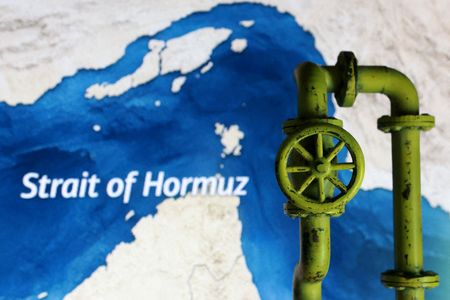
Despite all this ambition, IMEC remains the most challenging component of the arrangement. India and Italy both characterized the corridor as transformational, but the project relies on stability across the Gulf and the eastern Mediterranean, where conflict and disruption remain active threats. The declaration expressed deep concern over the situation in West Asia and the Middle East, welcomed the ceasefire announced on April 8, 2026, and called for de-escalation, dialogue, diplomacy, freedom of navigation, and the resumption of global flows through the Strait of Hormuz.
Goretti stated that if instability persists across Yemen, Hormuz, and Iran, the corridor will remain challenging to implement. “It is certain that if there is an arc of instability and war that involves Yemen, the Strait of Hormuz, and Iran, this represents a huge problem for such an ambitious project,” he said. He also noted that current disruptions already impact routes between India and Europe.
This represents the fundamental tension at the core of the Modi-Meloni meeting. The strategic direction is evident. The relationship is more comprehensive than previously. The institutional framework is more substantial than in earlier phases. However, the route on which much of the broader vision depends still passes through one of the most volatile regions globally. Italy can help provide political support for the project, but it cannot independently supply the stability necessary to make it function at full capacity.
Ganguly argued that India’s westward expansion will continue through a network of relationships rather than a single corridor. “India’s presence in the Middle East is going to grow through the UAE, through Israel, and through very, very good ties with Saudi Arabia now,” he said. “From the Middle East, there will be Cyprus and Greece, and then into Italy and into Europe.”
He stated the common element is that India does not view these relationships as mutually exclusive. “India would say, no, no, no, each relationship is completely independent,” he said. “What we use to judge each relationship is whether it is good for India. And only India will decide what is good for India.”
This explains why the Rome visit was notable. It was not simply a cordial meeting between two leaders with some political chemistry. It represented a practical step in a larger strategy of diversification, corridor-building, and strategic autonomy. India and Italy are attempting to connect trade, technology, defense, mobility, and maritime security within a single framework, while also fitting that framework into broader India-EU and Indo-Mediterranean politics.
What remains unclear is how much of this ambition can be realized in a geopolitically strained environment. The declaration is comprehensive. The objectives are specific. The cooperation is extensive. However, the stability required to support IMEC, facilitate smooth trade flows, and ensure sustained maritime access still depends on a region where conflict can rapidly spread across borders and disrupt plans.
For Europe, this represents part of a larger transformation. Goretti said the past year and a half has served as a wake-up call for those who believed the transatlantic relationship would remain the unquestioned foundation of foreign and security policy. He argued that Europe now needs to expand its portfolio of partners, including India, the Gulf states, Brazil, and other middle powers, to avoid being forced into a pure US-China rivalry.
This broader logic provides the real context for Modi’s tour. The Gulf remains important for energy and connectivity. The Netherlands remains significant for trade and technology. Sweden and Norway remain valuable for innovation and green transition. Italy matters because it connects all of these themes to the Mediterranean and to the question of how Europe and Asia will link in the coming years.
The meeting in Rome, therefore, was less about one friendship than about an emerging pattern. India and Italy are both attempting to hedge against uncertainty by deepening ties, expanding options, and building practical cooperation around supply chains, advanced technology, and connectivity. Whether this framework becomes a functioning alternative to older routes and older assumptions will depend less on diplomatic declarations than on the ability of the wider region to avoid another round of disruption.