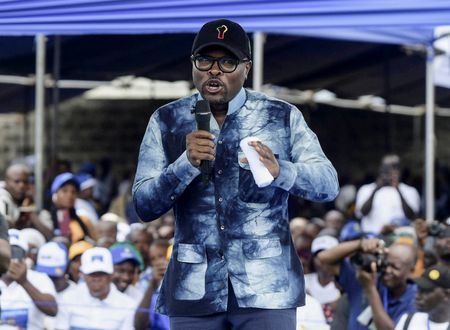

Benin’s newly inaugurated president, Romuald Wadagni, promised during Sunday’s ceremony to tackle increasing security concerns and make sure economic progress reaches ordinary citizens in meaningful ways.
The Constitutional Court confirmed Sunday that Wadagni secured his victory on April 12, capturing more than 94% of votes cast against opponent Paul Hounkpe.
The incoming leader replaces Patrice Talon, who governed the West African country from 2016 and departed after completing two terms as required by the constitution.
At 49 years old, the former finance minister brings a decade of experience in that position and is anticipated to build upon Talon’s reform policies that produced consistent economic expansion and enhanced the nation’s business environment.
“Our economy has progressed. That’s a fact. But we all know that national growth only makes sense when it becomes visible in people’s everyday lives,” Wadagni stated during his swearing-in speech.
His administration plans to emphasize employment opportunities, availability of essential services, and social safety nets.
“The development of Benin must be experienced in every component of society and in every territory of the Republic,” he declared.
The new president also recognized growing security concerns, as extremist organizations spreading from the Sahel region have increased attacks in Benin’s northern areas over recent years.
“Benin will not yield to fear or complacency,” he stated, promising enhanced collaboration with neighboring nations confronting similar threats.
Representatives from Niger, Burkina Faso and Mali, the Sahel nations most affected by these security issues, attended the inauguration ceremony along with several other countries.
In an area where certain leaders have attempted to prolong their time in office, Wadagni emphasized his dedication to democratic principles.
“I will serve with the constant awareness that power is never a personal privilege,” he remarked.
The previous administration barely weathered an attempted coup in December, highlighting the unstable political and security conditions Wadagni inherits as he begins his presidency.