
President Donald Trump announced Saturday that a peace agreement with Iran has been mostly finalized, stating the deal would restore access to the Strait of Hormuz, though Iranian media sources are challenging his assertions.
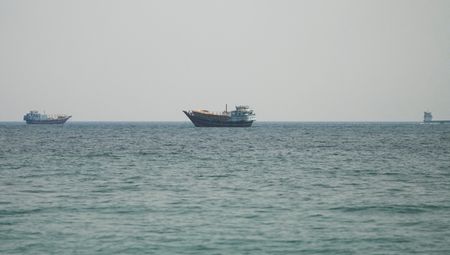
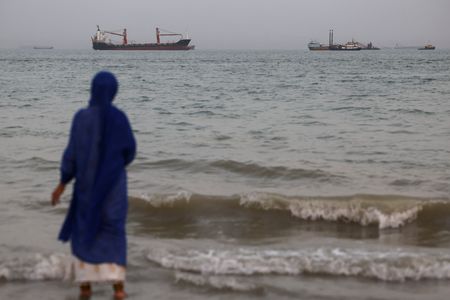
The president shared on social media that the developing agreement would restore operations at the critical shipping corridor, whose blockade has disrupted worldwide energy markets since hostilities began in February following U.S. and Israeli military actions against Iran. Trump did not elaborate on other components of the potential agreement.
“Final aspects and details of the Deal are currently being discussed, and will be announced shortly,” Trump wrote on Truth Social.
However, Fars reported early Sunday that the agreement would permit Iran to control the Strait of Hormuz and described Trump’s statements about the strait as “inconsistent with reality.”
Iran announced Saturday it was pursuing a memorandum of understanding to end the conflict following meetings between its senior officials and Asim Munir, Pakistan’s army chief.
Pakistan’s military described the negotiations as yielding “encouraging” developments. Two Pakistani officials familiar with the discussions characterized the potential deal as “fairly comprehensive to terminate the war.”
A message posted on Pakistani Prime Minister Shehbaz Sharif’s X account commended Trump for his “extraordinary efforts to pursue peace.”
Reuters sources indicate the proposed framework would proceed through three phases: officially concluding the war, addressing the Strait of Hormuz situation, and establishing a 30-day negotiation period for a more extensive agreement, with possible extensions.
One Pakistani official noted that if the U.S. endorses the memorandum, additional discussions could occur following the conclusion of the Eid holiday on Friday.
The president, whose public support has suffered due to the war’s effect on domestic energy costs, said Friday he would skip his son’s wedding this weekend, citing Iran among his reasons for remaining in Washington.
Trump posted on Truth Social about Saturday phone conversations with officials from Saudi Arabia, Qatar, the United Arab Emirates, Jordan, Egypt, Turkey and Pakistan. Axios reported these leaders urged Trump to accept the developing framework.
A separate conversation with Israeli Prime Minister Benjamin Netanyahu proceeded “very well,” Trump noted.
Pakistan has worked to bridge the gap between Iran and the U.S. following weeks of warfare that have kept the essential Hormuz passage closed to most maritime traffic despite an uneasy ceasefire.
Trump has consistently stated that U.S. military action against Iran aimed to prevent nuclear weapons development. Iran has rejected claims it seeks nuclear weapons and maintains its right to uranium enrichment for peaceful uses.
“The trend this week has been towards a reduction in disputes, but there are still issues that need to be discussed through mediators. We will have to wait and see where the situation ends in the next three or four days,” said Iranian Foreign Ministry spokesperson Esmail Baghaei.
Iran has insisted on strait oversight, termination of the U.S. port blockade, and removal of sanctions on Iranian oil exports.
Baghaei indicated that while the U.S. shipping blockade issue matters, Iran’s main concerns are stopping potential new U.S. attacks and resolving the ongoing Lebanese conflict, where Iran-supported Hezbollah fighters are battling Israeli forces operating in southern Lebanon.
Pakistan’s army chief Munir departed Tehran Saturday after discussions with Iran’s chief negotiator Mohammad Baqer Qalibaf and Foreign Minister Abbas Araqchi.
Qalibaf stated Iran’s military had restored its strength during the ceasefire and warned that if the U.S. “foolishly restarts the war,” the results would be “more forceful and bitter” than when the conflict began.
Throughout weeks of fighting, Iran has maintained its stockpile of near-weapons-grade enriched uranium along with its missile, drone and proxy force capabilities.