
President Donald Trump announced that negotiations with Iran concerning Middle East warfare have been “largely negotiated,” following weekend discussions with Israel and regional partners about reopening the Strait of Hormuz.
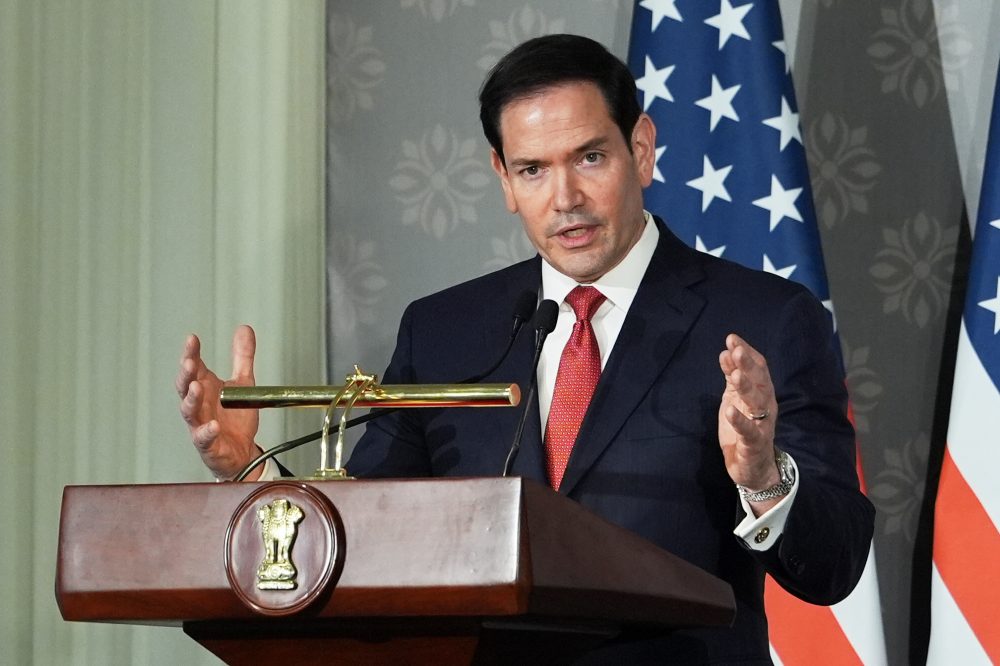
However, other administration figures urged restraint on Sunday, with Secretary of State Marco Rubio stating that “significant progress, although not final progress has been made” during the talks.
During his four-day trip to India for conferences with Indian, Australian and Japanese representatives, Rubio expressed optimism for positive developments in the near future.
According to Rubio, the discussions have achieved one of Trump’s primary objectives, “that is a world that no longer has to be in fear or worry about an Iranian nuclear weapon.”
Trump revealed on Saturday that he had conducted conversations with officials from Saudi Arabia, the United Arab Emirates, Qatar, Pakistan, Turkey, Egypt, Jordan and Bahrain, plus a separate discussion with Israel.
“Final aspects and details of the Deal are currently being discussed, and will be announced shortly,” Trump posted on social media without providing specifics.
This development followed a week during which the U.S. considered launching additional strikes against the Islamic Republic that could have shattered the delicate ceasefire.
According to two regional sources, the prospective agreement would involve Iran’s pledge to abandon nuclear weapons development and Tehran’s consent to surrender its stockpile of highly enriched uranium.
One source with firsthand knowledge of the discussions explained that the method for Iran’s uranium surrender remains under negotiation throughout a 60-day timeline.
The source indicated that portions of the material would likely be diluted, while remaining quantities could be sent to another nation, possibly Russia.
The International Atomic Energy Agency reports that Iran possesses 440.9 kilograms (972 pounds) of uranium enriched to 60% purity, which represents a brief technical leap from the 90% weapons-grade threshold.
The official stated that the Strait of Hormuz would reopen progressively alongside the U.S. lifting its blockade of Iranian ports.
The second briefed official revealed that America would permit Iran to market oil through sanctions exemptions. Relief from sanctions and release of Iran’s frozen assets would be negotiated within the 60-day period, the source added.
Both sources confirmed the proposed deal encompasses ending hostilities between Israel and Hezbollah, plus a pledge against meddling in regional nations’ internal matters. The officials requested anonymity to discuss private negotiations.
Three months have elapsed since the U.S. and Israel struck Iran on Feb. 28, eliminating senior Iranian leadership including its supreme leader and disrupting nuclear discussions between America and Iran for the second time in under a year. Iran retaliated against Israel and neighbors housing U.S. military presence, alarming Gulf states that had viewed themselves as secure zones in a volatile region.
A ceasefire has remained intact since April 7. However, Iran’s effective closure of the Strait of Hormuz to vessels transporting regional petroleum, natural gas and other essential materials has become a center of worldwide anxiety and economic hardship.
Israeli leadership worries that Hezbollah, the Lebanese militant organization aligned with Iran, continues posing a major threat to Israel and that Lebanon lacks capability to disarm the group.
Prime Minister Benjamin Netanyahu cautioned Trump that Israel “maintains freedom of action against threats in all arenas, including Lebanon,” according to a source familiar with their conversation. The source requested anonymity due to lack of media authorization.
The source reported that Trump clearly informed Netanyahu he would not approve any final arrangement without requirements that Iran dismantle its complete nuclear program and eliminate all enriched uranium from Iranian territory.
Israel’s Minister of Science and Technology Gila Gamliel, a member of Netanyahu’s Likud party and part of his national security cabinet, told Israel’s Army Radio on Sunday morning that Israel is taking a “wait-and-see” approach.
A fragile, U.S.-mediated ceasefire in the Israel-Hezbollah conflict in Lebanon has existed since April 17, a war that commenced two days following the Iran conflict’s start.
Regardless of the ceasefire, combat persists on both sides. Hezbollah fires daily drones and missiles at Israeli forces and northern Israel, while Israel attacks Lebanese targets as its military maintains presence across extensive areas of southern Lebanon.
The Lebanese Health Ministry reports over 3,000 deaths in the recent fighting round. Furthermore, 22 Israeli soldiers and one defense contractor have died in or around southern Lebanon, and two civilians have perished in northern Israel, primarily from Hezbollah drones, Netanyahu’s office confirmed.