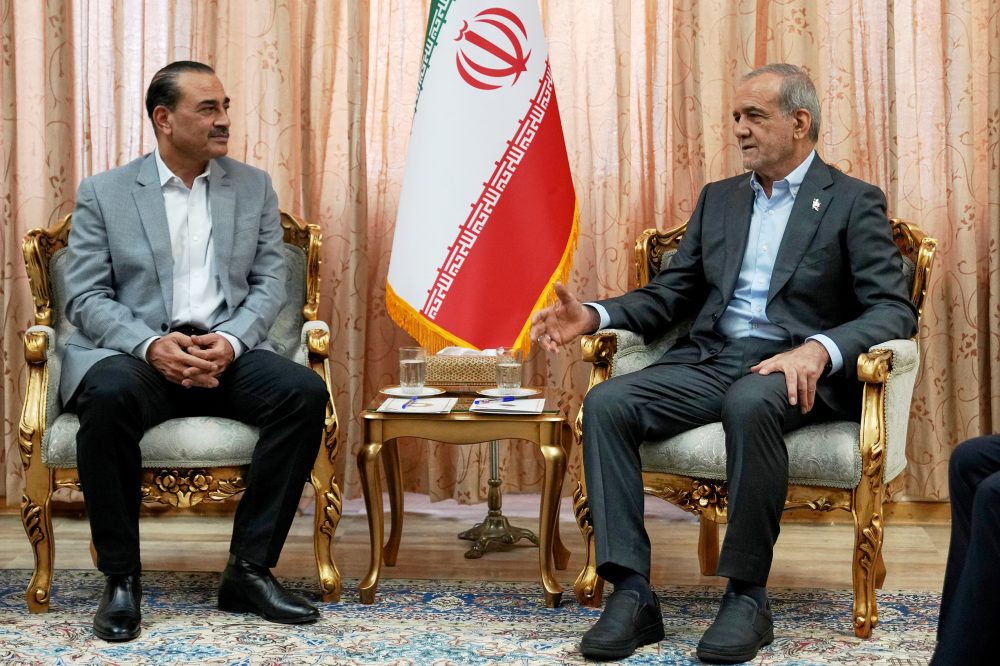

Officials from Iran and the United States are reporting advancement in diplomatic discussions Saturday, with Pakistan’s top military commander facilitating additional meetings in Tehran while the Trump administration considers launching fresh strikes against Iran.
Speaking to reporters in India, U.S. Secretary of State Marco Rubio confirmed “there’s been some progress made” and indicated “there may be news later today.”
Following discussions with Field Marshal Asim Munir, Iran’s parliament speaker Mohammad Bagher Qalibaf stated that Iran has reconstructed its military capabilities following weeks of conflict and a tenuous ceasefire, according to state television coverage.
Qalibaf, who served as Iran’s primary representative during landmark direct discussions with American officials last month, warned that any resumption of attacks by President Donald Trump would result in consequences “more crushing and more bitter” than those seen at the conflict’s beginning.
Iran’s state-run IRNA news agency reported comments from Foreign Ministry spokesperson Esmail Baghaei, who clarified that nuclear matters remain outside the scope of current discussions. Tehran prioritizes ending the ongoing conflict before addressing its nuclear activities, which have been central to international disputes.
According to Baghaei, negotiators are working to complete a memorandum of understanding, with both sides’ positions drawing closer in recent discussions.
“Over the past week, the trend has been toward narrowing differences,” he stated. “We will have to wait and see what happens over the next three or four days.”
Rubio emphasized ongoing diplomatic efforts, saying “even as I speak to you now there is some work being done. There is a chance that whether it’s later today, tomorrow, in a couple days we may have something to say.”
The Secretary of State reiterated America’s position that Iran cannot possess nuclear weapons, must surrender its highly enriched uranium stockpiles, and must ensure the Strait of Hormuz remains accessible to international shipping.
Trump previously announced he was postponing military action against Iran due to “serious negotiations” taking place and at the urging of regional allies. The president has established multiple deadlines for Tehran before retreating from those positions.
The conflict began when American and Israeli forces launched attacks on February 28, interrupting ongoing diplomatic discussions with Iran. Iran responded by essentially blocking the Strait of Hormuz, a crucial passage for regional oil, natural gas, and fertilizer shipments, creating worldwide economic disruption.
The United States subsequently imposed a naval blockade on Iranian ports. U.S. Central Command announced Saturday that American forces have redirected over 100 commercial ships and disabled four vessels since the blockade’s implementation on April 13.
Two officials in Islamabad described positive developments in discussions between Pakistan’s army chief and Iranian leadership, characterizing the talks as heading “in the right direction.” The officials requested anonymity as they lacked authorization for public statements.
Munir conducted meetings with Iranian Foreign Minister Abbas Araghchi, President Masoud Pezeshkian, and additional high-ranking officials, according to the two sources, who noted that Islamabad remains committed to facilitating another round of direct negotiations.
It remains unclear whether Pakistan’s army chief met with Brig. Gen. Ahmad Vahidi, commander of Iran’s paramilitary Revolutionary Guard, who has emerged as an influential voice in shaping Iran’s hardline negotiating position.