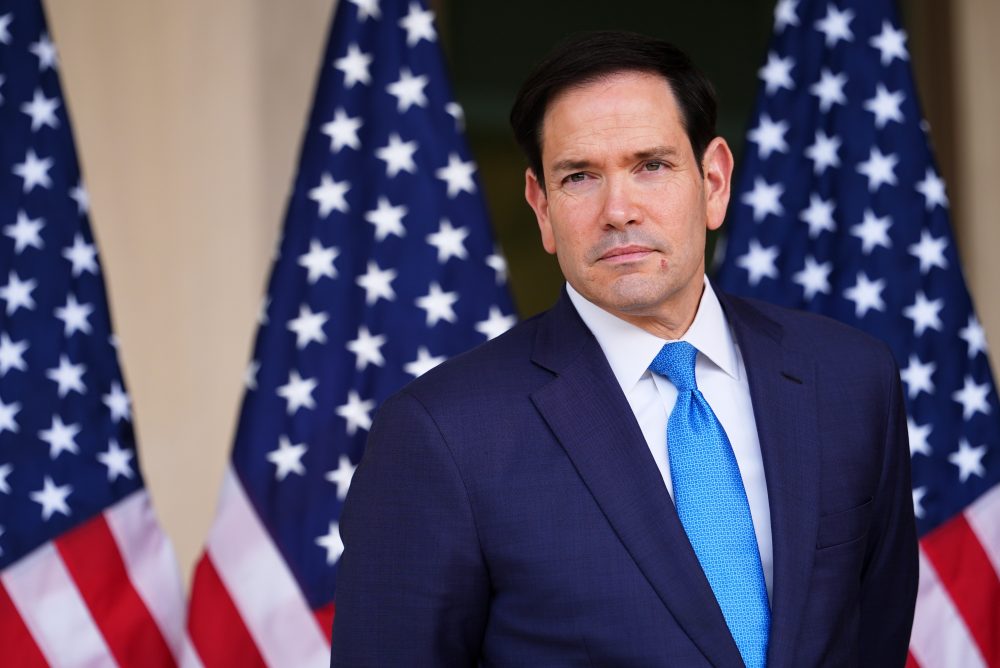

NEW DELHI (AP) — Secretary of State Marco Rubio conducted diplomatic discussions with Indian Foreign Minister Subrahmanyam Jaishankar on Sunday as both nations work to stabilize relations that have deteriorated to their worst state in more than twenty years.
The diplomatic mission occurs amid significant economic and political tensions between Washington and New Delhi, primarily caused by tariff measures implemented by President Donald Trump that increased import duties on numerous Indian products.
Rubio landed in India on Saturday for his inaugural official diplomatic visit to the country, scheduled ahead of Tuesday’s gathering with officials from India, Australia and Japan – the four nations comprising the Indo-Pacific coalition called the Quad.
“India is at the cornerstone of how the United States approaches the Indo-Pacific, and not just through the Quad, but bilaterally,” Rubio said in New Delhi.
The Secretary of State’s four-day diplomatic mission includes visits to multiple cities and attendance at a formal celebration in New Delhi commemorating America’s 250th independence anniversary.
“In the past one year, statements and rhetoric coming from Washington on some of India’s most sensitive security concerns and trade matters have not been helpful and have created a trust deficit,” said Ashok Malik, a former policy adviser in India’s Foreign Ministry.
“Certain misgivings will remain,” Malik added, noting Rubio’s visit will be considered an achievement if the talks somewhat stabilize the relationship and check further deterioration.
Policy analysts note tensions between America’s worldwide strategic objectives and India’s goals as a developing regional power. With historical connections to Russia, India has consistently displayed reluctance as it develops closer American ties, demonstrating India’s persistent skepticism of U.S. motives based on cultural distinctions and Cold War-period attitudes.
Nevertheless, Indian-American relations gradually strengthened over twenty years into an extensive strategic alliance, increasingly influenced recently by mutual concerns regarding China’s expanding aggression in the Indo-Pacific region and expressed diplomatically through Quad discussions.
The Quad alliance has consistently criticized China for demonstrating military strength in the South China Sea and forcefully advancing its ocean territory demands. Beijing argues its military operations are entirely defensive to safeguard what it describes as China’s legitimate territorial rights and characterizes the Quad as efforts to limit its economic development and regional power.
Following the presidential inauguration in January 2025, Rubio’s initial formal overseas diplomatic activity involved conferences with Quad nation foreign ministers in group and individual meetings.
Nevertheless, multiple incidents since the previous year have pushed diplomatic relations to their current low point.
Despite strong connections and frequent perception as political partners, Indian Prime Minister Narendra Modi minimized Trump’s contribution in negotiating a ceasefire following brief India-Pakistan military hostilities sparked by the April 2025 attack on predominantly Hindu visitors in Indian-controlled Kashmir. Meanwhile, Pakistan actively pursued Trump’s support and even promoted him for the Nobel Peace Prize.
Economic disputes emerged subsequently, with the Trump administration implementing tariffs against India regarding its reduced-price Russian oil purchases that further damaged relations between both countries.
“In India, there is some skepticism about U.S. policy and predictability,” said Malik, who heads the India chapter of The Asia Group advisory firm in the U.S. He said what has happened in the past year between India and the U.S. “can’t be forgotten or erased easily.”
When conflict erupted in Iran during February, America increased cooperation with Pakistan, which presented itself as an intermediary between Washington and Tehran, heightening concerns in New Delhi. Trump’s recent prominent diplomatic visit to China has further increased India’s uneasiness.
Indian-American relations face challenges “due to a few structural tensions and Trump only brought them to the fore,” said Praveen Donthi, a senior analyst with the International Crisis Group.
“New Delhi’s foreign policy, increasingly colored by its domestic politics, has become more black-and-white in the last decade, as evidenced by its deep discomfort with the U.S.’s ties with Pakistan and its moves toward detente with China,” Donthi said.
Policy experts suggest these developments demonstrate the increasing complexity of Indian-American relations founded on mutual strategic objectives, yet progressively influenced by conflicting priorities and an evolving global political environment.
“New Delhi is likely to exercise strategic patience and wait for Trump to leave office,” Donthi said. “India would hope that the bipartisan consensus on India in the U.S. survives his term and that it can start building on that again.”