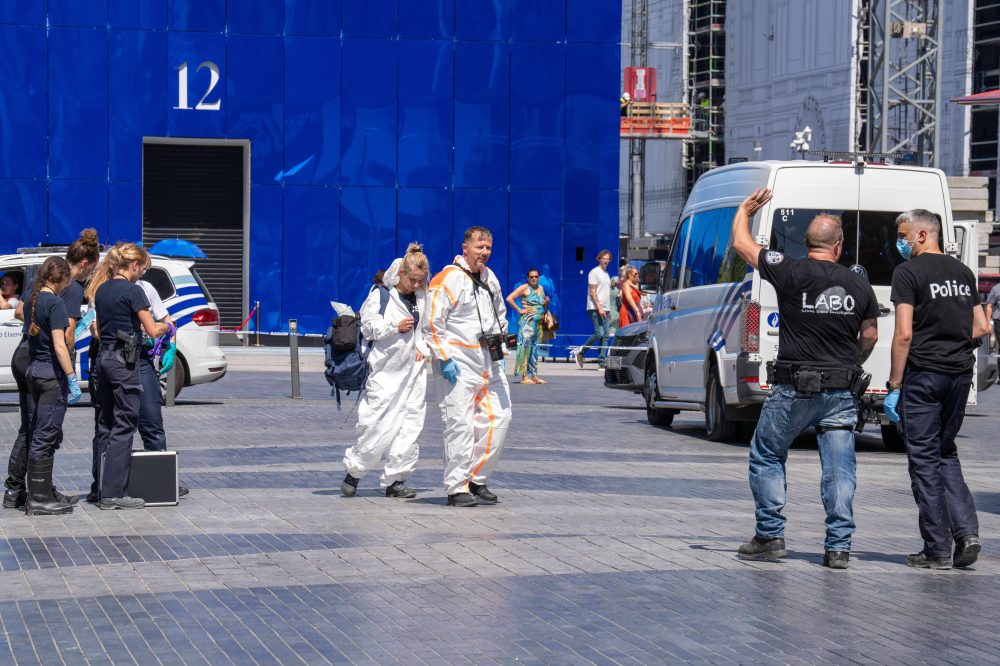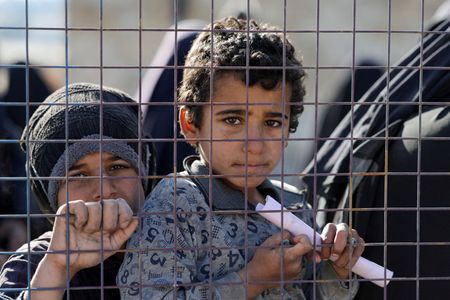

A detention facility in northeastern Syria that once housed thousands of family members connected to suspected ISIS militants now contains fewer than 1,000 families, according to the camp’s former administrator who spoke Wednesday.
The Al-Hol camp, located close to Iraq’s border, served as a primary holding facility for relatives of alleged Islamic State fighters captured during the American-supported military operations against the extremist organization in Syria.
Management of the facility shifted last month when forces loyal to President Ahmed al-Sharaa’s government captured large portions of northeastern Syria from Kurdish-led Syrian Democratic Forces, including multiple prisons housing Islamic State members.
Last week, U.S. military officials announced they had finished relocating 5,700 adult male ISIS detainees to Iraq.
Jihan Hanna, who previously ran the camp and continues working with international organizations and Syria’s government, informed Reuters that the families still there are Syrian citizens being moved to a facility in Aleppo. She noted that most foreign nationals had already escaped.
Syrian government officials have not yet responded to requests for information.
Camp records from January 19 – one day before government forces assumed control – showed a population of 6,639 families totaling 23,407 individuals, primarily Syrians and Iraqis, plus 6,280 foreign nationals from over 40 countries.
The United Nations refugee agency UNHCR reported witnessing “a significant decrease in the number of residents in al-Hol camp in recent weeks,” though they stated no verified population counts were available.
“Over the weekend the camp administration advised UNHCR not to enter the camp due to the unrest and anxiety in the camp,” the agency added in their statement to Reuters.
Syria’s government criticized the SDF for abandoning al-Hol on January 20 without coordination.
The SDF responded that same day, explaining their troops were “compelled to withdraw from al-Hol camp and redeploy to areas surrounding cities in northern Syria that are facing increasing risks and threats.”
A Syrian security official revealed that most camp residents escaped during a five-hour window when no guards were present, with some departing alongside men who arrived to collect relatives for unknown destinations.
Both the security official and an NGO worker confirmed that the camp’s most dangerous section, called the annex, now sits completely vacant.
The security source explained that escapees have dispersed throughout Syria, prompting authorities to create a special unit working with international partners to “follow up on the matter and pursue those who are wanted.”
Some have crossed Syria’s borders entirely.
In Lebanon, military forces have interrogated more than a dozen Lebanese citizens who illegally entered from Syria after departing al-Hol, according to a Lebanese security source.
Syria’s Directorate of International Cooperation announced Tuesday that hundreds of people, primarily women and children, had been relocated from al-Hol to a newly established camp near Akhtarin in northern Aleppo.