
SEOUL, South Korea — Former South Korean President Yoon Suk Yeol was handed a life sentence Thursday by a Seoul court for his December 2024 martial law declaration, which judges determined amounted to rebellion against the state.
The historic ruling concluded nearly a year of intense legal battles, throughout which Yoon showed no remorse and continued defending his actions as proper presidential powers used to fight his political opponents. The sentence brings closure to South Korea’s worst political upheaval in recent memory.
Below is a timeline of critical moments leading to Yoon’s unprecedented conviction:
According to prosecutors, Yoon instructed Defense Minister Kim Yong Hyun about plans for “emergency measures” targeting liberal opposition lawmakers in the National Assembly, following their majority votes to impeach government officials and slash budgets.
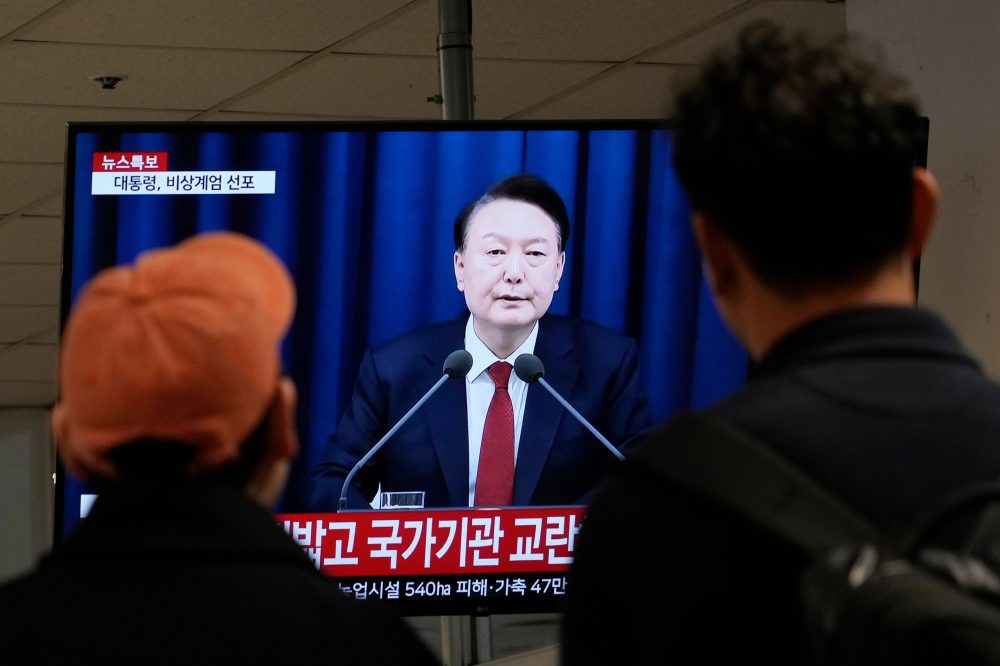
Around 10:30 p.m., Yoon shocked the nation with a televised martial law announcement, calling the opposition-led legislature a “den of criminals” that was crippling government operations. He promised to “eradicate” what he termed “anti-state” liberal opponents. Armed forces and police quickly surrounded the National Assembly building.
Just after midnight, National Assembly Speaker Woo Won Shik announced via YouTube that lawmakers would use “constitutional procedure” to counter Yoon’s declaration. By 1 a.m., 190 legislators—including 18 from Yoon’s own People Power Party—unanimously voted to end martial law. Military and police forces withdrew from the assembly grounds. At 4:30 a.m., a Cabinet meeting officially terminated martial law.
An impeachment attempt against Yoon failed when most ruling party members refused to participate in the vote.
Authorities arrested former Defense Minister Kim for his involvement in planning and implementing the martial law order.
The Justice Ministry prohibited Yoon from leaving the country as multiple agencies launched competing investigations into rebellion and related charges.
Kim received formal arrest on charges of conspiring with Yoon and others in the martial law plot. Officials revealed Kim attempted suicide hours before a Seoul court approved his detention warrant.
Yoon characterized his martial law order as legitimate governance and rejected rebellion accusations, promising to “fight to the end” against impeachment efforts.
Lawmakers successfully impeached Yoon with a 204-85 vote, elevating Prime Minister Han Duck-soo to acting president.
The National Assembly also impeached acting President Han for refusing to appoint Constitutional Court justices before the court’s decision on Yoon’s removal.
Seoul Western District Court authorized Yoon’s detention for questioning.
Investigators attempted to arrest Yoon at the presidential residence but were prevented by security personnel and physical barriers.
Anti-corruption officials and police successfully raided the presidential compound and detained Yoon, marking the first arrest of a sitting South Korean president.
Seoul Western District Court issued Yoon’s formal arrest warrant over evidence tampering concerns. His arrest sparked violent protests by supporters who stormed the courthouse, breaking windows and damaging equipment. Police arrested approximately 90 rioters.
The Seoul Central District Prosecutors’ Office charged Yoon with orchestrating attempted rebellion, alleging he illegally tried to control the legislature and election facilities while planning to arrest political rivals.
Seoul Central District Court ordered Yoon’s release from custody due to unresolved questions about investigators’ detention authority. He was freed the next day.
The Constitutional Court reversed Prime Minister Han’s impeachment, reinstating his role as acting leader.
The Constitutional Court confirmed Yoon’s impeachment and presidential removal, mandating an election within 60 days. Officials set June 3 as the election date.
Seoul Central District Court conducted the initial hearing for Yoon’s rebellion case.
Democratic Party candidate Lee Jae Myung, Yoon’s liberal opponent, won the presidential election.
Seoul Central District Court approved Yoon’s re-arrest after special prosecutors argued he might destroy evidence.
Authorities arrested Yoon’s wife, Kim Keon Hee, as investigators prepared bribery and other criminal charges.
Special prosecutors charged Kim Keon Hee and former Prime Minister Han with assisting Yoon’s martial law declaration, document falsification and destruction, and perjury.
Investigators added charges against Yoon for allegedly ordering drone flights over North Korea to increase tensions and justify martial law plans.
A special prosecutor requested the death penalty for Yoon on rebellion charges.
Seoul Central District Court sentenced Yoon to five years for resisting arrest and fabricating the martial law declaration in the first verdict against him.
Seoul Central District Court gave Han a 23-year sentence for supporting Yoon’s martial law and other offenses.
Seoul Central District Court sentenced Yoon’s wife Kim to 20 months in jail on corruption charges.
Seoul Central District Court sentenced Yoon’s former interior minister Lee Sang-min to seven years for supporting the martial law decree.
Seoul Central District Court imposed a life sentence on Yoon for rebellion charges. His attorneys expressed disappointment with the verdict and said they would consider whether to file an appeal.