
GENEVA — Wednesday marked the end of another round of American-facilitated peace negotiations between Russian and Ukrainian representatives, with both nations characterizing the discussions as challenging and yielding no major breakthroughs as the conflict approaches its fourth anniversary next week.
The Switzerland meetings represented the third series of direct negotiations organized by the United States, following earlier sessions in Abu Dhabi this year that officials called productive despite limited concrete results. Going into the Geneva talks, expectations for substantial progress remained modest.
“The negotiations were not easy,” Ukrainian President Volodymyr Zelenskyy stated following the conclusion of talks, speaking by telephone from Kyiv with his negotiating representatives.
Zelenskyy previously criticized Russia for “trying to drag out negotiations” while continuing its military campaign — a charge he and European officials have made repeatedly throughout the conflict.
However, Zelenskyy acknowledged that some advancement occurred on military matters, though significant political divisions persist, particularly regarding the fate of eastern Ukrainian territories currently under Russian military control that Russian President Vladimir Putin seeks to retain.
Vladimir Medinsky, who leads Russia’s delegation and serves as a Putin advisor, informed journalists that the two-day Geneva discussions “were difficult but businesslike.”
Kremlin spokesperson Dmitry Peskov indicated to reporters that discussing the talks’ outcomes remains “too early.” He noted that Putin has been receiving updates about the Geneva proceedings.
Both delegations confirmed plans for additional negotiation rounds.
Regarding military discussions, Zelenskyy characterized them as “constructive,” noting that both countries’ armed forces examined potential ceasefire monitoring mechanisms.
“Monitoring will definitely be carried out with participation of the American side,” he stated in a voice message distributed through a media WhatsApp group.
Steve Witkoff, President Donald Trump’s special envoy, posted on social media that Washington’s year-long peace efforts in Ukraine have “brought about meaningful progress,” though he provided no specific details.
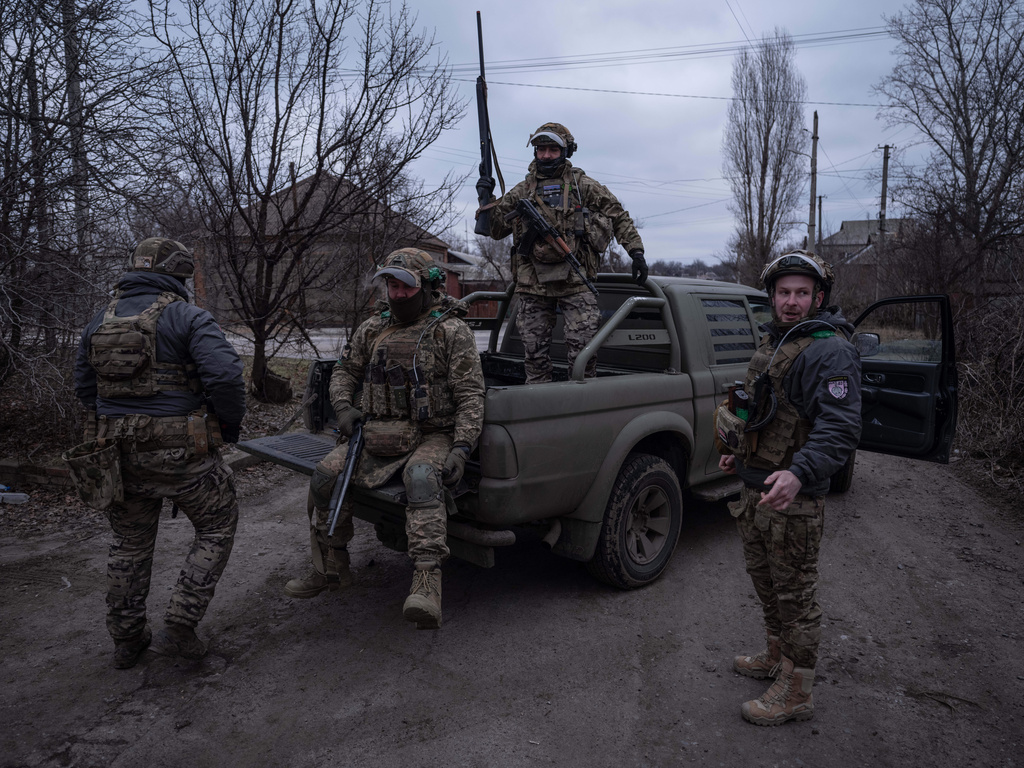
The opposing forces continue fighting along an approximately 1,250-kilometer (750-mile) battle line, while Russia maintains daily bombardments of Ukrainian civilian areas.
Following Tuesday’s initial day of talks, Russian drone attacks killed one woman and wounded a 6-year-old girl and 18-month-old child in Zaporizhzhia, a southern Ukrainian city, according to local officials.
During the overnight hours, Russia deployed one ballistic missile and 126 long-range drones against Ukraine, Ukrainian air force reports indicated.
Zelenskyy revealed that Ukrainian and American negotiators in Geneva conducted meetings with officials from the United Kingdom, France, Germany, Italy and Switzerland.
European involvement in the negotiation process remains “indispensable,” Zelenskyy emphasized.
European officials, concerned about Putin’s broader territorial ambitions, maintain that their own security depends on Ukraine’s outcome and have demanded inclusion in peace discussions.
Russia and Ukraine continue to maintain significantly different positions regarding settlement terms.
While Zelenskyy has proposed a ceasefire and direct meeting with Putin, Moscow demands a comprehensive agreement prior to any truce commitment.
Putin’s primary objectives remain unchanged from Russia’s February 24, 2022 invasion: Ukraine must abandon NATO membership aspirations, drastically reduce military forces, and safeguard Russian language and cultural interests to maintain the country within Moscow’s sphere of influence.
Putin also demands Ukrainian military withdrawal from four eastern regions that Moscow occupies but doesn’t completely control.
Zelenskyy maintains that Ukraine will not cede territory to Russia.