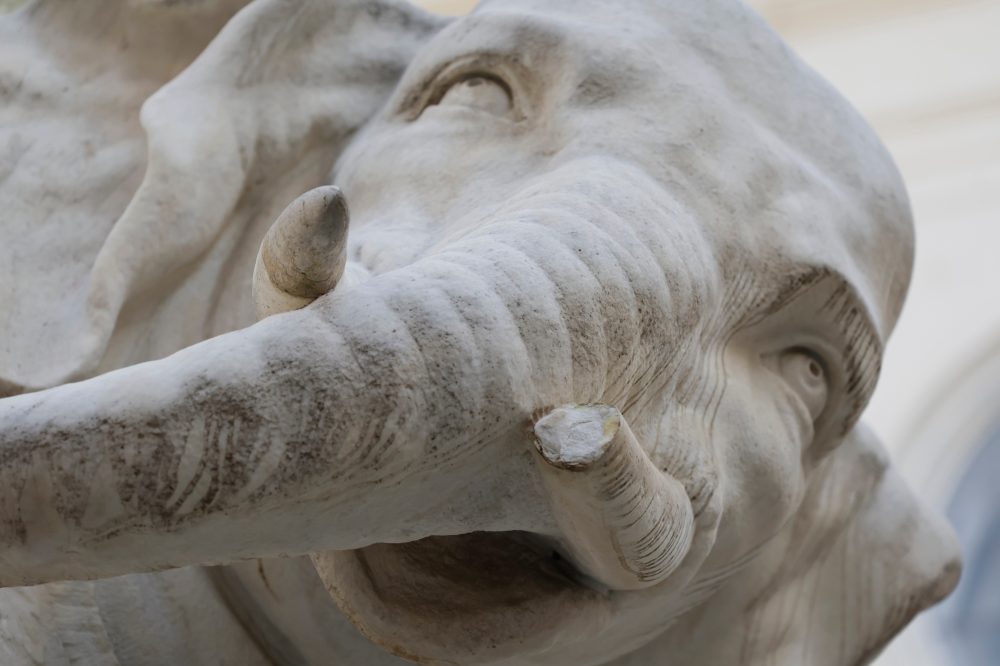

ROME (AP) — Authorities in Italy’s capital are examining how a cherished elephant monument created by renowned Baroque artist Gian Lorenzo Bernini sustained damage to its left tusk’s tip for the second time in recent years.
Investigators discovered the broken marble piece, measuring 11 centimeters (4 inches), close to the monument during the weekend. Officials announced Wednesday they had established the fragment wasn’t part of Bernini’s original creation but had been attached during restoration efforts in 1977.
The identical section had previously been damaged through vandalism in 2016, according to Rome’s municipal government.
Authorities are currently examining surveillance footage to determine whether someone was responsible for causing the damage once more.
The compact elephant statue, situated close to Rome’s famous Pantheon, attracts numerous visitors. Pope Alexander VII asked Rome’s most celebrated Baroque artist, Bernini, to create the design after Dominican monks found a small Egyptian obelisk within their nearby monastery grounds, which sits next to the Basilica of Santa Maria Sopra Minerva.
The elephant statue, positioned in Piazza della Minerva facing the basilica, supports the ancient obelisk on its back.
Based on Rome’s municipal website, Bernini and the monks had conflicting views about the project: The sculptor thought the obelisk’s weight could be supported by the elephant’s four legs alone, while the monks demanded additional stone reinforcement beneath its belly for better stability.
The monks prevailed in this dispute, and the resulting sturdy appearance earned the elephant the nickname “Minerva’s Piglet,” since its short legs and central support make it resemble a pig rather than an elephant.
Local folklore suggests Bernini sought payback against the monks by positioning the elephant’s rear end with its tail raised toward their monastery.