
Foreign policy experts are expressing alarm after President Donald Trump revealed he’s consulting with Chinese leader Xi Jinping about potential weapons sales to Taiwan, a move that could undermine longstanding diplomatic principles.
During a Monday press briefing, Trump made the surprising disclosure when reporters questioned him about Xi’s opposition to the arms deals. “I’ve talked to him about it. We had a good conversation, and we’ll make a determination pretty soon,” Trump stated, emphasizing his “very good relationship with President Xi.”
The revelation has sparked intense debate about whether America’s approach to Taiwan might be shifting before Trump’s scheduled April visit to China.
According to William Yang, a senior Northeast Asia analyst with the International Crisis Group, Trump’s consultation with Xi could breach the Six Assurances – a collection of policy guidelines established in 1982 during Ronald Reagan’s presidency that have shaped U.S.-Taiwan relations.
The second principle explicitly declares that America “did not agree to consult with the People’s Republic of China on arms sales to Taiwan.”
“That basically has been executed by several U.S. presidents after Ronald Reagan to justify and continue the arms sales to Taiwan without actually discussing the topic with China over the past few decades,” Yang explained.
Yang warned that Trump might be establishing a “dangerous precedent” that could enable Beijing to influence future American weapons sales to Taiwan.
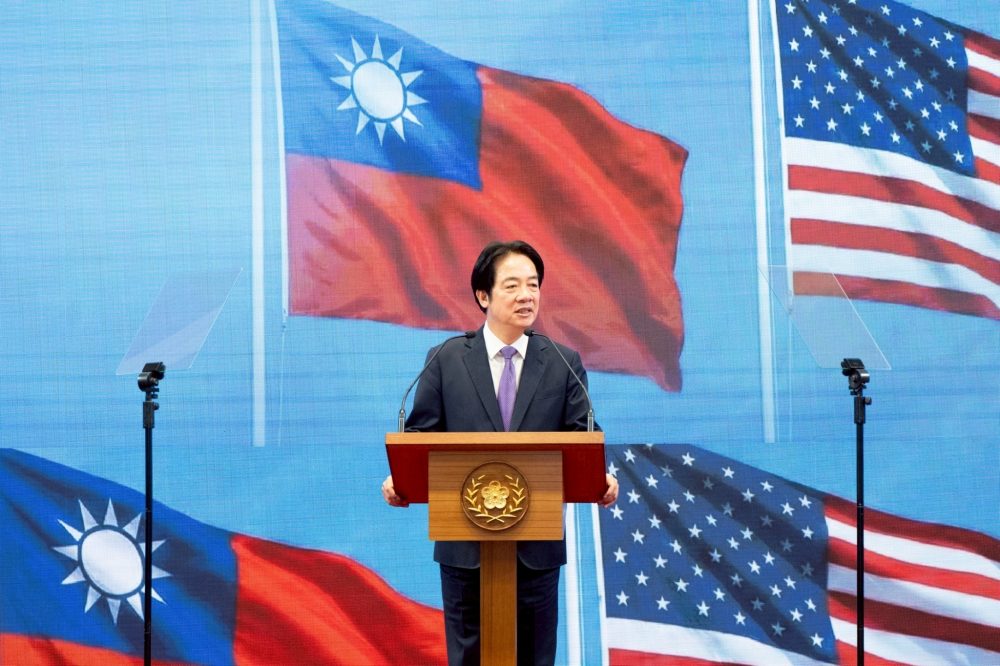
Taiwan’s leadership has remained silent on Trump’s remarks as the island observes its weeklong Lunar New Year celebration.
The controversy stems from China’s territorial ambitions regarding Taiwan, with Beijing insisting the island must be reunified with the mainland, using military force if needed. China prevents nations with which it maintains diplomatic ties from establishing formal relationships with Taipei and routinely deploys naval vessels and aircraft near the island.
Although lacking official diplomatic connections with Taiwan, America serves as the island’s primary unofficial ally and weapons provider. Federal law requires the U.S. to supply Taiwan with adequate military equipment to prevent mainland attacks.
Last December, the Trump administration approved a historic $11 billion arms package for Taiwan.
China strongly objected to the agreement, with Xi cautioning Trump during a recent phone call that “the U.S. must handle the issue of arms sales to Taiwan with prudence.”
Xi emphasized that “the Taiwan question is the most important issue in China-U.S. relations,” according to China’s foreign ministry summary of their conversation.
Lev Nachman, a political science professor at National Taiwan University, outlined the three foundations of U.S. policy toward Taiwan in the absence of formal diplomatic recognition.
The Taiwan Relations Act, passed by Congress in 1979 when America recognized China and ended Taiwan ties, legally obligates the U.S. to help Taiwan defend itself while treating any threats to the island as security concerns.
The Three Communiques represent joint statements from the 1970s and 1980s between American and Chinese officials covering various Taiwan-related issues. These documents allow the U.S. to acknowledge one China without accepting Beijing’s control over Taiwan, creating strategic flexibility for America to assist Taiwan while maintaining Chinese diplomatic relations.
The Six Assurances were designed to guarantee continued American support for Taiwan and have reportedly been honored by every president since Reagan.
Hoo Tiang Boon, an associate professor of international relations at Singapore’s Nanyang Technological University, expressed concern that Trump’s statements suggest China might influence the volume of American arms sales to Taiwan.
“Even if eventually the U.S. will approve whatever arms sales packages to Taiwan, it is a disturbing development, particularly from the perspective of Taiwan because it sounds like it would be an issue that would be bargained away,” Hoo noted.
Taiwan is expected to be a major topic during Trump’s April China visit, alongside trade disputes and technology access issues.
Yang suggested that uncertainty about Trump’s approach to Taiwan arms sales during his visit could increase doubts on the island about American willingness to defend against a potential Chinese invasion.
“This further surge of skepticism, anxiety about the United States within Taiwan is exactly what China would be aiming for,” he added.
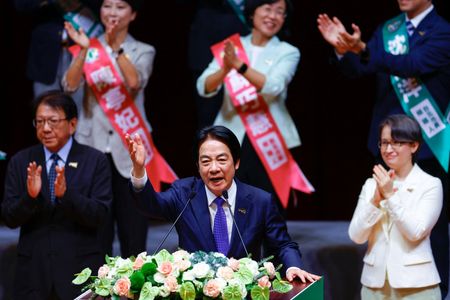
Taiwan’s independence-supporting administration under President Lai Ching-te already faces challenges funding existing American arms purchases, with the budget stalled in parliament.
Opposition legislators announced Monday they would examine a $40 billion special defense budget when parliament reconvenes February 23rd following the holiday break.