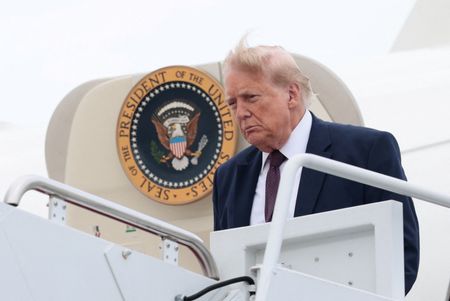

WASHINGTON — President Trump is set to open a 16-day run of events celebrating the United States’ 250th anniversary with a political rally on the National Mall Wednesday, kicking off a stretch of festivities that has already been shadowed by controversy.
Trump plans to use the occasion to highlight what he describes as his efforts to restore American greatness, positioning the event ahead of the July 4th Independence Day milestone. Critics, however, say the president has blurred the line between official national commemoration and campaign-style politics by centering the celebration around a rally format closely associated with his presidency.
The road to the celebration has been rocky. Several musical acts originally slated to perform withdrew from the lineup, citing concerns about participating in what they viewed as a partisan event. Among those who pulled out were Poison frontman Bret Michaels, Young MC, and the Commodores. The revised entertainment lineup now features Lee Greenwood and Christopher Macchio — two artists closely associated with Trump — along with military bands.
The anniversary events have also been shaped by Trump’s personal involvement in reshaping parts of Washington, including the installation of statues and a $16 million repair project on the Lincoln Memorial Reflecting Pool near the celebration site. On Tuesday, Trump announced that six people had been arrested in connection with damage to the reflecting pool.
Last week, Trump also hosted mixed martial arts fights on the White House South Lawn — a spectacle that drew millions of television viewers but which most Americans said they found distasteful.
The celebration arrives at a politically challenging time for the president. A nearly four-month-old war with Iran has driven consumer prices to a three-year high and rattled many voters. A Reuters/Ipsos poll found that only one in four Americans believes the U.S.-Israeli war with Iran has been worth its costs, and just 34% approve of Trump’s overall job performance 17 months into his second term. The White House is also working to push back against the perception that the term-limited president is becoming a lame-duck leader.
Trump’s approach to the anniversary stands in contrast to how many of his predecessors handled similar milestone celebrations. While past presidents also faced difficult political climates during anniversary years — including a financial crisis during John Quincy Adams’ presidency in 1826 and public frustration over inflation, unemployment, the fall of Saigon, and the pardon of former President Richard Nixon in 1976 — many of those leaders leaned into unifying themes for the occasion.
Gerald Ford’s top political adviser instructed speechwriters to steer clear of any “partisan insinuations” when preparing for the nation’s 200th anniversary celebration. Ulysses Grant, marking the 100th anniversary in 1876, criticized what he called “errors of judgment” by Southern rebels during the Civil War while still extending an olive branch, acknowledging their courage in their convictions.
Trump has frequently taken a different tack, delivering sharply political speeches before audiences that have traditionally expected more ceremonial remarks — including service members, college graduates, and sports teams — and at times using those platforms to criticize his Democratic predecessors.