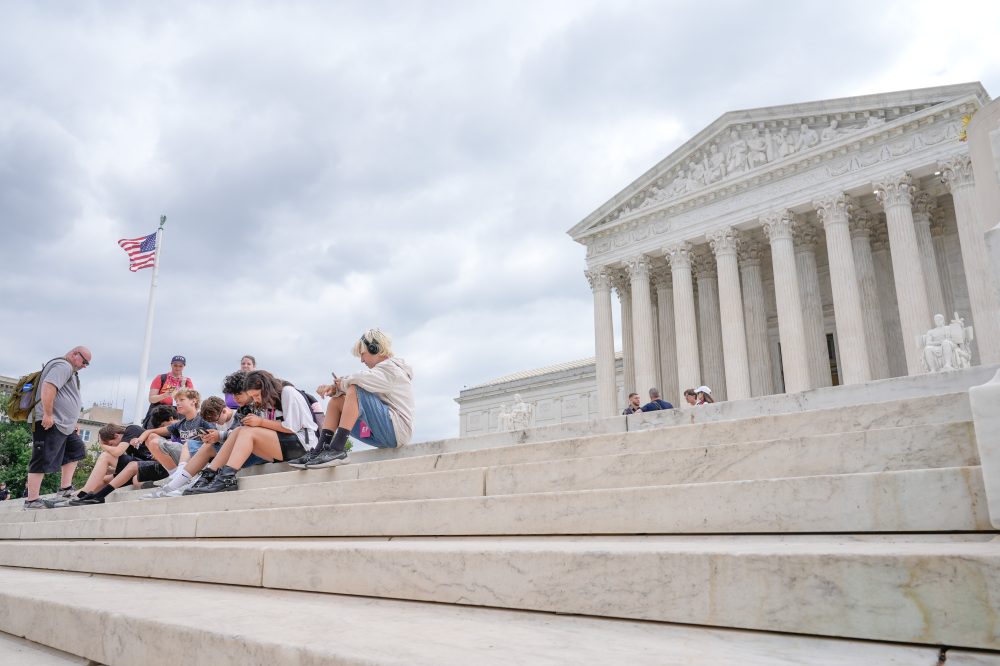

WASHINGTON — The United States Supreme Court ruled in favor of the Trump administration Tuesday in a significant immigration case examining how much power the federal government holds over lawful permanent residents — commonly known as green card holders — who are accused of criminal activity.
At the heart of the 6-3 decision is a 2012 action by an immigration officer who placed Muk Choi Lau on immigration parole when he arrived back in the country following a brief visit to China. The officer took that step because Lau had faced accusations of a counterfeiting-related offense.
Lau challenged the move, arguing the officer had exceeded his legal authority. He also contended that placing him on parole improperly allowed the Department of Homeland Security to quickly launch deportation proceedings against him — this after he pleaded guilty to selling counterfeit clothing in New Jersey.
The nation’s highest court rejected that argument. In the majority opinion, Justice Clarence Thomas wrote that “border officers did not have the burden to establish by clear and convincing evidence that Lau had committed a crime involving moral turpitude.”
Justice Ketanji Brown Jackson took a sharply different view in her dissent, arguing that placing Lau on immigration parole before any criminal conviction essentially trapped him in what she called “immigration limbo.” She warned that the ruling goes too far in empowering the government. “I worry that the Court has now handed the Government a massive blank check,” she wrote. Her dissent was joined by her two fellow liberal justices.
The ruling arrives as the Supreme Court is actively weighing a number of immigration-related disputes connected to President Donald Trump’s broad immigration enforcement efforts — though this particular case predates his current time in office.
The Trump administration had argued that mere suspicion of criminal activity is sufficient grounds to place a green card holder on immigration parole. Federal attorneys pushed the court to interpret executive authority over immigration matters broadly.
Among the other immigration issues currently before the court are challenges to Trump’s effort to eliminate birthright citizenship, a potential revival of a restrictive asylum policy, and a bid to end temporary legal protections for migrants who fled war and natural disasters in their home countries.