
ATLANTA — A bill meant to preserve Georgia’s current ballot-counting system through the upcoming midterm elections is running into fierce opposition from state Democrats, following a weekend move by Republican state senators to add a hand recount requirement to the legislation.
Georgia’s governor, Republican Brian Kemp, called lawmakers into a special session partly to deal with a July 1 deadline that would have banned the QR codes currently used to tally official vote totals. Legislators had set that deadline two years ago but never settled on an alternative vote-counting method.
Some voting rights advocates had already raised concerns that making changes this close to the midterms could cause confusion at the polls. Georgia is considered a political battleground state, with major races for both U.S. Senate and governor on the November ballot.
Last week, state lawmakers appeared close to agreeing on a bill that would push the July 1 deadline back to 2028. However, over the weekend, Republican senators passed an amendment requiring a complete hand recount of the top two races on the ballot — which in November would be the governor’s race and the U.S. Senate contest.
The amended bill cleared the Senate along party lines, but the House did not move to schedule a vote on it Monday.
Georgia Democrats argue that conducting a hand recount in November would create widespread disorder and fuel doubts about the legitimacy of the results. Studies have found that hand-counting ballots is more likely to produce errors, costs more money, and tends to slow down the reporting of results. Despite this, hand counting has gained support among Republican lawmakers in several states, driven in part by President Donald Trump’s repeated and unsubstantiated claims that the 2020 presidential election was stolen.
“What we are experiencing is a Republican Senate who’s acting extraordinarily irresponsibly with Georgia’s elections and people’s votes,” said state Rep. Saira Draper, a Democrat, on Monday.
Republican state Sen. Max Burns stood behind the Senate’s version of the bill, arguing that manual and machine counts are compatible. “This amendment to a good bill is to strengthen it so that the voters have confidence in election security,” he said, adding that hand counts and machine counts can “coexist and confirm each other’s ultimate results.”
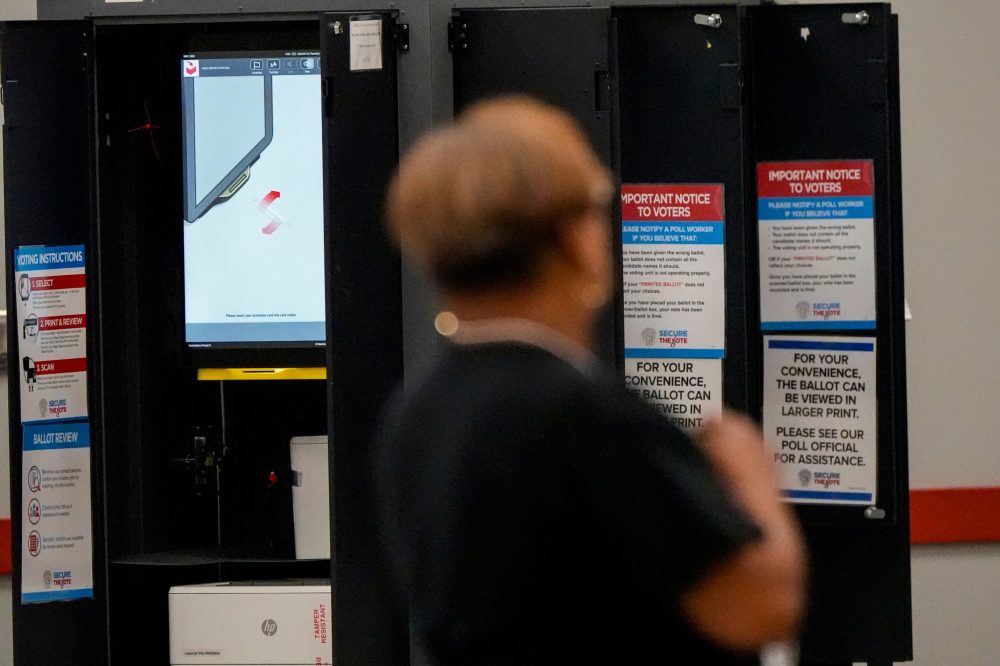
Georgia’s existing election setup prints QR codes on ballots, which machines then scan to record votes. The system has been a target of criticism from Trump, who alleged without evidence that voting machines in Georgia manipulated or erased votes during the 2020 election — a race he narrowly lost to Democrat Joe Biden.
Georgia’s voting machines have also been at the center of various conspiracy theories, which manufacturer Dominion Voting Systems has contested in court. At the same time, some election integrity advocates have raised separate concerns, arguing that the machines could be vulnerable to hacking and that voters have no way to verify their choices since QR codes are not human-readable.
If passed, the Senate bill would extend the current deadline to January 1, 2028, and establish a committee tasked with recommending standards for a new voting system. That committee would have until January 31, 2027, to deliver its findings, with state lawmakers responsible for funding, purchasing, and putting the new system in place in time for the 2028 election cycle.
The special session had also been intended to redraw Georgia’s congressional and legislative district maps ahead of 2028, but those plans were set aside by state lawmakers.