
WASHINGTON — President Donald Trump is scheduled to sit down with weapons manufacturers at the White House on Wednesday as his administration works to ramp up military production following operations in Iran and other conflicts that have drawn down U.S. weapons stockpiles.
The United States has sent significant quantities of arms to allied nations while also expending munitions in its own military operations. That combination has raised alarms about dwindling supplies of critical air-defense and precision-guided weapons, putting mounting pressure on defense contractors to accelerate production.
Wednesday’s gathering would be the second time the White House has convened top defense company executives specifically to address weapons production increases. A similar meeting held in March brought together the CEOs and other leaders from BAE Systems, Lockheed Martin, Northrop Grumman, RTX Corp, Boeing, Honeywell Aerospace, and L3Harris Technologies, along with Defense Secretary Pete Hegseth.
The latest meeting comes as Pentagon negotiators push contractors to move at a much faster pace, with preliminary production agreements reached earlier this year serving as a centerpiece of those efforts.
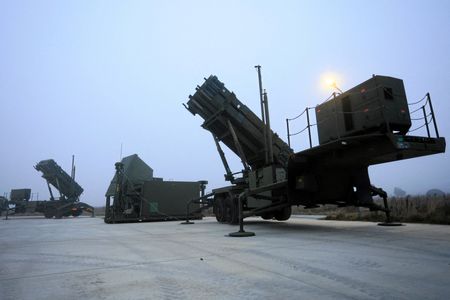
Among those agreements is a deal with Lockheed Martin to triple production of Patriot interceptors and quadruple output of THAAD interceptors — weapons designed to destroy incoming ballistic missiles. Separate multi-year agreements with RTX are aimed at boosting production of Tomahawk cruise missiles and AMRAAM air-to-air missiles. While these have been announced as “framework agreements,” they have not yet been converted into formal contracts.
Five defense industry executives, who agreed to speak only on the condition that their names not be used, said they welcome the agreements but noted that Congressional appropriations must come first before companies can commit to larger investments in parts and production capacity. They warned that spending money ahead of government payments could strain cash flow and potentially hurt earnings in the second half of the year.
The Trump administration has been steadily turning up the heat on defense contractors, pushing them to focus on production rather than shareholder dividends. In January, Trump signed an executive order directing officials to identify contractors considered to be falling short on government work while still paying out profits to investors.
GM Defense, the defense arm of the automaker, and Lockheed Martin have both said the U.S. Department of Defense helped broker a partnership between the two companies in response to growing demand for expanded production capacity.
The Senate Armed Services Committee approved its version of the National Defense Authorization Act this month, endorsing total defense spending of $1.15 trillion and granting multi-year purchasing authority for several categories of weapons and munitions. The bill is not expected to be signed into law until fall, though separate appropriations or supplemental funding could potentially arrive sooner.
Demand for air defense systems has climbed sharply among the United States and its allies as geopolitical tensions have risen and the conflict in Iran has continued.