
WASHINGTON — A pointed question is echoing through the halls of the U.S. Capitol in the aftermath of the conflict with Iran: Was it worth it?
Congress, which neither formally authorized the war nor mounted a successful effort to stop it, is now confronting the aftermath of President Donald Trump’s nearly four-month military campaign — the human toll, the enormous financial cost, and the shifting security landscape across the Middle East.
When asked about the agreement Trump reached to bring the fighting to a close, senators didn’t mince words.
Delaware Senator Chris Coons, a Democrat who sits on the Senate Foreign Relations Committee, offered a blunt assessment: “Pathetic. Failure. Inevitable conclusion of a combination of never making the case to the American people, flawed strategic vision, lack of grasp of the regional dynamics.” He added, “How many ways, can I say, bad, bad, bad?”
But not everyone on Capitol Hill shares that view. Republican Senator Ron Johnson of Wisconsin, a former chairman of the Senate Homeland Security and Governmental Affairs Committee, argued that the president’s actions have made the country more secure. “We are safer today,” Johnson said, acknowledging that critics exist but pushing back: “You can criticize — Oh, he didn’t totally win. Well, that was always going to be very difficult.”
With Trump now turning his attention to what comes next, Congress is left to handle the fallout — explaining the conflict to voters, replenishing a military arsenal depleted by months of bombing campaigns, and working to ensure a fragile ceasefire remains intact as the U.S. pursues an end to Iran’s nuclear ambitions.
Defense Secretary Pete Hegseth visited Capitol Hill this past week as lawmakers debate Pentagon funding as part of a larger Republican budget proposal. The White House has requested a staggering $1.5 trillion for the Defense Department this year, layered on top of additional military funding included in the Trump administration’s tax cuts package from last year.
Republicans are weighing a substantial increase of more than $350 billion for Hegseth — an amount in line with the White House’s budget request — which the GOP could potentially pass through the reconciliation process, bypassing Democratic opposition.
Meanwhile, senators are pushing for oversight measures, including a provision that would withhold a portion of Hegseth’s travel budget until the Pentagon submits a series of required reports. Among those reports is one addressing an investigation into a U.S. airstrike on an elementary school in Iran that killed more than 165 people — a deeply controversial moment at the war’s outset. Officials have acknowledged that the U.S. was likely responsible for the strike and that it was carried out based on flawed intelligence.
Lawmakers are still absorbing the rapid sequence of events that followed Trump signing a memorandum of understanding with Iran and launching a 60-day window for negotiations aimed at dismantling Tehran’s nuclear program.
“I understand the president’s trying to find a peaceful solution to this,” said Senator Mike Rounds, a Republican from South Dakota who serves on the Senate Armed Services and Intelligence committees. “I commend him for that. But we’ve got a lot of questions.”
One aspect of the tentative agreement drawing particular scrutiny is a provision that would establish a potential $300 billion fund for the “reconstruction and economic development” of Iran. For many skeptical Republicans, that figure draws uncomfortable comparisons to the Obama-era Iran nuclear deal, which involved a far smaller sum — roughly $1.7 billion total — that Trump has long mischaracterized in exaggerated terms on the campaign trail and beyond.
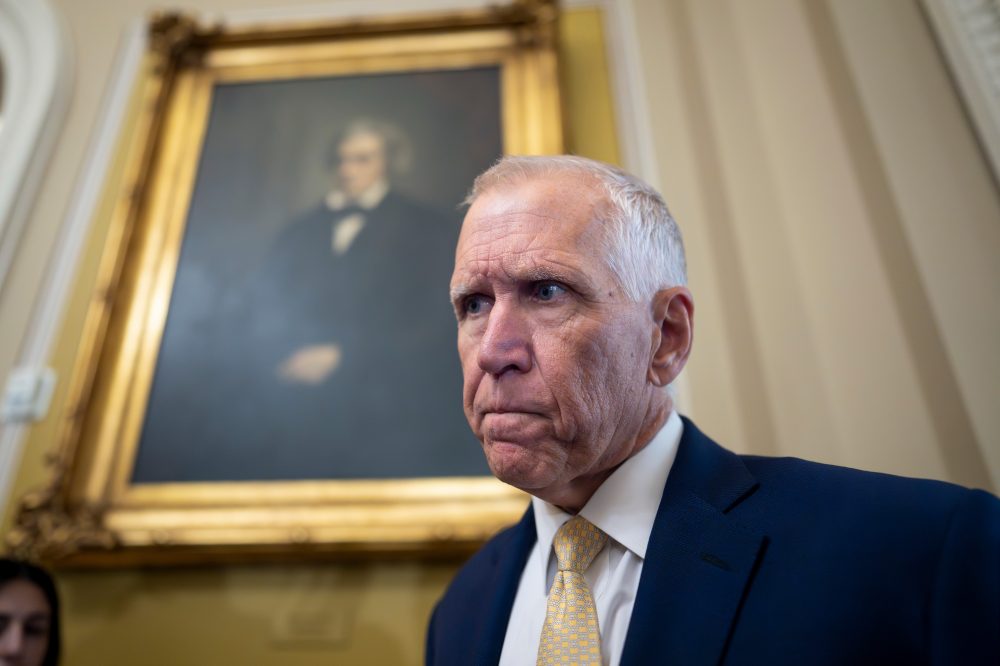
“The only concerns I have are the money and the conditions,” said Senator Thom Tillis, a Republican from North Carolina. “If we send a trainload, a shipload, it’s gonna age as well as that,” he added.
Throughout the conflict, Congress repeatedly attempted and failed to invoke the War Powers Act to halt U.S. military operations. The House eventually passed a war powers resolution — with a small number of Republicans crossing party lines to support it — seeking to force an end to the fighting. The Senate voted nine times on similar measures, including as recently as this past week, but never secured the majority required to succeed. At the same time, lawmakers never passed a formal authorization for the use of military force, as has been done in prior conflicts including the Iraq War.
Senator Jeanne Shaheen of New Hampshire, the top Democrat on the Senate Foreign Relations Committee, said in a statement that while she is relieved the conflict has ended, the country must face some hard truths. “I’m glad that the conflict has finally ended and hope the ceasefire holds,” she said. Shaheen argued that none of the president’s stated objectives were met and that Iran walked away with meaningful concessions. “The American people are paying the price with higher costs in every aspect of life and tens of billions in tax dollars spent,” she said.
Republican Senator Lisa Murkowski of Alaska said she struggles to identify what strategic advantage the U.S. gained through the war. “You want to be able to give the benefit of the doubt,” she said, but added: “I think we’re in a place where there is a deal that has been signed, but it doesn’t appear to me that it puts us in that much of a different position than prior to the beginning of the war.”