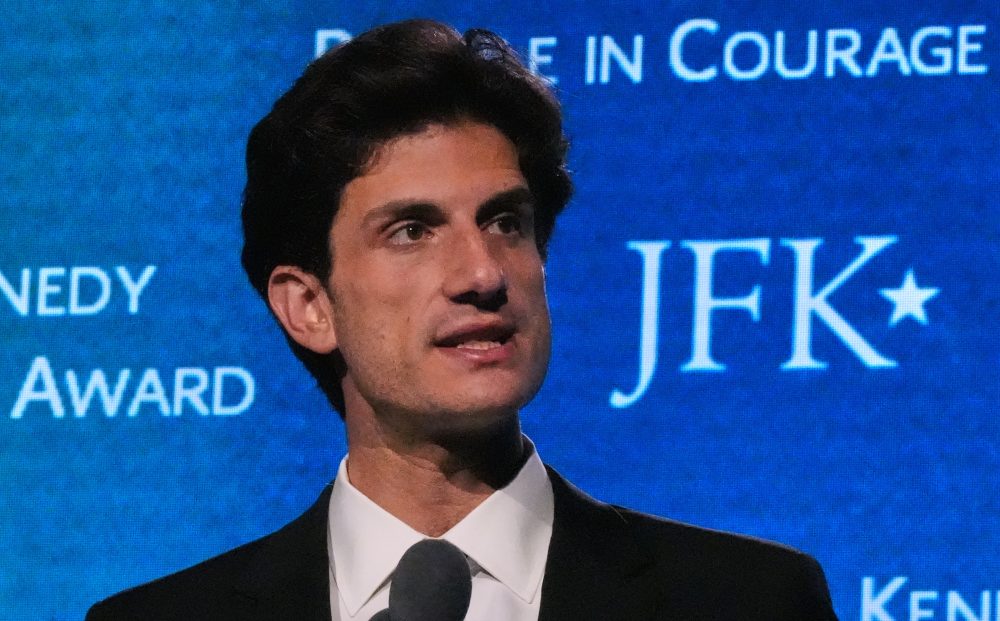

Voting wrapped up Tuesday in a high-profile Democratic primary in Manhattan, where Jack Schlossberg — the grandson of the late President John F. Kennedy and a first-time political candidate — squared off against a field of contenders that included two state legislators and a well-known former Republican, all competing for an open seat in Congress.
The winner of this competitive primary enters the November general election as a strong favorite to replace longtime Democratic Rep. Jerry Nadler, who is stepping down. Democrats account for roughly two-thirds of registered voters in the district.
The race drew considerable buzz, driven in part by Schlossberg’s celebrity status as a Kennedy family member with a knack for social media, and in part by the enormous amounts of money that poured in as artificial intelligence companies turned the contest into a proxy battle over tech regulation.
Schlossberg leaned into his family legacy while also pushing his own platform, describing his message as “progressive and aggressive” through social media posts that were widely shared — and sometimes unconventional.
“Supporters don’t just like me because I’m a Kennedy,” Schlossberg told The Associated Press earlier this year. “They like me because of my experience, my ideas, and they trust me because they see what’s going on with their very own eyes.”
Still, questions followed Schlossberg throughout the campaign about his thin professional background. The 33-year-old holds a combined law and business degree and had a brief stint at the State Department’s environmental office, along with writing political opinion pieces for Vogue. He maintained that his family’s wealth gave him freedom from the pressures of political fundraising.
The AI industry’s money flowed heavily into the race, largely in opposition to candidate Alex Bores, a state Assembly member and former tech engineer who had authored legislation that many in the tech sector found objectionable. However, some AI companies more open to regulation pushed back by backing Bores.
Voters in the district were flooded with campaign mailers and advertisements, particularly targeting Bores and fellow Assembly member Micah Lasher, a former aide to Rep. Nadler. Lasher ran on his deep experience in government, while Bores presented himself as a newer voice willing to take on powerful special interests.
“The battle lines, in this race in particular, are whether we can regulate AI at all,” Bores said during a CNN interview Tuesday evening.
Beyond the AI money fight, the race also featured dueling endorsements from Nadler and fellow Congress member Carolyn Maloney — whom Nadler had defeated in a 2022 primary after their neighboring districts were merged through redistricting. This time around, Maloney threw her support behind Bores, while Nadler backed Lasher.
Another notable contender was George Conway, a veteran attorney and former Republican who co-founded the anti-Trump group known as The Lincoln Project. Conway was previously married to Kellyanne Conway, who served as an adviser to Republican President Donald Trump, though George Conway has since distanced himself from both her and the former president.
A number of additional candidates also competed in the primary.