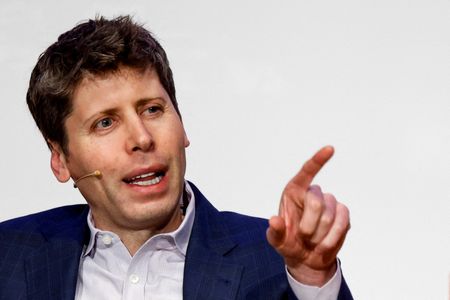

The chief executive of OpenAI expressed relief Tuesday that artificial intelligence hasn’t triggered the widespread employment catastrophe he initially anticipated.
During remarks at a Commonwealth Bank of Australia conference in Sydney, the company leader acknowledged his earlier concerns about AI’s potential to devastate global job markets have not materialized as expected.
The executive noted that while OpenAI accurately predicted the technological advances that followed ChatGPT’s 2022 debut, the company misjudged the social and economic consequences.
“I’m delighted to be wrong about this, I thought there would have been more impact on entry-level white-collar jobs being eliminated by now than has actually happened,” he told the bank’s chief executive during an on-stage interview.
“I now think I understand more about why it hasn’t, and I’m obviously grateful but that is an area where my intuitions were just off.
“People are like ‘oh you could have saved the world a lot of fear mongering and a lot of doom and gloom’ but at the time I was like ‘I see this is a real risk we should probably talk about it’ and it still may.”
While the OpenAI leader didn’t provide specific employment statistics during his Tuesday appearance, he has previously discussed potential industry-wide workforce reductions linked to AI advancement.
Multiple major corporations worldwide, including HSBC, Amazon, Standard Chartered and the Commonwealth Bank, have announced certain positions within their organizations are being automated through AI systems.
According to recent reports, OpenAI plans to privately submit paperwork for a U.S. stock market debut in the coming weeks. The company may seek a $1 trillion market value while attempting to raise a minimum of $60 billion.
The tech executive explained he has come to understand that despite AI’s expanding presence across various sectors and roles, certain human aspects of work remain impossible to replicate.
He shared his personal experience using AI to handle workplace messaging platforms and emails, but eventually returning to personal responses for some communications.
“I had it reply to messages, saying ‘this is Sam’s AI’ and it was an amazing example to me of we really do care about people,” he said.
“We really do care about our interactions with people and this thing, which is a huge amount of my time, is not something that I can imagine myself outsourcing to an AI anytime soon.”
This insight led him to conclude that human connection requirements in many professions will resist AI replacement.
“It really, in both positive and negative ways, updated me to thinking that the jobs picture is likely to be very different than we thought,” he said.
“I don’t think we’re going to have the kind of jobs apocalypse that some of the companies in our space advocate or talk about.”